
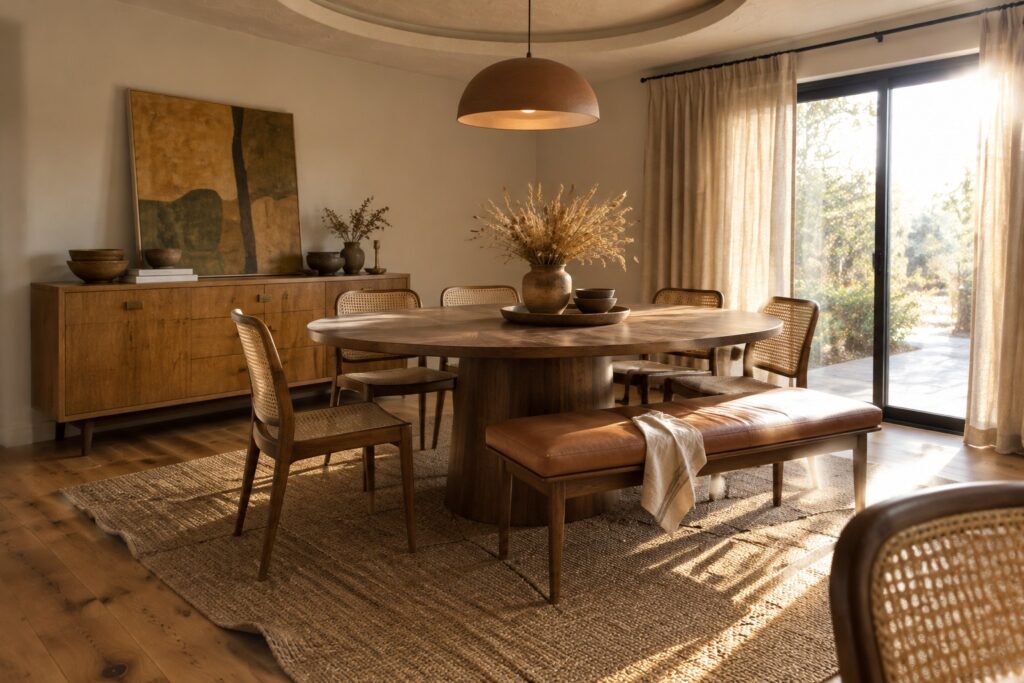
A dining room can feel calm without looking plain, and warm neutrals paired with earthy shades often create that balance.
I find the combination works best when the table, chairs, and lighting feel suited to everyday meals, rather than chosen only to match a palette.
Texture matters too, since wood grain, woven details, and soft fabrics keep muted colors from feeling flat.
The first thing I notice is whether the room feels comfortable to sit in and easy to move through.
Some of these choices are worth adapting at home, especially when you want a dining space that feels settled but still personal.
Use Natural Materials To Warm A Dining Room

Natural wood and woven seating make a dining room feel relaxed without much extra decoration. Here, the round wood table and cane chair backs bring texture to a palette of warm browns and soft neutrals.
This approach works especially well in a dining room that gets regular use, since the materials feel comfortable rather than formal. A woven rug can help define the dining area, but choose one that is easy to clean if meals tend to get messy.
Use a Long Farmhouse Table to Set the Room’s Tone

A long farmhouse table gives a dining room a comfortable, practical center. Its worn wood suits warm neutral walls and earth-tone accents without making the space feel too formal.
This style works especially well in a room with enough floor space for chairs to move easily. A simple woven runner can dress the table, but leave some of the wood visible so its natural character stands out.
Use Wood Slats to Give a Dining Area More Character

Vertical wood slats make a simple dining nook feel more considered without adding much decoration. Here, the natural wood wall gives the dining area a clear backdrop and works well with the table’s lighter finish.
This kind of wall treatment suits an open-plan room or a small dining space that needs a little definition. Keep nearby colors and furnishings fairly quiet so the slats remain a feature rather than competing with the rest of the room.
Use Warm Neutrals Across the Dining Room
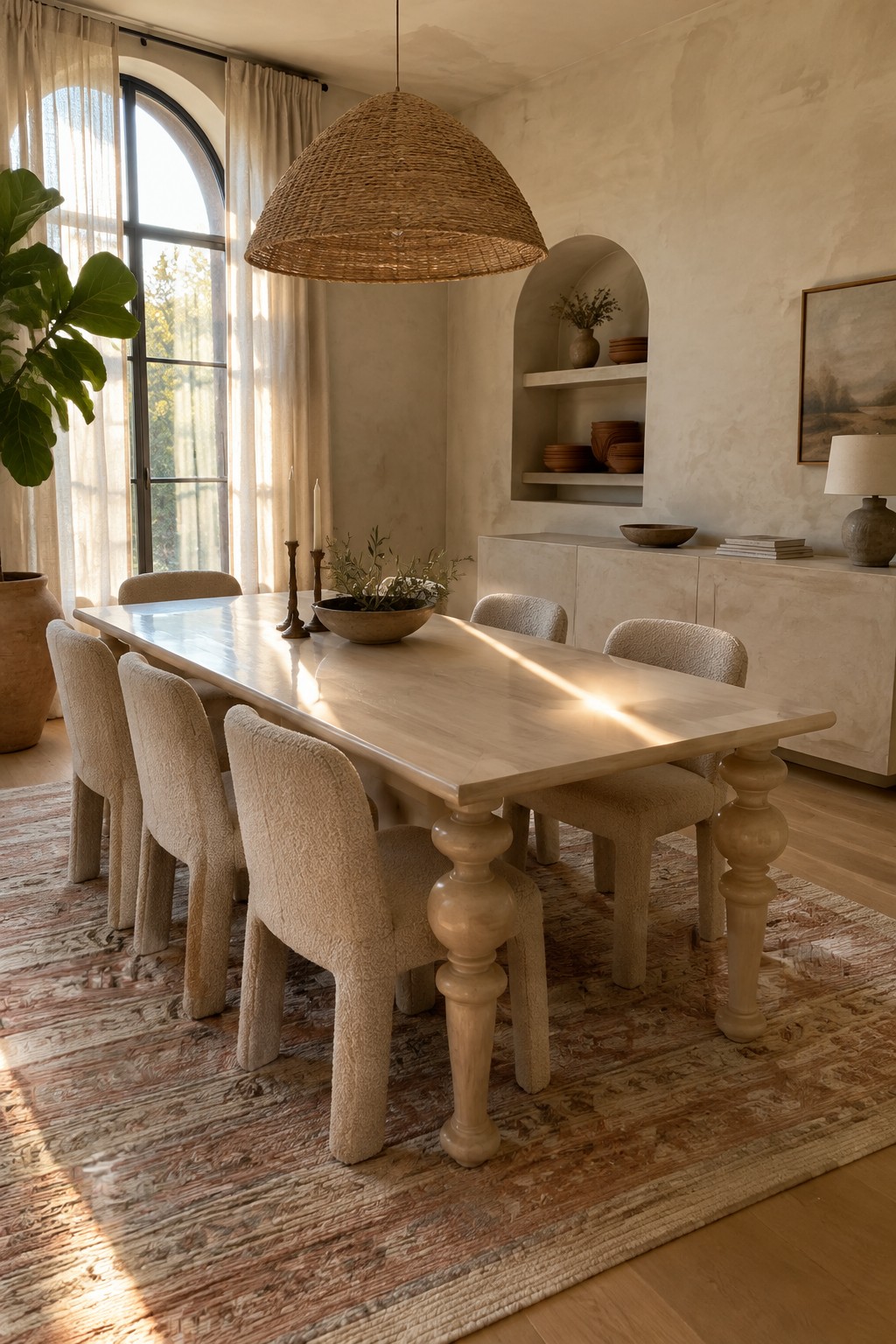
A dining room feels calm when the larger pieces stay within a warm, neutral palette. Here, the pale table and textured chairs have enough variation to keep the room from looking too uniform, while still making the space feel settled.
Try this approach in a dining room that gets plenty of natural light, and let the furniture provide most of the color. A patterned rug can bring in muted earth tones, but keep its colors soft so it doesn’t compete with the table and chairs.
Make a Dining Nook Part of the Room
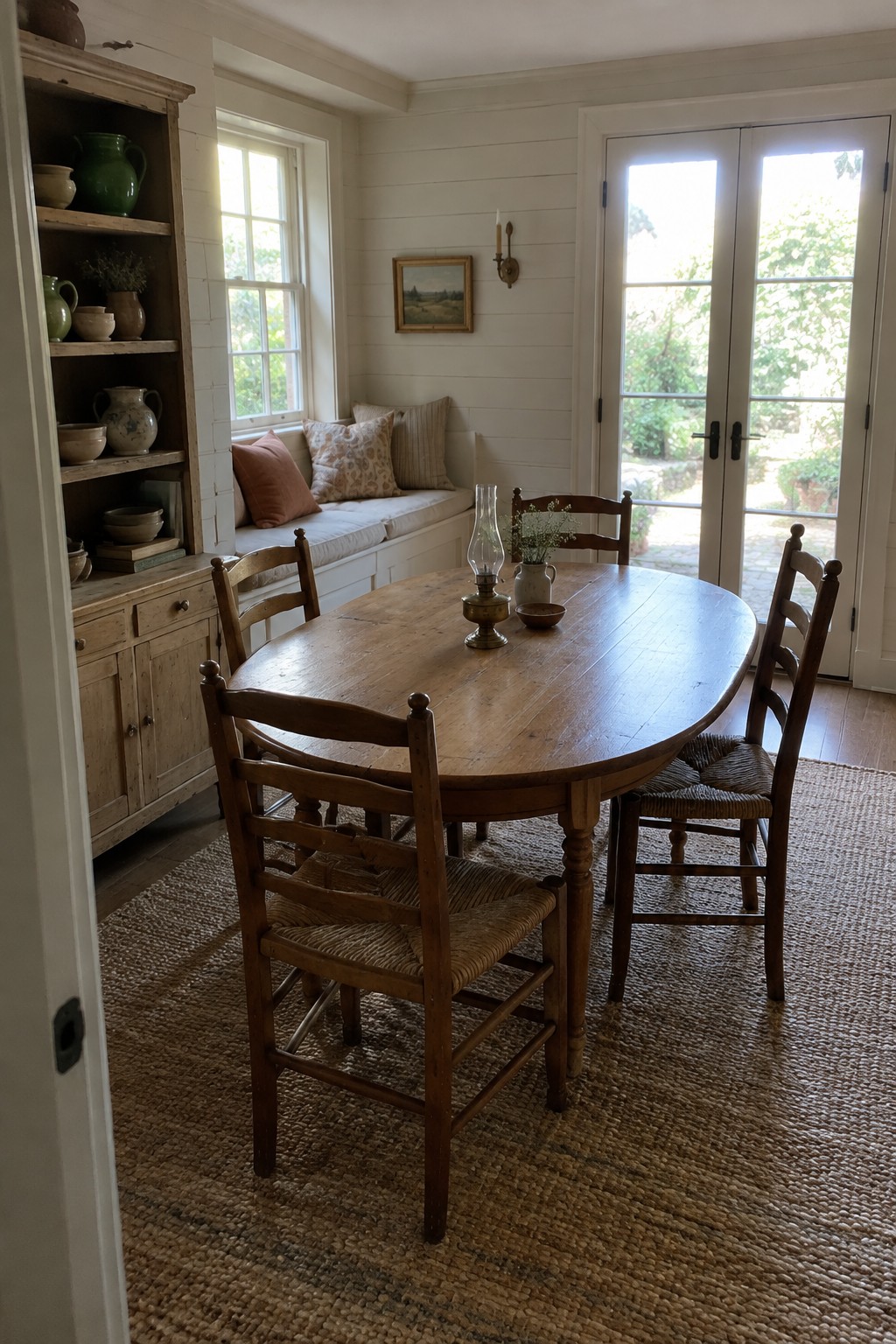
A built-in bench can make a dining area feel settled without taking up space for extra chairs. Here, the seat fits neatly beneath the window, while its pale upholstery keeps the wood furniture from feeling too heavy.
This approach works well in a small dining room or an unused corner. Add cushions for comfort, and leave enough room to pull chairs back from the table.
Use Built-In Niches to Keep a Dining Room Simple
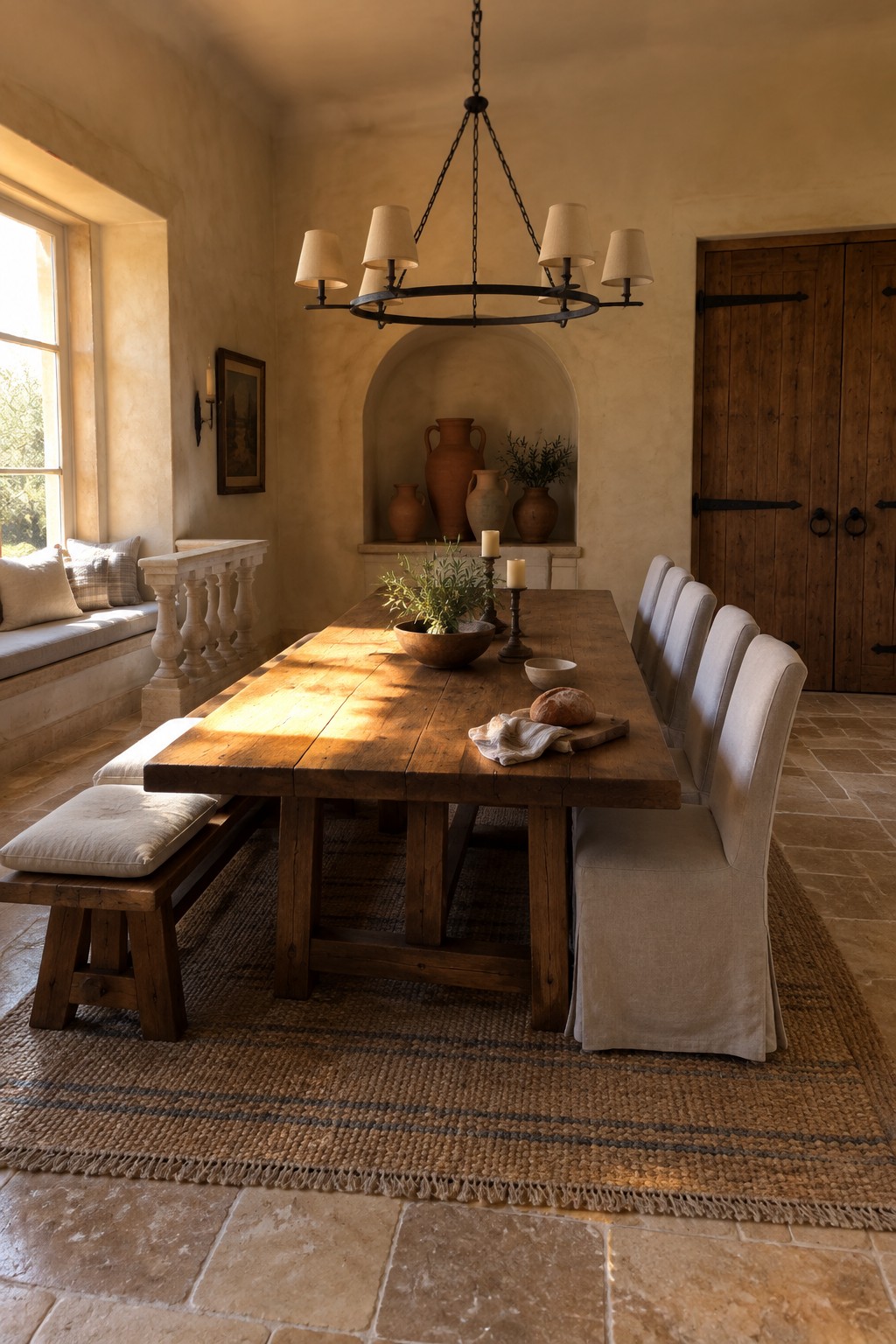
A built-in wall niche gives a dining room a place to display a few useful or well-loved pieces without adding another cabinet. Here, the arched opening keeps the pottery together and lets the wall stay fairly uncluttered.
This idea suits older homes and rooms with thick walls, but a shallow recess can work in a newer space too. Keep the display modest so the niche feels like part of the room, not a shelf that needs constant rearranging.
Choose a Rustic Table for Everyday Dining

A sturdy table with a simple, rustic base gives a dining room a practical center without making the space feel too formal. Here, the wood support and metal top bring different textures together, while the muted finishes fit easily into a warm neutral palette.
This approach suits a dining room that gets regular use, especially in a loft or older home with brick walls. Choose a table size that leaves enough room to pull out the chairs, and keep the tabletop styling simple so there’s space to eat and gather.
Use Shoji Screens to Filter Light in a Dining Room
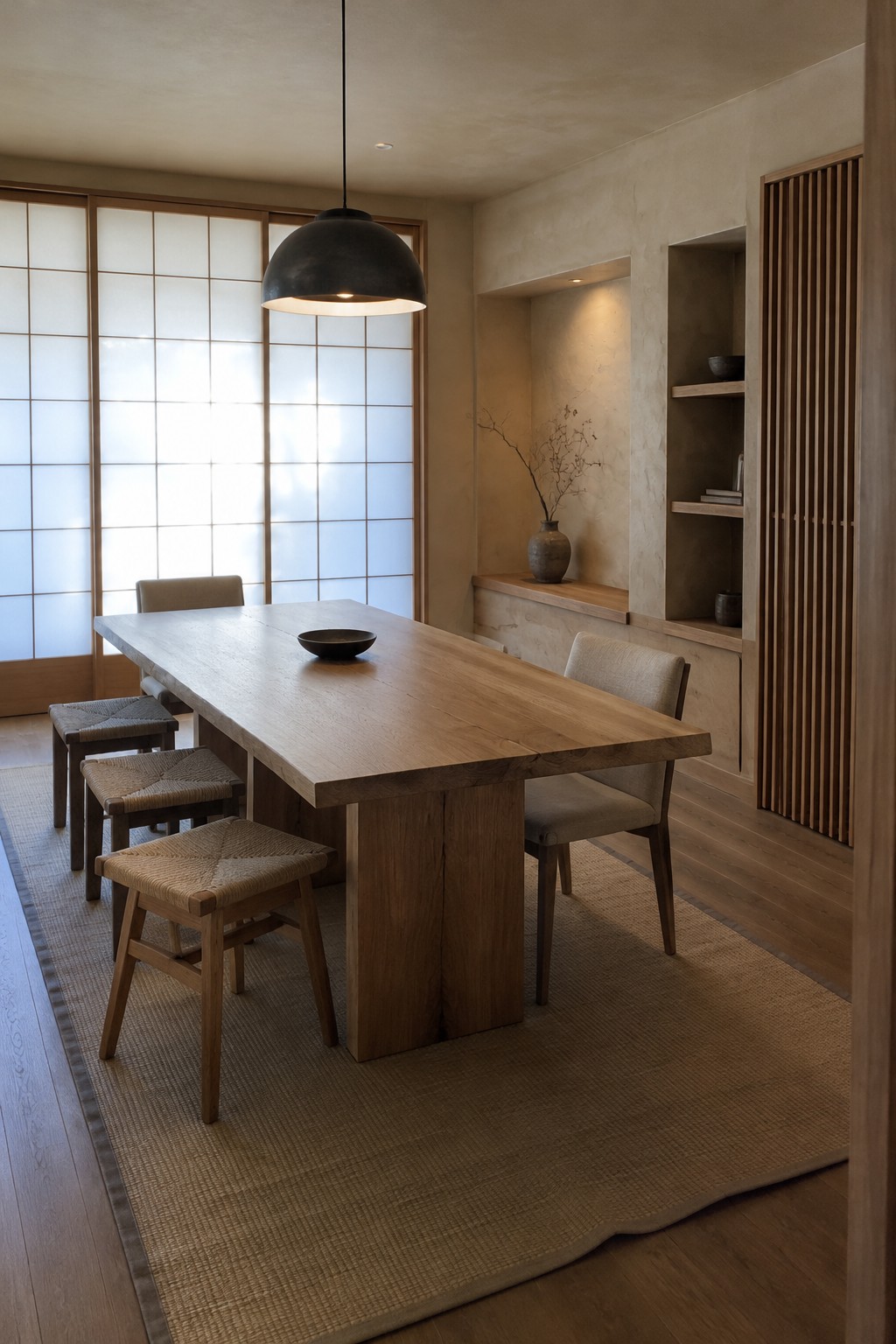
Shoji-style screens make a dining room feel calmer while still bringing in natural light. Their simple wood grid gives the room some structure, and the pale panels keep the effect gentle rather than busy.
This approach works well in rooms where you want privacy without closing off the windows. Keep nearby furniture and finishes fairly simple so the screen can do its job without making the space feel crowded.
Choose Woven Chairs for a Warm Dining Room
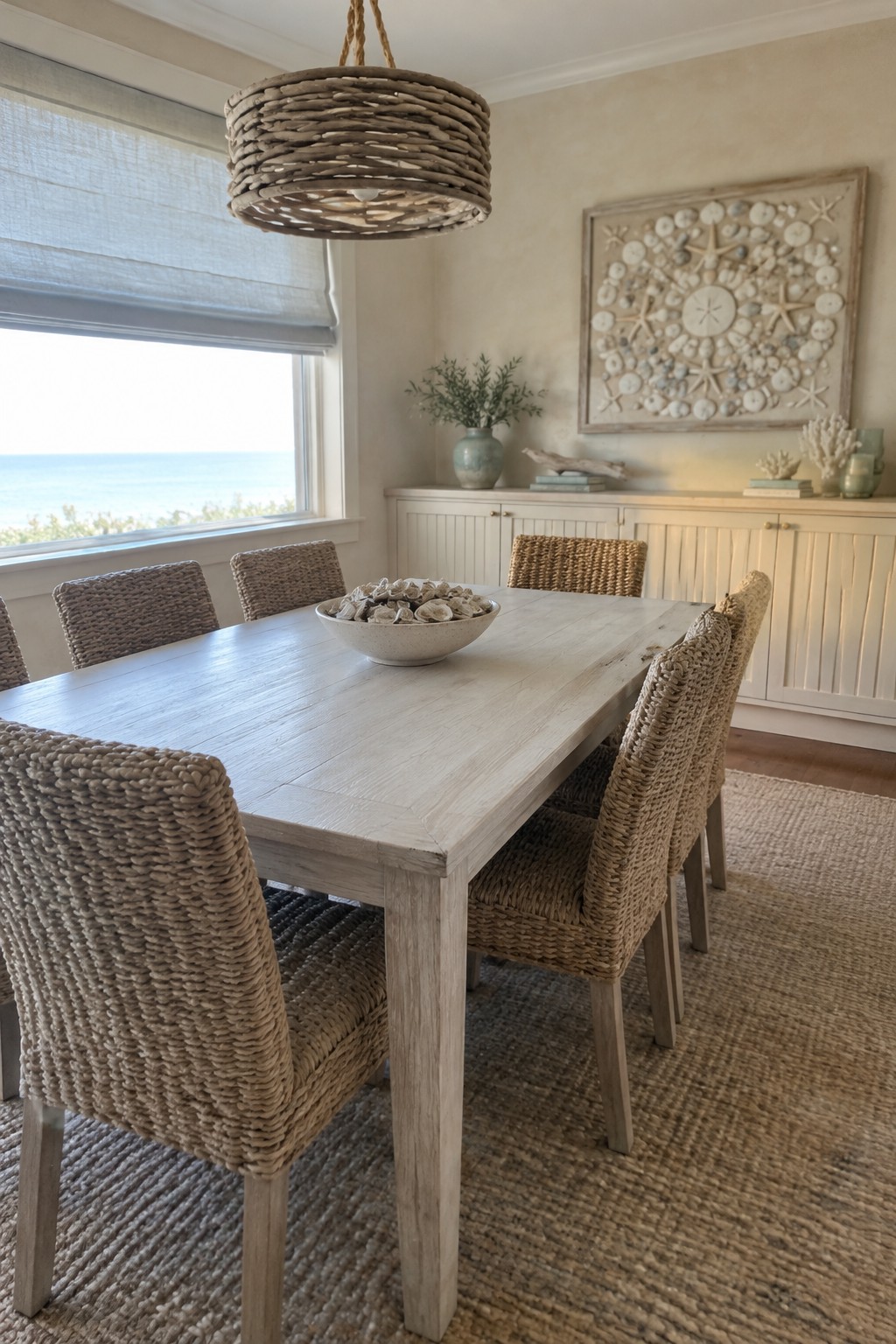
Woven chairs bring natural texture to a dining room without making it feel busy. Here, their warm brown color works well with a pale wood table, giving the room a relaxed look that suits a coastal or cottage-style home.
Try woven seats around a simple wood table when you want texture but prefer to keep the larger pieces neutral. Make sure the chairs are comfortable for long meals, and check that their size leaves enough room to move around the table.
Choose a Live-Edge Table for a Calm Dining Room
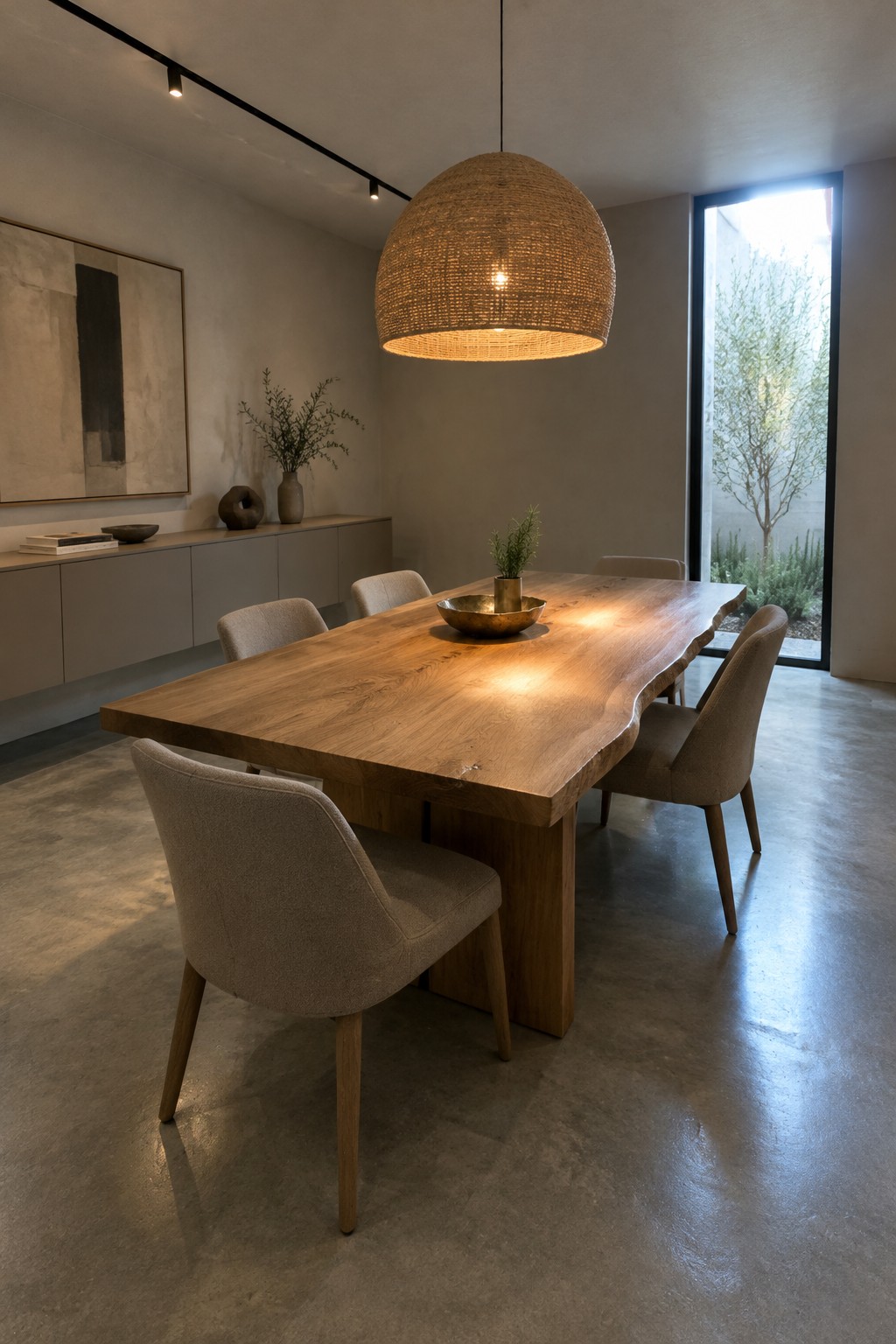
A solid wood table with a natural edge brings a relaxed feel to a dining room without needing much extra decoration. Its varied grain gives the room some character, while neutral chairs keep the overall look quiet.
This style suits a room where the table is the main gathering spot. Choose a finish that works with your flooring, and leave enough space around the table for chairs to move comfortably.
Choose a Rustic Wood Table for Everyday Dining

A sturdy wood table can make a dining room feel settled and comfortable without much fuss. Its worn surface brings a little variation to a room of warm neutral walls, and it suits both everyday meals and longer gatherings.
Look for a table with enough room to move around the chairs, especially in a smaller dining area. A simple arrangement of woven chairs keeps the focus on the wood without making the room feel too formal.
Use Upholstered Chairs to Make a Dining Room More Comfortable
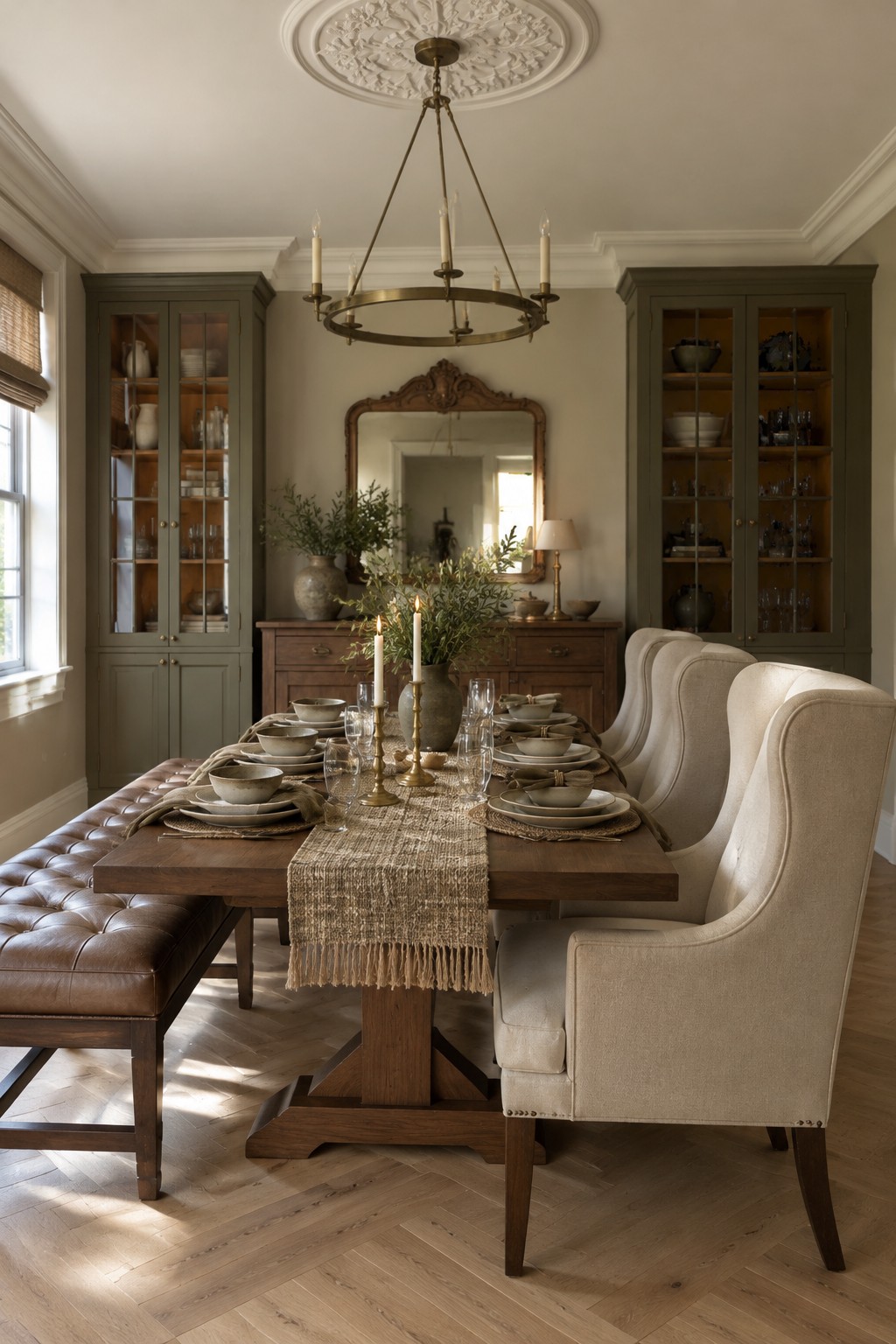
Upholstered dining chairs make a room feel comfortable enough for lingering over a meal. Their soft, light-colored fabric also suits a dining room with plenty of warm wood, without making the furniture feel too heavy.
This style works especially well around a substantial wooden table. Choose a durable, easy-to-clean fabric if the chairs will get daily use, and leave enough space to pull them out comfortably.
Use Soft Neutrals To Keep Dining Comfortable

Soft neutral upholstery can make a dining room feel comfortable enough for long meals, while a pale wood table keeps the overall look easy and relaxed. Slipcovered chairs are especially useful when you want a little softness without making the room feel formal.
Try this approach in a dining room that gets regular use, and choose washable or removable covers if spills are a concern. A simple table finish helps the chairs feel at home rather than overly dressed up.
Use Upholstered Chairs Around a Wooden Dining Table

Upholstered chairs make a dining room more comfortable for long meals, and their soft texture suits a warm, neutral palette. Here, the tan fabric works naturally beside the wood table without making the room feel too formal.
This approach is easy to use in a dining room that needs to work for everyday meals as well as guests. Choose durable upholstery in a mid-tone neutral to help hide everyday wear, and keep the chair shape simple so the table remains easy to use.
Make a Dining Nook Work Around a Round Table
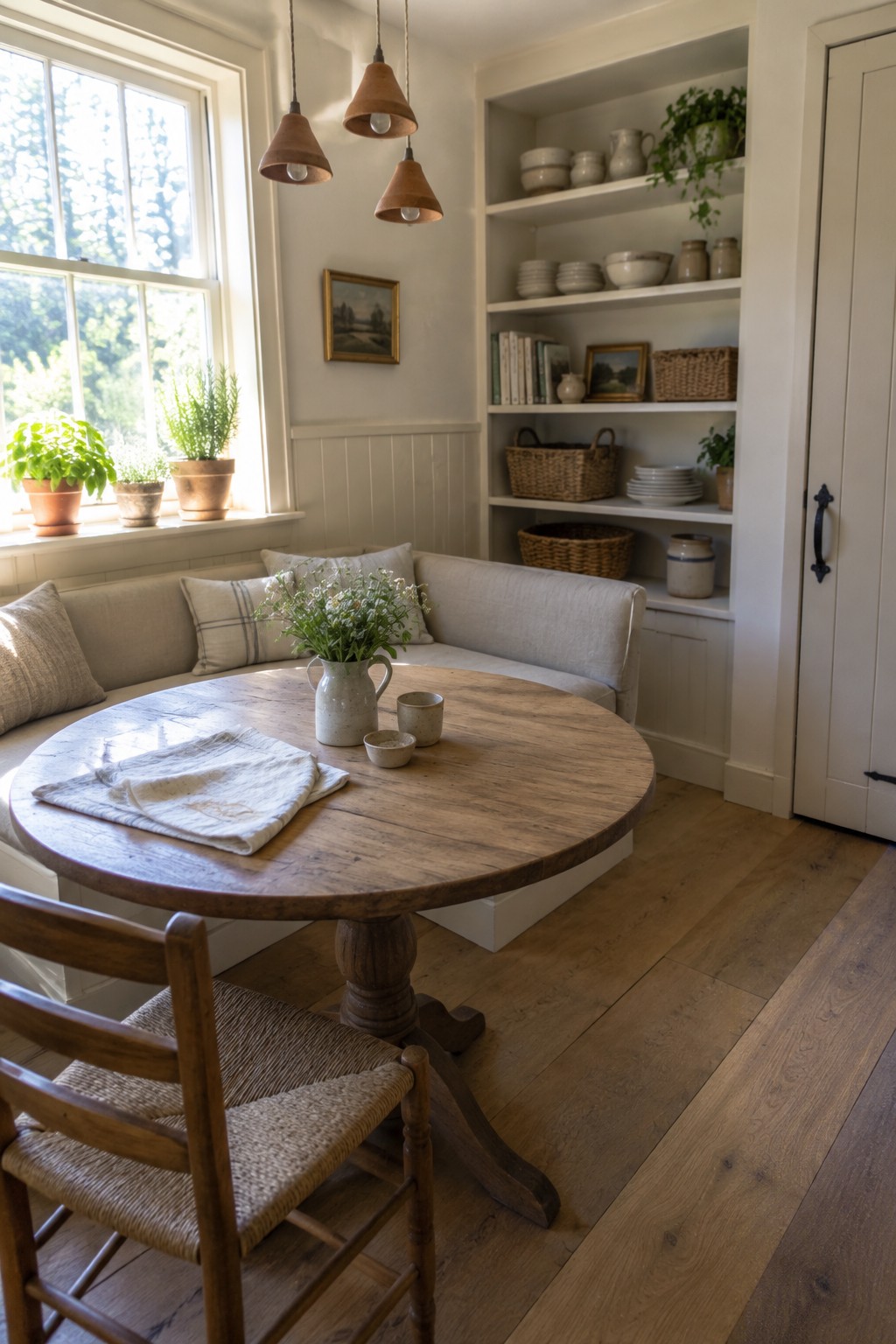
A built-in dining nook can make good use of a corner and give everyday meals a comfortable place of their own. Here, a curved bench follows the shape of the round table, so people can sit without the arrangement feeling too formal.
This setup suits a kitchen or dining area where space is limited. Choose a table small enough to leave room to slide in and out, and use washable upholstery if the bench will see daily use.
Choose a Round Table for Easy Conversation
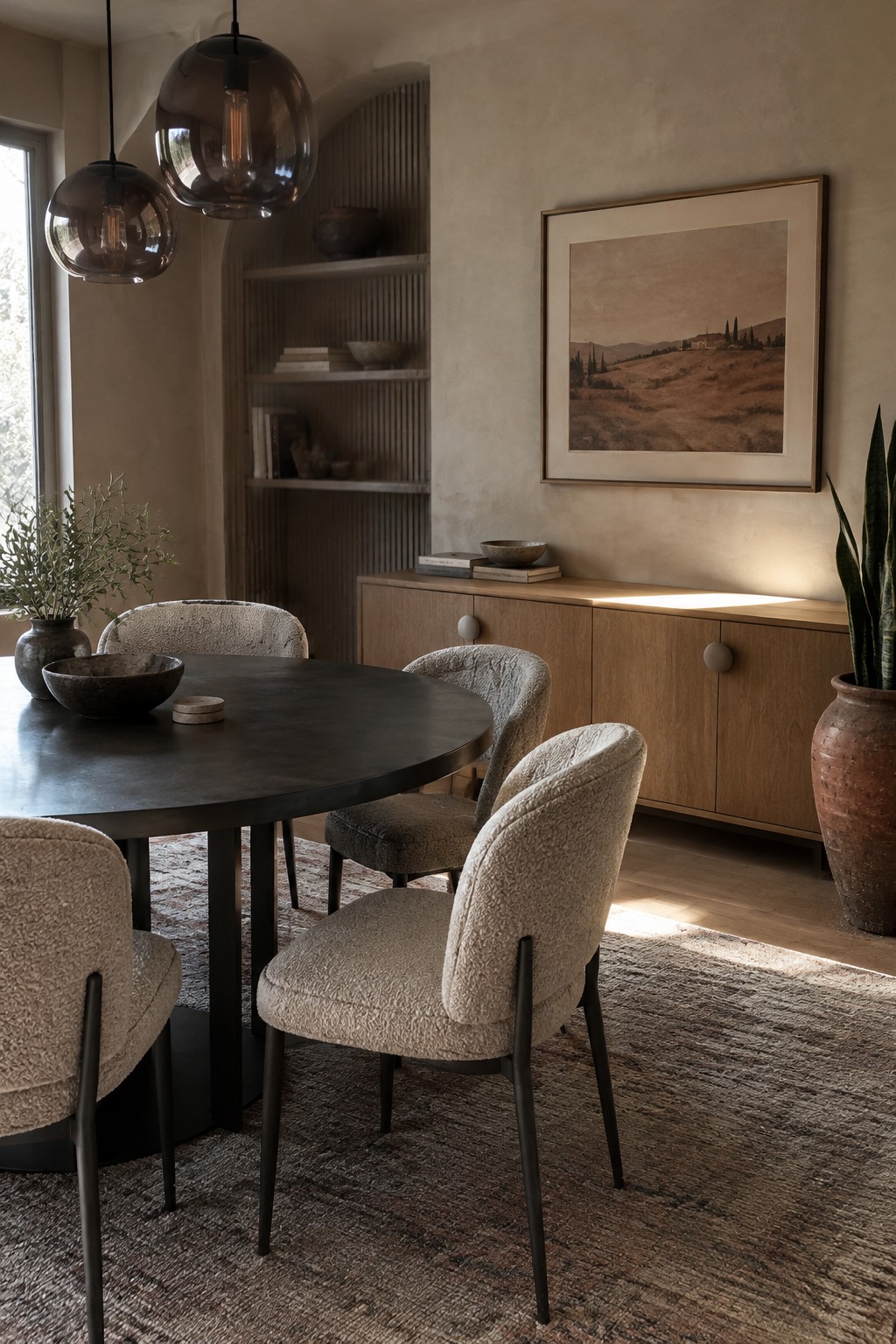
A round dining table makes it easier for everyone to join the conversation, since no one is left at the far end. In this room, the dark tabletop also gives the warm neutral colors a simple point of contrast.
This shape works well in a smaller dining area or anywhere people want a more relaxed seating arrangement. Leave enough room around the table to pull out chairs comfortably, especially when several upholstered seats are in use.
Use a Vintage Rug to Define the Dining Area
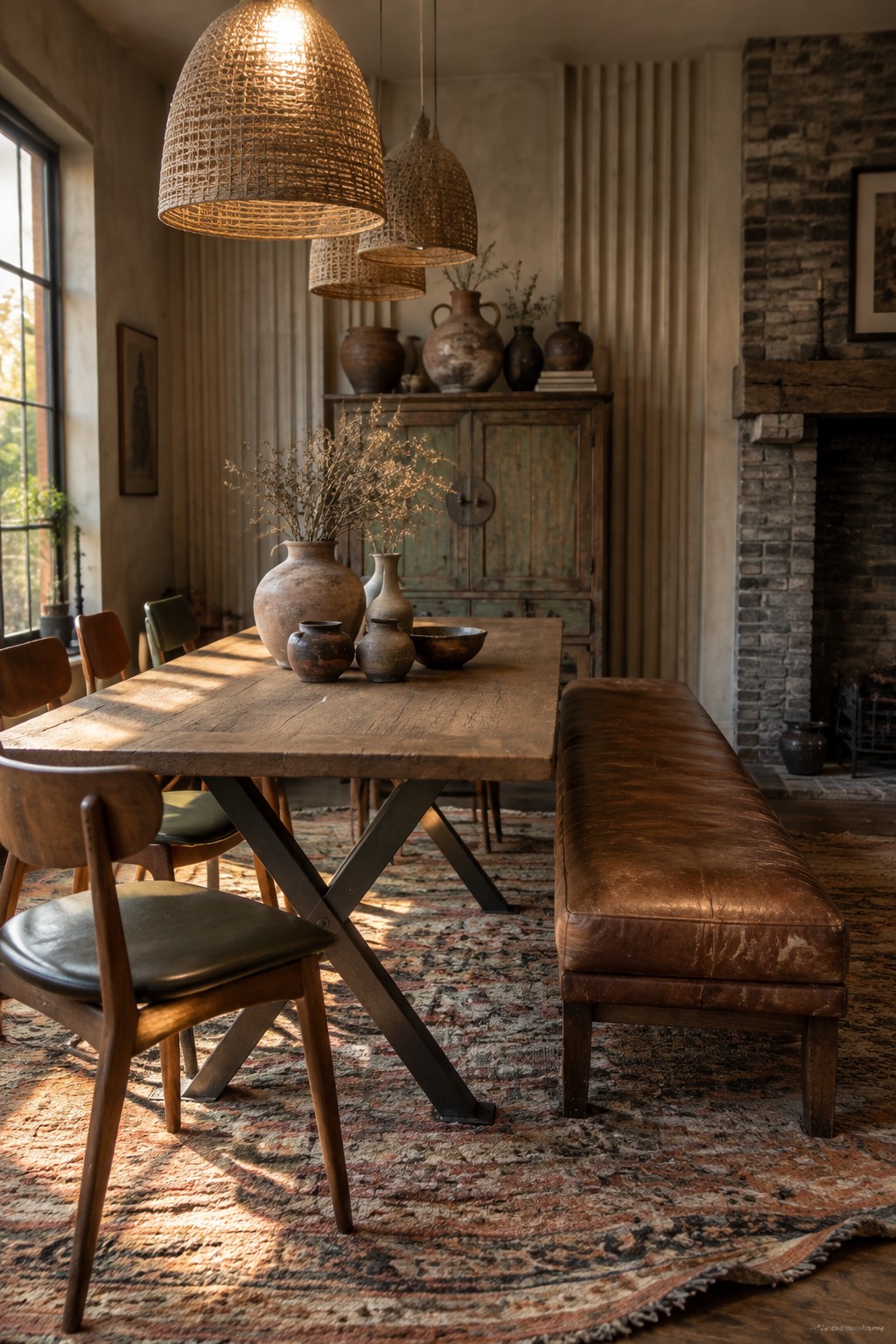
A patterned rug can give a dining area its own clear place, especially in an open room. The faded, earthy colors here suit a rustic wooden table without making the setting feel too formal.
Choose a rug large enough for chairs to stay on it when pulled out. A low-pile weave is easier to clean around the table, and a worn-in pattern is forgiving of everyday use.
Use a Round Table to Make a Dining Nook Feel Easy
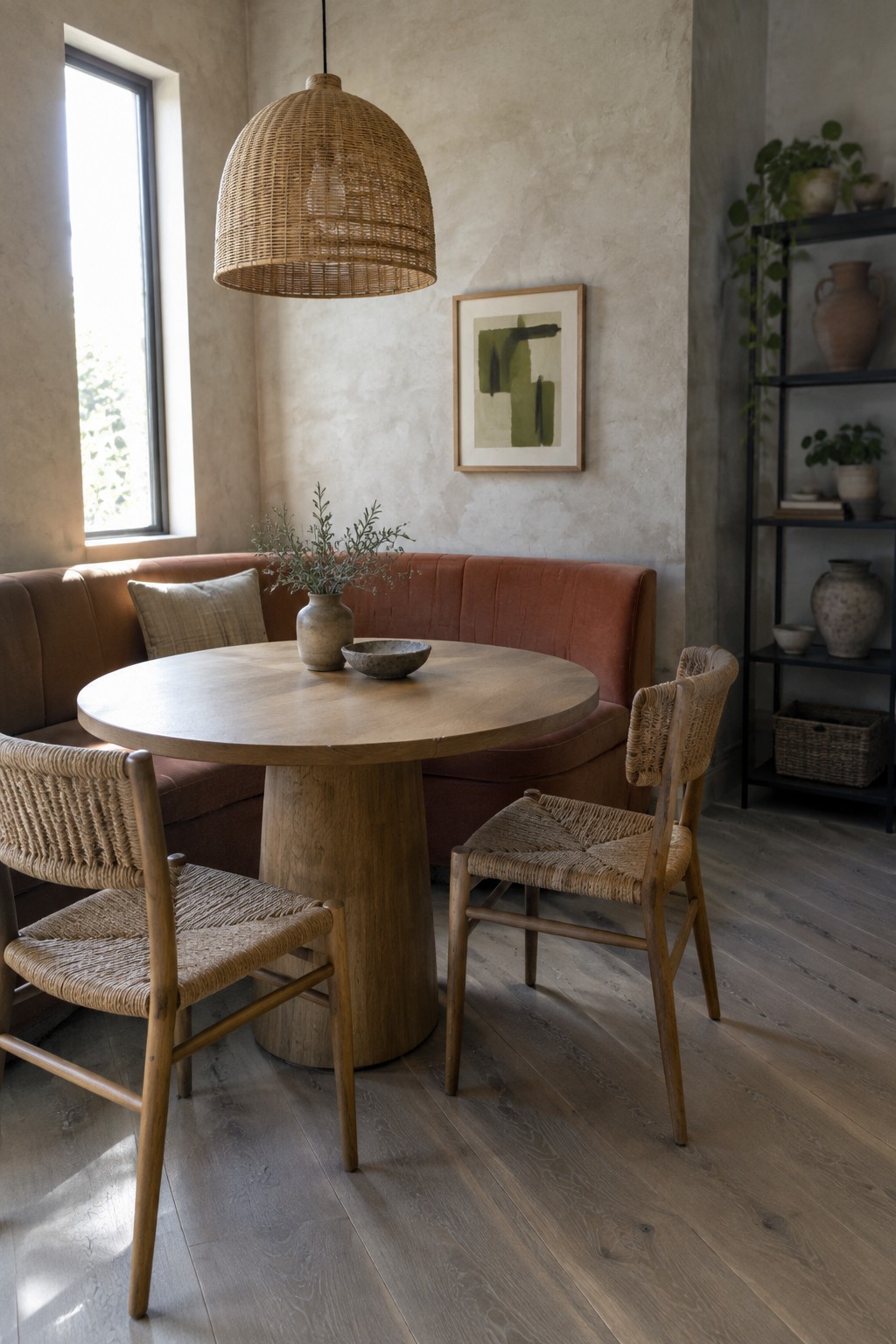
A round table can make a dining nook feel relaxed and easy to move around. Its curved edge works especially well beside a banquette, where it keeps the seating close without making the arrangement feel cramped.
In a smaller dining area, look for a pedestal base so chairs can tuck in more freely. Keep the tabletop clear enough for everyday meals, and choose a wood finish that suits the room’s warm, natural palette.
Use Earthy Tile to Complement Warm Neutrals

Terracotta floor tiles are a simple way to bring earth tones into a dining room without making the furniture feel too heavy. Their reddish-brown color works naturally with neutral walls and upholstered chairs, while the pattern gives the floor a little character.
This approach suits a rustic or older home, especially where tile is already practical for daily use. Keep the walls and larger pieces fairly quiet so the floor can add color without making the room feel busy.
Use a Round Table to Make a Dining Nook Feel Easy

A round dining table suits a compact nook because it leaves no sharp corners to work around and lets everyone sit close enough to talk comfortably. The pale tabletop also sits easily among warmer wood and woven textures.
Try this shape in a breakfast area or a dining space tucked beside a banquette. Leave enough room to pull the chairs back, especially where the table sits near a wall or built-in seating.
Use Candles for a Softer Dining Room
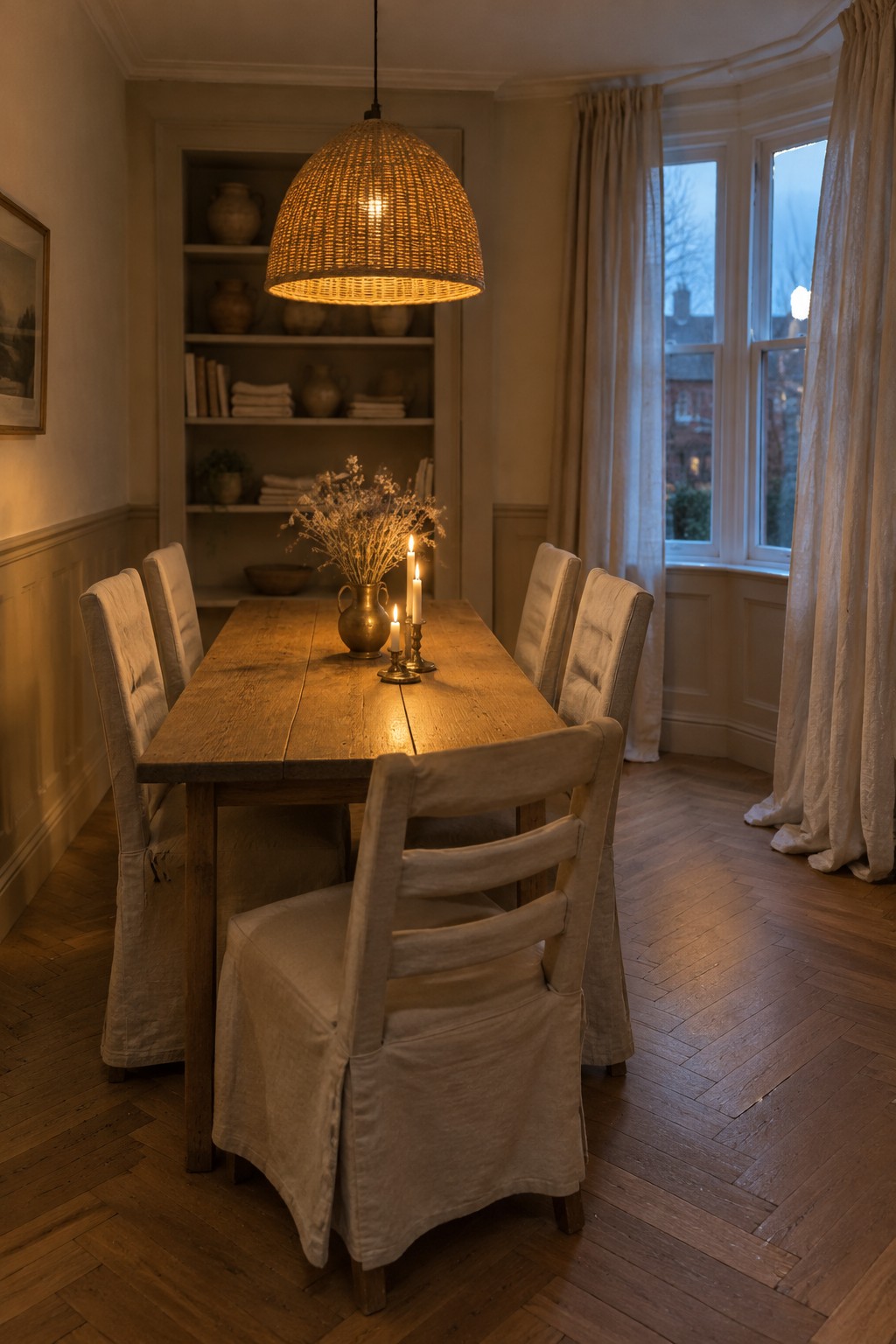
Candlelight is an easy way to make a dining room feel calmer in the evening. Here, the small flames suit the warm wood table and neutral chair covers without making the setting feel overly formal.
Use a few candles as a simple centerpiece for dinners or everyday meals. Keep them low enough that people can see across the table, and leave space around them so serving dishes still fit.
Frequently Asked Questions
Q: How do I keep a dining room with warm neutrals from feeling too beige?
A: Add earth tones in a few different ways, such as a clay-colored vase, olive-green upholstery, or a wooden table with visible grain. Those small shifts bring depth without making the room feel busy.
Q: What wall color works with a warm wood dining table?
A: Cream, soft taupe, and muted sage all pair nicely with warm wood. If the room gets little natural light, try a lighter shade so the table doesn’t make the space feel heavy.
Q: Can I mix different wood tones in the same dining room?
A: Yes. Aim for a shared warmth, even if the woods are different shades, and repeat each tone somewhere in the room. A darker table can sit comfortably beside lighter chairs when the rest of the palette feels relaxed.
Q: How can I bring in earth tones without repainting?
A: Start with textiles and tabletop pieces, like rust-colored cushions, a woven runner, or a few terracotta accents. They’re easy to switch out if you want to refresh the room later.
