
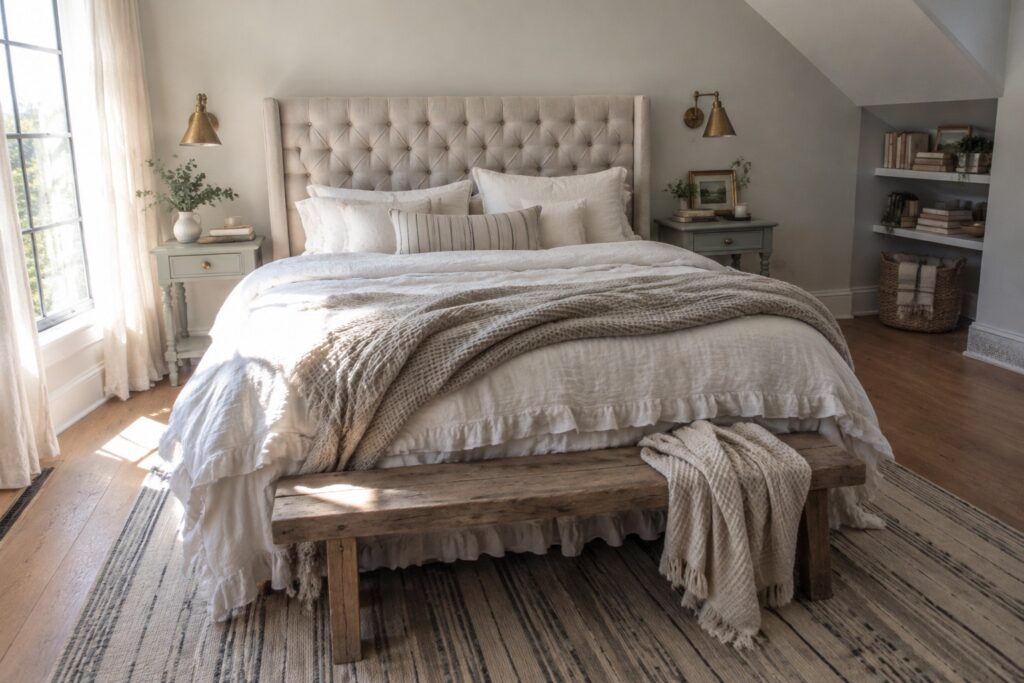
An upholstered headboard can change the feel of a bedroom before you notice anything else, bringing softness and a clear focal point to the bed.
I find these rooms work best when the headboard feels connected to the rest of the space, from the bedding and bedside tables to the lighting and wall color.
Some designs lean calm and simple, while others use texture, pattern, or a generous shape to give the room more character.
The practical details matter too, since the bed still needs to feel comfortable and leave enough room to move around.
I’d save ideas that suit the proportions of your own room and try their colors or materials before making a bigger change.
Choose a Tufted Headboard for a Softer Bedroom
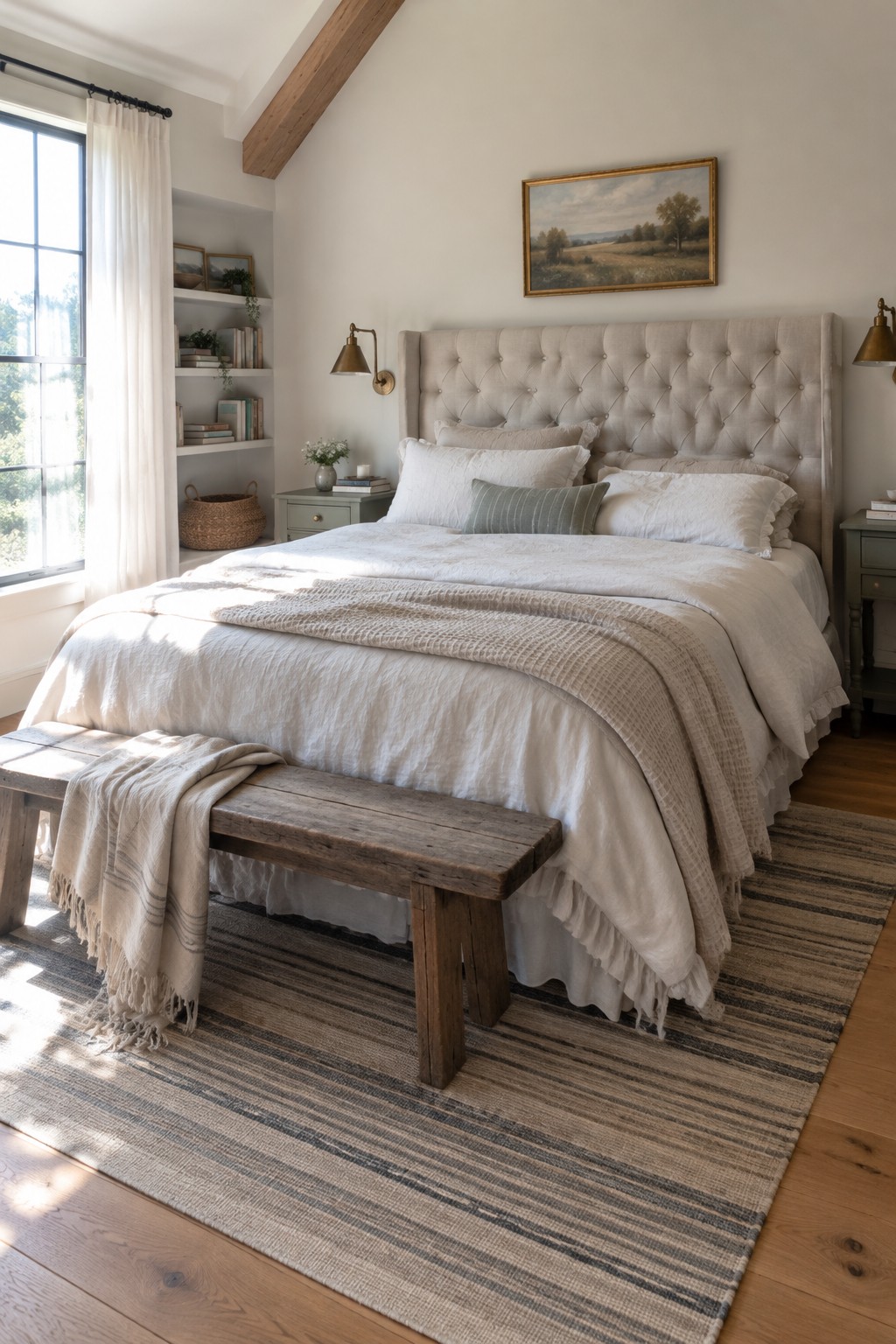
An upholstered headboard makes a bedroom feel more comfortable without adding much extra furniture. A tall, button-tufted style gives the bed a clear focal point, while a pale neutral fabric is easy to live with and works with simple bedding.
This look suits a main bedroom where comfort matters more than a crisp, formal finish. Choose a fabric that can handle everyday use, and keep the rest of the bed fairly simple so the headboard has room to stand out.
Use a Tall Upholstered Headboard
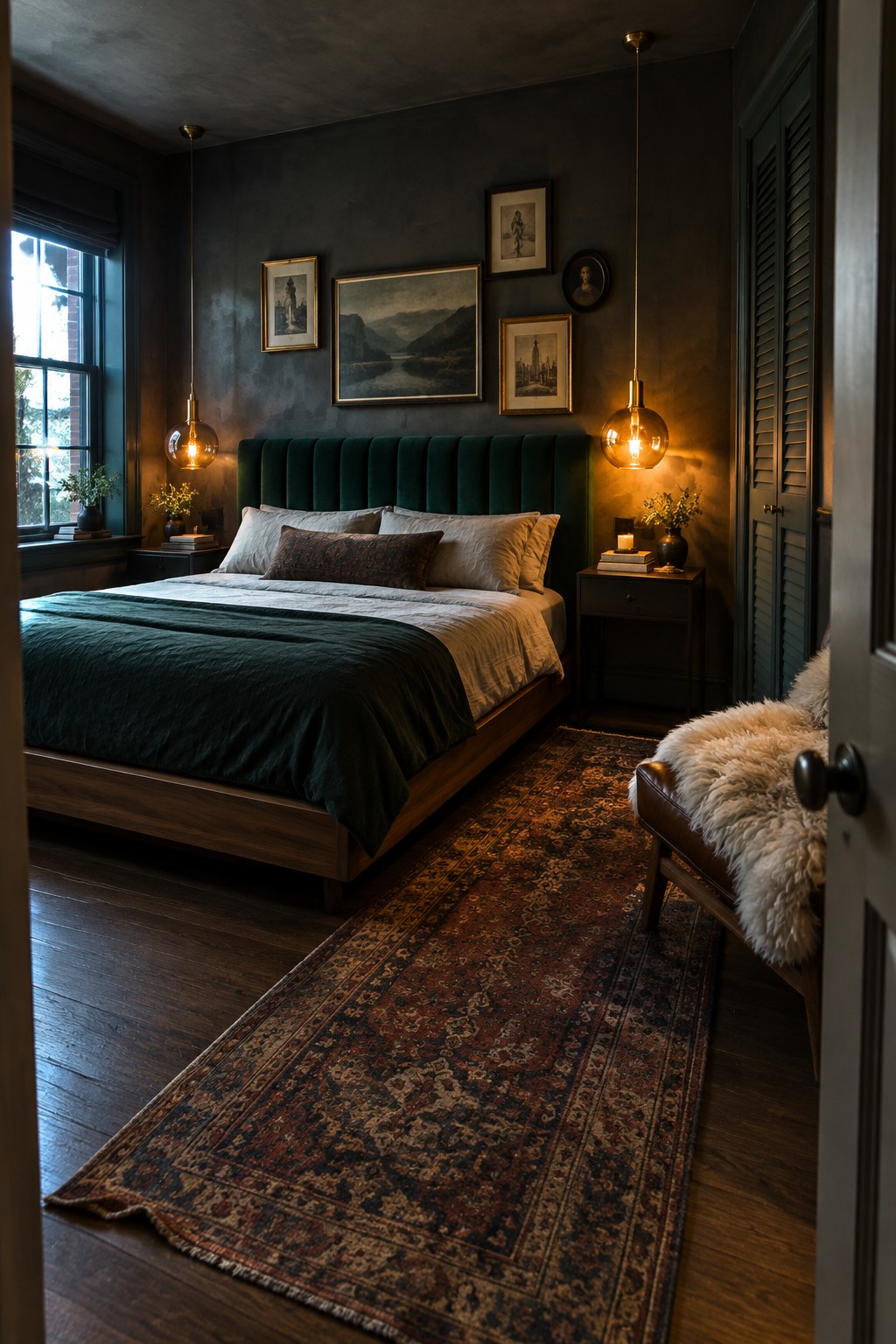
A tall upholstered headboard gives the bed a strong, comfortable backdrop without needing much extra decoration. Here, the deep green vertical panels bring color and texture to a dark bedroom while leaving the bedding simple.
This idea works well in a master bedroom where the bed is the main piece of furniture. Choose a fabric that suits the room’s palette, and make sure the headboard is wide enough to look in proportion to the bed.
Use an Upholstered Headboard to Make the Bed Feel Softer

An upholstered headboard makes a bedroom feel more comfortable without needing much extra decoration. Here, the fabric panel sits within a simple wood frame, which gives the bed a softer place to lean while keeping the look clean.
This idea works well in a master bedroom where the bed is the main piece of furniture. Choose a durable, easy-to-clean fabric in a color that suits your bedding, and let the headboard do most of the styling.
Choosing an Upholstered Headboard for a Cozy Bedroom

An upholstered headboard can make a bedroom feel more comfortable without adding extra furniture. A softly curved blue headboard gives this bed a clear focal point, while its fabric keeps the look relaxed.
For a similar effect, choose a headboard in a color that works with your bedding, then keep the surrounding walls fairly simple. A shaped design suits a main bedroom well, but check its width against the bed so it does not crowd the space.
Use Wood Slats to Make an Upholstered Headboard Stand Out

A simple upholstered headboard can feel more considered when it sits in front of a wood-slat wall. The vertical boards give the bed a clear backdrop, while the upholstered surface keeps the main furniture choice comfortable and soft.
This approach suits a bedroom with enough wall space behind the bed. Keep the slats to that area rather than carrying them around the whole room, especially if the wood is dark. Here, a caramel-colored headboard is a natural fit.
Choose a Rounded Headboard for a Cozy Bedroom

A rounded upholstered headboard gives the bed a softer outline than a straight, boxy style. In a cozy bedroom, that gentle shape feels at home with relaxed bedding and makes the bed look comfortable without much extra fuss.
This style works especially well in a room where the bed is the main focus. Keep the headboard wide enough to suit the mattress, and choose a fabric that can handle everyday use.
Use Wood Paneling to Make an Upholstered Bed Feel Cozy

Wood-paneled walls give an upholstered headboard a natural place to sit, so the bed feels settled without needing a lot of extra decor. Here, the dark tufted headboard stands out against the honey-toned boards while still fitting the room’s cabin style.
This approach suits bedrooms where you want a warm, traditional feel. Keep the paneling fairly simple, and let the headboard provide the softer texture near the bed.
Use Dark Upholstery to Make a Bedroom Feel Cozy

A dark upholstered bed can make a bedroom feel settled and comfortable without adding much decoration. Here, the charcoal headboard and bed frame give the room a clear focal point, while lighter bedding keeps the look from becoming too heavy.
This approach works well in a room with simple finishes and enough natural light. If you use dark upholstery, keep some lighter fabric nearby, and check that the material is easy to clean.
Let Patterned Wallpaper Set the Tone

A tall upholstered headboard can feel right at home in a bedroom with patterned wallpaper. The fabric gives the bed a comfortable, soft-backed look, while the wallpaper brings in color and detail without needing much extra decoration.
For a similar effect, choose a headboard color that appears somewhere in the wallpaper, as the dusty rose does here. This approach works especially well in traditional bedrooms, but keep bedding fairly simple so the patterns do not compete.
Use a Channel-Tufted Headboard for a Loft Bedroom

A tall upholstered headboard can help a bed feel settled in a room with exposed brick and concrete. The deep vertical channels add a soft surface without hiding the character of the walls.
This style suits lofts and other bedrooms with hard finishes. Choose a headboard wide enough to sit comfortably behind the pillows, and keep its color simple so the brick can still stand out.
Use Natural Materials Around an Upholstered Headboard

An upholstered headboard can feel right at home in a bedroom with plenty of natural materials. Here, the rounded fabric headboard sits against a wall of wood slats, giving the bed a clear place in the room without making it feel formal.
For a similar look, keep the headboard simple and let the wall treatment provide texture. This works especially well in a bedroom that already has wood floors or woven accents. If the room is small, use the wood detail on just one wall so it does not feel too busy.
Let a Tall Headboard Set the Bedroom’s Style
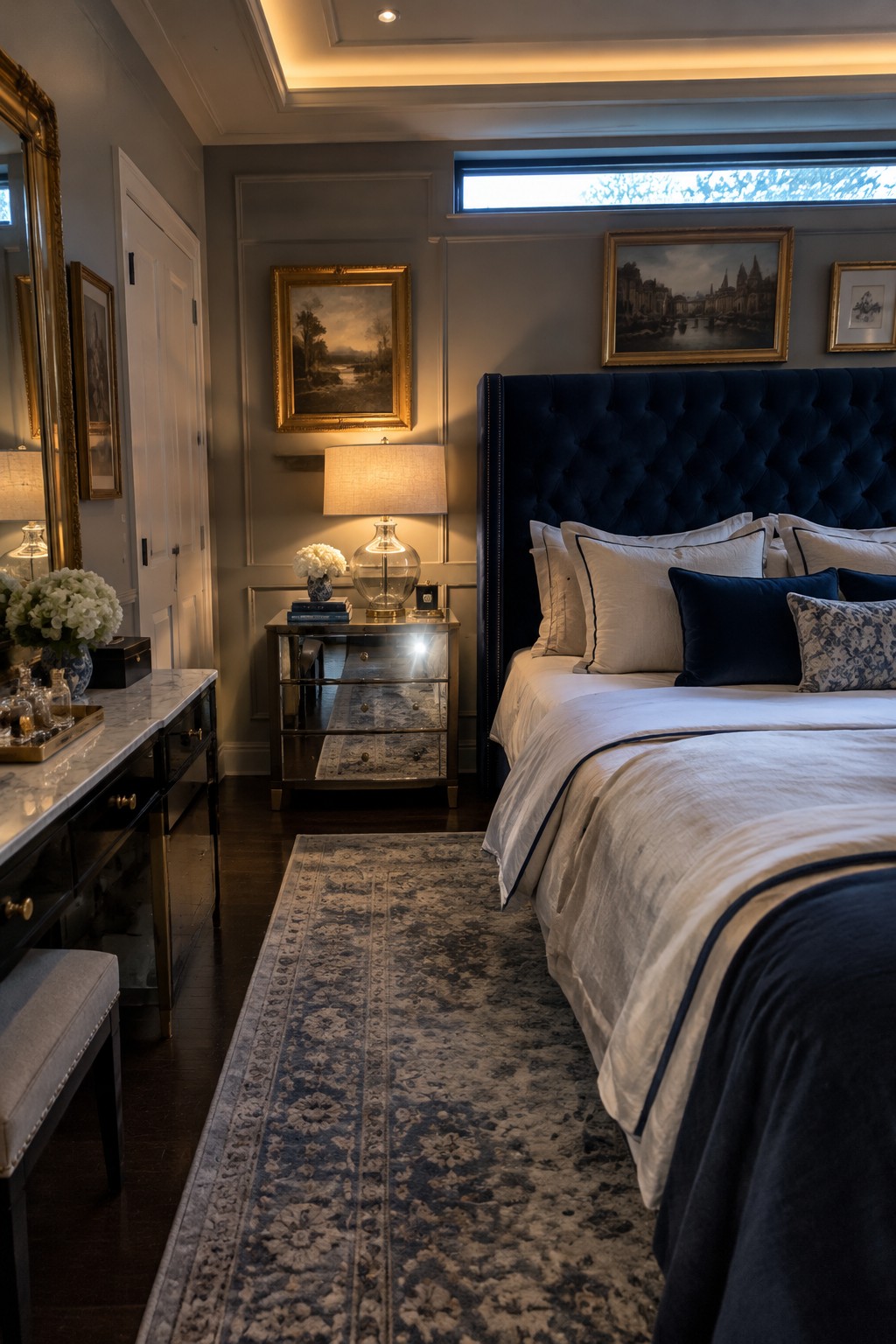
A tall upholstered headboard gives the bed a strong presence without needing much extra decoration. Here, the deep blue fabric and button tufting make the bed feel like the room’s main feature.
This approach works well in bedrooms with enough wall height to accommodate a larger headboard. Keep the bedding fairly simple so the upholstery can stand out, and check that the headboard does not crowd a narrow room.
Choose a Low Platform Bed for a Calm Look

A low wooden bed frame keeps an upholstered headboard from making the bed feel too bulky. Here, the simple platform gives the padded headboard room to stand out while keeping the overall look relaxed.
This approach works well in bedrooms where you want a cozy bed without a tall or heavy frame. Keep the upholstery in a quiet neutral shade, and choose a platform with enough clearance for comfortable access.
Choose a Scalloped Headboard for a Cottage Bedroom

A scalloped upholstered headboard gives the bed a gentle outline without making it feel fussy. Here, its pale fabric keeps the shape easy to live with, while the floral quilt carries the cottage pattern.
This style suits a bedroom with simple wood furniture and soft, familiar fabrics. Keep the headboard’s color fairly quiet if you plan to use prints on the bedding.
Choose a Curved Headboard for a Softer Look

A curved upholstered headboard gives the bed a gentler outline than a square, straight-backed design. Here, its rounded shape works well with simple bedding and keeps the bed feeling relaxed rather than formal.
This style suits bedrooms where the bed is the main feature, especially when you want a cozy look without adding busy patterns. Keep nearby fabrics fairly simple so the headboard’s shape has room to stand out.
Use Patchwork Fabric to Give a Headboard Character
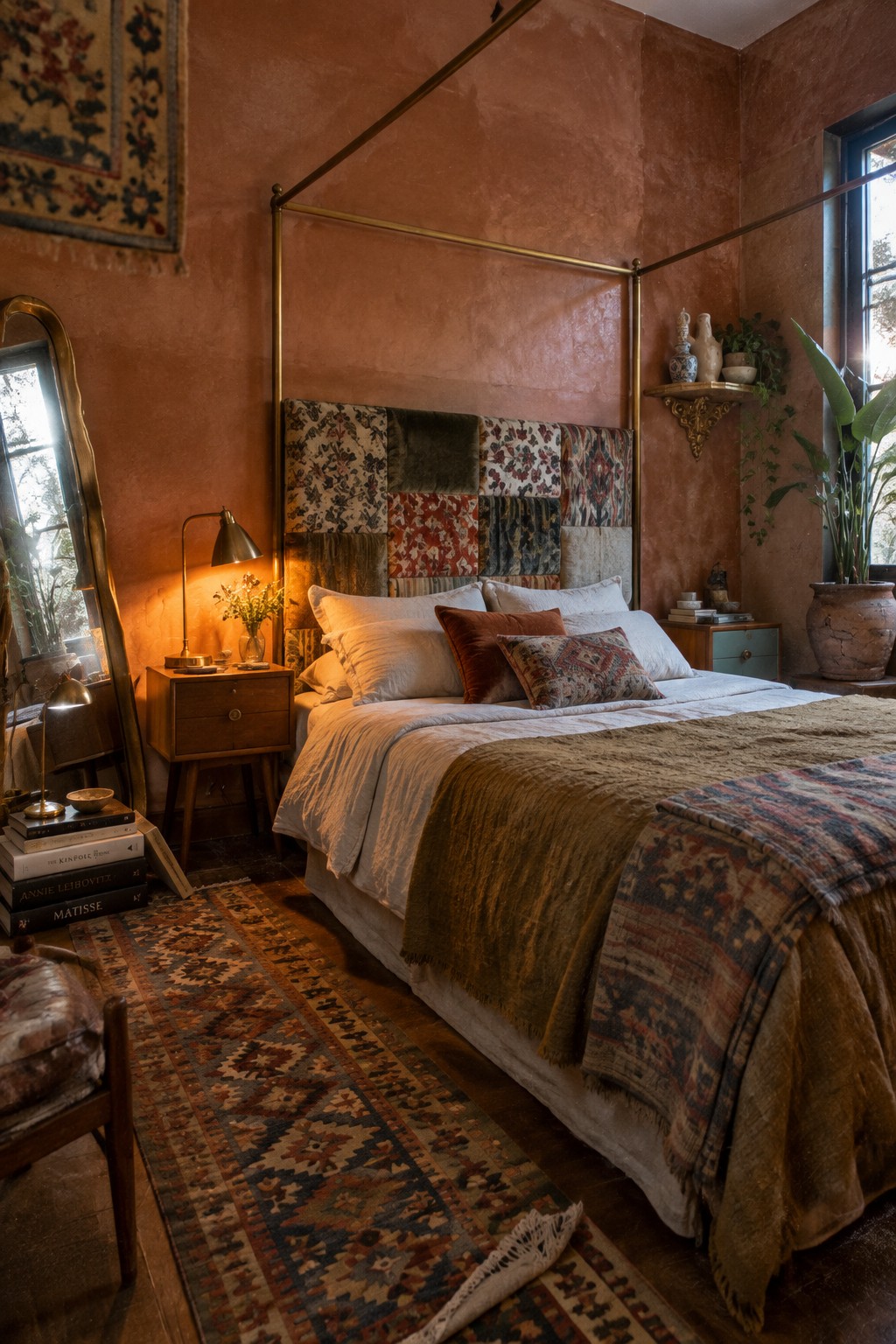
A patchwork upholstered headboard brings several fabric patterns into one large, comfortable feature. It works especially well when the rest of the bedding stays fairly simple, so the headboard can add interest without making the bed feel busy.
Try this idea with a mix of fabrics that share a few colors, rather than patterns that all compete. It suits a bedroom with collected, handmade touches, and smaller fabric samples can help you check the combination before committing.
Let a Neutral Upholstered Headboard Set the Tone

A neutral upholstered headboard is an easy way to make a master bedroom feel comfortable without locking the room into a strong color scheme. Here, the soft gray fabric gives the bed a quiet, substantial look, while the pale bedding keeps it from feeling too heavy.
This approach works especially well in a traditional bedroom, where patterned rugs or curtains already bring plenty of detail. Choose a fabric that can handle everyday use, and repeat its color in a pillow or throw for a simple, connected look.
Let an Upholstered Headboard Set the Tone

A textured upholstered headboard can make a bedroom feel comfortable without needing much extra decoration. A curved, neutral headboard gives the bed a softer outline and works especially well with simple bedding.
For a similar look, choose a fabric that feels pleasant but can handle everyday use, then keep the bedding in a related, quiet color. This approach suits both roomy bedrooms and smaller spaces where a calm bed can do enough on its own.
Make a Built-In Niche Part of the Bedroom Design
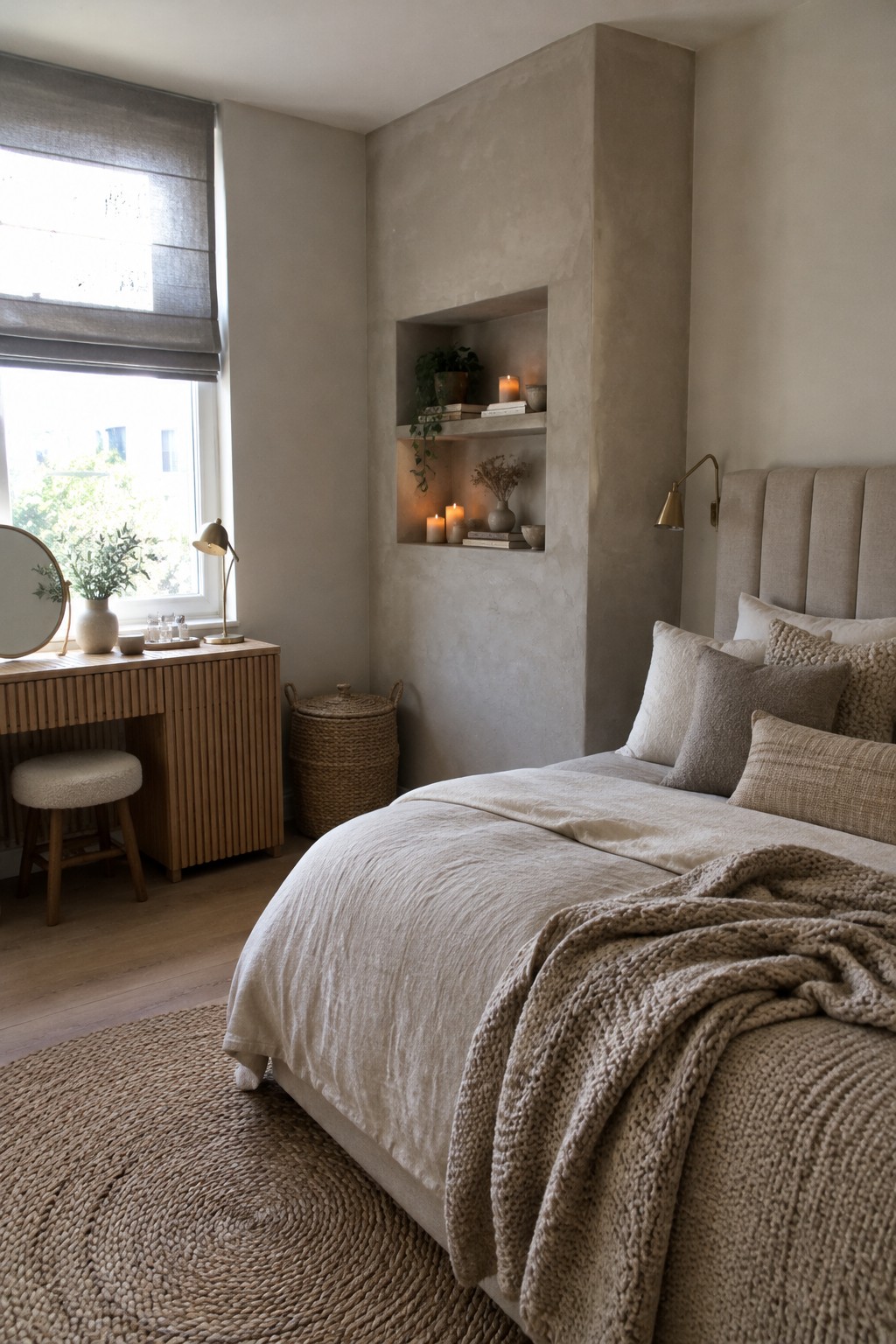
A recessed wall niche gives a bedroom useful display space without bringing in another piece of furniture. Here, the shelves sit beside the bed, and their plaster finish blends with the wall.
This approach works well when a room has a deep wall or chimney breast that would otherwise be awkward to furnish. Keep the shelves fairly simple so they do not compete with the upholstered headboard.
Use Leather Upholstery for an Industrial Bedroom

A leather-upholstered headboard can make an industrial bedroom feel more comfortable without hiding its rougher materials. Here, the dark metal wall and brickwork give the room an edge, while the padded brown headboard brings a softer surface to the bed.
This approach suits loft-style rooms or any bedroom with exposed brick, concrete, or dark finishes. Choose leather in a shade that works with the room’s existing wood and metal, and keep the bedding simple so the headboard remains easy to notice.
Use a Channel Headboard to Add Shape
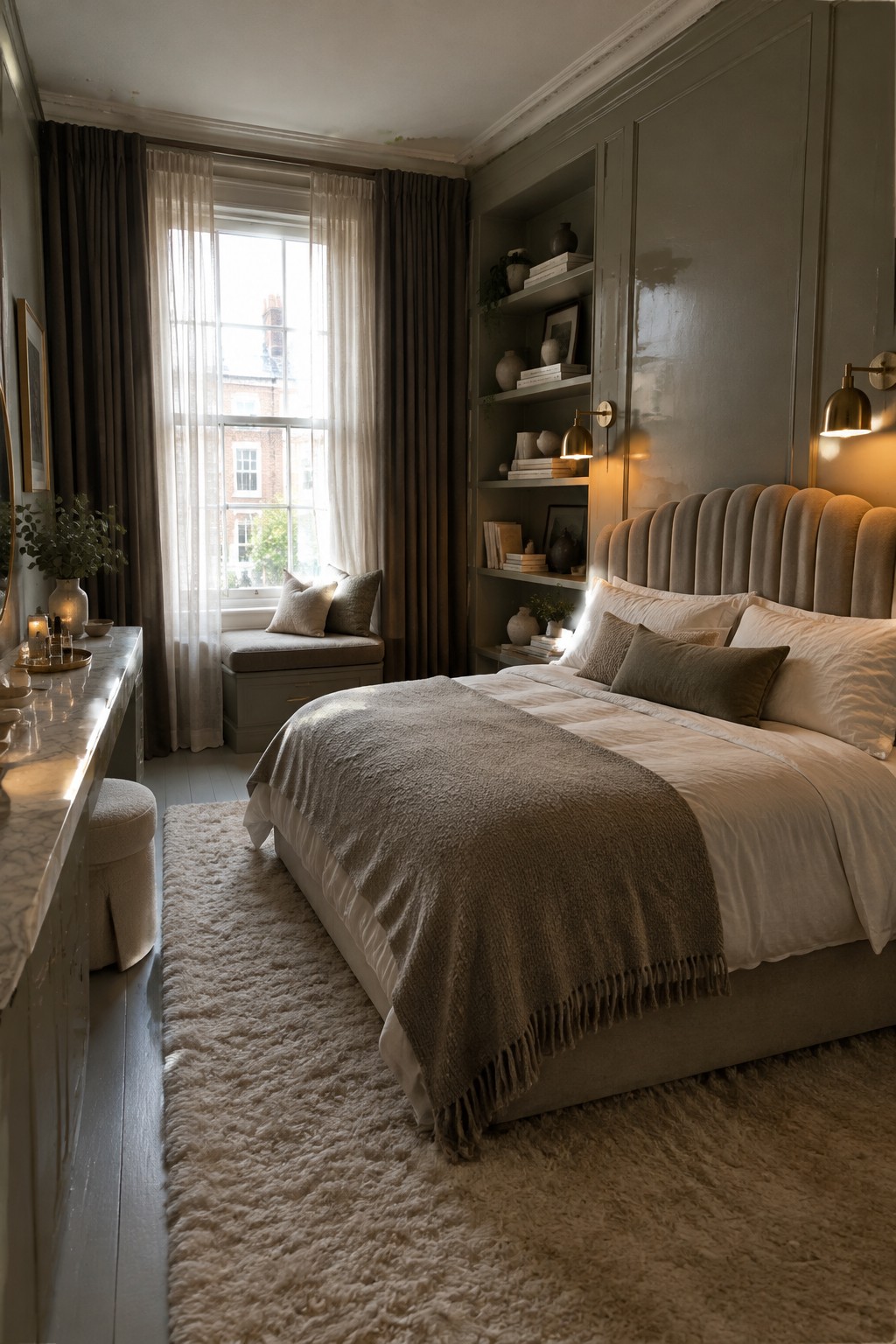
A channel-style upholstered headboard gives the bed a clear, comfortable backdrop. The vertical sections add a bit of shape without relying on a busy pattern, so the look suits a bedroom with calm colors and simple bedding.
For a similar effect, choose a headboard wide enough for the bed and tall enough to stand out against the wall. A neutral fabric is easy to live with, though it’s worth checking how the upholstery will handle everyday wear.
Bring Rustic Texture to an Upholstered Headboard
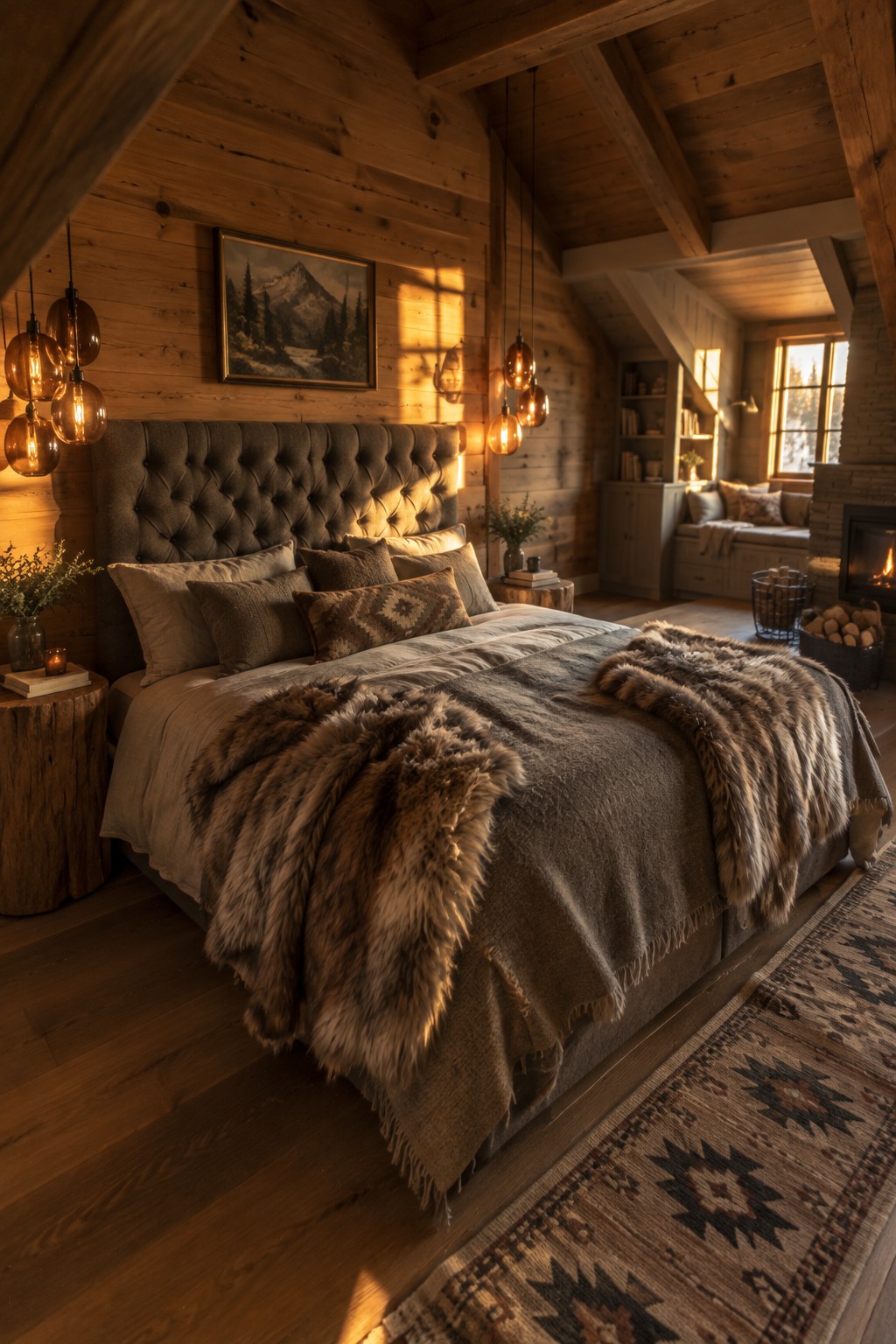
A tufted headboard can feel right at home in a rustic bedroom when it sits against simple wood walls. The contrast keeps the bed from feeling too formal, while textured bedding makes the whole setup feel comfortable and lived-in.
This idea suits a cabin or a bedroom with wood paneling. Choose a sturdy fabric in a muted shade, then keep the surrounding patterns fairly simple so the headboard remains easy on the eyes.
Frequently Asked Questions
Q: How do I choose an upholstered headboard that won’t overpower a small bedroom?
A: Look for a low-profile shape and a light or mid-tone fabric. A simple design can still feel soft and inviting without taking over the room.
Q: What fabric works well if I have pets or kids?
A: Choose a tightly woven, easy-to-clean fabric in a color that can handle everyday marks. Performance upholstery is a practical option, and a removable cover makes cleanup easier.
Q: Can I use an upholstered headboard with a wood or metal bed frame?
A: Yes. Many headboards attach to the frame, while others mount directly to the wall. Check how it’s installed before buying so you know it will fit your bed setup.
Q: How can I keep an upholstered headboard clean?
A: Vacuum it gently with an upholstery attachment every so often, and blot spills promptly with a clean cloth. Avoid rubbing, which can push stains deeper into the fabric.
