
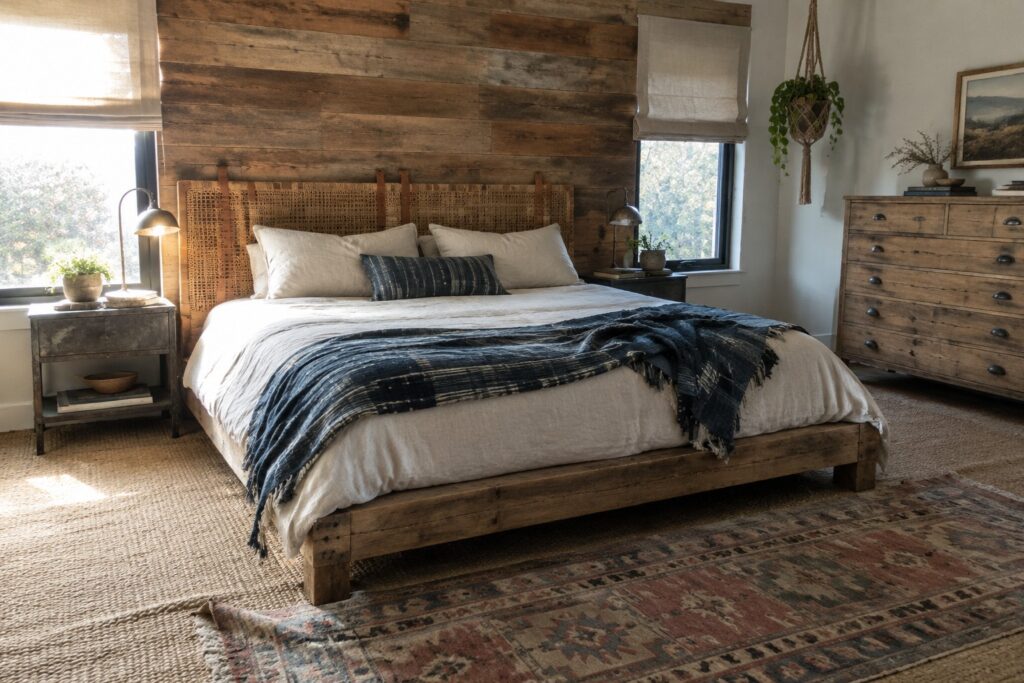
A bedroom can feel rustic without becoming dark or crowded, and the balance often comes down to how the wood, textiles, and everyday furniture work together.
Reclaimed wood adds age and texture, but I find it looks best when the room still has enough light and open space to feel restful.
Woven blankets, rugs, and baskets can soften rougher surfaces while making the room more comfortable to use.
The first thing I notice is whether the bed feels grounded without letting heavy materials take over the whole room.
Some of these details are easy to adapt at home, especially when you start with one well-chosen wood feature and build around it.
Use Reclaimed Wood As A Bedroom Feature Wall
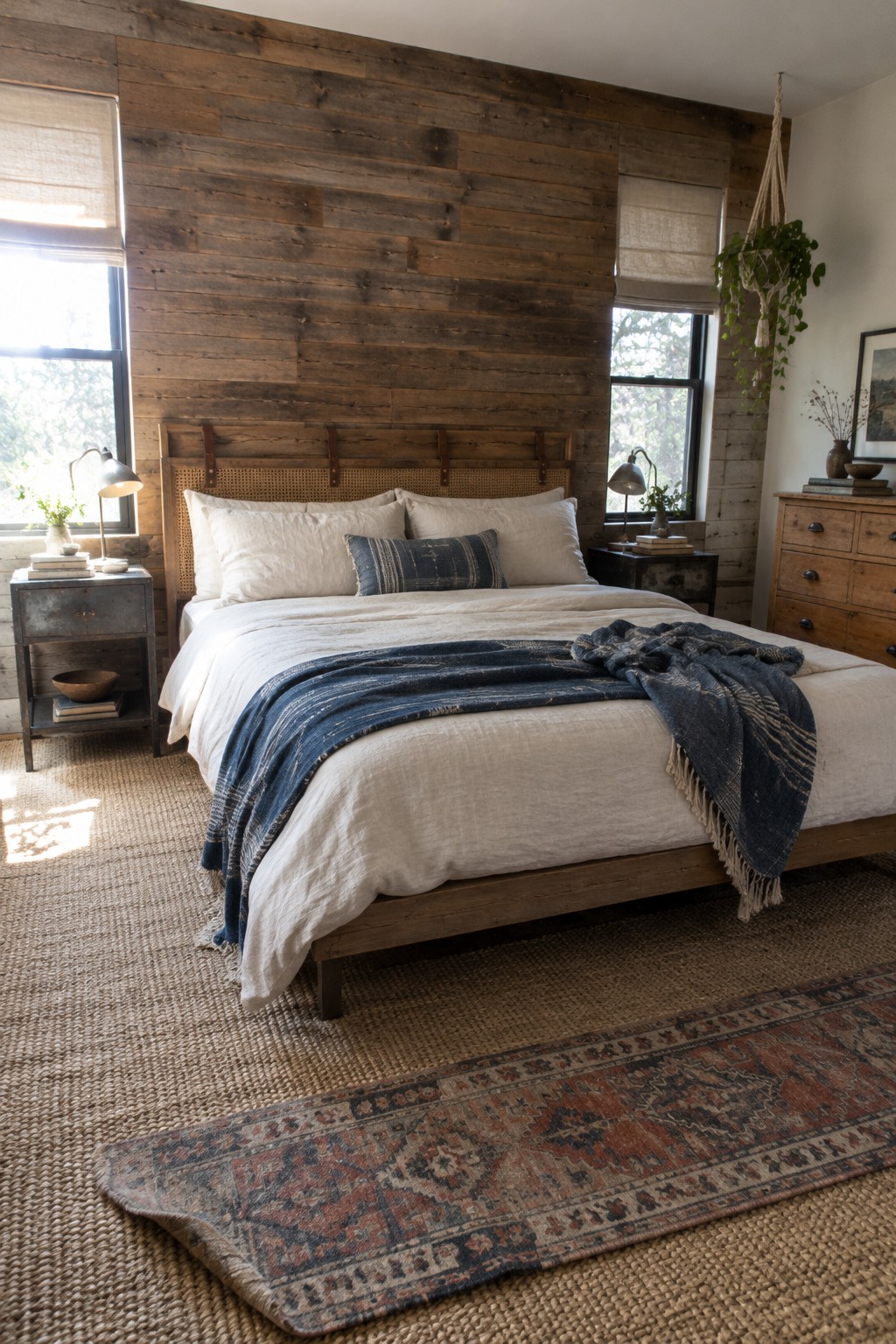
A reclaimed wood wall gives a rustic bedroom a strong focal point without needing much extra decoration. The varied boards bring character, while simple bedding keeps the room comfortable and easy to live with.
This idea works especially well behind the bed, where the wood can define the sleeping area. Choose boards in a tone that suits the room, and keep nearby textiles fairly simple so the wall does not feel too busy.
Use Reclaimed Wood to Give a Bedroom Character

Reclaimed wood can make a master bedroom feel settled and personal without needing much decoration. Here, the exposed ceiling beams and sturdy bed frame give the room its character, while woven bedding keeps the wood from feeling too heavy.
This approach suits a cabin or an older home, but it can work in a newer room too. Start with one substantial wood feature, then bring in a woven blanket or rug for a softer counterpoint. A few well-chosen materials are usually enough.
Use Woven Textiles to Warm Up Reclaimed Wood

Reclaimed wood can give a bedroom a sturdy, weathered look, while woven textiles make it feel more comfortable. A chunky natural-fiber rug is one practical way to bring that softer texture underfoot.
Try the same mix in a rustic bedroom with wood floors or a simple timber bed. Keep the patterned throw to one main layer so it stands out without making the bed feel busy.
Use Woven Textiles To Warm Up Reclaimed Wood

A reclaimed wood bed can feel a little stark on its own. Woven textiles bring in pattern and softness while keeping the room’s rustic character. Here, a woven headboard and patterned rug give the sturdy wood a more relaxed feel.
Try this approach in a bedroom with simple wood furniture, and let a few textiles carry most of the pattern. If you use several prints, keep their colors related so the room still feels settled.
Make the Headboard a Bedroom Focal Point
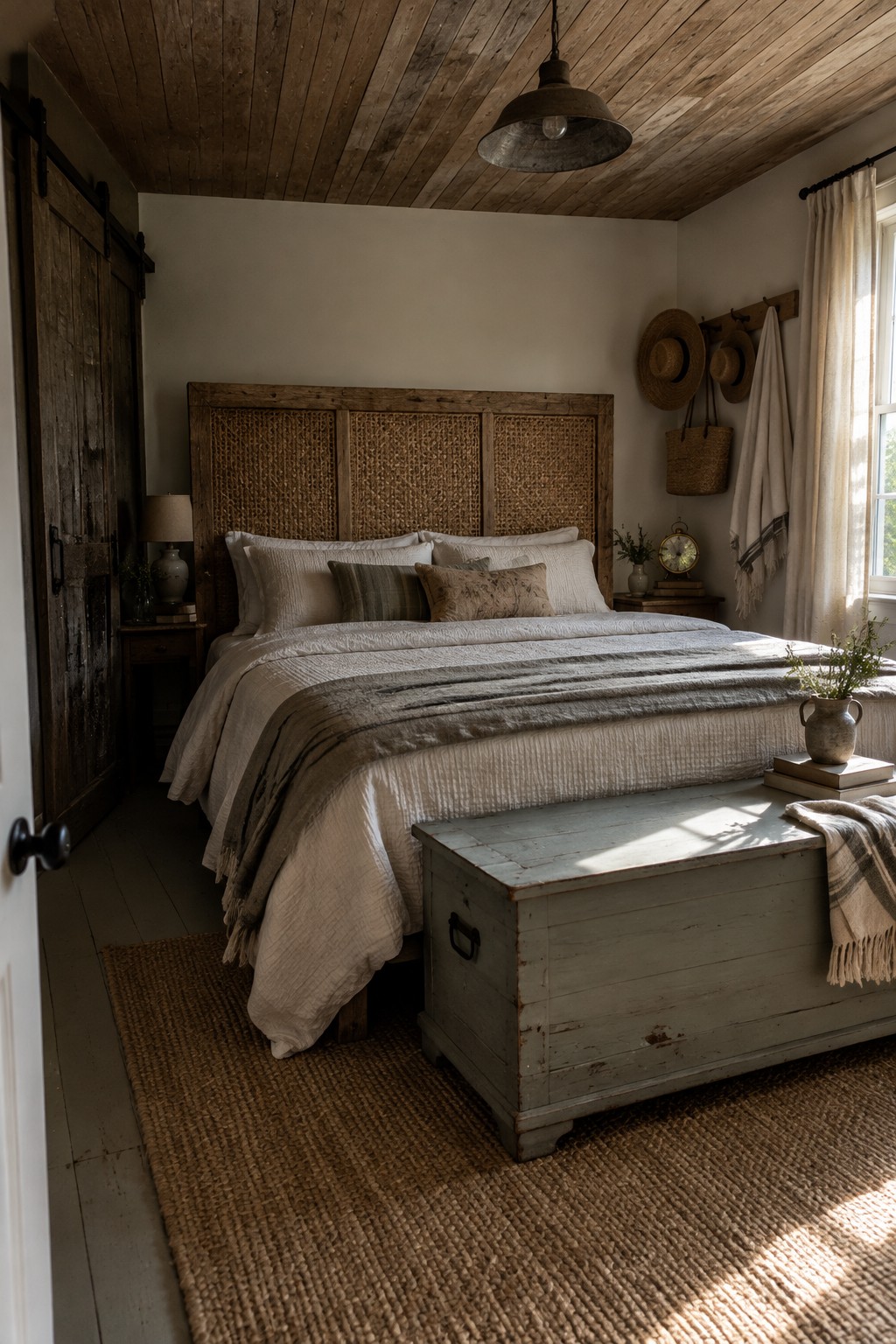
A tall headboard made from reclaimed wood and woven panels gives the bed a clear place in the room. The mix of rough timber and cane adds interest without needing much decoration on the walls.
This approach suits a bedroom where the bed is the main feature. Keep the bedding fairly simple so the headboard can stand out, and choose a size that fits the wall without crowding the bedside tables.
Let the Reclaimed Wood Headboard Set the Tone

A wide reclaimed-wood headboard gives a bedroom a clear focal point without needing much extra wall decor. Its worn grain brings character, while simple bedding keeps the room from feeling too busy.
This works especially well in a bedroom with neutral walls and natural materials. Keep the wood finish fairly consistent across the headboard, or use a smaller wood accent nearby so the bed still feels like the main feature.
Use a Storage Chest At The Foot Of The Bed
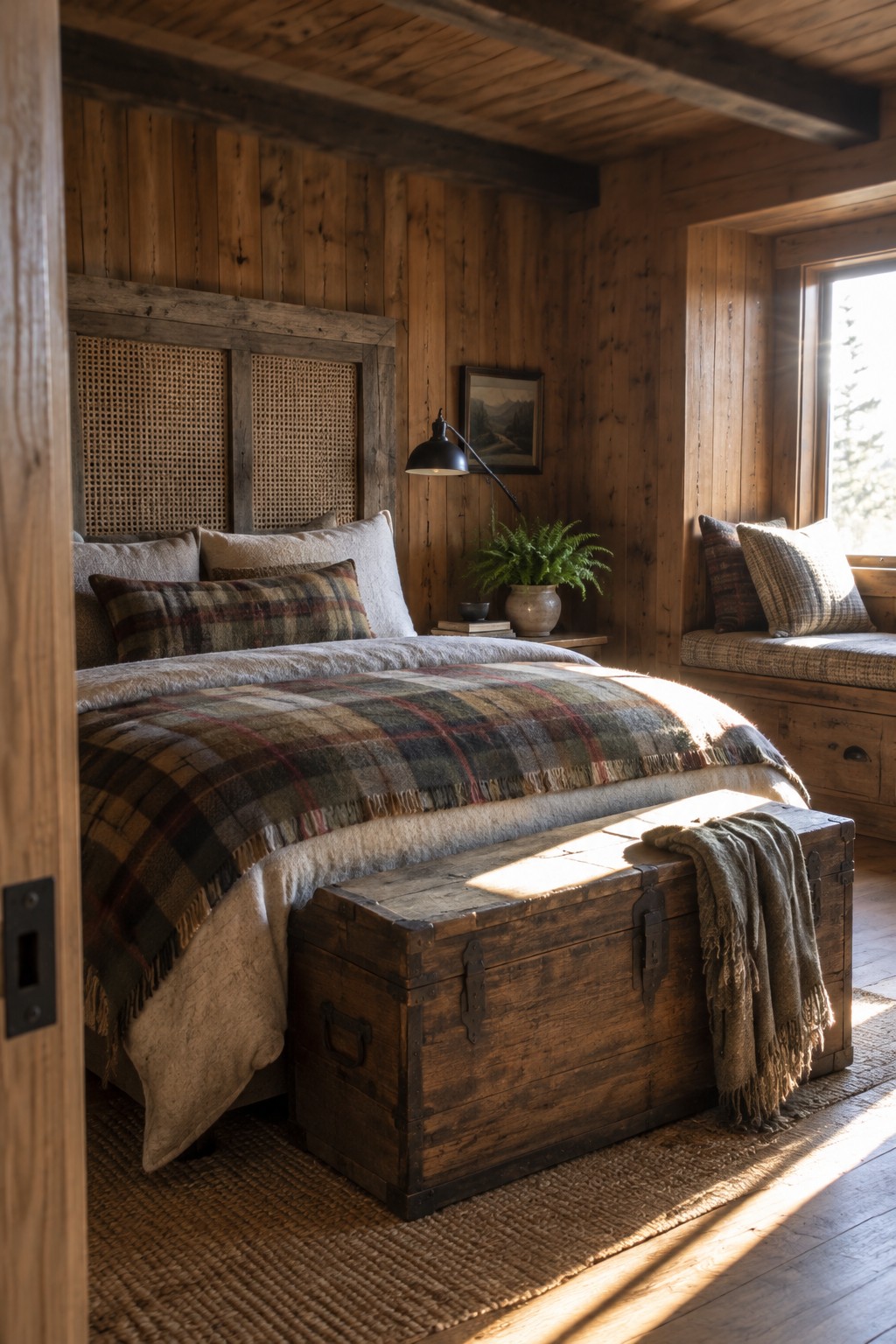
A sturdy wooden chest can provide useful bedroom storage without taking up space for another cabinet. In a rustic room, an old trunk also fits naturally with reclaimed wood and woven bedding.
Choose a chest that leaves enough room to walk around the bed, and use it for extra blankets or linens. A throw draped over one corner keeps the top easy to use while making the chest feel at home in the room.
Choose a Round Woven Rug for the Bed
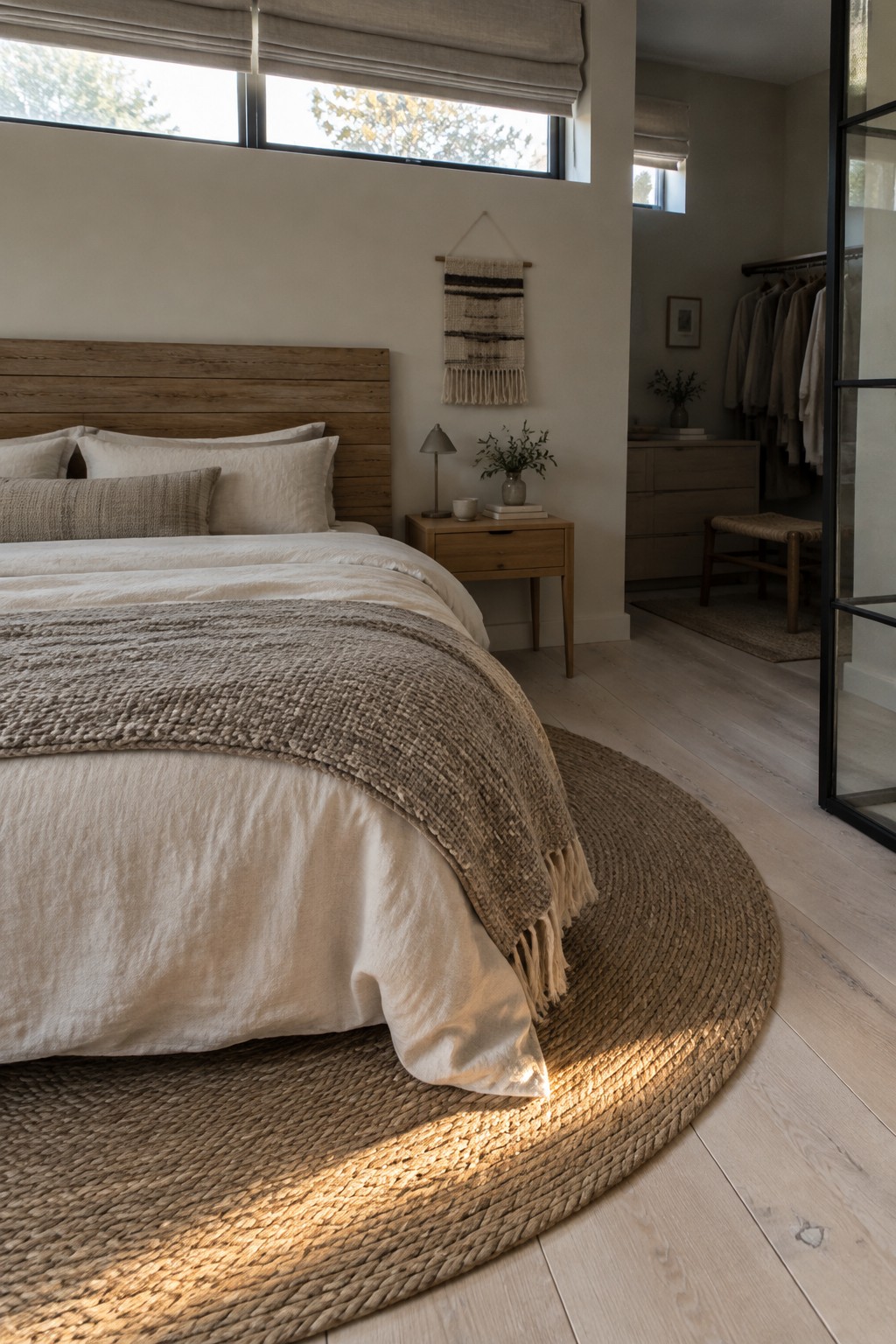
A large round rug can make a rustic bedroom feel less formal than a standard rectangular one. Here, its woven texture works well with the reclaimed wood headboard, while the soft shape gives the bed a clear place in the room.
This idea suits bedrooms with enough open floor space for the rug to extend beyond the sides and foot of the bed. Leave a visible border of flooring around it, and choose a low-profile weave so the rug is easier to walk on and care for.
Use Deep Blue Bedding With Reclaimed Wood
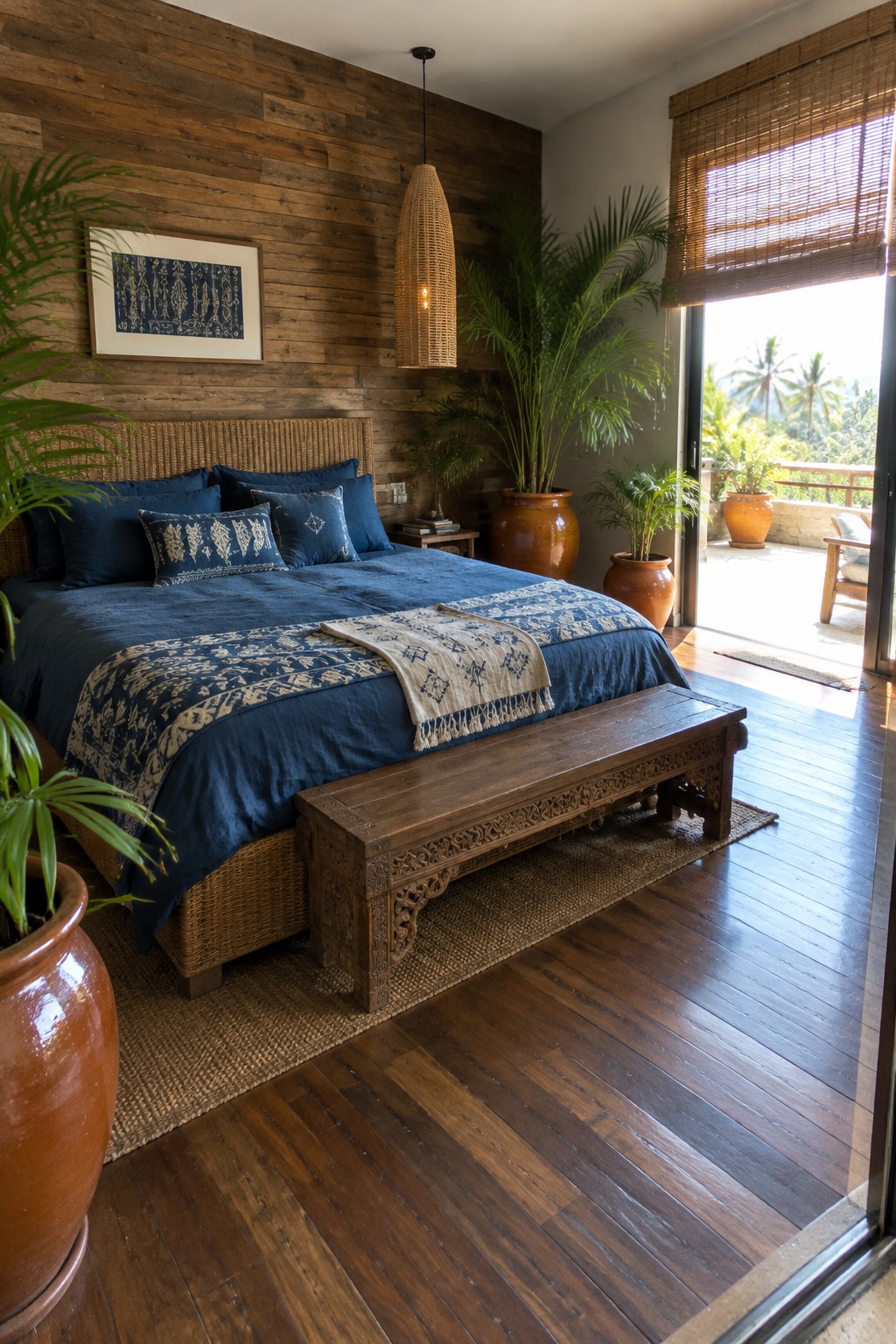
Deep blue bedding gives a reclaimed wood bedroom a calmer, more settled look. The color stands out against the weathered boards, while woven patterned textiles bring in detail without making the bed feel too busy.
This approach works well when you want rustic materials but prefer a bedroom that still feels restful. Try navy bedding with a few patterned cushions or a folded textile at the foot of the bed, and keep the patterns close in color so they do not compete.
Make Room for a Reclaimed Wood Bed Bench

A low bench at the foot of the bed gives a bedroom a useful place to sit or set out clothes. A woven leather seat suits the rustic wood around it, but the bench should stay low enough that it does not block the bed or crowd the walking space.
This idea works best in a room with enough clearance to move around the bench comfortably. Choose a simple, sturdy style, and leave a clear path on both sides if the bed sits near a wall.
Use a Woven Headboard to Bring Texture Into the Bedroom

A woven headboard is an easy way to give a rustic bedroom texture without adding more pattern to the walls. Here, the broad wicker surface works well beside reclaimed wood, while simple bedding keeps the bed from looking too busy.
This idea suits a bedroom with natural wood finishes and a relaxed, collected feel. Keep the headboard’s weave fairly simple, then bring in smaller woven touches through a rug or throw rather than repeating the same texture everywhere.
Use Woven Wall Panels Behind the Bed
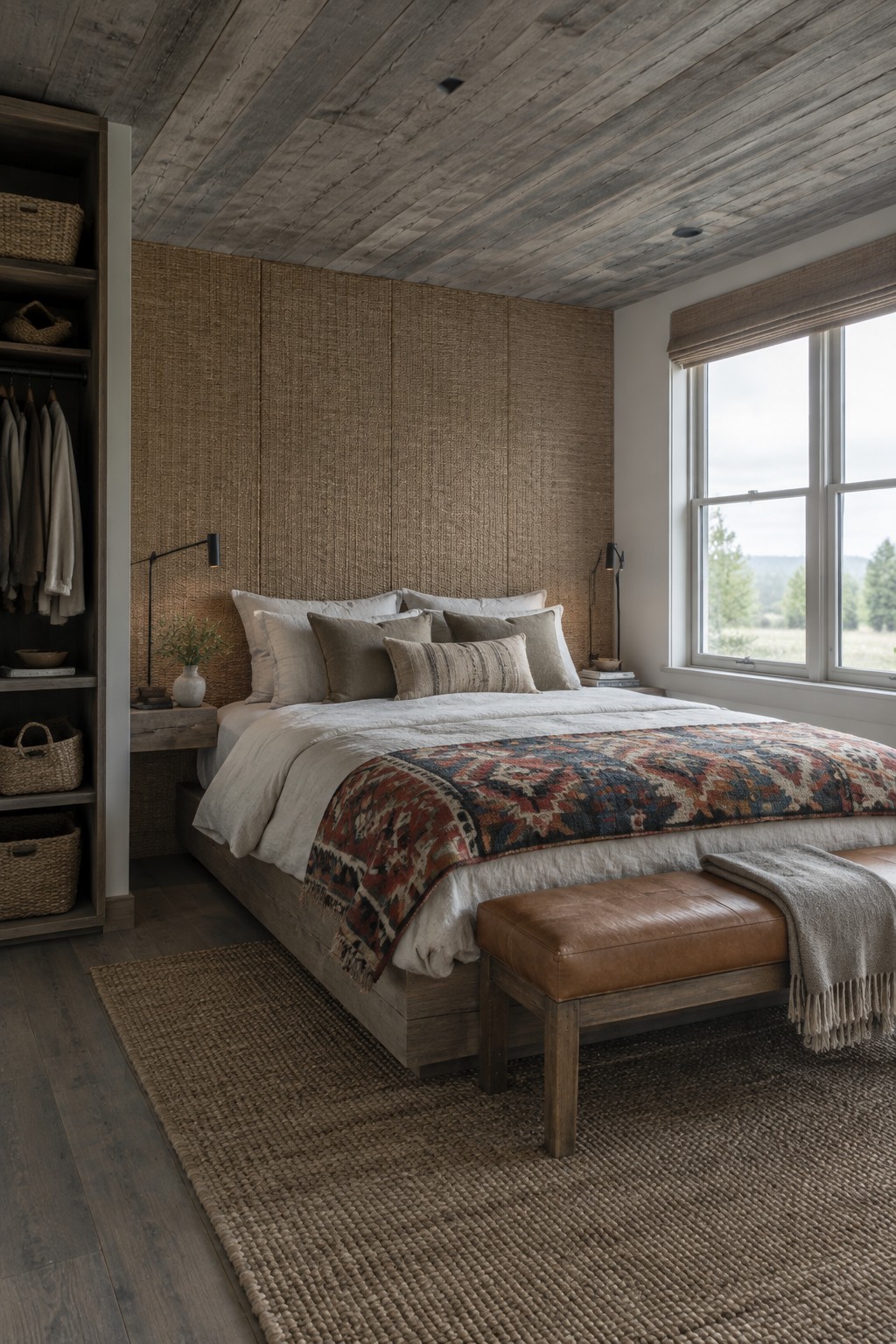
Woven wall panels make a practical alternative to a painted or wood-plank feature wall. Their texture brings a natural, relaxed look to the bedroom, while the muted color works easily with simple bedding.
This treatment suits a bedroom where you want the bed area to feel distinct without adding more furniture. Keep the surrounding decor fairly quiet so the woven surface remains easy to appreciate.
Use Reclaimed Wood To Bring Character To A Bedroom
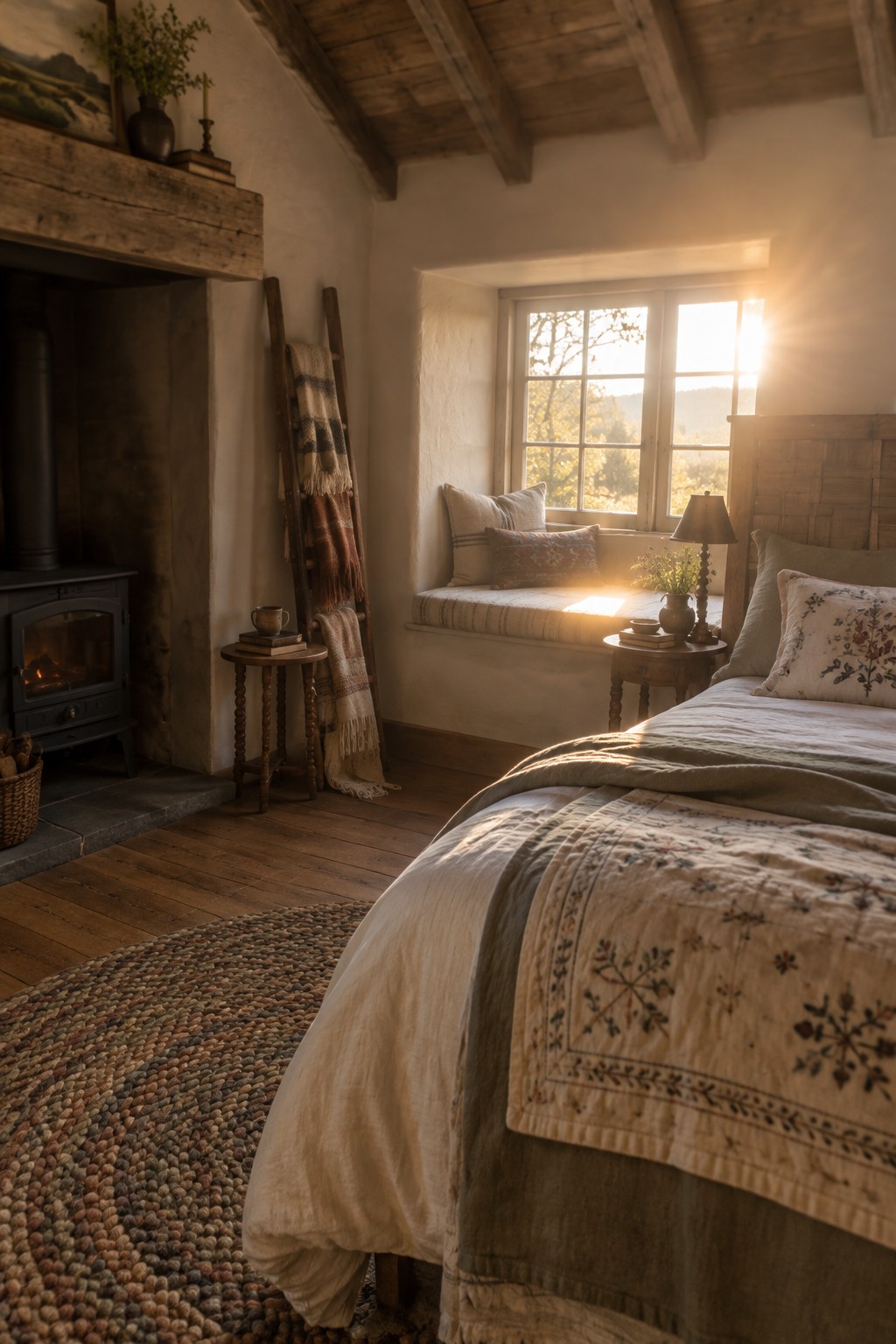
Reclaimed wood can give a bedroom a settled, lived-in feel without covering every surface. Here, the chunky fireplace mantel and exposed ceiling beams show how a few old wood details can bring character to a quieter room.
In a rustic bedroom, try reclaimed wood on one architectural feature, such as a mantel, headboard, or ceiling beam. Woven bedding and a textured rug can keep the room from feeling too hard or heavy.
Use Woven Bedding to Make a Bedroom Feel More Relaxed
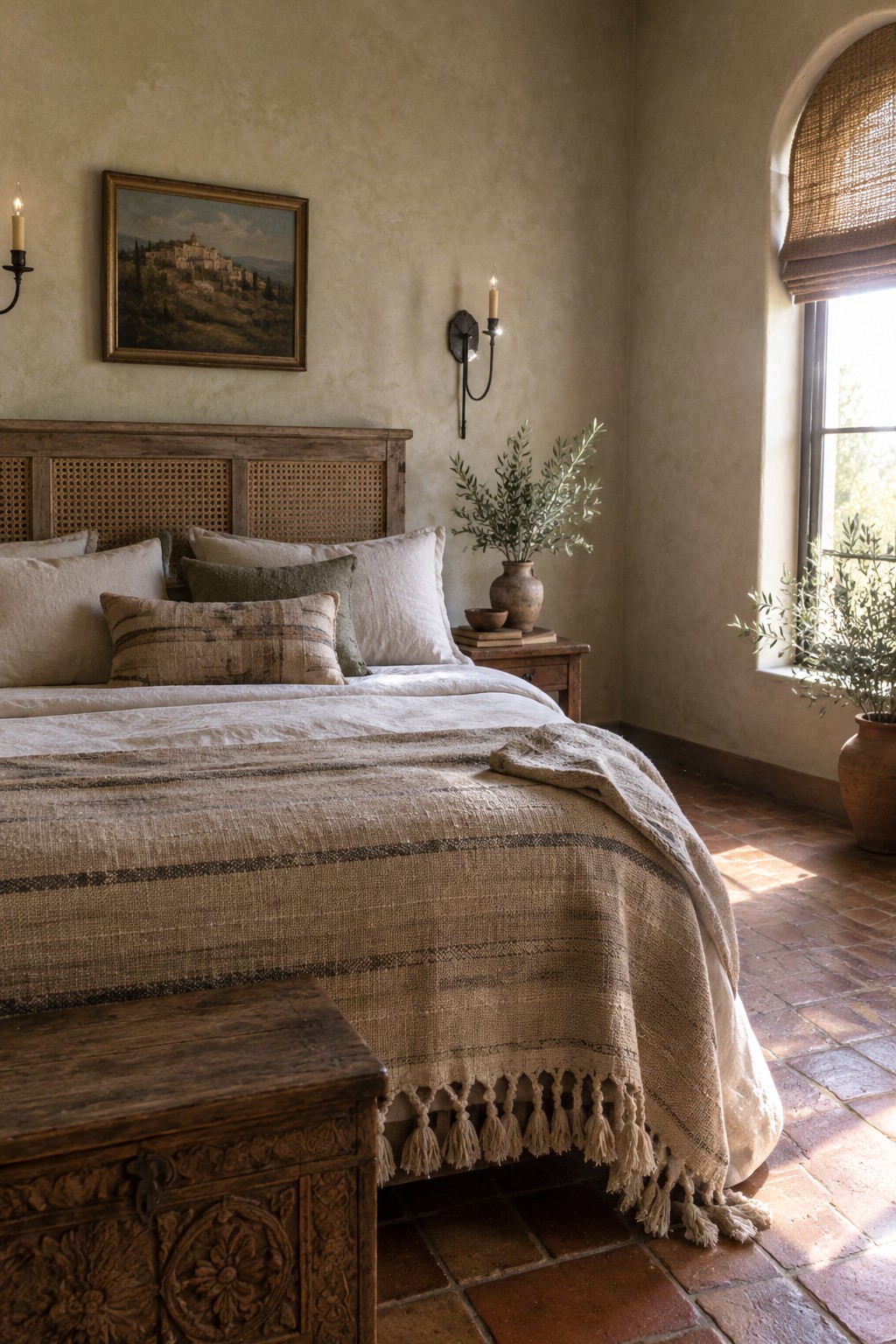
Woven bedding is an easy way to make a rustic bedroom feel less formal. A striped blanket with a tasseled edge gives the bed texture and a lived-in look, while neutral sheets keep the pattern from taking over.
This works especially well with a simple wood bed and plain walls. Choose a blanket in a shade close to the bedding, then let its weave provide the contrast. Too many bold patterns can make the bed feel busy.
Let Exposed Beams Set the Bedroom’s Rustic Style
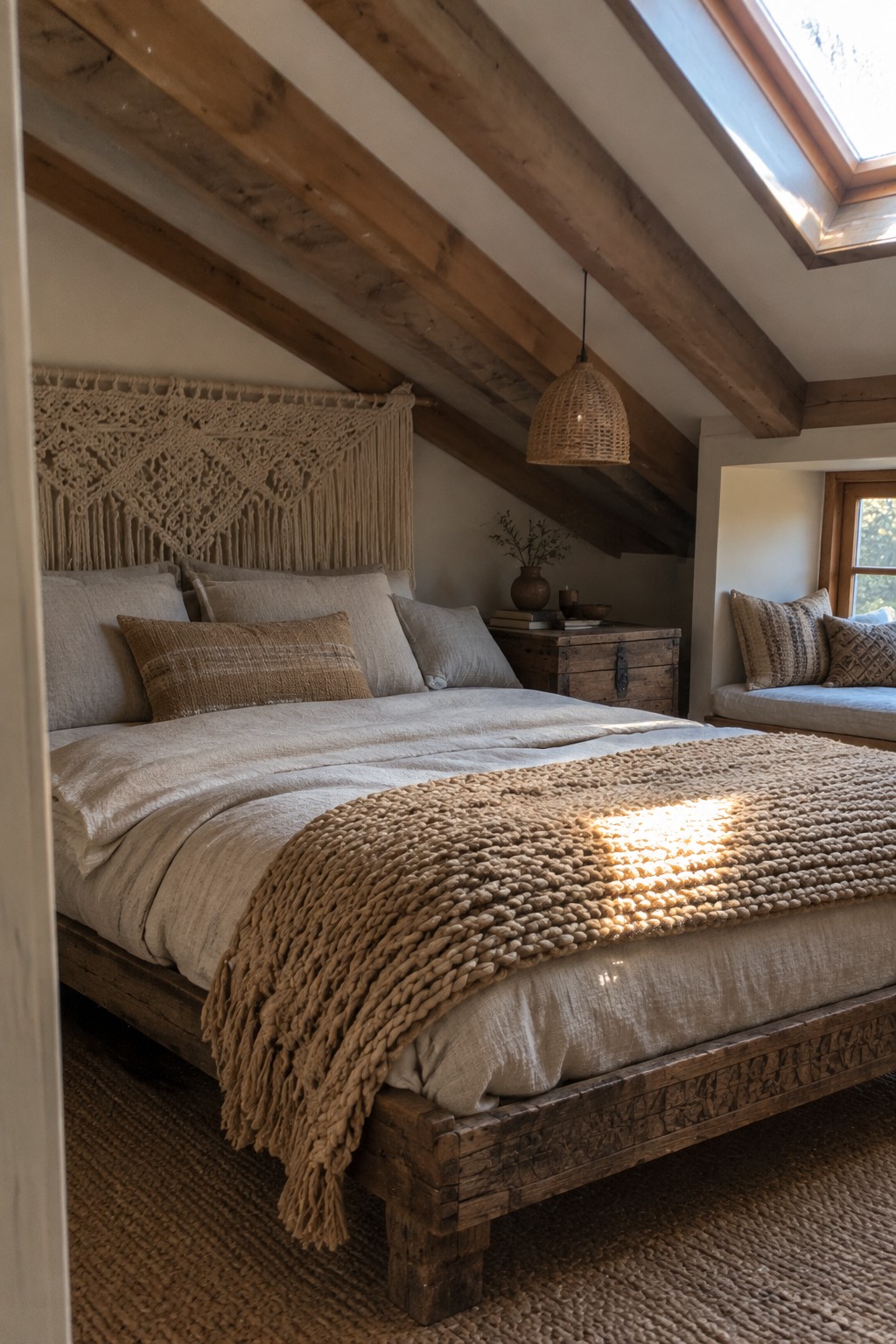
Exposed wood beams can give a bedroom character without adding more furniture or decor. Here, the beams carry the rustic look, while the woven blanket and macramé behind the bed keep the wood from feeling too heavy.
This approach suits a bedroom with a sloped ceiling, especially in an attic or cottage. Keep the bedding fairly simple so the beams remain a feature, and bring in woven pieces for texture rather than adding more wood everywhere.
Use Dark Bedding to Settle a Rustic Bedroom
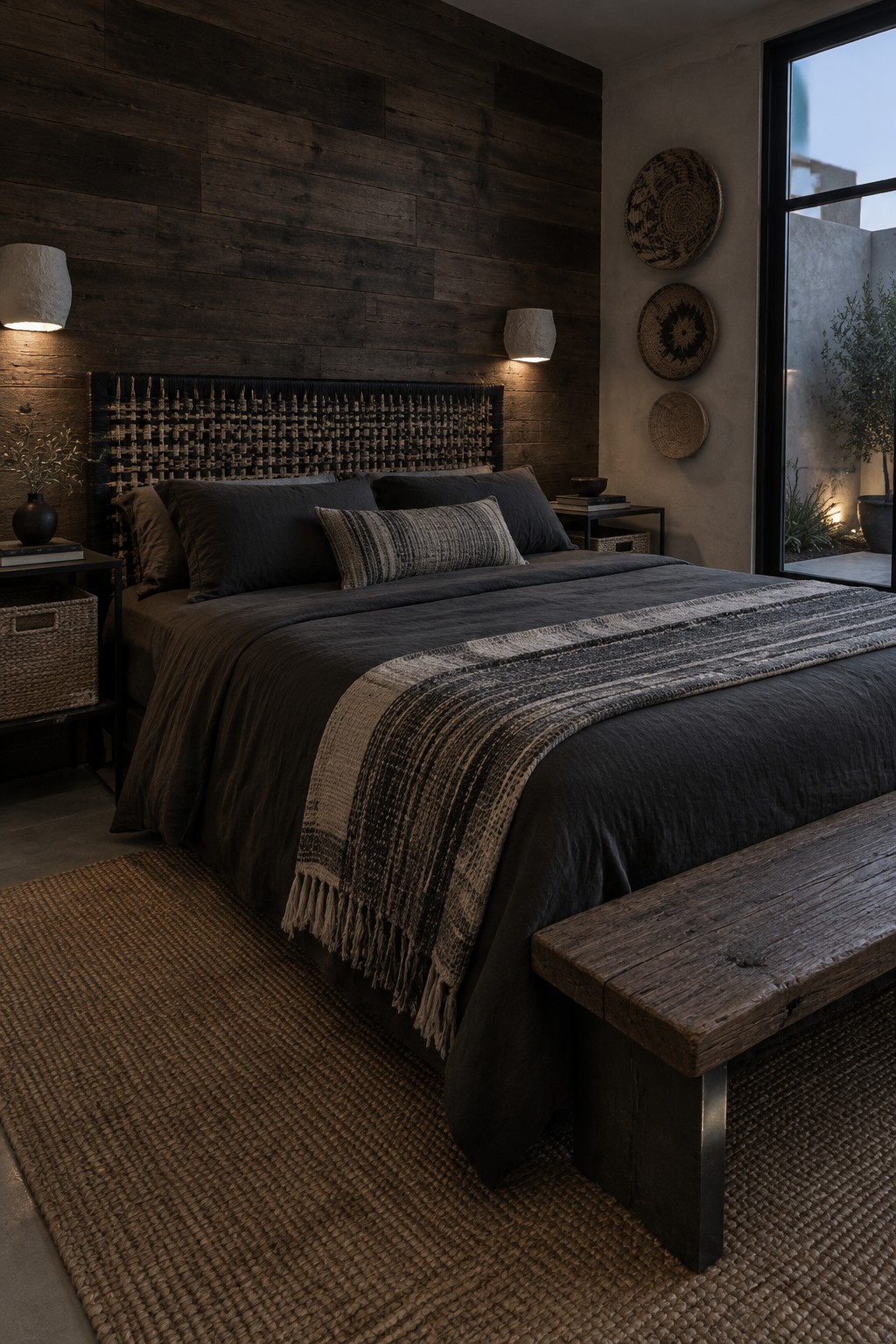
Dark bedding suits reclaimed wood because it keeps the room’s strong textures from competing with one another. Here, charcoal linens let the woven headboard and wood wall remain noticeable without making the bed feel busy.
This approach works well in bedrooms with plenty of natural or warm lamp light. Add a lighter woven throw for contrast, and keep the other bedding simple so the darker colors feel restful rather than heavy.
Use Built-In Shelves to Keep a Rustic Bedroom Practical
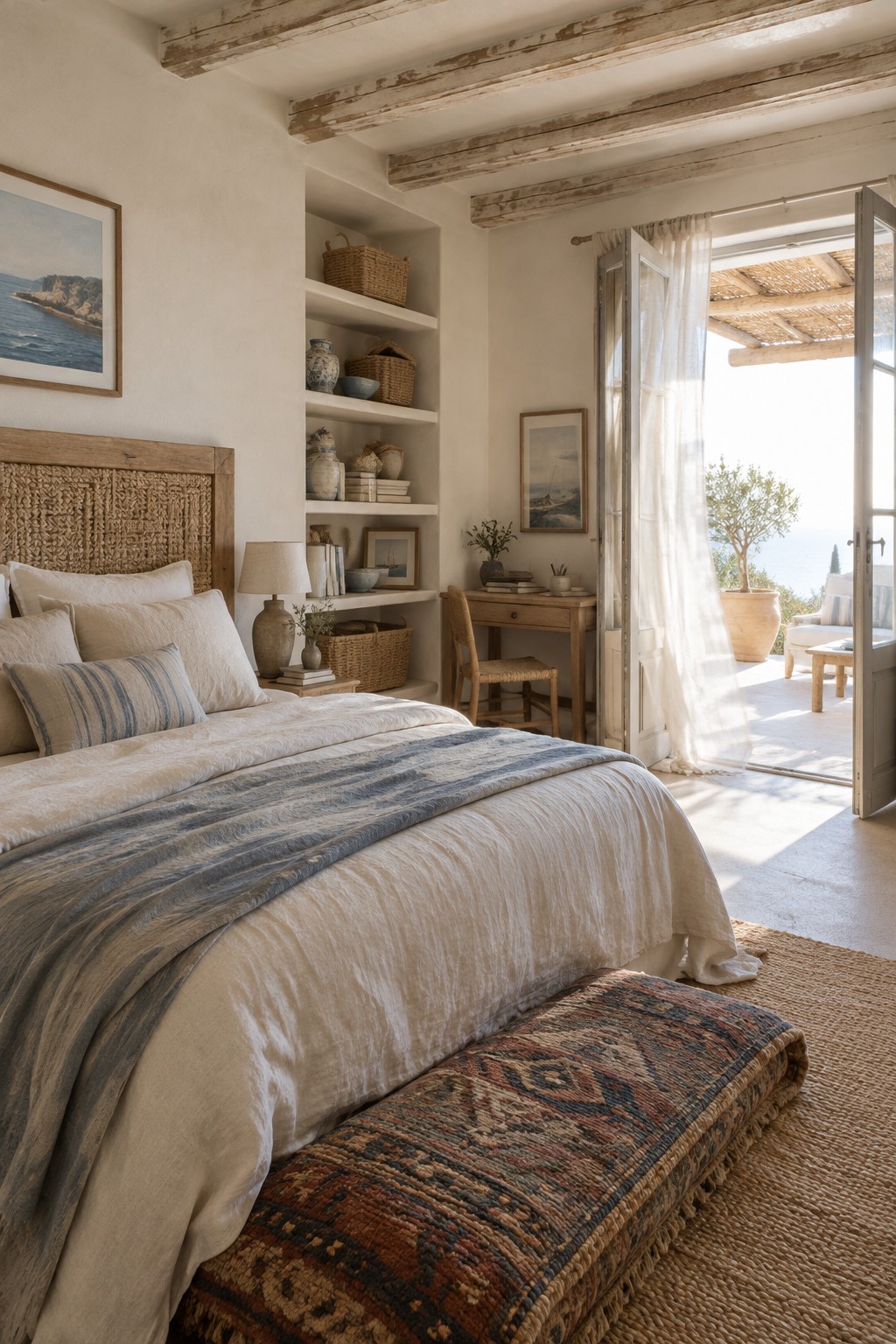
Built-in shelves make good use of a narrow wall and give a bedroom useful storage without taking up floor space. Open shelves suit a rustic room especially well, since baskets can hold smaller items while a few books or pottery pieces stay within reach.
This approach works best where there is an unused nook or a short stretch of wall. Keep everyday items easy to access, and leave some shelf space clear so the storage does not feel crowded.
Use Reclaimed Wood for a Rustic Bedroom Backdrop
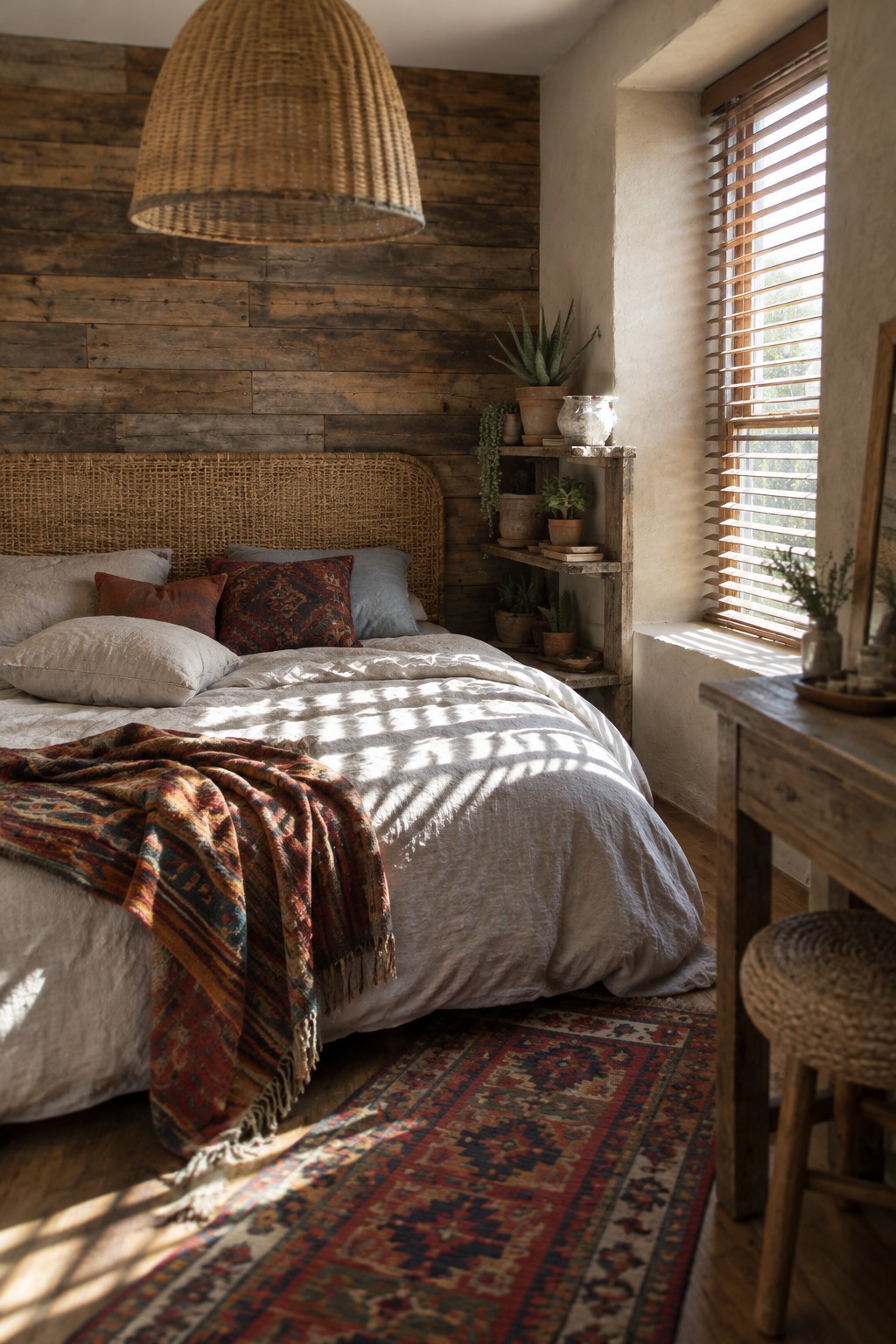
A reclaimed wood wall behind the bed gives a bedroom a clear focal point without needing much extra decoration. The mix of weathered boards feels lived-in, and it suits a simple woven headboard especially well.
This idea works best on one wall, where the wood can stand out without making a small room feel too dark. Keep the bedding fairly plain, then bring in a patterned throw or a few cushions for texture.
Use Exposed Beams to Add Rustic Character
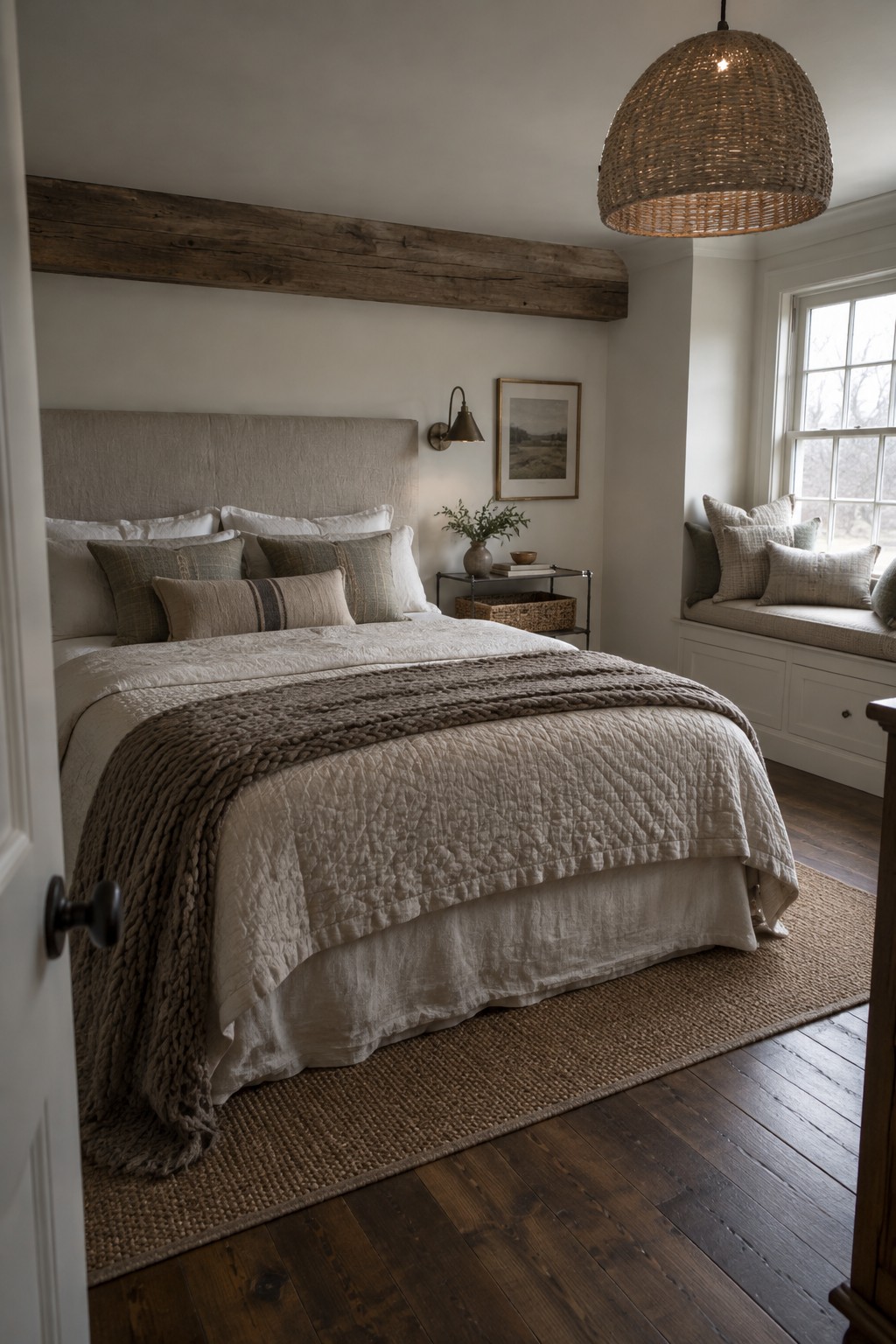
A reclaimed wood beam can give a bedroom a clear rustic detail without adding more furniture or decoration. Here, the beam above the bed brings in contrast against the light walls and bedding.
This works especially well in rooms with simple finishes, where the wood can stand out on its own. If you’re adding a beam, make sure it suits the room’s scale and is securely installed.
Use a Trunk For Bedroom Storage

A sturdy storage trunk at the foot of the bed gives extra blankets and linens a place to go while keeping them close at hand. Reclaimed wood suits this kind of piece because its worn finish feels at home with rustic bedroom furnishings.
Leave enough room to open the lid and walk around the bed comfortably. A trunk can also double as a seat for a quick moment, though a padded bench may be better if you plan to sit there often.
Use a Woven Headboard to Bring Texture Into the Bedroom

A woven headboard is a practical way to bring texture into a rustic bedroom without adding more wood to every surface. Here, the broad leather weave gives the bed a clear focal point and sits comfortably against the reclaimed boards.
This approach works well when you want the bed to feel substantial but still relaxed. Keep the bedding fairly simple so the headboard can stand out, and choose a woven material that suits the rest of the room’s finishes.
Use a Jute Rug to Define the Bed Area
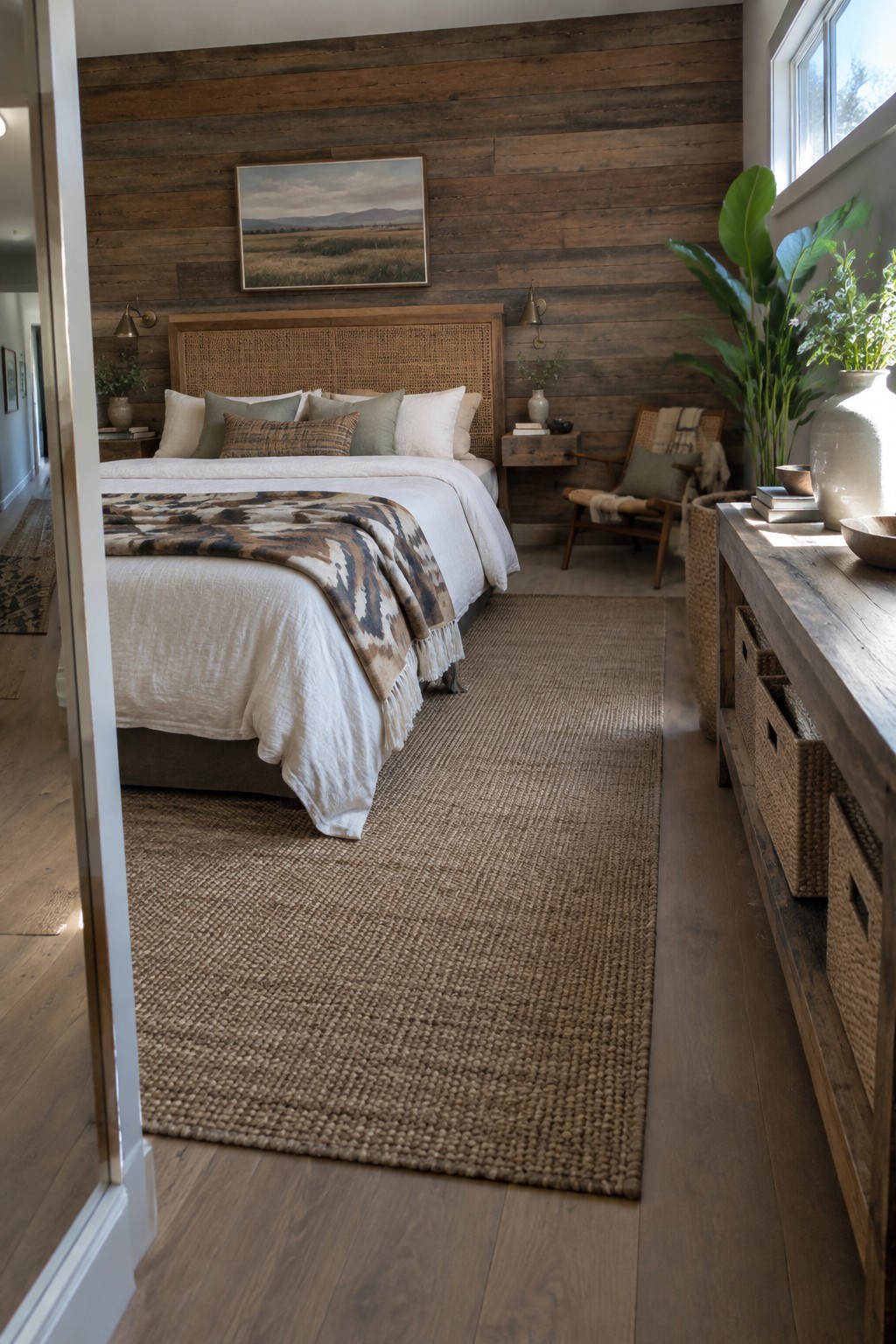
A large jute rug gives the bed a clear place in the room and brings a practical layer of texture to wood floors. Its natural weave works well beside reclaimed wood, while the simple color lets patterned bedding stand out without making the room feel busy.
Choose a rug wide enough to extend beyond both sides of the bed and far enough toward the foot to catch your step. In a narrow bedroom, check that there is still room to walk around it comfortably.
Bring Natural Texture Into the Bedding
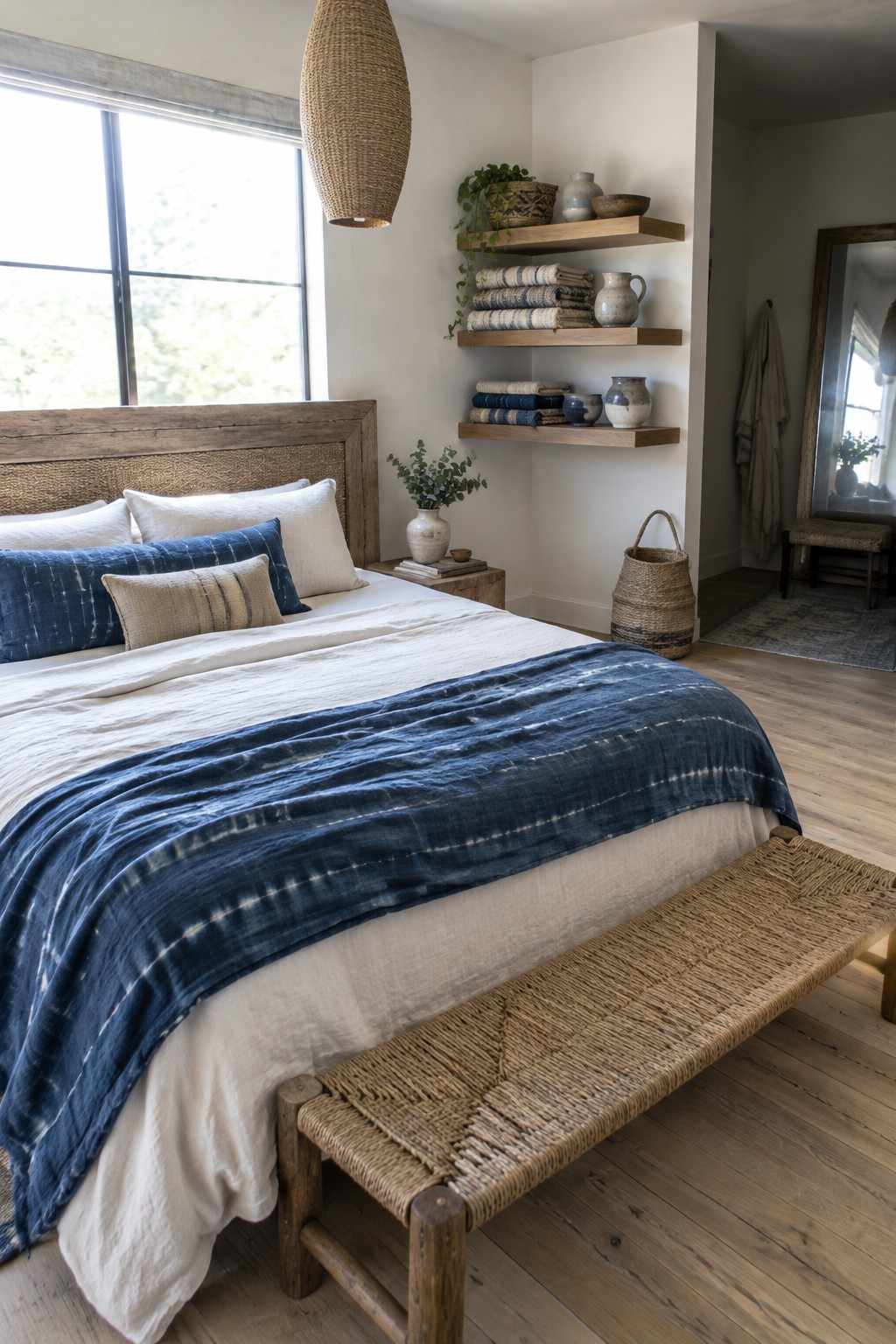
Woven fabric is an easy way to make a rustic bedroom feel relaxed without adding more wood. Here, crisp white bedding keeps the bed simple, while a deep blue coverlet and textured pillows add interest.
Try this mix when a reclaimed wood bed or headboard feels visually heavy. Keep the base layers plain, then add one patterned coverlet and a smaller woven accent pillow so the bed still feels comfortable, not busy.
Use Woven Rugs to Add Texture to a Rustic Bedroom

A woven rug can make a rustic bedroom feel more comfortable without taking attention away from the reclaimed wood. Here, a patterned rug sits over a larger natural-fiber rug, giving the floor a softer feel and adding texture beneath the bed.
This layered approach works well on bare wood or concrete floors, especially when the bedding is simple and dark. Keep the lower rug large enough to show around the edges, and choose a top rug that suits the room’s colors.
Use a Nightstand to Keep Rustic Bedrooms Practical

A simple nightstand brings useful storage to a bedroom without taking attention away from the reclaimed wood bed. Here, woven baskets on the lower shelves hold extra items while keeping them easy to reach.
This setup works well beside a bed when floor space is limited. Choose a narrow table with open shelves, and use baskets to keep the everyday clutter tucked away.
Frequently Asked Questions
Q: How can I use reclaimed wood without making the bedroom feel too dark?
A: Use it on one focal point, such as the headboard wall, and keep the other walls light. Cream bedding and a woven rug bring in warmth without competing with the wood.
Q: Does reclaimed wood work in a small bedroom?
A: Yes. A simple wood headboard or a pair of bedside shelves can add rustic character without taking up much visual space. Keep bulky furniture and heavy patterns to a minimum.
Q: What woven textiles are practical for a bedroom?
A: Woven cotton or wool blankets feel cozy and are easy to live with. For rugs, choose a tight weave near the bed so it feels good underfoot and is easier to clean.
Q: How do I keep reclaimed wood from looking rough or unfinished?
A: Smooth any splintered edges and seal the surface with a finish suited to its use. A little wear gives the wood character, but loose pieces and sharp corners belong in the workshop.
