

I often find that an outdated bathroom floor makes the whole room feel unfinished even when the rest of the fixtures are still usable.
New flooring can give the space a steadier base so the layout starts to make more sense.
Some options hold up better than others once daily use begins.
I usually test how the material feels underfoot and how it handles steam before committing to a full change.
It is satisfying when the room starts to look more put together without a complete overhaul.
Replace Worn Floor Tiles To Refresh The Room
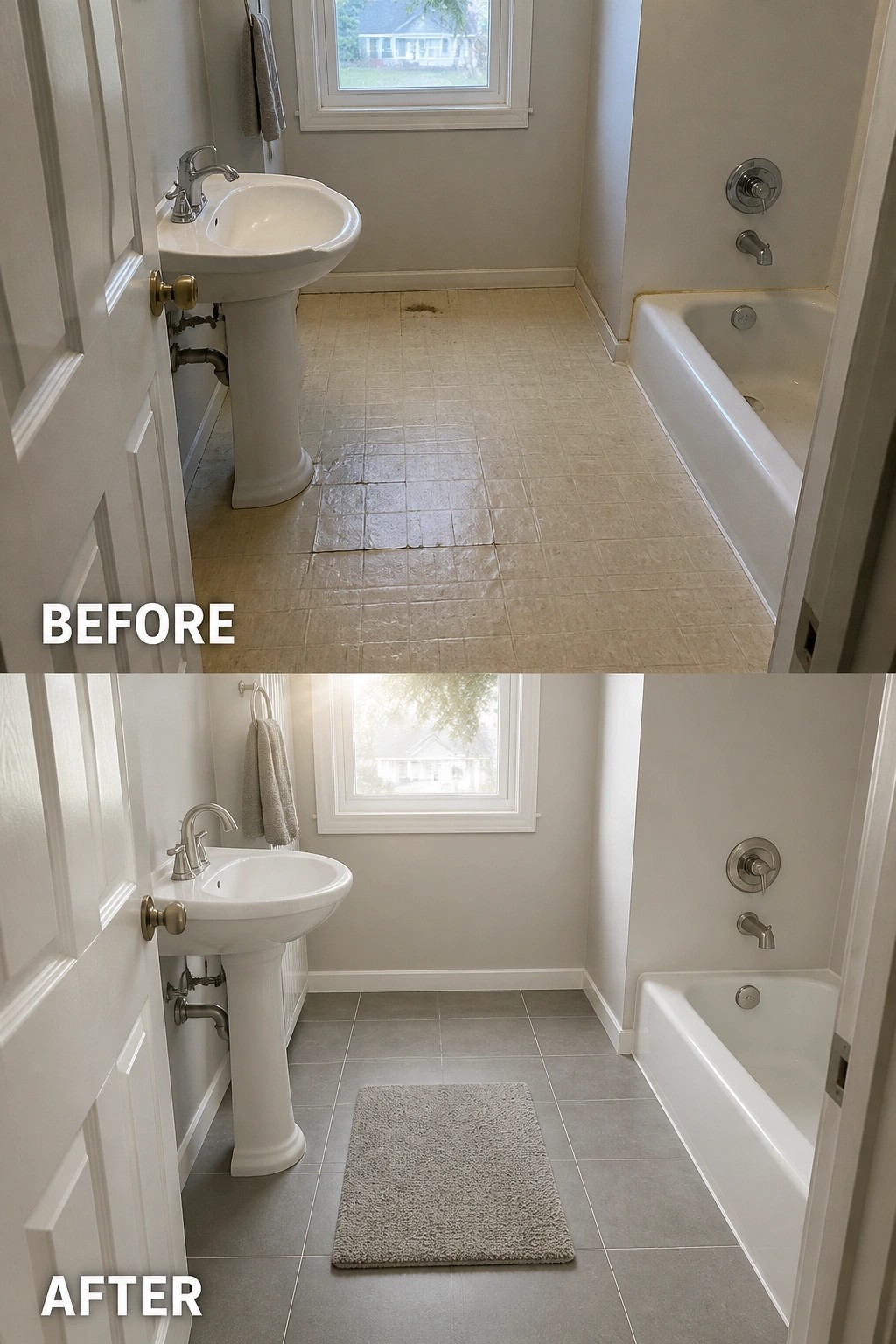
The old floor in this bathroom had seen better days. The beige tiles looked faded and uneven, which made the whole space feel tired even though the sink and tub were still in good shape. Switching to a simple gray tile gave the room a much cleaner base and made the existing fixtures look newer without any other big changes.
This approach works well in small bathrooms where the floor covers most of the visible surface. Start with a neutral tile color that does not fight the existing fixtures, and keep the rest of the room light so the new floor can do the main work. A single bath mat can help define the space in front of the sink without adding clutter.
Replace Old Floor Tiles With A Bold Checkered Pattern
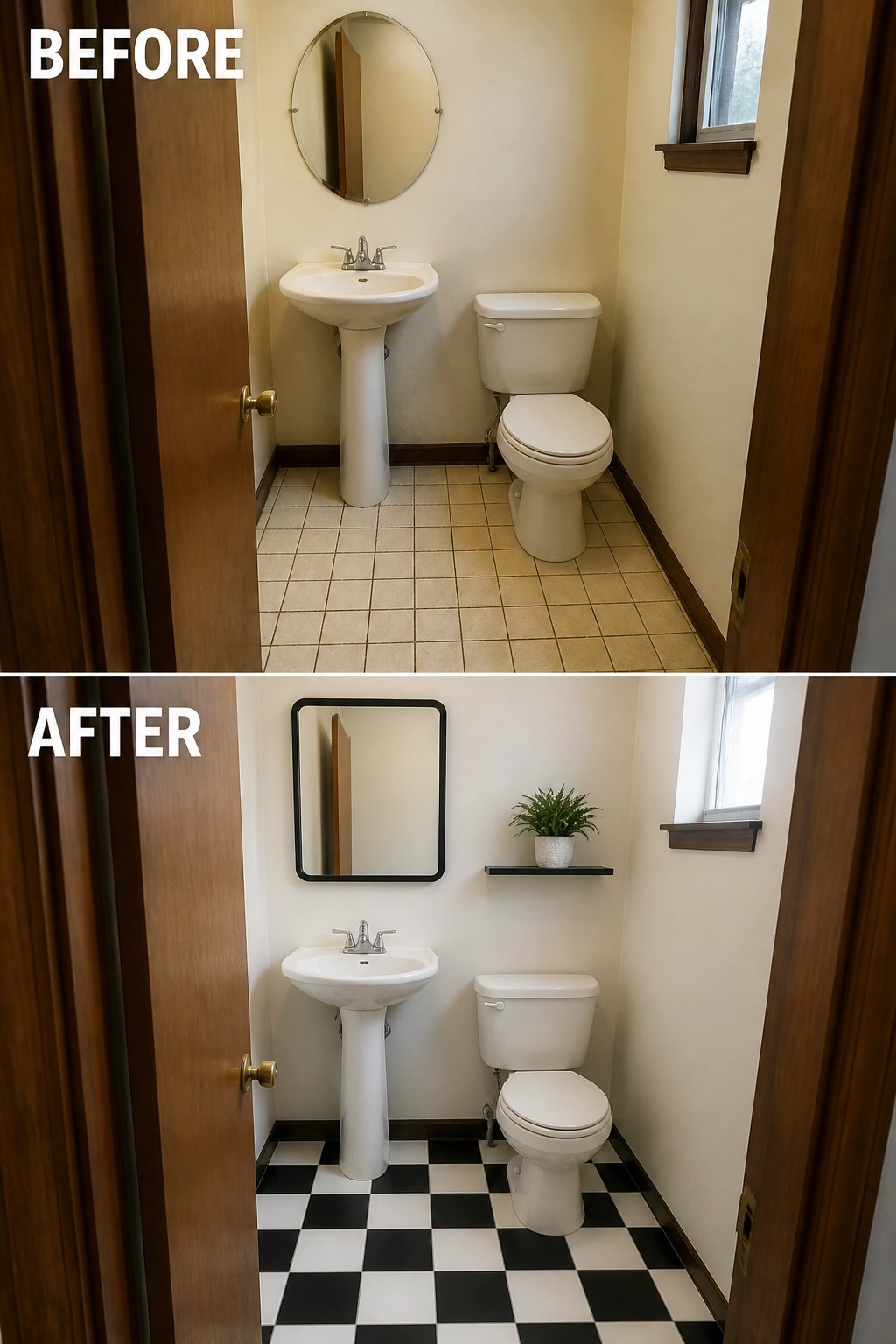
A small bathroom often feels dated mainly because of the floor. Switching from plain beige tiles to a black and white checkered pattern gives the space a clear update and makes the room look more finished without adding much else.
This idea works best in compact bathrooms where the floor can act as the main visual element. Keep walls and fixtures simple so the pattern does not compete, and choose a material that is easy to clean and stands up to regular use.
Replace Old Bathroom Floors With Light Wood
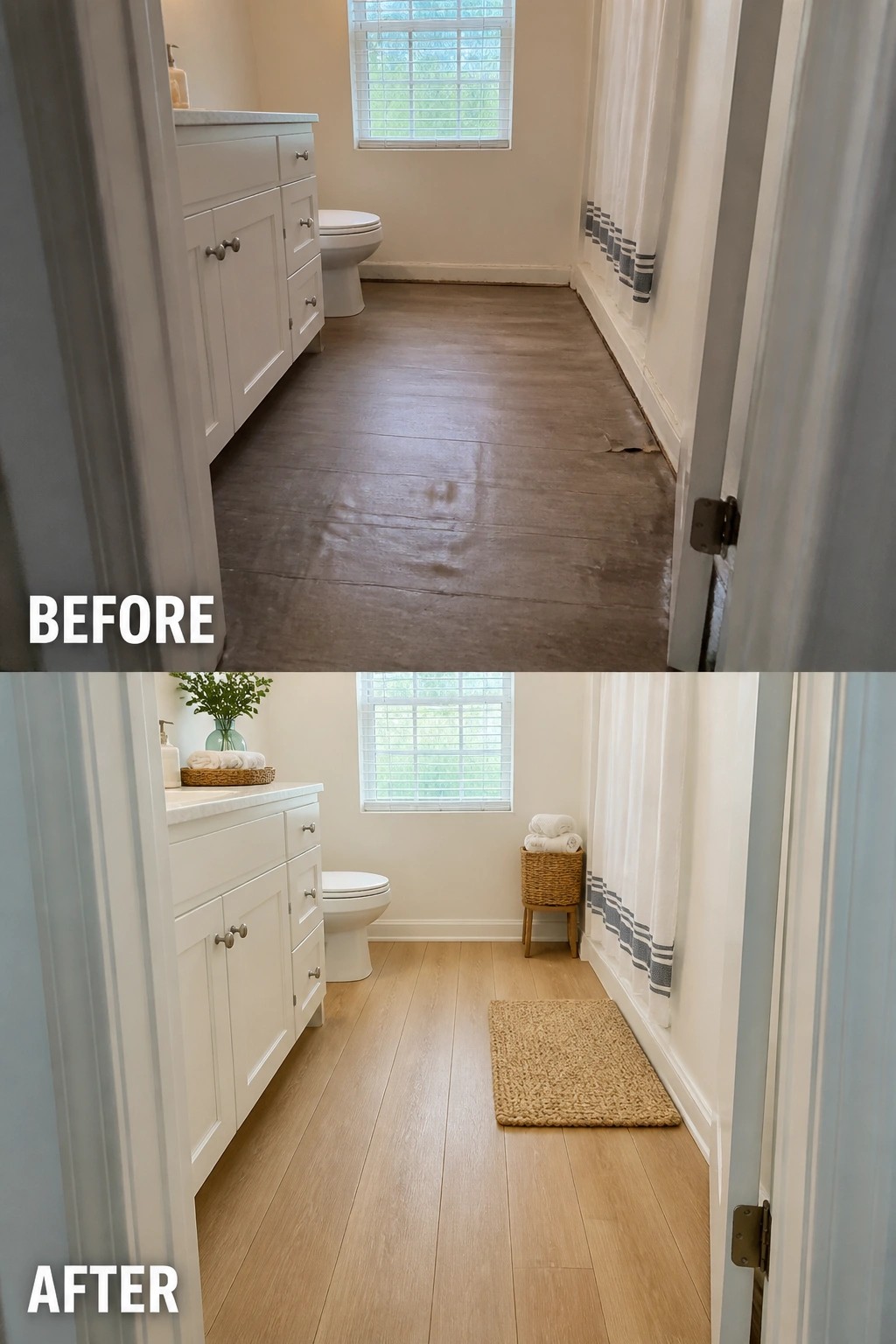
Old bathroom floors can start to look tired and dark after years of use. Putting in light wood planks changes the feel of the whole room by reflecting more light and giving the space a cleaner base to work with.
This idea works especially well in smaller bathrooms where a light floor helps the room feel bigger. Choose a waterproof option made for wet areas, keep the rest of the finishes simple, and add one rug if you want a soft spot underfoot.
Replace Old Bathroom Floors With Patterned Tile
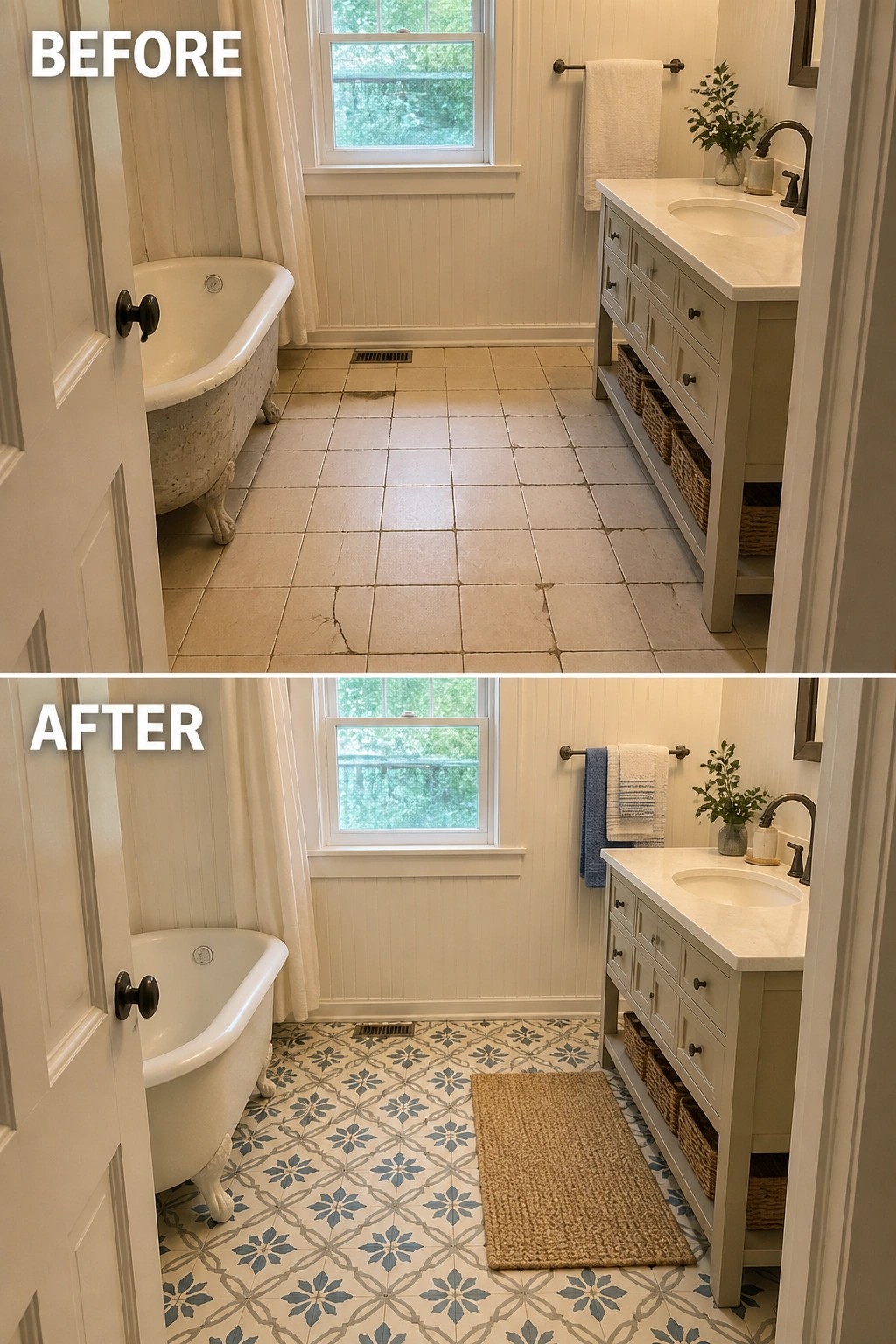
Many bathrooms have floors that show their age through cracks and faded color. Here the plain beige tiles were replaced with a blue and gray patterned design that gives the space a cleaner, more current look without changing anything else.
This idea works best in smaller bathrooms where the floor can add interest without overwhelming the room. Choose a pattern that pairs with the existing fixtures and keep the rest of the space simple so the new floor stays the main update.
Replace Worn Bathroom Tile With Darker Flooring
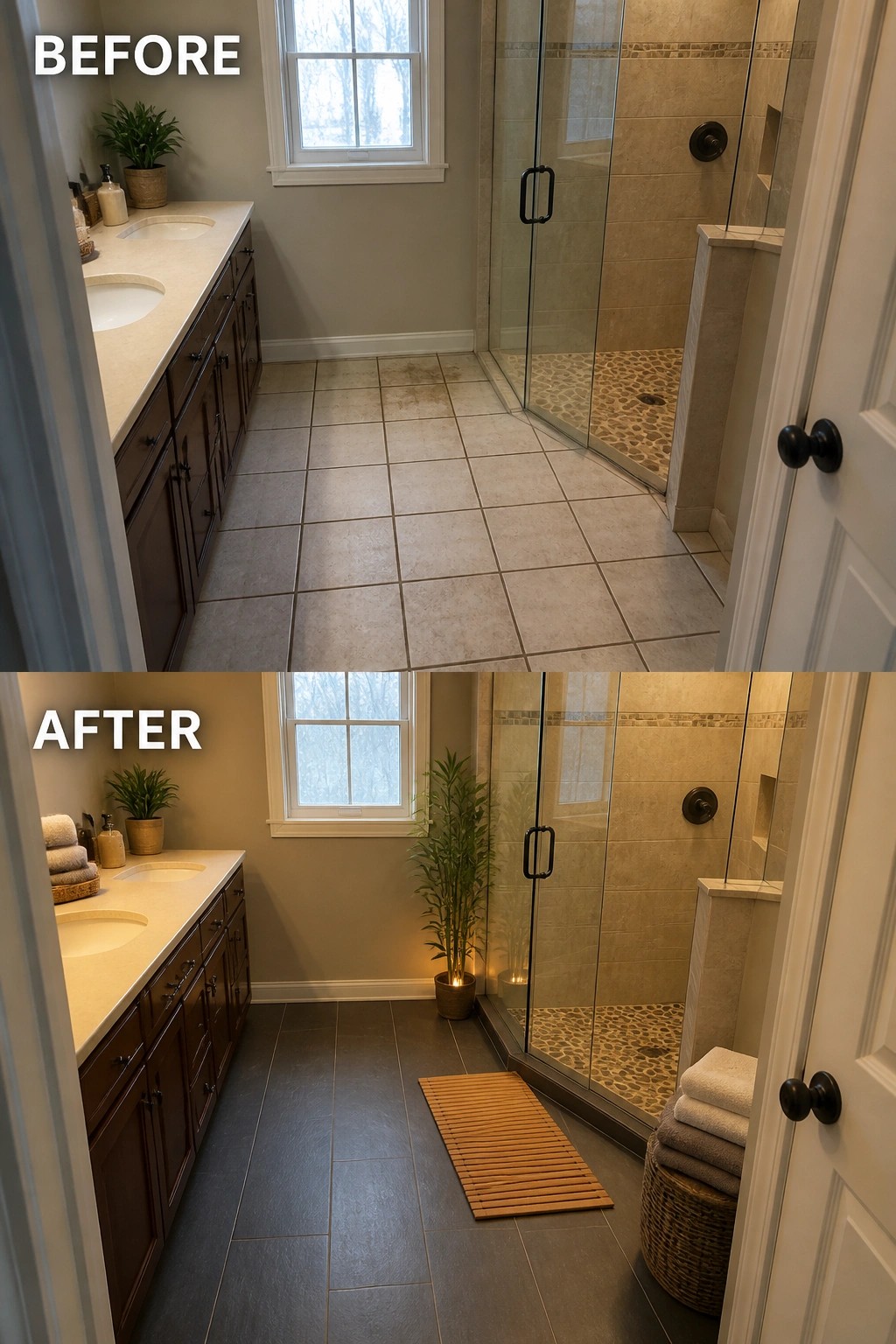
Many bathrooms reach a point where the floor looks tired and hard to clean. The light tile in this space had picked up stains and wear over time, which made the room feel older than it needed to. Changing to a darker gray tile gave the floor a solid, fresh start that immediately lifted the rest of the bathroom.
This approach works best in smaller baths where you want the floor to feel stable rather than busy. Pick a tile that hides everyday marks and works with the cabinets already in place. A simple runner helps mark the main path without covering the new surface.
Replace Dated Bathroom Tile With A Lighter Floor
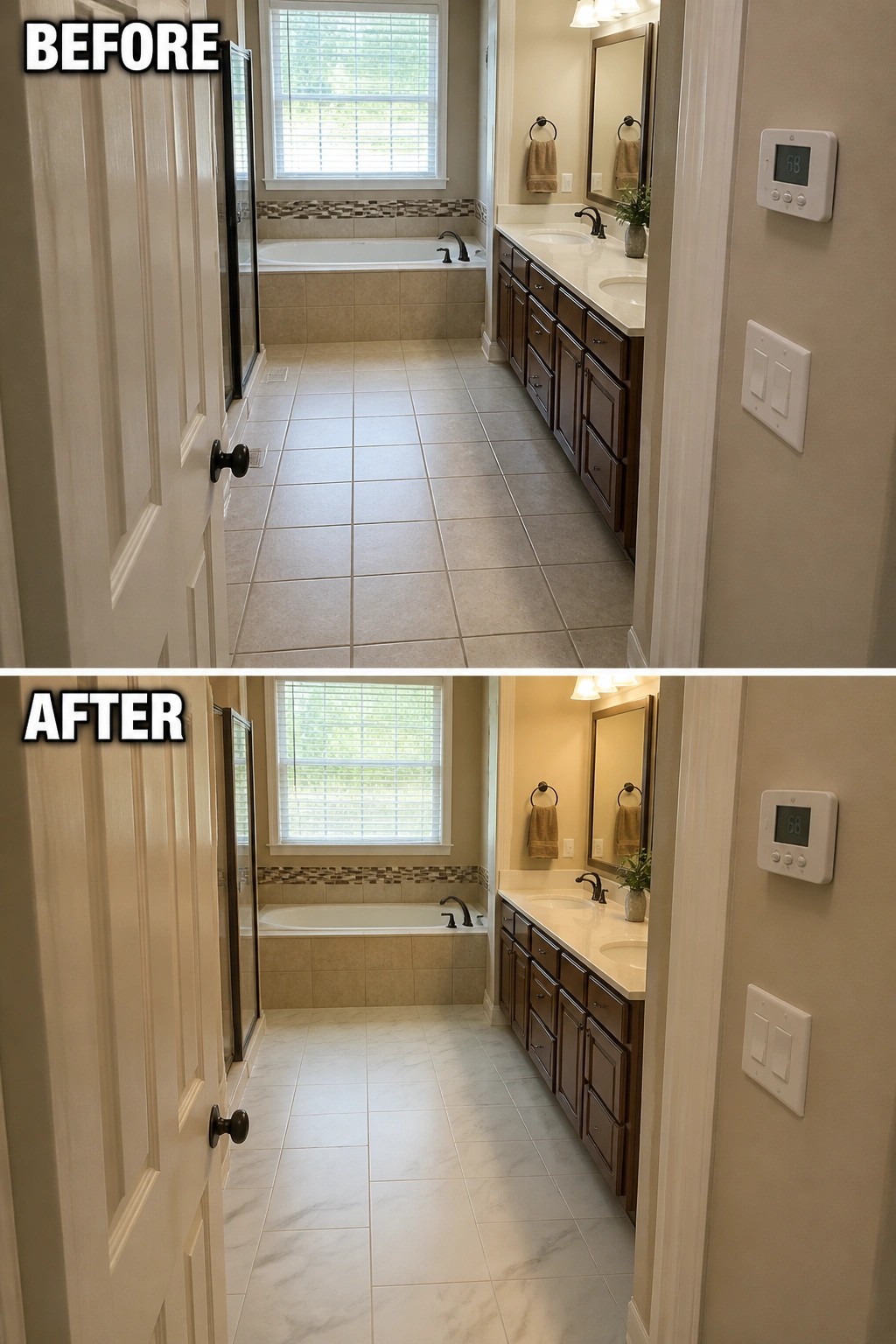
Many bathrooms start to feel tired mainly because of the floor. Replacing a plain beige tile with a white marble-look surface makes the whole room feel brighter and more open without changing anything else.
This idea works best in smaller or medium bathrooms that get decent natural light. Pick a durable porcelain tile with a subtle pattern, keep the layout simple, and let the new floor do most of the updating work.
Replace Old Tile Floors With Smooth Concrete
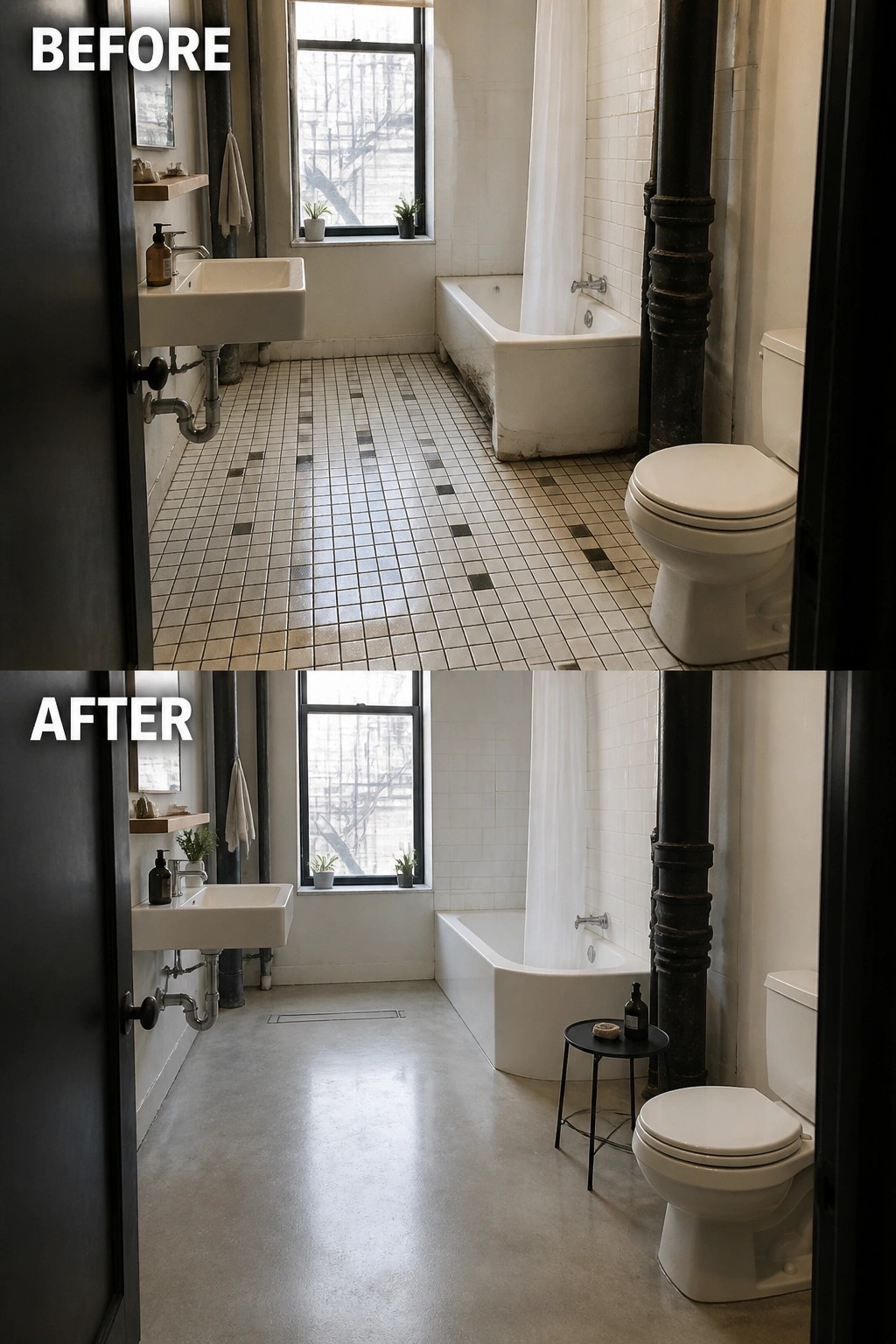
The bathroom went from a busy checkered tile floor to a plain concrete surface. That one swap removes the dated look, covers up exposed pipes, and makes the room feel larger and easier to clean.
This idea suits older bathrooms where the tile is worn or cracked. Seal the concrete well for moisture protection, and keep other surfaces simple so the new floor can stand out without extra clutter.
Replace Old Tile Floors With Wood For A Warmer Feel

The square white tile in the before photo made the bathroom feel cold and flat. Switching to a herringbone wood floor warms up the whole space and gives it a softer, more finished look. The simple jute rug adds just enough texture to keep the floor from feeling bare.
This change suits small bathrooms that already have white fixtures and need more warmth. Wood or wood-look flooring works best when it is rated for moisture, and a natural fiber rug helps define the floor without crowding the room. Start with the floor update if the rest of the space is already functional.
Lighten A Bathroom With New Flooring
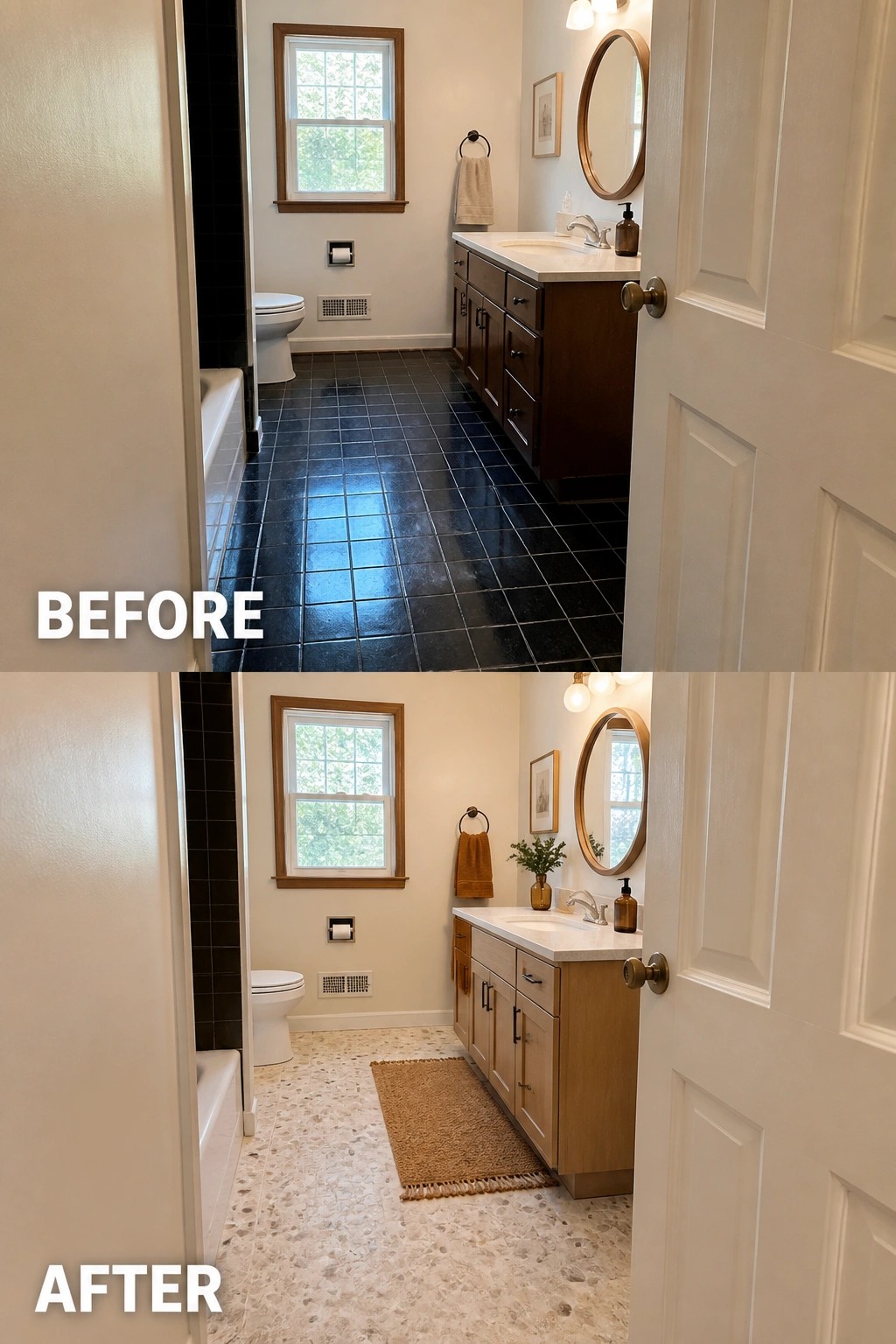
A dark floor can make even a decent sized bathroom feel heavy and closed in. Replacing it with a lighter color opens the space up fast and changes how the whole room feels without touching the walls or fixtures.
This approach works best in smaller bathrooms or ones that get only average light. Keep the new floor simple in tone but add a rug to bring in some texture and keep the room from feeling too bare underfoot.
Refresh A Dated Bathroom With New Patterned Flooring
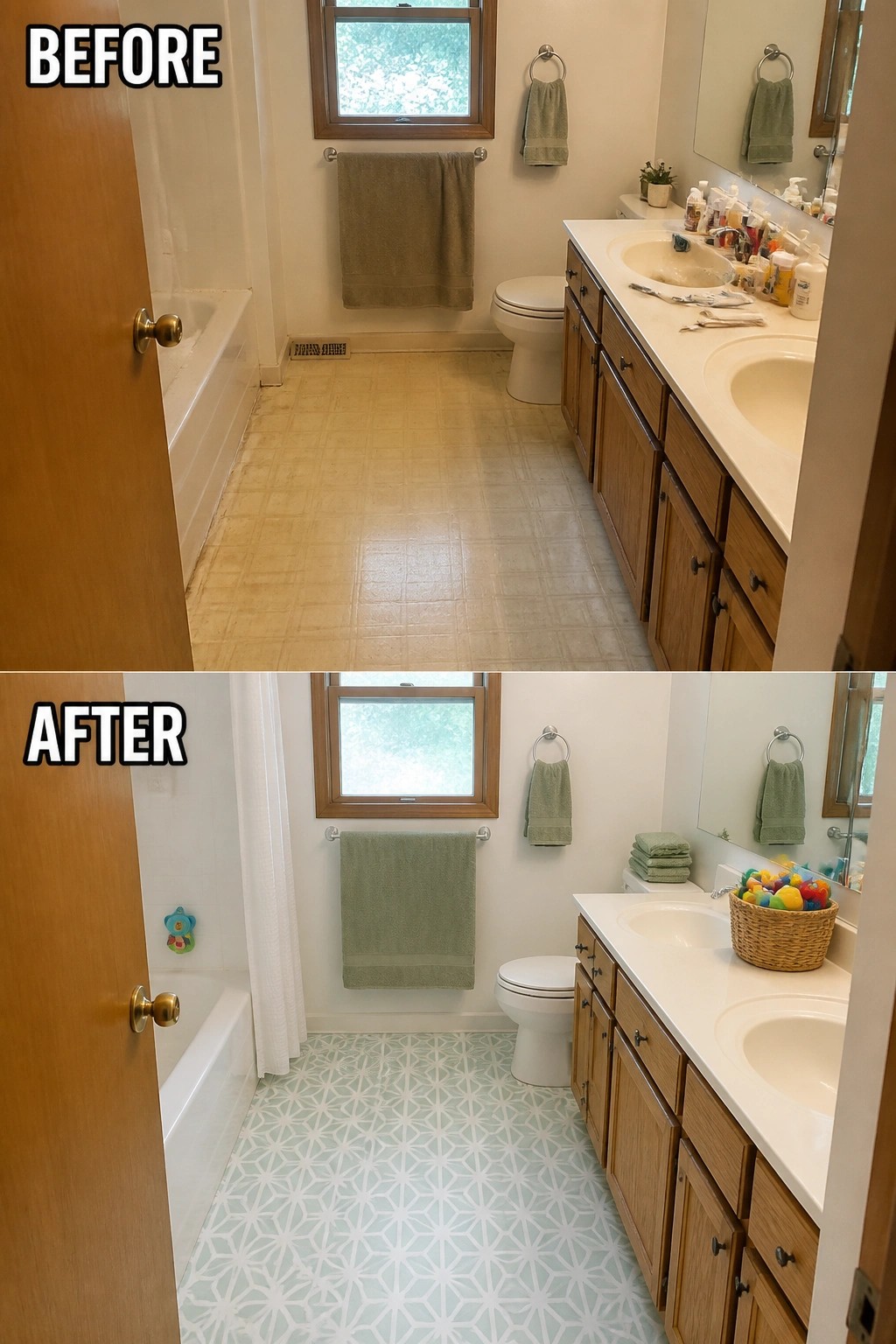
The old floor was a plain beige tile that had seen better days. Switching it out for a light geometric pattern brightens the room right away and gives the space a fresh feel without touching the vanity or tub.
This works best when the rest of the bathroom is still in decent shape. Choose a simple repeating pattern in soft tones so the floor adds interest but does not overwhelm a small room. It is an easy way to update an older home without a full gut job.
Replace Old Tile Floors To Refresh The Room

Swapping the pink square tiles for dark hexagon ones makes the biggest difference in this bathroom. The new floor pulls the older pink fixtures into a more balanced look and gives the space a cleaner, more current feel without needing to replace everything else.
This approach works especially well in small bathrooms where the floor takes up a lot of visual space. Choose a tile color that contrasts with your existing vanity and fixtures, then keep other updates minimal so the floor change can do the main work.
Replace Old Bathroom Floor Tiles With Lighter Ones

The red tiles in the before photo made the bathroom feel dark and a bit tired. Switching to light blue tiles brightens the space right away and gives the whole room a cleaner, more open feel.
This change works especially well in small bathrooms that need more light. Pick a pale tile color that contrasts with your walls, and keep the rest of the room simple so the new floor can do the main work.
Update A Bathroom Floor To Brighten The Whole Space

A rough concrete floor makes any bathroom feel unfinished and dated. In this case the old surface was stained and uneven, while the new floor is a smooth light gray that reflects light and makes the room feel much cleaner overall.
This approach works well in small bathrooms where the floor is one of the largest visible surfaces. Start with a thorough cleaning and repair of the subfloor, then choose a light color that matches the existing walls and fixtures. A simple rug near the toilet or vanity adds a bit of softness without covering the new floor.
Match The Shower Floor To The Rest Of The Bathroom

One of the quickest ways to refresh a bathroom is to replace the shower floor with tiles that match the surrounding floor and walls. In this case the old small mosaic tiles stood out and dated the whole space. Switching to larger tiles that blend with the rest of the bathroom floor creates a much cleaner and more unified look without a full gut renovation.
This approach works especially well in smaller bathrooms where the shower is open to the rest of the room. Keep the same tile style and grout color so the eye moves smoothly across the floor. Adding a grab bar at the same time improves safety and gives the update a more finished feel.
Replace Dated Floor Tiles To Refresh The Room
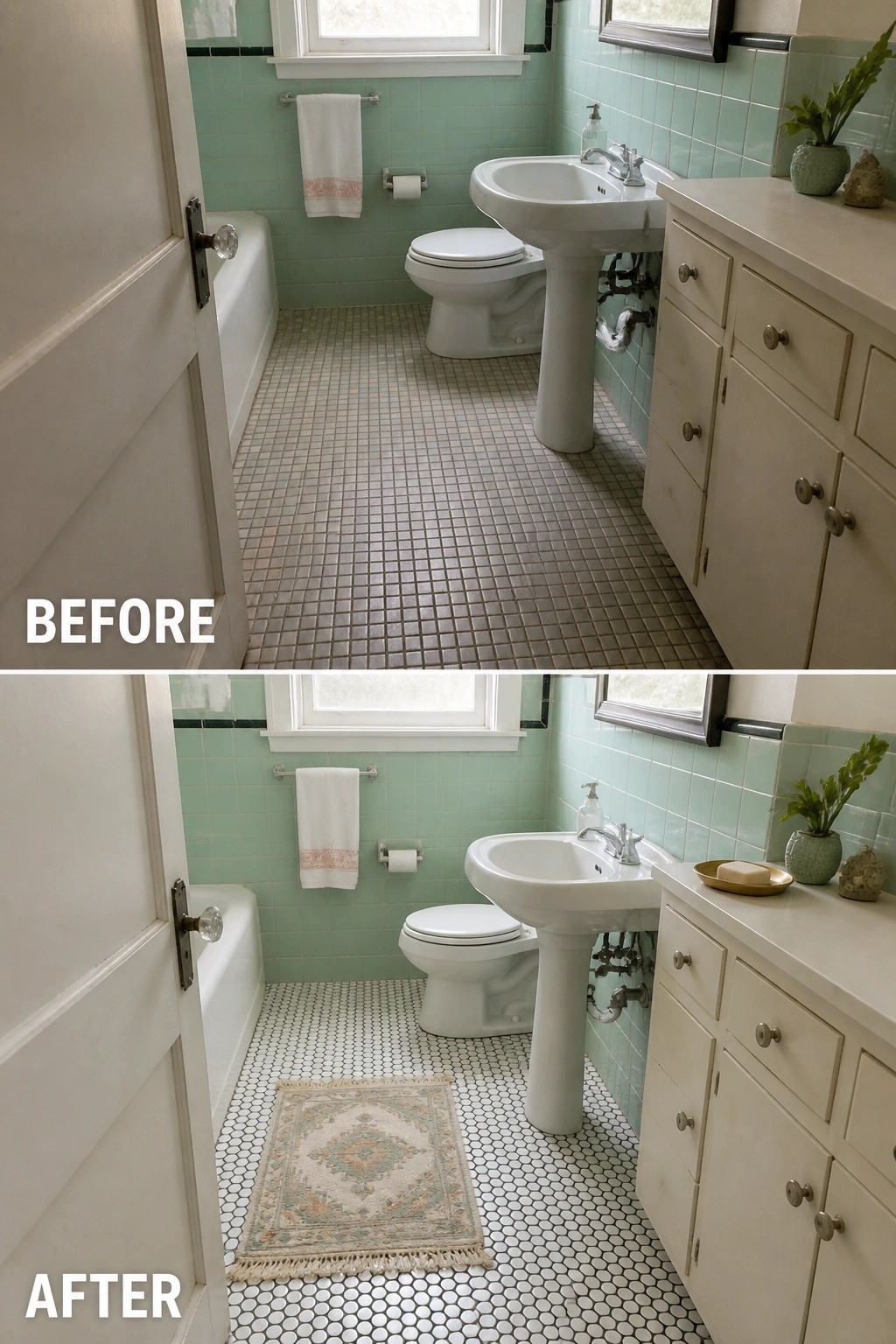
One of the quickest ways to update an older bathroom is to swap out the floor tiles. The small square tiles in the before photo made the space feel tired and flat. Changing to a simple hexagon pattern gives the room a lighter, cleaner look without touching the walls, fixtures, or cabinets.
This approach works especially well in small bathrooms where the floor covers a large part of the view. Choose a light tile color that contrasts with existing wall tile, and add a small rug if the room needs a bit of softness underfoot. It keeps the project focused and realistic for most homes.
Replace Plain Tile With Patterned Flooring
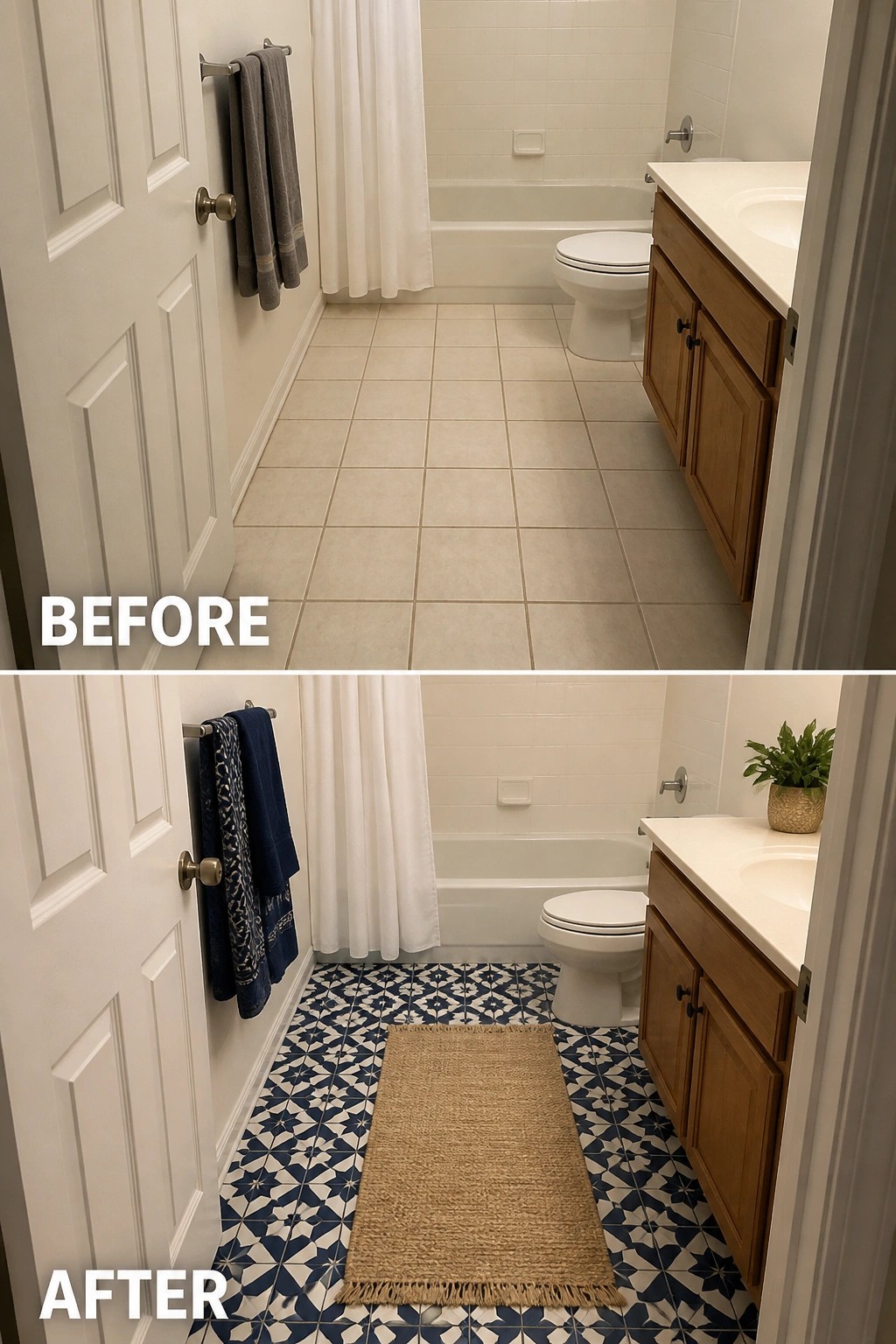
A simple floor change can refresh an entire bathroom. The old beige tile felt flat and dated, but swapping it for a bold blue and white pattern gives the space more character right away. Adding a natural rug in the middle helps define the walkway and softens the look without much extra work.
This approach works well in small bathrooms where you want impact without a full renovation. Stick to one strong pattern on the floor and keep the rest of the room simple so the new tile stays the focus. It suits homes with basic builder finishes that need a quick update.
Replace Old Tile With Wood-Look Flooring

The cracked light tile in the before photo made the whole bathroom feel cold and worn. Switching to darker wood-look planks instantly warmed up the space and gave it a cleaner, more finished look without any major construction.
This change works well in small bathrooms where you want to avoid a full gut job. Start by picking a durable waterproof plank that can handle moisture, and keep the rest of the room simple so the new floor stays the focus. A single rug near the vanity helps define the area without crowding the space.
Replace Old Mosaic Tile With Larger Flooring
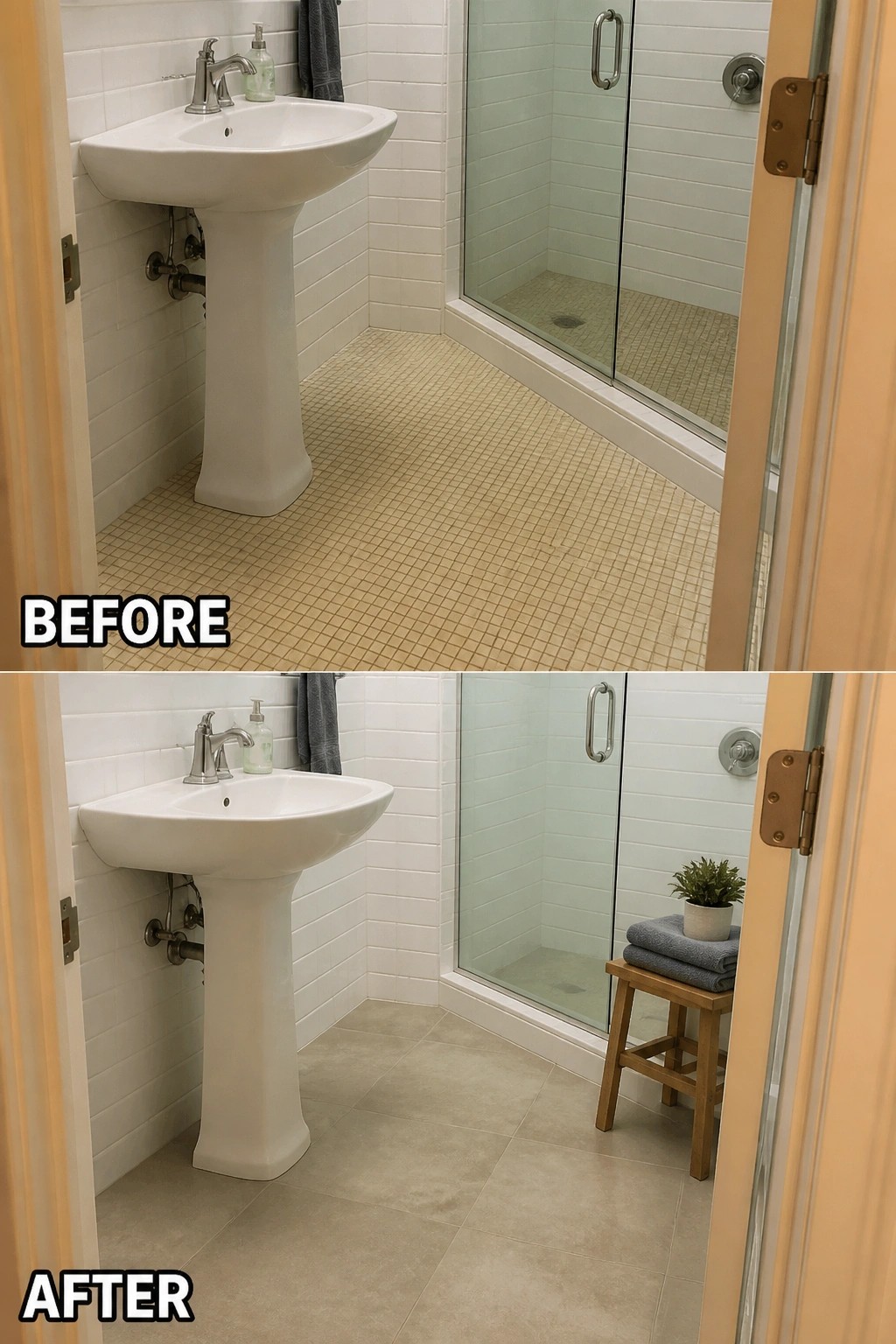
Many bathrooms still have those small grid tiles that make the floor feel busy and dated. Switching to larger tiles creates a calmer surface that makes the room look bigger and more up to date without changing anything else.
This idea works best in small bathrooms where the old pattern starts to feel overwhelming. Pick a neutral tone that blends with the walls and fixtures, and avoid adding too many extra pieces so the new floor stays the main change.
Replace Old Patterned Tiles With A Simple Floor
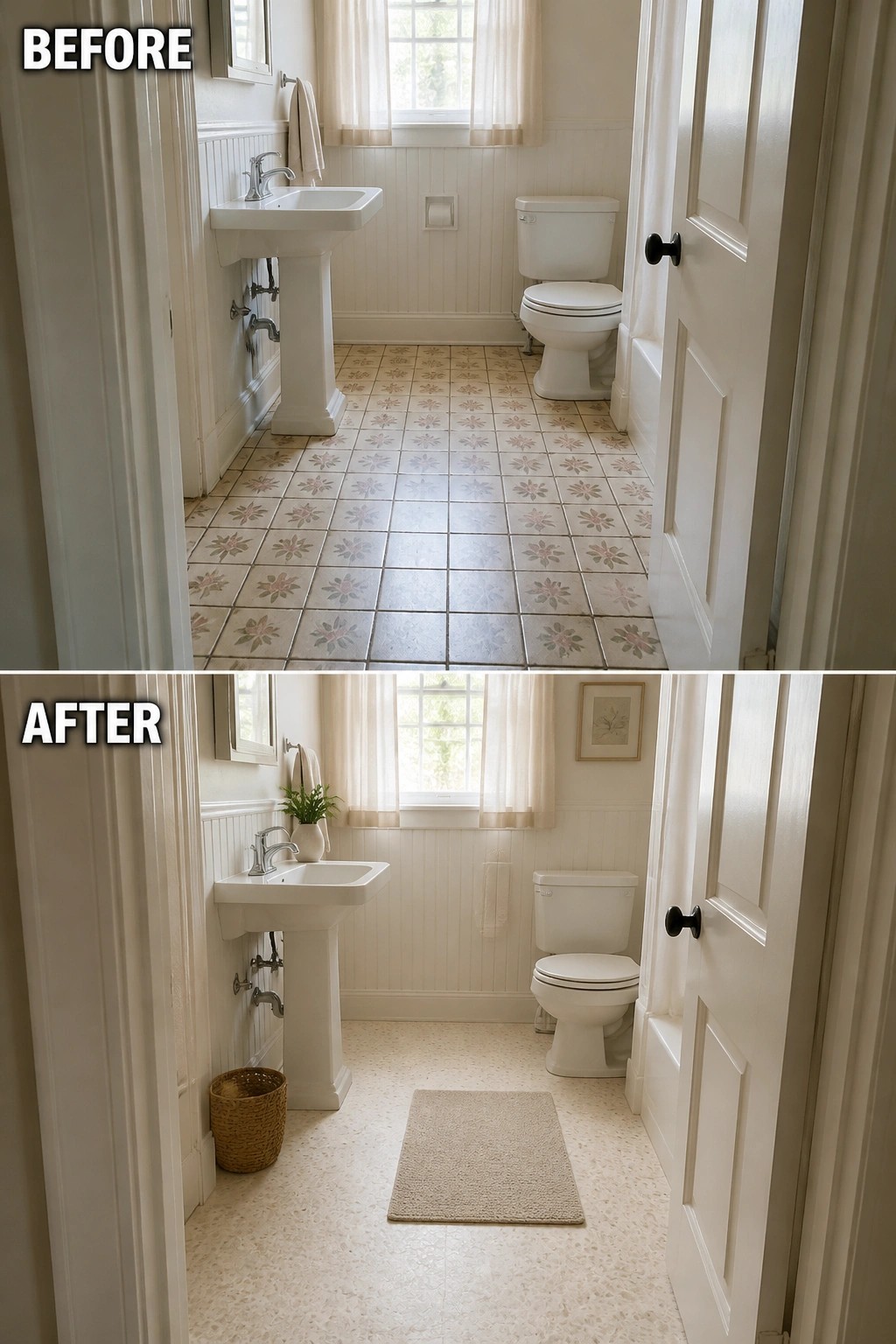
The busy floral tiles on the old bathroom floor made the whole space feel dated and a little cramped. Switching to a light, solid floor changed that right away and gave the room a calmer, cleaner base to work with.
This approach works well in small bathrooms where the floor takes up a lot of visual space. Keep the rest of the room simple, add one or two soft accents like a rug, and the new floor becomes the main update without needing a full renovation.
Replace Dark Floor Tiles To Brighten The Room

Swapping out dark slate tiles for larger light gray ones makes the whole bathroom feel bigger and calmer. The old floor broke up the space and pulled everything down, while the new tiles reflect more light and create a cleaner base that works with the wood vanity.
This approach works well in small bathrooms where the floor takes up a lot of visual space. Start by picking a tile a few shades lighter than your walls so the room stays balanced, and keep the rest of the finishes simple so the new floor can do the heavy lifting.
Replace Large Square Tiles With Hexagon Flooring
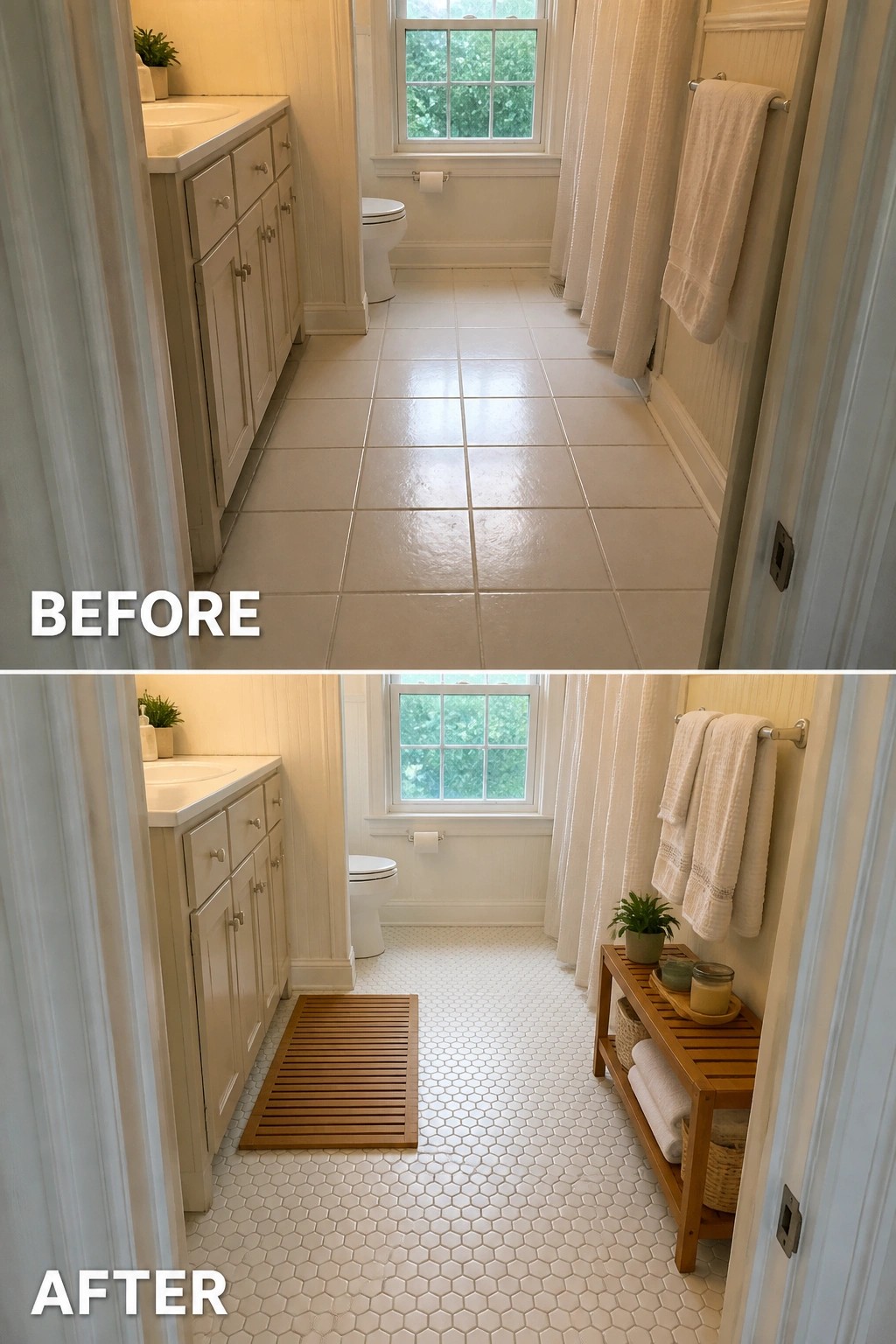
Large square tiles often make a bathroom floor look flat and dated after a while. Switching to smaller hexagon tiles adds pattern and texture that feels more finished while keeping the space bright and open.
This change works best in bathrooms that already have simple walls and fixtures. Keep the new tile light in color, add one wood accent like a mat or bench, and avoid crowding the floor so the new pattern stays the main feature.
Replace Old Tile With Practical Flooring In Wet Areas

Many older homes have terracotta or similar tile in combined laundry and bath spaces that shows wear quickly. The stained and faded surface makes the whole room feel dated even when the rest of the fixtures are still usable. Swapping it for a solid, textured flooring material gives the area a cleaner look and makes daily cleaning much simpler.
This approach works best in rooms that see water, detergent spills, and heavy foot traffic. Choose a flooring option that handles moisture well and does not show every mark. Keep the rest of the room simple so the new floor becomes the main update without needing a full renovation.
Replace Dated Bathroom Flooring With Patterned Tile

Many bathrooms end up with plain, aging tile that makes the whole space feel tired. Switching to a patterned floor can instantly brighten the room and add character without needing a full gut renovation.
This approach works well in smaller bathrooms where the floor becomes a natural focal point. Choose a pattern that complements your existing fixtures and keep the rest of the space simple so the new tile stands out.
Frequently Asked Questions
Q: Will new floors make my small bathroom feel bigger? A: Choose light colored floors with a glossy finish to bounce light around. This trick opens up the space without changing the layout. Avoid dark shades that absorb light and shrink the room visually.
Q: How do I protect the new floor from water damage over time? A: Seal grout lines well after installing tile. Wipe up spills fast to prevent moisture from seeping in. Vinyl options resist water better if you want low maintenance.
Q: What should I do with the baseboards during the floor replacement? A: Remove them carefully before starting. Reinstall after the new floor goes down for a clean fit.
