

I have walked into bathrooms where a bulky shower enclosure made the whole room feel smaller and more dated than it needed to be.
Frameless glass panels change that by letting light pass through and keeping the floor area open so the rest of the finishes can read as one calm space.
In my experience a tight bath often needs that kind of visual relief before tile or fixtures start to look intentional instead of crowded.
Picking hardware that stays low profile and pairing it with simple surfaces tends to pull the room together without extra layers of decoration.
A few of the setups shown here are worth trying in person first.
Swap The Shower Curtain For Frameless Glass Panels

One simple change that updates an older bathroom fast is replacing a fabric shower curtain with frameless glass. The curtain in the before photo closed off the space and added a busy pattern, while the glass in the after version lets the eye travel through the room and keeps the shower from feeling like a separate box.
This idea works best in smaller bathrooms where you want the space to feel larger without moving walls. Keep the rest of the finishes simple so the glass stays the main feature, and make sure the panel is sized to fit your tub or shower base exactly.
Swap Framed Shower Doors For Frameless Glass Panels
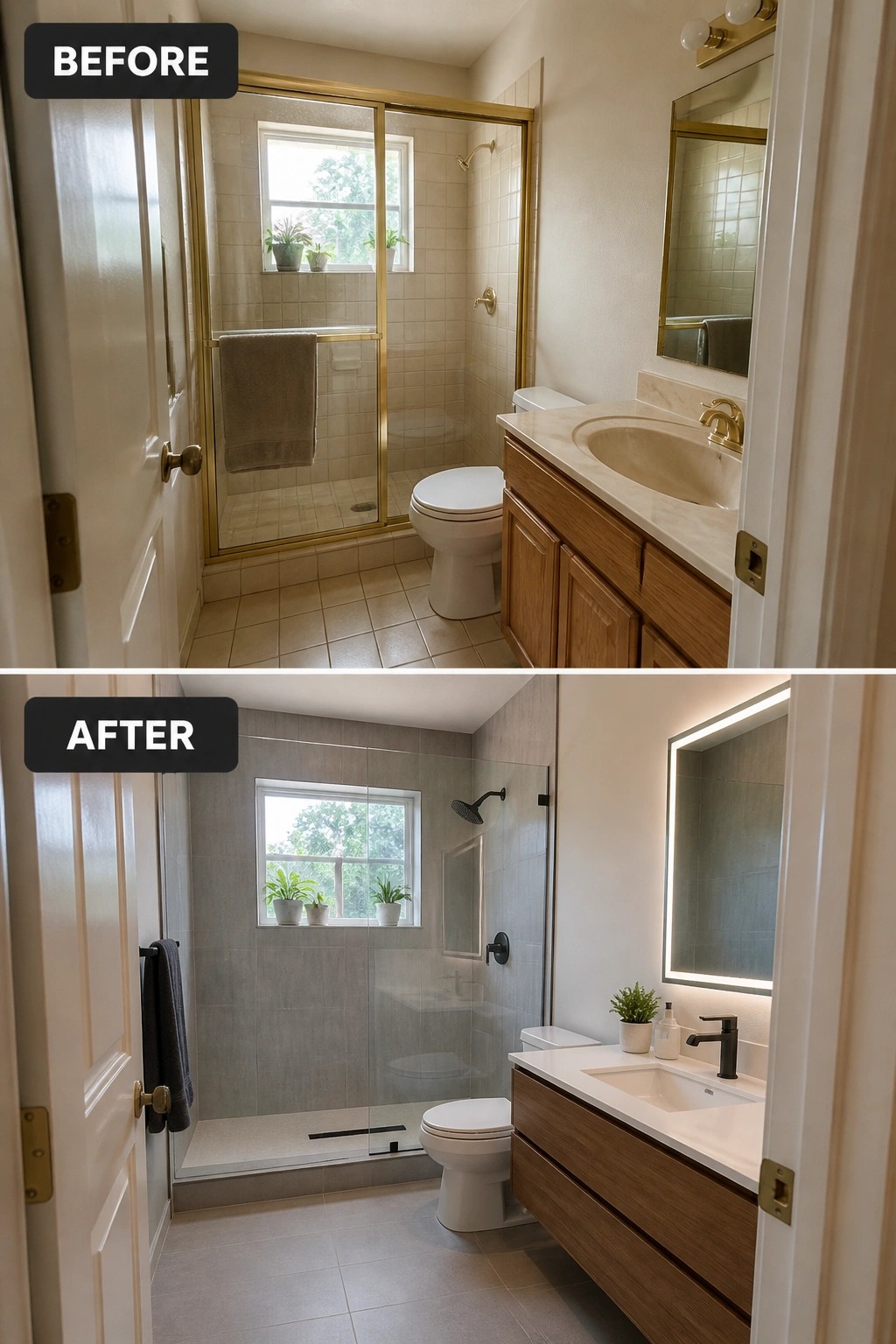
A framed shower door often makes the whole bathroom feel boxed in, even when the rest of the space is in decent shape. Replacing it with a frameless glass panel removes that heavy outline and lets light and sightlines move through the room without interruption.
This change works best in smaller bathrooms where you want to keep things feeling open. Pair the new glass with simple tile and a streamlined vanity so the shower stays the main focal point instead of competing with too many other updates.
Replace A Tub With A Frameless Glass Shower

Many older bathrooms still have a tub and sliding door setup that makes the whole room feel closed in. Switching to a frameless glass shower removes the bulky frame and opens up the space so the eye can travel across the room instead of stopping at the tub edge. The clean lines also let the floor pattern continue under the shower area, which helps the bathroom feel larger without moving any walls.
This change works well in smaller bathrooms where every inch counts. Keep the rest of the room simple so the glass stays the main feature, and make sure the shower floor matches the rest of the tile for a seamless look. It is a practical update that modernizes the space without a full gut renovation.
Replace Framed Shower Doors With Frameless Glass
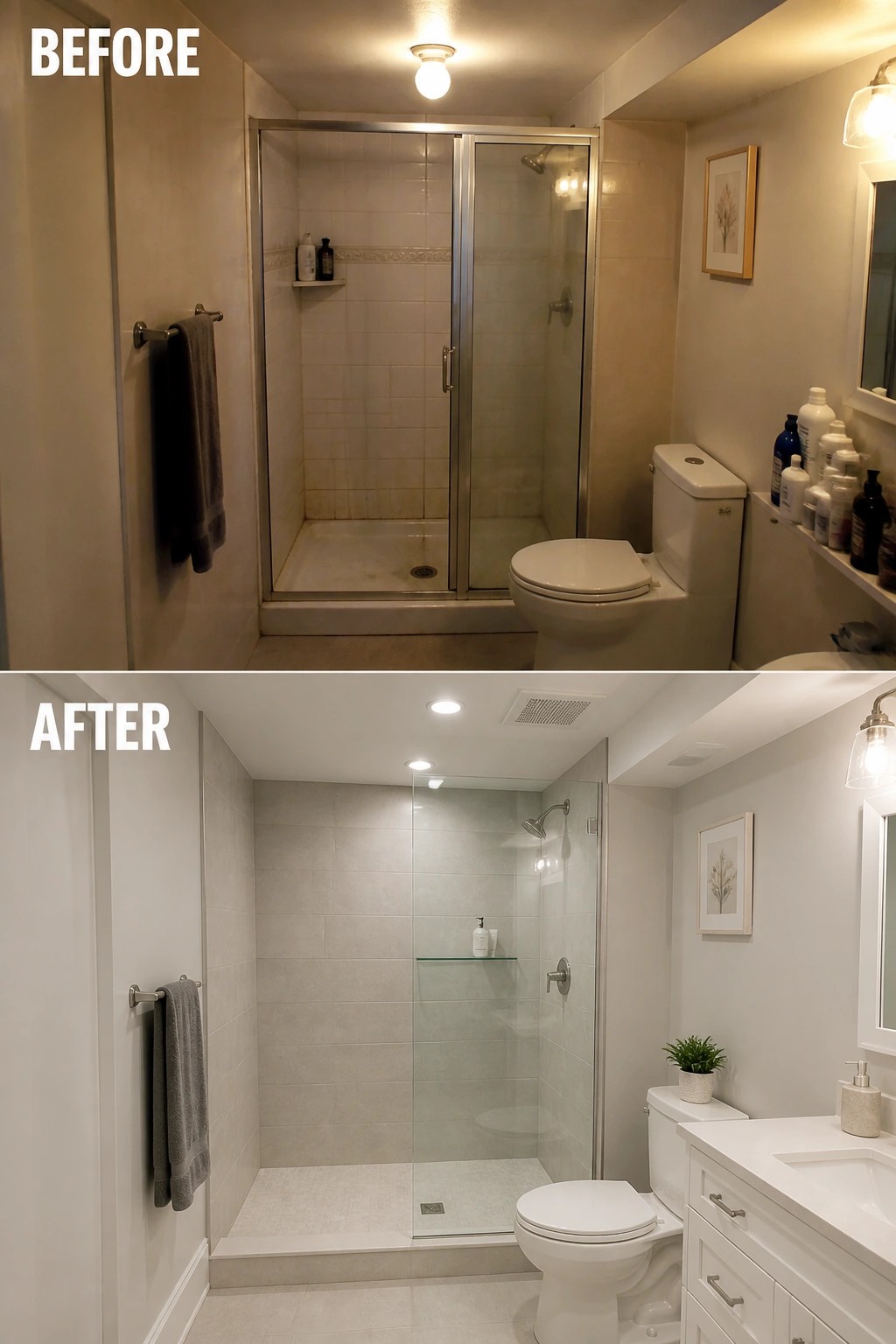
Switching from a framed sliding shower door to a frameless glass panel makes the whole bathroom feel more open. The old metal frame and track created a heavy, closed-off look that cut the space in half, while the new clear panel lets light move freely and keeps the room from feeling cramped.
This idea works best in smaller bathrooms where you want to avoid anything that adds visual weight. Stick with light wall and floor colors so the glass stays the main feature, and keep the shower area open to the rest of the room instead of trying to hide it behind curtains or extra barriers.
Swap A Framed Shower For A Frameless Glass Panel
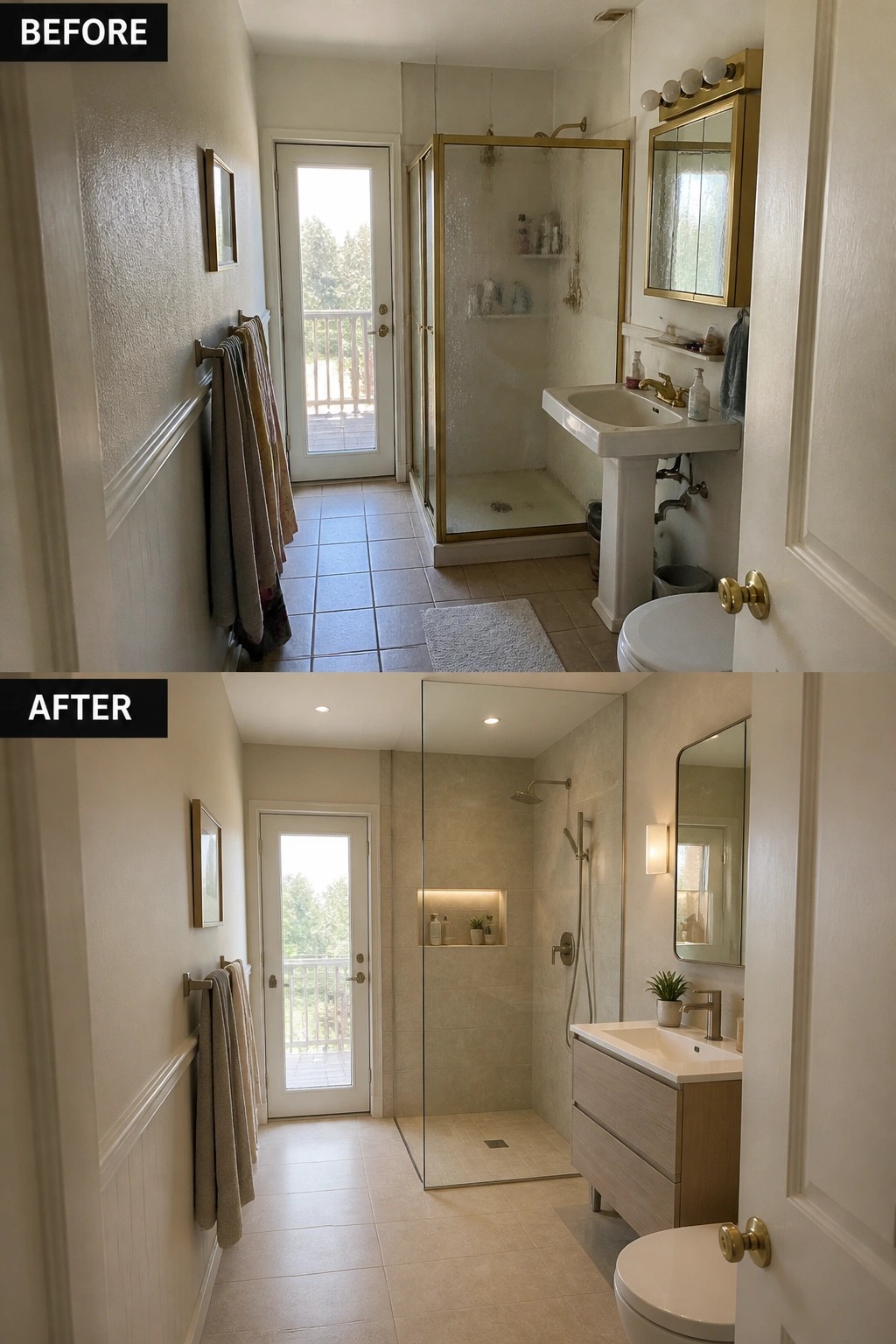
The old enclosed shower with its gold frame made the bathroom feel boxed in and dated. Replacing it with a frameless glass panel opened the space right up. The clear glass lets the tiled walls and floor run through visually, and the new shower area feels much larger without the extra metal.
This works best in compact bathrooms where you want to keep sight lines clear. Pair the glass with simple tile and a low-profile vanity so nothing competes with the open look. It is a straightforward change that updates the room without a full gut job.
Swap Old Sliding Doors For Frameless Glass

The main change here is replacing the bulky framed shower doors and floral wallpaper with a frameless glass panel and simple tile. This opens up the space, removes visual clutter, and gives the whole bathroom a lighter, more current look without moving any walls or fixtures.
This approach works well in smaller bathrooms where heavy doors make the room feel closed in. Keep the rest of the surfaces simple so the glass stays the focus, and make sure the niche or shelf inside the shower stays shallow enough not to crowd the standing area.
Replace A Framed Shower With A Frameless Glass Panel
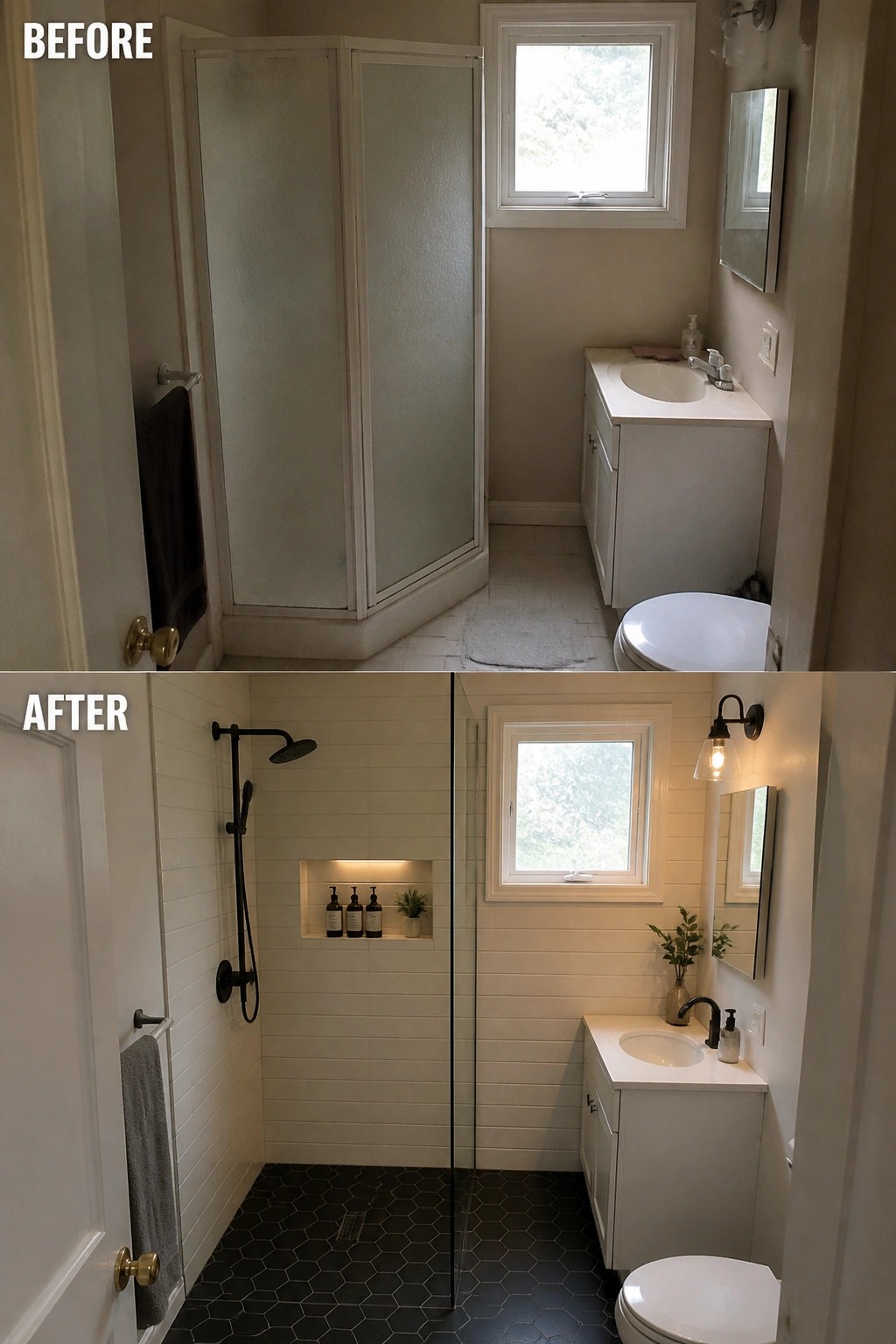
A framed shower often makes a small bathroom feel boxed in. Removing it and installing a frameless glass panel lets the eye move straight through the space, which instantly makes the room feel larger and brighter. The clear glass also keeps the focus on the updated tile and fixtures instead of the shower structure itself.
This idea works best in compact bathrooms where you want to keep the layout but need more visual breathing room. Pair the glass with a simple tile pattern and matching hardware so nothing competes with the open look.
Swap Framed Shower Doors For Frameless Glass

Framed shower doors often make a bathroom feel boxed in. Switching to frameless glass panels removes the visual bulk and lets the eye move freely across the space, which immediately makes the room feel larger and more open.
This approach works especially well in smaller bathrooms where every inch counts. Keep the rest of the updates simple, match the hardware finish to your faucet and towel bars, and make sure the glass is installed with proper support so it stays secure over time.
Switch To Frameless Glass Shower Panels

A framed shower door often makes a small bathroom feel boxed in. Replacing it with a frameless glass panel removes the bulky metal lines and lets the eye move straight through the space. The result is a lighter, more open room even when the floor plan stays the same.
This approach works best in bathrooms that already have decent light. Keep the surrounding tile and walls light and simple so the clear glass stays the main feature. Avoid adding heavy shelves or dark accents right next to the shower if you want the same airy effect.
Switch To Frameless Glass Shower Panels For A Lighter Look

The main change here is replacing the old framed sliding shower door with a frameless glass panel. This single swap removes the bulky metal frame and lets the eye move straight through the shower area, which makes the whole bathroom feel bigger and less closed in.
Frameless glass works best in smaller bathrooms where every inch counts. Keep the rest of the room simple so the clean lines of the glass stay the focus. It also pairs well with lighter floor finishes and minimal hardware if you want the space to feel current without a full gut renovation.
Replace Framed Shower Doors With Frameless Glass Panels

A framed shower often makes the whole bathroom feel smaller because the metal lines cut up the space. Removing those frames and installing a single frameless panel lets the tile run uninterrupted, so the room reads larger and cleaner. The change also shifts attention to the tile and fixtures instead of the hardware.
This update works best in bathrooms that already have decent tile and just need one modern touch. Make sure the walls are solid enough to support the glass and plan for a good seal at the floor. Keep other details simple so the open look stays the main feature.
Replace A Framed Shower Door With Frameless Glass

The framed shower door in the before photo closed off the space and made the bathroom feel smaller than it was. Switching to a frameless panel removes the heavy lines and lets the eye move freely across the room, which opens everything up without moving any walls.
This idea works well in small bathrooms where the shower takes up a lot of visual weight. Keep the surrounding tile and fixtures simple so the glass stays the main feature, and check that your floor drain and waterproofing are ready before the panel goes in.
Replace A Framed Shower With Frameless Glass
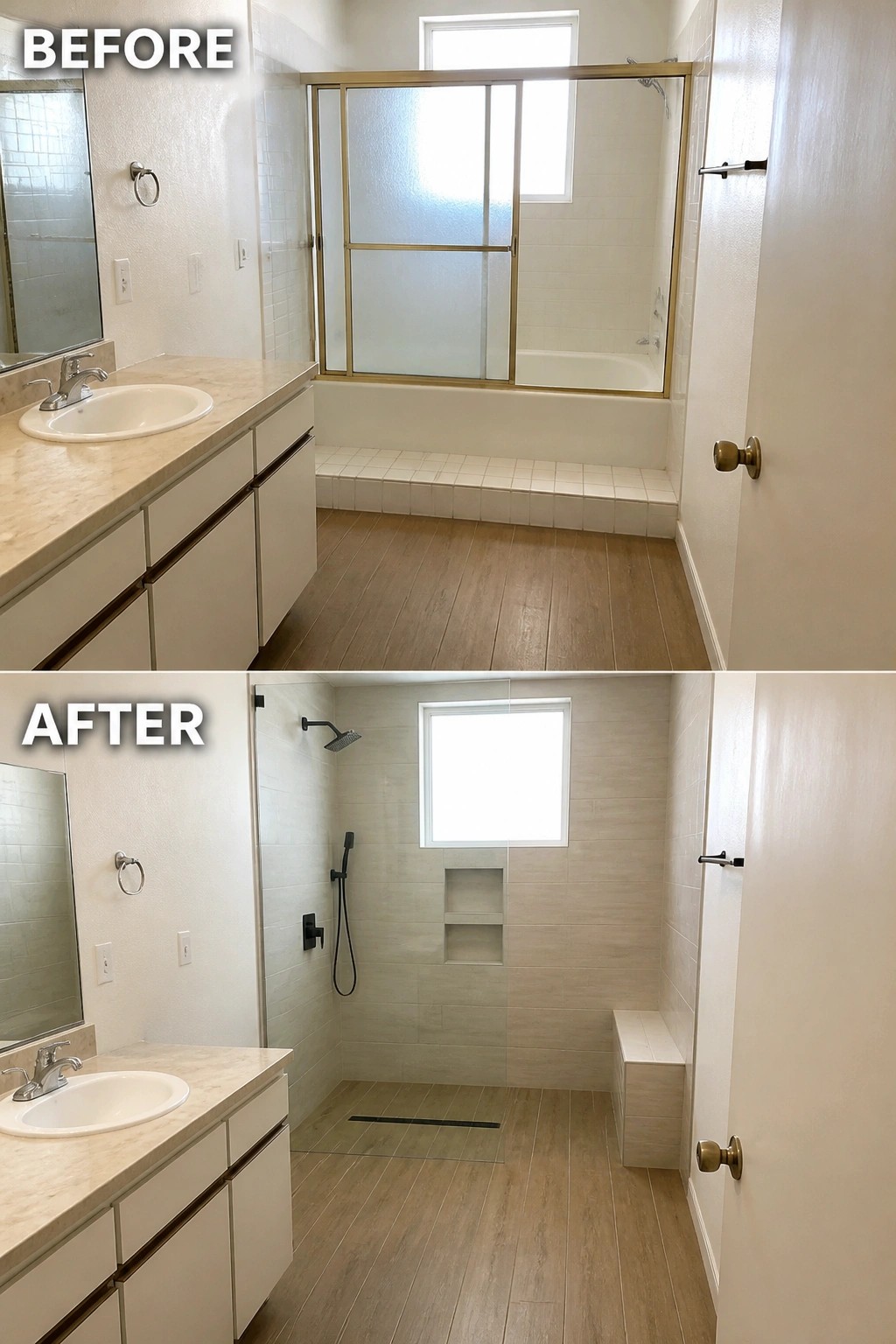
Many bathrooms feel closed in because of a heavy framed shower door and an old tub that takes up too much space. Switching to a frameless glass panel and turning the area into a simple walk-in shower removes the visual barriers and lets the eye travel farther across the room. The change is especially helpful in smaller bathrooms where every inch counts.
This idea works best when the goal is a cleaner, more open layout without major structural work. Keep the rest of the room simple so the glass stays the main feature, and choose a panel that matches the scale of the shower area. It suits homes that already have decent plumbing access and just need the enclosure updated.
Replace A Framed Shower Door With Frameless Glass

The main change here is swapping out the old sliding framed door for a single frameless glass panel. This removes the bulky metal tracks and frosted panels that made the shower feel closed in. The new setup lets the eye move through the space, and the tiled walls and recessed niche now read as the main features instead of the door hardware.
This approach works well in smaller bathrooms where you want the shower to feel less boxed off. Keep the glass clear rather than etched, and make sure the tile and niche details are finished before the glass goes in. It is a straightforward update that gives the room a lighter, more current look without moving walls or changing the footprint.
Replace Framed Shower Doors With Frameless Glass
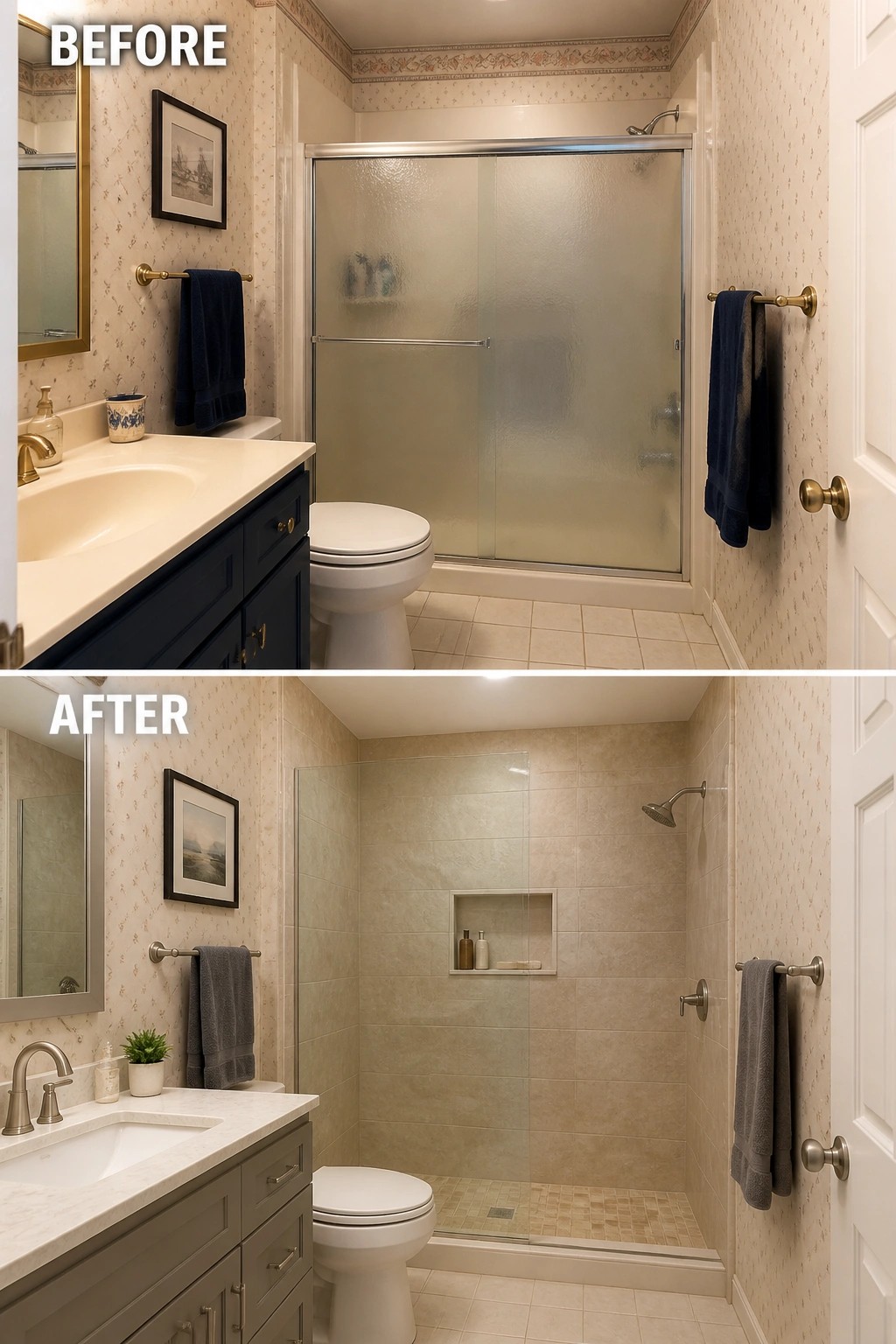
Swapping the old framed sliding shower door for a frameless glass panel makes the biggest difference in this bathroom. The metal frame and frosted panels had closed off the space, while the new clear glass lets the eye travel through and keeps the room feeling larger.
This approach works well in average-sized bathrooms that need a lighter look without moving walls. Focus first on removing the old enclosure and checking the curb for a clean install. Then choose simple hardware and coordinate the glass with updated tile so the whole area stays easy to maintain.
Swap A Framed Shower Door For A Frameless Panel
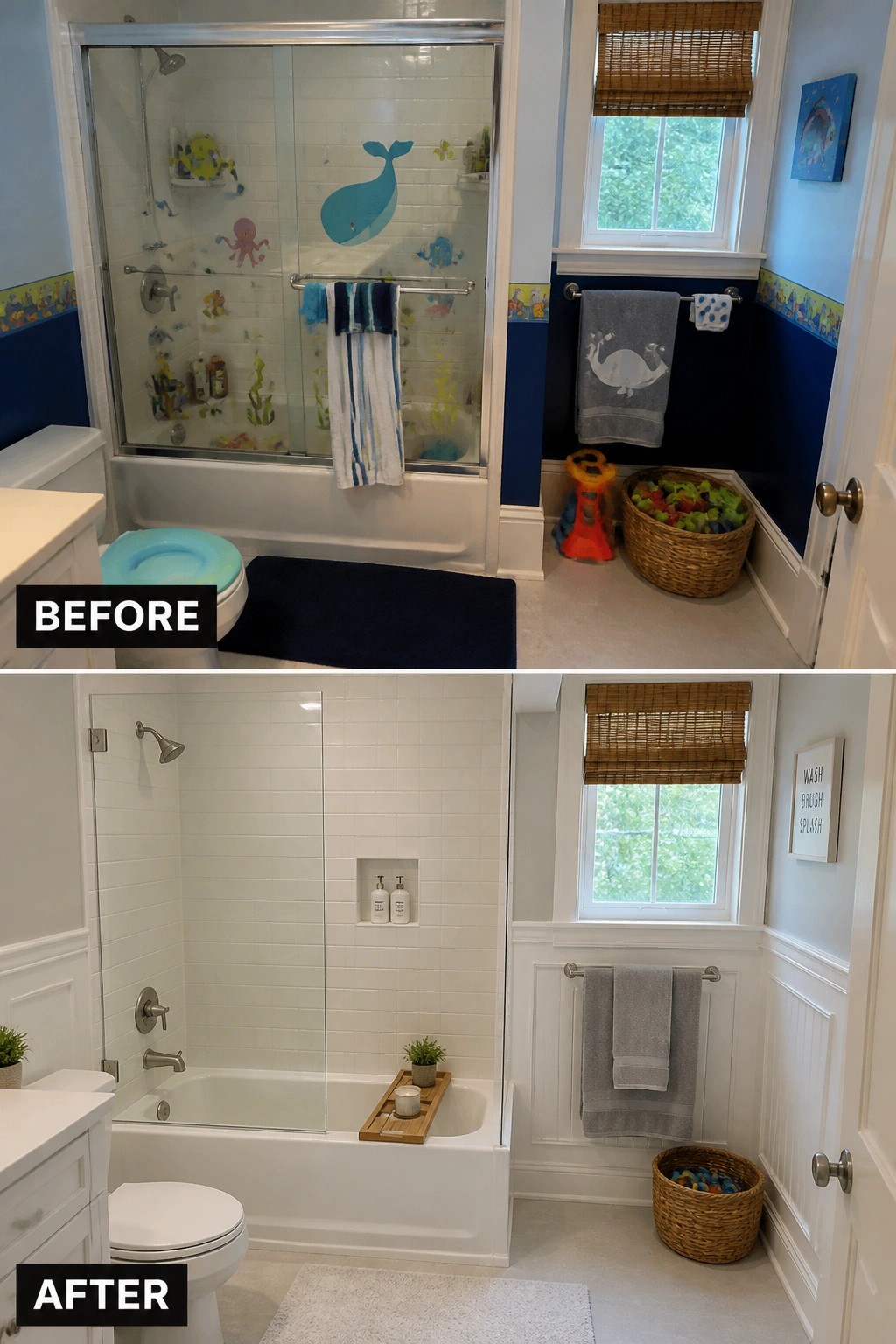
A framed shower often makes a small bathroom feel busy and dated. In this case the old enclosure had stickers, visible hardware, and a darker feel that stood out against the rest of the room. Switching to a frameless glass panel removed those lines and let the white tile and tub read as one clean surface.
This change works well in bathrooms that already have simple tile or need a lighter look without a full gut. Keep the rest of the room calm so the glass stays the main update, and choose hardware that matches your faucet finish. The result feels bigger and easier to clean day to day.
Replace A Framed Shower With Frameless Glass
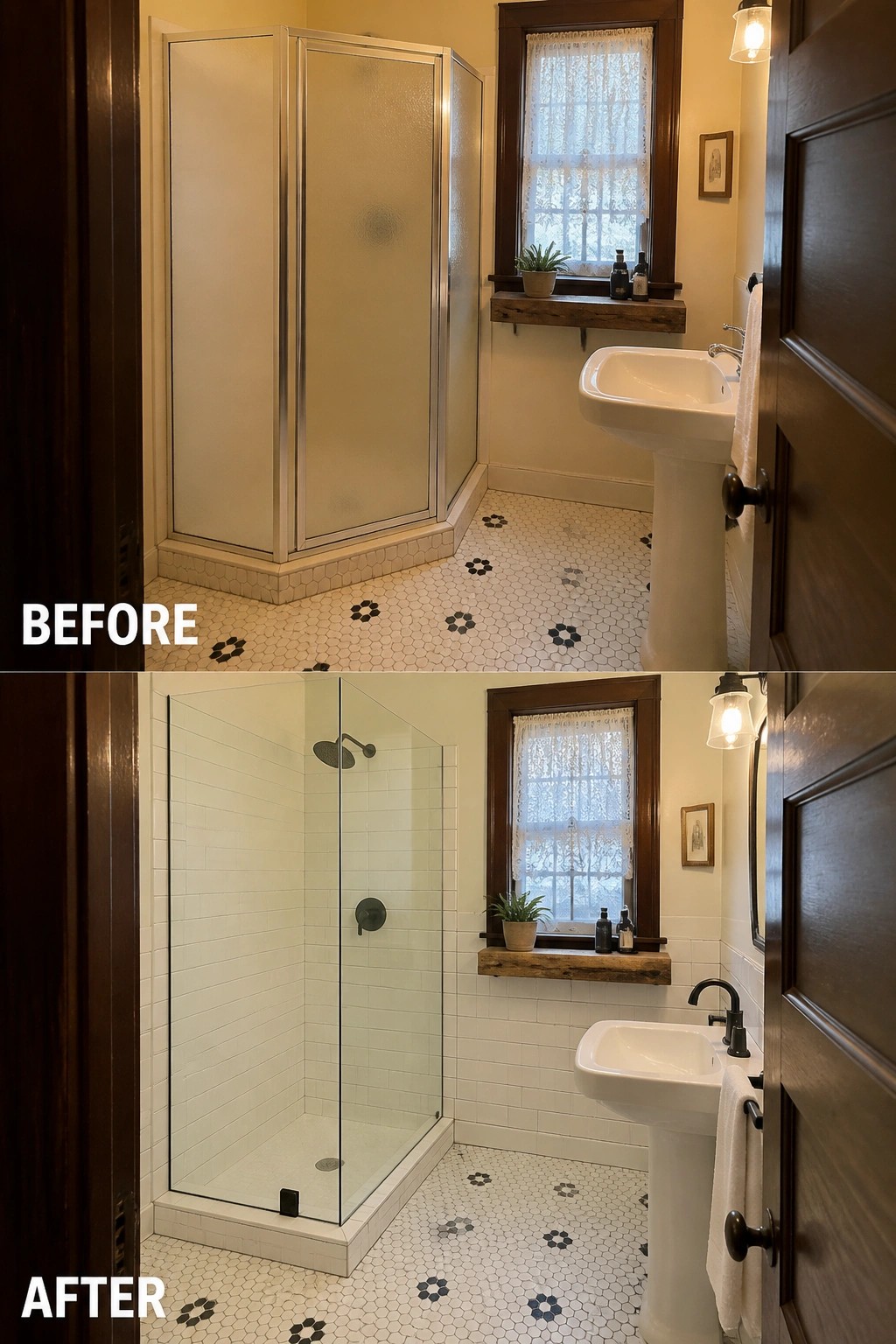
The framed corner unit in the before photo made the bathroom feel boxed in and dated. Switching to a frameless glass panel with clear glass opens the space visually and lets the eye travel farther, which is especially helpful in smaller bathrooms that already have limited floor area.
This approach works best when the rest of the room stays simple. Keep the original tile floor, update the shower walls with clean subway tile, and choose matte black or brushed nickel hardware so the glass remains the main feature without competing elements.
Open Up A Small Bathroom With Frameless Shower Glass

The main change here was swapping the old framed sliding doors for a single frameless glass panel. That one swap removed the heavy lines and dark frame that made the shower feel closed off, letting light move through the whole room instead.
This idea works well in compact bathrooms where every inch counts. Keep the rest of the updates simple, like lighter vanity finishes and better lighting, so the glass stays the main feature rather than fighting with too many other changes.
Replace An Old Shower With Frameless Glass

The main change here was removing the heavy glass block shower and replacing it with a frameless glass panel. This single swap makes the whole bathroom feel larger and much brighter while keeping the same footprint. The new shower also pairs better with the updated vanity and lighter tile, giving the space a cleaner, more current look without a full gut renovation.
This idea works well in smaller bathrooms where an enclosed shower can make the room feel boxed in. Keep the rest of the finishes simple so the glass stays the focus, and make sure the shower floor and drain are updated at the same time for a finished result.
Open Up A Small Bathroom With Frameless Glass
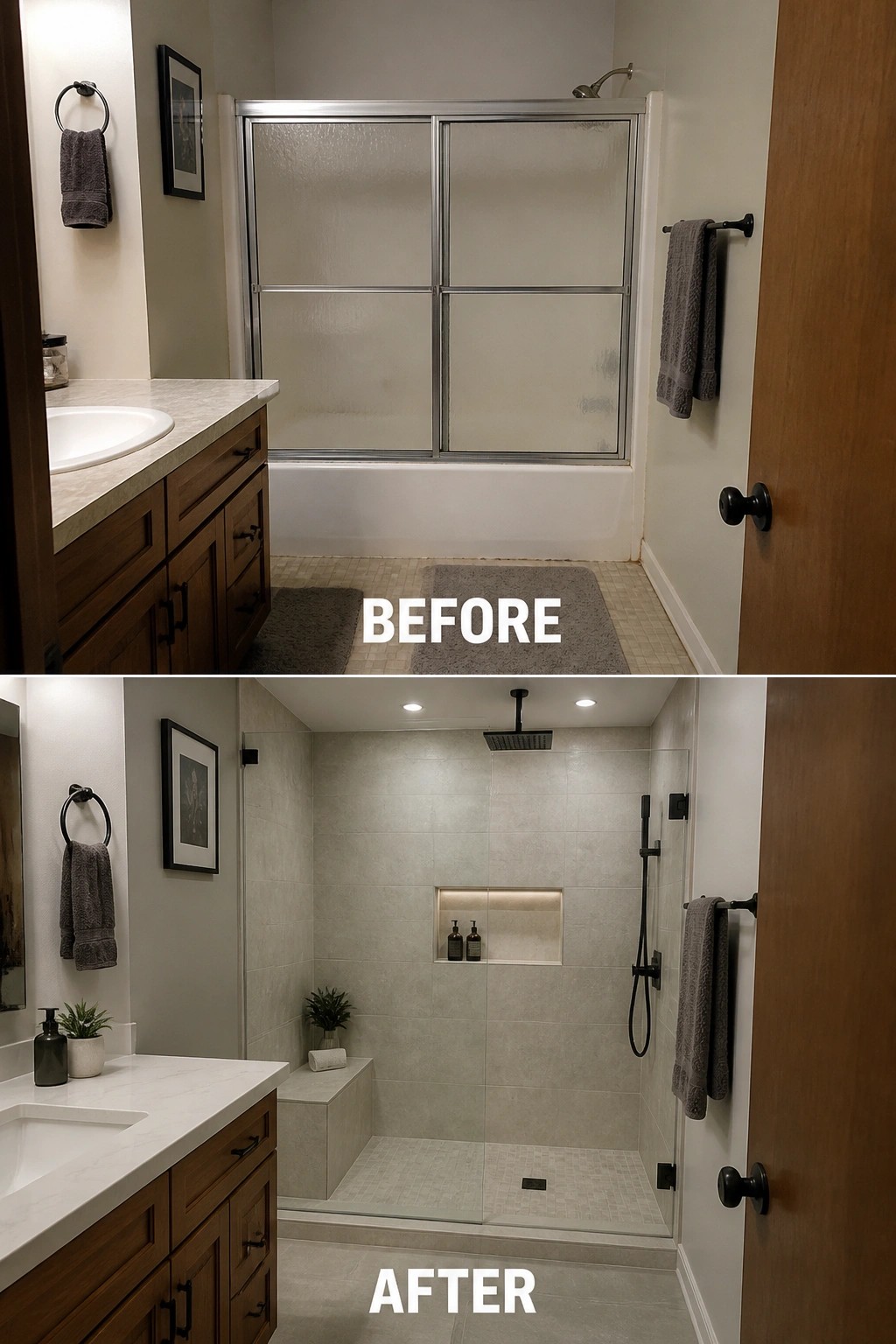
The change from a framed tub enclosure to a frameless glass shower instantly makes the room feel larger. Clear panels remove the visual barrier that used to cut the space in half, and the new tile carries through without interruption.
This idea suits bathrooms that feel cramped or dated. Keep the layout simple, choose glass sized to your actual shower area, and make sure the floor drain and waterproofing are handled before the panels go in.
Frequently Asked Questions
Q: How do I clean frameless glass shower panels without streaks? A: Wipe them down with a squeegee right after each shower. Mix some vinegar with water for a quick spray if spots start to build up. This keeps the glass looking clear day after day.
Q: Can I install these panels on my own? A: Skip the DIY route here. The panels are big and heavy so they need steady hands and the right tools to set them level. A pro will make sure everything seals tight against leaks.
Q: Will frameless glass work in a tiny bathroom? A: It opens the space right up. You see straight through to the tile so the room feels bigger than it is.
Q: What kind of hardware do these panels need to stay secure? A: Strong brackets hold them in place along the edges. Make sure they match the glass thickness so nothing shifts over time.
