

Many bathrooms feel a bit unfinished when the shower stands out as the weakest part of the design, with surfaces that no longer match how the room gets used.
Focusing on tile updates there can sort out that imbalance and make the area more comfortable without a complete overhaul.
I often think the real win comes from picking materials that handle moisture well and do not require constant upkeep.
It is a practical step worth considering.
Looking at real examples helps show which combinations actually suit different layouts and lighting conditions over time.
Update Shower Tile To Modernize An Older Bathroom

Swapping out the old pink shower tile for a neutral gray version makes the whole room feel current without needing a full gut job. The glass panel in place of the curtain also helps by keeping water contained while letting light through, so the space looks brighter and more open.
This kind of tile update works especially well in bathrooms that still have a usable tub and floor. Focus on a simple color that pairs with the existing fixtures, and keep the rest of the room light so the new tile becomes the main change.
Refresh A Shower With Light Subway Tile
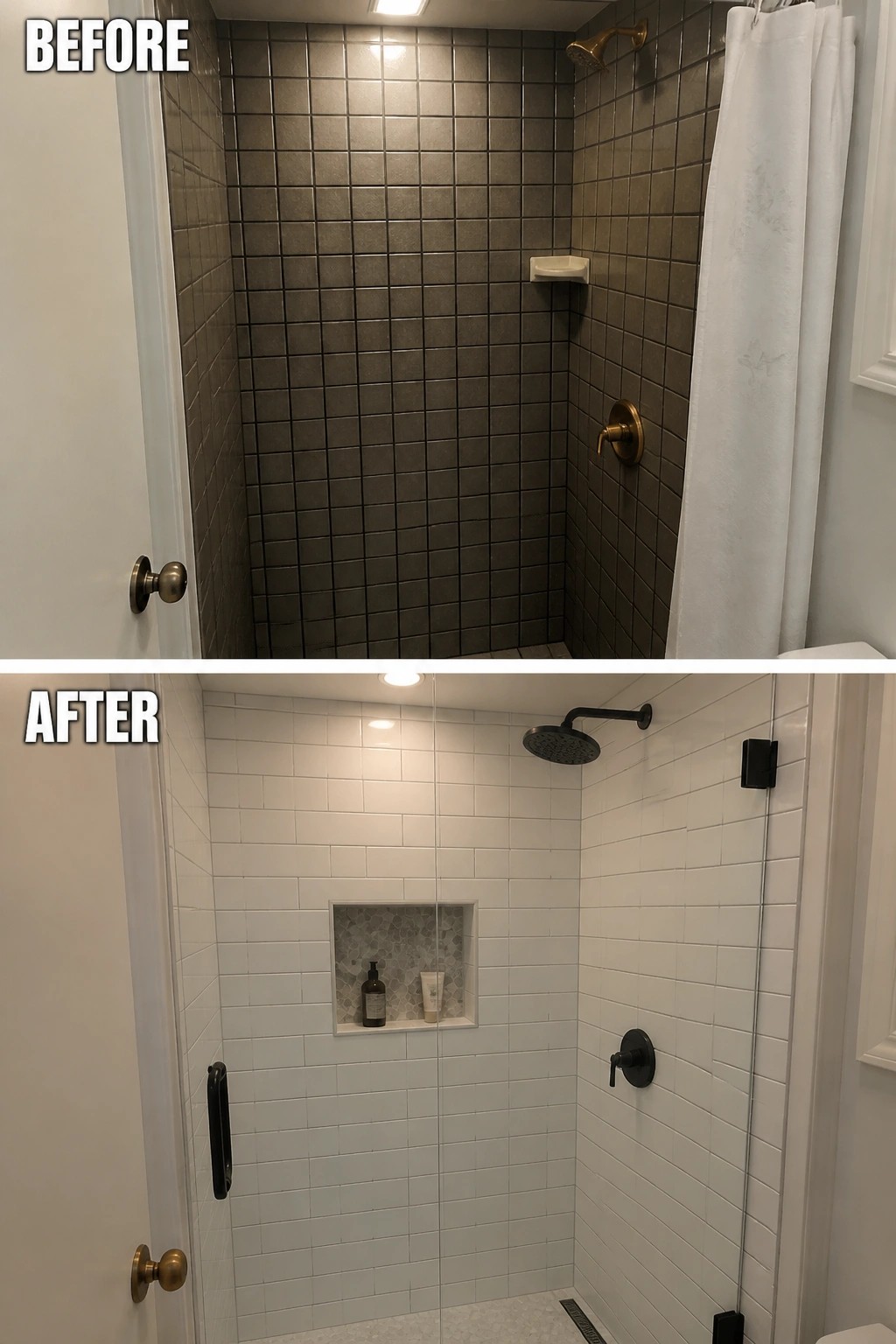
The old dark tile made the shower feel small and closed in. Switching to white subway tile brightened the space and gave it a much cleaner, more open look without changing the room size.
This update works especially well in bathrooms that need more light. Choose a simple tile pattern first, then update the fixtures and add a glass door so the new tile stays the main focus.
Refresh A Bathroom By Updating The Shower Tile

The main change here is swapping the old beige grid tile for lighter marble-look tile set in a vertical layout. That one switch opens up the space and gives the shower a much cleaner, more current feel.
If your shower has similar dated tile, focus first on the material and layout. A light neutral with a simple vertical pattern often works well in small bathrooms, and adding a recessed niche keeps the update useful without extra clutter.
Use A Bold Tile Pattern To Refresh The Shower
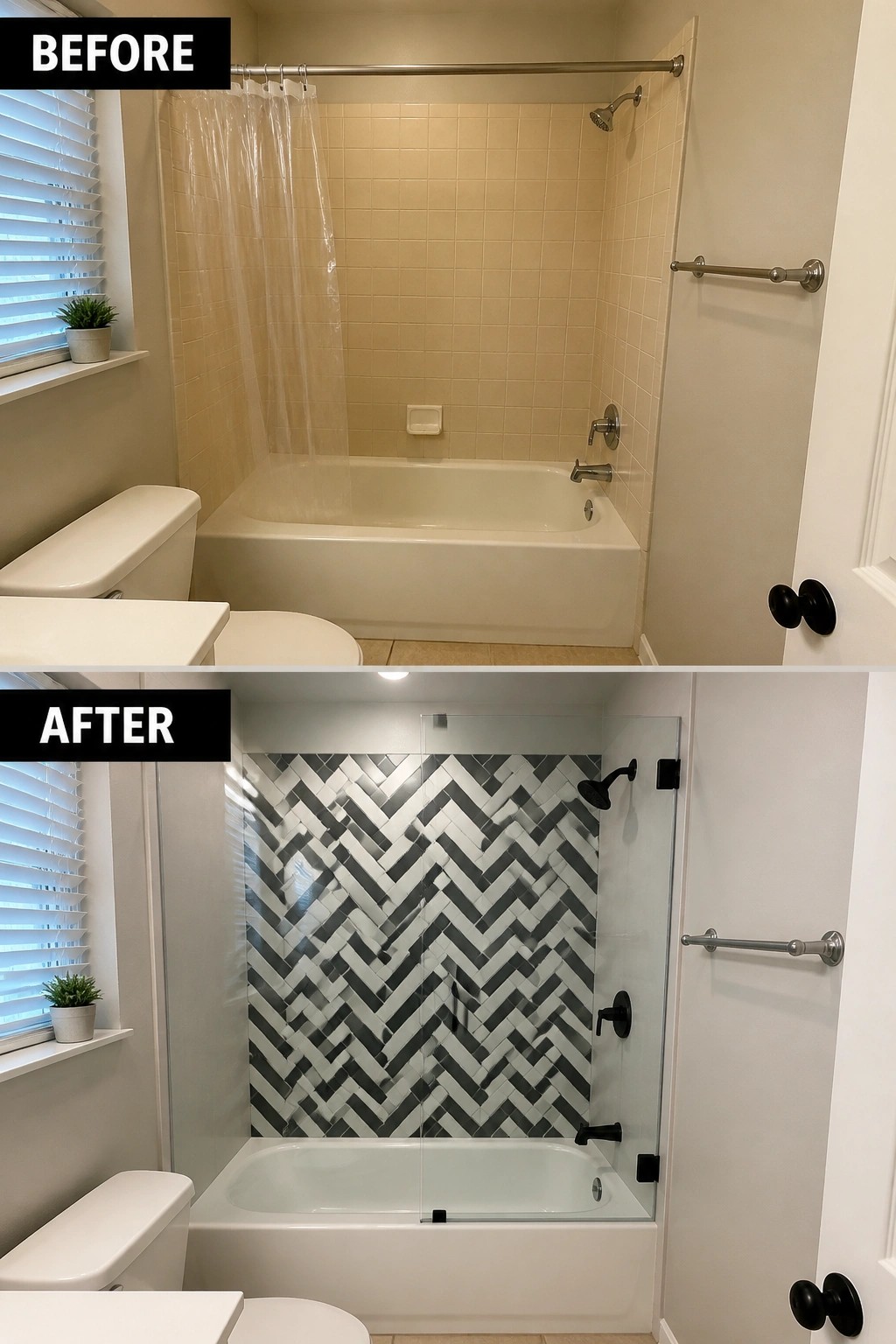
One of the easiest ways to update an older bathroom is to replace plain shower tiles with a stronger pattern. The old beige grid felt flat and dated, while the new herringbone layout in mixed grays creates a clear focal point and makes the whole space feel more current.
This idea works best in smaller baths where the shower takes up most of the visual space. Keep the surrounding walls and fixtures simple so the tile stands out, and choose a pattern that has enough contrast to feel like a real change rather than a minor refresh.
Add A Patterned Floor Tile To Update The Shower

A plain shower floor can make the whole space feel dated even when the walls are in good shape. Switching to a small-scale mosaic on the floor while keeping the wall tiles simple brings in just enough pattern and texture to refresh the look. The new hardware in a warm metal finish ties everything together without requiring a full gut job.
This approach works best in smaller bathrooms where you want to avoid major demolition. Keep the wall tile light and consistent, then let the floor carry the interest. Match your fixtures to the new tile tones so the update feels intentional rather than piecemeal.
Update An Old Shower With Patterned Tile

The main improvement here comes from replacing the plain beige tile with a bold patterned design across the shower wall. Adding a recessed niche also gives a clean spot for bottles and small items instead of leaving them lined up on the tub edge.
This approach works best in bathrooms that still have a good tub and layout but need a visual refresh. Keep the tile to one main wall so the pattern stays balanced, and match the new fixtures to the style of the tile rather than trying to keep the old ones.
Swap Dated Shower Doors For Frameless Glass

An old sliding shower door with frosted panels tends to close off a bathroom and make it feel smaller than it is. Replacing it with a frameless glass door and switching to lighter tile opens up the space and lets more light move through the room.
This change works best in bathrooms that already have decent layout but need a simple refresh. Stick with white or pale tile and match the new hardware to existing fixtures so the update stays practical and easy to live with.
Update Shower Tile With A Recessed Niche
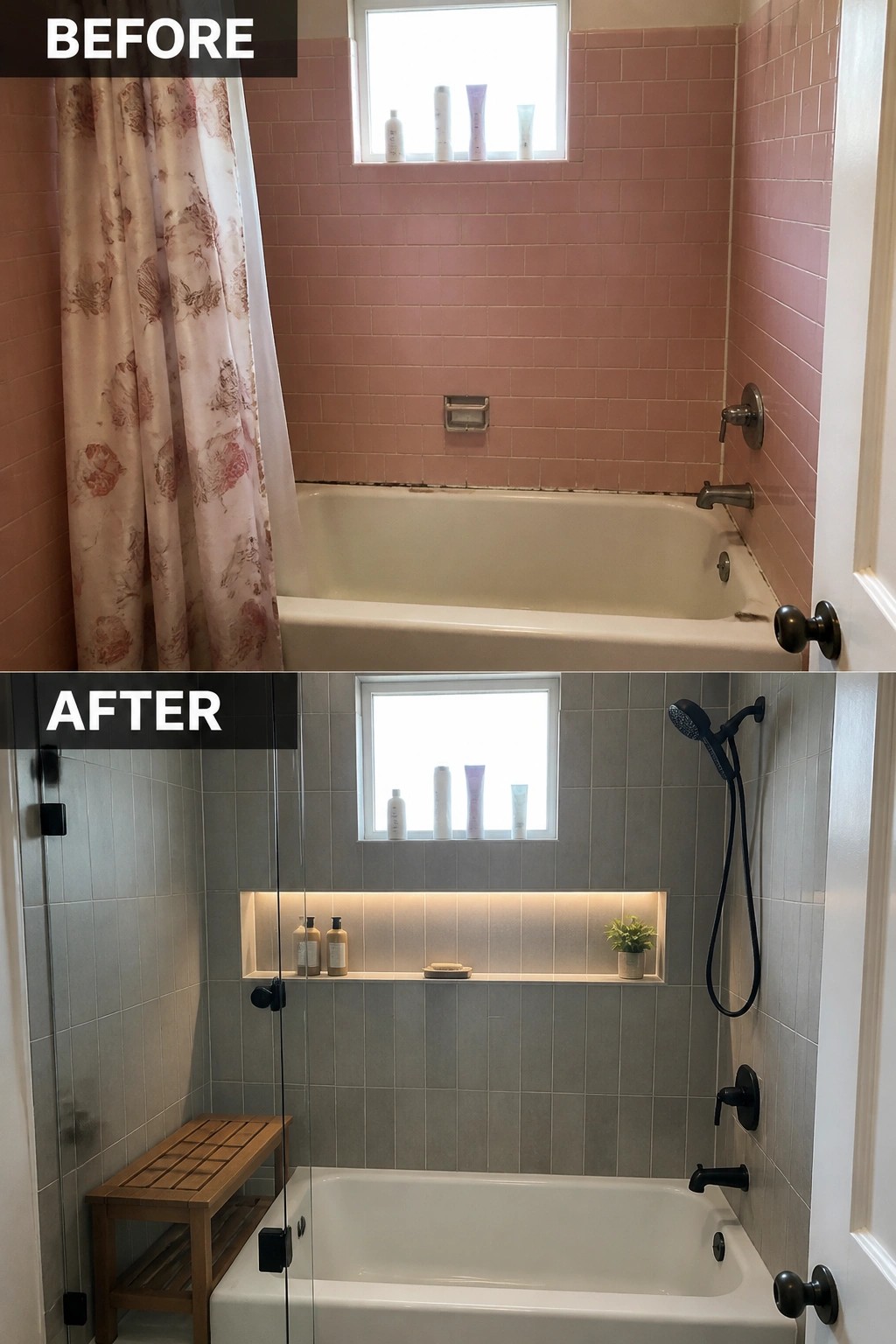
Swapping out old pink tile for a calmer gray field tile made the whole shower feel current. Adding a backlit niche across the back wall gave the space a clean place to store bottles while keeping the surface simple and easy to clean.
This approach works well in bathrooms that already have a tub but need a quick refresh. Keep the niche shallow so it does not take up shower space, and run the same tile on the walls and niche interior for a seamless look.
Update A Basic Shower With Dark Tile And A Niche
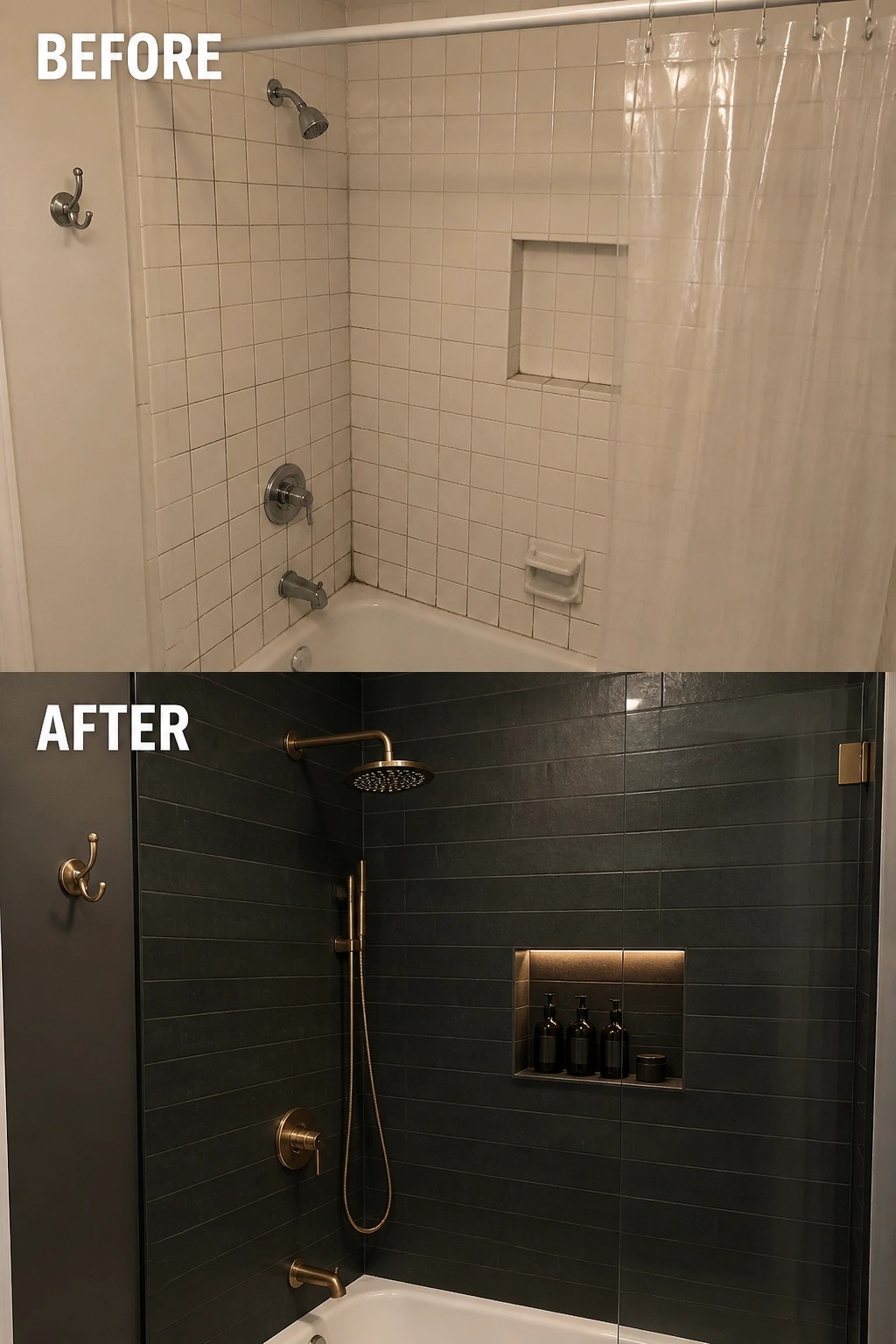
The main change was covering the old white subway tile with dark rectangular tile. That one swap made the shower feel more finished and current. Adding a recessed niche with built-in lighting also gave a clean place to store bottles without adding clutter to the ledge or tub deck.
This idea works best in smaller bathrooms where you want impact without a full gut job. Dark tile can make the space feel more enclosed and calm. Just check that the tile is suitable for wet areas and that the color still works with your tub and fixtures.
Refresh A Basic Shower With Textured Tile
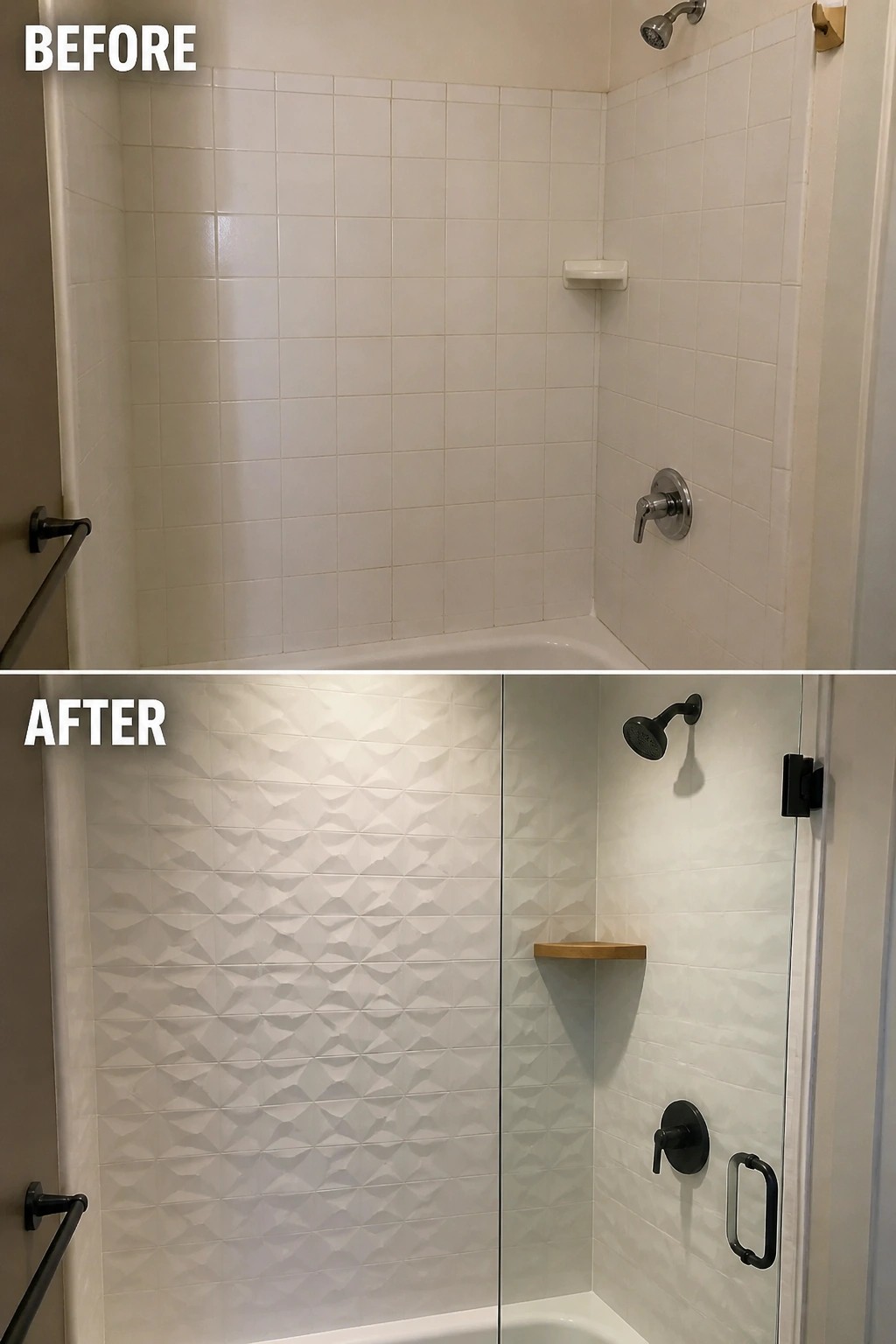
Many showers start with plain white tile that feels flat once the newness wears off. Replacing the main wall with a 3D geometric pattern adds depth and interest while keeping the rest of the space light and simple.
This idea works best in smaller bathrooms where one strong surface can carry the update. Pair the new tile with updated hardware in a single finish and add one small shelf for function.
Swap Dark Shower Tiles For White Subway Tile

Dark tile often makes a shower feel smaller and dated even when the layout is fine. Switching to white subway tile brightens the whole space at once and gives it a cleaner, more current look without changing the footprint.
This approach works best in compact bathrooms where light reflection helps most. Match the new tile with simple fixtures in one finish and keep any window treatment minimal so the light stays even.
Refresh Dated Shower Tile With White Subway Tile
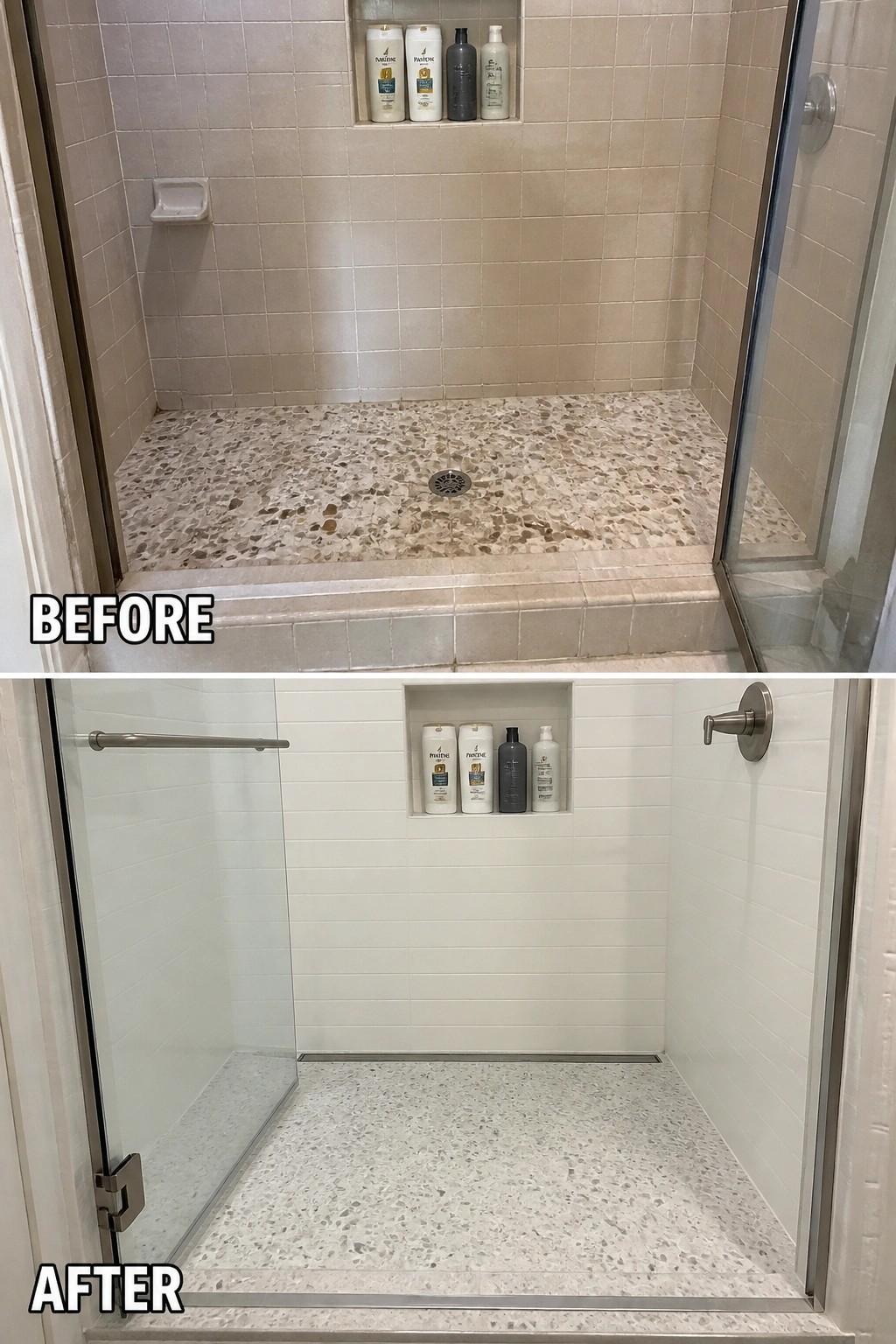
The beige walls made the whole shower feel closed in and dated. Switching to white subway tile brightened the space right away and gave it a much cleaner look while keeping the existing terrazzo floor.
This approach works best in smaller bathrooms where a full gut is not practical. Keep the floor if it is still sound, replace only the shower walls, and add one functional bar for daily use.
Use Patterned Tile On The Shower Floor
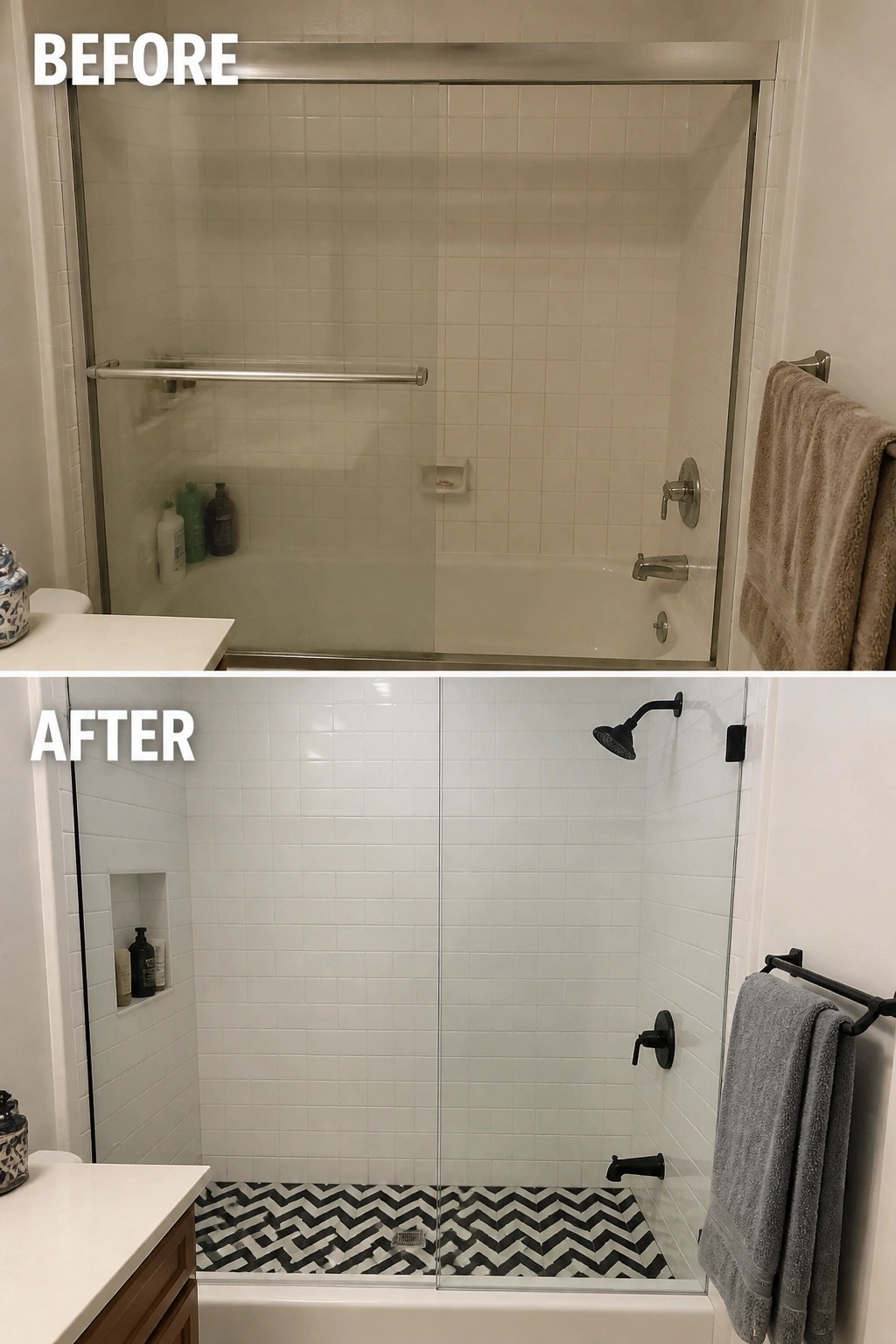
A plain white shower can start to feel dated fast. Swapping just the floor tile for a bold black and white pattern gives the whole space a fresh look without needing to redo the walls or tub. The change also pairs well with updated black fixtures that stand out against the new tile.
This idea works best in smaller bathrooms where the shower is the main feature. Keep the pattern simple and limit it to the floor so it does not overwhelm the room. It suits homes with basic white tile that still has good years left.
Replace Patterned Shower Tiles With Plain White Ones
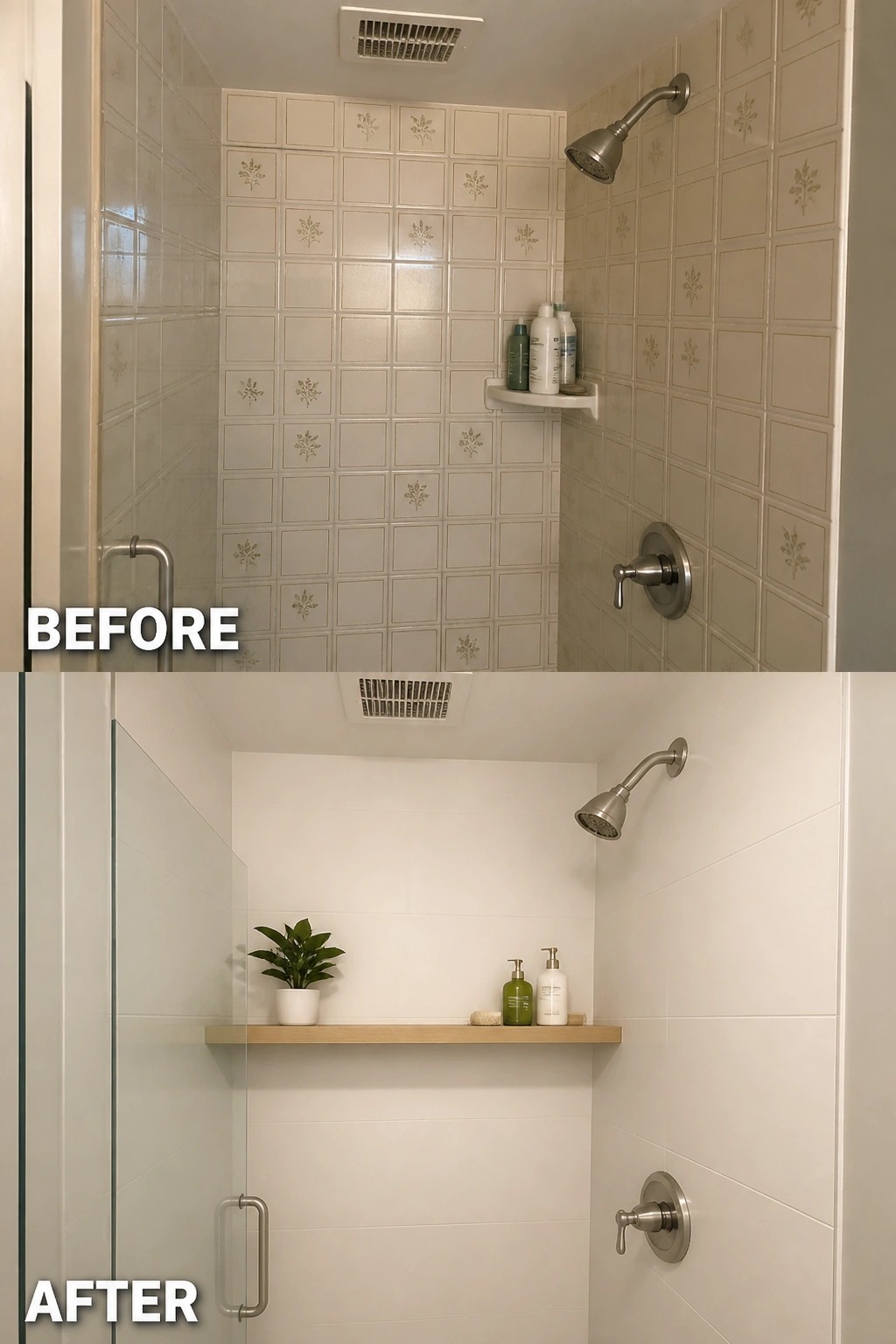
The main update here was covering the old patterned tiles with simple white ones. That change alone made the shower look brighter and more open while keeping the same basic layout and fixtures.
This works especially well in smaller bathrooms that need a quick refresh. Choose a basic white subway tile, keep accessories minimal on one shelf, and the space will feel cleaner without a full remodel.
Replace Dated Tub Tile With A Modern Walk-In Shower

Many bathrooms still have the old beige tile and tub combo that feels closed in and hard to clean. Swapping it for a walk-in shower with fresh patterned tile opens the space, adds a built-in bench, and makes the room feel larger without moving any walls.
This approach works well in smaller bathrooms where a full gut is not possible. Focus on one strong tile pattern for the walls, keep the floor simple, and add a glass door so the new tile stays visible. The result is a shower that feels updated and practical for daily use.
Refresh A Shower With Large Format Tiles
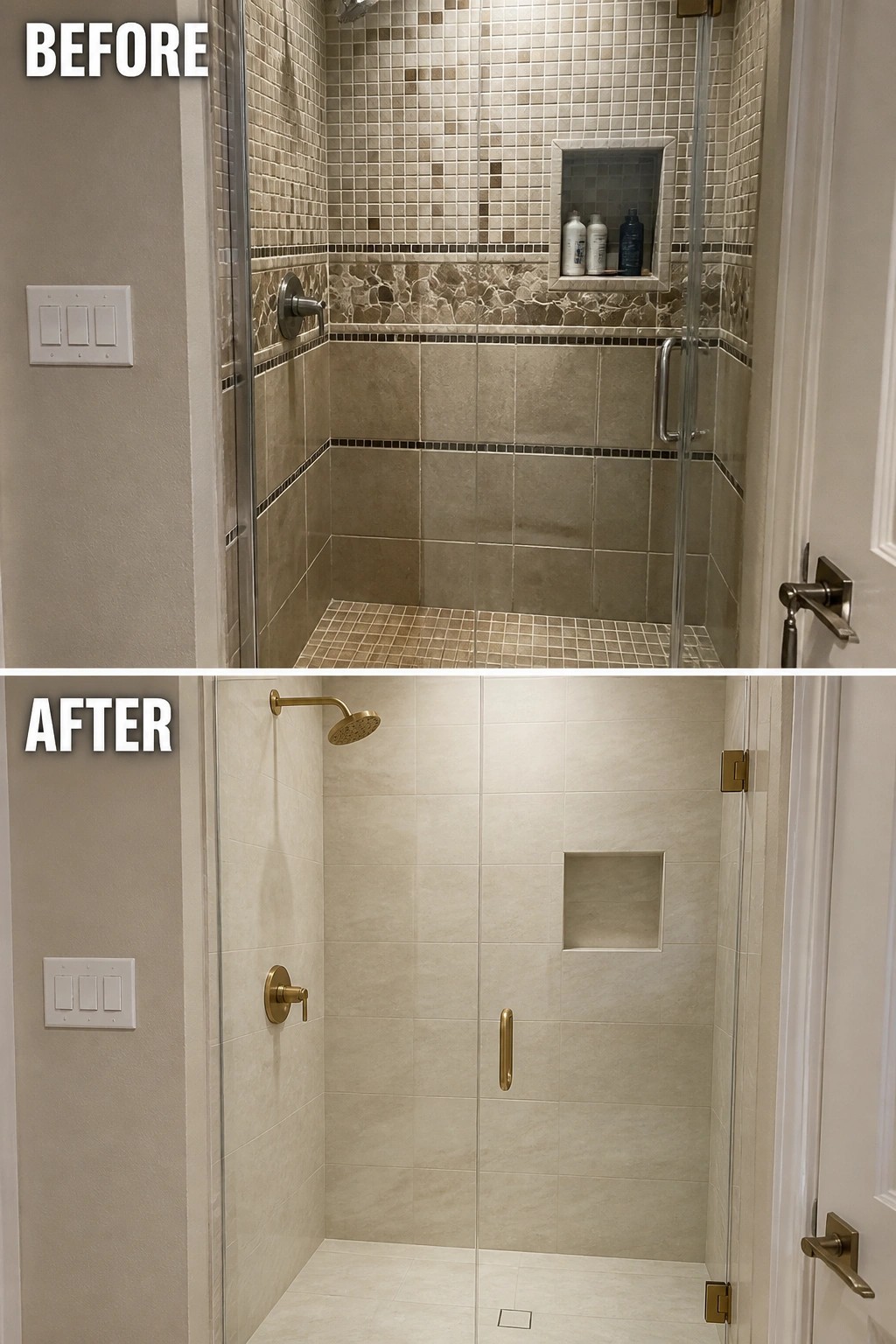
A shower covered in small mosaic tiles often starts to look dated once the patterns feel busy or the grout darkens. Switching to large format tiles cuts down on lines and gives the walls a cleaner surface that reads as bigger and calmer. Here the change from mixed mosaics to uniform beige tiles made the whole space feel more current.
This idea works best in smaller bathrooms where you want to avoid visual noise. Keep the tile color simple, match the fixtures to one finish, and leave the niche if it still functions. It is a practical update that does not require moving walls or plumbing.
Swap Dark Shower Tile For A Lighter Color
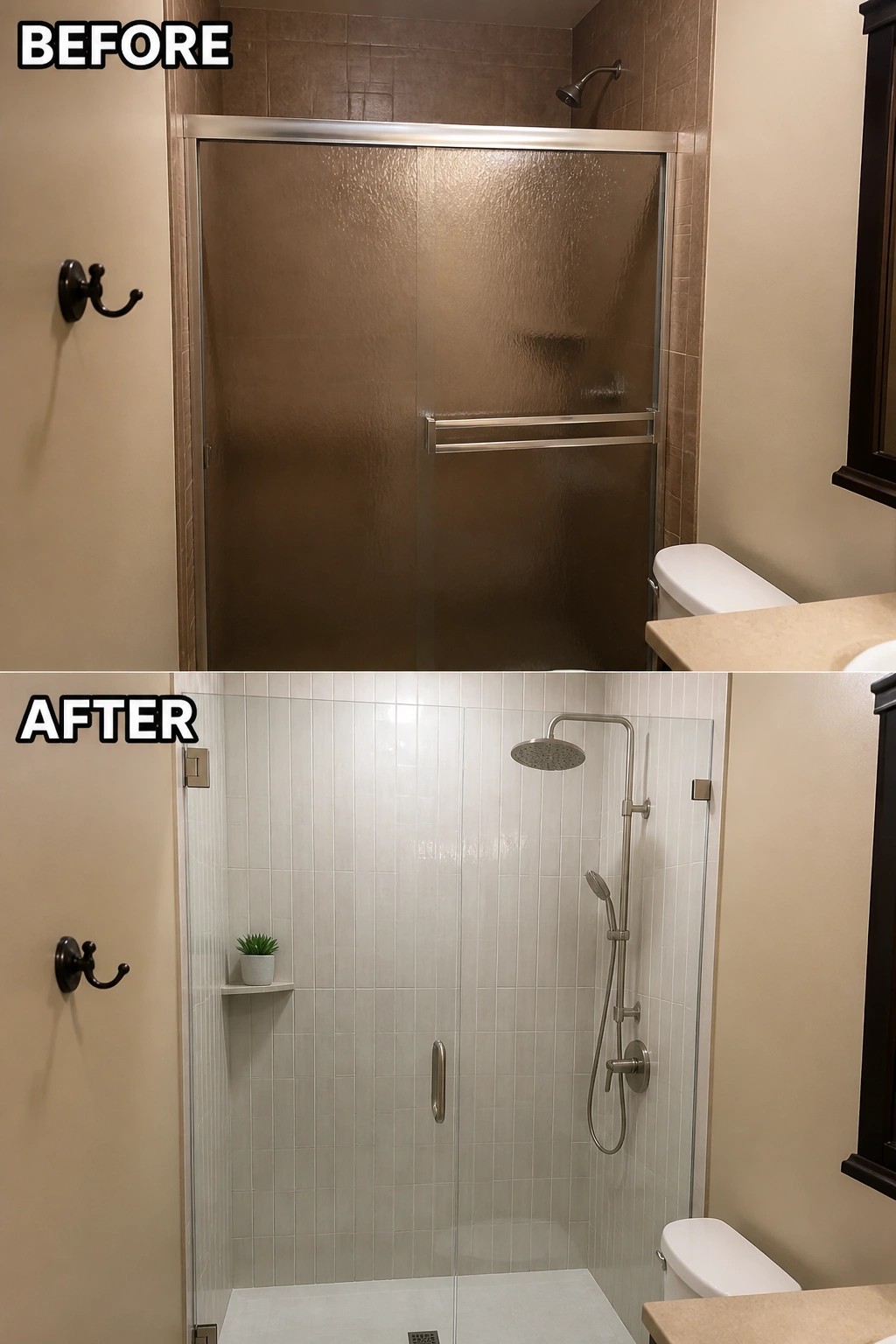
The old shower had dark textured tile and a frosted glass door that made the whole bathroom feel closed in. Switching to white vertical tile with a clear glass enclosure instantly brightens the space and makes it feel larger without moving any walls.
This approach works well in smaller bathrooms where light colors help avoid a cramped look. Keep the tile simple, choose a door style that stays mostly see-through, and add one small shelf if you need a spot for plants or soap.
Add Warmth To A Shower With Wood Look Tile

Many showers start out all white with a single color on the floor. That look can feel cold and flat over time. Switching the walls to a wood tone tile and the floor to dark hexagon tile brings in contrast and makes the space feel finished without needing a full gut job.
This approach works well in smaller bathrooms where you want the shower to stand out. Keep the rest of the room simple so the new tile does the work. Stick to one warm tone on the walls and one dark floor color to avoid a busy result.
Refresh Dated Shower Tile For A Cleaner Look
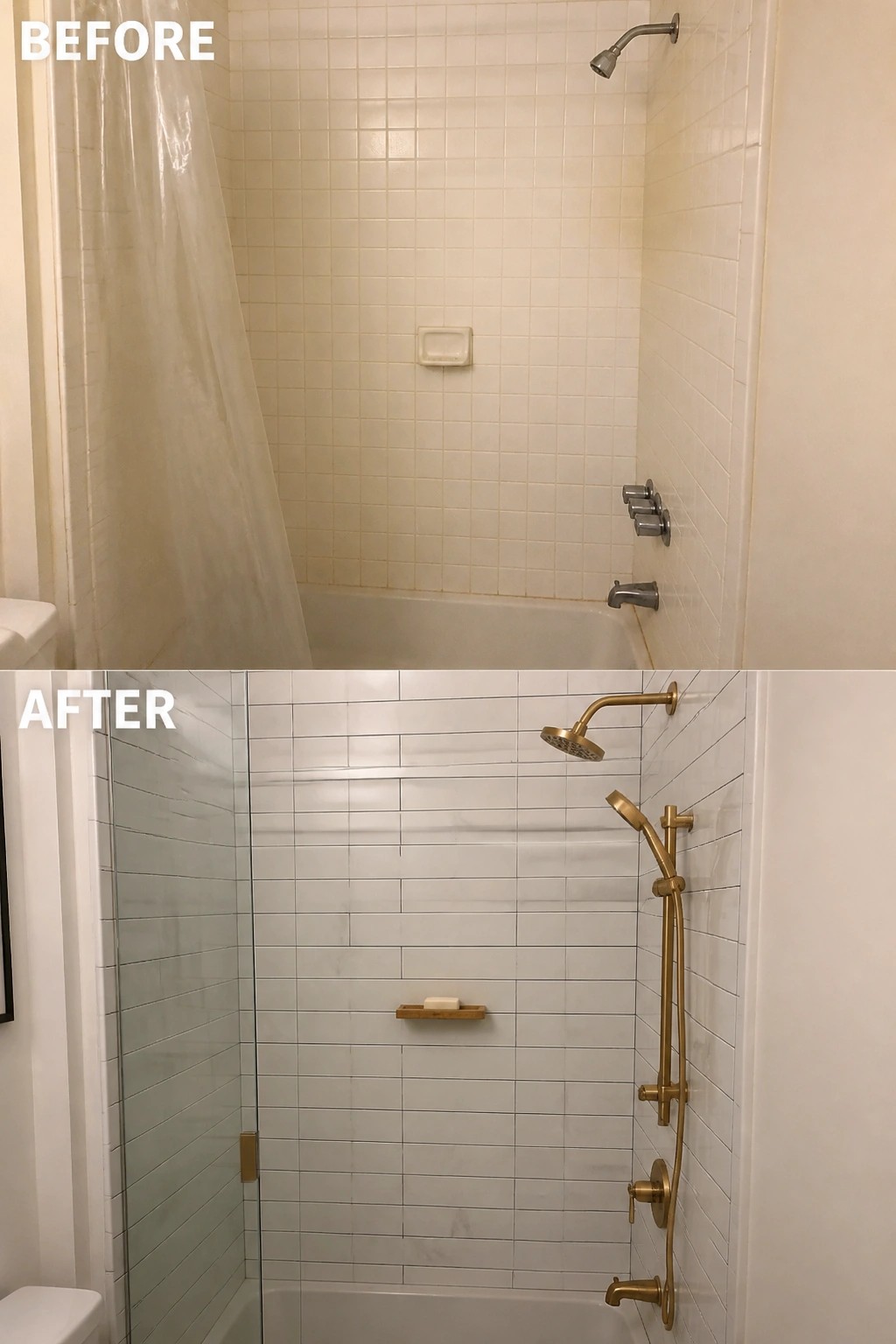
An old shower with basic square tile and a plastic curtain tends to feel closed off and worn over time. Replacing the tile with a lighter rectangular pattern and swapping the curtain for a glass door makes the space feel brighter and easier to keep clean.
This kind of update suits smaller bathrooms where the shower takes up most of the room. Stick with light tile colors and a simple glass panel so the shower does not overpower the rest of the space.
Update Shower Tile To Give The Space A Modern Feel

Swapping plain white tile for a darker textured option can shift the whole mood of a shower. The before version felt bright and basic, while the after uses large gray tiles that add depth and make the space feel more finished. The backlit niche helps too, turning a simple shelf into a focal point without adding much else.
This approach works well in smaller bathrooms where you want the shower to stand out. Pick tile first, then match the fixtures and hardware to keep things consistent. It is a straightforward change that does not require moving walls or changing the layout.
Replace An Old Tub With A Tiled Walk-In Shower

Many bathrooms from past decades still have that pink tile and tub combo that feels heavy and dated. Removing the tub and installing a full tiled shower with gray large-format tiles makes the room feel bigger and much more current.
This idea works well in homes where a tub is rarely used. A built-in bench adds comfort without crowding the space, and sticking to one neutral tile color keeps the update simple and easy to maintain.
Refresh Plain Shower Tiles With A Decorative Border
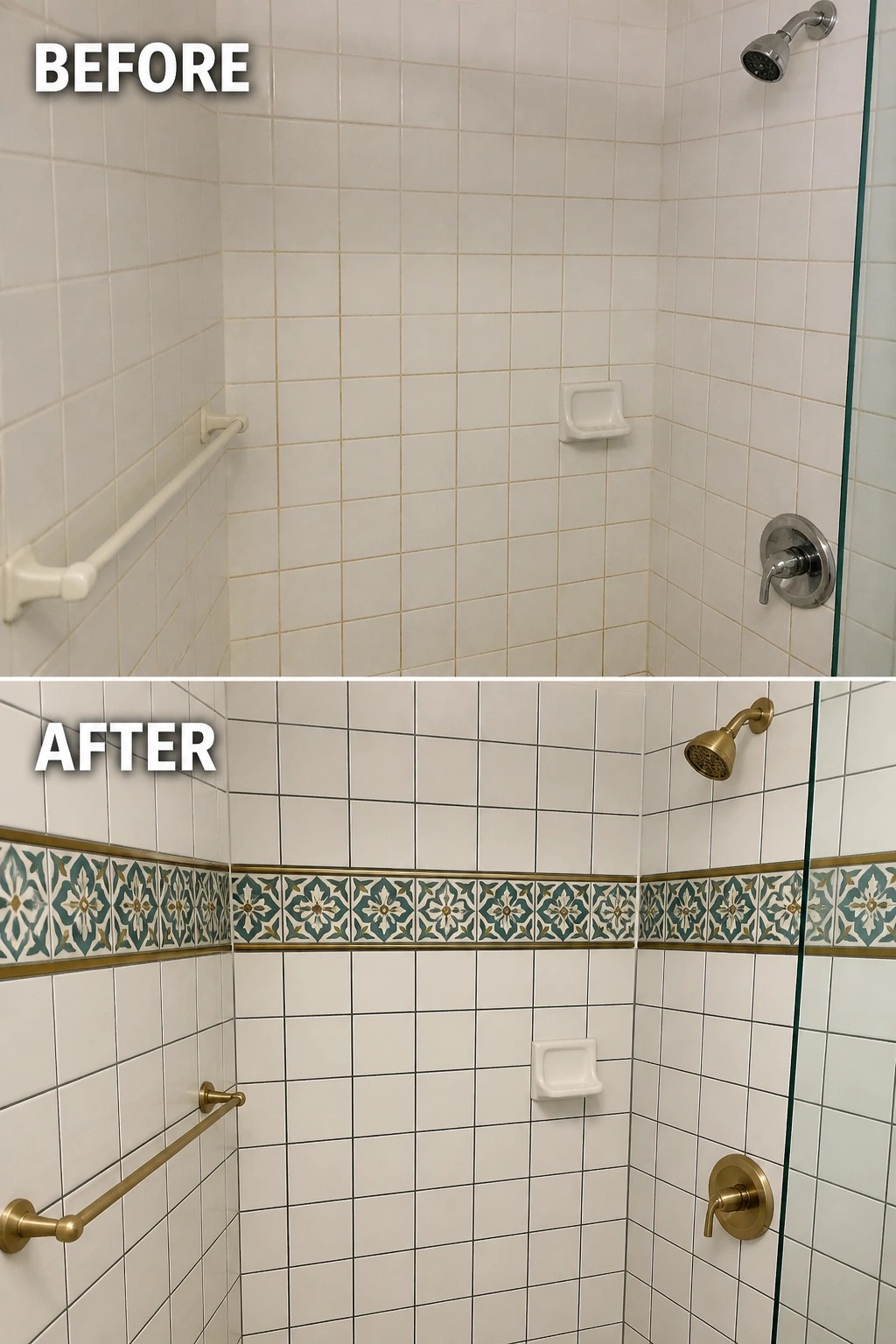
A plain white tiled shower often starts to feel dated once the rest of the bathroom gets updated. Adding one band of patterned tile near the top of the wall gives the space more interest without tearing out the existing tile. The before photo shows how bare the walls looked with only basic fixtures, while the after shows how that single strip of pattern and the switch to brass hardware make the shower feel more finished.
This idea works best when you want to keep most of the original tile but still make a noticeable change. It suits smaller bathrooms or homes where a full re-tile would be too costly. Pick a border that echoes colors already in the room and match the new hardware to the trim on the tile so everything feels connected.
Update A Dated Shower With Dark Tile
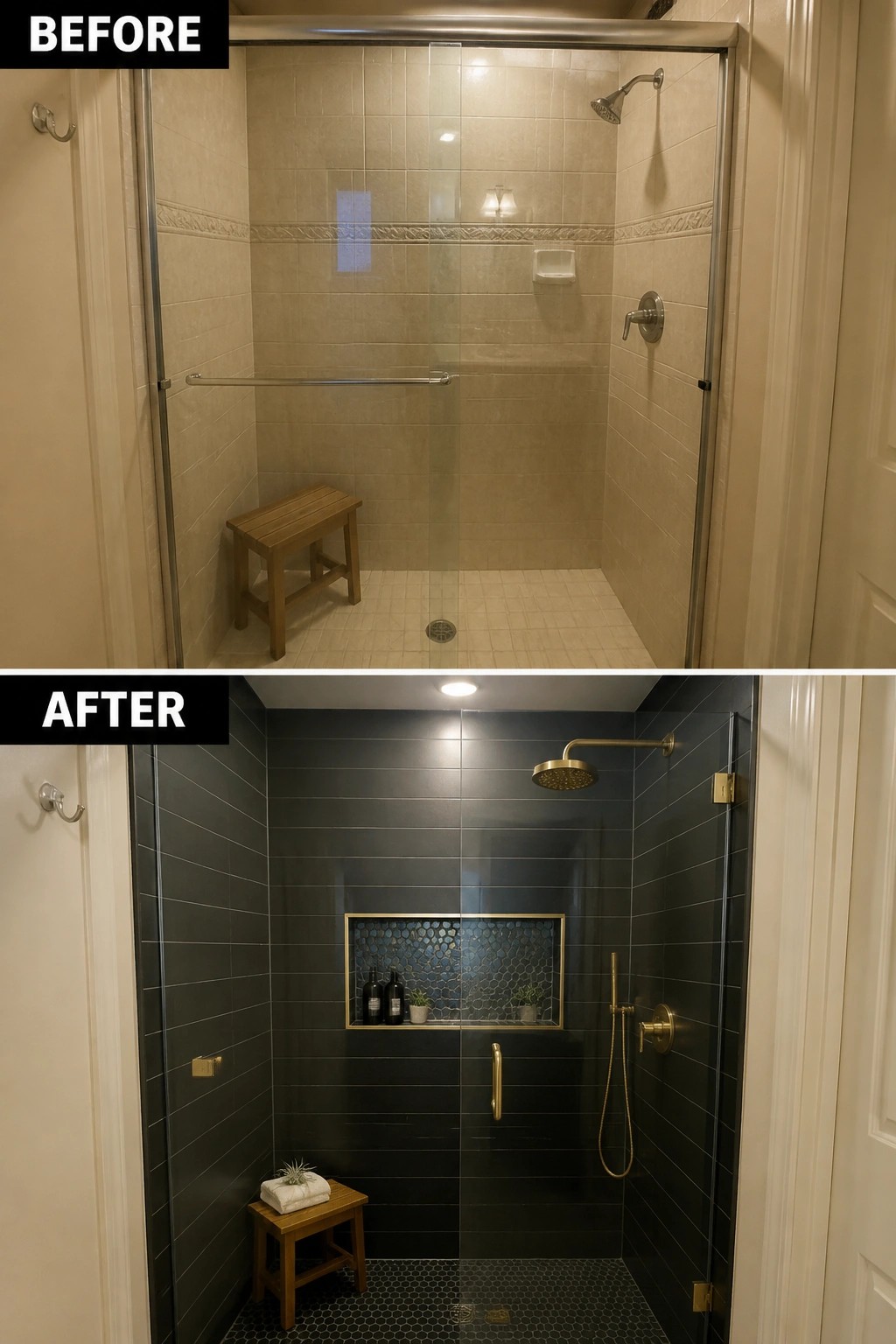
Many older showers end up looking flat once the light tile starts to feel dated. Switching to a dark tile color gives the space more weight and makes the shower the main feature instead of just a background.
This works well in smaller bathrooms where you want contrast without adding clutter. Keep the surrounding walls light, use one accent niche for interest, and choose simple fixtures so the tile change stays the focus.
Simplify Shower Tile By Removing Extra Details

Many showers end up looking dated once the decorative borders and mosaic inserts start to feel busy. In this case the before version had a grid of small tiles inside the niche plus a running accent band across the walls. Removing both of those elements and switching to larger matching tiles gave the whole space a much quieter, current look while keeping the same color family.
The same approach works well in bathrooms that still have the popular early-2000s tile details. Start by deciding which accents you can live without, then choose a single large-format tile that covers walls and floor. The result feels calmer and usually costs less because you buy fewer specialty pieces.
Add A Tiled Bench When Updating Shower Tile

Many older showers feel flat and dated with plain walls and nothing to lean on. Switching to a calmer gray tile and adding a low mosaic bench across the back gives the space a clearer purpose and a spot to sit.
This idea suits small bathrooms where function matters as much as looks. Keep the tile change simple and let the bench become the main feature so the shower feels more finished without needing extra pieces.
Frequently Asked Questions
Q: Can I handle the tile swap myself if the old shower is in decent shape? A: You can manage it with basic tools if you have done some tiling before. Focus on getting the surface flat and sealed first so the new tiles stay put. Many readers finish a small shower in a weekend this way.
Q: Which tile size makes the biggest change in those before and after shots? A: Larger tiles reduce grout lines and open up the space fast. They also show off the modern pattern without extra fuss. Stick to one size across the main walls for the cleanest result.
Q: How often will I need to reseal after the upgrade? A: Most tile needs a quick reseal once a year if you use the shower daily. A good penetrating sealer keeps water from soaking in. Skip the step and you will see stains sooner than you want.
Q: What if the new tile makes the floor look dated next to it? A: Swap the floor tile at the same time if the old one clashes. It pulls the whole bathroom together without much extra work.
