
I have noticed that bathrooms often end up feeling cramped when the vanity sits heavy on the floor and leaves little open space for daily routines.
Floating vanities lift the storage off the ground so the room feels more open and the floor stays easier to clean.
Updated fixtures bring a fresher look without needing new plumbing runs in most cases.
I would test a new faucet and sconces first in my own bathroom to judge the change before committing to a full vanity swap.
It feels good when the space finally supports how the room is actually used instead of fighting against it.
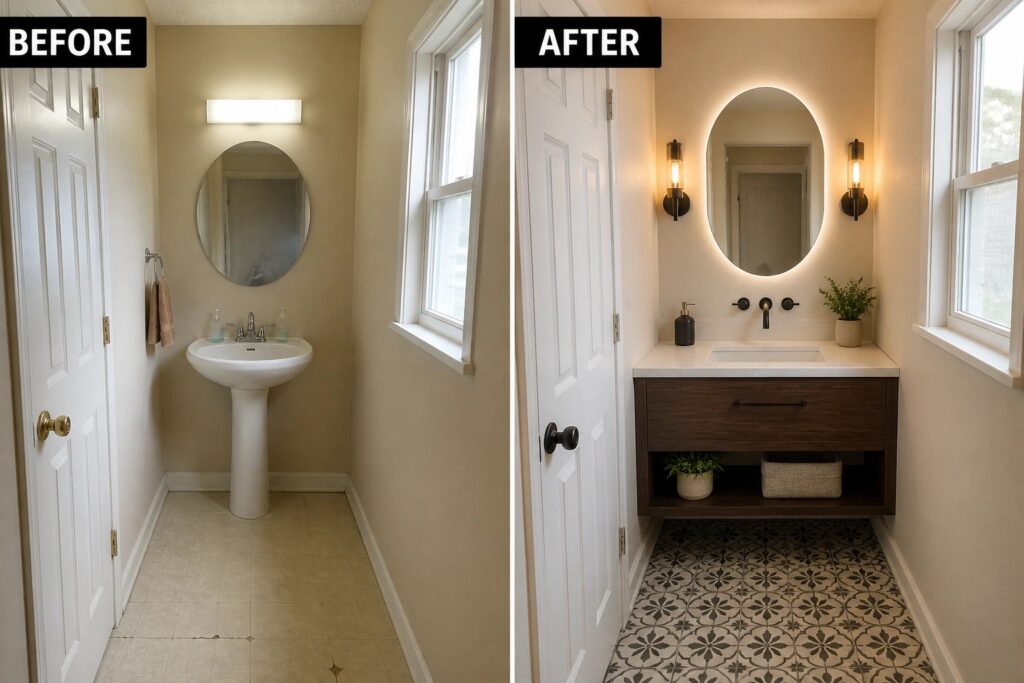
Replace A Pedestal Sink With A Floating Vanity
A pedestal sink leaves a narrow bathroom with almost no storage. Switching to a floating vanity adds a drawer plus an open shelf while keeping the floor open underneath. The new setup makes the space feel more practical without making the room feel smaller.
This approach suits older homes where the original sink no longer meets daily needs. Measure the width of your space first, then choose a vanity that leaves room to move around it.
Replace A Traditional Vanity With A Floating One

The old vanity sat heavy against the wall and made the bathroom feel smaller than it was. A floating style with a simple base and updated gold fixtures opened up the floor and gave the room a lighter, cleaner feel.
This change works best in bathrooms that already have decent layout but need a quick refresh. Keep the surrounding walls and flooring neutral so the new vanity becomes the main update without adding clutter.
Replace A Dated Vanity With A Floating Double Sink
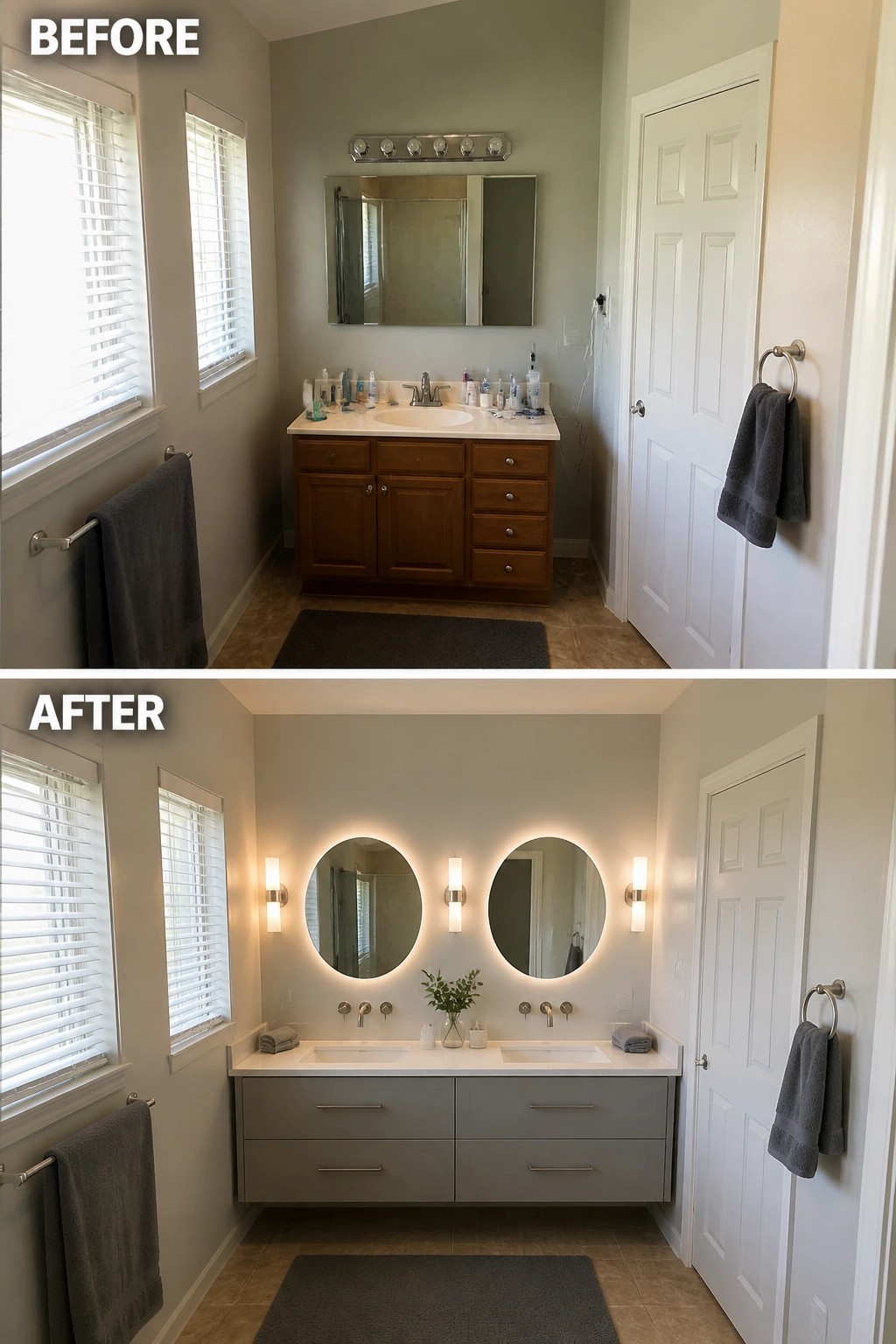
The biggest shift in this bathroom came from swapping the old wooden single-sink vanity for a floating double-sink unit in a soft gray finish. The new vanity sits off the floor, which makes the room feel more open, and the two sinks plus updated faucets give it a much more practical layout for daily use.
A floating vanity works especially well in narrow bathrooms where you need storage without crowding the floor. Keep the color simple so it blends with the walls, and add a pair of wall sconces beside round mirrors to balance the lighting. This approach updates the whole space without a full gut renovation.
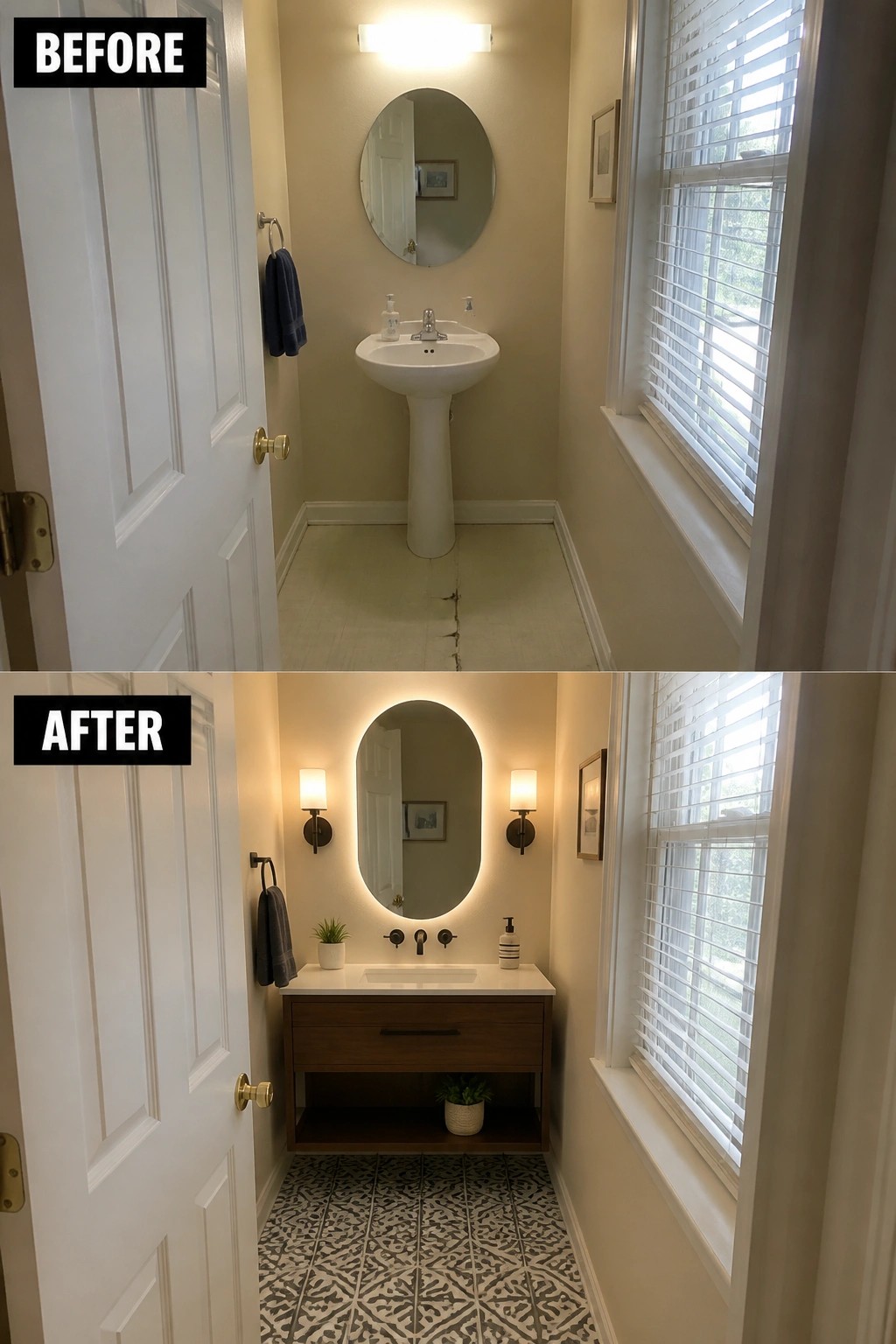
Replace A Pedestal Sink With A Floating Vanity

A pedestal sink takes up visual space and leaves little room for storage. Switching to a wall-mounted vanity opens up the floor, adds storage underneath, and gives the whole bathroom a lighter feel. The black fixtures also help tie the new look together without needing a full gut renovation.
This approach works well in small bathrooms where every inch counts. Keep the vanity depth reasonable so the room still feels open, and match the faucet and hardware finish to the rest of the room. It is a practical update that improves daily use without major construction.
Install A Floating Vanity To Open Up The Room

The main change in this bathroom is swapping the bulky floor cabinet for a wall-mounted floating vanity. That one shift, paired with new gold faucets and vessel sinks, makes the space feel noticeably larger and less heavy.
This approach works well in smaller bathrooms that need more breathing room. Keep the vanity size realistic for the space, use the open floor area for a simple rug, and make sure the wall behind it can support the weight.
Choose A Floating Vanity To Open Up The Floor

A floating vanity changes how a bathroom feels by lifting the cabinet off the floor. The before version sat on the ground with full base cabinets that made the room look heavier and smaller. After the update the vanity hangs on the wall, the floor continues underneath, and the space feels noticeably larger even though the footprint stayed the same.
This works best in bathrooms that already feel tight or dated. Keep the rest of the updates simple so the floating effect stays the main feature. Choose matte black fixtures and a backlit mirror to match the lighter look, and make sure the wall framing can handle the weight before you hang it.
Update An Outdated Bathroom With A Floating Vanity
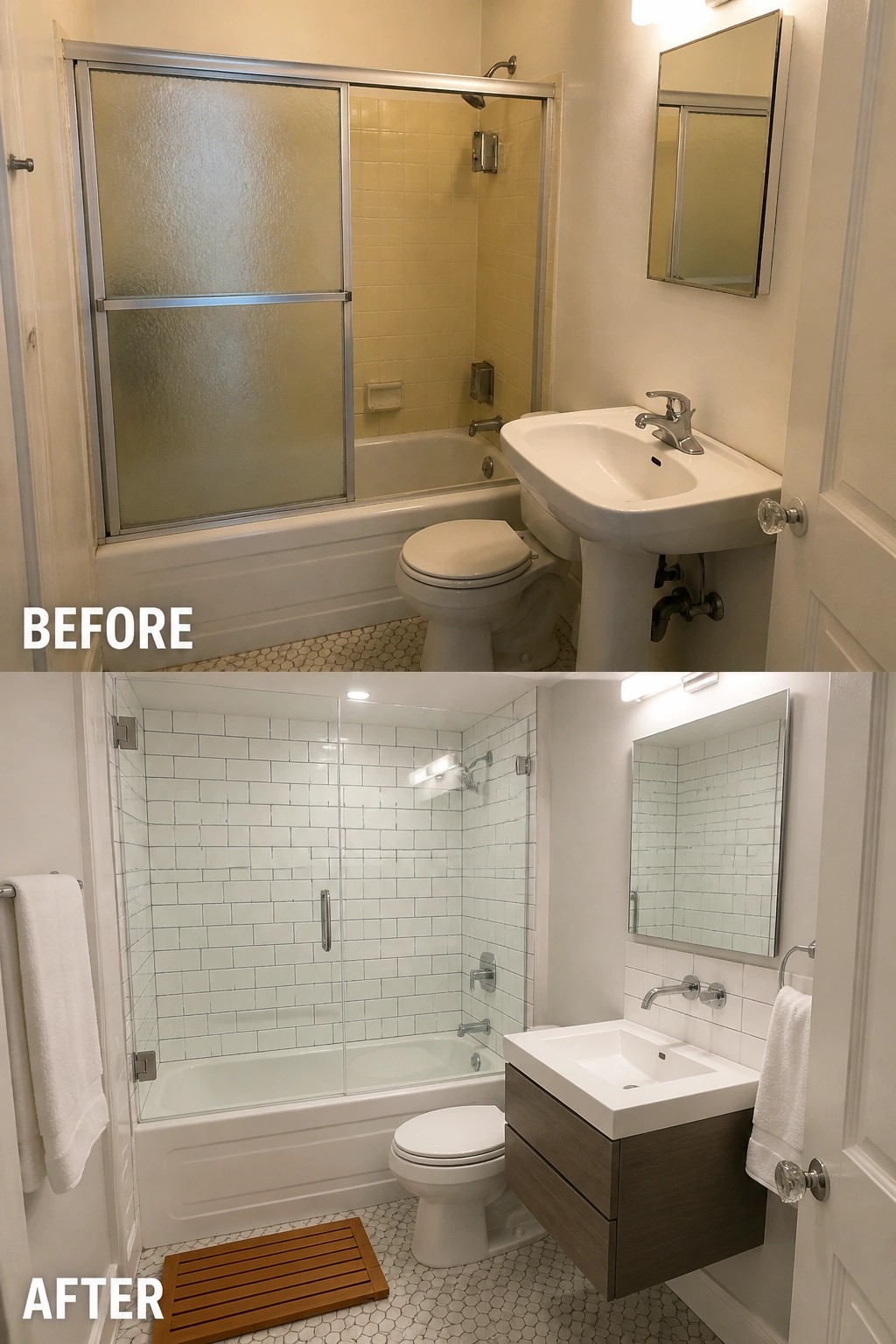
Many small bathrooms feel tighter than they need to because of a bulky pedestal sink that leaves no storage and eats up floor space. Replacing it with a wall-mounted floating vanity opens the room up right away and adds drawers for towels and daily items without crowding the floor.
This change works best in baths where you want a cleaner look and easier cleaning under the sink. Keep the vanity size modest so there is still room to move around the toilet and tub, and pair it with simple updated fixtures that match the new scale.
Swap A Standard Vanity For A Floating One

A floating vanity changes how a bathroom feels by lifting the storage off the floor and giving the space more breathing room. In this case the old built-in cabinet was replaced with a wall-mounted unit that has open shelving below, and the faucet and hardware were updated at the same time. The result is a cleaner layout that still keeps everyday items within reach.
This approach works especially well in narrow bathrooms or rooms where you want easier floor cleaning. Keep the vanity width modest so it does not crowd the walkway, and choose a finish that matches other wood tones already in the room. Updated fixtures in matte black or brushed nickel help tie the new vanity into the rest of the space without adding extra clutter.
Update The Vanity And Fixtures To Modernize A Bathroom

Swapping an old vanity for a new one with updated hardware makes the biggest difference in a small bathroom. The before photo shows a plain white cabinet and basic faucet that felt dated next to the tiled shower. In the after, a wood vanity with a clean white top and brushed gold fixtures gives the space a much fresher feel without changing the layout.
This approach works well when the rest of the room is still in decent shape. Focus on the vanity first, then match the faucet and towel bars to keep things simple. It suits older homes where a full gut is not needed, and it keeps the project from getting too expensive.
Swap A Cabinet Vanity For A Floating Version
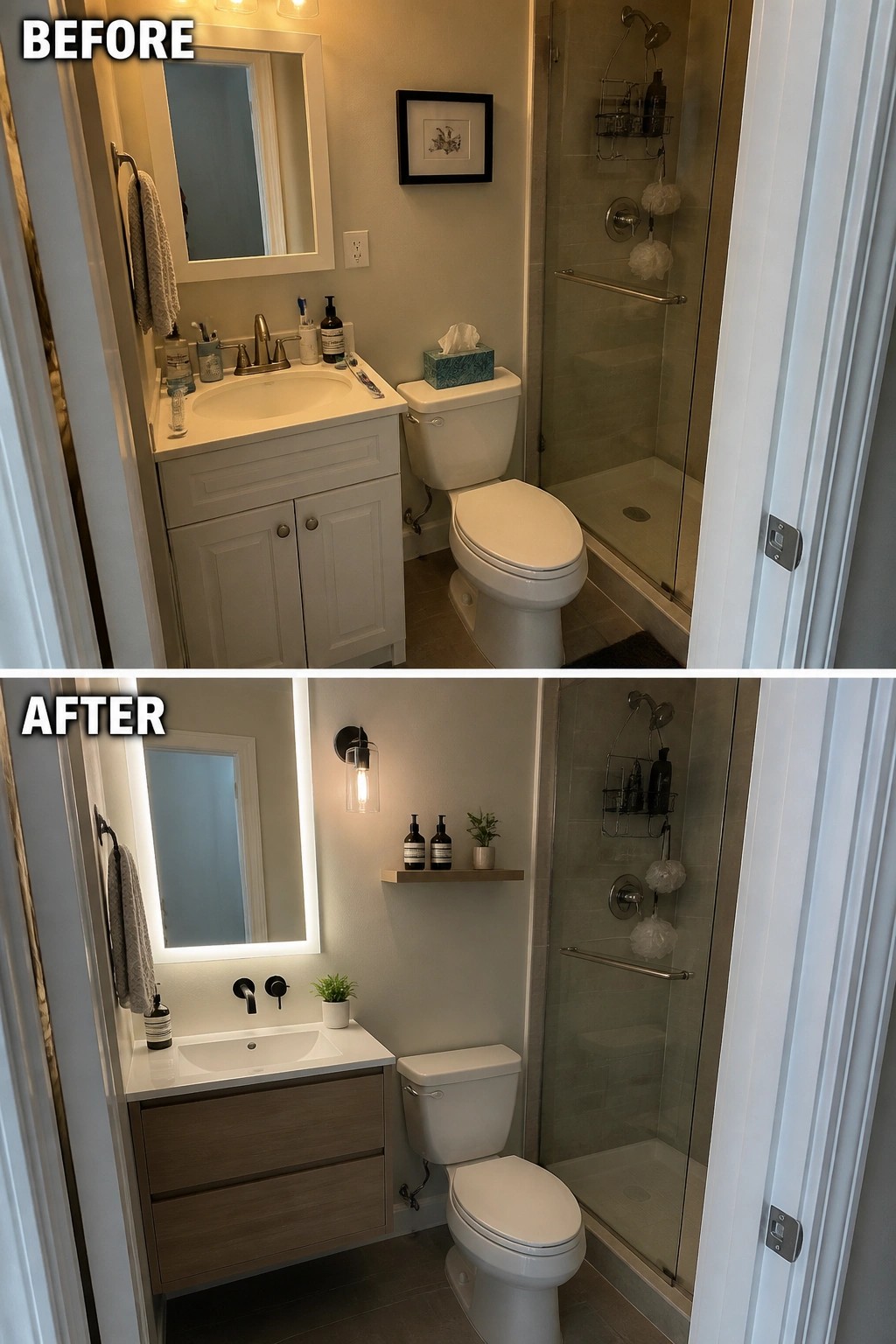
In a small bathroom, a full cabinet vanity takes up floor space and makes the room feel tighter than it needs to be. Replacing it with a floating vanity opens up the floor and gives the space a lighter look. The after photo shows how the wood drawers and open area below the sink change the feel without moving any walls.
This works well in narrow or older bathrooms where you want a quick update. Keep the new vanity shallow, add a simple floating shelf for daily items, and choose matte black or brushed fixtures to match. It suits homes that need practical storage without adding visual weight.
Update An Outdated Vanity For A Lighter Bathroom

Swapping a heavy dark wood vanity for a white one with open shelving made the whole bathroom feel brighter and less closed in. The new apron sink and black fixtures give it a cleaner look, while the baskets underneath add storage without blocking the floor space.
This approach works best in bathrooms that already have decent layout but need a visual reset. Focus on matching the new vanity hardware to your other fixtures, and keep the lower storage simple so the room still feels open.
Install A Floating Vanity To Open Up The Room

Many bathrooms feel tighter than they need to because the vanity sits on the floor and blocks the eye. Replacing it with a floating style lets the floor run underneath, which immediately makes the space feel larger and less heavy. Here the old built-in cabinet came out and a slim concrete counter on a dark frame went in, paired with new black faucets.
This change suits smaller bathrooms or any room with plain tile that needs a quick refresh. Keep the rest of the finishes simple so the new vanity stands out without adding extra pieces.
Add Storage With A Floating Vanity In A Small Bathroom
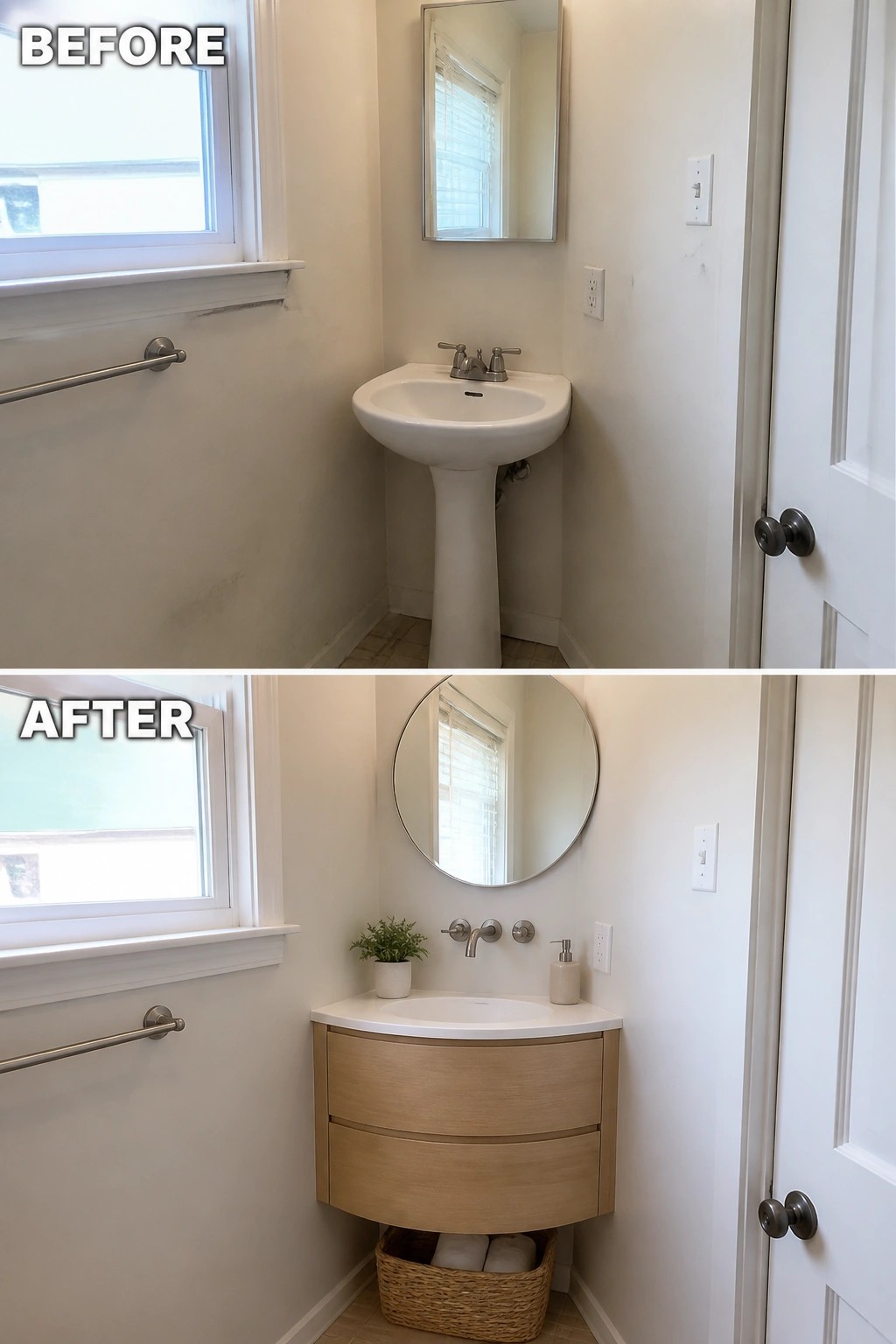
A pedestal sink leaves a bathroom feeling open but offers no place to store anything. Switching to a floating vanity with drawers gives you real storage without making the room feel smaller. The curved front fits neatly into the corner and leaves floor space open underneath.
This idea works well in bathrooms that feel cramped or lack cabinet space. Keep the vanity size modest so movement stays easy, and match the finish to any existing trim or flooring. Adding a simple basket below the drawers can handle towels or extra supplies without crowding the room.
Switch To A Floating Vanity For A Lighter Feel
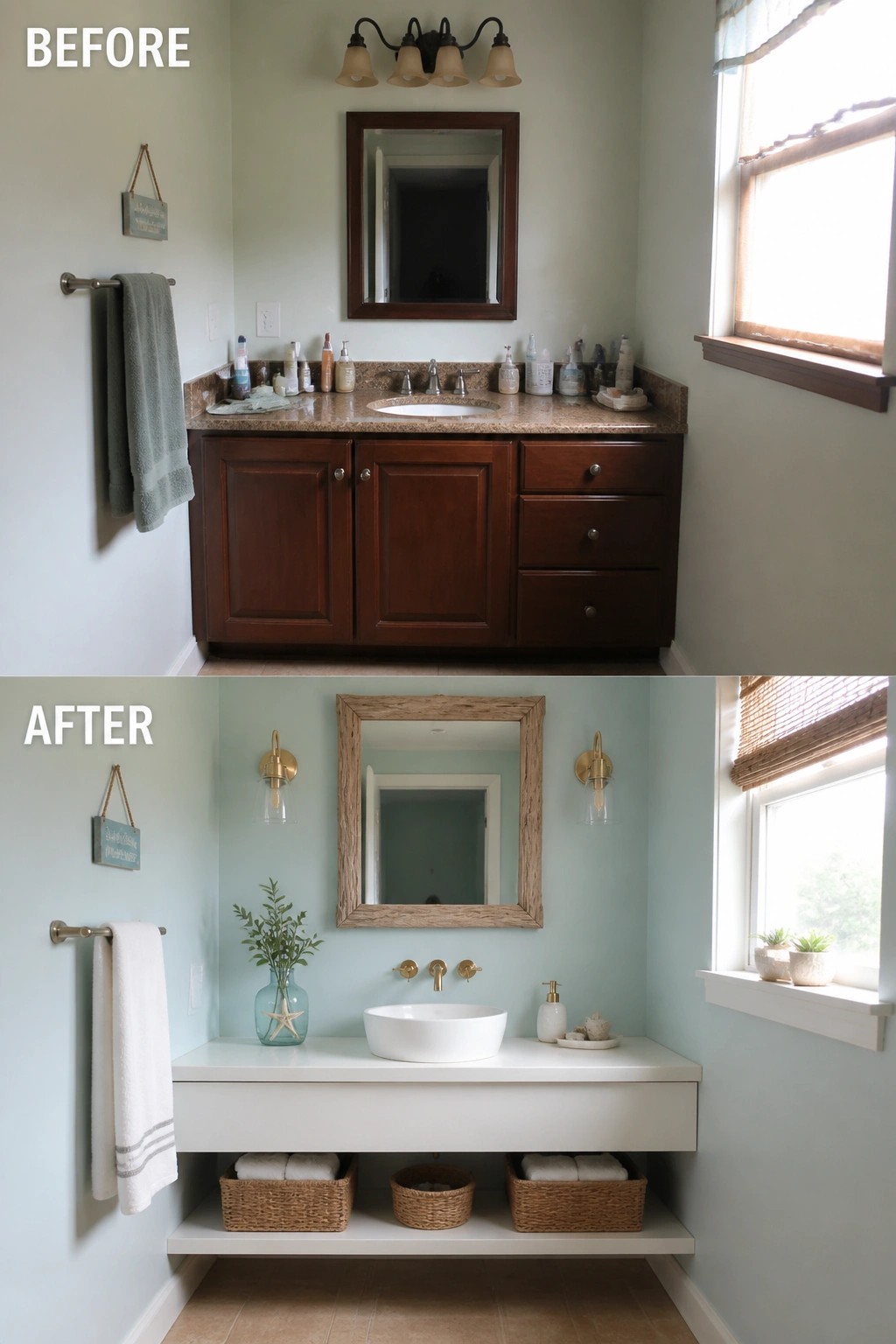
A bulky vanity with dark wood and heavy cabinets can make even a decent-sized bathroom feel closed in. Replacing it with a floating white vanity opens up the floor space right away and gives the room a much cleaner look. The updated fixtures and lighter wall color help the whole space feel brighter without needing a full gut job.
This approach works especially well in smaller bathrooms where every inch counts. Keep the vanity simple and leave the area underneath open for storage baskets if you need them. It is an easy way to refresh the room without moving plumbing or changing the layout.
Switch To A Floating Vanity To Open Up The Space

A heavy dark vanity sitting on the floor can make even a decent-sized bathroom feel closed in. Switching to a lighter floating style lifts the look and leaves more floor visible, which instantly changes how the whole room feels.
This approach works best in bathrooms that already have decent tile and a tub in place. Keep the new vanity simple, match the faucet and lighting hardware, and avoid adding too many new colors so the update stays clean and easy to live with.
Replace A Bulky Double Vanity With Floating Units
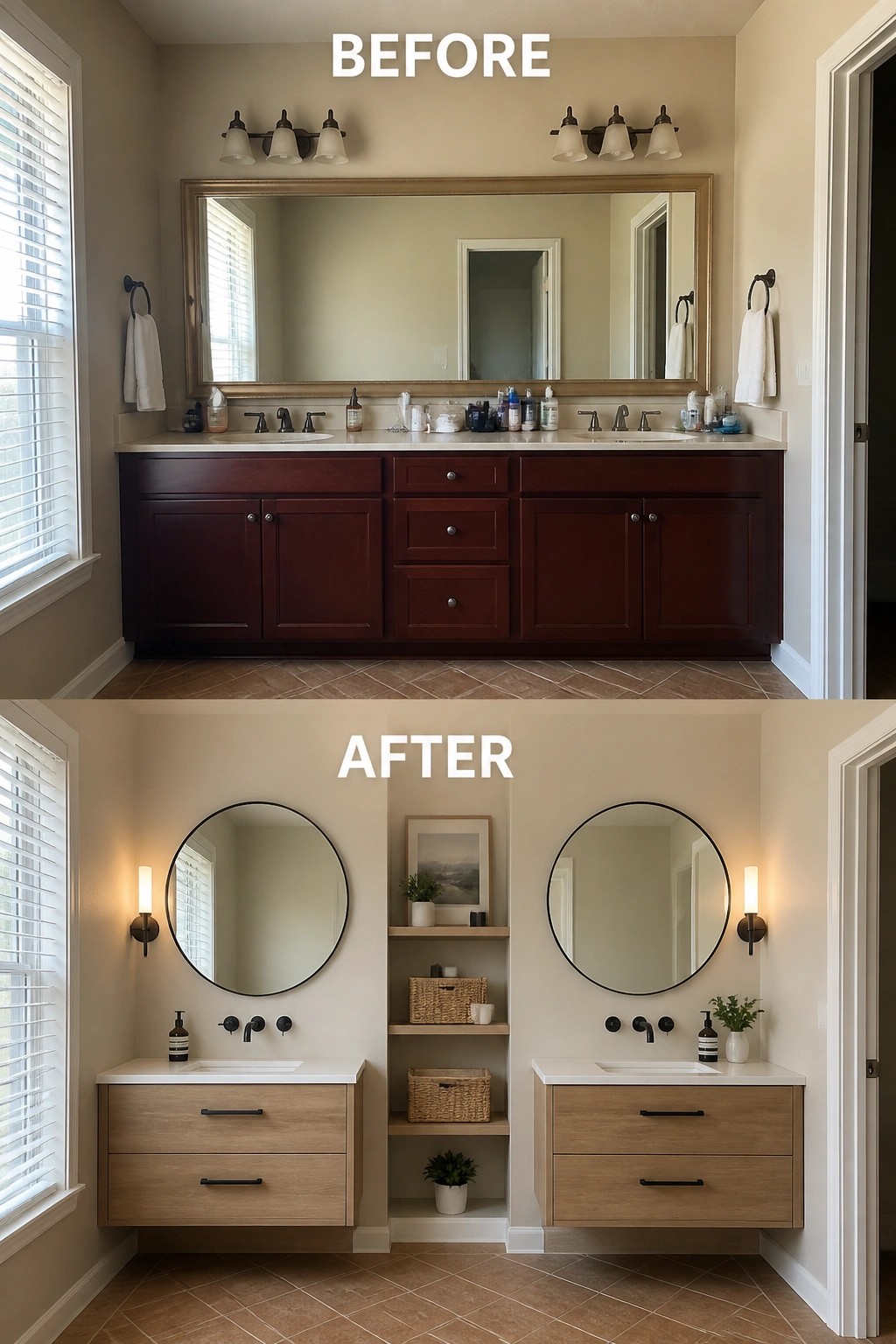
A long, heavy double vanity can make even a decent-sized bathroom feel cramped. In this case, removing the single oversized cabinet and replacing it with two separate floating vanities opened up the floor space and let the room breathe. The open shelves in the middle also gave the owners a place to store towels and small items without adding more closed storage that would block the view.
This approach works well in bathrooms that already have decent square footage but feel weighed down by cabinetry. Keep the floating vanities the same width as your sinks, leave a clear gap between them, and use the open space for baskets or plants. It keeps the room feeling practical while cutting down on the solid mass along the wall.
Use A Floating Vanity To Open Up A Small Bathroom

A floating vanity can make a cramped bathroom feel noticeably larger by freeing up floor space and reducing visual weight. The old floor cabinet sat heavy against the wall and crowded the area around the sink. Replacing it with a wall mounted unit in a lighter finish lifted the room and left more open floor beneath the basin.
This idea suits small bathrooms where storage needs are modest and every bit of walking room matters. Keep the new vanity scaled to the space and pair it with wall mounted faucets so the area stays easy to clean. It also helps to update the mirror and lighting at the same time for a consistent look.
Install A Floating Vanity To Open Up The Bathroom

The original vanity sat on the floor with a full cabinet base that made the room feel smaller and heavier. Switching to a wall-mounted version with open space underneath instantly changes how the bathroom feels and functions.
This update works best in average-sized bathrooms where floor space matters. Pick a vanity with good drawer storage so you do not lose practical use, and pair it with new faucets and sconces to keep everything feeling consistent.
Choose A Floating Vanity To Hide Clutter And Update The Fixtures

A floating vanity with wide drawers gives you a place to store towels, toiletries, and daily items without leaving them out in the open. The old cabinet and upper shelving were replaced with a wall-mounted unit and a large mirror cabinet, which keeps the counter clear and makes the whole space feel more open.
This works especially well in smaller bathrooms where floor space matters. Choose drawers that match what you actually need to store, and keep the top surface limited to just a few items so the room stays easy to clean.
Swap A Traditional Vanity For A Floating Style
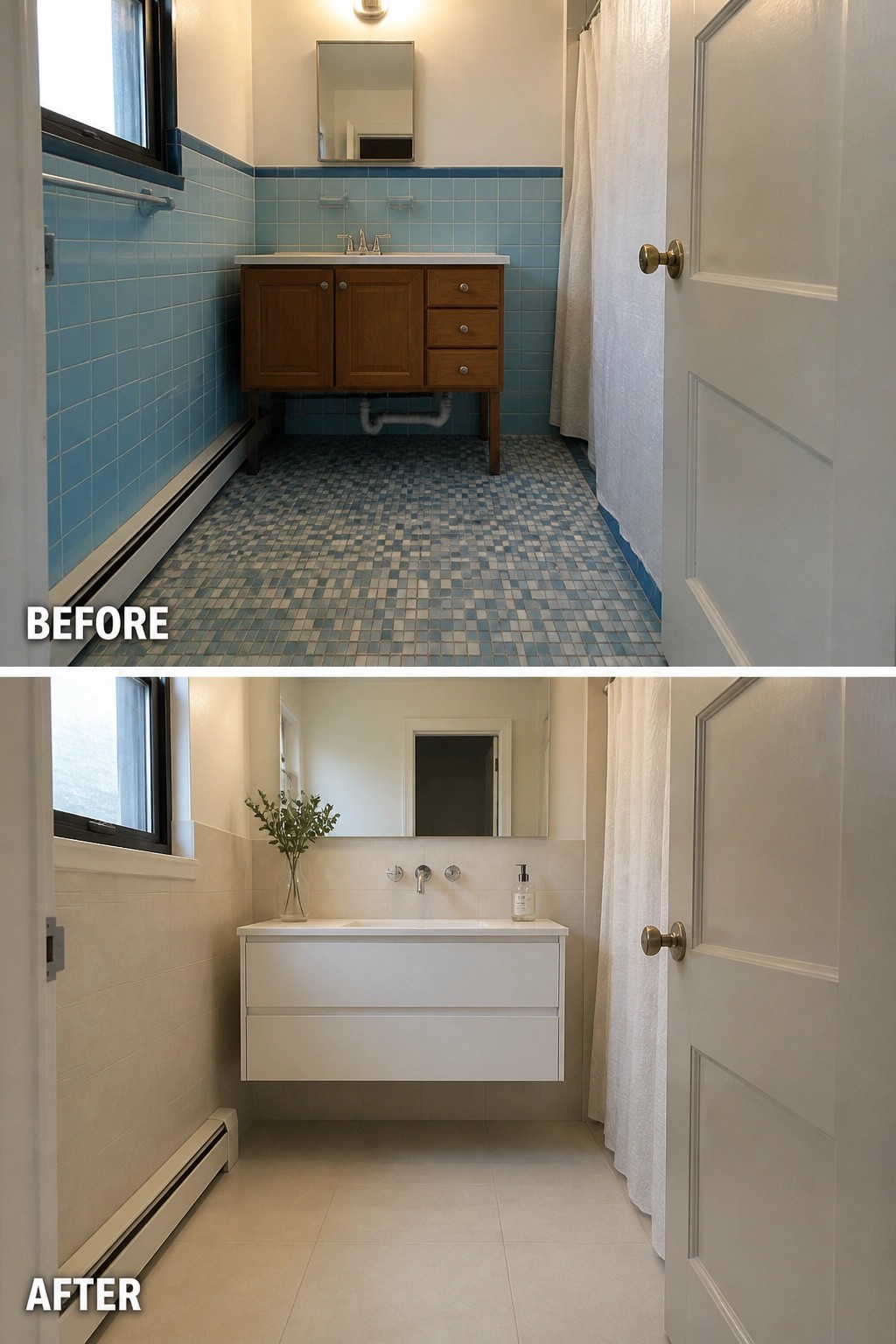
The before photo shows a heavy wooden vanity sitting on the floor with visible pipes and a busy tile pattern around it. Replacing it with a simple floating vanity clears the floor space underneath and shifts the whole room toward a lighter, more open feel.
This change works especially well in smaller or narrow bathrooms where every inch counts. Keep the rest of the updates minimal, like lighter wall and floor tiles, so the floating vanity stays the main focus and the room does not feel crowded.
Replace A Built-In Vanity With A Floating Version
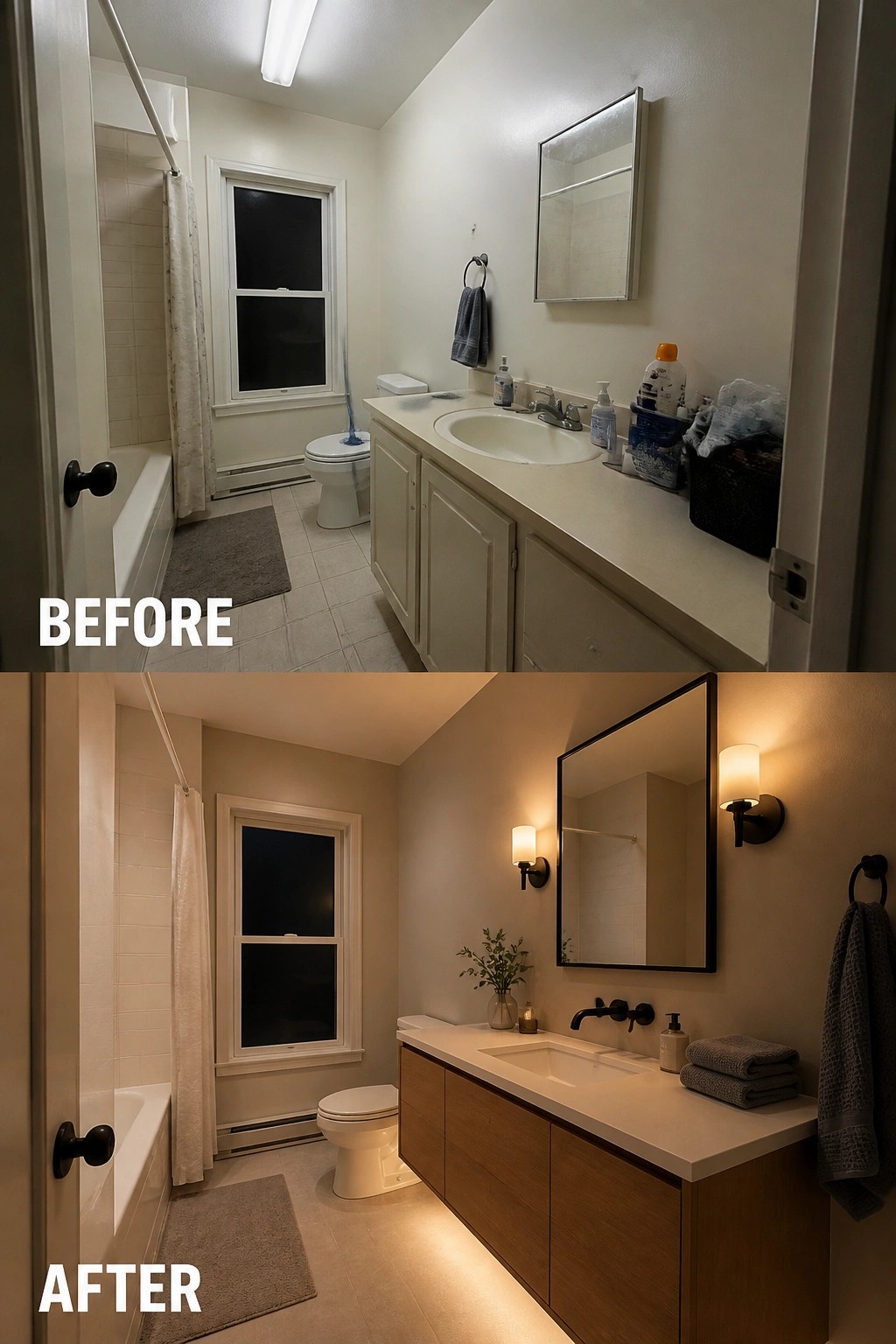
One of the biggest shifts in this bathroom came from swapping the old floor-mounted vanity for a floating wood one. The new style leaves more floor visible, which makes the room feel larger and less crowded. Pairing it with matte black fixtures and simple sconces gives the space a cleaner, more updated look without needing a full gut renovation.
This approach works especially well in smaller bathrooms where you want to keep things practical. A floating vanity also makes cleaning easier since you can sweep or mop underneath. Stick with neutral tones for the cabinet and choose fixtures that match the existing hardware style if you want to keep costs down.
Switch To A Floating Vanity For Better Flow
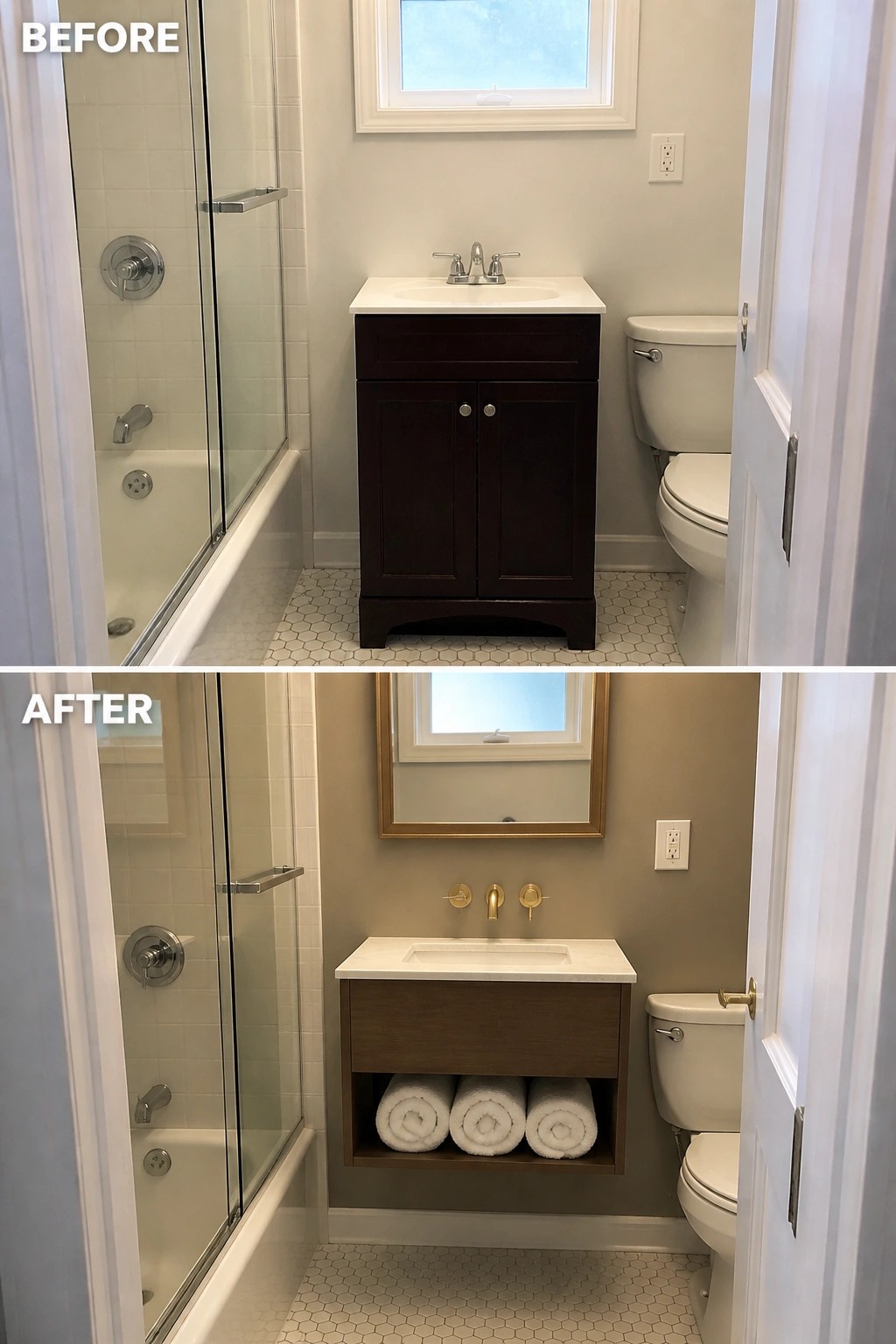
A floating vanity helps a small bathroom feel less crowded by leaving the floor open underneath. The old closed cabinet sat heavy on the tile and blocked the view across the room. The new version mounts to the wall and adds an open shelf that holds towels without taking up extra space.
This idea works best in bathrooms where storage needs are simple and the floor plan is tight. Mount the unit at a comfortable height and use the open area below for items you reach often. Just check that the wall can support the weight before installation.
Frequently Asked Questions
Q: Can my bathroom walls handle a floating vanity without extra support? A: Most walls need blocking added between the studs before install. Hire a carpenter if you’re unsure about the structure. This step prevents sagging over time.
Q: How do I pick fixtures that won’t clash with my new floating vanity? A: Match the metal finishes on your faucet and handles to the vanity pulls. Keep the shapes simple so nothing fights for attention.
Q: Do floating vanities leave enough storage in a small bathroom? A: Add open shelves above or a tall cabinet nearby. Baskets on the floor can hold towels and extras. You gain floor space but plan for these additions right away.
