

Curved sofas can soften the straight lines that often define mid-century modern rooms, but they need enough breathing room to feel comfortable rather than crowded.
I find they work best when the rest of the layout supports their shape, with clear paths through the room and tables placed where people can actually reach them.
Color, wood tones, lighting, and rug size also affect whether a curved sofa feels connected to the room or like a piece dropped into it.
The most useful ideas tend to balance the sofa’s sculptural look with everyday needs, from conversation to stretching out after a long day.
Some of these rooms offer details I’d be glad to adapt at home, especially when a small change in placement makes the whole space feel more settled.
Choose a Curved Sofa for a Softer Layout
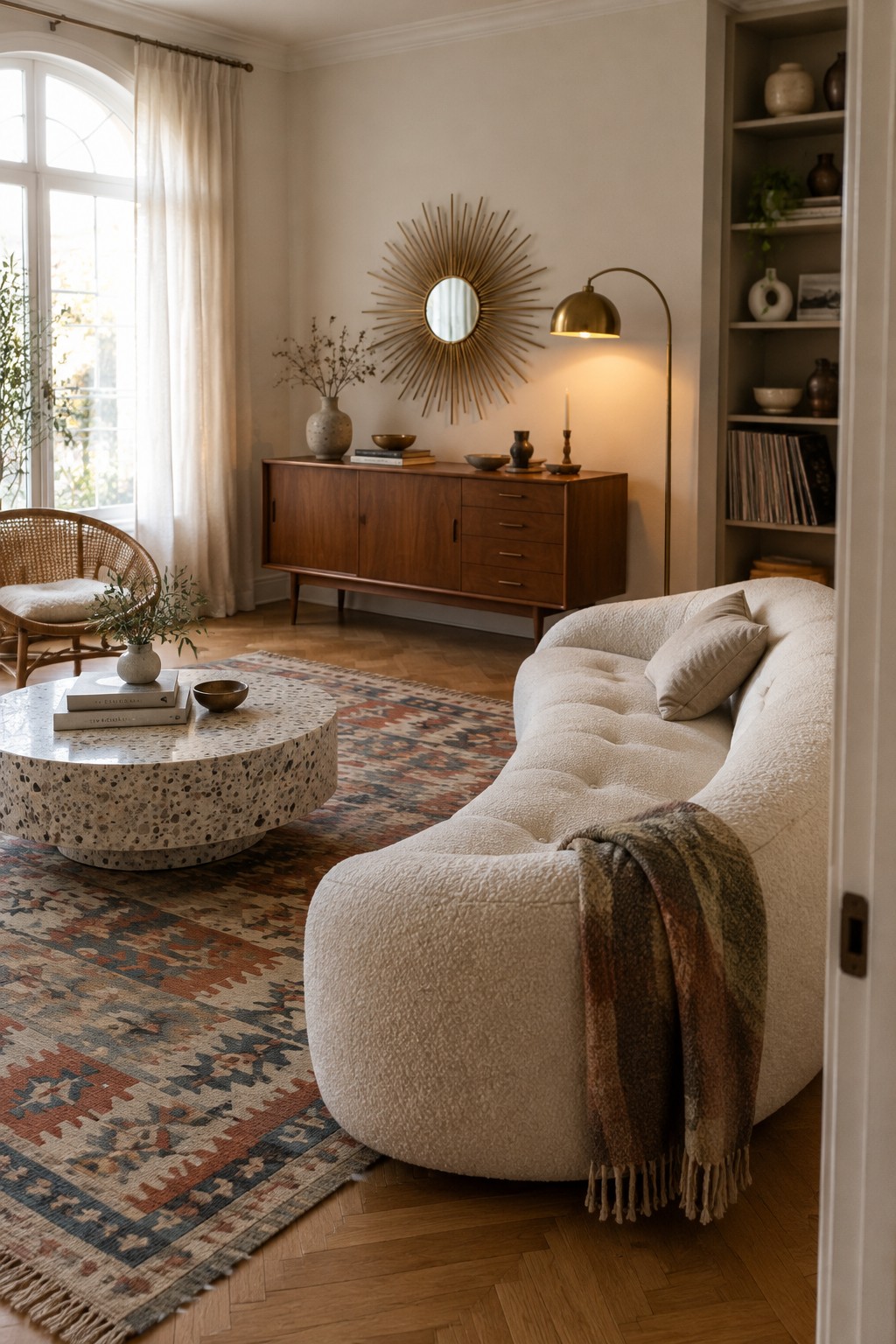
A curved sofa can make a living room feel less rigid, especially when it sits beside a round coffee table. The shape encourages conversation and gives the seating area a clear center without relying on a bulky sectional.
This look works well in a mid-century modern room with enough floor space to let the sofa’s outline show. Keep nearby furniture simple, and check that there’s still an easy path around the seating area.
Curved Sofas Make Seating Feel More Relaxed

A curved sofa changes the feel of a living room without needing a complicated layout. Its rounded shape makes the seating area feel less formal, and it works especially well when the sofa faces a few separate chairs rather than a matching set.
Give the sofa enough room to show its shape, and keep a clear path around the seating area. In a smaller room, choose a compact curve and a simple coffee table so the layout stays comfortable to use.
Let a Curved Sofa Shape the Living Room

A curved sofa can make a mid-century living room feel less formal and easier to move through. Its rounded outline gives the seating area a softer shape, especially when the rest of the furniture has clean, simple lines.
Try one as the main seat in a room with enough space around its sides, and keep the coffee table low so it does not block the sofa’s curve. A pale, textured fabric works well with wood and brick, but leave some open floor around the sofa so the room does not feel crowded.
Let a Curved Sofa Set the Layout

A curved sofa can make a living room feel less boxed in than a straight one. It gives the seating area a natural shape, while leaving room to move around it. Here, the deep blue sofa curves around the coffee table and makes the main seating spot clear.
This layout works best when the sofa has enough space behind and beside it, so the curve can be seen rather than squeezed against a wall. Try it in a larger living room, and keep the coffee table low and simple to avoid crowding the seating area.
Use a Curved Sofa to Loosen Up the Layout

A curved sofa can make a living room feel less boxy without taking up the whole space. Here, its rounded shape gives the seating area a relaxed feel while leaving a clear route around the coffee table.
This kind of sofa works well in a room with an open floor plan or a large rug to help define the seating area. Keep nearby tables simple and leave enough room to walk past the sofa comfortably.
Use a Curved Sofa to Ease a Small Seating Area
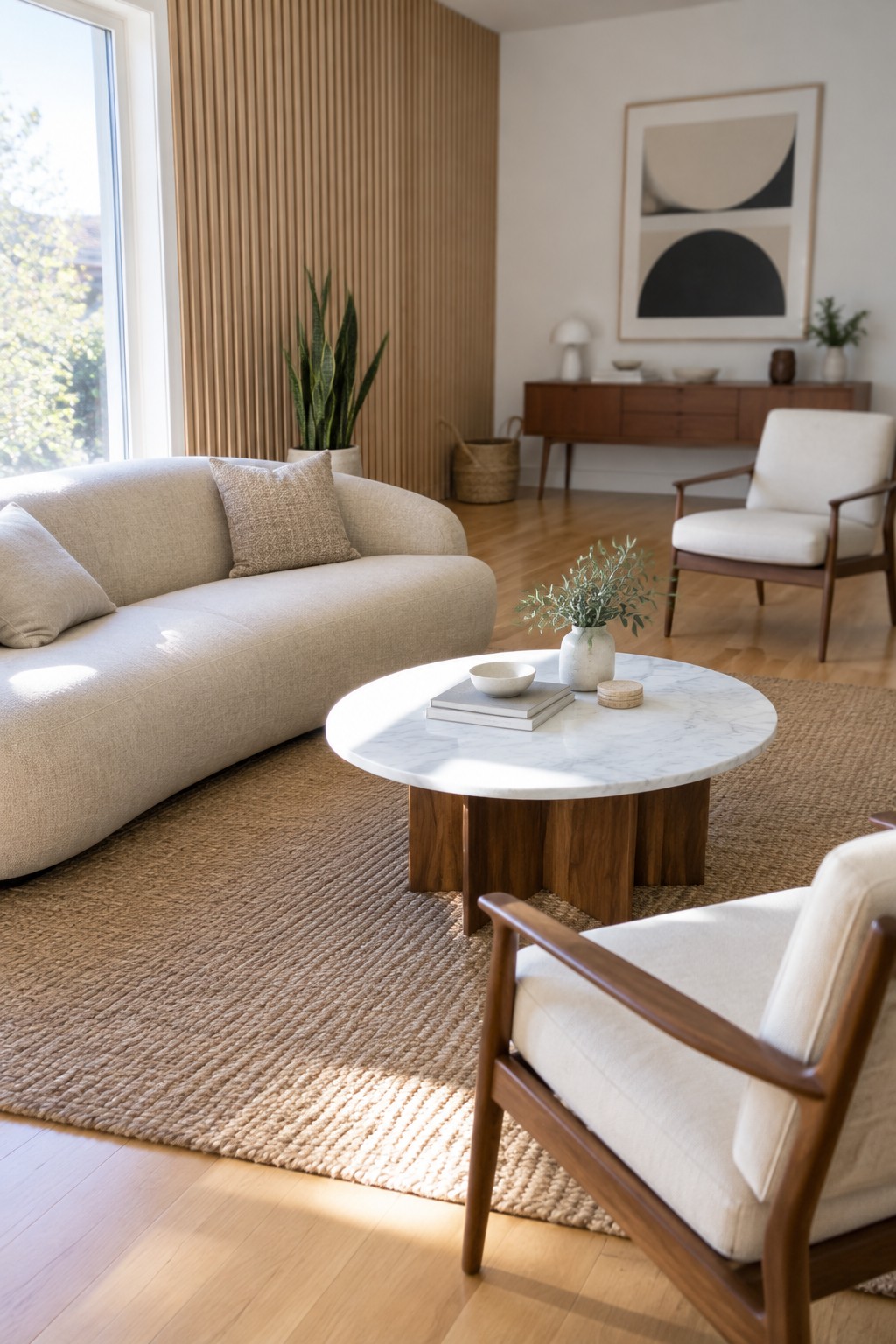
A curved sofa can make a living room feel less boxy and help the seating area flow naturally. Here, its rounded shape leaves a clear path around the coffee table without making the arrangement feel stiff.
This approach works well in open rooms or in spaces where a straight sofa would crowd a walkway. Keep the nearby furniture fairly simple so the curve has room to do its job.
Use a Curved Sofa to Ease a Seating Area
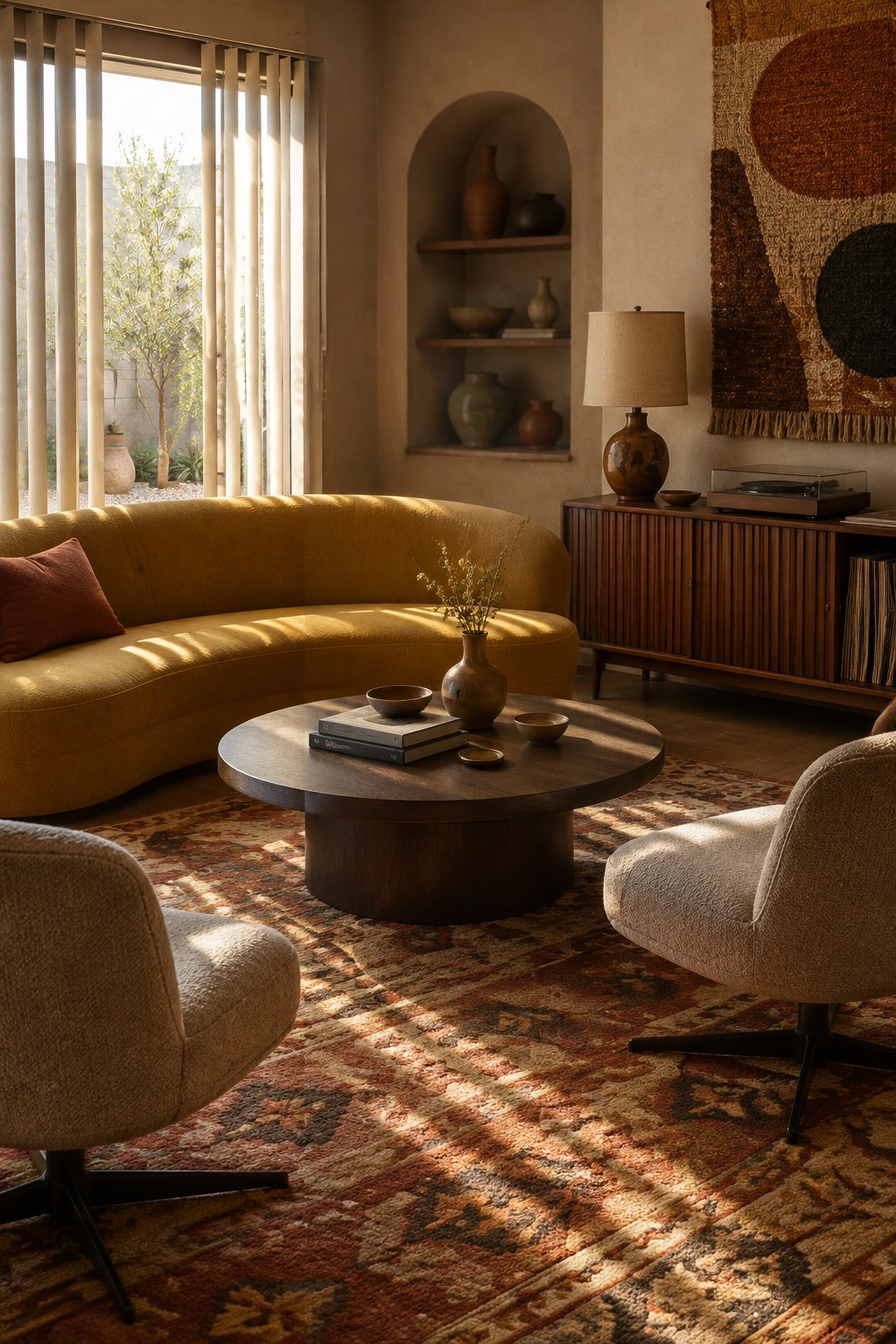
A curved sofa can make a living room feel less formal than a straight sofa pushed against a wall. Its rounded shape encourages conversation and gives the seating area a more relaxed flow.
This layout works well when there is room to keep the sofa slightly away from the walls. A round coffee table suits the curve, but leave enough space around both pieces for people to move comfortably.
Use a Curved Sofa to Open Up the Seating Area

A curved sofa can make a living room feel less rigid than a straight sofa pushed against a wall. Here, its rounded shape defines the seating area while leaving the fireplace and built-in TV wall easy to see.
This layout works well in a room with enough floor space to let the sofa sit away from the walls. Keep the coffee table low and rounded, and leave a clear path around the seating so the curve feels practical, not crowded.
Use Colorful Curtains to Set the Room’s Palette

Patterned curtains can make it easier to bring several colors into a living room without making the furniture feel mismatched. Here, the coral sofa picks up the warm tones in the curtain pattern, while the curved shape keeps the seating area feeling relaxed.
If you try this, repeat just one or two curtain colors in a cushion or nearby accessory. It works especially well when the rest of the room has simple finishes, so the pattern has room to stand out.
Make a Curved Sofa the Main Seating Choice

A curved sofa changes how a living room feels and how people sit in it. Its rounded shape makes the seating area feel less formal than a row of straight-backed furniture, while still giving everyone a clear place to gather.
In a room with an open floor plan, let the sofa’s curve guide the rest of the arrangement. Keep a coffee table low and rounded so it is easy to reach from different seats, and leave enough space around the sofa for people to move comfortably.
Layer Warm Neutrals Around a Curved Sofa

A curved sofa gives a living room an easy, relaxed shape, and warm neutral colors help it feel at home. Here, the olive sofa stands out without making the seating area feel formal.
Try this approach in a room with a vintage rug or other patterned pieces, keeping the larger furniture in quiet, earthy shades. It works especially well when you want a comfortable mid-century look without a matching furniture set.
Give a Curved Sofa Room to Breathe

A curved sofa can make a living room feel less rigid than a straight, wall-hugging arrangement. Here, the sofa sits forward on a large rug, leaving a clear path around the seating area and making the shape part of the layout.
This approach suits open living rooms where people want to gather without lining every seat against a wall. Choose a rug that reaches beneath the sofa and coffee table, and leave enough space to walk comfortably around the curve.
Use a Curved Sofa to Define the Seating Area
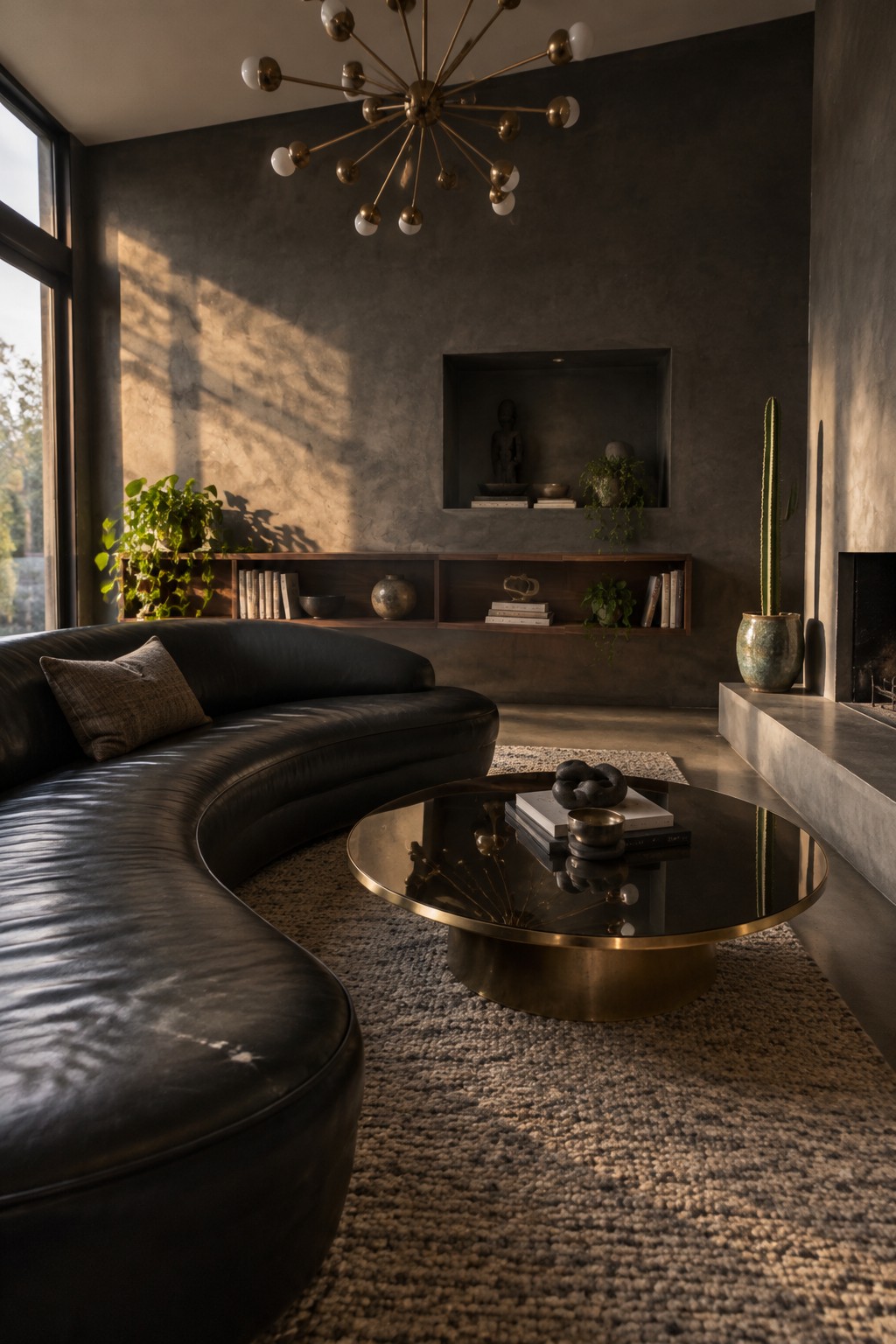
A curved sofa can make a living room feel less formal by giving the seating area a softer outline. Here, its rounded shape brings a natural flow to the arrangement without needing extra chairs to fill the space.
This approach suits open living rooms where you want a clear place to sit but still want the room to feel easy to move through. Leave enough room around the curve, and keep the coffee table low so it does not interrupt the view across the seating area.
Use a Curved Sofa to Make Seating Feel Relaxed

A curved sofa gives a living room a gentler seating shape than a straight sofa, so the arrangement feels less formal. Here, the rounded profile makes the seating area feel easy to settle into without needing a large sectional.
This idea works well in a room where you want people to face one another and talk. Leave enough space around the sofa for walking, and keep the coffee table low and simple so the curved shape stays easy to see.
Use a Curved Sofa to Encourage Conversation
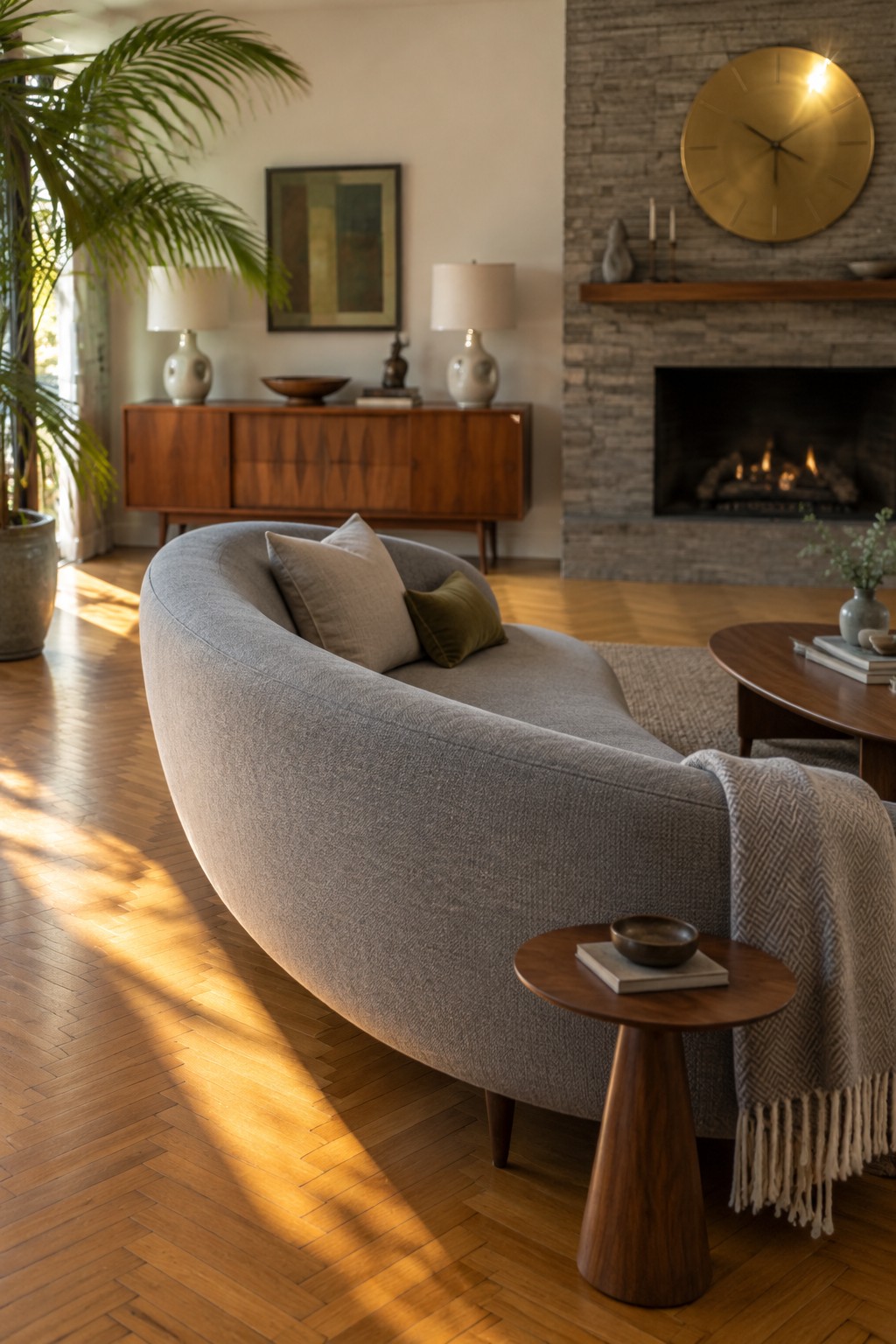
A curved sofa can make a living room feel less like rows of seats facing one another and more like a shared place to talk. Its rounded shape gives the seating area a natural flow, while still offering plenty of room to stretch out.
Try one in an open living room where a straight sofa might feel too formal or block the view across the space. Leave enough room around the curve for people to walk comfortably, and keep nearby tables within easy reach.
Let a Curved Sofa Set the Seating Shape

A curved sofa can make a living room feel less like a row of seats and more like a place to gather. Its rounded form encourages conversation, while a strong color gives the main seating a clear presence without needing a lot of extra decoration.
This works especially well in a room with an open central area. Keep the coffee table low and simple so the sofa’s shape stays easy to see, and leave enough space around the ends for people to pass comfortably.
Use a Curved Sofa to Make a Cozy Seating Area

A curved sofa can make a living room feel relaxed without taking up the whole space. Its rounded shape gives the seating area a softer outline, while a low coffee table keeps the arrangement easy to move around.
This approach works especially well in a room with a large rug that can define the seating zone. Leave enough space around the sofa for walking, and choose a table with rounded edges to keep the layout comfortable.
Use a Curved Sofa to Open Up a City Living Room

A curved sofa can make a living room feel less boxed in than a straight sofa pushed against the wall. Its rounded shape leaves the seating area feeling more open, while still giving people a comfortable place to gather.
This works especially well in an apartment where the living room has to share space with a window seat or walkway. Keep the coffee table low and leave enough room around the sofa so its shape is easy to move around.
Choose a Curved Sofa for a Relaxed Seating Area

A curved sofa gives a living room a softer seating shape and makes conversation feel natural. Here, its rounded form keeps the arrangement from looking too formal, while a round coffee table follows the same easy line.
This style works well in a room with enough floor space for the sofa’s curved footprint. Leave a clear path around it, and keep nearby furniture simple so the seating area feels comfortable rather than crowded.
Choose Upholstery That Echoes a Curved Sofa

A rounded sofa already gives a living room a softer shape, and textured upholstery makes that shape feel even more relaxed. Here, the nubby fabric suits the sofa’s gentle curve without making the seating feel formal.
This idea works well in a mid-century modern room when you want the furniture to feel comfortable rather than sharp-edged. Try a neutral boucle or similar textured fabric, but keep nearby surfaces fairly simple so the upholstery remains easy to appreciate.
Use a Curved Sofa to Shape an Open Seating Area
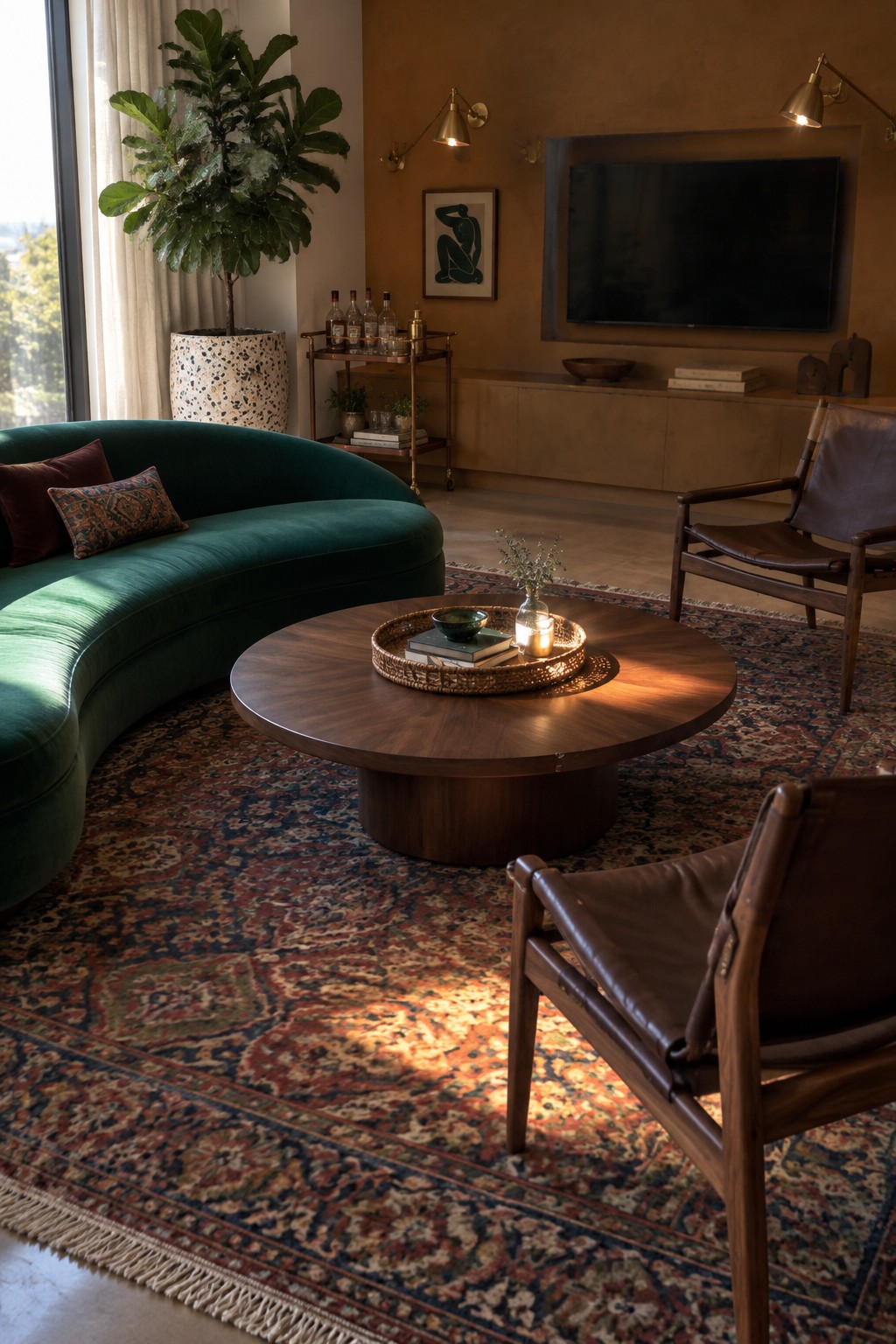
A curved sofa gives a living room a more relaxed layout than a straight sofa pushed against a wall. Here, its rounded shape creates a clear place to sit while leaving the room open around it.
This approach works especially well in a larger room where the seating area needs a little definition. Keep the sofa’s curve facing a coffee table, and leave enough space behind it for people to move through comfortably.
Use a Curved Sofa in a Small Seating Area

A curved sofa can make a seating area feel less boxed in, especially when it sits near a round coffee table. The rounded shapes leave the room feeling easy to move through and give people a natural place to gather.
This layout suits a living room where you want a clear conversation spot without lining up chairs against the walls. Keep the table modest in size so there is still room to walk around the sofa.
Use a Curved Sofa to Make a Compact Seating Area

A curved sofa can make a living room feel less boxed in than a straight sofa, especially when it sits close to a round coffee table. The rounded edges keep the seating area feeling open while still giving it a clear shape.
This approach works well in a smaller room where a large sectional might block the flow. Leave enough space to walk around the sofa, and choose a table with a low, simple profile so the seating stays easy to move through.
Frequently Asked Questions
Q: How do I keep a curved sofa from making a small living room feel crowded?
A: Choose a sofa with a shallower seat and leave a clear path around its curved edge. A round coffee table or a small side table can fit the shape without adding bulky corners.
Q: What kind of rug works well with a curved sofa?
A: A round or oval rug echoes the sofa’s shape, while a rectangular rug gives the room a little structure. Make sure the sofa’s front legs sit on the rug so the seating area feels connected.
Q: Can I mix a curved sofa with other mid-century furniture?
A: Absolutely. Pair its soft lines with a simple wood coffee table or a slim-legged armchair, and keep the rest of the furniture fairly streamlined.
Q: How do I arrange lighting around a curved sofa?
A: Place a floor lamp just beyond one end of the sofa, where it can light the seating area without blocking the curve. A sculptural lamp also adds a mid-century touch without taking up much room.
