

Living rooms often end up looking flat when the walls stay the same color for years and the only light comes from a single ceiling fixture.
I usually notice the change most when paint brings some depth back to the corners and a couple of lamps finally let people see what they are doing.
Testing a warmer tone on one wall first has taught me that the rest of the room does not need new furniture to feel like it belongs together again.
Better lighting also helps the space work for actual evenings instead of just looking okay in the daytime.
That shift is what keeps me trying one small update at a time.
Add Layered Lighting To Warm Up A Plain Room
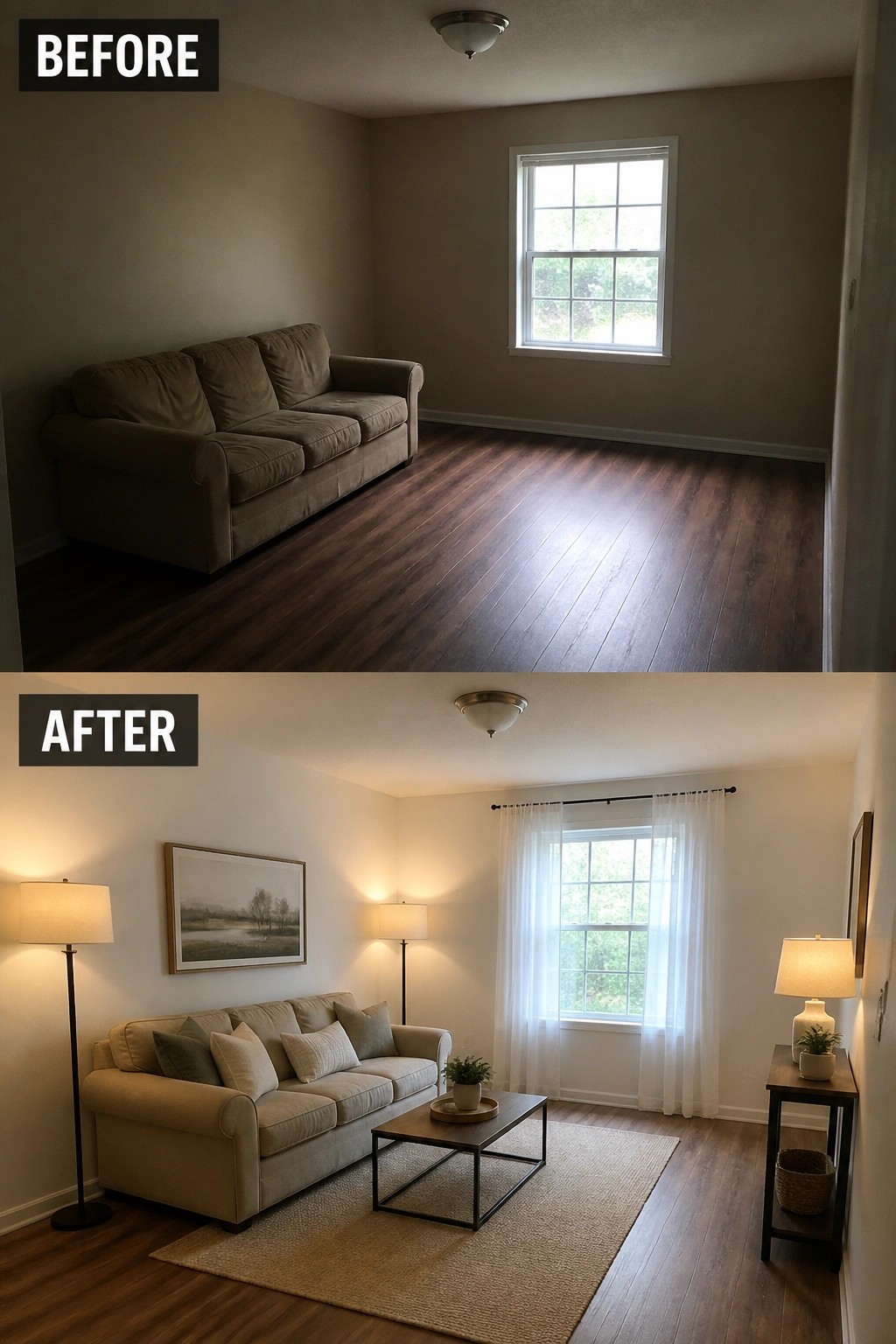
An empty living room with just a couch can feel cold and unfinished even when the floors and walls are fine. Adding a few floor lamps, a table lamp, and a rug instantly changes the feel by creating soft pools of light and breaking up the open floor space.
This approach works well in rental living rooms or any space that lacks built-in lighting options. Start with one or two taller lamps near seating areas, add a smaller one on a side table, and keep the rug size large enough to sit under the front legs of the furniture.
Paint One Wall Dark to Anchor the Room
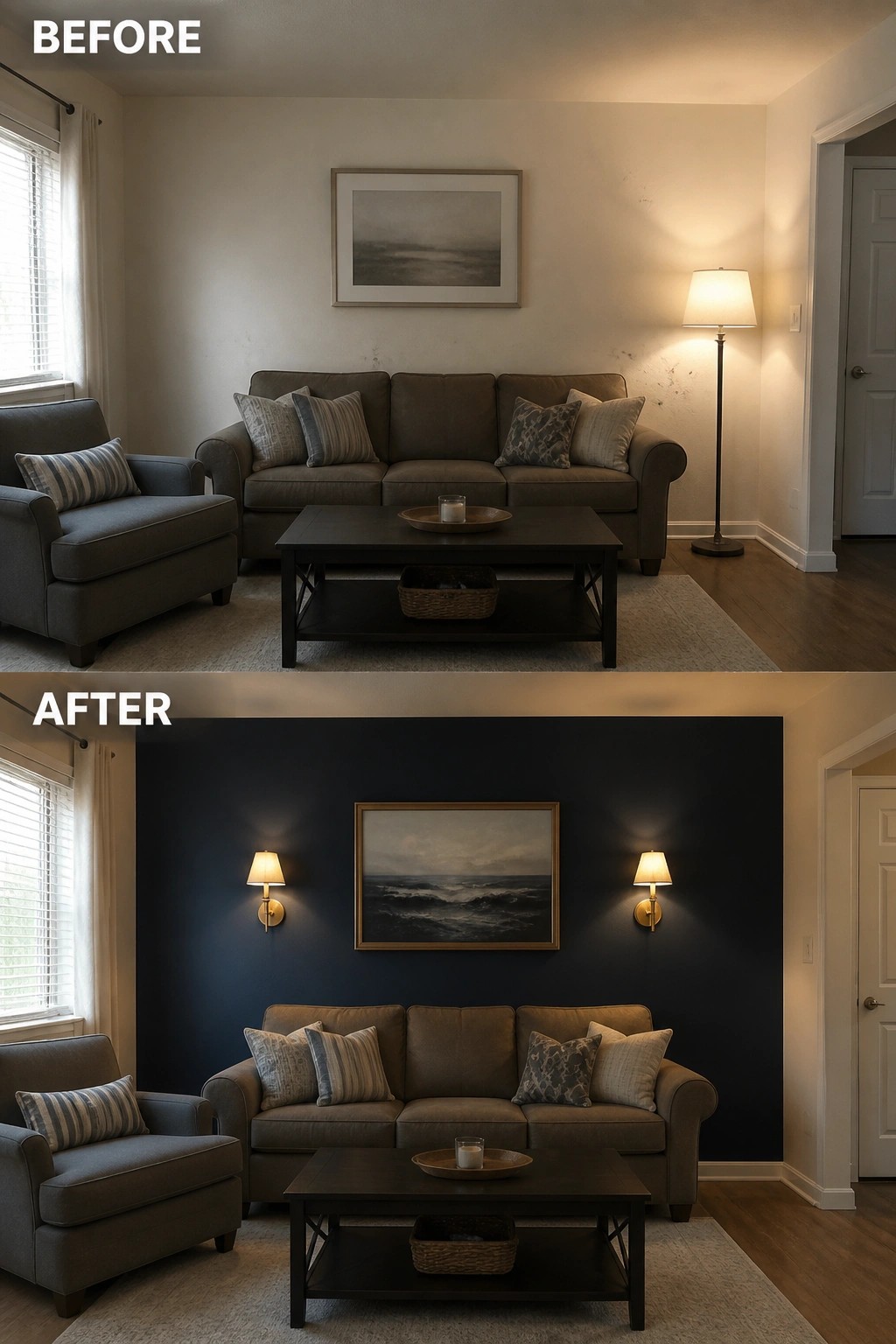
A plain living room often feels unfinished when the walls stay the same light color and the only light comes from one floor lamp. Painting the wall behind the sofa a deep navy and adding a pair of wall sconces gives the space a clear center and makes the seating area feel more intentional. The change is simple but shifts how the whole room reads.
This idea works best in rooms that already have decent furniture but lack focus. Choose a wall that holds the main seating, keep the sconces at eye level when seated, and use warm bulbs so the light feels soft in the evening. It is an easy project for renters or homeowners who want impact without moving walls or buying new pieces.
Make The Fireplace Wall The Main Feature
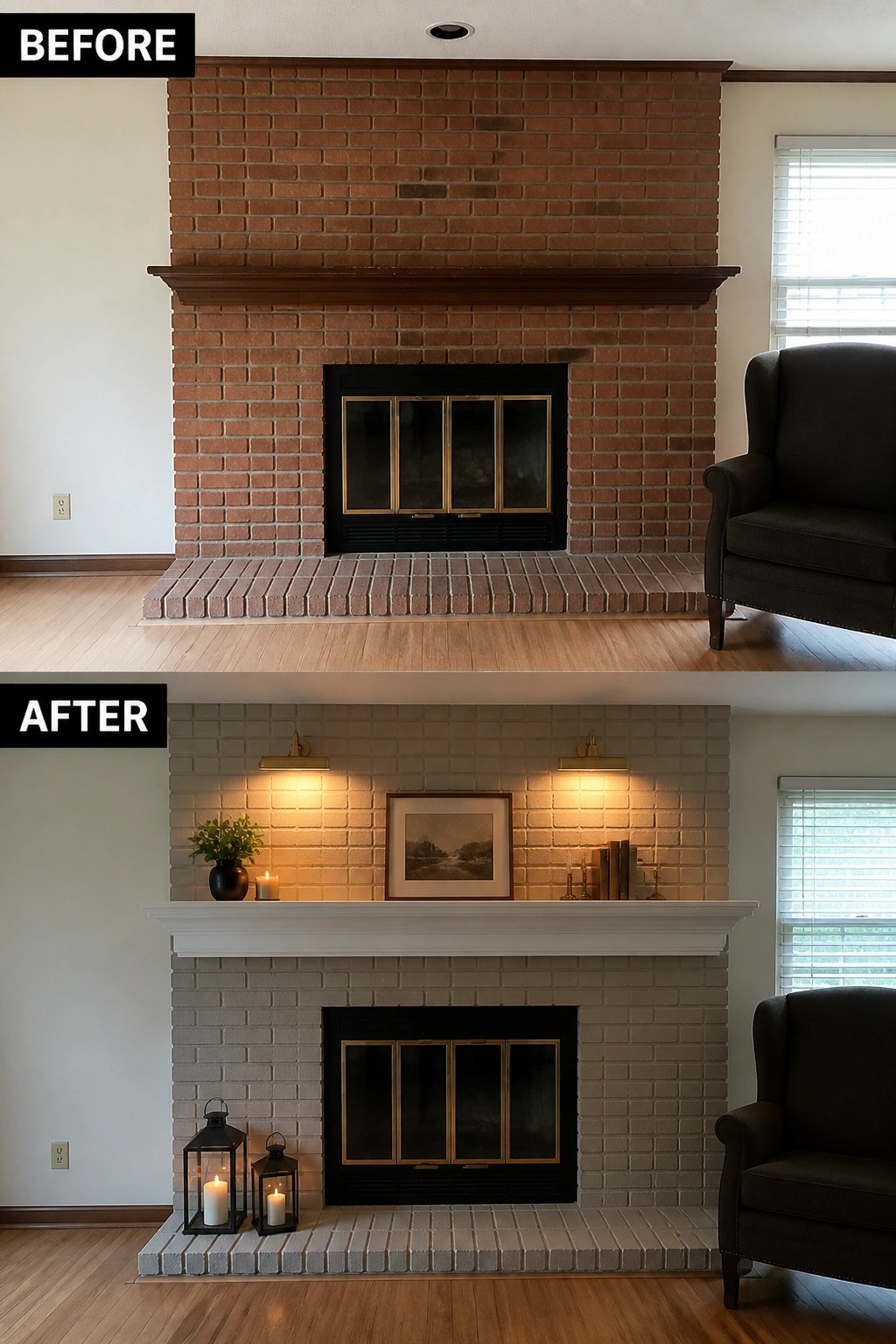
Painting the brick a light color and adding a pair of wall sconces turns a heavy, dated fireplace into the main point of interest. The change opens up the room and gives the wall a cleaner, more finished look without replacing the whole structure.
This approach works best in living rooms where the fireplace already sits in a central spot. Start with paint that matches your trim, then add simple lighting above the mantel so the area feels purposeful instead of empty.
Add Layered Lighting To Warm Up A Living Room
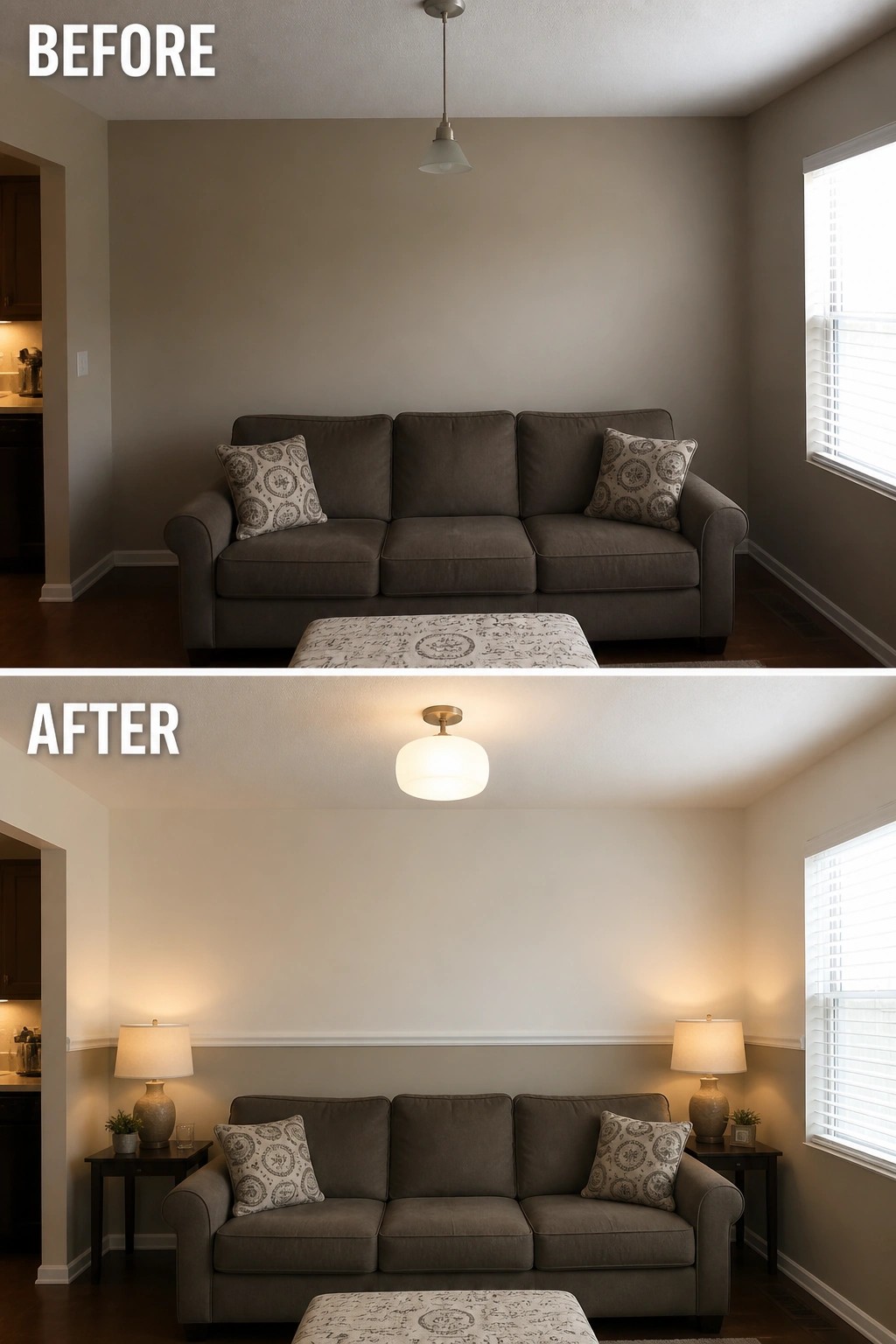
The before photo shows a living room lit by only one overhead pendant, which left the space feeling flat and a bit dim. In the after, a new ceiling fixture combined with lamps on either side of the sofa creates a softer, more balanced light that makes the room feel finished and comfortable.
This approach works well in living rooms that already have decent furniture but still feel incomplete. Start by replacing a single overhead light, then add a pair of lamps on side tables or consoles near the seating. Warm bulbs help keep the mood relaxed, and the change works in most homes without needing new paint or big purchases.
Add Recessed Lighting To Brighten A Living Room

The main change here is swapping one hanging light for multiple recessed fixtures and smoothing out the ceiling. That single overhead light left the middle of the room bright but the corners dark. The new setup spreads light more evenly, so the whole space feels open and usable even at night.
This works best in rooms that already have decent furniture but still feel flat or gloomy. Start by checking if your ceiling can take recessed cans without major rewiring, then pick bulbs with a warm tone so the room does not feel cold. It is a simple step that often makes the biggest difference when you want to avoid a full renovation.
Refresh Built-Ins With Paint And Lighting
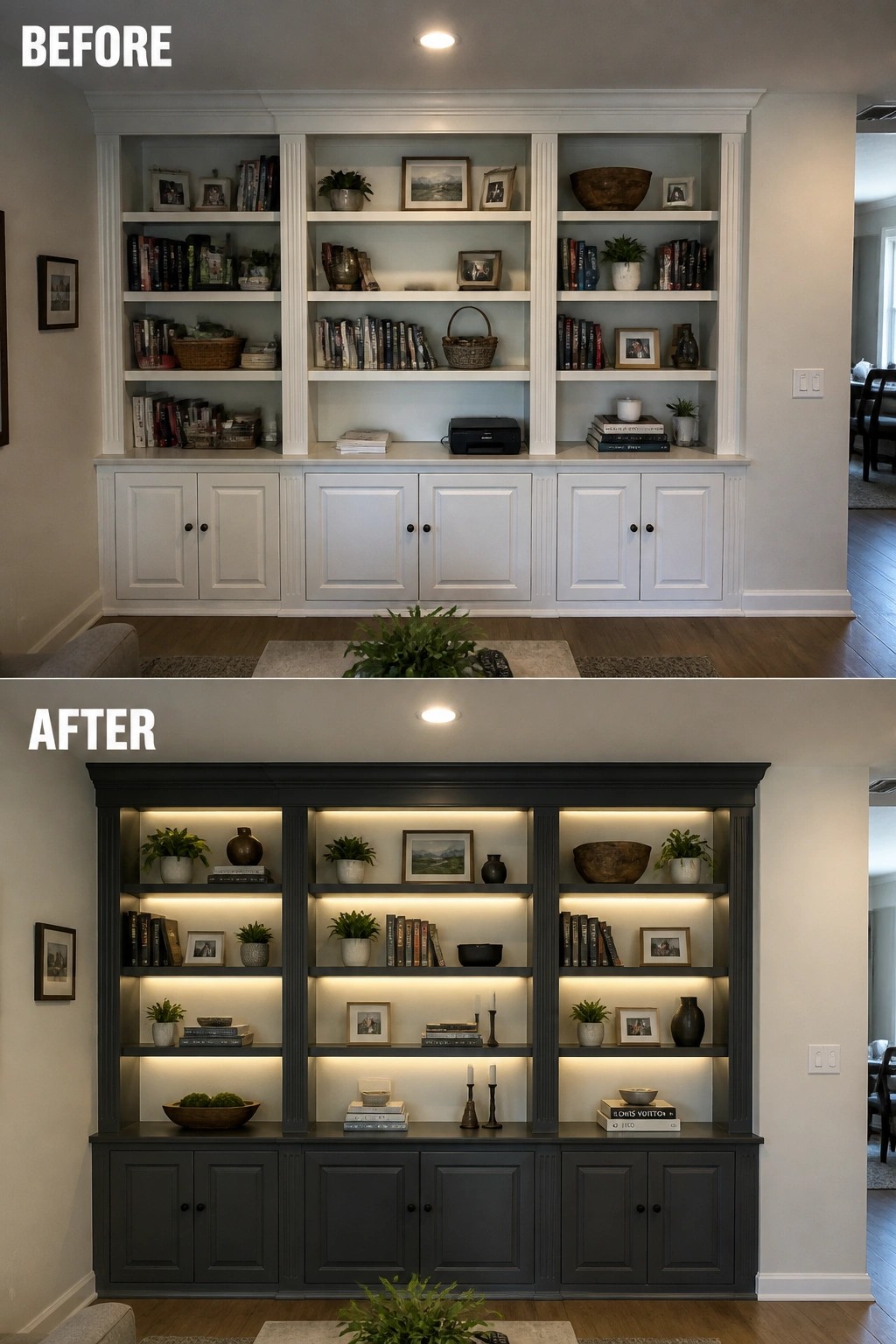
A basic set of white built-ins can start to feel flat over time. Painting them a deeper color and adding lights inside the shelves gives the whole wall more presence and makes the room feel more put together. The change is mostly cosmetic but shifts how the space reads right away.
This idea works best when the cabinets are already in decent shape and the room just needs one stronger focal point. Dark paint helps the shelves stand out, while the lighting makes books and small items easier to see in the evening. Keep the color choice simple and test the lights on a few shelves first so you know the brightness feels right for the room.
Make A Plain Living Room Feel Finished
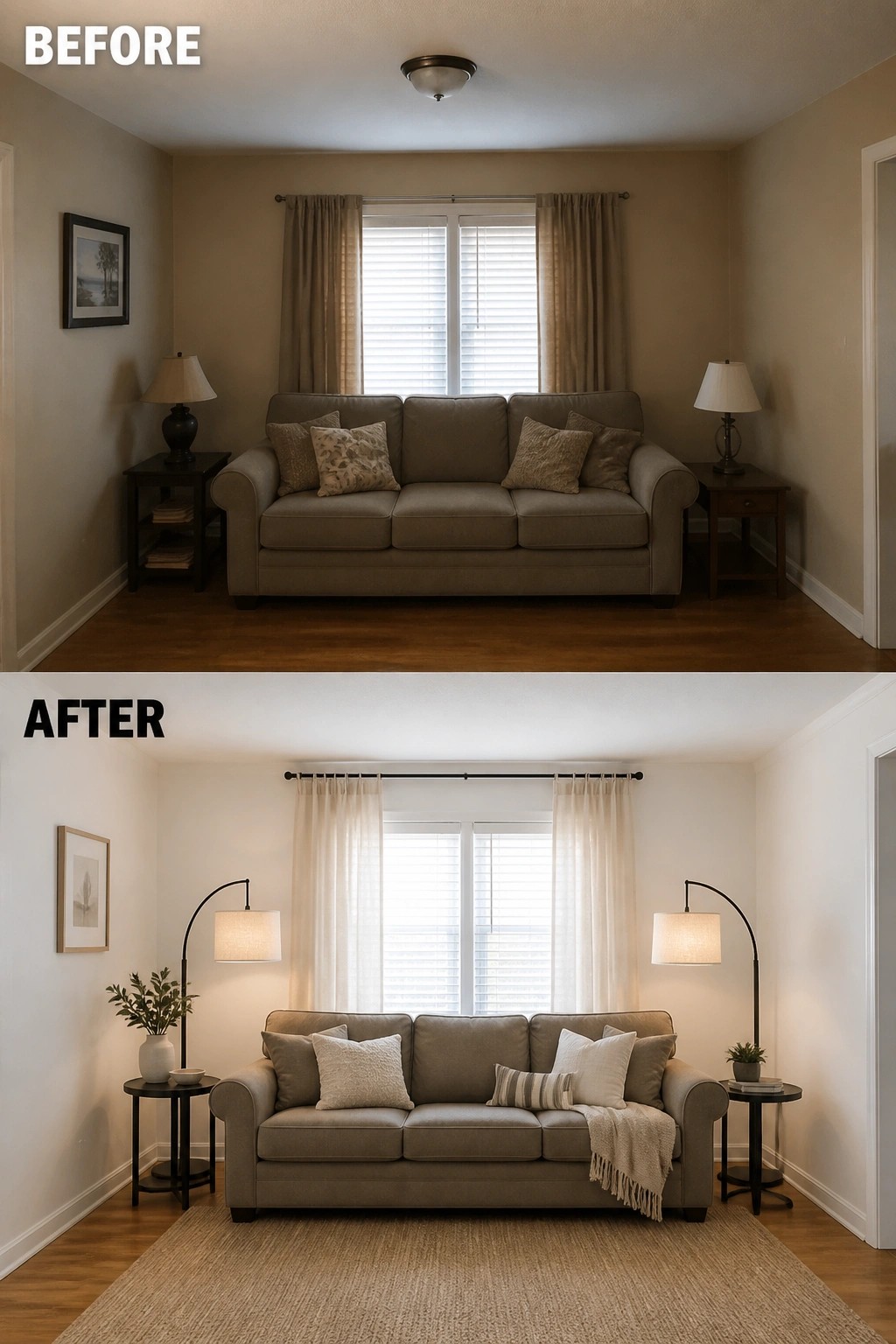
The living room had the sofa and tables in place but felt unfinished with only small lamps and no rug on the floor. Adding a pair of taller floor lamps and a large area rug under the seating changed how the whole space worked.
This idea suits rooms that already have the main pieces but need better light levels and a clear zone. Place the lamps near seating areas so they actually get used at night, and make sure the rug is large enough to sit under the front legs of the furniture.
Paint One Wall Dark to Anchor a Corner

A dark accent wall paired with a hanging light can give purpose to an empty spot that used to feel like leftover space. The plain white walls and floor lamp made the corner look unfinished. Once the wall was painted a deep charcoal and a simple pendant was added overhead, the area suddenly read as a real seating spot.
This idea works best in living rooms where one corner sits unused next to a larger sofa. Keep the new chair and side pieces small so they do not crowd the room, and let the darker paint do most of the work of defining the zone. One overhead light and a table lamp are usually enough to make the corner feel finished at night.
Add A Wall Sconce To Highlight Artwork

A single wall light can turn a small piece of art into a real focal point. In the before photo the picture sat alone on an empty wall with nothing drawing attention to it. Adding the sconce above the frame gives the art purpose and brings a soft layer of light into the space that helps the whole area feel more finished.
This idea works especially well in living rooms where the walls are mostly blank and you want to avoid a bigger remodel. Center the light over the frame, keep the fixture simple, and choose a bulb that gives a warm glow rather than harsh brightness. It is an affordable change that works in most homes with standard door trim and neutral walls.
Add A Painted Pattern And Wall Lights To A Blank Wall
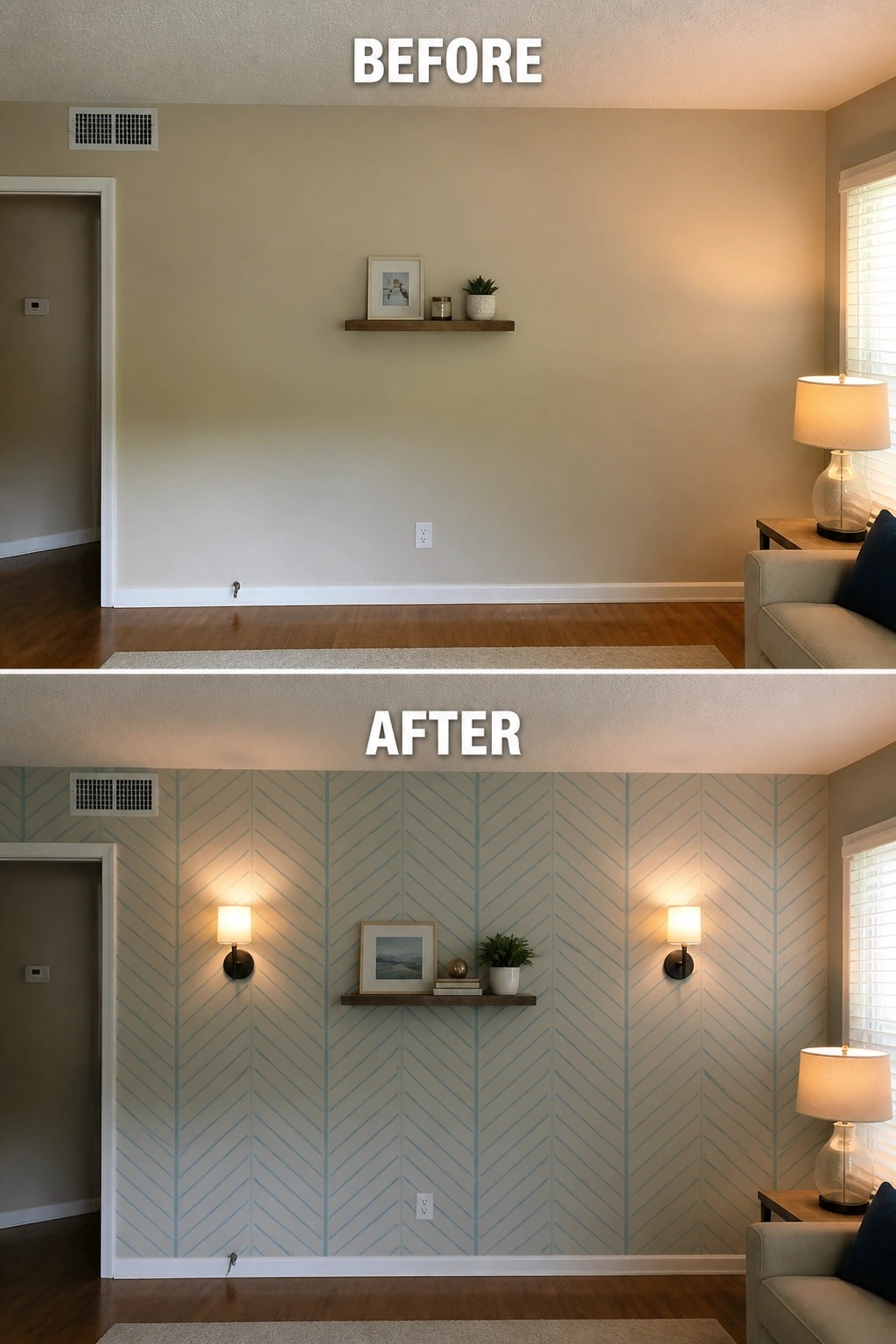
A plain wall often leaves a room feeling unfinished, even when the furniture is already in place. Adding a simple painted pattern across the wall and placing sconces on either side gives the space more structure and a warmer feel without needing new furniture or major changes.
This idea works best on a focal wall in a living room or bedroom. Use a light base color, tape off the pattern carefully, and choose modest sconces that match the scale of the room. It keeps the update affordable while making the wall the main feature.
Add Wall Sconces For Better Layered Lighting
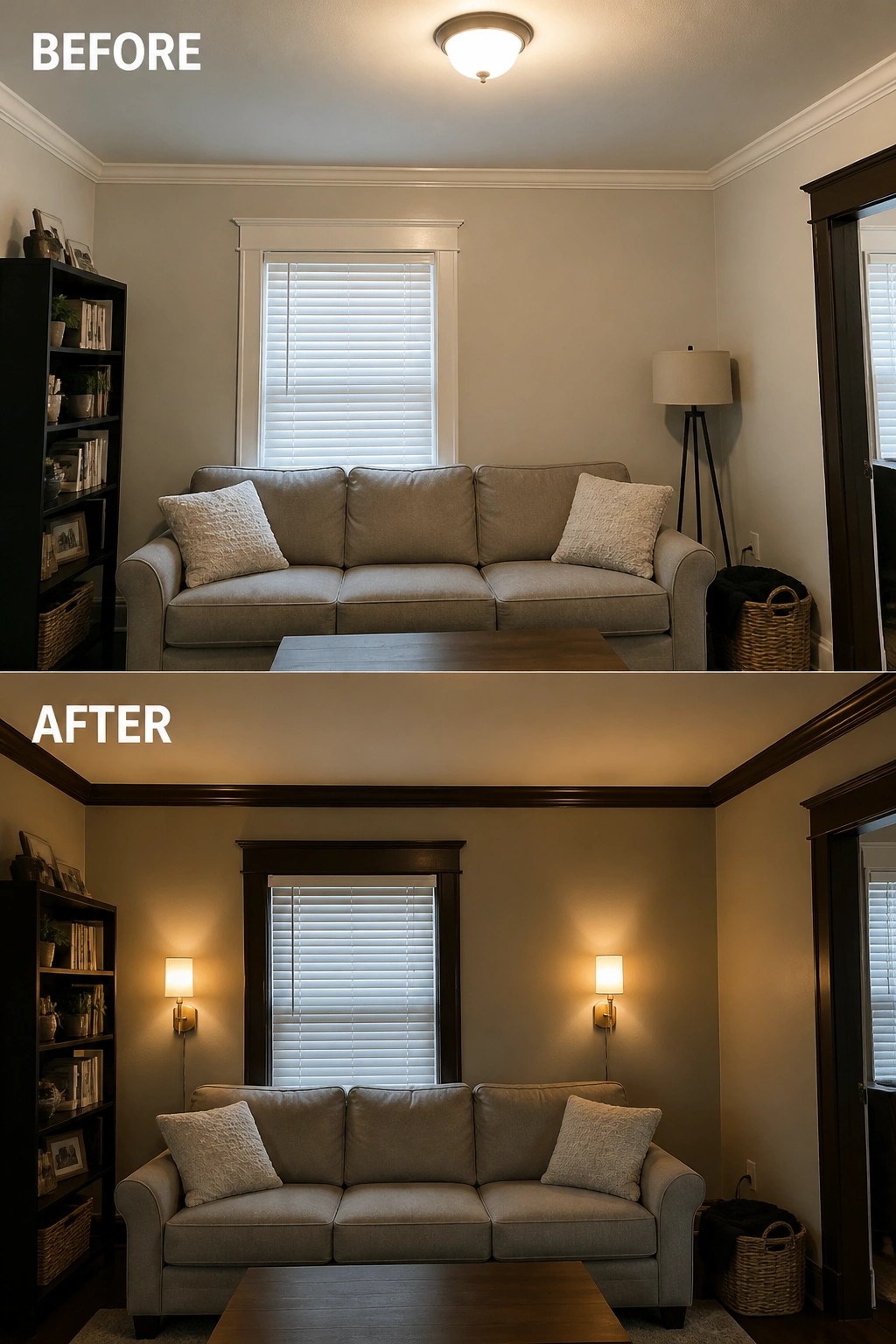
A single ceiling light often leaves a living room feeling flat and unfinished even when the furniture is already in place. Adding a pair of wall sconces on either side of the window brings light down to eye level and creates a much softer, more balanced feel without any major construction.
This approach works especially well in rooms with standard ceilings and simple layouts. Place the sconces at a comfortable height, match the finish to other hardware in the space, and keep the shades simple so the light spreads evenly. It is one of the easier ways to make a room feel more complete on a modest budget.
Use Layered Lighting And Paint To Warm Up A Living Room

The before photo shows a living room with cool green walls and one harsh overhead light that leaves the space feeling flat. Switching to a warmer wall color and adding several softer light sources makes the room feel much more comfortable right away.
This idea works best in rooms that already have decent furniture but still feel unwelcoming. Replace any single cool ceiling light first, then add lamps where people actually sit. A warmer paint color helps tie the new lighting together and keeps the whole update simple and low cost.
Update A Window Seat With Paint And Better Lighting
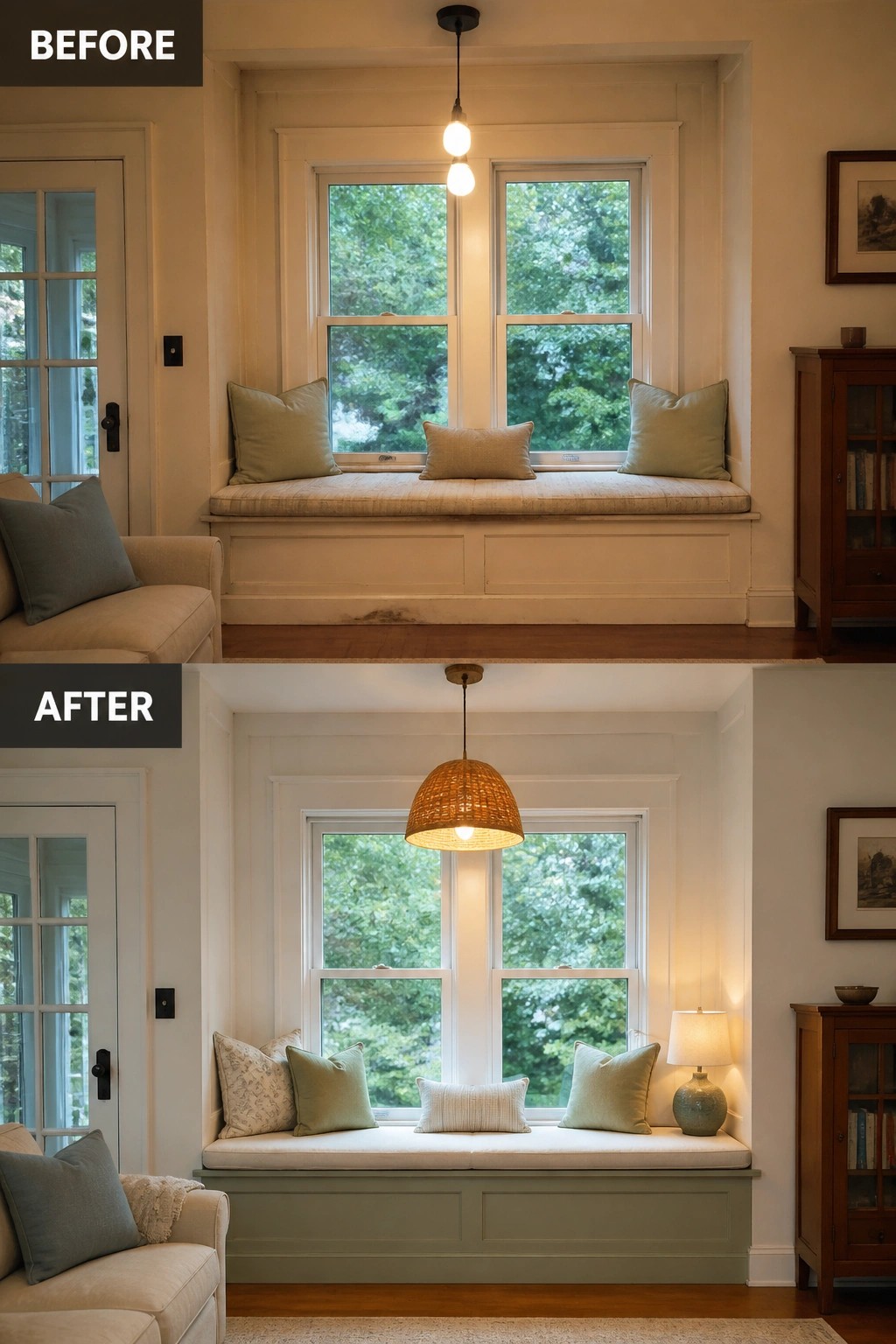
A plain window seat often feels unfinished when the built-in stays the same color as the walls and the only light comes from bare bulbs. Painting the bench a soft contrasting color gives it definition, while swapping the overhead bulbs for a single pendant and adding a small table lamp creates a much warmer layer of light right where people sit.
This approach works well in older homes that already have a window seat or built-in bench. Start with the paint on the woodwork first, then test one or two new light sources before buying more fixtures. Keep the scale modest so the nook stays comfortable rather than crowded.
Add Floor Lamps To Warm Up A Living Room

A single overhead light often leaves a room feeling flat and cold even when the furniture is in place. In this case the addition of two simple floor lamps changed the whole feel by creating pools of warmer light that reach the corners and soften the space.
Floor lamps work well in rooms that already have the basics but still feel unfinished. Place them near seating areas rather than against blank walls so the light actually gets used in the evening. This approach keeps costs low and lets you test the effect before committing to bigger changes like new flooring or paint.
Add Wall Sconces To Highlight Artwork
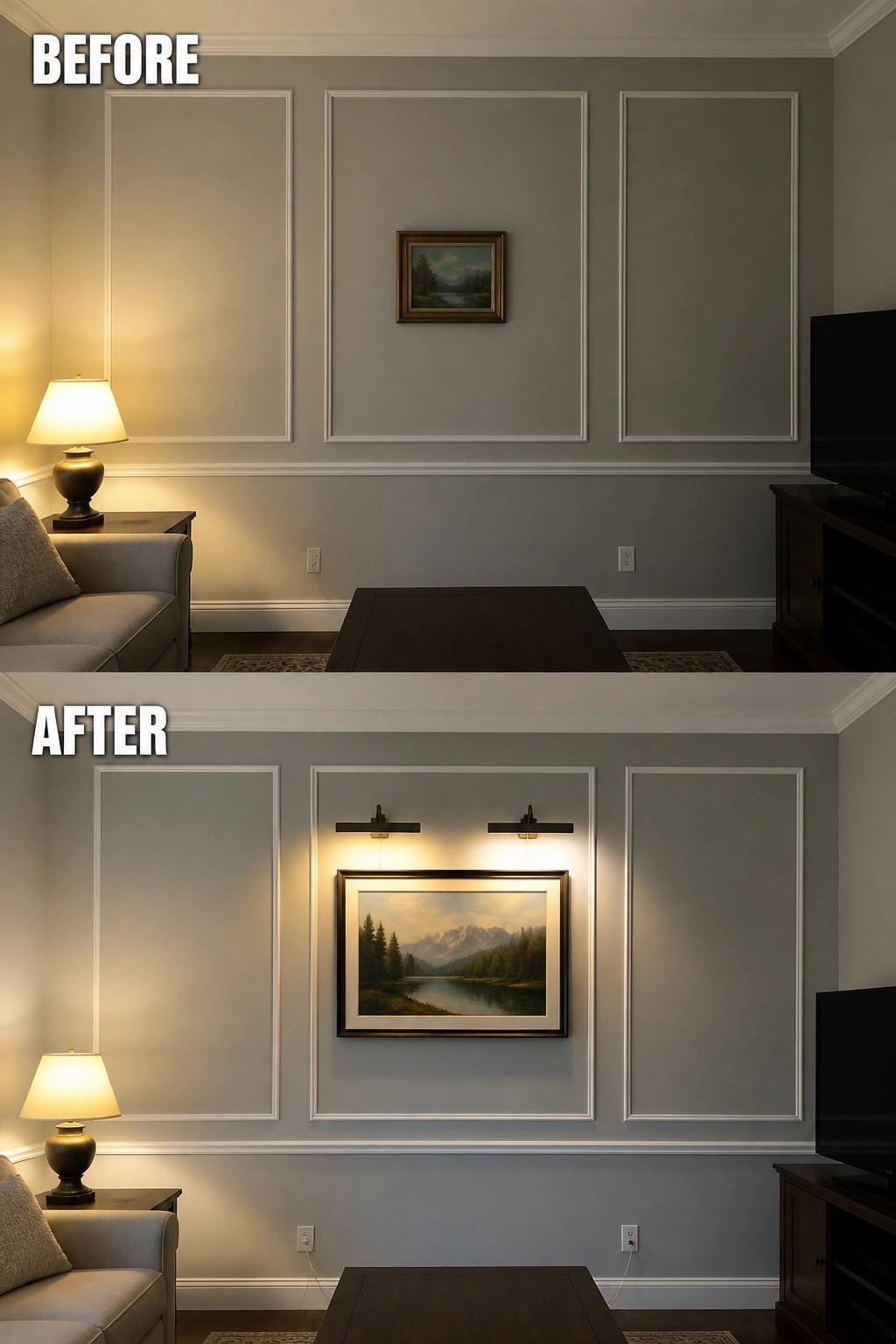
A plain paneled wall can feel unfinished even when the rest of the room is in place. In this case the change came from replacing a small high painting with a larger centered piece and adding two simple wall sconces above it. The lights bring the artwork down to eye level and give the whole wall a clear purpose.
This idea works well in living rooms where the walls already have trim or paneling. Pick one wall, choose a piece that fits the space, and add lights that shine downward onto the frame. It keeps the rest of the room simple while giving people something to look at from the seating area.
Use Paint And Layered Lighting To Finish A Living Room

A plain white room often feels unfinished even when the sofa is already there. A wide painted band across the back wall adds just enough structure, while replacing the flat ceiling light with a softer fixture and adding lamps on both sides makes the space feel much warmer and more complete.
This idea suits neutral living rooms where you want a quick update without new furniture. Keep the paint tone close to your walls so it reads as intentional rather than busy, and place the lamps at seated eye level so the light actually reaches where people sit.
Use Layered Lighting To Warm Up A Plain Room
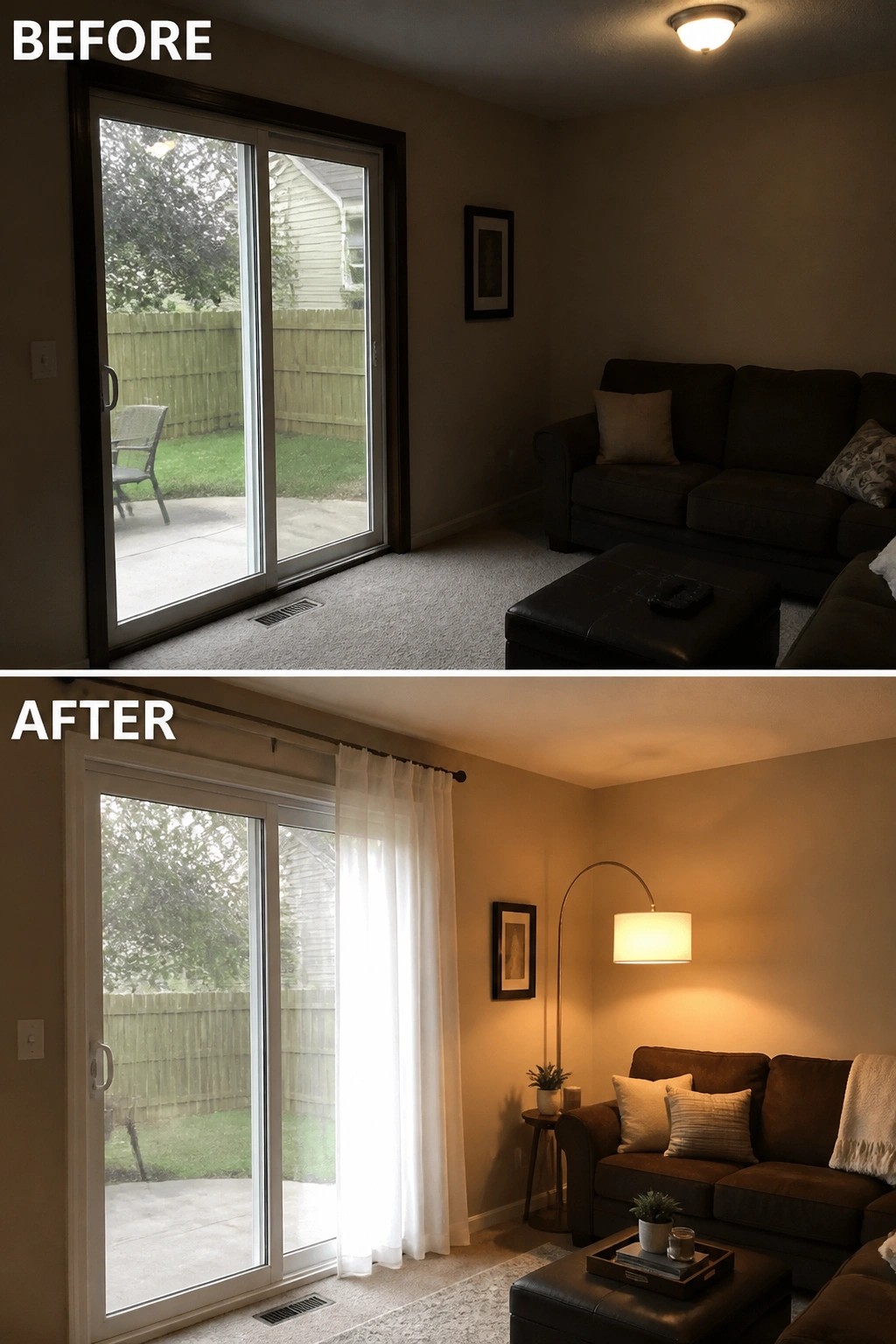
The room felt flat under just the ceiling light, with nothing to soften the windows or fill the corners. Adding a floor lamp and hanging curtains brought a warmer, more even glow that made the whole space feel finished.
This works best in living rooms that get limited daylight or rely on one overhead fixture. Place one taller lamp near seating and keep the curtains light so they filter rather than block the view.
Make Built-Ins The Focal Point With Dark Paint And Lighting

A light built-in entertainment center often fades into the background and leaves the wall feeling unfinished. Painting the cabinets and shelves a deep dark color gives the whole unit more weight, while adding lighting under the shelves helps the displayed items stand out at night.
This idea works best in living rooms where the TV wall needs to feel more intentional. Start with the paint color first, then add simple strip lights inside the shelves. Keep the items on display limited so the space stays easy to maintain.
Refresh A Living Room With Paint And Better Lighting

A simple wall color change and updated lighting can make a plain room feel much more finished. In this case the walls were painted a soft light green and the overhead light was swapped for a hanging fixture while a table lamp was added beside the sofa. The new color reflects more light and the mix of fixtures creates a warmer, more even glow without any major construction.
This approach works well in small living rooms that feel flat or dated. Pick a light neutral paint first, then layer one overhead light with at least one lower lamp so the room does not rely on a single harsh source. It keeps costs down and gives you a clear starting point before adding other pieces.
Paint The Wall Behind Your TV To Create Focus

Painting the wall behind the TV is one of the simplest ways to give a living room more structure. In the before photo the white wall made everything feel flat, while the after shows how a dark color plus two slim lights immediately pulls the eye to that area and makes the whole room feel more finished.
This idea works best in rooms where the TV is the main feature rather than art or a fireplace. Keep the lights simple and low-profile so they do not compete with the screen, and test your paint color in the evening to make sure it still feels right when the lights are on.
Frequently Asked Questions
Q: How do I pick paint colors that won’t clash with my sofa and rugs? A: Start by pulling a few shades from your existing fabrics and test them on the wall in different lights. Paint a small section and live with it for a day or two before committing to the whole room. This keeps the changes affordable while making everything feel pulled together.
Q: Can I improve my lighting without running new wires through the walls? A: Swap your old lamps for brighter LED bulbs and add floor lamps in dark corners. Plug in a couple of smart bulbs if you want to adjust the mood without extra work. These small swaps brighten the space fast and cost way less than a full electrical job.
Q: Is it worth painting the trim a different color from the walls? A: Yes, a crisp white or soft contrast on the trim makes the room feel more finished. It draws the eye to the windows and doors without much extra effort or cost.
