
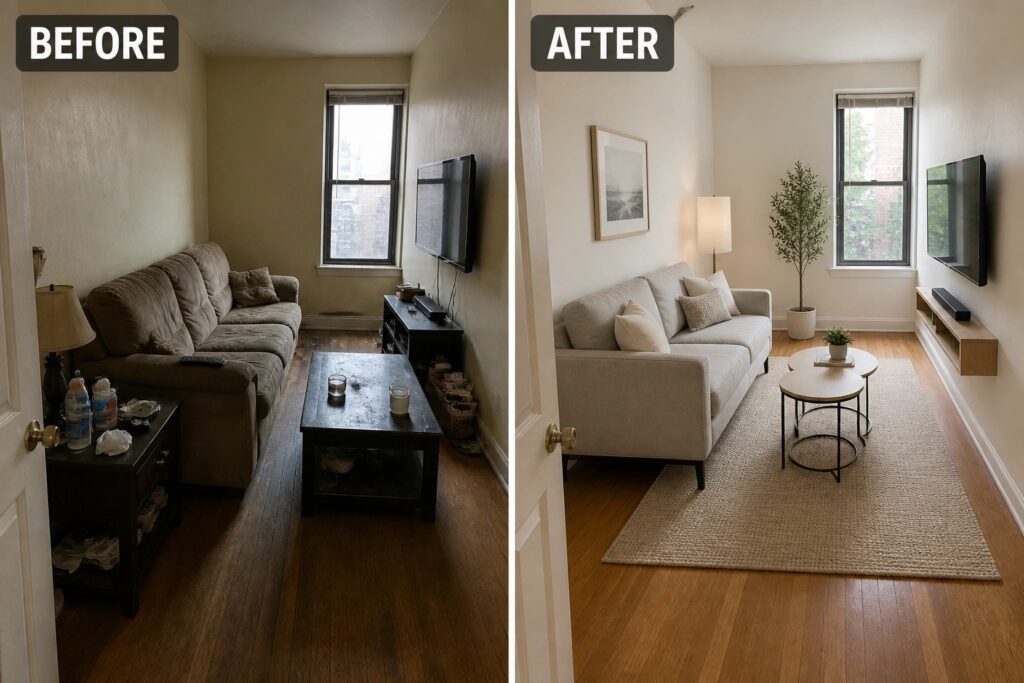
Living in a small apartment often means the living room ends up serving multiple roles at once, which can leave the layout feeling off balance.
Tight spaces tend to hide their potential until the furniture placement gets addressed first.
I have found that moving the main seating away from the walls usually creates better flow than trying to fill every corner with decor.
When a room starts to match how people actually move through it, the whole place feels more settled without needing major construction.
Looking at solutions that worked elsewhere can give useful clues for testing similar adjustments at home.
Use A Rug To Define Seating In A Small Living Room
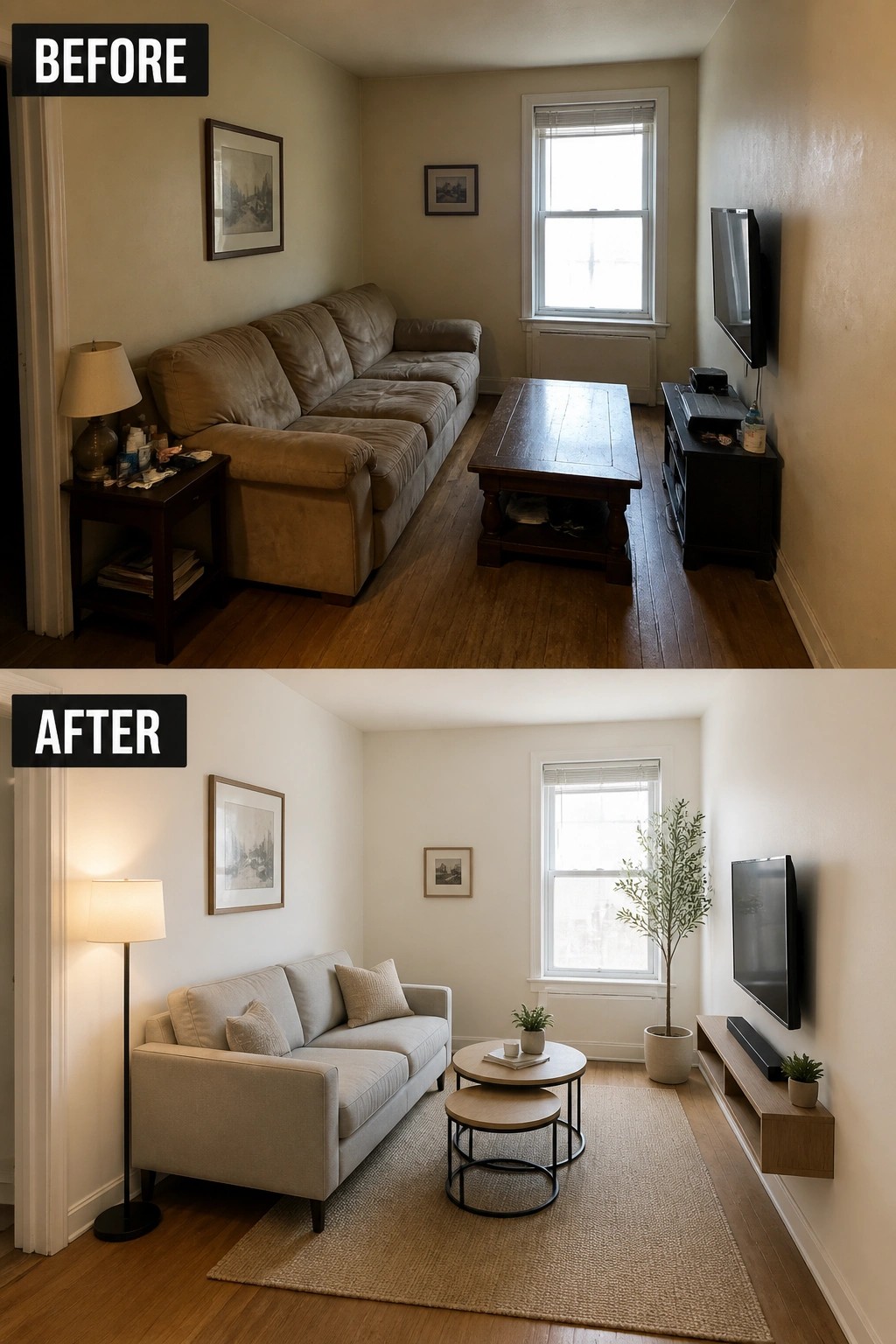
The before version had a bulky sofa and dark coffee table that took up most of the floor and left the space feeling crowded. Swapping to a smaller sofa and adding one large woven rug pulled the seating together and made the room feel noticeably bigger without moving any walls.
This approach works well in apartments where the living area has to serve multiple uses. Keep the rug a size or two larger than your seating so the front legs of the sofa and chairs sit on it. Stick to furniture that leaves clear walking paths around the edges.
Add Built-Ins Around A Window For Storage And Seating
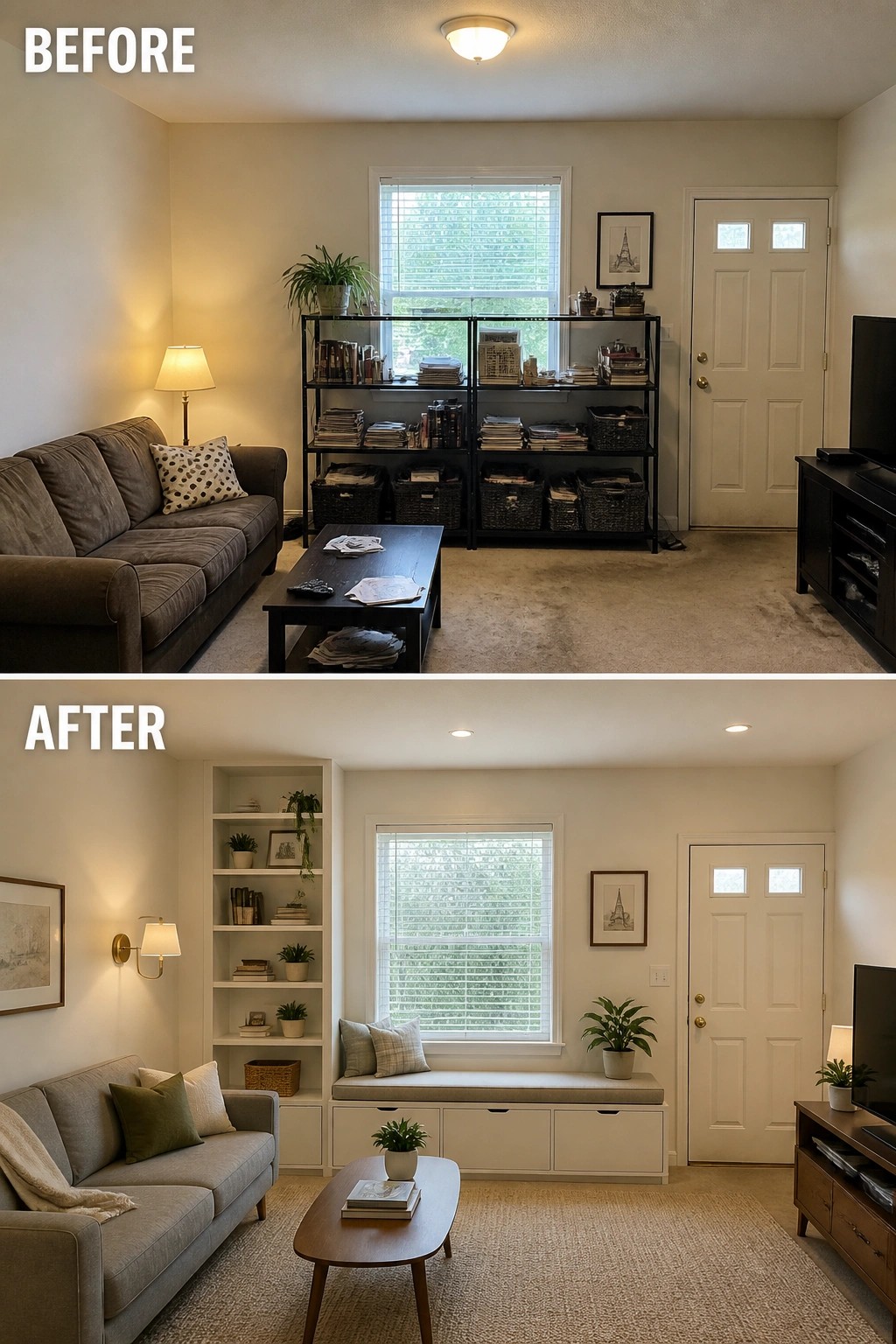
One simple way to improve a cramped living room is to replace freestanding shelves with built-ins that frame the window and add a window seat. The before photo shows how a large dark bookcase and coffee table ate up floor space, while the after version tucks storage into the walls and creates a place to sit without adding more furniture.
This idea suits small apartments where every inch counts. Measure the window first and keep the built-ins shallow so they do not push into the room. A light finish helps them disappear into the walls, leaving the center of the space open for daily use.
Make A Small Living Room Feel Bigger With Light Colors
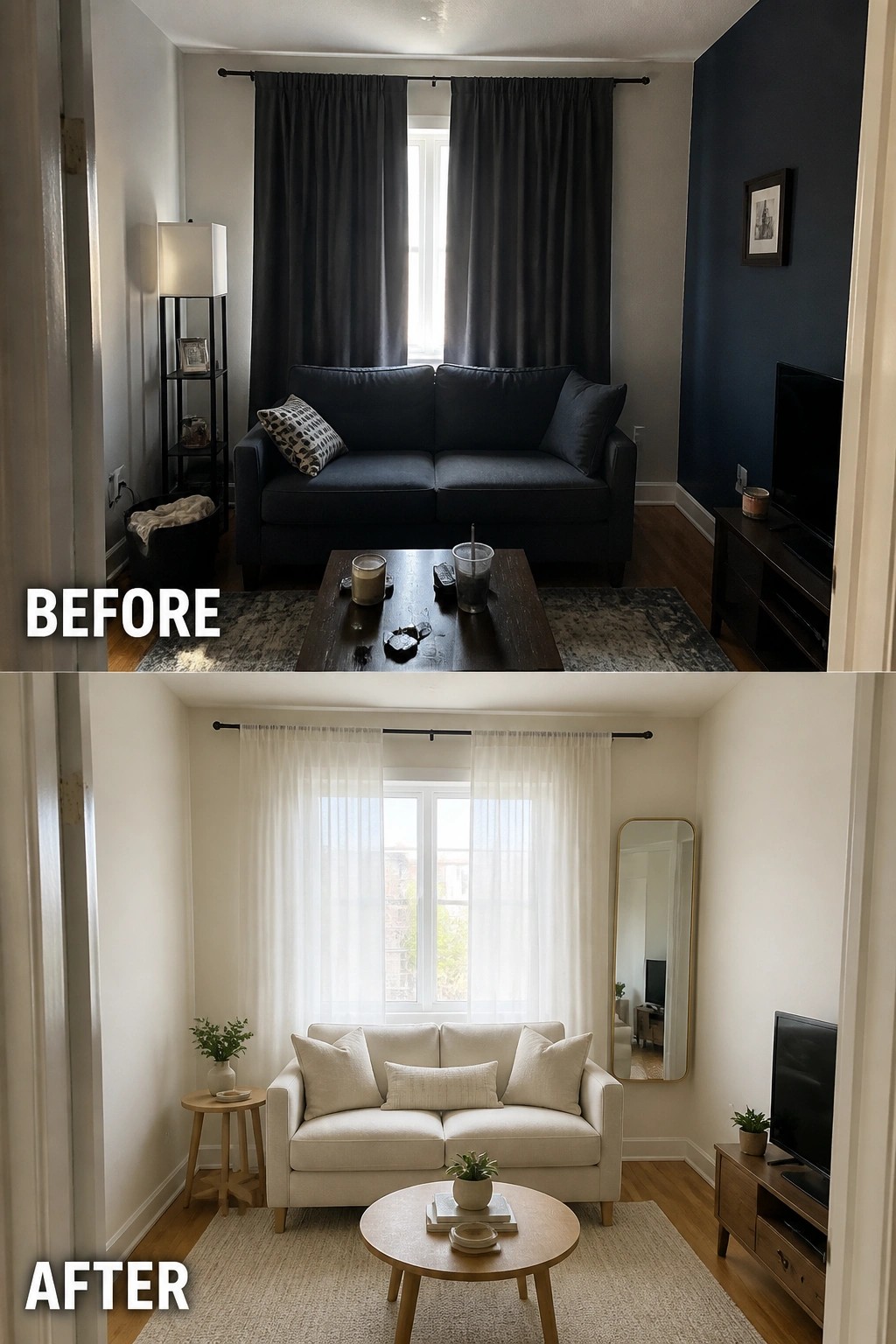
The main change here was replacing the dark sofa and heavy curtains with lighter fabric and sheer window panels. This shift lets more daylight reach the walls and floor, which immediately makes the room feel less closed in.
In a small apartment, starting with pale neutrals on the biggest pieces helps keep the space from feeling cramped. Stick to one main seating area and avoid filling every corner so there is still room to walk around comfortably.
Add A Storage Bench Under The Window

In a small living room, a window bench with built-in storage turns an empty wall into a useful spot for sitting and hiding clutter. The before photo shows a recliner sitting alone in the middle of the room, while the after shows how the same area now holds a long bench that fits right under the window.
This idea works best in apartments where floor space is tight and you need seating that does more than one job. Keep the bench low so it does not block light, and choose a cushion that matches your other fabrics. It also helps if you paint the bench the same color as the walls so the whole area feels calm instead of busy.
Mount The Tv To Open Up Floor Space
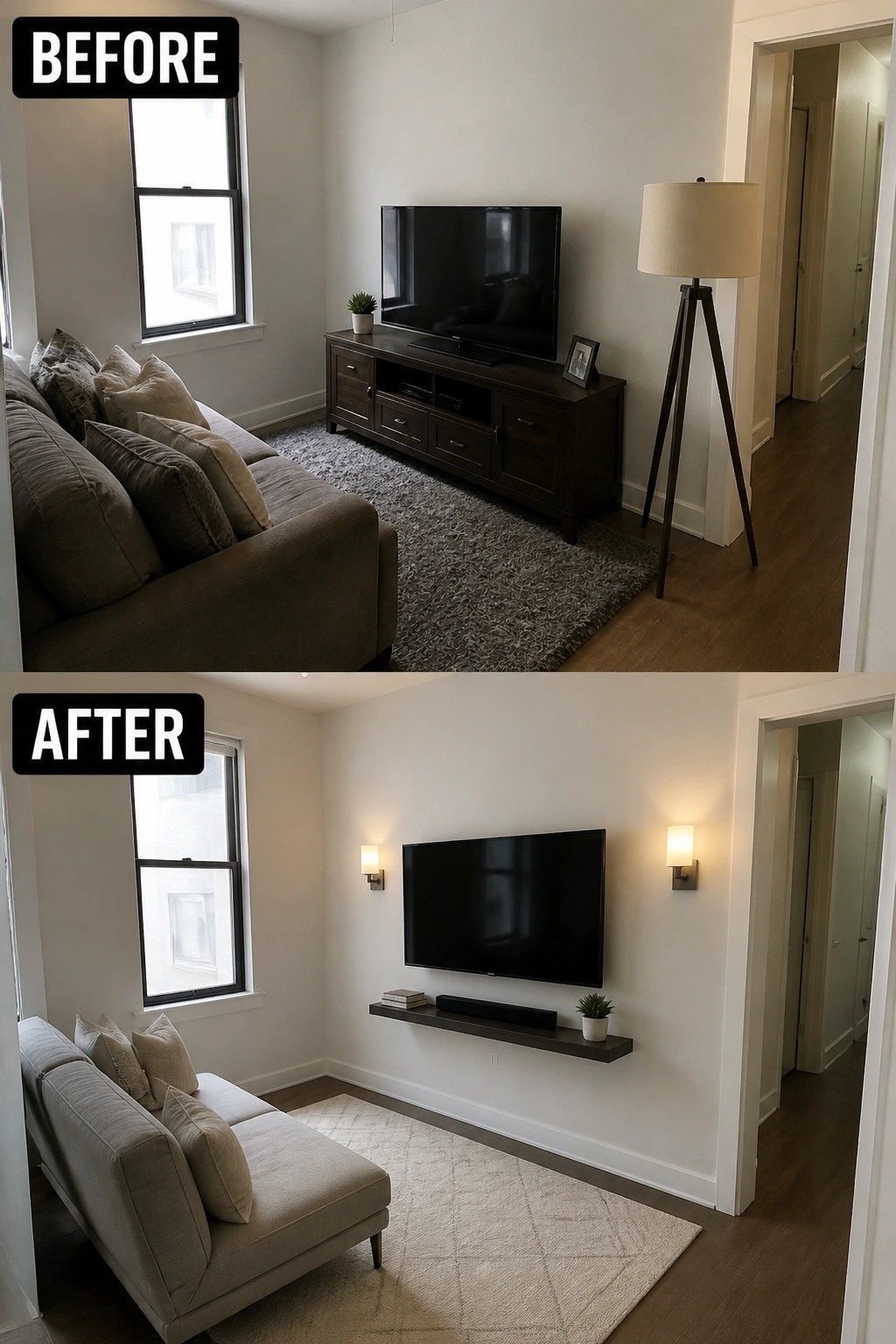
In a small living room, a big TV console eats up valuable floor area and makes the room feel tighter than it needs to be. Moving the TV to the wall and replacing the console with a slim floating shelf frees up the space below and gives the room a cleaner look. The change also lets you add simple wall lights on either side instead of relying on one tall floor lamp.
This approach works especially well in apartments where the layout is already limited. Keep the shelf low and narrow so it holds only the soundbar and a couple of small items, then use the extra floor room for seating that actually fits the scale of the space. It is an easy first step before worrying about new furniture or paint.
Improve Furniture Layout In A Small Living Room

The before photo shows a room that felt scattered because boxes and extra chairs took up most of the open floor. Clearing those items and moving the sofa to one wall let the space split into two simple zones, with a wall-mounted table and chairs added on the opposite side.
This works best in apartments where the living room has to handle both relaxing and meals. Clear the floor first, then test a couple of arrangements before adding any new pieces. Leave enough room to walk through so the layout stays practical day to day.
Make A Plain Living Room Feel Finished
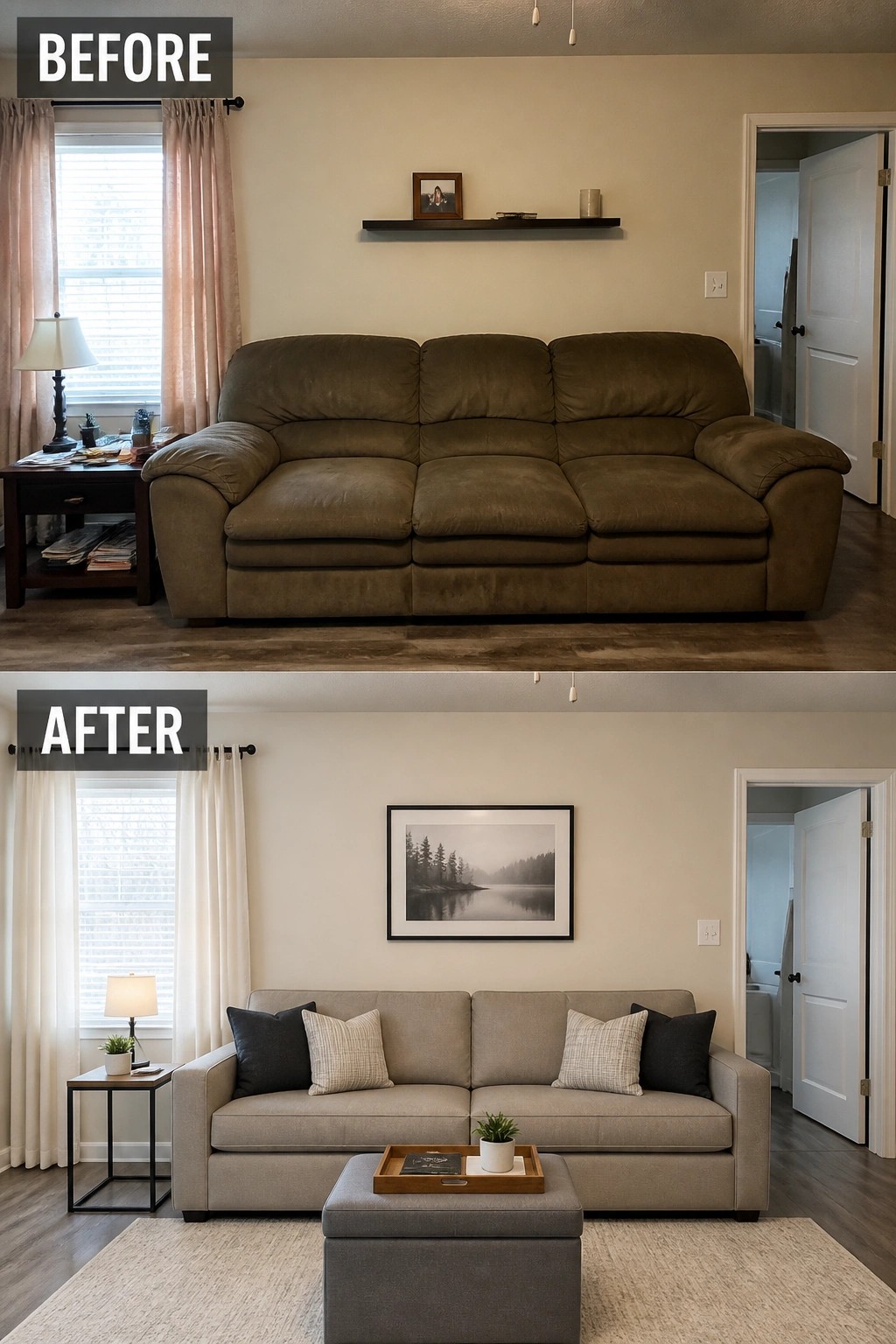
A basic living room often feels incomplete when the furniture sits alone against bare walls. In this case the change came from replacing the old sofa with a lighter one, adding a large framed print above it, and bringing in a rug and pillows. Those few steps pulled the space together without any major construction.
This approach works well in small apartments where you want the room to feel purposeful rather than empty. Start with one main wall and one large piece of art so the eye has somewhere to land. Keep the rest of the furnishings simple so the new focal point stays clear.
Anchor A Small Living Room With One Large Rug
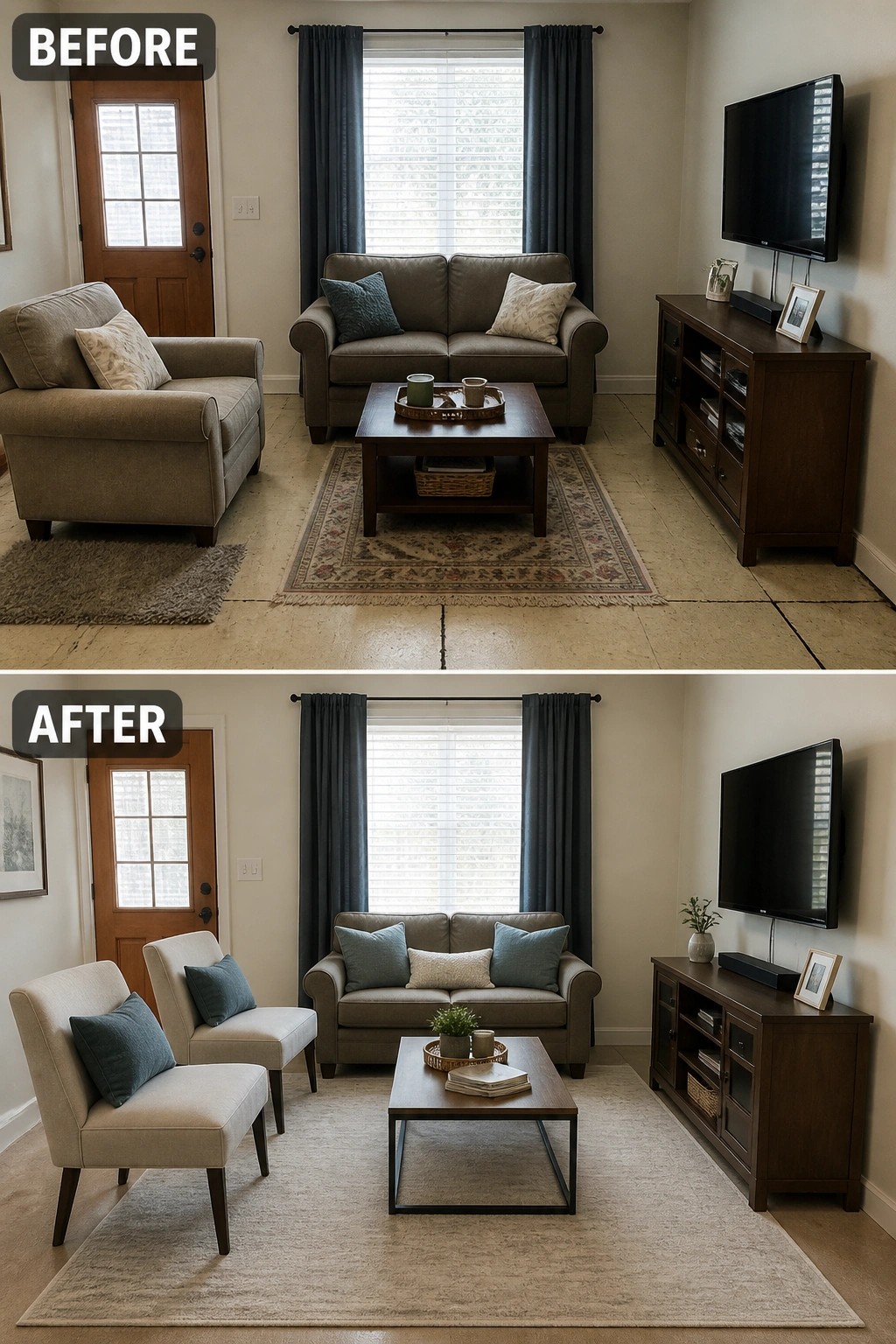
The before photo shows two small rugs that split the floor and make the seating feel scattered. In the after, one large neutral rug covers the main area and brings the sofa, chairs, and coffee table into one clear group.
This idea works best in apartments where space is limited. Pick a rug big enough for the front legs of every seat to rest on it, and keep the color light so the room stays open.
Turn An Empty Alcove Into A Workspace
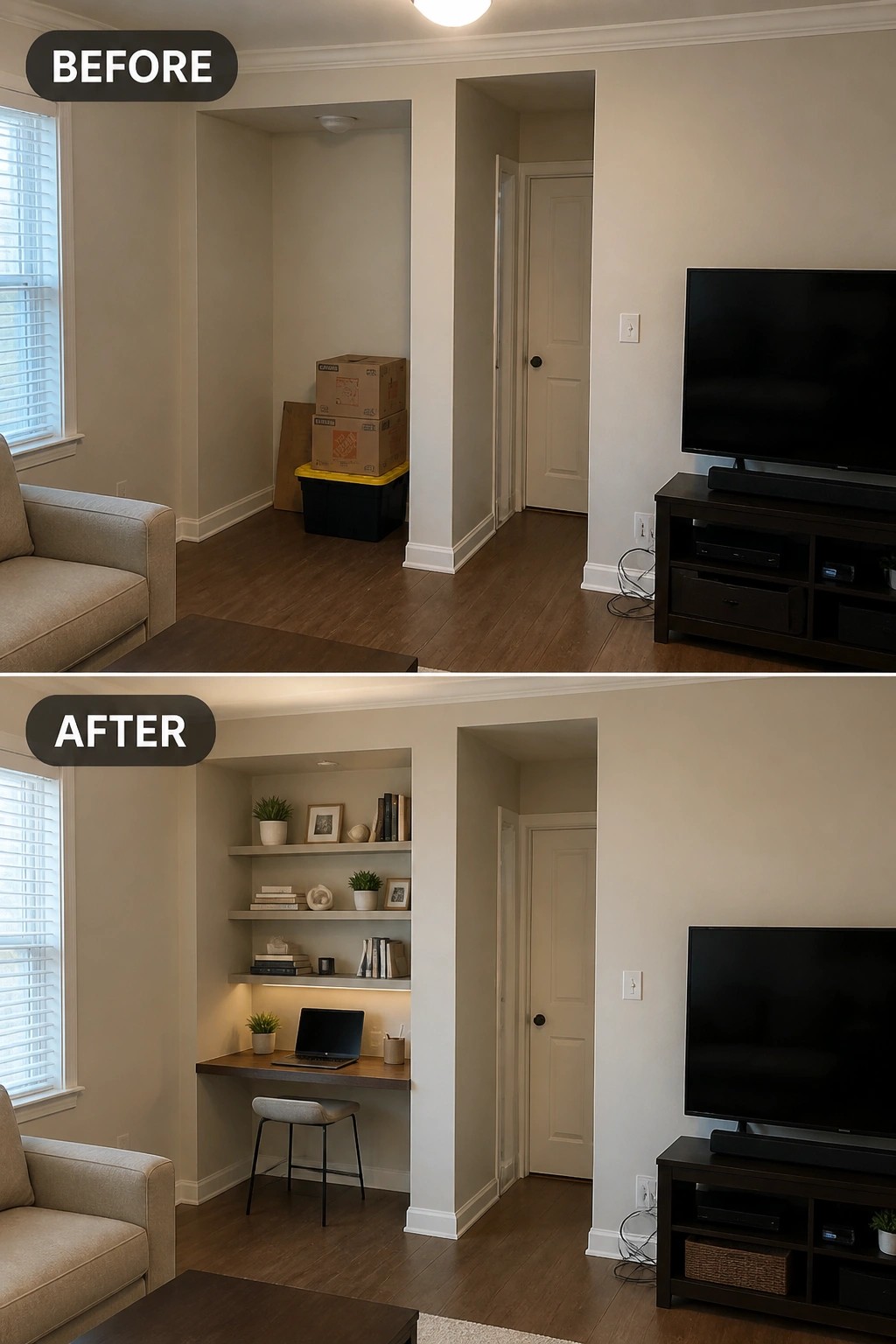
Small apartments often leave odd wall recesses sitting empty or filled with boxes. Here the alcove was fitted with a narrow desk and open shelves that make the space useful for daily work without crowding the living area.
The change works best in tight layouts where a full office will not fit. Keep the desk shallow, add a stool that slides underneath, and use the shelves for a few items only so the area stays open and practical.
Make A Plain Living Room Feel Finished
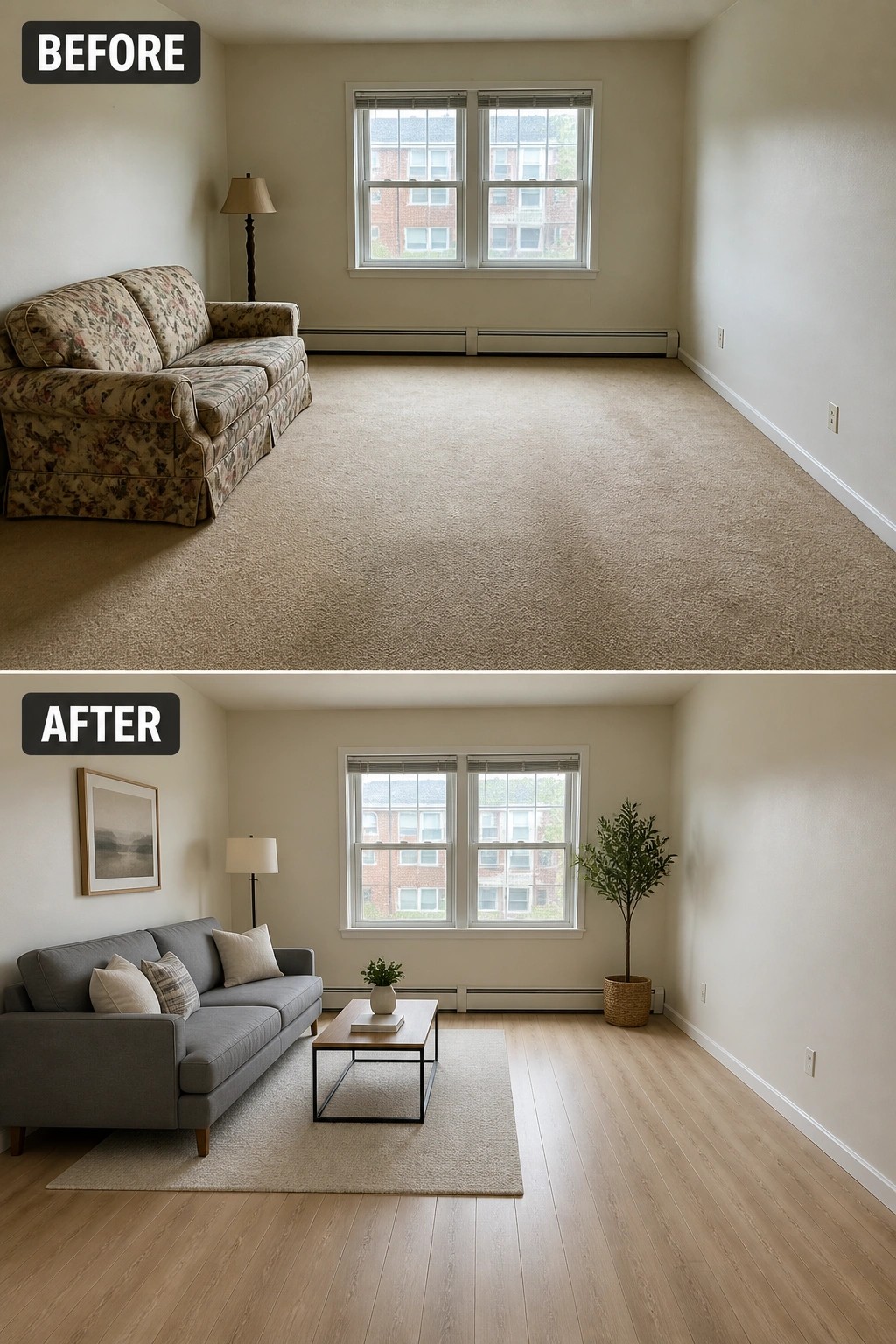
The before photo shows a room held back by wall-to-wall carpet that made everything feel flat and temporary. Switching to hardwood and placing one large rug under the seating area gives the space clear edges and makes the furniture feel like it belongs together.
This idea works especially well in small apartments where the layout is tight. Start with the floor if the current surface looks dated, then choose a rug big enough for all front legs of the sofa and chairs to sit on it. Keep the rest of the room simple so the defined seating zone stays the main focus.
Replace A Heavy Entertainment Center With A Floating Console
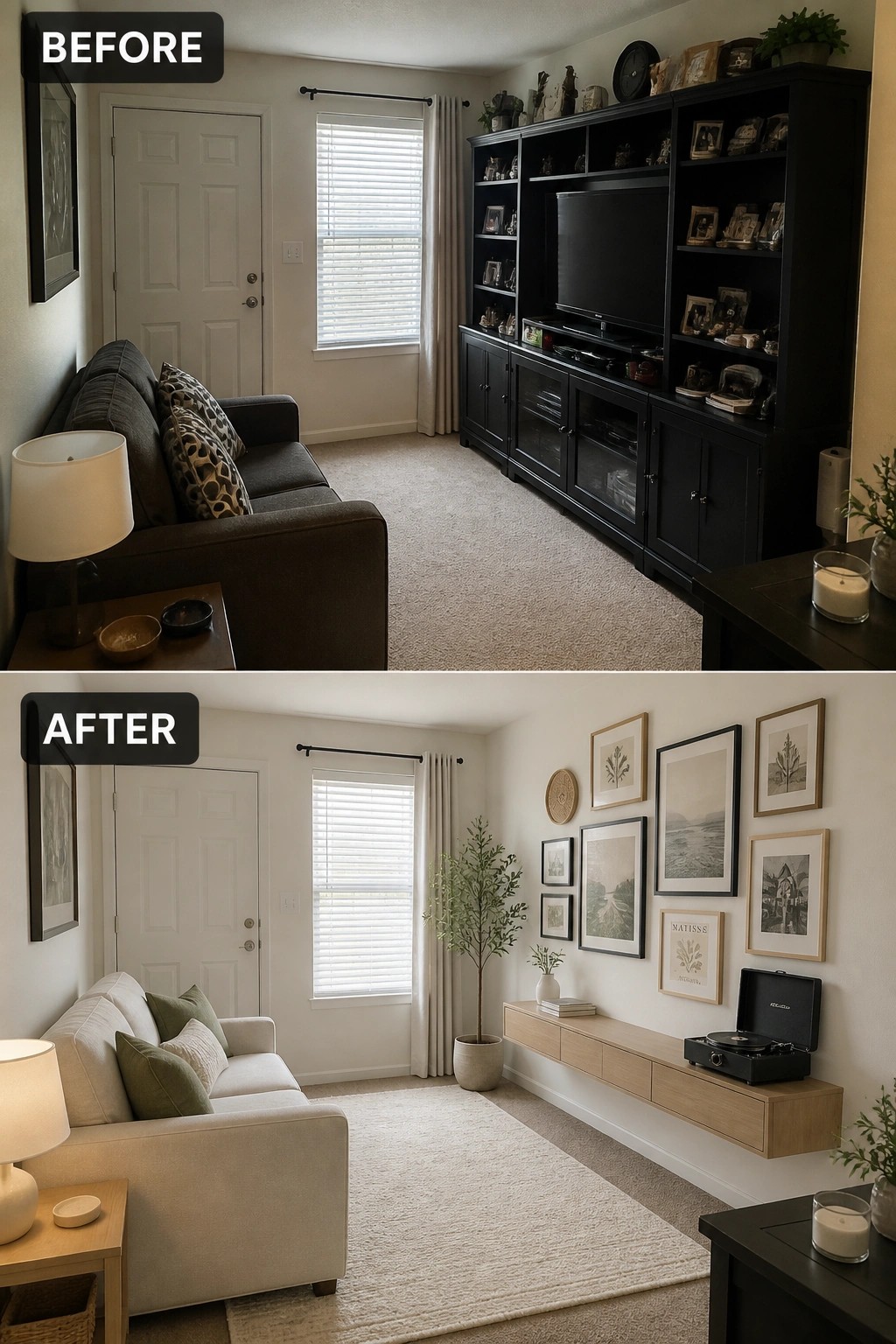
Many small living rooms feel cramped because of one oversized piece of furniture. Removing the tall dark entertainment center and replacing it with a low floating console instantly opens the wall and lets the room breathe.
This idea works well in apartments where you cannot repaint or rearrange the basic layout. Choose a slim console that sits close to the wall, hang a simple gallery above it, and keep the seating light in color so the whole space feels less heavy.
Add A Fold Down Table To Create Dining Space In A Small Living Room
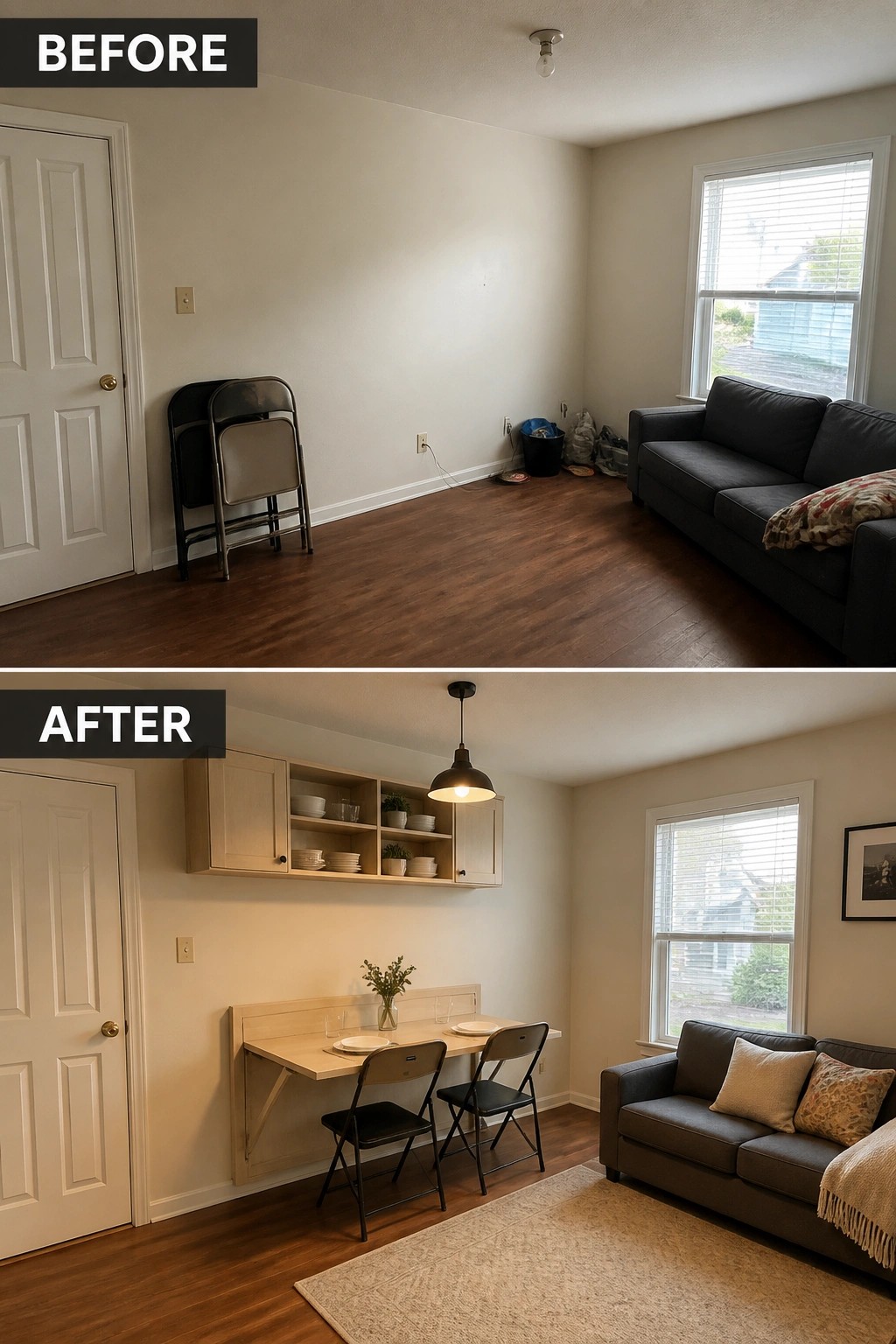
In a tight living room, it is hard to fit a table without losing walking room or making the space feel packed. This room solved it by mounting a simple table to the wall that folds down only when needed, along with a few cabinets above for dishes and glasses.
The same idea works in many apartments where the living room has to do more than one job. Keep the table narrow, use folding chairs that store easily, and add just enough storage above so everyday items stay within reach. It gives the room a clear purpose without taking up permanent floor space.
Add Built-Ins Around The TV For Storage And Display
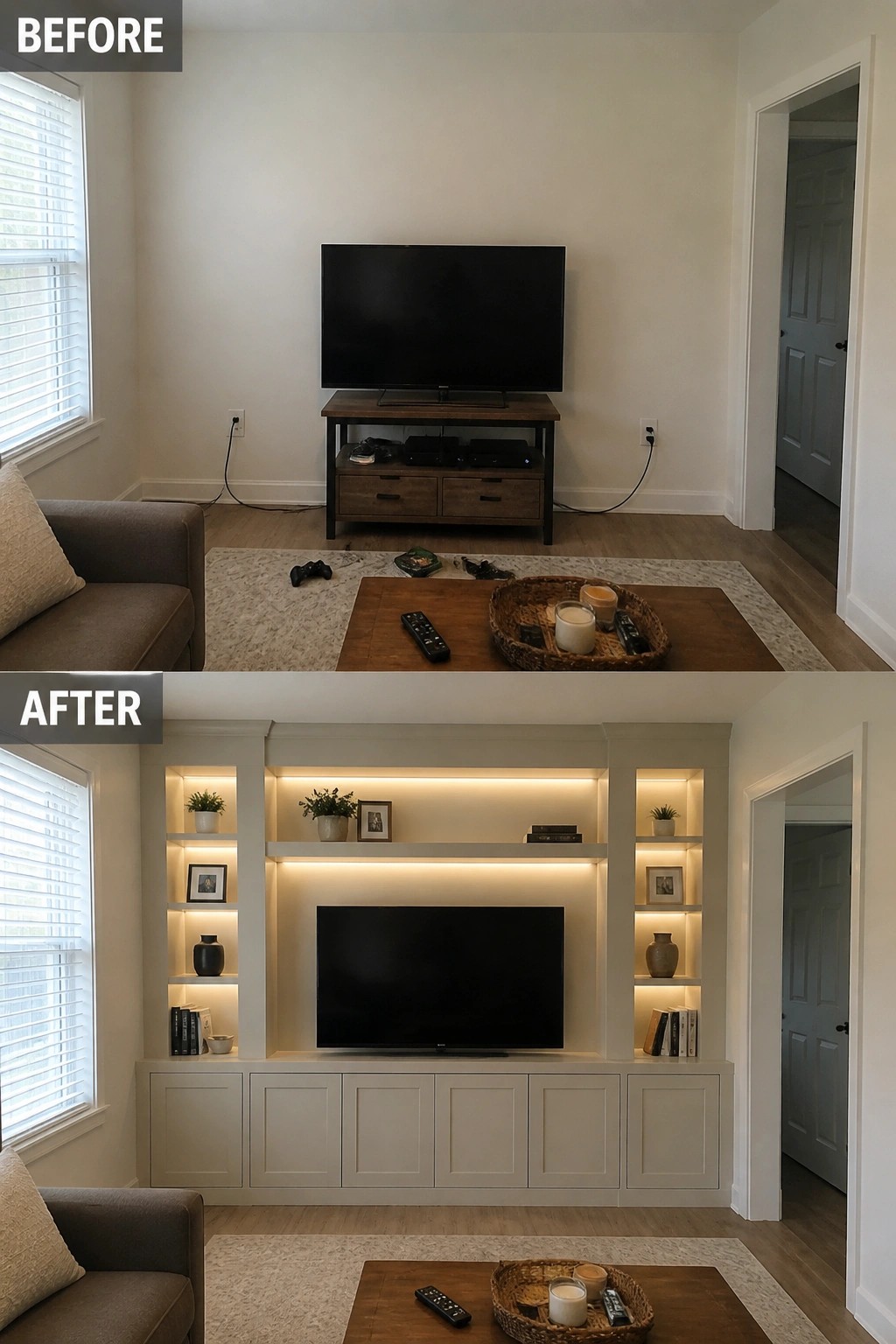
A blank wall with just a TV stand often leaves the room feeling unfinished. Built-in shelving and cabinets on either side create a solid focal point while adding useful storage without eating up floor space.
This approach works especially well in small apartments where every inch counts. Keep the cabinet doors simple and use the open shelves for a few plants or books so the wall stays balanced instead of crowded.
Rearrange Furniture To Improve Flow In A Small Living Room

Small living rooms often feel tighter when furniture sits in the middle of the floor and blocks movement. Shifting the seating to the edges and placing a rug underneath created a clear, open zone that makes the space feel larger and easier to walk through.
This idea works well in apartments where the layout is fixed and square footage is limited. Start by placing the largest piece against a wall, then add a rug to mark the seating area. Keep at least one clear path across the room so daily movement stays simple.
Make A Plain Living Room Feel Finished
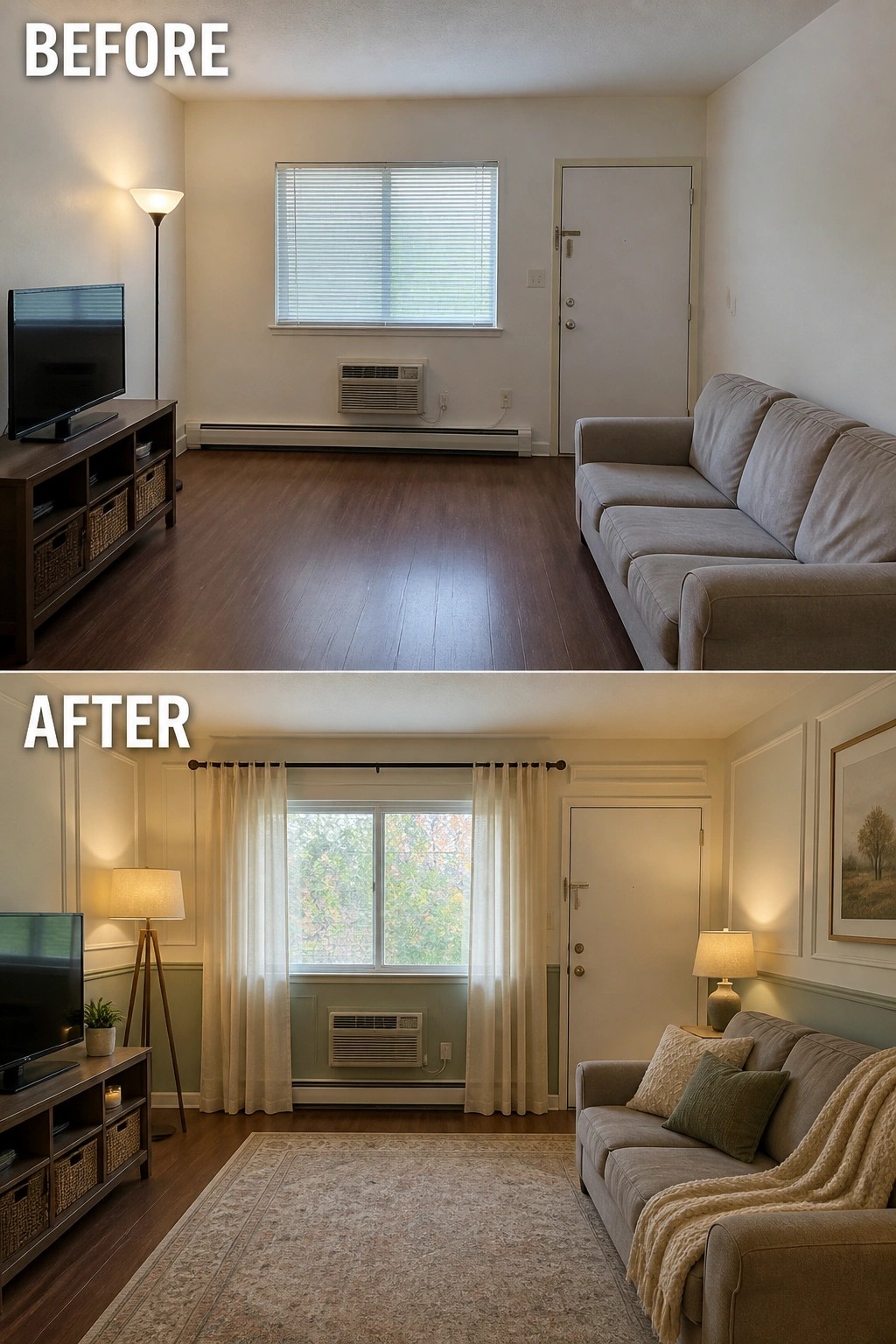
A bare living room often feels cold because it lacks any soft layers on the floor or windows. In this case, adding a large rug and floor length curtains immediately pulled the space together and made the furniture arrangement feel intentional instead of scattered.
This approach works well in small apartments where you cannot change the walls or layout much. Start with one rug sized to sit under the front legs of the main seating pieces, then add curtains that reach the floor to soften the window. Keep the rest of the room simple so the new layers do not compete with each other.
Paint One Wall To Anchor The Seating Area
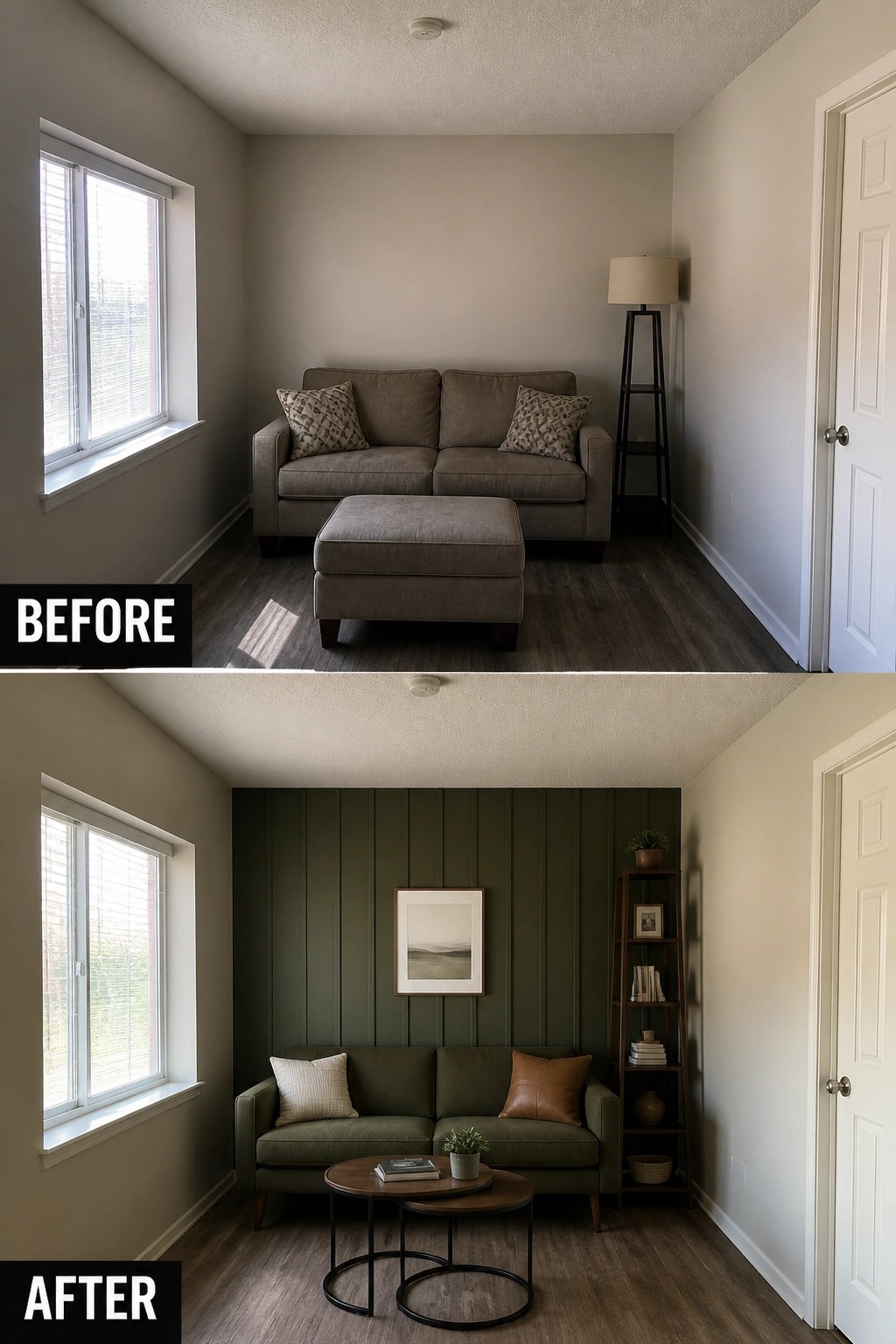
In a small living room with plain walls and basic furniture, painting one wall a deeper shade gives the space a clear center. The before shows a neutral room where the sofa and ottoman sit without much definition. Adding the dark green wall behind the seating pulls everything into place and makes the layout feel more settled.
This idea suits apartments where you want impact without major changes. Keep the other walls light, choose furniture that fits the scale of the room, and add just a few pieces like a narrow shelf or simple tables so the painted wall stays the main feature.
Swap A Shoe Rack For A Low Storage Bench
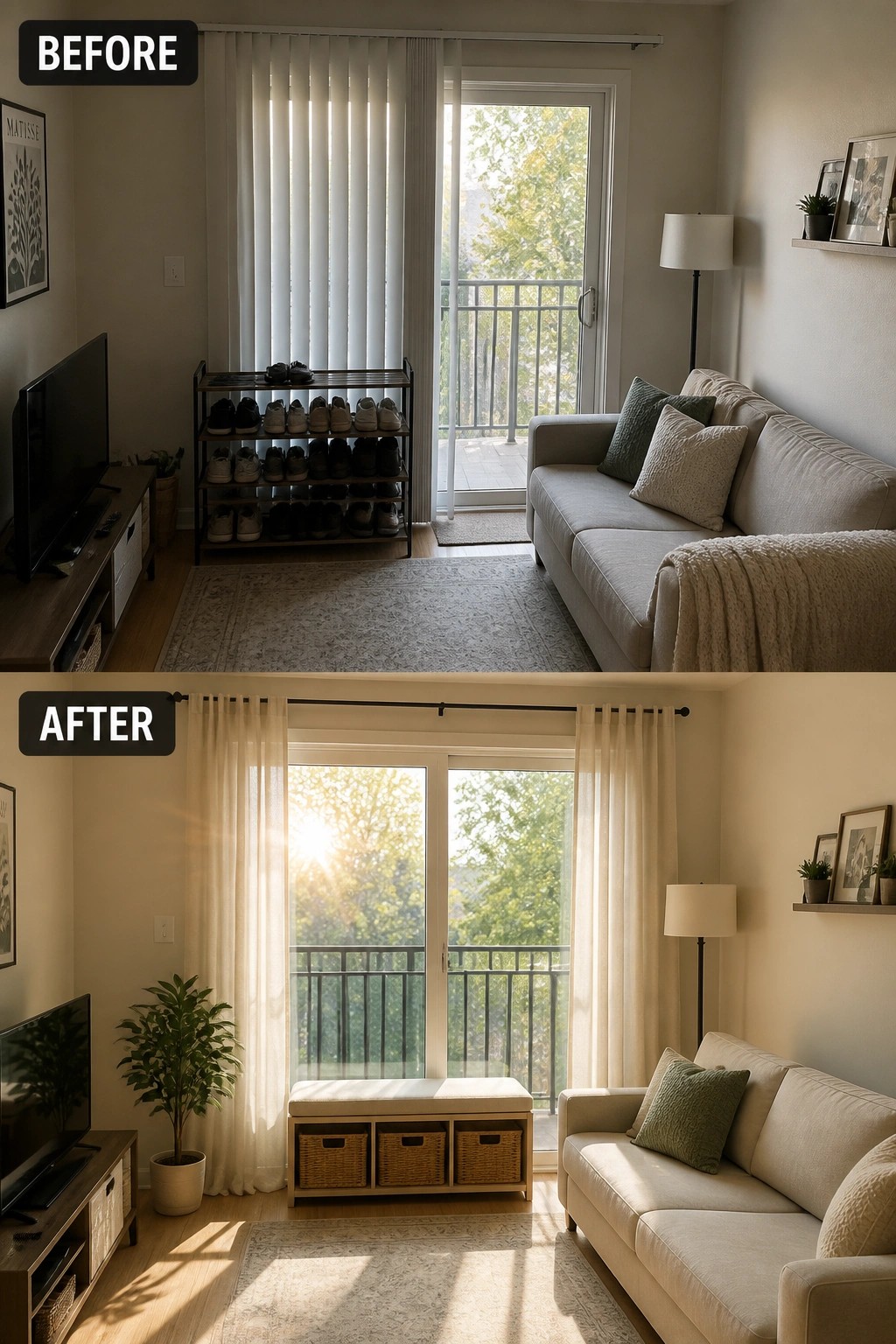
Many small living rooms end up with random storage pushed against the windows because there is nowhere else to put it. In this case the tall shoe rack blocked light and made the sliding door feel smaller. Replacing it with a low bench that tucks baskets underneath opened the view, kept shoes out of sight, and gave the room a calmer line of sight from the sofa.
This idea works well in apartments where the window wall is also the only long wall. Keep the bench no higher than the sill so it does not compete with the glass, and choose curtains that hang just outside the frame rather than inside it. The change is simple but it frees the window to do the work of making the room feel larger.
Layer Lighting To Make A Small Living Room Feel Cozier

A single overhead bulb often leaves a small living room feeling flat and cold. In this case the room shifted from that basic setup to one with wall sconces, a table lamp, and a lit shelf, which instantly made the space feel warmer and more inviting without any major construction.
This approach works well in apartments where you cannot change the layout much. Start with one or two plug-in lamps near seating areas, then add a simple wall light if possible. Keep the furniture scale modest so the extra light can actually reach the corners.
Scale Down Furniture In A Small Living Room
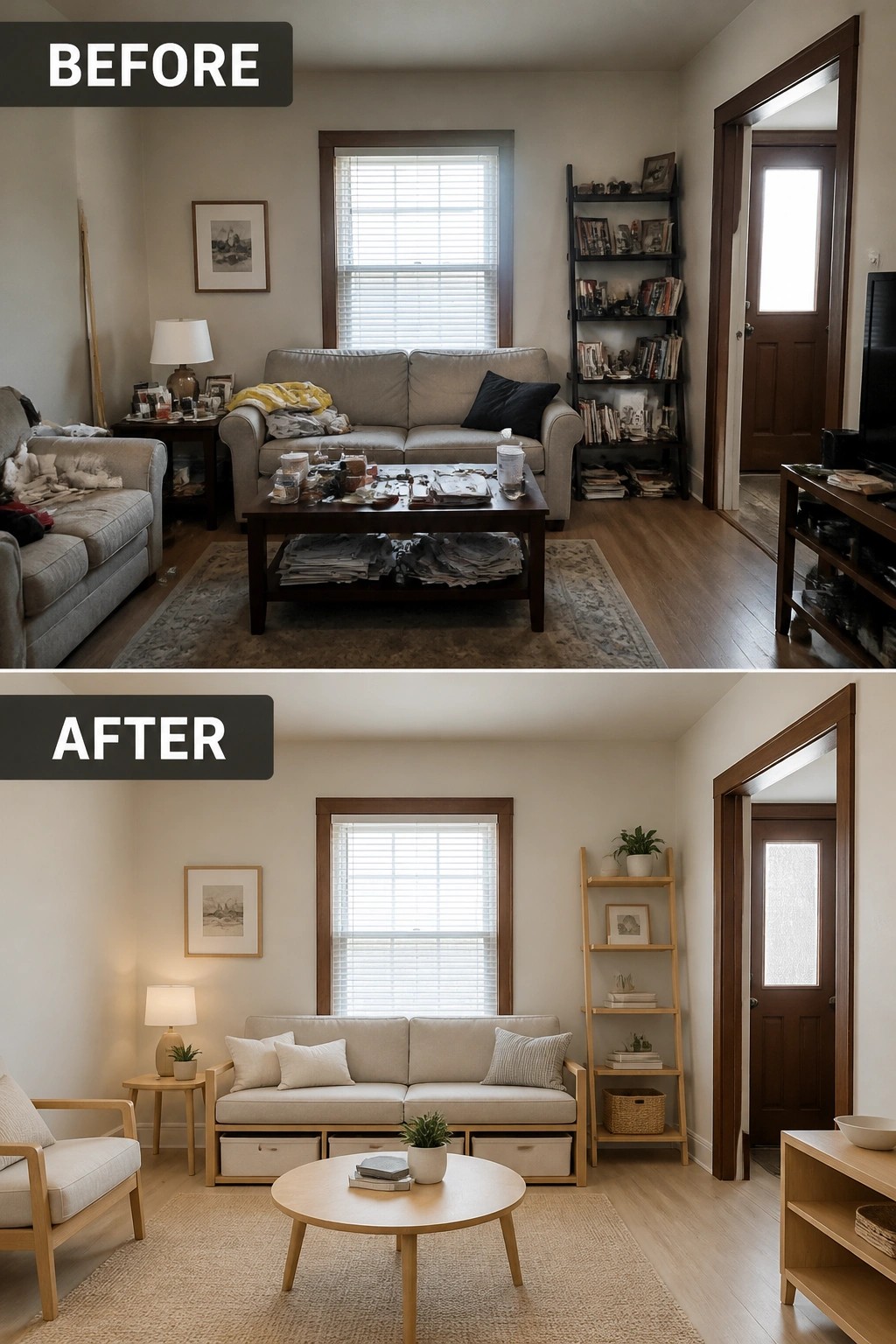
The before photo shows how a few oversized pieces and a cluttered coffee table can make even a decent-sized room feel tight and heavy. Switching to a smaller scale sofa, a round light wood table, and a couple of slim chairs instantly creates more breathing room and better flow.
This approach works especially well in apartments where every inch counts. Start by measuring your space and removing anything that blocks movement, then pick furniture that sits lower and leaves clear paths. Storage bins tucked under the sofa keep daily items out of sight without adding extra cabinets.
Use A Murphy Bed To Free Up Floor Space
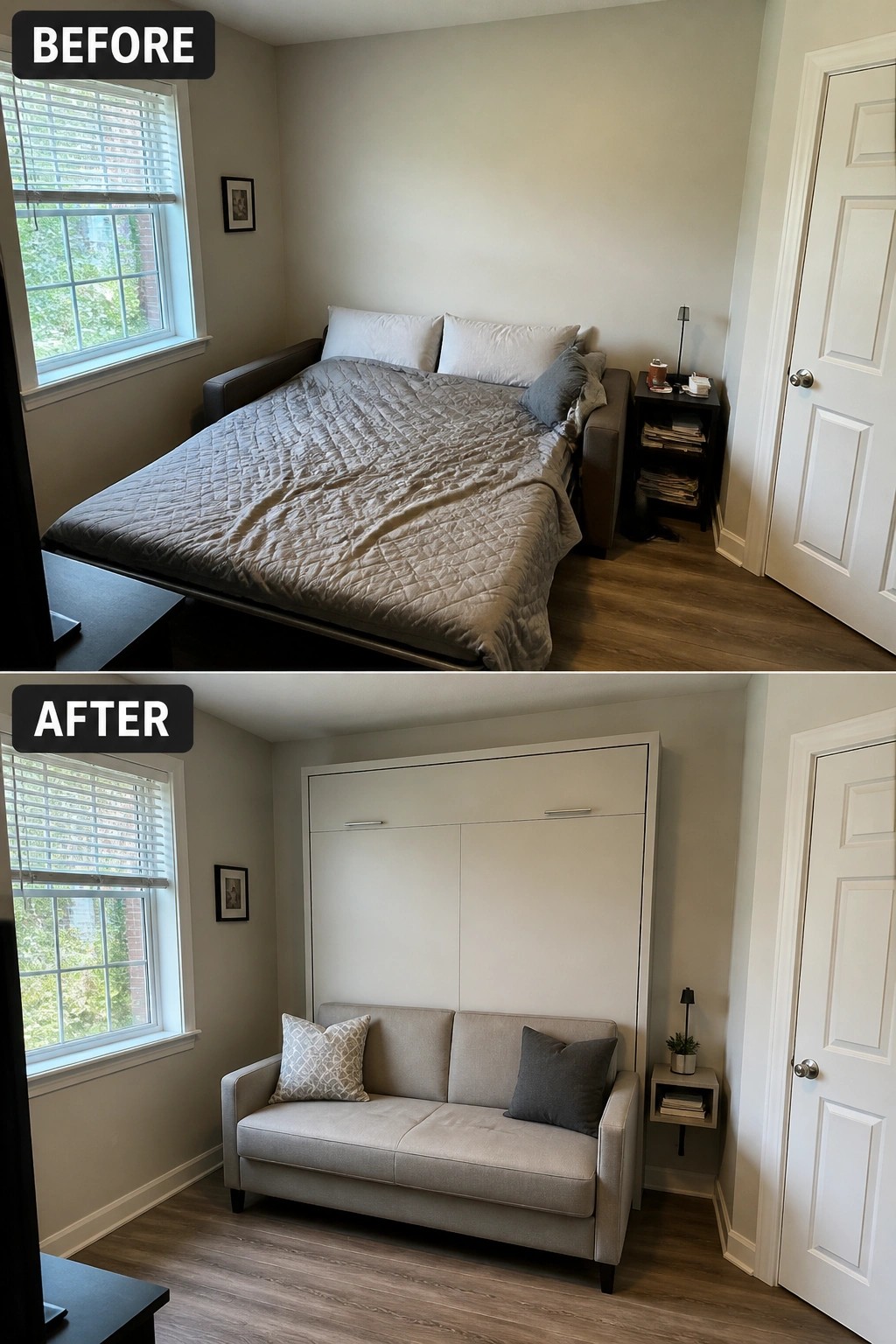
A Murphy bed lets you keep a real mattress without losing the whole room to it. In the before photo the bed sat out all day and dominated the layout. Once it folds up the room suddenly has room for a sofa and normal furniture, which makes the space feel much more usable in a small apartment.
This works best in studios or one bedroom units where you need the room to handle both sleeping and living. Keep the cabinet style simple so it blends with the walls, and make sure the sofa is scaled to leave walking room once the bed comes down. The goal is function first, not trying to hide the mechanism completely.
Frequently Asked Questions
Q: How do I fit seating into a living room that feels more like a walkway? A: Slide the main sofa along the longest wall and angle two lightweight chairs toward it from the opposite side. Leave the center open so people can move through without stepping over feet or tables. A slim side table between the chairs gives everyone a spot for drinks without eating up floor space.
Q: What works for storage when there are no closets or built-ins nearby? A: Grab a couple of lidded ottomans that double as seats and hide blankets or books inside. Slide flat baskets under the coffee table for magazines and chargers. Stick to just two or three of these pieces so the room stays open instead of crowded.
Q: How do I stop the room from feeling dark with only one small window? A: Hang a mirror directly across from the window to bounce light deeper into the space. Swap heavy curtains for sheer ones that let daylight through while still giving privacy. Add one floor lamp in a corner to fill shadows at night without needing extra tables.
