
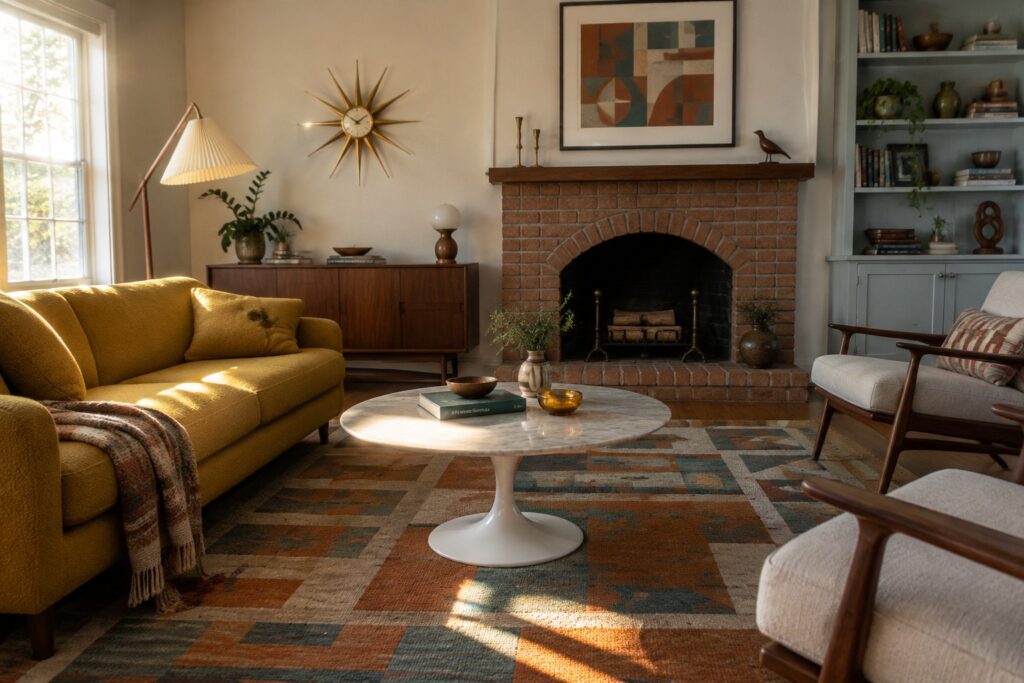
Mid-century modern rooms can feel crisp without becoming stiff, especially when patterned fabrics soften the clean lines of the furniture.
I notice the textiles first, since a geometric rug or a pair of graphic cushions can set the room’s rhythm before the larger pieces come into focus.
The best spaces balance those bold patterns with comfortable seating, clear walkways, and enough quiet surfaces for the eye to rest.
I’d be careful not to match every pattern too closely, because a little variation often makes a living room feel collected rather than staged.
These rooms offer details worth adapting, whether you start with one patterned accent or rethink how color and furniture work together.
Let the Rug Set the Color Scheme
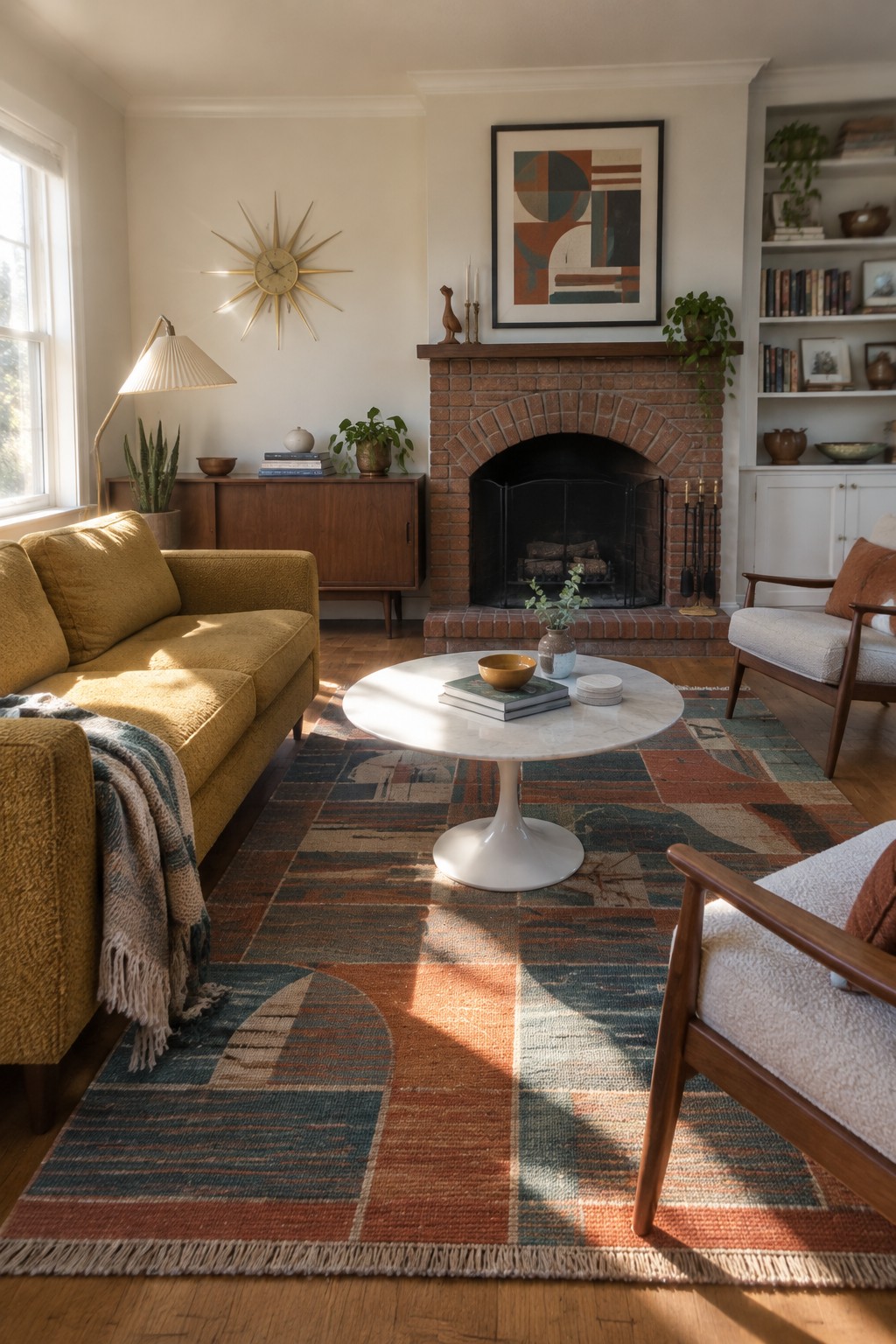
A geometric rug can give a mid-century living room its color direction without making the rest of the decor feel busy. Here, the muted rust and blue-green pattern brings color to the seating area while the larger pieces stay fairly simple.
This approach works well in a room with wood furniture and neutral walls. Choose a rug with a few colors already used elsewhere, then repeat just one or two of them in smaller accents. A large, busy pattern can overwhelm a tight room, so keep the surrounding furniture understated.
Use Geometric Textiles to Bring Pattern Into a Mid-Century Room

A geometric rug is an easy way to bring pattern into a mid-century living room without changing the furniture. Its repeating shapes give the floor a clear design, while a leather sofa keeps the overall look relaxed.
Choose a rug with a few muted colors that work with the wood and upholstery already in the room. In a smaller space, a simpler pattern can help the floor feel less busy.
Use Geometric Textiles To Add Pattern
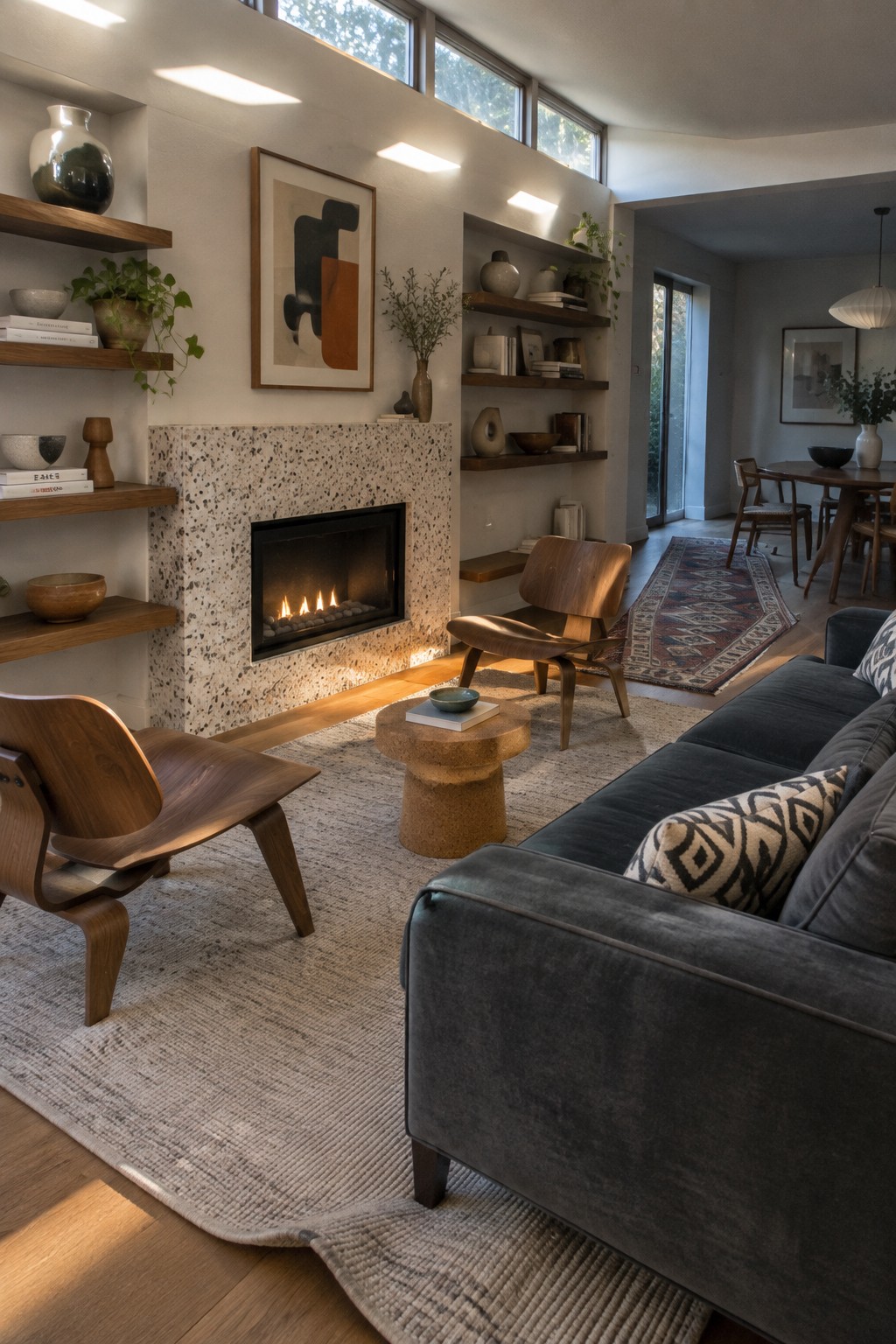
Geometric textiles are an easy way to bring pattern into a mid-century living room without changing the furniture or finishes. A patterned pillow on a simple sofa can be enough to make the room feel more connected to the period.
Keep the other fabrics fairly quiet so the geometric design has room to stand out. This works especially well with clean-lined wood furniture and neutral rugs; just choose a pattern that feels in scale with the sofa and chairs.
Geometric Pillows Add Pattern to a Curved Sofa
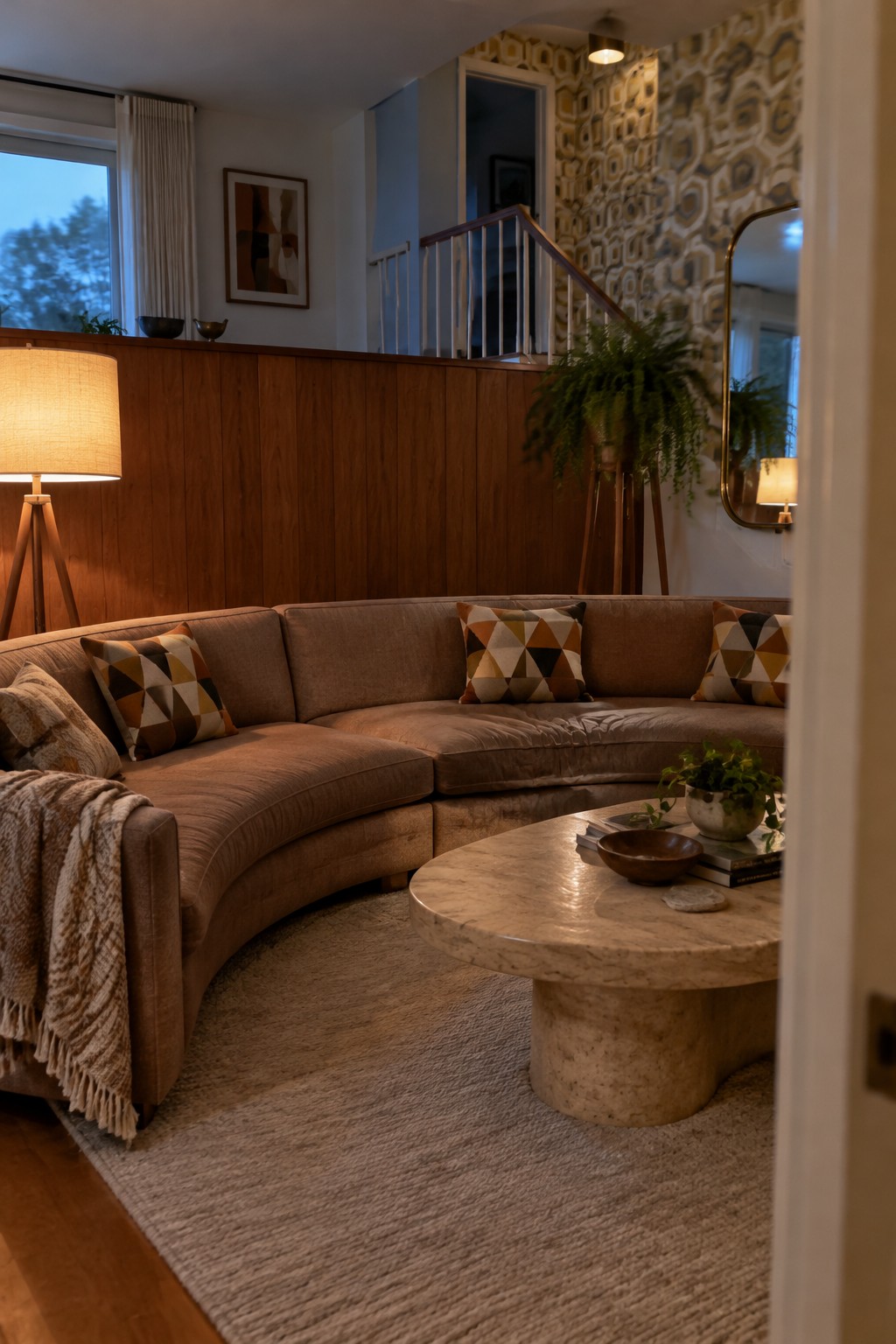
Geometric textiles are an easy way to bring mid-century style into a living room without changing the main furniture. On a curved sofa, a few patterned pillows break up the broad stretch of upholstery while keeping the seating comfortable and relaxed.
Choose pillows that repeat two or three colors already in the room, and let the pattern stand out against a simple sofa fabric. This works especially well in a neutral space. Keep the rest of the patterns quiet so the pillows don’t compete with each other.
Use a Patterned Rug to Tie the Seating Area Together
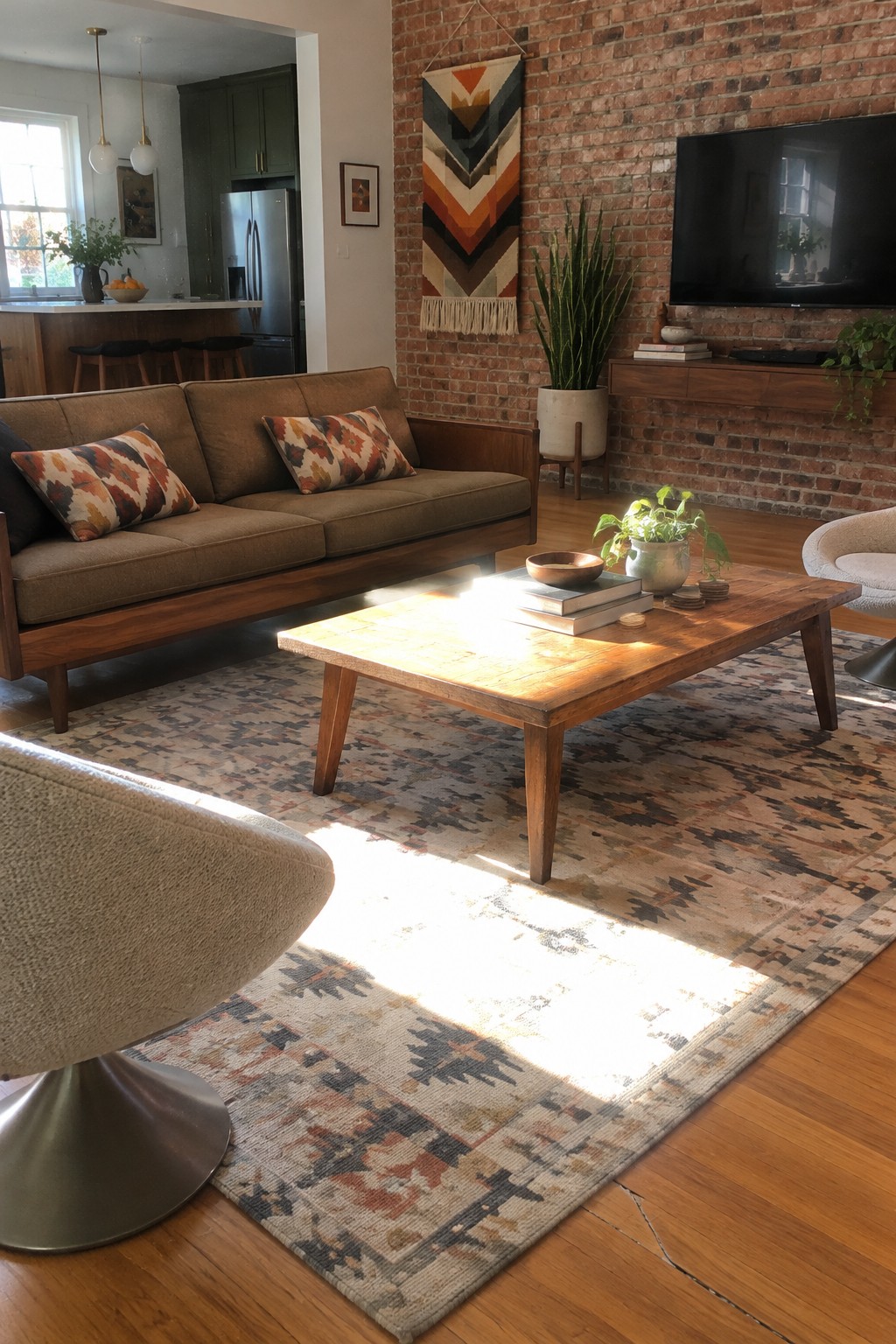
A geometric rug is an easy way to give a mid-century living room pattern without making every surface compete. Here, the muted shapes connect the sofa’s printed cushions to the warm wood furniture, while the rug’s larger scale keeps the floor from feeling too busy.
This approach works well when the main furniture is fairly simple and you want the room to feel collected rather than matched. Choose a rug with a few colors already used in the room, and keep the rest of the patterns smaller or more limited.
Use a Geometric Rug to Define the Seating Area
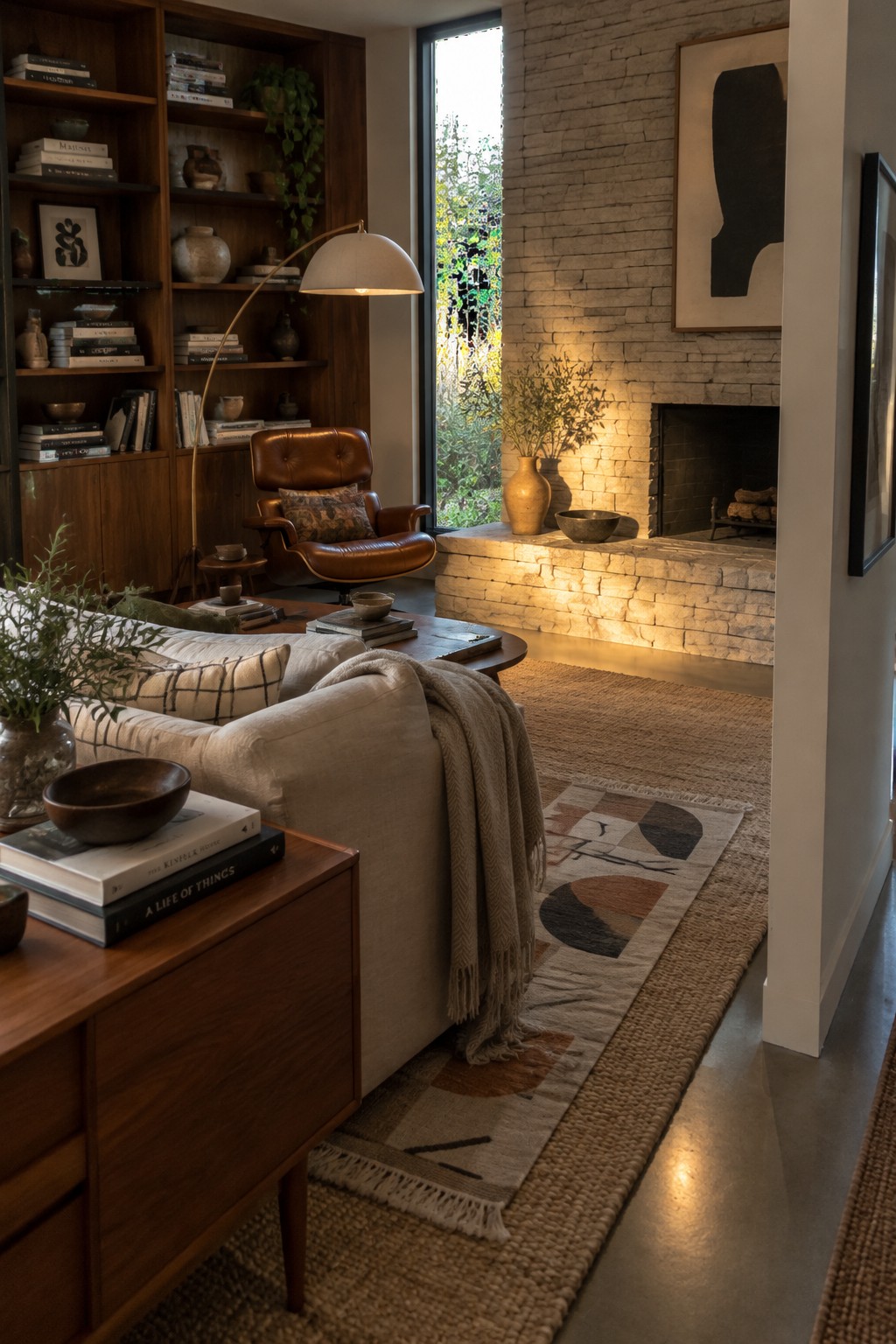
A patterned rug can give a mid-century living room a clear center without making the furniture feel too formal. Here, the smaller geometric rug sits over a larger woven one, so the seating area feels distinct while the room keeps its relaxed look.
This approach works well in open living spaces where you want to mark out a conversation area. Choose a rug with a few colors already used in the room, and leave enough of the larger rug visible to make the layering look intentional.
Use Geometric Textiles to Tie the Seating Area Together

Geometric textiles can bring color and pattern into a mid-century living room without making it feel busy. Here, the rug’s large shapes pick up the colors in the sofa pillows, so the seating area feels connected.
This works well when the furniture is fairly simple and you want the rug to do more than cover the floor. Try repeating one or two colors in the cushions, and keep the patterns varied in scale so they don’t compete.
Use Built-In Shelving for a Mid-Century Look

Floor-to-ceiling wood shelving is a practical way to give a living room a classic mid-century feel. Open shelves keep books and a few favorite objects easy to reach, while the wood brings a natural tone to the room.
This works especially well along a long, uninterrupted wall. Keep some shelves partly open rather than filling every space, so the display stays useful without becoming cluttered.
Let a Geometric Sofa Cover Set the Tone
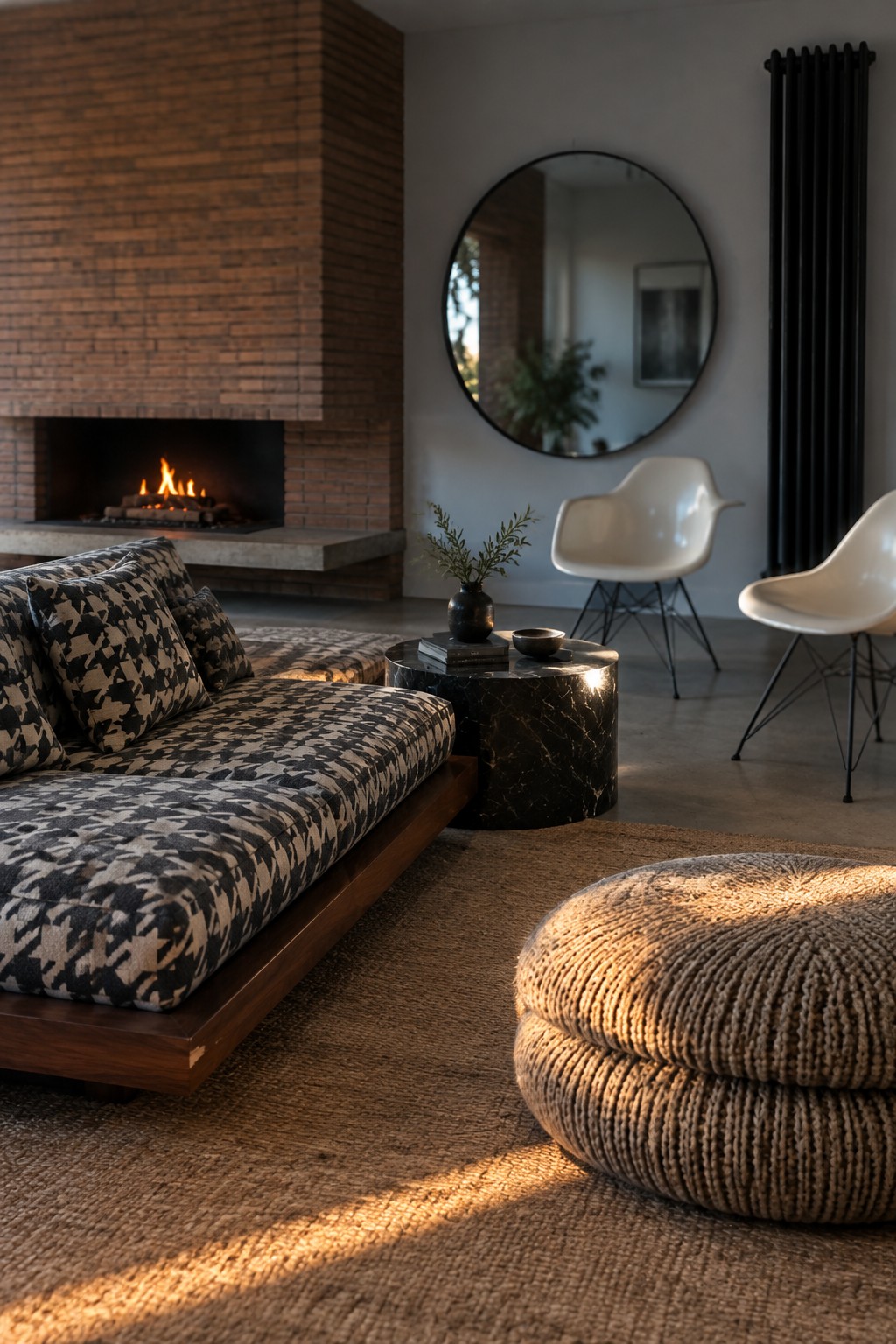
A patterned sofa can be the main source of geometry in a mid-century living room. The dark, repeating shapes on this low wood-framed sofa bring pattern into the space without needing several competing prints.
This approach works well when the rest of the room stays fairly simple. Try a geometric upholstery fabric in a few muted colors, then keep nearby pieces in solid finishes so the pattern remains easy to live with.
Choose Geometric Pillows for a Curved Sofa

A curved sofa can make a seating area feel less formal, and geometric pillows give it a clear mid-century look. The simple shapes stand out against the sofa’s solid coral fabric without needing a busy pattern on every surface.
Try two or three pillows in a small mix of geometric prints, keeping their colors related to the sofa and nearby furnishings. This works especially well when the sofa has a rounded shape, but leave some open space so the cushions don’t crowd the seat.
Build Geometric Pattern Into the Seating
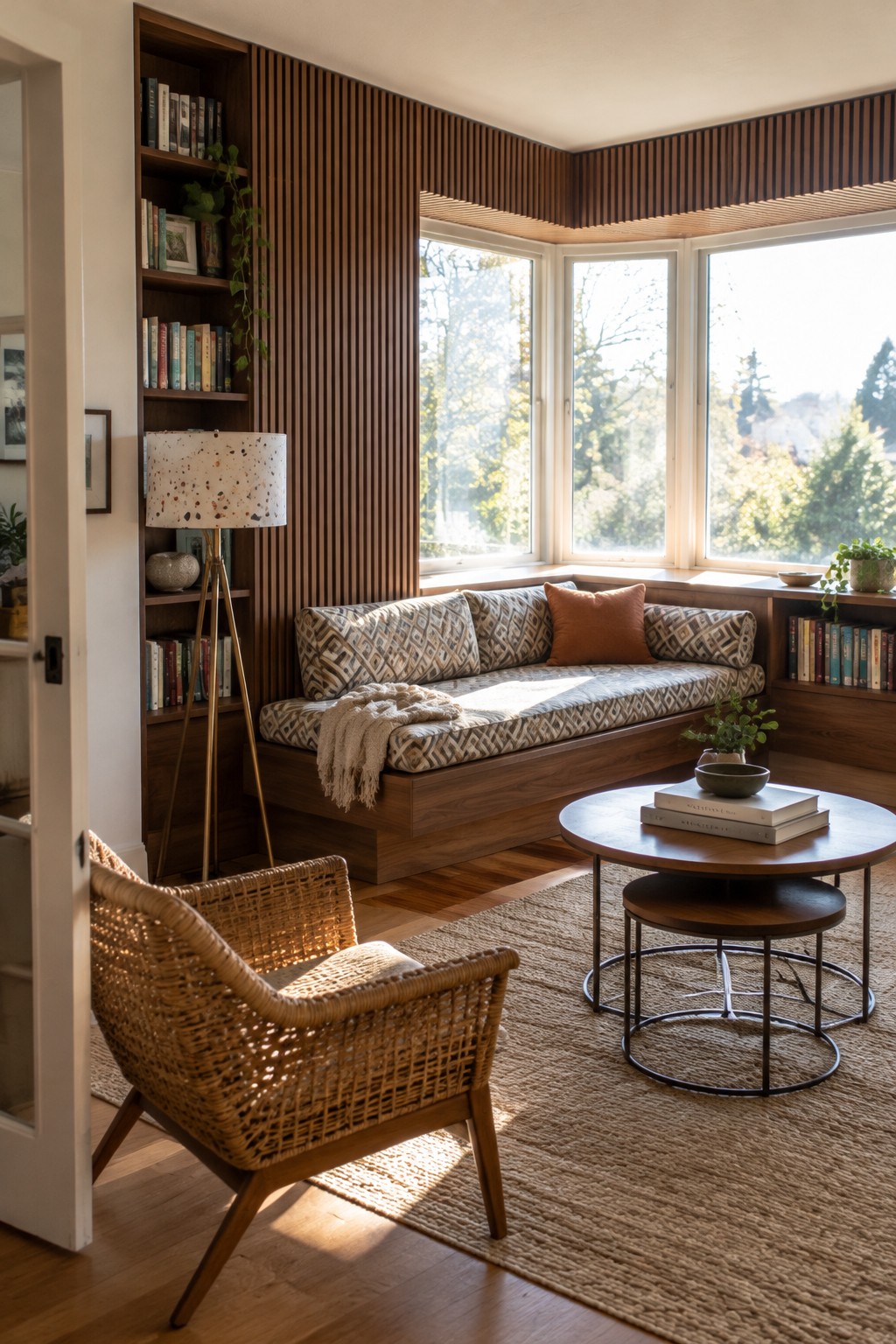
Geometric upholstery can give a mid-century living room pattern without relying on lots of small accessories. Here, the sofa’s repeating design makes the built-in seating feel like a clear part of the room.
For a similar look, choose a fabric with a simple, repeating shape and keep the surrounding pieces fairly quiet. It works especially well on a sofa or chair that gets regular use, since the pattern can disguise everyday wear.
Let Geometric Pillows Bring Pattern to the Seating Area
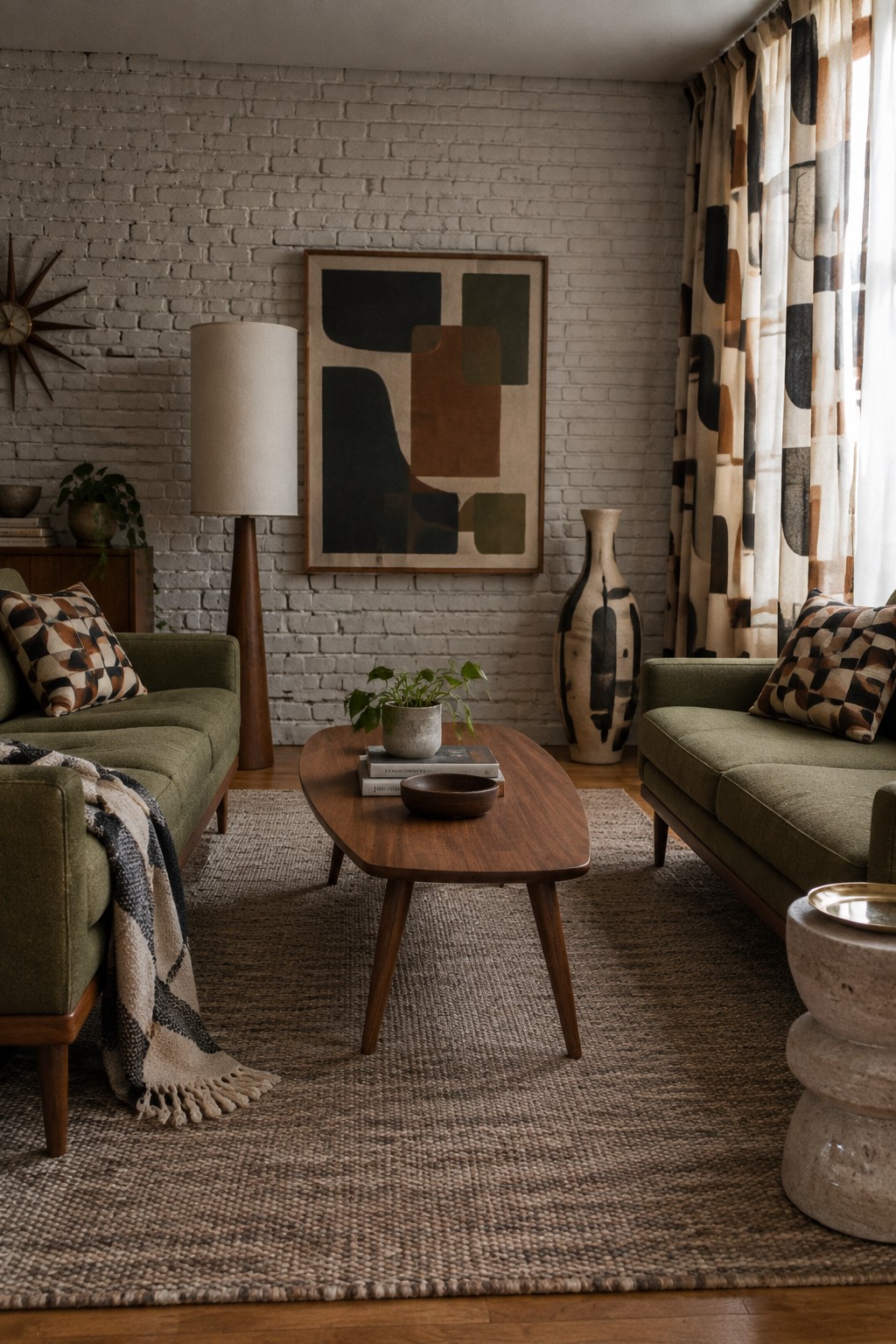
Geometric textiles are an easy way to add pattern to a mid-century living room without changing the larger pieces. The patterned pillows give the green sofas a livelier look while keeping the room’s earthy colors in view.
Try a pair of pillows on a solid-color sofa, and repeat just one or two colors elsewhere in the room. A throw can carry the pattern further, but too many competing prints may make the seating area feel busy.
Use Geometric Pillows to Bring Pattern to a Curved Sofa
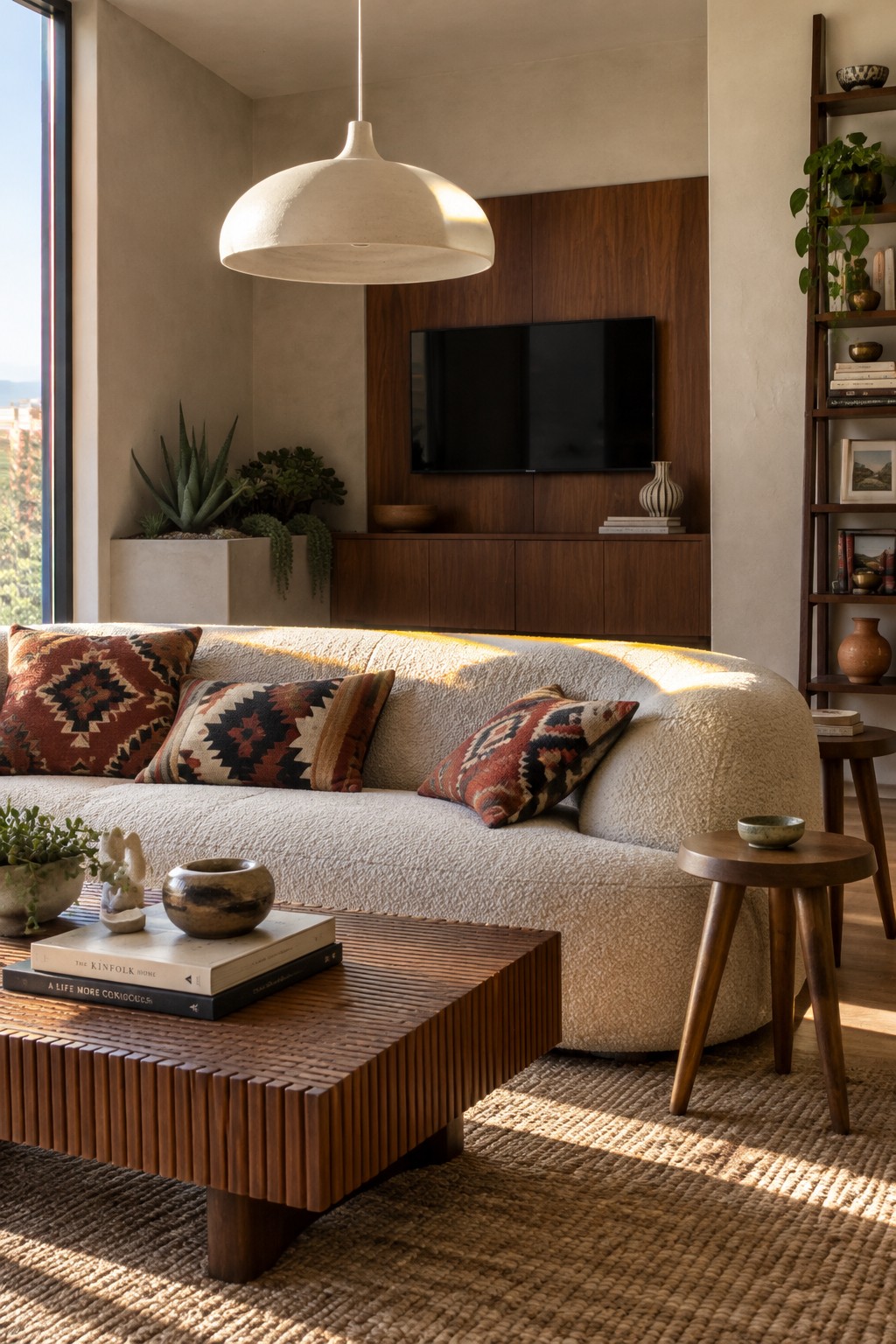
Geometric pillows are an easy way to bring pattern into a mid-century living room without covering every surface. On a curved sofa, their sharp shapes stand out against the rounded form and give the seating a more casual, collected look.
Choose a few pillows in colors that already appear in the room, and vary their patterns or sizes slightly. This works especially well when the sofa is a simple neutral, so the textiles can add interest without making the seating feel busy.
Use a Patterned Rug to Bring the Seating Area Together

A geometric rug can give a mid-century living room a clear center without making the furniture feel too formal. Here, the warm, varied pattern works well with the curved chairs and keeps their bold upholstery from taking over.
This approach suits a room with a few strong furniture pieces and plenty of open floor around them. Choose a rug large enough for the seating to feel connected, and let its colors guide smaller accents rather than adding more competing patterns.
Use Geometric Textiles to Add Color

Geometric textiles are an easy way to bring color into a mid-century living room without changing the larger pieces. Here, the rug’s rust, ochre, and cream pattern gives the seating area a clear color scheme, while the leather sofa stays simple.
Start with a rug you like, then repeat one or two of its colors in pillows or smaller accents. This works especially well when the furniture has clean lines and solid upholstery. Keep the other patterns quieter so the rug can stand out.
Use Geometric Pillows on a Simple Sofa

Geometric pillows are an easy way to bring pattern into a mid-century living room without making the whole space feel busy. Against a plain sofa, a few bold shapes stand out and give the seating a clear focal point.
Try this on a wood-framed sofa or a simple upholstered one, and keep the rest of the textiles fairly quiet. The black-and-cream cushions here show how a limited color palette can make the pattern easy to live with.
Use Geometric Pillows on a Solid Sofa
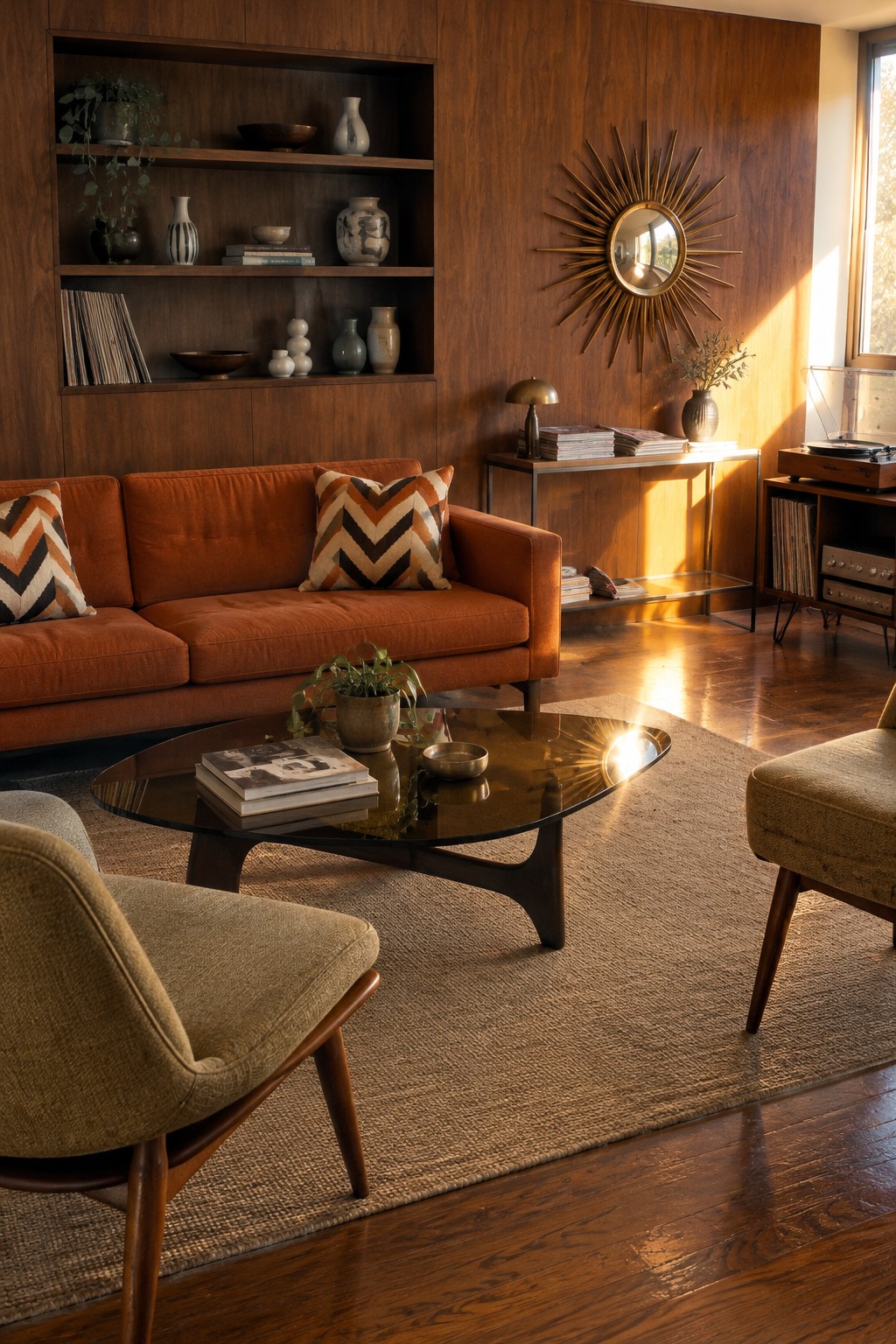
A solid-colored sofa is an easy place to bring in geometric pattern. The rust upholstery here keeps the seating simple, while the zigzag cushions add contrast without covering the whole sofa in print.
Try this on a plain sofa when you want a little more character but still want the room to feel settled. Choose cushion colors that already appear elsewhere in the space, and keep the pattern to a few pieces so it stays easy to live with.
Use a Geometric Rug to Add Color

A patterned rug is an easy way to bring color into a mid-century living room without changing the main furniture. Here, the muted blue and ochre design gives the seating area a more personal feel while still working with the gray sofa.
This approach suits a simple room where a large pattern can have some space to show. Pick a rug that repeats one or two colors from the pillows, and keep the other patterns fairly quiet.
Use a Geometric Throw to Update Simple Seating

A geometric textile can bring pattern into a mid-century living room without making the furniture feel busy. Here, a patterned throw stands out against a plain chair, while the room’s concrete and wood keep the overall look restrained.
Try this on a simple armchair or sofa when you want to introduce color without reupholstering. A throw is easy to change, so choose a pattern that picks up one or two colors already in the room.
Choose Geometric Pillows for a Neutral Sofa

Geometric pillows are an easy way to bring pattern into a mid-century living room without making the whole space feel busy. On a simple cream sofa, a few cushions in warm, muted colors stand out while the rest of the seating stays calm.
Try two or three pillows in related colors, but vary the shapes in the pattern so they do not look like a matching set. This approach works well when you want color and character without committing to a patterned sofa or rug.
Let the Rug Define the Seating Area

A large, plain rug can give a mid-century seating area a clear boundary without competing with geometric textiles. Here, the neutral weave lets the checked pillows stand out while keeping the floor pattern from feeling too busy.
Choose a rug large enough for the main furniture to sit partly on it. This works well in open living rooms, especially when you want to separate the seating area from a nearby walkway.
Let Geometric Pillows Brighten Neutral Seating
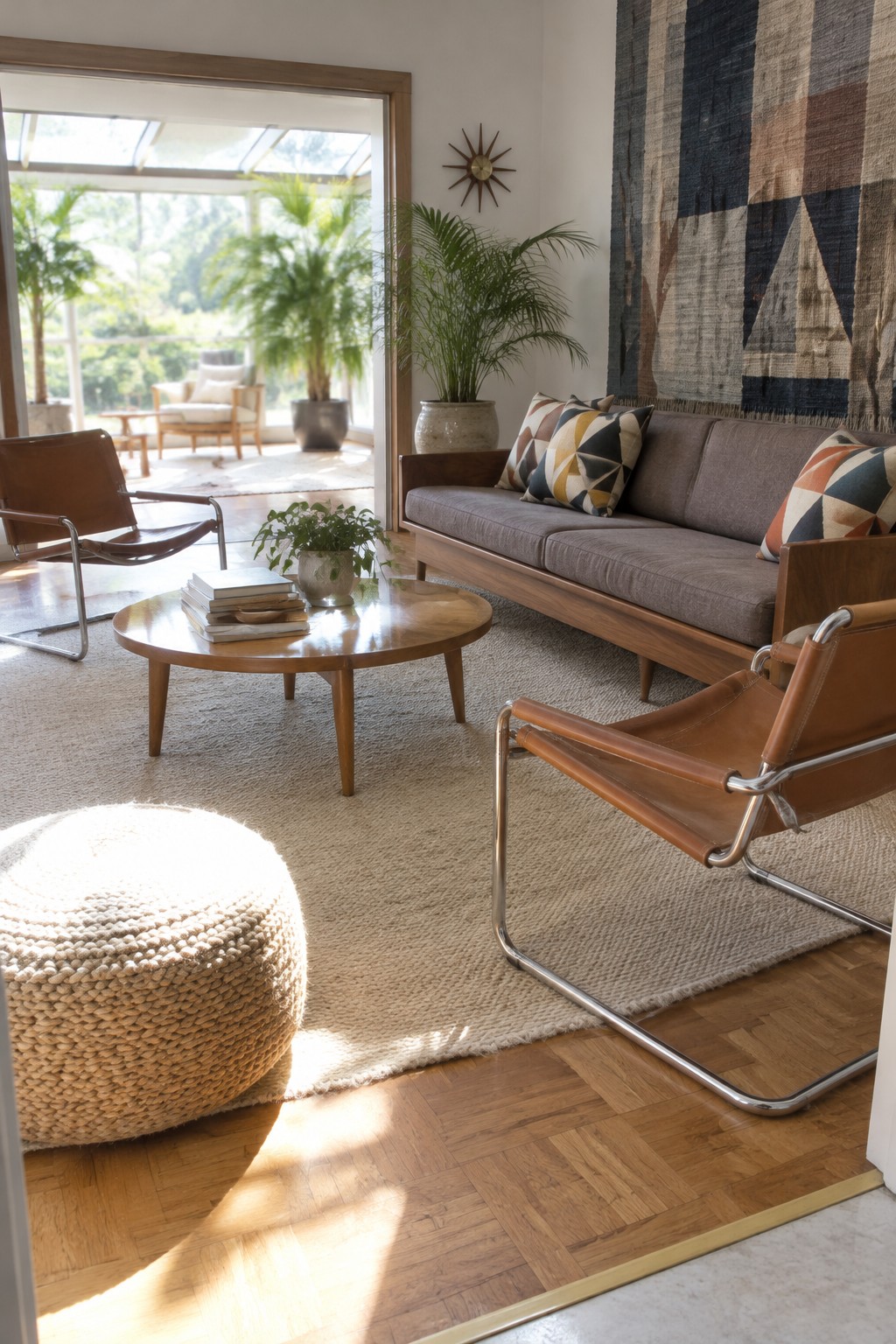
A neutral sofa is an easy place to use geometric pattern without making the whole room feel busy. Here, the pillows bring in blocks of color and angular shapes while the plain upholstery gives the eye somewhere to rest.
Try this on a simple sofa when you want pattern that’s easy to change later. Choose a few pillow colors that also appear elsewhere in the room, and keep the sofa itself fairly quiet.
Use Geometric Pillows to Add Pattern to Solid Seating
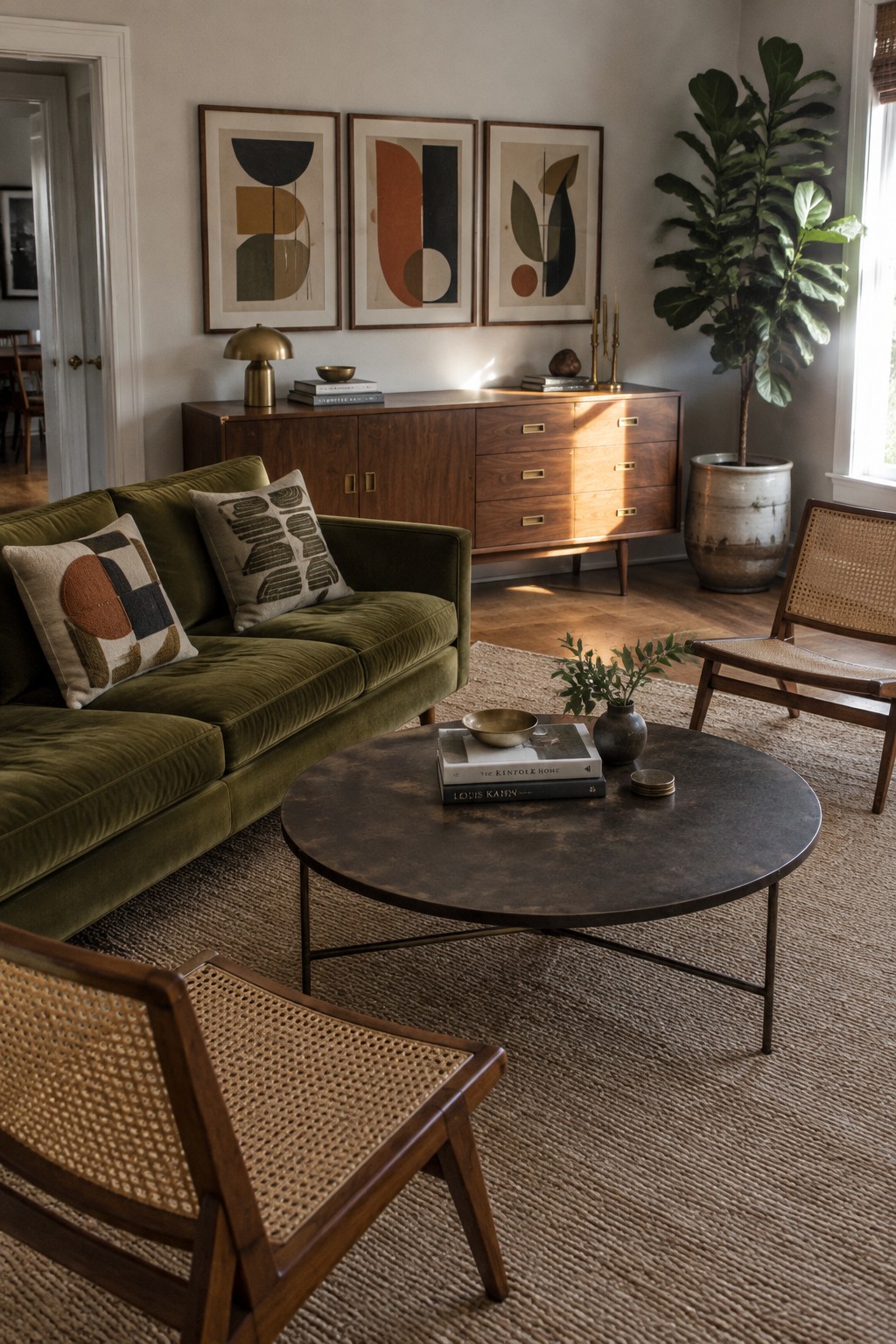
Geometric pillows are an easy way to bring pattern into a mid-century living room without making the whole space feel busy. On a solid olive sofa, a couple of cushions in contrasting shapes and earthy colors give the seating a little more character.
This works especially well if you want to keep larger pieces simple and let textiles carry the pattern. Try two or three pillows in related tones, and vary the scale of the designs so they don’t all compete.
Use a Patterned Rug to Add Color
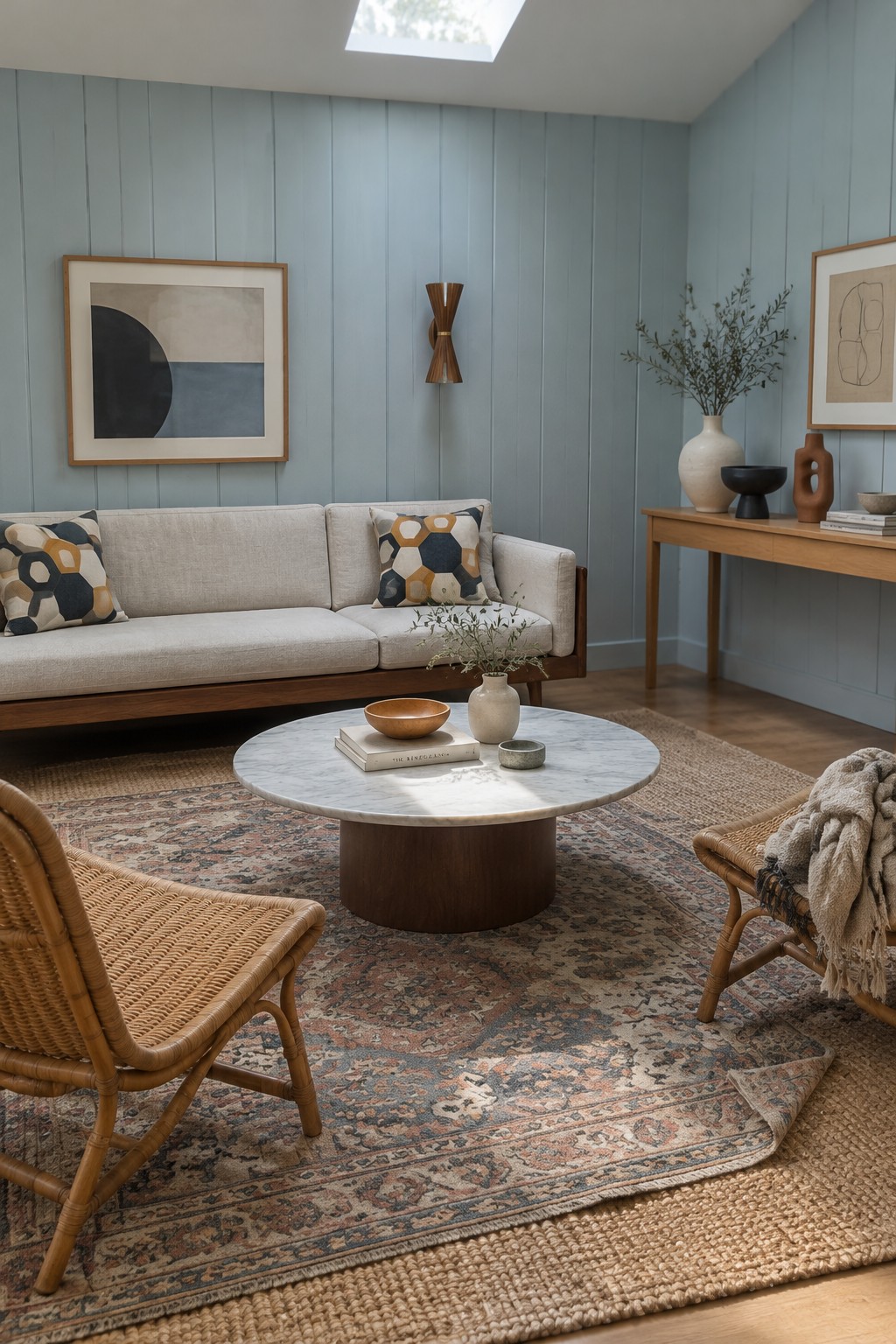
A geometric rug can bring color and pattern into a mid-century living room without making the main furniture feel busy. Here, the muted blue and rust tones sit comfortably beside a plain sofa and wood furniture.
Use this approach when you want patterned textiles to be part of the room but not take over. Keep larger pieces simple, then choose a rug with colors that already appear in your pillows or other accents.
Frequently Asked Questions
Q: How can I use geometric textiles without making the room feel busy?
A: Let one patterned rug, set of curtains, or group of cushions take the lead. Keep the other fabrics simpler, and repeat one or two colors from the pattern around the room.
Q: What patterns work well with mid century modern furniture?
A: Try clean shapes like diamonds, stripes, grids, or abstract bursts. They pair naturally with the simple lines of mid century furniture, especially when the pattern has a few warm, earthy colors.
Q: Can I mix geometric patterns in the same living room?
A: Yes, as long as they vary in scale. For example, pair a large rug pattern with smaller shapes on cushions, and keep a shared color between them.
Q: What if I love a bold geometric rug but rent my home?
A: Use removable accents around it, such as cushions or a throw, to bring out its colors. That gives the room a pulled-together feel without changing the walls or flooring.
