
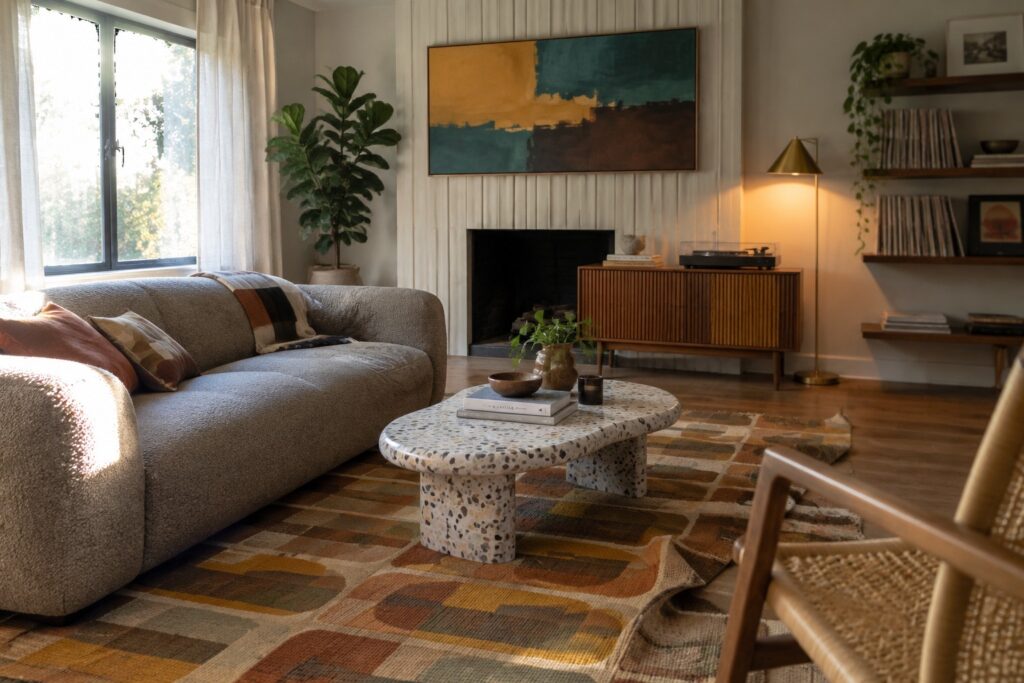
A mid-century living room can feel warm and relaxed, but it needs more than tapered legs and a few vintage accents to come together.
I find that the art often sets the room’s direction, especially when its scale and colors connect with the furniture rather than compete with it.
The layout matters too, since a striking piece should be easy to see without making the seating area feel stiff or crowded.
Some rooms lean into bold color, while others use a quieter palette to let one artwork take the lead.
I’d save the ideas that balance personality with everyday comfort, then adapt the art, lighting, and furniture spacing to suit a real home.
Let Statement Art Guide the Room

A large abstract painting can set the direction for a retro living room without making the rest of the decor feel busy. The broad shapes and warm colors in this artwork give the wall a clear focal point, while the simple furniture lets it stand out.
Try this approach above a fireplace or sofa, and keep nearby colors fairly restrained. A wood cabinet or a few smaller accents can pick up tones from the art without competing with it.
Let Statement Art Lead the Room
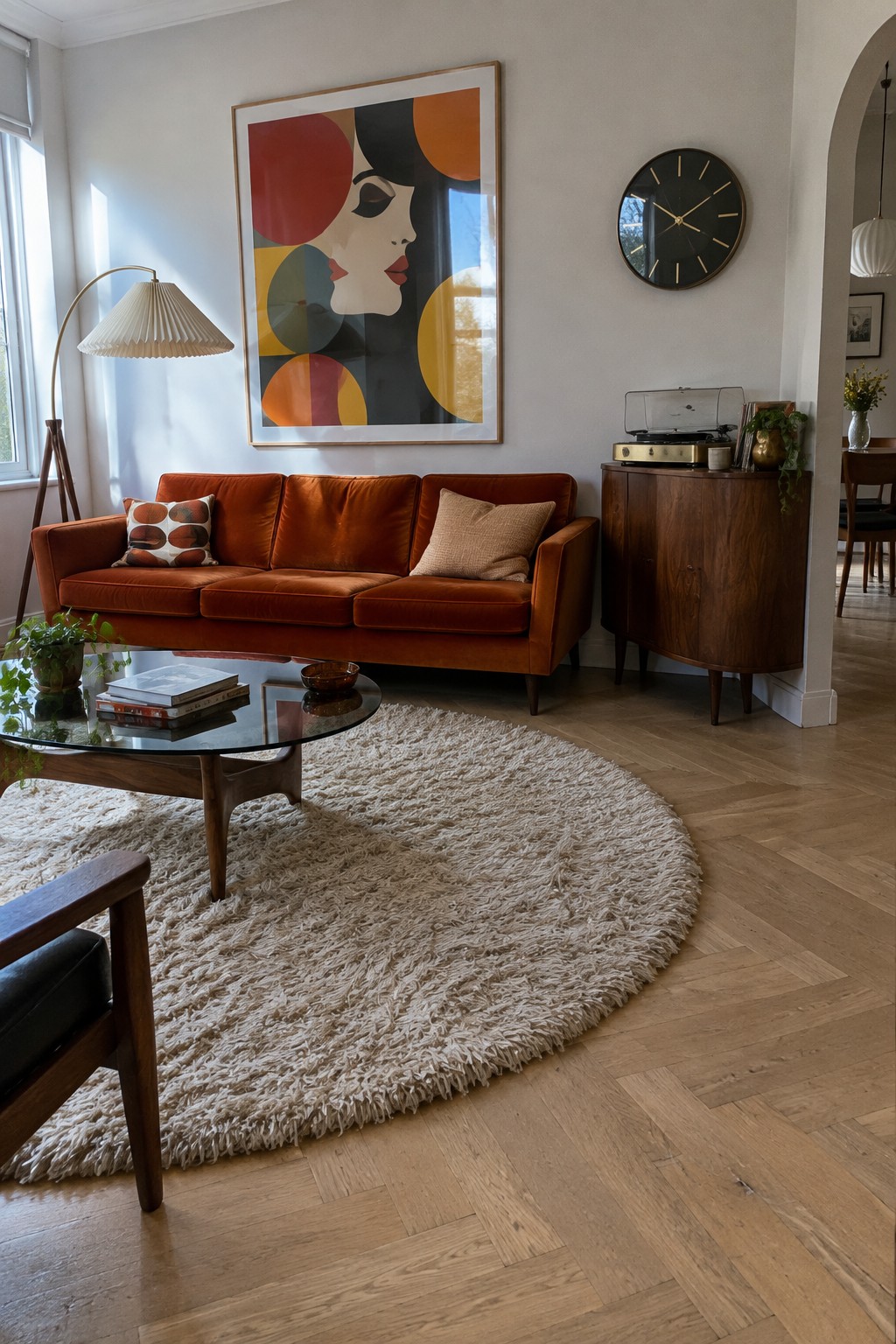
A large graphic print can give a mid-century living room a clear focal point without adding much clutter. Here, the bold shapes and colors stand out against the simple wall and rust-colored sofa.
Choose artwork large enough to suit the wall above your seating, then borrow one or two colors for nearby cushions or upholstery. This works especially well with straightforward furniture, where the art can bring in pattern and personality.
Let Statement Art Lead The Room

A large piece of art can give a mid-century living room a clear focal point without adding more furniture or decoration. Here, the bold portrait stands out against the wood-paneled wall, while the simple fireplace below leaves it room to show.
This approach works best when the art has enough wall space to breathe. Choose one substantial piece, then keep nearby decor fairly simple so the room still feels comfortable rather than crowded.
Let Statement Art Set the Tone
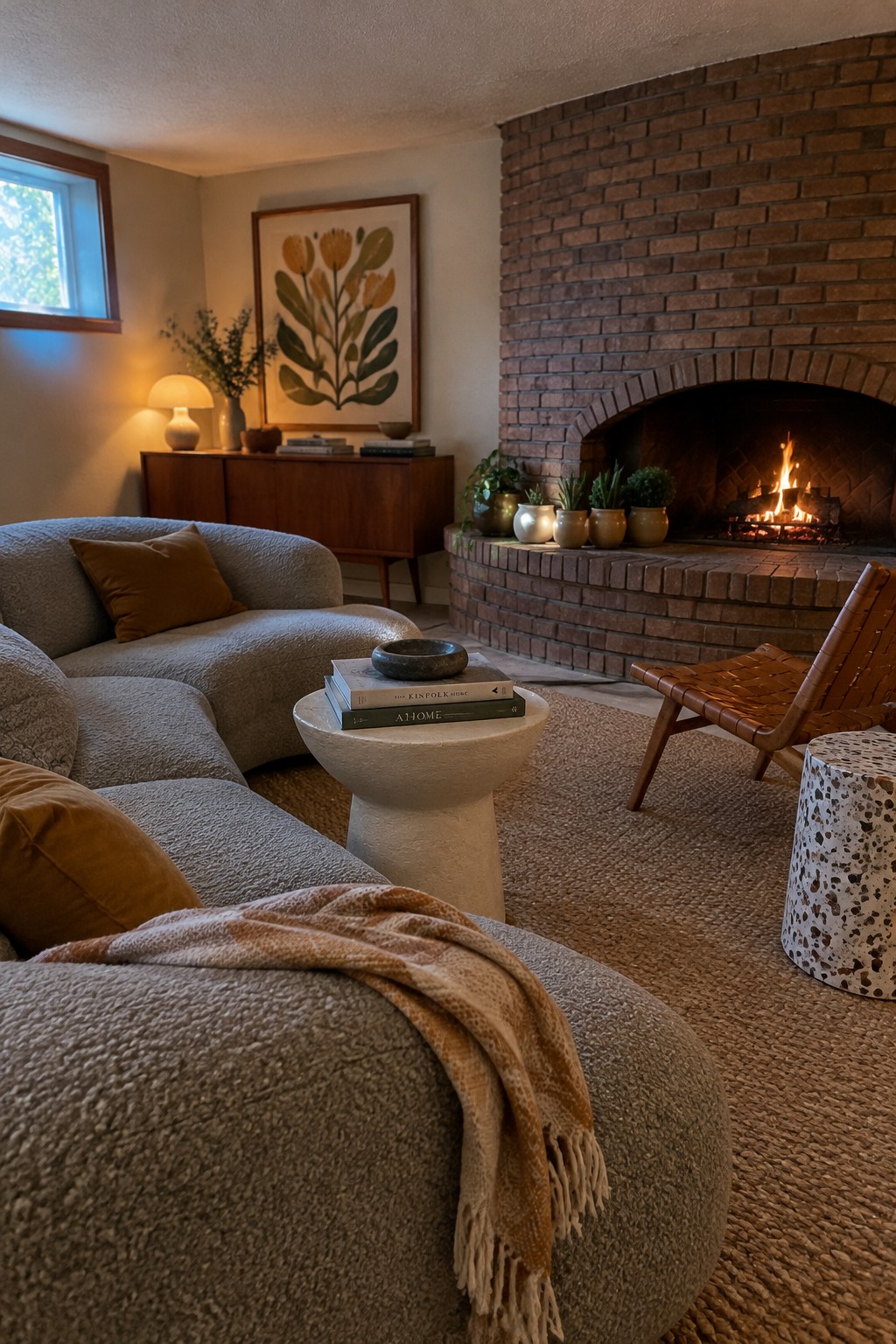
A single botanical print can give a retro living room a clear focal point without making the rest of the decor feel busy. The framed artwork here brings color and pattern to the wall while keeping the room’s warm, natural style intact.
Try this approach above a sideboard or sofa, and let the art guide a few smaller color choices nearby. A simple frame helps the print stand out without competing with other strong features, such as a brick fireplace.
Use a Bold Textile as the Main Art
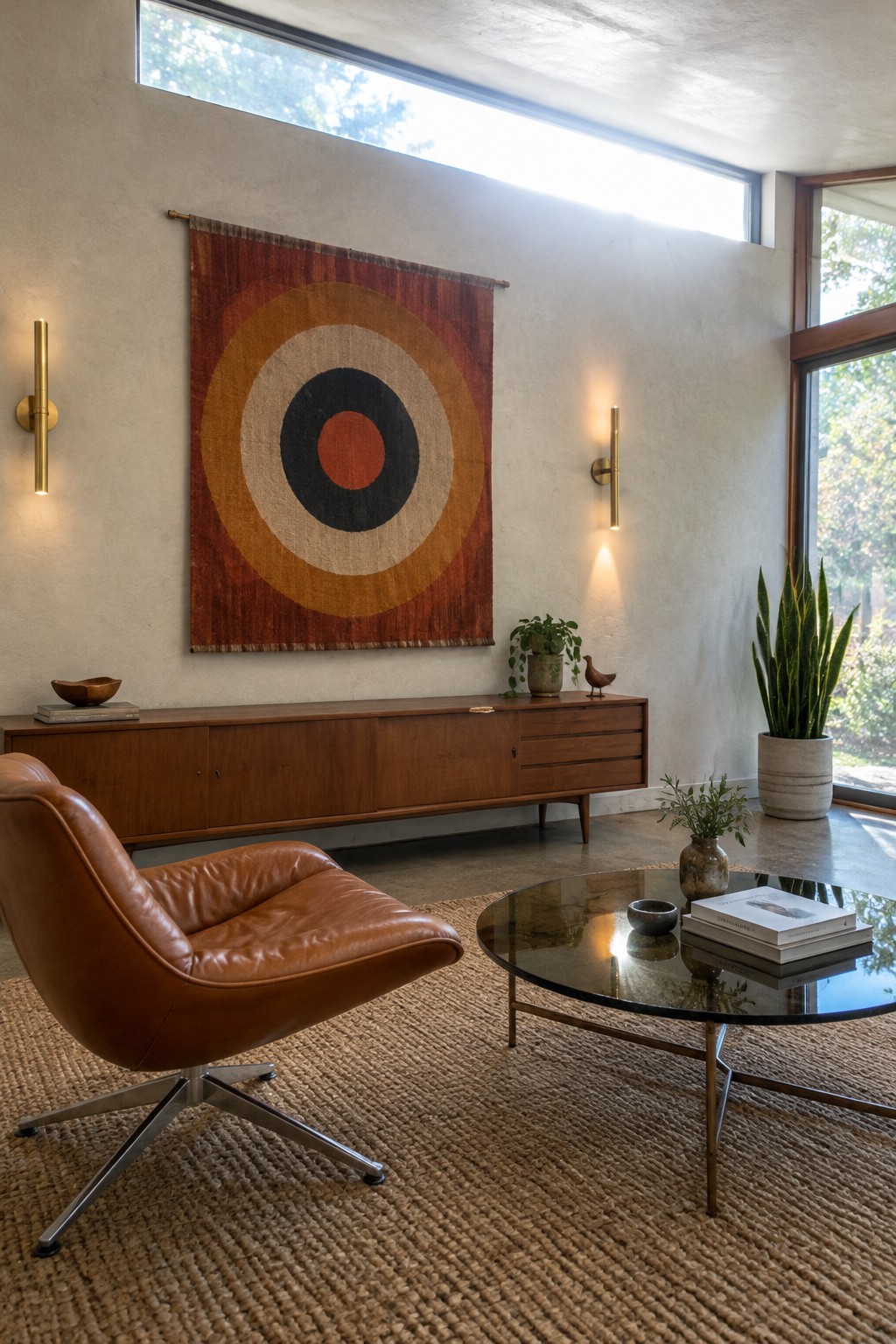
A large textile can bring a strong mid-century feel to a living room without adding more furniture or busy accessories. The concentric circles on this wall hanging give the room a clear focal point, while its earthy colors suit the wood tones nearby.
Try this approach on a broad, simple wall where the artwork has room to stand out. A woven piece also brings in texture, but keep the surrounding decor fairly quiet so the pattern remains easy to see.
Use Large Abstract Art as the Starting Point
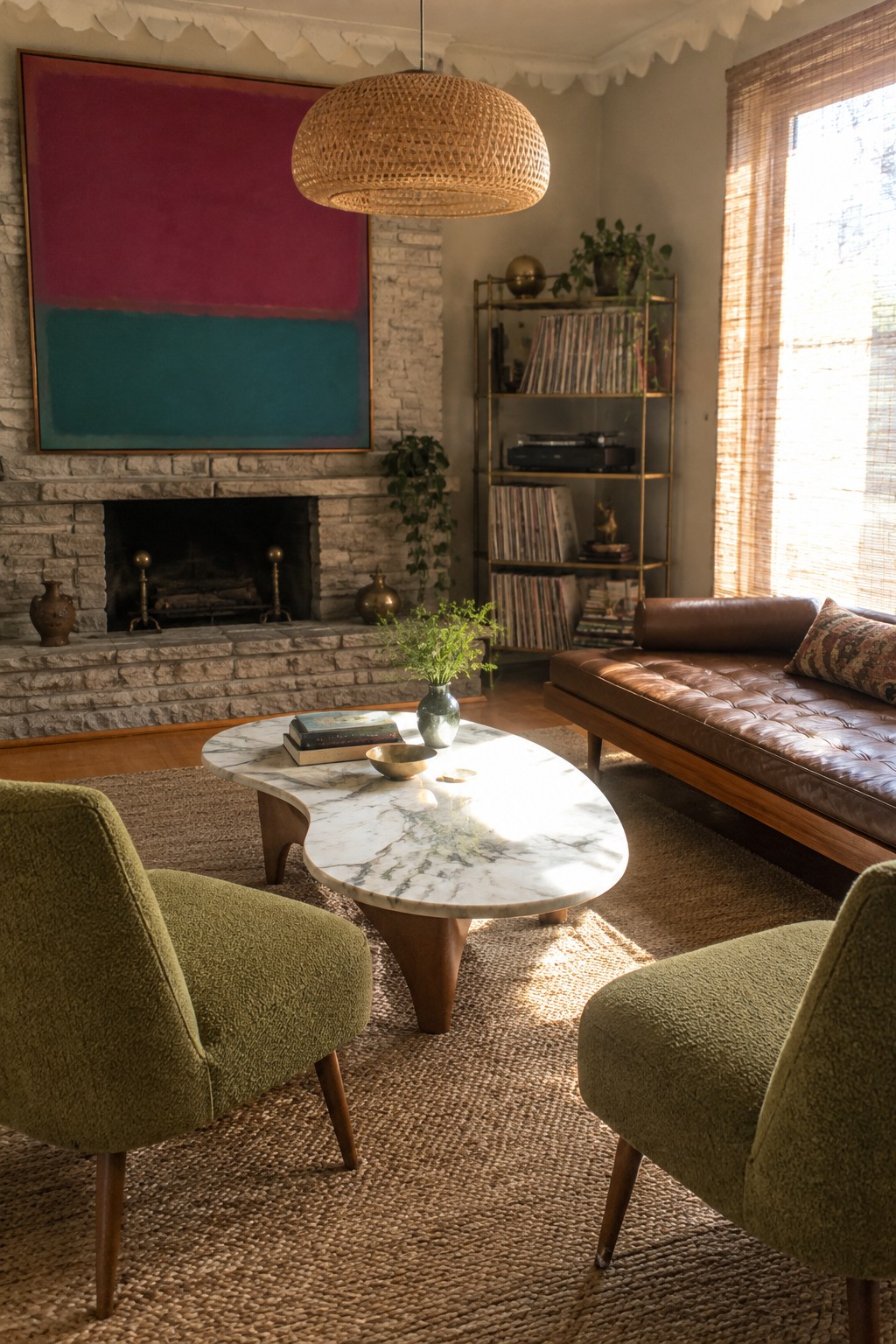
A large abstract painting can give a mid-century living room a clear direction without making the rest of the decor feel fussy. Here, the broad blocks of red and teal bring color to the stone fireplace wall while keeping the look simple.
Choose artwork with colors you can repeat in a chair, cushion, or small accessory. It works especially well above a fireplace or sofa, but leave enough open wall around the piece so it can stand on its own.
Use Statement Art to Set the Room’s Direction
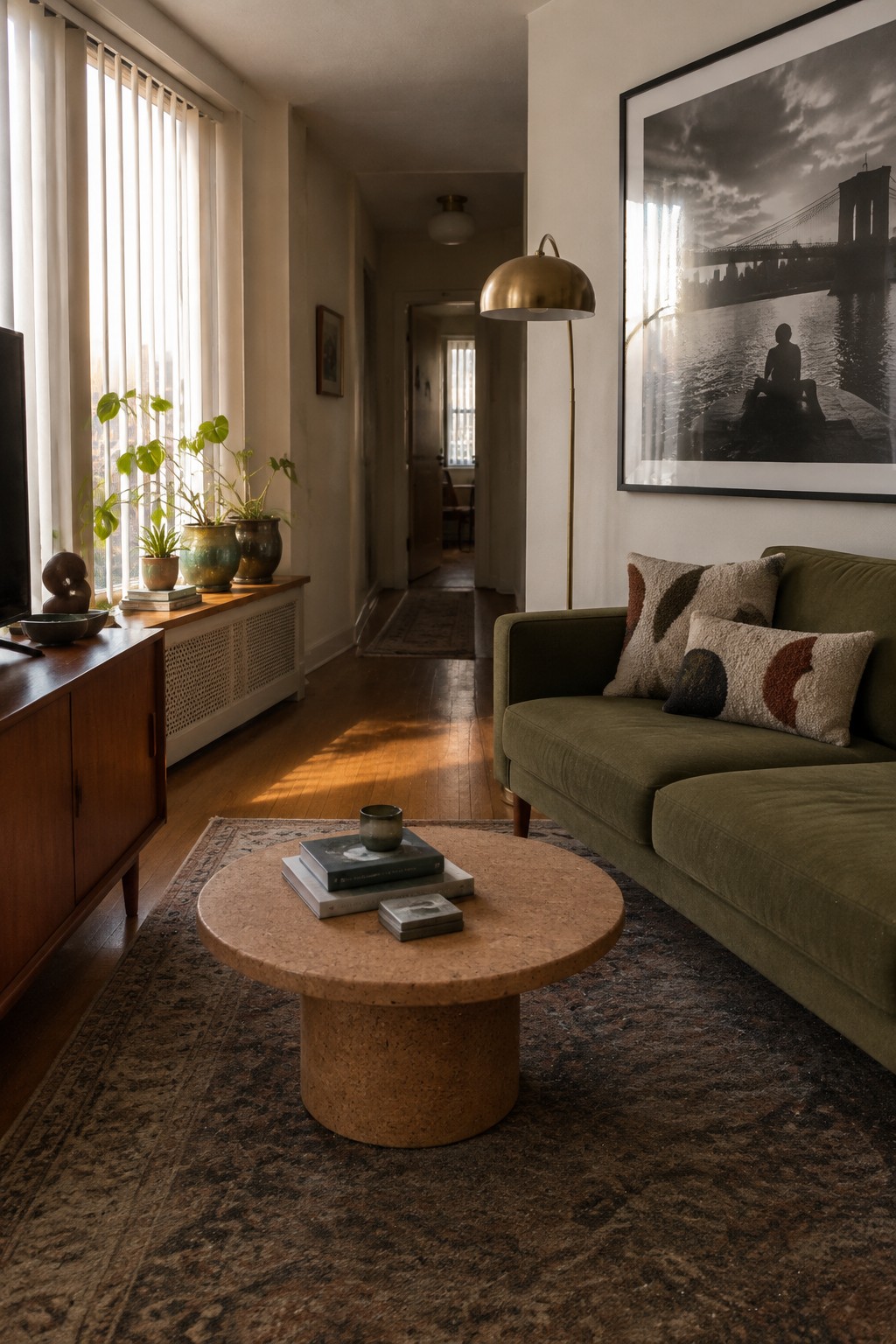
A large art print can give a mid-century living room a clear starting point. Here, the black-and-white bridge photograph brings a strong graphic element to the wall, while the olive sofa keeps the room feeling relaxed rather than formal.
Choose one substantial piece for a main wall, then let its colors or contrast guide a few nearby choices. This works well in a smaller living room where too many competing wall pieces can make the space feel busy.
Make Statement Art the Main Wall Feature
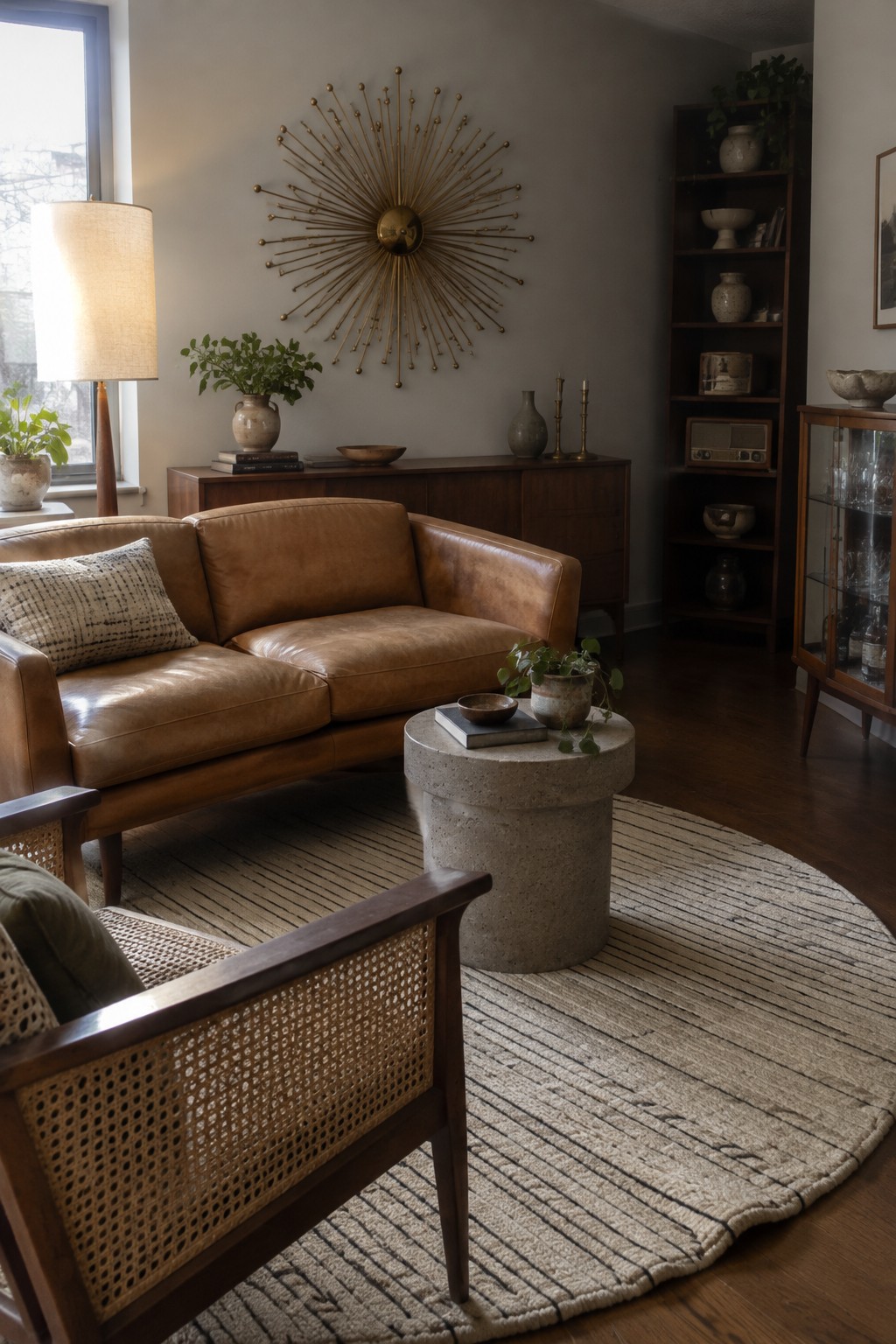
A large sunburst wall piece can give a mid-century living room a clear focal point without adding more color or pattern. Its radiating lines suit the era, and the simple wall behind it gives the shape room to stand out.
Choose one substantial piece for a wall above a low cabinet or sofa, and leave some open space around it. This approach works best when the artwork feels connected to the furniture’s scale, rather than crowded by several smaller decorations.
Use Sculptural Art as the Main Wall Feature
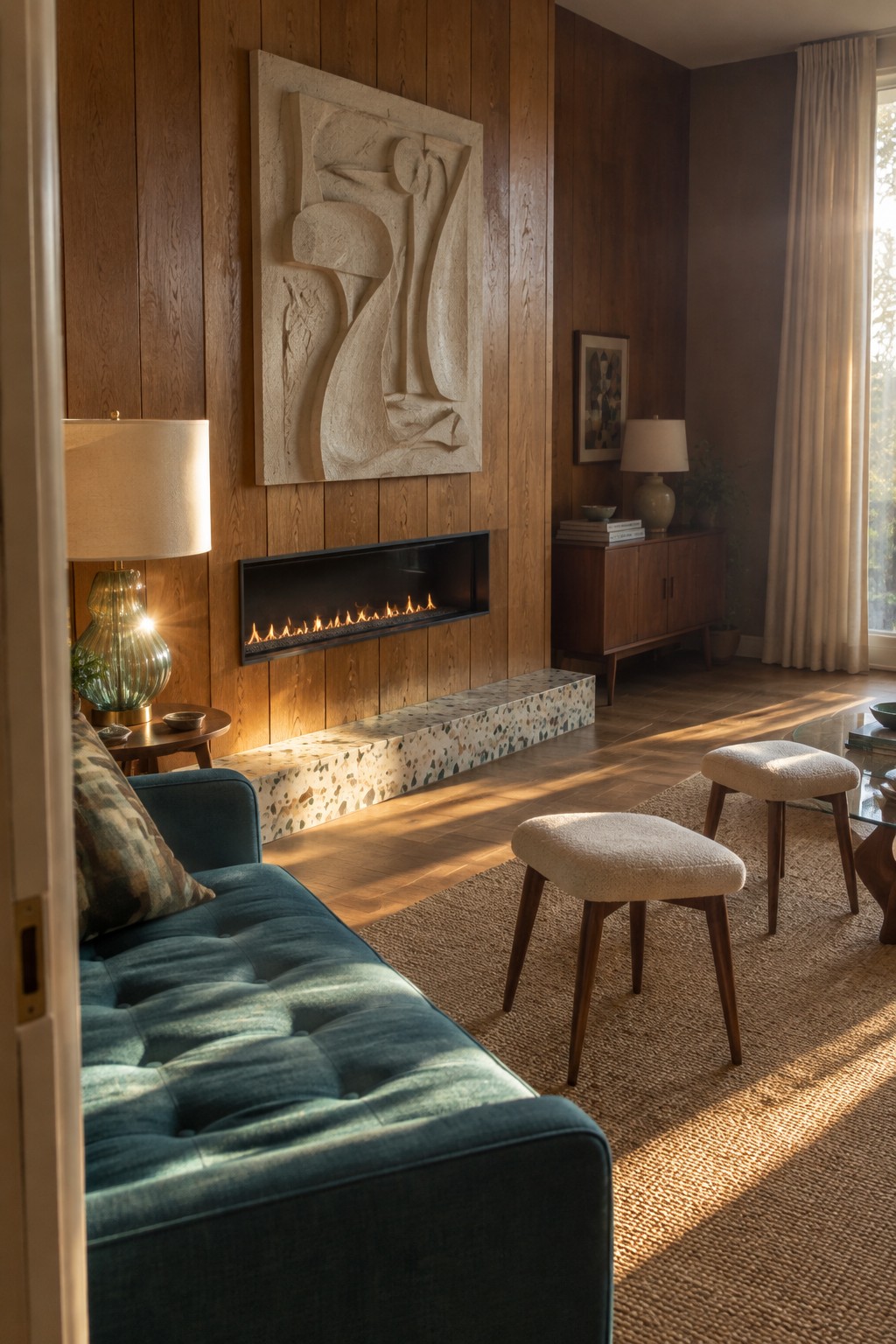
A large sculptural piece can give a mid-century living room a clear focal point without relying on bright color. Its raised shapes and natural stone-like finish bring texture to a wood-paneled wall, while the long fireplace below keeps the arrangement connected to the room.
This approach works well on a broad, simple wall where the art has room to stand out. Choose a piece with enough scale to suit the wall, and keep nearby decor fairly quiet so its shape stays easy to notice.
Use Retro Art to Set the Room’s Style

A vintage-style print can give a mid-century living room a clear starting point. The graphic bird and bold shapes here bring color and character to the dark fireplace wall without needing a lot of extra decoration around them.
This approach works well when the rest of the room has simple forms and natural materials. Pick a print with a few colors you can repeat in cushions or small accessories, and leave enough open wall around it so the artwork can stand on its own.
Build the Room Around a Gallery Wall

A well-planned gallery wall lets statement art give a living room its character. Mixing abstract prints in a few shapes and frame styles keeps the display personal, while a consistent earthy palette helps it feel connected rather than busy.
Try this approach above a long sofa or sideboard, where several pieces can fill the wall without crowding the furniture. Lay out the frames on the floor first, and leave enough space between them for each print to stand on its own.
Use Folk Art to Set the Room’s Style

A large folk-art textile can give a living room its direction. Its hand-painted look and earthy colors feel right at home with mid-century furniture, without making the room feel too formal.
Try this approach when you have one broad wall that needs a focal point. Pick up just one or two colors from the artwork in your cushions or other small accents, and let the art remain the main feature.
Give Oversized Abstract Art Room to Stand Out

A large abstract painting can give a retro living room a clear focal point without adding more small decorations. The rich burgundy and ochre tones here suit the earthy feel of mid-century furniture, while the painted wall arch makes the artwork feel like part of the room.
Try this approach on a broad, uncluttered wall, especially above a low sofa. Choose art with a few colors already used in the room, and keep nearby wall decor simple so the main piece has space to show.
Use Neon Art to Add Retro Character
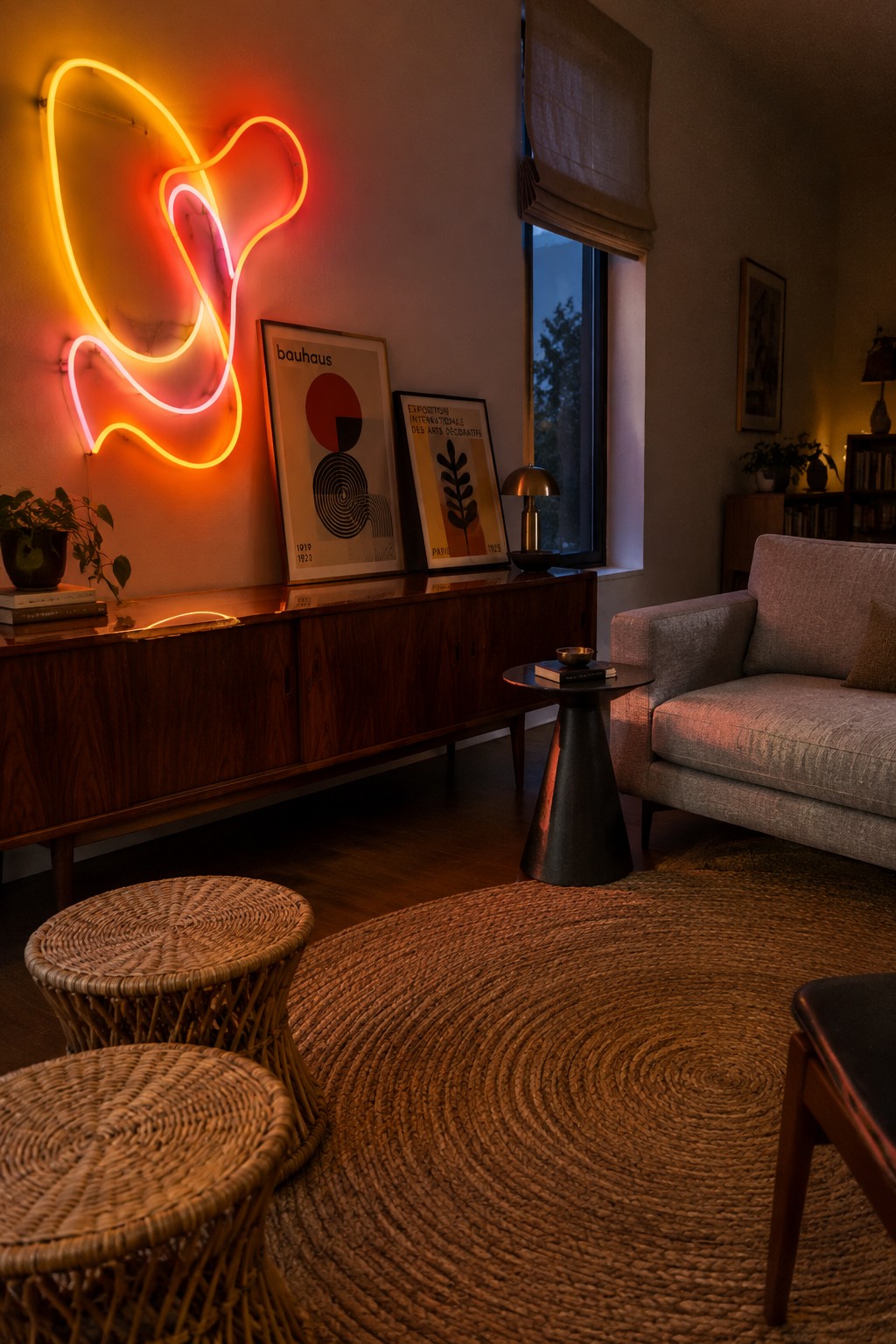
Neon wall art is an easy way to bring a playful retro note into a living room. Its curving lines stand out against a plain wall, so the rest of the decor can stay fairly simple.
Try it above a sideboard or sofa where the piece has room to show. Warm wood and a few vintage-style prints help it fit in, but keep nearby wall decor limited so the neon does not feel crowded.
Use Statement Art on a Brick Wall
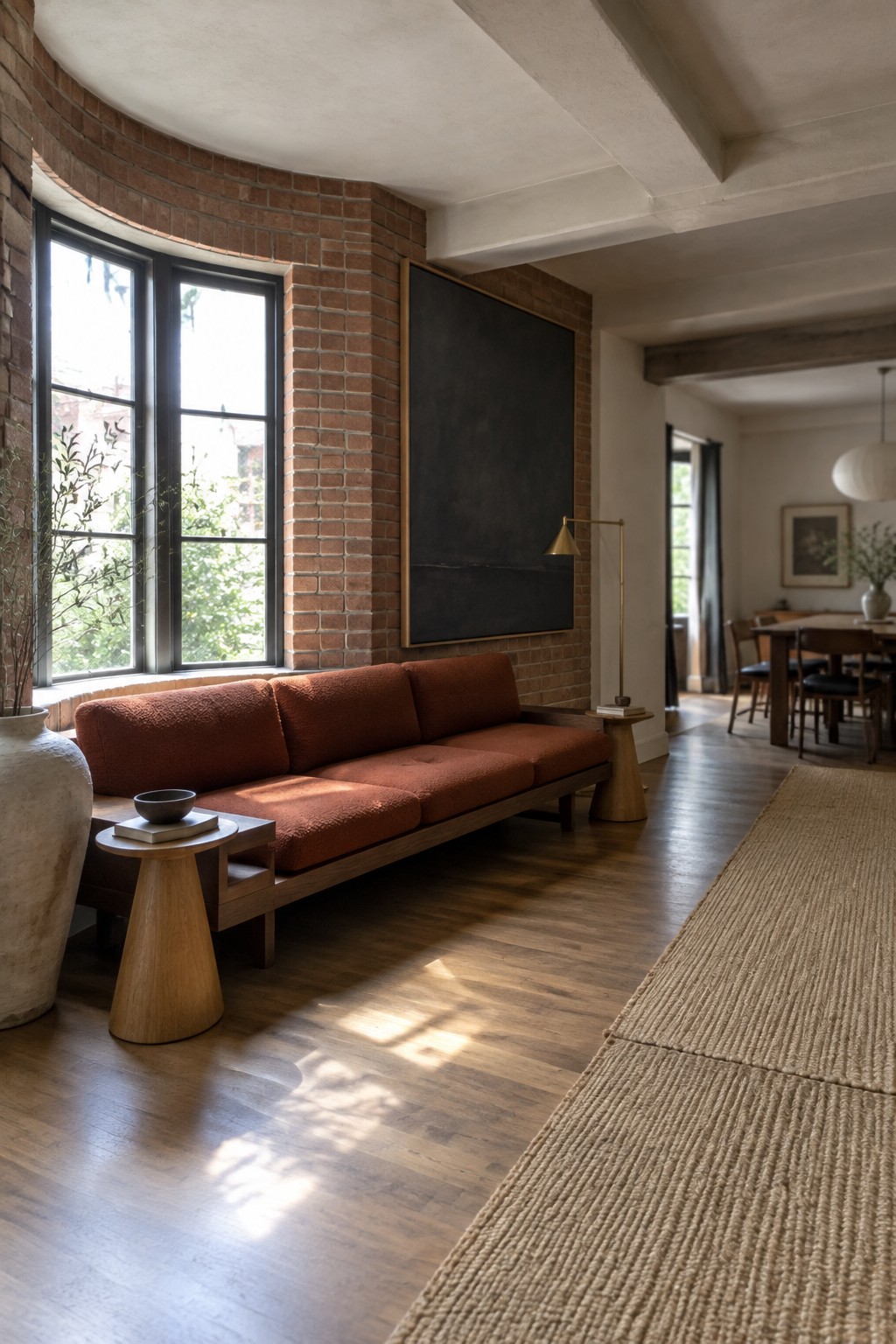
A large, dark artwork can give a mid-century living room a clear focal point without adding more color or pattern. Against exposed brick, it feels substantial and simple, while the rust-colored sofa keeps the room from looking too stark.
This approach suits a room with one broad, uncluttered wall. Choose a piece large enough to hold its own, and keep nearby decor fairly restrained so the art remains easy to notice.
Let Geometric Art Set the Room’s Direction
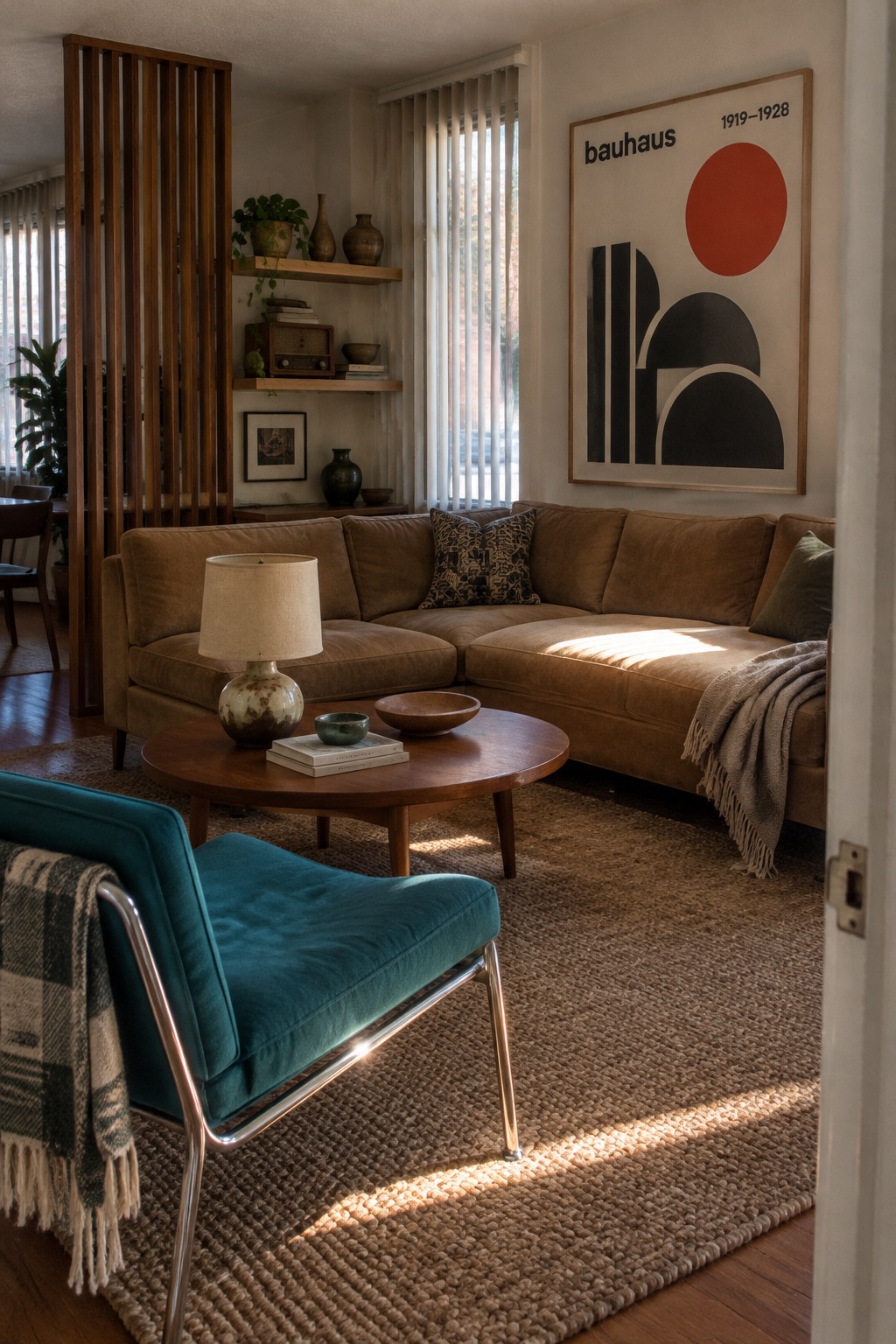
A bold geometric print can give a mid-century living room a clear starting point. Its simple shapes and limited colors feel at home alongside wood furniture, while still giving the wall plenty of presence.
Choose a print large enough to hold its own above a sofa, then echo just one color in a cushion or chair. This approach works well in a room with mostly quiet finishes. Too many competing patterns can make the art feel less distinct.
Use Abstract Art to Bring Color Into the Room

Large abstract panels give a mid-century living room a clear color direction without needing lots of smaller accessories. Here, rust, teal, and dark charcoal repeat across the artwork, while the sofa picks up the deeper teal.
Try this approach when the furniture is simple and the wall has enough space for art to read as one strong feature. Choose a few colors from the artwork for nearby cushions or other small accents, and keep the rest of the room fairly quiet.
Use a Woven Textile as Statement Art
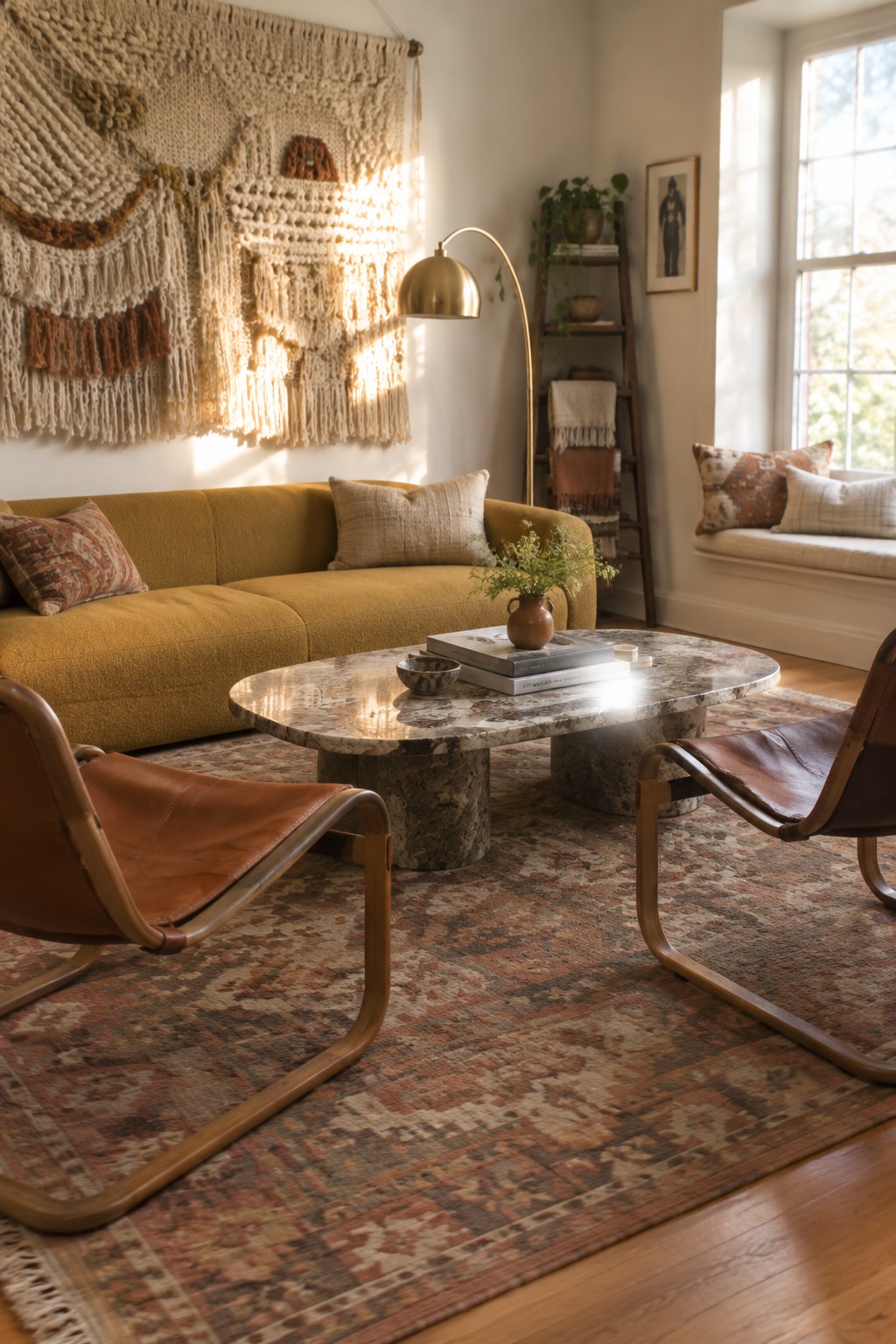
A large woven wall hanging can give a living room the impact of statement art while bringing in a softer, handmade feel. The layered knots and fringe here suit the mustard sofa and patterned rug without relying on a bright painted canvas.
This approach works especially well in a room with simple walls and mid-century furniture, where the textile can take up a generous stretch of wall. Keep nearby patterns quieter, or choose colors that repeat in the hanging so the space still feels settled.
Use Patinated Metal Art as a Focal Point
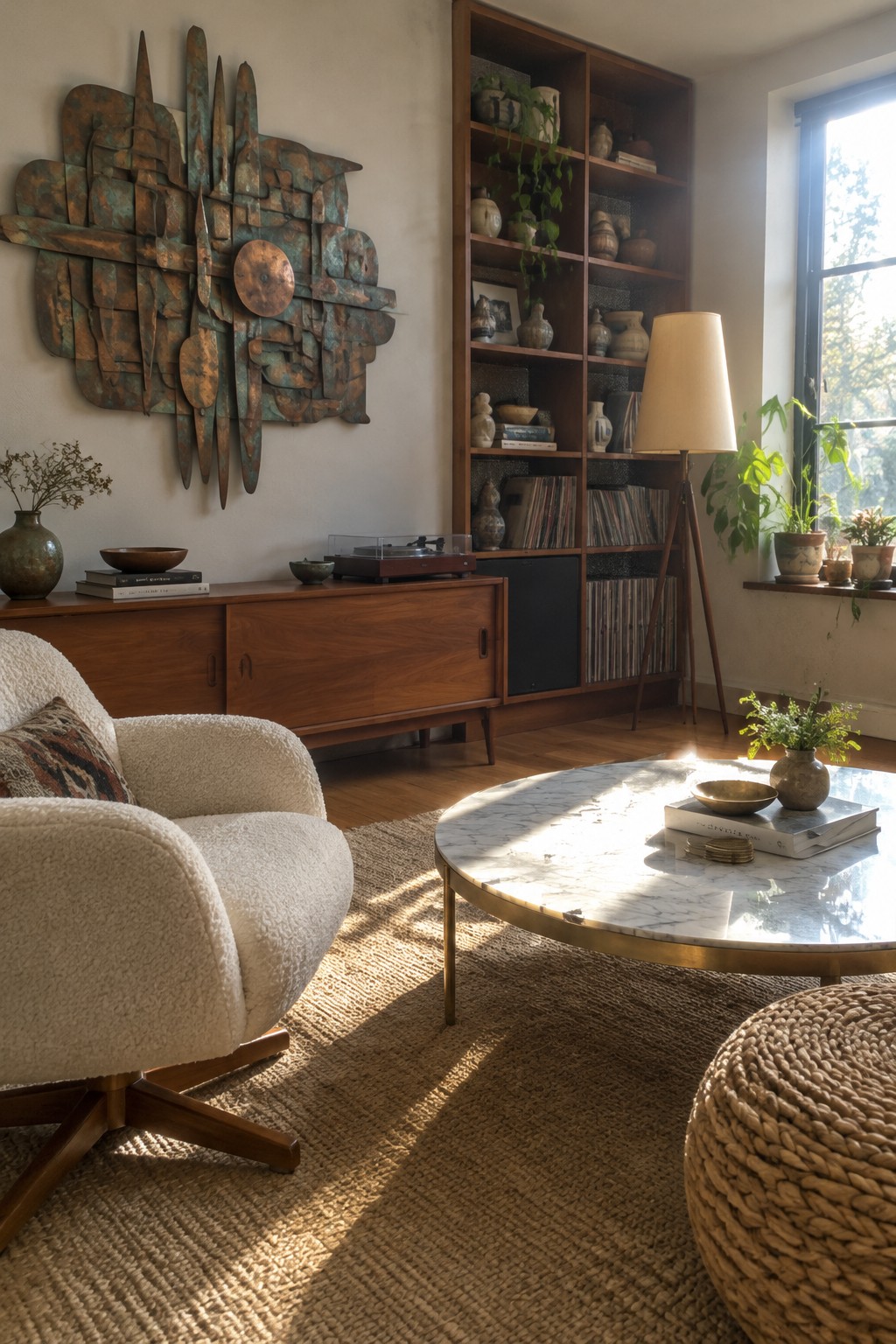
A large piece of sculptural metal art can give a mid-century living room a clear focal point. Its weathered finish brings a collected, handmade feel to the wall, while the simple furniture around it lets the artwork stand out.
This approach works well above a low sideboard, especially in a room with warm wood and neutral upholstery. Keep nearby wall decor sparse so the art has space to read as one strong feature.
Use a Painted Mural to Set the Room’s Style
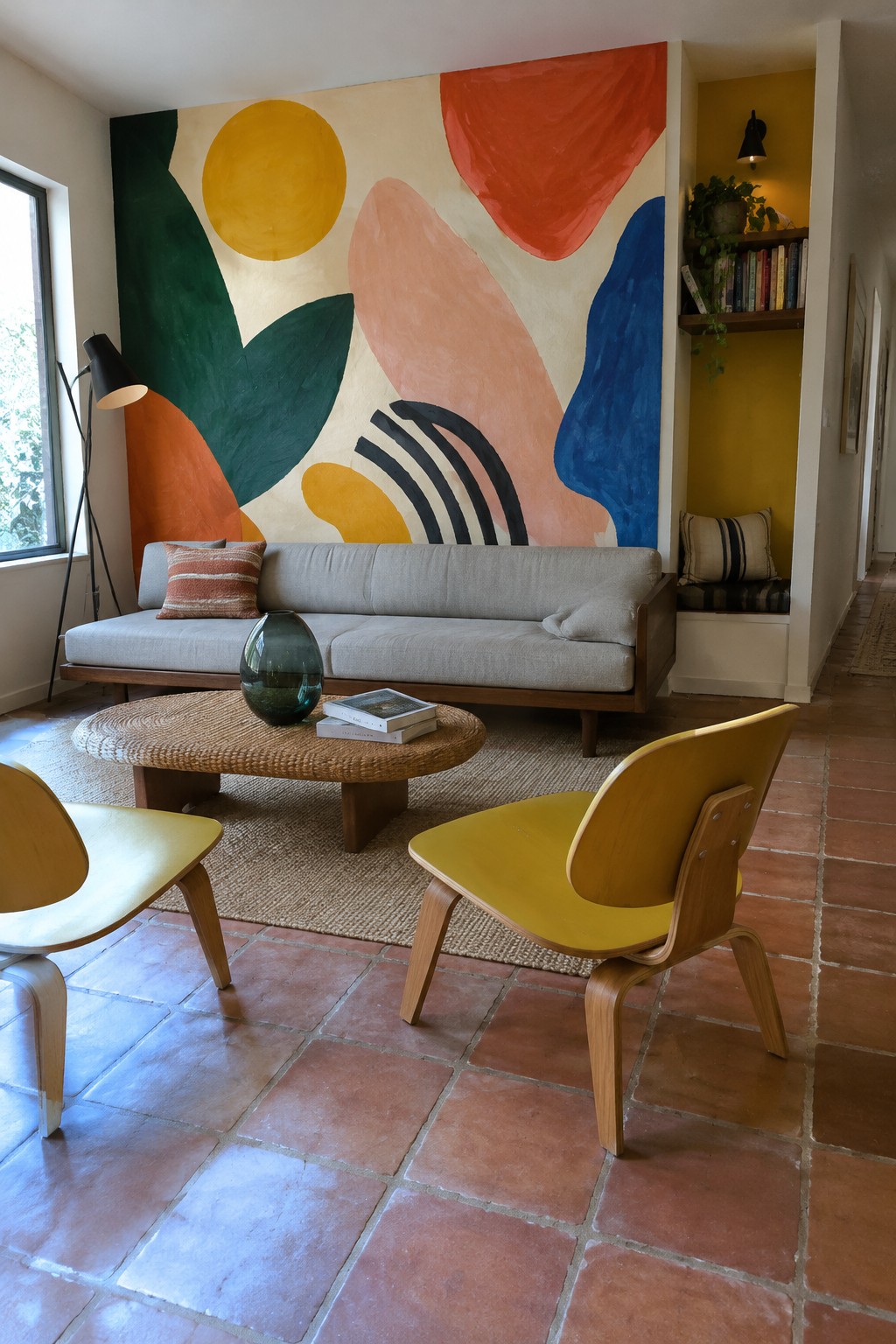
A large abstract mural can give a mid-century living room its direction before you add much else. Broad shapes and a few strong colors make a plain wall feel personal, while simpler furniture lets the artwork stay easy to read.
This approach works especially well on one uninterrupted wall behind a sofa. Choose a palette that connects to a couple of furnishings, such as the mustard chairs here, and keep nearby patterns fairly quiet so the mural doesn’t feel crowded.
Use Vintage Posters to Set the Room’s Style

Vintage advertising posters give a mid-century living room an easy focal point and help set its color and character. A collection of different prints can feel personal without requiring every piece of furniture to match.
Try grouping posters on one wall, mixing sizes while keeping the frames fairly simple. This works especially well in a living room with plain walls, where the art can carry more of the room’s personality.
Frequently Asked Questions
Q: How do I choose statement art that fits a mid-century modern living room?
A: Look for a piece with bold shapes or color that feels at home alongside the room’s clean lines and warm wood. It doesn’t need to match the furniture exactly. A little contrast often makes the art feel more personal.
Q: What’s the best way to hang a large artwork above the sofa?
A: Center it over the sofa and leave enough breathing room around the frame. As a simple guide, aim for artwork that’s roughly two-thirds the sofa’s width, or group a few smaller pieces to fill the space.
Q: Can I mix vintage furniture with modern art?
A: Absolutely. A crisp contemporary piece can make vintage furniture feel fresh, while the older furniture keeps the room from feeling too polished.
Q: How can I add statement art without making the room feel busy?
A: Let one piece take the lead, then keep nearby patterns and accessories fairly simple. A strong artwork doesn’t need a crowd around it.
