
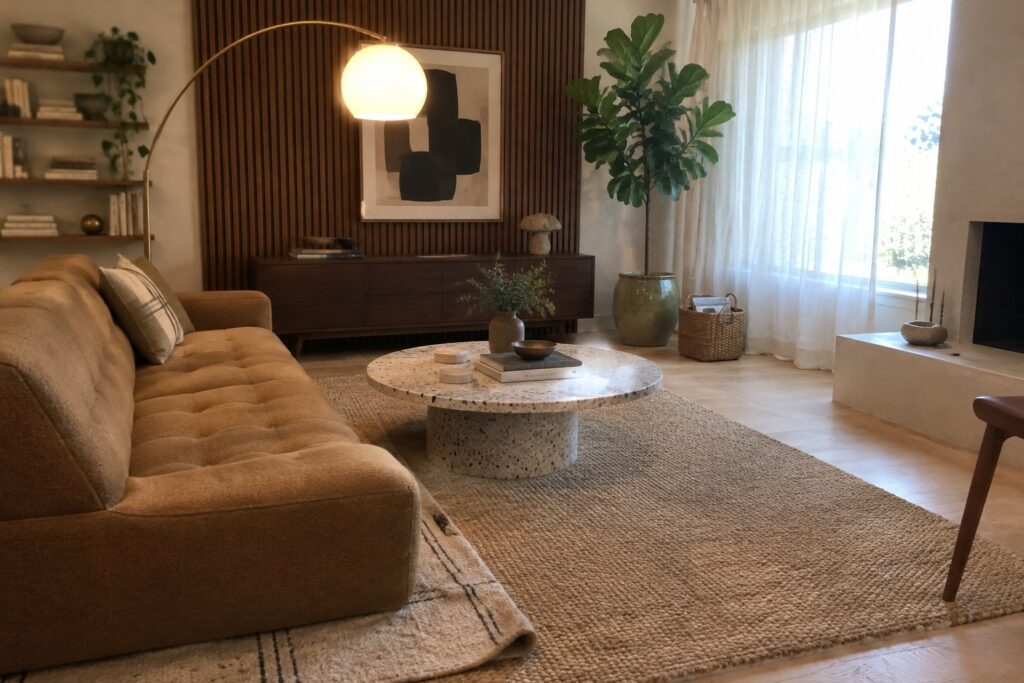
A living room can feel warm without relying on overhead lights, especially when a floor lamp adds a softer pool of light beside a chair or sofa.
I find sculptural lamps work best when they have room to stand out without interrupting the paths people use every day.
In a mid-century modern space, the shapes and materials matter, but so does how the furniture sits around them and where the light falls at night.
The most useful ideas are the ones that balance a strong silhouette with comfortable seating and practical lighting for reading or winding down.
I’d save a few details to try at home, then adjust them to suit the room’s layout and the light it already gets.
Use a Sculptural Floor Lamp As A Focal Point
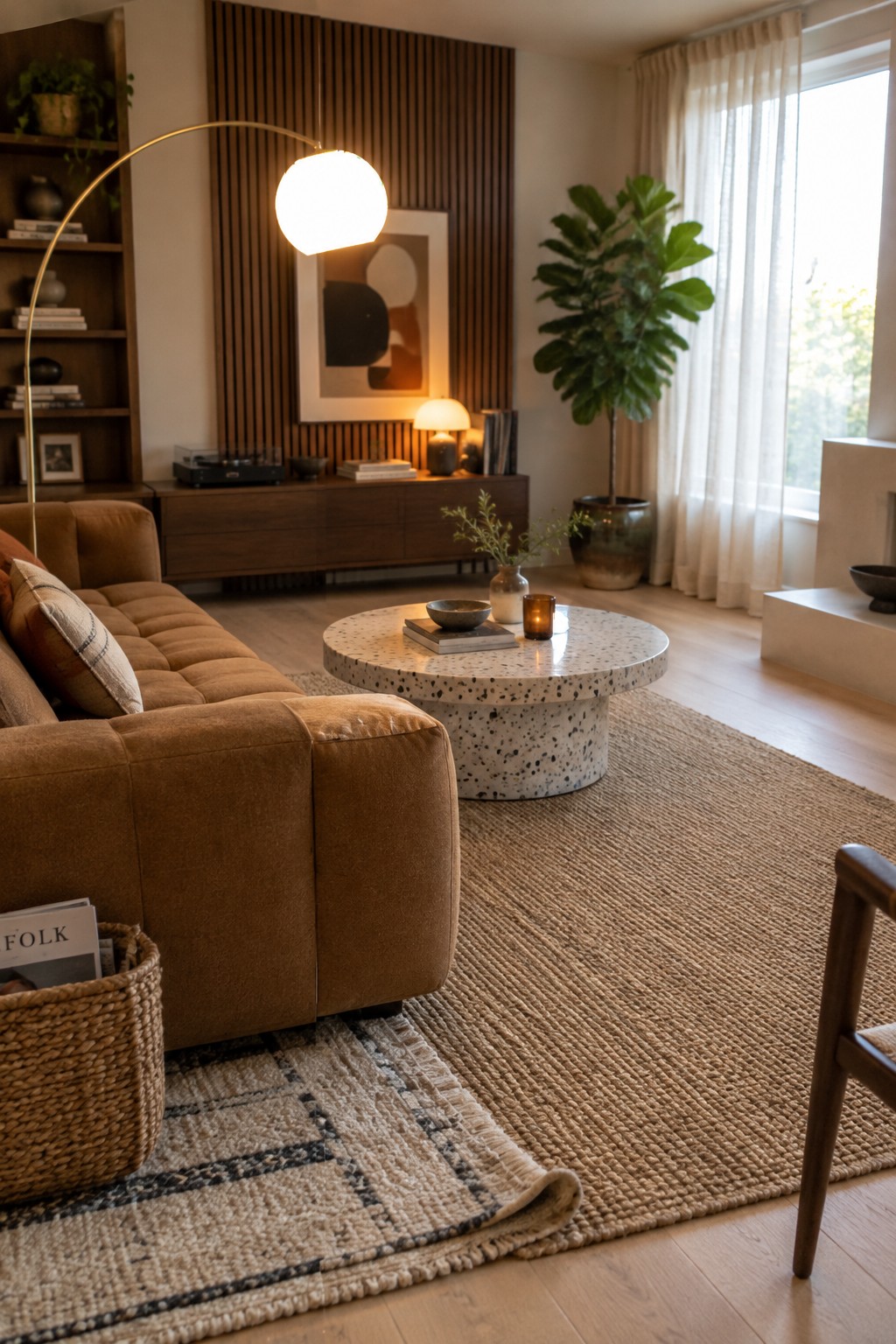
A curved floor lamp can bring a strong shape to a living room while giving light exactly where it is needed. Its tall, arcing form stands out beside the low profile of a sofa, so the room feels considered without needing much extra decor.
Place one near a sofa or reading chair, and check that the shade clears the seating area. A warm bulb helps it work as evening light, especially in a room with darker wood or earthy upholstery.
Let a Sculptural Floor Lamp Shape the Room
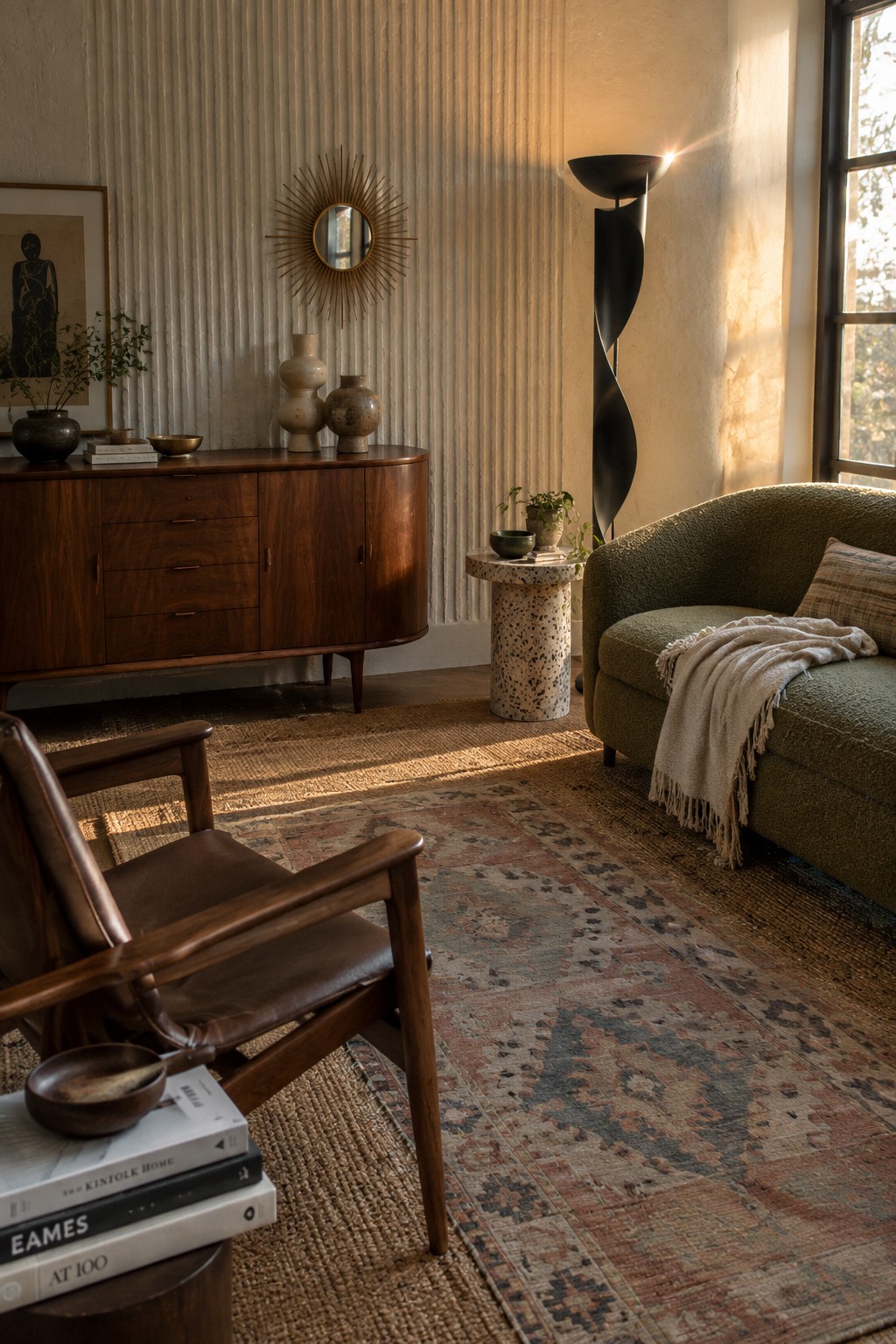
A sculptural floor lamp can serve as a useful focal point without taking up much floor space. Its tall, curving form brings interest to a simple seating area, especially when nearby furniture stays fairly low and understated.
This idea works well in a living room that needs a little more character but not more clutter. Place the lamp beside a chair or sofa, and leave enough room around its shape so it does not feel crowded.
Use a Sculptural Floor Lamp As A Focal Point
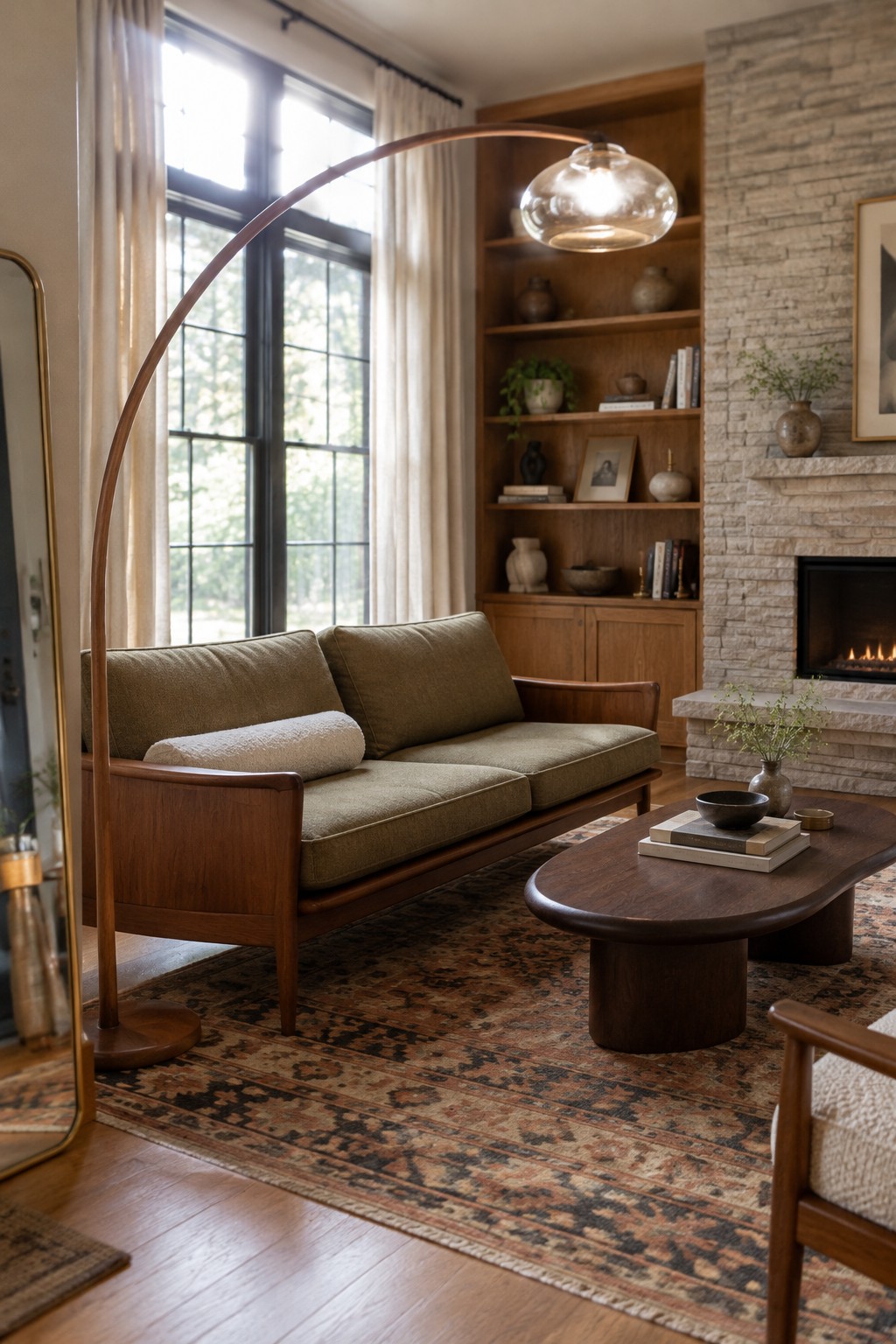
A curved floor lamp can give a living room a strong focal point without taking up much floor space. Its long arc reaches over the seating area, while the simple shape suits the clean lines of mid-century furniture.
Place one beside a sofa or chair where its shade can cast light over a reading spot. Leave enough room for the base so it does not interrupt the path through the room, and choose a lamp height that clears the seat comfortably.
Let a Floor Lamp Set the Mood
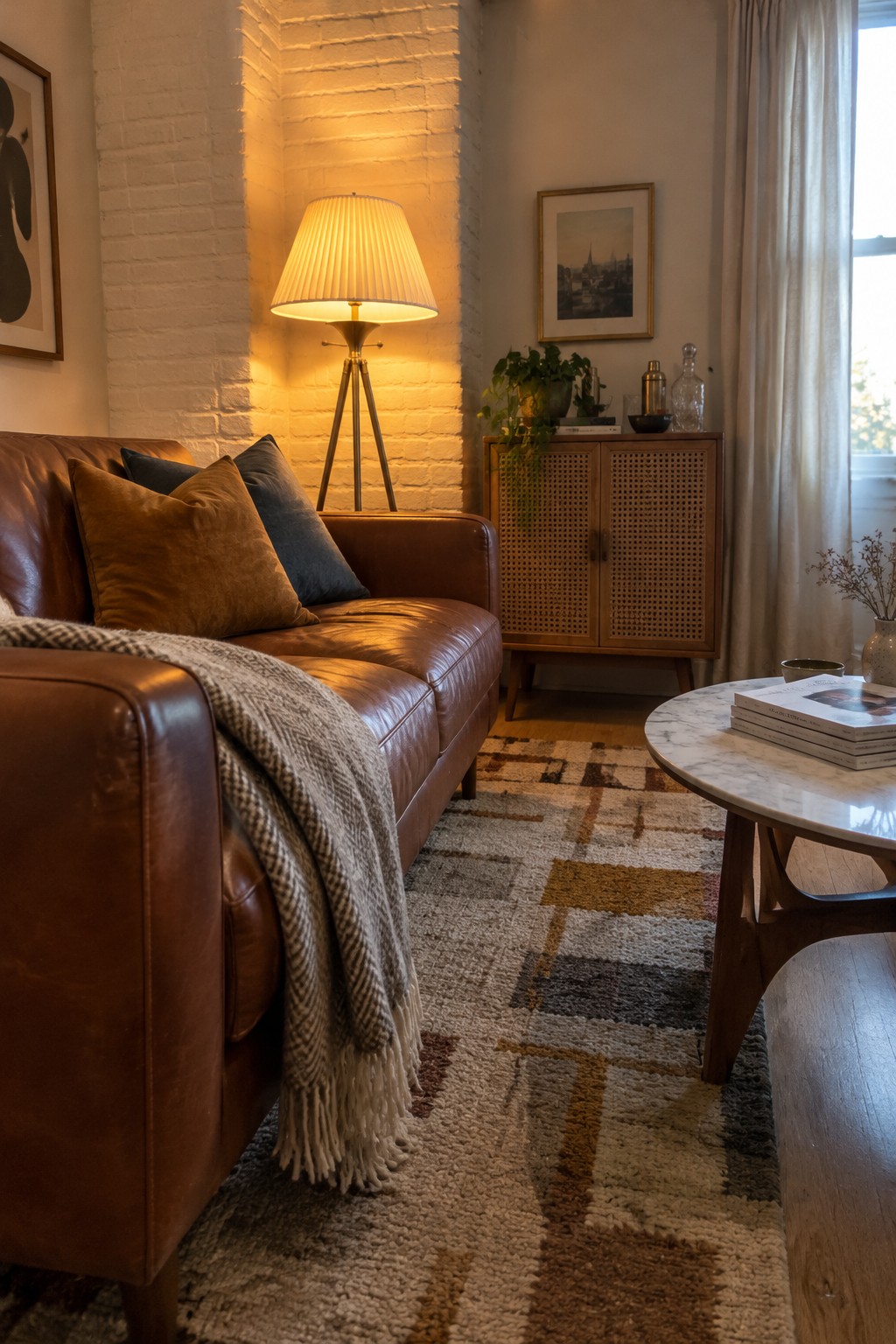
A sculptural floor lamp can give a living room a softer evening feel without changing the whole lighting plan. Here, a pleated shade and slender tripod base bring a mid-century touch, while the warm bulb makes the brick wall a gentle backdrop.
This kind of lamp works well beside a sofa, where it can light a reading spot and provide a calmer alternative to overhead lighting. Choose a shade that directs light where you need it, and leave a little room around the base so it does not crowd the seating.
Let a Floor Lamp Bring Shape to a Quiet Corner
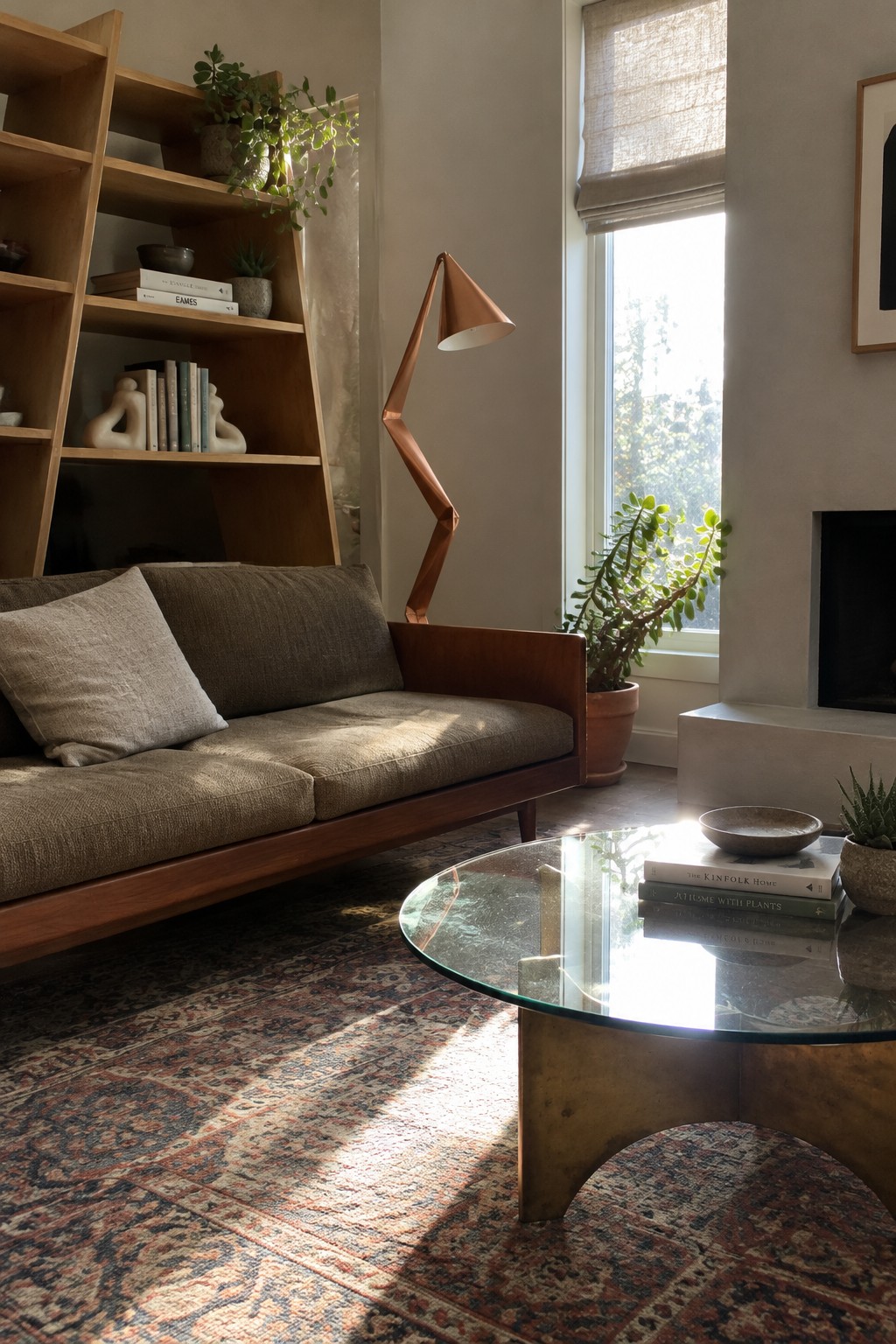
A sculptural floor lamp can give a living room a strong design feature without adding more furniture. Its angled wooden form stands out beside the sofa, while the simple shade keeps the look practical.
This works especially well in a room with clean-lined seating and open floor space. Choose a lamp with a shape that feels interesting from across the room, and leave enough room around it so the base and arms do not crowd the sofa.
Use Built-In Storage to Keep the Room Calm
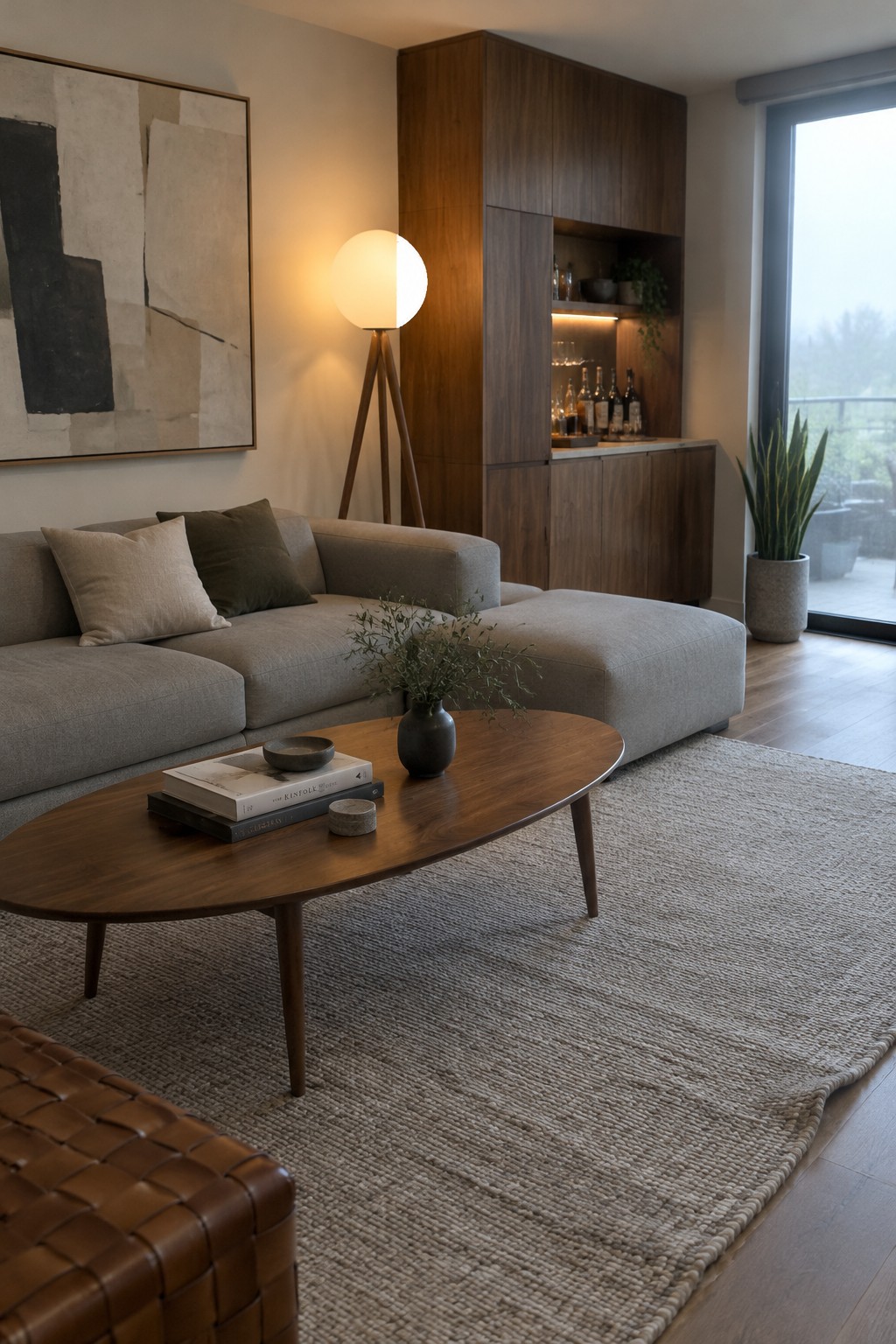
A tall built-in can provide useful storage without taking up extra floor space. Here, the dark wood cabinetry also gives the living area a clear focal point, while its open shelf leaves room for a few everyday items.
This approach works well in a living room that needs storage but should still feel settled and uncluttered. If you add open shelving, keep the display simple so the cabinet remains practical rather than busy.
Choose a Floor Lamp That Reaches Over the Seating
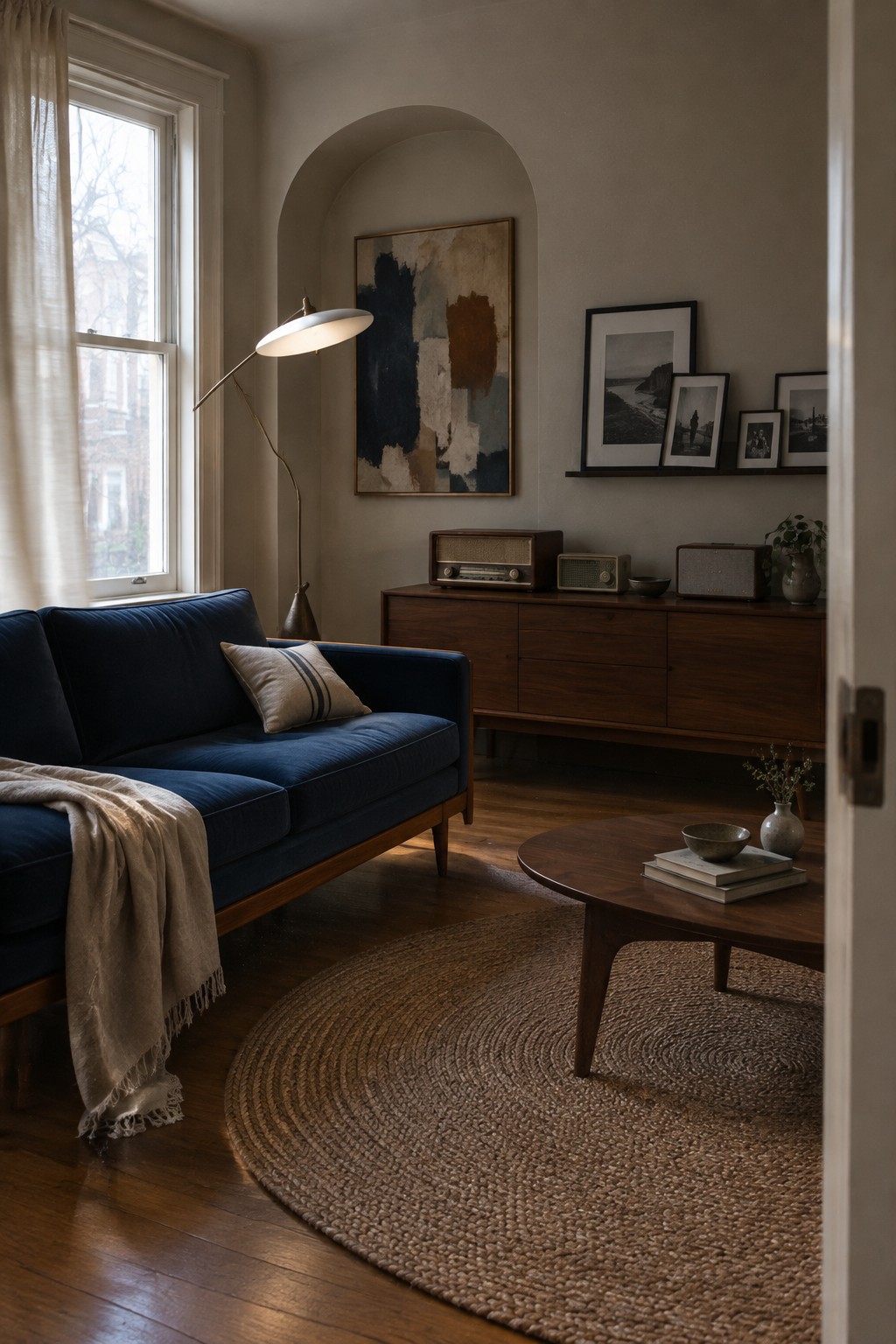
A sculptural floor lamp can bring useful light to a sofa without taking up space on a side table. A long, curved arm lets the shade sit over the seating area, while its shape gives the corner a clear focal point.
This works especially well in a smaller living room or beside a sofa with limited table space. Leave enough room around the lamp’s base so people can walk past it comfortably, and choose a shade that directs light where you like to read or relax.
Use a Curved Floor Lamp to Define the Seating Area
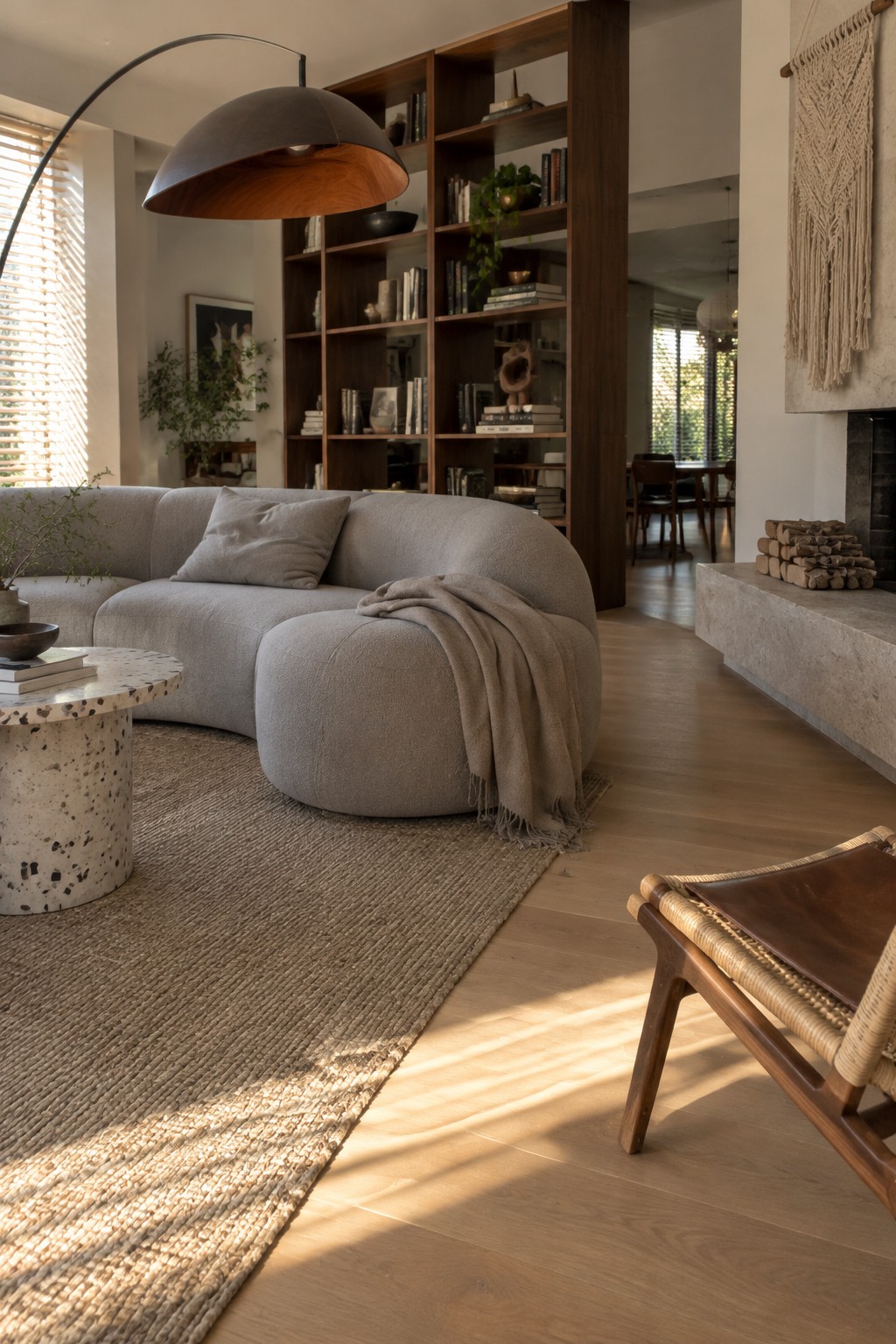
A sweeping floor lamp can give a living room a clear focal point without taking up much floor space. Here, its curved arm reaches over the sofa, making the seating area feel settled while keeping the light close at hand.
This works well in open rooms where furniture needs a little definition. Choose a lamp with a stable base and enough reach to sit over the sofa or a reading chair, and leave a comfortable path around it.
Use a Long Rug to Define the Seating Area
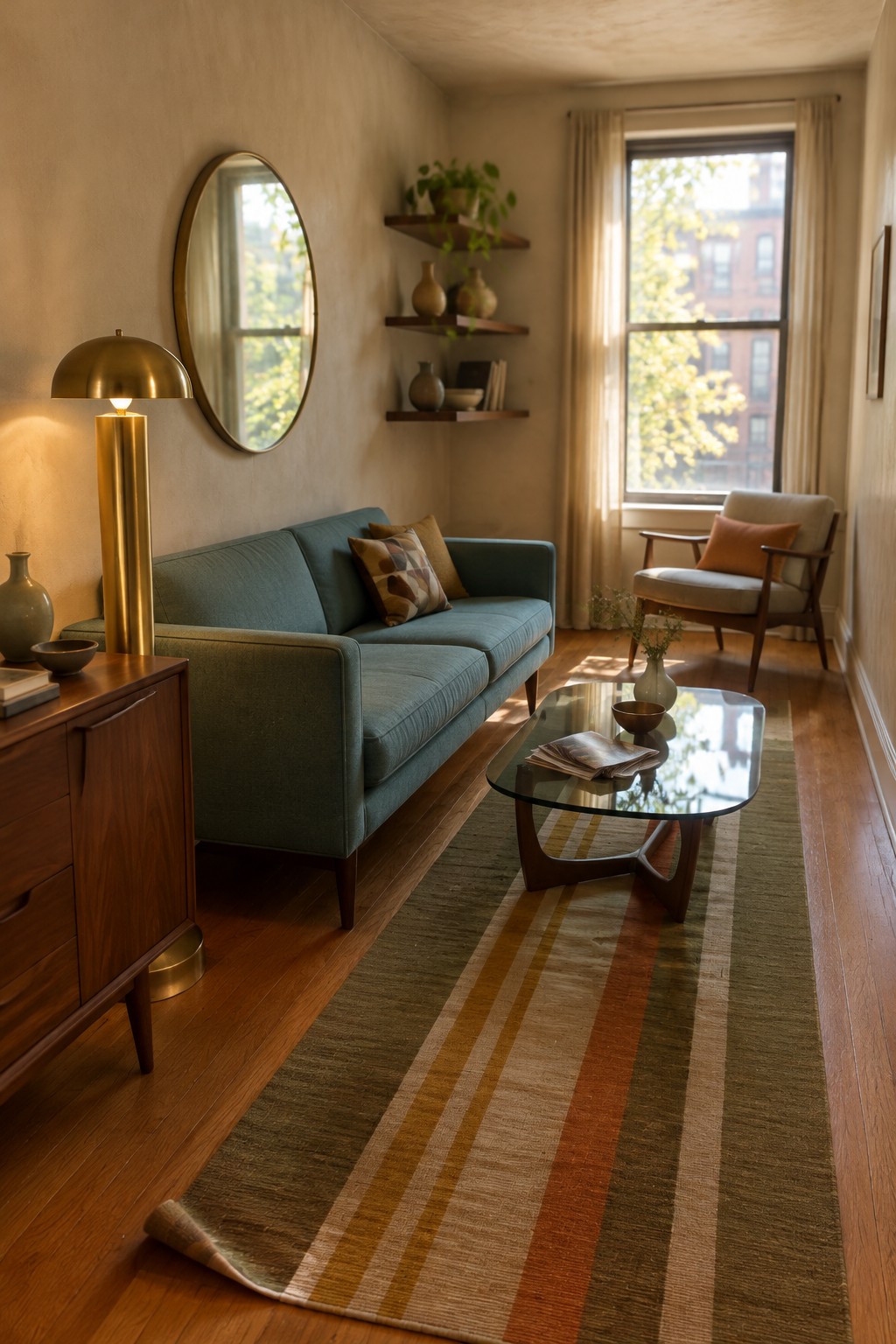
A long rug can give a narrow living room a clear center and make the seating feel connected. Stripes running lengthwise, like the ones here, also suit a room where space between the sofa and window is limited.
Choose a rug that reaches beyond the main seating, but leave some wood floor visible along the sides. A simple stripe pattern works well with mid-century furniture and adds interest without making a small room feel too busy.
Let the Floor Lamp Warm Up a Neutral Living Room
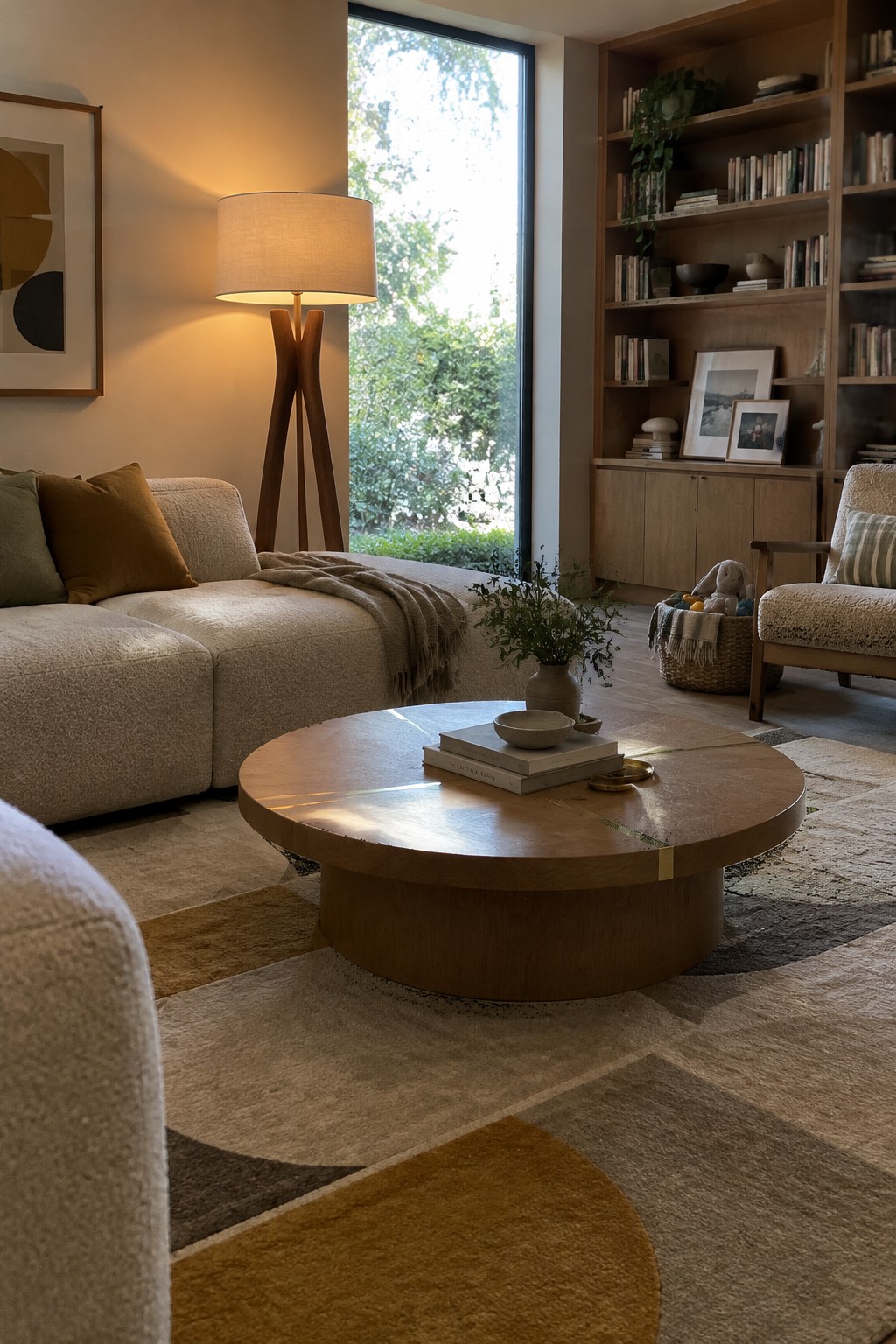
A sculptural floor lamp can bring a little shape to a room without adding more furniture. Here, the wooden tripod base gives the lamp a strong outline, while its fabric shade spreads a softer pool of light across the seating area.
This works well in a living room with light upholstery and simple finishes, especially when there’s a spot beside the sofa for the lamp to stand. Choose a height that lights the room comfortably, and leave enough space around the base so it doesn’t crowd the walkway.
Let Warm Wood Set the Room’s Mid-Century Tone
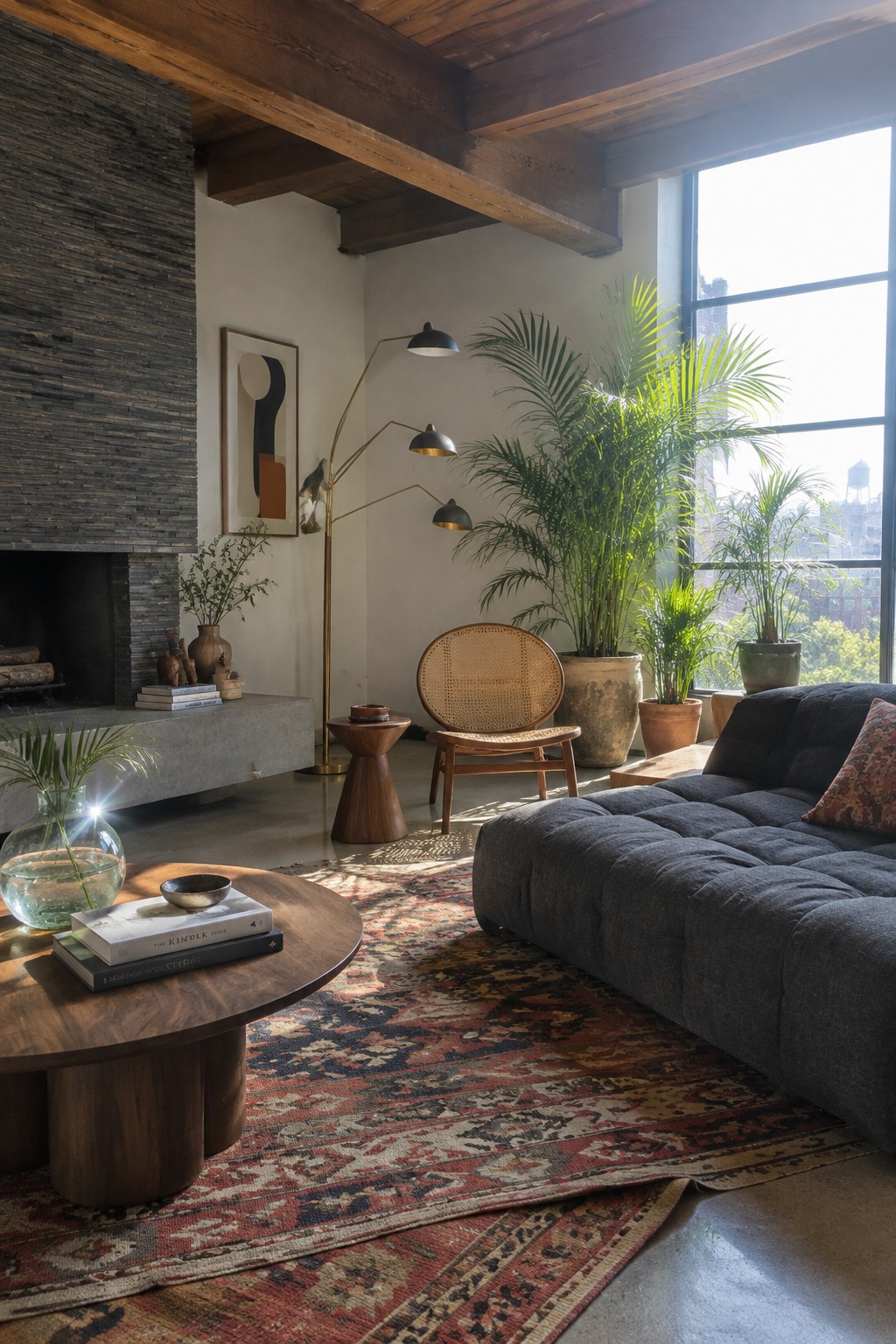
Visible ceiling beams bring a strong mid-century character to this living room without making the furniture feel formal. Their rich wood tone gives the space a clear starting point, while a sculptural floor lamp adds a lighter shape beside the seating.
This idea suits rooms with high ceilings or existing timber details. If you’re adding wood, repeat its tone in just one or two smaller pieces, such as a side table, so the room still feels relaxed rather than overly matched.
Make a Reading Nook Feel Comfortable
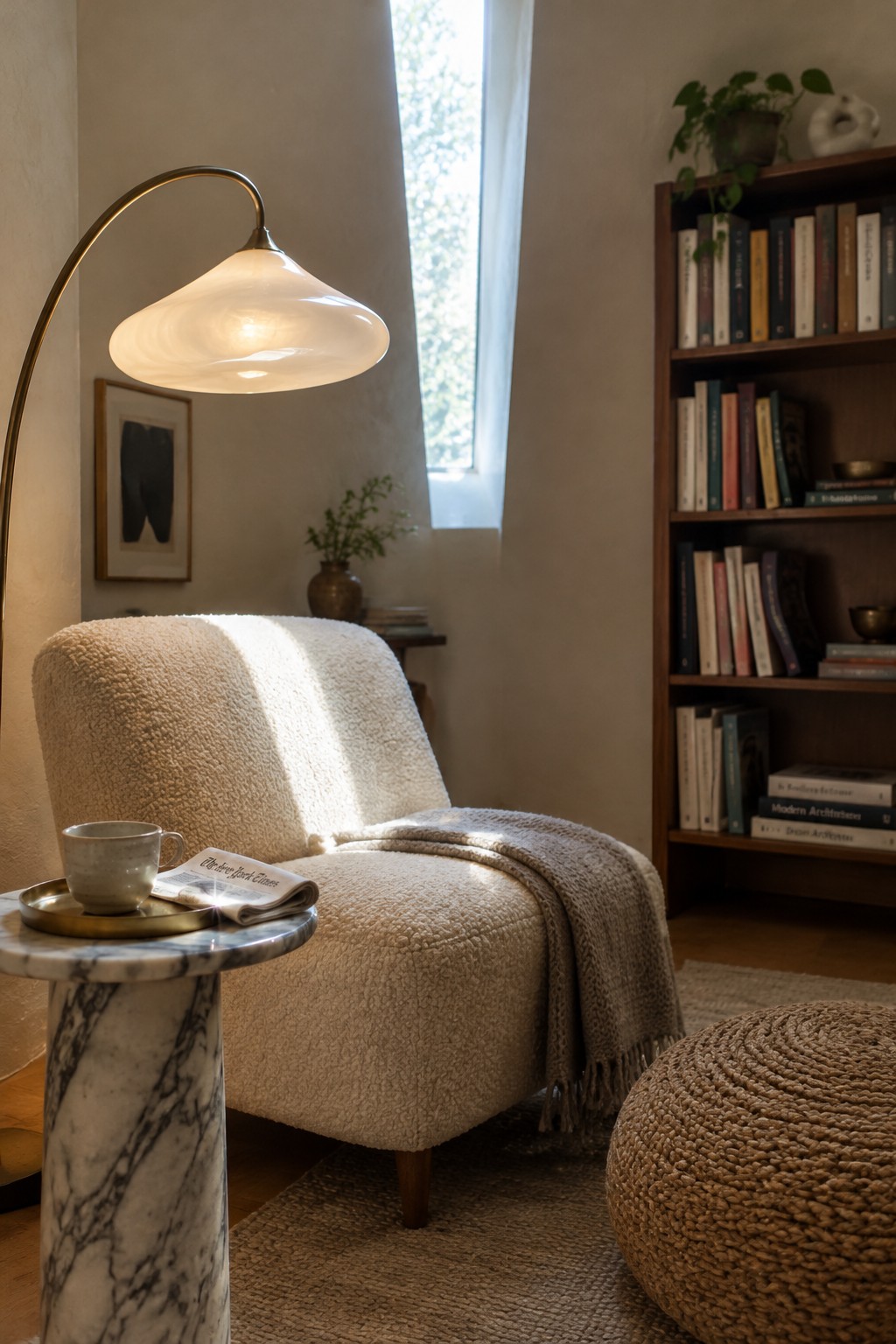
A deep, upholstered chair can make a small corner feel like a natural place to sit and read. Here, the soft-textured seat and curved floor lamp give the nook a clear purpose without adding much furniture.
Try this setup beside a window or bookcase, and choose a lamp that reaches over the chair so the light falls where you need it. Keep a little room nearby for a drink or book, but avoid crowding the seat with extra pieces.
Let Soft Window Light Set the Room’s Mood
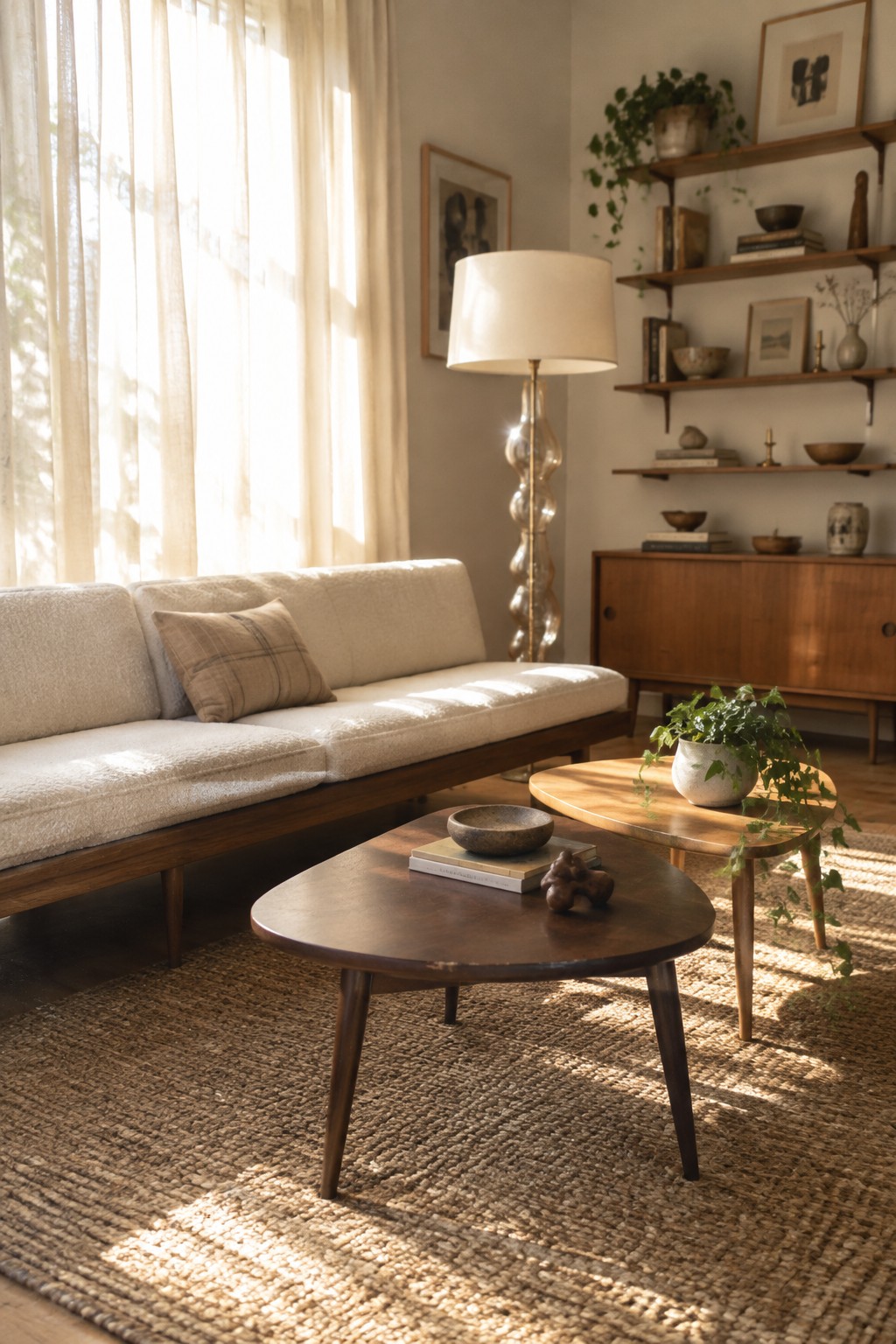
Natural light through sheer curtains makes this living room feel gentle without relying on lots of bright colors. A sculptural floor lamp adds a quieter source of light, so the room can still feel comfortable when the sun fades.
Sheer curtains work well in living rooms where you want daylight but prefer a little privacy. Choose a floor lamp with a simple shape and a warm bulb, and place it near the seating so it helps with reading as well as evening light.
Use Warm Lighting to Bring Out Leather Furniture
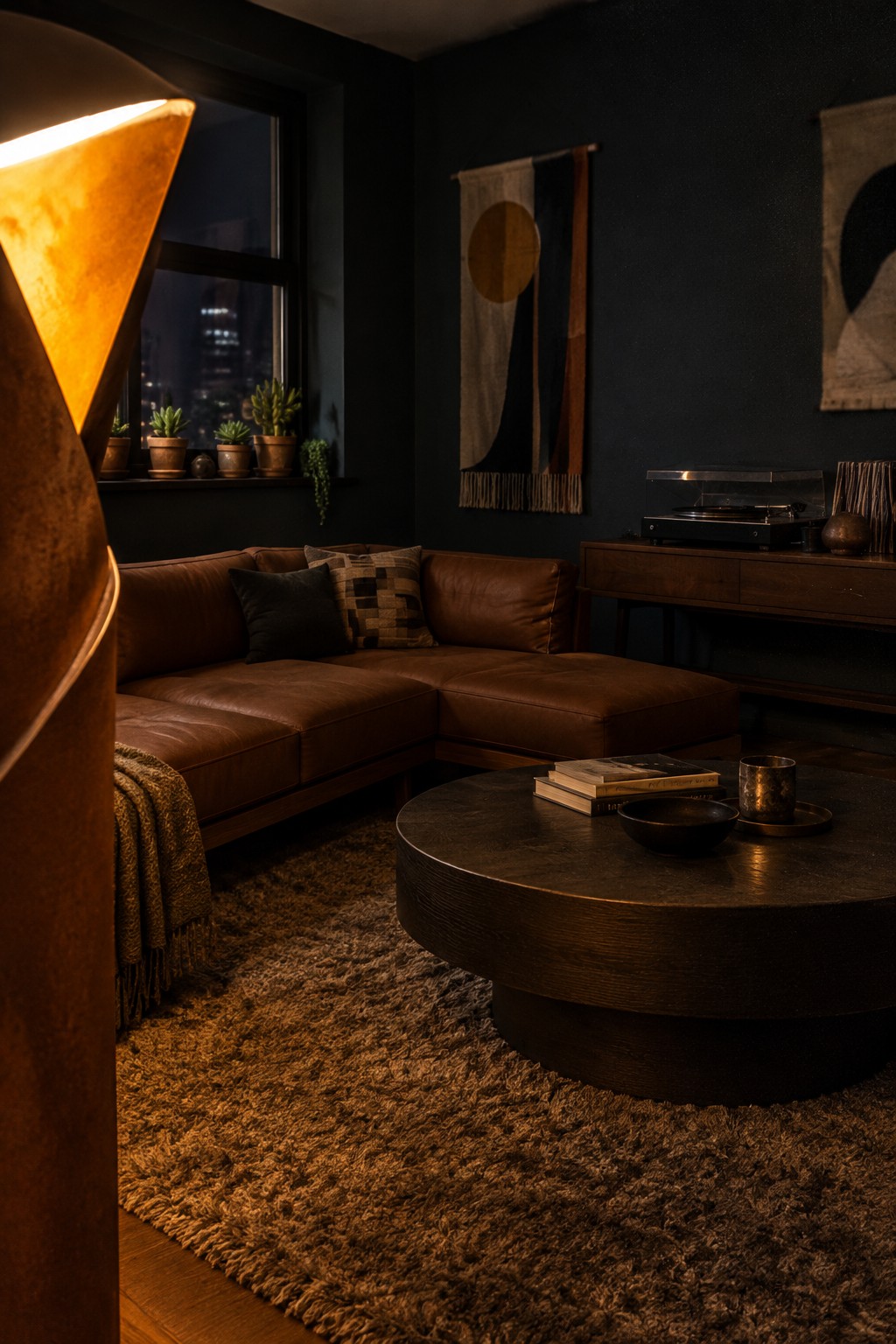
A warm sculptural lamp can make a leather sofa feel less formal and more comfortable in the evening. Here, its amber glow suits the brown leather and gives the seating area a softer look without needing bright overhead light.
This approach works well in a living room with dark walls or rich furniture. Choose a lamp that provides enough light for reading, then keep other light sources gentle so the room does not feel harsh.
Use Abstract Art to Give the Sofa Wall Character
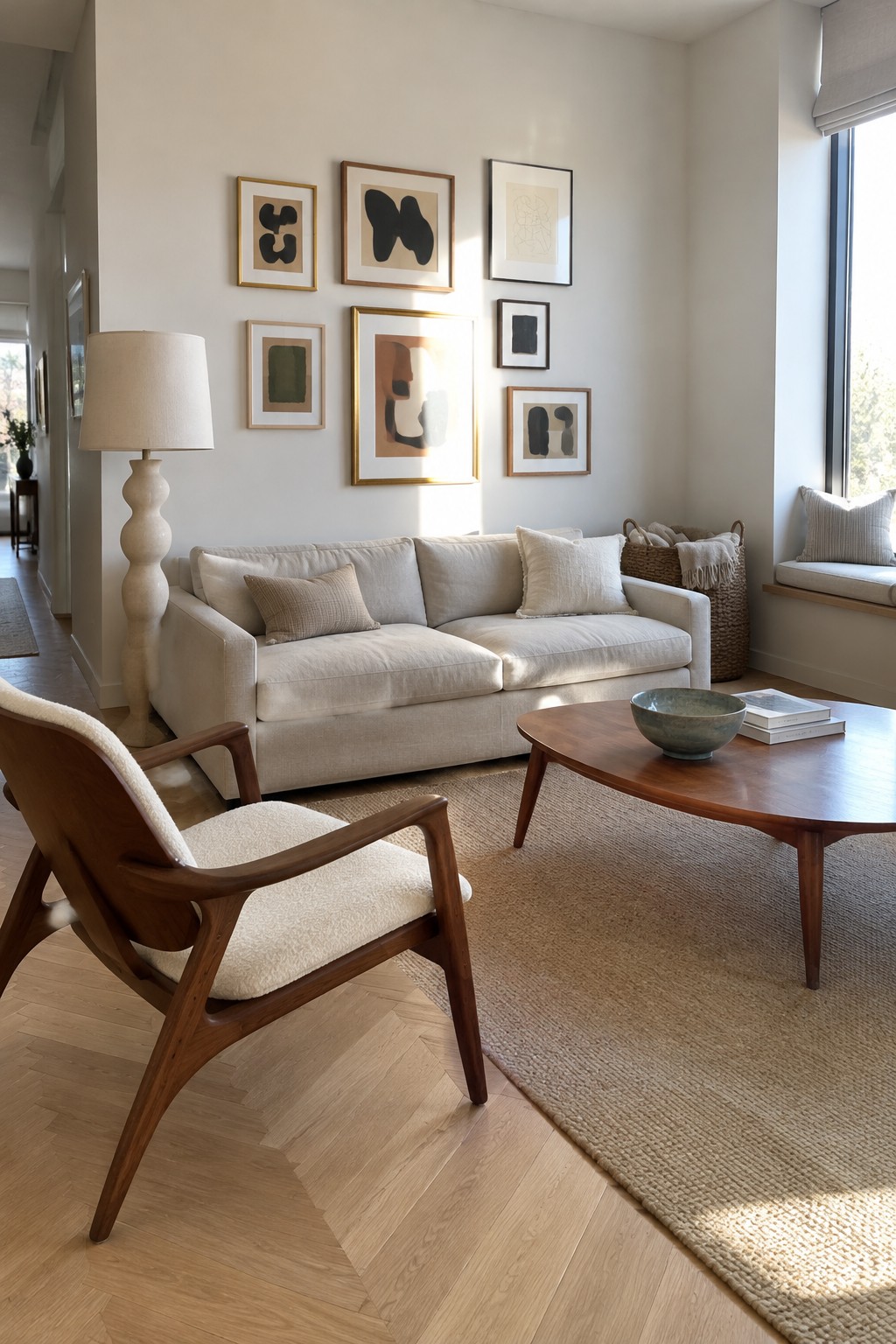
A small gallery of abstract prints can make the wall above a sofa feel considered without adding more furniture. Keeping the artwork in a related, muted palette lets each piece stand out while the group still feels calm.
Try this approach on a wide, mostly open wall, and leave enough space between frames so the arrangement does not feel crowded. A mix of frame sizes works well, but it helps to keep the lower edges near the sofa at a comfortable viewing height.
Use Window Light to Set the Room’s Mood
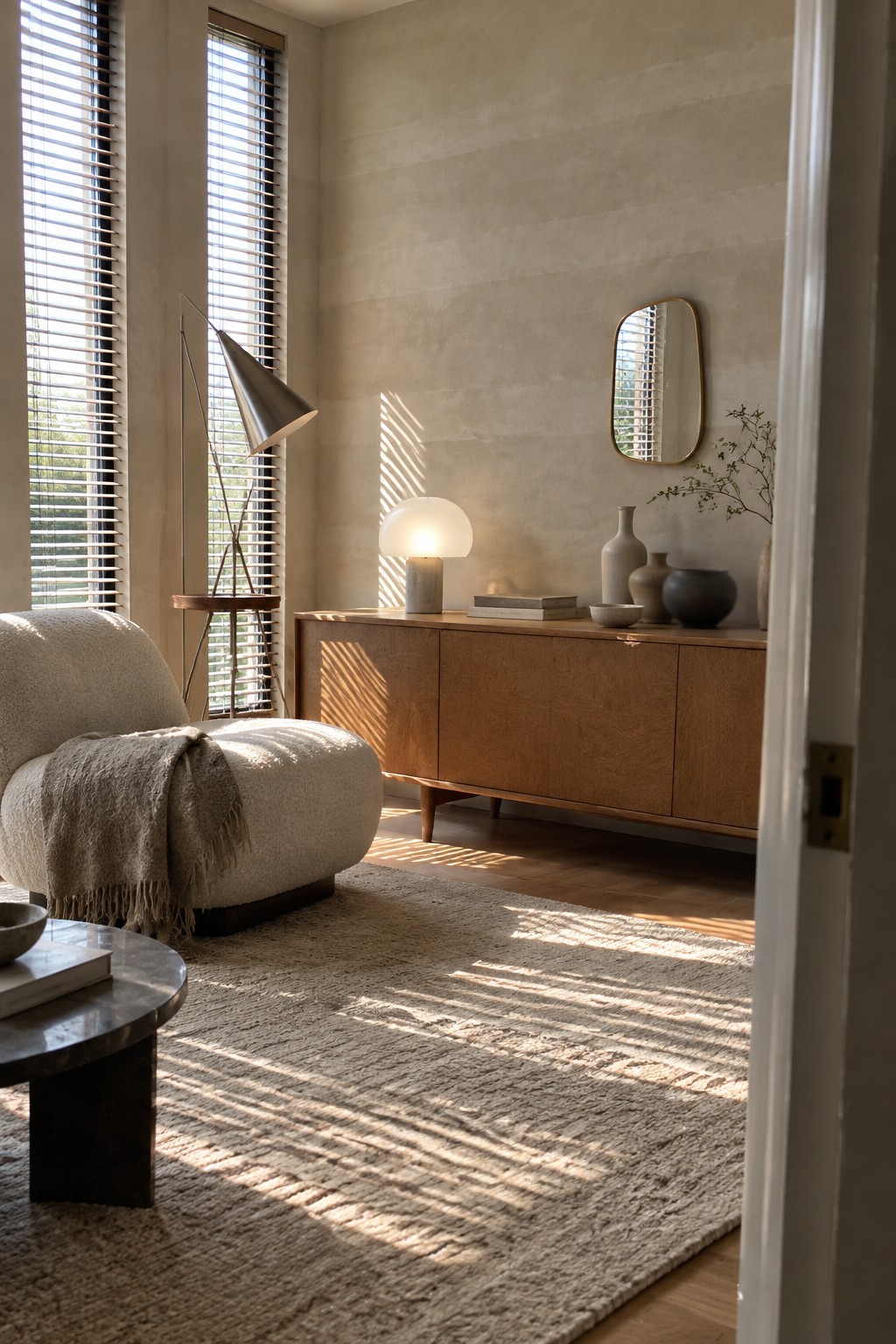
Natural light can do much of the work in a calm living room. Here, sunlight passing through narrow blinds creates a soft pattern across the rug and wood sideboard, while the neutral finishes keep the effect easy on the eyes.
This approach works well in rooms with generous windows and simple furnishings. Choose blinds that let you adjust glare through the day, and keep nearby surfaces fairly uncluttered so the changing light can remain part of the room.
Let a Dark Sofa Set the Room’s Tone
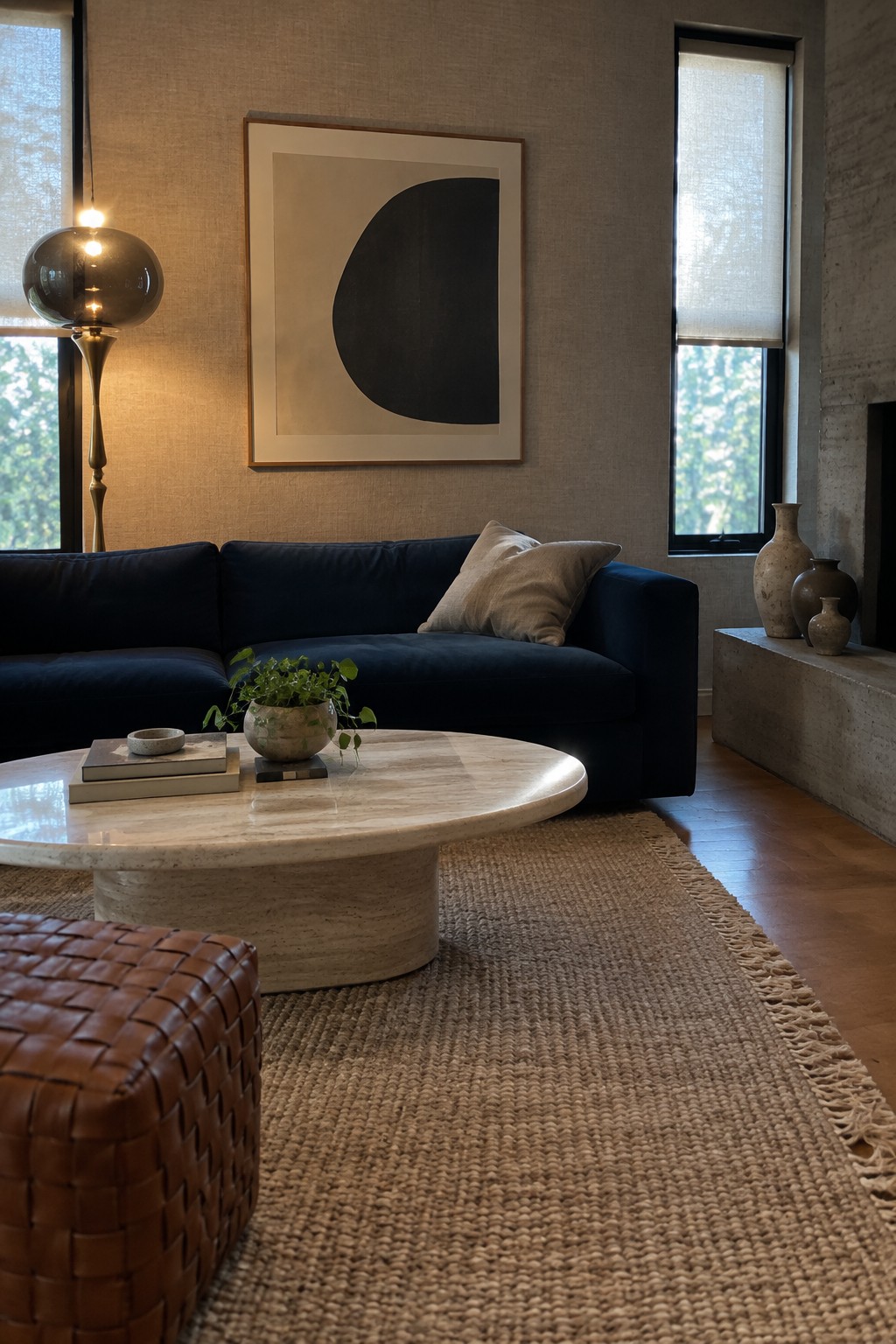
A deep navy sofa gives a living room a strong base without relying on bright color or busy patterns. It works especially well in a neutral room, where the contrast feels clear but still easy to live with.
Try this approach in a space with warm, natural finishes, such as a woven rug or pale stone table. Keep the sofa cushions simple so the dark upholstery stays comfortable rather than overpowering.
Use a Sculptural Lamp to Give the Seating Area Shape
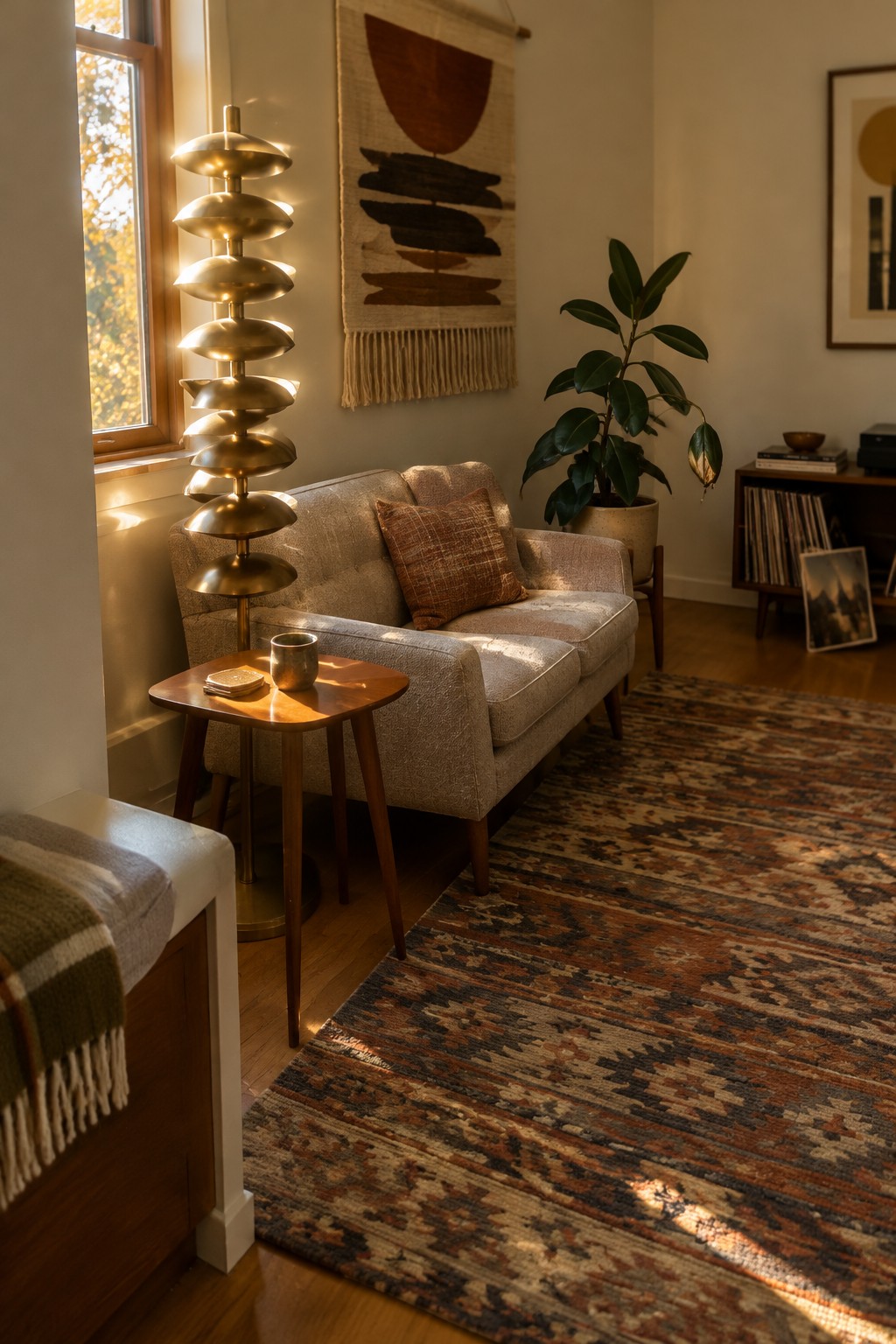
A sculptural floor lamp can bring a strong vertical line beside a low sofa, making the seating area feel more considered without adding another piece of furniture. A stacked brass design has plenty of presence, while its open shape keeps it from taking up much visual space.
Place a statement lamp near one end of the sofa, where it can provide light for reading as well as a clear focal point. In a smaller living room, keep nearby tables and accessories simple so the lamp has room to stand out.
Use a Floor Lamp to Light the Seating Area
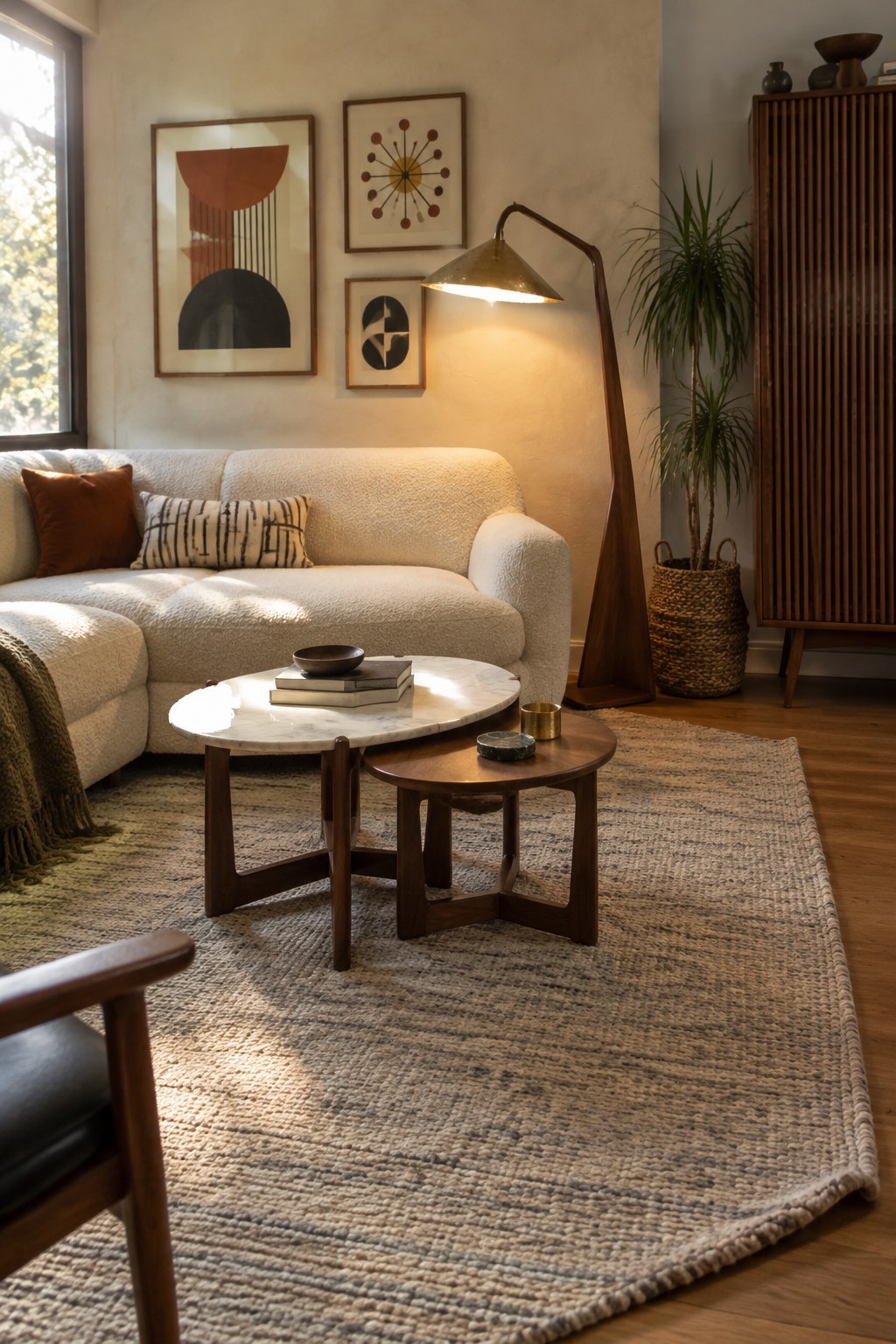
A sculptural floor lamp can make the sofa area feel comfortable for reading or conversation without relying on bright overhead lights. Its long, curved shape reaches over the seating, while the warm glow stays close to where people sit.
This setup works well in a living room with a simple ceiling light or a dim corner beside the sofa. Choose a lamp with a broad shade that directs light downward, and leave enough space around its base so it does not interrupt the walkway.
Choose a Sculptural Lamp for a Cozy Seating Area
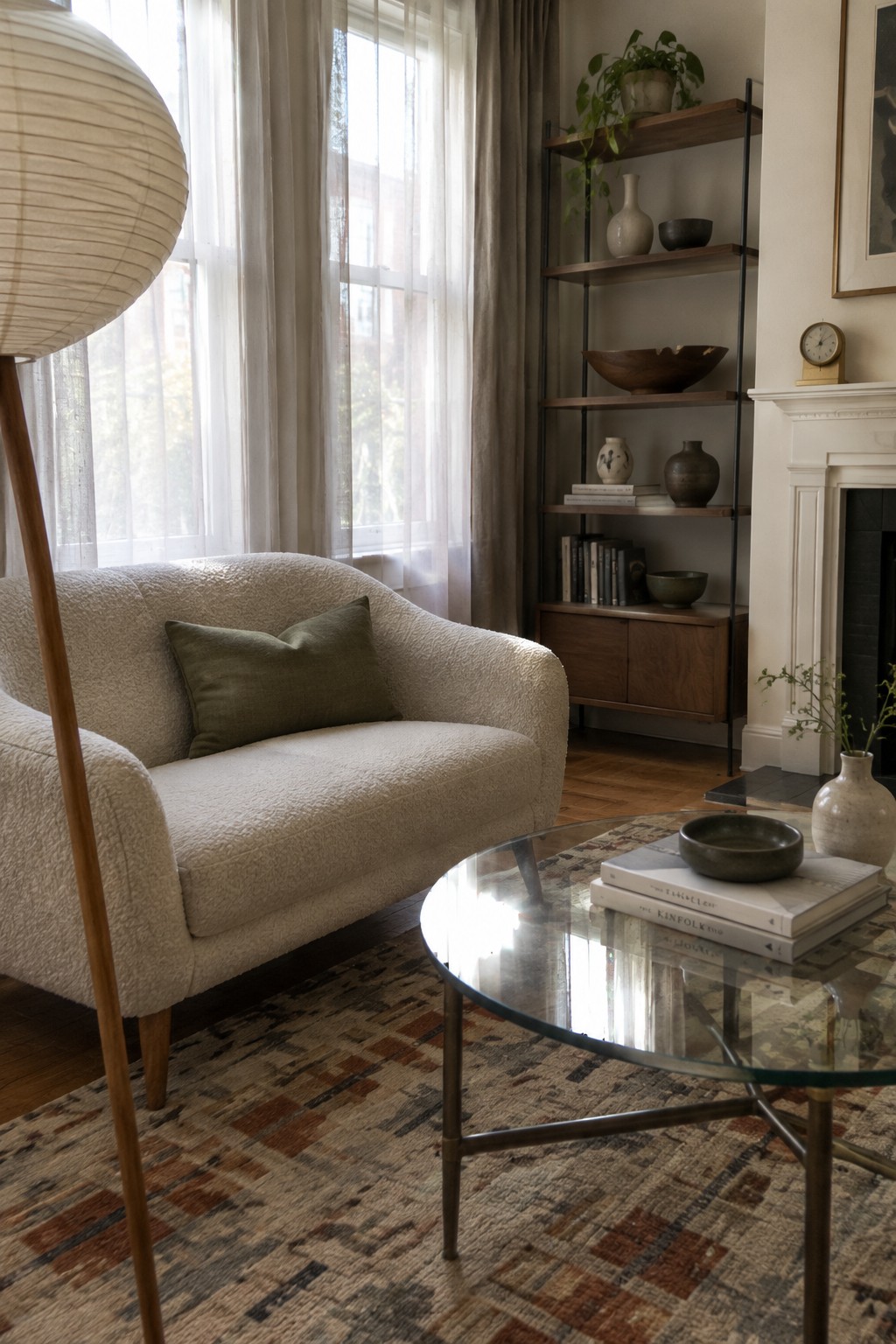
A floor lamp can do more than light a room. A tall lamp with a rounded shade brings a strong shape beside a low, curved sofa, while its warm wood base suits a mid-century living room without making the furniture feel too formal.
Place the lamp near the end of a sofa or beside a reading chair, where it can provide useful light and define the seating area. Leave enough space around the base so it does not crowd the walkway.
Use Built-In Shelves to Keep a Living Room Personal
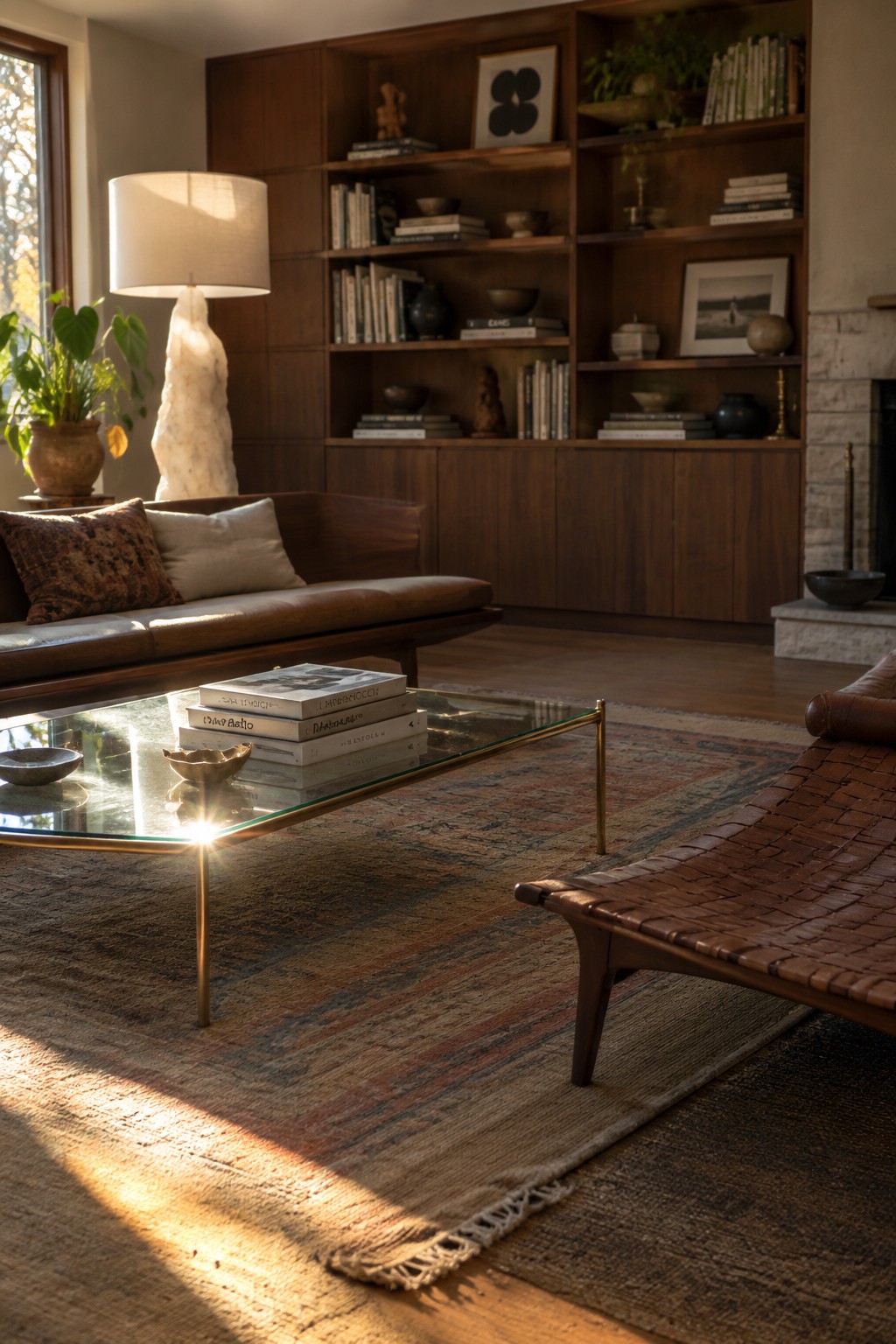
A wall of built-in shelves gives a living room useful storage while leaving room to show a few things that matter to you. Here, the dark wood cabinetry keeps the books and small objects together, so the shelves feel collected rather than cluttered.
This works especially well in a room with a large, uninterrupted wall. Mix books with a few framed pieces or ceramics, and leave some shelf space open. That simple pause helps the display feel relaxed.
Use a Floor Lamp to Warm Up a Neutral Seating Area
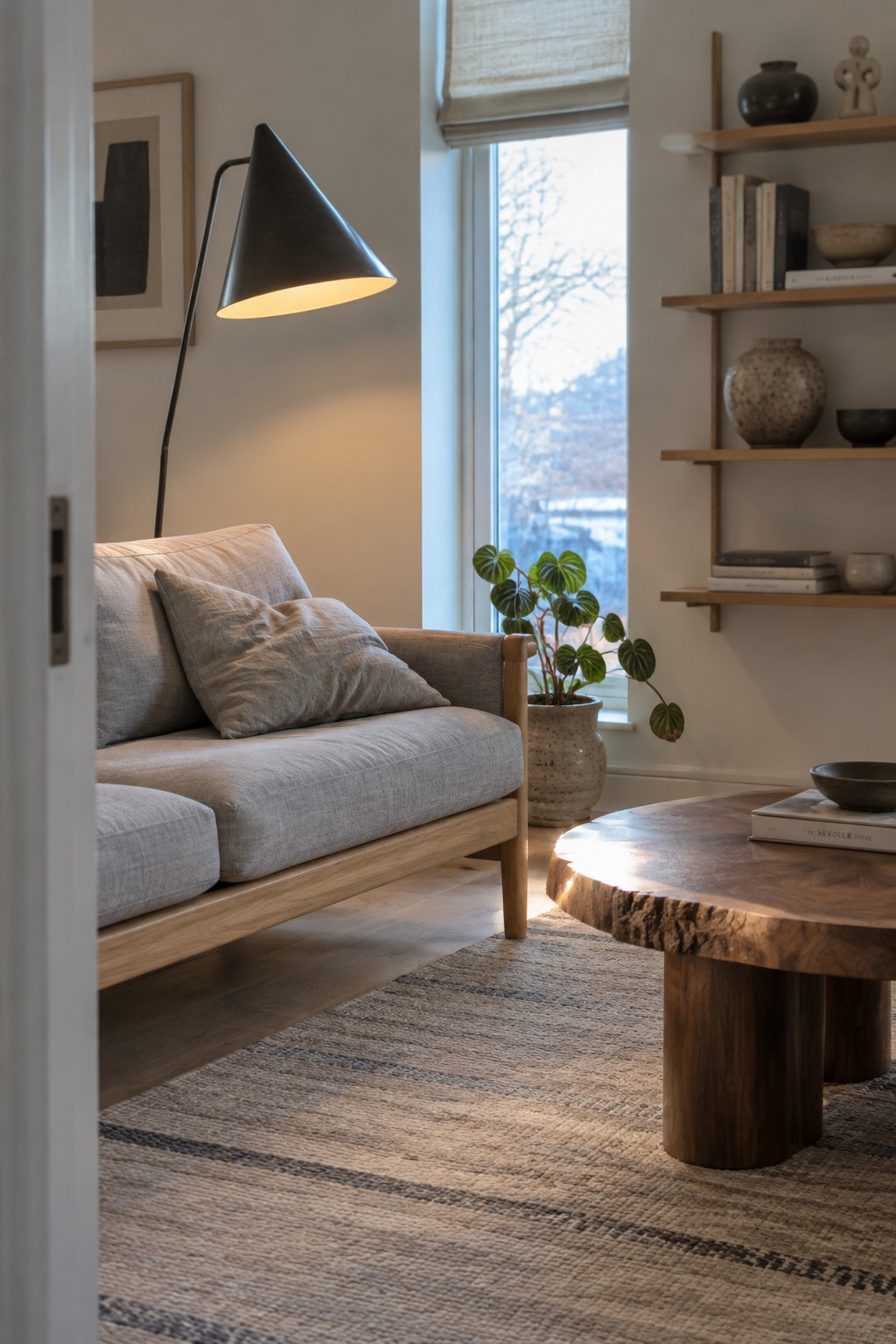
A sculptural floor lamp can make a simple seating area feel more settled, especially when its light is warm rather than harsh. Here, the dark angled shade stands out against the pale sofa and walls without adding another strong color.
Choose a lamp with a shape that suits the room, then place it near a sofa or reading chair where its light is useful. In a smaller living room, a slim base and an adjustable arm can keep the corner from feeling crowded.
Frequently Asked Questions
Q: How do I choose a sculptural floor lamp that won’t overwhelm a small living room?
A: Look for an open, slender shape that leaves plenty of visual space around it. A lamp with an adjustable arm can also tuck beside a sofa when you’re not using it.
Q: What kind of bulb gives the room a soft, mid-century feel?
A: Choose a warm white bulb and a shade that diffuses the light rather than sending a bright beam straight across the room. That gives you a gentler glow for evenings without making the whole space feel dim.
Q: Where should I put a floor lamp next to the sofa?
A: Place it just behind or beside the seat, with the light aimed toward your reading spot or a nearby wall. Keep the base out of the main walkway so nobody has to sidestep it.
Q: Can a sculptural lamp work with furniture that isn’t mid-century modern?
A: Absolutely. Pair its distinctive shape with simpler pieces, and repeat one detail, such as warm wood or a rounded form, elsewhere in the room.
