

Low-profile seating can make a living room feel open, but it needs the right placement and a few warm details to keep the space from feeling bare.
I like how mid century modern rooms pair low sofas and chairs with wood, soft rugs, and lighting that gives the seating area a clear center.
The first thing I notice is whether people can move around comfortably and still face one another without the furniture crowding the room.
In my own home, I would test the layout before choosing accent pieces, since even a beautiful sofa can feel awkward when it sits too far from the rest of the room.
These ideas show practical ways to balance clean lines with the softer touches that make a living room feel lived in.
Make Low Seating the Center of the Room

A low-profile sofa can make a living room feel relaxed without taking up too much visual space. It works especially well when the other furniture stays close to the floor, as with a low wooden coffee table.
Give the sofa enough room to sit comfortably and keep the main walkway clear. This setup suits open living rooms and smaller spaces alike, though a rug can help define the seating area.
Keep Seating Low For A Relaxed Layout
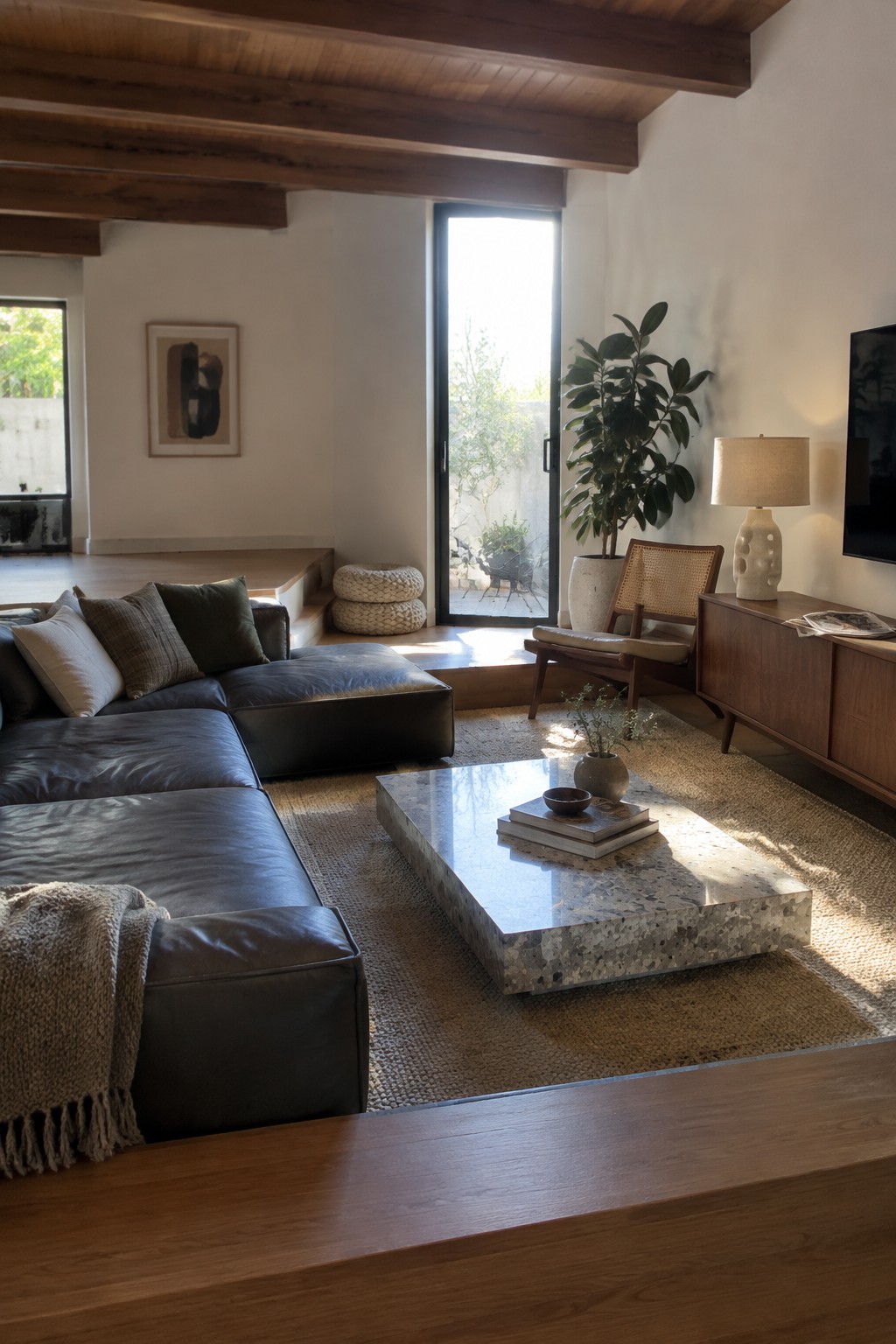
Low-profile seating helps a living room feel open without giving up comfort. Here, a low sectional keeps the main seating area easy to settle into and leaves the room’s wood ceiling beams in view.
This approach works especially well in a room with a low ceiling or an open plan. Choose a sofa with a lower back, then leave enough space around it for people to move through comfortably.
Keep Low Seating From Crowding the Room

A low-profile sofa can make a living room feel more open, especially when its frame leaves some floor visible beneath it. The olive sofa here has a long, low shape that suits a smaller room without making the seating feel bulky.
Leave enough space around the sofa for easy movement, and use a modest coffee table so the seating area stays comfortable to walk through. This approach works well in compact living rooms, but a low sofa can feel a bit lost in a very large space unless the seating is arranged close together.
Keep Seating Low Around the Fireplace
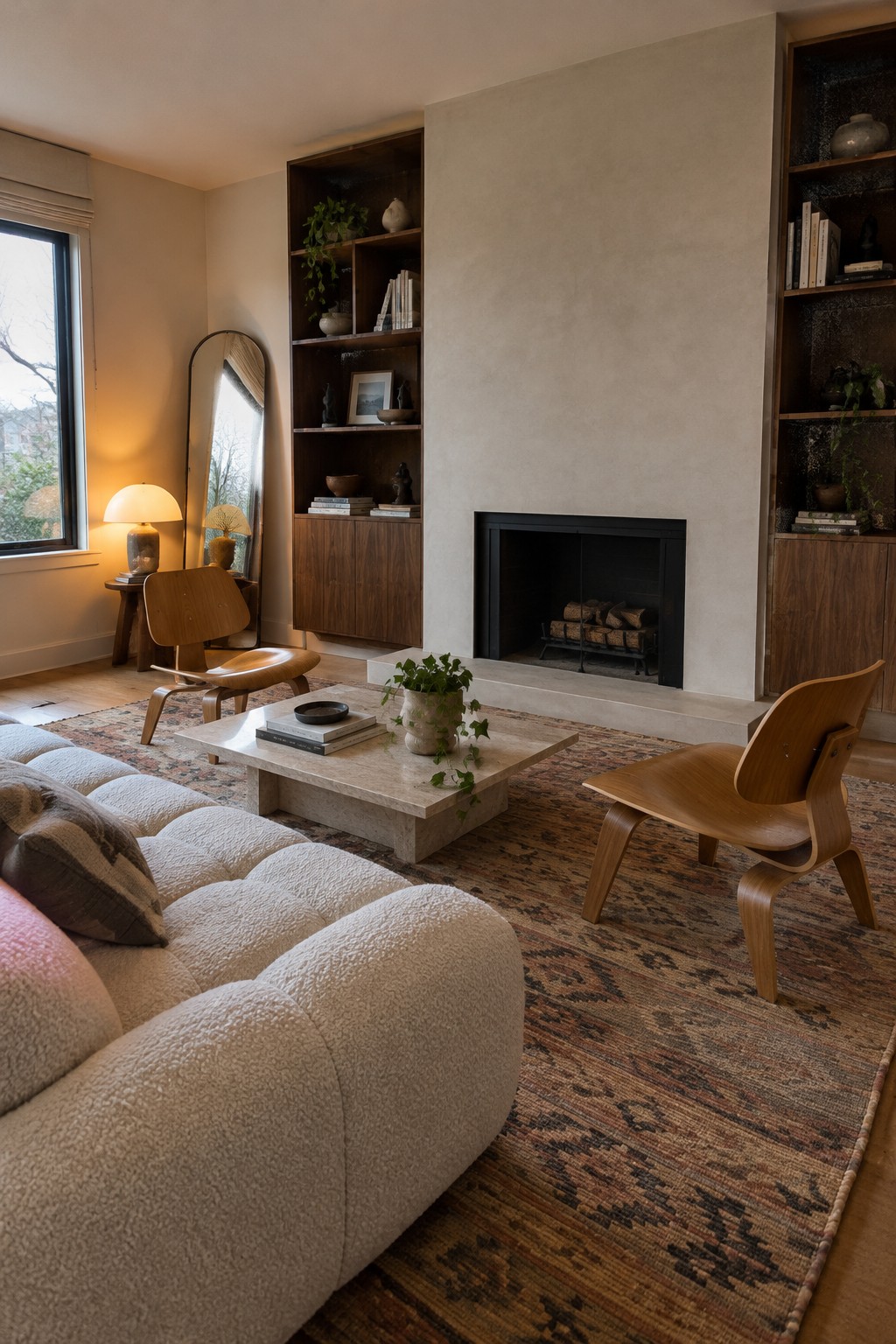
Low-profile chairs and a compact sofa help a living room feel open without leaving the fireplace area empty. The lower furniture also lets the built-in shelves remain part of the room instead of competing with tall, bulky seating.
This layout works well in a living room where people gather around a central fireplace. Choose chairs with open space beneath them, and leave enough room to walk between the seats and coffee table.
Use A Low Sofa To Keep The Room Open

A low-profile sofa can make a living room feel settled without blocking the view across it. Here, the leather sofa sits below the tall windows, so the seating feels comfortable while the room still reads as spacious.
This approach works well in rooms with high ceilings or large windows. Keep the sofa simple and avoid adding bulky pieces around it, so the lower seating does not make the layout feel crowded.
Use a Low Sofa to Keep the Room Open
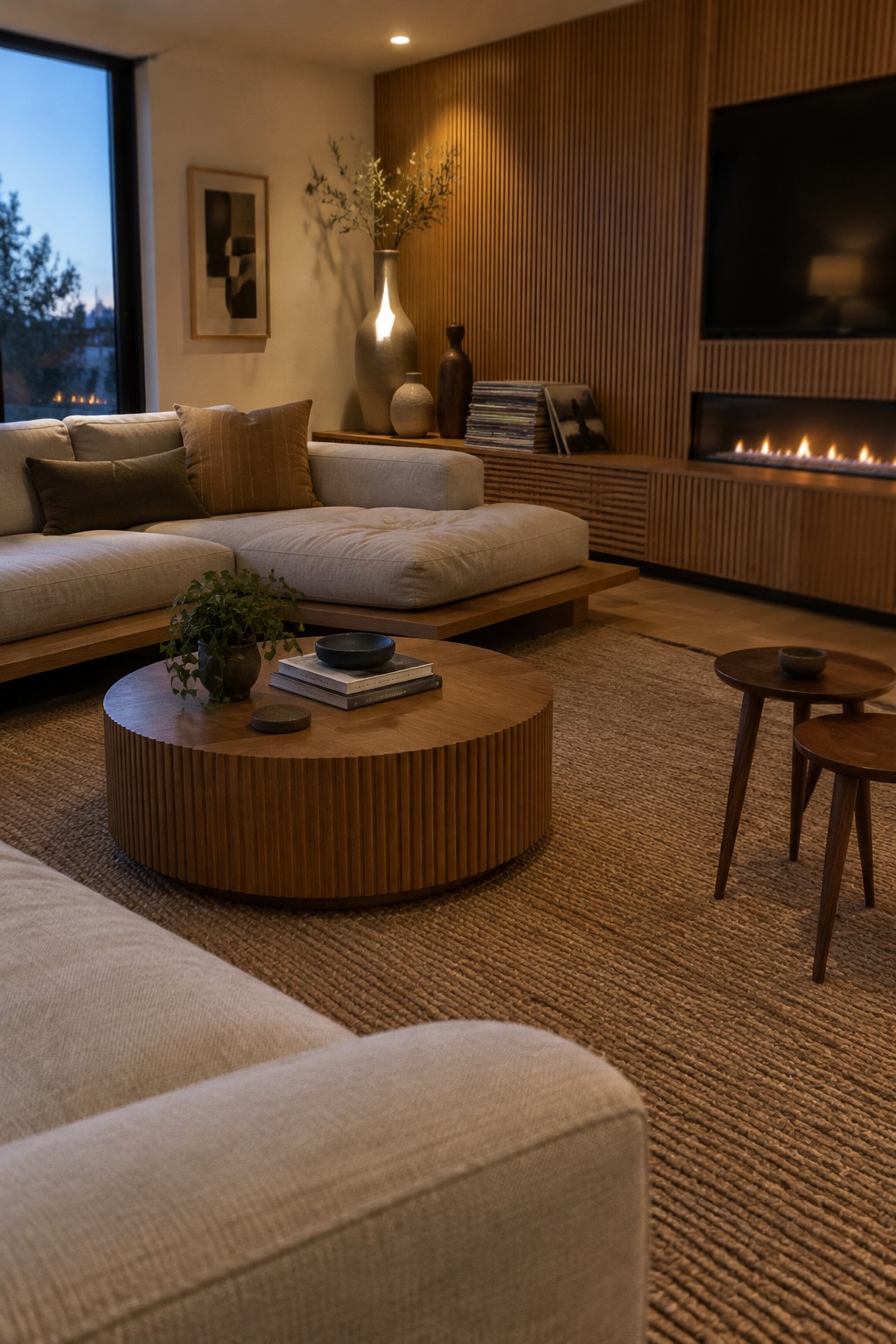
Low-profile seating can make a living room feel relaxed without taking up too much visual space. Here, the sofa sits close to the floor, leaving the wood wall and fireplace as clear features rather than making the seating feel bulky.
This approach works well in rooms where you want a comfortable place to gather but still want an open view across the space. Choose a sofa with a simple shape, and leave enough room around it for people to move easily.
Use a Curved Sofa to Shape the Seating Area

A low curved sofa can make a living room feel relaxed while giving the seating area a clear shape. Here, the sofa follows the edge of a round coffee table, leaving the middle open and easy to move through.
This layout suits a larger living room where a straight sofa might feel too rigid. Choose a table that sits comfortably within the curve, and leave enough space around the sofa so the walkway stays clear.
Use Low Seating In A Narrow Living Room

A low sofa and compact chairs can make a narrow living room feel easier to move through. The seating stays close to the floor, while a slim coffee table keeps the middle of the room useful without taking up too much visual space.
Leave a clear path along one side, and choose chairs with open legs so they don’t feel bulky. This layout works well in long rooms where you want comfortable seating without blocking the way.
Choose a Low Sofa for a Relaxed Layout
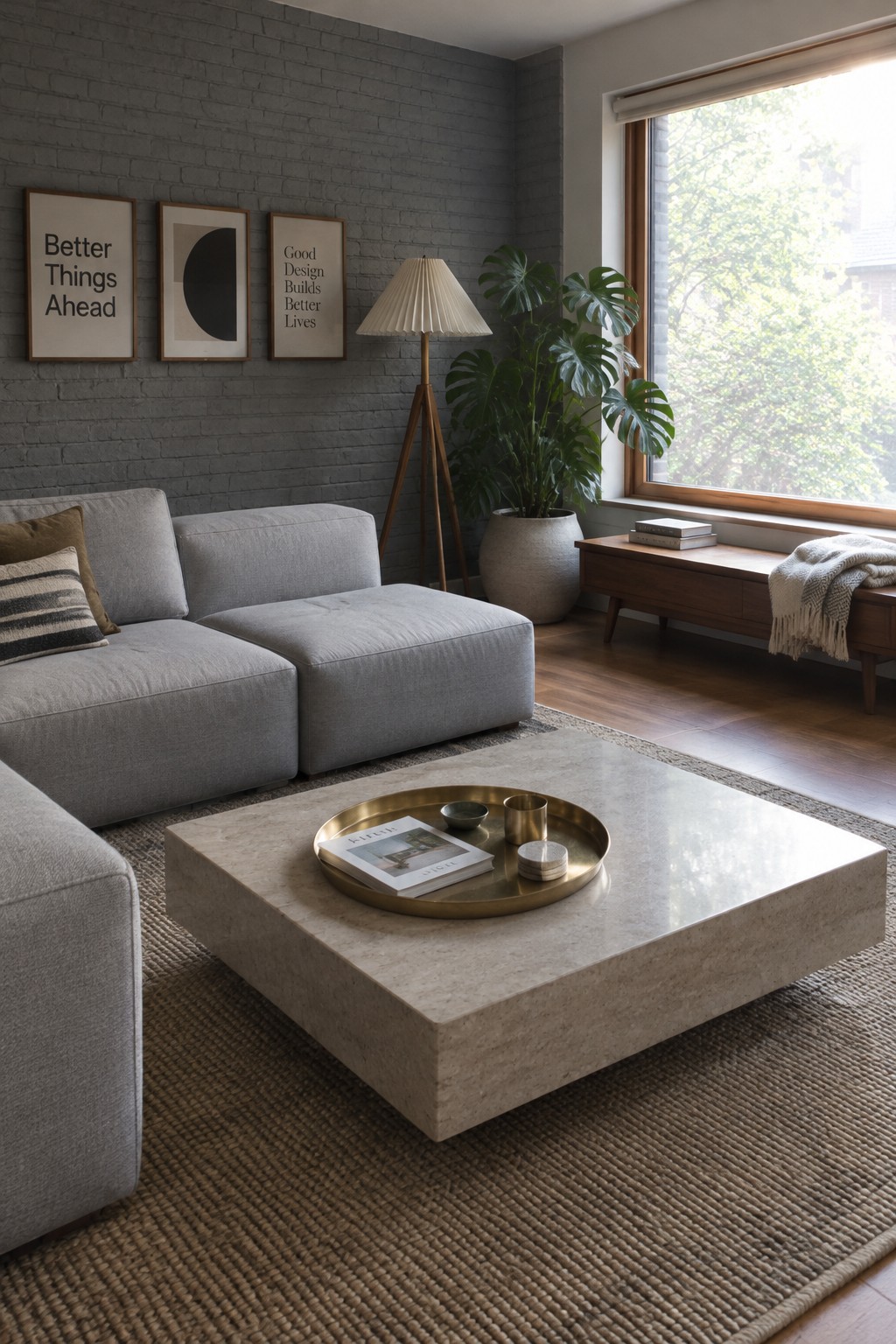
Low-profile seating can make a living room feel settled without blocking the view across it. A broad, low sofa works especially well with a simple coffee table, leaving the seating area comfortable but not visually busy.
This approach suits rooms where you want an easy place to stretch out and talk. Keep enough space around the sofa to move freely, and choose a table height that is practical to reach from the seat.
Choose a Low Sofa With a Visible Base

A low sofa with an open wood base keeps the seating close to the floor without making it look bulky. The raised frame also leaves a little space beneath the cushions, which helps a substantial sofa feel lighter in the room.
This style works well in a living room where you want a relaxed seating height but still need the floor to feel open. Look for a frame that shows clearly below the seat, and keep the sofa’s arms and back fairly simple.
Use Low Seating to Keep a Narrow Room Open

A low sofa and simple chairs leave more of the room in view, which helps a narrow living room feel less crowded. The seating still feels comfortable, but it doesn’t block the sightline to the window.
This layout suits smaller rooms where a bulky sofa might take over. Keep the coffee table low too, and leave a clear path through the space so people can move around easily.
Choose a Low Coffee Table With Open Space Around It
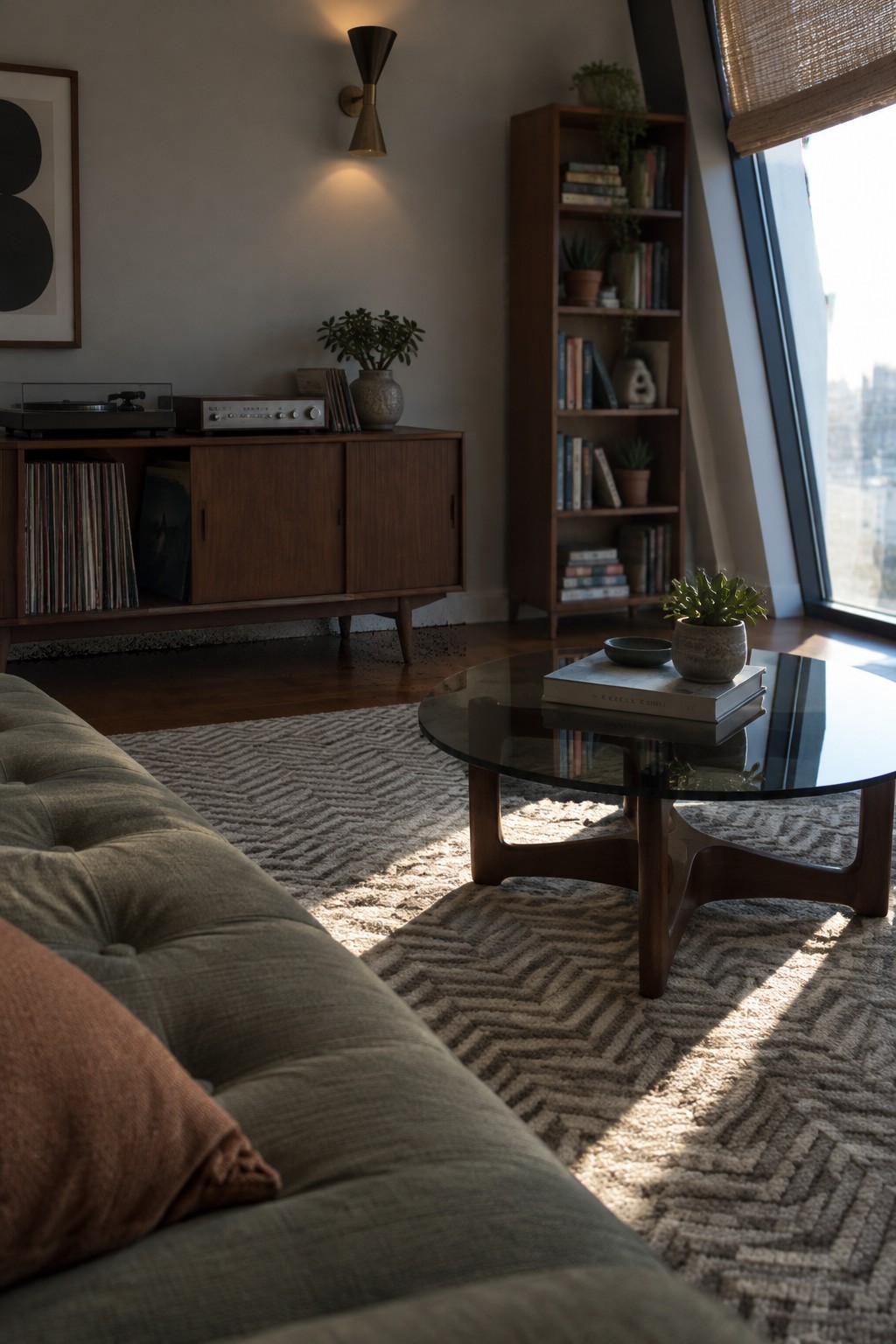
A low coffee table suits low-profile seating because it keeps the center of the room easy to see across. Here, the glass top lets the rug show through, so the table feels less bulky beside the sofa.
For a similar setup, leave enough room to walk around the table and reach it from the sofa. A glass top can work well in a smaller living room, while a wood base keeps the look in step with mid-century furniture.
Use Low Seating to Keep the Room Relaxed

A low, roomy sofa can make a living room feel easy to settle into without taking over the space. Here, the sofa sits close to the floor, while its broad shape gives people plenty of room to stretch out.
This approach suits living rooms where lounging matters more than formal seating. Leave enough room around the sofa to move comfortably, and choose a coffee table that is low enough to reach from the cushions.
Keep Low Seating From Blocking the View
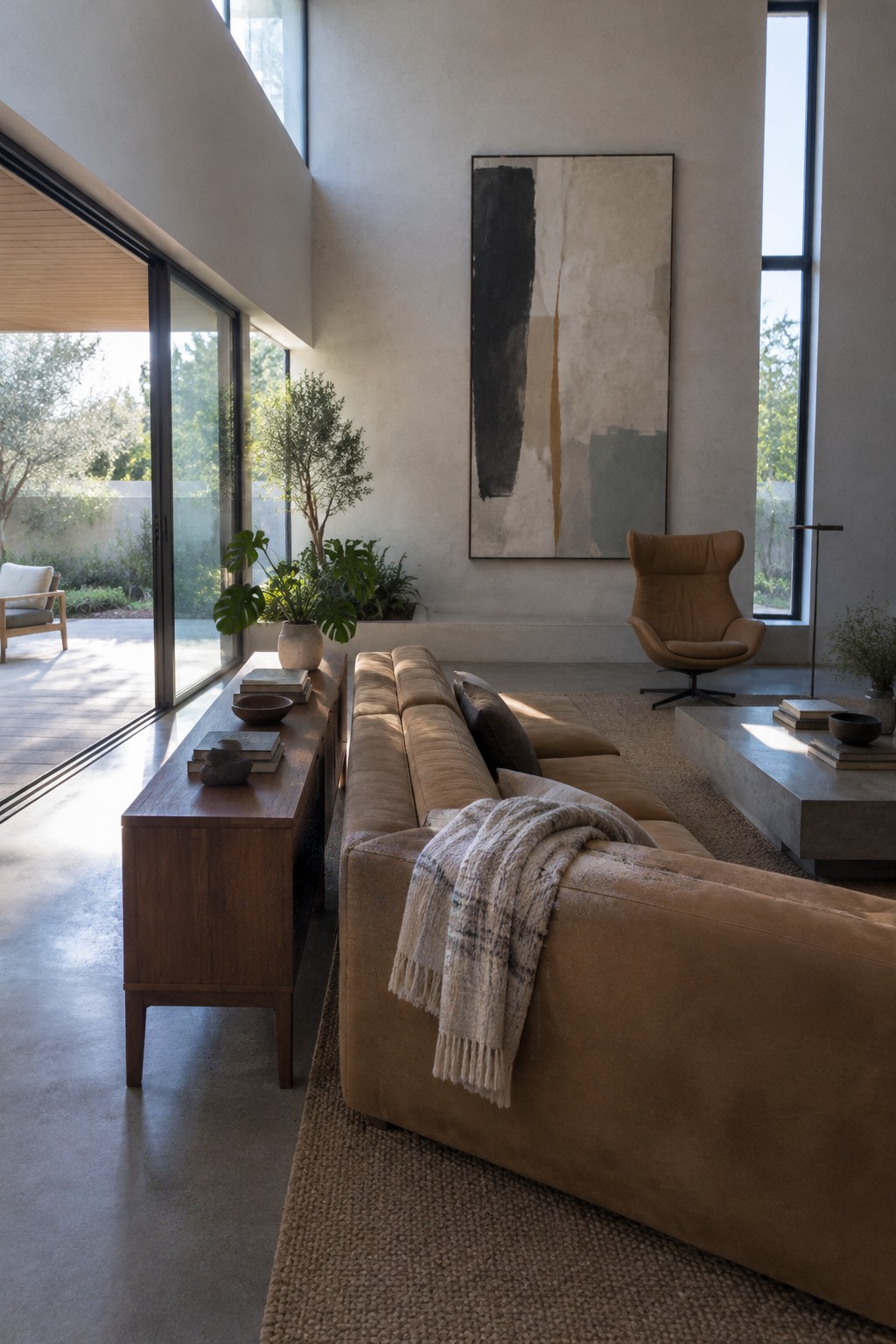
A low sofa can help a tall living room feel more comfortable without cutting across its open proportions. It leaves more of the wall and windows visible, so the seating feels settled while the room still feels spacious.
This approach suits open-plan rooms and homes with high ceilings. Choose a sofa with a lower back, then keep nearby furniture modest in height so sightlines stay clear. The tan sofa and tall abstract artwork show how low seating can sit comfortably beneath a large wall feature.
Use a Daybed for Low-Profile Seating
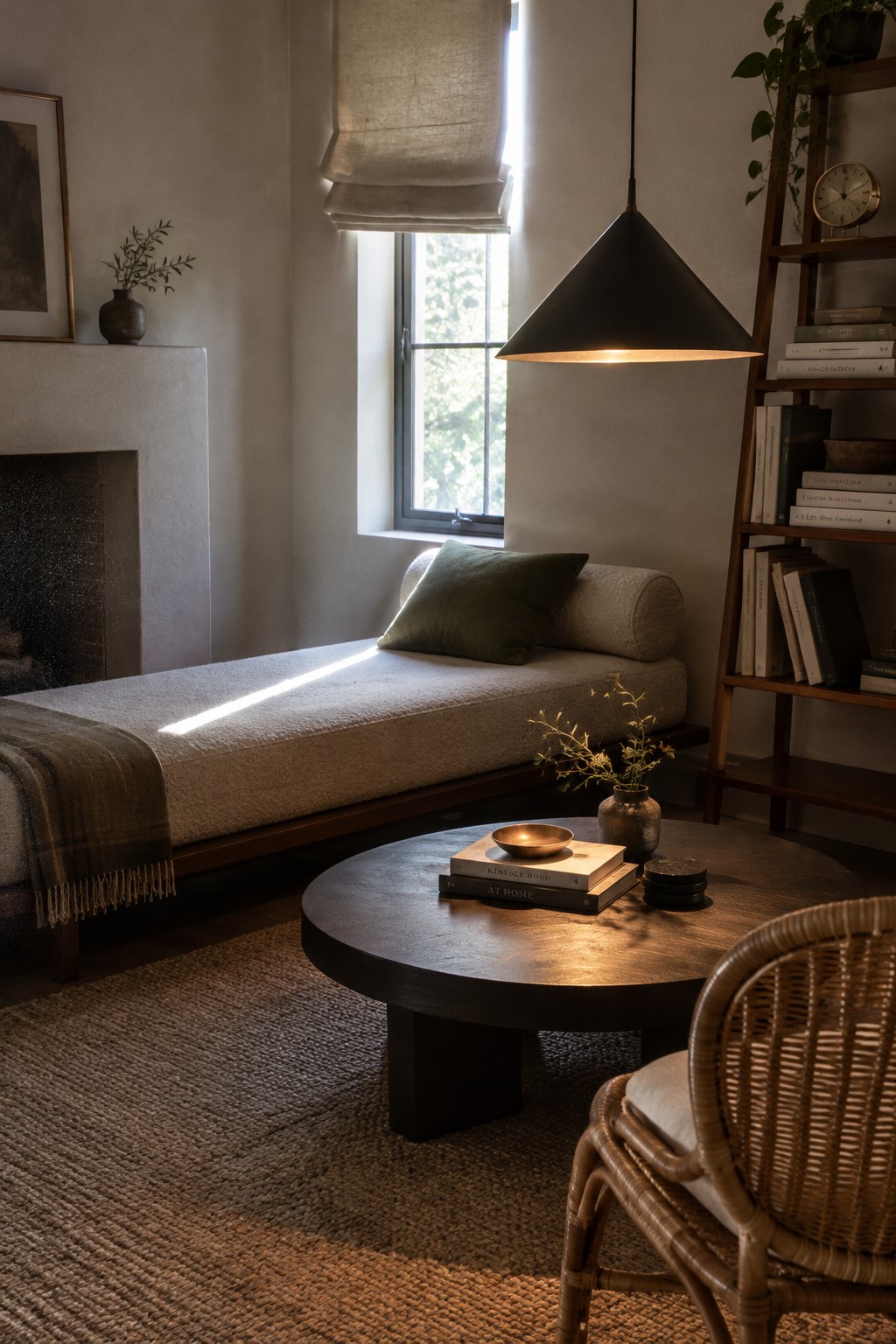
A low daybed can work well in a living room that needs seating without a bulky sofa. Its simple shape keeps the space feeling open, and a few cushions make it comfortable for sitting or stretching out.
Try one along a wall or beneath a window, where it can serve as the main seating spot without blocking the room. A textured cover and one larger cushion are often enough; leave clear space in front so the daybed stays easy to use.
Use a Window Bench to Make Low Seating More Useful
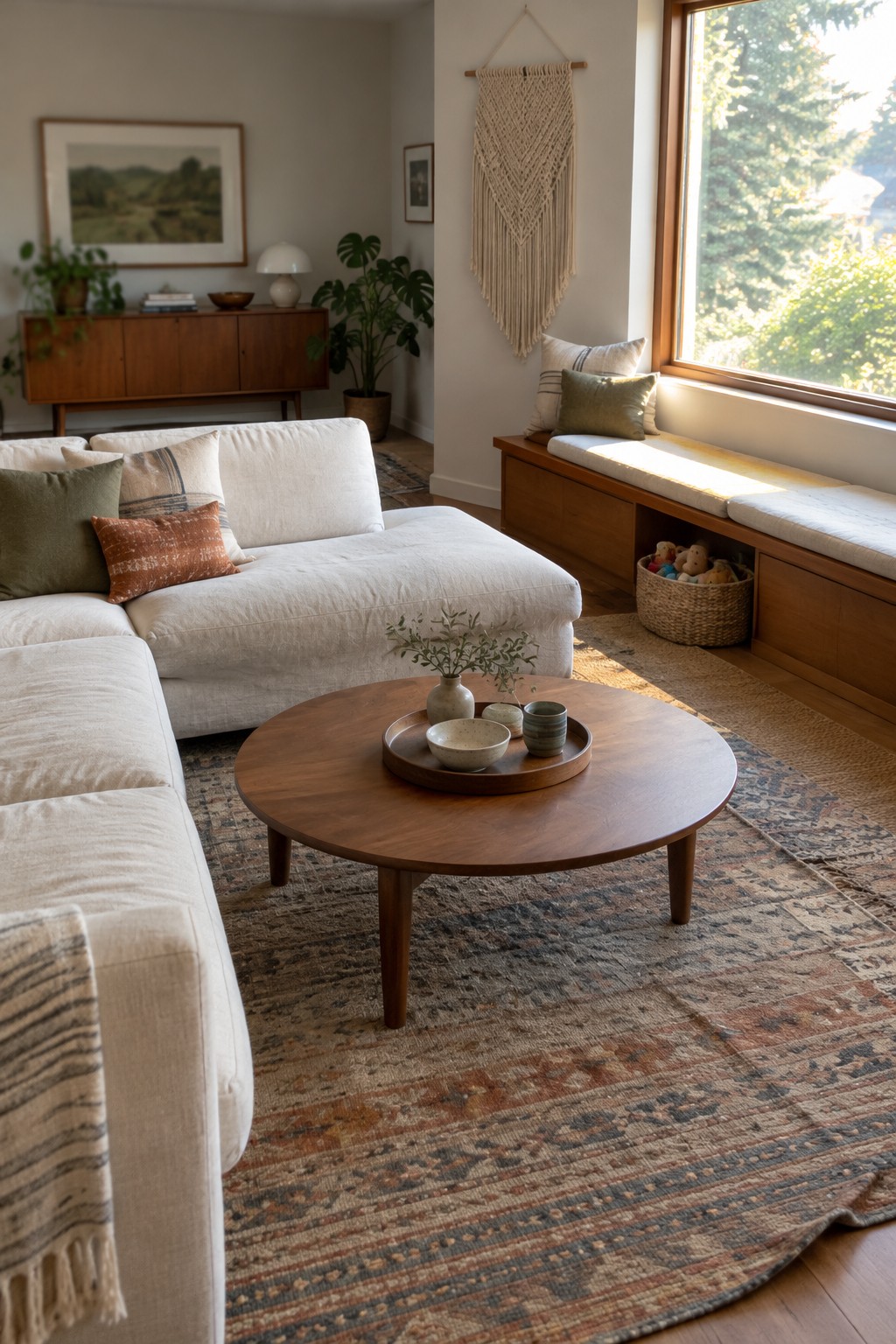
A built-in bench beneath a window gives a living room another place to sit without adding a bulky chair. Its low profile suits a relaxed seating arrangement, and the storage below can help keep toys or extra blankets close at hand.
A window bench works well in a family room or any spot where a wide window leaves little room for separate furniture. Add a firm cushion and a few pillows, and keep the seat depth comfortable enough for everyday use.
Choose a Low Sofa for a Fireplace Seating Area

A low sofa can keep a fireplace seating area feeling open instead of crowded. Here, the curved back sits below the fireplace opening, so the seating stays comfortable without blocking the room’s main feature.
This approach suits living rooms where the fireplace is a natural gathering spot. Keep the sofa a little ways back from the hearth, and leave enough room around it to move easily.
Use Low Seating To Keep The Room Open
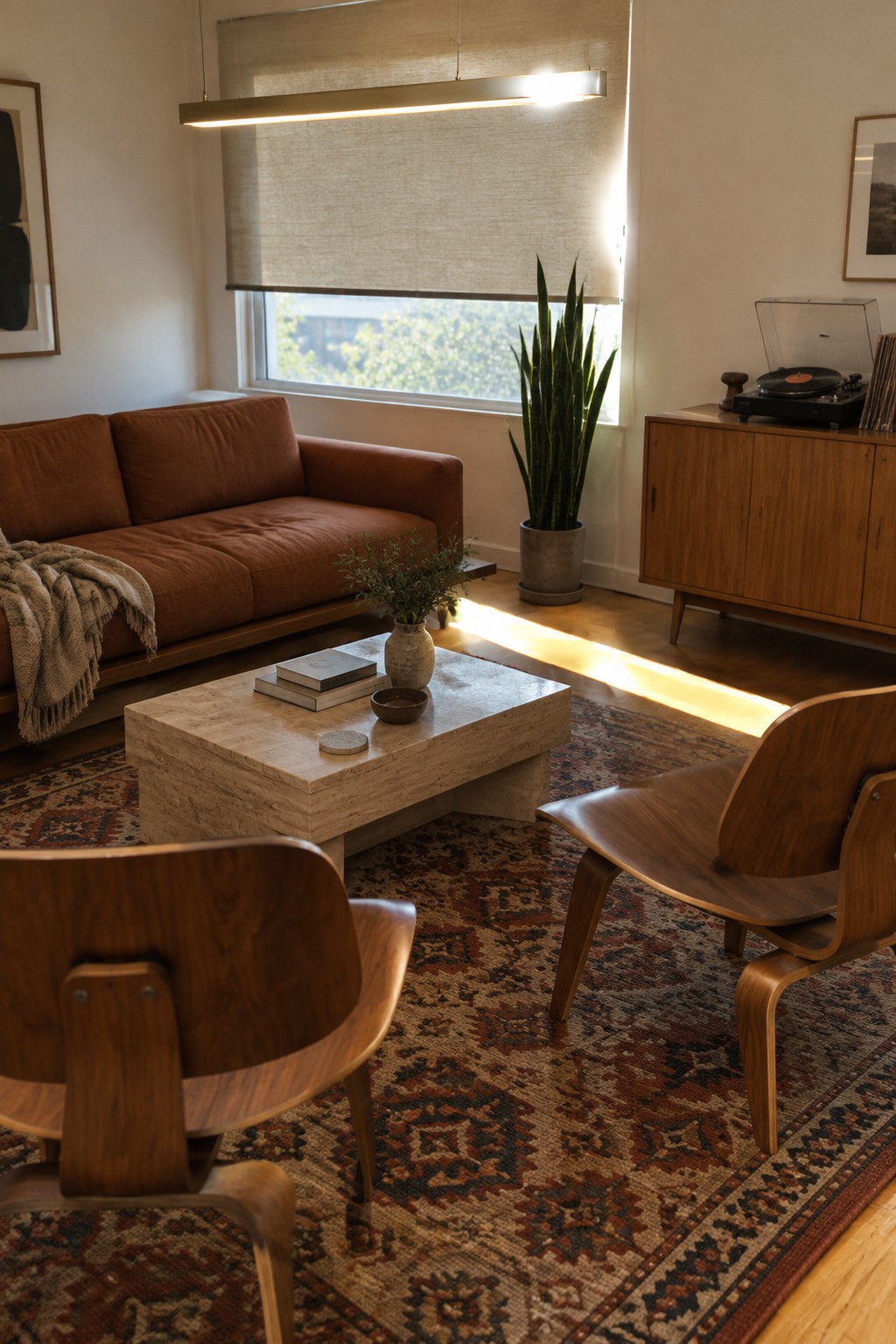
Low-profile seating helps a living room feel relaxed without taking up too much visual space. Here, the low sofa and compact lounge chairs leave the view across the room feeling open, even with several seats arranged around the coffee table.
This approach works especially well in smaller living rooms or spaces where you want the furniture to feel easy to move around. Choose chairs and a sofa with low backs, then leave enough room between them for people to pass comfortably.
Use Built-Ins to Make Low Seating Feel Settled

Low-profile seating can look especially at home beside built-in shelves. The long, low lines of the sofa and the cabinetry keep the room feeling calm without needing much extra furniture.
This works well in a living room where you want books and display pieces close by but still need clear floor space. Keep the shelves from getting too crowded, and let the sofa stay low enough that the built-ins remain easy to see.
Let Low Seating Set a Relaxed Pace
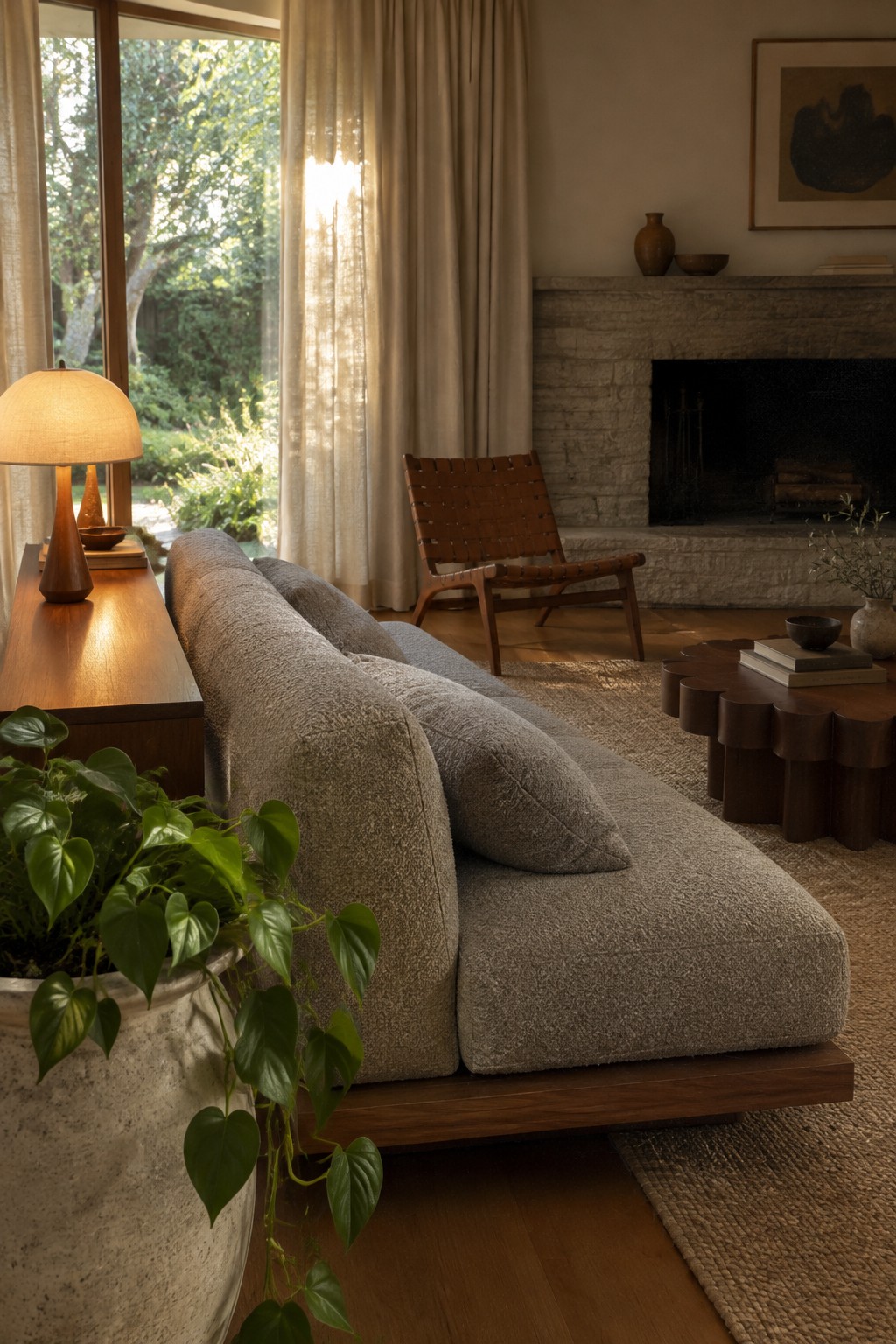
Low-profile seating can make a living room feel settled without taking up too much visual space. Here, a low sofa and a simple wood lounge chair keep the seating area close to the floor, which suits the room’s quiet, unhurried feel.
This approach works well in rooms with generous windows or a fireplace, where taller furniture might interrupt the view or feel crowded. Choose a sofa with a sturdy base, and leave enough space around it for people to move comfortably.
Use a Low Sofa to Leave Room for the View
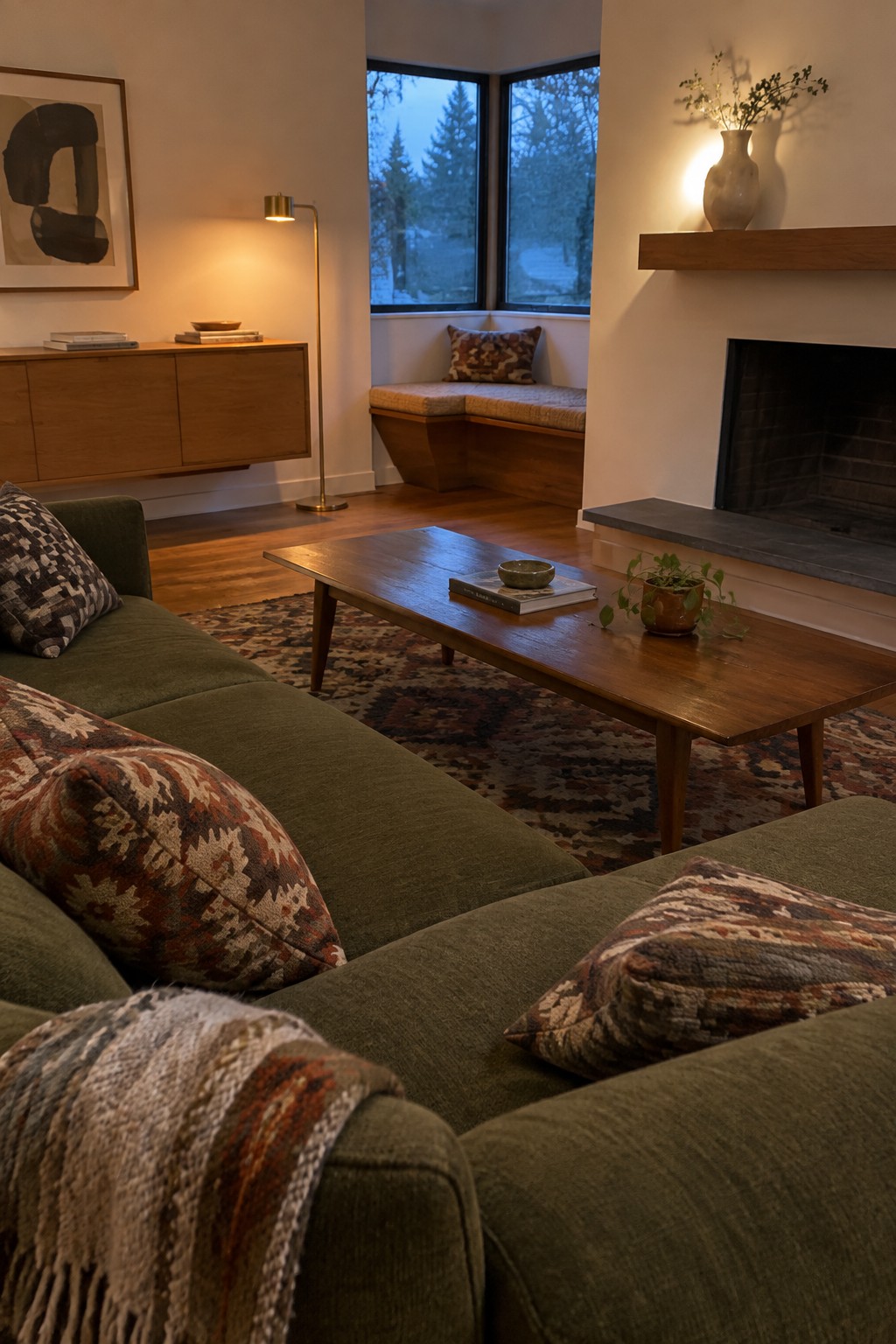
Low-profile seating keeps the middle of a living room feeling open, especially when the sofa does not rise above the window bench or block the windows. Here, the green sectional stays close to the floor, so the room still feels easy to look across.
This approach works well in rooms with a view or a built-in bench. Choose a sofa with a low back, then leave enough space around the coffee table for people to move comfortably.
Choose Low Seating With a Visible Base

A low sofa with a visible wood base keeps the seating close to the floor without making it feel bulky. That open strip beneath the cushions also lets the rug show through, which helps a large sofa sit more lightly in the room.
This works well in living rooms with a low coffee table and plenty of floor space around the seating. Look for a sturdy base that suits the sofa’s proportions, and leave enough room to walk around it comfortably.
Frequently Asked Questions
Q: How low should the seating be for a mid-century modern living room?
A: Aim for a seat height that feels comfortable when you sit down and stand up, rather than choosing the lowest sofa you can find. Low-profile seating can still look true to the style while offering enough support for everyday use.
Q: Will low-profile furniture make a small living room feel bigger?
A: It can, because a lower back leaves more open space in your sightline. Pair it with a slim coffee table and keep the area around the sofa uncluttered so the room feels airy.
Q: What kind of rug works with low-profile seating?
A: Choose a rug large enough for at least the front legs of the sofa and chairs to rest on it. A simple geometric pattern or warm solid color will ground the seating without competing with its clean lines.
Q: How can I make a low sofa comfortable for guests?
A: Add supportive cushions and a few pillows that are easy to move around. Keep a side table close by too, so guests don’t have to reach down to set their drink on the floor.
