

Walnut furniture brings a steady warmth to a living room, but the room still needs enough light and breathing space to keep the wood from feeling heavy.
I find that mid century pieces work best when they have room to show their shape and when the seating arrangement feels comfortable for everyday conversation.
Color, texture, and lighting can soften clean lines without losing the calm, uncluttered character that makes this style appealing.
A rug or a few well-chosen accents can also help connect the furniture to the rest of the room.
Some of these ideas are worth adapting with the pieces and layout you already have at home.
Let Walnut Furniture Set the Living Room’s Warmth

Walnut furniture gives a living room a warm, steady feel without relying on lots of decoration. A wood-framed sofa and matching media console bring that tone into the room while keeping the furniture simple.
This approach works especially well in mid-century modern spaces, where clean lines leave the wood grain room to show. Keep the larger pieces in similar wood tones, then use lighter upholstery to keep the room from feeling too dark.
Use Walnut Furniture To Warm Up A Living Room

Walnut furniture gives a living room a steady, natural feel without needing much extra decoration. A low walnut sideboard is especially useful because it offers storage while keeping the room’s main furnishings simple.
Try a sideboard against a clear stretch of wall, then keep the items on top to a few useful or meaningful pieces. This approach suits mid-century rooms and works well in smaller spaces where closed storage helps keep everyday clutter out of sight.
Make Walnut Built-Ins Part Of The Living Room

Walnut built-ins can make a living room feel settled while giving books and everyday objects a proper place. Here, the shelves reach around a fireplace, so the storage feels like part of the room rather than a separate piece of furniture.
This idea works especially well in a room with an unused wall or fireplace alcove. Keep the shelves useful, and leave some open space so the wood and displayed items don’t feel crowded.
Let Walnut Furniture Warm Up a Neutral Room

Walnut furniture can keep a light living room from feeling too plain. Its rich brown color gives the eye something solid to land on, while still fitting comfortably with cream walls and upholstery. A long walnut media cabinet is a practical place to start.
This approach suits rooms with plenty of natural light and a simple color scheme. Choose a few wood pieces with similar tones, rather than trying to match every finish exactly.
Keep Walnut Furniture Light And Simple

A walnut frame can give a living room a warm mid-century feel without making it look bulky. The slim wooden legs on this sofa leave more of the floor visible, which helps the room feel open.
This approach suits smaller living rooms especially well. Look for a sofa or coffee table with a simple walnut frame, and let the upholstery stay fairly plain so the wood remains easy to notice.
Use Walnut Furniture To Give A Room More Character

Walnut furniture can make a living room feel settled without needing much decoration. Here, the low walnut cabinet and slatted wood screen give the room a clear mid-century look, while the lighter sofa keeps it from feeling too dark.
This approach works well in living rooms with simple, neutral upholstery. Choose one substantial walnut piece, such as a cabinet or sofa frame, and let its wood grain show rather than filling every surface with accessories.
Use Walnut Furniture To Give a Room a Cozy Center

A walnut sofa frame and matching sideboard can give a living room a clear center without making it feel too formal. The wood brings a steady, familiar look to a room with light upholstery and a neutral rug.
This approach suits mid-century pieces especially well, since their simple lines let the wood show without adding visual fuss. If the room already has several dark wood accents, keep the larger pieces to a similar tone so they feel related rather than mismatched.
Use Built-Ins To Keep Walnut Furniture Practical

Walnut built-ins can bring useful storage into a living room without adding more freestanding furniture. Open shelves keep books and a few personal items close at hand, while closed cabinets hide the things you do not want on display.
This approach works especially well in a room with limited wall space. Keep the shelves from getting too crowded, and let the wood finish show through. Here, the built-in shelves sit beside a dark fireplace wall.
Use Walnut Built-Ins To Make a Fireplace Wall More Useful

Walnut shelving built around a fireplace gives the living room useful storage without making the fireplace feel separate from the rest of the wall. The wood also brings a warm, familiar look that suits a mid-century room.
This idea works well when a fireplace wall has enough width for shelves on both sides. Keep the display simple, with books and a few plants, so the built-ins stay practical rather than crowded.
Use a Walnut Fireplace Wall as the Living Room’s Focal Point

A walnut-paneled fireplace wall gives a living room a clear center and brings in the rich wood look that suits mid-century style. The simple paneling keeps the wall from feeling too busy, while framed botanical prints add a bit of personality.
This idea works especially well in a room with a straightforward layout, where the fireplace can anchor the seating area. If you use dark walnut across a large wall, keep nearby upholstery and finishes fairly light so the room still feels comfortable.
Use Walnut Furniture To Warm Up a Neutral Room

Walnut furniture works well in a light, neutral living room because its rich brown color gives the space a little more character without making it feel busy. A low walnut coffee table is an easy way to bring that warmth into the center of the room.
This approach suits homes with pale walls and wood floors, especially when you want a relaxed mid-century feel. Keep the larger pieces simple, and let the walnut grain stand out rather than mixing in too many competing wood tones.
Use Walnut Furniture To Warm Up a Living Room

Walnut furniture works well in a living room because it brings a rich, natural tone without needing much extra decoration. Here, the low sideboard makes that wood a clear part of the room while keeping storage tucked away.
Try a walnut sideboard in a neutral space, especially if you want useful storage that still feels like furniture. Keep the top fairly simple so the wood grain can show.
Use Walnut Furniture To Warm Up a Reading Room

Walnut furniture can make a living room feel settled and comfortable without requiring much extra decoration. Here, the long walnut media cabinet and dark built-in shelves give the room a consistent wood tone, while the light rug and stone coffee table keep the furniture from feeling too heavy.
This approach works especially well in a room that needs both storage and a comfortable place to sit. Use walnut for one or two larger pieces, then bring in lighter surfaces nearby to keep the space from looking too dark.
Use a Walnut Slat Wall Behind the TV
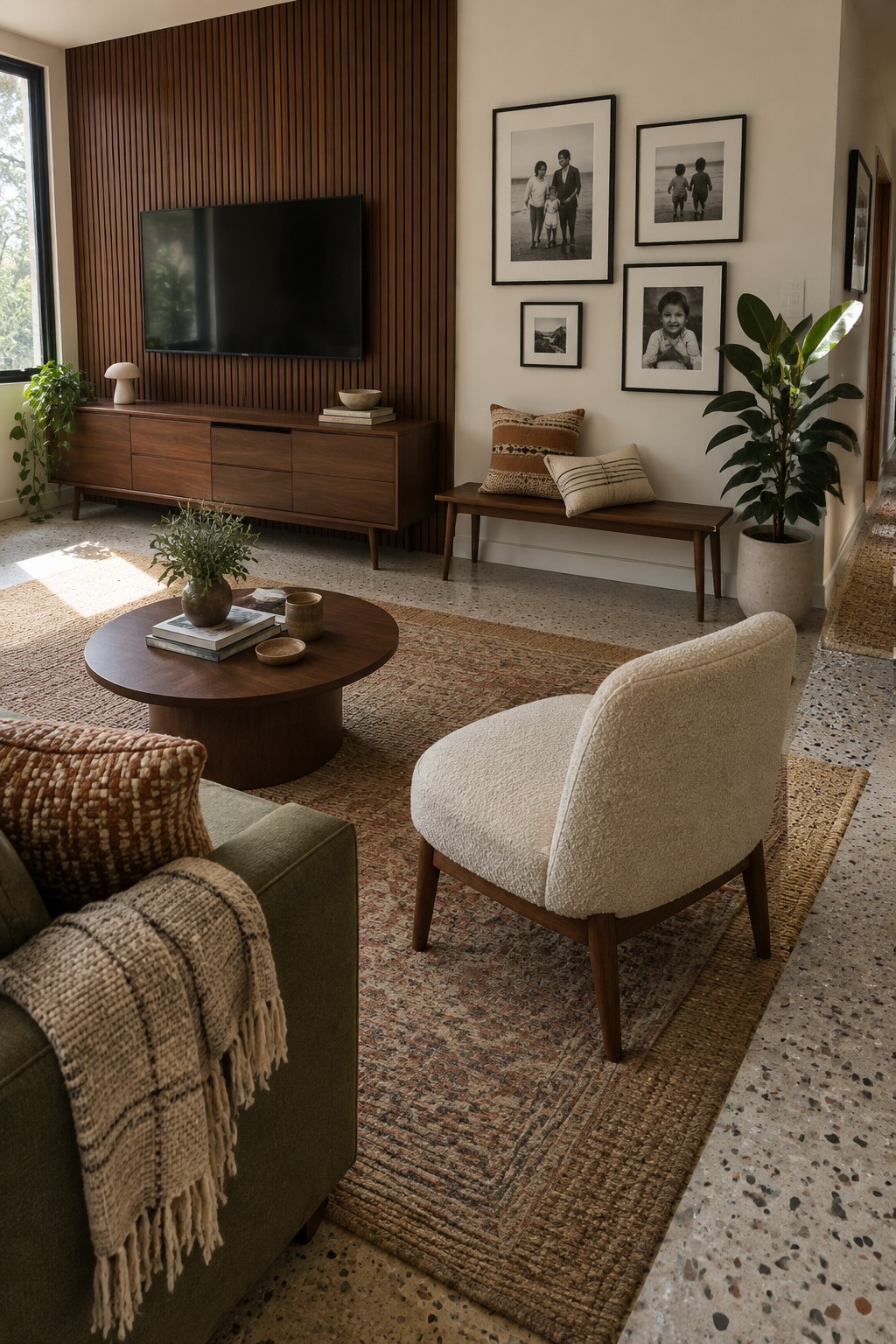
A walnut slat wall is a useful way to give a living room’s TV area a more finished look. The narrow vertical boards add texture, while the wood ties in naturally with a matching media cabinet.
This treatment works well on one feature wall, especially in a room with simple light-colored walls. Keep the surrounding furniture fairly quiet so the slats remain a backdrop rather than making the whole room feel busy.
Make Walnut Storage Part of the Living Room
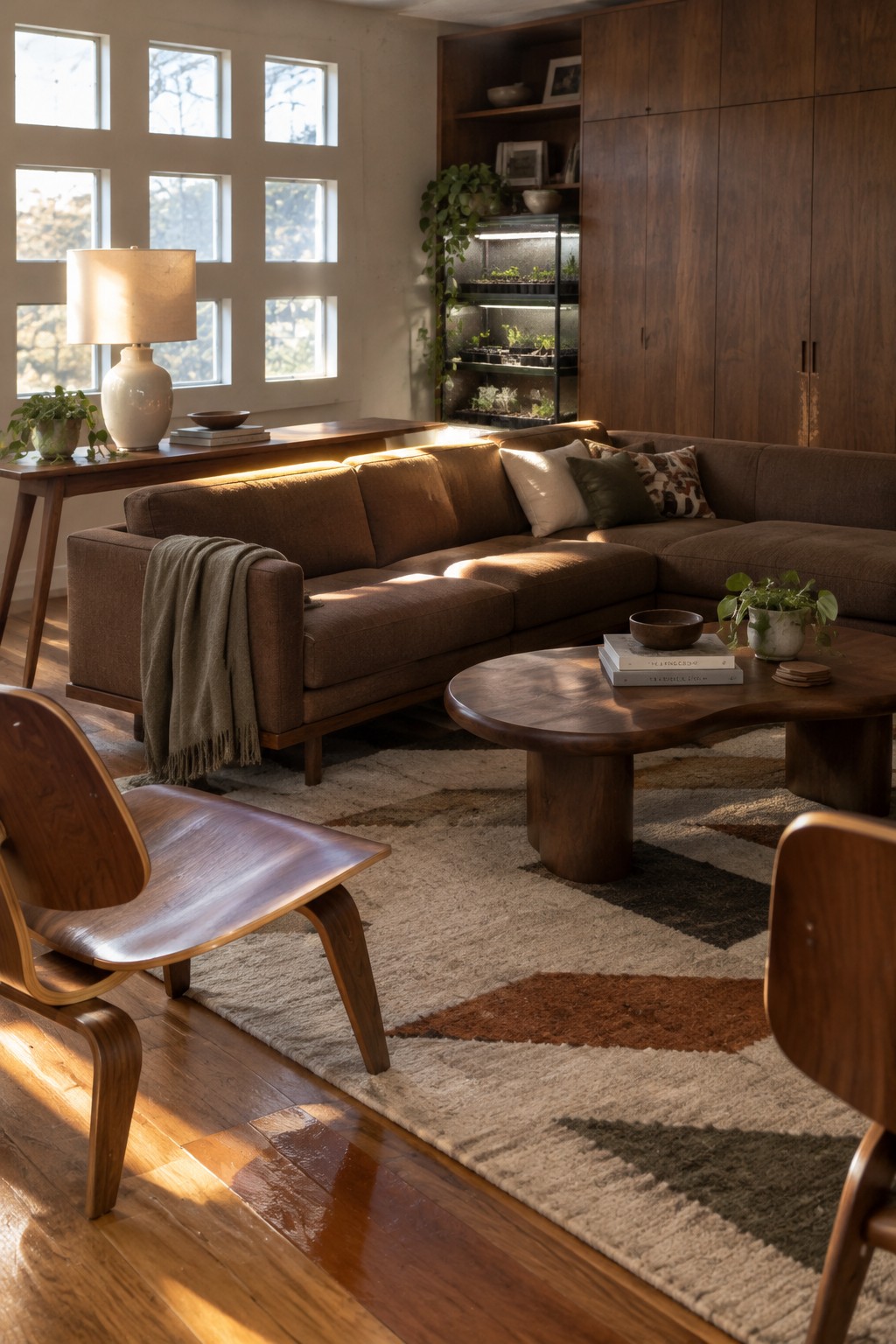
Walnut cabinetry can give a living room useful storage without making it feel separate from the furniture. Here, the tall built-in cupboards and open shelves bring a consistent wood finish into the room, while the open section keeps the larger run from feeling too closed in.
This approach works well when a living room needs space for everyday items but freestanding cabinets would crowd the layout. Use closed cupboards for things you would rather keep out of sight, and leave a small area of shelving for books or plants.
Use Walnut Furniture To Bring Warmth Into a Bright Room
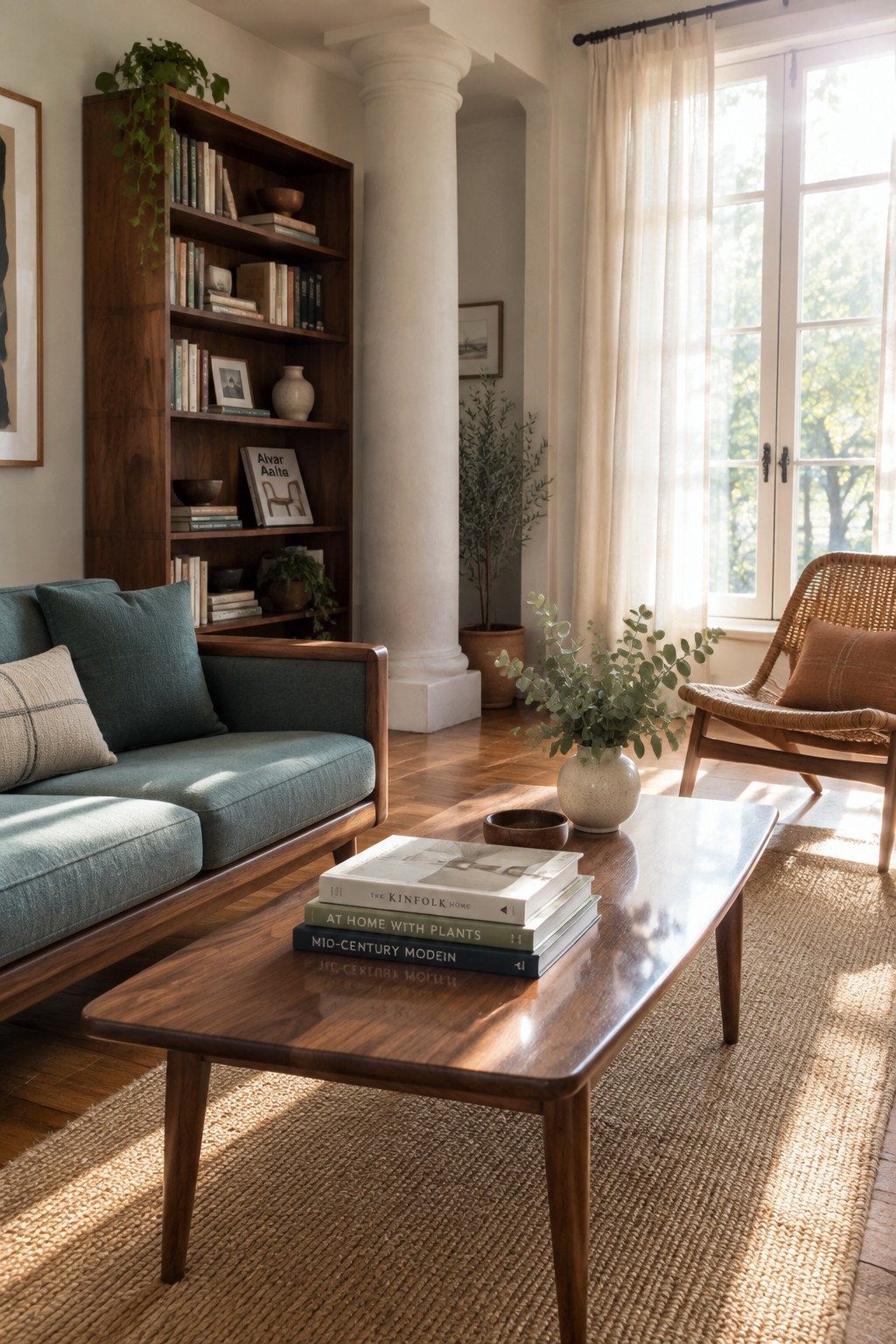
Walnut furniture can keep a bright living room from feeling too bare. Its rich brown tone brings some welcome contrast, while still working well with pale walls and natural fabrics.
A walnut coffee table is an easy way to try the look, especially in a room with light upholstery. Choose a simple shape and let the wood grain show, rather than filling the tabletop with lots of decor.
Use Walnut Furniture To Warm Up a Neutral Living Room

Walnut furniture is a good way to bring warmth into a room built around light, quiet colors. A walnut sideboard can add useful storage while giving the space a richer look without making it feel too busy.
This works especially well with a pale sofa and natural-fiber rug. Keep the rest of the palette fairly simple so the wood can stand out, and choose a sideboard with open legs if you want the room to feel less crowded.
Use Walnut Furniture To Give a Living Room a Cozy Center

A walnut sideboard can give a living room a steady focal point without making the space feel formal. Its rich wood works especially well with a patterned rug and a few comfortable seats, bringing a collected feel to the room.
Try this idea in a living room that needs more visual structure but still has to feel easy to use. Choose a sideboard with simple lines, then leave some open space around it so the furniture does not crowd the room.
Choose Walnut Pieces With Simple, Sculptural Shapes

Walnut furniture can bring plenty of character to a living room without needing ornate details. Here, a long sideboard with ribbed doors gives the room a strong focal point, while its clean shape keeps the look calm.
For a similar effect, choose one substantial walnut piece and let its grain and form stand out. A low sideboard works well along a living room wall, especially when the rest of the furnishings stay fairly simple.
Use Walnut Shelving To Add Living Room Storage

Built-in walnut shelves make use of tall wall space while keeping books and everyday storage close at hand. Their rich wood finish also gives a living room with pale walls a warmer, more settled feel.
This approach works especially well in a room with a high ceiling or an awkward wall that needs a clear purpose. Keep some shelf space open, and use closed cabinets below to tuck away items that do not need to be on display.
Make a Walnut Fireplace Wall Part of the Room’s Layout

A walnut-paneled fireplace wall gives the seating area a clear center without needing extra furniture. The wood brings a steady, warm presence, while the broad stone hearth adds a practical surface around the fire.
This approach works well in an open living room where the fireplace can help define the sitting area. Keep the rest of the furniture low and simple so the wood wall remains easy to live with, rather than making the room feel crowded.
Use Walnut Furniture to Bring Warmth Into a Neutral Living Room

Walnut furniture gives a neutral living room a warm, natural feel without needing a lot of color. Here, the long wood coffee table and sideboard add richness while their simple shapes keep the room from feeling busy.
This approach suits rooms with light walls and soft-colored upholstery. Choose a few walnut pieces with clean lines, and let the wood grain stand out rather than filling every corner with accessories.
Use Walnut Built-Ins for Book Storage

Walnut shelving can give a living room useful storage while making the wood itself part of the room’s character. Here, the shelves reach nearly to the ceiling, and a built-in cabinet below keeps some items tucked away.
This approach works especially well in a room with a long, open wall. Leave some shelf space open and mix books with a few simple objects so the display stays easy to live with. A rolling ladder can help make high shelves practical.
Use Walnut Seating To Shape the Living Room

Walnut chairs can give a living room a clear seating area without making it feel crowded. Here, the cane backs keep the wooden frames visually light, while the rug helps define the space around the coffee table.
This approach works well in a room where you want several places to sit but still need an open path through the middle. Choose chairs with slim frames, and leave enough room between them and the table for easy movement.
Frequently Asked Questions
Q: How can I make walnut furniture feel warm without making the room too dark?
A: Pair walnut’s rich brown tones with pale walls, creamy upholstery, or a light rug. Let the wood stand out, and add warmth with a few soft textures rather than more dark furniture.
Q: What colors work well with walnut in a mid century modern living room?
A: Muted greens, rust, ochre, and warm neutrals all sit nicely beside walnut. If you’re unsure, start with one accent color in a cushion or throw and see how it feels in the room.
Q: Can I mix walnut furniture with other wood tones?
A: Yes. Keep the finishes in a similar warm range, or use a rug to give different wood pieces a little breathing room. Matching every wood tone can make a room feel more like a showroom than a home.
Q: How do I choose a rug for a room with walnut furniture?
A: A light or softly patterned rug can balance walnut’s deeper color and help define the seating area. Pick one large enough for at least the front legs of the sofa and chairs to rest on.
