

Natural wood can make a mid-century living room feel grounded, but too much of it can leave the space looking heavy.
I find the best rooms balance warm wood with lighter walls, comfortable upholstery, and enough open space to let the furniture breathe.
The first thing I notice is often how the wood tones connect across the floor, furniture, and smaller details, rather than whether every piece matches.
Good layouts also make room for daily life, with clear paths through the seating area and surfaces that are useful without crowding the room.
Some of these choices are easy to adapt at home, whether that means trying a walnut accent or softening a wood-heavy corner with a textured rug.
Let Natural Wood Lead the Room

Natural wood can be the main feature in a living room without making the space feel overly formal. Here, the built-in shelving and coffee table use similar wood tones, while the simple furniture keeps the look easy to live with.
Try this approach in a room that needs more storage or a clear focal point. A wood built-in can hold books and a few personal objects, but leaving some shelf space open helps it feel less crowded.
Use Built-In Shelving To Keep Wood Tones Consistent
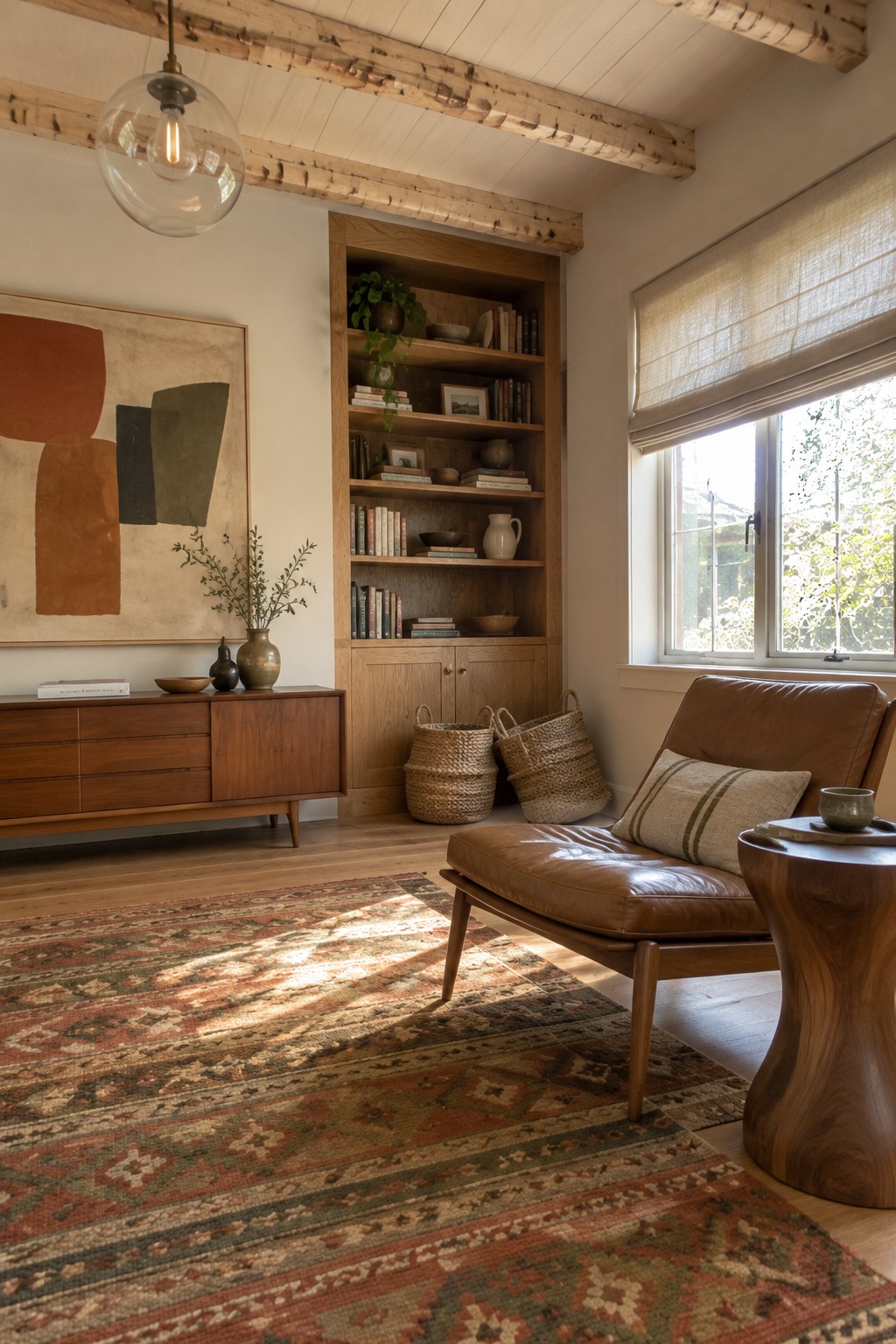
Built-in shelves are a practical way to add storage without bringing in another large piece of furniture. When the shelving uses a similar wood tone to the rest of the room, it feels like part of the home rather than an extra feature.
This works especially well in a living room with an unused wall or a small alcove. Keep the shelves from looking crowded by leaving some open space around books and a few simple objects.
Let Natural Wood Set The Tone

Natural wood can make a mid-century modern living room feel warm without adding much decoration. A low coffee table with a simple shape is an easy place to start, especially when the rest of the room stays fairly uncluttered.
Choose a wood finish that works with your floors or other furniture, then let its grain show. In a smaller room, a rounded table can be easier to move around than a bulky square one.
Use Wood Paneling To Add Mid Century Character
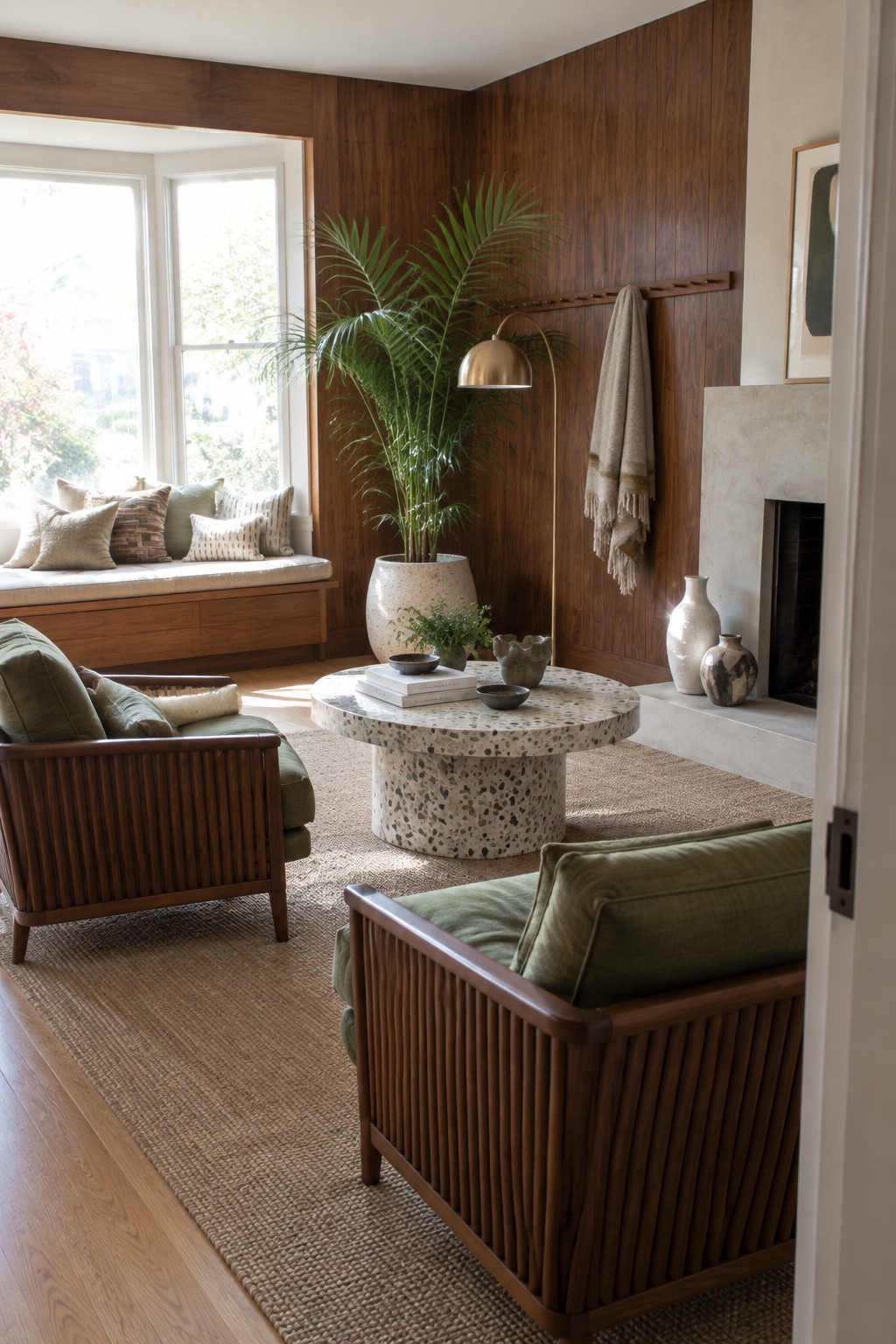
Wood paneling is a simple way to give a living room the clean, warm feel often found in mid century homes. A full-height walnut wall makes a strong backdrop for seating without needing much extra decoration.
This works especially well in a room with simple furniture and a few natural materials. If you use paneling across a large wall, keep nearby surfaces fairly quiet so the wood remains the main feature.
Use a Slatted Wood Wall As the Main Feature
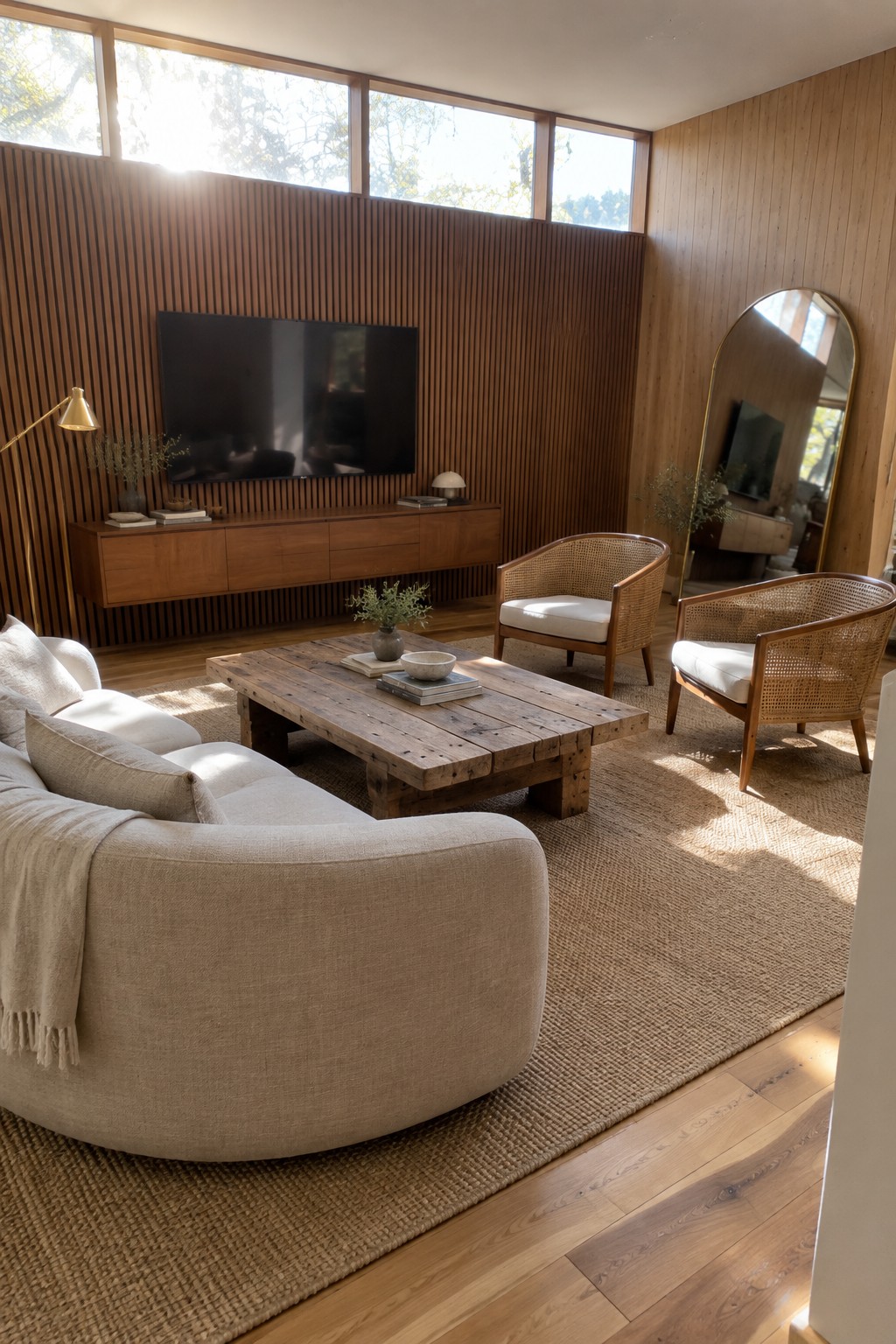
A slatted wood wall gives a mid-century living room a clear focal point without adding much decoration. Here, the dark vertical boards bring a richer wood tone behind the TV, while a simple console keeps the wall useful.
This works especially well in a room with plenty of natural light and lighter upholstery. If you use dark slats, keep nearby furniture and accessories fairly simple so the wall does not make the room feel busy.
Use a Built-In Bench To Make the Most of a Corner
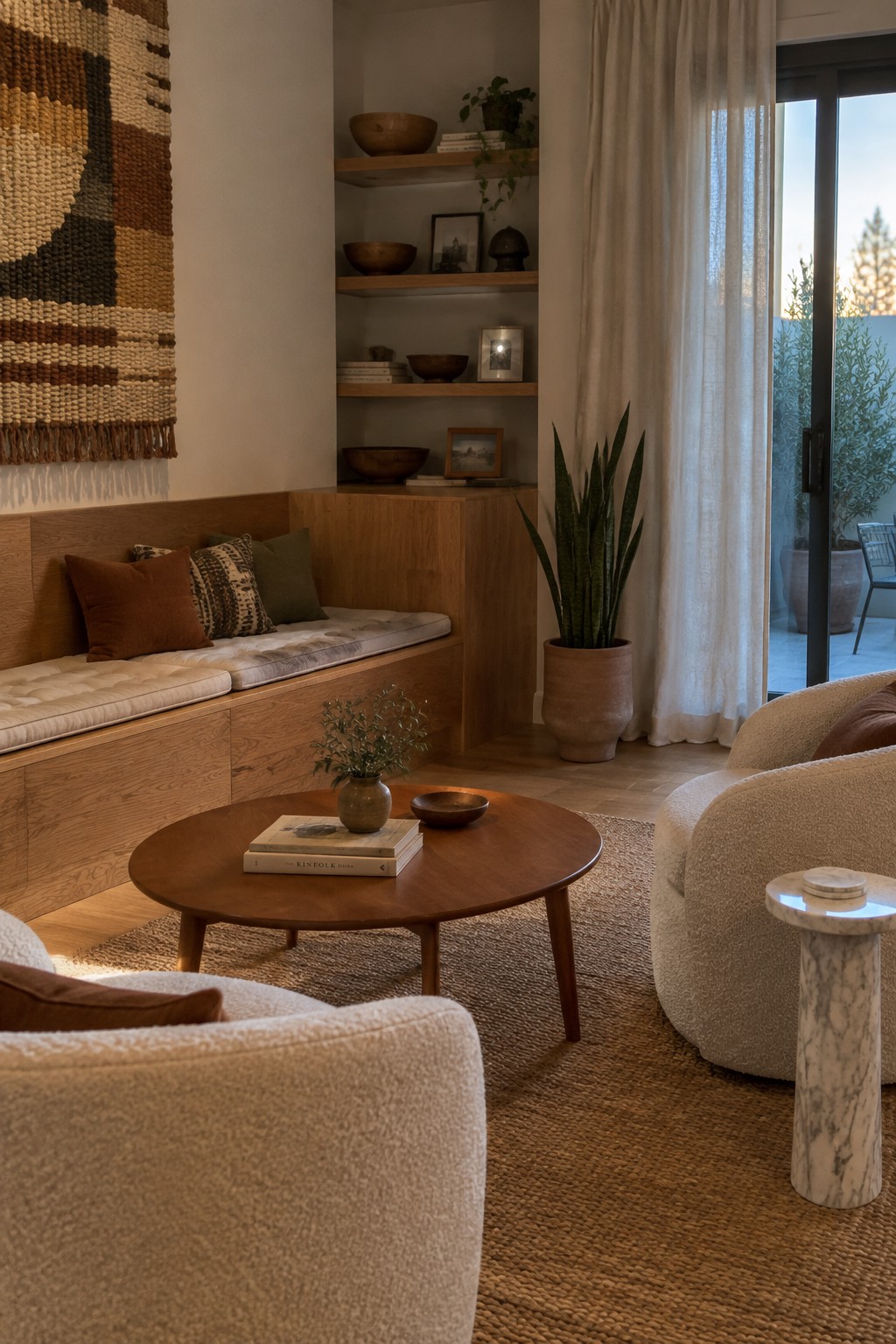
A built-in bench can turn an unused corner into everyday seating while keeping the room’s wood tones consistent. Here, the wood continues from the bench into the low cabinets, so the storage feels like part of the furniture rather than a separate piece.
This approach works well in a living room with an awkward corner or limited floor space. Add a comfortable cushion and keep the seat depth practical, so it’s easy to use rather than just a place for display.
Use a Live-Edge Coffee Table As the Centerpiece

A live-edge coffee table brings the natural shape of wood into a mid-century living room without making the rest of the furniture feel bulky. Its broad, simple surface stands out against cleaner-lined pieces, while the wood grain keeps the room feeling connected to natural materials.
This idea works best when the table has room around it, so its irregular edges do not crowd the seating area. Keep the objects on top fairly simple, as a few books and a small bowl leave the wood visible.
Use A Wood Feature Wall For A Mid Century Focal Point

A wood feature wall gives the living room a clear focal point while keeping the look simple and natural. Here, broad plywood panels carry the same finish into the long media cabinet, so the wall and storage feel like one planned element.
This approach works well in a living room where the television needs a place to sit without making the wall feel busy. Keep the panel pattern fairly quiet, and use a few darker pieces nearby to bring in contrast.
Choose Rounded Wood Furniture for a Softer Mid Century Look
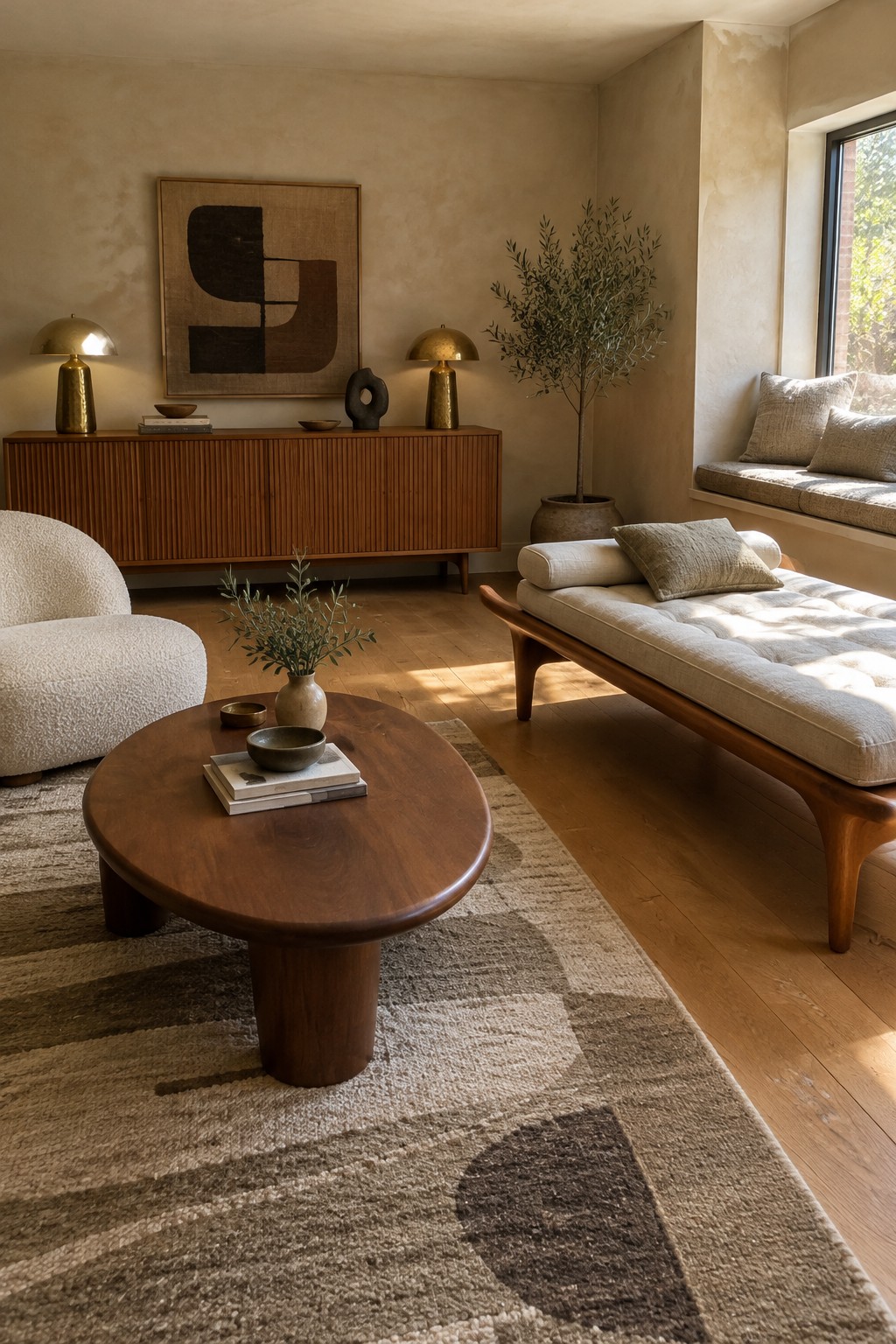
Rounded furniture shapes suit earthy mid century rooms because they balance the straight lines of wood casework. Here, the oval coffee table and curved daybed legs keep the natural wood tones from feeling too rigid.
Try one rounded table or seat in a room with simpler, straighter pieces. It works especially well in a relaxed living area, but leave enough space around the furniture so the curves do not make the layout feel crowded.
Use a Round Dining Table to Keep the Layout Open

A round table is a good fit when a living room shares space with a dining area. It gives people room to move around the seating, and its curved shape sits easily alongside the straight lines of mid-century furniture.
In a similar room, choose a table sized for everyday use and leave a clear path between the dining chairs and sofa. A compact round wood table works especially well in an open-plan home where the dining area needs to feel connected without taking over.
Use Wood Furniture To Warm Up a Neutral Living Room

Wood furniture can keep a neutral living room from feeling too plain. A low coffee table and a simple sideboard bring in natural color while leaving the room relaxed and easy to live with.
This approach suits rooms with light upholstery and a mix of older or collected pieces. Choose wood finishes that are related but not perfectly matched, and let one larger piece set the tone.
Mix Cork Walls With Dark Wood Furniture
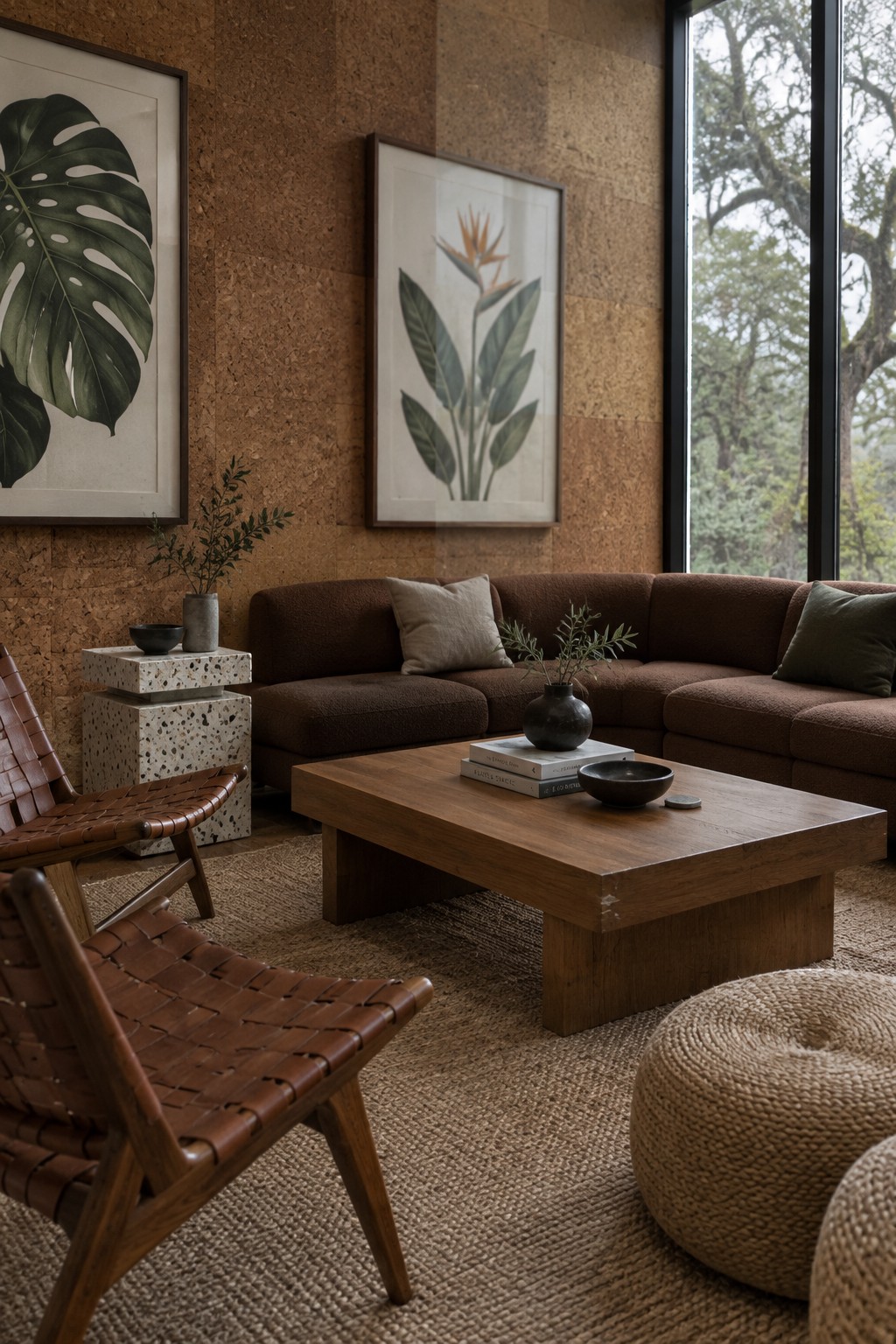
Cork wall panels bring a natural, mid-century feel to a living room without relying on a lot of decoration. Their varied texture works especially well beside darker wood, as seen in the coffee table and woven chairs.
Try cork on one main wall, then keep nearby furniture fairly simple so the room does not feel too busy. It suits a relaxed living space, but check that the cork’s color works with your wood finishes before covering a large area.
Use Low Wood Furniture To Keep the Room Open

Low-slung seating and a simple coffee table suit a tall living room well. They let the eye travel across the space, while the wood keeps the furniture connected to the room’s warm, natural feel.
Try this approach in a living room with a high ceiling or a large rug that can define the seating area. Keep the table low and the chairs visually light, so the arrangement feels comfortable without crowding the floor.
Let a Slatted Wood Wall Set the Room’s Style

A slatted wood wall is an easy way to bring mid-century character into a living room without filling it with extra furniture. The narrow vertical boards add interest while keeping the wall simple, and they work especially well behind a sofa.
For a similar look, use wood tones that suit your existing floors and furniture. Keep the slats to one wall so they feel like a feature rather than a busy backdrop.
Use Natural Wood Furniture To Warm Up the Room

Wood furniture can make a living room feel comfortable without relying on bright colors or lots of decoration. Here, the long sideboard and open shelving share a similar warm tone, which helps the room feel cohesive while still giving each piece a clear purpose.
This approach works well in mid century modern rooms, especially when you mix larger wood pieces with simpler fabrics and a patterned rug. Keep the wood finishes in a related range rather than matching every piece exactly.
Use Woven Window Shades With Natural Wood

Woven shades bring a simple, earthy texture to a living room without making the windows feel fussy. They work especially well alongside natural wood, as the similar tones feel connected while the woven surface adds a little variation.
For a mid century look, try them on wide windows with straightforward wood trim. Choose a shade that filters light but still lets you adjust it easily, and keep nearby fabrics fairly simple so the window treatment does not compete with the furniture.
Let a Stone Fireplace Set the Room’s Materials

A stone fireplace can give a living room a strong natural center, while wood furniture keeps the look warm and relaxed. Here, the simple wood mantel connects the stonework to the room’s mid-century furniture without making the fireplace feel too formal.
This approach works well in a larger living room where the fireplace can anchor the seating area. Keep the mantel fairly simple, and repeat its wood tone in one or two nearby pieces so the stone remains easy to notice.
Use Wood Paneling To Give the Room a Mid Century Feel

A full wall of vertical wood paneling can set the style of a living room without needing much extra decoration. It brings a steady wood tone to the space, while simple furniture and framed photos keep the wall from feeling too busy.
This approach works especially well in a mid century home or a room with straightforward lines. If you use paneling across a large wall, keep nearby fabrics and finishes fairly quiet so the wood remains the main feature.
Use Wood Paneling To Make a Living Room Feel Cozy

Wood-paneled walls give a living room a clear mid-century feel without needing much extra decoration. Here, the warm vertical boards make the fireplace wall feel like part of the room’s design rather than a separate feature.
This approach works especially well in a room with a simple layout and a few softer furnishings. If you’re adding paneling, keep the wood tone fairly consistent and use light upholstery or a patterned rug to break up the large surface.
Use a Wood Sideboard for Practical Storage

A low wood sideboard is a useful way to bring natural wood tones into a living room without making every surface feel busy. It offers closed storage for everyday things, while the top can hold a few plants or books.
This idea suits an open living area where you want storage along a wall without adding bulky cabinets. Choose a simple, low profile, and leave some clear space around it so the room still feels easy to move through.
Choose Dark Wood Paneling for a Cozy Living Room

Dark wood paneling can give a living room the settled, cabin-like feel of a mid-century home. It works especially well around a fireplace, where the wood becomes a simple backdrop for the room rather than a feature that needs much extra decoration.
For a similar effect, use wood on one main wall or around the fireplace, then keep nearby furniture and textiles in quieter colors. A lighter mantel can break up the darker surface without losing the natural wood character.
Make a Reading Nook With Built-In Shelves

A daybed tucked beside built-in bookshelves makes a small corner useful without needing much extra furniture. Keeping the shelves and lower cupboards in the same natural wood gives the nook a consistent, settled look.
This setup works well in a spare room, a wide hallway, or an underused corner of a living room. Leave enough clear space around the daybed to sit down comfortably, and use closed storage below the shelves for books or other items you do not want on display.
Use a Wood Built-In To Keep the Living Room Cohesive

A wall of natural wood cabinetry can make a living room feel settled without adding more furniture. Keeping the TV and display shelves within the same built-in gives the room a consistent look, while a few open shelves leave space for personal touches.
This works especially well in a room where storage and media equipment need to share one wall. Choose a wood tone that suits the rest of the furnishings, and keep the open shelves simple so the cabinetry does not feel too busy.
Use a Wood Daybed for Flexible Seating

A low wood daybed can serve as both a place to lounge and extra seating, without taking up the space of a full sofa. A simple frame lets the natural grain stay visible, while muted upholstery keeps the piece easy to live with.
This setup works well in a small living room, reading nook, or spare room. Add a few cushions for comfort, but leave enough of the wood frame showing so it remains part of the room’s character.
Use a Wood Coffee Table to Set the Seating Area

A low wood coffee table can give a living room a clear center without making the seating feel formal. Here, its simple shape suits the mid-century chairs and keeps the natural wood tones in view.
This works well when chairs and sofas sit around the edges of a rug. Choose a table that leaves enough room to walk past and set down a drink, and keep its surface fairly clear so it stays useful.
Frequently Asked Questions
Q: How can I bring in warm wood tones without making the room feel too dark?
A: Choose one larger wood piece, like a coffee table or media console, then balance it with pale walls, a light rug, or cream upholstery. A few darker accents will add depth without weighing down the room.
Q: What colors work well with mid-century wood furniture?
A: Olive green, rust, ochre, and soft blue all sit nicely beside warm wood. If you’re unsure, start with one of those colors in a cushion or throw rather than committing to a whole wall.
Q: Can I mix different wood finishes in one living room?
A: Yes. Keep the finishes in a similar warm or cool family, and repeat each wood tone at least once so the mix feels intentional. Perfectly matching every piece can make the room feel a little flat.
Q: How do I make a small living room feel more open with wood furniture?
A: Look for pieces with slim legs and open space underneath, which let more of the floor show. A wood-framed chair or narrow side table can bring in the look without crowding the room.
