
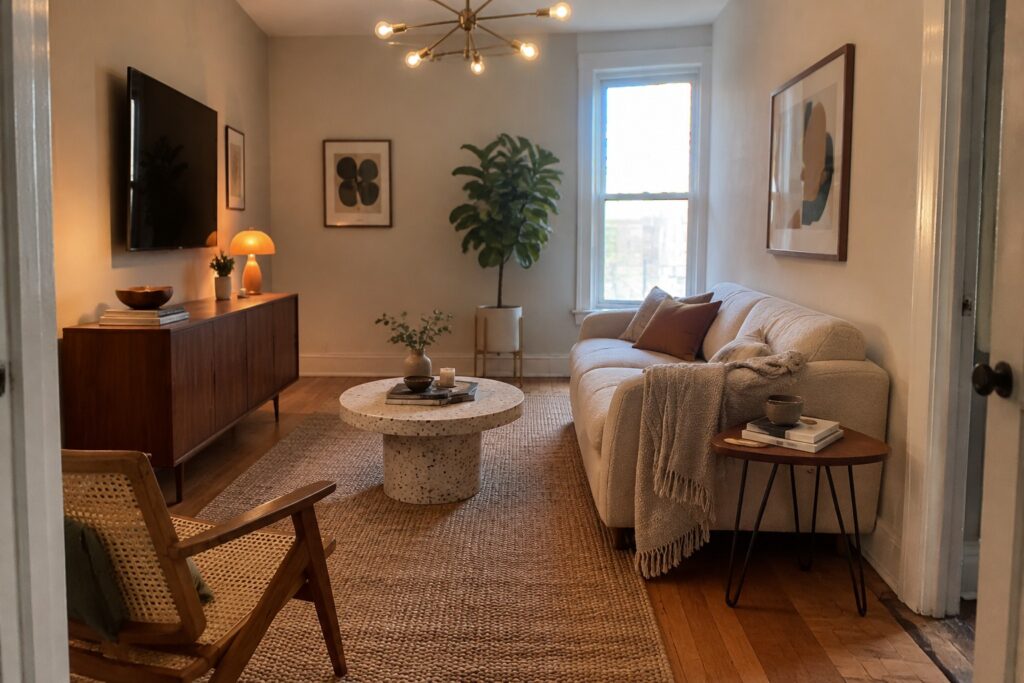
Small living rooms can feel cramped when every piece of furniture competes for space, even if the room looks tidy.
I find that mid-century modern rooms work best when the furniture has clear lines and each piece leaves enough room to move around it.
A low sofa, a slim-legged chair, or a compact storage unit can help the room feel open without making it seem sparse.
Color and lighting matter too, since a warm wood finish or a well-placed lamp can make a small room feel more settled and comfortable.
I’d start by testing the layout before buying anything, then save the details that suit the way you actually use the room.
Use A Narrow Layout To Make A Small Living Room Work

A narrow living room can still feel comfortable when the furniture follows the room’s shape. Here, the sofa and media cabinet sit along opposite long walls, leaving a clear path through the middle and making the most of the limited floor space.
Try a slim coffee table and keep larger pieces close to the walls. This setup works well in apartment living rooms, but leave enough room to walk between the table and seating without squeezing through.
Use Built-Ins to Save Living Room Space

Built-in shelves and cabinets make good use of wall space without taking up much floor area. In this living room, the shelving continues into low cabinets, giving books and everyday items a place while keeping the room’s main footprint open.
This approach works well in small rooms where freestanding storage can feel crowded. If you’re planning built-ins, keep the lower cabinets simple and leave enough open shelf space so the wall doesn’t feel too heavy.
Use Built-Ins To Save Floor Space

A wall bed tucked into built-in shelving can make a small living room do double duty without taking up space with a separate guest bed. The shelves also keep everyday storage close at hand.
This approach works best when the bed can fold down without blocking the room’s main path. A sofa in front can make the space comfortable for daily use, but leave enough room to move it or access the bed.
Make a Window Nook Part of the Living Room

A built-in window seat can give a small living room a useful place to sit without needing another full-size sofa or armchair. When storage is included beneath the seat, it also keeps spare cushions and blankets close at hand.
A small round table beside the nook makes it handy for a quiet meal or a cup of coffee. This idea suits rooms with an unused stretch of window, but leave enough floor space for people to move comfortably between the nook and the main seating.
Use a Small Desk as Part of the Living Room

A slim desk can give a small living room a useful work spot without needing a separate office. Here, the desk sits along the window wall, so it uses an area that might otherwise go unused.
Choose a compact desk with open space beneath it, and keep only the everyday essentials on top. This works well in a living room that needs to serve more than one purpose, as long as the desk does not block the main path through the room.
Use Open Shelving to Divide a Small Living Room

An open bookcase can separate the sitting area from a dining spot without blocking the room off. It gives each area a little definition while letting light and sightlines pass through, which is useful when the living room has to do more than one job.
Choose a narrow, open-backed shelf and keep some sections uncluttered so it does not feel like a wall. In a small apartment, it can also provide useful storage without taking up space for a separate divider.
Use Rounded Furniture To Keep A Small Room Open

A rounded sofa can make a small living room easier to move through. Its curved shape takes up less visual space than a boxy design, while still offering plenty of seating.
Look for a compact sofa with slim legs and leave a clear path around it. A curved profile works especially well when the room has a few larger pieces, such as a wooden sideboard.
Choose Furniture That Leaves The Floor Open

A small living room can feel less crowded when its main pieces sit on slim legs. The raised sofa and coffee table in this room let more of the floor show, which helps the furniture feel lighter without giving up useful seating or surface space.
Look for a sofa with simple, tapered legs and a coffee table with an open base. Keep the pieces close to the scale of the room, and avoid adding bulky side tables that block the open space beneath them.
Use a Brick Fireplace Wall as a Focal Point

A brick fireplace can give a small living room a clear focal point without taking up extra floor space. The built-in shelf above the fireplace keeps a few display pieces together, so the wall feels useful rather than crowded.
If your room has a fireplace, keep the shelf styling simple and let the brick remain visible. A few books or small objects are enough. In a rental or a home without a fireplace, a brick accent wall can create a similar effect, though it works best when the rest of the room stays fairly uncluttered.
Use a Low Bookcase to Divide a Small Living Room

A low bookcase can separate the living area from a hallway without closing off the room. Here, the open shelves provide useful storage while keeping the sightline to the sofa clear.
Choose a piece that sits below eye level and is not too deep, so it won’t make a narrow space harder to move through. It works especially well when a small living room shares space with an entry or dining area.
Use a Daybed To Make a Small Room More Flexible

A daybed can give a small room a place to sleep without making it feel like a bedroom first. This one sits along the wall, leaving a clear path through the room and keeping the floor open for other uses.
In a narrow room, look for a simple daybed with storage underneath and keep the bedding fairly neat during the day. A pillow and folded throw are enough to make it comfortable for lounging, too.
Use a Curved Sofa to Save Space

A rounded sofa can make a small living room easier to move around in. Its curved shape avoids the sharp corners of a boxy sectional, while still giving you a generous place to sit.
Look for a compact model with a low profile, and leave enough room around it to walk comfortably. A small round coffee table can follow the same shape without crowding the seating area.
Use a Rug to Define the Living Room

A patterned area rug can give a small living room a clear center without taking up any extra floor space. Here, it brings the sofa and coffee table together, while the muted colors let the pattern sit comfortably in the room.
Choose a rug large enough for the front legs of the main seating to rest on it. In a compact room, a busy pattern can feel like a lot, so look for one with a quieter background and a few colors that repeat elsewhere.
Use a Sectional to Define a Small Living Room

A compact sectional can make a small living room feel like a place to settle in, without needing several separate chairs. The chaise-style end gives you a spot to stretch out while keeping the seating together.
Choose a size that leaves a clear path around the sofa, and let a rug help mark out the seating area. This works especially well in a corner, where the sofa can use space that might otherwise go unused.
Use Warm Wood Furniture To Give a Small Living Room Character

Warm wood furniture suits a small living room because it brings in a natural look without needing much decoration. A compact mid-century cabinet can also keep everyday items tucked away, so the room feels less cluttered.
Choose a piece with simple lines and raised legs to leave more of the floor visible. A dark wood cabinet works well as a focal point, but keep nearby furniture light and modest in size.
Use Rounded Furniture To Keep a Small Living Room Open

Rounded furniture can make a small living room easier to move through. A curved sofa and round coffee table have fewer sharp corners to bump into, and their softer shapes help the seating area feel less crowded.
Try this approach in a room with limited walking space around the main seating. Keep the table modest in size and leave a clear path between the sofa and chairs so the room stays practical.
Use Glass Partitions to Keep a Narrow Living Room Open

A glass divider can separate the living room from a hallway without blocking the view through a small home. The wood-framed panels here give the boundary some structure while letting light pass between spaces.
This approach works well when you want a little separation but do not want to make a tight floor plan feel closed in. Keep the frame simple and the glass clear, so the divider marks a transition without becoming another visual barrier.
Use a Wood Stove as a Small Room Focal Point
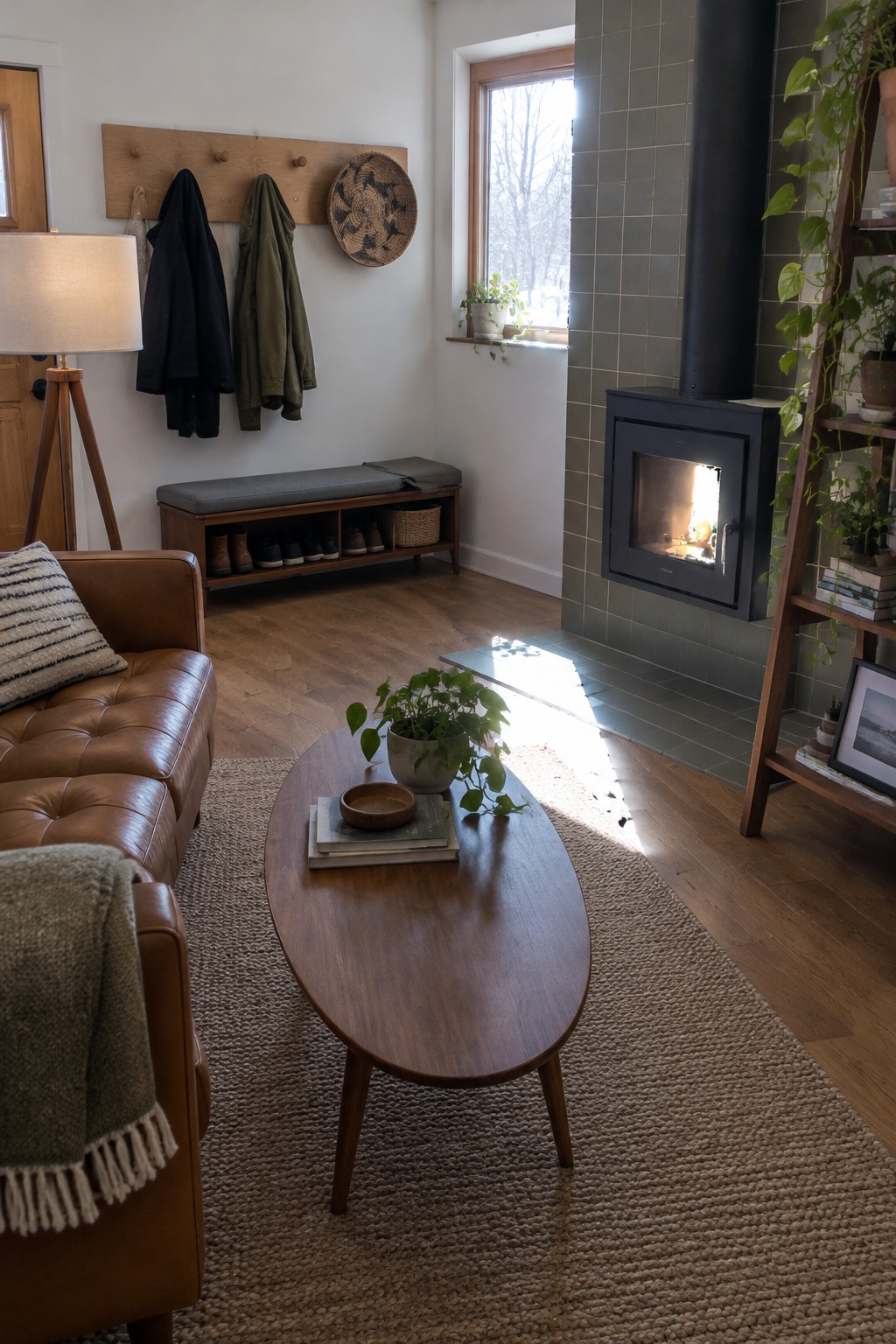
A compact wood stove can give a small living room a clear focal point without taking up the space a large fireplace would. Here, the simple black stove sits against a tiled wall, which helps define the seating area.
If you’re planning a similar setup, check the stove’s clearance and ventilation requirements before choosing its spot. A straightforward surround and a modest hearth can keep the arrangement practical in a smaller room.
Use a Built-In Desk for a Flexible Living Room

A built-in desk can give a small living room a useful work spot without taking up space with a separate office setup. Here, the desk is tucked into a wall niche, so it feels like part of the room rather than extra furniture.
This idea works well in an alcove or an unused recess. Keep the desk shallow and choose a chair that can slide fully underneath when the workday is over.
Use Mirrors To Make a Small Living Room Feel Larger

Mirrored wall panels can make a small living room feel more open by reflecting the room instead of adding visual weight. Here, they sit behind a low wood cabinet, so the storage stays useful while the wall feels less closed in.
For a similar effect, use mirror panels on one wall or on closet doors, especially where they can reflect a window. Keep the surrounding furniture fairly simple so the reflections do not make the room feel busy.
Frequently Asked Questions
Q: How can I fit mid-century furniture into a small living room without making it feel crowded?
A: Choose a few pieces with slim legs and open space underneath, such as a compact sofa and a small side table. Keeping the floor visible helps the room feel more open.
Q: What colors work well in a small mid-century modern living room?
A: Start with a light, warm neutral on the walls, then add a few earthy accents like rust, olive, or mustard. A limited palette keeps the room calm without making it feel plain.
Q: Can I mix mid-century modern furniture with pieces I already own?
A: Yes. Pair one or two mid-century shapes with simpler pieces you already have, and repeat a wood tone or color to tie them together. You don’t need a perfectly matched set.
Q: How do I add mid-century style without buying new furniture?
A: Try a geometric cushion, a warm-toned lamp, or a framed print with a simple shape. Small details can bring in the look without taking up valuable floor space.
