

Mid-century modern rooms can look simple at first, but they feel comfortable only when the seating suits the way people actually gather and move through the space.
I find that a clear walkway and a useful mix of sofas, chairs, and smaller pieces matter more than matching every shape or finish.
In an apartment, flexible seating can help one living room work for a quiet evening, a visit with friends, or an extra place to sit without making the room feel crowded.
Warm wood, clean lines, and thoughtful lighting bring the style together, while a few personal details keep it from feeling like a showroom.
I’d save the ideas that make the most of your room’s layout, then adapt the pieces and proportions to fit your own home.
Flexible Seating Makes a Living Room More Useful

A mix of seating lets a living room work for different routines. A sectional gives people room to stretch out, while a separate swivel chair can turn toward the sofa for conversation or toward the window for a quiet moment.
This arrangement suits apartments where one room needs to handle relaxing and hosting. Leave a clear path between the seats, and choose a chair that’s easy to move so the layout can shift when guests come over.
Use Flexible Seating To Make A Living Room More Comfortable

A curved sectional can make a living room feel relaxed while giving people a few ways to sit and stretch out. Its rounded shape also leaves the center of the room open, so conversation does not have to revolve around one rigid row of seats.
In an apartment, choose a sectional that fits the room without blocking walkways, then use a small movable table nearby for drinks or books. A woven rug can help define the seating area, but leave enough floor space around the furniture to move through comfortably.
Flexible Seating for Everyday Living
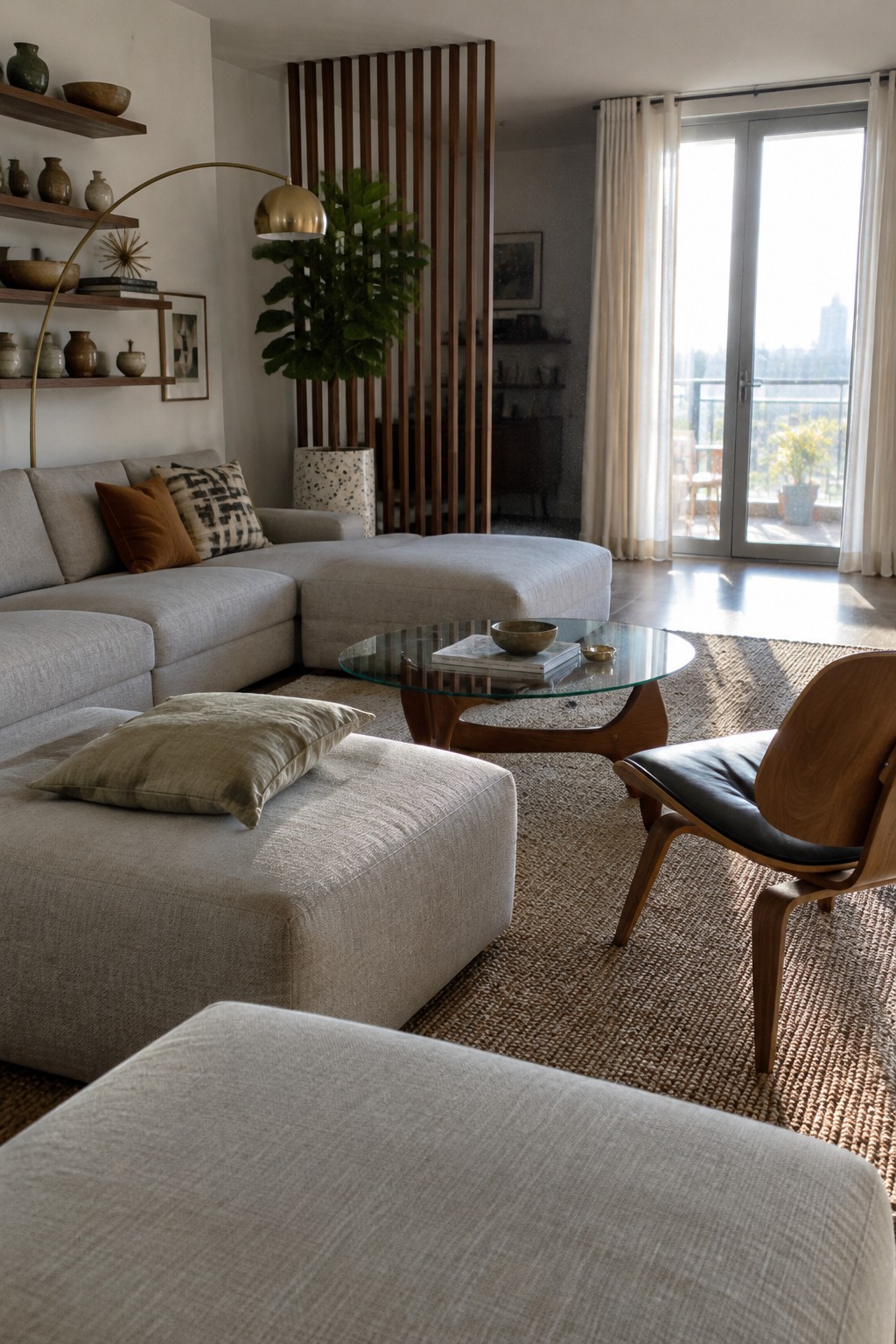
A large sectional makes it easy to shift between lounging and conversation without filling the room with separate chairs. The chaise gives one person room to stretch out, while the open area around the coffee table keeps the seating arrangement from feeling closed off.
For a similar setup, choose a sectional that fits the room and leave enough space for people to move around it. A lightweight accent chair can add another seat without making the layout feel fixed.
Keep Flexible Seating Simple

A mid-century sofa can make a small living room feel easy to use without filling it with bulky furniture. Here, the sofa sits along the wall, leaving the center open and making room to move around the coffee table.
For a flexible setup, start with one main sofa and add a lightweight chair or movable ottoman only if you need extra seats. This arrangement suits apartments where floor space matters, and it is easier to adjust when guests come over.
Use Ottomans As Extra Seats
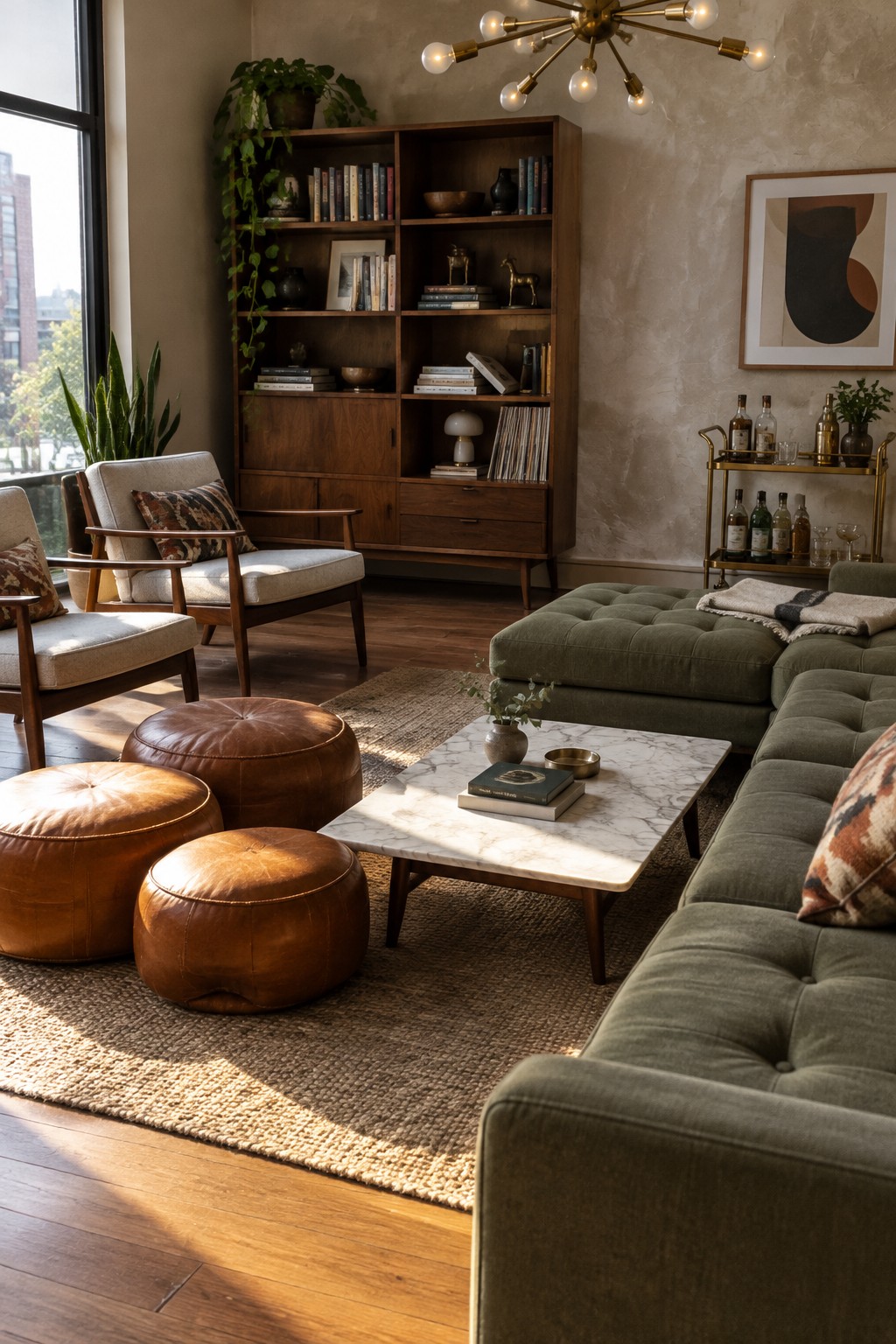
Leather poufs make flexible seating easy to add without crowding the room. They can serve as footrests or move beside the sofa when guests come over, while the armchairs offer a separate place to sit.
This setup works well in an apartment where one seating arrangement needs to handle both quiet evenings and company. Choose lightweight ottomans that are easy to shift, and leave enough room to walk around the coffee table.
Use A Curved Sofa To Make Seating More Flexible

A curved sectional can make a living room feel open while still giving people room to sit together. Its shape works especially well in a corner layout, where a straight sofa might leave an awkward gap or make the seating feel too formal.
In an apartment, choose a size that leaves a clear path around the sofa and enough open floor for a small movable chair or stool when guests come over. Keep the cushions simple, so the shape stays comfortable rather than fussy.
Use a Bench As Extra Seating
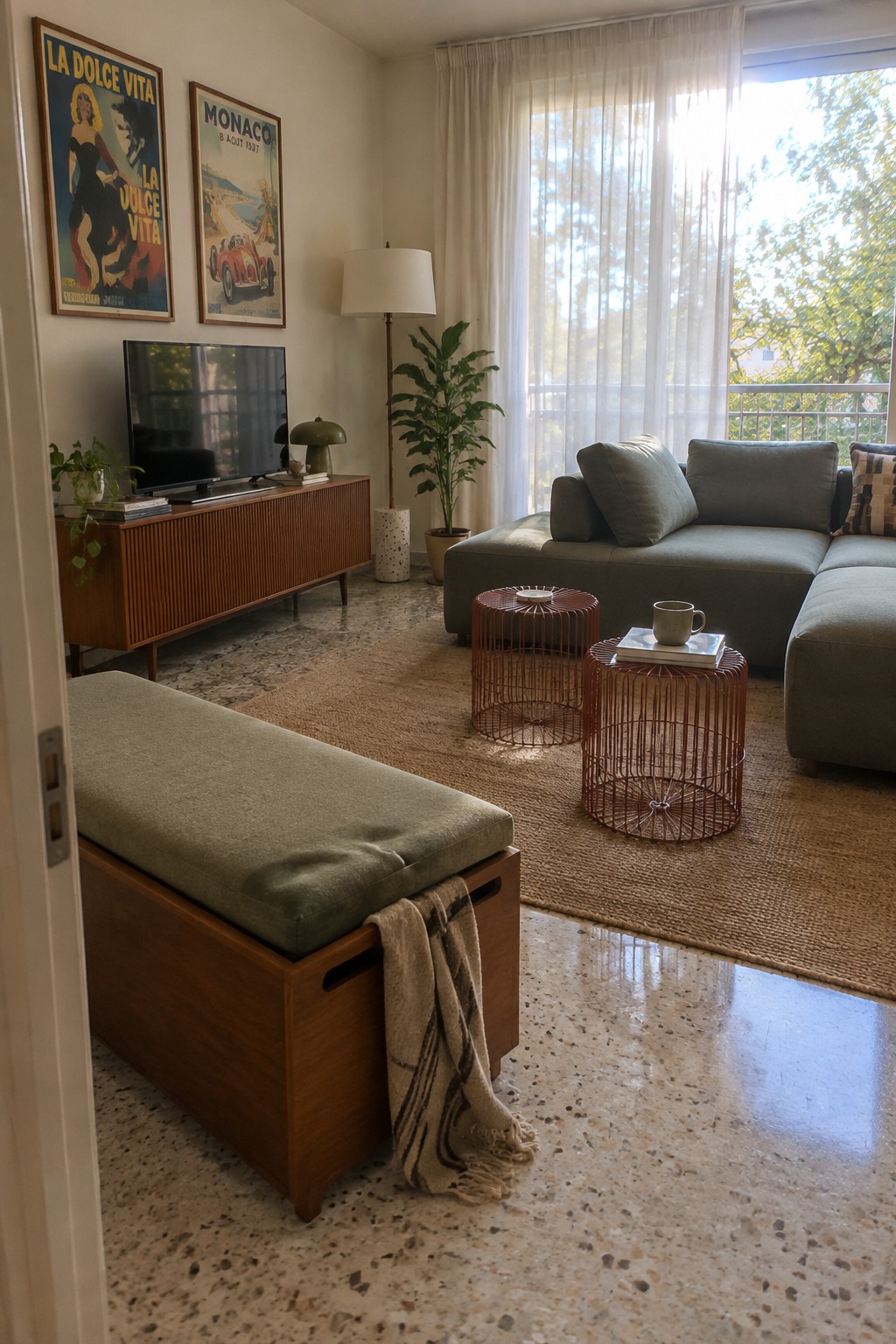
A bench can give a living room one more place to sit without taking up the space of another full-size chair. Here, a cushioned wooden bench sits near the main seating area and can also serve as a spot to set down a throw.
This idea works well in apartments where the seating needs to shift around from day to day. Choose a bench that is easy to move, and keep its height comfortable for sitting rather than treating it only as a table.
Use a Coffee Table to Keep Seating Flexible

A low, round coffee table makes it easier to move around a seating area without getting in the way of extra chairs. Its curved shape works especially well in a living room where seats face different directions.
Choose a table that leaves enough room to walk between it and the sofa or chair. In a smaller apartment, a simple round design can keep the layout practical without making the center of the room feel crowded.

A low, round coffee table can make a living room easier to use when the seating includes more than one sofa or chair. Everyone has a place to set down a drink, and the rounded shape is easy to move around.
Leave enough room to walk between the table and each seat, especially in an apartment living room. A compact table works well here, where two leather folding chairs can serve as extra seats without crowding the main sofa.
Hang Extra Chairs On The Wall

Wall-mounted folding chairs keep extra seating close without taking up floor space. Here, three chairs hang above the sofa, ready to bring down when company comes over.
This works especially well in a small apartment where spare chairs are hard to store. Choose folding chairs that suit the room, and hang them securely at a height that’s easy to reach.
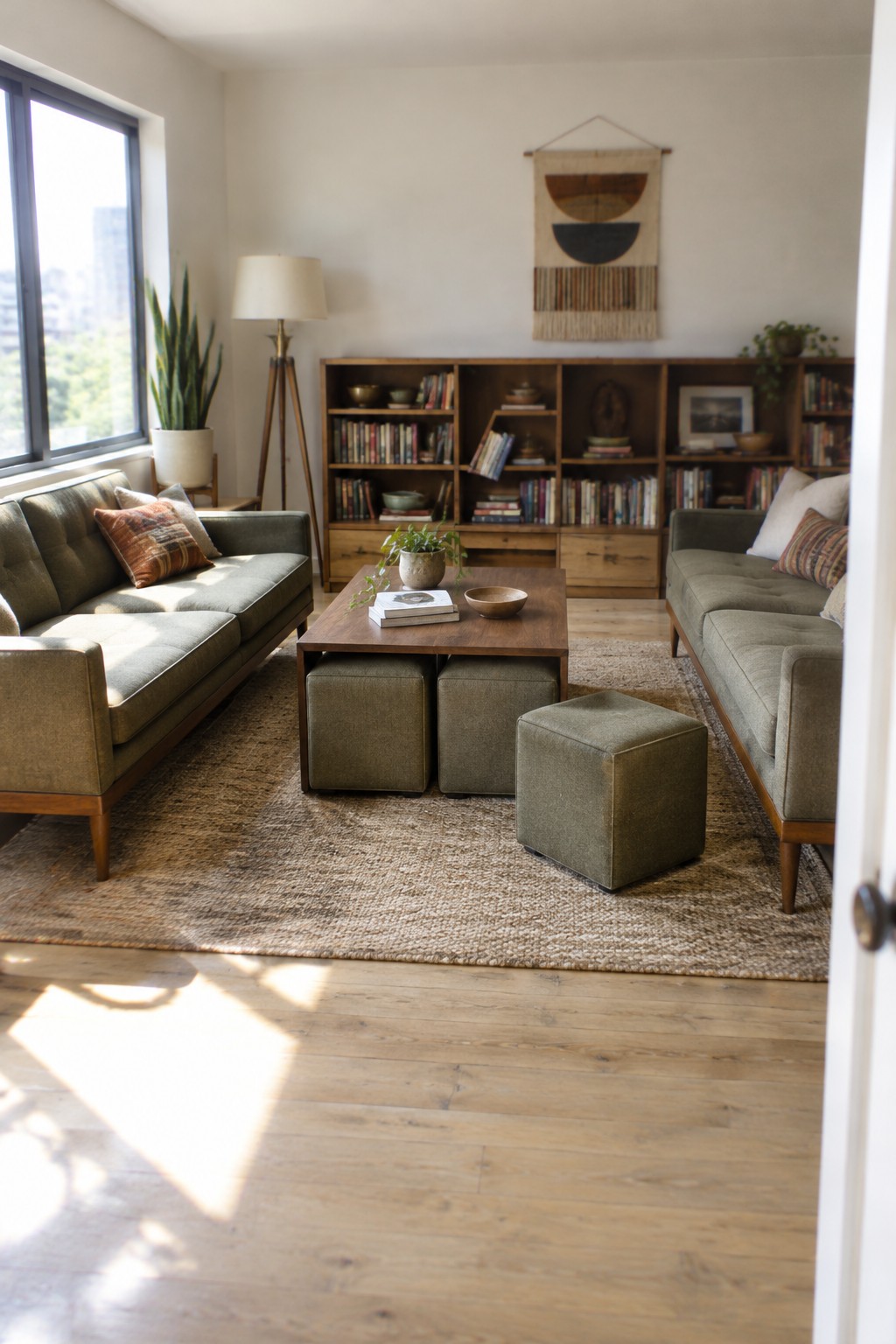
A pair of sofas facing each other makes conversation easy, while small ottomans can move wherever extra seating is needed. It is a flexible setup that works well in a living room used for both relaxing and having guests over.
Try this layout in a room with enough space to keep a clear path around the seating. Choose light ottomans that are easy to shift, and keep the table low enough to reach comfortably from both sofas.
Let A Daybed Work As A Sofa
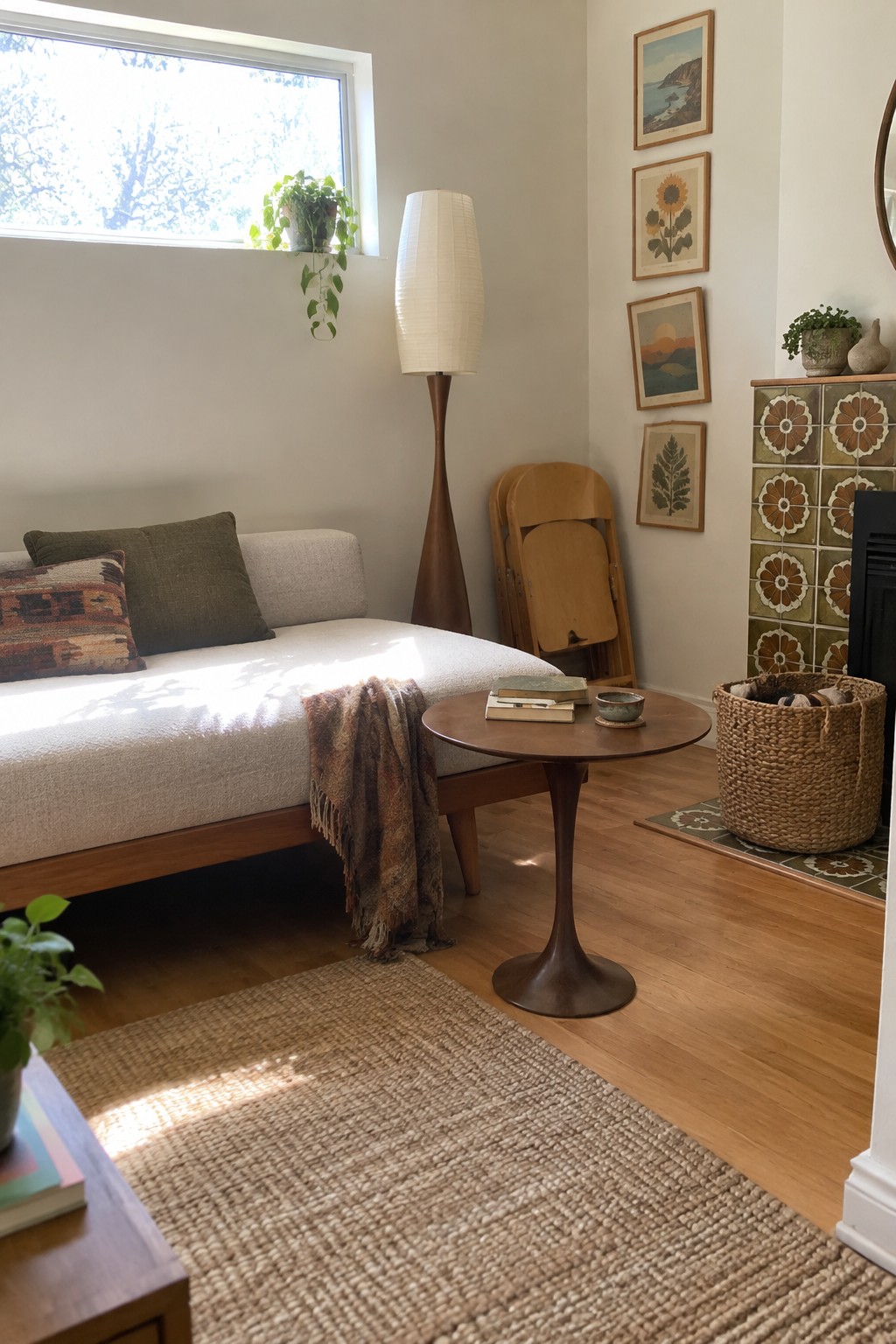
A daybed can make a living room useful for sitting and stretching out, without taking up space for a separate sofa and lounge chair. Its simple shape also suits a mid-century room, especially when the frame has clean wooden lines.
Choose a firm mattress or cushion that feels comfortable for everyday sitting, then add a few back cushions to support lounging. This setup works well in a small apartment or a room that doubles as a guest space. Keep the nearby table easy to move so the seating area can shift with the day.
Use a Sectional to Make Seating More Flexible

A sectional gives a living room more than one comfortable place to sit, and its extended seat can work well for lounging or stretching out. It’s a useful choice when you want seating for several people without filling the room with separate chairs.
In an apartment, look for a sectional that fits the room without blocking the main walkway. A chaise-style end, like the one shown here, gives you that extra lounging space, while a few movable cushions make it easier to adjust the seating.
Use Nesting Tables for Flexible Seating
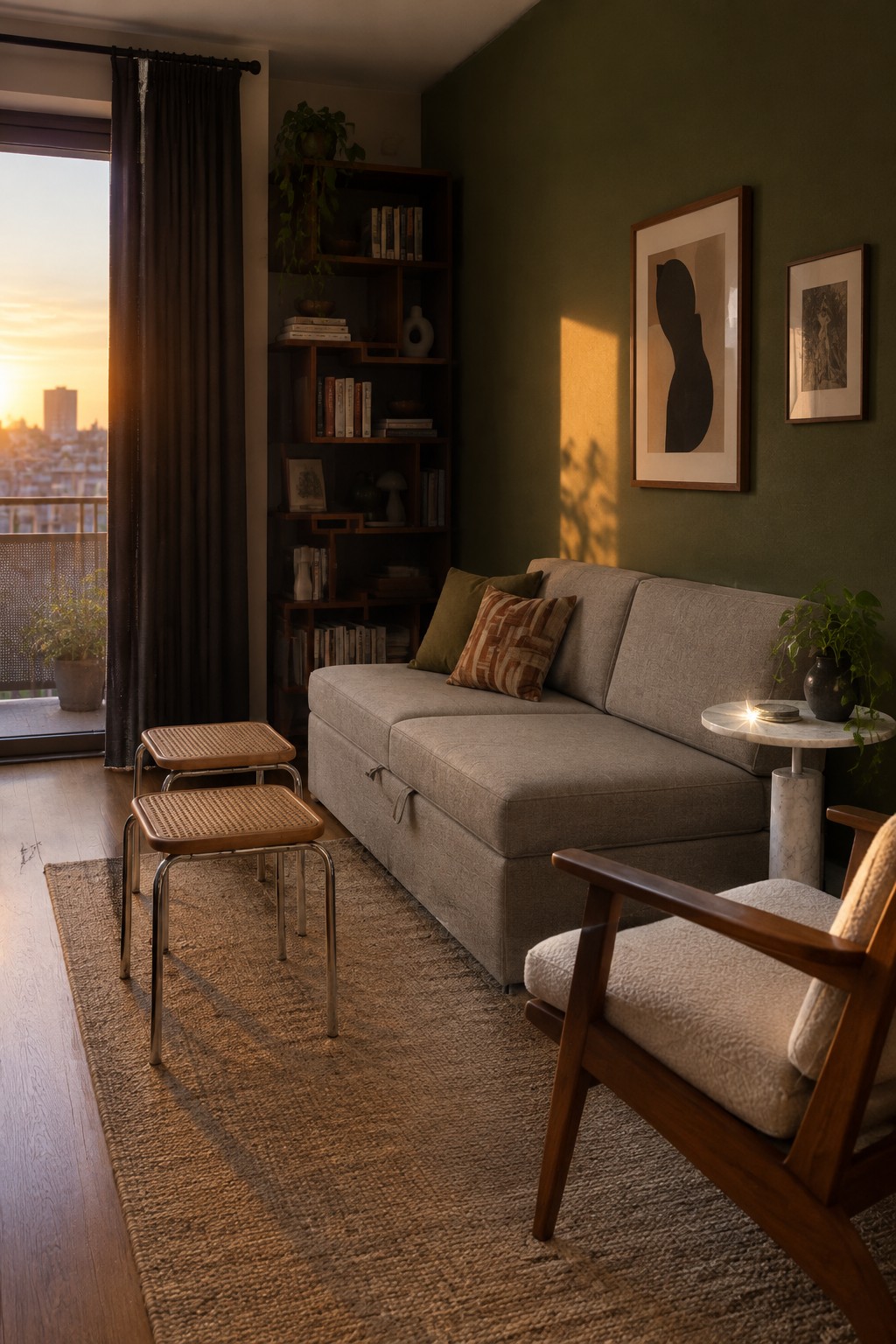
Nesting tables are handy in a living room where seating needs to shift around. They provide a place for a drink or book, then tuck together when you need more floor space.
Choose a set that is easy to move and low enough to sit beside the sofa or an extra chair. Here, two cane-top tables sit in front of the sofa, ready to be pulled apart for guests.
Use Ottomans As Flexible Extra Seating

Round leather ottomans are easy to move wherever guests need a place to sit. They also work as footrests when the room is quieter, which makes them a practical choice for a living room that serves more than one purpose.
Choose lightweight ottomans that can shift around without much effort, and keep their height close to the seat height of the sofa. A few smaller pieces can be easier to arrange than one large ottoman, especially in an apartment.
Use a Curved Sofa To Open Up the Seating Area
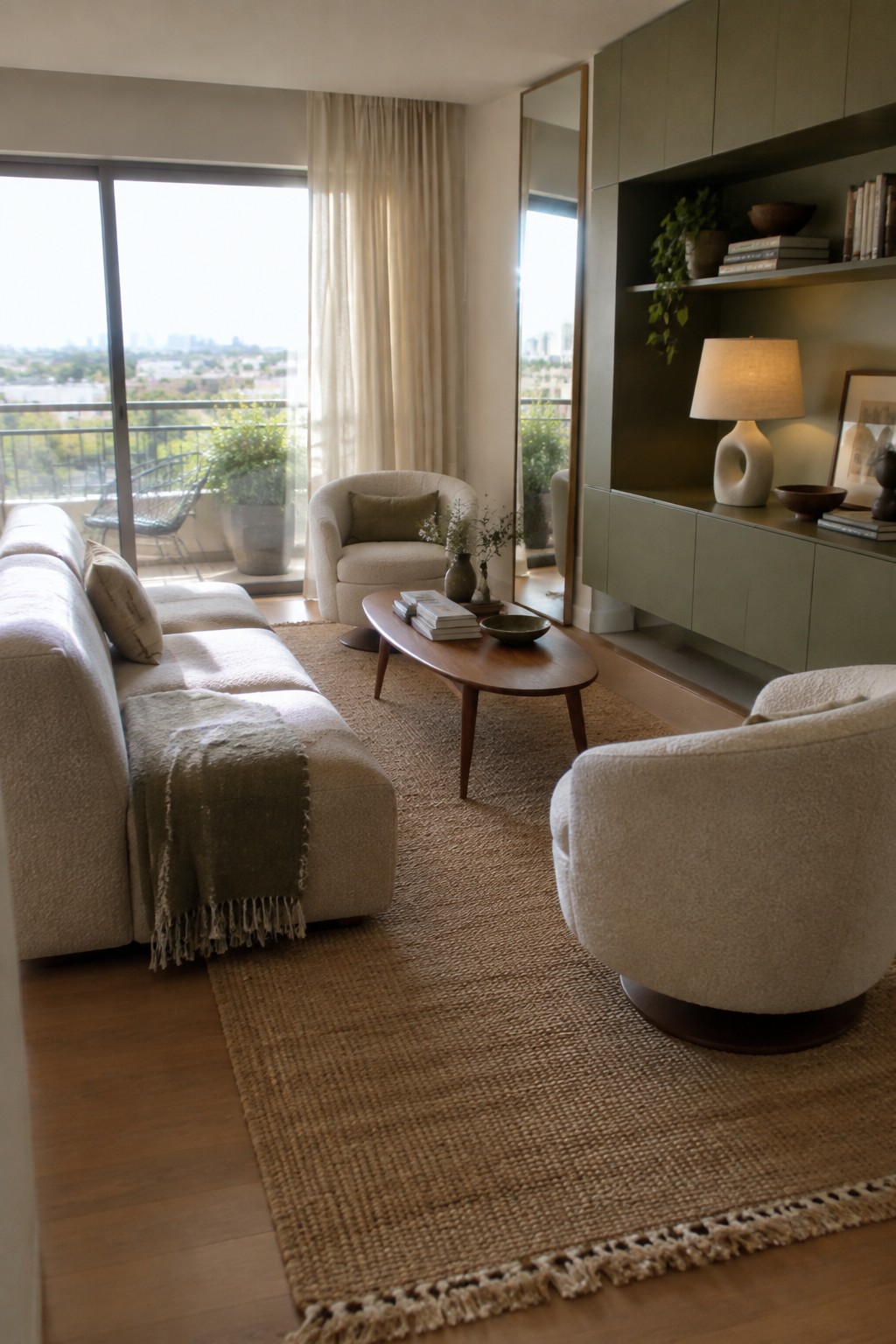
A curved sofa can make a living room feel less boxed in than a straight sofa pushed against the wall. Its rounded shape also leaves a natural path around the seating, which is useful when the room is compact or has doors and windows to work around.
Keep the rest of the seating simple so the curve has room to do its job. A small rounded chair or an oval coffee table fits easily alongside it, but leave enough space to walk through comfortably.
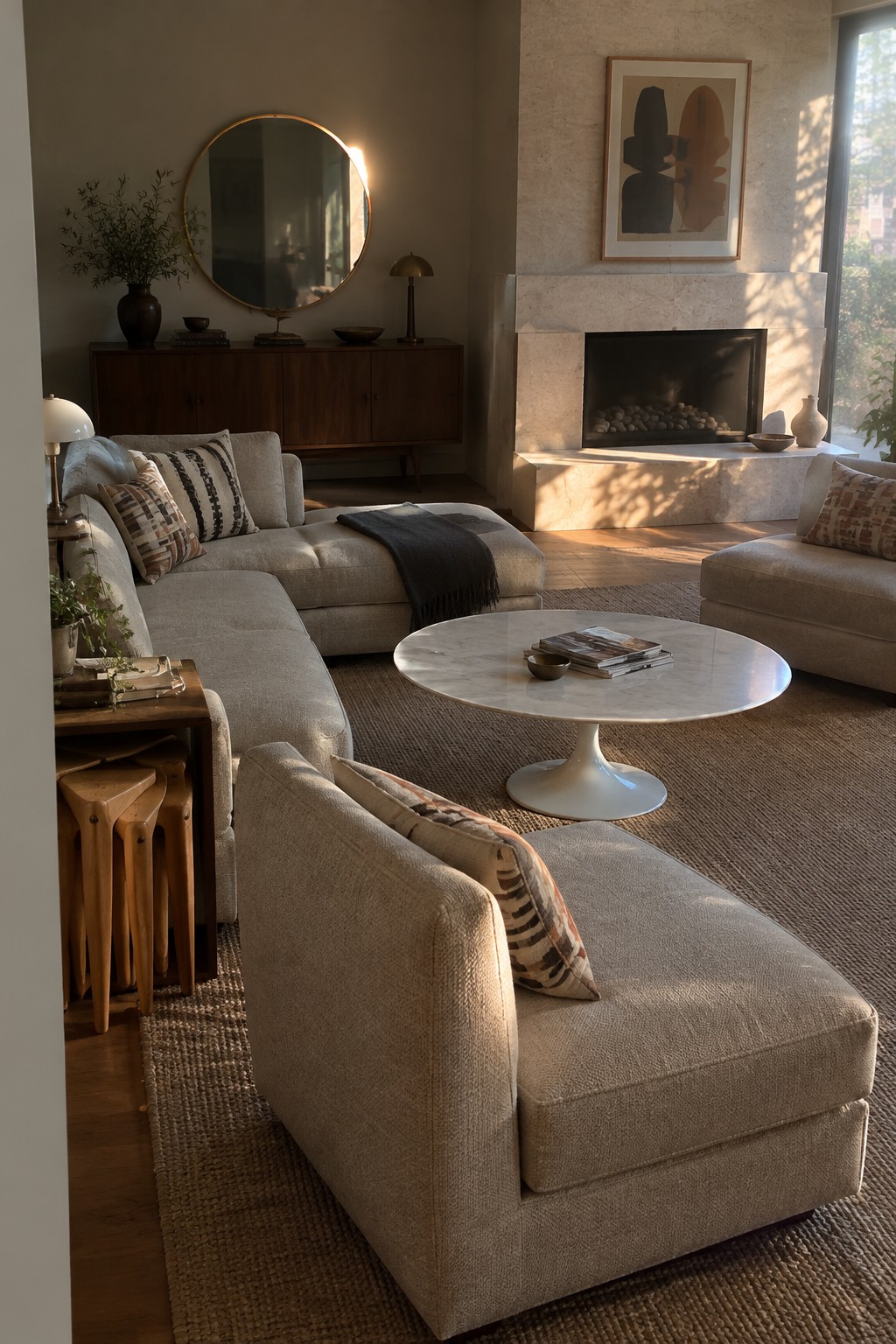
A shared coffee table gives separate sofas a clear place to gather around, while keeping the seating flexible. Here, the round table sits between a long sofa and a second sofa, making it easy for people to face one another without pushing every seat into a straight line.
This layout works well in apartment living rooms where one sofa alone may not offer enough seating. Leave enough room to walk around the table, and choose a rounded shape if you want easier passage through the seating area.
Use Ottomans To Add Flexible Seating

Two upholstered ottomans can serve as extra seats when company comes, then move back into the seating area when they are not needed. They take up less visual space than another chair and can even hold a tray for drinks or snacks.
This setup works well in apartments where floor space is limited. Choose ottomans that are light enough to move easily, and leave a clear path around them so the room stays comfortable to use.
Store Foldaway Chairs Within Reach

Wall-mounted folding chairs provide extra seating without taking up floor space when they are not in use. Here, two chairs hang above the sofa, ready for guests but kept out of the way day to day.
This works especially well in apartments where a full set of occasional chairs would crowd the room. Choose chairs that fold flat and suit the room’s style, then mount them securely where they are easy to take down.
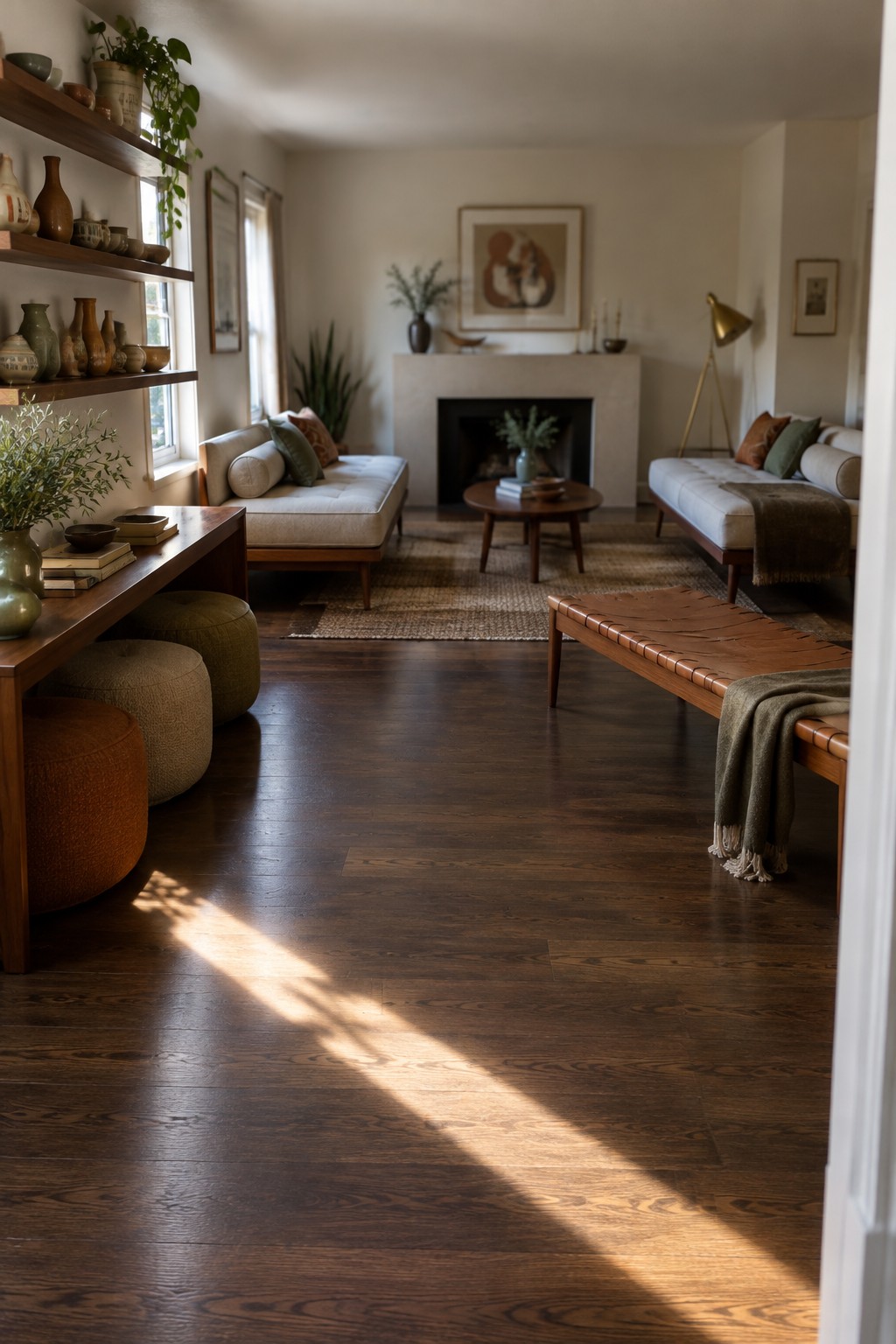
A simple face-to-face layout makes flexible seating easy to use. Two sofas across from each other give people a clear place to sit and talk, while leaving room to shift seats or bring in an extra ottoman when needed.
This arrangement works especially well in a long living room, where seating can define the conversation area without blocking the path through the space. Keep the coffee table within easy reach of both sofas, and leave enough room around it to move comfortably.
Use Stools As Easy Extra Seating
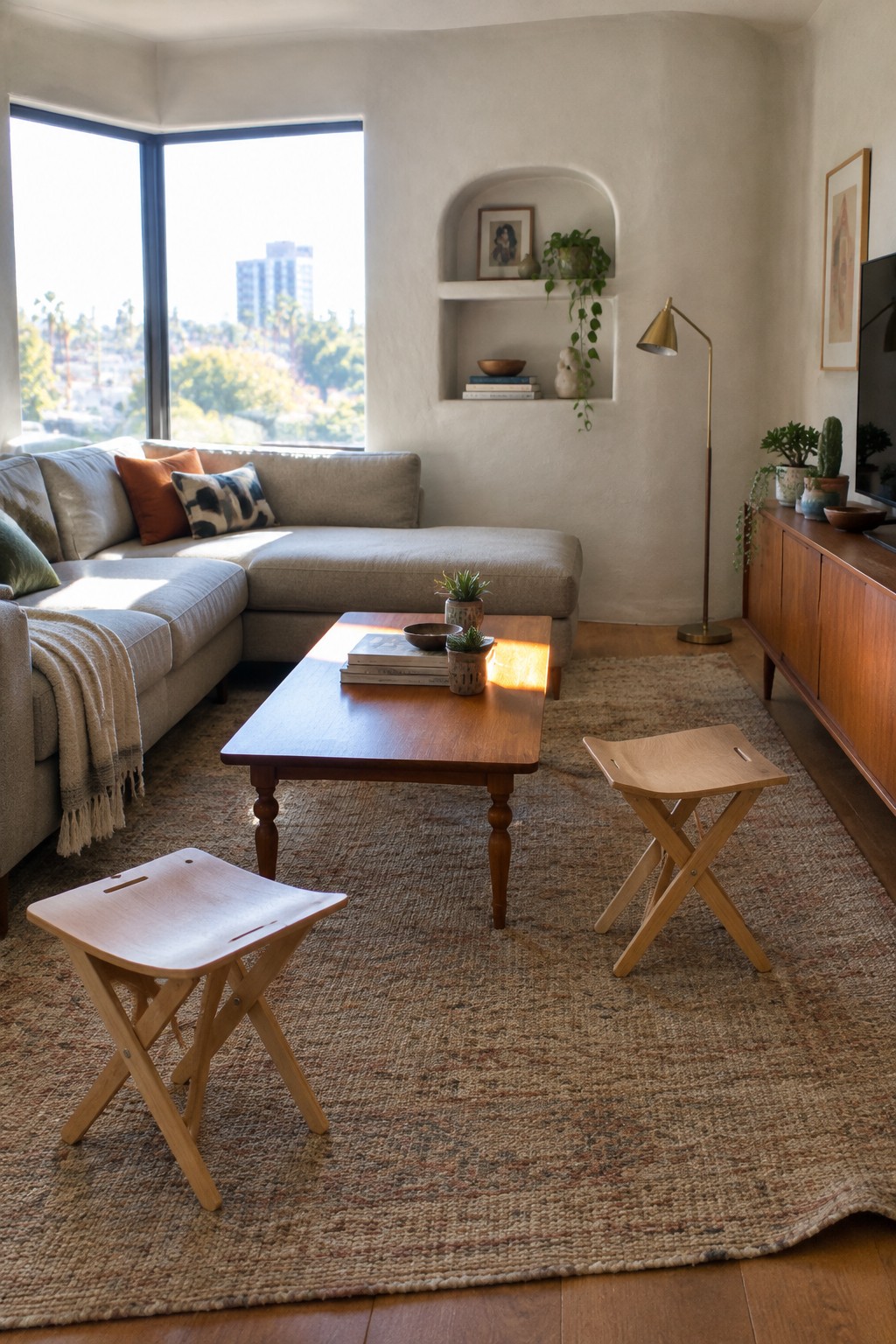
Small folding stools can provide extra seats without taking up much room. They sit out of the way when not needed, then move beside the coffee table when guests come over.
This approach works especially well in an apartment where a full set of chairs would crowd the living area. Choose lightweight stools that are easy to carry, and leave enough space around the coffee table to pull them into place.
Use Leather Ottomans As Flexible Seating

Leather ottomans can serve as extra seats when friends visit, then move back into the room as footrests or small tables. Their simple shape makes them easy to shift around without rearranging the main sofa.
In an apartment living room, a few separate ottomans can be more useful than one large coffee table. Choose a size that leaves a clear path between the sofa and the rest of the room, and use a tray when you need a steady surface.
Use a Built-In Sofa to Save Space
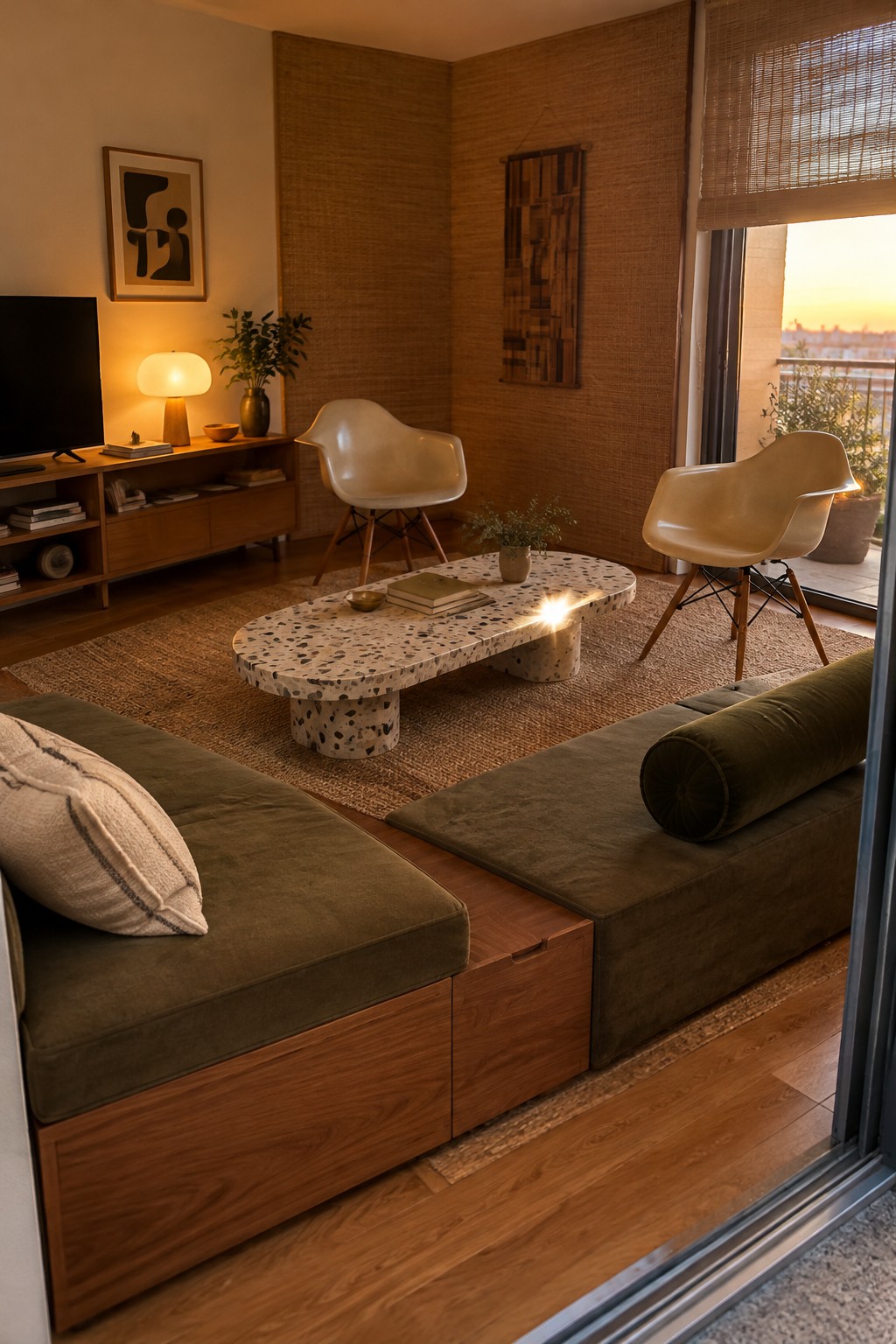
A sofa with a wooden base can make a living room’s seating feel like part of the layout, rather than a bulky piece placed in the middle of it. The base also offers a practical opportunity for drawers or other tucked-away storage.
This approach suits apartments where every bit of floor space matters. Keep the cushions simple and leave enough room around the sofa to move chairs when you need extra seats.
Frequently Asked Questions
Q: How do I fit flexible seating into a small mid-century modern living room?
A: Start with one main sofa, then add a lightweight chair or pouf that you can move when guests come over. Keep the legs visible and leave a clear path through the room so the seating feels open, not crowded.
Q: Can I mix mid-century furniture with a newer sofa?
A: Absolutely. Choose a sofa with simple lines, then bring in mid-century touches like tapered wood legs, a sculptural side table, or a vintage-style lamp. A shared color or wood tone helps the pieces feel at home together.
Q: What’s a good alternative to a bulky coffee table?
A: Try a small round table or a pair of nesting tables. They’re easier to move around and leave more room for extra seating.
Q: How can I make the room feel warm without adding clutter?
A: Use a few soft layers, such as a textured rug, cushions, or curtains, to balance the clean furniture lines. One or two meaningful objects usually feel more inviting than lots of little decorations.
