

Unused alcoves can be awkward to furnish, and they often end up holding things that never quite find a proper home.
I like the idea of turning one into a small office because a thoughtful desk, good lighting, and a little storage can make the space feel planned rather than squeezed in.
The best solutions also account for how you work, whether that means hiding clutter, adding shelves, or keeping the nook open to the rest of the room.
Seeing a forgotten corner become genuinely useful is a satisfying change, even when the updates are simple.
I’d save the ideas that fit your alcove’s size and try adapting them to the way you use your home.
Turn An Empty Alcove Into A Home Office

An unused alcove can become a practical work area without taking over a whole room. Here, a wall-mounted desk and a pegboard turn a narrow, empty nook into a defined spot for working, while keeping the floor mostly clear.
This idea works well in a hallway or a spare-room alcove where a full desk would feel too bulky. Measure the nook first, and choose a desk that leaves enough room to sit and move comfortably.
Turn An Unused Alcove Into A Home Office

A bay window alcove can do more than hold a radiator or collect clutter. In this makeover, a built-in desk wraps around the window seat, giving the nook a clear purpose while making good use of space that might otherwise sit empty.
For a similar setup, measure carefully and keep the desk and seating compact enough to leave room to move. A fitted worktop with a few drawers or shelves can suit a small alcove without making it feel crowded.
Turn An Unused Alcove Into A Small Home Office

A space under the stairs can become a useful office instead of a place for boxes. A fitted desk and cabinets make good use of the narrow footprint, while keeping storage close at hand.
Measure the sloped ceiling and leave enough room to pull out a chair comfortably. A compact work surface and built-in storage suit this kind of alcove better than bulky, freestanding furniture.
Turn An Unused Closet Into A Compact Home Office

A closet can become a useful work spot when you replace storage shelves with a desk and make use of the full alcove. Here, a built-in work surface and overhead shelf give the small nook a clear purpose without taking up room elsewhere.
Measure carefully before choosing a desk and chair, and leave enough space to sit comfortably and move around. A small drawer unit can handle supplies, while a task light helps keep the work surface practical.
Turn An Unused Fireplace Into A Home Office

An empty fireplace alcove can become a useful desk area instead of staying as dead space. Here, a desk fits neatly inside the opening, giving the room a work zone without taking up much floor space.
This idea works well in older homes with deep fireplaces or recessed wall niches. Measure carefully before choosing a desk, and leave enough room for a chair to pull out comfortably.
Make A Window Alcove Work As A Home Office

An empty window alcove can be a useful spot for a small office. A desk fitted across the nook turns unused floor space into a defined work area, while the window keeps the setup from feeling boxed in.
A desk with drawers on either side can add storage without taking over the room. Measure the alcove first and leave enough space for a chair to move comfortably. Simple curtains can finish the window without blocking too much light.
Add A Desk Beneath A Sloped Ceiling

An awkward attic alcove can be hard to use until it has a clear purpose. Here, a built-in desk and shelves turn the empty nook into a home office, making use of the low wall without taking up the center of the room.
Measure the ceiling height and depth before choosing a desk, and keep the chair area clear so it’s comfortable to use. This setup works well in small attic rooms where a full-size office would feel crowded.
Make A Small Alcove Work As A Home Office

An unused alcove can become a practical place to work without taking over a whole room. A wall-mounted desk makes use of the narrow footprint, while a stool can tuck underneath when the desk is not in use.
Keep the work surface clear enough for daily tasks, and use the wall above it for essentials like a calendar or paper storage. This setup suits a hallway nook or other shallow recess, but leave enough room to pull out the stool and move comfortably.
Build A Desk Into A Window Alcove

An unused window alcove can become a practical home office with a long desktop and storage built into the sides. Here, the old radiator cover gives way to a simple work surface, making use of space that might otherwise sit empty.
Measure the alcove carefully before choosing a desk depth, and leave room for the chair to slide back. Low shelves or cabinets at each end can hold supplies without crowding the work area.
Make A Closet Alcove Work As A Home Office

A shallow closet can become a useful work spot when you give it a desk and storage that fit the narrow space. Here, the hanging coat and floor boxes are replaced by a compact workstation, making an unused alcove serve a clear purpose.
Measure carefully before choosing furniture, and keep the desktop narrow enough to leave room for a chair to move. Wall-mounted shelves or file holders can store supplies without taking up desk space, which is especially helpful in a small bedroom or hallway.
Replace Pantry Shelves With A Compact Home Office

An unused pantry can become a practical work spot by replacing wire shelving with a desk and a couple of sturdy shelves. The small alcove keeps the office tucked away, while the built-in desk makes better use of the narrow space.
This idea works well in a closet or other shallow nook where a full-size office would not fit. Measure carefully before choosing a chair, and keep the desk depth modest so there is still room to sit comfortably.
Add A Desk To Make A Sloped Alcove Useful
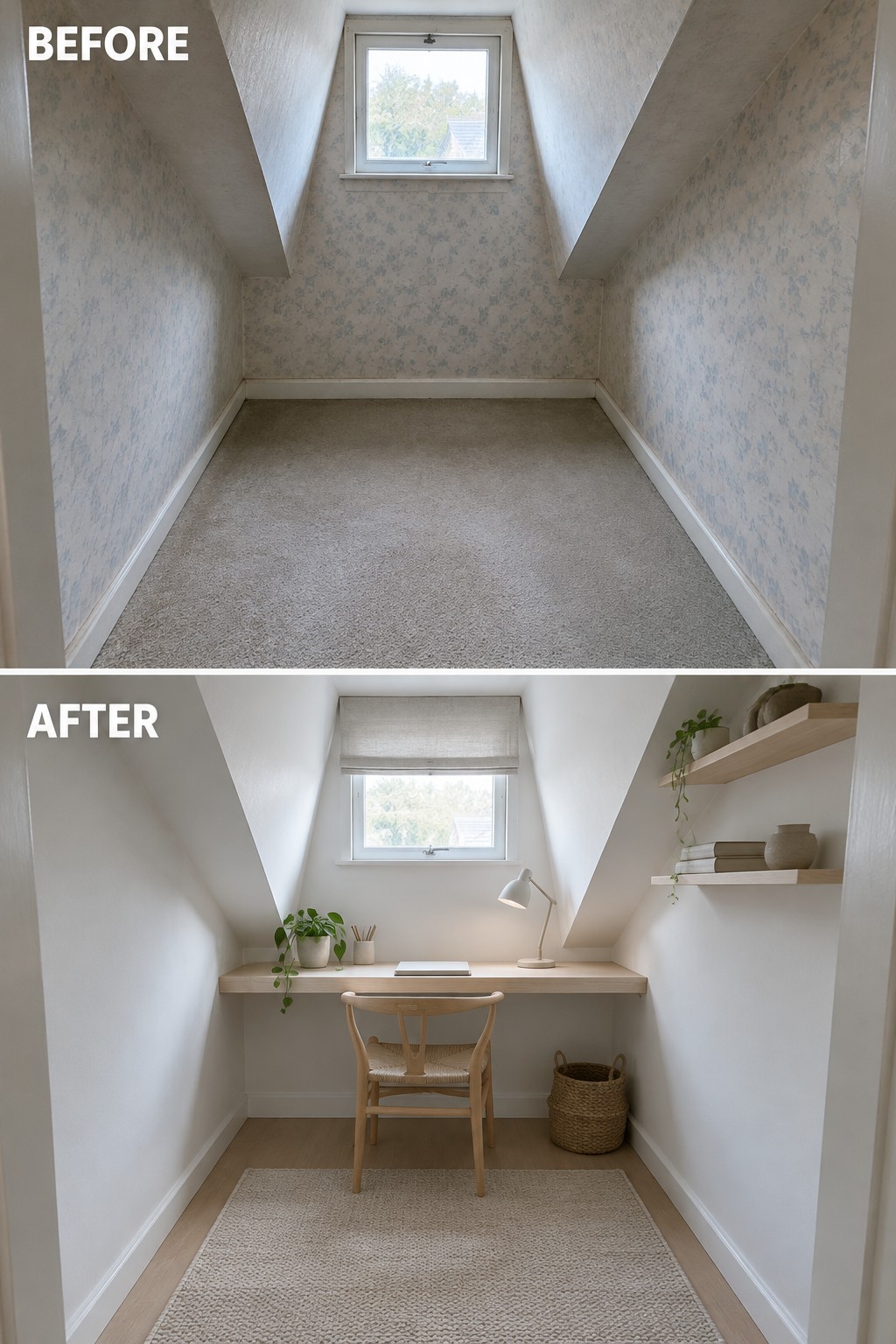
An empty alcove beneath a sloped ceiling can be awkward to furnish, but a simple built-in desk gives it a clear purpose. Here, the carpeted nook becomes a small work area, with the desk fitted between the side walls.
This idea works well in an attic or spare room where a full-size office would take up too much space. Measure the narrowest part of the alcove before choosing a desk, and keep the chair and storage compact so there’s still room to move.
Fit A Desk Into An Empty Alcove

A small alcove can become a useful home office without taking over the living room. Here, a desk turns an otherwise unused nook into a clear work area, while the rug helps mark it as a separate zone.
Choose a desk that leaves room to move around, and keep the setup simple so the nook does not feel cramped. This idea works especially well in a living room or hallway recess where a full office would not fit.
Turn An Entry Alcove Into A Compact Workstation

A narrow entry alcove can do more than hold coats and shoes. Replacing the hanging storage with a desk and shelves gives the small area a clear purpose, while keeping the work surface close to the wall leaves room to move through the entry.
This idea suits a deep closet or an underused nook near the door. Measure carefully before choosing a desk, and keep shelves limited to what you need so the workspace does not crowd the walkway.
Add Built-In Shelves To Make An Alcove Useful

An empty landing alcove can become a handy home office when shelves and a narrow desk make use of its height and depth. Here, built-ins turn the unused nook into a place to work without taking up space in a larger room.
For a similar spot, measure carefully and keep the desk shallow enough to leave a clear path through the hall. Add a small stool that can tuck underneath, and use the shelves for work supplies as well as a few books.

An empty alcove can become a useful home office when the desk and storage are sized to fit the recess. Here, a long built-in work surface and shelves turn a blank wall into two workspaces without taking over the rest of the room.
For a similar setup, measure the alcove carefully and keep the desk deep enough for comfortable work while leaving room to move around the chairs. A darker wall color helps the work area feel distinct, but a lighter shade can suit a small or dim nook better.
Fit A Compact Desk Into A Narrow Alcove
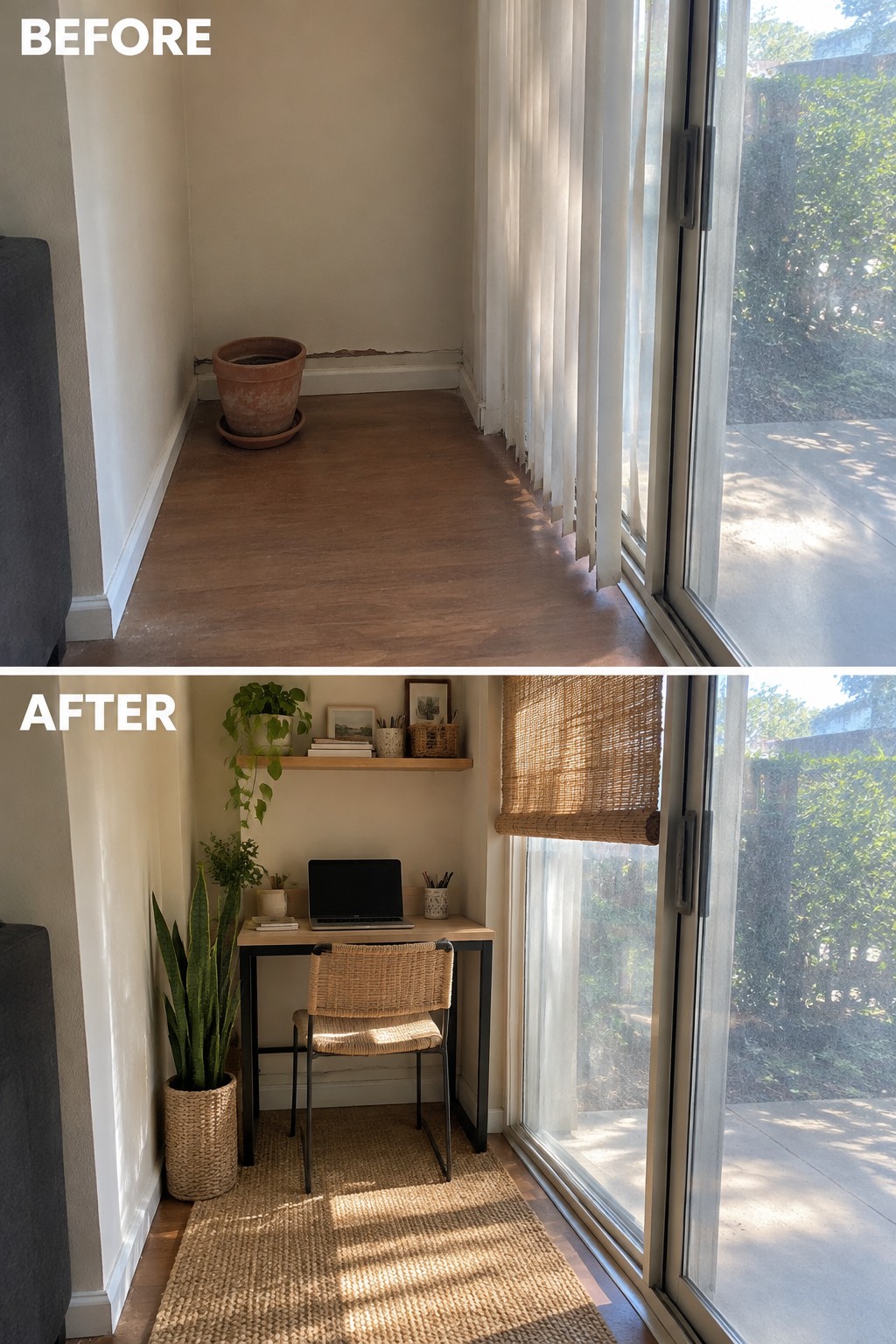
An unused alcove can become a practical home office without taking over the room. A small desk and chair make use of the narrow space, while a rug helps mark it as a separate work area.
Keep the desk slim enough to leave room to pull out the chair, and use a wall shelf for items that would otherwise crowd the desktop. This works especially well beside a window, where the nook can serve as a quiet spot for everyday computer work.
Turn An Alcove Into A Built-In Work Nook

An empty alcove can become a useful home office without taking over a room. Here, a desk fits into the lower part of the recess, while the existing shelves provide storage above and below. The fitted layout makes good use of space that might otherwise sit empty.
This idea works well in a hallway or spare room where a full desk would feel too large. Keep the desktop shallow enough to leave room to sit comfortably, and avoid filling every shelf so the nook stays practical for daily work.
Turn An Alcove Into A Built-In Daybed Office
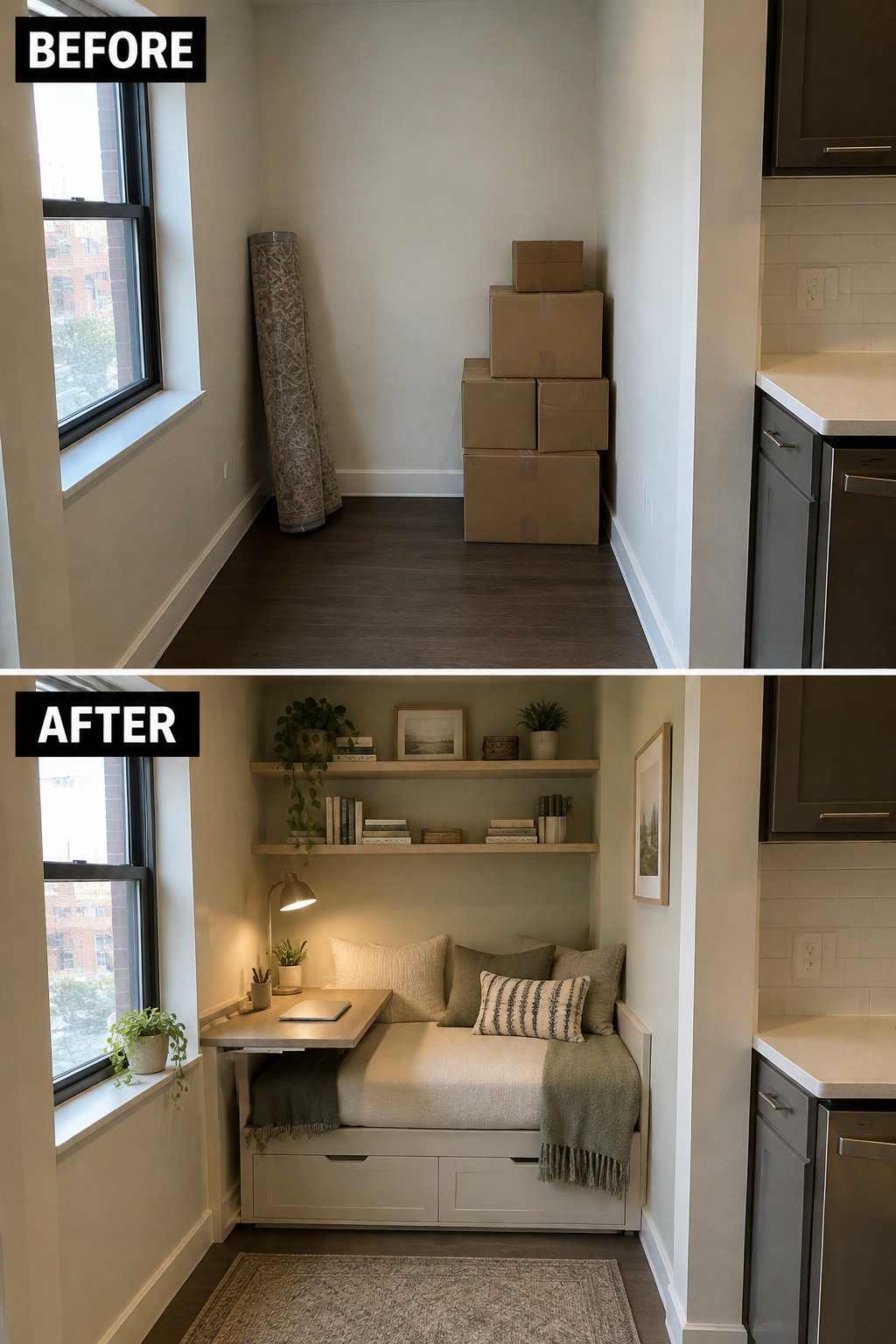
An empty alcove can become a useful home office without giving up its cozy feel. Here, a built-in daybed with drawers turns the narrow recess into a place to sit and work, while shelves make use of the wall above.
For a similar setup, choose a daybed or bench that fits the alcove without blocking the walkway, and add a small desk surface beside it for a laptop. Keep storage close at hand, but avoid filling every shelf so the nook still feels comfortable.
Make An Empty Alcove Work As A Home Office

An unused corner can become a practical work area when the desk fits the shape of the space. Here, a corner desk makes use of both walls, while the open area that once sat empty now has a clear purpose.
For a similar nook, measure carefully and leave enough room to sit and move the chair. A narrow desk with drawers or open shelving can add useful storage without crowding the room.
Make A Narrow Alcove Work As A Home Office

An unused alcove can become a practical work spot without taking over a whole room. Here, a compact desk replaces an empty recess, making use of space that might otherwise go to waste.
Keep the desk shallow enough to leave room to move, and add a stool that tucks underneath when it is not needed. This idea suits a hallway or landing alcove, but check that the setup does not block a nearby walkway.
Add A Desk And Shelves To An Empty Alcove

An unused alcove can become a practical home office without taking over a whole room. Here, a desk and wall shelves turn a bare recess into a defined work area, while keeping the floor space fairly open.
This idea suits a spare bedroom or a narrow nook where a full-size office setup would feel crowded. Measure the alcove before choosing a desk, and keep the shelves high enough to leave clear work space below.
Turn An Under-Stair Alcove Into A Homework Station

A cluttered under-stair nook can work much harder as a small desk area. Here, a compact work surface and chair replace loose storage, while a pegboard keeps school supplies within reach.
This idea suits a narrow alcove that might otherwise collect odds and ends. Measure the space carefully, keep the desk shallow enough to leave room to sit comfortably, and use wall storage so the worktop stays clear.
Create A Useful Drop Zone In An Entry Alcove

An unused entry alcove can do more than collect clutter. Here, a wall-mounted desk and a small drawer turn the empty recess into a compact place for paperwork and everyday essentials, while keeping the floor clear.
Use a shallow desk so the nook stays easy to pass through, and add a lamp for times when daylight is limited. A few organizers help keep papers tidy without crowding the work surface.
Frequently Asked Questions
Q: How do I make an alcove desk feel less cramped?
A: Measure the space before choosing a desk, and keep the top shallow enough to leave room for your chair. Wall shelves can hold supplies without taking up precious floor space.
Q: What if my alcove doesn’t have an outlet?
A: A nearby outlet may be enough if you can run a cord safely along the wall. If you’ll use the office often, ask an electrician about adding an outlet inside the alcove.
Q: How can I make an alcove office feel separate from the rest of the room?
A: Try a different wall color, a small rug, or a curtain you can pull closed at the end of the day. Even a simple change in lighting can help mark it as a work zone.
Q: Can an alcove office work in a rental?
A: Yes. Use a freestanding desk, removable hooks, and storage that doesn’t require drilling. A plug-in lamp adds warmth without changing the room.
