

A home office can feel cramped or unfinished when the desk, storage, and lighting never quite work together.
I find that improving the layout often matters more than adding more furniture, especially when the room’s footprint has to stay as it is.
Small changes to the desk setup, wall storage, and lighting can make the space easier to use and more pulled together.
It is satisfying to see a familiar room work better without taking on a full renovation.
Some of these ideas may be worth saving or adapting to fit your own home office.
Create A More Useful Home Office

A cluttered desk can make even a small home office hard to use. Replacing it with a wall-mounted work surface clears the floor and gives the room a more open feel, without changing its footprint.
This setup works well in a spare room or a compact office nook. Keep the desktop wide enough for daily tasks, then use a small drawer unit for supplies so the work surface stays clear.
Make A Home Office Feel More Finished

A cramped, cluttered office can feel much more usable without moving a wall or changing the desk’s basic position. Here, clearing the desktop and replacing the harsh overhead feel with lamps and a rug makes the same small room look calmer and more put together.
Try this in a spare room or a compact work nook: keep the desk as the main work surface, clear away what you do not use, then add a rug sized to fit the chair and desk area. A couple of lamps can make evening work easier, too. Keep enough open floor space to pull the chair back comfortably.
Turn A Dining Table Into A Practical Home Office

A dining table covered with papers can be hard to use for either work or meals. Replacing it with a compact desk and a proper office chair gives the room a clear purpose, while shelving keeps books and supplies close by.
This idea works well when a separate office is not available. Choose a desk that fits the existing space, and keep storage vertical so the room still has room to move.
Add Open Shelves To A Built-In Home Office

Replacing some upper cabinet doors with open shelves makes a built-in office feel lighter while keeping the existing footprint. In this makeover, gray cabinets and two display shelves take the place of the dark, closed-in storage above the desk.
This idea works well when you already have a wall of cabinetry but want the workspace to feel less heavy. Keep everyday supplies in the closed cabinets and use the shelves for a few books or simple decor, leaving enough clear space above the desk to work comfortably.
Clear The Desk Area And Manage Cables

Replacing the single-screen setup with two monitors makes the desk more useful without changing its footprint. The biggest improvement, though, is getting the loose cords off the floor and into an under-desk tray, so the work area feels tidier and is easier to clean.
A cable tray and a few ties can help organize wires in almost any home office. Keep the power strip close to the desk and leave enough slack for equipment to move safely. The result is a more practical workspace without needing a larger room.
Make A Small Home Office Feel Finished

A small office can feel much more useful when the desk area has a clear place in the room. Here, a rug defines the work zone, while a few shelves replace the bulky filing cabinet and leave more floor space open.
Try this approach in a spare room or a corner that needs to serve as an office. Choose a rug large enough for the chair to move comfortably, and keep shelves limited to what you use or enjoy seeing so the space stays easy to work in.
Turn A Small Office Nook Into A Useful Seating Area

An unused office nook can serve more than one purpose. Here, the desk remains in the corner, while a built-in bench replaces the bulky chair and storage boxes. The bench makes the small space useful for sitting without changing the room’s footprint.
A setup like this works well in a home office, hallway, or alcove where a full-size sofa would feel too large. Choose a bench that fits the nook, and use baskets underneath to keep supplies out of sight.
Add Wall Storage To Clear Home Office Clutter

Replacing the bulky filing cabinet and stacked boxes with a slim drawer unit and a wall-mounted pegboard makes better use of the office without changing its footprint. The pegboard keeps everyday supplies close at hand while freeing up floor space.
This idea works well in a small office where papers and tools tend to collect on the desk or in corners. Choose a board and storage pieces sized for what you actually use, and leave some open space so it stays easy to keep tidy.
Turn A Blank Office Wall Into A Living Backdrop

A home office can feel plain even when the desk and chair are perfectly usable. Here, a wall-mounted plant display gives the space a clear focal point and makes the desk area feel more considered without changing the room’s layout.
For a similar effect, use sturdy shelves or wall planters above the desk, but leave enough open wall to keep the area from feeling crowded. Choose plants suited to the room’s light, and keep trailing leaves clear of your work surface.
Turn A Spare Room Into A Home Office

The room works better when it has one clear purpose. In the updated space, the bulky armchair and stacked bedding are replaced by a daybed, while the desk stays along the opposite wall. That keeps a place to work without giving up a spot for guests.
This idea suits a small spare room that needs to do double duty. Choose a daybed that fits the room and keep the desk compact so there is still a clear path between them.
Make The Desk Easier To Use

Replacing the worn chair and cluttered desktop with supportive seating and a large desk mat makes this home office more comfortable and easier to keep tidy. The desk stays in the same place, so the update improves daily use without changing the room’s layout.
In a small office, start by clearing the work surface and choosing a chair that suits the hours you spend at your desk. A desk mat can give your keyboard and mouse a defined area, but leave enough open space to work comfortably.
Use Lighting To Make A Home Office Feel Warmer

Replacing the bright ceiling fixture with a pendant and adding a small desk lamp makes this office feel more comfortable for evening work. The furniture stays in the same places, so the room feels different without needing a new layout.
Try this in a home office that feels harsh or a little cold after dark. Use a ceiling light for general illumination and a focused lamp at the desk, choosing bulbs that suit the work you do. Keep the desk lamp positioned so it lights your work without shining into your eyes.
Use A Rug To Finish The Home Office
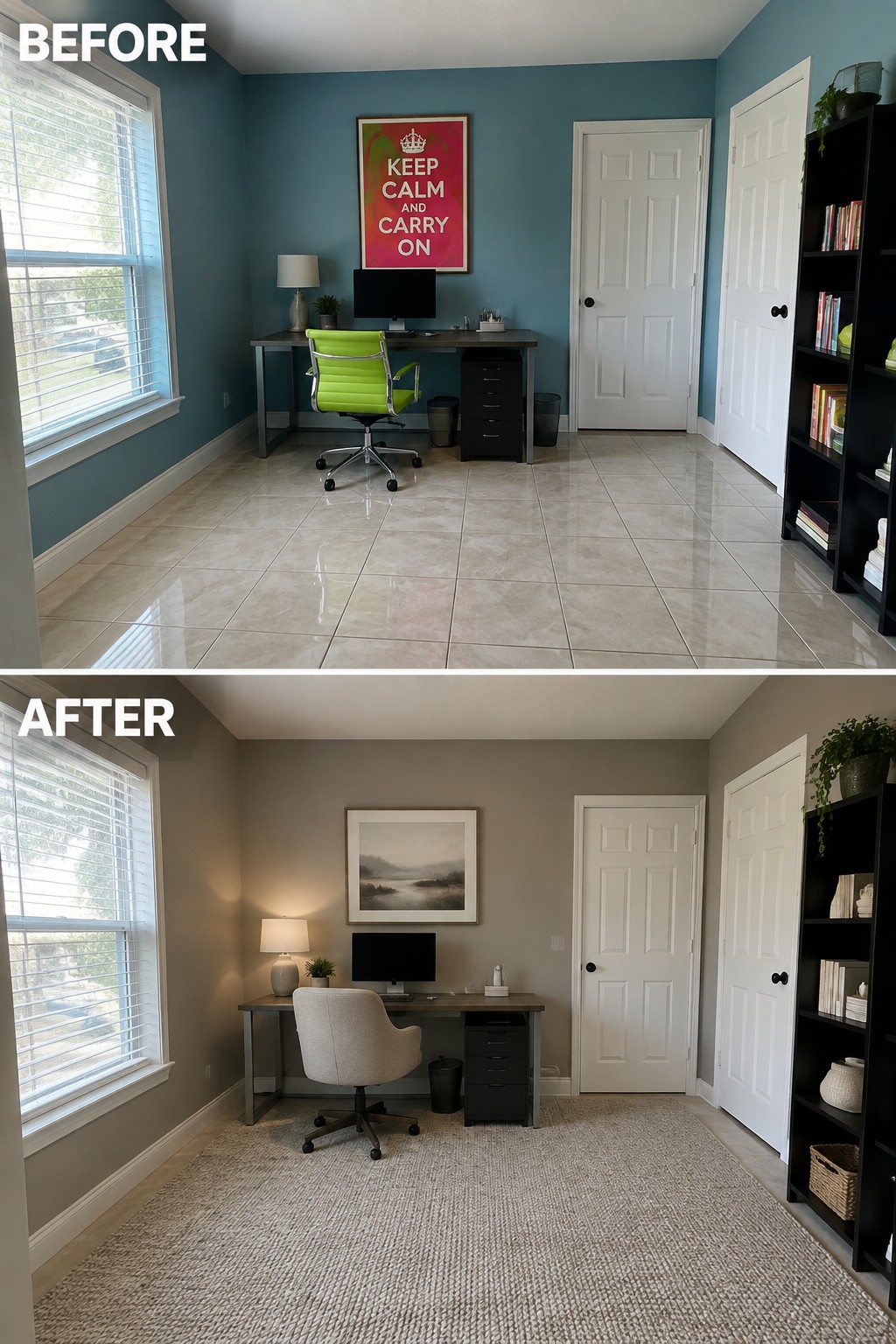
The tiled floor made this office feel a little bare, even with a desk in place. A large rug in the updated room defines the work area and makes the office feel more settled without changing the layout.
Choose a rug large enough for the desk and chair, and check that the chair can roll comfortably over it. This is an easy way to finish a home office when you want to keep the existing furniture and footprint.
Use Shelves To Give A Home Office A Finished Look
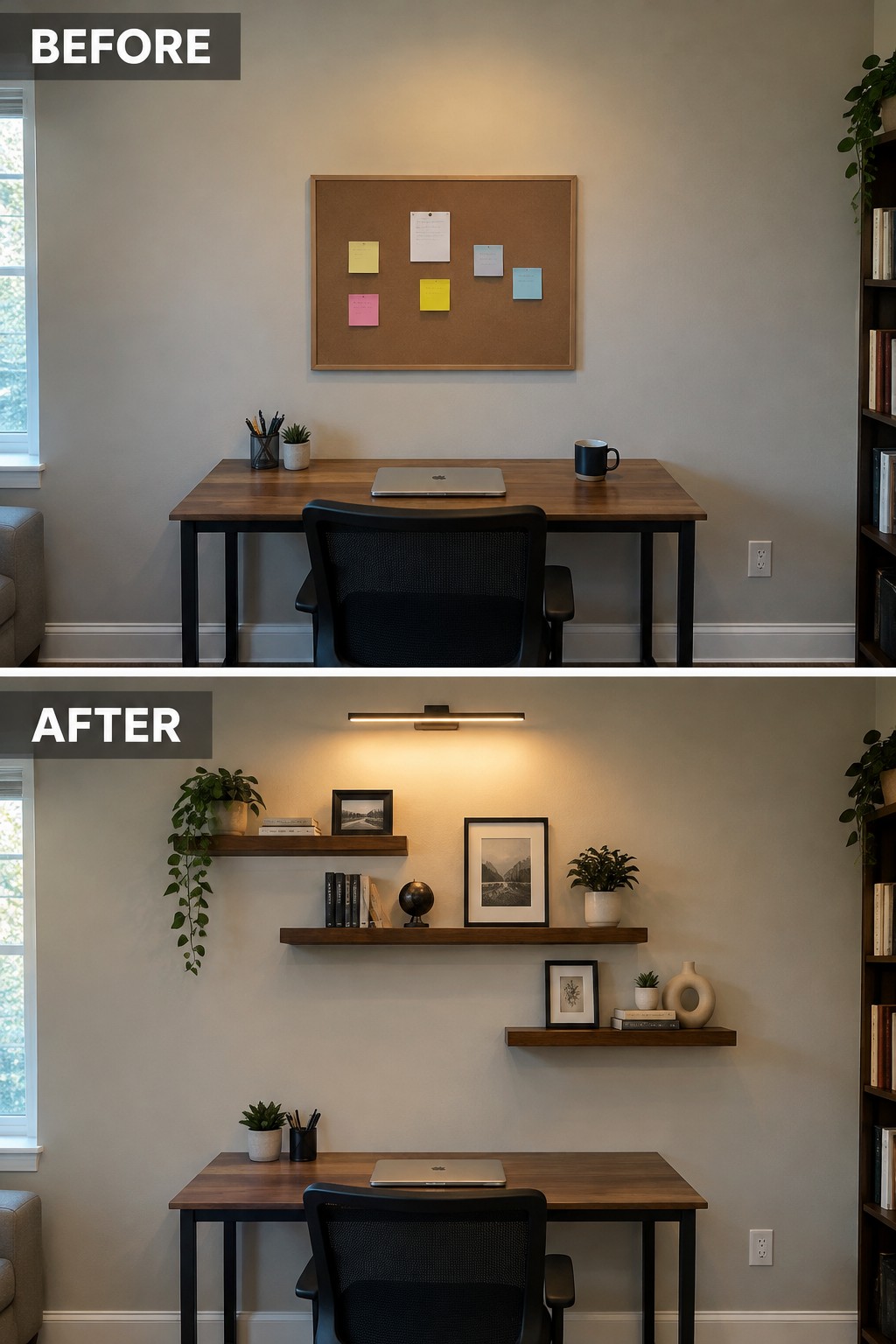
The desk area works, but the blank wall above it leaves the office feeling unfinished. Replacing the corkboard with a few open shelves gives that wall a purpose and makes the workspace feel more settled without changing the room’s layout.
This idea suits a small office where floor space is limited. Keep the shelves shallow and leave some open space around the books and decor, so the wall looks useful rather than crowded.
Use Curtains To Make The Home Office Feel Finished

Replacing the old blinds with a simple roller shade and full-length curtains gives this home office a more settled look without changing the room’s layout. The shade controls glare at the desk, while the curtains make the window feel more complete.
For the same effect, hang the curtain rod a little above and wider than the window, and choose panels that can sit mostly clear of the work area. A neutral fabric is an easy fit in a small office, where busy patterns can compete with the desk.
Replace Worn Flooring To Refresh The Office

Replacing the scuffed, pale flooring with wood-look planks makes this home office feel more finished without changing its layout. The richer floor gives the room a clearer, more cohesive look while the existing desk and storage stay in place.
This idea works well when a home office’s furniture already fits but the floor looks tired. Choose a durable finish that suits your home, and check that the flooring transition at the doorway remains safe and easy to walk over.
Give A Home Office A Clear Focal Wall

The office feels more settled once the crowded shelves are gone and the desk wall has a single feature. A patterned wallpaper panel behind the desk gives the room a focal point without changing its footprint.
Try this on the wall behind a desk, especially in a small office where there is little room for extra furniture. A single shelf can hold a few useful or favorite items, but leave enough open space around it so the wall still feels calm.
Organize Craft Supplies On A Home Office Wall

A crowded desk can be hard to use when supplies spread across the work surface. In this small office, a pegboard with hooks, baskets, and jars moves craft materials onto the wall, leaving the desk clear for projects.
This idea works well in a home office that doubles as a craft space, especially when floor space is limited. Arrange the items you reach for most within easy reach, and leave some open wall and desk space so the setup stays practical rather than crowded.
Create A Small Sitting Area In The Office

The unused corner beside a home office desk can become a useful spot for a quick break or an informal chat. Here, two chairs and a small table turn an empty patch of floor into a defined sitting area without changing the room’s layout.
Keep the pieces compact so the desk still has room to function and people can move through the space easily. A round rug can help mark the seating zone, especially in a narrow office or a spare room that needs to serve more than one purpose.
Add A Printer Cabinet To Free Up Desk Space

The printer takes up much of the work surface in the original setup. Moving it into a cabinet with a pull-out shelf clears the desk while keeping the machine close at hand.
This idea works well in a home office where printing is occasional but the equipment is bulky. Choose a cabinet deep enough for the printer, and make sure the shelf can slide out fully so there is room to load paper and use the controls.
Make A Home Office Feel Warmer With Better Lighting

The desk already has a useful layout, but the bright overhead-style lamp makes the work area feel stark. Replacing it with a warm task lamp changes the mood without taking up more floor space or shifting the desk.
Choose a lamp that directs light onto the work surface, and keep its color temperature comfortable for evening use. A slim design works well on a small desk, where there is little room to spare.
Extend The Desk Along Two Walls

The original desk leaves much of the room unused, while an L-shaped setup makes better use of the corner and gives work and storage their own areas. It’s a practical change that adds workspace without changing the room’s footprint.
This layout works well in a spare room or home office with a clear corner. Measure before choosing desks or cabinets, and leave enough open floor space for the chair to move comfortably.
Add Wall Trim To Give A Home Office A Focal Point

The plain wall in this home office becomes the room’s main feature with simple rectangular trim and a darker paint color. This gives the desk area a clear backdrop without changing the room’s layout or adding bulky furniture.
For the same effect, use trim to mark out one wall behind a desk, then keep the desk and decor fairly simple. It works well in a small office where there is little room for extra storage, but measure carefully so the panels look balanced around doors and windows.
Add Under-Shelf Lighting To Improve The Desk Area

The desk feels easier to use after the loose charging cords are cleared away and a light is added beneath the shelf. The lighting makes the work surface more practical without taking up desk space or changing the room’s layout.
For a similar setup, choose a slim under-shelf light and place it where it can brighten the desk without shining directly into your eyes. It works especially well when a shelf already hangs above the workspace.
Frequently Asked Questions
Q: How can I make a small desk feel less cramped without moving it?
A: Clear the surface down to what you use every day, then move occasional supplies into a drawer or a nearby wall shelf. A monitor riser can also free up space underneath for a keyboard or notebook.
Q: What’s the easiest way to hide cords without changing the room layout?
A: Gather cords with reusable ties and attach them along the back or underside of the desk. Keep the power strip close by and easy to reach, so unplugging things doesn’t turn into a search.
Q: Can I make my office feel more separate if it’s in a bedroom or living room?
A: Try a rug, a desk lamp, or a plant to mark the work area without adding a wall. Even turning the desk toward a corner can make it feel more like a dedicated spot.
Q: How do I improve video calls without buying new equipment?
A: Face a window or place a lamp in front of you, rather than relying on light from behind. A tidy background and a laptop raised to eye level can help, too.
