

A home office can feel unfinished when the desk is squeezed into an awkward corner or the room lacks a clear place to focus.
I find that getting the desk layout right often makes more difference than adding extra decor, especially when storage, lighting, and a comfortable chair all have room to work together.
Small changes can make the space feel calmer and more useful without requiring a full renovation.
It is satisfying to see a plain or cluttered room become a workspace that supports the way someone actually works at home.
Some of these ideas may be worth saving or adapting to make your own desk setup fit better.
Build A Better Desk Setup For A Small Office

A cluttered desk can make a small home office harder to use. Here, a simple floating desk replaces a bulky work surface, leaving more open floor space and giving the desk area a cleaner look.
This idea works well in a spare room or a narrow nook. Choose a desk that fits the wall without crowding the chair, and keep everyday supplies within reach so the surface stays useful.
Turn A Closet Into A Compact Home Office
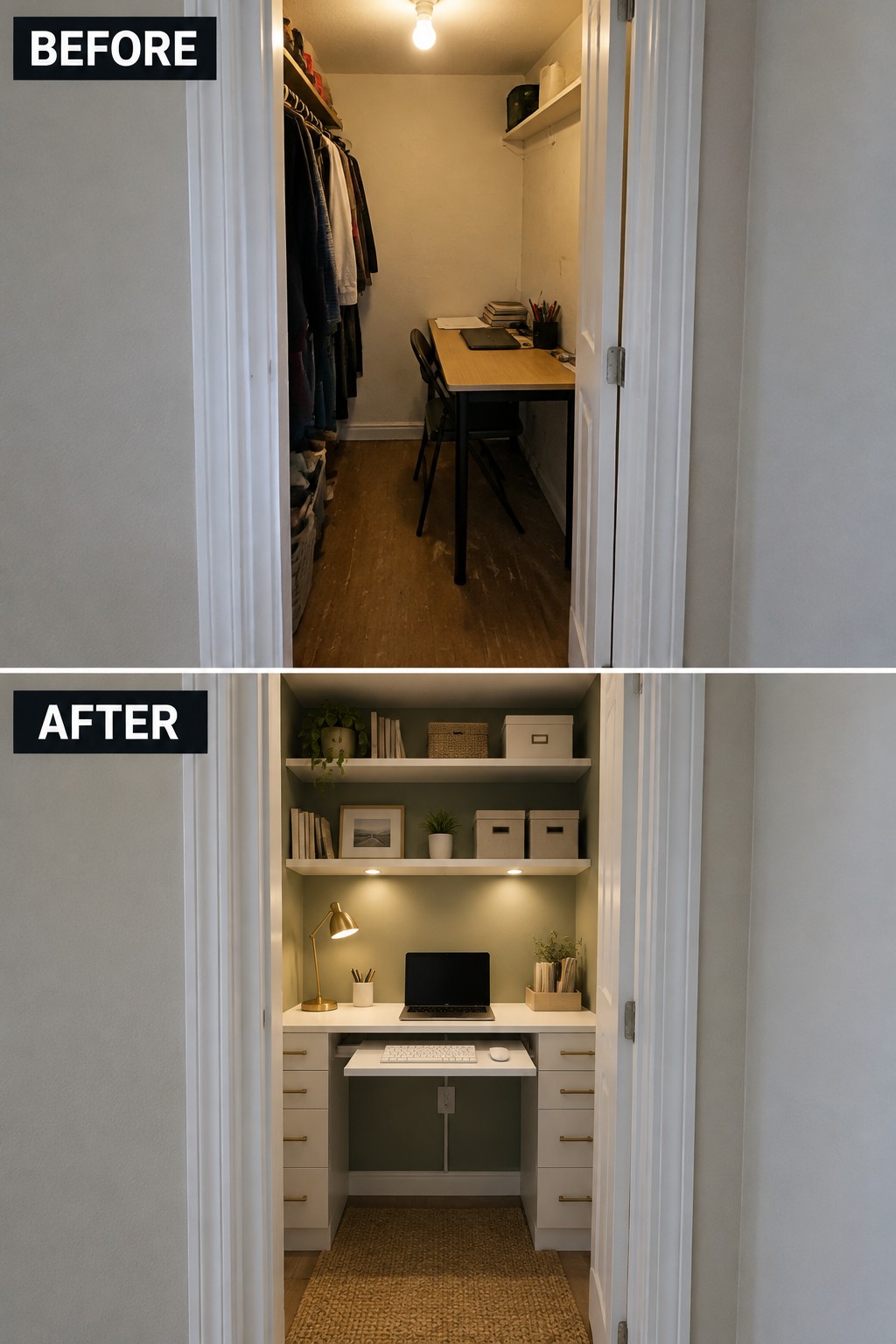
Replacing the hanging clothes and temporary desk with built-in shelves and a fitted workstation makes this small closet much more useful for daily work. The desk setup has a clear place for a computer, while the shelves keep supplies off the work surface.
This idea works well in a spare closet or a narrow nook where a full-size office would take up too much room. Measure carefully before adding a desk and storage, and leave enough legroom so the workspace stays comfortable.
Turn A Basement Corner Into A Useful Home Office

A basement work area can feel much more practical when the desk setup becomes the focus. Here, a cluttered workbench gives way to a clean desk with room for two monitors, making the space easier to use without changing its basic footprint.
Start by clearing the area and choosing a desk that fits the available wall space. Keep the equipment you use every day within reach, and leave enough open floor area to move the chair comfortably. This approach works well in a spare basement corner where a full room renovation is not needed.
Build A Desk Into A Bay Window

A desk fitted into a bay window can turn an awkward, unused nook into a practical home office. Here, a built-in work surface and drawers replace a folding table, giving the space a more permanent setup and useful storage.
This idea works well in a small room where a standard desk might block the way. Measure the nook carefully, and keep enough legroom beneath the desk so the built-ins are comfortable for daily work.

A shared office works better when both desk areas feel planned instead of crowded together. Here, replacing the cluttered work surface with a long built-in desk and a central cabinet gives each person a clear place to work while keeping supplies close by.
For a similar setup, measure carefully so the desk leaves enough room for chairs to move and people to pass. A center cabinet can provide useful storage, but keep the desktop fairly clear so two workstations still feel comfortable.
Make A Small Office Feel Calm And Usable

The old setup feels crowded, with papers and equipment taking over the desk. Replacing it with a simpler work surface and a comfortable chair makes the narrow room easier to use and easier to keep tidy.
In a small office, keep the desk sized to the room and leave enough space to pull out the chair. A slim desk with a little storage can handle everyday work without making the room feel packed.
Make A Cluttered Desk Area More Functional

Replacing the worn table and tangled cords with a sturdier desk and a wall-mounted pegboard makes this home office easier to use. The storage stays close at hand, while the desktop has room for focused work.
For a similar setup, choose a desk that fits the room and mount organizers above it to free up the surface. Keep only everyday supplies within reach, especially in a small office where too much storage can feel crowded.
Make A Cluttered Desk Easier To Use

The desk works better once the paper piles and loose cords are cleared away. A monitor riser and a keyboard tray free up the desktop, leaving room to work without crowding the main surface.
Start by sorting papers and moving supplies into drawers or small containers. A cable tray can keep cords off the floor, while a riser helps make space beneath the screens. This approach suits a busy home office, especially when replacing the desk isn’t practical.
Turn Attic Space Into A Built-In Home Office

A cramped attic can work much better as an office when the desk and storage are planned around the sloped ceiling. Here, a simple table and scattered boxes give way to a long built-in desk, making more of the narrow floor area useful.
In a small attic, use the low wall for a desk or shelves, but leave enough room for the chair to move comfortably. Add drawers or open cubbies where they fit, and keep the work surface clear so the room stays practical.
Make A Home Office Feel More Finished

Replacing the bulky desk and beige walls with a slimmer desk and deep green paint gives this office a clearer, more considered look. The room still works as a home office, but the simpler desk setup leaves more open floor space and helps the walls feel like part of the design.
For a similar change, choose a desk that fits the room without crowding the walkway, then use one wall color to tie the work area together. This can work well in a spare bedroom or small office, where a few deliberate choices are often more useful than adding more furniture.
Make A Cluttered Desk Area Easier To Work In

A crowded desk can make even a useful home office feel hard to settle into. Clearing away the extra supplies and keeping the laptop as the main work surface makes this setup feel simpler and more practical.
Start by sorting what you actually use at the desk, then move occasional supplies into a drawer or nearby storage. Keep only a few everyday items within reach so there is room to write or work comfortably.
Turn A Cluttered Art Room Into A Working Studio

A desk crowded with supplies can make creative work feel harder than it needs to be. This studio works better because the main work surface is now a large, clear table, while art materials have a place of their own.
For a home office that also serves as a hobby space, give the main desk enough room for the task and move smaller supplies to shelves or wall storage. Keep the items you use most within reach, but leave open space for the work itself.
Make A Narrow Office Work Better

A narrow office can feel cramped when the desk is crowded and the equipment takes up the whole work area. Replacing the single large monitor with two wall-mounted screens frees up desk space and gives the setup a more orderly feel.
This idea works well in a hallway nook or other small room where every inch matters. Mount the screens securely and keep the desk surface simple, but make sure the chair can still move comfortably.
Make A Home Office Feel Brighter And More Usable

A better desk setup can change how a home office feels and works. Here, a clear wood desk replaces a crowded work surface, while added lamps make the room easier to use after daylight fades.
Start by clearing the desk and keeping only the items you reach for often. Then choose a task lamp and comfortable chair that suit the way you work. This approach works well in a dedicated office, but it can also help a small spare room feel more practical.
Add Built-In Storage Behind The Desk

The plain wall behind this desk became a useful focal point with built-in shelves and cabinets. That change makes the office feel more finished while giving books and supplies a place to go, so the desktop can stay clearer.
If you have a blank wall behind your desk, consider adding shelves above closed cabinets for a mix of display space and hidden storage. Keep the shelves from getting too crowded, and leave enough room for the chair and desk to work comfortably.
Set Up A Desk That Makes Better Use Of The Room

The original office had a desk crowded with papers and equipment, which left little clear space to work. A larger L-shaped desk with drawer storage gives the computer and everyday tasks more room without spreading into the rest of the house.
This setup works well in a small spare room or office nook where a standard desk feels cramped. Measure the corner first, and choose a desk that leaves enough space to pull out the chair and move around comfortably.
Create A More Comfortable Desk Setup

The old desk and chair made this office feel like a place to get by, rather than a spot you would want to use each day. A simpler desk and upholstered chair make the setup feel more comfortable without taking over the room.
When choosing a desk, look for enough surface area for your work, but keep the frame and footprint light if the room is small. A supportive chair matters just as much; leave enough space to pull it back and move around easily.
Turn A Cluttered Garage Corner Into A Useful Workstation
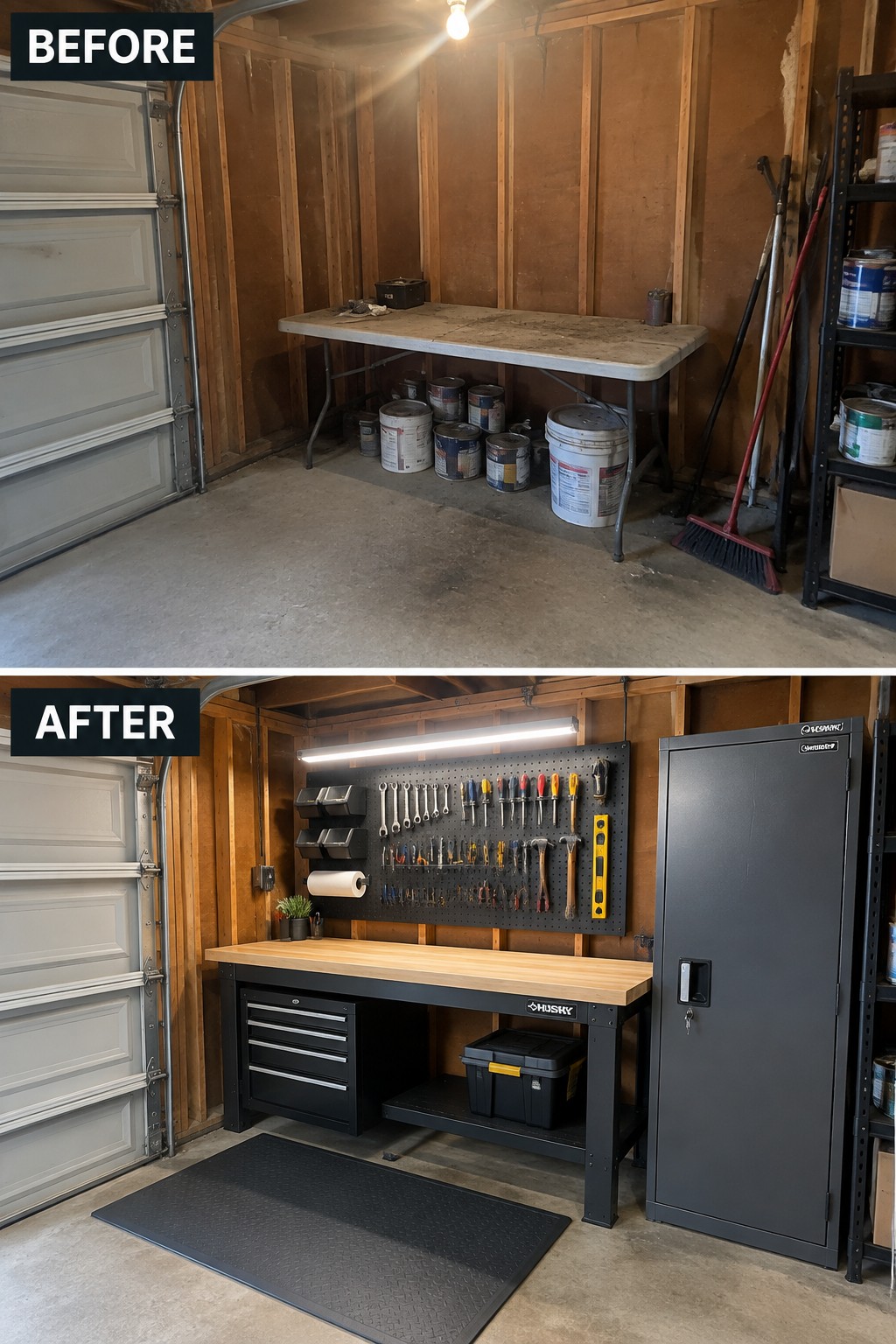
A garage work area is easier to use when tools and supplies have a place of their own. The old setup relied on a folding table and paint cans, while a sturdy workbench and wall-mounted tool board make the space more practical without taking over the whole garage.
Use this idea in a garage or utility room where you need a desk-like surface for projects. Keep the tools you reach for most close at hand, and choose storage that leaves enough clear worktop to get things done.
Clear The Desk To Make Room For Better Work

The biggest improvement here is giving the desk a clear, usable surface. The crowded setup becomes simpler, with the monitor lifted off the desk and cables tucked out of sight, so there is more room to work without distractions.
For a home office, start by removing items you do not use every day, then add a monitor arm or under-desk storage if it suits your setup. Keep the keyboard and mouse within easy reach, and leave enough open space for the work you actually do.
Create A More Usable Desk Area For Study

The old desk was crowded with papers and paired with a bulky chair, leaving little room to work. Replacing it with a clear desk setup and a chair sized for a study area makes the space easier to use for homework or quiet projects.
Keep the desktop mostly open, with only everyday supplies close at hand. A simple storage unit nearby can hold extra materials, which helps the desk stay ready for the next task.
Create A More Private Home Office

The desk area works better when it has a clear boundary from the rest of the room. In the after photo, fabric panels screen the desk and make a shared corner feel more like a focused place to work.
This idea suits a small office or a work area set up in a living room. Use a desk that fits the space, then add a screen or panels where they will block distractions without making it awkward to move around.
Choose A Desk That Fits The Room

A desk that suits the room can make a home office feel more comfortable and easier to use. Here, a bulky office setup gives way to a simpler wooden desk and laptop, leaving the work area feeling less crowded.
For a small office, choose a desk with enough surface for everyday work but not so much that it blocks the walkway. A laptop can also free up space when you do not need a large monitor.
Organize Office Storage To Clear The Desk

A crowded desk is hard to work at, even when the room has enough space. Moving supplies into a tall shelving unit and using labeled baskets clears the work surface, as seen in this makeover, while keeping everyday items close by.
Try this approach in a small home office or an unused corner of a room. Sort supplies into a few clear groups before choosing baskets, and keep only the items you use often on the desk.
Make A Desk Area Feel More Welcoming

Swapping the bulky dark chair for a slimmer leather one changes the feel of this office without requiring a new desk. A warm desk lamp also makes the work surface more pleasant to use, especially when the room’s overhead light feels harsh.
For a similar setup, choose a chair that fits comfortably beneath the desk and leave enough room to roll back. A small lamp can provide useful task lighting, while a cushion helps make a simple chair more comfortable for longer work sessions.
Use Light Curtains To Make The Desk Area Brighter

Replacing heavy dark curtains with sheer panels lets more daylight reach the desk, making the work area easier to use during the day. The lighter curtains also make the window feel like part of the office rather than a dark backdrop.
For a similar setup, hang the panels high and wide so they leave as much glass clear as possible. Sheers work well when you want daylight and some privacy, though a separate shade may be useful if the room gets strong glare.
Frequently Asked Questions
Q: What should I measure before buying a desk for my home office?
A: Measure the space where the desk will go, including room for your chair to slide back and drawers or doors to open. Also check the desk height against your chair so your shoulders can stay relaxed while you work.
Q: How can I make a small home office feel less cramped?
A: Choose a desk that fits the room without blocking walkways, and use wall shelves or a slim drawer unit to keep the work surface clear. A little breathing room around the desk makes a small office feel more comfortable.
Q: Is it worth placing my desk near a window?
A: Natural light can make the space feel brighter, but position your screen so sunlight does not create glare. Try turning the desk sideways to the window rather than facing it directly.
Q: What’s the easiest way to keep a desk setup looking tidy?
A: Give everyday items a home, and tuck cables out of sight with clips or a simple cable tray. You’ll spend less time clearing space before you can get to work.
