

Awkward corners can leave a home office feeling cramped or forgotten, especially when a desk blocks a walkway or the light never quite reaches the work area.
I find that a better layout often matters more than adding extra decor, since even a small shift can make a tucked-away spot feel purposeful.
Shelves, compact desks, and thoughtful lighting can help an unused corner become a comfortable place to focus without taking over the room.
The difference is satisfying when the space feels both more useful and more connected to the rest of the home.
I’d save the ideas that fit your room’s shape and try them with the furniture you already have.
Turn An Awkward Corner Into A Home Office

The empty corner becomes a useful work area with a desk fitted around the bay windows. Using the awkward shape for the desk makes good use of the space without crowding the room.
A similar setup can work in a small spare room or an unused nook. Measure the corner first, and keep the desk depth modest so there’s still room to move around the chair.
Turn An Awkward Nook Into A Home Office

A small nook can work well as a home office when you give it one clear purpose. Replacing the filing cabinet with a compact desk makes the corner useful without taking up much floor space.
Use a desk that fits the width of the nook and leave enough room to pull out a chair. A shelf above the desk adds storage without crowding the work surface, which is especially helpful in a closet or an unused corner.
Turn An Awkward Closet Into A Small Home Office

An unused closet can make a practical little work area once you give it a clear purpose. Here, a desk and pegboard replace an empty hanging space, while the closet doors are swapped for a curtain that can be pulled aside when needed.
This idea works well in a spare room or bedroom where a full desk would take up too much space. Measure carefully before adding a work surface, and keep storage above the desk to items you use often so the small area stays easy to work in.
Turn An Awkward Nook Into A Home Office

An unused alcove can become a practical work area without taking over the room. Here, a desk and chair make use of the narrow space, while shelves provide storage and keep the work surface clear.
This idea works well in a hallway or spare corner where a full office would not fit. Measure carefully before choosing a desk, and leave enough room to pull out the chair and move through the space.
Turn The Space Under The Stairs Into A Home Office

The area under a staircase can be awkward to use, but a simple desk setup makes it a practical place to work. Here, a wall-mounted wooden desk replaces unused floor space and keeps the office compact.
This idea suits a narrow corner where a full-size desk would be too bulky. Measure carefully, leave enough room to pull out the chair, and use wall shelves for supplies so the work surface stays clear.
Make A Radiator Corner Work As A Home Office

A radiator can make an awkward corner hard to use, but a slim desk built over it turns that wasted space into a practical work spot. Here, the old chair and magazine stacks give way to a narrow work surface, while the radiator remains accessible below.
This approach suits a small room where a full desk would take up too much space. Keep the surface shallow enough to leave room to move, and make sure there is clearance for heat to circulate around the radiator.
Turn A Window Nook Into A Built-In Office

An unused window area can become a practical home office when the seating and work surface are built to fit the space. Here, the empty sill area becomes a cushioned bench with storage and a compact desk, making the corner useful without taking up much floor space.
This idea works well in a bedroom or small room where a full desk setup would feel crowded. Measure carefully before adding built-ins, and keep the desktop deep enough for comfortable work while leaving room to move around the seat.
Build A Compact Desk Into An Unused Corner

A corner that was only holding a shelf and wastebasket becomes a useful work area when a desk fits both walls. The L-shaped surface makes good use of the awkward footprint and gives the office a clear place to work.
For a similar setup, measure the corner carefully and keep the desktop shallow enough to leave room to move. A wall-mounted pegboard can hold small supplies without crowding the desk, which works especially well in a narrow nook.
Add A Built-In Office Under The Stairs
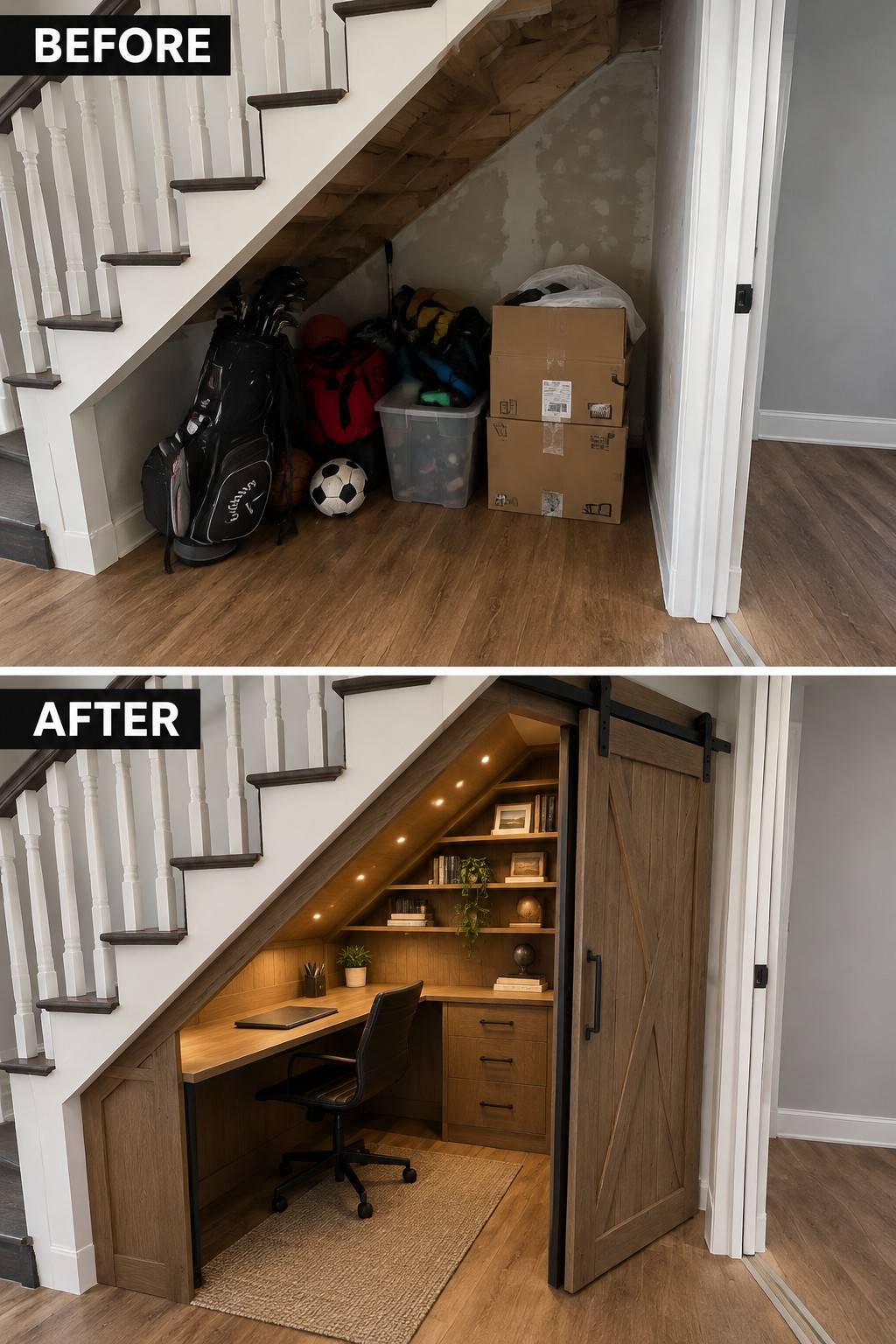
The space beneath a staircase can be awkward to use, but a built-in desk turns it into a practical home office. Here, the clutter is replaced by a compact work area with shelves, storage, and a desk that follows the shape of the stairs.
This idea works well in an entry or hallway where a full room isn’t available. Measure the slope and leave enough room to pull out a chair; keep the desk and shelves shallow so the office doesn’t block the walkway.
Use Curtains To Create A Separate Work Area

An unused corner can become a practical home office without building a permanent wall. Here, a curtain marks off the desk area and helps it feel like its own little room, while still being easy to open when the space is needed for something else.
This idea works well in a living room or other shared space where a desk would otherwise feel out in the open. Use a ceiling-mounted track that follows the corner, and choose a curtain wide enough to close across the opening without crowding the desk.
Replace Cluttered Shelves With A Built-In Desk

A bookcase can take over an awkward corner, especially when its shelves are crowded and the space has no clear purpose. Reworking it as a compact office gives the corner a useful job. Here, the shelves remain above the desk, while a work surface and task lighting make room for a computer.
This idea works well in a living room or bedroom where a full office would take up too much space. Keep the desk deep enough for comfortable use, but leave the shelves above it for a few books and supplies rather than letting them become cluttered again.
Replace A TV Setup With A Corner Workstation

An unused corner can become a useful home office by swapping a bulky entertainment setup for a compact desk. Here, a wall-mounted pair of monitors frees up the desktop, while a small backing panel helps give the work area a clear place in the room.
This idea works well in a spare corner where a full office would take up too much space. Choose a desk that fits without blocking the walkway, and plan cable management before setting up your screens.
Make An Awkward Corner Work As A Home Office

A bare corner can be hard to use, especially when a wall column interrupts the space. A desk fitted around the column turns that leftover area into a useful workstation, and the wood surface helps it feel like part of the room.
For a similar setup, measure the corner carefully and keep the desk deep enough for everyday work without blocking the path through the room. Built-in drawers or a small shelf can provide storage without crowding a compact office.
Build A Loft Office Into A Tall Empty Nook

An unused nook can hold more than a small desk. Here, a tall bookcase and raised work platform turn the empty corner into a compact office while making use of the room’s height.
This idea suits a high-ceilinged space where a standard desk would leave too much empty wall above it. Keep the desk area comfortable to reach, and make sure the loft has secure access and enough headroom before building upward.
Make A Window Corner Into A Home Office

A rarely used corner by a sliding door can become a practical place to work. Here, a glass desk and chair replace a pile of shoes, while curtains and a rug help the area feel like a proper part of the room.
This idea works well in a small home where a separate office is not an option. Keep the desk compact and leave enough space to open the door and walk through comfortably.
Cover A Baseboard Heater With A Built-In Desk

The long, unused stretch above the baseboard heater becomes a compact work area with a wood desk and slatted front. This makes the awkward corner useful without taking up much floor space.
A shallow desk can work well in a small office nook, but leave enough clearance around the heater for proper airflow. Add only a few items to the surface so there’s still room to work.
Give A Cluttered Office Corner A Clear Purpose

A crowded desk can make an awkward corner hard to use. Replacing it with a simpler workstation, as shown here, gives the area a clear job and frees up room to move.
For a similar setup, choose a desk that fits the corner without crowding it, then keep only everyday work items within reach. A compact cabinet can provide storage without bringing back the piles on the desktop.
Add A Standing Desk To An Unused Corner

A narrow corner can become a useful work spot with a compact standing desk instead of a catchall table. Here, a simple wood desktop and slim legs clear away the pile of clothes and make better use of the space by the window.
This idea works well in small rooms where a full-size desk would feel crowded. Measure carefully, leave enough room to pull up a stool, and keep the desktop uncluttered so the corner stays easy to use.
Make A Small Home Office Feel Finished

A neglected corner can become a useful office when the desk fits the space and the wall behind it gives the area a clear purpose. Here, replacing the worn setup with a simple wood desk and a defined accent wall makes the workspace feel intentional.
In a small room, keep the desk narrow enough to leave a clear path, then use one wall treatment to distinguish the work area from the rest of the room. A rug can help mark the zone, but avoid adding so much furniture that the corner feels cramped.
Turn A Laundry Corner Into A Compact Workstation

A neglected bedroom corner can become a useful home office with a wall-mounted desk instead of a laundry hamper and floor lamp. The desk keeps the work surface compact, while a small wall light makes the spot usable without taking up desk space.
This idea suits a spare corner where a full-size desk would crowd the room. Add only the storage you need, and leave enough room to pull out the chair comfortably.
Turn An Awkward Corner Into A Practical Workbench

A neglected corner can become useful work space when you give it a clear purpose and build storage around it. Here, an L-shaped worktop and wall-mounted pegboards replace floor clutter with an organized painting and craft station.
This idea works well in a garage, basement, or spare room where a full workshop would take up too much space. Measure the corner first, keep the worktop deep enough for your projects, and hang frequently used tools within easy reach.
Turn A Cluttered Corner Into A Small Home Office

A pile of laundry and toys can make an awkward corner feel like wasted space. Here, built-in shelving and a compact desk give the area a clear purpose without taking over the room.
For a similar setup, measure around any doors or existing features first, then choose a desk that leaves room to pull out a chair and move through the space. Baskets or bins on the shelves help keep everyday supplies easy to put away.
Frequently Asked Questions
Q: How can I fit a desk into a corner that’s too narrow for a regular one?
A: Try a slim console desk or a wall-mounted shelf deep enough for your laptop. Keep the chair tucked underneath when you’re done, and use the wall above for storage instead of adding bulky furniture.
Q: What if my awkward corner has no outlets nearby?
A: Run a properly rated extension cord along the wall, not across a walkway, and secure it with cord covers. If you’ll use the space every day, adding an outlet may be worth asking an electrician about.
Q: How do I make a tiny corner office feel less cramped?
A: Choose a light-colored desk with open legs, and keep only your daily essentials on it. A mirror or a lamp that directs light upward can also make the corner feel more open.
Q: Can I make a home office in a bedroom corner without it feeling like work all the time?
A: Yes. Use a small screen, curtain, or bookcase to give the desk a visual boundary. At the end of the day, clear the surface or cover your monitor so the office feels tucked away.
