

A spare room can feel hard to use when the layout is awkward, the light is poor, or it has become a place to store things without a clear purpose.
I find that a home office works best when the desk, storage, and lighting suit the way someone actually spends the day, rather than simply filling the room with furniture.
Small choices, such as a better desk position or a defined spot for paperwork, can make the space feel more settled and easier to work in.
It’s satisfying to see an overlooked room become useful without needing a major renovation.
Some of these ideas may be worth saving and adapting to fit the spare room you have.
Turn A Spare Closet Into A Home Office

The crowded closet has been cleared and fitted with a built-in desk, turning an awkward storage spot into a practical place to work. Keeping the desk along one wall makes use of the narrow room without taking up the floor with extra furniture.
This idea works well in a spare room or walk-in closet that has enough space for a chair and a clear path to the door. Add shelves above the desk for work supplies, but keep them from getting so full that the small office feels cramped.
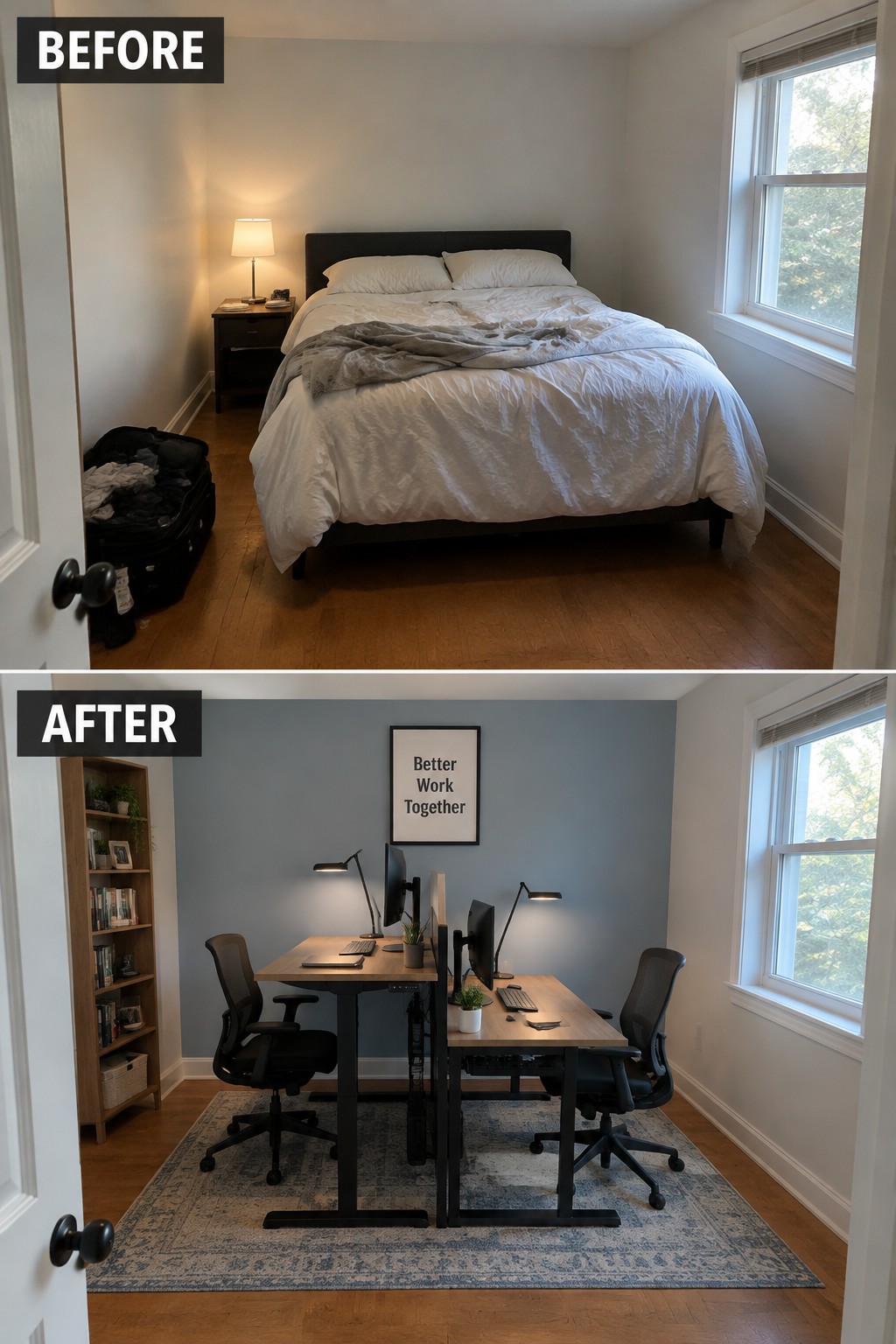
Replacing the bed with two workstations gives this spare room a clear purpose and makes space for two people to work at the same time. The matching desks help the setup feel organized without needing a complicated layout.
This idea works well in a small bedroom that is not used often. Measure before choosing desks, and leave enough room to pull out the chairs and walk between them.
Turn An Under-Stair Nook Into A Home Office

An unused space beneath the stairs can become a practical office instead of a spot for boxes. Here, a built-in desk and shelves make use of the narrow footprint, while warm lighting helps the work area feel comfortable.
This idea works well in small homes where a spare room is not available. Measure carefully before adding a desk, and keep storage compact so there is still enough room to sit and move around.
Turn An Attic Into A Practical Home Office

A cluttered attic can become a useful office without changing its unusual shape. Here, clearing the floor and adding a long desk along the sloped wall makes room for work while the skylight brings in daylight.
In a small spare room, keep the desk shallow enough to leave a clear path, and use wall shelves for supplies that would otherwise crowd the floor. This idea works especially well in an attic where the sloped ceiling limits other furniture options.
Turn A Garage Workbench Into A Home Office

A cluttered garage workbench can take over a spare room, but clearing it out and setting up a proper desk makes the space useful for work. Here, the office area is defined by a desk and floor covering, so it feels separate from the rest of the garage.
This idea works well when you need an office but cannot give up the whole garage. Start by sorting tools and supplies into storage, then choose a desk that fits the available wall space. Keep a clear path through the room, especially if the garage still needs to function as storage.
Turn An Unfinished Basement Into A Home Office

An empty basement can become a useful work area without changing its basic layout. Here, the bare room becomes a home office with a desk and a large rug that helps define the work zone.
This idea works well in a spare room where you need a dedicated place to focus. Start with a desk that fits the space, then use a rug to make the area feel settled. Keep enough open floor around the chair so it’s easy to move.
Turn A Nursery Into A Home Office

Removing the crib and baby décor gives this spare room a clear purpose as a home office. A simple desk along the wall makes good use of the space without blocking the window or leaving the room feeling crowded.
This idea works well in a small bedroom that has outgrown its original use. Keep the desk modest in size, and use shelves for supplies so the floor stays open.
Turn An Unused Dining Area Into A Home Office

A corner that only holds a small dining table can often work harder as a home office. Here, a built-in desk and upper cabinets turn the spare space into a work zone without changing the room’s basic layout.
This idea suits a dining room or other underused corner, especially when floor space is limited. Keep the desk narrow enough to leave a clear path, and use closed cabinets for supplies so the work area stays tidy.
Make A Bedroom Work As A Home Office
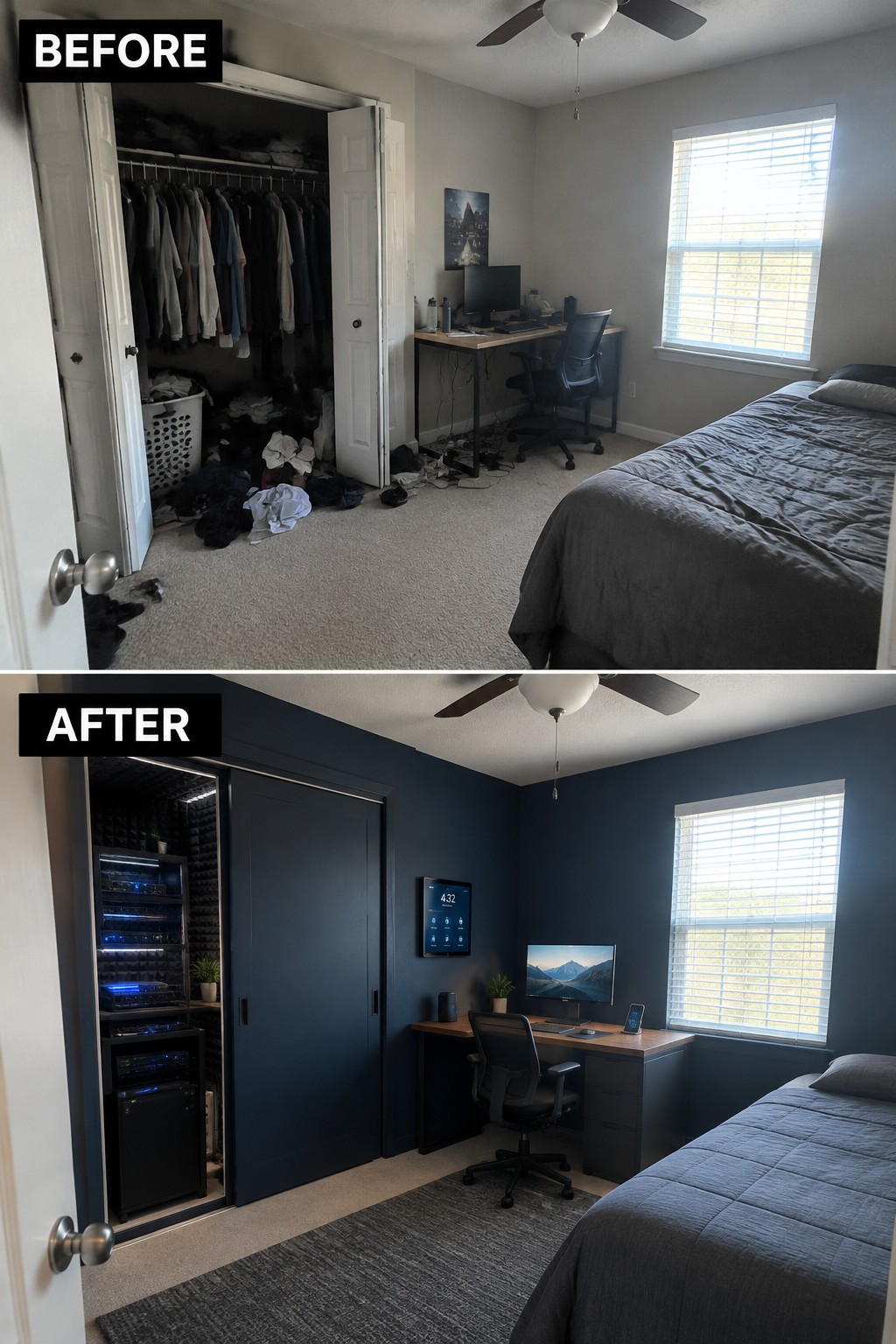
The office works better once the clutter is cleared and the desk has a proper place in the room. In the finished space, dark built-in storage keeps the equipment contained, while the desk sits beside the window for everyday work.
In a spare bedroom, use a closet or one wall for office storage so supplies and technology do not spread across the room. Keep the desk and chair comfortable, and leave a clear path to the bed.
Add Built-In Storage To A Spare Room Office

The small desk in this spare room left much of the wall unused. Built-in shelves and lower cabinets turn that wall into a work area with room for books and supplies, while keeping the desk surface clear.
This idea works well in a narrow room where freestanding storage would take up too much floor space. If custom cabinets are not practical, use a compact desk with wall-mounted shelves, and leave enough open space around the chair to move comfortably.
Make A Small Home Office Feel More Usable

A cramped office can work much better when the desk area is cleared and organized around the work you actually do. Here, the crowded setup becomes a cleaner workspace with a mounted monitor and a simpler desk, leaving more open floor space.
In a narrow spare room, keep the desk shallow and use wall-mounted storage to free up the surface. A walking pad can add another use, but leave enough room to move comfortably.
Make A Spare Room Work As A Focused Home Office

The plain spare room becomes a more useful office once it has a clear work area and a calmer, more finished feel. Dark acoustic panels and a rug help define the space, while the desk stays the main place to work.
For a narrow room, keep the desk against a wall and leave a clear path through the middle. A few sound-absorbing panels can help cut down on echo, but avoid covering every wall if that makes the room feel cramped.
Make An Old Spare Room Work As A Home Office
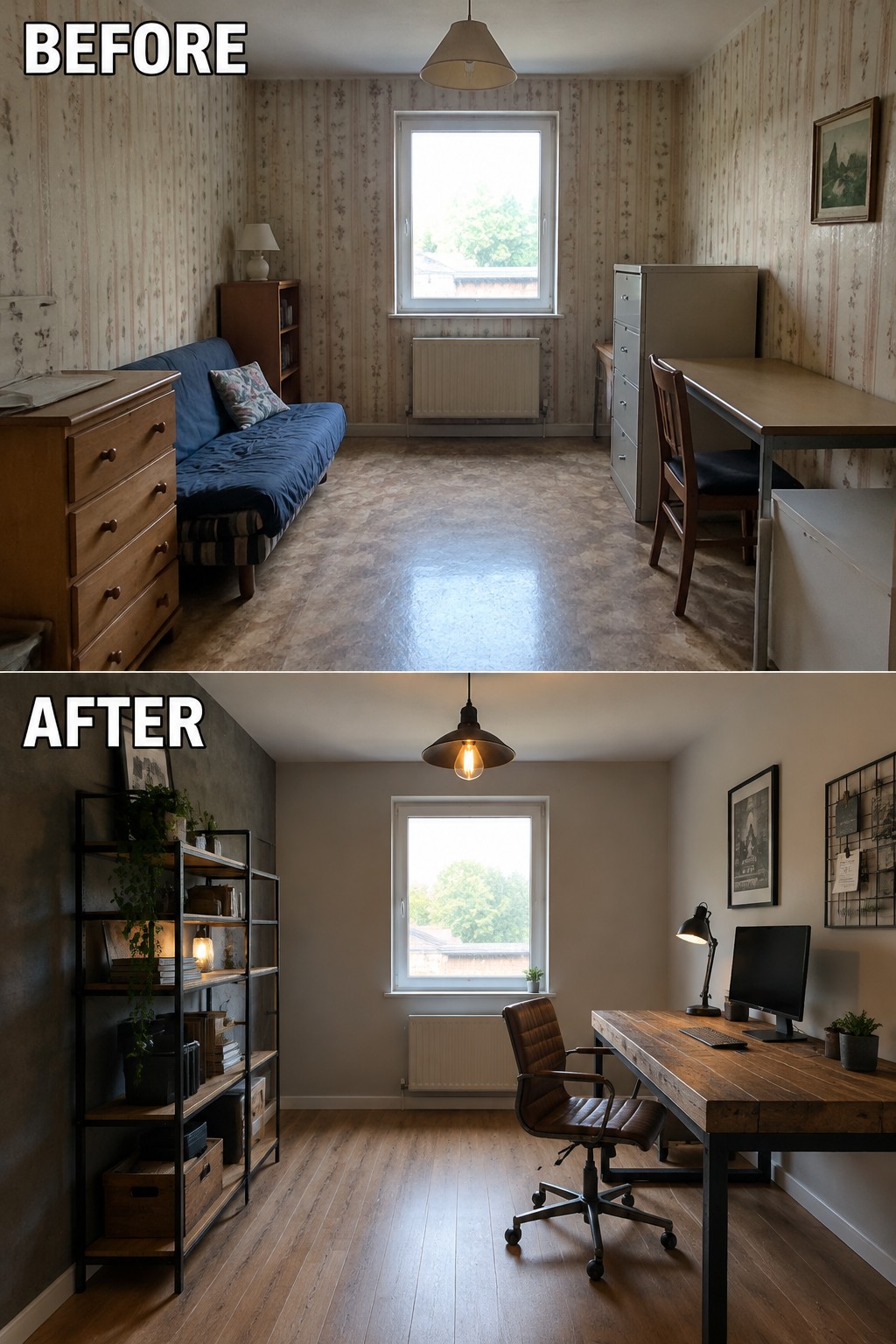
The room works better as an office once the bulky furniture is gone and a proper desk takes its place. The darker wall and open shelving give the work area a clear focus without making the whole room feel crowded.
This idea suits a spare room that has become a catch-all for mismatched furniture. Start by clearing out pieces you do not need, then choose a desk that fits comfortably and add storage along one wall. Leave enough open floor space to move around easily.
Enclose A Nook To Create A Quiet Home Office

A little-used coat closet can become a compact office when you clear out the storage and give the nook a defined work area. Here, a glass-and-black-frame door separates the desk space from the hallway while still letting light through.
This idea works well in a small home where a full spare room is not available. Check that the nook has enough room for a desk and chair, and keep the setup simple so you can move around comfortably.
Make A Spare Room Office Feel Finished
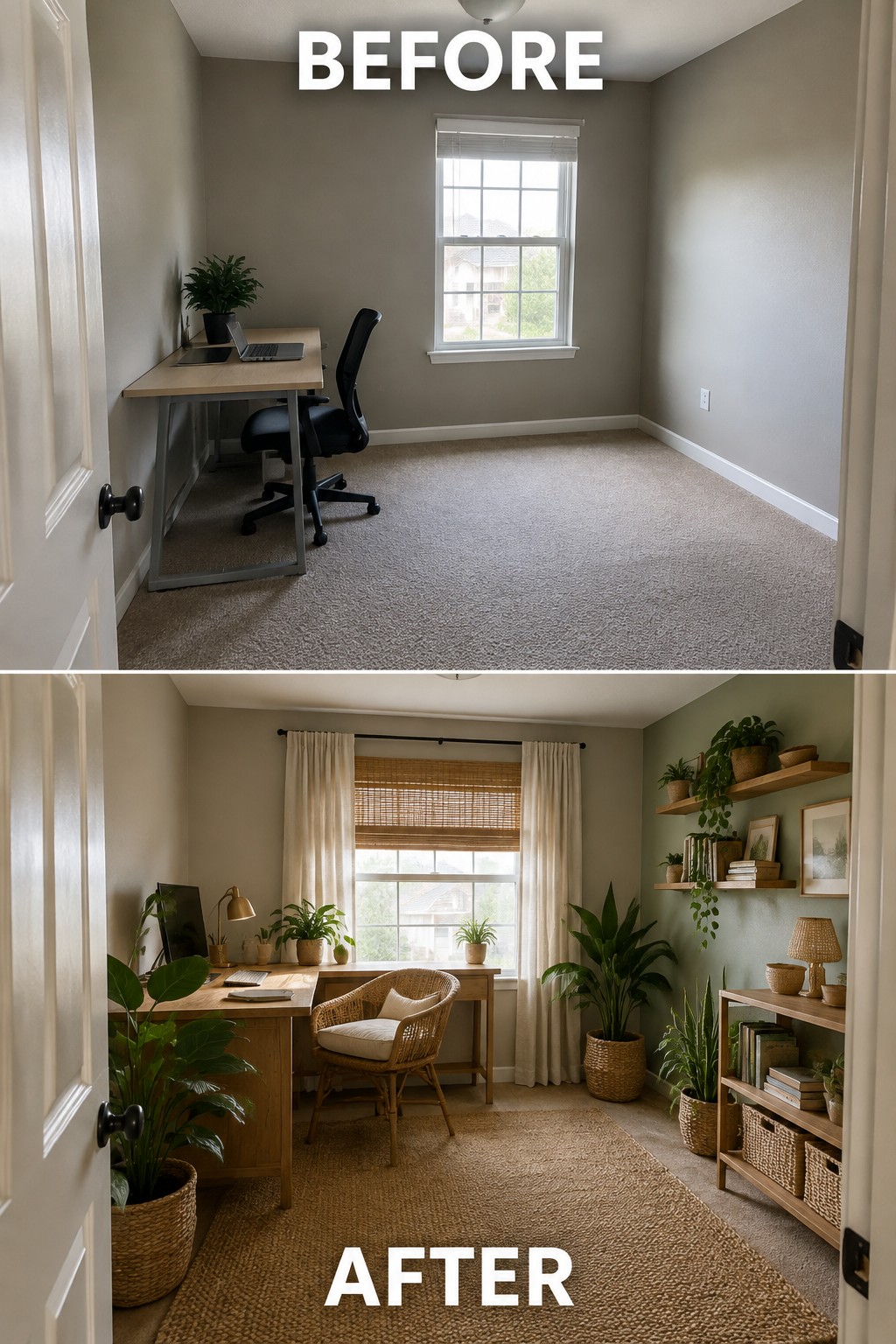
A spare room can feel much more useful when the desk area is part of a complete room plan. Here, a woven rug helps define the work zone, while curtains and a warmer desk setup make the space feel less bare than it did before.
In your own room, start with a rug that fits the desk and chair area, leaving enough room to move the chair easily. Keep the rest simple so the office feels comfortable without crowding the floor.
Give A Spare Room A Clear Work Purpose

A cluttered spare room can become a practical home office when you clear it out and give the furniture a defined job. Here, a desk and area rug turn the once-crowded room into a comfortable place to work.
In a narrow room, keep the desk size modest and leave enough space to move around it. A rug can help mark out the work area without adding more furniture.
Turn A Spare Room Into A Craft-Friendly Home Office

A bare spare room can become a much more useful office when storage is planned alongside the desk. In this makeover, wall shelving and a pegboard give supplies a place to go, while the desk stays clear enough for everyday work.
Use this approach when your office also needs to hold craft materials, files, or other household items. Add shelves that fit the room and keep frequently used supplies within reach, but leave some open space so the room does not feel crowded.
Add A Built-In Desk To A Spare Room

A spare bedroom can work much harder when a bed is no longer taking up the floor. Here, built-in cabinets and a desk turn the room into a dedicated workspace while keeping storage close at hand.
This setup suits a narrow room where a freestanding desk and bookcase might feel cramped. Use the wall for shelving and cabinets, but leave enough space around the chair to move comfortably.
Turn An Upstairs Landing Into A Compact Home Office

A wide landing can become useful office space instead of a place to leave boxes. Here, a narrow desk replaces the clutter, while a rug helps mark out the work area without blocking the walkway.
This idea suits an upstairs landing or loft where a full spare room is not available. Choose a slim desk and stool, and leave enough clear space to move safely past the railing.
Make A Dark Office Feel Brighter

A spare room office is easier to use when the lighting feels comfortable throughout the day. Here, adding recessed ceiling lights and a floor lamp makes the space brighter than the single overhead light did before, while keeping the desk as the work area.
For a similar room, use a mix of ceiling and task lighting so you can see clearly without relying on one harsh source. A floor lamp can help brighten a dim corner, especially if the room gets limited daylight.
Replace Worn Carpet To Finish A Spare Room Office

Replacing tired carpet with wood flooring and a large rug makes this spare room feel more like a planned workspace. The rug defines the desk area, while the exposed floor gives the room a cleaner, more practical finish.
This idea works well when an office carpet is stained or worn. Choose a rug large enough to sit comfortably under the desk and chair, and leave clear floor space around it so the room remains easy to move through.
Organize A Spare Room For Everyday Work

The room works better once the desk has a clear purpose and the clutter is put away. In the finished office, a clean desk and a few useful storage spots make the small room easier to work in without adding more furniture.
Use the same approach in a spare room that has become a catchall: clear the work surface first, then keep only what you need nearby. A simple setup can suit a small room, as long as there is still enough space to move around.
Add Built-In Storage To A Spare Room Office

A small spare room can work much harder when the desk and storage are planned together. Here, open shelves and cabinets replace a basic desk setup, giving work supplies a place to go and leaving the desktop clearer.
For a similar layout, use the wall above and beside the desk for shelves or cabinets, and keep frequently used items within easy reach. In a narrow room, measure carefully so the storage does not crowd the chair or block the walkway.
Use A Rug To Finish A Spare Room Office

A rug helps a small spare room office feel like a proper place to work. Here, adding one over the wood floor gives the desk area a clearer boundary and makes the room feel less bare.
Choose a rug that fits beneath the desk and chair without catching on the chair wheels. In a narrow room, leave enough uncovered floor to move around comfortably.
Frequently Asked Questions
Q: How can I fit a desk into a small spare room without making it feel cramped?
A: Try a slim desk against a wall or tuck one into an unused corner. Keep the floor around it clear, and use wall shelves for supplies you reach for often.
Q: What should I do about video call backgrounds in a multipurpose room?
A: Place your desk so the camera faces a tidy wall or a simple bookcase, rather than the bed or storage piles. A small lamp near your screen can also make calls look brighter without taking up much space.
Q: How do I hide office clutter when guests stay over?
A: Choose a desk with drawers or add a lidded basket nearby for papers, chargers, and small gear. If the room doubles as a guest room, leave a clear spot for visitors to unpack.
Q: Is it worth adding smart lighting to a home office?
A: Yes, especially if the room gets little natural light. A smart bulb or plug lets you switch your desk light on easily and adjust the brightness for work or winding down.
