

A small home office can feel awkward when the desk crowds the room, storage is missing, or the lighting makes work harder than it needs to be.
I find that getting the layout right often matters more than adding extra decor, especially when every inch has to serve a purpose.
A few thoughtful changes can make a plain corner feel organized, comfortable, and better suited to the way you work.
Seeing a cramped room become more useful is satisfying without requiring a major renovation.
Some of these ideas may be worth saving and adapting to your own space.
Turn A Cluttered Office Into A Useful Small Workspace

A small home office works better when the desk area has a clear purpose and the clutter is under control. Replacing the crowded desk with a simple wall-mounted work surface makes more room to move and gives the room a cleaner starting point.
Try a desk that fits the available wall, then keep only everyday work items within reach. A pegboard or a few shelves can hold supplies without taking up floor space, but avoid filling every inch of a small room.
Turn An Unused Closet Into A Home Office

A small closet can become a useful work area when you clear out hanging storage and fit it with a desk and shelves. The change makes better use of a spot that might otherwise hold boxes and coats.
Keep the desk narrow enough to leave room for your chair, and use shelves for items you reach often. A task lamp helps light the work surface without taking up much space.
Add Built-In Storage To A Small Home Office

The small desk in this office had little storage, so the wall above it went unused. Built-in shelves and lower cabinets make the same work area more practical, with a desk tucked into the middle.
In a small room, use the wall for storage before adding more furniture. Keep frequently used items within reach and leave some shelf space open so the desk area stays usable.
Turn A Small Room Into A Home Office And Daybed
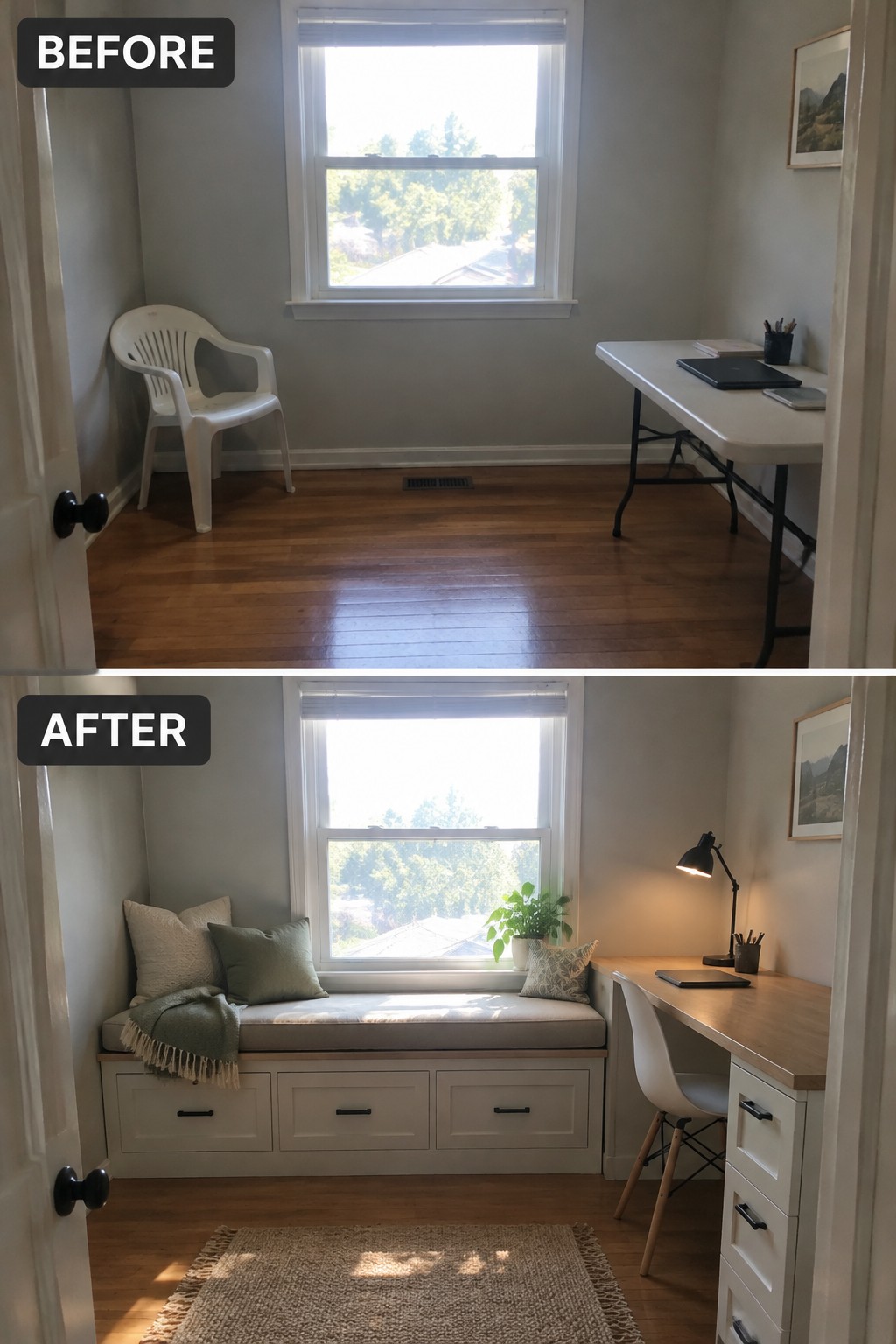
An unused corner can serve two purposes when you combine a compact desk with a built-in daybed. Here, the plain room becomes a more useful office, and the daybed’s drawers provide storage without taking up extra floor space.
This setup works well in a small spare room or bedroom. Keep the desk shallow and leave enough room to pull out the chair, so the space stays practical for both work and rest.
Replace A Bulky Desk With A Wall-To-Wall Workspace

A large freestanding desk can take over a small office and leave little room to move. Replacing it with an L-shaped desk fitted along the walls makes better use of the room’s footprint while leaving the center open.
This layout works well in a narrow spare room or home office. Keep the desktop fairly shallow, and add a compact drawer unit beneath one end for supplies so the work surface stays clear.
Make A Small Home Office Feel Brighter

A dark, crowded office can feel much more usable when the layout stays simple and the room gets more natural light. Here, a compact desk replaces a heavier setup, while sheer curtains let daylight into the workspace.
For a narrow room, choose a desk that fits without blocking the walkway and keep the surface mostly clear. A light rug can help define the work area, but leave enough open floor to move comfortably.
Make A Small Home Office Easier To Access

Replacing the swinging door with a pocket door frees up the doorway and makes this narrow office easier to enter. The change also leaves the desk area less obstructed, which matters when a room has little space to spare.
A pocket door can work well for a compact office off a hallway, especially when an open door would get in the way of a chair or desk. Check that the wall has room for the door to slide into it, and add a few wall hooks to make use of the space behind the door.
Use A Mirror To Make A Small Office Feel Larger

A large mirror can make a narrow home office feel more open without changing its layout. Here, adding a wall-sized mirror makes the desk area seem to extend farther into the room.
This idea works well in a small office with a clear wall opposite a window or desk. Choose a mirror that fits the wall and mount it securely; leave enough space around it so the reflection does not make the room feel busy.
Create A Living Wall Behind The Desk

A wall-mounted garden can give a small home office a clear focal point without taking up floor space. In this makeover, a dense panel of plants replaces the plain wall behind the desk, while the work surface stays simple and usable.
This idea works best where the wall gets suitable light and you can manage watering without crowding the desk. Choose plants that suit the room’s conditions, and leave enough space to work comfortably.
Clear The Floor For A Small Standing Desk
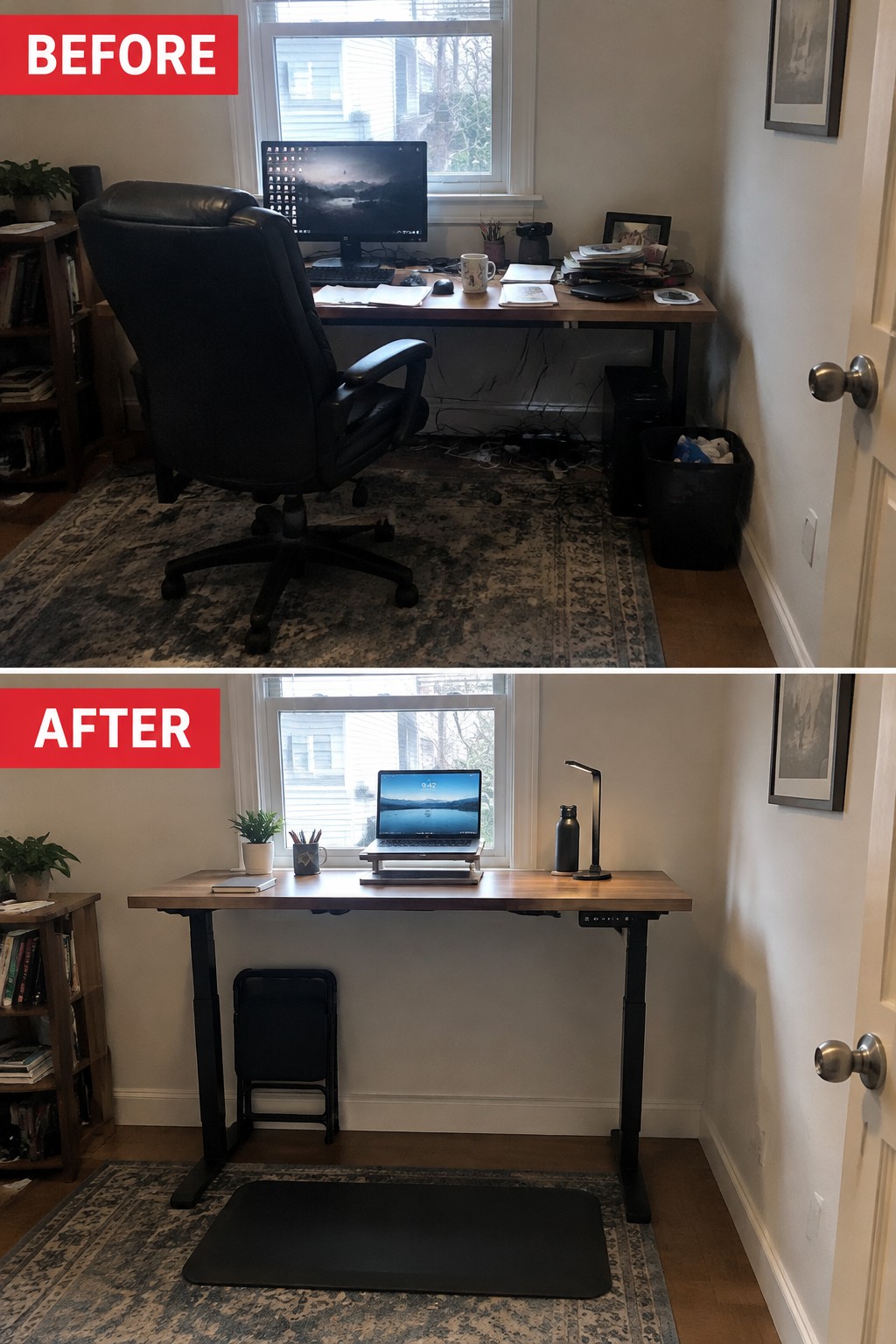
The crowded desk and office chair made this small room harder to use. Replacing them with a standing desk opened up the floor and left room for a compact walking pad, so the office can support movement as well as computer work.
This setup works well in a narrow room where a traditional chair takes up too much space. Choose a desk that fits the room without blocking the walkway, and keep the surface simple so the work area stays practical.
Add Acoustic Panels To A Small Home Office

Adding wall panels can make a bare office more useful for calls and recording without taking up desk space. The after photo shows large acoustic panels behind the desk, giving the room a more practical setup for focused work and audio.
In a small room, mount panels where they can help reduce sound bounce, especially behind or beside your desk. Keep the desk and chair easy to move around, and use only as much wall coverage as you need.
Hide Office Supplies Behind Cabinet Doors

Replacing open shelving with tall cabinet doors gives a small home office a calmer, tidier look without removing its storage. In this room, the supplies are mostly tucked away, with one narrow section left open for baskets.
This idea works well when a workspace has plenty of useful items but the shelves make the room feel busy. Use doors to conceal everyday clutter, and keep frequently used supplies in a small open section so they are still easy to reach.
Use A Rug To Define A Small Home Office

Replacing wall-to-wall carpet with wood flooring and a single area rug gives this office a clear boundary without taking up more room. The rug marks the desk area as its own zone, while the exposed floor makes the space easier to keep clean.
Choose a rug large enough for the desk and chair, but leave a border of flooring visible around it. In a small office, a low-pile rug is easier to roll a chair across and less likely to catch under the wheels.
Turn An Empty Alcove Into A Home Office

An unused nook can become a useful place to work without taking over the bedroom. Here, a desk replaces a spare chair, and shelves make use of the wall space above it.
This idea works well in a small room where a full office setup would feel cramped. Measure the alcove before choosing a desk, and keep the shelves organized so the work area stays practical rather than crowded.
Make A Plain Office Wall The Focal Point

A small office can feel unfinished when the wall behind the desk is bare. Here, a green patterned feature wall gives the workspace a clear focal point without changing the room’s layout.
Try this on the wall behind your desk, especially in a compact room where there isn’t much space for extra furniture. Keep the pattern to one wall so it adds character without making the office feel crowded.
Replace A Bulky Desk With Closed Storage

Removing the large desk opened up this narrow office and made the floor easier to use. A tall cabinet keeps the room’s purpose clear while giving supplies a place to go behind closed doors.
This idea suits a small office where a full-size desk takes up most of the walking space. Choose a cabinet that fits the wall without blocking access, and keep frequently used items within easy reach.
Add A Glass Panel To Brighten A Small Home Office

Replacing a solid door with one that has a large glass panel lets light pass between rooms while still keeping the office enclosed. The office is easier to see into, and the door takes up no extra floor space.
This can work well in a small office that feels dark behind a closed door. Choose frosted or textured glass if you want more privacy, and check that the door still suits the room’s noise and light needs.
Replace An Oversized Desk With A Slim Workspace

A large executive desk can take over a small office and leave little room to move. Replacing it with a narrow writing desk opens up the floor, while a simple rug helps the workspace feel defined rather than empty.
This is a practical choice for a spare room or compact home office, especially if you mainly need a laptop and a few supplies. Measure the available space before buying, and keep the desk shallow enough that the room still has a clear path through it.
Turn A Small Home Office Into A Meeting Space

The large desk makes this small office feel crowded and leaves little room for anything besides work. Replacing it with a round table and two chairs turns the room into a practical spot for conversations without changing its basic purpose.
This setup works well in a spare room that needs to serve more than one use. Choose a table that leaves enough space to pull out the chairs, and keep the work supplies nearby rather than spreading them across the room.
Use A Sliding Door To Make A Small Office Easier To Access

Replacing the hinged door with a sliding barn door clears the swing area, making the office entrance easier to use in a tight hallway. The door still closes off the workspace, but it no longer takes up floor space as it opens.
This idea works well for small home offices where a desk or chair sits close to the doorway. Check that there’s enough wall space for the door to slide, and choose a track and door size that suit the opening.
Clear Out The Office To Make Room For Work

The old office feels crowded, with a bulky desk and shelves taking up much of the small room. Replacing them with a simple wall-to-wall work surface leaves more open floor space and makes the room easier to use.
In a narrow room, a slim desk can provide enough space for a laptop without crowding the chair or walkway. Keep only everyday supplies on the surface, and move the rest to a nearby shelf or cabinet so the work area stays practical.
Make Small Office Storage Easier To Reach

Replacing a tall filing cabinet with drawers under the desk and a wall-mounted file holder makes better use of a small office. Supplies stay close at hand, while the floor beside the desk opens up.
Try this setup when a large cabinet crowds your workspace. Keep only the papers and tools you use often within reach, and leave enough room under the desk to sit comfortably.
Add A Standing Desk To A Small Home Office

The blank wall in this office becomes more useful with a compact standing desk. It adds a separate place to work without replacing the existing desk or taking up much floor space.
A narrow, adjustable desk can work well in a small office where you want room to switch positions or spread out briefly. Keep the surface clear and leave enough space around the legs to move comfortably.
Make A Small Home Office Feel More Organized

A crowded desk can make a small office harder to use, even when there is enough room to work. Clearing away loose cables and extra items leaves more space for the essentials, while a desk lamp gives the work area focused light.
Start by sorting what needs to stay on the desk and finding a home for the rest. In a narrow office, keep the desktop mostly clear and choose just one or two useful accessories so there’s room to work.
Frequently Asked Questions
Q: How can I fit a desk into a really small room without making it feel cramped?
A: Try a narrow desk against a wall or a floating desktop that leaves the floor clear. Keep only your everyday work items within reach, and use a nearby shelf for the rest.
Q: What’s the best way to separate work from home life when my office is in my bedroom?
A: Use a simple visual cue, like closing a screen, putting away your laptop, or switching off a desk lamp when the workday ends. Even a small change can help the room feel like a bedroom again.
Q: How can I make a small home office more comfortable without buying a new chair?
A: Check that your feet rest flat on the floor and your screen sits near eye level. A firm cushion or a stable footrest can make your current setup feel much better.
Q: Where should I put a printer and other office supplies?
A: Store them in a drawer, cabinet, or lidded box near your desk so they’re easy to reach but not always in view. Keep the desktop clear for the work you’re doing now.
