
A home office can feel harder to use when the lighting is dim, uneven, or awkwardly placed, even if the room has enough space.
I find that better light often makes the biggest difference when it works with the desk layout and the way the room is used throughout the day.
Small changes, like a well-placed lamp or a brighter task light, can make the space feel more comfortable without calling for a full remodel.
It is satisfying to see a plain or shadowy corner become a practical place to focus, especially when the updates stay within a modest budget.
Some of these ideas are easy to adapt to a real home, and I would start with the lighting problems that interrupt work most often.
Use Better Lighting To Make A Home Office More Usable

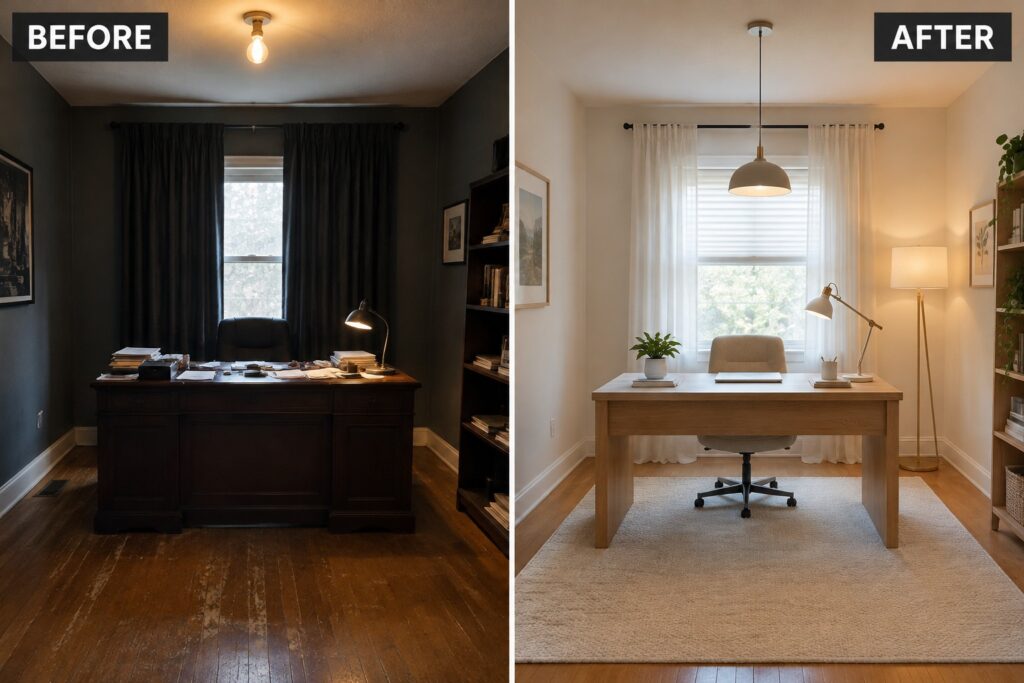
The dark office feels hard to work in, while the updated version uses a ceiling pendant and a desk lamp to brighten the work area. Using more than one light source makes it easier to work without relying on a single exposed bulb.
For a similar change, start with a good ceiling light, then add a focused lamp on the desk for reading or computer work. If the room gets daylight, keep window coverings light enough to let it in, and choose bulbs that feel comfortable for long work sessions.
Improve A Home Office With Better Lighting

The old office felt dim and crowded, while the updated room uses recessed ceiling lights and a clean desk setup to make working there more comfortable. The ceiling lights spread illumination across the room instead of relying on one harsh overhead fixture.
For a similar change, start by adding even overhead lighting, then include a task light if your desk still has shadows. This works especially well in windowless or basement offices, where one central light often leaves the corners gloomy.
Add Built-In Shelving To Improve Office Storage

A cramped bookcase can make a small office nook feel cluttered, while built-in shelves give supplies and books a clear place to go. In this makeover, open white shelving replaces a dark, crowded bookcase, and shelf lighting makes the storage easier to use.
This idea works well in a hallway alcove or a compact home office where floor space is limited. Measure carefully before adding shelves, and leave some open space so the shelves stay useful rather than crowded.
Improve A Home Office With Better Lighting

The office feels more usable after the dim ceiling fixture is replaced with a bright, even ceiling light. A small desk lamp adds focused light where it is needed, so the room works better for reading and computer tasks without relying on one overhead bulb.
For a similar change, start with a ceiling fixture that spreads light across the room, then add a task lamp if your desk still has shadows. This is a practical update for a small home office, especially one with limited natural light.
Make A Home Office Feel Brighter And More Finished

The dark desk and dim lighting made this office feel less useful than it could be. A lighter desk and a tall arc lamp brighten the work area, while the rug helps define it without adding more furniture.
For a similar change, start with a lamp that puts light where you work, then choose a desk that fits the room and leaves enough space to move around it. This approach suits home offices that get limited natural light or feel weighed down by dark furniture.
Lighten A Home Office With A Simpler Desk Setup

Replacing the bulky dark desk and navy wall with a glass desk and light neutral finishes makes this office feel more open. The clear desktop also lets light move through the room instead of making the work area feel heavy.
For a similar change, choose a desk that fits the room without blocking the window’s light, then add a focused task lamp for evening work. This approach suits small offices especially well, where a large dark desk can take over the space.
Add Wall Lights To Brighten A Home Office
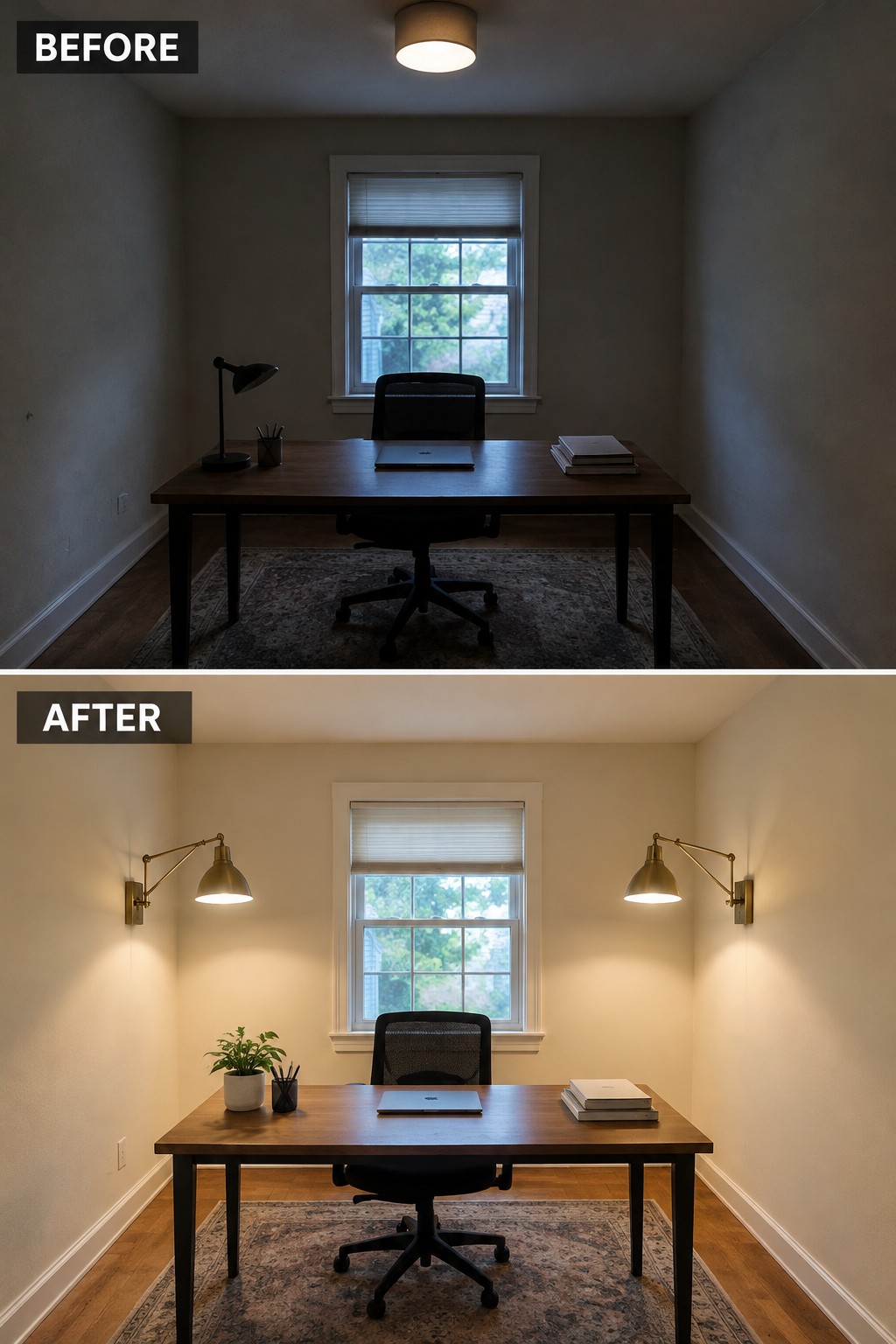
The office feels much more usable after the single dim ceiling light is replaced by wall lights on both sides of the desk. Light placed near the work area makes it easier to read and work without relying on one harsh or weak overhead fixture.
In a small office, matching wall lights can free up desk space and spread light more evenly. Place them where they illuminate the desk, and choose adjustable fixtures if you want to direct the light for reading or computer work.
Add A Pendant Light To Brighten A Home Office

The desk area feels much easier to use after a glass pendant replaces the bare bulb. It gives the office more focused light, while the brighter room makes the desk feel like a proper place to work.
A simple pendant can suit a small home office where there is little room for extra lamps. Choose a fixture that directs light onto the work area without shining into your eyes, and keep a task lamp handy for close-up work.
Add Task Lighting To Make A Home Office More Useful

The office feels more finished after a track light and a desk lamp replace the single overhead fixture as the main sources of light. The desk lamp puts light where it is needed for reading or computer work, while the ceiling lights brighten the rest of the room.
For a similar setup, start with a lamp suited to your desk and add ceiling lighting that spreads light across the room. This works well in a home office that feels dim, but avoid aiming bright bulbs directly at a screen, where they can cause glare.
Choose Cooler Lighting For A More Focused Home Office

The warm, dim lighting made this office feel darker than it needed to. Switching to cooler bulbs brightened the room and made the desk area easier to use without changing the furniture.
Try this in a home office that feels yellow or gloomy, especially if you work there during the day. Use bulbs with a neutral or cool white tone, and check that the desk lamp or floor lamp lights the work area without shining into your eyes.
Use Window Treatments To Bring More Light Into A Home Office

The closed blinds make the office feel dim, while the sheer window covering in the updated room lets in more daylight without leaving the window completely bare. That simple change makes the workspace feel brighter and more pleasant to use.
If privacy is a concern, try a light-filtering shade or sheer panel rather than heavy blinds that block most of the window. Keep a desk lamp nearby for cloudy days and evening work.
Use A Mirror To Brighten A Home Office

Replacing the small picture grouping with a wide wall mirror makes this office feel brighter by reflecting light from the window. It also gives the wall a clearer focal point without adding more furniture or changing the desk.
A mirror can work well in a small or dim office, especially when you place it where it can reflect a window. Keep the frame simple and make sure the reflection won’t distract you while you work.
Add Under-Cabinet Lights To Brighten A Home Office

The desk nook felt dim and cluttered before three small lights were added beneath the cabinets. The brighter work surface makes the office easier to use, and the lighting is more even than relying on a single bulb overhead.
For a built-in desk or other compact workspace, under-cabinet lights can brighten the area without taking up desk space. Place them where they shine onto the work surface, and choose a warm or neutral tone that feels comfortable for long work sessions.
Replace Heavy Shades With Light-Filtering Blinds

In this home office, dark Roman shades left the desk area gloomy, while light-filtering roller blinds let in more daylight without leaving the window completely bare. The room feels easier to work in, and the lighter desk surface helps keep the space from feeling dim.
For a similar effect, choose shades that soften incoming light rather than block it during the day. This works well in an office that needs privacy but still feels dark, and it can be a simple update before adding more lamps.
Replace A Dated Ceiling Fan With Recessed Lighting

The old ceiling fan and dark trim made this home office feel dim, even with a large window. Recessed lights brighten the whole room more evenly, while a lamp on the desk provides light for close work.
In an office with a similar layout, use ceiling lights for general illumination and add a desk lamp where you read or write. Spacing matters, so plan the lights to cover the room without creating glare on a computer screen.
Replace A Bulky Shade With A Clear Pendant

The oversized fabric shade makes the office feel dim, even with a window nearby. Swapping it for a clear glass pendant lets more light reach the room and gives the ceiling fixture a lighter look.
This is a simple change for a small office where one central light needs to serve the whole space. Choose a fixture that fits the room and use a desk lamp too, so your work area has focused light when you need it.
Replace Heavy Curtains To Brighten A Home Office

Heavy curtains can leave a work area feeling dim, even when the window is large. Replacing them with light-filtering sheers lets daylight reach the room while still providing some privacy, and it turns the window seat into a brighter, more usable spot.
This idea works well in a home office or bedroom where you want natural light without leaving the window completely bare. Hang the curtain rod high and wide, and choose fabric that still allows you to see your screen comfortably during the day.
Replace A Dated Fan Light With Simple Ceiling Lighting

The old ceiling fan and its warm, dim light made this home office feel darker than it needed to. Replacing it with a low-profile ceiling fixture brightens the whole room and keeps the ceiling from feeling crowded.
For a similar update, choose a fixture that spreads light evenly across the room, then add a desk lamp for focused work. This is a practical option when a fan is not essential, but check that the new light is bright enough for the room’s size.
Add A Floor Lamp To Brighten A Home Office

The office feels easier to use after a floor lamp replaces the dark corner with steady, warm light. The desk sits near a bright window, but a separate lamp helps the room feel more evenly lit when daylight is limited.
For a similar setup, place the lamp where it can light the work area without shining directly into your eyes or screen. A simple floor lamp is a practical choice when there’s no room for another desk light.
Layer Lighting To Brighten A Home Office

A desk lamp can make a home office easier to work in without relying on the overhead light alone. In this makeover, a task lamp and light-filtering blinds brighten the desk area while cutting some of the glare from the window.
Place a focused lamp where you read or write, and choose a shade that spreads light without shining into your eyes. This is a practical update for a dim office or one with a large window that makes screen glare a problem.
Add Under-Shelf Lighting To Brighten A Home Office
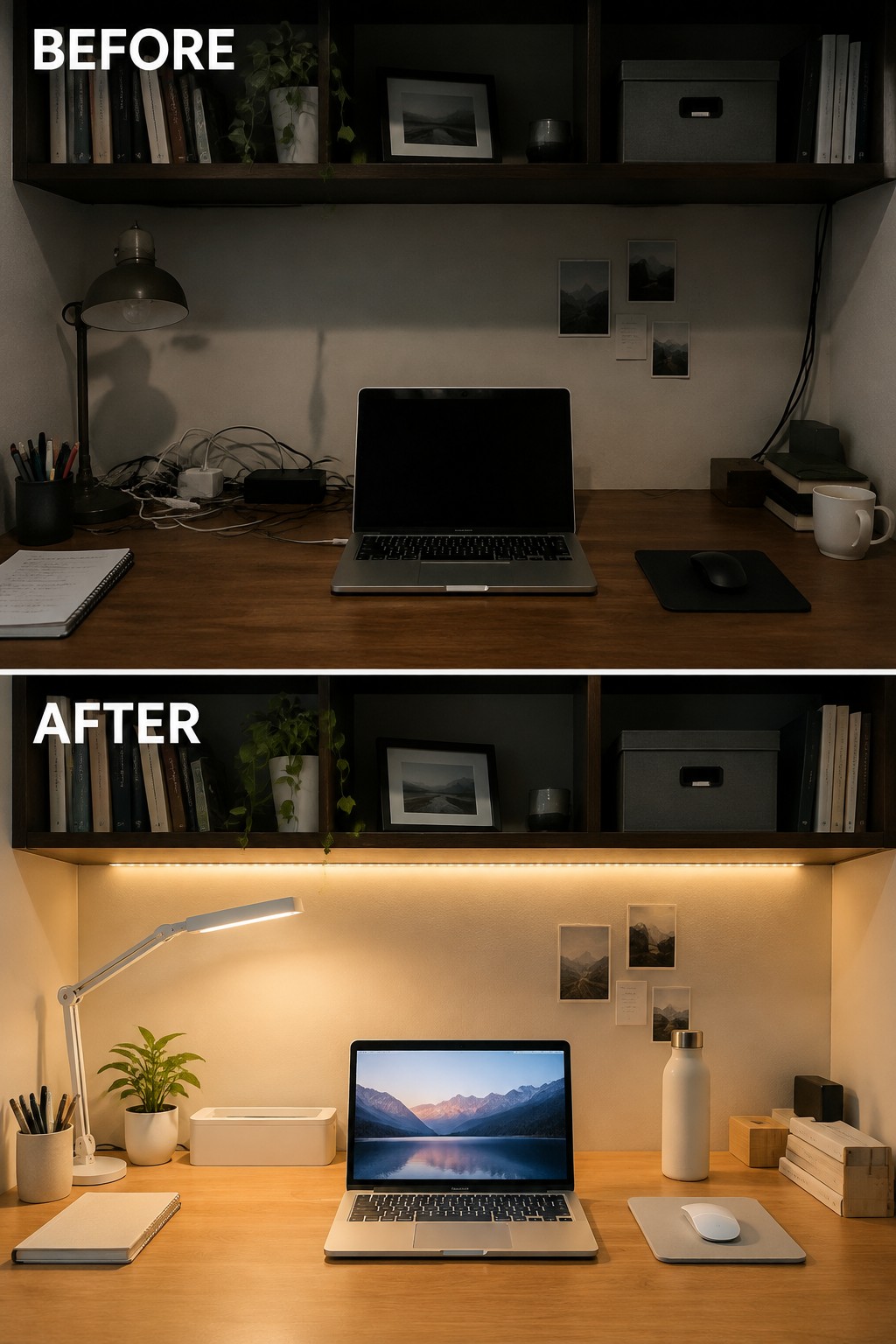
The desk feels more usable after a warm strip light was added beneath the shelf. It brightens the work surface without taking up desk space, and the room no longer depends on a single lamp for light.
This is a practical fix for a desk tucked beneath shelving or cabinets. Choose an LED strip that fits the shelf and gives even light across the area, then keep a task lamp nearby for focused work. Avoid a harsh, glaring strip, especially if the light is directly in your line of sight.
Frequently Asked Questions
Q: What’s the cheapest way to make my home office brighter?
A: Start with a brighter LED bulb in your existing desk lamp, then move the desk closer to a window if you can. You may not need new fixtures to notice a difference.
Q: How do I stop my desk lamp from reflecting on my screen?
A: Place the lamp beside your monitor, not behind it or directly in front of the screen. Angle the shade toward your work surface and adjust it until the glare disappears.
Q: Are daylight bulbs a good choice for a home office?
A: They can help you see details clearly, especially in a dim room. If the light feels too harsh, try a softer, warmer bulb instead.
Q: Can I improve office lighting without hiring an electrician?
A: Yes. Plug-in floor lamps, desk lamps, and under-shelf lights can brighten the room without changing the wiring. Check that cords stay out of walkways.
