

A home office can feel cramped and unfinished when papers, supplies, and everyday gear compete for space on the desk.
I’ve found that using the walls well often makes a bigger difference than adding more furniture, especially in a small room.
Shelves and vertical storage can clear the work surface while keeping useful items close at hand.
Even modest, budget-friendly changes can make the office feel more organized and pulled together.
I’d save the ideas that suit your room and try them one at a time.
Use Vertical Shelves To Clear A Home Office Desk

A crowded desk can make a small office harder to use. In this makeover, three wall shelves take papers and supplies off the work surface, leaving more room for everyday tasks. The shelves also give storage a clear place instead of letting it spread across the floor.
Try this idea when you have a blank wall above your desk but little room for extra furniture. Use baskets to group loose items, and keep only the supplies you reach for often on the desk. Check that shelves are securely mounted and high enough to leave comfortable working space.
Add Built-In Shelves To Make A Home Office More Useful

The desk area was already in place, but the empty walls left little room for supplies. Adding shelves on both sides of the window gives the office practical storage while making better use of vertical space.
This idea works well in a small office where floor space is limited. Use shelves for books and a few labeled boxes, and leave some open space so they stay easy to use rather than crowded.
Use Vertical Storage To Clear The Work Surface

A small craft office is easier to use when supplies have a place off the desk. Here, a wall pegboard and narrow shelving replace much of the scattered tabletop storage, leaving more room to work.
Try this in a home office or craft nook where floor space is limited. Put frequently used tools within reach, and keep shelves shallow so supplies stay visible without crowding the desk.
Use Vertical Storage To Clear The Office Floor

Replacing the stack of moving boxes with a tall shelving unit makes this small office easier to use without taking up much floor space. The desk can stay in place, while baskets and file holders keep everyday supplies organized and within reach.
This idea works well in a spare room or a compact home office where extra cabinets would feel bulky. Choose a shelf that fits the wall and use a few closed baskets for items you do not want on display. Keep the desk and walking path clear.
Add Wall Cabinets To Clear A Home Office Desk

The desk feels much easier to use once the loose equipment and cables are put away. In this makeover, wall cabinets replace the open, cluttered work area above the desk with closed storage, leaving the laptop as the main thing on the surface.
This idea works well in a small home office where floor space is limited. Use the cabinets for items you do not need every day, and keep the shelves above them for a few useful or decorative pieces.
Turn An Unused Office Corner Into Storage
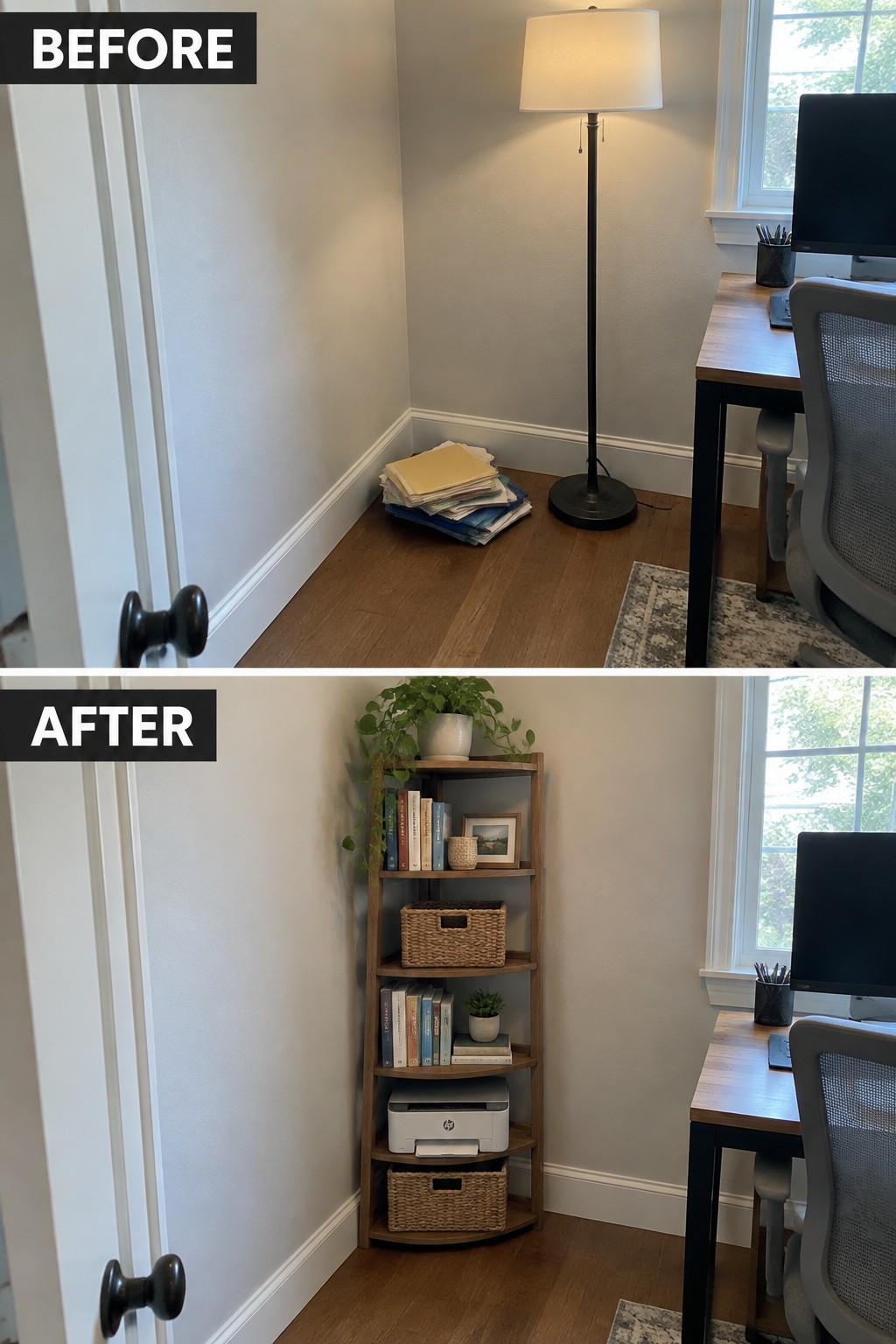
A narrow corner shelf makes use of space that might otherwise stay empty. Here, it replaces a floor pile of papers with organized storage, including a spot for the printer, so the desk area can stay clearer.
This idea works well in a small home office where there isn’t room for a wide bookcase. Choose a shelf that fits the corner without blocking the walkway, then keep frequently used supplies within easy reach.
Turn Paper Clutter Into Wall-Mounted Office Storage
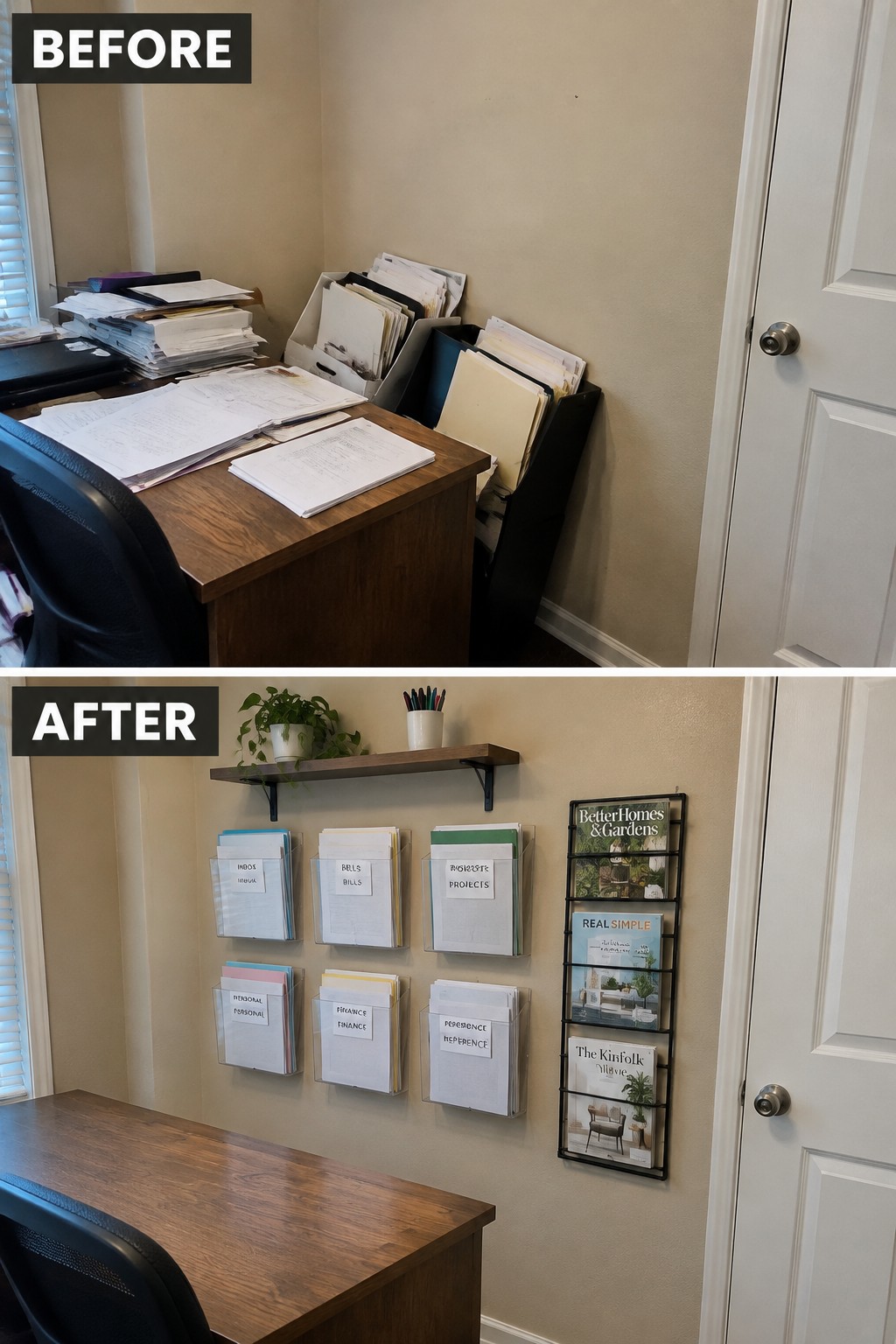
The desk was crowded with loose papers and files, while the after layout moves much of that storage onto the wall. Hanging folders keep everyday paperwork sorted without taking up desk space, so the work surface is easier to use.
This idea suits a small home office where floor space is limited. Mount a few labeled file holders within easy reach, and sort papers into categories you actually use. Keep the number of folders manageable so the wall stays useful rather than becoming another place to pile things.
Turn Cluttered Shelves Into Organized Storage

The office bookcase holds plenty, but loose papers and mixed containers make it hard to use. Matching baskets give smaller supplies a home and make the shelves look more orderly, while keeping the storage vertical frees up floor space.
Try this in a home office where paperwork and supplies tend to pile up. Measure the shelves before buying baskets, and leave a little open space for books or items you reach for often.
Use Floating Shelves For A Home Office Plant Display

A blank office wall can become useful storage without taking up desk or floor space. Here, staggered floating shelves hold small plants, while trailing vines make the vertical arrangement feel connected.
Try this idea on a wall beside your desk, using shelves that are deep enough for your items but not so large that they crowd the room. A few plants can make a home office feel more personal, but leave some open wall space so the display stays easy to care for and doesn’t compete with your work area.
Mount Monitors To Free Up Desk Space

The office works better once the monitors are off the desk and the loose cables are tidied away. That leaves more room for everyday work and makes the setup feel less crowded without replacing the desk.
A monitor arm or wall mount can help in a small home office, especially when two screens take up most of the work surface. Plan where the screens will sit first, and keep the shelf above them for just a few useful items so it does not become another cluttered spot.
Add A Wall-Mounted Desk And Shelves
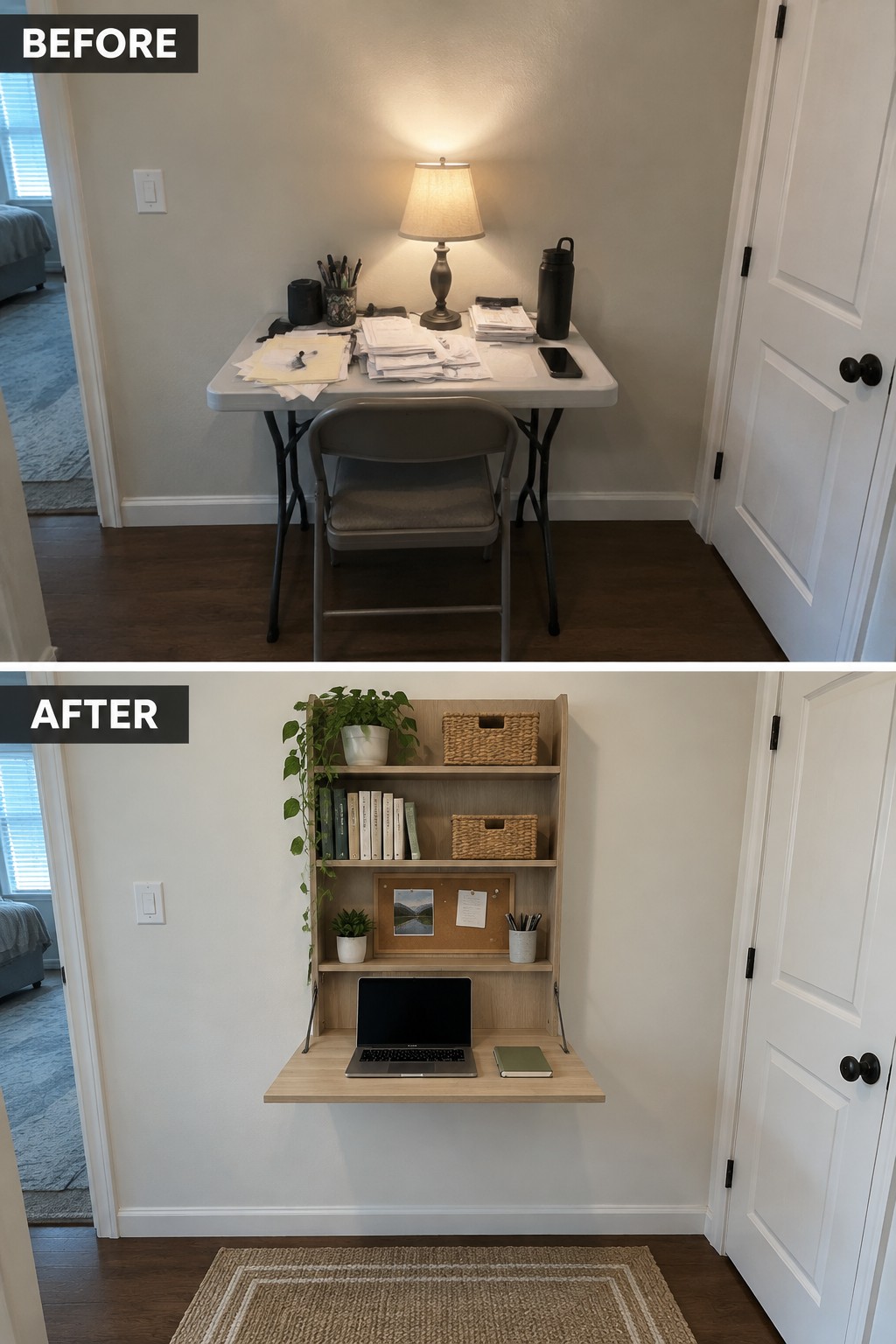
The small desk in the before photo is crowded with papers and supplies. A wall-mounted desk with shelves above it makes better use of the height, giving office items a place to go while keeping the work surface open.
This setup works well in a narrow nook where a full desk and bookcase would take up too much floor space. Keep the shelves for items you use often, and use baskets to contain smaller supplies so the desk stays clear.
Use A Painted Wall To Make Shelves Stand Out

The plain office wall becomes a useful focal point once it’s painted a deep color and fitted with several shelves. Spreading books and a few supplies across the wall keeps the desk clearer, while the repeated wood shelves make the storage feel like part of the room.
This works well in a small home office where there isn’t much floor space for extra furniture. Use shelves at different heights for items you reach often and a few things you want to display, but leave some open space so the wall doesn’t feel crowded.
Add A Rolling Cart For Narrow Office Storage
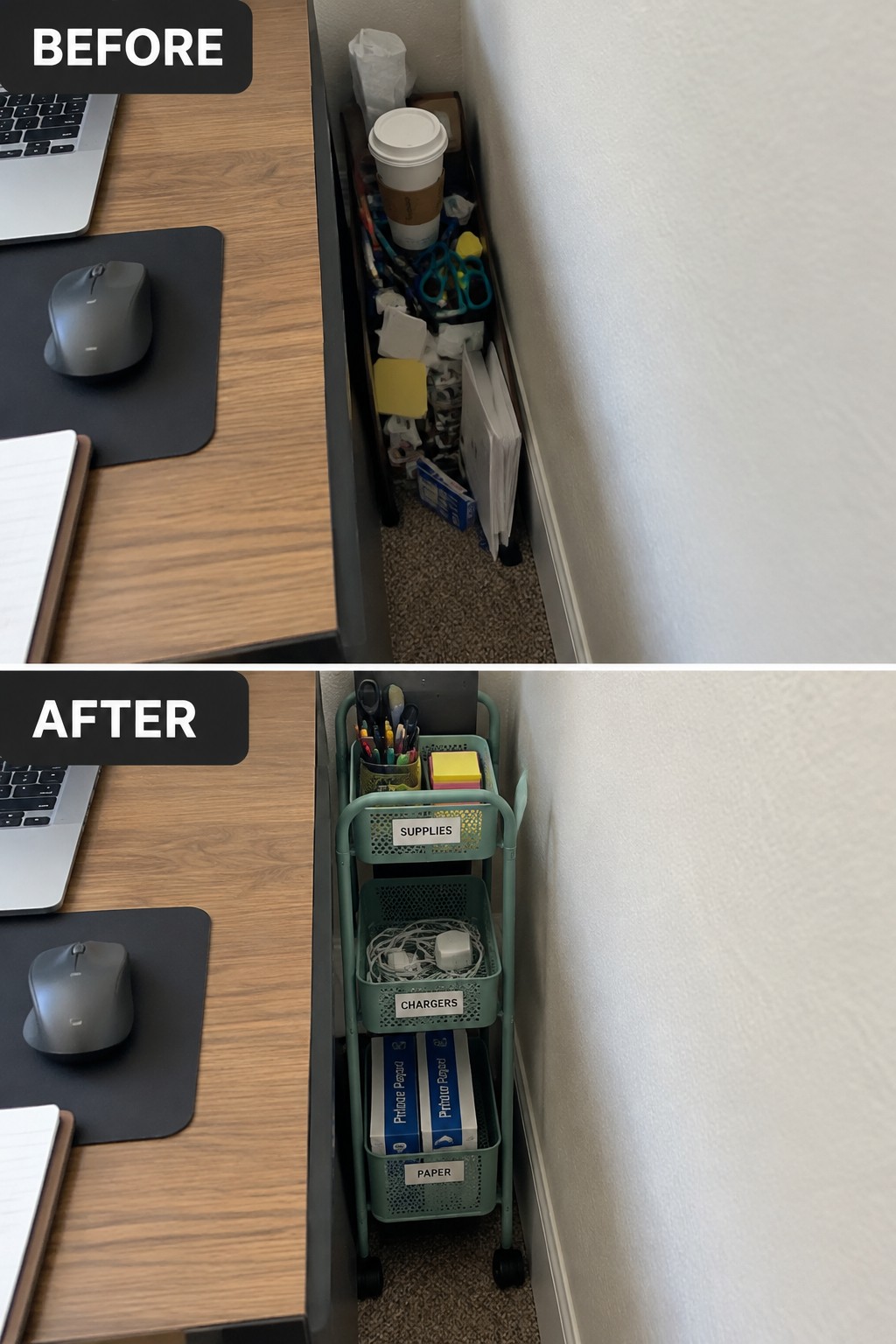
A slim rolling cart turns an awkward gap beside a desk into useful storage. In the after photo, the loose supplies are sorted into labeled baskets, leaving the floor and work area less cluttered.
This idea works well in a small home office where a full-size cabinet would block the walkway. Choose a cart that fits the space, and keep heavier items on the lower shelves so it stays stable.
Use Wall Shelves To Make Room For Office Storage

The chair piled with laundry and books took up useful floor space. Moving those items off the chair and onto shelves turns that empty wall area into practical storage without adding another piece of furniture.
In a small home office, a shelf above the door can hold labeled bins for supplies you do not need every day. A lower shelf can keep a few books or personal items within reach. Keep the shelves from getting too crowded, so they stay useful rather than becoming another place to pile things.
Use Wall Shelves To Organize A Home Office

The desk in this home office was doing double duty as a work surface and storage area. Adding shelves and a pegboard moved supplies up the wall, leaving the desk clearer and easier to use.
This approach works well in a small office where floor space is limited. Keep everyday tools within reach, and use jars or small bins to group supplies so the shelves stay useful rather than becoming another place for clutter.
Replace A Crowded Bookcase With Closed Storage

The office feels more usable once the overflowing bookcase and floor bins are replaced by a tall unit with fabric drawers. Keeping supplies behind simple, matching fronts cuts down on visual clutter without taking up much floor space.
This works well in a small home office where papers and work supplies tend to pile up. Sort items by use before filling the drawers, and keep the most-needed things within easy reach.
Use A Bookcase To Separate A Home Office

The desk in this living room was squeezed beside the sofa, making the work area feel mixed in with family clutter. A tall open bookcase now marks off the office corner and provides vertical storage without taking up much floor space.
This works well in a shared room where a separate office isn’t practical. Choose a shelf that’s open enough to let light through, and keep the desk compact so there’s still room to move around.
Store Office Supplies In A Tall Cabinet
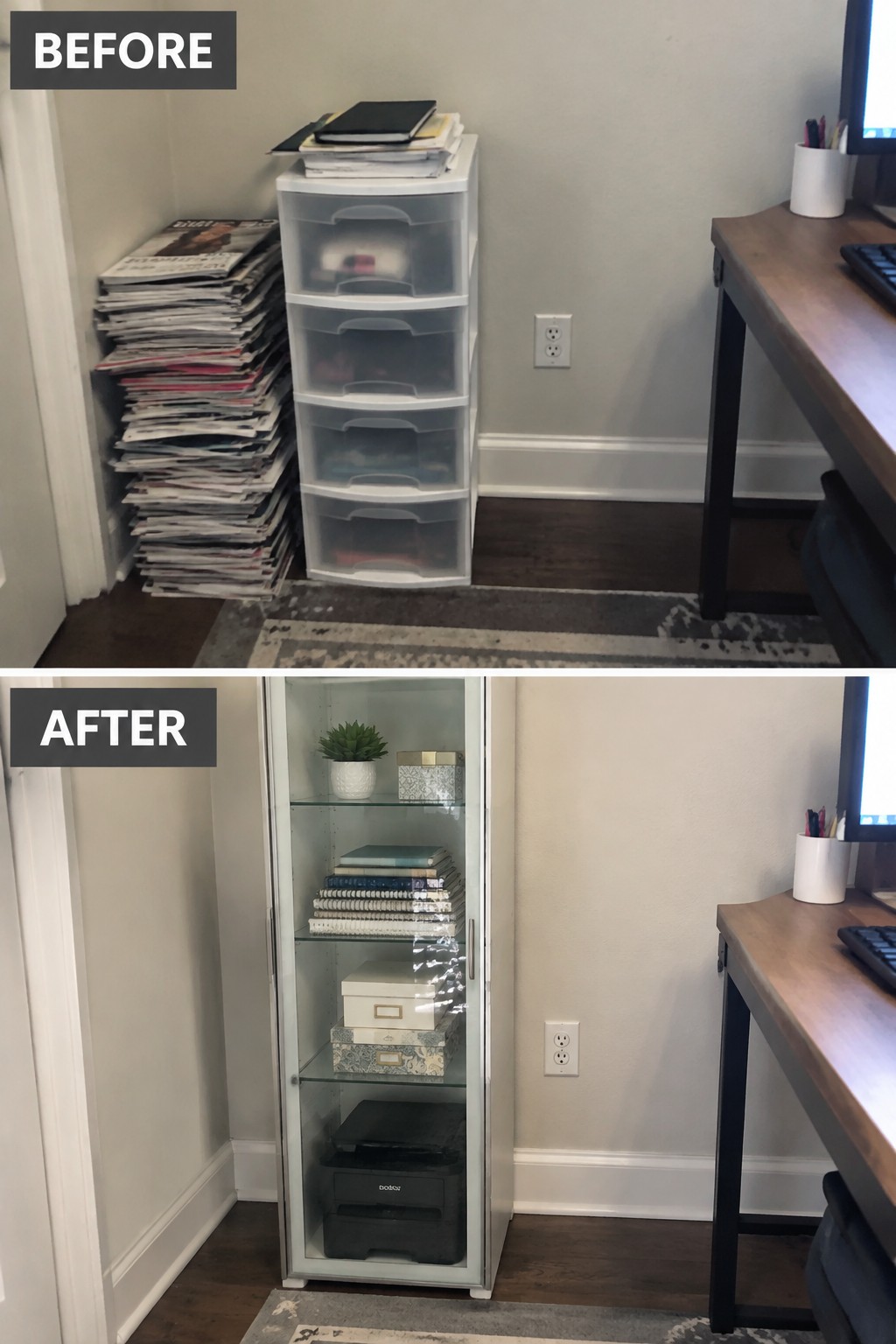
A tall glass-front cabinet makes better use of a cramped office corner than a stack of papers and plastic drawers. In this makeover, loose magazines and supplies move off the floor and into enclosed vertical storage, leaving the area beside the desk clear.
This idea works well when floor space is tight but there’s room for a narrow cabinet. Sort papers before putting them away, and leave frequently used items easy to reach so the shelves stay useful rather than becoming another catch-all.
Add Shelves To Get Office Supplies Off The Desk

A crowded desk can make a small home office harder to use. In this makeover, the shelves above the desk are arranged to hold books and supplies, leaving more of the work surface clear.
Use the wall above a desk for storage when floor space is limited. Keep everyday items within easy reach, and leave some open space on each shelf so the setup stays practical rather than cluttered.
Add Shelves Above A Filing Cabinet

The filing cabinet takes up useful floor space, but the empty wall above it can hold much more. In the finished setup, several shelves turn that vertical space into storage for binders and paper goods, while the cabinet stays available for files.
This idea works well in a small home office where there isn’t room for another bookcase. Use sturdy shelves and keep heavier items low, with lighter supplies higher up. A few matching storage boxes can keep loose papers from making the shelves look crowded.
Turn A Cluttered Office Wall Into Useful Shelving
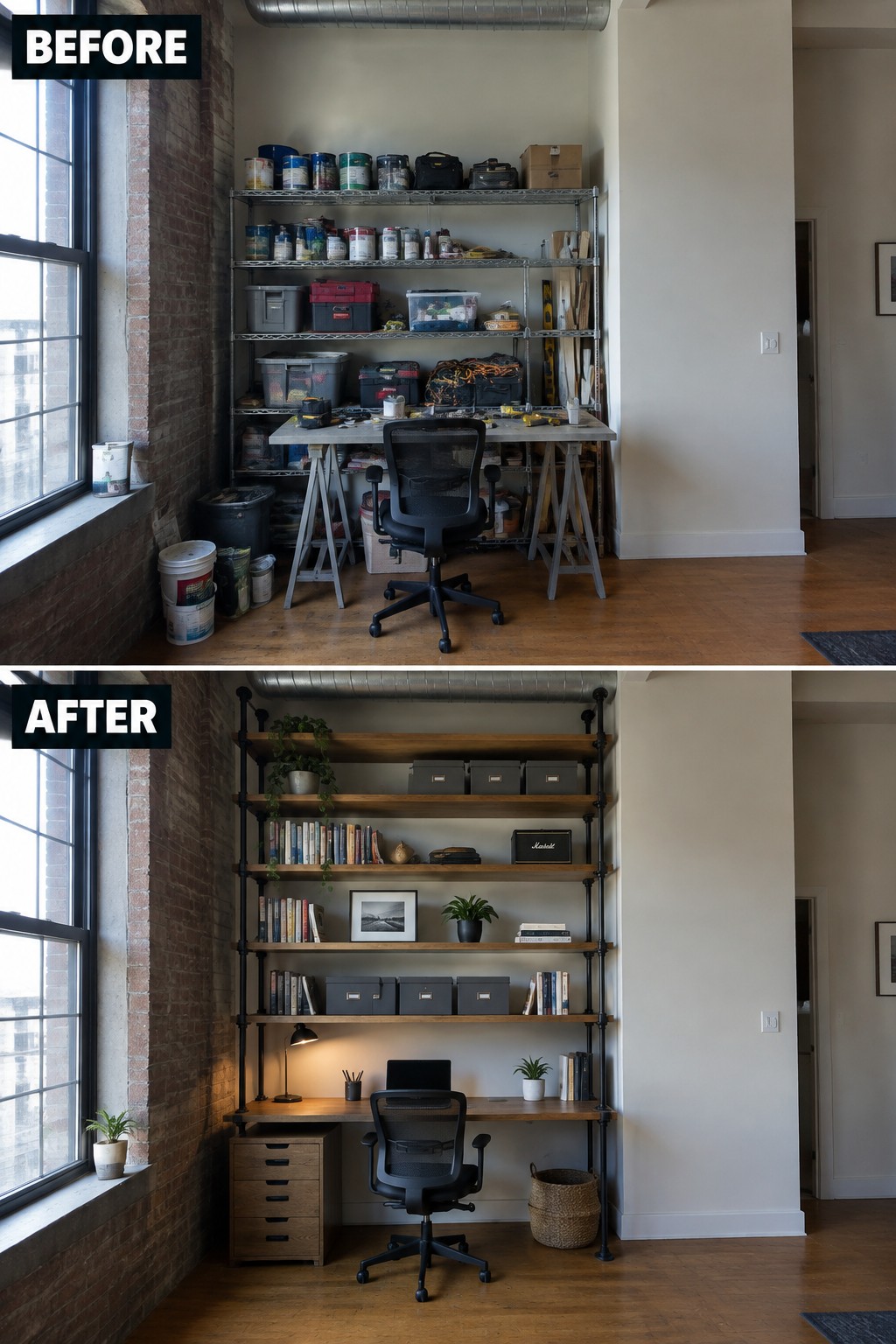
The loose supplies and crowded work surface in this office made it hard to use the desk. Replacing the wire racks with tall shelves and a built-in work area gives everyday items a place to go, while keeping the desktop open for work.
This approach works well in a home office with limited floor space, especially when you can build upward along one wall. Use matching bins for small supplies and leave some shelves open for books or items you reach for often. Keep the desk clear of anything you do not use regularly.
Frequently Asked Questions
Q: How can I add shelves without making a small office feel cramped?
A: Use the wall above your desk instead of adding storage at floor level. A couple of narrow shelves can hold everyday supplies without crowding your chair or walkway.
Q: What’s a cheap way to make open shelves look less cluttered?
A: Group small items in a few boxes or baskets, and leave some shelf space empty. It makes supplies easier to find and keeps the whole setup from looking busy.
Q: Can I put shelves up if I’m renting?
A: Try a freestanding bookcase or a desk hutch if you can’t drill into the walls. If you do use wall shelves, check your lease and use the right fixings for the wall and the weight you plan to store.
Q: Where should I keep things I use every day?
A: Put them on the shelf closest to your desk, within easy reach. Less-used supplies can go higher up so they don’t take over your work area.
