

A home office can feel cramped or unfinished when the desk, storage, and lighting don’t work well together.
I find that improving the layout often makes a bigger difference than adding more decor, especially in a room that has to handle both focused work and everyday life.
A better arrangement can open up the floor, make supplies easier to reach, and help the space feel calmer without changing everything.
I like seeing a once-awkward corner become a comfortable spot where it’s easier to settle in and get things done.
Some of these ideas may be worth saving or adapting to fit the size and needs of your own home office.
Turn A Small Nook Into A Practical Home Office

A simple built-in desk can make a cramped work corner feel much more usable. Here, a cluttered folding table gives way to a fitted wood work surface, so the desk takes up less visual space and provides a clear place to work.
This idea suits a small nook or spare corner where a standard desk would feel bulky. Measure carefully, keep the desktop deep enough for your daily essentials, and use a chair that tucks in neatly when you are finished.
Turn An Unused Closet Into A Small Home Office

A closet can become a useful work spot when storage is cleared and the space is fitted with a simple desk. Here, the hanging area gives way to a compact work surface, making use of a nook that might otherwise sit empty.
This idea suits a small home where a separate office is not practical. Keep the desk narrow enough to leave room for a chair, and use shelves above it for supplies so the work surface stays clear.
Turn An Unfinished Basement Into A Practical Home Office

An unfinished basement can become a useful work area without changing its basic layout. Here, finished walls and flooring turn a bare corner into a defined office, while a rug helps mark out the workspace.
In a basement or spare room, start with comfortable flooring and enough storage to keep the desk clear. Choose a desk and chair that fit the space, and add task lighting where you work.
Make A Home Office Easier To Use

A better furniture layout can make a small home office feel much less crowded. Here, the long desk has been replaced with an L-shaped setup that uses the window-side wall and leaves more open floor space.
In a narrow office, place the desk where you can reach what you need without blocking the walkway. A compact drawer unit can handle everyday supplies, while a single rug helps mark the work area. Keep the desktop clear enough to work comfortably.
Add Built-In Storage To Clear A Home Office

The biggest change here is replacing crowded, dark bookcases with built-ins that combine open shelves and closed cabinets. That gives the office a place for books and supplies while hiding the everyday clutter, leaving the desk easier to use.
This idea works well when a home office needs plenty of storage but still has to feel calm. Keep frequently used items within reach, and use baskets or cabinet doors for papers and odds and ends. Just avoid filling every shelf, or the room can start to feel crowded again.
Make A Home Office Feel Finished With A Clear Layout

The old office had the basics, but the bulky furniture and bare walls left the room feeling less useful than it could be. A slimmer desk and a rug that marks out the work area make the updated room feel more settled without taking away open floor space.
For a small home office, choose a desk that fits the wall and leaves enough room to pull out the chair and move around. A rug can help define the work zone, but keep its size practical so it does not crowd the doorway or desk.
Make A Small Office Nook Work Better

The nook works better as a home office when the setup is planned around everyday tasks. Replacing the small desk and laptop with a wider work surface and two monitors gives the workstation room to function without spreading into the rest of the home.
In a narrow space, choose a desk that fits the wall and leave enough room for the chair to move comfortably. A drawer unit can keep supplies close by, while a wall-mounted lamp frees up desk space.
Set Up A Home Office For Two
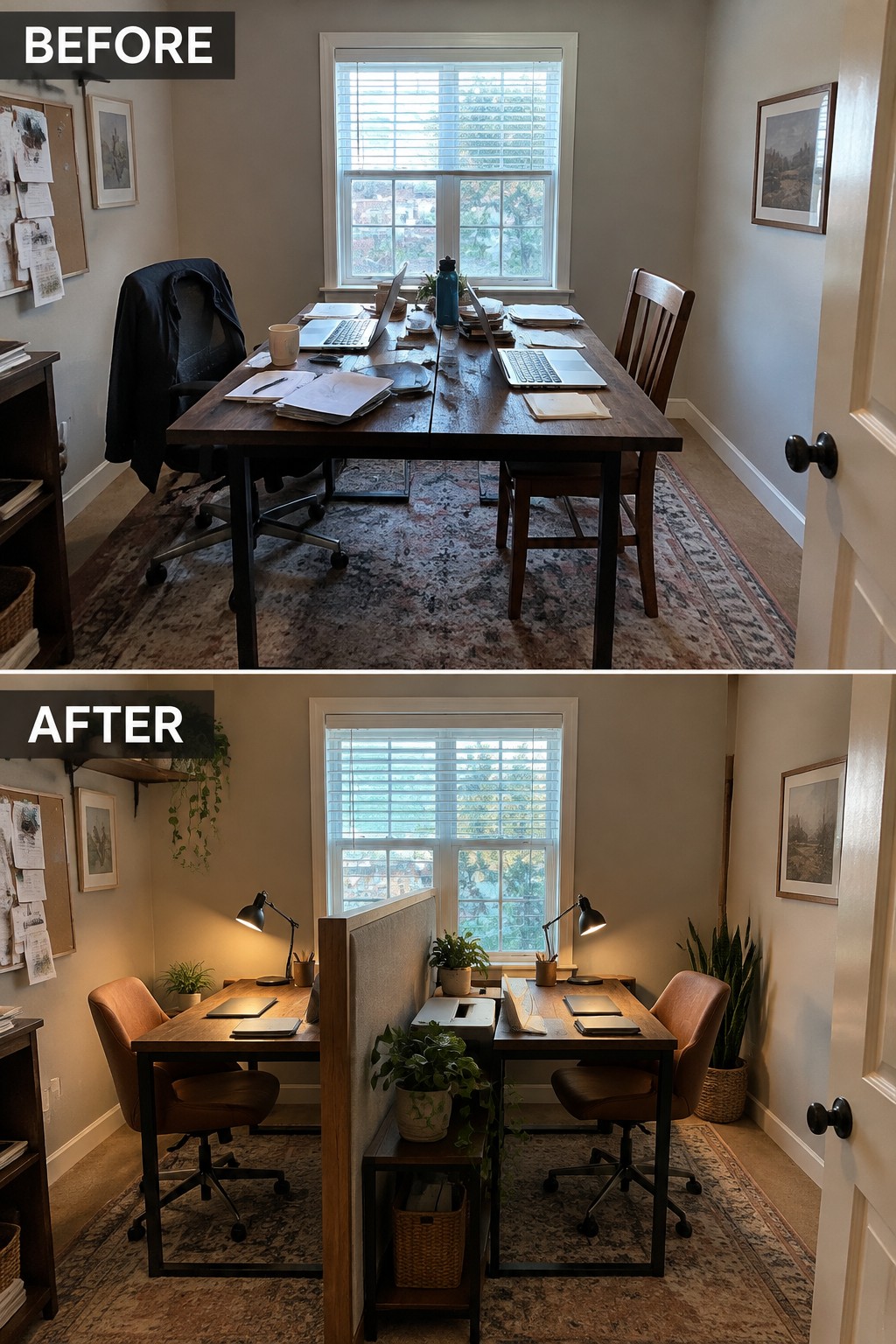
The shared table in this office had to serve several people at once, so work materials and laptops took over the surface. Two separate desks and a divider give each person a clearer place to work, while keeping the room useful for a shared office.
This layout can work well in a spare room or a wider home office. Leave enough space between the desks and around the chairs to move comfortably, and use a divider with shelves if you need a little storage as well as separation.
Turn An Empty Room Into A Home Office

The room works better once it has a clear purpose. A desk placed at the far end creates a practical work area, while the rug helps define it without adding walls or taking up extra space.
This layout suits a spare bedroom or other long, narrow room. Keep enough space behind the chair to move comfortably, and use a rug large enough to sit under the desk and chair rather than stopping at the desk legs.
Turn A Closet Into A Home Office

A cluttered closet can become a useful place to work when you give it a clear purpose. Here, a barn door replaces the curtain, and shelves and a desk make better use of the small space.
This idea works well when a spare room is not available. Keep the desk sized to the closet, leave enough room for a chair, and use shelves for items you need close by without crowding the work surface.
Use Wall Panels To Make A Home Office Feel Finished

The plain office becomes a more comfortable work area with fabric panels covering the walls. They give the room a finished look while helping separate the desk area from a small reading spot.
This idea suits a spare room that feels bare but does not need a major renovation. Use panels in a simple, consistent layout, and keep the desk and chair scaled to the room so there is still space to move.
Turn A Bay Window Into A Home Office Seating Area

The empty bay becomes a more useful part of the room with a built-in bench and drawers. This gives the office a comfortable place to sit without taking up the open floor space, while the storage helps keep everyday items close at hand.
A similar bench can work beneath a wide window in a small office or spare room. Keep the seat depth comfortable and leave enough space for the desk and chair to move freely.
Give A Home Office A More Useful Layout
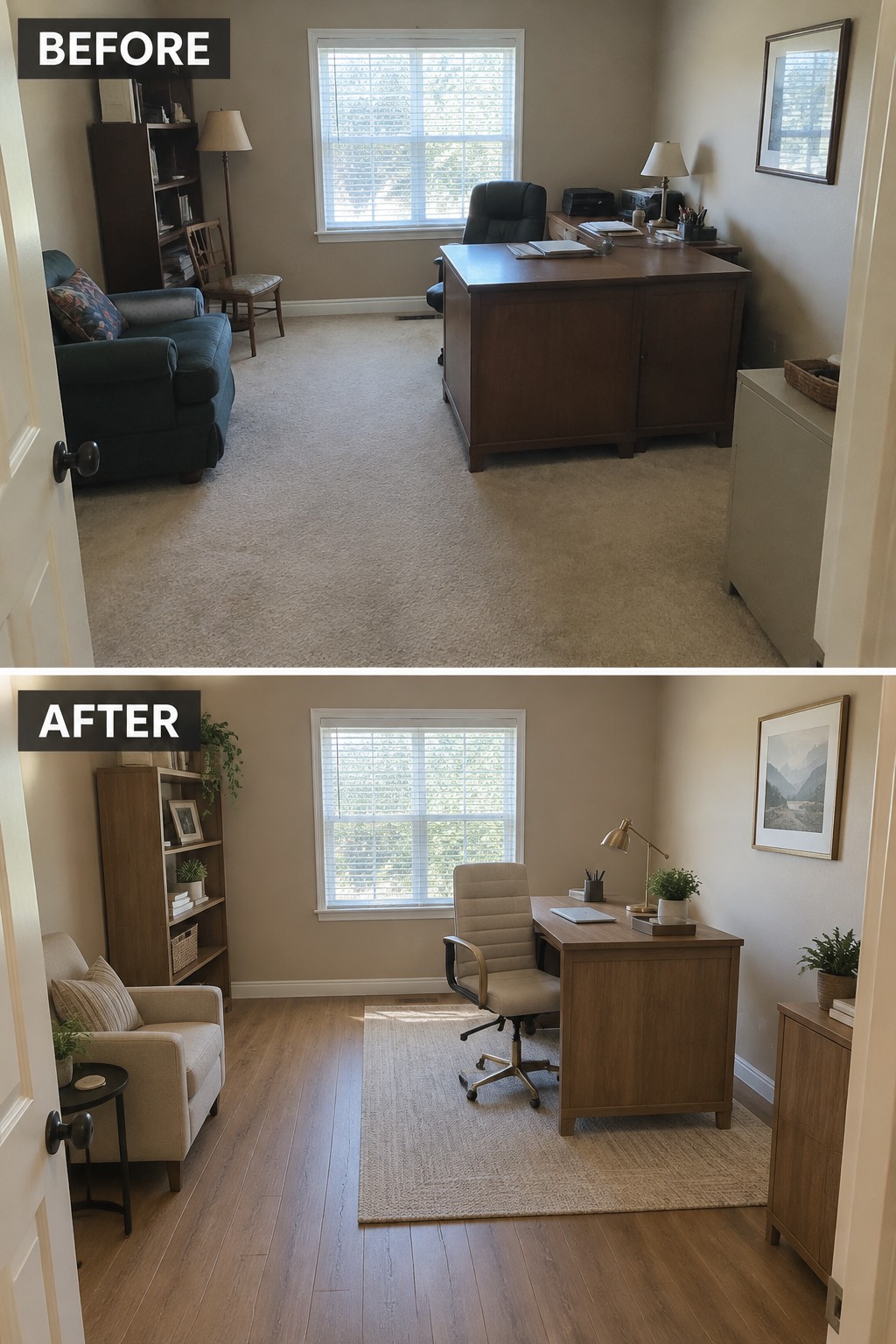
The old setup leaves a lot of open floor in front of a bulky desk, while the updated layout gives the office clear places to work and sit. A smaller desk and a rug help define the work area without making the room feel crowded.
For a similar room, keep the main walking path open and choose furniture that fits the space. A small sofa or chair can make the office more comfortable for reading or meeting with someone, as long as it does not get in the way of the desk.
Make A Hallway Work As A Home Office

The folding table and shoes made this hallway hard to use. Replacing the temporary setup with a narrow wall-mounted desk clears the floor and gives the space a more practical purpose.
This idea suits a wide hallway or passage where a full desk would get in the way. Keep the work surface shallow, and leave enough room for people to pass comfortably.
Add Closed Storage To Keep Office Supplies Tidy

Replacing the narrow printer table with a cabinet gives the home office a proper place for paper and supplies. The printer still has a handy spot on top, while cabinet doors hide some of the clutter that made the old setup feel crowded.
This idea works well beside a desk when you need extra storage but do not have room for a separate filing area. Choose a cabinet that fits the printer and leaves enough surface space to work around it, and keep frequently used items on an open shelf.
Make A Home Office Feel Brighter And More Finished

The dark, crowded office feels more usable after the desk area is simplified and the room is lightened up. A pale rug helps define the work zone, while full-length curtains make the window feel like a more finished part of the room.
For a similar change, start by clearing the desk and choosing a rug that fits beneath the chair without blocking the walkway. Light curtains and a simple floor lamp can help a small office feel less closed in, without adding more furniture.
Turn A Spare Room Into A Home Office And Daybed

A spare room can serve as both a work area and a place to rest when the layout gives each use enough space. Replacing the crowded desk and bulky armchair with a compact desk and a daybed with drawers makes the room easier to use without giving up its second purpose.
Keep the desk against one wall and choose a daybed that fits the room without blocking the path between them. Built-in drawers can hold extra bedding or office supplies, which helps a small room stay clear.
Set Up A Home Office For Standing Work

Replacing a crowded seated desk with an adjustable standing desk makes this home office easier to use throughout the day. The open area beneath the desk also leaves room to move, rather than keeping a chair in the middle of the workspace.
If you work in a small spare room or a corner of a bedroom, a standing desk can help make the layout feel less cramped. Choose a desk that fits the wall and leave enough clear floor space to change positions comfortably.
Create A Separate Zone For A Home Office

A small work area can be much easier to use when it has a clear boundary from the rest of the room. Here, a folding screen separates the desk from the living area, while a dedicated rug helps mark out the office zone.
This approach works well in a shared room where a permanent wall is not practical. Choose a screen that still lets you move around comfortably, and keep the desk setup simple so the work area does not feel cramped.
Clear The Desk And Make Room For Better Office Storage

Replacing a crowded desk with a simple work surface makes this home office easier to use. Moving the printer and other equipment to a shelf also frees the desk for the computer and everyday tasks.
For a similar setup, keep only what you use often within reach and store less-used items nearby. A shelf can work well above a desk, but leave enough space for the screen and avoid piling it with things that make the work area feel crowded.
Make A Home Office Feel More Welcoming

The desk stays in the room, but a plain, cramped setup becomes a more comfortable place to work. A wood desk and woven chair give the office a warmer feel, while plants and shelves make use of the wall space.
For a small office, try choosing a comfortable chair and adding storage above or beside the desk instead of filling the floor with extra furniture. Keep the work surface clear enough for everyday tasks, and leave a path through the room.
Add Tall Storage To Free Up Office Space
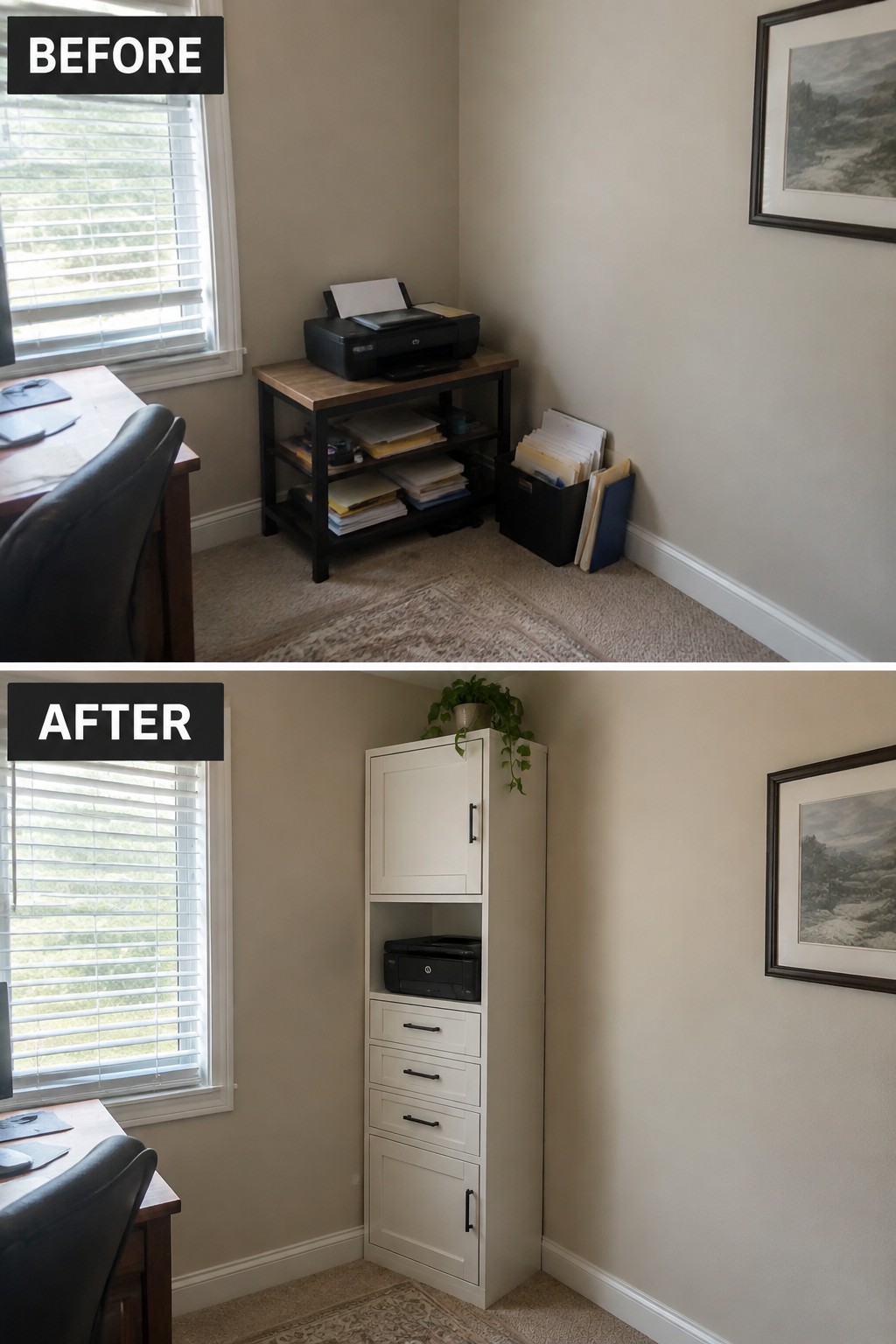
Replacing a low printer stand and loose paper piles with a tall cabinet gives this small office corner a more useful layout. The printer still has an easy-to-reach spot, while supplies can be tucked away instead of spreading across the floor.
This approach works well in a compact office where there isn’t room for another desk or shelving unit. Choose a cabinet that fits the available wall space, and keep frequently used items within reach so the extra storage stays practical.
Make A Home Office Feel Like A Complete Room

The desk works for basic tasks, but the bare room feels more like a temporary setup than a place to settle in. A rug helps define the office area, while a comfortable chair gives the room a second use for reading or taking a break.
For a similar setup, use a rug large enough to sit under the desk and chair, and leave a clear path around the furniture. This works well in a spare room where you want a practical workspace without making the whole room feel like an office.
Frequently Asked Questions
Q: How can I make a small home office feel less cramped?
A: Start by clearing the floor and choosing a desk that fits the room without blocking the walkway. Wall shelves can hold supplies while leaving your work surface open.
Q: What’s the best spot for my desk if I don’t have a separate office?
A: Look for a quiet corner with natural light, but keep the screen turned away from distracting windows if glare is an issue. A rug or bookcase can help mark the work area without closing it off.
Q: How do I make my office feel cozy without adding clutter?
A: Pick a few useful comforts, like a warm desk lamp, a soft chair cushion, or one plant. Keep the rest of the decor simple so your workspace still feels easy to use.
Q: What should I fix first if my home office layout isn’t working?
A: Move the desk and chair before buying anything new. A clearer path to your seat and supplies can make the room feel more functional right away.
