
A small home office can feel cramped or unfinished when the desk blocks a walkway, storage piles up, or there is no clear spot to focus.
I find that a better layout often matters more than adding extra decor, especially in an apartment where every corner has to work hard.
A compact desk, useful shelves, and thoughtful lighting can make the room feel calmer while keeping daily essentials close at hand.
It is satisfying to see an awkward corner become a practical place to work without making the whole home feel crowded.
Some of these ideas may be worth adapting to your own room, even if you only have space for a desk and a few well-chosen details.
Turn An Empty Corner Into A Small Home Office

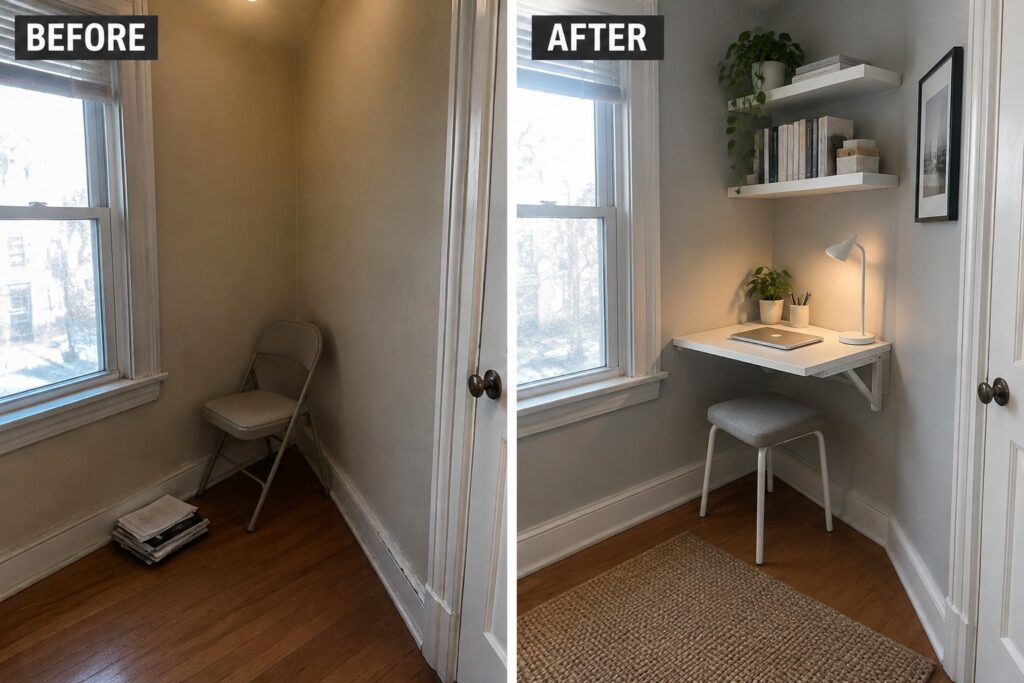
An unused corner can become a practical work spot without taking over the room. Here, a wall-mounted desk replaces a bare corner, giving the space a clear purpose while leaving the floor open.
This idea works well in apartments and tight rooms where a full-size desk would feel bulky. Choose a desk that fits the wall, add a comfortable chair that tucks underneath, and keep the surface simple so there’s still room to work.
Turn A Small Closet Into A Home Office

An unused closet can make a handy work spot in an apartment or tight room. Here, a simple desk replaces the empty hanging space, and a shelf light helps make the nook practical without taking up floor space.
Use a desk that fits the closet width and leave enough room to sit and move your legs. Keep the work surface fairly clear, and use a shelf above it for a few supplies rather than adding bulky storage.
Turn A Window Nook Into A Small Home Office

A small table and chair can make a window nook usable, but a built-in bench with a desk makes better use of a tight space. The bench adds a place to sit without taking up the room a separate sofa or extra chair would need.
This idea works well in an apartment alcove or an awkward corner. Use a desk sized to leave enough room to pull up a chair, and add storage beneath the bench to keep supplies out of the way.
Turn A Narrow Hallway Into A Compact Workspace

The hallway goes from a drop zone for boxes to a small work area by replacing bulky furniture with a wall-mounted desk. That keeps the floor clearer and gives the narrow space a useful purpose.
A floating desk can work in an apartment hallway or an awkward alcove, as long as there is room to pass comfortably. Keep the desktop to the essentials, and use a shelf above it for items that would otherwise crowd the work surface.
Add A Foldaway Desk To A Small Room
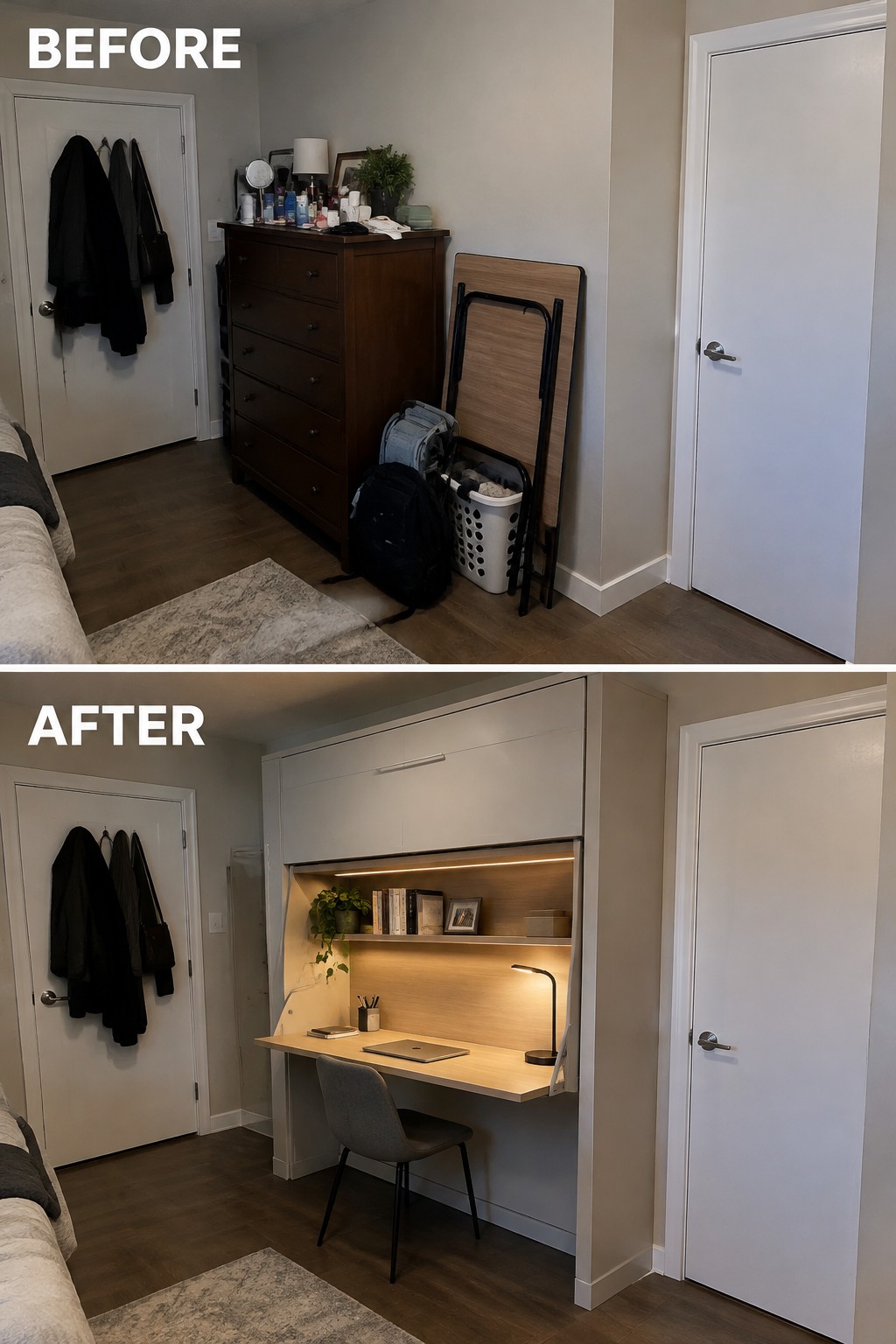
Replacing a bulky dresser and floor clutter with a built-in desk makes this corner useful for work without taking over the bedroom. The upper cabinet and shelves keep supplies off the desktop, while the foldaway design can close up when the space is not in use.
This idea suits apartments where a separate office is not practical. Use a shallow desk and storage that reaches upward, and leave enough room for a chair to slide out comfortably.
Turn A Radiator Into A Small Desk

An awkward radiator corner can become a useful work spot with a simple desktop laid across it. In this makeover, a narrow wooden surface replaces a chair and clutter, giving the window area a clear purpose without taking up much floor space.
This idea suits a small apartment where a full desk would crowd the room. Use a slim, sturdy top and keep the radiator grille open so heat can circulate. A small lamp and a few supplies are enough to make the spot practical.
Add A Built-In Desk And Storage

The dresser took up floor space without making the corner a useful place to work. A built-in desk with shelving turns that same area into a compact office and keeps supplies close at hand.
This idea works well in a bedroom or other tight room where a separate office won’t fit. A slim desk and vertical storage make good use of the wall, but leave enough space for the chair to slide in and for people to pass by.
Make A Small Home Office Feel Organized

A small office works better when the desk stays clear and supplies have a place to go. Here, a wall-mounted desk replaces a basic table, while a pegboard keeps everyday items within reach without taking up floor space.
This setup suits an apartment nook or tight spare room where every inch matters. Choose a desk that fits the wall and keep only the essentials on top; wall storage can handle the rest.
Fit A Compact Office Into An Unused Nook

A narrow, empty nook can become a useful home office when one tall shelving unit combines a desk with storage. In this makeover, the built-in-style unit makes better use of the vertical space than a small table could on its own.
Look for a desk-and-shelf unit that fits the width of your nook, and keep the desktop clear enough for everyday work. Baskets can hold supplies on the lower shelves, but avoid filling every shelf if the corner is already tight.
Use A Narrow Table As A Living Room Desk
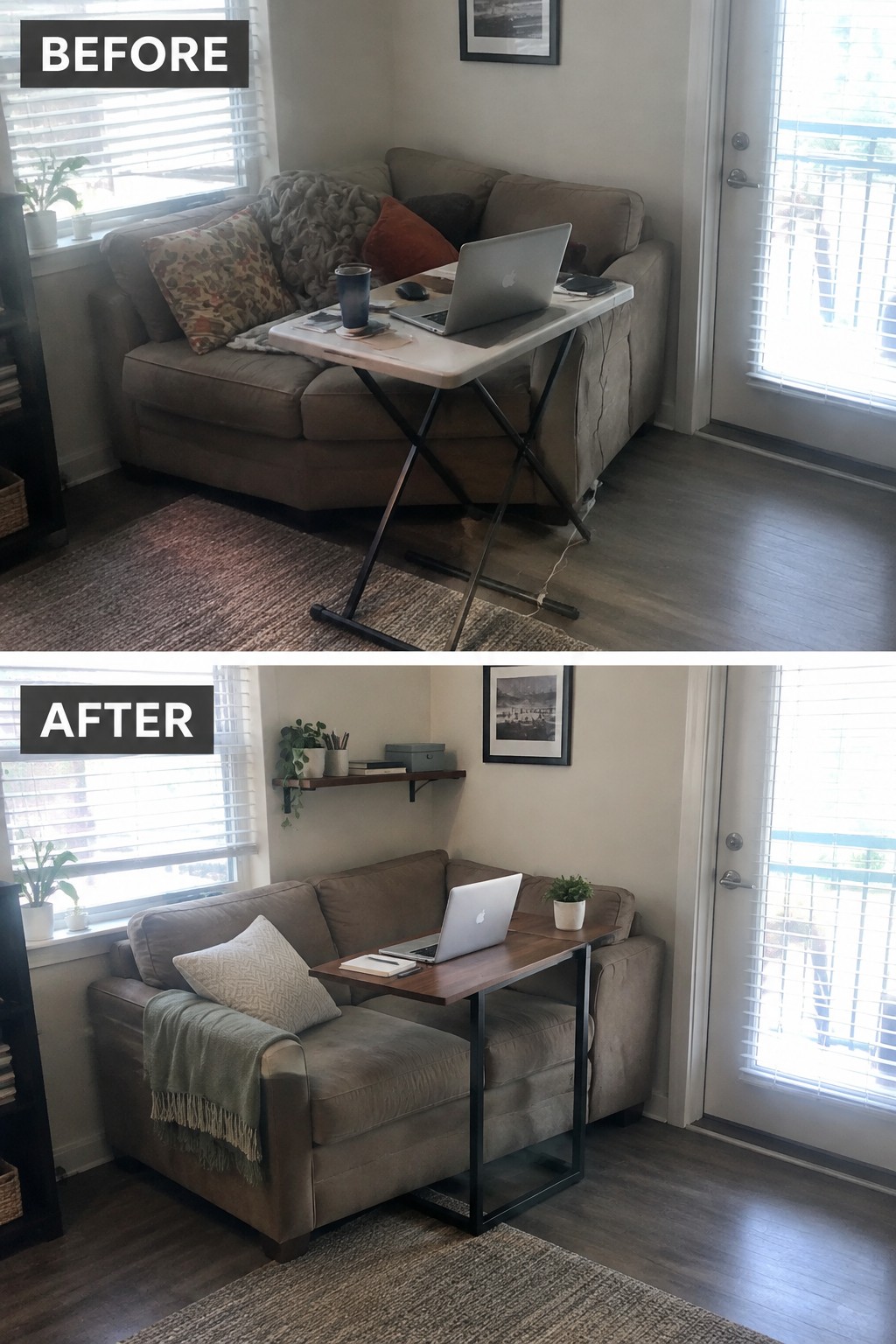
The folding table in the before photo takes up floor space and leaves the laptop perched in front of the sofa. A slim table with a fixed top makes the same spot work better as a small desk, while still keeping the room open.
In an apartment, look for a narrow table that fits close to the sofa and leaves a clear path past it. Keep only your laptop and a few work essentials on top, so the living room can still serve its main purpose when the workday ends.
Turn A Narrow Balcony Into A Small Home Office

An unused balcony can become a practical workspace when a slim desk fits along one side and leaves a clear path through the middle. Here, a narrow wooden desk replaces stored boxes and gives the space a clear purpose.
This idea works best on an enclosed balcony where the desk can stay protected from rain and strong sun. Measure carefully before choosing furniture, and keep the chair or stool compact so there’s still room to move.
Turn An Underused Closet Into A Home Office

A closet can be a useful place for a small desk when there is no spare room for an office. Here, the cluttered storage space becomes a compact work area, and a sliding barn door can cover it when the workday is over.
Use a desk that fits the closet’s width and leave enough room to pull out a chair. A lamp helps with focused work, while shelves can hold supplies without taking up desk space. Check that the closet has an outlet nearby before setting it up.
Put A Desk Under A Loft Bed

The bed takes up less floor space when it’s raised, leaving room for a proper work area underneath. Here, a loft bed replaces the floor-level bed and opens up space for a desk and chair.
This setup works well in a narrow bedroom where a separate office would not fit. Choose a bed frame with enough clearance for comfortable sitting, and keep the desk essentials tidy so the area stays easy to use.
Turn A Cabinet Into A Hidden Home Office

A cluttered cabinet top can become a compact work area when the cabinet is fitted with a fold-down desk. Here, the doors open to reveal a lit laptop space, while the existing lower cupboards still provide storage.
This idea works well in an apartment or a tight room where a full desk would take up too much floor space. Keep the work surface just large enough for a laptop, and use the inside of the doors for small supplies so the area stays manageable.
Make A Small Desk Area Feel Finished

A plain desk can look like an afterthought in a small room. Adding fabric panels behind it gives the workspace a clear focal wall and makes the corner feel more complete without taking up floor space.
For a similar setup, use wall panels or fabric-covered boards to define the office area, then keep the desktop fairly clear. This works well in an apartment nook where there is little room for extra furniture; check that any wall treatment leaves outlets accessible.
Replace A Cluttered Desk With A Simple Workspace
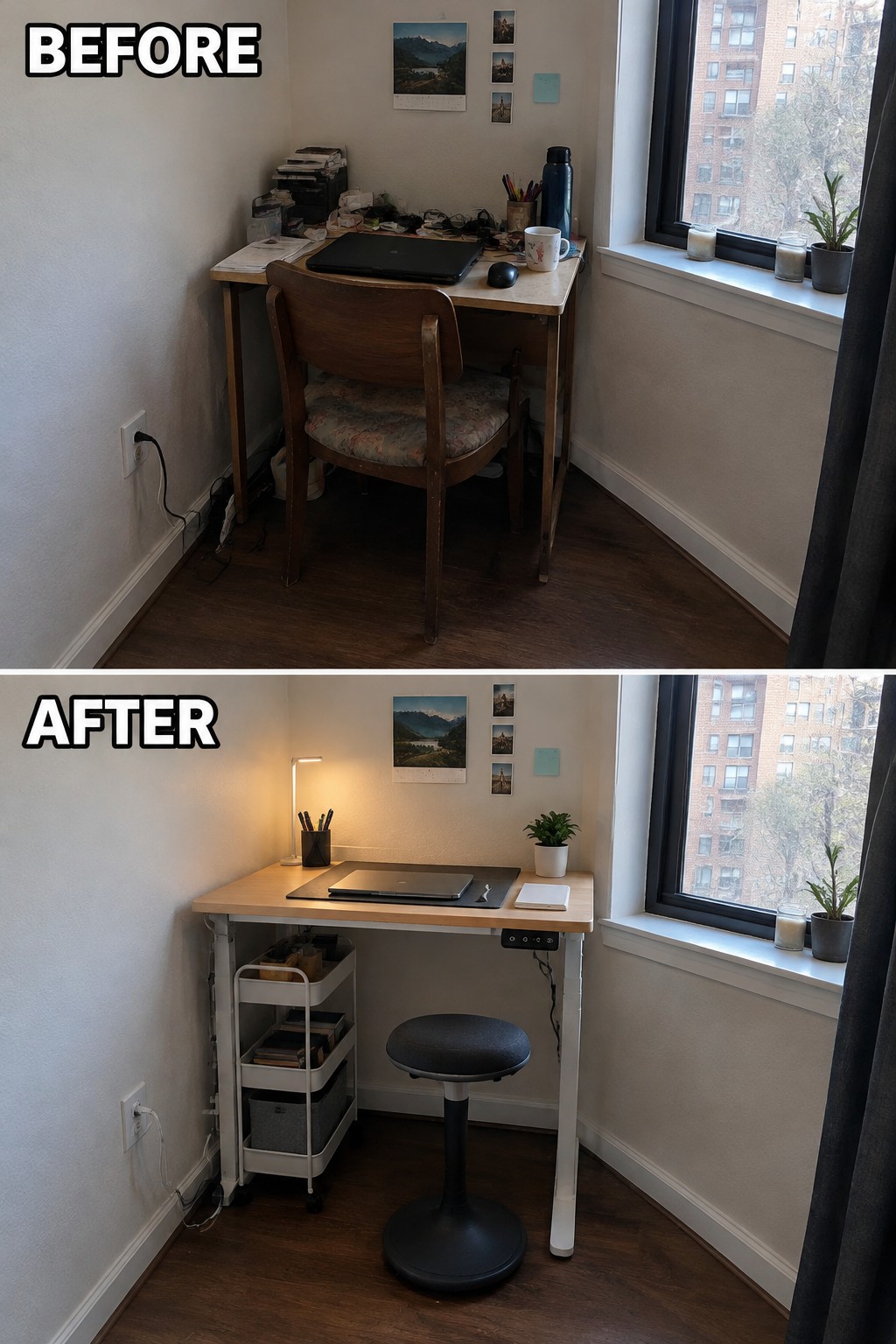
A small home office works better when the desk has room for the essentials and little else. Here, a crowded corner becomes more usable with a clean desk surface and a compact rolling cart for supplies.
Try this in an apartment nook or tight room where extra furniture would get in the way. Keep storage vertical or tucked under the desk, and choose a chair that can slide out of the walking path.
Give A Small Office A Clean, Consistent Look

The office feels more useful once the mismatched furniture is replaced with a compact desk and coordinated storage. A pair of slim shelves above the desk makes use of wall space, while keeping the work surface clear.
For a tight room, choose a desk that fits without blocking the door or chair, then use wall shelves for books and supplies you reach often. A simple color scheme can help separate pieces feel like one workspace without adding more furniture.
Turn A Closet Into A Compact Office

An awkward storage closet can become a useful work area once it has a clear purpose. Here, shelves and a pull-out desk replace the loose clutter, while a printer sits above the work surface. The setup makes use of vertical space without taking over a room.
For a tight apartment, keep the desk shallow enough to leave room to sit and work comfortably. Use labeled bins on the shelves for office supplies, and keep only the essentials within reach so the small workspace stays manageable.
Use A Desk To Separate Work From Living Space

In a small apartment, a desk can do more than provide a place to work. Here, a long desk along the wall replaces a crowded dining table, leaving the sofa and bed easier to use. The clear walkway makes the narrow room feel more practical.
A slim desk with shelves or drawers underneath can work well in a studio or one-room apartment. Keep the desktop limited to work essentials, and choose a chair that tucks in neatly so the office does not take over the room.
Make A Small Office Feel Finished
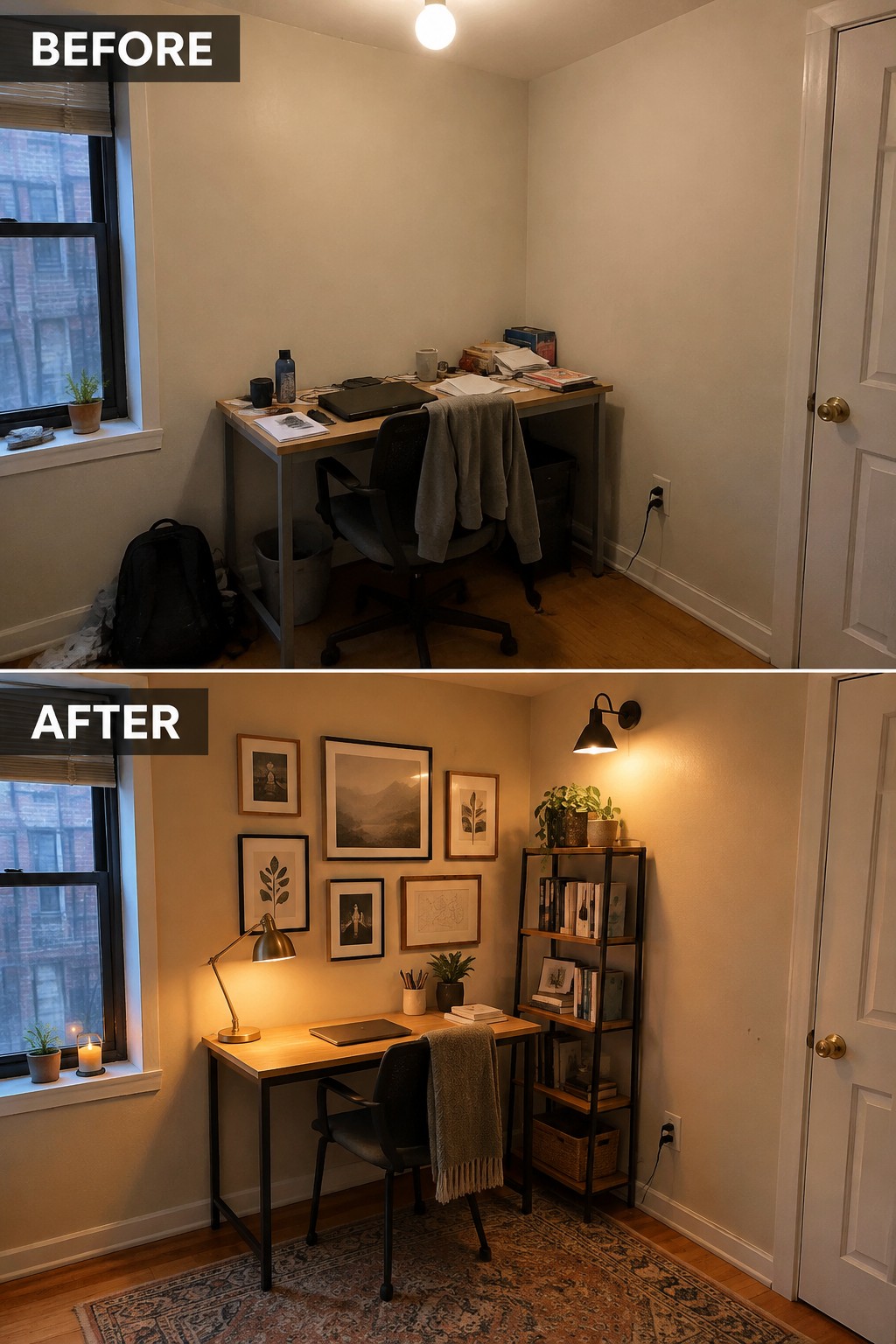
A small work area can feel much more useful when the desk is treated as part of a complete room, not just a place to set a laptop. Here, a rug defines the office zone, while wall art and a shelf give the blank corner a clear purpose.
In an apartment, start with a desk that fits without blocking the walkway, then use a rug to mark the work area. A few shelves can hold books and supplies, but keep the desktop fairly clear so the setup stays practical.
Frequently Asked Questions
Q: How can I fit a desk into a tiny apartment without making the room feel crowded?
A: Try a narrow desk against a wall, or use a floating shelf as a work surface. Keeping the floor underneath clear helps the room feel more open.
Q: What’s the best spot for a home office if I don’t have a spare room?
A: Look for an underused corner, a wide hallway, or a spot beside a window. A folding screen or a small rug can help mark it as a work area without building a wall.
Q: How do I keep work supplies from taking over a small desk?
A: Store the things you don’t use every day in a drawer, basket, or wall shelf. Leave only your current essentials on the desk so you have room to work.
Q: Can a dining table double as a desk?
A: Yes, especially if you can pack away your work at the end of the day. Keep a small caddy nearby for your laptop and supplies, then clear the table when you’re done.
