

A home office with little natural light can feel flat and tiring, especially when the layout and finishes do not help the room work well.
I’d start with practical changes that brighten the space visually and make it easier to focus, rather than relying on sunlight the room simply doesn’t get.
Thoughtful lighting, color, and furniture choices can make a dim office feel more comfortable and pulled together.
The best solutions also work with the room’s real limits, from awkward corners to scarce outlets and storage.
I’d save the ideas that fit your space and test them one at a time, so the office feels more useful without needing a major renovation.
Make A Small Home Office Feel Brighter

Replacing the dark desk and cluttered setup with lighter furniture makes this narrow office feel more open. The built-in shelves also give papers and supplies a place to go, which helps keep the work surface clear.
In a room with limited natural light, choose pale finishes and keep storage organized rather than filling every shelf. A light-colored rug can define the work area without making the floor feel heavy.
Use Light Shelves To Brighten A Small Home Office

The dark office feels cramped, while the pale walls and lit floating shelves make the updated room feel more open. In a room with limited daylight, this kind of built-in-looking storage can brighten the walls without taking up floor space.
Use shallow shelves above the desk and add gentle shelf lighting to make books and supplies easy to see. Keep the display simple so the shelves stay useful rather than crowded.
Make A Dark Home Office Feel Brighter
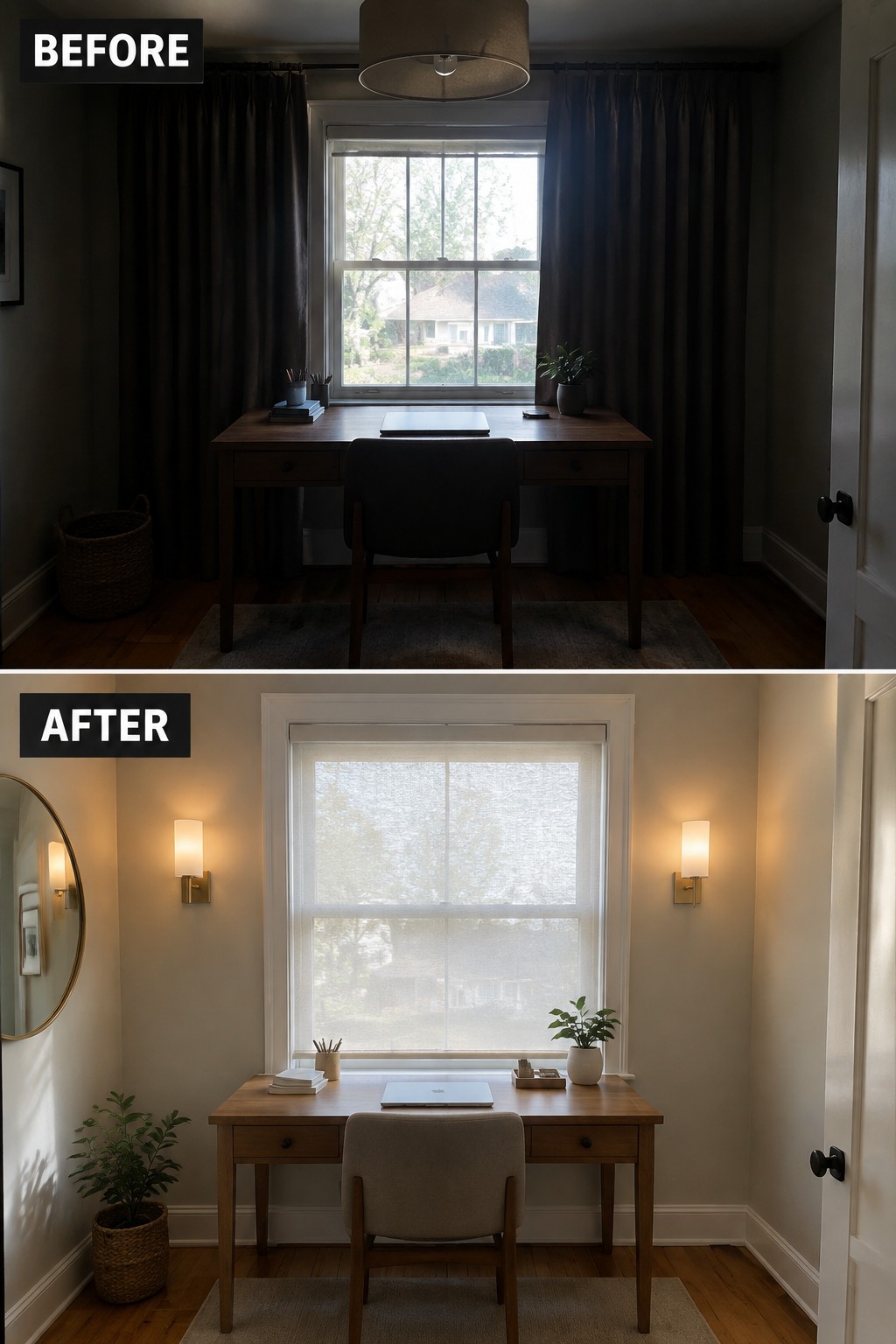
A dark office can feel more usable when the window is allowed to brighten the room and the lighting is spread beyond the ceiling. Here, replacing heavy curtains with a light-filtering shade and adding wall sconces makes the desk area feel clearer without changing its basic layout.
For a similar room, start with window coverings that still offer privacy but let in daylight. Add a lamp near the desk or seating area, and keep the furniture simple so the limited light has room to travel.
Turn A Dim Alcove Into A Practical Home Office

A small, dark nook can work well as an office when the setup is planned around its limited light. Here, cluttered open shelves and a basic desk were replaced with built-in storage and a clear work surface, making the alcove feel more organized and easier to use.
For a similar spot, keep the desk shallow enough to leave room to move, and use closed cabinets to hide supplies that would otherwise crowd the work area. Add focused task lighting so the desk stays useful even when the window brings in little daylight.
Replace A Bulky Desk With A Lighter Workstation
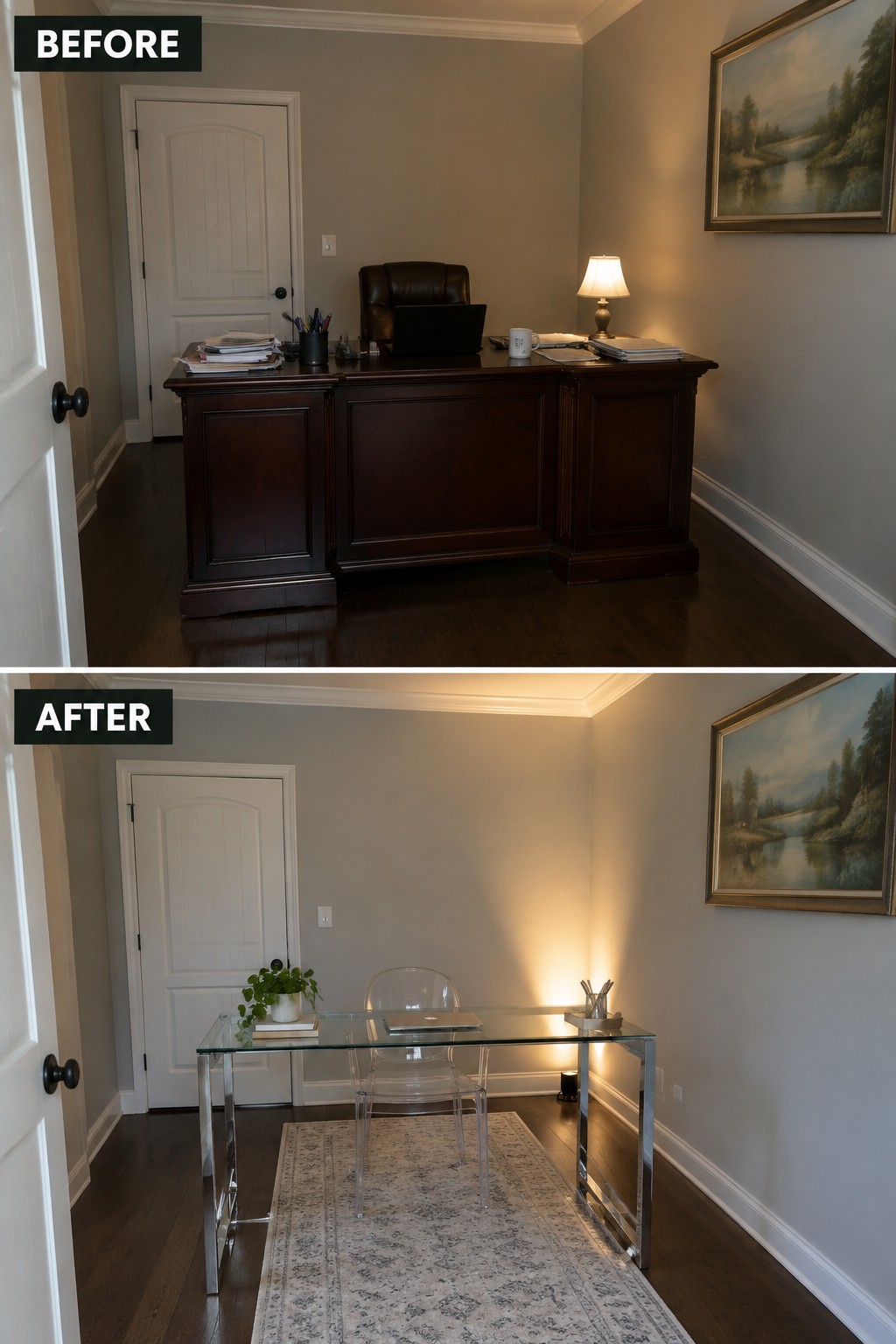
The large dark desk makes this small office feel crowded. Swapping it for a glass-top desk opens up the view across the room, while a light rug helps mark out the work area without adding visual weight.
This idea works well in a compact office where you want to keep the floor visible. Choose a desk that fits the room and has enough surface for everyday work, then keep supplies tidy so the open look lasts.
Update The Ceiling Lighting In A Home Office

Replacing the hanging light with a bright, flush-mounted fixture makes this small office feel more evenly lit. The clean white ceiling also helps the room feel less dim, without taking up any desk or shelf space.
A flat ceiling fixture works well in a compact office where a pendant might feel low or leave corners shadowy. Choose a light with a comfortable, diffused output, and keep the desk lamp for focused work.
Replace A Solid Door To Borrow Light

A solid door can make a small office feel more closed in, especially when the room has little natural light. Replacing it with a glazed door lets light pass through from the next room, while the pale walls and lighter desk finish help the office feel more open.
This can work well in a home office that sits off a brighter room or hallway. Choose frosted or textured glass if you want some privacy, and keep the desk and shelves simple so the small space still feels easy to use.
Add A Faux Window To A Home Office

A dark office can feel much less boxed in when you give the wall a bright focal point. In this room, a window-shaped wall feature replaces the blank space above the desk, making the office feel more open without changing its basic layout.
Try this idea in a room with little or no natural light, using a framed landscape print or a backlit panel if adding a real window is not practical. Keep the desk clear enough that the new focal point remains easy to see.
Use A Rug To Define The Work Area

The room feels more finished once a light rug marks out the desk area. In the darker version, the desk and floor seem to blend together, while the rug helps separate the workspace from the rest of the room.
This is useful in a small home office where you want the floor to feel lighter without changing the layout. Choose a rug large enough for the desk and chair, and keep enough bare floor around it for easy movement.
Add Built-In Shelves For A Brighter Home Office

The dark built-in shelves feel heavy, while the pale painted finish and shelf lighting make the same storage area much brighter. Keeping books and a few decorative pieces on open shelves also leaves the unit useful without making it look crowded.
This idea can work in a home office with limited daylight, especially where storage already takes up one wall. A light paint color and warm, low-glare shelf lights can brighten the work area; leave some open space so the shelves stay easy on the eyes.
Clear The Desk To Make A Home Office Feel Brighter

The desk feels much more usable once the stacks of books and loose papers are cleared away. A simple task lamp and a few well-chosen items leave more open work surface, which helps a small, dim office feel less crowded.
Keep only what you use every day within reach, and find a separate place for papers and supplies. In a room with limited natural light, a bright desk lamp aimed at the work area can help without taking up much space.
Repaint Built-Ins To Brighten A Home Office

The dark wood built-ins made this office feel dim, so repainting them a light neutral color changes the room without replacing the cabinetry. The shelves still provide useful storage, but they no longer dominate the space.
This idea works well when a home office has solid built-ins and limited natural light. Use a durable finish and keep the shelf styling simple so the lighter color can do its job without making the room feel cluttered.
Replace Dark Wall Panels With Light Acoustic Panels

The black foam panels made this office feel darker and more crowded. Swapping them for light fabric panels keeps the sound treatment while making the wall feel calmer and brighter. A slim strip of lighting behind the panels also helps the wall feel less closed in.
This idea works well in a small office where you need better acoustics but do not want a dark feature wall. Choose pale, fabric-covered panels and leave enough space around them so the wall does not feel crowded.
Turn A Closet Into A Compact Home Office

An underused closet can become a practical work area, especially in a home with limited natural light. Here, storage boxes give way to a desk and shelves, while built-in lighting makes the small workspace easier to use without relying on a window.
Keep the setup simple so the closet does not feel crowded. A narrow desk, a few useful shelves, and focused task lighting are often enough; make sure the chair can slide out comfortably and the work area has access to power.
Use Wall Art To Brighten A Home Office

A bare wall can make a small office feel unfinished, especially when the room gets limited daylight. Here, three light-toned prints and picture lights give the wall a clear focal point and make the desk area feel more considered.
For a similar effect, choose a few prints with pale colors and hang them at a comfortable viewing height. Picture lights can help in a dim room, but keep their glow gentle so it does not cause glare while you work.
Use Layered Lighting To Brighten A Home Office

The dark desk area feels much more usable after the makeover, largely because light comes from more than one source. Wall sconces beside the window help brighten the room without relying on the ceiling fixture alone.
In a dim home office, place task or wall lighting near the work area and choose warm, clear bulbs. Keep the desk surface open so the added light has room to reach where you need it.
Replace Bulky Storage With Open Shelving
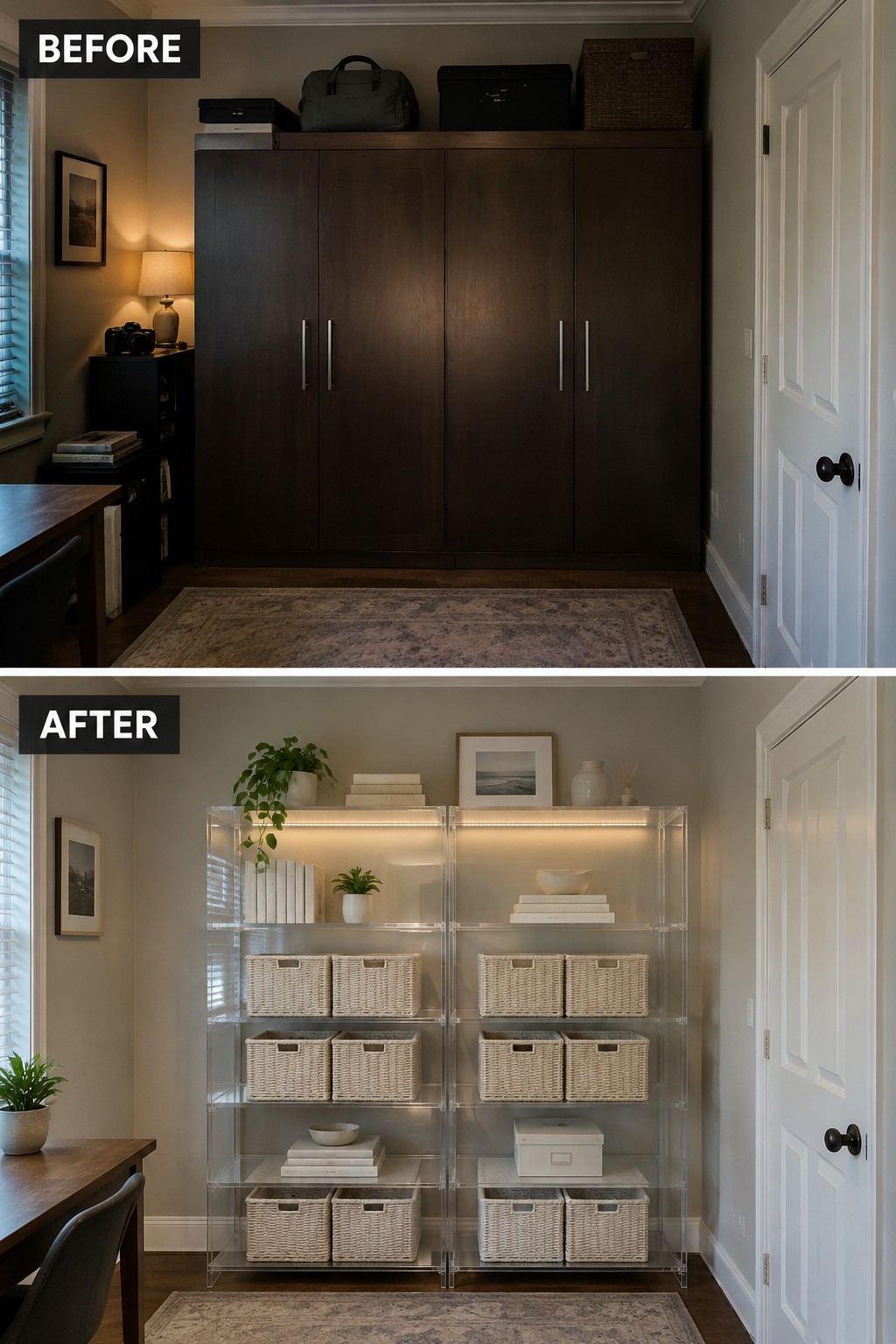
The large dark cabinet made this home office feel closed in. Replacing it with open shelves brightens the wall and makes storage easier to reach, while baskets keep smaller items from looking scattered.
This approach works well in a small office that needs storage but has limited natural light. Choose shelves with a slim, open frame and use a few matching baskets to keep supplies contained. Leave some shelf space clear so the room does not feel crowded.
Use Lamps To Make A Dark Home Office More Usable

The desk lamp helps with focused work, but it leaves the rest of the room dim. Adding a floor lamp and wall sconces spreads light around the office, making it easier to use when daylight is limited.
Use a mix of task and ambient lighting, and place lights near the desk and other spots you use. Warm bulbs can make a small office feel comfortable, but check that your desk light is bright enough for reading and writing.
Use Floating Shelves To Make A Home Office Feel Finished

The plain wall above this desk was going unused, so adding two light wood shelves gives the office a clearer focal point without taking up desk space. A lighter wall finish also helps the small work area feel brighter, which is useful when natural light is limited.
Try this in a compact office where the desk needs to stay clear. Keep the shelves shallow and leave some open space around the items you display, so they add useful storage without making the wall feel crowded.
Clear The Desk To Make A Home Office Feel Brighter

A crowded desk can make a dim home office feel even darker. Clearing away spare equipment and tangled cords leaves more open work surface, while the lighter desk in the after photo reflects more light around the room.
Start by keeping only the items you use every day on the desk, then move the rest into a file holder or drawer. In a room with limited natural light, a small lamp can help with focused work, but keeping the desktop clear makes the biggest difference here.
Replace Dark Built-Ins With Open Shelving
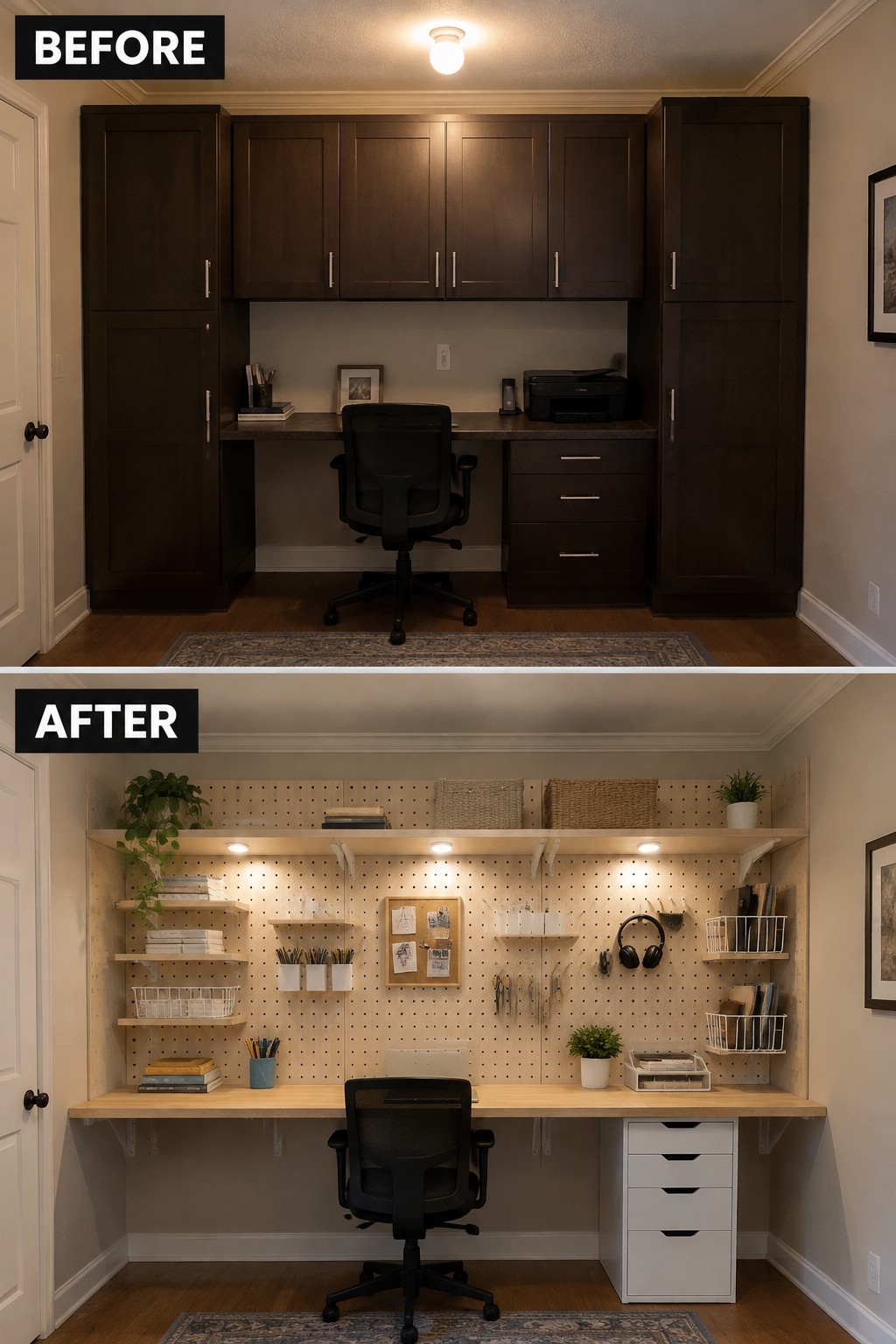
The dark cabinets made this home office feel closed in, while the light pegboard and open shelves leave the wall feeling more open. This is a useful change for a room with limited natural light, since a large block of dark storage can make the work area feel heavier than it needs to.
If you need storage, keep the shelves shallow and store small supplies in baskets so they do not crowd the desk. A pegboard also makes it easy to move hooks and holders around as your needs change. Keep heavier items low, and leave some of the wall open.
Use Light Curtains To Brighten A Home Office

In a home office with limited daylight, replacing dark curtains with light ones can make the window feel less closed off. Here, cream curtains let more of the window show and help the work area feel brighter without changing the desk.
Choose curtains in a light, simple fabric, and hang them wide enough to keep most of the glass clear. This is an easy update for a small office, especially if you want to keep darker furniture you already own.
Frequently Asked Questions
Q: How can I make a windowless office feel less gloomy?
A: Use a few layers of warm, even lighting rather than relying on one bright overhead bulb. A desk lamp aimed at the wall or ceiling can soften the room and cut harsh shadows.
Q: What paint colors work well in a room with little natural light?
A: Soft warm whites, pale beige, and muted greens can keep the room feeling light without looking stark. Test a sample on more than one wall, since artificial light can shift how a color looks.
Q: Will a mirror actually make my home office brighter?
A: A mirror can help bounce light around, especially when you place it across from a lamp or a brighter part of the room. It won’t replace good lighting, but it can make a small office feel more open.
Q: How do I keep my desk lighting from causing screen glare?
A: Place the lamp beside your monitor, not directly behind it or aimed at the screen. A shade that directs light down onto your work surface can help keep the light useful and comfortable.
