

A home office can feel unfinished when cords, papers, and supplies have nowhere to go, even if the room has plenty of space.
I find that built-in storage can make the biggest difference when it fits the way the room is used, keeping work essentials close while leaving the desk and floor less crowded.
Thoughtful shelves, cabinets, and drawers also help an awkward corner or blank wall feel like part of a practical, pulled-together workspace.
The change can be satisfying without a major renovation, especially when storage makes the room easier to work in every day.
I’d save a few ideas to adapt to the size of your office and the things you actually need to keep within reach.
Turn A Small Nook Into A Built-In Home Office

A simple desk can work in a small nook, but built-in storage makes the space feel more settled and gives everyday supplies a place to go. Here, the open folding table is replaced with a fitted desk, drawers, and upper cabinets, leaving the work surface clear.
This idea suits an alcove or spare corner where a full office would take up too much room. Measure carefully so the desk stays comfortable to use, and include closed storage for papers and clutter.
Add Built-In Storage To Clear A Home Office

Replacing freestanding desks and shelves with built-in cabinetry gives this office a cleaner, more useful layout. The long work surface and closed storage keep supplies close at hand without leaving piles and equipment on open shelves.
This idea works well in a home office that needs to serve more than one task. Plan the desk and storage around the room’s shape, and leave enough clear work surface for daily use. Open shelves can hold a few frequently used items, while cabinets hide the rest.
Add Built-In Storage To A Home Office

Replacing a cluttered desk setup with built-in cabinets and a fitted work surface gives a home office a more organized place for both work and supplies. Here, the desk sits within the storage, so the room feels more purposeful without giving up a clear workspace.
This approach works well in a spare room where floor space is limited. Plan the desk height and storage around how you use the room, and leave enough open space for a comfortable chair.
Add Built-In Storage To Make A Home Office More Useful

Built-in shelves and drawers can turn a cluttered spare room into a practical home office without taking up much floor space. Here, storage wraps around the window seat, while a desk provides a clear place to work.
This idea suits a small office or an unused nook where freestanding furniture would feel crowded. Plan the shelves and drawers around what you need to store, and leave enough clear desk space for everyday work.
Turn A Closet Into A Compact Home Office

A crowded closet can become a useful work area when its hanging space is replaced with a built-in desk and storage. Here, the shelves and drawers make room for supplies while keeping the desk clear enough for everyday tasks.
This idea works well in a spare or shallow closet where a full office would take up too much room. Measure carefully before adding cabinetry, and leave enough space for a chair and comfortable legroom.
Turn An Unused Basement Corner Into A Home Office

A basement corner that once held only a table and folding chairs can become a useful work area when storage is built into the wall. The long cabinet and shelves in this makeover give office supplies a place to go while leaving a clear surface for working.
This idea suits an alcove or spare stretch of wall where a full room is not available. Measure carefully before adding cabinets, and keep the desk surface wide enough for the work you do each day.
Replace A Bulky Desk With A Built-In Workstation

The old desk and piles of papers made this office feel crowded. A long built-in workstation with cabinets underneath gives the room a more useful work surface while keeping supplies out of sight.
This idea works well in a spare room or along an empty wall. Plan the desk height and storage around how you work, and leave enough legroom so the cabinets don’t make the workspace feel cramped.
Make A Narrow Office More Organized With Built-Ins

Replacing separate desks and open clutter with built-in work surfaces and a tall storage cabinet makes this narrow office feel more orderly without taking away its two workstations. The shelves keep everyday items close at hand, while the cabinet hides supplies that would otherwise crowd the room.
For a small shared office, use a wall-length desk where possible and reserve closed storage for papers and equipment you do not need every day. Keep the work surface clear enough to use comfortably, and leave a straightforward path through the room.
Build A Desk Into The Storage Wall

The biggest improvement is replacing a loose desk and bookcase with one built-in workstation. The shelves and cabinets make room for books and supplies, while the desk stays clear enough to work at.
This idea works well in a spare room or along an unused wall where separate furniture would feel cluttered. Plan the desk height and legroom first, then choose closed storage for items you do not need every day.
Replace Open Shelving With A Built-In Storage Wall

Open shelves can hold a lot, but office supplies and mixed-size boxes can quickly make the room feel cluttered. Replacing them with built-in cabinets gives everything a place, while glass-front upper doors keep frequently used storage easy to find.
This approach works well in a home office with a full wall to spare. Use drawers for small supplies and closed cabinets for items you do not need every day, then keep the shelves simple so the storage stays practical rather than crowded.
Use Sloped Walls For Built-In Office Storage

Replacing an exposed, cluttered attic office with fitted cabinets and open shelves makes the work area feel much more organized. The built-ins follow the low wall, turning space that might otherwise go unused into useful storage while keeping the desk area clear.
This idea works well in an attic or any room with an awkward wall. Measure carefully around the slope, and keep shelves shallow enough that stored items are easy to reach. A clear work surface makes a small office easier to use every day.
Turn A Cluttered Workshop Into A Built-In Office

The old storage shelves left this corner feeling like a place to put things, not a place to work. Replacing them with a desk and built-in shelving gives the room a clear purpose, while keeping books and office supplies close at hand.
This idea suits a basement or spare room where a freestanding desk would take up valuable floor space. Plan the shelves around what you actually need to store, and leave enough open work surface for daily tasks.
Replace A Cluttered Desk With A Built-In Workstation

A simple desk can become hard to use when work supplies have nowhere to go. In this makeover, a built-in workstation adds cabinets and open cubbies, leaving the desktop clearer and giving the office a more settled, finished feel.
This idea works well in a dedicated office or along a spare wall at home. Keep the storage sized for what you actually use, and leave enough open desk space to work comfortably.
Turn A Home Office Wall Into Built-In Storage

A wall of built-in cabinets can make a home office feel much more organized. Here, scattered bookcases give way to fitted shelving and closed cupboards, so books stay within reach while less-used items can be tucked away.
This works especially well when a room needs both a proper desk and plenty of storage. Plan the shelves around what you actually keep, and include closed cabinets to avoid filling every surface with clutter. A rolling library ladder can help with high shelves, but leave enough clear space for it to move safely.
Turn A Workshop Bench Into A More Useful Home Office

A built-in workstation can make a plain work area feel more organized and finished. Here, the old open bench becomes a wood-topped desk with drawers and closed storage, while a pegboard keeps tools easy to reach.
This idea works well in a small office or spare-room nook where floor space is limited. Fit the desk and cabinets to the wall, and use a pegboard or similar organizer above the work surface so everyday supplies stay handy without crowding the desk.
Make A Hallway More Useful With A Built-In Desk

A narrow hallway can do more than connect rooms. Replacing a cluttered console with a built-in desk and cabinets turns unused wall space into a practical home office, while keeping everyday items tucked away.
This idea works best in a wider hall or long passage where a shallow desk won’t block the walkway. Use closed storage for supplies and leave enough room to pull out a stool without narrowing the path.
Turn A Bedroom Closet Into A Home Office
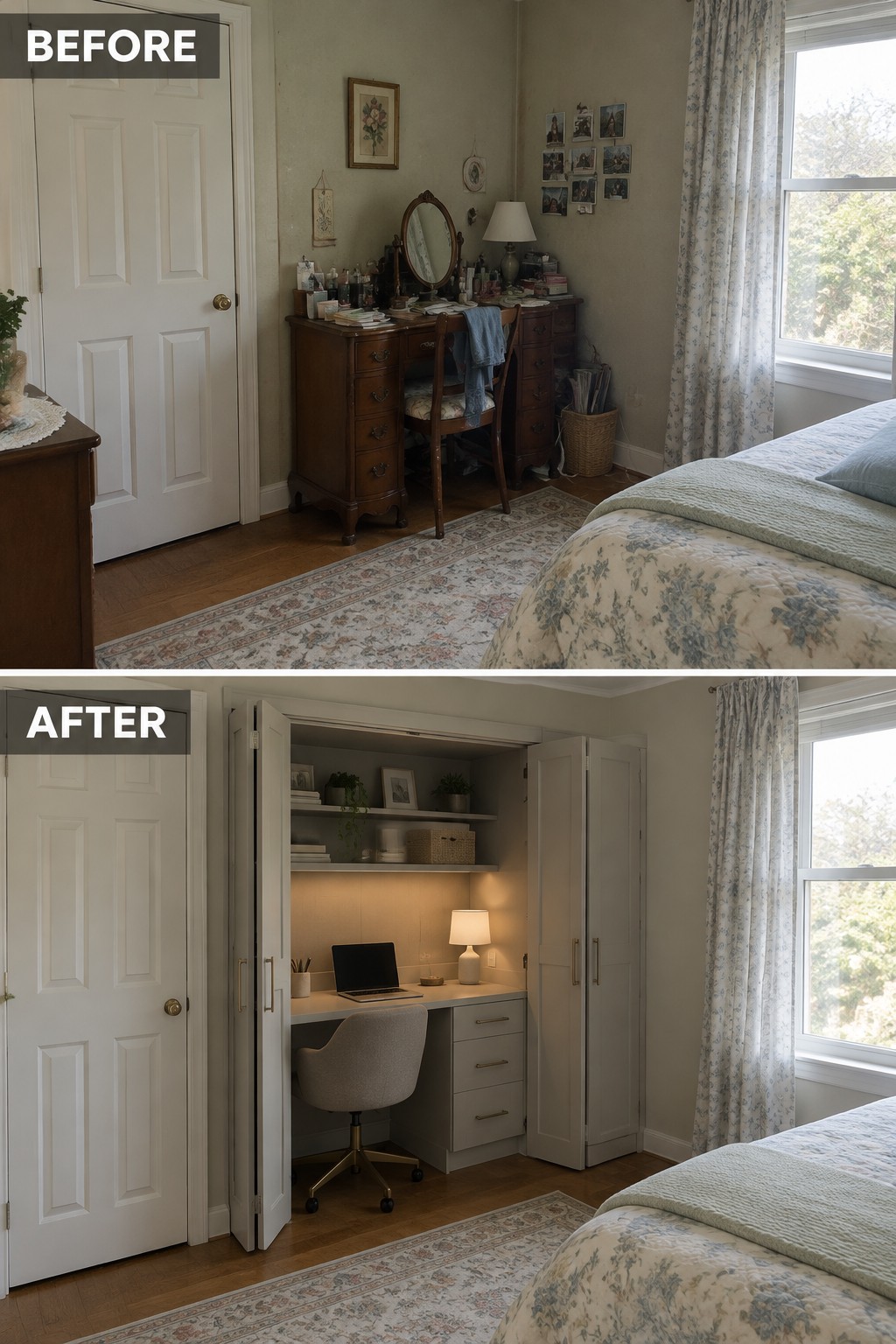
A built-in desk can turn an underused closet into a compact work area without taking over the bedroom. In this makeover, the old vanity is replaced by a desk and drawers inside the closet, with doors that can close when work is done.
This idea suits a spare closet or a bedroom corner where a full-size office would feel cramped. Keep the desktop clear enough for a laptop, and plan for an outlet and task light before fitting the shelves.
Replace Bulky Bookcases With Built-In Office Storage

The tall bookcases in this office took up a lot of space and left the books and supplies looking crowded. A built-in wall with lower cabinets and open shelves makes the storage feel more orderly while keeping everyday items close to the desk.
This idea works well when an office has one wall that can handle most of the storage. Use closed cabinets for papers and supplies, then keep the open shelves lightly filled so the room still feels comfortable to work in.
Turn An Empty Room Into A Built-In Home Office

The empty room becomes much more useful when a desk and storage are fitted along the walls. Built-in drawers keep supplies close at hand, while the long work surface gives the office a clear place to work without filling the floor with separate furniture.
This approach works well in a spare room with windows on more than one wall. Plan the desk around the room’s shape, and include enough drawer space for everyday items so the work surface stays clear.
Replace A Loose Desk And Shelves With Built-In Office Storage

A desk and separate shelving can leave a home office feeling cluttered, especially when cables and supplies have nowhere to go. Replacing them with a built-in workstation and cabinets gives the room a more orderly setup, with storage close at hand.
This idea works well when one wall can hold both a desk and closed storage. Plan the work surface around your monitor and chair, and include cabinets for equipment or items you do not need every day. That way, the office stays useful without filling the floor with extra furniture.
Create A Built-In Office That Keeps Clutter Off The Desk

Replacing a crowded desk with a built-in workstation gives a small home office a clear place for both work and supplies. Here, the desk sits alongside cabinets and shelving, while a pegboard keeps everyday items handy without filling the work surface.
This idea works well in a spare room where floor space is limited. Plan storage around what you actually use, and leave enough clear desk space to work comfortably.
Turn A Dining Room Wall Into A Built-In Office

A long built-in can make an underused dining room wall work as a home office without relying on a loose desk and extra shelves. Here, the desk and cabinets form one continuous workstation, while the upper shelves provide storage above the work surface.
This idea suits a room that needs to serve more than one purpose. Keep the desk section wide enough for daily tasks and use baskets or closed cabinets for supplies you do not want on display. Avoid filling every shelf, so the work area stays easy to use.
Add A Built-In Workstation To A Bedroom

A bedroom can do double duty as a home office when the desk and storage fit neatly into one wall. Here, a freestanding desk is replaced with a built-in workstation, making the work area feel more organized without taking over the room.
For a similar setup, use the wall beside or opposite the bed, and keep the desk depth modest so there is still room to move around. Closed cabinets can hide supplies, while a small open shelf keeps everyday items handy.
Replace Cluttered Furniture With Built-In Office Storage

The room works better when storage and the desk are planned as one setup. In the finished space, a long built-in cabinet wall replaces the scattered shelves and crowded desk, leaving the center of the room clearer and easier to move through.
For a similar home office, use closed cabinets for supplies you do not need every day and open shelves for a few useful items. A built-in desk can help make the most of a long wall, but keep enough clear work surface for your usual tasks.
Frequently Asked Questions
Q: How much built-in storage do I really need in a home office?
A: Start with what you use every week, not every paper or gadget you own. A few drawers for supplies and closed cabinets for less-used items can keep the space tidy without making it feel crowded.
Q: How can I add built-in storage to a small office without making it feel cramped?
A: Use the wall above your desk for shallow shelves or cabinets, and keep the floor clear where you can. Light finishes and a little open shelving help the room feel airy.
Q: Should I choose open shelves or closed cabinets?
A: Open shelves make books and a few favorite objects easy to reach, but they can look messy fast. Closed cabinets hide paperwork and supplies, so a mix of both is often the easiest to live with.
Q: What should I plan for before installing built-ins around my desk?
A: Measure your desk, chair, and the space needed to open drawers or cabinet doors. Also leave a clear route for cords, so your setup stays practical once everything is in place.
