

A spare closet or awkward nook can easily become a catchall, especially when there’s no clear place to work at home.
I’ve found that a small office feels more settled when the desk fits the space and everyday supplies have a place to go.
With a thoughtful layout, even a tight corner can support focused work without making the rest of the room feel crowded.
The difference is often in the practical details, like useful storage, good light, and a chair that tucks away.
I’d save the ideas that match the quirks of my own home and test them one at a time.
Turn A Closet Into A Small Home Office

An empty closet can become a useful work area with a desk and a few shelves. Here, replacing the hanging rod with a built-in desk makes use of space that might otherwise sit empty, while the shelves provide room for books and supplies.
This idea works well in a spare closet or a deep nook. Keep the desk shallow enough to leave legroom, and limit what you keep on the shelves so the work area does not feel crowded.
Turn A Closet Into A Compact Home Office
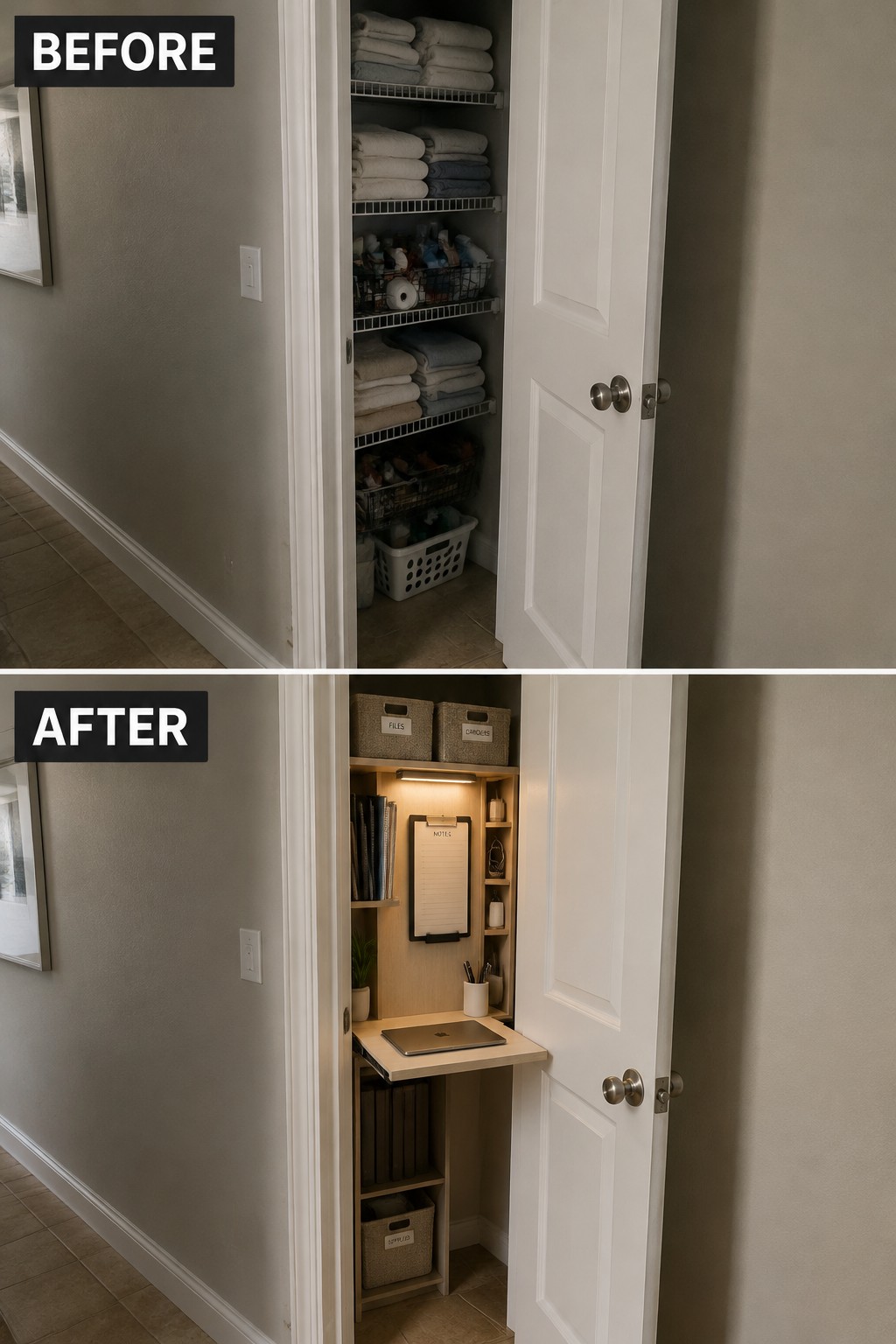
A closet can be more useful than a place to store supplies. Here, the wire shelves were replaced with a small desk and built-in storage, giving the unused space a clear purpose without taking over a room.
This idea works well in a spare closet or an unused nook. Measure carefully before adding a desk, and keep the storage above and below it simple so there is still room to sit and move comfortably.
Turn An Awkward Nook Into A Home Office

A sloped-ceiling nook can be hard to use for storage, but a fitted desk makes it a practical place to work. Here, the boxes give way to a desk and shelves, using the low wall without taking over the room.
Measure the height and depth before choosing furniture, and leave enough room to pull out a chair comfortably. This idea works well in an attic or spare-room nook where a full-size office would not fit.
Turn A Closet Into A Small Home Office

A cluttered closet can become a useful work spot when storage makes room for a simple desk. Here, a compact workspace replaces the bins, with a bookcase on the door adding storage without taking up floor space.
This idea works well in a spare or shallow closet where a full room office would not fit. Keep the desk narrow, leave enough room to pull out the chair, and use shelves for the things you reach for often.
Make A Closet Work As A Home Office

A crowded pantry can become a useful work spot when you clear it out and give the small space one clear purpose. Here, a desk and chair make use of the closet’s narrow footprint, while shelves above keep supplies off the work surface.
This idea suits a closet or deep nook that is not needed for storage. Keep the desk shallow enough to leave room for the chair, and use labeled baskets on the upper shelves for items you want nearby but do not need every day.
Turn A Bare Corner Into A Small Home Office

A corner that held a TV and media stand can become a useful work area instead. In this makeover, a compact desk replaces the bulky setup, and shelves use the wall above it for storage without taking up floor space.
This idea works well in a living room nook or an unused corner where a full office would be too much. Keep the desk shallow, leave enough room for the chair to move, and store only what you need within reach.
Turn A Closet Into A Creative Study Nook

A cramped closet can be more useful when you clear out bulky storage and give it one clear purpose. Here, shoe racks and boxes make way for a compact desk and supplies, turning an awkward spot into a place for homework or quiet projects.
Use the closet’s height for shelves and bins, then keep the work surface small enough that there’s still room to sit and move around. A wall organizer can hold supplies without crowding the desk.
Replace Closet Hanging Space With A Built-In Desk

Removing the hanging clothes makes room for a desk that fits the closet, turning storage space into a practical work area. The shelves and drawers keep office supplies close by without taking over another room.
This idea works well in a spare closet or a nook that is deep enough for a chair. Measure the desk and chair first, and leave enough room to sit and move comfortably.
Turn A Storage Nook Into A Small Home Office

An unused nook can become a useful home office with a desk and a little vertical storage. Here, open shelves and a pegboard replace a cluttered built-in bookcase, while keeping the workspace compact.
This idea works well in a hallway or other narrow spot where a full-size office would take up too much room. Keep the desk shallow enough to leave space to move, and use the wall above it for supplies rather than crowding the work surface.
Turn Closet Space Into A Practical Work Area

Removing the hanging storage and adding a desk turns an underused closet into a small office without taking up bedroom floor space. The sliding doors still keep the work area out of sight when it’s not in use.
This idea works well in a bedroom or spare room where there isn’t room for a separate desk. Measure carefully, leave enough space to sit comfortably, and use shelves above the desk for supplies so the work surface stays clear.
Make A Closet Useful For Work

Removing the coats and shoes gives this small closet a clear purpose as a compact office. A desk across the back makes good use of the narrow space, while the upper shelf keeps supplies within reach without taking over the work surface.
This idea suits a spare closet or deep nook that can fit a chair and a practical desk. Keep the desktop clear enough for daily work, and add task lighting so the space is comfortable to use even when the room around it is dim.
Add A Workstation To An Underused Closet
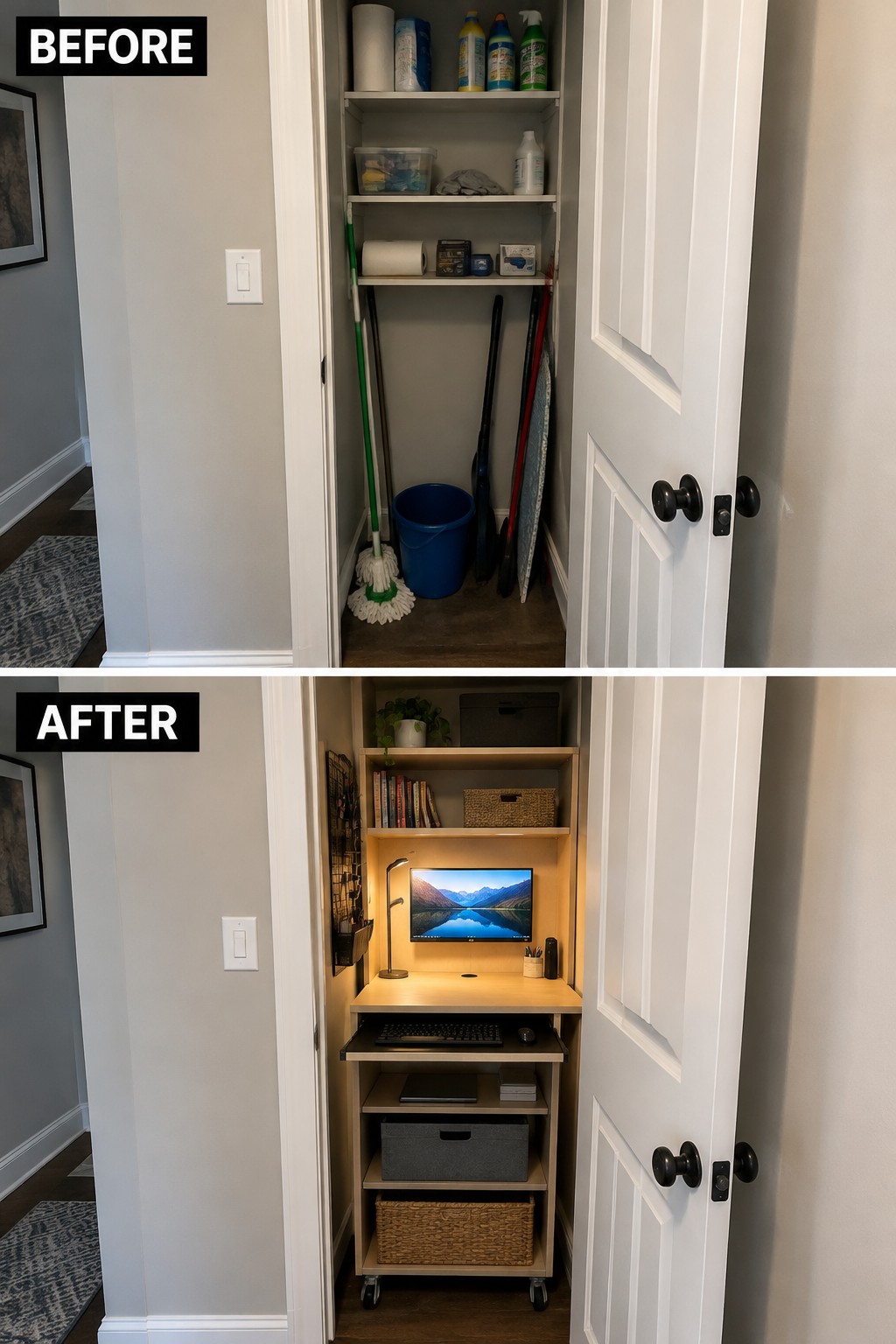
A small closet can serve as a home office when you replace general storage with a compact desk setup. Here, a rolling shelving unit holds the desk, monitor, and supplies, turning a space that once stored cleaning tools into a tucked-away place to work.
Use the idea in a closet or deep nook near an outlet, and keep the desk area clear enough for a chair and comfortable reach. Shelves above and below the work surface can hold office supplies, but leave some open space so the setup stays practical.
Add A Fold-Down Desk To An Unused Nook

An awkward nook can become a useful work area without giving up the floor space permanently. Here, a wall-mounted fold-down desk replaces an empty shelf, then closes away when it is not needed.
This idea suits a narrow closet or hallway recess where a full-size desk would feel crowded. Choose a desk that fits the nook and leaves enough room to open it and sit comfortably. A nearby pinboard can hold notes without taking up desk space.
Use The Upper Closet Space For Storage

An empty closet can become a useful work area when the desk fits below and storage moves overhead. Here, a raised shelf and small ladder make room for baskets above the workstation, keeping the floor clear for the chair.
This idea works well in a deep closet where a regular desk would leave little room to move. Measure the height carefully before adding an upper platform, and keep everyday supplies within easy reach so you are not climbing up for them.
Turn A Window Nook Into A Home Office

A built-in bench can make an awkward window nook useful instead of letting it become a catchall. Here, the old cushion and clutter give way to bench storage and a compact desk, so the space works for both sitting and getting a little work done.
This idea suits a small room where a full-size office would take up too much space. Use drawers or lift-up storage under the seat, and keep the desk shallow enough to leave a clear path through the nook.
Turn A Heating Nook Into A Small Home Office

A recessed spot that once held an exposed radiator can become a useful work area with a fitted desk and a ventilated cover below. The built-in arrangement makes good use of a narrow nook without taking up space in the rest of the room.
This idea suits older homes with alcoves or unused recesses. Keep the radiator accessible and allow heat to circulate through the cover, then choose a desk depth that leaves enough room to sit comfortably.
Make A Closet Work As A Small Office

A crowded closet can become useful work space when you replace storage with a simple desk setup. Here, a desk and shelves turn the narrow alcove into a compact office, with the shelving making use of the wall space above the work surface.
This idea works well in a spare bedroom or hallway closet where you need a spot for occasional work. Keep the desk shallow enough to leave room for a stool and your legs, and avoid filling every shelf so the small area stays practical.
Make An Attic Nook Work As A Home Office
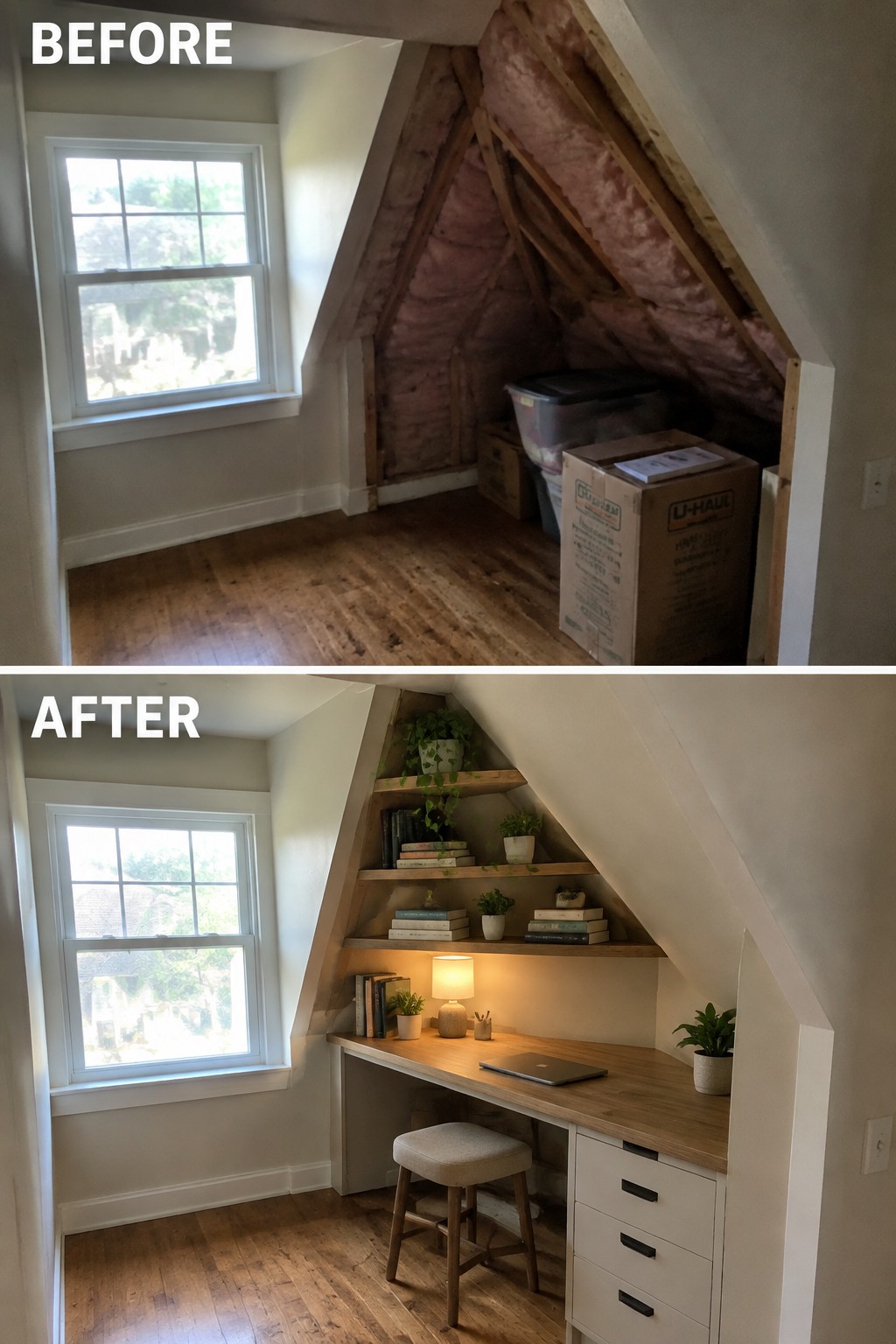
An unfinished attic nook can be useful workspace instead of a place to stash boxes. A built-in desk makes use of the floor area, while shelves fit neatly into the sloped section above it.
This idea works well in a small room where a freestanding desk would take up too much space. Measure the nook carefully and keep the work surface deep enough for your needs, but leave room to pull out a chair and move around.
Replace Closet Shelves With A Fold-Down Desk

A crowded closet can be more useful as a compact work area than as a place for overflow storage. Here, a pegboard organizes supplies on the back wall, while a fold-down desk provides a work surface that can be tucked away when it is not needed.
This setup suits a small closet where a permanent desk would make the room feel cramped. Keep the items you use most within reach, and leave enough clear floor space to sit and move comfortably.
Replace Pantry Shelves With A Closet Office

A deep pantry can become a useful work spot when its shelves are replaced with a desk and a slim storage section. In this makeover, the open food storage gives way to a compact workstation, making use of space that might otherwise be hard to organize.
This idea works well in a closet or nook near the main living area, especially when a separate office is not practical. Keep the desk shallow enough to leave room for a chair, and use the wall or narrow side shelves for supplies so the work surface stays clear.
Turn Closet Shelves Into A Small Home Office

A deep closet can do more than store clothes. Replacing dark shelves with lighter, open storage and fitting a desk along one side turns an underused closet into a practical work area without taking over a bedroom or spare room.
Keep the desk shallow enough to leave a clear path, and use matching boxes on the upper shelves for supplies you do not need every day. This idea works especially well in a walk-in closet, but avoid packing the shelves so tightly that the office feels cramped.
Hide A Home Office Behind Sliding Doors
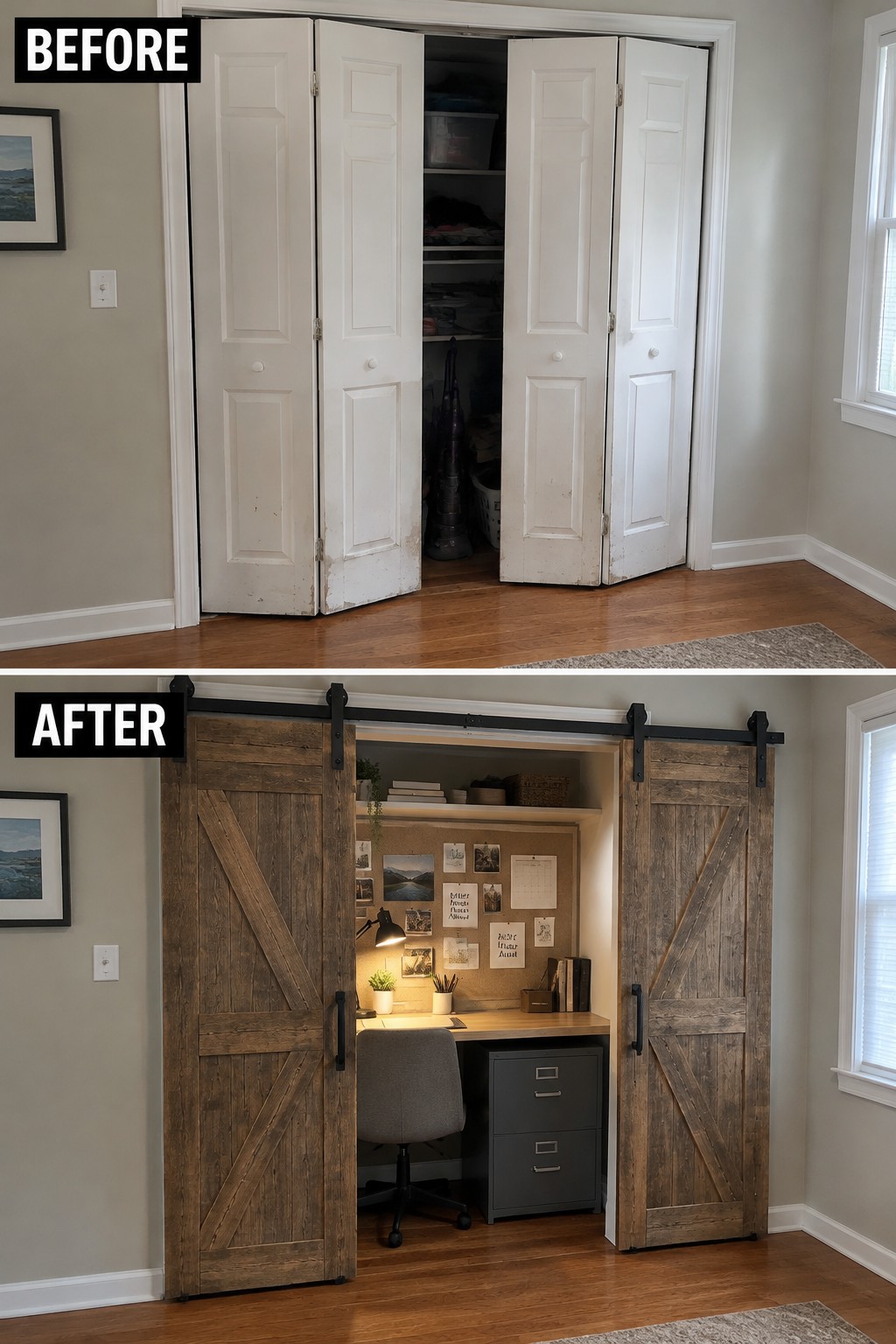
Replacing closet doors with barn-style sliding doors turns an underused closet into a compact office that can be closed off when work is done. The desk and chair fit within the existing opening, so the room gains a useful workspace without taking up extra floor area.
This idea suits a spare bedroom or a quiet corner where a full desk would feel crowded. Measure carefully before choosing the doors, and keep the desk and chair small enough to leave room to move comfortably.
Frequently Asked Questions
Q: How deep does a closet desk need to be for everyday work?
A: Around 20 to 24 inches usually gives you room for a laptop or monitor without taking over the closet. If space is tight, measure your keyboard and chair setup before choosing a shallower desk.
Q: How can I keep a closet office from feeling cramped?
A: Use wall space for shelves and task lighting, and keep the desktop clear except for what you use daily. A chair that tucks fully under the desk makes a noticeable difference when the office is closed.
Q: What should I do about cords in a small nook office?
A: Mount a power strip under the desk and bundle cords together so they don’t trail across the floor. Leave enough slack to move your chair or adjust your equipment without pulling anything loose.
Q: Can I turn a closet into an office if it has no outlet?
A: You can use a nearby outlet with a cord cover, as long as the cord doesn’t cross a walking path or get pinched by the door. For a permanent setup, ask an electrician about adding an outlet before you build around the space.
