

A basement playroom can feel like an afterthought when it is dim, unfinished, or hard to arrange around toys and everyday family life.
I find that a clear layout often matters more than adding lots of decor, especially when kids need room to play and adults need a place to keep things organized.
Thoughtful lighting, durable surfaces, and well-planned storage can make the space feel more comfortable and useful without hiding its practical purpose.
It is satisfying to see an awkward basement become a room the family actually wants to spend time in.
Some of these ideas may be worth saving or adapting to make your own playroom work better.
Turn An Empty Basement Into A Playroom

A basement that is mostly open storage can become a useful playroom when you give it a clear purpose. Here, open shelving and closed storage replace the cluttered table, while a small table creates a spot for crafts and games.
Use sturdy, low storage so children can reach toys and put them away themselves. A play mat can mark out the main play area, but leave enough open floor for moving around.
Turn A Basement Into A Dedicated Playroom
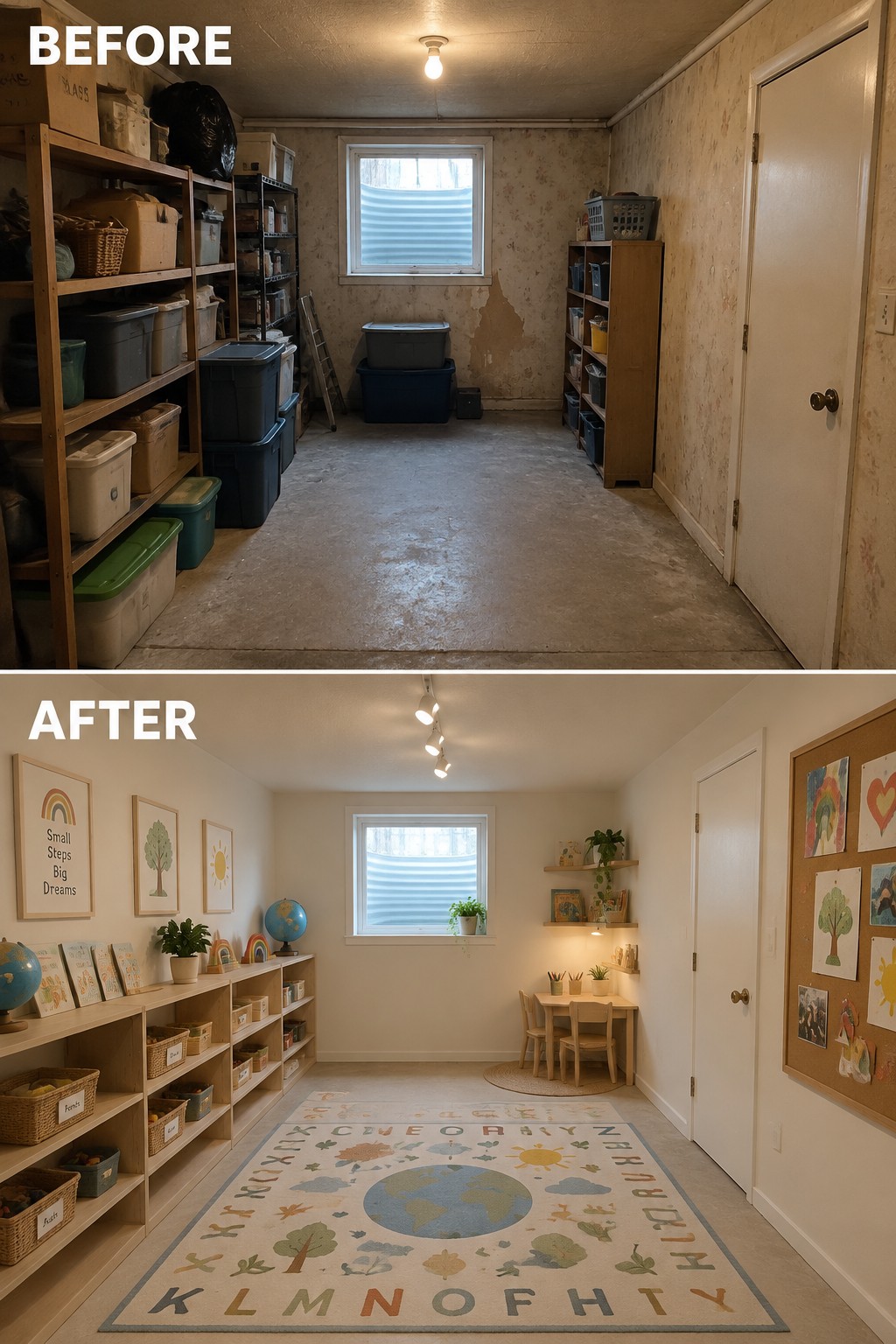
An unfinished basement can become a useful playroom when storage is organized and the floor gets a clear play area. Here, open shelving replaces the crowded storage setup, while a large alphabet rug gives children a comfortable place to play.
Keep everyday toys within easy reach in low baskets or shelves, and leave enough open floor for play. A washable rug can help define the space, but check that it suits the basement floor and won’t create a slipping hazard.
Turn An Empty Basement Into A Playroom

An empty basement can become a useful playroom when the floor is set up for comfortable, everyday play. Here, colorful foam tiles replace the old carpet and give the room a clear purpose without needing a major renovation.
For a similar room, start with a clean, durable floor that is easy to wipe down, then leave open space for kids to move around. A low bench or a small amount of storage can help, but avoid filling every corner.
Turn A Laundry Room Into A Dedicated Play Space
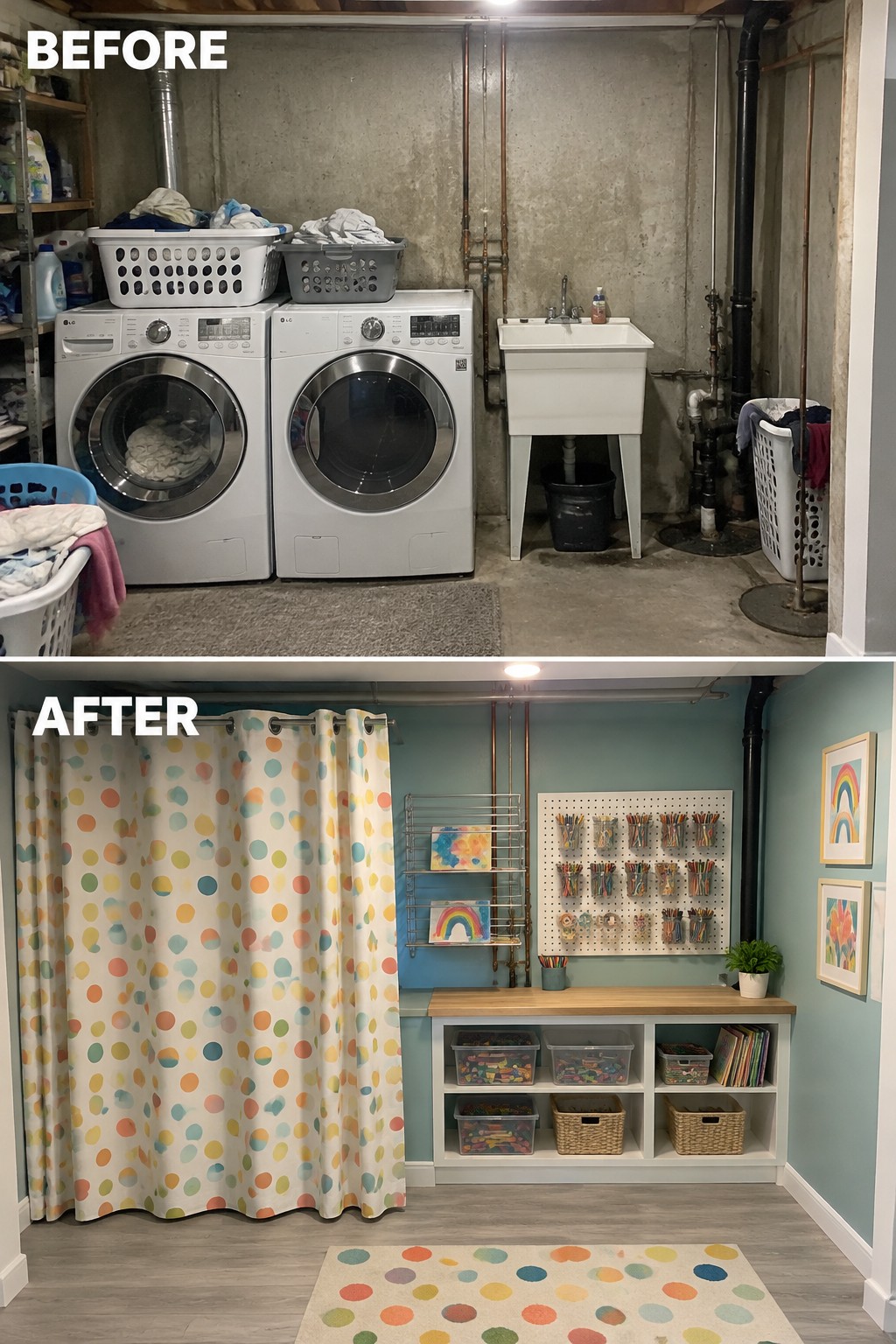
A laundry room can become useful playroom space when the appliances are tucked behind a curtain and the rest of the room is set up for activities. Here, the open concrete utility area gives way to a colorful work and storage zone, making room for kids’ supplies without adding a separate room.
This idea works well in a basement where laundry equipment already takes up part of the floor plan. Use a sturdy curtain to hide the machines, then keep art supplies in open cubbies so children can reach them and put them away easily. Leave a clear area for play, and make sure the curtain does not block access to the appliances.
Make A Bare Basement More Comfortable For Play

An unfinished basement can become a useful playroom once the concrete floor and block walls feel less stark. Here, carpet squares and a soft seating area make the room more comfortable for children to play in.
For a similar space, start with a floor covering that suits the basement and leaves enough room to move around. Add a few sturdy seats and keep storage easy to reach, so toys can be put away without filling every corner.
Use A Rug To Define The Play Area

The worn basement floor made the room feel unfinished. A large geometric rug gives the playroom a clear center and makes the open floor more comfortable for kids to use.
Choose a rug that leaves some floor visible around the edges, so the room still feels easy to move through. A low-pile, washable option is a practical choice for a busy play space.
Make A Narrow Basement Hallway Work As A Playroom

The bare basement hallway becomes a play space by giving it one clear purpose: a long train table turns an awkward stretch of floor into a place for play. The walls and flooring are finished too, making the area feel like part of the home rather than a leftover passage.
This idea suits a basement with a wide enough hall to keep a clear walking path beside the play area. Choose a table that fits without blocking doorways, and use the wall for small toys or supplies. Keep the setup simple so kids have room to play and people can still pass through.
Build A Basement Playroom Around Built-In Features

The basement’s utility area has been turned into a playroom by fitting storage and a reading nook around the existing space. The built-in bookcases and window seat make use of a corner that might otherwise go unused.
In a basement with limited floor space, built-ins can keep books and toys organized while leaving room to play. A loft bed or elevated nook can work too, but keep it clear of heating equipment and leave safe access to any systems that need maintenance.
Give An Unused Basement A Clear Playroom Layout
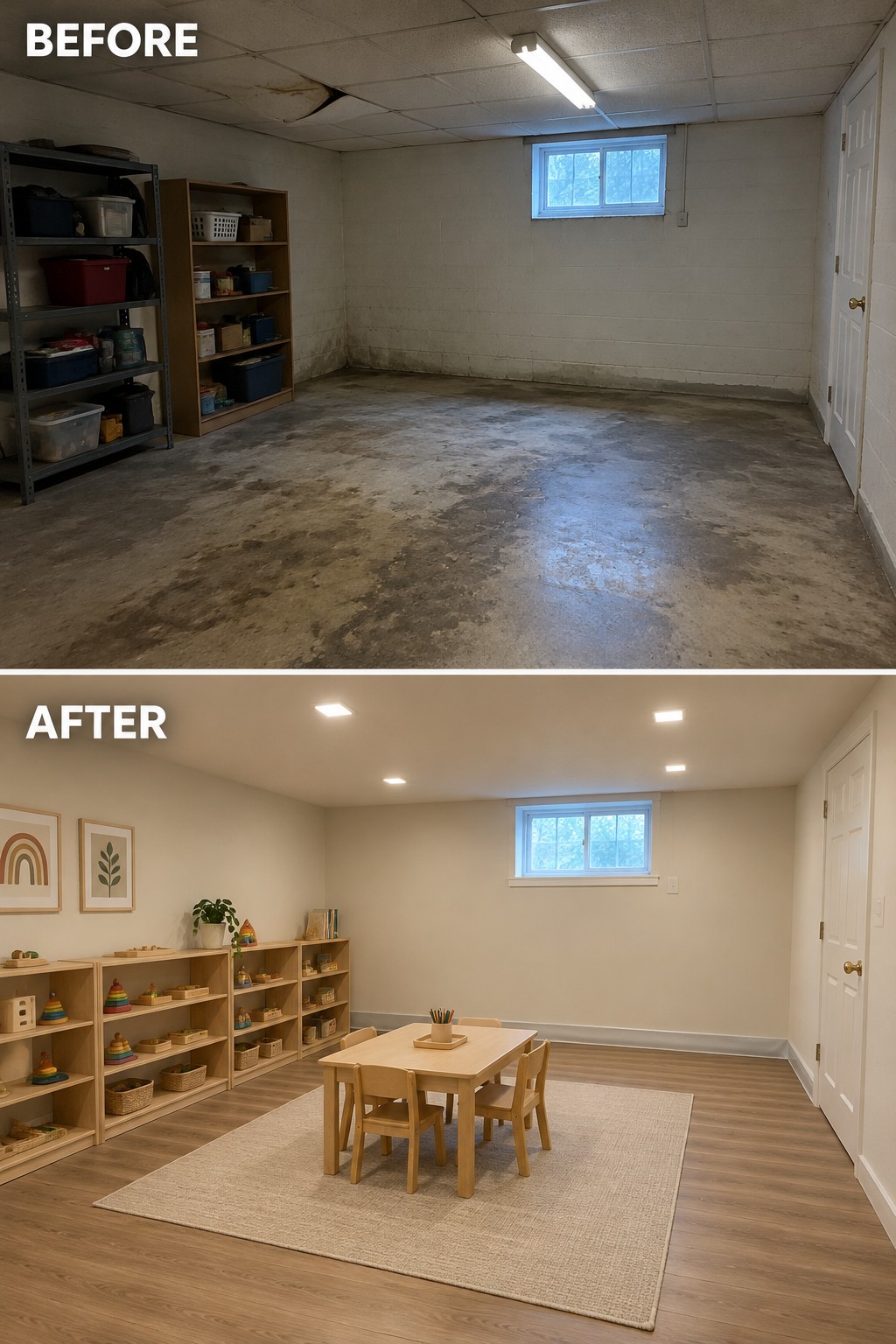
A basement can work well as a playroom when it has a simple layout instead of being left as open storage space. Here, wood flooring and low shelves turn a bare room into a place for play, while a small table gives children a spot for crafts or games.
Keep the shelves low so toys are easy to reach and put away, then use a rug to mark the main play area. This approach suits an unfinished or underused basement, but leave enough clear floor space for kids to move around.
Turn Under-Stair Storage Into A Playroom

An unfinished space under the stairs can become a small, dedicated playroom instead of a place for bins and supplies. The after version uses a child-sized doorway and a simple interior finish to make the tucked-away area feel like its own room.
This idea works well when a basement has an awkward nook that would be difficult to use for full-size furniture. Keep the entrance easy to open, and plan storage inside so toys can be put away without crowding the floor.
Turn A Basement Office Into An Art Space

The dark, panelled room worked as an office, but it felt closed in and offered little room for play. Painting the walls a light color and clearing the floor made space for a simple children’s art area instead.
In a basement, keep the setup easy to use and easy to clean. A wall-mounted paper roll and a small worktable give kids a place to draw without filling the whole room with furniture.
Add Low Storage To Keep Toys Organized

A low built-in shelf turns an empty basement into a playroom with a clear place for toys and room to play. In the finished space, the storage stays along the back wall, leaving the floor open for a road-pattern rug.
Use low shelves or cabinets where children can reach their toys and put them away themselves. Keep the storage to one wall if you can, so the play area does not feel crowded and there is still space to move around.
Add A Reading Nook To A Basement Playroom

An unused basement corner can become a useful playroom spot with a small sofa and low shelves for books. Here, a built-in bench also provides storage, so toys and books have a place without taking over the floor.
Keep the seating compact and choose shelves children can reach on their own. This idea works well in a spare room or an awkward basement corner, as long as there is still clear floor space for play.
Turn Basement Storage Into A Play Kitchen

A cluttered basement storage nook can become a useful play area when it is cleared out and given one clear purpose. Here, the metal shelving is replaced with a child-sized kitchen, making the narrow space feel like a place for play rather than a spot for overflow storage.
In a small basement, keep the play setup compact and leave enough room to move around it. A simple toy kitchen and a washable rug can define the area without filling every inch, while closed cabinets help keep toys out of the way when playtime is over.
Add A Climbing Wall To A Basement Playroom

A basement can become a more useful playroom when one wall is set up for active play. Here, a climbing wall gives children a clear place to move, while floor mats provide a cushioned landing area.
For a similar setup, choose a wall with enough open floor space in front and use mats suited to climbing. Keep the rest of the room simple so kids have room to play, and make sure the wall and holds are installed securely.

An empty basement corner can become a useful play area when the room is organized around one sturdy table. Here, the large table gives kids a clear spot for building and other hands-on activities, while storage underneath keeps supplies close by.
Choose a table that leaves enough room to walk around it, and use open bins below for toys that kids can put away themselves. Wall-mounted containers can hold smaller pieces without taking up floor space, which helps a basement playroom stay manageable.
Create A Dedicated Art Area In The Basement
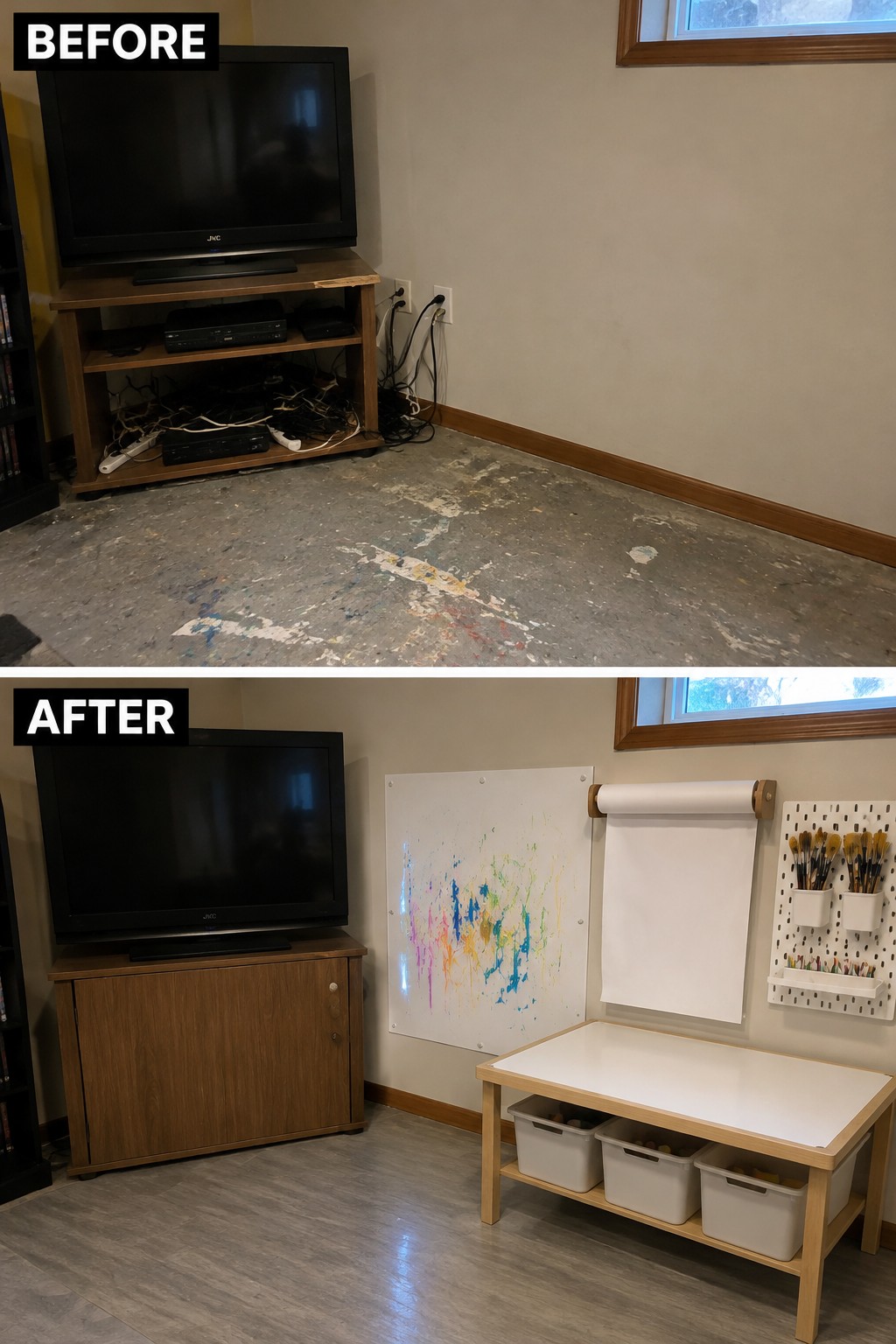
An unfinished basement corner can become a practical place for kids to draw and paint. Replacing the exposed floor with an easy-to-clean surface and setting up a child-sized table gives art supplies a clear home and keeps creative projects from taking over the rest of the room.
This idea works well in a basement playroom where there is room for a table and storage nearby. Choose wipeable surfaces, keep supplies within reach, and leave enough space around the table for kids to move comfortably.
Add Sensory Features To A Basement Playroom

The empty basement becomes a play space with a small tent nook and wall-mounted activity boards. Giving the room a few clear places for hands-on play and quiet time makes it more useful than leaving the floor open and undefined.
This idea works well in a basement where children need room to move but also benefit from a calm corner. Start with one activity area and a comfortable spot to sit, then leave enough open floor for play. Too many stations can make the room feel crowded.
Make A Basement Playroom Feel Organized

The dark, wood-paneled room becomes a more usable play space with light finishes and low storage along the wall. Keeping toys and books in accessible cubbies helps children find what they need without letting the whole room feel cluttered.
For a similar setup, choose storage that fits the room and is easy for kids to reach, then leave open floor space for play. This works especially well in a basement where one clear storage wall can help keep the rest of the room flexible.
Turn A Basement Nook Into A Homework And Art Station

An unused built-in can become a useful playroom work area instead of a place to stash cords and odds and ends. Here, a desk, chair, and pinboard turn the alcove into a spot for drawing and homework, while storage keeps supplies close at hand.
This idea works well in a basement where floor space is limited. Use the existing shelves if possible, and leave enough room under the desk for a child to sit comfortably. A small rug can help mark out the work zone without crowding the rest of the playroom.
Create A Basement Drop Zone For Kids

Turn an unfinished basement corner into a useful drop zone by giving backpacks and shoes a place of their own. In the updated space, a wall of hooks and a bench with shoe cubbies make it easier to keep everyday clutter off the floor.
This setup works well near a basement door or at the edge of a playroom. Keep hooks low enough for children to reach, and leave enough bench space to sit while putting on shoes.
Set Up A Basement For Active Play

The carpeted basement has been changed into a small indoor play court, giving an otherwise empty room a clear purpose. A blue sport surface and a low net make it easy for kids to play without needing a full-size gym.
This idea suits a basement with enough open floor space for safe movement. Use a durable surface that is comfortable underfoot, and keep the play area clear of storage and furniture.
Set Up Low Storage For An Easy-To-Use Playroom

The basement goes from a catchall storage room to a play space by clearing the floor and adding low shelves with colored bins. Kids can reach their toys and put them away themselves, while the shelves give the room a clear purpose.
This works well in a basement that needs to serve children without a complicated renovation. Use sturdy shelves that fit the wall, label bins if helpful, and leave enough open floor space for play. A small table can provide a spot for drawing or games.
Frequently Asked Questions
Q: How do I keep a basement playroom from feeling dark?
A: Use light wall colors and layer a few kinds of lighting, such as ceiling lights and a lamp near a reading spot. If the room has small windows, keep furniture low around them so daylight can reach farther in.
Q: What flooring works well for a basement playroom?
A: Choose flooring that feels comfortable underfoot and is easy to clean, like vinyl plank with a washable rug or soft play mats in the busiest area. Before adding any flooring, make sure the basement is dry and address signs of moisture.
Q: How can I make the playroom useful as my kids get older?
A: Keep large pieces flexible, with open shelves, a sturdy table, and storage bins that can shift from toys to books or craft supplies. A simple layout is easier to update than a room built around one age or activity.
Q: Where should I put toy storage?
A: Put everyday toys on low shelves so kids can reach them and help put them away. Save higher shelves for occasional-use items, and leave a clear path through the room for play.
