
Basements can feel like an afterthought, especially when low light, awkward layouts, or unfinished walls make them hard to use.
I find that a guest bedroom works best when it feels comfortable and considered without losing the practical storage and clear pathways a basement often needs.
Small choices, such as warmer lighting, a well-placed bed, and a little privacy, can make the room feel less like overflow space and more like a proper place to stay.
The difference is satisfying when a dim, empty corner becomes useful for family or friends.
I’d save the ideas that suit your basement’s layout and adapt them to make overnight visits feel easier for everyone.
Turn An Unused Basement Into A Guest Bedroom

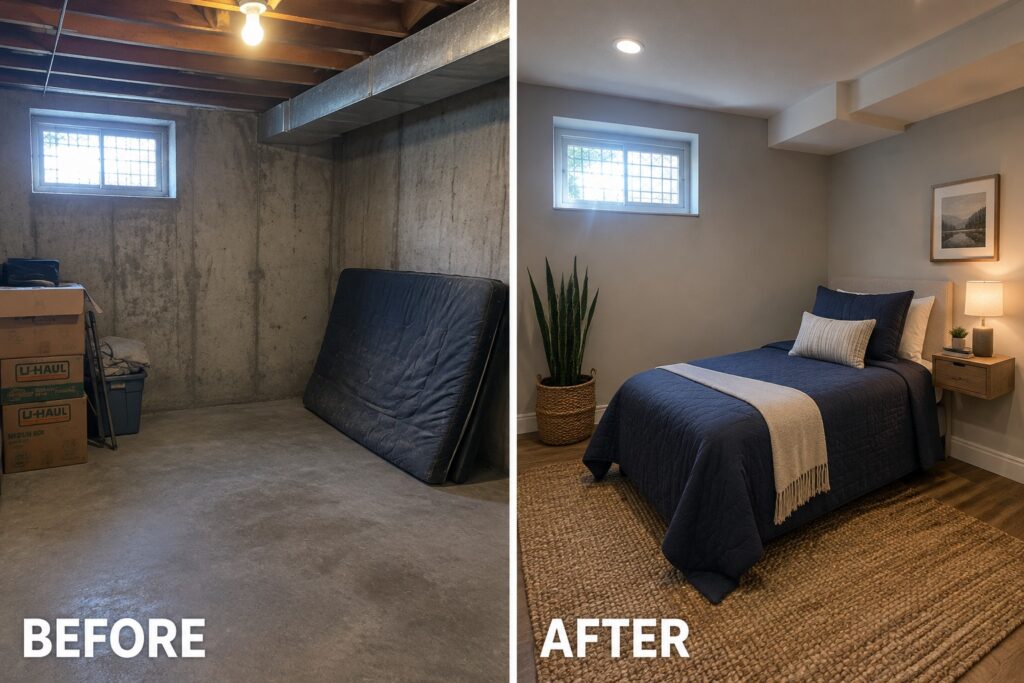
A basement can become a comfortable guest room once it feels like a bedroom rather than a storage area. Here, the bare concrete room becomes more usable with a bed and a few simple furnishings, while the neutral walls help the lower-level space feel settled.
Start by clearing enough floor space for guests to move around the bed, then choose furniture that fits without crowding the room. A rug can help define the sleeping area, and a bedside lamp gives guests a convenient light without relying on the ceiling fixture alone.
Turn A Storage Room Into A Guest Bedroom

A narrow basement room can work as a guest bedroom once storage gives way to a clear, comfortable sleeping area. Here, the shelving is gone and a bed now fits along the room’s length, while cabinets above the headboard keep some storage without taking up floor space.
In a small room, measure carefully before choosing a bed, and keep a clear path beside it. A built-in or wall-mounted storage unit can help make use of the height, but avoid filling every inch; guests need room to move and set down a few belongings.
Turn A Damp Basement Into A Comfortable Guest Room

A basement can become a useful guest room once the damp, unfinished feel is addressed and the space is treated like a bedroom. Here, clean wall finishes and a proper bed make the room feel ready for overnight guests instead of storage.
Start by checking for moisture and fixing any leaks before covering walls or bringing in furnishings. Then keep the setup simple, with a comfortable bed and a few finishing touches that suit the room’s size.
Turn A Bare Basement Room Into A Guest Bedroom

An empty basement room can feel cold and unfinished, but a simple bedroom setup gives it a clear purpose. Here, a window and curtains help make the room feel more like a place to stay, while the bed makes the space useful for guests.
In a basement, keep the layout simple and leave clear paths around the bed. A small bedside lamp is practical when there is limited natural light, and a rug can help define the sleeping area without crowding the room.
Turn A Bare Basement Room Into A Comfortable Bedroom
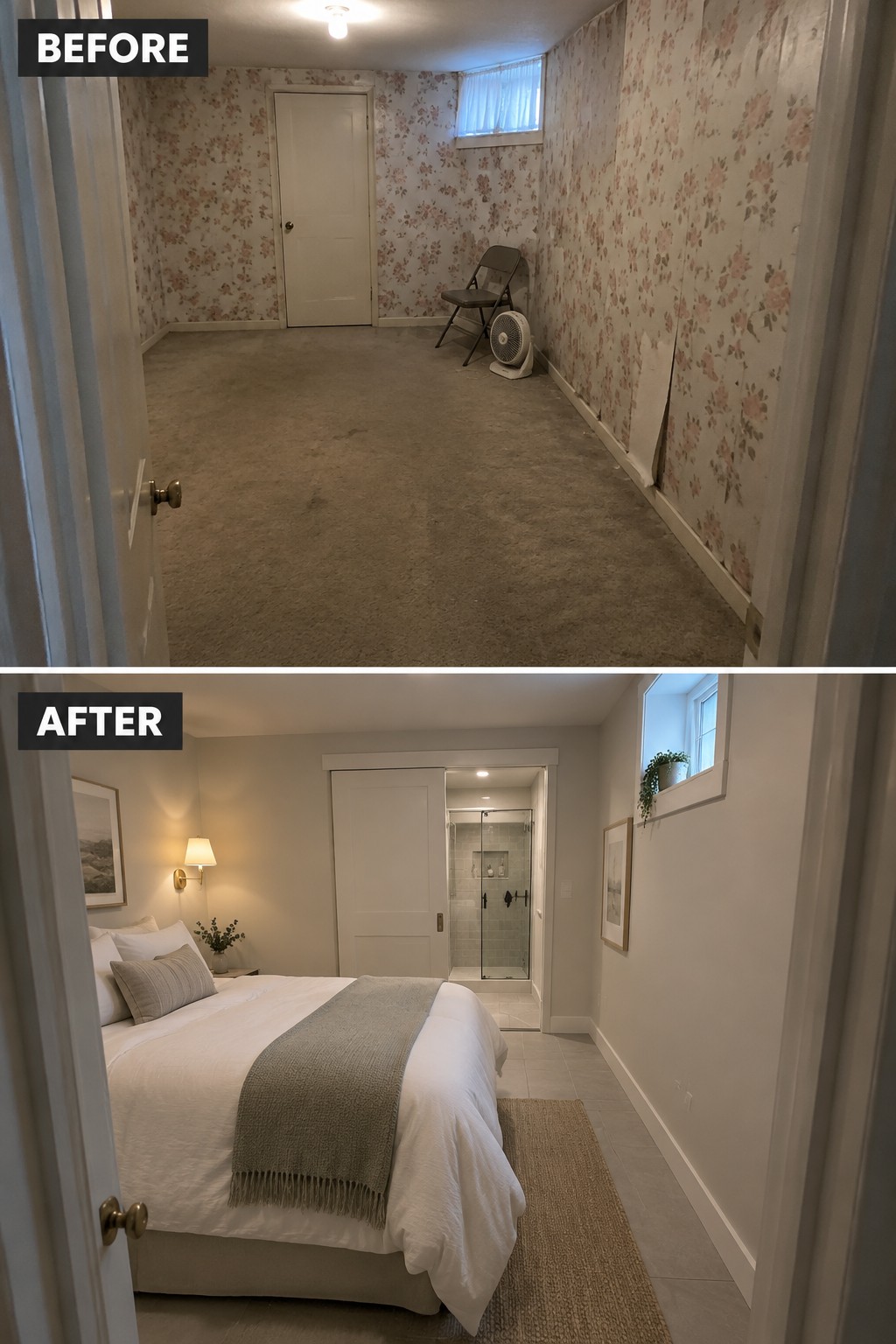
Replacing the dated wallpaper and empty floor with a simple bedroom setup makes this basement feel like a room guests can actually settle into. The bed gives the space a clear purpose, while a rug helps define the sleeping area.
In a narrow basement, keep the bed and other furniture to a practical size so there’s still a clear path through the room. If the layout allows, an adjoining bathroom can make the guest space more convenient without taking up room for extra furniture.
Use Wall Color To Make A Basement Bedroom Feel Finished

A plain basement room can feel more like a guest bedroom with a clear color choice and a few well-sized furnishings. Here, a warm rust-colored wall turns the bed area into a focal point, while the rug helps define the room.
In a basement, keep the layout open enough for guests to move around easily, and choose a wall color that works with the room’s limited natural light. A simple palette can make the space feel considered without needing to fill every corner.
Add A Work Area To A Basement Guest Bedroom

A basement guest room can do more than provide a place to sleep. Here, a built-in desk turns an awkward alcove into a useful work area, while the sofa-bed keeps the room ready for overnight visitors.
This setup suits a narrow basement where a separate office would take up too much space. Fit the desk to the alcove and keep the sleeping area simple, so guests have room to settle in and the work zone stays practical.
Turn A Basement Corner Into A Compact Guest Suite

A basement can serve guests without giving up its whole floor plan. Here, a cluttered storage corner becomes a small kitchenette with cabinets, open shelves, and a dining spot, making the room more useful for longer visits.
Keep the setup simple: a short run of cabinets and a compact table can provide the basics without crowding the room. Check that the basement has suitable plumbing and ventilation before adding appliances, and leave a clear path through the space.
Furnish An Empty Room As A Guest Bedroom

The room works better as a guest bedroom once it has a clear purpose. In the after image, a bed and a simple rug make the formerly empty space feel ready for overnight visitors, without needing a complicated layout.
In a basement bedroom, keep the furniture to a comfortable scale and leave a clear path to the door and bathroom. A rug can help define the sleeping area, especially when the room also needs to serve another purpose.
Update The Closet Doors To Give A Bedroom A Finished Look

Replacing plain closet doors with dark paneled doors gives this bedroom a clear focal point and makes the storage wall feel like part of the room’s design. The simple white bedding keeps the darker finish from making the space feel too heavy.
This idea works well in a guest bedroom where a large closet takes up much of one wall. If you keep the existing closet layout, a new door style and coordinated hardware can refresh the room without a major renovation.
Use A Barn Door To Make A Basement Bedroom More Usable

Replacing the regular hinged door with a sliding barn door makes the basement bedroom easier to access without a door swinging into the room or hallway. The finished bedroom also feels more intentional than the bare storage space it replaced.
This can work well where a narrow doorway or nearby furniture makes a swinging door awkward. Check that there’s enough clear wall space for the door to slide, and choose a track that’s securely mounted.
Turn The Space Under The Stairs Into A Cozy Guest Nook

A cluttered under-stair storage area can become a useful place for an overnight guest with a built-in daybed and drawers below. The daybed makes use of the sloped space, while the drawers keep bedding and other items close at hand.
This idea works best where the nook has enough depth for a comfortable mattress and clear access. Measure carefully, and keep the furnishings simple so the small space stays practical.
Make A Basement Bedroom Feel Finished With A Rug

An empty basement can feel cold and unfinished, but a few well-chosen pieces can make it work as a guest bedroom. Here, wood flooring and a large woven rug replace the bare concrete, giving the bed a clear place in the room.
Choose a rug large enough to extend beyond the sides and foot of the bed, so guests have a softer surface underfoot. It’s a useful way to make a basement bedroom feel more settled without filling every corner with furniture.
Make A Small Basement Room Feel Like A Real Bedroom

An empty basement can feel cold and unfinished, but a daybed with a rug beneath it gives the room a clear purpose. In this room, the added trim and soft lighting help it feel more like a bedroom than a spare basement.
For a similar space, keep the bed sized to leave room to walk around, and use a rug to define the sleeping area. A daybed is especially handy when guests are occasional visitors and the room needs to serve another purpose between stays.
Add A Bed To Make A Basement Room Guest-Ready

A basement room can feel unfinished when it has only a dresser and no clear purpose. Replacing the empty floor space with a properly sized bed makes the room useful for overnight guests, while simple white bedding keeps the small space from feeling crowded.
In a narrow room, measure carefully before choosing a bed and leave enough space to walk around it. A small bedside table is often all the extra furniture you need.
Make A Basement Guest Room Feel Finished
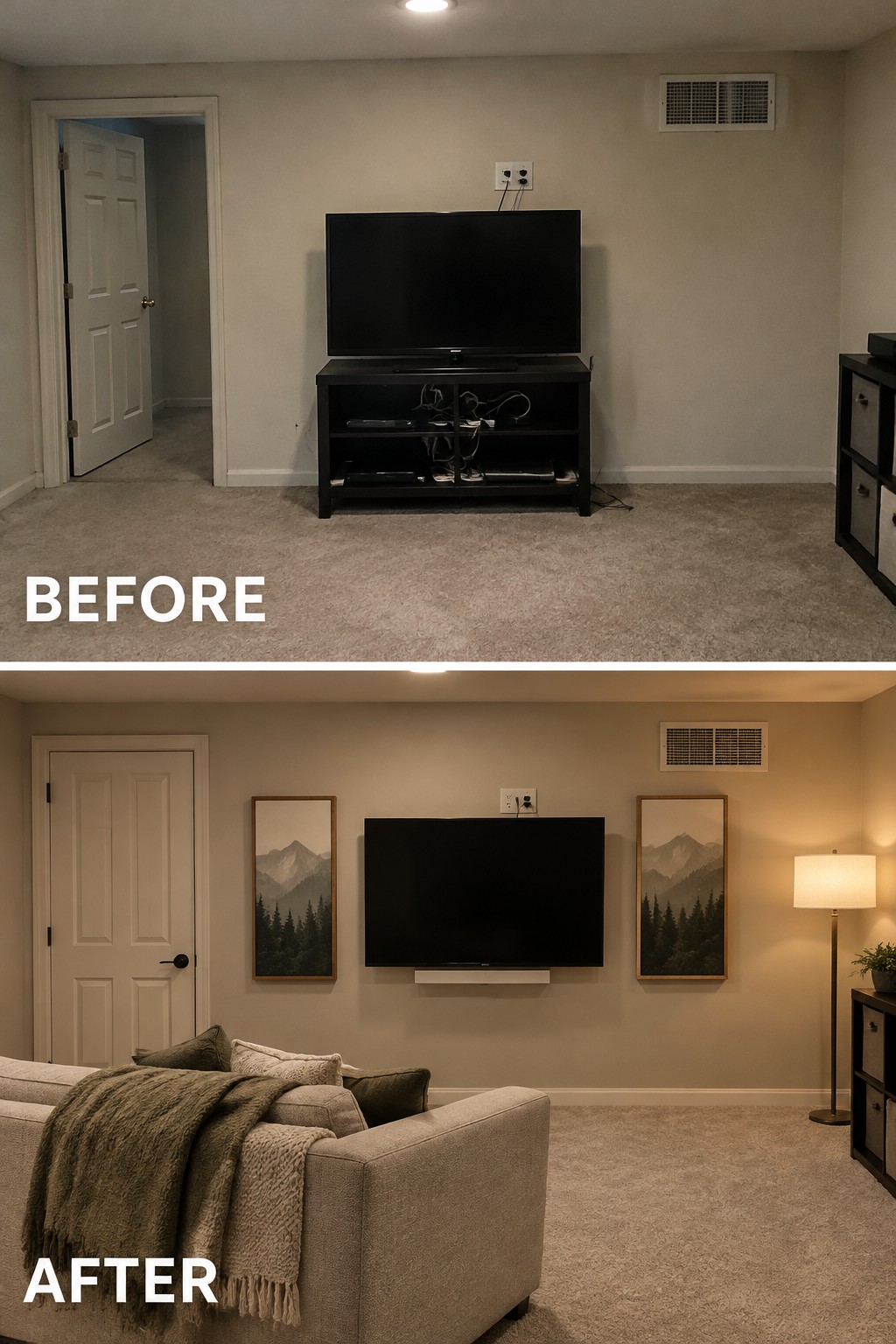
An empty basement can feel like a pass-through space, especially when the TV and its cords are the only focus. Mounting the screen and adding a sofa gives the room a clear purpose, while framed art helps the wall feel more complete.
For a guest room, keep the seating and walking paths open, then add a comfortable bed and a bedside light without crowding the room. This approach works well when you want the basement to serve as a lounge for everyday use and a welcoming place for overnight visitors.
Make A Basement Bedroom Feel Brighter And More Usable

A basement bedroom can feel cramped when the floor is cluttered and the lighting is poor. Here, clearing the walkway and adding recessed lights makes the room feel more open, while the simple bed setup gives guests a comfortable place to sleep.
Keep the layout practical in a small basement: leave a clear path from the door to the bed, and use a bedside table for the essentials. Good overhead lighting is especially helpful in rooms with small windows.
Use Wallpaper To Give A Basement Bedroom Character

A plain bedroom can feel unfinished even when it has a bed and the basics. Here, patterned wallpaper behind the bed makes that wall the room’s clear focal point, while the dark curtains and upholstered headboard help the space feel more settled.
This idea works well in a basement guest room where you want one strong feature without filling the room with extra furniture. Keep the pattern to the bed wall, then use simple bedding so the room still feels restful.
Give An Unfinished Basement A Clear Bedroom Layout

Turning the basement into a proper bedroom starts with giving the room a clear purpose. The before photo shows a sofa in a low, unfinished space; the after uses a full bed as the main feature, making the room feel ready for overnight guests.
In a basement with limited headroom, keep the bed and other furniture scaled to the space, and leave a clear route around them. A rug beside the bed can help define the sleeping area without making the room feel crowded.
Frequently Asked Questions
Q: How can I make a basement guest bedroom feel less like a basement?
A: Start with warm lighting and light-colored bedding, then add a rug and curtains to soften the room. If the windows are small, keep the area around them uncluttered so you make the most of the natural light.
Q: What should I do about dampness before setting up a guest room?
A: Check for leaks, musty smells, and condensation before bringing in a mattress or upholstered furniture. Fix any moisture problems first, since a dehumidifier can help with damp air but won’t solve a leak.
Q: Does a basement guest bedroom need a closet?
A: Not necessarily. A small wardrobe, clothing rack, or a few hooks can give guests a place to put their things without taking up much room.
Q: How can I make the room comfortable for guests who are staying more than one night?
A: Give them a bedside light, a clear spot for a suitcase, and an outlet they can reach from the bed. A spare blanket nearby is a thoughtful touch, especially in a basement that tends to stay cool.
