
Basements often start as dim, awkward spaces where a desk and a few boxes compete for room.
I find that a clear layout, good lighting, and practical storage can make a home office feel much more comfortable without hiding its basement character.
Small choices, like a rug to soften the floor or shelves that use an empty wall, can make the room feel finished and easier to work in.
The change can be satisfying even when it comes from a few well-chosen updates rather than a major renovation.
Some of these ideas may be worth saving or adapting to make your own basement office work better.
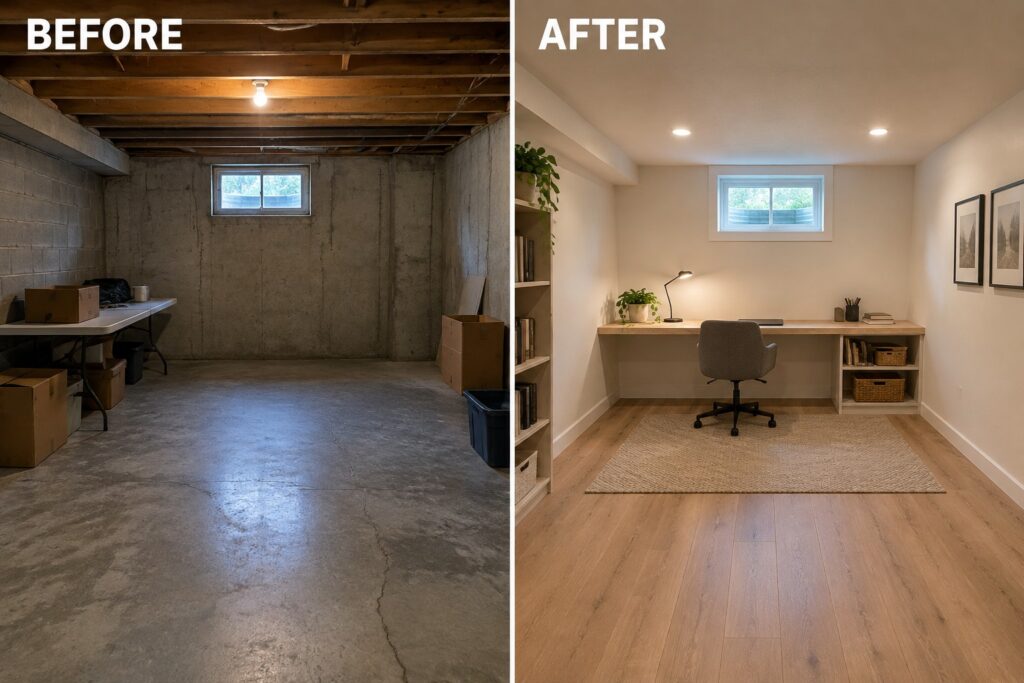
Turn An Unfinished Basement Into A Home Office

A basement can become a useful home office without changing its basic layout. Here, the bare concrete room is finished with light walls, a wood floor, and a long desk, giving the space a clear purpose while keeping the setup simple.
This idea works well in a spare basement room where a full-size office would feel crowded. Start with a desk that fits the wall and leave enough open floor space to move around comfortably. A few shelves can handle everyday supplies without turning the room back into storage.
Turn A Narrow Basement Alcove Into A Home Office
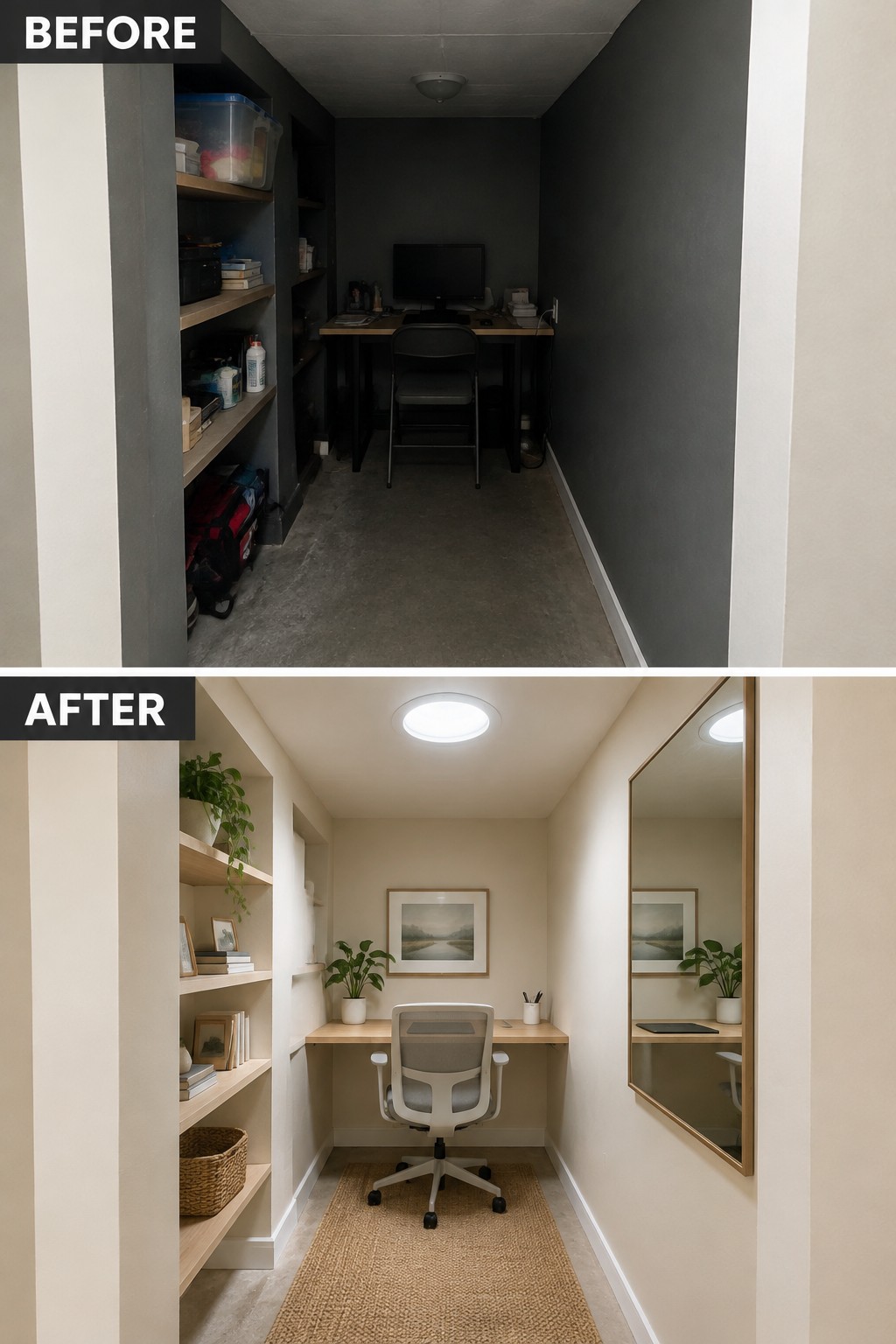
A narrow basement nook can work well as an office when the setup stays simple and the storage has a clear purpose. Here, open shelves replace cluttered storage, while a compact desk makes use of the far end of the alcove.
Keep the desk shallow enough to leave room to move, and use shelves for only the things you need nearby. A light wall color and a focused ceiling light can also help a small basement workspace feel more practical.
Turn An Unused Basement Into A Home Office

An unfinished basement can become a practical office when you give it a clear purpose. Here, the open storage area becomes a work zone with a desk and chair, while the shelving keeps supplies close without taking over the room.
Start by clearing a comfortable area for a desk, then add only the storage you need. In a basement with exposed joists or ductwork, keep the layout simple so there is still room to move around.
Add Built-In Storage To A Basement Office

Replacing open utility shelving with built-in cabinets and a long desk turns basement storage into a more practical work area. The continuous work surface gives office supplies a place to stay, while closed cabinets help keep clutter out of sight.
This idea works well in basements that need to serve more than one purpose. Plan the desk around the room’s usable wall space, and include enough cabinets for the items you want nearby without filling every shelf.
Use A Rug To Define The Office Area

The bare concrete floor made this basement office feel unfinished. Replacing it with wood-look flooring and a large rug gives the work area a clear boundary and makes the room more comfortable without changing its basic layout.
In a basement, a rug can help separate a desk from the rest of an open room. Choose one large enough to sit under the desk and chair, and leave a clear path around it so the office stays easy to move through.
Add A Built-In Desk To An Empty Basement Corner

An unused basement corner can become a practical home office with a desk fitted to the walls. Here, a floating L-shaped work surface replaces a bare, damaged corner, while shelves above provide space for books and supplies.
This idea works especially well in a small room where a freestanding desk might take up too much floor space. Keep the shelves and desktop sized to the nook, and leave enough room for a chair to slide back comfortably.
Turn A Basement Storage Nook Into A Home Office

A cluttered space beneath the stairs can become a useful office once storage gives way to a simple desk setup. Here, a fitted desk and shelves make the awkward alcove feel like a planned part of the basement rather than a place to leave laundry.
This idea works well in a small basement where a full office would take up too much room. Measure the nook carefully, keep the desk depth modest, and use shelves for supplies so the work surface stays clear.
Hide Basement Laundry Behind A Sliding Barn Door

A sliding door can help a basement office feel like a proper work area, even when laundry shares the room. Here, the stacked machines disappear behind a large barn door, leaving the desk as the main focus instead of the utility corner.
This idea works well in basements where there isn’t room to build a separate laundry room. Make sure the door has enough space to slide and that the machines remain easy to reach for cleaning and maintenance.
Create Separate Work And Meeting Areas

The long basement feels more useful once it has a work area and a small spot for conversation. In the finished room, a rug marks the desk zone, while two chairs and a table make the other end comfortable for a quick meeting or a break.
This layout suits a narrow basement office where one desk would leave a lot of floor unused. Keep the desk along a wall and choose compact seating so there is still a clear path through the room.
Make A Basement Office More Comfortable For Recording

An unfinished basement can work as an office, but hard surfaces may make calls and recordings echo. Here, fabric wall panels and carpet help absorb sound, while the desk area stays practical and easy to use.
If you record audio or take frequent calls, add acoustic panels near the desk and on the wall behind you. A carpet or large rug can help too. Keep the panels focused on the work area so the room still feels open.
Brighten A Basement Office With Simple Finishes

A dark, cluttered office can feel much more usable when the walls and furnishings are kept light and simple. Here, pale walls and a light wood desk replace the dark color scheme, making the small basement room feel more open.
For a similar effect, start with a light wall color and a desk that fits the room without crowding it. Add curtains or a rug only where they help the space feel complete, and keep storage tidy so the office stays practical.
Cover Exposed Brick To Finish A Basement Office

An exposed brick wall can make a basement office feel more like a storage room than a place to work. Covering it with simple horizontal paneling gives the room a cleaner, more finished backdrop, while a long desk makes better use of the wall.
This approach works well when you want to keep a basement workspace simple and practical. Choose light-colored paneling to brighten the room, and leave enough clear desk space for everyday work rather than filling every shelf.
Make A Basement Office Feel More Like A Living Room

The office feels more comfortable because the work area shares space with a properly furnished sitting area. A rug, softer seating, and a floor lamp help make the room feel less like a spare office and more like a place where you can work or take a break.
This idea works well in a basement office that also needs to serve as a lounge or waiting area. Keep the desk practical, then use a rug to mark out the seating zone without making the room feel crowded.
Turn A Basement Storage Closet Into A Compact Office

The space under the stairs was used for cleaning supplies and boxes, but clearing it out made room for a small work area. A desk fitted into the nook gives this awkward spot a clear purpose without taking up space in another room.
This idea works well in a basement or hallway where a full office would be hard to fit. Measure the sloped ceiling and desk depth first, then keep the setup simple so there’s enough room to sit and move comfortably.
Turn A Basement Office Into A Comfortable Work And Rest Area
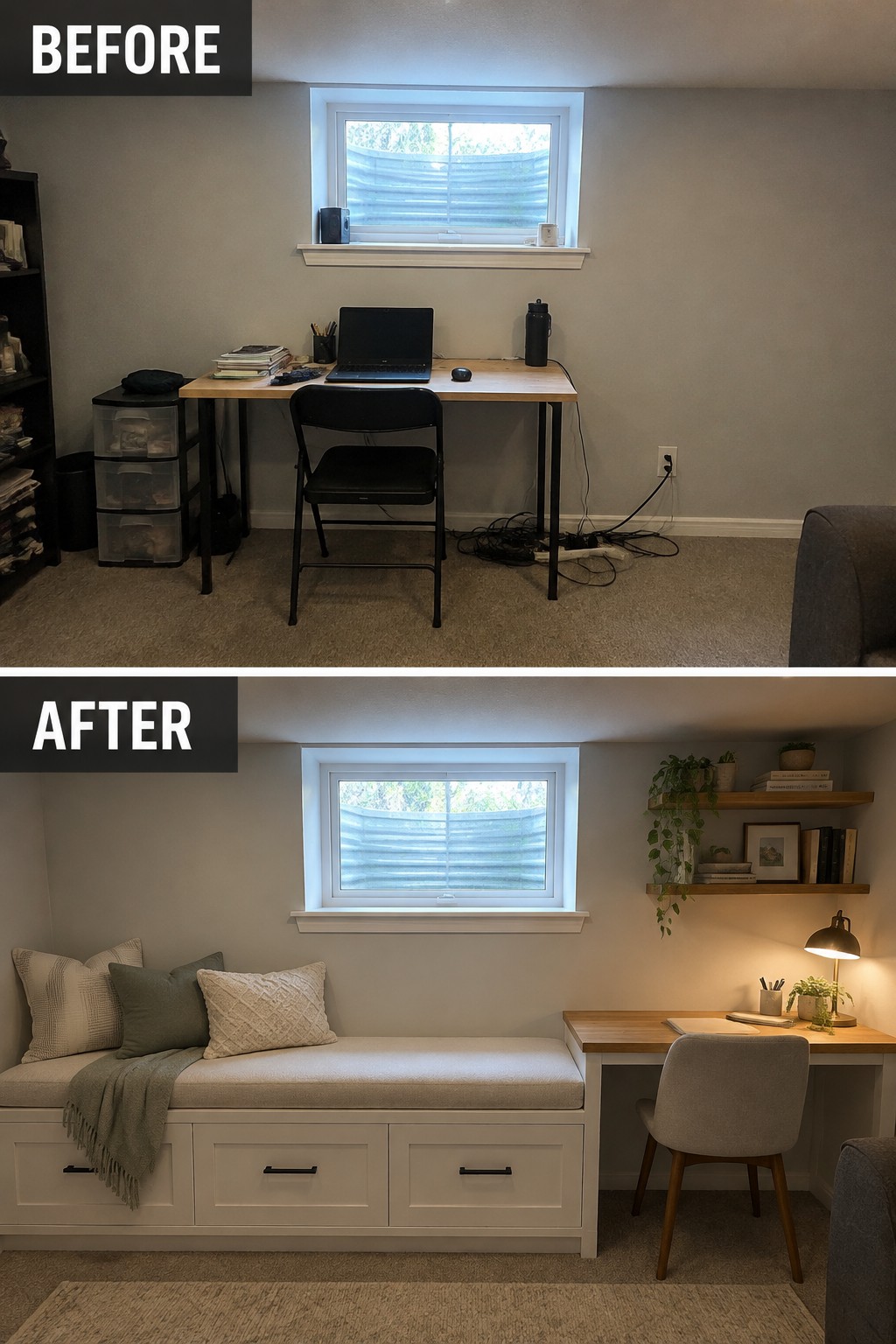
A basement office can feel less like a spare desk squeezed into a room when you give it a second purpose. Here, the desk sits beside a built-in daybed, turning the unused space into a spot for both work and a quiet break.
If you have enough room, a daybed with drawers can add seating and useful storage without crowding the office. Keep the desk compact and leave a clear path between the two areas so the room stays practical for everyday work.
Create A Separate Office In An Open Basement

An open basement can feel unfinished when a desk sits out in the middle of the room. A glass partition turns the work area into a defined office while keeping it visually connected to the rest of the basement.
This idea works well when you want a quieter, more focused workspace without making the basement feel closed off. Use a simple glass wall and a door that fits the available floor space, and keep the desk setup compact enough to leave a clear path through the room.
Replace Damp Basement Carpet With Durable Flooring

The damaged lower wall and worn carpet made this basement feel unfinished. Replacing the carpet with wood-look flooring and repairing the wall gives the room a clean foundation for a home office.
For a similar space, address any moisture problem before installing new flooring, or the damage may return. Choose a durable, easy-to-clean surface, then arrange the desk and storage to leave a clear path through the room.
Replace Drop Ceiling Panels With A Finished Ceiling

The old drop ceiling made this basement office feel more like a utility room than a place to work. A smooth ceiling with recessed lights and a pendant gives the room a more finished look and makes the desk area feel like a proper office.
If you’re updating a basement workspace, consider whether the ceiling is the main thing making it feel unfinished. Recessed lights can provide even general lighting, while a pendant over the desk adds a clear focal point. Check ceiling height and access to pipes or wiring before removing any panels.
Make A Basement Office Feel More Organized

A basement office can feel much more finished when the furniture has a clear purpose and the floor space stays open. Here, a simple desk setup replaces two crowded workstations, while a rug marks out the work area.
For a similar room, keep only the desk and storage you need, and choose a rug large enough to sit under the chair without catching its wheels. This approach suits a shared or multipurpose basement, where a simpler layout leaves room to move around.
Add Bookcase Dividers To An Open Basement Office

Turning the basement’s concrete support columns into bookcase dividers gives an open room a clearer office layout without closing it off. The built-in shelves create useful storage while separating work areas, and the rug helps mark the office zone.
This idea works well in a basement with a wide, open floor plan and structural posts that cannot be moved. Keep the shelves shallow enough to leave comfortable walking paths, and use them for books and a few baskets rather than filling every shelf.
Furnish A Bare Basement Room As A Home Office
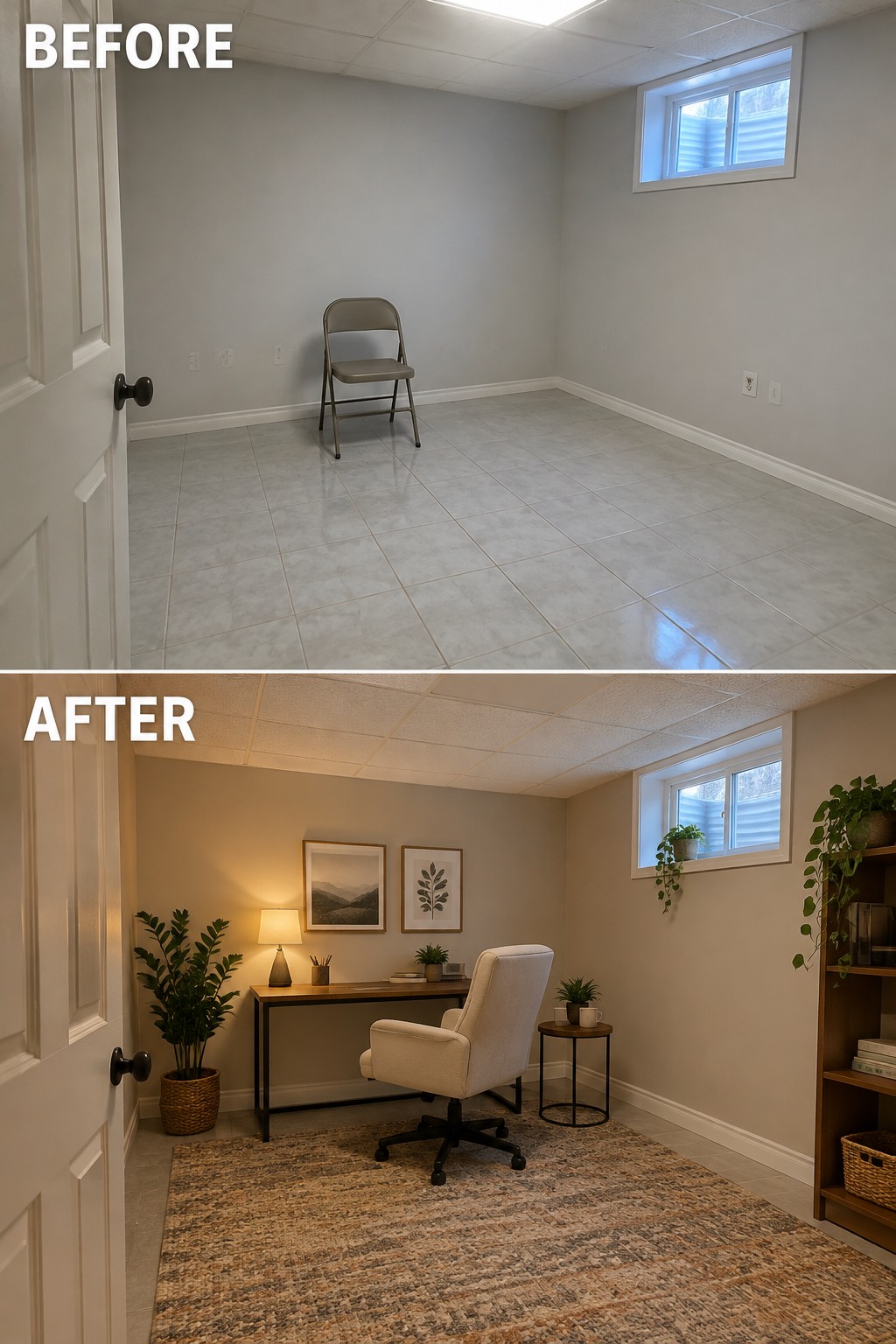
An empty basement can feel cold and hard to use, but a few well-chosen pieces can give it a clear purpose. Here, a desk and office chair make a work area, while a rug helps define it against the tile floor.
This idea works well in a spare basement room where you want a practical office without a major renovation. Choose a rug large enough for the desk and chair, and keep the furniture scaled to the room so there’s still space to move around.
Add Built-In Storage To Keep A Basement Office Organized
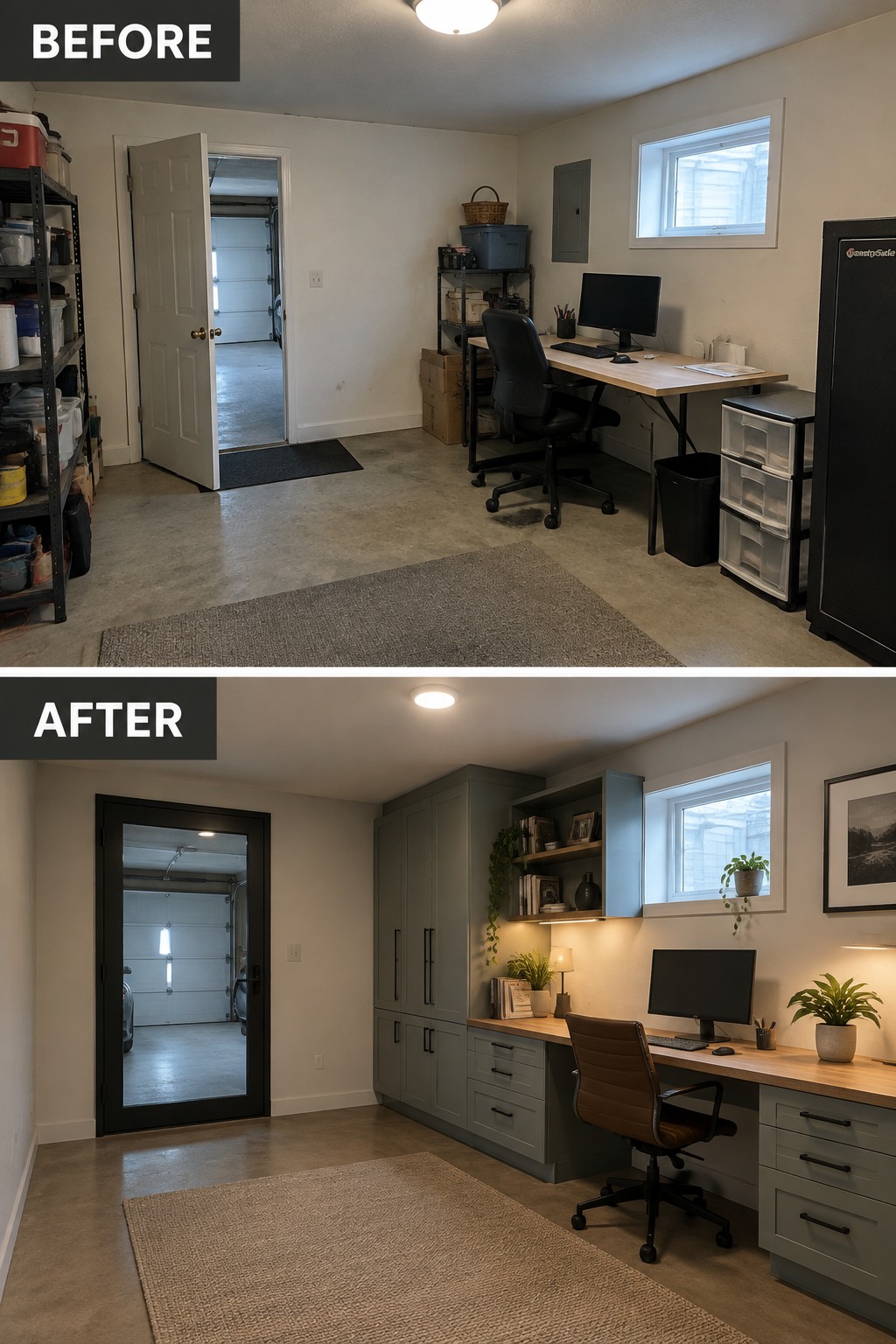
A basement office can feel cluttered when work supplies and household storage compete for the same space. Here, fitted cabinets and a built-in desk replace open shelving and a freestanding table, giving the work area a more settled, organized layout.
This idea works well in a basement where one wall can hold both a desk and closed storage. Measure carefully before planning cabinets, and leave enough clear space around the chair so the office stays easy to use.
Frequently Asked Questions
Q: How do I make a basement office feel less dark?
A: Start with layered lighting instead of relying on one overhead fixture. A desk lamp, soft ambient lights, and pale wall colors can make the room feel brighter without making it harsh.
Q: What flooring works well in a basement office?
A: Choose flooring that can handle occasional dampness, such as luxury vinyl or tile, and add a rug for warmth under your desk. Before installing anything, make sure the basement is dry and any moisture issues are fixed.
Q: How can I reduce noise in a basement office?
A: A thick rug, curtains, and upholstered furniture can soften echoes and muffle everyday sounds. If noise travels through the ceiling, adding insulation during a renovation can help more.
Q: Do I need a separate entrance for a basement home office?
A: Not usually. A separate entrance is handy if clients visit, but for a work-from-home setup, a clear path to the office and a door for privacy may be all you need.
