

A basement gym can feel cramped or unfinished when equipment takes over the floor and there’s no clear place to move.
I find that a simple layout, good lighting, and a few compact pieces can make the room feel more like a practical part of the home.
Space-saving choices help keep workouts comfortable without giving up every corner to bulky gear.
The best setups make it easy to switch between exercise and everyday basement use, which matters when the room has to do more than one job.
I’d borrow ideas that fit the space you actually have, then test the layout before committing to larger equipment.
Turn an Unused Basement Into a Home Gym

The basement goes from a catchall storage area to a workout room by giving the floor space a clear purpose and choosing equipment that can be stored compactly. A fold-up treadmill and wall-mounted storage keep the setup practical without filling the room with bulky machines.
This idea works well in basements where every bit of floor space matters. Start by clearing out what you no longer use, then choose a few pieces of equipment that fit your routine and leave room to move.
Turn A Cluttered Basement Into A Compact Home Gym
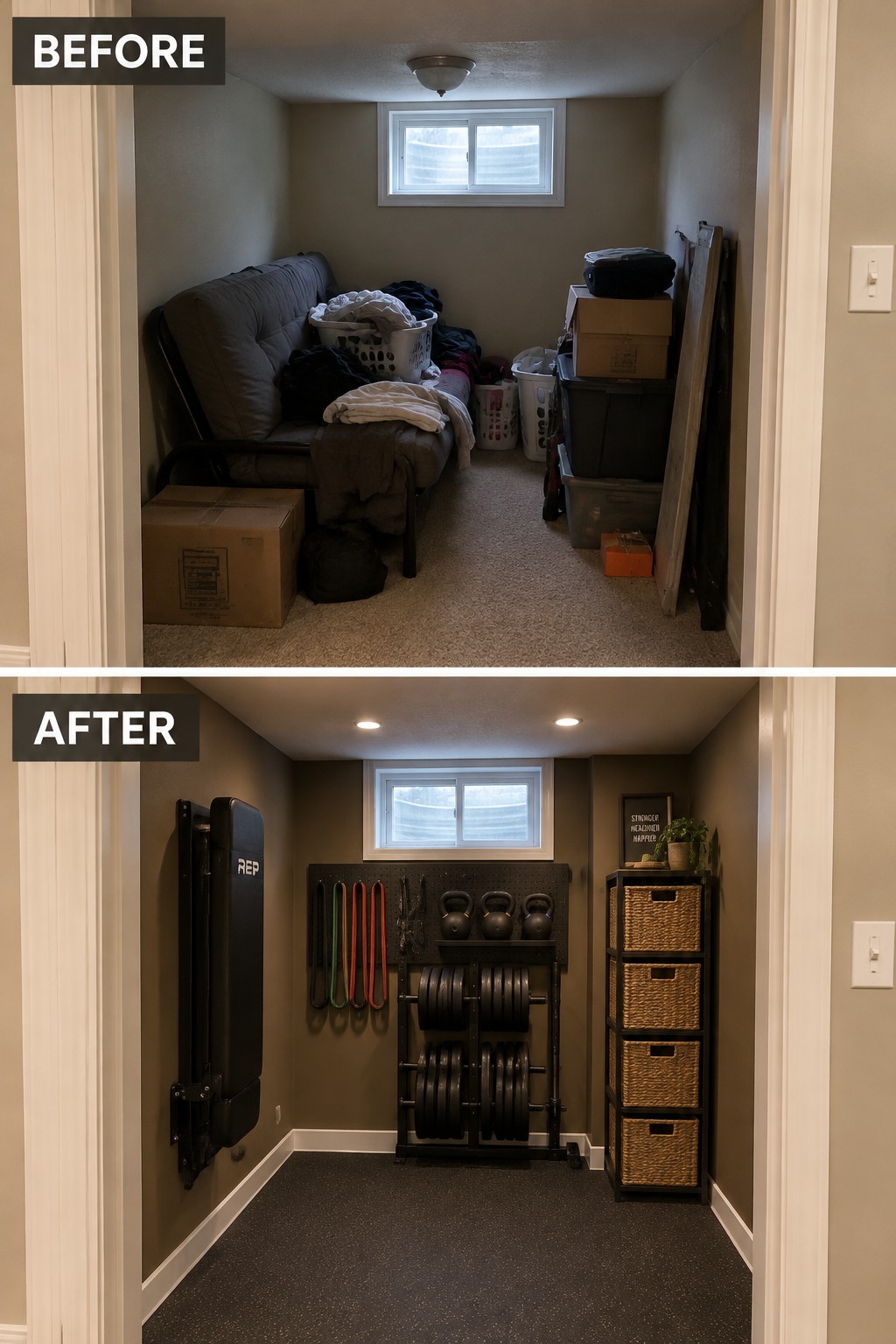
A basement full of stored items can feel cramped and hard to use. Clearing the floor and moving equipment onto the walls and into vertical storage gives the room a clear purpose without taking up much workout space.
For a small basement gym, choose equipment that folds away or stores neatly, and keep an open area for movement. Wall-mounted gear and a compact rack can work well, as long as there is still enough room to exercise safely.
Turn An Unfinished Basement Into A Practical Workout Room

A basement can become a useful workout space without taking up room with bulky equipment. Here, the unfinished storage area becomes a clean exercise room, with built-in cabinets keeping mats and other gear out of the way.
For a similar setup, clear the floor first and plan storage along one wall so there’s still open space to move. Wall-mounted or compact equipment can also help, especially in a low-ceiling basement where every bit of floor space matters.
Turn A Cluttered Hallway Into Useful Storage

A narrow hallway can work harder when storage is organized instead of piled along the floor. Here, open shelving and labeled bins replace the stacked boxes, leaving a clear path through the space.
Use sturdy shelves and bins that fit the hallway without blocking doors or making it hard to pass. This approach also suits a basement workout area, where neatly stored gear keeps the floor clear for exercise.
Give Basement Workout Equipment A Proper Place

The room works better as a home gym once the toys and loose storage are cleared out and the equipment has a defined spot. Here, a foldable Pilates machine sits along one wall, leaving the middle open for exercise.
This setup suits a small basement where floor space matters. Choose equipment that can fold or store upright, then keep only a few essentials in a compact shelf so the room stays easy to move around in.
Make Room For A Home Gym In The Basement
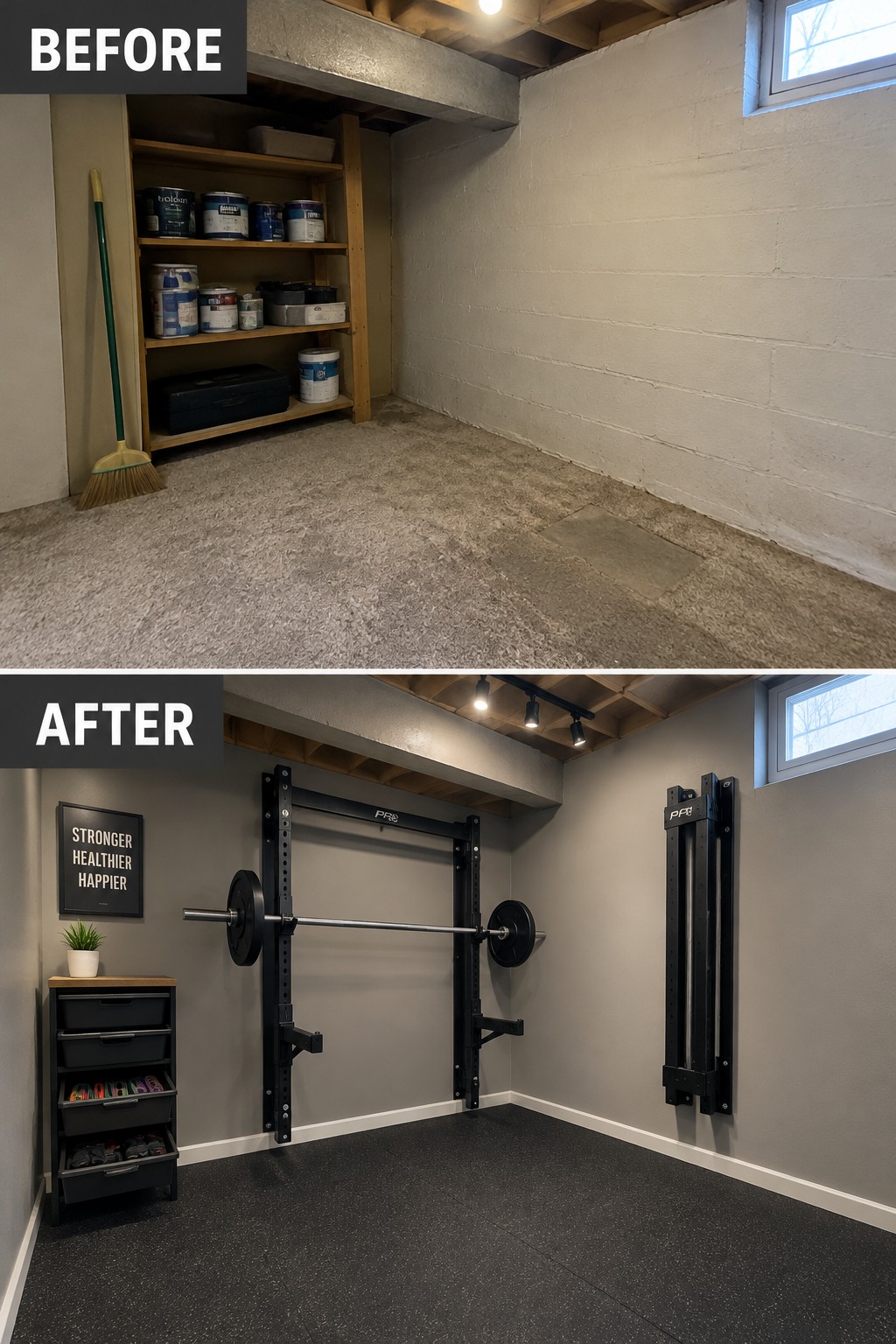
An unused basement corner can become a practical workout area without taking over the whole room. Here, wall-mounted equipment and a compact rack replace open storage shelves, while rubber flooring makes the space more suitable for lifting.
Keep the layout focused on the equipment you use most, and leave enough clear floor space to move safely. Wall-mounted or fold-away gear can help in a small basement, especially when the room still needs to serve other purposes.
Keep Basement Workout Space Easy to Reach

A narrow basement workout area works better when laundry and storage stay organized instead of spilling into the walking path. In this makeover, a curtain separates the utility area from the rest of the room, while wall-mounted gear keeps equipment off the floor.
Use a similar setup in a basement where the washer, dryer, or furnace shares space with exercise equipment. Store only the gear you use often within reach, and leave a clear route through the room so the workout area stays practical.
Make A Basement Workout Room Feel Purposeful

The basement changes from a play area into a home gym with rubber flooring and a compact storage bench for workout gear. Giving the room one clear purpose makes it easier to keep the open floor available for exercise.
In a basement with limited space, keep equipment along the walls and choose storage that can hold smaller items without taking over the room. Leave enough clear space to move safely, especially around larger pieces of equipment.
Organize Basement Storage To Make Room For Exercise
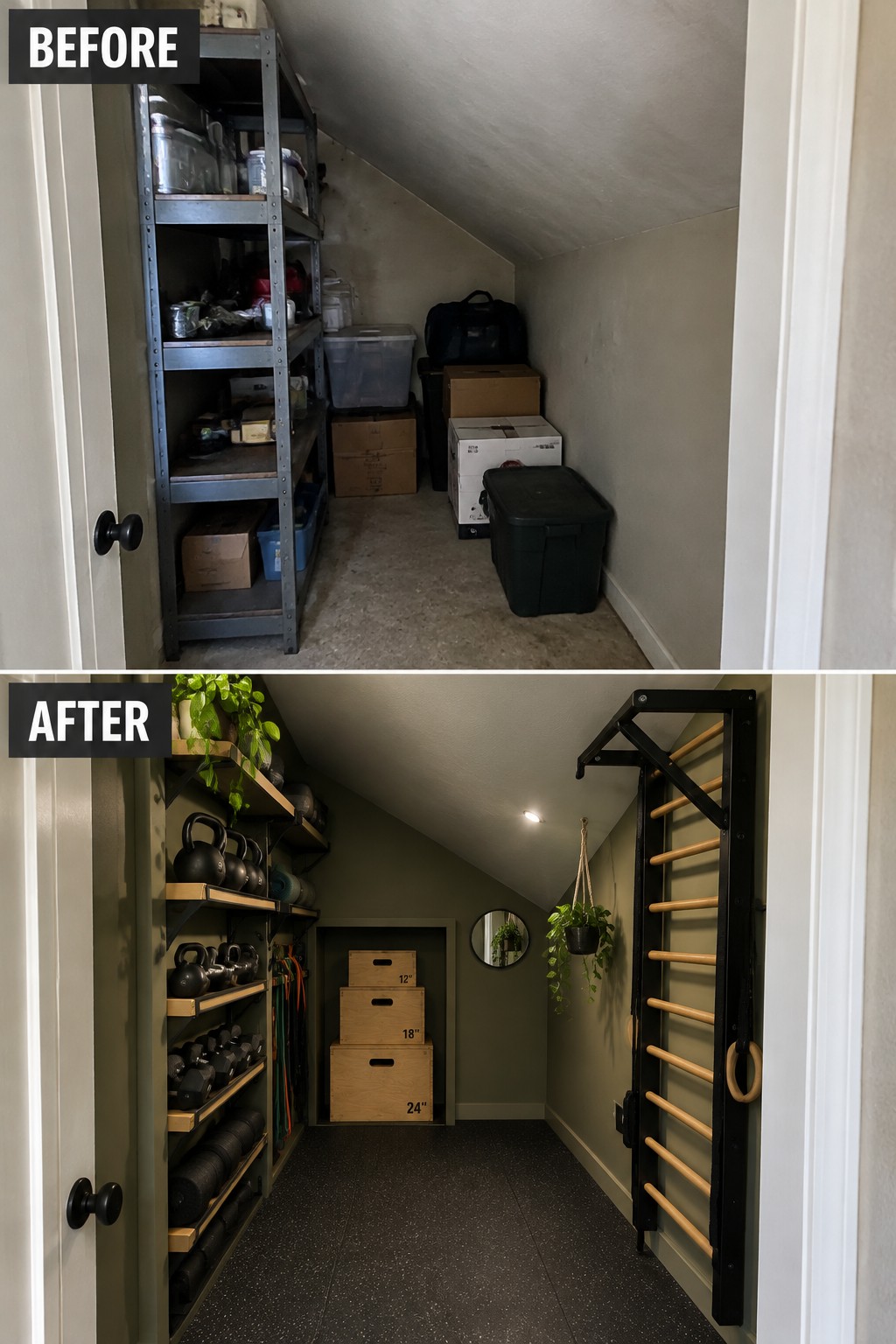
The main change here is turning a crowded storage room into a usable workout space. Replacing loose boxes with organized shelves and giving exercise equipment a clear place makes the narrow basement easier to move around in.
In a small room, keep storage along one wall and leave the middle open for workouts. Wall-mounted equipment can also save floor space, but check that it is securely installed and that there is enough clearance to use it safely.
Hide Workout Equipment In A Built-In Cabinet
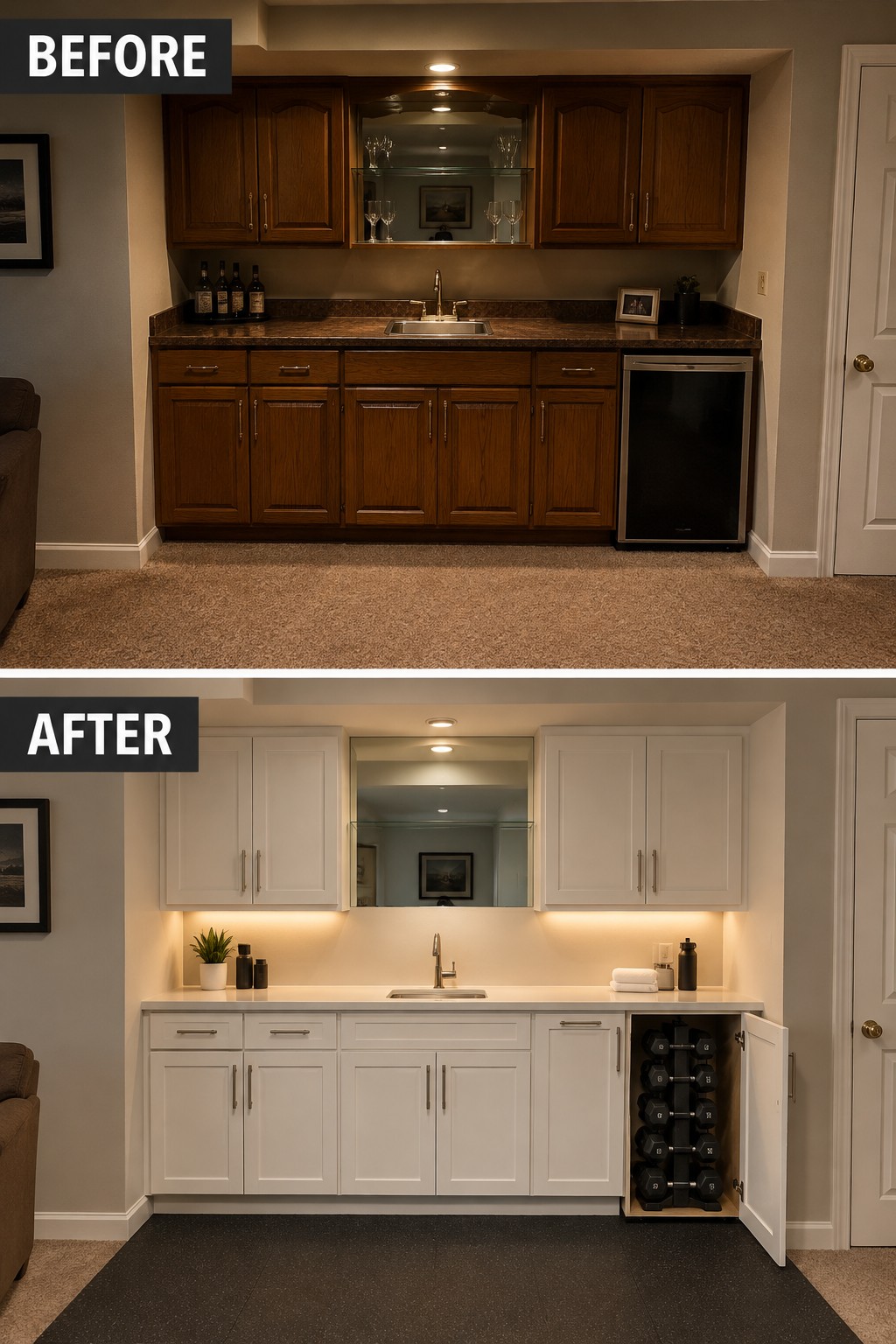
Replacing the dark wood cabinets with white ones makes this basement workout area feel brighter, while a lower cabinet now stores dumbbells out of sight. It’s a useful way to keep equipment close without leaving weights scattered around the room.
In a small basement, dedicate one cabinet or section of built-in storage to workout gear. Check that the shelves can handle the weight, and leave enough floor space in front for safe movement.
Add Built-In Storage To Keep Workout Gear Organized

A wall of built-in cabinets can make a basement workout area feel less cluttered and leave more floor space for exercise. Here, closed storage replaces an open row of coats and shoes, while a fold-down bench keeps the workout zone compact.
This idea works well in a narrow basement where equipment and household items compete for space. Store small gear in cabinets, and choose fold-away equipment so the room can still serve other purposes.
Make A Basement Office Work As A Home Gym

A small basement room can serve more than one purpose when the workout area fits neatly into the existing layout. Here, a treadmill takes the place of loose office clutter, while a desk with a storage drawer keeps the work area usable.
Choose equipment that can tuck under or beside a desk, and keep the floor clear enough to move safely. A compact setup like this suits a spare room, but measure carefully before buying so the equipment does not block the desk or walkway.
Turn a Basement Living Room Into a Dedicated Workout Space

Removing the bulky sofa and coffee table gave this basement a clear purpose as a home gym. The dark floor mats and deep green walls help the room feel ready for exercise, while leaving the center open makes it easier to move around.
For a similar setup, clear the largest floor area first and choose equipment that fits how you actually work out. Wall-mounted hooks or a compact rack can keep smaller gear off the floor without crowding the room.
Make A Basement Workout Room Feel Purposeful

Clearing the clutter and giving the floor a defined workout area can make a basement feel like a room you’ll actually use. Here, the open space and exercise mat help turn a crowded storage area into a practical place to move.
In a basement that still needs to hold household items, keep storage along the walls and leave the center clear for exercise. A mat can mark the workout zone without taking up much room, and closed cabinets help keep everyday supplies from spilling into it.
Make A Basement Gym Feel Brighter And More Practical

A basement workout room is easier to use when it feels like a real place to exercise, not a dark room with equipment tucked into it. Here, lighter flooring and a large mirror make the space feel more open, while leaving a clear area for movement.
For a similar setup, start by clearing the floor and choosing durable flooring that suits your workouts. A mirror can help a small room feel less closed in, but keep enough open space to move safely around any equipment.
Hide A Basement Gym Behind A Sliding Door
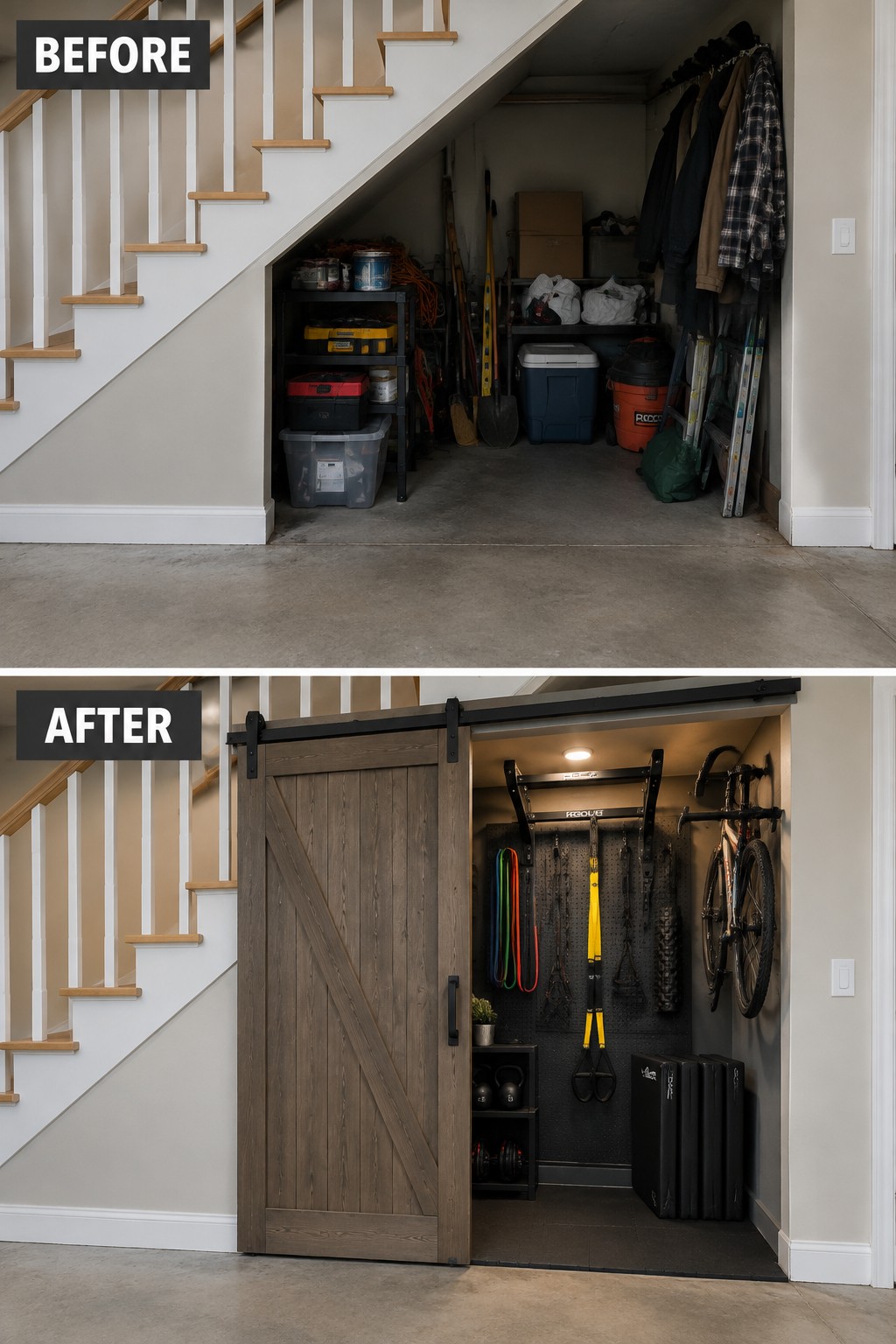
The cluttered storage nook becomes a compact workout space, and the sliding barn door hides the equipment when the gym is not in use. This is a practical way to give an awkward area under the stairs a clear purpose without leaving workout gear in view.
Use a sturdy sliding door where there is enough wall space for it to travel, and keep the gym setup focused on equipment you actually use. A wall-mounted rack and vertical storage can help preserve floor space in a small nook.
Create A Dedicated Workout Zone In An Unused Room

The main improvement here is giving an underused basement room a clear purpose. Replacing the living room furniture with a wall-mounted barre and exercise storage makes space for movement without filling the floor with bulky equipment.
This approach works well in a small home gym, especially when floor space is limited. Keep the center open for a mat, and mount equipment on the wall or store it vertically so the room stays easy to use.
Use Wall-Mounted Storage To Keep A Basement Gym Clear

The basement shifts from general storage to a workout room by moving much of the gear onto wall-mounted racks. That frees up the floor for exercise and makes the room easier to use.
In a narrow basement, wall storage can help keep weights and accessories organized without crowding the workout area. Leave enough open space to move safely, and choose racks that suit the equipment you actually use.
Use A Basement Column For Built-In Storage

A basement column can do more than divide a workout room. In this makeover, narrow open shelves turn the column into a handy spot for gym gear, while wall-mounted equipment keeps the floor clear and easier to use.
If your basement has a similar column or awkward bump-out, fit shallow shelves around it for smaller weights and accessories. Keep the shelves tidy and leave enough room to move safely around the workout area.
Finish The Basement Before Adding Gym Equipment

The clearest improvement here is turning an unfinished basement into a clean, usable workout room. A finished ceiling and rubber flooring make the space feel ready for exercise instead of like a storage area.
For a similar setup, tackle the basics first: cover exposed insulation and wiring, improve the lighting, and choose durable flooring that can handle weights. Then add only the equipment you have room to use, leaving a clear path around the stairs and support posts.
Turn A Narrow Hallway Into A Compact Workout Room
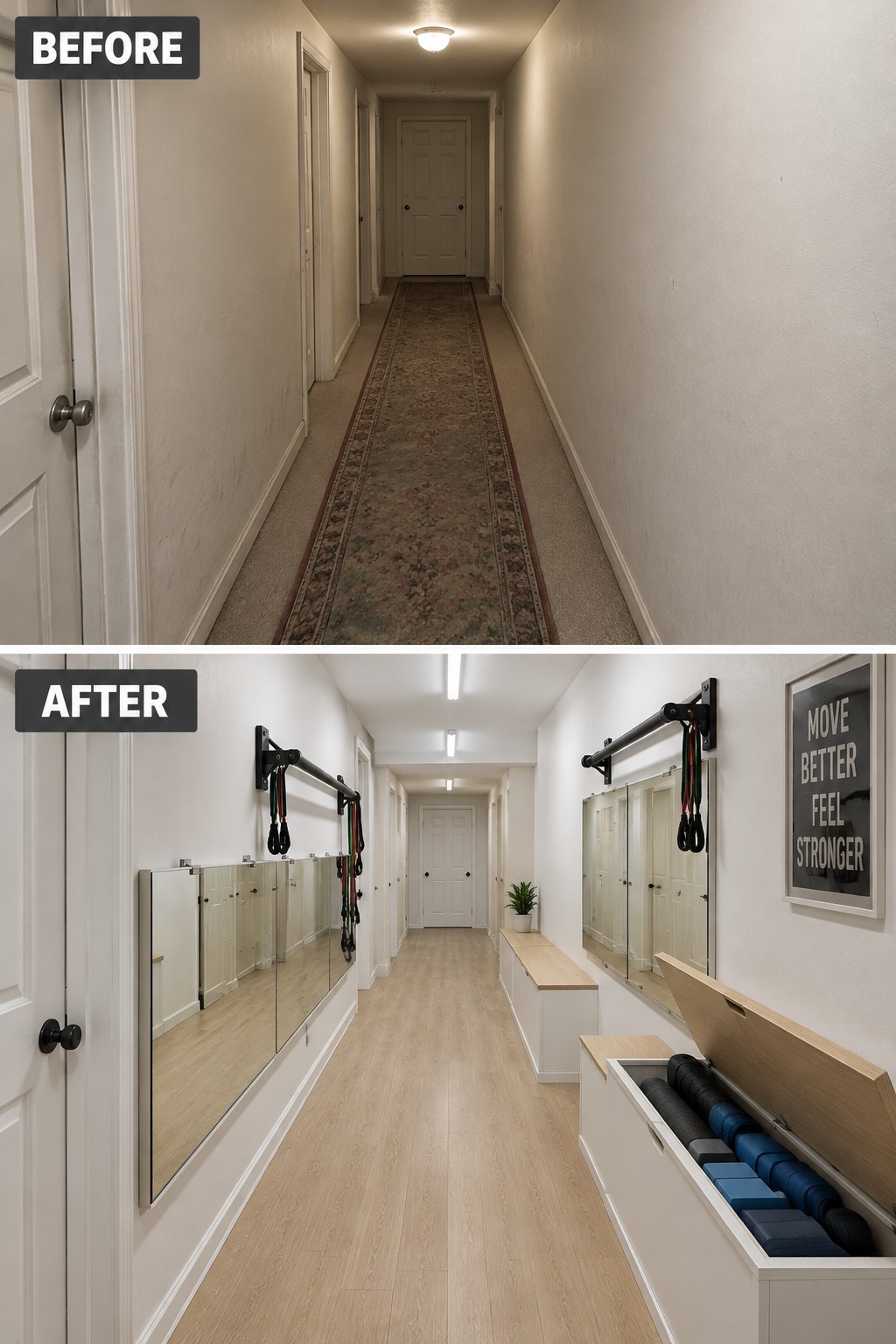
A narrow hallway can become useful exercise space when the floor is kept clear and equipment moves onto the walls. Here, mirrors and wall-mounted straps replace the runner and leave a straight path through the room.
This setup can work in a basement or another long, underused area. Secure the mounts properly, keep gear close to the walls, and leave enough room to walk through safely.
Finish The Basement Before Adding Gym Equipment

The unfinished basement becomes a more usable workout room once the walls and ceiling are finished and the floor is covered with gym flooring. This gives the space a clean, practical base, so the equipment feels organized rather than crowded into a construction area.
For a similar setup, finish the room and choose durable flooring before bringing in larger pieces. Then keep the equipment along the walls where possible, leaving a clear area for floor exercises and easy movement.
Frequently Asked Questions
Q: How can I make a basement workout room feel less cramped?
A: Keep the floor as open as you can by choosing equipment that folds, stacks, or serves more than one purpose. Wall hooks and shelves can hold bands, mats, and small weights without taking up workout space.
Q: What flooring works well over a basement floor?
A: Interlocking rubber or foam tiles add cushioning and help protect the floor from weights. Check that the basement stays dry before laying them down, since trapped moisture can cause problems.
Q: Do I need special ventilation in a basement gym?
A: Fresh air makes workouts more comfortable, especially in a room with little natural airflow. Open a window if you have one, or use a fan to keep air moving.
Q: How do I protect the ceiling during overhead exercises?
A: Measure your ceiling height before buying equipment or planning moves like overhead presses. If space is tight, focus on seated exercises, floor work, or lower-profile equipment.
