

A basement can feel unfinished and uninviting when the floor is cold, worn, or simply bare concrete.
I find that changing the flooring can make the whole room feel more useful, even when the walls and lighting still need work.
The best low-cost options balance comfort, durability, and the quirks of a below-grade space, where moisture can affect what works.
Some choices can also make a dark basement feel more pulled together without stretching the budget.
I’d start with materials that suit how the room is actually used, whether it’s a playroom, laundry area, or spot to relax.
A simple flooring change can be satisfying, and a few of these ideas may be worth adapting to your own home.
Replace Concrete With Affordable Wood-Look Flooring

The bare concrete floor made this basement feel unfinished. Replacing it with wood-look flooring gives the room a more comfortable, finished feel without changing the layout.
For a budget-conscious update, compare laminate and vinyl plank options that suit basement conditions, and check the manufacturer’s moisture requirements before installation. A consistent floor across the open area can help the space feel more usable.
Add Foam Tiles To Cover A Concrete Basement Floor
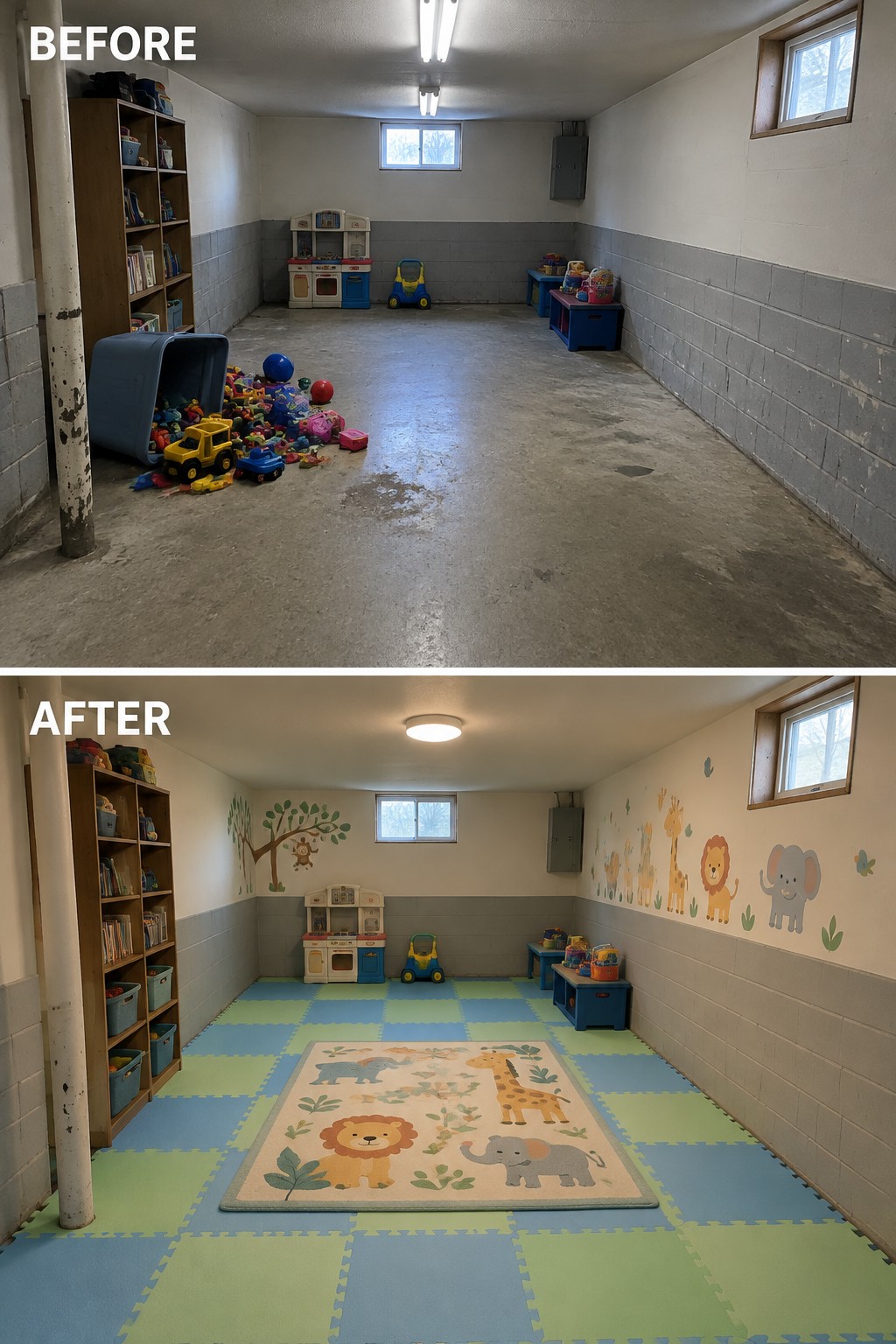
The bare concrete floor made this basement playroom feel unfinished, while interlocking foam tiles give the children a softer surface for play. A small animal-print rug helps mark the main play area without requiring a permanent flooring change.
Foam tiles can be a practical low-cost option for a basement play space, especially where kids sit or crawl on the floor. Check that the concrete is dry and reasonably level first, and leave room to reach floor drains or other access points.
Refinish A Worn Basement Floor

A fresh floor coating can make a basement workshop feel cleaner and more usable without changing the room’s layout. Here, stained concrete is covered with a smooth gray finish, giving the work area a clear reset.
For a similar update, clean and repair the concrete first, then choose a coating made for basement floors. A mat near the workbench can protect the finish where you stand most, but leave enough open floor for moving tools and supplies.
Use New Flooring To Finish A Basement Living Room
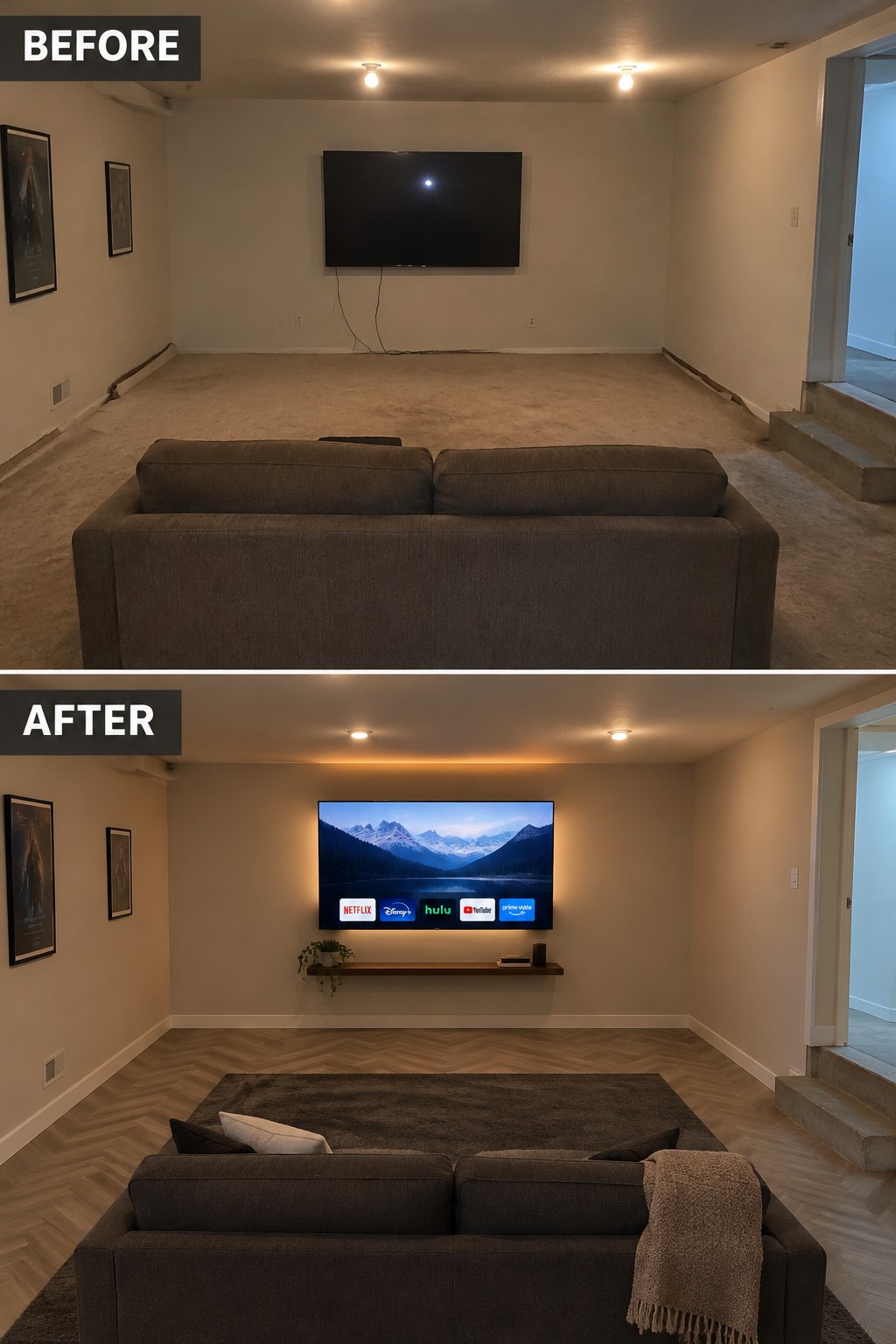
Replacing worn carpet with durable-looking plank flooring gives this basement a cleaner, more finished feel. The flooring helps define the living area, while a large rug keeps the seating space comfortable.
For a similar update, choose a floor suited to basement conditions and your budget, then use a rug to mark out the seating zone. Leave enough exposed flooring around it so the room still feels open.
Use Vinyl Flooring To Refresh A Basement Laundry Room

The worn concrete floor is the main thing holding this laundry room back. Replacing it with a simple, budget-friendly vinyl floor makes the room look cleaner and more finished without changing the washer and dryer.
Vinyl is a practical choice for a basement laundry area because it is easy to clean and handles everyday spills better than many materials. Choose a pattern that suits the room and check that the floor is suitable for your basement’s moisture conditions before installing it.
Use Budget-Friendly Flooring To Finish A Basement Bedroom

The bare subfloor made this basement bedroom feel unfinished. Installing wood-look flooring gives the room a cleaner, more comfortable base, while the rug helps define the sleeping area.
For a similar update, look for affordable laminate or vinyl flooring suited to basement conditions, and check that the subfloor is dry and level before installation. A simple floor upgrade can make a multipurpose basement feel ready to use without changing its layout.
Use Carpet Tiles To Define A Basement Living Room

The loose, worn carpet in this basement was replaced with carpet tiles, giving the floor a cleaner, more finished look. Tiles are a practical option for a basement living area because you can fit them around posts and replace individual squares if they become stained or damaged.
Choose a low-pile style that suits the room and check the manufacturer’s instructions for installation over concrete. A subtle mix of tile shades can help define the seating area without making a large basement feel busy.
Cover A Concrete Basement Floor With Interlocking Tiles

An empty basement can feel more useful once the floor is covered with durable, interlocking tiles. Here, black floor tiles replace bare concrete and help define the room as a home gym.
For a basement workout area, choose tiles with enough cushioning for exercise and a textured surface for grip. Measure carefully and leave the equipment enough space, especially in a narrow room.
Use A Rug To Define A Basement Seating Area

A large area rug helps turn an unfinished basement into a room that feels ready to use. Here, it marks out the seating area and covers much of the concrete floor, while the checkerboard tiles around it add a simple, low-cost flooring update.
In a basement, choose a rug with a durable weave and a size that fits beneath the main furniture. Check for dampness first, and leave some floor exposed near walls so you can spot moisture problems.
Replace Cracked Tile With Affordable Vinyl Flooring

The cracked tile makes this basement utility room feel worn, while the dark vinyl floor in the updated space gives it a cleaner, more finished look. A new floor can make a noticeable difference even when the room is mainly used for laundry or storage.
For a low-cost update, look for vinyl flooring that suits the room’s shape and can handle occasional moisture. Keep the water heater and other equipment accessible, and check the product’s installation requirements before laying it over the existing floor.
Replace A Cold Basement Floor With Warm Wood-Look Flooring

The concrete floor makes this basement workroom feel cold and unfinished. Replacing it with affordable wood-look flooring gives the room a warmer, more finished feel without changing its basic layout.
For a basement, choose flooring rated for below-grade use and check that the concrete is dry and level before installation. A wood-look vinyl option can be practical in a workroom, where it is easy to clean and more comfortable underfoot than bare concrete.
Seal And Stain The Concrete Basement Floor

The floor is the main change here: stained, patchy concrete becomes a smoother-looking brown surface with a subtle sheen. Sealing and staining can give a basement a more finished look without covering the slab with another flooring material.
Start by cleaning the concrete thoroughly and checking for moisture, since a sealer may not hold well on a damp floor. Test the stain in a small area first, and choose a low-sheen finish if you want to hide minor flaws rather than emphasize them.
Use Laminate Flooring To Make A Basement Office Feel Finished

The basement office feels more comfortable after the cold tile was replaced with wood-look flooring. A large rug defines the desk area, but the new floor is the main change that makes the room feel more like a finished part of the home.
For a similar update, look for budget-friendly laminate rated for below-grade spaces, and check the manufacturer’s moisture requirements before installing it. A rug can help mark out a work zone, but leave enough exposed floor to show the new surface and keep the room easy to clean.
Use Painted Stripes To Brighten A Basement Floor

Painting wide stripes over a concrete floor is a low-cost way to make a basement living area feel more finished. Here, the plain gray floor gives way to broad cream and muted green bands, which add color and help define the seating space.
Use floor paint made for concrete, and clean and prepare the surface well before starting. Keep the stripes simple and check that the paint is suitable for basement conditions, since dampness can cause it to peel.
Use A Large Rug To Finish A Basement Bedroom

The bare concrete floor made this basement bedroom feel unfinished. A large area rug covers most of it in the updated room, making the sleeping area feel more comfortable without replacing the floor.
For a low-cost upgrade, choose a rug large enough to extend beyond the sides of the bed, and check that it has a nonslip backing or rug pad. It’s a practical option when the concrete is in decent shape and a full flooring installation isn’t in the budget.
Lay Affordable Flooring Over Bare Basement Concrete

Replacing the bare concrete with wood-look planks makes this basement feel more finished, while a large area rug helps define the open floor. It’s a practical way to make a storage-heavy room more comfortable without changing the shelving or layout.
For a lower-cost update, look at floating vinyl or laminate planks made for basements, and check the floor for moisture before installing them. Choose a finish that suits the room and leave enough clear floor space for storage access and walking.
Use Dark Wood-Look Flooring To Finish A Basement Theater

The worn concrete floor makes this basement feel more like an unfinished room than a place to watch a movie. Dark wood-look flooring gives the seating area a more settled feel, while the simple sofa layout makes the screen the focus.
For a similar setup, choose a basement-rated flooring option that can handle moisture, and check the concrete for dampness before installing it. A dark finish suits a theater room, but use enough light near the seats and walkways to keep the floor practical.
Replace A Worn Entry Floor With Wood-Look Planks

The old concrete floor made this basement entry feel unfinished. Wood-look planks give it a cleaner, more put-together feel, while a small mat protects the area by the door.
For a low-cost update, look for vinyl planks that suit your budget and can handle damp basement conditions. Check that the subfloor is level and dry before installing them, especially near an exterior door.
Update A Basement Workroom With Wood-Look Flooring

The worn, pale floor makes this basement workroom feel unfinished. Replacing it with wood-look planks gives the space a more settled feel and makes the floor itself a noticeable part of the refresh.
For a low-cost update, look at vinyl or laminate planks that suit your budget and the room’s moisture conditions. Check that the subfloor is clean, level, and dry before installation, especially in a basement.
Use Wood-Look Flooring To Make A Basement Bar Feel Finished

The bare, mottled floor made the bar area feel unfinished. Replacing it with wood-look planks gives the space a cleaner, more settled feel, while a rug helps mark the seating area.
For a low-cost update, look for vinyl plank flooring rated for basement use, since it handles moisture better than many traditional options. Check the concrete for dampness before laying anything, and choose a rug that leaves enough clear floor around the stools.
Frequently Asked Questions
Q: Can I put new flooring over my basement’s concrete floor?
A: Often, yes, if the concrete is clean, level, and dry. Check for damp spots after rain and fix any moisture problems before laying flooring, or the new surface may buckle or grow mold.
Q: What’s a low-cost flooring option that can handle basement moisture?
A: Painted concrete is one of the cheapest choices and works well when the slab is in good shape. Use paint made for floors, and expect to touch it up over time, especially in busy areas.
Q: Do I need underlayment beneath basement flooring?
A: Not always. Some flooring has an attached backing, while other types need an underlayment made for concrete. Follow the flooring instructions, and avoid adding a soft layer that could trap moisture.
Q: Can I install basement flooring myself?
A: Many peel-and-stick tiles and click-lock planks are manageable DIY projects. A smooth, dry floor makes the job much easier, so patch cracks and remove dust before you start.
