

A basement can feel like the leftover room of the house when the lighting is dim, the walls are tired, and the furniture does not suit the way you use it.
I find that a few practical changes can make the space feel more finished without requiring a full renovation, especially when paint brightens the room and modular furniture gives it a clearer purpose.
Good lighting helps too, since it can soften awkward corners and make a basement more comfortable for reading, working, or relaxing.
The difference can be satisfying even when the updates are simple.
I’d start with the ideas that address your basement’s biggest problem, then save or adapt the rest as your budget and needs allow.
Turn An Unused Basement Into A Comfortable Room

A basement can feel more like part of the home once it has a clear purpose. Here, paint and recessed lights replace the bare utility-room feel, while a sectional and area rug make space for sitting without major construction.
For a budget-friendly version, start with a fresh coat of paint and good lighting, then choose modular seating that fits the room and can be rearranged. A large rug helps define the sitting area, but leave enough clear floor space to move around.
Add Built-In Storage To Finish An Empty Basement

The bare basement becomes a more useful room once a built-in bookcase gives the wall a clear purpose. A simple white shelving unit can hold a TV, books, and baskets while making an unfinished-looking space feel more settled.
For a budget version, use modular shelves sized to fit one wall, then paint them to match the room. Secure tall units properly, and leave enough open floor space for people to move around.
Turn An Unused Basement Room Into A Home Office

An empty basement room can become a useful home office without a major remodel. Here, a simple desk setup gives the narrow space a clear purpose, while the updated shelf lighting helps make the work area feel more finished.
Keep the furniture scaled to the room so there’s still space to move around. A desk, comfortable chair, and a few well-placed shelves may be enough; modular storage can add room for supplies without crowding the floor.
Make A Plain Living Room Feel Finished

A bare basement can feel cold and unfinished, even when it has plenty of room. Here, replacing the wall-to-wall carpet with wood-look flooring and adding a rug beneath the seating helps define the living area and makes it feel more settled.
For a budget-friendly version, keep existing features that are still in good shape and focus on a clear seating zone. Choose a rug large enough for the front legs of the furniture, then arrange modular pieces so people can sit comfortably without blocking the walkway.
Add Organized Storage Under The Basement Stairs

A cluttered basement can feel much more useful when storage has a clear place. Here, open shelving gives way to fitted cubbies and labeled baskets, turning the space beneath the stairs into tidy storage without taking over the walkway.
For a similar setup, measure the sloped area carefully and use modular shelves or simple built-ins that fit its height. Baskets keep small items together, and labels make them easier to find. Leave enough room to move through the basement comfortably.
Use Lighting To Make A Basement Feel Cozy

The old basement felt dim and bare, while the updated room uses a sectional and warm ceiling-edge lighting to make it feel more like a place to settle in. The lighting helps the room feel comfortable without relying on a bright overhead fixture.
For a similar effect, use dimmable LED strips around the ceiling and add a floor or table lamp near the seating. In a basement with little natural light, choose warm bulbs and keep the lighting subtle so the room stays comfortable for watching TV or relaxing.
Make A Basement Laundry Room More Practical
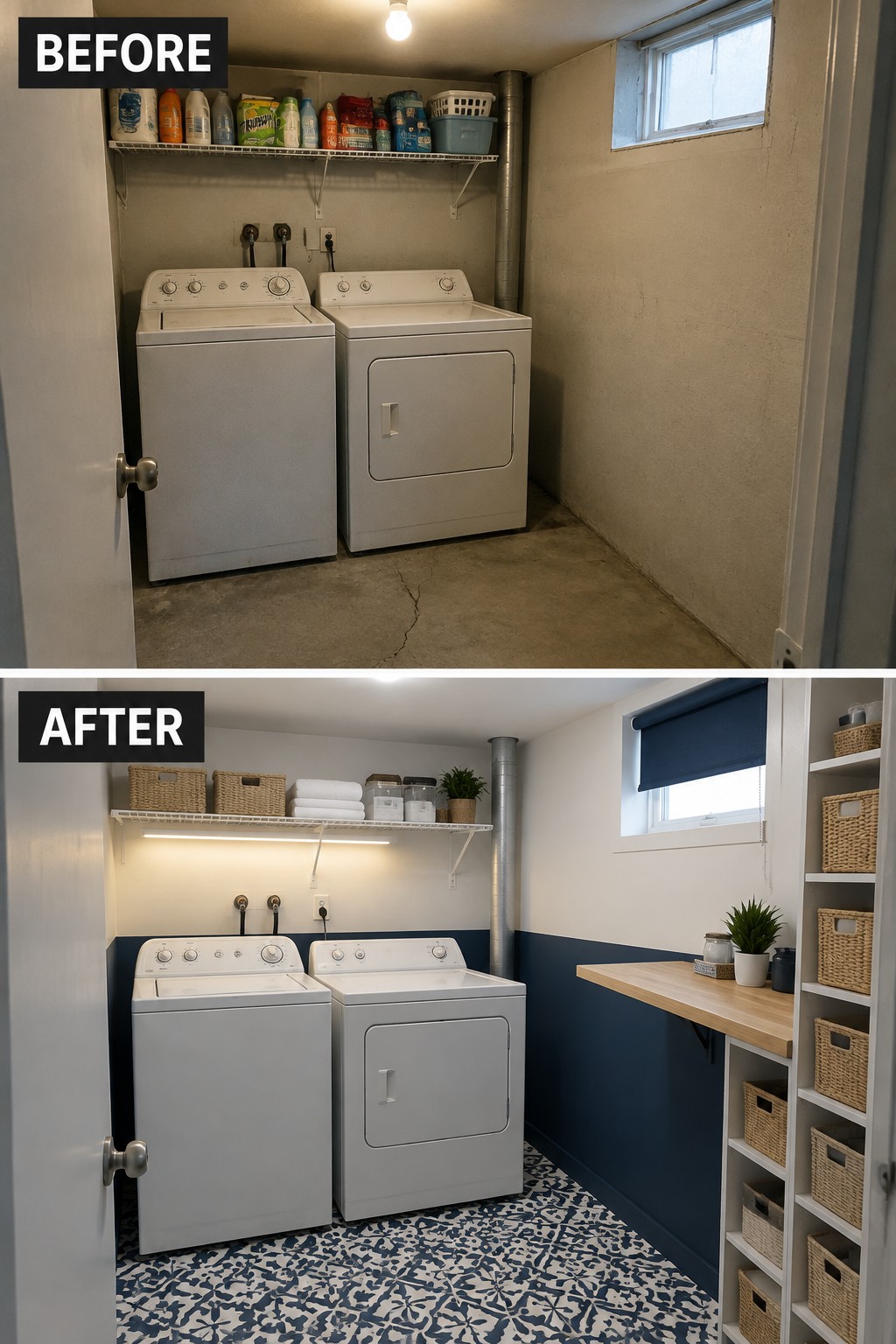
The laundry room works better when it has a clear place for folding and supplies. In this makeover, navy paint defines the work area, while a simple wood counter gives the small room a useful folding surface.
For a similar setup, use a compact counter beside or above the machines and keep storage close at hand. Paint can help an unfinished basement feel more organized, but leave enough open floor space to move laundry baskets around.
Turn An Empty Basement Corner Into A Bar

The empty corner becomes a useful gathering spot once a simple counter and stools give it a clear purpose. In the finished space, the pale wall boards and pendant lights help the basement feel more like a small home bar than a storage area.
For a budget version, use a ready-made counter or modular cabinets and keep the layout compact so there is still room to move around. A fresh coat of paint and a couple of well-placed lights can help define the area without a major renovation.
Make A Basement Hallway Feel Finished

A plain basement hallway can feel more like part of the home with a few simple updates. Here, brighter recessed lights and a runner replace the harsh overhead fixture and bare floor, while trim and painted walls give the narrow space a more finished look.
For a similar hallway, start with lighting and a runner sized to leave a clear walking path. If you add wall shelves, keep them shallow and mount them high enough that people can pass without bumping into them.
Make A Small Basement Bedroom Work Harder

A narrow, bare room can serve more than one person when the bed also provides a second sleeping spot. Here, a simple mattress is replaced with a daybed and a pullout trundle, making better use of the limited floor space.
This setup works well in a basement guest room or a child’s room. Measure the bed and the trundle fully extended before buying, and leave enough room for people to walk past it.
Use Paint And Lighting To Refresh A Basement Gym

A coat of fresh paint and better ceiling lights can make a basement gym feel cleaner and more usable without changing the room’s basic layout. Here, the bright walls and recessed fixtures replace the dim, unfinished feel, while the teal stripe gives the plain room a simple focal point.
For a budget update, clean and paint the walls first, then add brighter fixtures suited to the ceiling. Keep the floor clear around the equipment so there is room to move, and use a single accent color to give the space some definition.
Make A Basement Playroom Feel Finished

The room works better as a playroom once it has a clear place to sit and a simple way to put toys away. A painted mountain shape behind the sofa gives the seating area a purpose, while labeled bins make the open shelves easier to keep organized.
For a similar setup, use paint to create one focal wall and choose modular seating that can shift as children grow. Keep storage within easy reach, but leave enough open floor space for play.
Set Up A Basement Craft Room With Modular Storage

The cluttered worktable has been replaced by a continuous L-shaped surface with drawer units, making the basement easier to use for crafts. A painted wall band also gives the work area a clear boundary without requiring a major renovation.
For a similar setup, use modular drawer units to support a countertop and store supplies within reach. Paint can help define the work zone, while clear bins make it easier to find materials. Leave enough open floor space to move around comfortably.
Make Basement Storage Easier To Maintain

A simple storage system can make a basement feel much more usable without changing its layout. Here, open shelving and clear, labeled bins replace loose boxes, so belongings are easier to find and the floor stays clear.
Use sturdy modular shelves and group items by purpose, such as holiday decorations or tools. Keep heavier bins on lower shelves, and leave enough room around utilities and pipes for safe access.
Update Wood Paneling With Paint

Painting dark paneling a lighter, muted color helps an older living room feel brighter without changing its layout. Here, the pale walls make the fireplace stand out while the room feels more open.
This idea works well in a basement where dark wall finishes can make the space feel closed in. Clean and prime the paneling first, then test a few paint samples in the room before choosing a shade.
Turn A Basement Closet Into A Small Wine Cellar

A cramped storage closet can become a useful wine area with a coat of dark paint and shelving that fits the space. Here, the concrete walls are painted deep green, and the wire racks are replaced with wood shelves, giving the narrow basement nook a more finished look.
Use modular shelving to make room for bottles without blocking the walkway, and add a small warm light so labels are easy to see. This idea works well in a basement closet, but keep the shelves secured and leave enough space to move around comfortably.
Refresh A Small Bathroom With Simple Updates

The old tile and worn floor made this bathroom feel dated. Replacing them with a patterned floor and a cleaner vanity gives the room a more finished look without changing its basic layout.
In a small bathroom, keeping the fixtures in place can help control costs. Choose one noticeable surface to update, then keep the vanity and other finishes simple so the room does not feel crowded.
Make A Basement Entry Feel Finished

A fresh coat of teal paint on the door gives this basement entry a clear focal point, while the small bench makes the landing feel like a useful part of the home instead of a pass-through. The space looks more cared for without a major renovation.
For a similar update, paint the door or stair risers in one color that works with the rest of the basement, then add a narrow bench if there’s room to sit without blocking the path. Keep the landing open enough for safe, easy access.
Refresh Built-In Shelving With Paint And Lighting

The built-ins were crowded and the dark TV looked lost among the shelves. A coat of paint and slim shelf lights give the storage a cleaner, more finished look without replacing the whole unit.
This is a practical update for a basement with dated or mismatched shelving. Clear the shelves first, paint the cabinets and backing in a calm color, then add affordable LED strip lights to highlight a few useful or decorative items. Keep some open space so the shelves stay easy to use.
Make A Basement Hallway More Useful With Built-In Storage

A narrow basement hallway can do more than connect rooms. The after photo adds a bench and open cubbies along one wall, turning an awkward pass-through into a practical place to hang coats and tuck away baskets.
For a similar setup, use a shallow modular unit so the walkway stays clear, and choose pieces that fit the wall rather than crowding the hall. A light paint color and a simple runner can help the area feel more finished without a major renovation.
Turn A Basement Nook Into A Reading Spot

An unused basement corner can become a comfortable place to read without a major renovation. Here, a built-in bench and book storage give the nook a clear purpose, while a deep wall color and string lights make it feel more finished than the bare seating area before.
For a similar setup, use modular shelves to fit the available wall and add a bench with storage underneath. Keep the cushions and furniture sized for the nook so there’s still room to move around, and place a reading light where you’ll actually sit.
Turn A Bare Basement Hallway Into A Useful Bar

The empty hallway becomes a more useful hangout with a slim counter and wall-mounted cabinets. Wood flooring and painted lower walls help the narrow space feel finished without taking up much room.
A similar setup can work in a basement corridor that has enough clearance for people to pass comfortably. Keep the counter shallow, use modular cabinets for bottles and glasses, and add task lighting beneath the shelves.
Frequently Asked Questions
Q: What should I paint first if my basement feels dark?
A: Start with the walls and ceiling, using a light, warm color to bounce around what little daylight you have. A brighter ceiling can make a low room feel more open without changing a thing about its layout.
Q: Can I use regular furniture in a basement?
A: Yes, especially modular pieces you can move or rearrange as your needs change. Check that the room stays dry, and leave a little space between furniture and any walls that feel cool or damp.
Q: What’s an inexpensive way to make basement lighting feel less harsh?
A: Use a few lamps around the room instead of relying on one bright overhead fixture. Warm bulbs and fabric shades help a basement feel more like a living space.
Q: Should I cover every basement wall with paint?
A: Not if you like the look of exposed brick or concrete. Paint a single wall or just the ceiling to brighten the room while keeping some of its original character.
