

Basements can feel like leftover space when the lighting is dim, the furniture is mismatched, or there’s nowhere comfortable to sit.
I’ve found that an area rug can help define a usable zone, while softer seating makes the room feel more relaxed without calling for a major renovation.
A few thoughtful changes can make even an awkward basement feel warmer and more connected to the rest of the home.
The difference is satisfying because it comes from choices that also make the space easier to use day to day.
I’d save the ideas that fit your room’s layout and try them one at a time.
Make An Empty Basement Feel Like A Living Room

An unfinished basement can feel cold and hard to use, but a large area rug and comfortable seating give it a clear purpose. Here, the bare concrete floor becomes a sitting area with a rug under a sectional, making the room feel more like part of the home.
Choose a rug large enough to fit beneath the main seating, then leave a clear path around the furniture. This works especially well in a basement with an open floor plan, where the rug helps mark out a lounge area without adding walls.
Use A Rug To Make A Basement Feel Like A Living Room

A large area rug can give a basement a clear seating area and make it feel more finished. Here, the rug replaces much of the bare carpeted floor, while a comfortable sofa makes the room feel suited to relaxing instead of serving mainly as a catchall.
Choose a rug large enough for the front legs of the seating to rest on it, and leave a little floor visible around the edges. This works especially well in an open basement where you want to define one cozy spot without adding walls or crowding the room.
Make A Basement Corner Feel Like A Sitting Room

The basement goes from a storage area to a small place to relax with just a few thoughtful changes. A patterned area rug defines the seating space, while a comfortable armchair gives the corner a clear purpose.
This idea works well in a basement where a full living room setup would feel too large. Choose a rug that fits beneath the chair and leaves a little floor around the edges, then add a lamp nearby for reading. Keep the rest of the room open so it remains easy to move through.
Use A Rug To Define The Seating Area
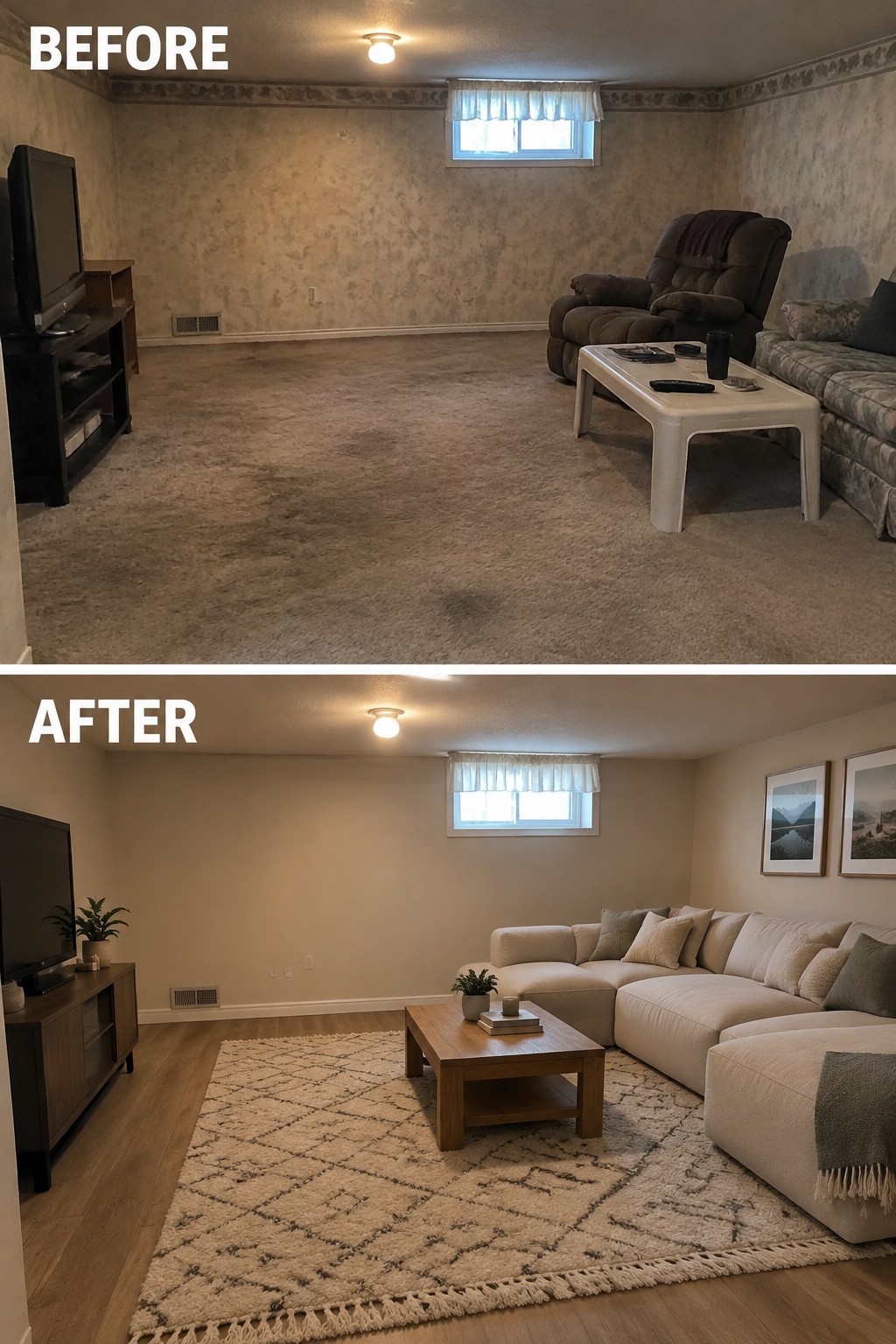
A large area rug helps make an open basement feel like a real living room instead of an empty pass-through. Here, the bare carpet gives way to wood flooring and a patterned rug that marks out the seating zone.
In a basement, choose a rug large enough for the front legs of the sofa and chairs to rest on it. That makes the furniture feel connected without filling every bit of floor space.
Make A Basement Seating Area Feel More Comfortable

Replacing the worn recliners and bare floor with a soft sofa and a large area rug makes this basement feel more like a place to spend time. The rug also gives the seating area a clear boundary, which helps the room feel finished without changing its basic layout.
For a similar room, choose a rug large enough for the front legs of the sofa to rest on it, and leave a clear path to the screen. A patterned rug can be practical in a basement where floors see regular use.
Make A Basement Bedroom Feel Finished

An unfinished basement can still become a comfortable place to sleep or relax. Here, painted walls and a large area rug replace the bare, chilly feel of the room, while a daybed makes better use of the narrow space.
For a similar room, choose a rug that fits the walking area without crowding the bed, then add soft bedding and a small lamp. This works well in a basement guest room or spare bedroom, where a few practical choices can make the space feel ready to use.
Give A Basement Playroom A More Comfortable Layout

A basement playroom can feel more settled when a large area rug defines the main space and seating gives kids and adults a place to pause. Here, the scattered toys give way to a clear rug-covered area with a small sofa and floor cushions.
Choose a rug that fits the room without blocking doors or walkways, then keep seating low and easy to move around. A simple storage shelf nearby can help keep toys within reach without taking over the floor.
Make A Basement Game Room Feel More Comfortable

A foosball table can stay the focus while a basement game room becomes more comfortable for people who are waiting for a turn. In the refreshed space, a large rug and a pair of upholstered chairs make the bare concrete room feel more like a place to sit and spend time.
Use a rug large enough to give the seating area a clear boundary, and leave plenty of space around the table for players to move. A small basement does not need much furniture; a couple of comfortable chairs can be enough.
Make A Laundry Room Feel More Like A Sitting Area

A simple rug and a padded bench can make a narrow laundry room feel more comfortable and finished. Here, the bench gives the empty wall a useful purpose, while the rug adds a softer surface beside the machines.
This idea works well in a basement laundry room where there’s enough space to keep a clear path. Choose a low-pile rug that’s easy to clean, and keep the bench compact so it doesn’t make the room harder to move through.
Turn A Basement Workout Area Into A Sitting Room

A basement can serve a different purpose once you clear the floor and give it a comfortable place to sit. Here, the workout equipment is gone, and a large area rug helps define the seating area and make the concrete floor feel more finished.
This idea works well in a basement that needs to do more than store equipment or serve as a gym. Choose a rug sized for the seating zone, then leave enough clear space to walk around it.
Use A Rug To Make A Basement Seating Area Feel Finished

The concrete floor and bare walls made this basement feel more like storage space than somewhere to sit. A large area rug helps define the seating zone, while a comfortable sofa gives the room a clear purpose.
This idea works well in basements where the floor feels cold or the layout is open. Choose a rug large enough for the front legs of the sofa to sit on it, and leave a clear path around the seating area.
Make A Bare Basement Feel Like A Living Room

An empty basement can feel more like a pass-through than a place to relax. Here, a large area rug and a comfortable sofa turn the open floor into a clear seating area, making the room feel ready for everyday use.
For a similar room, choose a rug large enough for the front legs of the sofa to rest on it, then leave a clear path to the door. This works especially well in basements with limited natural light, where a simple, comfortable seating setup can give the space a purpose.
Create A Comfortable Basement Work And Sitting Area

Replacing the storage clutter with a desk, a large area rug, and softer chairs gives this basement two clear uses without making it feel crowded. The rug helps define the seating area and makes the hard floor more comfortable underfoot.
In a small basement, choose a rug that fits beneath the main seating, then leave a clear path between the desk and chairs. A compact layout like this works well when you want a quiet place to work and somewhere to sit without dedicating the whole room to one purpose.
Make A Bare Basement Feel More Like A Living Room

A large area rug helps give an empty basement a clear seating area, while a sofa makes it more comfortable for everyday use. In this room, replacing the worn chair with a sofa and adding a patterned rug makes the space feel more finished without changing its basic layout.
In a basement with hard floors or plain walls, start with a rug that fits beneath the front legs of the seating. Choose a sofa that leaves room to walk around it, and keep the rest of the furnishings simple so the room does not feel crowded.
Make A Basement Bar Feel Like A Comfortable Hangout

The bar already had a useful counter, but the metal stools and bare floor made the area feel more like a work surface than a place to sit. Upholstered stools and a large area rug help turn it into a more comfortable spot for chatting or having a drink.
For a similar basement setup, choose stools with supportive seats and a rug large enough to sit beneath the seating area. Make sure the rug leaves a clear path around the bar, and use a rug suited to basement conditions.
Turn An Unused Basement Into A Small Sitting Room

A narrow basement can still work as a place to sit and read. Here, a compact curved sofa replaces an empty stretch of floor, and a round rug marks out the seating area without making the room feel crowded.
Choose furniture that fits the room’s width, then leave enough space to walk around it. A round rug can help define a small nook, but check its size against the seating so it doesn’t block the path.
Make A Bare Basement Feel More Comfortable

An empty basement can feel cold and unfinished, even when there is plenty of room to use it. A large area rug and a comfortable sectional give the space a clear place to sit and make it feel more like a living room.
Choose a rug large enough for the front legs of the seating to rest on it, then leave clear paths around the furniture. This works especially well in open basements, where a rug can mark out a sitting area without adding walls.
Turn An Empty Basement Into A Cozy Guest Room

The basement feels much more usable once it has a clear place to sit and sleep. A daybed along the wall turns the empty floor into a simple guest room, while a large area rug covers much of the hard flooring and helps define the space.
For a similar setup, choose a daybed that fits without blocking the walking path, then use a rug large enough to extend beyond the seating area. This works well in a spare basement that needs to serve more than one purpose; keep the nearby storage neat so the room still feels comfortable.
Make A Basement Seating Area Feel Finished

A large area rug can make basement seating feel like a proper living room instead of furniture set out on open carpet. Here, the wider rug helps define the seating area, while the sectional gives the room a clear place to gather.
Choose a rug large enough for the front legs of the seating to rest on it, and leave some floor showing around the edges. This works especially well in a basement with an open layout, where a rug can mark out the sitting area without blocking the walkway.
Turn An Unused Basement Corner Into A Reading Nook

A basement storage area can become a useful sitting spot with just a few considered choices. Here, a comfortable armchair and area rug turn an empty stretch of concrete floor into a small reading nook, while the rug helps the seating feel like its own zone.
This idea works well in a basement that does not have room for a full living room. Choose a chair that leaves space to walk around it, then use a rug sized to sit comfortably beneath the chair and a small side table.
Frequently Asked Questions
Q: What kind of area rug works best in a basement?
A: Choose a low-pile rug that feels comfortable underfoot and is easy to clean. If the basement tends to feel damp, use a rug you can lift and air out, and add a rug pad that allows airflow.
Q: How can I make basement seating feel cozy without overcrowding the room?
A: Start with one comfortable sofa or a pair of chairs, then add a soft throw and a few cushions. Leave clear paths around the seating so the room still feels open and easy to move through.
Q: Can I put a rug over a basement floor that feels cold?
A: Yes, a rug can make the space feel warmer and more inviting. Check that the floor is dry first, and avoid trapping moisture underneath.
Q: How do I keep a basement refresh from feeling too dark?
A: Pair a lighter rug with warm lamps near the seating. Even one floor lamp can make a basement corner feel more welcoming.
