

A basement can feel unfinished or awkward when the seating is poorly placed, the lighting is dim, or the TV has no clear place in the room.
I find that arranging the media area first often makes it easier to decide what the rest of the space needs.
With comfortable seating, thoughtful storage, and layered lighting, a basement can become a practical place to watch a movie or spend time together.
The best changes also make the room feel more connected and pulled together without requiring a complete renovation.
A well-planned media area can make a basement feel like part of the home rather than an afterthought.
I’d save the ideas that fit your room’s layout and try the simplest changes first.
Turn An Empty Basement Into A Media Room

A basement TV setup works better when it feels like part of a room, not a screen set off by itself. Here, built-in storage and a seating area turn the bare space into a comfortable place to watch a movie or spend time together.
For a similar setup, start by choosing where the TV and media storage will go, then leave enough room for comfortable seating and clear walkways. A rug can help define the viewing area, especially in a large basement with an open layout.
Turn An Empty Basement Into A Home Theater

The basement changed from an open room with a small TV into a dedicated screening space. Rows of reclining seats and a large projection screen give the room a clear purpose, making movie watching more comfortable for the whole family.
This idea works well in a basement where there is room to arrange seating toward one wall. Start by deciding where the screen and seats will go, then leave enough space for people to move between rows. Keep the layout simple so the room still feels comfortable when it is not movie time.
Make The TV Wall The Main Feature

A dated basement can feel cluttered when the TV sits on a bulky stand among busy finishes. Mounting it above a low, simple media cabinet gives the screen a clear place and leaves the room feeling more open.
This idea works well in basement media areas where floor space is limited. Choose a cabinet wide enough for the TV, keep the wall decor simple, and leave comfortable space for seating.
Add Built-In Storage Around The TV

Replacing a small TV stand and crowded bookcase with built-ins gives the media area a clear focal point and a place to tuck away clutter. The lower cabinets hide everyday items, while the open shelves keep the setup useful without looking packed.
This idea works especially well in a basement where storage and TV viewing share one wall. Plan the screen size and cabinet layout together, and leave enough open shelving for a few books or baskets rather than filling every space.
Make A Basement Feel Like A Finished Living Room

A basement TV area works better when it feels like a comfortable room, not a place where a screen and spare furniture happen to be. Here, wood flooring, a large rug, and a properly sized sofa turn a worn, multipurpose space into a more settled place to watch TV.
Start by giving the seating a clear arrangement around the screen, then use a rug to define that zone. This approach suits basements that need to serve as both a media area and everyday hangout. Keep enough open floor space to move through the room comfortably.
Give A Basement TV Area A Finished Look
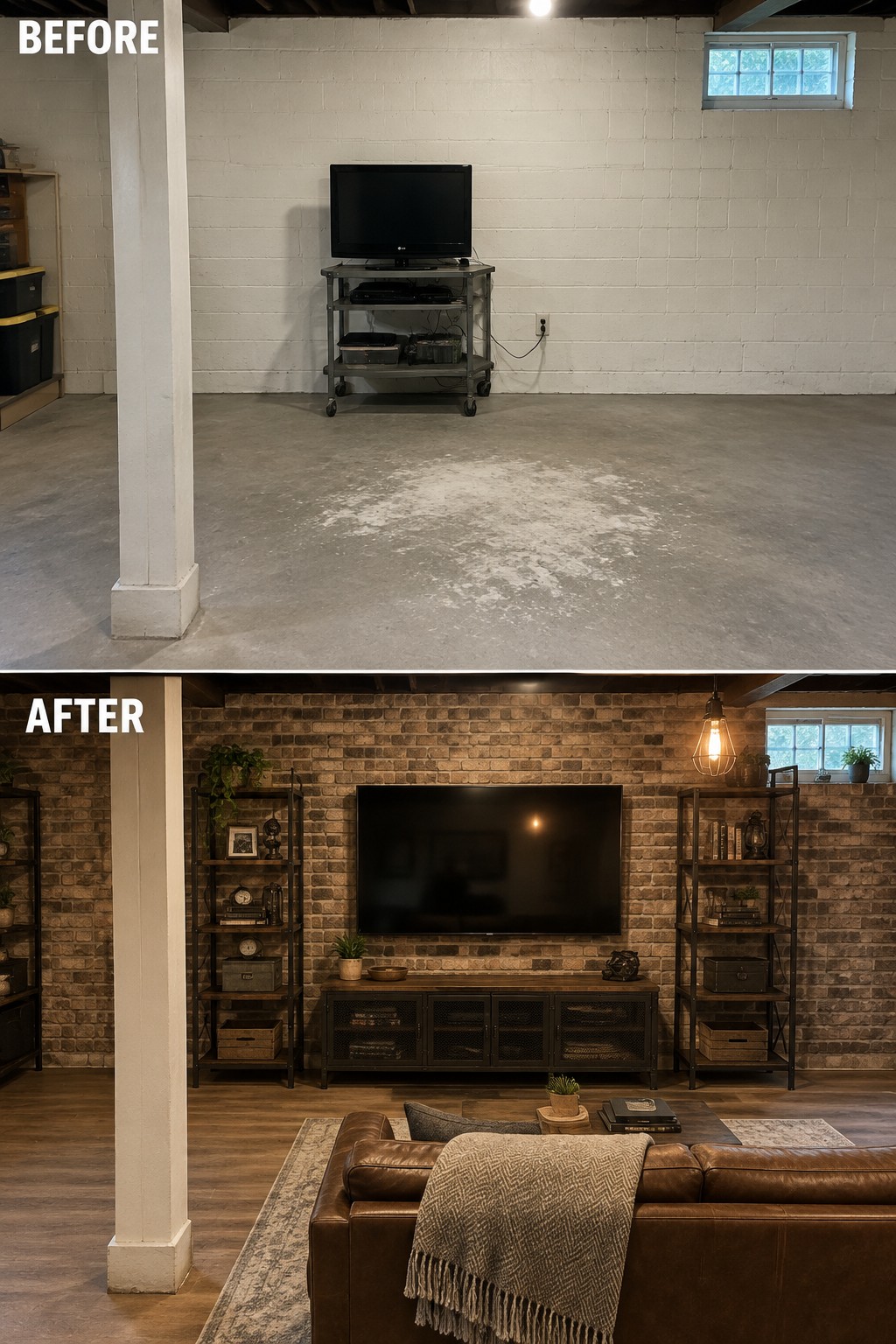
A TV setup can feel temporary in a basement with bare walls and an unfinished floor. Here, a brick media wall and wood flooring turn the screen into the center of a room that feels ready for everyday use.
For a similar effect, choose one clear wall for the TV and keep the furniture arrangement focused on it. A media console can hide equipment and cords, while shelves add storage without crowding the seating area.
Make A Small TV Room Feel Finished

A TV room works better when it feels like a place to sit, not just a place to store electronics. Here, the cluttered setup gives way to a wall-mounted screen and a simple chair, making the narrow basement feel more organized and useful.
In a small media area, keep the TV wall simple and choose seating that fits without blocking the path. A rug can help mark out the sitting area, while a slim wall-mounted cabinet keeps storage off the floor.
Add Storage To Finish The TV Area
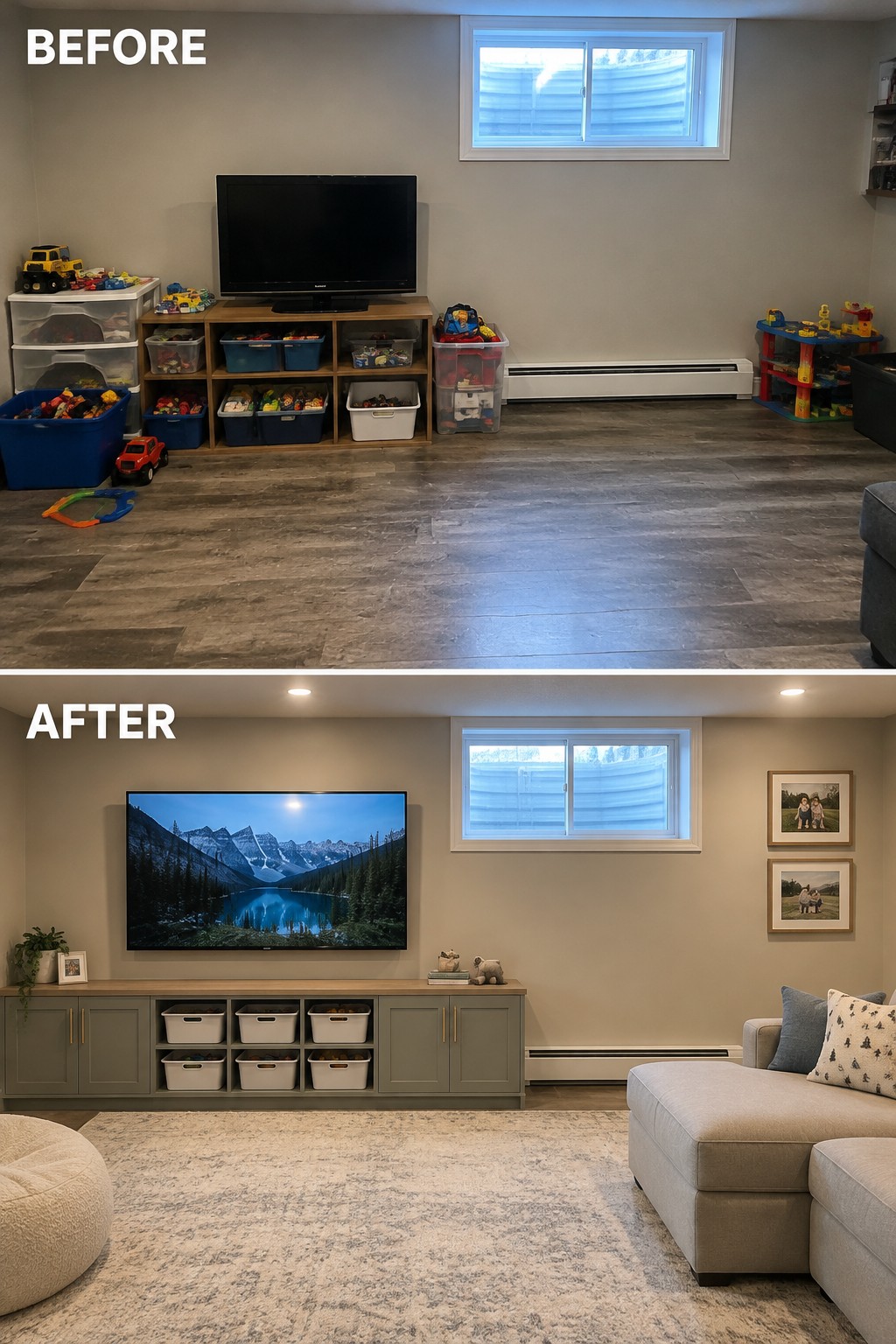
A basement TV space can feel cluttered when toys and media items have nowhere to go. Replacing open toy bins with a cabinet that has both doors and matching baskets gives the room a tidier look while keeping storage close to the screen.
This idea works well in family rooms that need to serve as both a play area and a place to watch TV. Use closed cabinets for items you do not need every day, and keep a few baskets within easy reach. Just leave enough floor space for people to move around comfortably.
Make A Basement Office Work As A TV Room

Replacing the cluttered work area with a longer desk and a wall-mounted TV gives this basement a clearer layout. The TV can serve as the room’s main viewing point, while a comfortable chair makes it useful for more than work.
In a small basement, keep the desk to one side and leave enough open floor for a separate seat or two. A rug can help mark the sitting area, but avoid crowding the room with furniture.
Make The TV Area Feel Finished

The media corner works better when the TV has a clear place in the room. Here, replacing the open, cable-cluttered setup with a tidier console and adding backlighting makes the screen wall feel more intentional without needing a major renovation.
For a basement TV area, start by organizing the cables and choosing a console that fits the wall and holds the equipment you actually use. A simple light behind the screen can help the TV stand out, but keep it subtle so it does not distract during viewing.
Turn A Narrow Basement Nook Into A TV Lounge
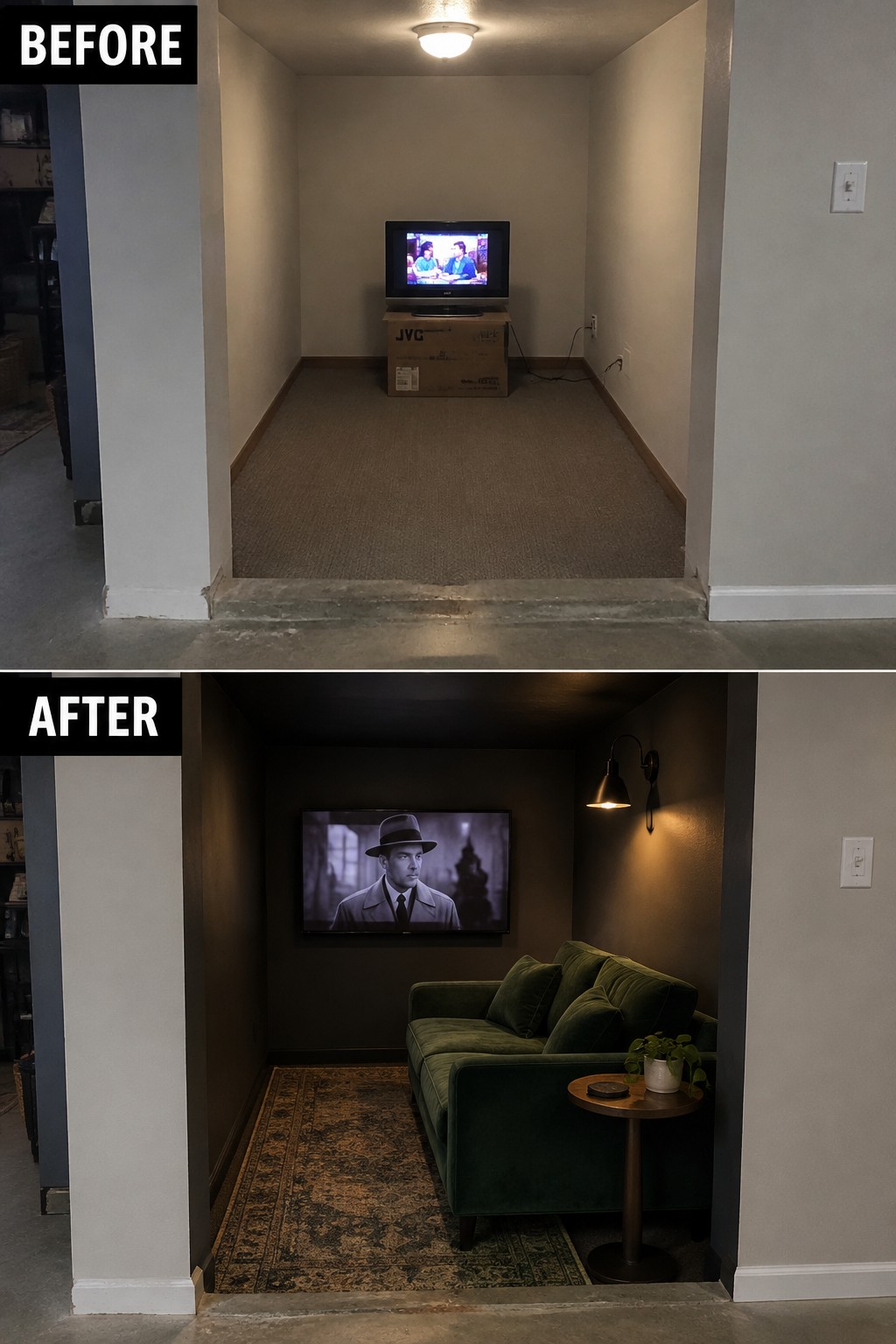
A TV in an empty basement nook can feel like a temporary setup. A wall-mounted screen and a sofa make the same small area feel like a place to sit and watch a movie, while a rug helps define the seating zone.
This idea works well in a basement alcove where there isn’t room for a full media-room layout. Keep the sofa scaled to the nook and leave a clear path through the space so it stays comfortable to use.
Replace Dated Built-Ins With A Simple TV Wall

The old shelving made the TV area feel crowded and dated. Replacing it with a wall-mounted screen and a low media console gives the TV more room and makes the basement feel like a comfortable living area.
This approach works well when built-ins take up more space than you need. Keep the console sized to the wall, and use a nearby shelf for a few books or decorative pieces rather than filling every surface.
Hide Basement Storage Behind A Barn Door

A built-in TV wall can make a basement feel more finished while keeping everyday storage out of sight. Here, the open closet is replaced by a sliding barn door, and the TV sits neatly within the surrounding cabinetry.
This idea works well when a basement has a closet or storage nook beside the media area. Match the door and built-ins for a unified look, but leave enough room for the door to slide without blocking seating or access.
Make A Basement TV Area Feel More Welcoming

Replacing the dark paneling with light horizontal boards makes the TV wall feel brighter and more like part of a living room. A simple console beneath the screen keeps the media area practical without making it feel like a row of electronics.
For a similar update, use a light wall finish to make a basement feel less closed in, then choose a console with storage for devices and everyday clutter. Keep the screen at a comfortable viewing height, and leave enough open floor space for seating.
Create A Dedicated Basement Home Theater

A basement TV area feels more purposeful when the screen becomes the room’s main feature. Here, a small television setup gives way to a large projection screen, making the space work better for movie nights.
For a similar setup, arrange seating to face one clear viewing wall and keep the screen size suited to the room. Darker finishes can help reduce distractions, but leave enough light for people to move around safely.
Make The TV Area Feel Like A Finished Living Room

A basement TV area can feel like a place to store old furniture rather than a room to spend time in. Replacing the dated cabinet and carpet with a low media console and wood flooring gives the space a clearer purpose, while a large rug helps define the seating area.
You do not need a full renovation to borrow the idea. Start with a comfortable sofa, a properly sized rug, and storage that keeps media equipment tidy. Leave enough open floor space to move around, especially in a basement that also needs to serve other uses.
Mount The TV To Free Up Floor Space
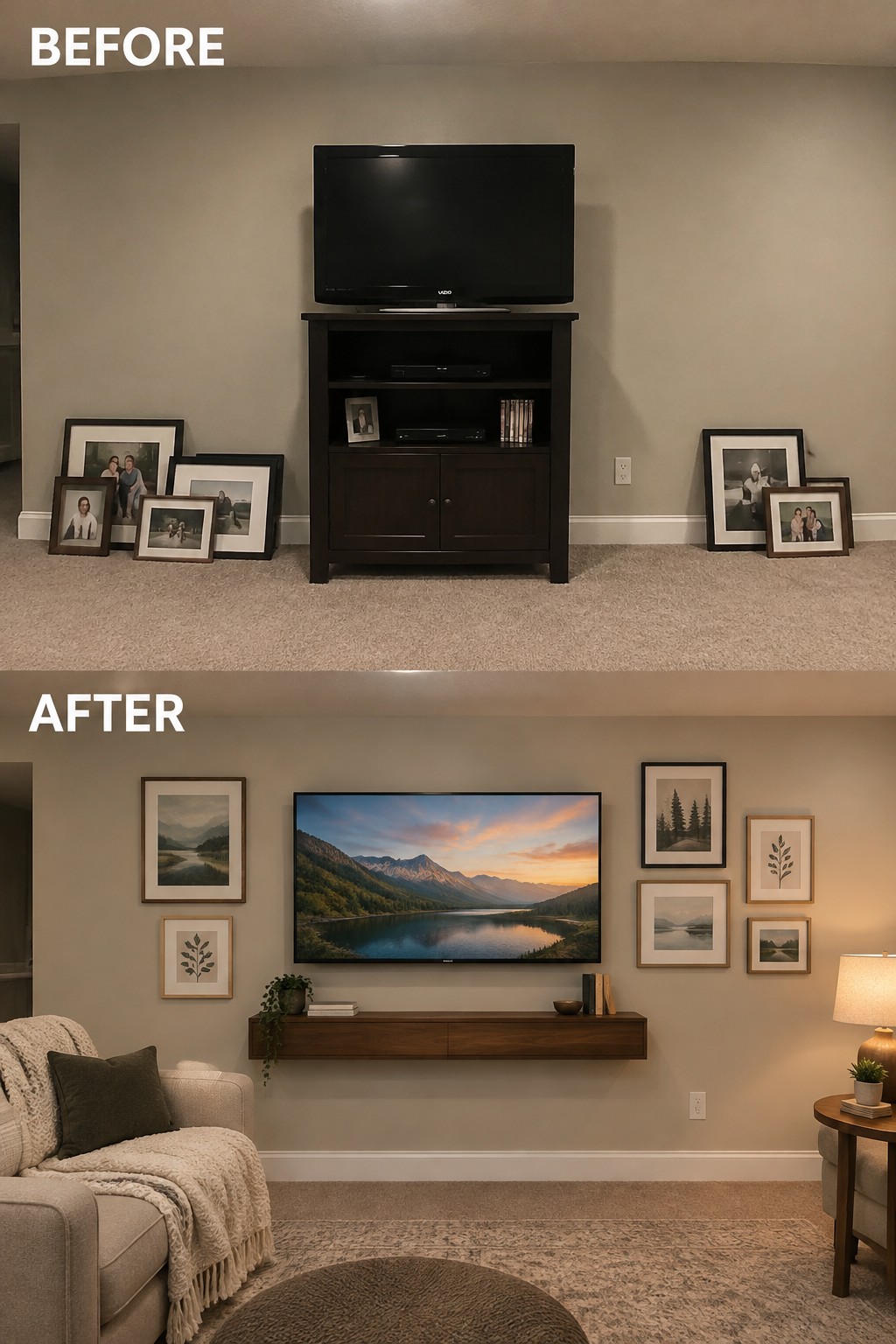
The makeover works because the bulky TV stand is replaced with a wall-mounted screen and a slim floating console. That keeps the TV as the main focus while leaving more open floor space.
This idea suits a basement media area where a large cabinet can make the room feel crowded. Choose a console with enough storage for the devices you use, and keep its width in proportion to the TV.
Make The TV Area Feel Like A Finished Living Room

A basement TV area can feel more like a real living room when the screen has a proper place and the seating area is clearly defined. Here, a longer media cabinet and a tall bookcase give the TV wall useful storage, while a rug marks out the spot for relaxing.
For a similar setup, choose storage that fits the wall without crowding the room, then use a rug large enough to sit under the main seating. This works well in a shared basement where you want the TV area to feel settled without turning the whole room into a theater.
Make The TV Wall A Clear Focal Point

A basement media area feels more finished when the TV is treated as part of the room rather than set up on its own. Here, a larger wall-mounted screen and a few simple accents replace the small TV sitting on a low console, giving the seating area a clear focus.
This idea works well in a basement where the TV is the main reason people gather. Choose a screen that suits the viewing distance, then keep the console uncluttered and add just a little wall decor or lighting. Leave enough open space around the setup so it still feels comfortable, not crowded.
Replace A Bulky TV Cabinet With A Wall-Mounted Screen

The old corner cabinet took up a lot of floor space and made the TV area feel dated. Mounting a larger screen on the wall gives it a clearer focal point, while a slim console keeps storage without the bulk.
This works well in a basement where floor space is limited. Keep the shelving simple and plan for cords and media equipment so the wall stays tidy and easy to use.
Make The TV Wall The Focal Point

A plain TV setup can make a basement feel more like a place to pass through than a room to settle into. Here, a dark accent wall and a wall-mounted screen give the media area a clear purpose, while the long console keeps the setup looking tidy.
For a similar effect, choose one wall for the TV and keep the surrounding furniture simple. A deeper paint color can help the screen feel at home, but check the room’s lighting first so the wall does not make a small basement feel too dark.
Frequently Asked Questions
Q: How can I make a basement TV area feel cozy instead of like a theater?
A: Use warm lighting, soft seating, and a rug to make the space feel more like a living room. Keep bright ceiling lights off during movie time and add lamps or dimmable wall lights instead.
Q: Where should the TV go if the basement has small windows?
A: Place it on a wall where daylight won’t create glare on the screen. If the windows are behind the seating, add simple shades so you can control the light without making the room feel closed in.
Q: Do I need special furniture to hide media equipment?
A: Not necessarily. A media console with doors can keep consoles, cables, and remotes out of sight while leaving enough room for airflow around the equipment.
Q: What should I do about sound traveling upstairs?
A: A thick rug, upholstered furniture, and curtains can soften sound in the basement. If you watch movies late, place speakers away from shared walls and keep the volume at a comfortable level.
