
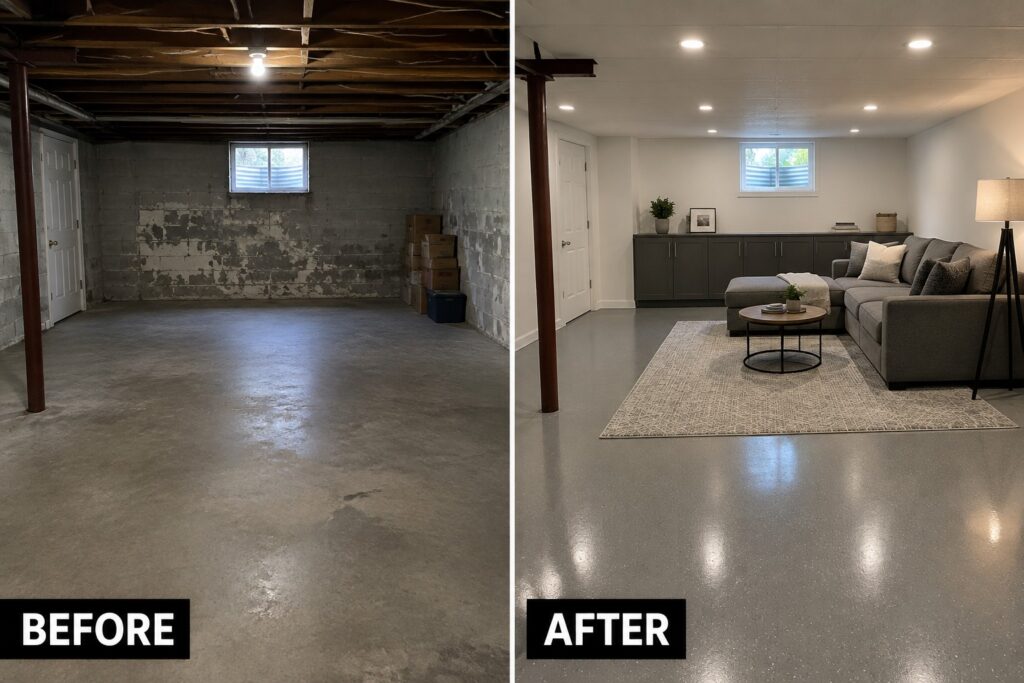
A basement with bare concrete floors can feel cold and unfinished, especially when the space has no clear purpose.
I’d start by thinking about how the room needs to work, then choose affordable floor updates that make it more comfortable and easier to use.
Even simple changes can help the basement feel more connected to the rest of the home, whether it becomes a family room, workspace, or extra bedroom.
I like ideas that improve the look without making the floor harder to maintain or stretching the budget too far.
Some options may be worth saving or adapting to suit your own basement.
Turn An Empty Basement Into A Usable Living Area

An unfinished basement can feel like wasted space, but it does not need a major addition to become useful. Here, a comfortable seating area and a rug help define the room, while finished walls and ceiling make it feel more like part of the home.
Start by dealing with any moisture concerns, then choose durable finishes that suit a below-grade room. A rug can mark out the seating zone, but leave enough clear floor space to move around easily.
Make A Basement Feel Like A Finished Room

A bare concrete basement can feel more like storage than living space. A sofa and area rug give the floor a clear purpose and make the room feel more comfortable without hiding the concrete walls.
Start by choosing a rug large enough to fit under the front legs of the seating, then arrange furniture so there’s still an easy path through the room. This idea works well in an open basement, but leave the furnace and other utility equipment accessible.
Make A Bare Basement Feel Like A Bedroom

An empty basement can feel cold and unfinished, but a simple bedroom setup gives the space a clear purpose. Here, wood-look flooring and a rug replace the bare concrete, while the bed makes the room feel ready to use.
For a similar room, choose a floor covering that suits your budget, then use a rug to mark out the sleeping area. Keep the furniture modest so there’s still room to walk around, especially in a narrow basement.
Turn An Unused Basement Into A Playroom

A basement can become a useful playroom without hiding every sign that it is a basement. Here, colorful floor tiles define a play area on the concrete, while low shelves make toys easier to reach and put away.
Use interlocking foam tiles to cover the main play zone and leave clear paths around furniture and storage. This is a practical option for a family basement, especially when you want a softer surface for kids without taking on a major flooring project.
Use A Checkerboard Floor To Define A Basement Game Area

An empty concrete basement can feel more like storage than a room. The black-and-white checkerboard floor in this makeover gives the open space a clear purpose and makes it feel ready for games and casual meals.
For a similar look, use affordable peel-and-stick floor tiles if the concrete is clean, dry, and level. Keep the furniture simple so the pattern stays easy to live with, and check that the floor is suitable for your basement’s moisture conditions.
Use A Rug To Define A Basement Seating Area

A large rug helps make an open basement feel like a room instead of leftover floor space. Here, the bare concrete becomes a clear seating area, with the rug giving the chairs and coffee table a shared place to sit.
Choose a low-pile rug sized so the front legs of the seating can rest on it, and leave a clear path around the edges. In a basement, check for dampness before adding one, and use a rug pad suited to concrete floors.
Make A Concrete Basement Feel Like A Finished Bedroom

An unfinished basement can feel more like a room once the concrete floor is covered and the space has a clear purpose. Here, carpet and a simple bed turn a bare area into a comfortable bedroom.
For a similar room, choose flooring that works with your basement’s moisture conditions, then keep the furniture to what you need. A small rug can help define the bed area if you’re not ready to cover the whole concrete floor.
Use A Rug To Define A Basement Seating Area

A rug helps make a concrete-floor basement feel like a room instead of an empty storage space. Here, a large patterned rug marks out the seating area and gives the polished floor a clear purpose.
Choose a rug large enough for the main furniture to sit partly on it, and leave some floor visible around the edges. This works well in open basements where you want a cozy spot to sit without building walls or taking on a major renovation.
Set Up A Basement As A Home Gym

Replacing loose equipment on bare concrete with rubber flooring and organized storage makes this basement more practical for workouts. The floor is easier to use for exercise and helps define the gym area.
For a similar setup, cover the workout zone with interlocking rubber tiles and keep weights on a rack instead of scattered across the floor. This works well in a small basement too, as long as you leave enough open space to move safely.
Make A Basement Work As A Small Home Office

The unfinished basement becomes more useful when part of it serves as a simple work area. A wood-look floor changes the feel of the bare concrete, and a desk gives the room a clear purpose without requiring a major renovation.
This idea works well in basements with a small window or an awkward open area. Choose flooring that suits a basement’s moisture conditions, then keep the desk and chair to a practical size so there’s still room to move.
Make A Basement Craft Room Feel Finished

Painting the concrete walls and adding a patterned floor covering turned this rough basement work area into a more comfortable craft room. A clear worktable still has room for projects, while the floor helps the space feel like a room rather than a storage corner.
For a similar setup, start by making sure the basement floor is clean and dry, then choose an affordable floor covering suited to the space. Keep storage close to the worktable so supplies stay handy without taking over the room.
Make A Basement Laundry Area Feel Finished

A laundry corner can feel much less like a utility space when the concrete floor and unfinished walls get a simple refresh. Here, a tiled floor and a fresh coat of paint make the machines feel at home rather than temporarily tucked into a basement.
For a similar update, choose practical flooring that can handle spills and keep the finish simple around the appliances. A couple of shelves above the machines can provide useful storage without taking up floor space.
Turn An Empty Basement Into A Small Dining Nook

A bare concrete basement can become useful without a major renovation. Here, wood flooring and a compact table-and-chair set turn an unused corner into a spot for a meal or a quiet cup of coffee.
In a small basement, keep the furniture light and leave a clear path through the room. A simple floor covering or click-together flooring can help define the nook, while a few warm bulbs make it practical to use in the evening.
Use Flooring To Make A Basement Feel Finished

Replacing bare concrete with wood-look flooring gives this basement a more comfortable foundation for everyday use. A rug helps mark out the seating area, so the room feels less like an unfinished storage space and more like a place to relax.
For a similar result, choose flooring that can handle basement moisture, and check that the subfloor is suitable before installing it. Then use a rug to define one seating zone without covering every inch of the floor.
Make A Bare Basement Feel Like A Living Room

The cracked, unfinished floor made this basement feel more like storage than a place to spend time. A smooth concrete finish and a clearly defined seating area make it easier to use as an everyday living room without covering the whole floor.
If you want to try this, repair and clean the concrete first, then choose a durable finish that suits your budget. Use a rug to mark the seating zone, and leave enough bare floor around it for easy movement.
Give A Basement Office A More Finished Look

A plain basement can work well as a home office once the floor and desk area feel intentional. Here, wood-look flooring replaces bare concrete, and a proper desk and chair take the place of a temporary setup.
For a budget-friendly update, look at floating laminate or vinyl plank made for below-grade rooms, and check the basement’s moisture conditions before installing it. A simple desk setup is enough to make the space useful without filling the open floor area.
Cover Concrete Floors With Affordable Tile

Replacing a cracked, plain basement floor with stone-look tile gives the room a more finished feel and makes the flooring itself a feature. The larger tile pattern suits an open basement, where small pieces could look busy.
If a full tile installation is outside your budget, use affordable porcelain or ceramic tile with a stone-like finish. Check that the floor is suitable for tile first, and choose a surface that won’t be too slippery.
Make A Basement Workbench Easier To Use

A clear work surface can make a basement workshop much more practical. Here, the cluttered bench is cleaned off and the tools are put within reach on a pegboard, so there’s room to work without hunting for what you need.
Start by clearing the bench and keeping only everyday tools nearby. A pegboard is useful when wall space is available, while a rubber mat can make standing on a concrete floor more comfortable. Keep heavier storage under the bench and leave enough open floor to move around safely.
Turn A Concrete Basement Into A Soundproof Music Room

An empty basement can become a practical music room by lining the walls with acoustic panels and adding a few comfortable furnishings. The panels give the space a clear purpose and help manage sound, while the rug and sofa make it more pleasant to use.
For a similar setup, cover the walls with sound-absorbing panels and leave enough room for instruments and movement. A rug can help define the main area, but check that any wall treatment is suitable for a basement’s moisture conditions before installing it.
Use A Runner To Cover A Concrete Basement Floor

A long runner can make a bare basement hallway feel more finished without covering the whole concrete floor. Here, the rug defines the walking path, while the dark flooring around it gives the narrow space a cleaner look.
Choose a low-pile runner that fits the hallway and has a non-slip backing. Leave some floor visible at the edges, and make sure doors can open freely.
Frequently Asked Questions
Q: Can I put flooring over my basement’s concrete without fixing anything first?
A: Check for damp spots, cracks, and uneven areas before covering the slab. Fix moisture problems first, or trapped dampness could damage the new floor.
Q: What’s an affordable flooring option for a basement with concrete floors?
A: Concrete paint is one of the least expensive ways to refresh a sound, dry floor. If you want a softer feel, look at budget-friendly vinyl, but make sure the product is suitable for below-grade rooms.
Q: Can I make a concrete basement floor feel warmer without replacing it?
A: Yes. Add area rugs where you spend the most time, such as beside the sofa or under a table. Choose washable rugs and use a rug pad made for concrete floors.
Q: Do I need to seal a concrete floor before painting it?
A: The floor needs to be clean, dry, and ready to accept paint. Test a small spot with a few drops of water: if they soak in, paint may bond more easily; if they bead up, check whether the concrete has a sealer that needs attention.
