

Basements can feel unfinished or awkward when storage is scattered and useful space gets lost to clutter.
I like how built-ins can give a room clearer structure while making everyday things easier to put away.
Shelves, cabinets, and benches can turn blank walls and neglected corners into practical parts of the room without making it feel crowded.
The best changes make a basement feel more settled and usable, and it’s satisfying to see how much a thoughtful layout can do.
I’d save the ideas that fit your home’s storage needs and adapt the details to make the space work for daily life.
Add Built-In Storage To Make A Basement More Useful

Built-in shelving turns a bare basement wall into practical storage and gives the room a more finished look. Here, the open shelving and lower drawers replace a cluttered rack, while keeping the wall space useful.
This idea works well in basements where storage needs to stay accessible but loose bins take over the room. Plan the shelves around what you need to store, and leave enough clear floor space to move around comfortably.
Turn Under-Stair Clutter Into Built-In Storage

The space under the stairs was being used for paint and supplies, but open shelving left everything visible and hard to organize. Built-in drawers make better use of the awkward footprint and give the area a much tidier purpose.
This idea works well in basements and entryways where every bit of storage helps. Measure carefully around the sloped ceiling, then choose drawers sized for what you actually need to store.
Add Built-In Storage To A Basement Laundry Room

Replacing a cluttered laundry setup with stacked machines and fitted cabinets makes better use of a small basement room. The built-in storage keeps supplies and laundry baskets in their own places, while leaving a clear work surface for folding.
This idea works well when floor space is limited. Measure the machines and allow room for doors and drawers to open, then choose storage that fits the remaining space rather than crowding the walkway.
Turn A Basement Wall Into A Foldaway Bed

A built-in wall bed makes a basement guest room more useful without leaving a bed in the way every day. Here, a plain futon is replaced by a cabinet-style bed flanked by shelves and drawers, so the room can serve as a sitting area or play space when guests are gone.
This idea works well in a narrow basement or multipurpose room where floor space is limited. Choose a bed system that fits the wall and leave enough clearance for it to open fully. The side storage also gives everyday items a proper place to go.
Create A Built-In Playroom That Stays Organized

The basement playroom goes from scattered toys and a folding table to a more useful space with built-in cubbies and a bench. Labeled baskets give toys a clear place to go, while the bench adds seating without taking up the open floor.
This setup works well in a family room or basement where toys tend to spread out. Use baskets that are easy for children to reach, and keep labels simple so cleanup is easier to maintain.
Create A Built-In Basement Workspace

Replacing a crowded temporary desk setup with a fitted work surface and built-in cabinets makes this basement office easier to use every day. The drawers and shelves give paperwork and supplies a place to go, while keeping the desk area clear.
This idea works well in a basement corner or spare room where storage tends to pile up. Plan the desk and cabinets around the space you have, and leave enough room for the chair to move comfortably.
Turn A Bare Basement Wall Into Built-In Storage

The empty basement wall becomes much more useful with a long run of built-in cabinets, open shelves, and a wine rack. It replaces the cluttered freestanding shelving with storage that gives the room a clear purpose.
This idea works well in basements with a wide, unused wall. Plan the cabinet sections around what you need to store, and leave enough open shelving for items you reach often. Keeping the units low also leaves the wall above them open.
Create A Built-In Craft Storage Wall

The basement craft area works better when supplies have a proper place. Tall cabinets replace open shelving, while labeled drawers and a pegboard keep everyday materials easy to find and the work surface clear.
This setup suits a basement hobby room where storage needs to stay close to the work area. Plan the shelves and drawers around the supplies you actually use, and leave enough open counter space to work comfortably.
Build A Built-In Home Gym Storage Wall

The open gym equipment is easier to manage once it has a proper place. A built-in wall groups the weights and exercise gear together, while the bench gives the basement a useful spot to sit or stretch.
For a similar setup, plan the shelves around the equipment you already own and leave enough room to move safely. Tall compartments work well for long items like bars and foam rollers, while drawers can hide smaller pieces.
Turn A Basement Hallway Into A Built-In Mudroom

The open shelves and shoes made this basement hallway feel more like a storage aisle than a useful passage. Tall built-in cabinets turn the same narrow space into a mudroom, with a bench at the end for sitting and keeping everyday items in order.
This idea works well in a basement hall where you need storage but still need a clear path through. Use cabinets that fit the wall, and keep the bench compact so the walkway does not feel crowded.
Turn A Basement Window Nook Into Built-In Storage

Built-in bookcases can make an awkward basement wall useful while leaving room for a comfortable seat. Here, shelving and cupboards flank a window seat, replacing an empty stretch of wall with storage and a place to sit.
This idea works well where a basement has a window but little space for separate furniture. Keep the seat depth practical and use closed cabinets below to tuck away items you do not want on display.
Hide Basement Clutter Behind Built-In Cabinets

A basement can hold plenty of useful supplies and still feel messy when everything is out in the open. Here, a fitted cabinet system gives storage a clear place and hides most of the clutter behind louvered doors. The labeled bins inside also make it easier to find things without unpacking every shelf.
This idea works well along a basement wall where pipes or mechanical equipment limit other uses. Measure around those fixed features, leave enough clearance for access, and choose sturdy shelves and bins that suit what you actually store.
Add A Built-In Vanity To Make A Small Bathroom Work Better

Replacing a pedestal sink with a vanity makes better use of a tight bathroom. The drawers and cabinet provide a place for everyday items, while a mirrored cabinet adds storage without taking up more floor space.
This idea works well in a small bathroom where clutter tends to collect around the sink. Measure carefully so the vanity leaves enough room to move, and choose a size that fits the plumbing and the space.
Replace A Temporary TV Stand With Built-In Media Storage

The basement TV area works better when storage is built around the screen instead of relying on a small rolling stand. A long built-in unit gives games and equipment a place to go, while the TV stays the clear focus of the wall.
This idea suits a family room where consoles, cables, and board games tend to collect. Plan shelves for the items you use often and closed cupboards for the rest, and leave enough open space around the equipment for ventilation.
Turn A Basement Entry Into A Built-In Mudroom
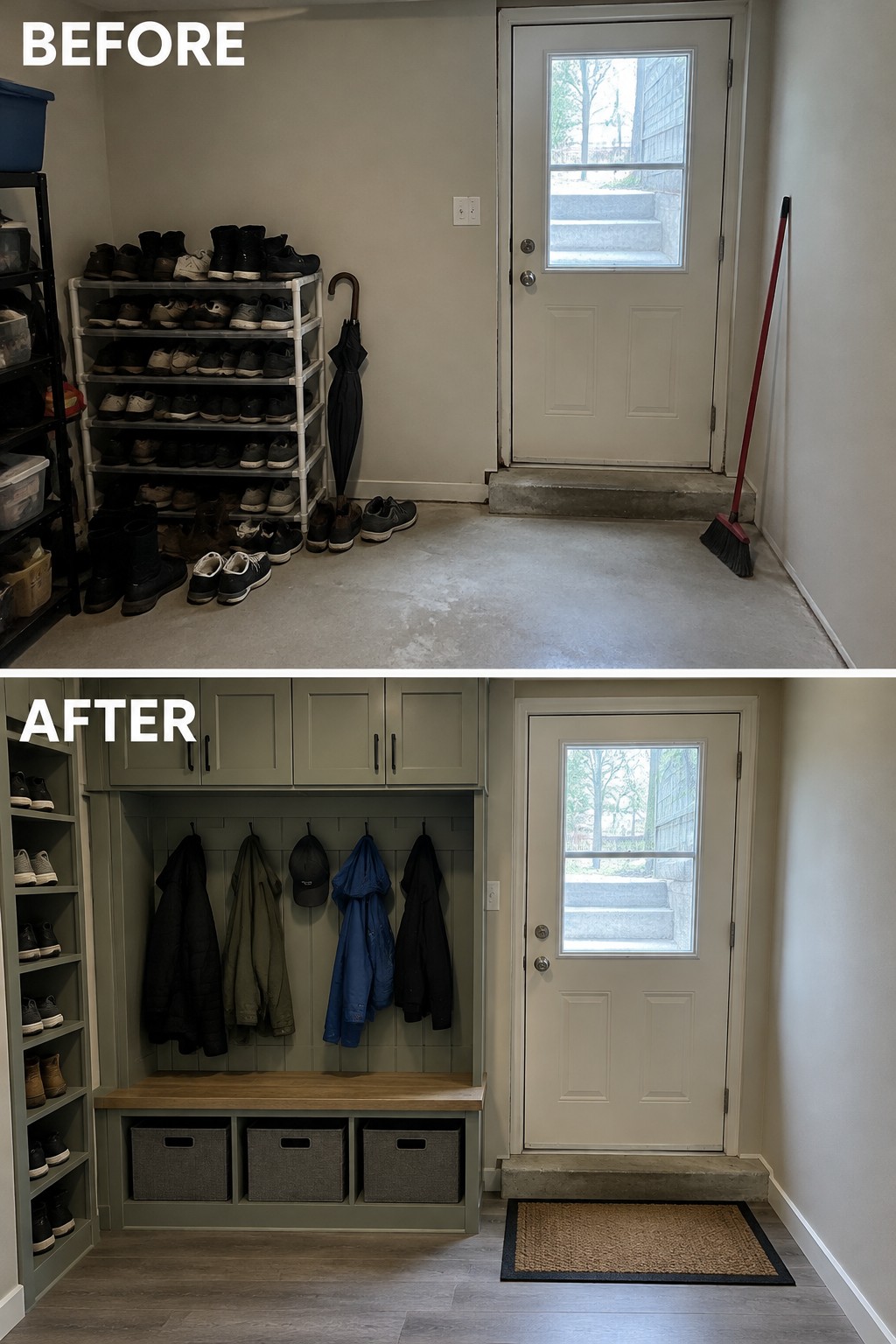
A built-in mudroom makes a basement entry much easier to keep tidy. Here, a row of shoe shelves and loose items gives way to a bench, coat hooks, cabinets, and cubbies, so everyday gear has a clear place to go.
This idea works well near a basement door or other busy entrance. Size the bench and storage to the wall, and leave enough room to walk through comfortably. Baskets are handy for smaller items that tend to collect by the door.
Organize A Basement Pantry With Pull-Out Shelves

A crowded basement pantry is hard to use when cans and supplies sit in deep, fixed rows. Pull-out shelves make the contents easier to reach, while labeled baskets keep smaller items grouped together.
This approach works well in a narrow storage room where there is little space to step inside and search. Measure carefully before adding drawers, and leave enough room for them to slide out without blocking the doorway.
Turn A Basement Storage Room Into A Built-In Wine Cellar

Replacing stacked boxes and open shelving with fitted wine storage gives this basement a clear purpose and keeps bottles organized. The central wine fridge also makes it easy to store bottles at a steady temperature.
This idea works well in a basement corner or small room that stays cool and dry. Check for moisture before installing wood cabinetry, and leave enough room for the fridge to ventilate and for bottles to be reached comfortably.
Replace A Clothing Rack With A Built-In Closet
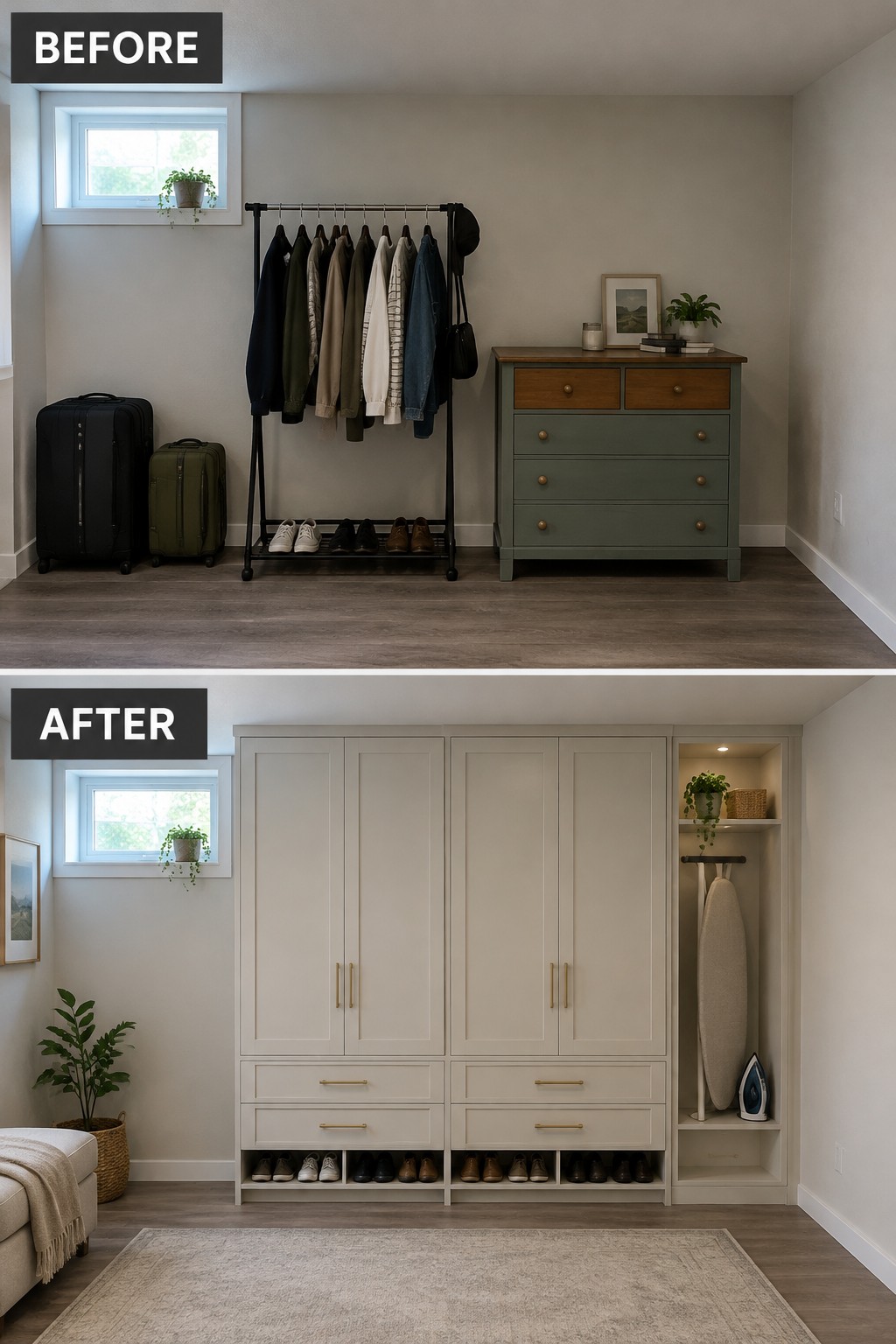
A freestanding rack can work for a while, but it leaves clothes and shoes in the open and uses floor space without offering much organization. Replacing it with floor-to-ceiling cabinetry gives a basement room a proper place for hanging clothes, folded items, and shoes.
For a similar setup, plan the cabinet sections around what you actually need to store, and include a few open shelves if you want quick access to everyday items. Measure carefully around windows and leave enough room for doors and drawers to open easily.
Create A Built-In Media Wall For Basement Movie Nights

Replacing the bare concrete wall with built-in media storage gives this basement a clear purpose as a movie room. The large screen now sits at the center, while cabinets and shelves provide places for equipment and other items instead of leaving them on the floor.
For a similar setup, plan the screen and storage together so the shelves fit the equipment you actually use. Built-ins work especially well on a long basement wall, but keep cabinet depth modest to leave enough room for seating and walking.
Clear Basement Clutter With Built-In Cabinets

Replacing scattered boxes and open shelving with wall-to-wall cabinets gives a basement a much tidier feel. In this makeover, the cabinets keep everyday clutter behind closed doors, while a row of labeled bins overhead makes seasonal items easier to sort.
This approach works well when you need storage but also want to keep the floor clear. Measure carefully around doors and utility panels, and save open shelves or labeled bins for items you reach only occasionally.
Frequently Asked Questions
Q: How do I add built-in storage without making a small basement feel cramped?
A: Keep bulky cabinets along one wall, and use shallow shelves or drawers in tight spots. Leaving some wall space open helps the room feel less boxed in.
Q: What should I store in basement built-ins?
A: Put things you use often, like games, books, or extra blankets, where you can reach them easily. Use closed cabinets for seasonal items and anything you’d rather keep out of sight.
Q: Can built-in storage work around basement pipes or a support post?
A: Yes. A carpenter can shape shelves or cabinets around them, or you can leave the obstruction exposed and build storage beside it. Make sure access panels and shutoff valves stay easy to reach.
Q: Is it better to use open shelves or closed cabinets?
A: Open shelves make everyday items easy to grab, while doors hide clutter and protect stored belongings from dust. A mix of both usually works well in a family basement.
