
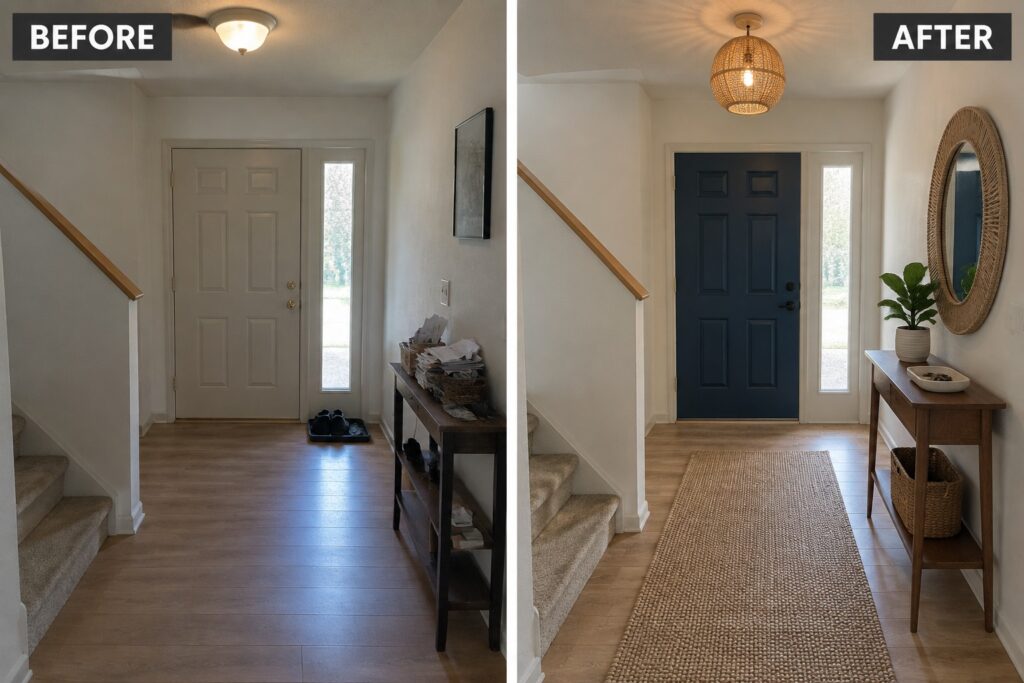
A builder-basic foyer can feel like an afterthought, especially when it lacks storage, lighting, or a clear place to pause when you come home.
I find that even a small entryway works better when its layout supports daily routines instead of leaving shoes, bags, and keys to collect wherever they fit.
Thoughtful color, a useful bench, or a few well-chosen details can give the space more character while making it feel organized and connected to the rest of the house.
The change does not have to be complicated to make a plain entrance feel more finished.
I’d save the ideas that suit your home’s size and try the ones that solve a real frustration first.
Make A Small Entryway Feel Finished
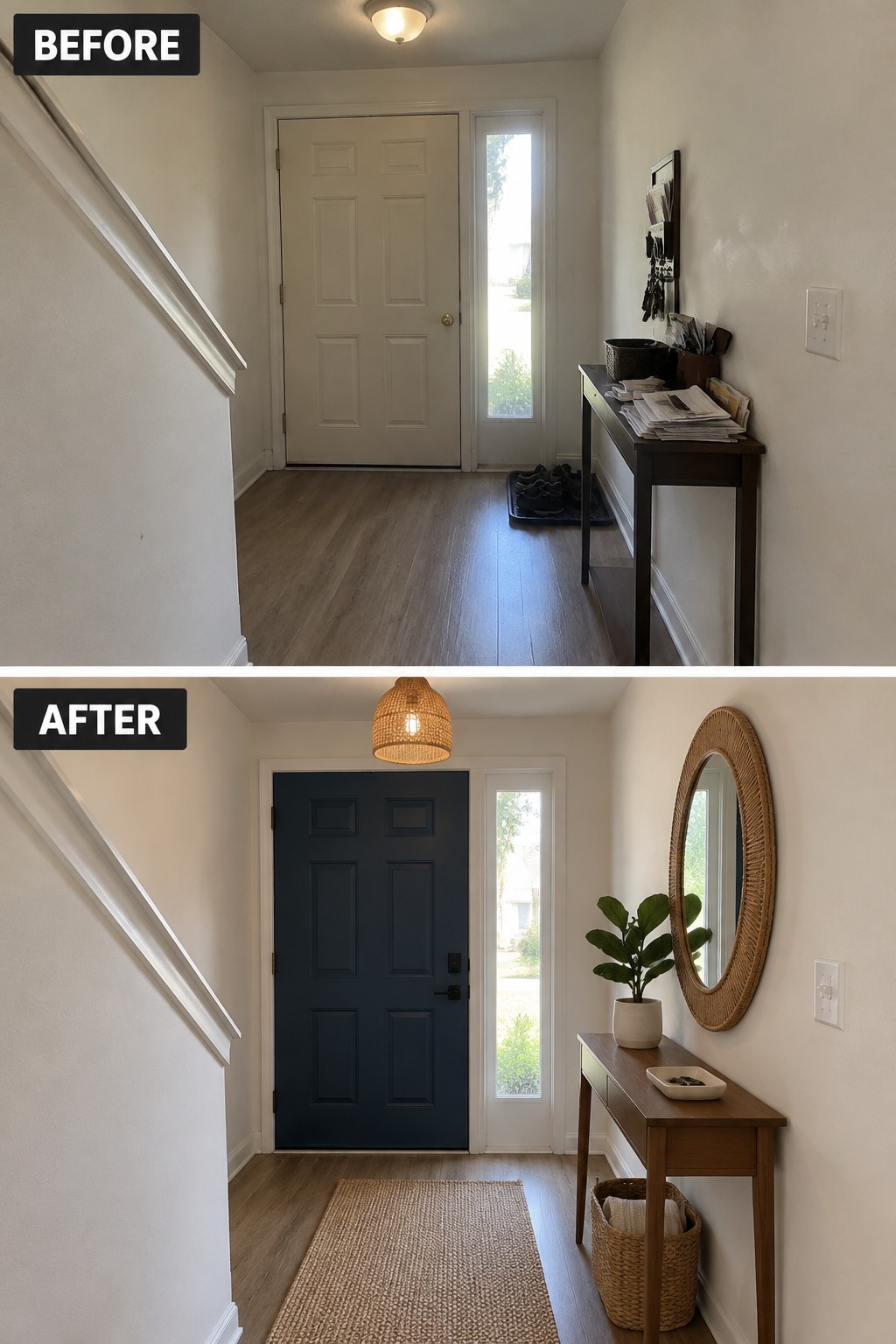
A plain foyer can feel more welcoming with one clear focal point and a few useful finishing touches. Here, painting the front door a deep color gives the entry more character, while a runner helps define the narrow walkway.
Try this in a compact entry where there isn’t room for much furniture. Keep the console top fairly clear, and choose a slim table so there’s still space to pass through comfortably.
Add Useful Storage To A Narrow Entryway
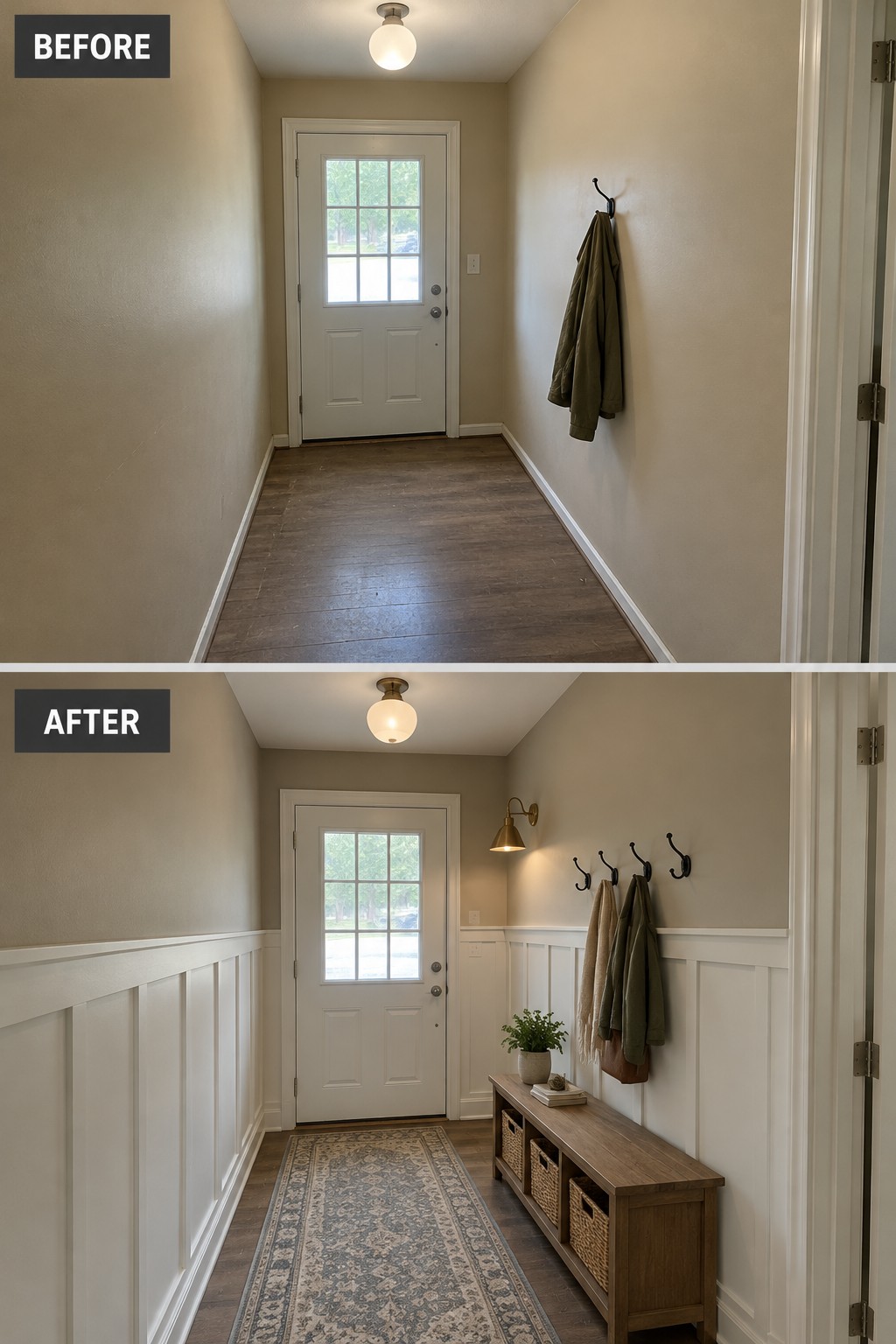
The plain hallway becomes more practical when the wall space is used for storage. A bench with baskets gives shoes and everyday items a place to go, while the wall hooks keep coats off the floor.
This idea works well in a narrow foyer where a full cabinet would take up too much room. Choose a slim bench and leave enough clearance for the door and walkway; a runner can help define the path without making it feel crowded.
Give A Narrow Entryway A Clear Purpose
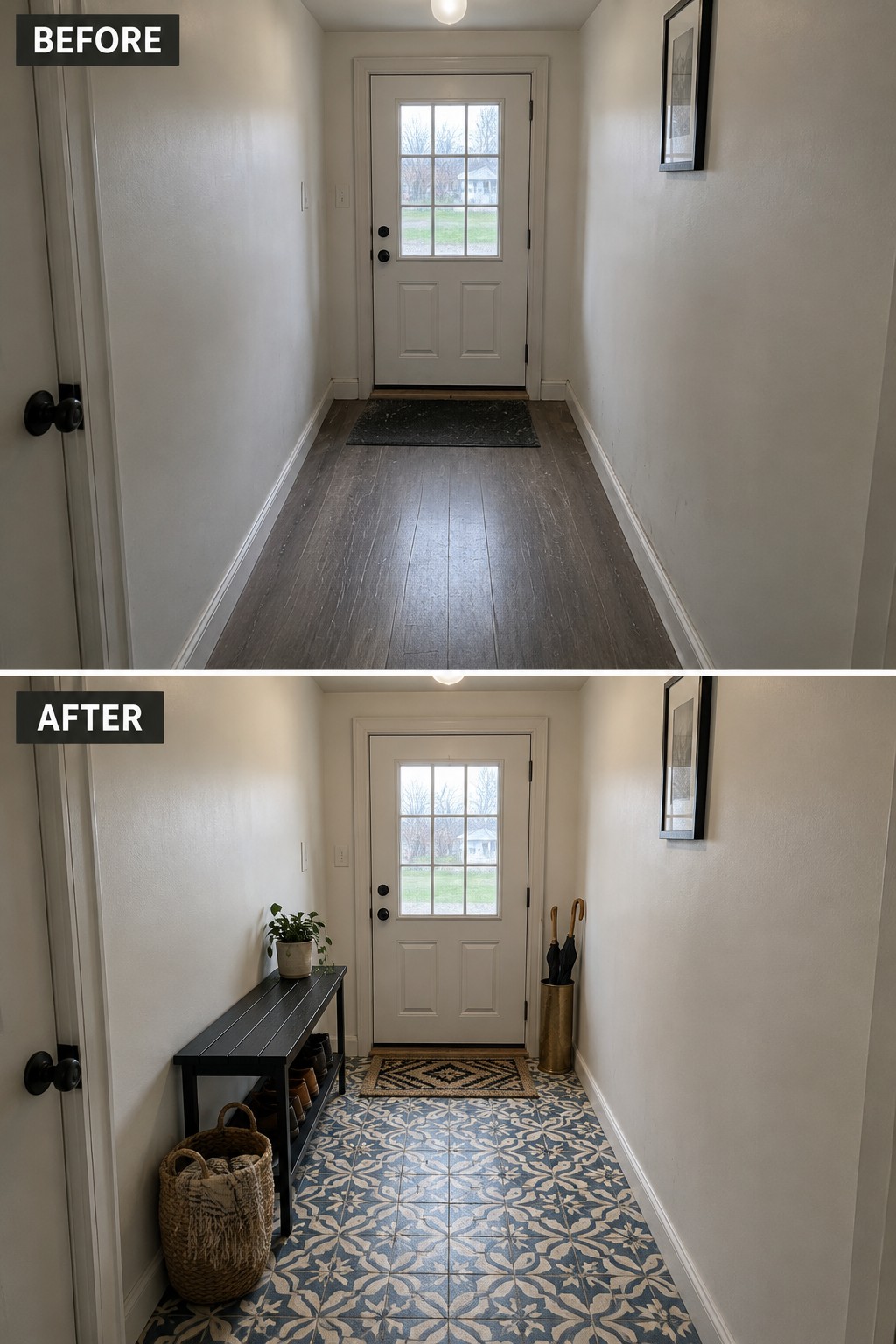
A small entry hall can feel bare and awkward when it has no place for everyday items. Replacing the plain flooring with patterned tile and adding a slim bench makes the area more useful without taking up too much room.
In a narrow foyer, choose shallow furniture and leave a clear path to the door. A bench with shoe storage can help keep clutter off the floor, while tile gives the entry a practical, easy-to-clean surface.
Turn An Empty Closet Into A Useful Entryway
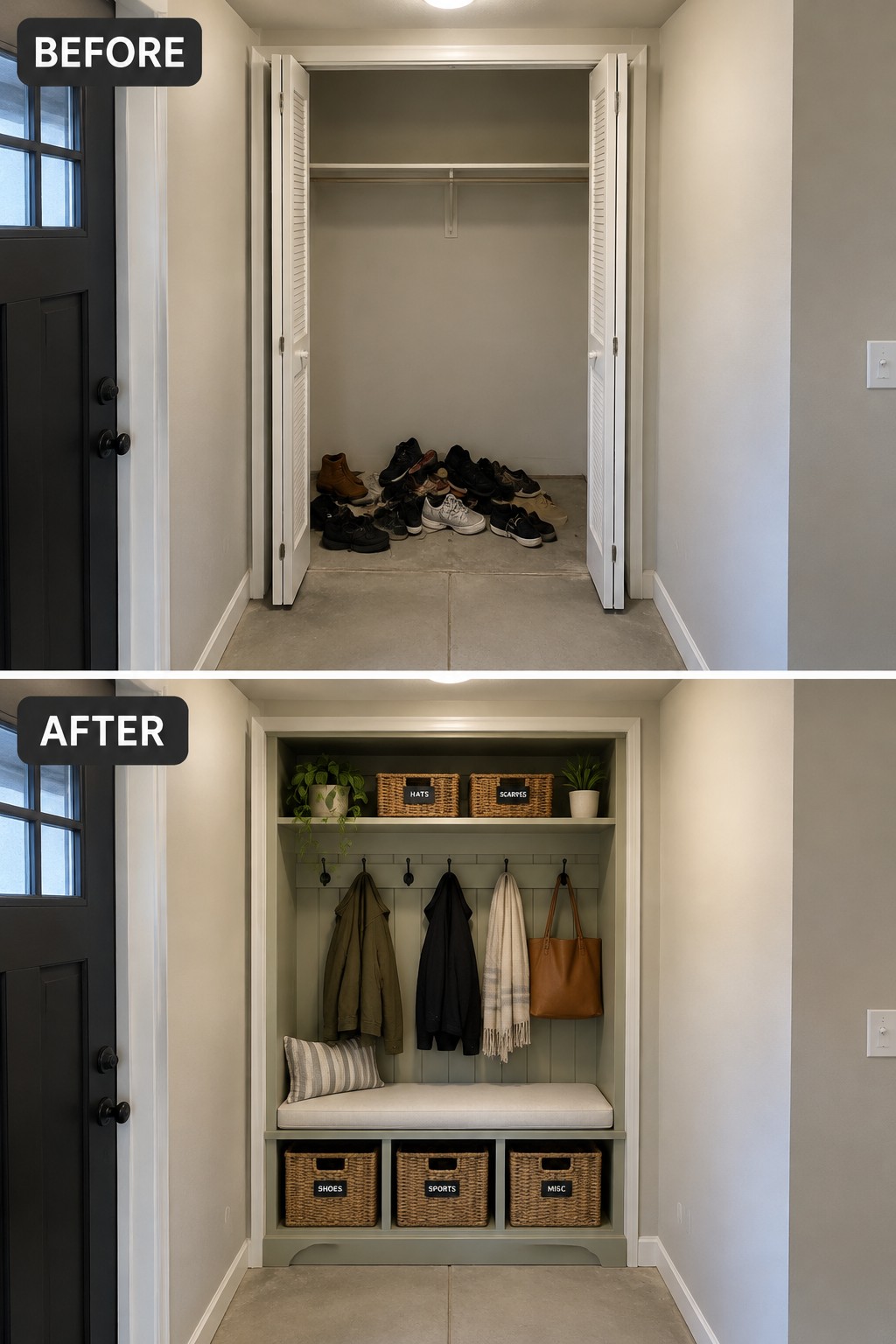
A coat closet can do more than hide shoes. In this foyer, built-in hooks, a bench, and lower storage turn an empty closet into a practical place to sit and put things away. The labeled baskets also make it easier to keep everyday items sorted.
This idea works well near a front or side door, especially when there isn’t room for a separate mudroom. Keep the bench clear enough to use, and choose baskets that fit the shelves so the storage doesn’t become another clutter spot.
Use Lighting To Make A Plain Entryway Feel Finished
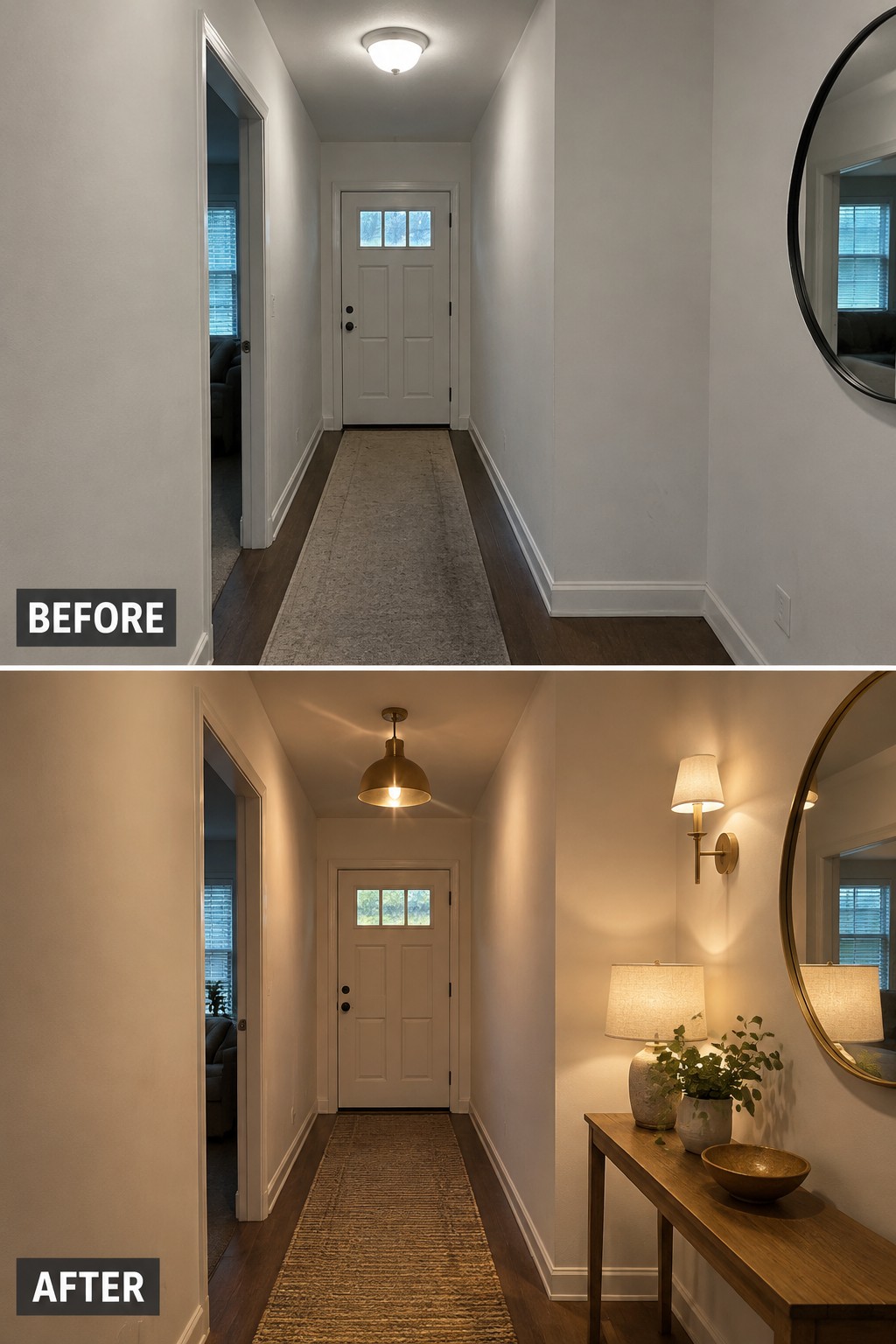
The hallway feels more welcoming after the single ceiling light is replaced with a pendant and a wall sconce brightens the console area. The layered lighting gives this narrow entryway a more finished look without changing its layout.
In a similar space, use a ceiling fixture for general light and add a sconce near a mirror or console. Choose fixtures that fit the hallway’s scale, and keep the walkway clear.
Use Wallpaper To Give A Plain Entryway More Character
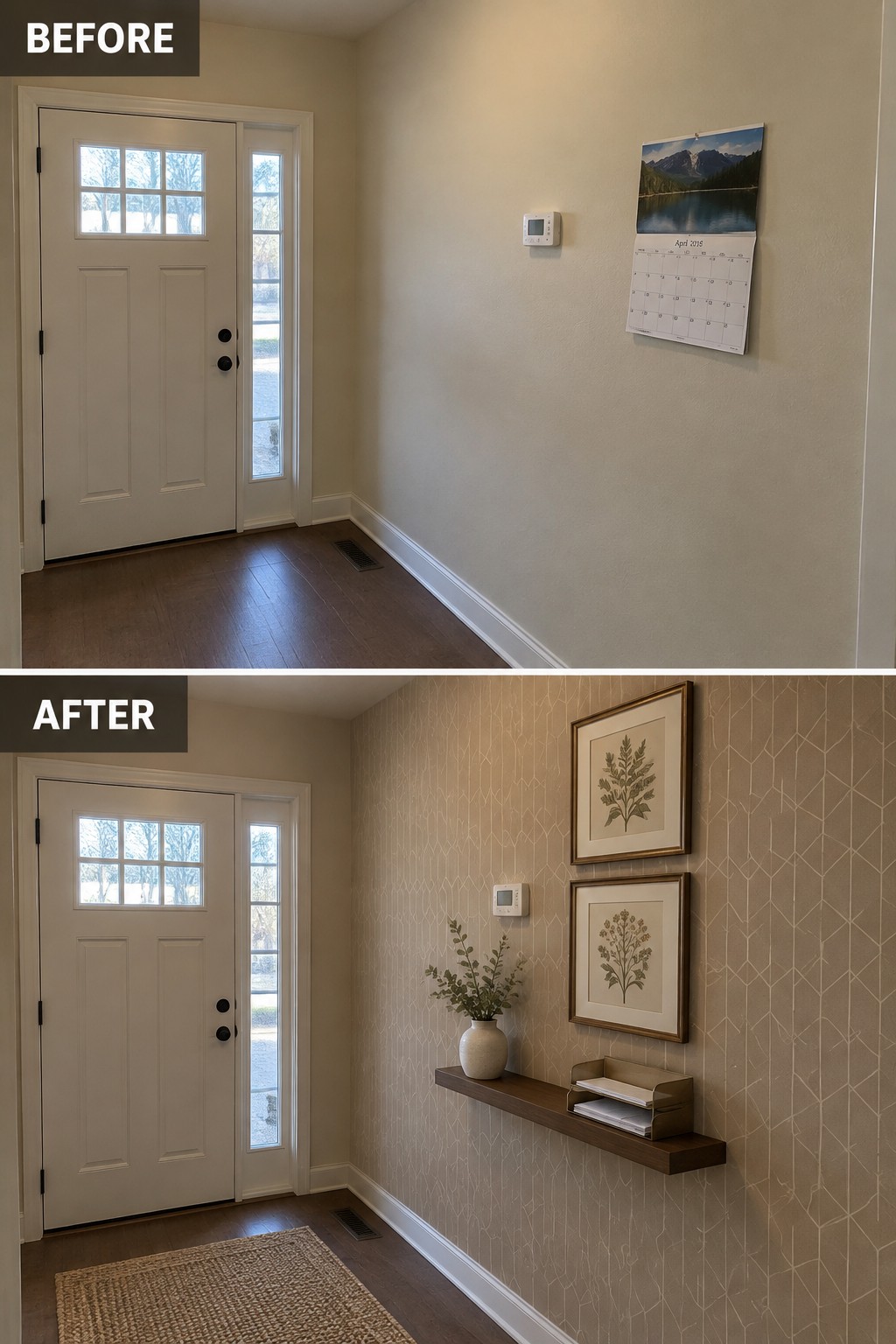
A plain entryway can feel unfinished even when it is clean and functional. Here, patterned wallpaper gives the wall a clear focal point, while a slim floating shelf makes the space more useful without taking up much floor area.
This idea works well in a small foyer where there is room for wall decor but not for a console table. Choose a pattern that suits the rest of your home, and keep the shelf lightly styled so the entry still has space to move through.
Replace A Solid Entry Door With A Glass Door
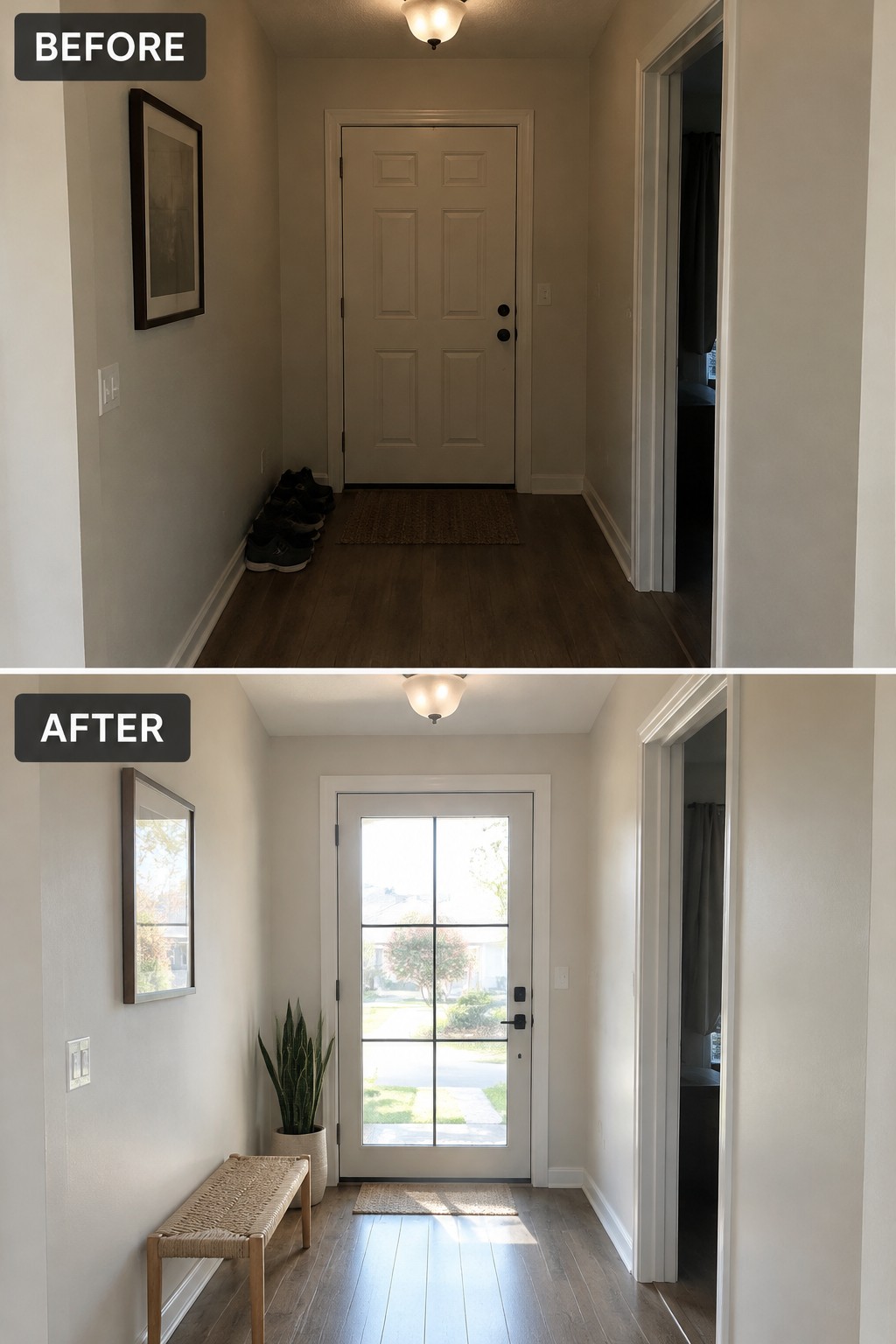
Replacing the solid front door with a glazed one brings much more daylight into a narrow entry. In this makeover, the glass door makes the foyer feel brighter and more open without changing its basic layout.
This idea works well in a dim entry where privacy is not a major concern. Choose glass that suits your privacy needs, and keep the walkway clear so the added light does not come at the cost of usable space.
Turn An Empty Entryway Into A Useful Drop Zone
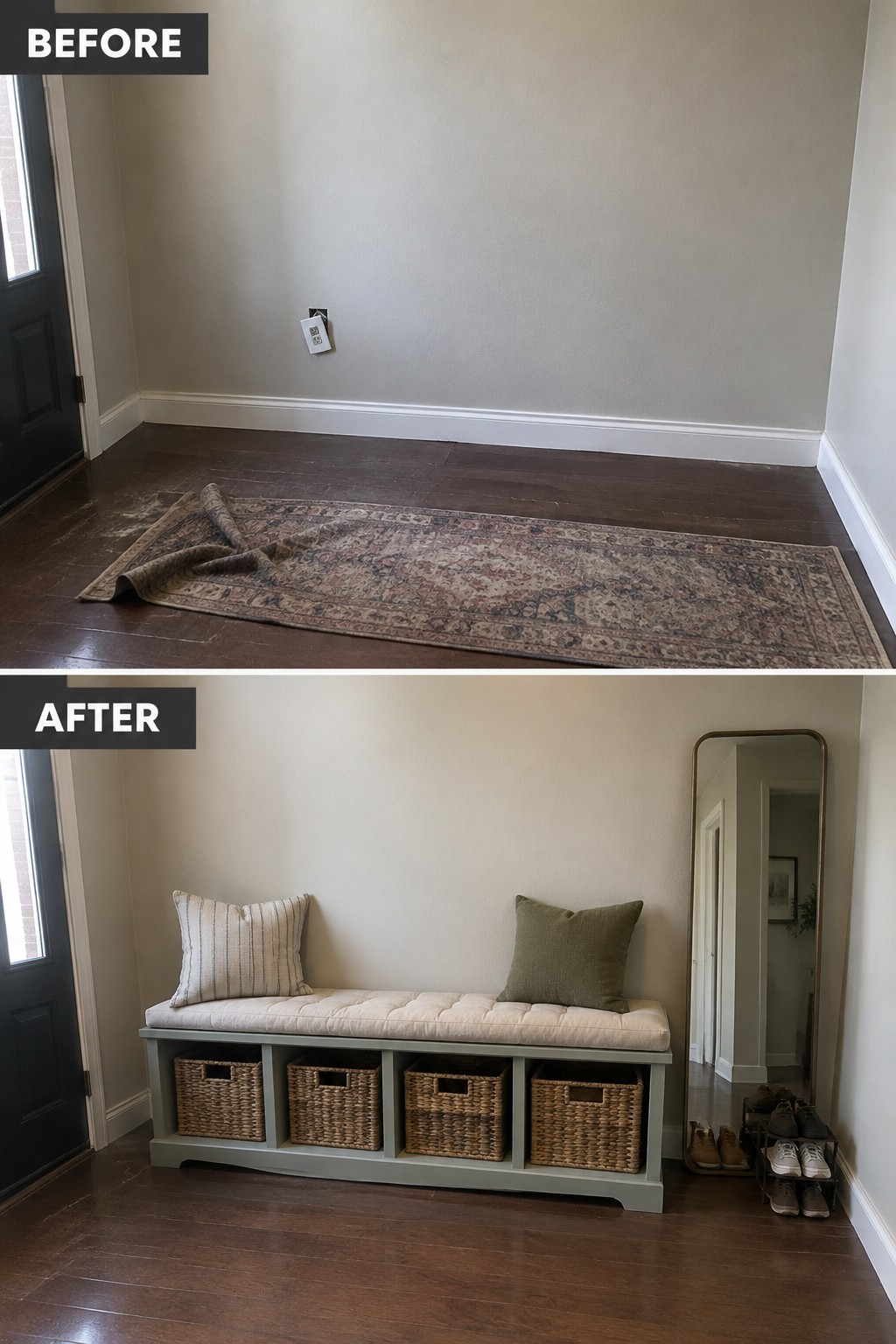
An empty foyer can feel unfinished, especially when shoes and bags have nowhere to go. A storage bench gives the space a clear purpose: the seat is handy when putting on shoes, and baskets underneath keep everyday items contained.
This idea works well in a small entry where a bulky cabinet would take up too much room. Choose a bench that fits the wall without blocking the doorway, and leave enough space to walk through comfortably.
Turn A Blank Entryway Wall Into A Useful Landing Spot
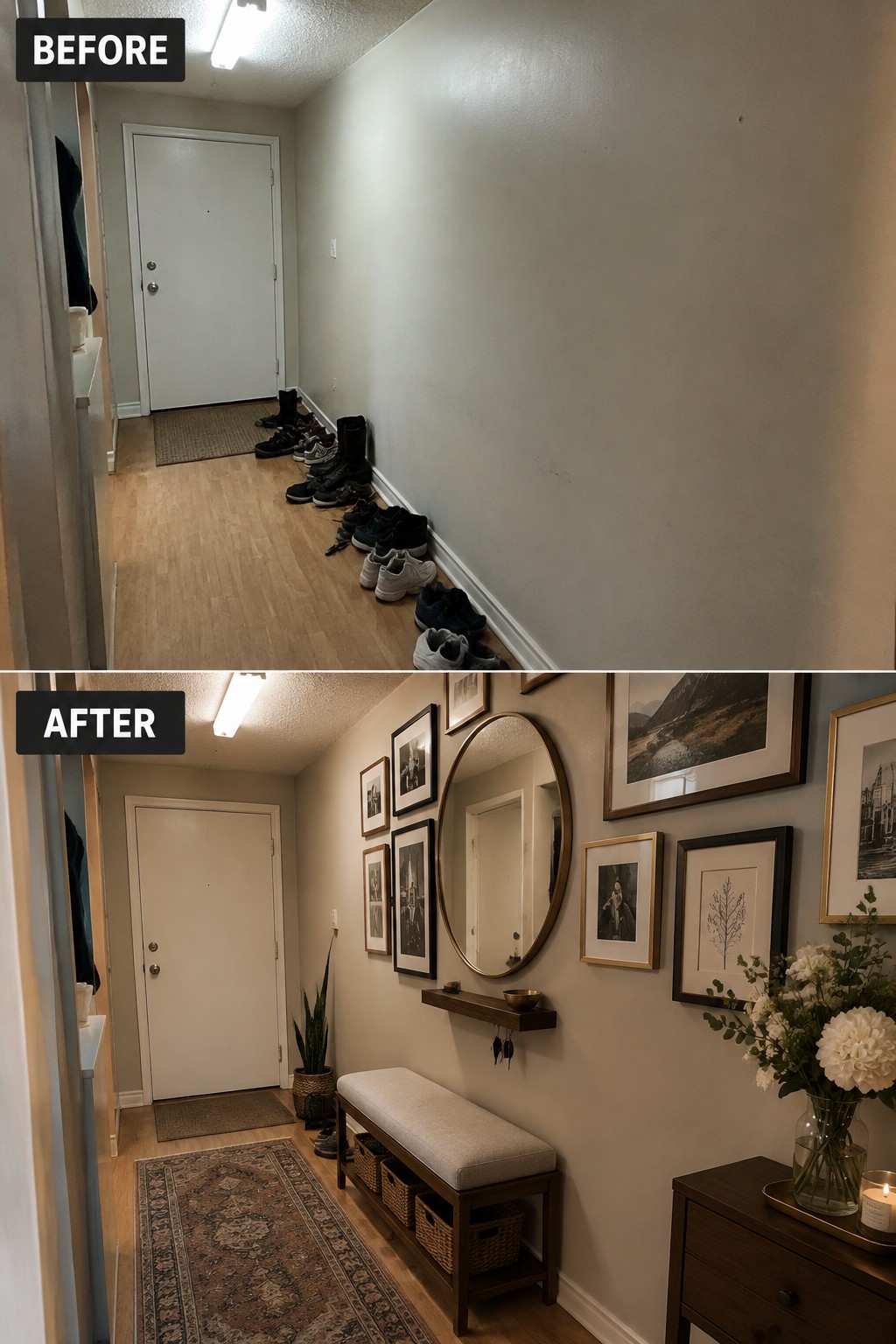
A long, bare wall can make an entryway feel unfinished, especially when shoes end up scattered along the floor. A slim bench with storage underneath gives the space a place to sit and tuck things away, while wall decor helps the narrow hall feel more considered.
This idea works well in a hallway where there isn’t room for a full coat closet or bulky furniture. Choose a bench that leaves enough space to walk past, and use baskets underneath for shoes or everyday items.
Replace A Plain Entry Door With A Wood Door
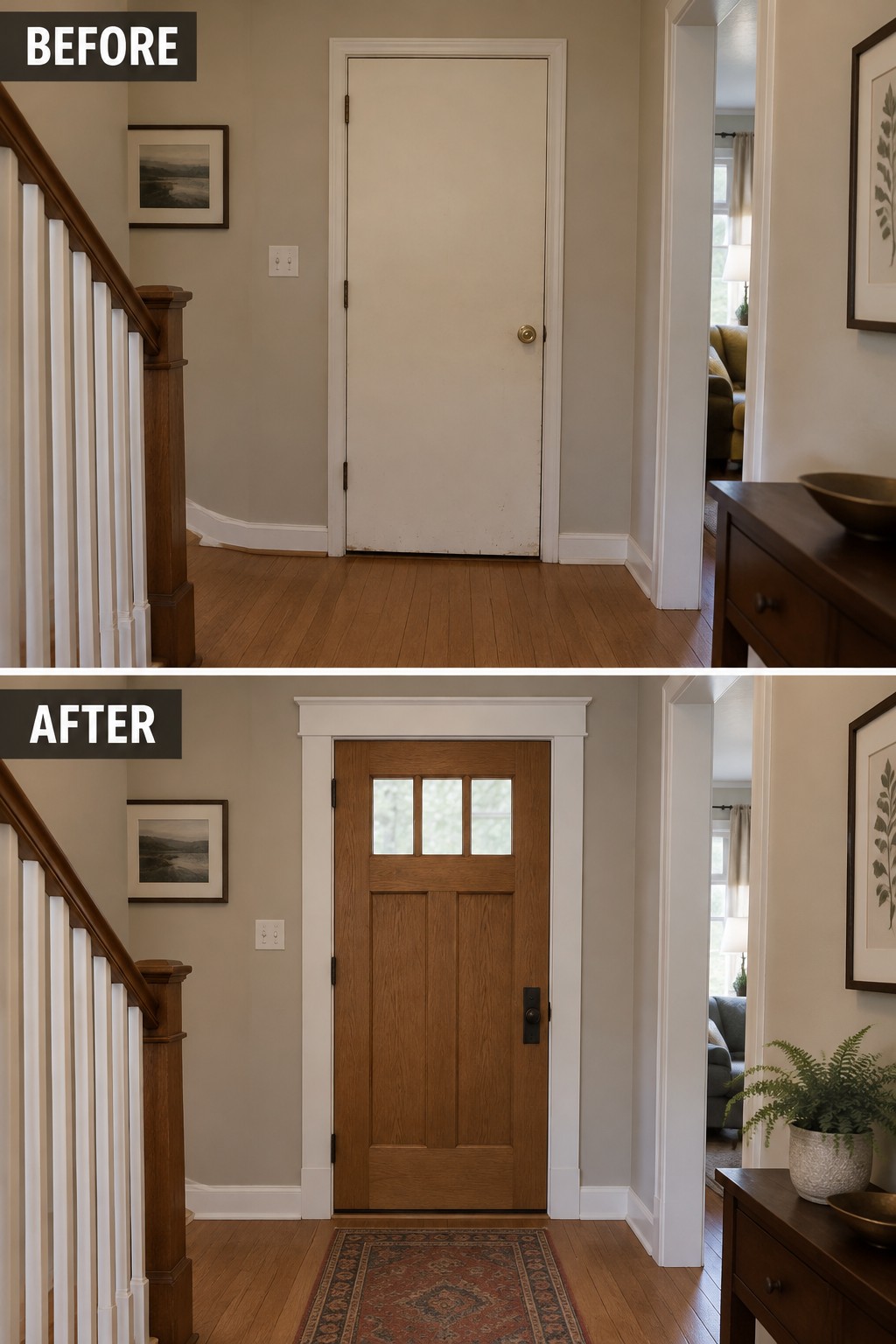
Replacing a blank interior-facing door with a wood door that has glass panes gives the entryway a clearer focal point. Here, the wood finish and small windows make the doorway feel more considered without changing the surrounding hall.
This idea works well when a basic door is the main thing making an entry feel unfinished. Choose a style that suits the home, and check that the glass offers enough privacy for the room beyond.
Give The Staircase A More Finished Look
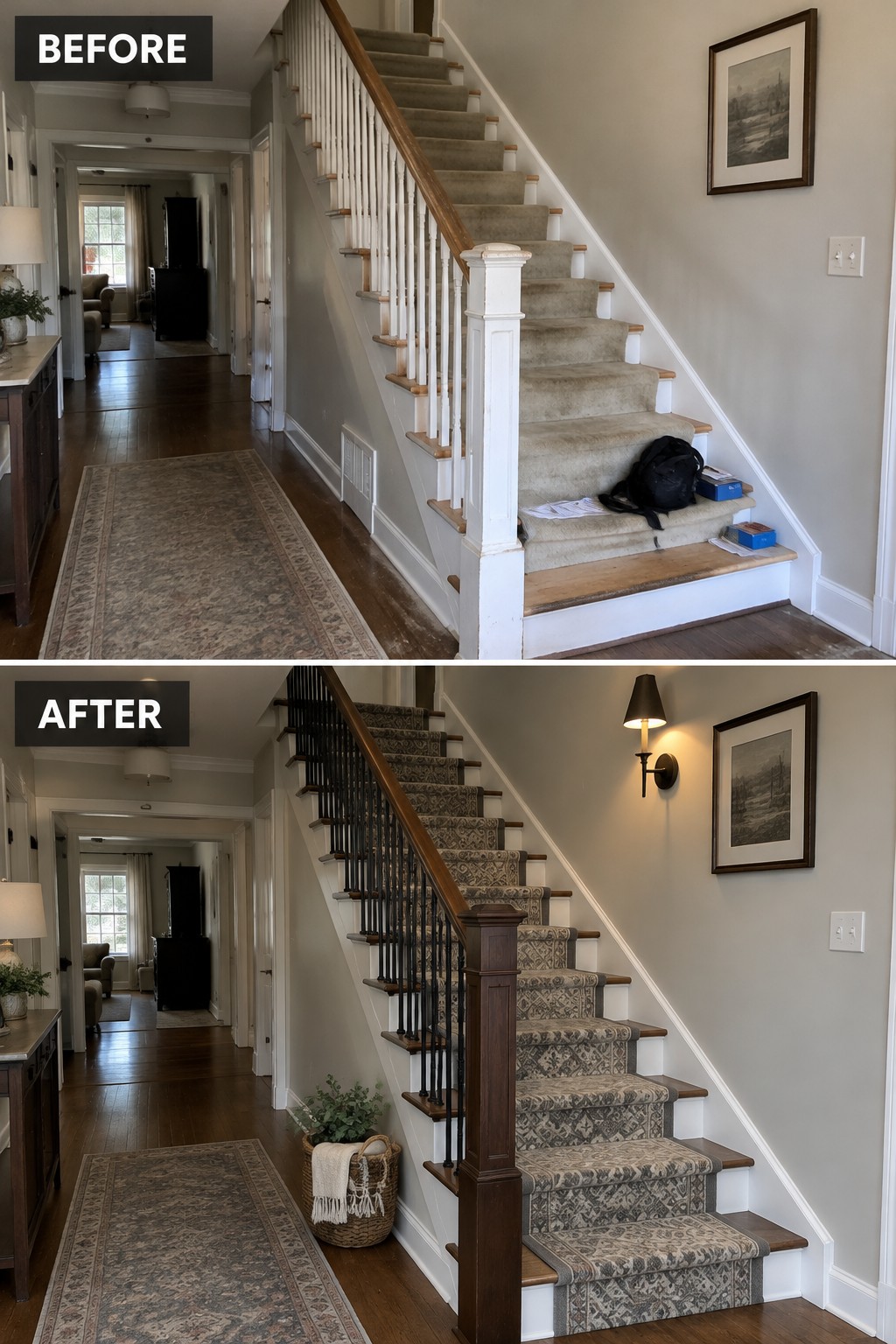
The worn carpet made this entry feel tired, while the patterned runner in the updated space gives the staircase a clearer focal point. Dark balusters and a matching newel post also make the stair rail feel more intentional.
A runner can update a builder-basic staircase without replacing the whole stair. Choose a durable pattern that suits the hall, and have it fitted securely so the edges stay neat and safe.
Brighten A Dark Entryway With Simple Updates
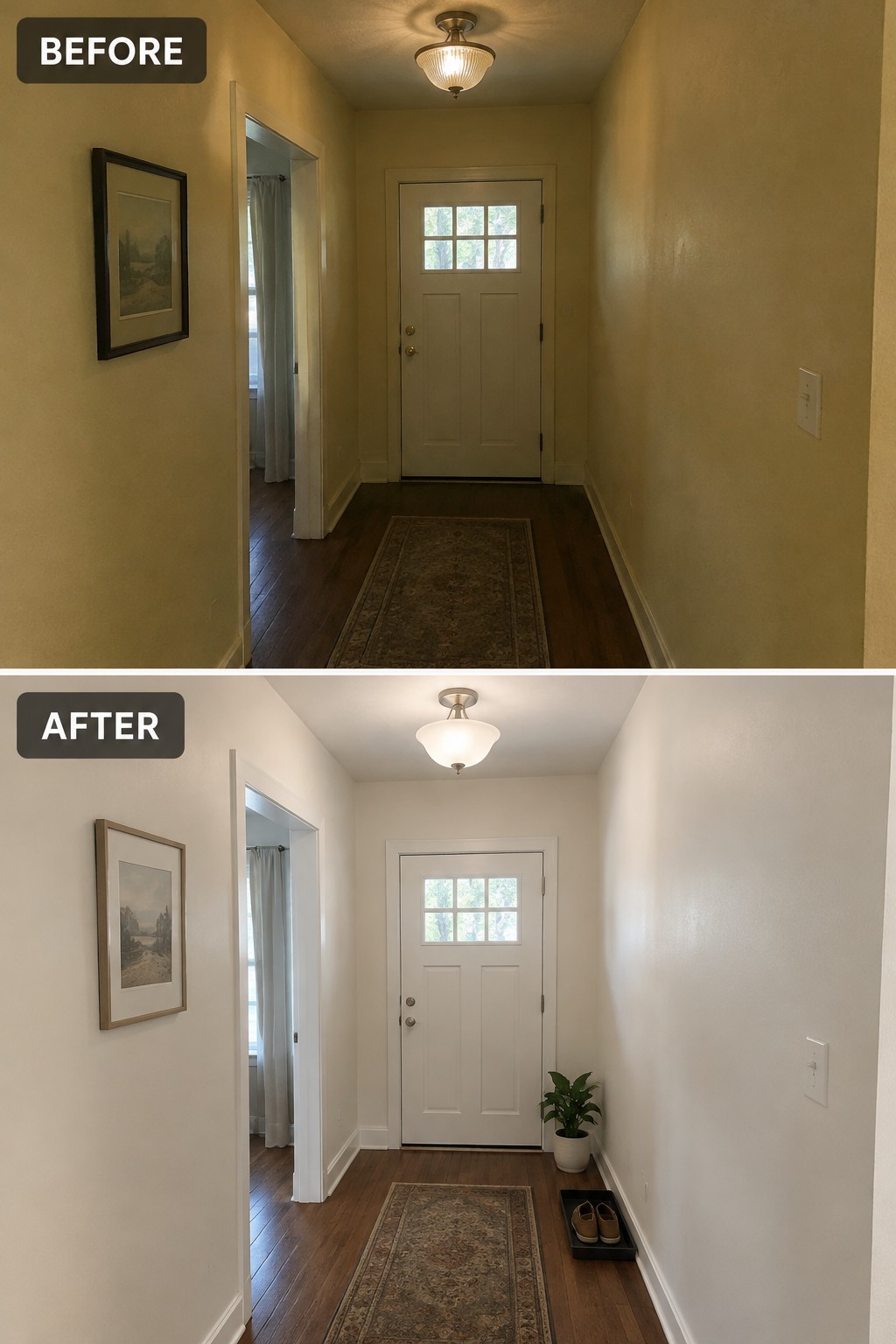
The yellowed walls and dim light made this narrow entry feel gloomy. A fresh light wall color and a brighter ceiling fixture make it feel cleaner and more welcoming without changing the layout.
This is an easy approach for a small foyer, especially if you want to keep existing floors and trim. Choose a warm white rather than a stark shade, and use a light that suits the ceiling height so the space stays comfortable, not glaring.
Give A Bare Entryway A Clear Purpose
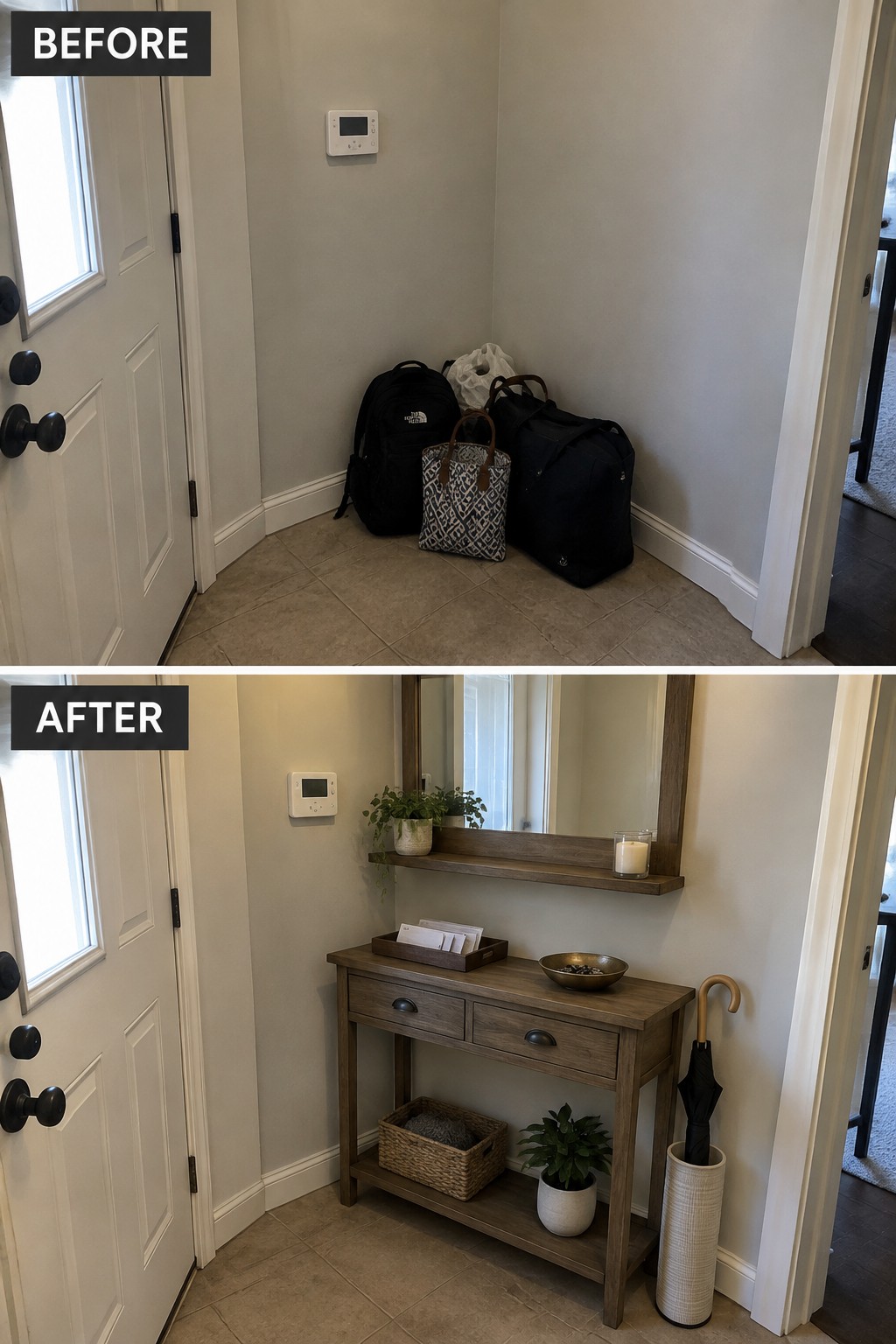
An empty entryway can feel unfinished, while bags left on the floor quickly make it look cluttered. A slim console table turns that spare corner into a useful landing spot without taking up the whole walkway.
Choose a table that fits the wall and leaves room to pass comfortably. A basket on the lower shelf can hold small items, so the surface stays clear enough for everyday use.
Use New Flooring To Give A Plain Entryway More Character

Replacing builder-basic tile can change the feel of an entryway without changing its layout. The small black mat on the old beige floor becomes a larger patterned rug on white hexagon tile, giving the foyer a more considered look.
If you’re updating a narrow entry, choose flooring that suits the home and can handle muddy shoes. A patterned rug can bring in character while protecting the floor, but leave enough tile clear around it for easy movement.
Add Built-In Storage To An Entryway Closet
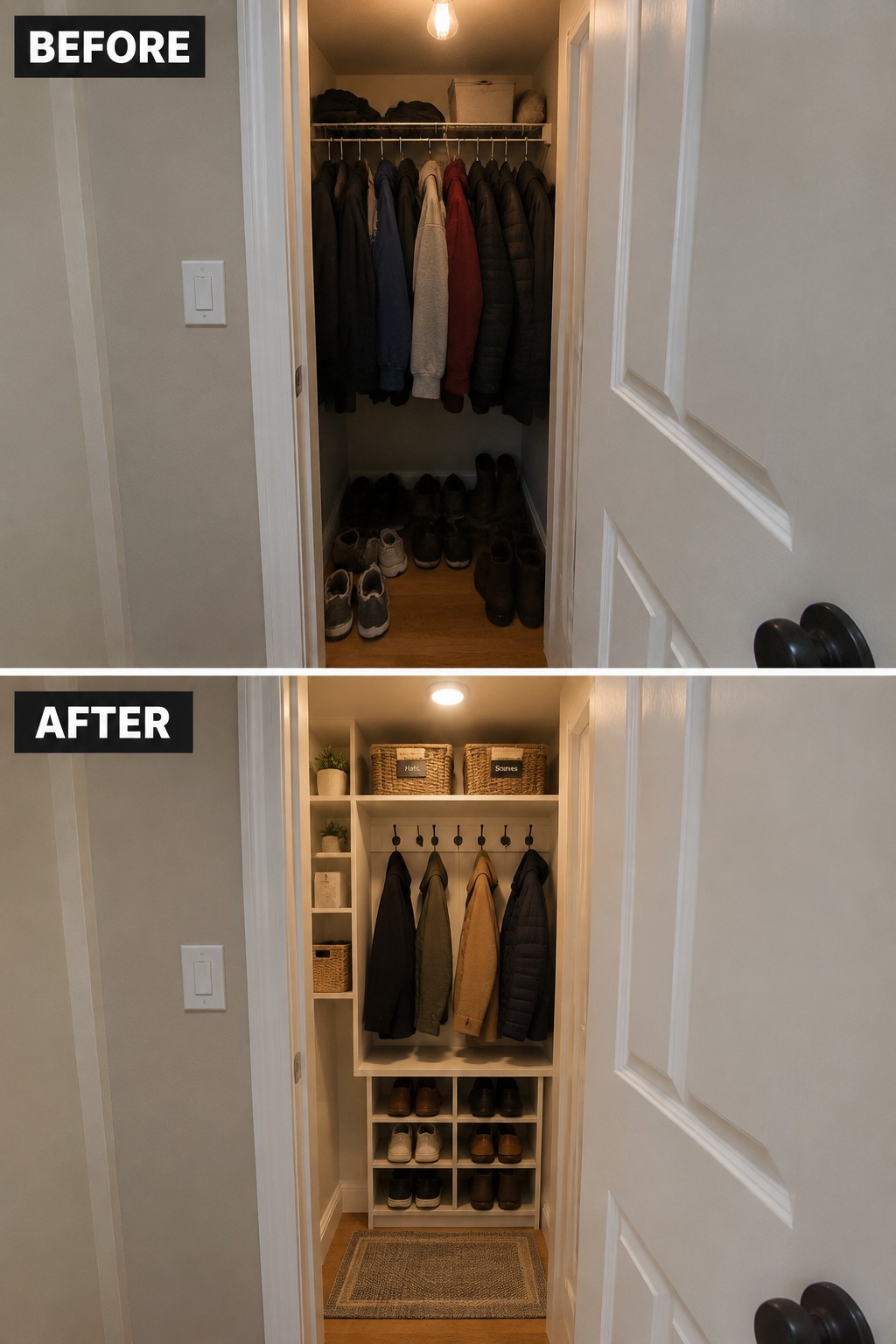
A basic coat closet can do more than hold a crowded row of jackets. Adding shelves, cubbies, and hooks makes room for everyday coats and shoes while keeping them easier to find. Here, the open hanging space is pared back, and the lower shelves give shoes a set place.
This idea works especially well in a narrow foyer where a larger cabinet would get in the way. Measure the closet before adding shelves, and leave enough room for longer coats and for everyone to reach the hooks.
Use Color To Make A Plain Entryway Feel Finished
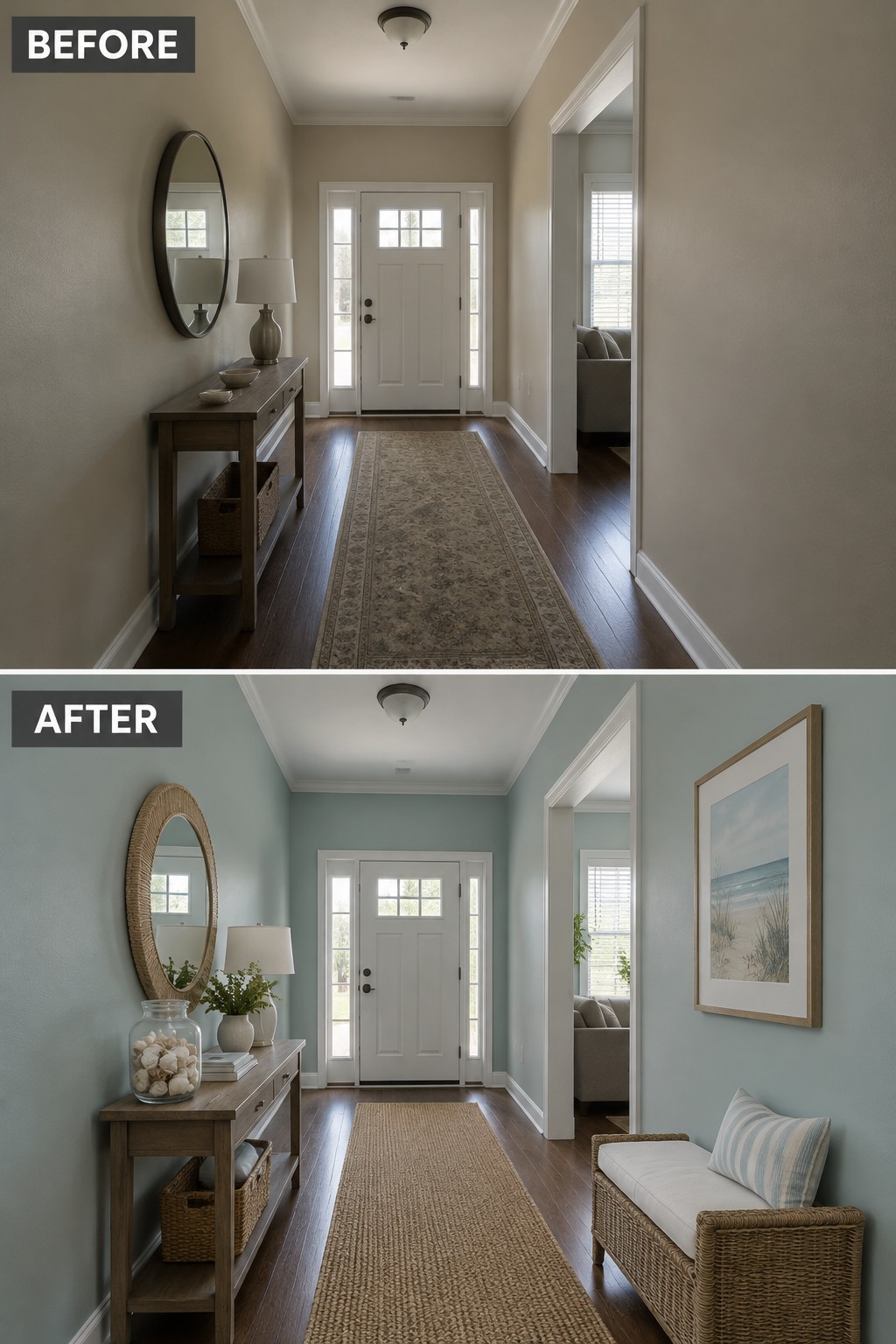
A soft blue-green wall color gives this narrow entryway more character without changing its basic layout. The space feels more finished, while the simple runner helps define the path to the front door.
This idea works well in a foyer that feels plain but doesn’t need new furniture. Try a muted color on the walls and keep the main walking area clear so the entry still feels easy to use.
Give Entryway Clutter A Place To Go
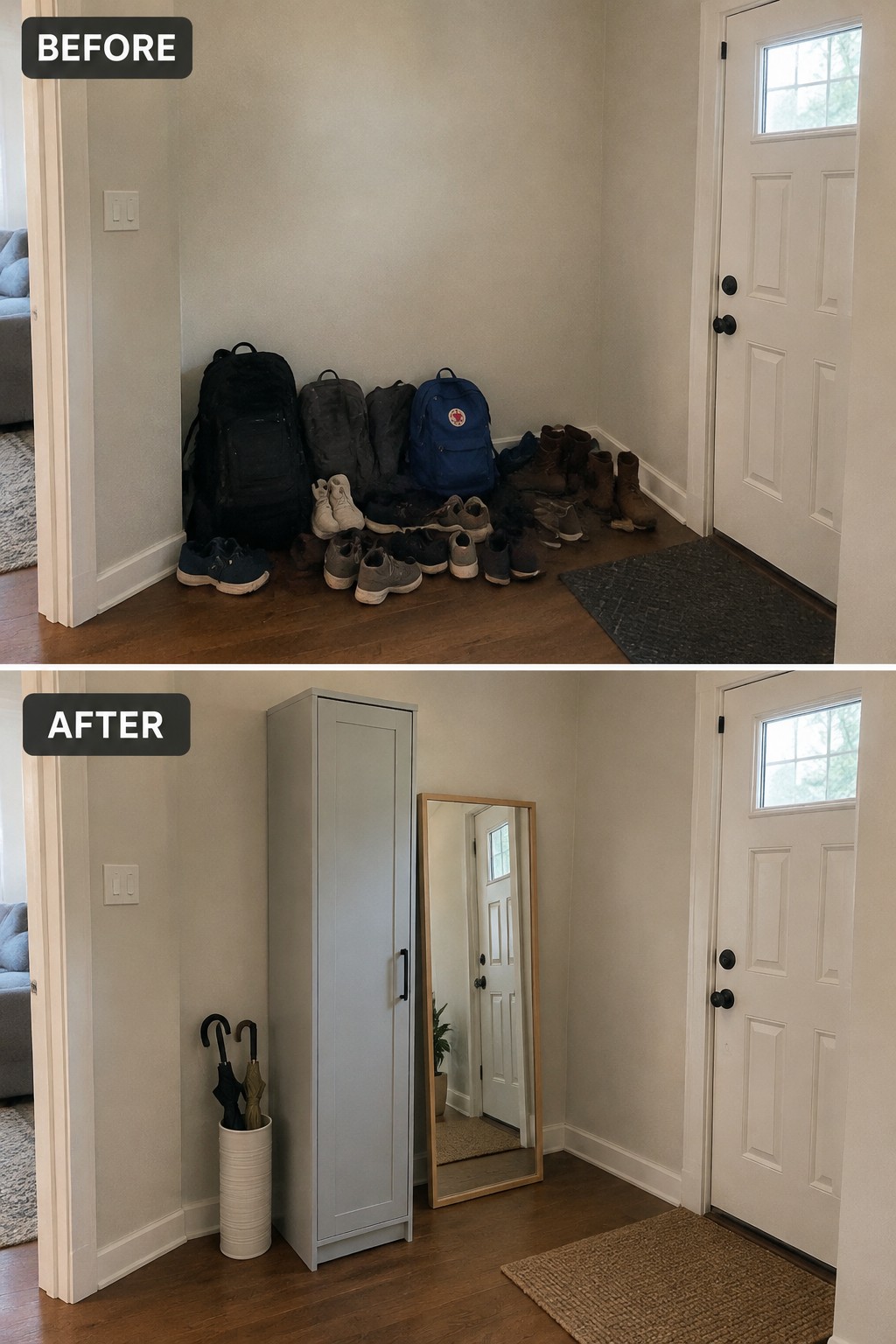
A small entryway can quickly become a pileup of shoes and bags when there’s nowhere to put them. Replacing the scattered belongings with a tall, narrow cabinet makes the space feel much more orderly without taking up the whole wall.
Choose a cabinet that fits the wall and has enough room for the things your household actually uses. A slim design works well in a tight foyer, but leave clear space near the door so everyone can come and go comfortably.
Turn A Blank Entryway Into A Useful Drop Zone
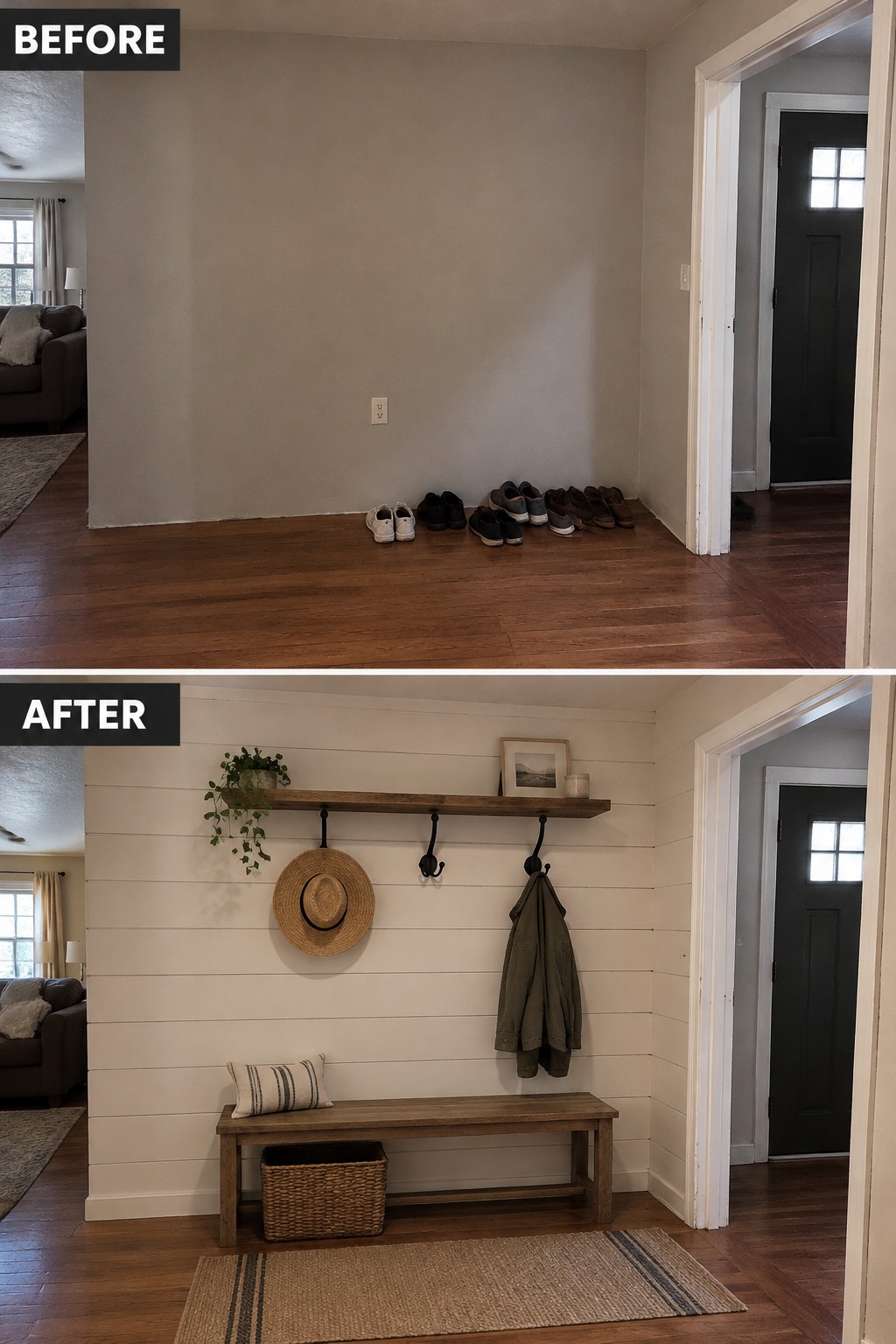
A blank entryway wall can do more than mark the way into the house. Here, horizontal paneling and a bench turn the unused space into a simple spot to sit and take off shoes, so the entry feels more purposeful.
For a similar setup, choose a bench that leaves plenty of room to pass through, then add hooks for coats or bags. A shelf or baskets can help with smaller items, but keep the area from getting crowded.
Use A Rug To Define The Entryway
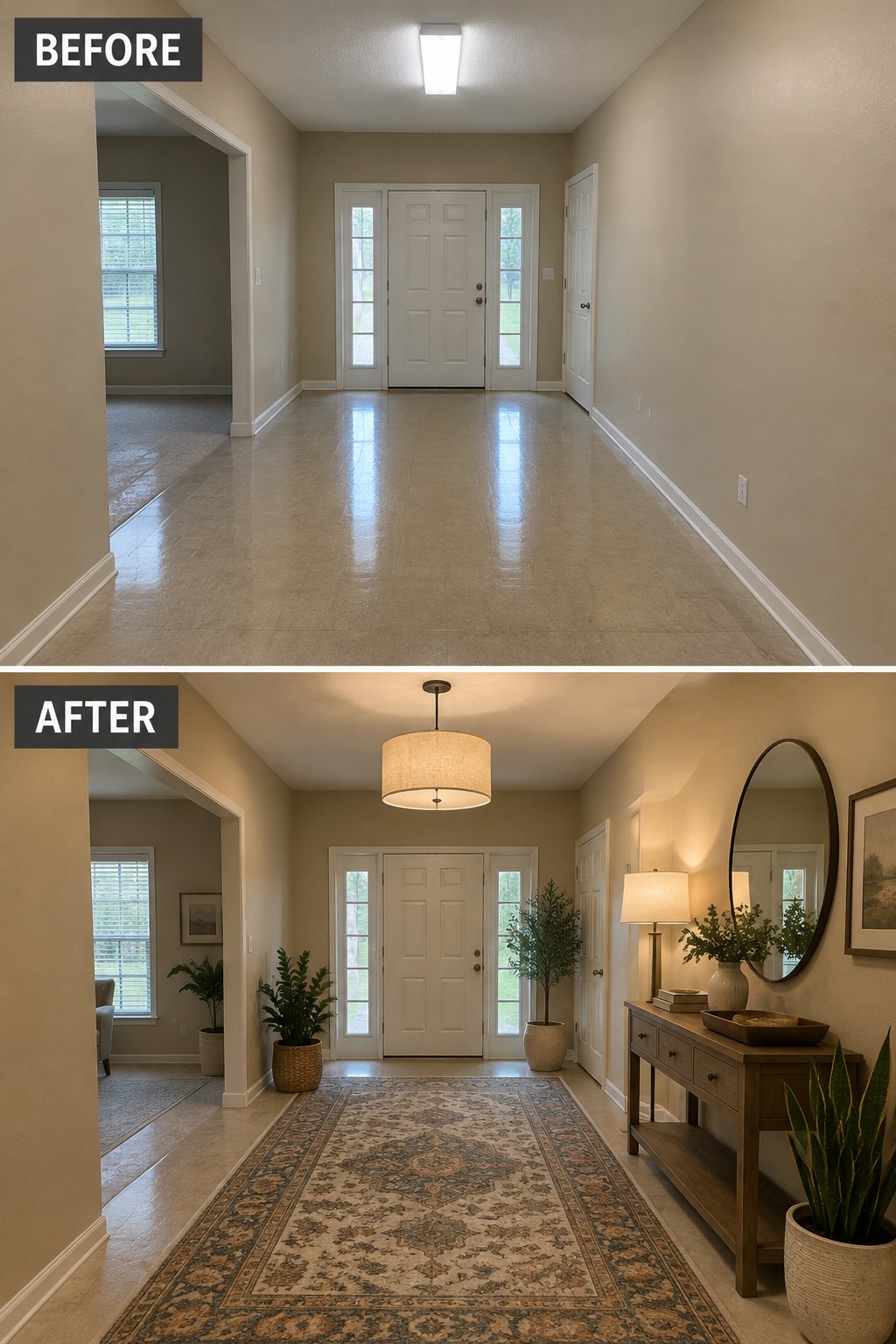
The entryway feels more finished once a large rug marks out the space. In the plain room, the open tile runs straight to the front door; adding a patterned rug gives the foyer a clear center without changing the flooring.
Choose a rug that leaves a border of floor visible and still allows the door to open easily. This works especially well in a long entry, where the rug can lead the way in without crowding the path.
Update The Entryway’s Small Details
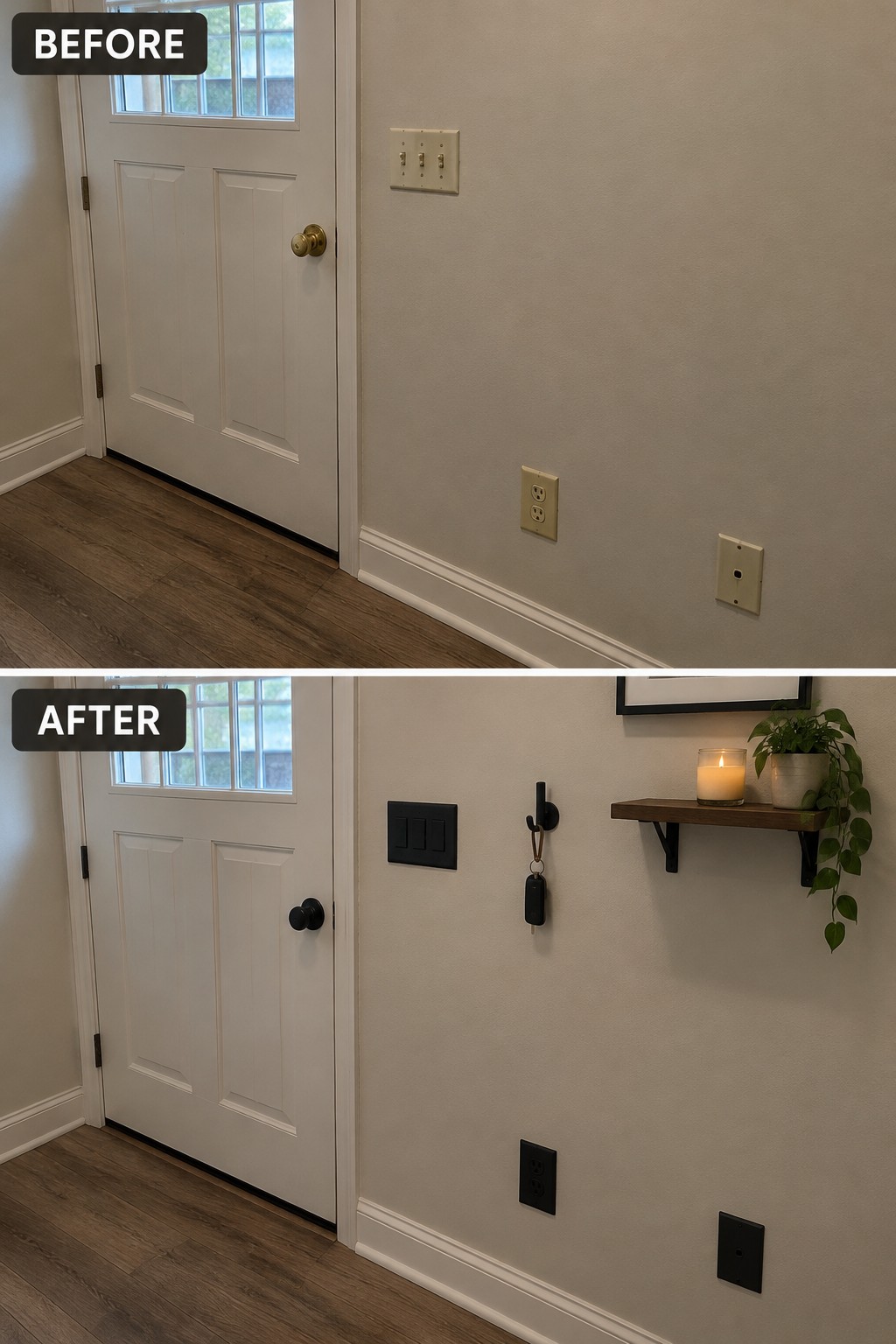
The entry feels more finished after the dated brass hardware and switch plates are replaced with simple black fixtures. These small updates suit a builder-basic foyer because they refresh the space without changing the door or making a larger renovation.
Repeat one finish across the door hardware and wall plates for a tidy look. If you add a shelf or hook nearby, keep it useful and avoid crowding the entry.
Add A Glass Surround To Open Up The Entryway

The solid front door made this foyer feel closed off. Adding narrow glass sidelights and a transom brings in daylight and makes the entrance feel more open, while the door itself stays in place.
This approach works well in a dim entryway where a full door replacement is not the only option. Use privacy glass if the door faces a busy street, and keep the trim simple so the new glass feels like part of the original opening.
Frequently Asked Questions
Q: How can I make a narrow entryway feel bigger without changing the layout?
A: Keep the floor and walkway clear, and use a mirror to bounce light around. A slim console or a few wall hooks can add storage without eating up valuable space.
Q: What’s an easy way to add personality if I’m renting?
A: Try a washable runner, framed art, or a small lamp on a console. These pieces are easy to take with you, and you can swap them out whenever the mood strikes.
Q: How do I keep an entryway from becoming a pile of shoes and bags?
A: Give everyday items a clear home, like a basket for shoes and hooks for bags. Keep the setup simple enough that everyone can use it on the way in.
Q: Can I use wallpaper in a small foyer?
A: Absolutely. A bold pattern on one wall can make a basic entry feel intentional, especially when you keep nearby furniture and decor fairly simple.
