

An entryway can feel unfinished when the lighting is harsh, the walls are bare, or there is nowhere to set down everyday essentials.
I find that a clearer layout and a few well-chosen details often make this small space feel more useful without adding much clutter.
Statement lighting can brighten the entrance and give it a focal point, while wall paneling adds texture and helps the room feel more considered.
The change is especially satisfying when the entry feels brighter and more connected to the rest of the home.
I’d save the ideas that suit your space and test them with your entryway’s light, proportions, and daily routines in mind.
Make A Narrow Entryway More Useful

The plain hallway feels unfinished, while the updated version uses vertical wood paneling to give the entry a clear focal point. A slim console keeps the narrow space useful without taking over the walkway.
This idea works well in a long, tight entry where there is little room for furniture. Use a shallow console and a simple pendant, and leave enough clear floor space to move through comfortably.
Add Wall Paneling To Finish A Plain Entryway

The entryway feels more finished once dark paneling gives the bare walls a clear purpose. In this makeover, the paneling changes the feel of the narrow hall, while the console and framed art keep it useful without taking up too much room.
This idea works well in a long, plain entry where there is little space for furniture. Choose a panel height that suits the ceiling, and keep the walkway clear so the room still feels easy to pass through.
Make A Narrow Entryway Feel Finished

A narrow entry can feel bare even when it has enough room to pass through comfortably. Adding wall paneling gives the long wall a clear design feature, while a bench makes the space useful for sitting down to put on shoes. The change from plain walls to paneling and a simple bench helps the entry feel more complete without taking up much floor space.
For a similar look, keep the bench slim and leave a clear path to the door. A few well-placed hooks can handle everyday coats, but avoid crowding the wall in a small entry. A pendant light can finish the space, especially when the existing ceiling fixture is easy to replace.
Organize A Narrow Entryway With A Wood Slat Wall And Storage Bench

A narrow entry can feel cluttered when shoes and coats collect along the walls. Here, a slatted wood accent wall and a built-in-looking bench area give those everyday items a place while making the hallway feel more considered.
For a similar result, use one wall for a simple focal point and keep the walkway clear. A slim bench with storage underneath can work well in a small entry, but leave enough room to pass comfortably.
Give A Plain Entryway More Character

The entryway feels more finished once the plain walls become simple paneling and the front door gets a muted color. These changes give a narrow hall some character without taking up floor space.
This idea works well in a small entry where furniture needs to stay compact. Use paneling on one or more walls, then add a slim bench or a few hooks only if there is room to pass comfortably.
Turn A Bare Entryway Into A Useful Drop Zone

The hallway goes from plain and dim to a more finished entryway, with wall paneling and a small bench area for everyday items. The paneling gives the long walls a clear feature, while the bench makes the narrow space useful instead of leaving it empty.
This idea works well in a hallway where there is room to sit without blocking the path. Keep the bench compact, and choose hooks or a shelf for the things you use most. A simple ceiling fixture can help brighten the entry too.
Use Wall Paneling To Give A Plain Entryway Character

The plain hallway feels more finished after the walls are covered in dark vertical paneling. It gives a narrow entry a clear look without changing its basic layout, while the statement chandelier helps make the ceiling feel less overlooked.
This idea works well in an entry that gets plenty of use but has little room for furniture. Choose paneling in a color you can live with every day, and keep the walkway clear so the darker walls do not make the hall feel cramped.
Use Wall Paneling To Finish A Narrow Entryway

The plain, marked-up walls made this entry feel unfinished. Adding vertical wall panels gives the hallway a cleaner, more intentional look, while the slim bench and shelf make better use of the narrow space.
This idea works well in a small entry where there is little room for furniture. Choose simple paneling that suits the home, and keep the bench or shelf shallow so there is still room to walk comfortably.
Add Statement Lighting To Finish The Entryway

The plain entryway feels more considered after the shoe rack is replaced with a simple bench and a woven pendant takes the place of the basic ceiling light. The lighting gives the space a focal point, while the bench makes the area more useful for taking off shoes.
A statement pendant works well in an entry with enough ceiling clearance, especially when the rest of the decor stays simple. Choose a size that suits the room, and keep the walkway clear so the fixture and furnishings do not crowd the entrance.
Use Dark Paneling To Define A Narrow Entryway

Dark painted paneling turns a plain, worn hallway into a more finished entry without changing its narrow layout. The trim gives the walls a clear pattern, while wall sconces provide useful light and make the entry feel considered.
This idea suits a small hallway that needs character but has little room for furniture. Choose a durable paint finish and keep the paneling in scale with the space so the walls feel detailed, not crowded.
Make A Plain Entryway Feel Warmer

The plain entryway becomes more welcoming with wood paneling across one wall. It gives the narrow space a clear focal point, while the bench makes the wall useful for sitting and setting things down.
This idea works well in a hallway that feels bare but has little room for extra furniture. Choose paneling in a tone that suits your home, and keep the bench slim so there is still an easy path to the door.
Use Wall Paneling To Make A Plain Entry Feel Finished

The narrow entryway feels more intentional once plain walls are covered in vertical paneling. The paneling gives the small space a clear look, while the bench makes it useful as a place to sit and put things away.
This idea suits a hallway or back entry that needs a little character without taking up more floor space. Choose a light paint color to keep the walls from feeling too busy, and make sure the bench leaves a clear path to the door.
Add Statement Lighting To Finish A Plain Entryway

A plain entryway can feel more considered with one strong lighting choice. Here, a pendant replaces the simple ceiling light, while dark wall paneling gives the small space a clear focal point.
In a narrow hall, choose a fixture that suits the ceiling height and leaves room to move. A pendant with an open frame can make a statement without feeling too bulky.
Make A Narrow Entryway Feel More Welcoming

A narrow entryway can feel like a passageway when it has plain walls and harsh, basic lighting. In this update, wall paneling gives the space more character, while a lantern-style ceiling fixture makes the entry feel more considered.
This approach works well in a small hall where there is little room for furniture. Use trim to add interest without taking up floor space, and choose a fixture that fits the hallway’s scale. Keep the walking path clear so the entry still feels easy to use.
Create A More Practical Entryway Drop Zone
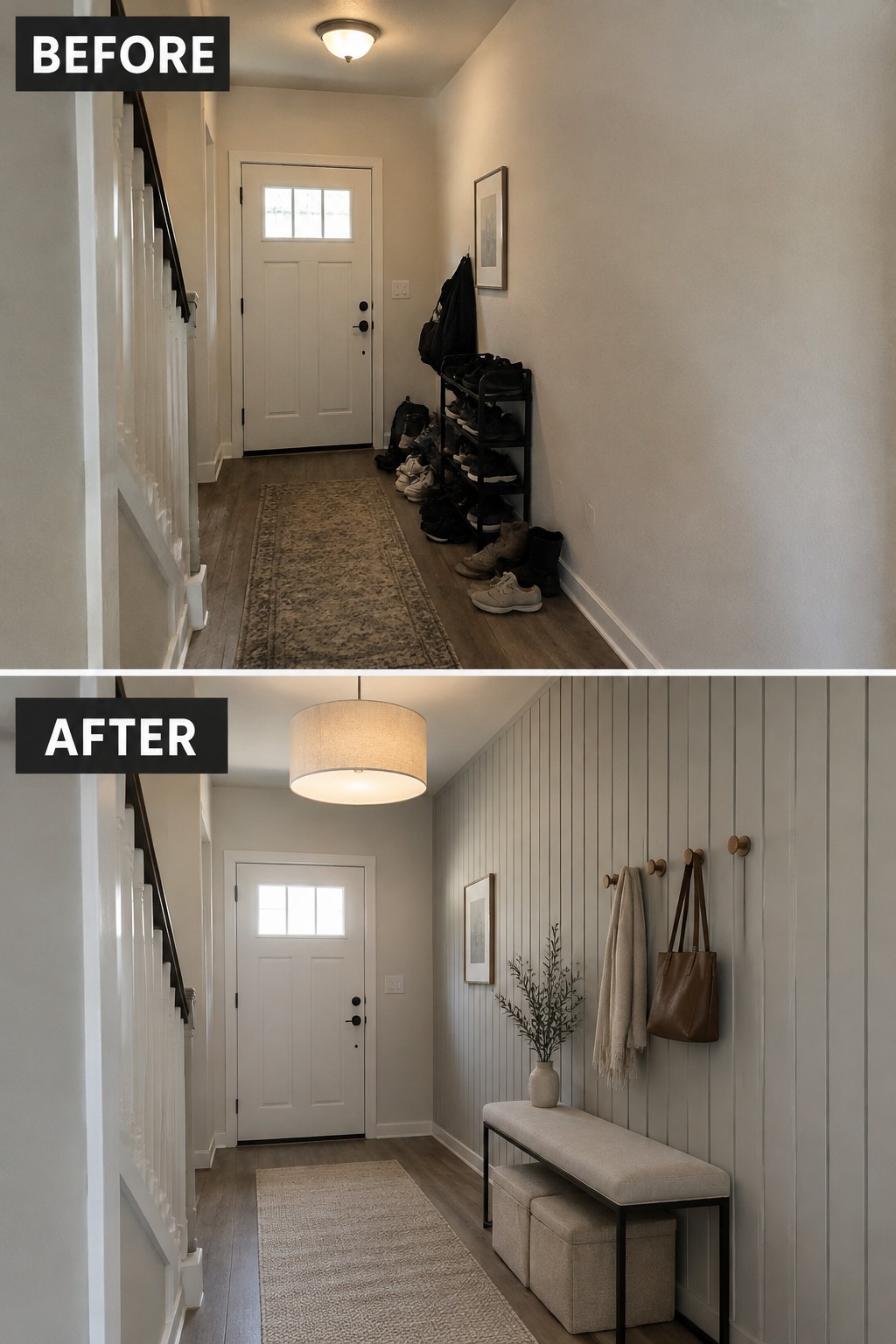
Replacing the crowded shoe rack with a bench and wall hooks gives this narrow entryway a clearer purpose. The vertical paneling also makes the storage area feel planned rather than like a collection of items along the wall.
In a small hall, keep the bench slim and leave enough room for the door and walkway. A few hooks for everyday coats and bags can help keep clutter off the floor without taking over the space.
Use Statement Lighting To Finish A Narrow Entryway

A narrow entry can feel neglected when the walls are worn and the lighting is plain. Here, a slim console and a glowing ring pendant give the hallway a clear purpose and a more finished look without taking up much floor space.
For a similar update, choose a ceiling fixture that suits the hallway’s scale, then keep furniture shallow so there is still room to pass. A mirror above a narrow console can also make a small entry more useful without crowding it.
Use Lighting To Make A Plain Entryway Feel Finished

The blank wall in this narrow entryway becomes a useful focal point with vertical paneling, a round mirror, and brass wall lights. The lighting gives the space a softer, more welcoming feel than the single ceiling fixture alone.
In a similar hallway, add paneling to one wall and place sconces where they can light the entry without getting in the way. A bench can make the area more practical, but keep it slim so there is still room to walk.
Turn A Blank Entryway Wall Into A Focal Point

A plain entryway wall can become the main feature of the space with wood paneling and a few well-placed pendant lights. Here, the empty wall becomes a backdrop for a simple bench, making the entry feel finished and giving it a clear purpose.
This idea works well in an entry with a blank wall and enough room for a slim bench. Choose paneling that suits the home’s style, and keep the lighting centered over the seating area so the space stays practical as well as decorative.
Turn A Bare Entryway Into A Finished Space

A small entryway can feel like an unfinished corner when its walls are plain and there is no clear place to pause. Adding wall paneling gives the area structure, while a framed picture and bench make it feel like a useful part of the home.
For a similar look, use trim to define the walls and choose one ceiling light that suits the size of the space. A slim bench works well in a narrow entry, but leave enough room for the door to open and for people to pass comfortably.
Turn A Cluttered Entryway Into A Useful Drop Zone

A crowded entry can feel much more finished when it has a clear place to sit and put things away. Here, a bench and storage basket replace the shoe rack and scattered footwear, giving the narrow space a simple purpose.
A small bench can work well in a hallway or entry nook, especially when it leaves room to walk through comfortably. Choose a basket that fits beneath it for shoes or bags, and keep the rest of the area uncluttered.
Add Wall Paneling To Brighten A Narrow Entryway

The plain hallway feels more finished after horizontal wall paneling replaces the bare walls. A woven pendant light gives the entry a softer glow, while the paneling helps the narrow space feel considered without taking up floor space.
This idea works well in a long entry or hallway where furniture is limited. Keep the paneling simple and light, and choose a fixture that fits the ceiling height so the passage stays easy to move through.
Use Paneling To Give A Plain Entryway More Character

A plain entryway can feel unfinished even when the basics are in place. Adding simple wall paneling gives the space a clear feature, while wood boards on the lower wall bring in a more practical, lived-in look.
For a similar effect, use trim panels above and wood planks below, keeping the colors close enough to suit the rest of the home. A small entry can still handle this treatment; just keep the panel details simple so the walls don’t feel crowded.
Use Dark Paneling To Define The Entryway
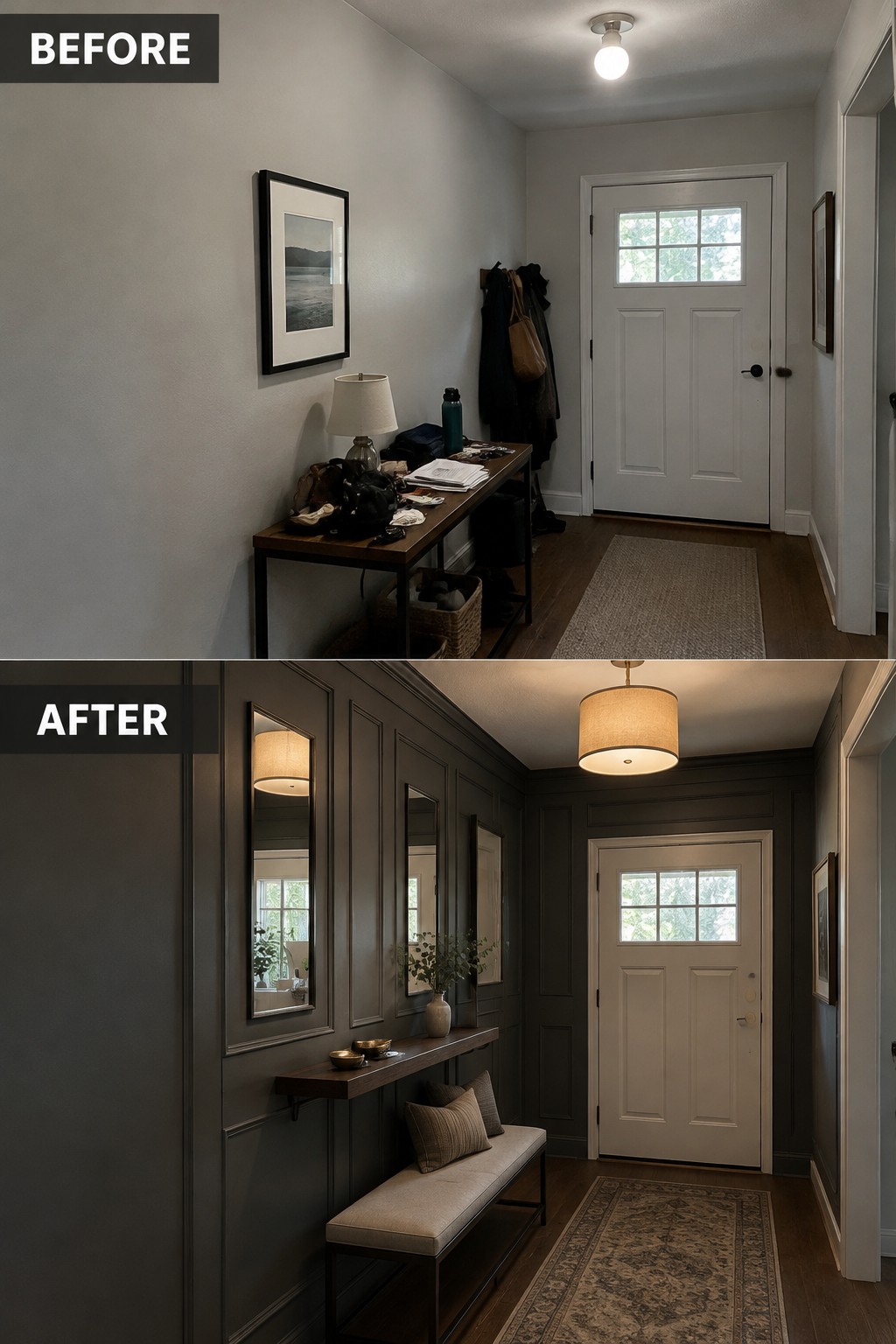
Dark wall paneling gives this narrow entryway a clear, finished look. The plain walls felt bare before, while the paneled walls make the hall feel more intentional without changing its basic layout.
This idea works well in a small entry where there is little room for extra furniture. Keep the trim simple and add a useful light fixture, then leave enough open space for people to pass comfortably.
Use Wall Paneling To Give A Narrow Entryway More Character

The entryway feels more finished once the plain walls become a feature. Simple paneling on the back and side walls adds definition, while the light trim keeps the narrow space from feeling closed in.
For a similar look, use a restrained paint color and repeat the trim across the walls rather than adding lots of decoration. A ring-shaped ceiling light makes sense in a hallway like this, but keep the scale modest so there is still room to move.
Frequently Asked Questions
Q: What kind of statement light works best in a small entryway?
A: A flush-mount or compact pendant adds personality without getting in the way of the door. Choose a shade that spreads light across the space, especially if the entryway has no windows.
Q: Can I add wall paneling without making the entry feel smaller?
A: Yes. Keep the panels simple and paint them the same color as the walls to add texture without a busy, boxed-in effect. Vertical grooves can also draw the eye upward.
Q: How high should I hang a pendant in the entryway?
A: Make sure it clears the door and feels comfortable to walk beneath. In a two-story foyer, hang the fixture where it can be seen from both levels, rather than letting it disappear near the ceiling.
Q: What if my entryway has no room for a console table?
A: Try a narrow wall shelf or a few hooks paired with a small mirror. You’ll still have a handy spot for keys and bags without crowding the walkway.
