

Fireplaces tend to sit in the middle of a wall and can make a room look unfinished if the surround feels too basic.
I have found that adding vertical tile often helps pull the space together because it adds height without crowding the floor.
A simple pattern in the tile can also keep things from looking too flat.
The direction matters more than I expected.
Many of the options focus on keeping the rest of the room flexible while the fireplace becomes the steady point.
Make The Fireplace Wall The Main Feature

One way to refresh a dated fireplace is to extend the surround upward with vertical tile. The original setup sat low with a small mantel and gold trim, but running tile from the floor to near the ceiling gives the wall height and makes the fireplace the clear center of the room.
This idea suits living rooms where the fireplace feels too small for the space. Use a light tile color if your walls are neutral, and pick a mantel in a slightly darker tone so the new surround reads as intentional rather than just added on.
Make The Fireplace Wall The Main Feature

The white brick surround felt flat and dated once the room was lived in. Replacing it with a dark vertical stacked stone and a simple black mantel gave the fireplace real presence and let the fire draw the eye.
This works best in rooms where the fireplace already sits in the center of the main wall. Keep the surrounding furniture low and neutral so the new surround stays the focus, and make sure the stone or tile you choose fits the height of the opening.
Make The Fireplace Wall The Main Feature
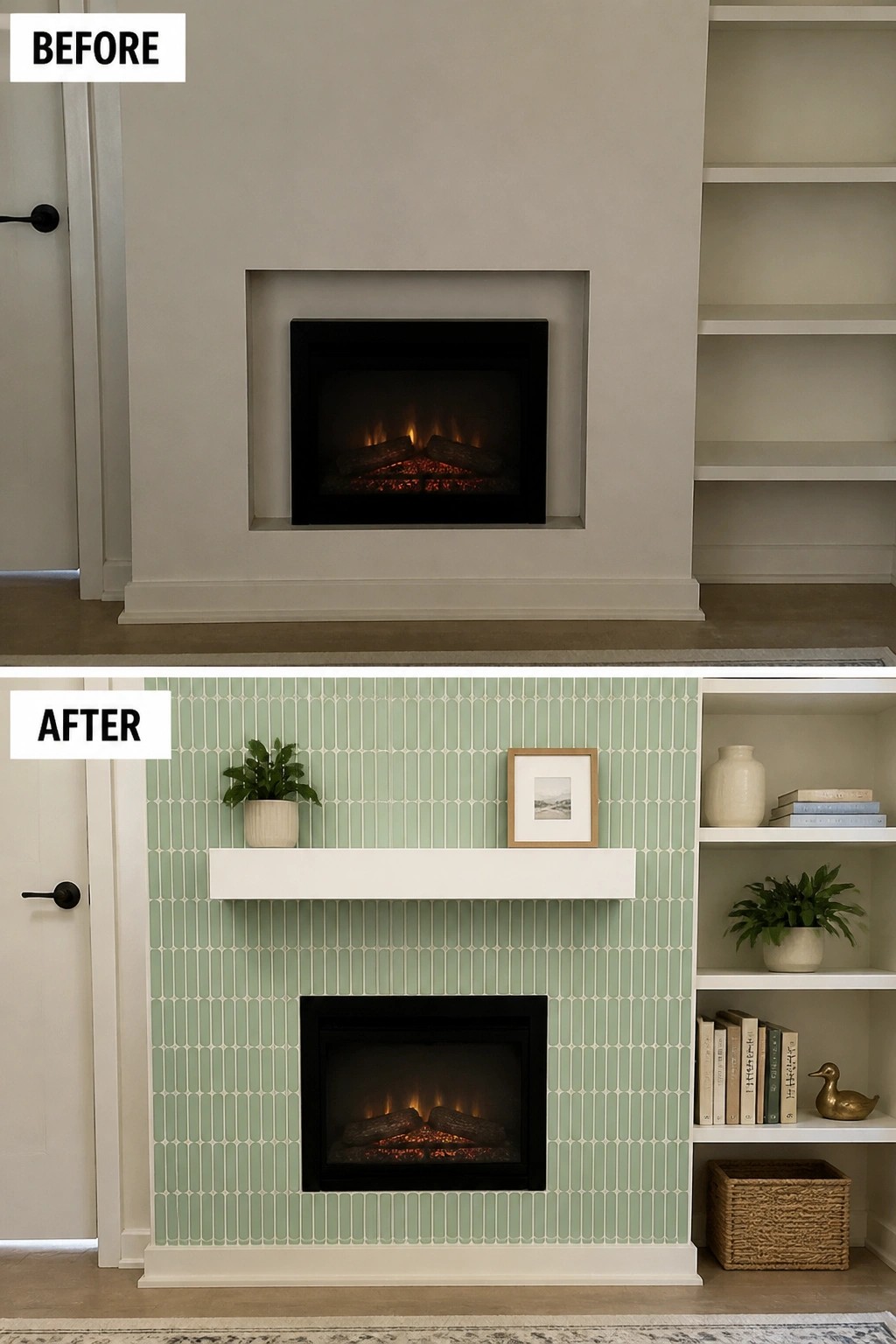
A plain fireplace often gets lost in a room until you give it a clear surround. Here the recessed firebox gains a vertical tile treatment that runs from floor to ceiling, creating height and a gentle pattern that draws the eye without needing extra color or clutter. Adding one floating shelf above the opening keeps the look simple while giving a spot for a plant or small art.
This idea works best when the fireplace already sits in the center of a wall. Keep the tile pattern or color soft so it blends with the room, and style the built-in shelves on the side with a mix of books and a few plants rather than filling every shelf. The result feels finished without major construction.
Make The Fireplace Wall The Main Feature
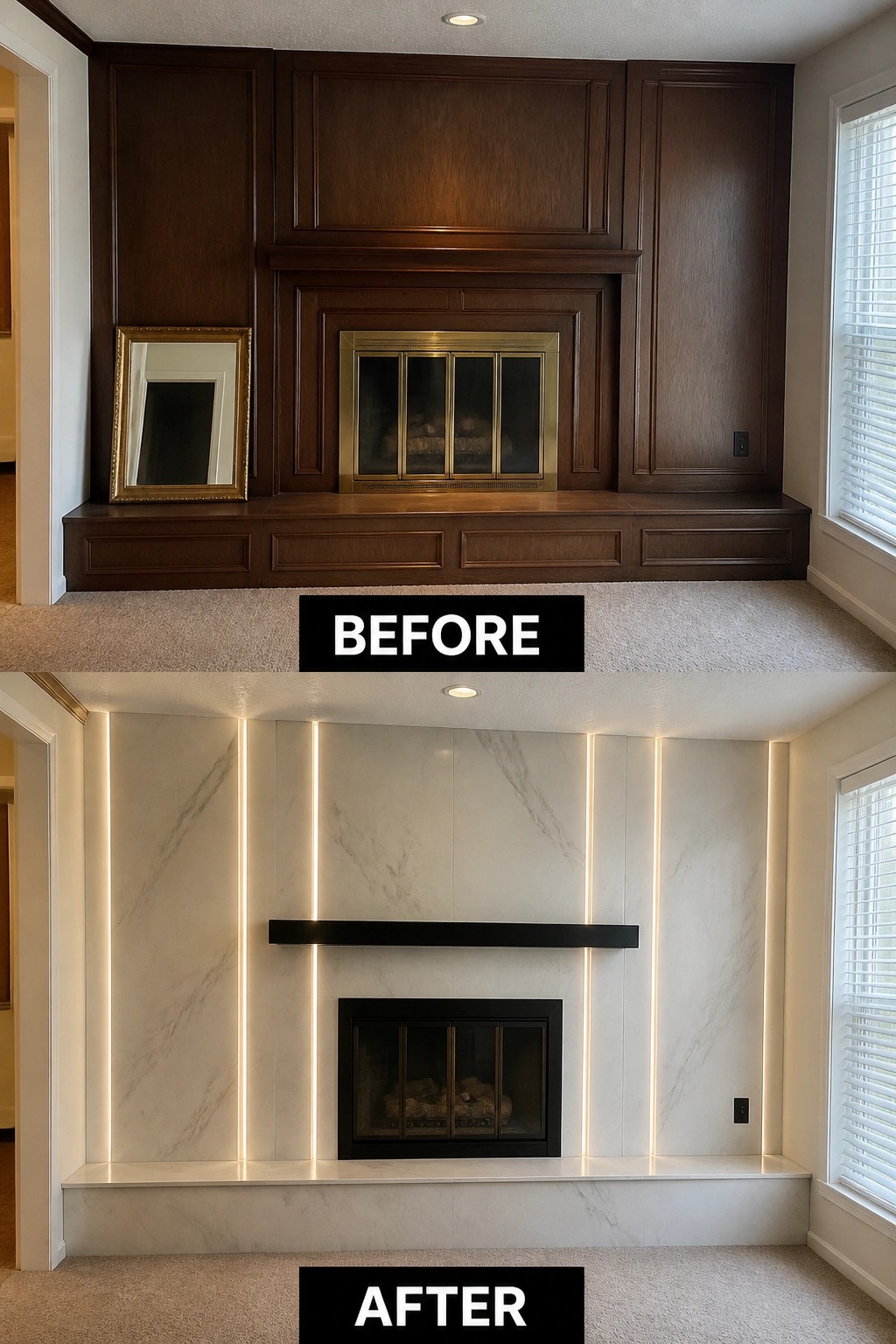
The old dark wood surround made the fireplace feel heavy and closed in. Replacing it with light marble and thin vertical light strips opens the wall up and gives the fireplace a clean, modern presence that draws the eye without extra decoration.
This idea works best in living rooms where the fireplace already sits in a central spot. Keep the rest of the wall simple so the vertical lines stay the focus, and choose lighting that can be dimmed for evening use.
Refresh A Fireplace With Vertical Tile
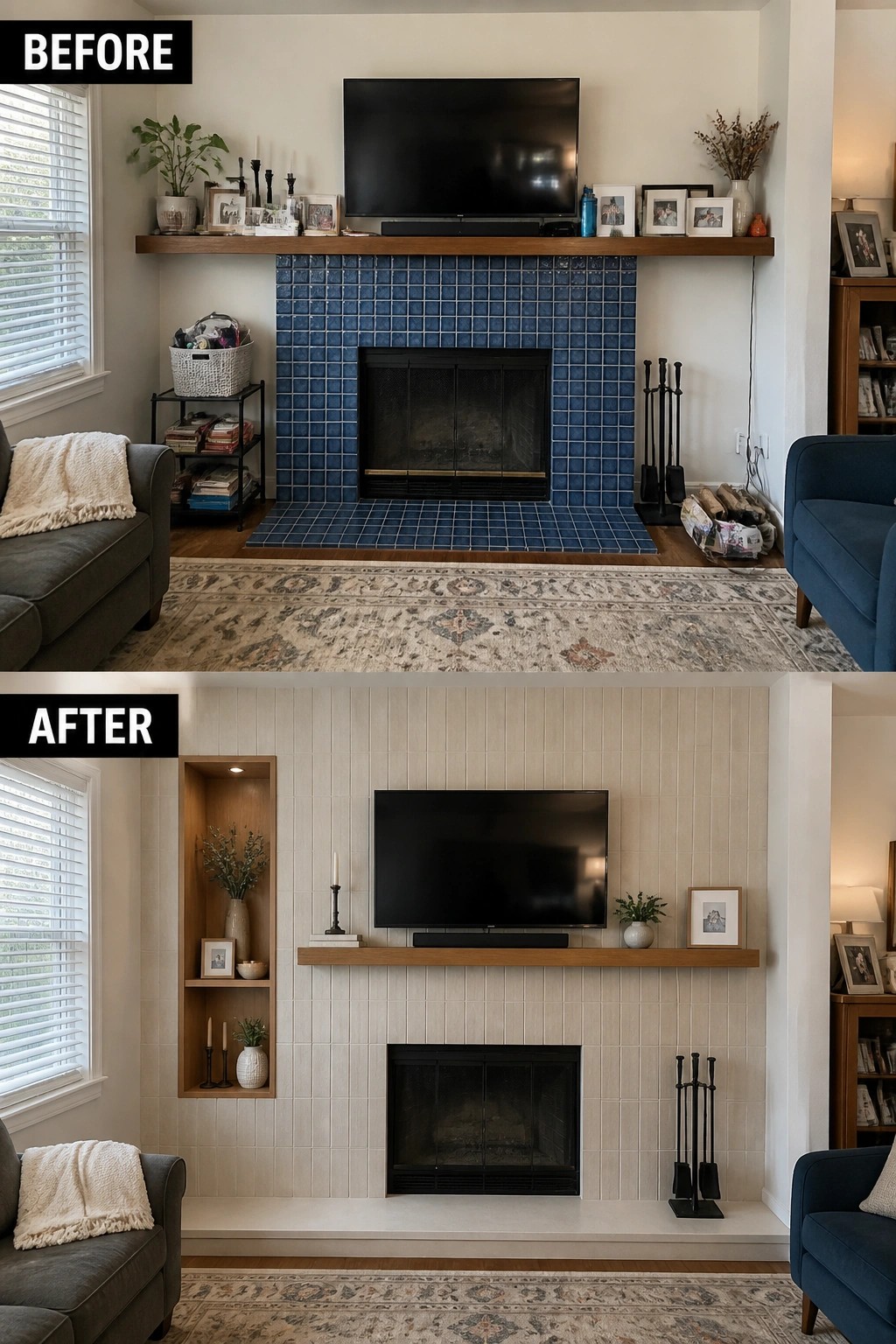
Many fireplaces end up with bold tile that starts to feel dated after a few years. Replacing it with a light vertical tile surround softens the whole wall and makes the space feel more current without losing the fireplace as the main feature.
This works best in rooms where the TV and mantel items compete for attention. A simple recessed niche on one side gives you a place for a few pieces without crowding the shelf above the firebox.
Make The Fireplace Wall The Main Feature
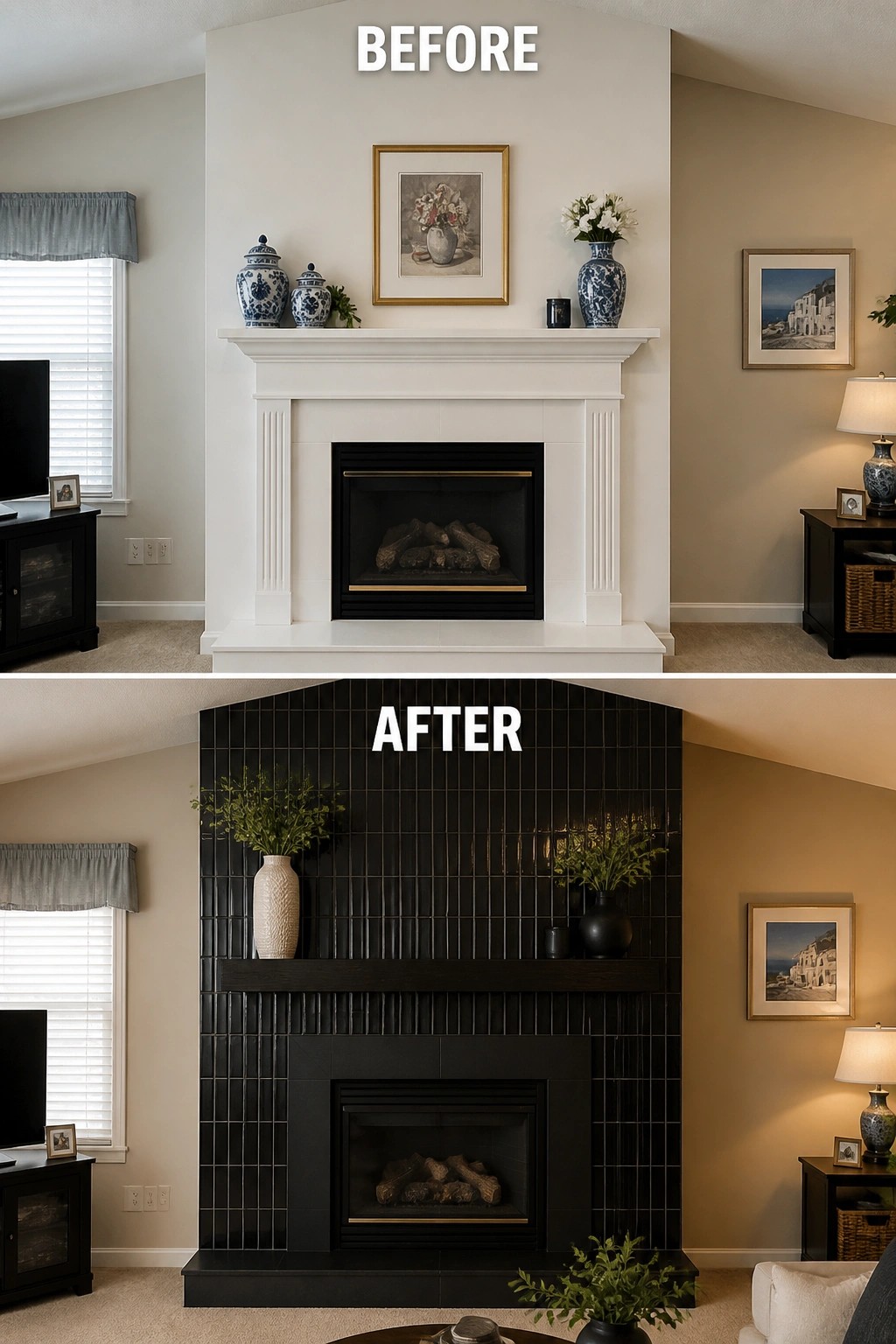
Covering the fireplace surround in vertical tile gives the whole wall a clear purpose. The before version had a plain white mantel that blended into the room. After the update, a tall black tile surround with a dark shelf makes the fireplace the strongest point in the space.
This idea works best in rooms where the fireplace feels flat or lost against the walls. Choose a dark or textured tile if you want it to stand out, and keep the rest of the room simple so the new surround can carry the look. It suits homes with neutral paint and basic trim.
Make The Fireplace Wall The Main Feature

A fireplace often sits in the middle of a room but still feels like an afterthought. Switching the surround to clean vertical tile gives it a clear purpose and pulls the whole space together. In this case the old beige tiles were replaced with simple white ones that run straight up, which brightens the area and makes the dark firebox stand out instead of blending into the background.
This approach works well in living rooms where the fireplace is already the natural center point. Keep the mantel styling light so the new tile does the work. Start with the tile choice first, then add just a few items like a small vase or candles rather than crowding the shelf. The result feels finished without needing a full room overhaul.
Make The Fireplace Wall The Main Feature

A simple change like switching to vertical tile can turn an old fireplace into the strongest part of the room. The before version had a wide brass screen and small mosaic tiles that blended into the background. The after version uses tall teal tiles, a clean black frame, and a new wooden mantel that gives the wall clear shape and purpose.
This idea works well in living rooms or family rooms where the fireplace sits in the center. Keep the tile color calm so it does not fight with the rest of the room, and add just one or two shelves or objects on the mantel. The rest of the space stays simple, which helps the updated fireplace stand out without extra work.
Make The Fireplace Wall The Main Feature

Adding wood paneling around a fireplace can turn it into the strongest part of the room. In this case the heavy stone surround was replaced with vertical wood that runs floor to ceiling, which makes the firebox feel more built in and gives the whole wall a cleaner shape.
This approach works best in living rooms that already have some wood tones in the floor or furniture. Keep the paneling simple, match the hearth color to the mantel or TV console, and avoid adding too many small decorations on the new surface.
Refresh A Fireplace With Vertical Tile
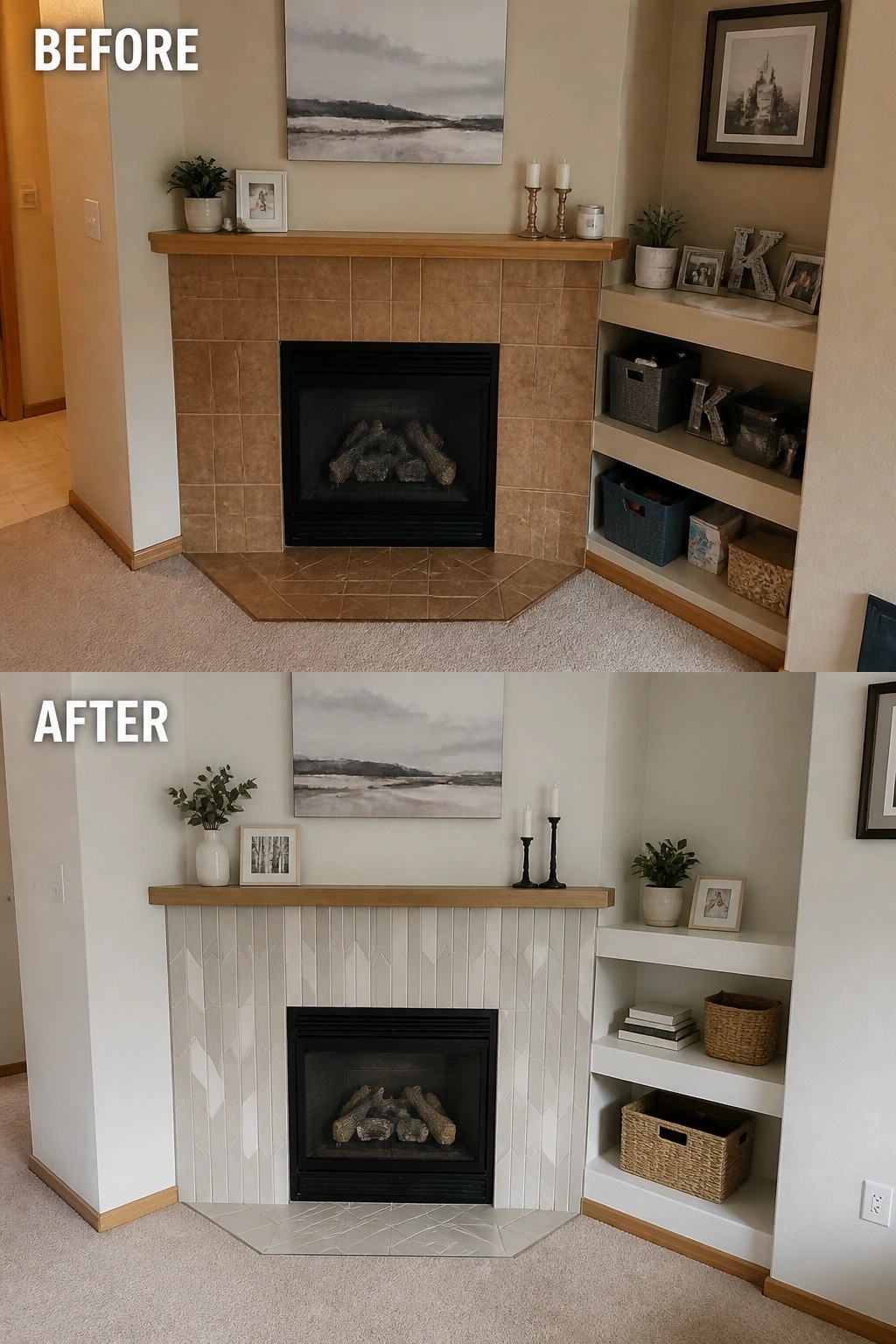
A fireplace surround that feels heavy or dated can drag down the whole room. Replacing the old brown tile with a lighter vertical pattern brightens the space and gives the fireplace a cleaner shape. The new white tiles run in a simple chevron layout that makes the opening feel taller without adding bulk.
This idea works best when the fireplace already sits in the center of the room. Keep the mantel narrow and remove extra items from nearby shelves so the tile pattern stays the focus. It suits homes that want a quick update rather than a full rebuild.
Use Vertical Tile To Modernize A Fireplace Wall
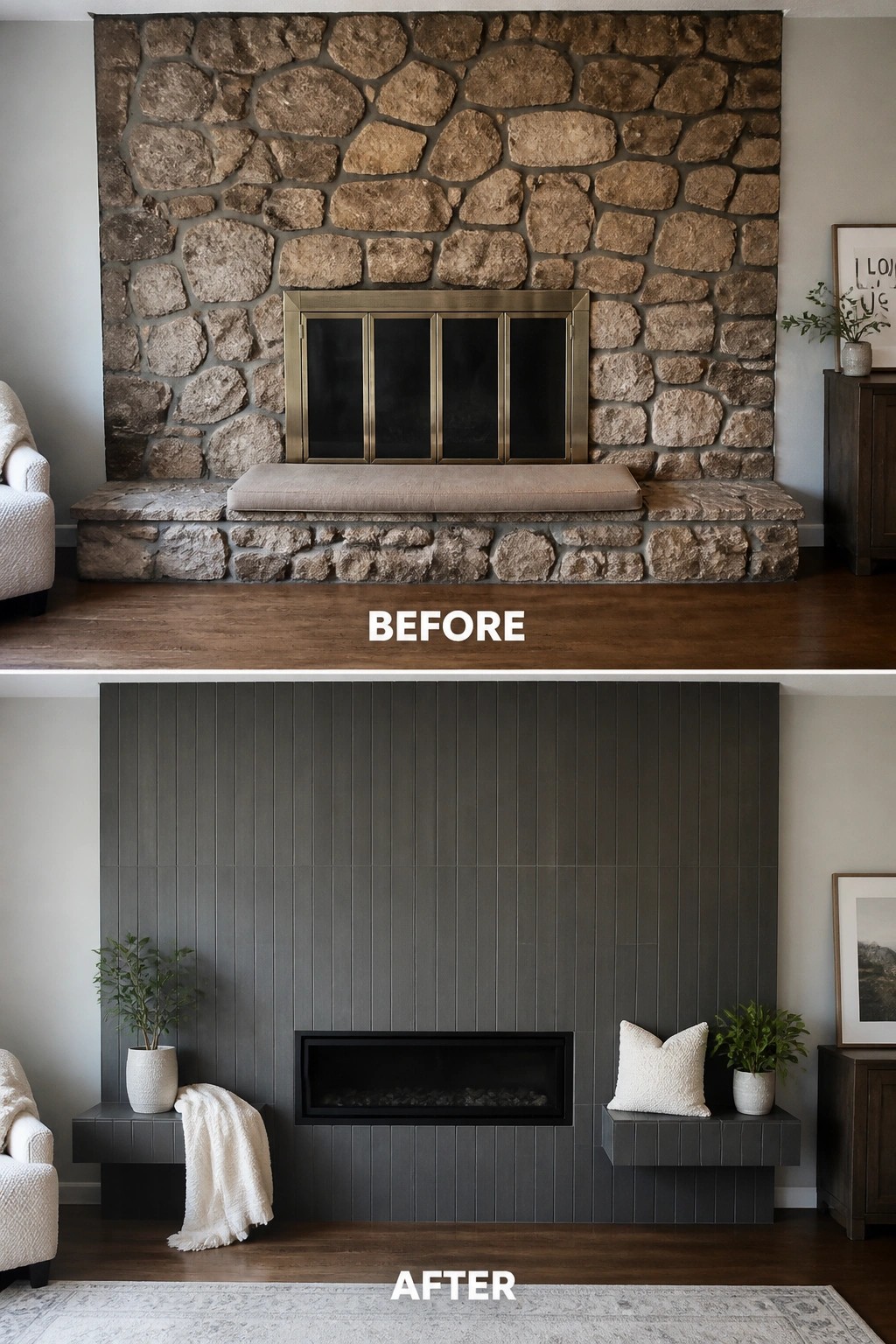
A heavy stone fireplace often dominates a room in a dated way. Switching to a vertical tile surround with a slim linear insert cleans up the whole wall and turns the fireplace into a calm focal point instead of a bulky feature.
This approach works well in living rooms where you want a simple update without a full renovation. Keep the tile color deep and matte, add a couple of low floating shelves on either side, and let the vertical lines do the work of making the space feel taller and more finished.
Update A Dark Fireplace With Vertical Tile
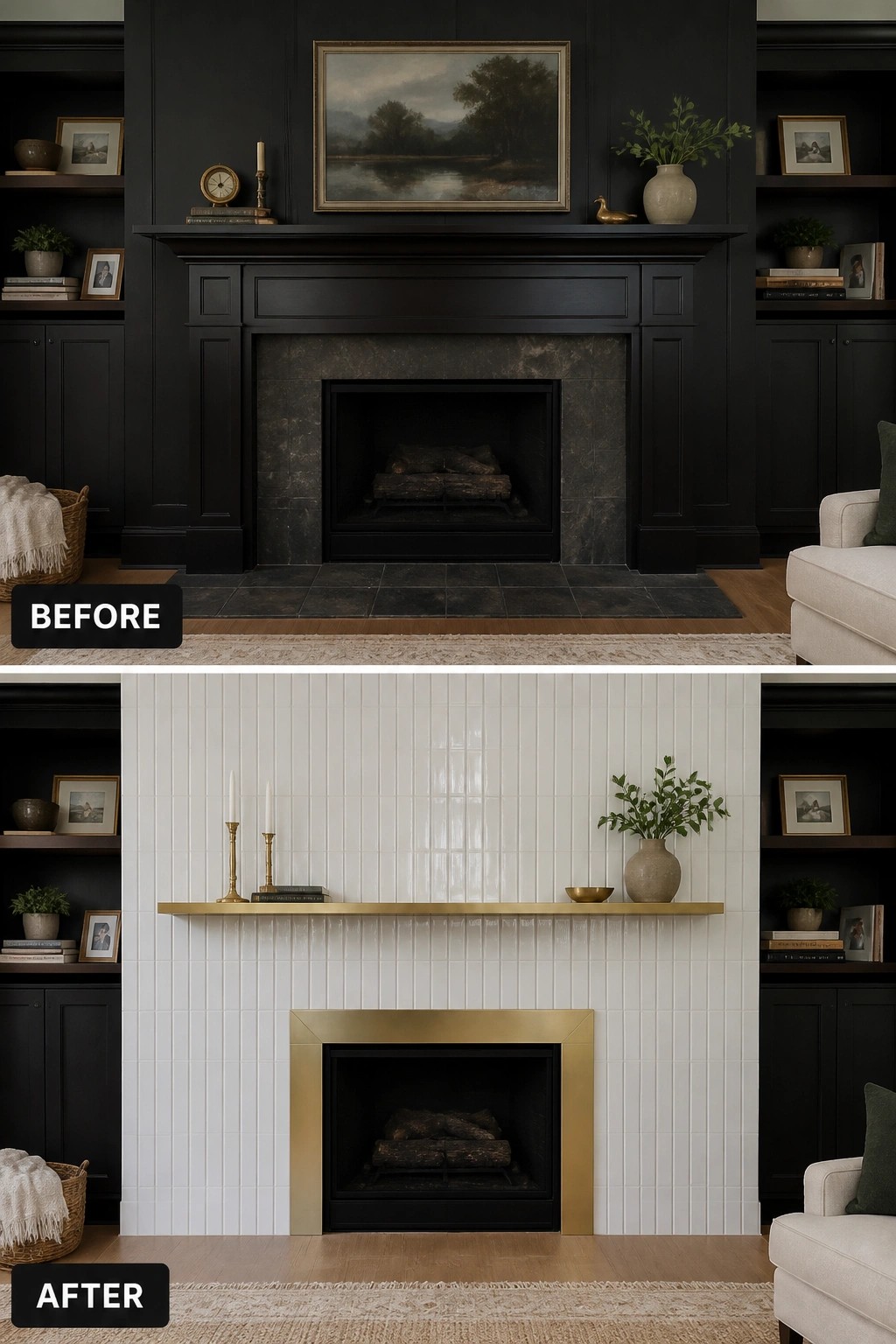
A dark fireplace surround can weigh down the whole room. Replacing it with vertical tile brightens the wall and gives the fireplace a cleaner shape. Here the old black mantel and heavy stone were swapped for white tiles that run straight up and a thin shelf that keeps the look light.
This idea works best in rooms that already have dark built-ins or trim. Stick with one simple tile color and let the vertical lines do most of the work. It suits older homes where you want to keep the fireplace but make the space feel more open without moving walls or spending on a full rebuild.
Replace Bold Tile With Neutral On Your Fireplace
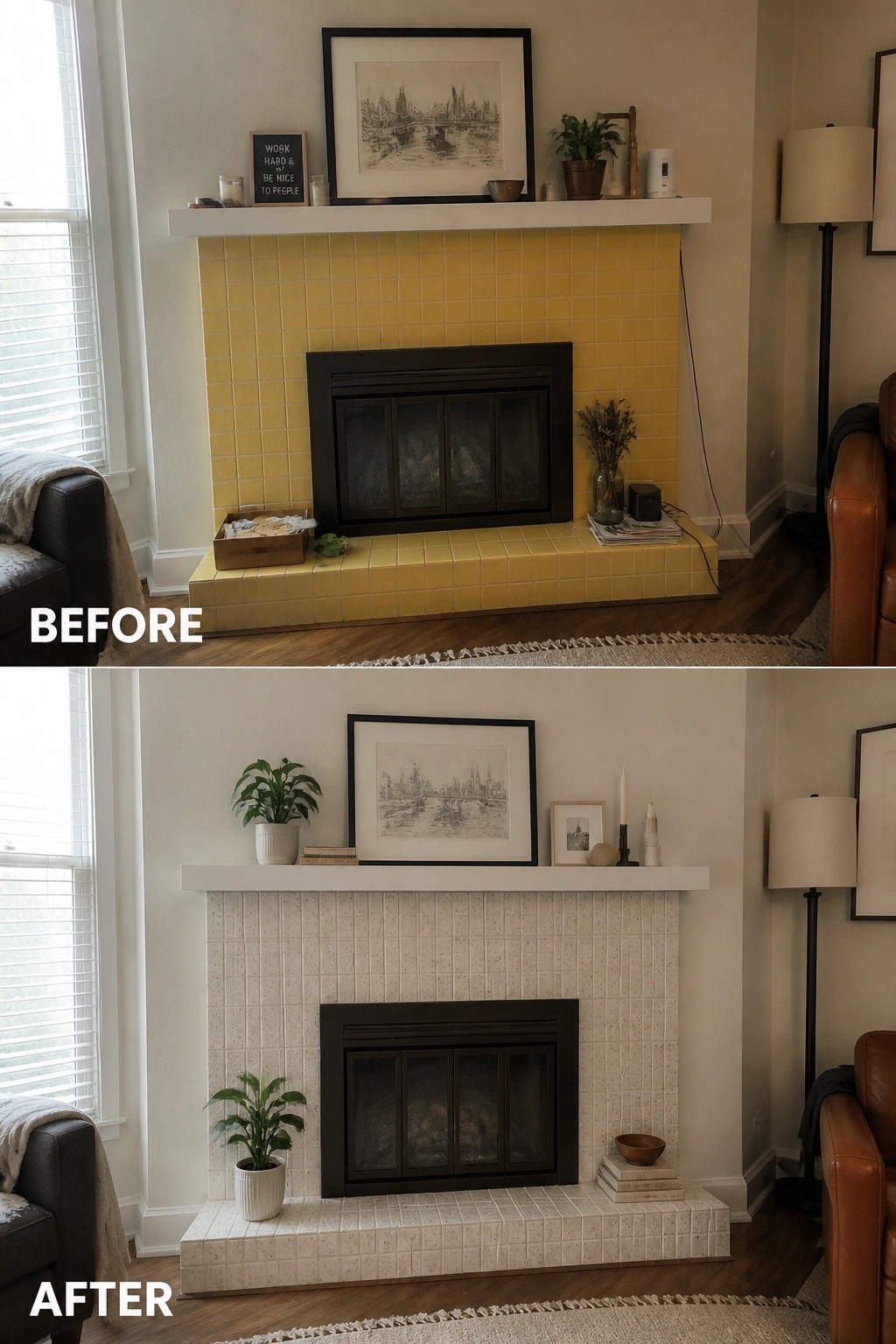
A bright yellow tile surround can make a fireplace feel dated and overwhelming. Switching to a light speckled neutral tile softens the whole wall and lets the mantel styling feel calmer without needing a full room overhaul. The change also makes the firebox stand out more clearly as the center point.
This approach works well in living rooms where the fireplace is already a main feature but the current tile fights with the rest of the space. Keep the mantel fairly simple afterward so the new tile does the heavy lifting. It is a practical update if you like the existing layout but want the room to feel lighter and more current.
Add Vertical Tile To Refresh A Basic Fireplace

A plain black fireplace can easily disappear into the wall, especially when it has no frame or texture around the insert. Adding a vertical tile surround in a warm tone creates a clear border that pulls the eye in and gives the whole wall more weight. The new mantel finishes the look without adding clutter.
This idea suits living rooms where the fireplace is already in place but feels unfinished. Keep the tile color a few shades different from the firebox so it stands out, and make sure the surround stays in scale with the room size. It is a simple update that works on many existing fireplaces without moving walls or changing the floor plan.
Make The Fireplace Wall The Main Feature

A basic brick fireplace often ends up looking unfinished when the surround stays plain and the hearth collects clutter. Vertical tile changes that by giving the wall a clean, consistent surface that runs from the hearth upward and turns the fireplace into the main focal point. The lighter tile color and new mantel help the whole area feel brighter and more intentional without needing a lot of extra pieces.
This idea works well in living rooms where the fireplace sits across from seating. Choose a tile that matches the room’s overall tone, and consider adding simple shelving on one side if you need storage. Keep decor minimal so the tile pattern stays the focus rather than competing with too many small items.
Update A Fireplace With Vertical Tile In A Softer Color

The dark tile surround and heavy mantel made the fireplace feel closed in and dated. Switching to a lighter vertical tile in soft blue-green tones with a pale wood mantel brightens the whole wall and lets the fireplace remain the main feature without overpowering the room.
This idea works best in living rooms that already have decent light and simple furniture. Pick a tile color that echoes something else in the space, keep the mantel clean, and make sure the new surround fits the existing opening so the update stays focused and easy to live with.
Make The Fireplace Wall The Main Feature
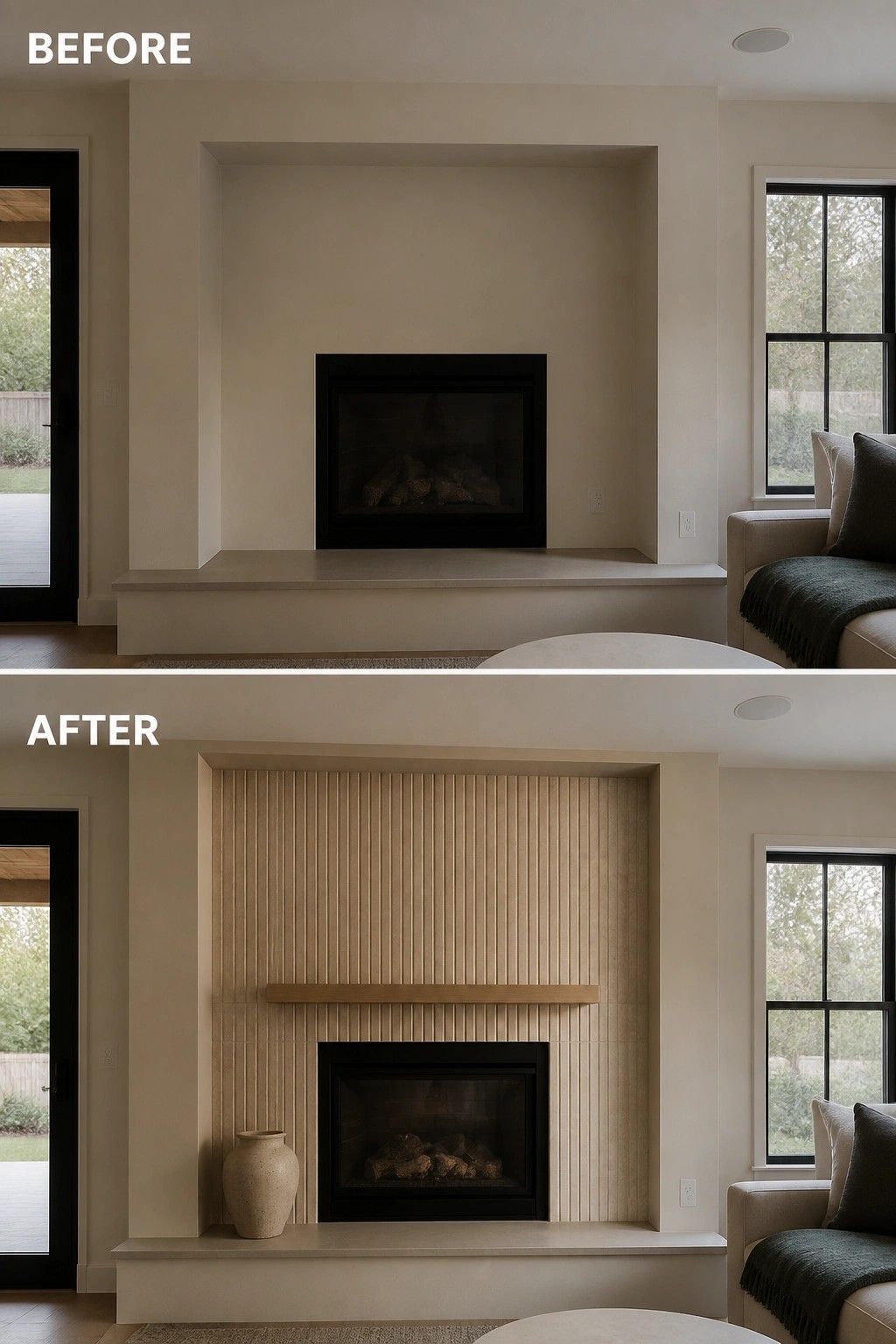
A plain fireplace surround often gets overlooked because it blends into the wall. Adding vertical slats across the back and a slim wood mantel creates depth and makes the fireplace stand out as the main point in the room. The change keeps the space light while giving the wall clear purpose.
This works best in rooms that already have a simple layout and neutral colors. Focus on the surround first, then add just one or two small items nearby so the vertical detail stays visible. It suits homes that need a focal point without adding heavy furniture or bold color.
Make The Fireplace Wall The Main Feature

The before version shows a standard white brick fireplace with the TV sitting on a plain wall above the mantel. Adding vertical paneling across the full height of the wall above the mantel gives the whole area more presence and pulls the eye upward in a simple way. The sconces on either side also help balance the TV so it does not feel like the only thing on the wall.
This approach works best in rooms where the fireplace already sits in the center of the main seating area. Keep the paneling in a light neutral tone if you want the space to stay bright, and place the sconces at eye level so they light the wall evenly rather than casting shadows. It is a straightforward update that does not require moving the mantel or changing the brick.
Make The Fireplace Wall The Main Feature

A busy tile surround can make a fireplace feel stuck in the past even when the rest of the room is fine. Replacing the old grid pattern with clean vertical panels in a soft gray tone gives the wall a calmer, more current look while keeping the firebox as the center point.
This idea works best in rooms where the fireplace already sits in the main seating area. Choose a simple mantel and keep any decor light so the new surround stays the focus instead of competing with extra pieces.
Update An Old Stone Fireplace With Vertical Tile
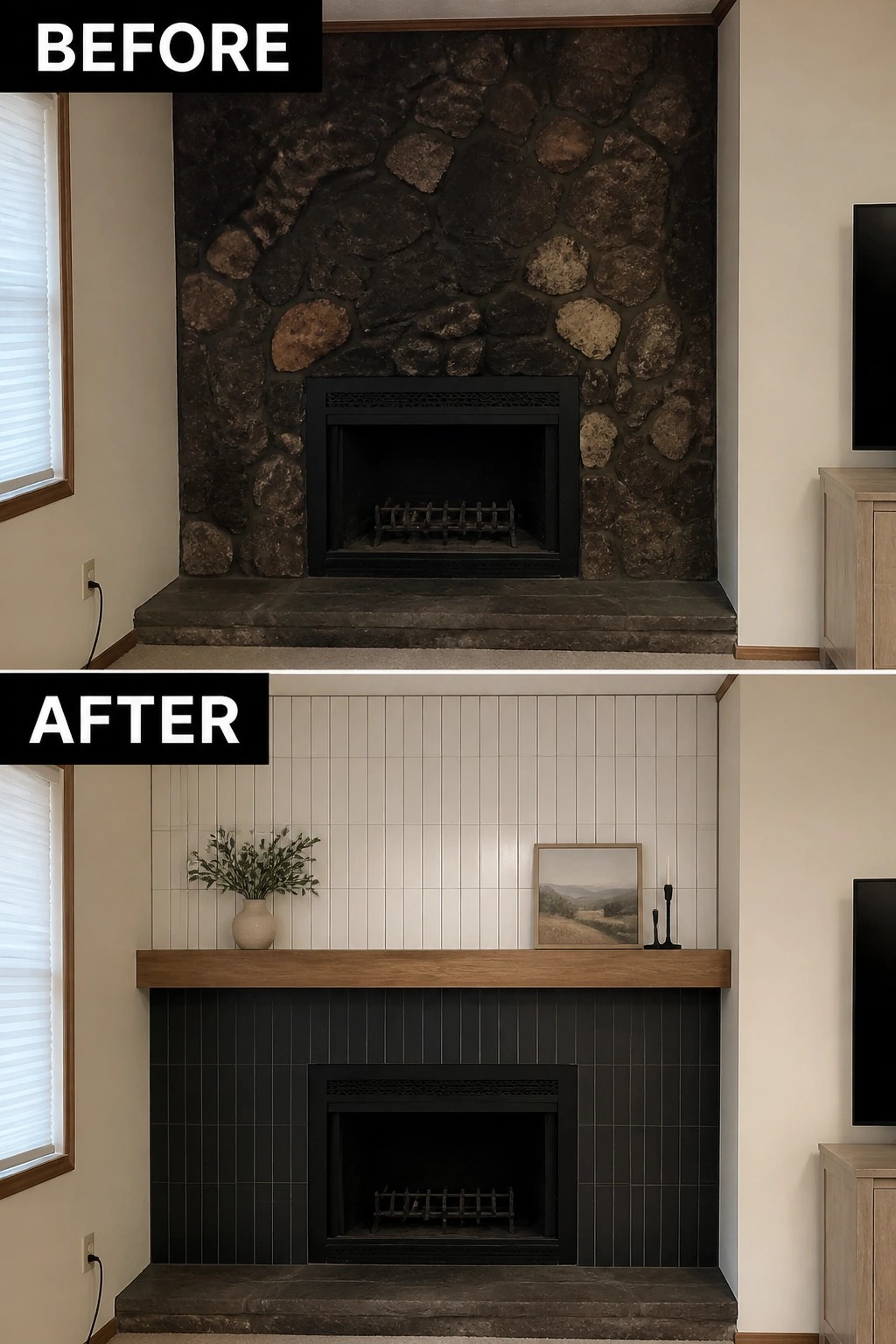
An old stone fireplace often dominates a room in a heavy way. Switching the surround to vertical tile lightens the wall, gives it cleaner lines, and lets the firebox stay in place without a full rebuild.
This works best in living rooms where the fireplace needs to feel current but still grounded. Choose a simple tile in a neutral tone, keep the mantel low and warm, and avoid crowding the shelf with too many small pieces.
Refresh A Fireplace With Vertical Tile
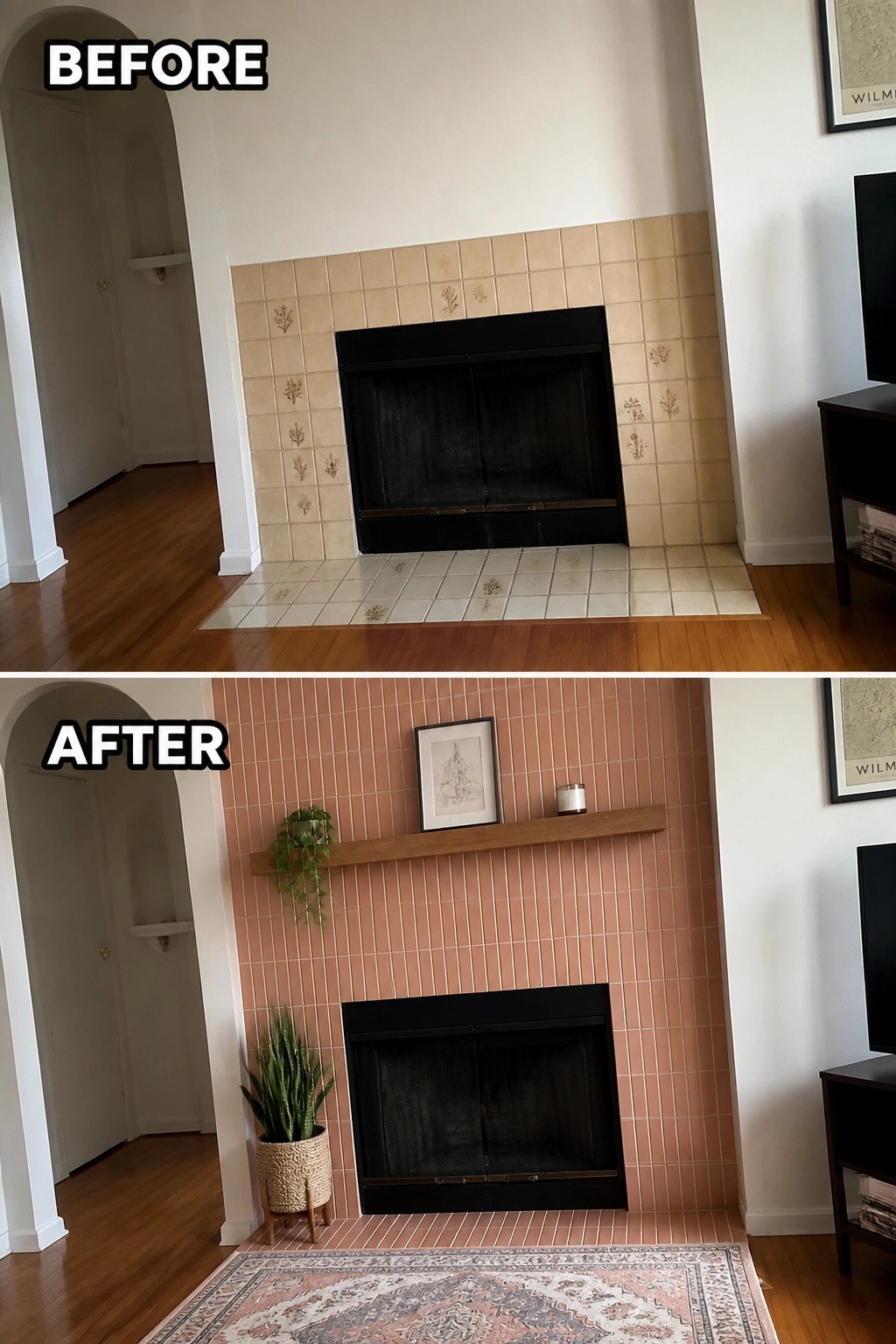
Replacing the old tile surround is one of the quickest ways to update a fireplace that feels dated. The before photo shows a wide beige surround with small patterned tiles, while the after uses slim vertical tiles in a warm terracotta tone that make the wall feel taller and cleaner.
This idea works best when the fireplace is already the main focal point in the room. Keep the firebox the same and add a simple wood mantel for display space. It suits homes with wood floors and neutral walls, and the vertical layout gives the update without needing major construction.
Refresh A Fireplace With Vertical Tile
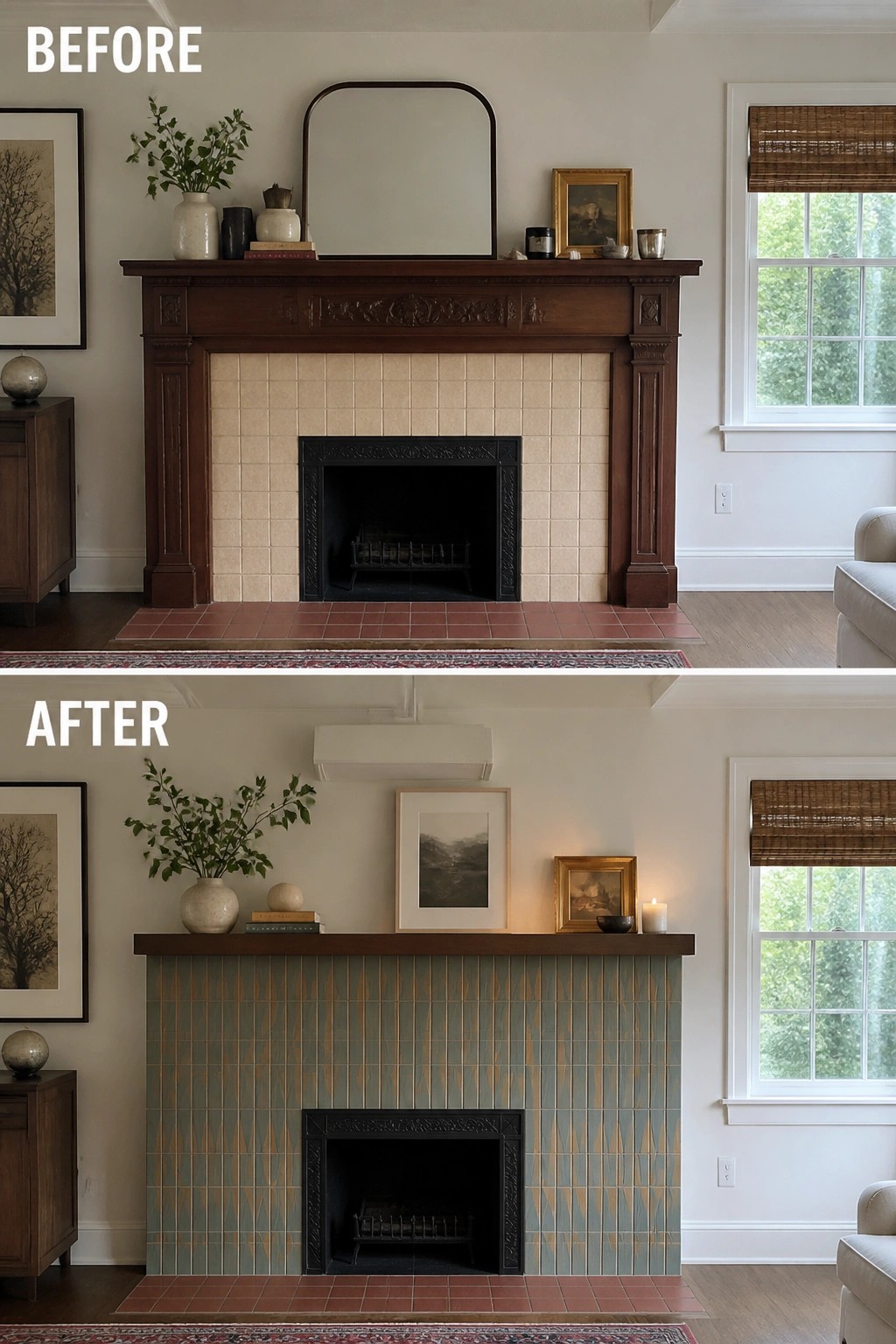
Many older fireplaces carry heavy wood mantels and plain tile that date the whole wall. Replacing the tile with a vertical pattern in softer colors reduces the bulk and makes the fireplace feel lighter while still keeping the original opening and hearth.
This idea suits homes that want to update without a full renovation. Keep the new mantel simple and limit what sits on top so the tile pattern stays the main feature.
Refresh A Fireplace With Vertical Tile Accents

A full stone surround can make a fireplace feel heavy and dated. Replacing most of that stone with a painted wall and adding vertical tile on either side softens the look while keeping the fireplace as the main feature. The added mantel helps pull the whole wall together.
This idea works best in rooms with built-in shelves on both sides. It lets you update the fireplace without tearing everything out. Stick with a simple tile pattern and neutral colors so the change feels natural rather than busy.
Add Vertical Tile Surround To Your Fireplace
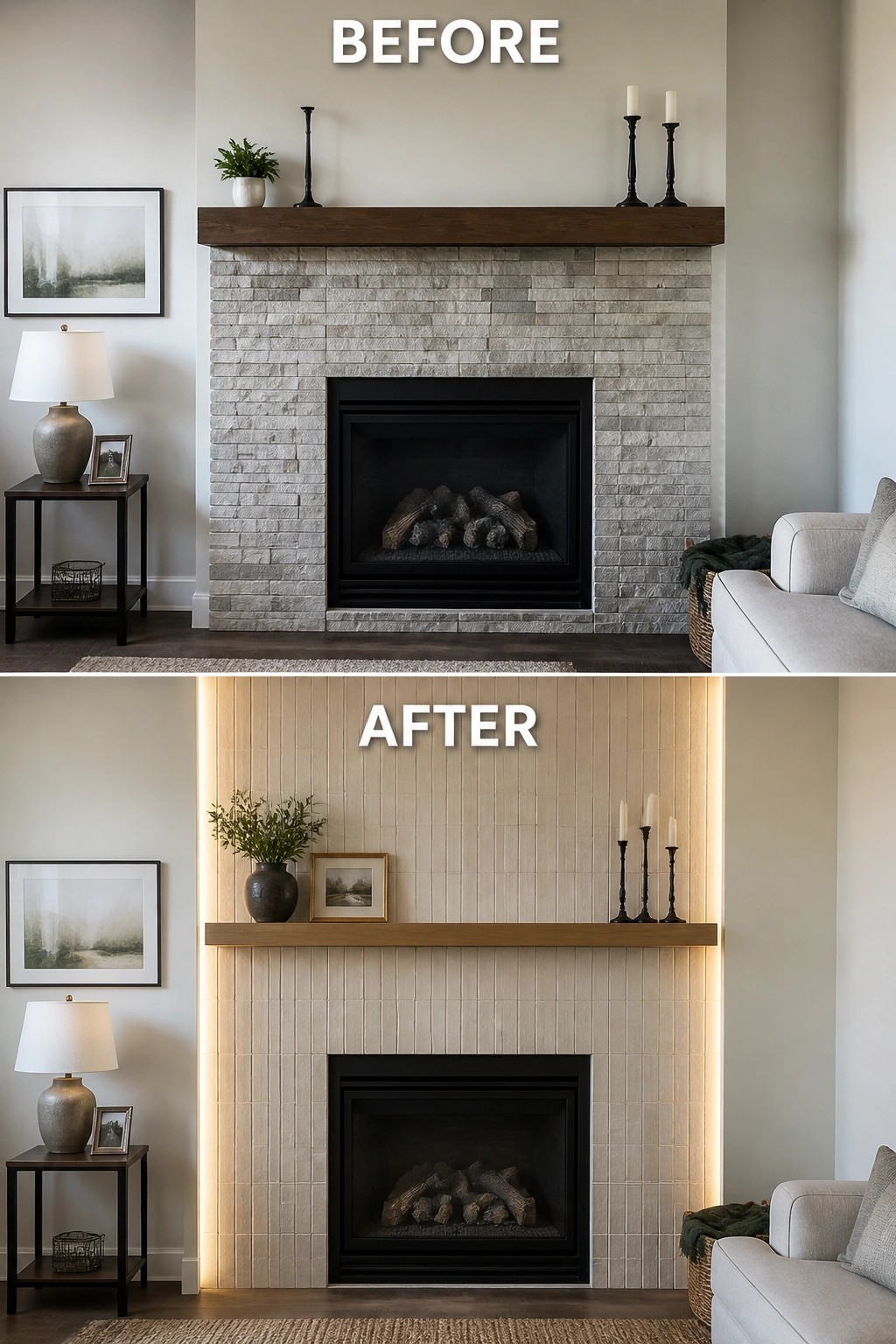
One straightforward way to update a fireplace is to swap a heavy stone surround for vertical tile and add soft backlighting along the edges. The change turns the wall into a taller, cleaner focal point while keeping the existing firebox and mantel style intact.
This idea works best in living rooms where the fireplace already sits in the center of the layout. Keep the tile light and neutral so it blends with the rest of the room, and test the lighting placement before finishing the surround so the glow stays even and not too bright.
Frequently Asked Questions
Q: How do I keep the vertical lines straight when laying the tiles?
A: Start by drawing a plumb line down the center of the surround. Then work outward row by row from there. This keeps everything aligned even if your wall has slight curves.
Q: Do the tiles need extra support at the bottom?
A: A simple metal angle bracket screwed into the wall works well for that. It holds the weight without showing once the tiles cover it. Check the level often as you build up.
Q: What happens if a tile cracks from the heat later on?
A: You can swap out just that tile later on. Keep a few spares from the start. But choose heat resistant ones to prevent cracks in the first place.
