

I have seen living rooms where the fireplace ends up looking like an afterthought once the furniture and lighting are in place.
Updating the mantel and hearth can give the whole area a clearer role without requiring a full room overhaul.
Small adjustments often make the biggest difference here.
I tend to notice that a mantel sized to fit the wall proportions helps the space feel more grounded right away.
Ideas like these are worth trying when a fireplace needs to support how the room actually gets used.
Make The Fireplace Wall The Main Feature

Many older fireplaces sit in the room without much presence because the surround is flat and the mantel feels too light. Switching to a taller stacked stone surround with a thicker wood beam mantel changes that by giving the wall real weight and making the fireplace the clear center of the space.
This idea works best in rooms where the fireplace already sits in a central spot on the wall. Keep the new materials simple and let the surround extend a bit higher than the original so the proportions feel balanced. Avoid adding too many small items on the mantel afterward, since the stone and wood already do the work.
Make The Fireplace Wall The Main Feature

A plain fireplace often fades into the background until the hearth gets some attention. Switching the tile from a basic beige grid to a blue patterned design immediately gave this wall more weight and helped the room feel more pulled together.
This idea suits living rooms where the fireplace already sits in a central spot. Keep the mantel simple with just a few items so the new tile can do the main work, and choose a pattern that adds interest without overwhelming the space.
Paint Brick Fireplaces To Lighten The Room

Painting the brick on an old fireplace is one of the simplest ways to change how a room feels. The dark brown surround was covered in white paint, the heavy mantel was replaced with a clean wood shelf, and the hearth was updated to dark stone. The fireplace now blends better with the light walls while still serving as the main focal point.
This idea works best in living rooms or family rooms that already have light walls and wood floors. Use a masonry primer first and pick paint made for brick so it holds up over time. Keep any decor on the mantel minimal so the updated surface stays the main feature.
Make The Fireplace Wall The Main Feature

The fireplace sat on a plain wall with clutter around the base and no real structure on either side. Built-in shelves changed that by framing the opening and giving the whole area a clear purpose.
This idea works best when the fireplace is the natural center of the room. Keep the shelves shallow enough to avoid crowding the seating area, and match the mantel depth so everything lines up.
Update An Outdated Fireplace Surround And Hearth

Many older fireplaces have brass surrounds and large tiled hearths that make the wall feel heavy. Replacing the surround with a clean black frame and switching to a smaller concrete hearth removes the bulk and gives the fireplace a simpler, more current look.
This works best in rooms where the mantel is staying in place. Start with the firebox and hearth changes first, since those two updates usually shift the whole feel without requiring new trim or paint.
Simplify A Fireplace Mantel For A Cleaner Look

Many older fireplaces end up looking heavy because of dark wood mantels and too many small items on the shelf. In this case the change came from removing the ornate surround and replacing it with a simple wood beam mantel set on a plain white plaster front. The new hearth uses a light terrazzo slab that keeps the focus on the firebox itself instead of competing details.
This approach works well in rooms that already have plenty of wood furniture or darker tones. Keep the new mantel narrow, use one or two small items at most on top, and let the wall color do the rest of the work. The result feels calmer and makes the fireplace the clear center of the room without any extra construction.
Give A Basic Fireplace A New Mantel And Hearth

A plain brick fireplace often fades into the wall, especially when the surround and hearth stay simple. Adding a mantel and updating the base creates a stronger focal point and gives the whole wall more structure. Here the change from a flat brick front to a black mantel with a wood bench hearth makes the fireplace feel like it belongs in the room.
This idea suits living rooms that need one clear center without a full renovation. Choose a mantel depth that fits the scale of the space and pick a hearth material that works with your floor. Start with the mantel and hearth first, then add a few accessories so the update stays practical.
Update A Tiled Fireplace With A New Mantel And Hearth

Many older fireplaces end up with heavy tile that makes the whole wall feel dated and closed in. Swapping that tile for a lighter stone and adding a simple floating mantel opens the space back up and turns the fireplace into a clean focal point without major construction.
This approach works best in rooms that already have wood tones and natural light. Keep the new mantel narrow so it does not crowd the opening, and match the hearth height to the floor level so the room stays easy to walk through.
Make The Fireplace Wall The Main Feature

A fireplace with nothing around it tends to fade into the background. Adding a wood mantel, vertical shiplap, and a dark tile hearth gives the wall a clear structure and makes the fireplace the natural center of the room.
This approach works best when the fireplace already sits in a main seating area. Keep the mantel depth reasonable so it does not crowd the space, and choose a hearth material that is easy to clean and stands up to regular use.
Make The Fireplace Wall The Main Feature

A dark fireplace surround can make an entire room feel heavy and dated. In this case the black brick was painted a soft off-white and the old raised hearth was replaced with a low stone base. Those two changes alone pulled the fireplace forward as the main focal point instead of letting it sit like a dark block on the wall.
This approach works well in older homes where the original fireplace finish has become the dominant feature. Start by painting the surround the same color as the surrounding walls, then add a simple stone or brick hearth at floor level. Keep the mantel narrow and light so the eye stays on the opening rather than on heavy trim.
Replace A Traditional Mantel With A Floating Shelf

One simple way to update a fireplace is to swap out a full traditional mantel for a narrow floating shelf. The change removes extra trim around the firebox, lets the TV sit higher on the wall, and keeps the focus on the opening itself.
This idea works well in rooms that already have nearby built-ins or storage. Use a dark shelf to match a black firebox surround, and keep the hearth update to a single patterned tile so the new look stays balanced and easy to live with.
Lighten A Heavy Stone Fireplace With A Simpler Surround

A big stone fireplace can start to feel overwhelming in a room once the rest of the space is updated. In this case the dark surround and thick mantel made the whole wall feel heavy and dated. Switching to a lighter surround with a simple mantel and a clean tile hearth opens the space up without removing the fireplace itself.
This approach works well in living rooms where the fireplace sits on a main wall. Keep the new surround in a light neutral so it blends with the walls, and use the mantel for just a few balanced items instead of filling every inch. The change keeps the room feeling warm while making it easier to style around the fireplace.
Make The Fireplace Wall The Main Feature

The original mantel sat heavy across the top and held too many small items, which pulled attention away from the fireplace itself. Replacing it with a narrow floating shelf and keeping only a couple of pieces above the fire gives the black surround room to stand out on its own.
This approach suits rooms where the fireplace already has good proportions but needs a lighter frame. Choose a shelf that matches the width of the opening, limit what sits on it, and let the hearth do most of the work.
Make The Fireplace Wall The Main Feature

Many traditional fireplaces have heavy carved mantels that can feel busy and dated. Replacing the ornate surround with a simple modern mantel and adding a soft light strip underneath shifts the focus to the firebox itself and makes the whole wall feel calmer and more intentional.
This idea suits homes that want to keep their original fireplace proportions without a full renovation. Choose a mantel color that contrasts with the wall, keep the surface clear of clutter, and use the lighting to highlight the opening rather than the trim.
Update An Old Fireplace With A New Mantel And Hearth

Many older fireplaces come with large tile surrounds that feel heavy and dated. Replacing the mantel and hearth with a simple concrete slab gives the whole wall a cleaner look while keeping the original opening and firebox. The change removes the busy tile pattern and replaces it with one solid material that sits lower and extends forward, which makes the fireplace feel more grounded in the room.
This approach works well in homes where the fireplace is the main focal point but the surrounding tile no longer fits the style. Keep the new mantel and hearth in the same depth and width range as the old ones so the proportions stay balanced. If the wall above the opening is left plain, the concrete detail stands out without needing extra trim or color changes.
Make The Fireplace Wall The Main Feature

One simple way to refresh a living room is to give the fireplace more presence with a new mantel and hearth. Here the thick wood beam replaced a dark narrow shelf and the hearth changed to a lighter stone, which made the black brick read as a stronger focal point instead of blending into the background.
This idea works best when the fireplace already has decent proportions and you want to improve it without a full renovation. Choose a mantel that contrasts with the brick color and keep any styling on top fairly minimal so the new structure stays the main draw.
Make The Fireplace Wall The Main Feature

A fireplace often sits in the middle of a room but can still feel like background noise when the mantel is crowded with small pieces. Replacing that clutter with one large mirror above the mantel pulls the whole wall together and gives the space a clear center. Updating the hearth with a simple tile also helps the base look more finished and ties the look to the rest of the room.
This idea suits living rooms where the fireplace is already in a good spot but needs better focus. Keep the items on the mantel few and low so the mirror stays the main point, and pick a hearth material that matches your floor or furniture tones. The change stays practical because it works with the existing stone without any big rebuild.
Make The Fireplace Wall The Main Feature

A plain fireplace can easily fade into the background when the surround stays small and light. In this case the change came from extending the tile well beyond the original opening and switching to a dark finish that reaches up to the ceiling line. The new floating shelf replaces the heavy traditional mantel and lets the eye focus on the fire itself.
This approach works best in open living areas where the fireplace needs to hold its own against a kitchen or dining space nearby. Keep the tile size large so the wall reads as one solid piece rather than a busy patchwork. Add a slim shelf and one or two small lights above it instead of crowding the surface with extra decor.
Make The Fireplace Wall The Main Feature

Adding a mantel and a framed insert can turn an old open fireplace into the main focal point without tearing out the brick. The white mantel creates a clear border while the black insert and new hearth give the whole wall a finished, updated look.
This idea works best in living rooms where the fireplace already sits in a central spot. Keep the mantel simple and let the contrast with the brick do the work so the update feels balanced rather than overwhelming.
Paint Brick To Brighten An Old Fireplace
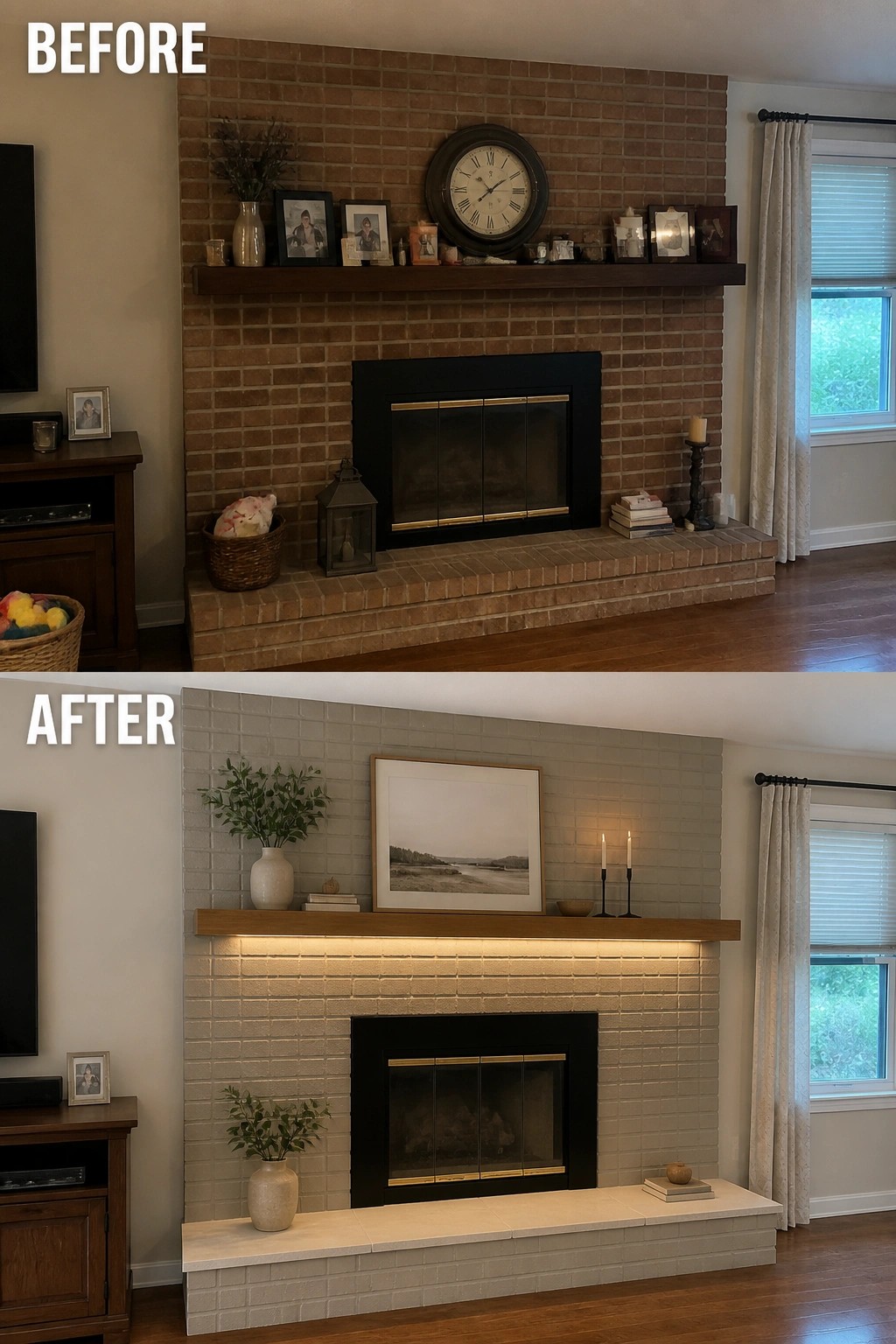
Painting the brick a light gray color instantly changes how the whole wall feels. The dark red brick made the fireplace look heavy and dated, while the new soft tone opens up the room and makes the space feel calmer. Adding a simple light strip under the mantel gives the area a gentle glow without needing extra lamps.
This approach works well in homes where the brick is still in good shape but the color feels too strong. Focus on one main change first, like the paint, then add lighting only if it fits the new look. Keep the mantel styling minimal so the lighter brick stays the main feature.
Make The Fireplace Wall The Main Feature

A plain fireplace often blends into the wall instead of standing out. Adding a wood mantel and replacing the hearth tile creates a stronger focal point that ties the room together without major construction.
This idea works best when the fireplace already sits in the center of the main wall. Choose a mantel depth that leaves room for candles or small plants, and keep the new tile pattern simple so it does not compete with nearby furniture or rugs.
Make The Fireplace Wall The Main Feature

A plain wall with a TV mounted above the fireplace often feels incomplete. Adding a mantel with trim and a simple surround gives the wall clear shape and turns the fireplace into the actual focal point instead of just a hole in the drywall.
This approach works best in rooms where the fireplace already sits in the center of the main wall. Keep the mantel depth modest and limit what you place on it so the firebox stays the strongest element.
Make The Fireplace Wall The Main Feature

A fireplace wall often feels unfinished when the mantel and surround sit alone on a blank stretch of drywall. Adding built-in shelves on both sides and swapping the mantel for a thicker wood beam gave this wall a clear purpose and better balance with the room.
This idea works best in living rooms where the fireplace sits between windows or needs more weight. Keep the shelves simple with a mix of closed storage and open spots so the firebox stays the main focus. Match the new mantel and tile to your existing furniture rather than trying to match every detail in the room.
Frequently Asked Questions
Q: How do I measure for a new mantel so it looks right over my fireplace?
A: Start by checking the width of your current opening and add a few inches on each side for balance. Then look at the height from the floor to decide if you want something tall or low. This keeps the proportions feeling natural in the room.
Q: Do I need to replace the hearth if I’m just swapping the mantel?
A: Often you can keep the old hearth if it is still solid and matches the new look. Check for cracks or stains that might stand out once the mantel changes. A quick clean or tile refresh can tie everything together without extra work.
Q: What should I do about the gap between the new mantel and the wall?
A: Fill it with caulk that matches your paint color. Then sand lightly after it dries for a smooth finish. This step makes the whole update look built in instead of added on.
