
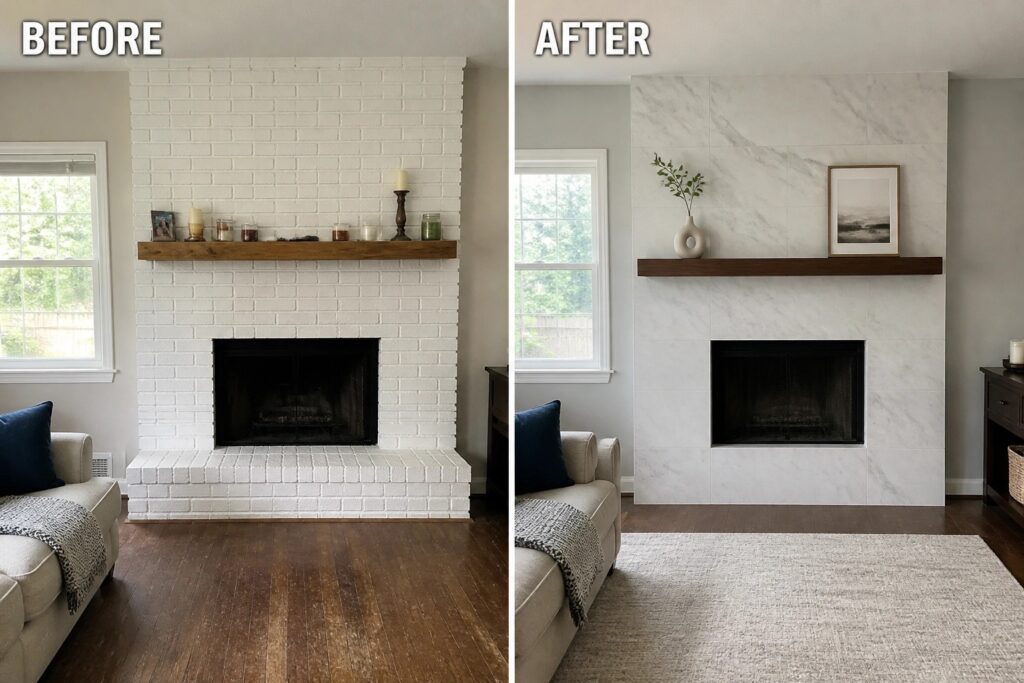
I have noticed that a fireplace can end up looking out of place when the wall around it stays plain and the proportions feel off in the rest of the room.
Full height tile gives the area more weight so the seating and other furniture finally settle into a clearer layout.
That shift often makes the space feel finished rather than half done.
In my own home I would sketch a few tile heights first because the right stopping point changes how the whole wall reads.
A few of these setups show how one steady material choice can keep the room usable without adding extra pieces later.
Make The Fireplace Wall The Main Feature
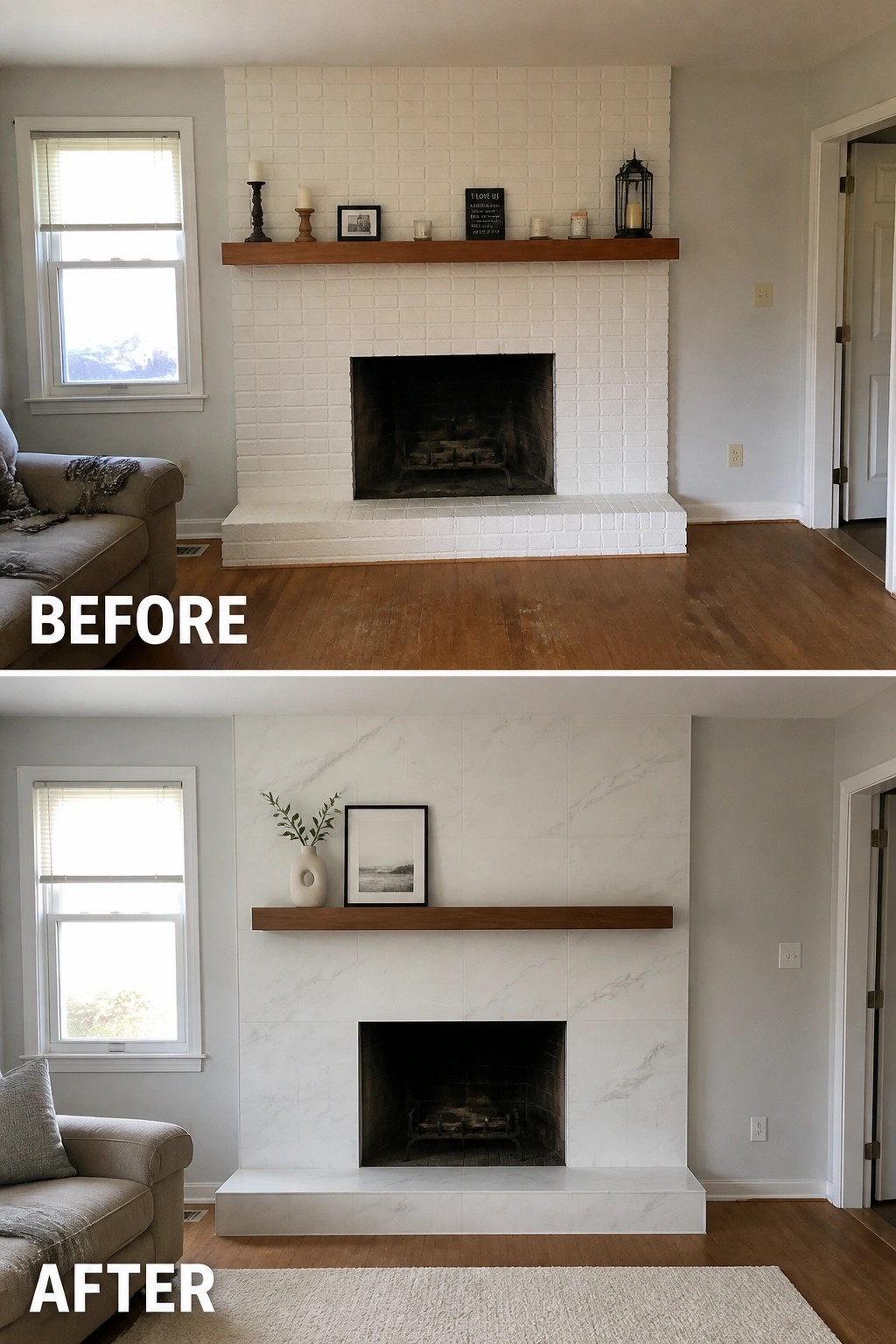
Covering the entire fireplace wall with full-height tile gives the room a clean, updated look without needing to change anything else. In this case the old white brick was replaced with large marble tiles that run from floor to ceiling, which instantly makes the fireplace feel like the main focal point instead of just another wall element.
This approach works well in living rooms where the fireplace already sits in the center of the wall. Keep the mantel simple and limit what sits on it so the tile can stand out. It suits homes with standard ceilings and helps the space feel brighter and more finished even if the rest of the room stays the same.
Make The Fireplace Wall The Main Feature
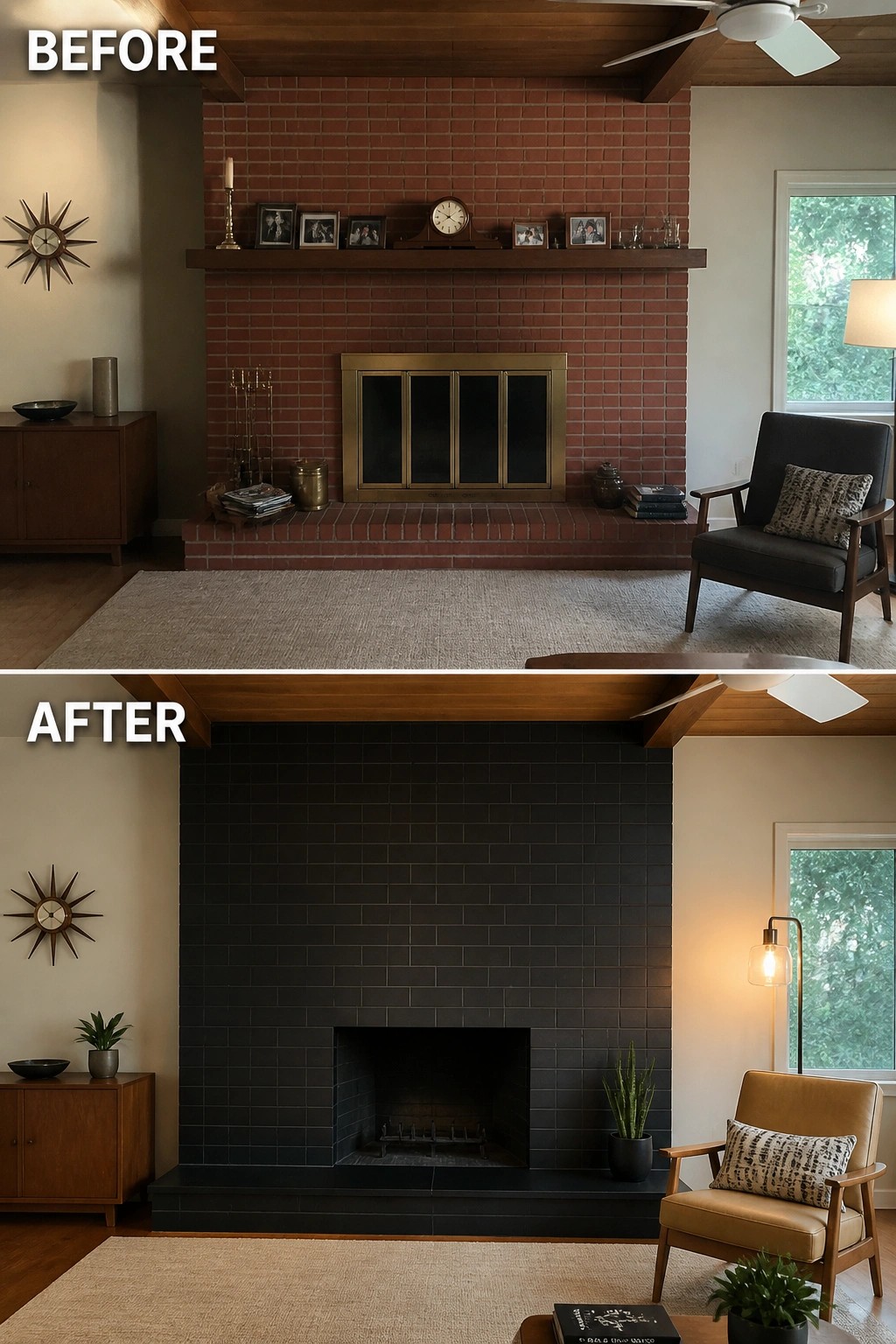
A red brick fireplace often fades into the background once the room fills up. Replacing it with dark full-height tile turns the same wall into the one thing people notice first and gives the seating area a clear center.
This idea suits rooms that already have a simple layout. Keep furniture low and limit extra decor on the hearth so the tile stays the focus without competing for attention.
Make The Fireplace Wall The Main Feature
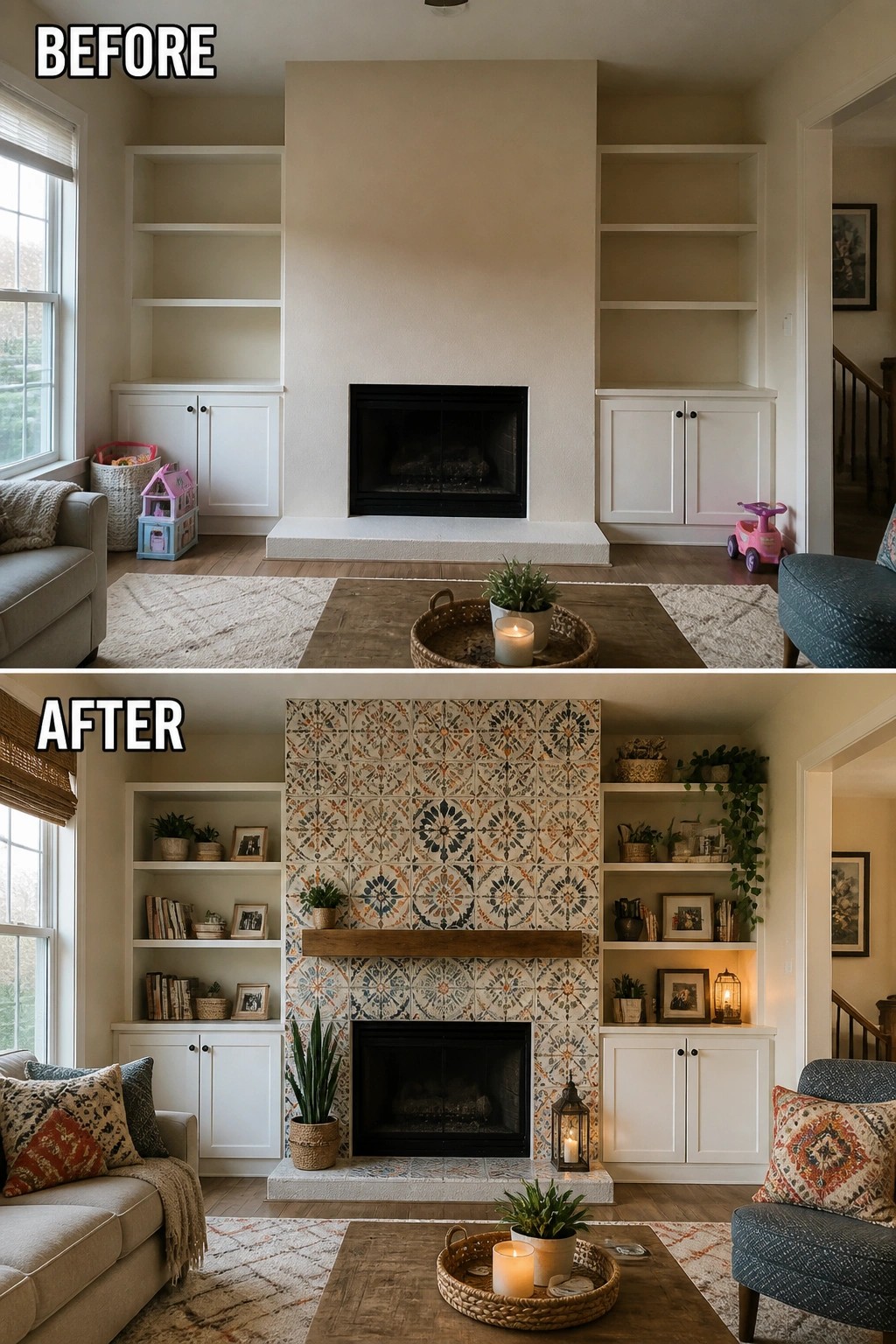
A plain fireplace surround often fades into the background when the wall is just painted drywall. Extending patterned tile from the hearth all the way to the ceiling pulls the eye straight to the fireplace and gives the room a stronger center.
This idea works best when the fireplace already has built-in shelves on both sides. Choose a tile with enough color and pattern to stand out, then keep the shelves lightly styled so they support the fireplace rather than compete with it.
Update A Fireplace Wall With Full-Height Tile
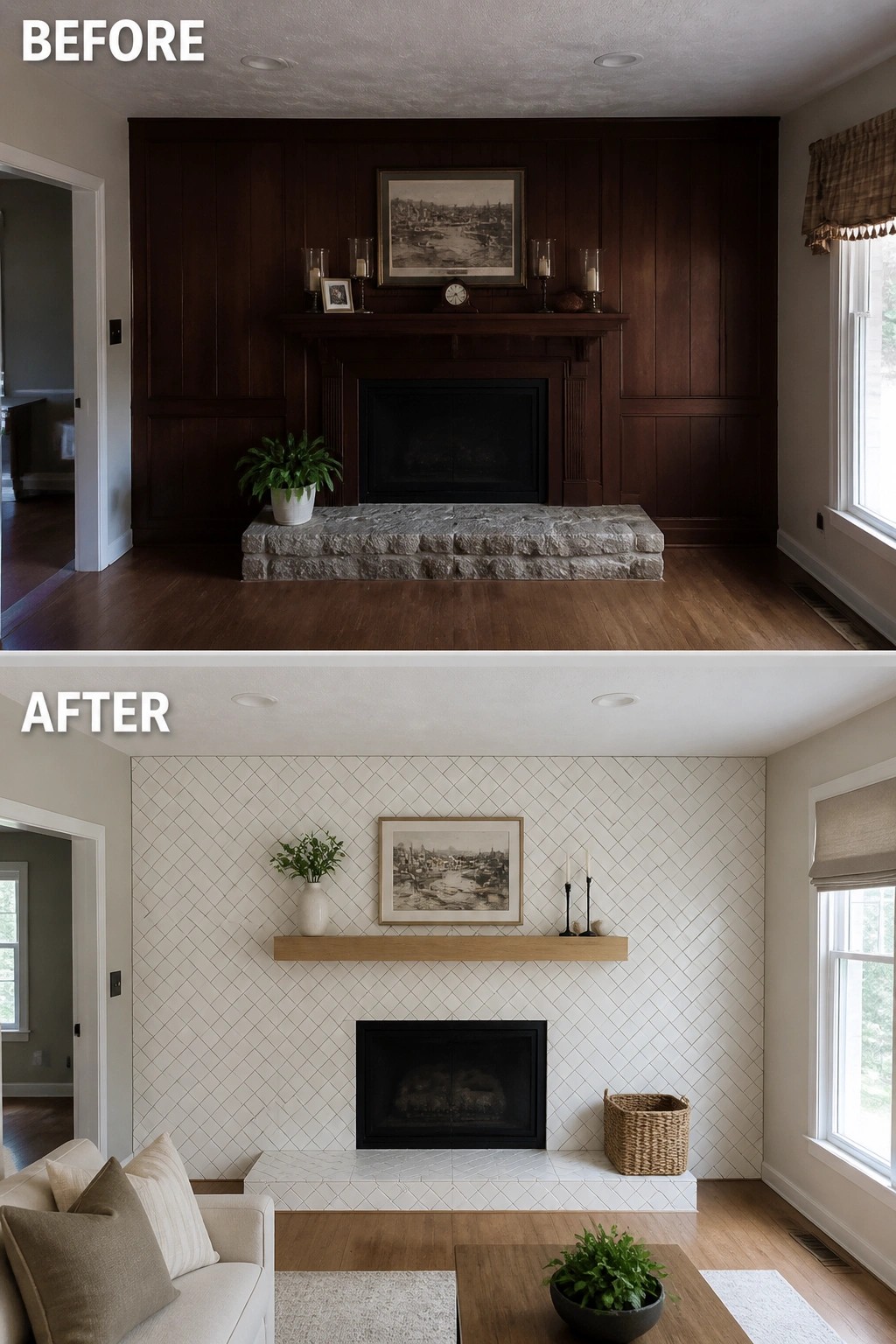
A fireplace wall covered in dark wood paneling can start to feel heavy and dated. Switching to full-height tile lightens the whole room and turns the fireplace into a clean focal point without needing to change the mantel or hearth shape.
This approach works well in living rooms that already have wood floors and simple trim. Keep the tile color light if the room is on the smaller side, and let the tile run all the way to the ceiling so the wall reads as one surface instead of separate parts.
Make The Fireplace Wall The Main Feature
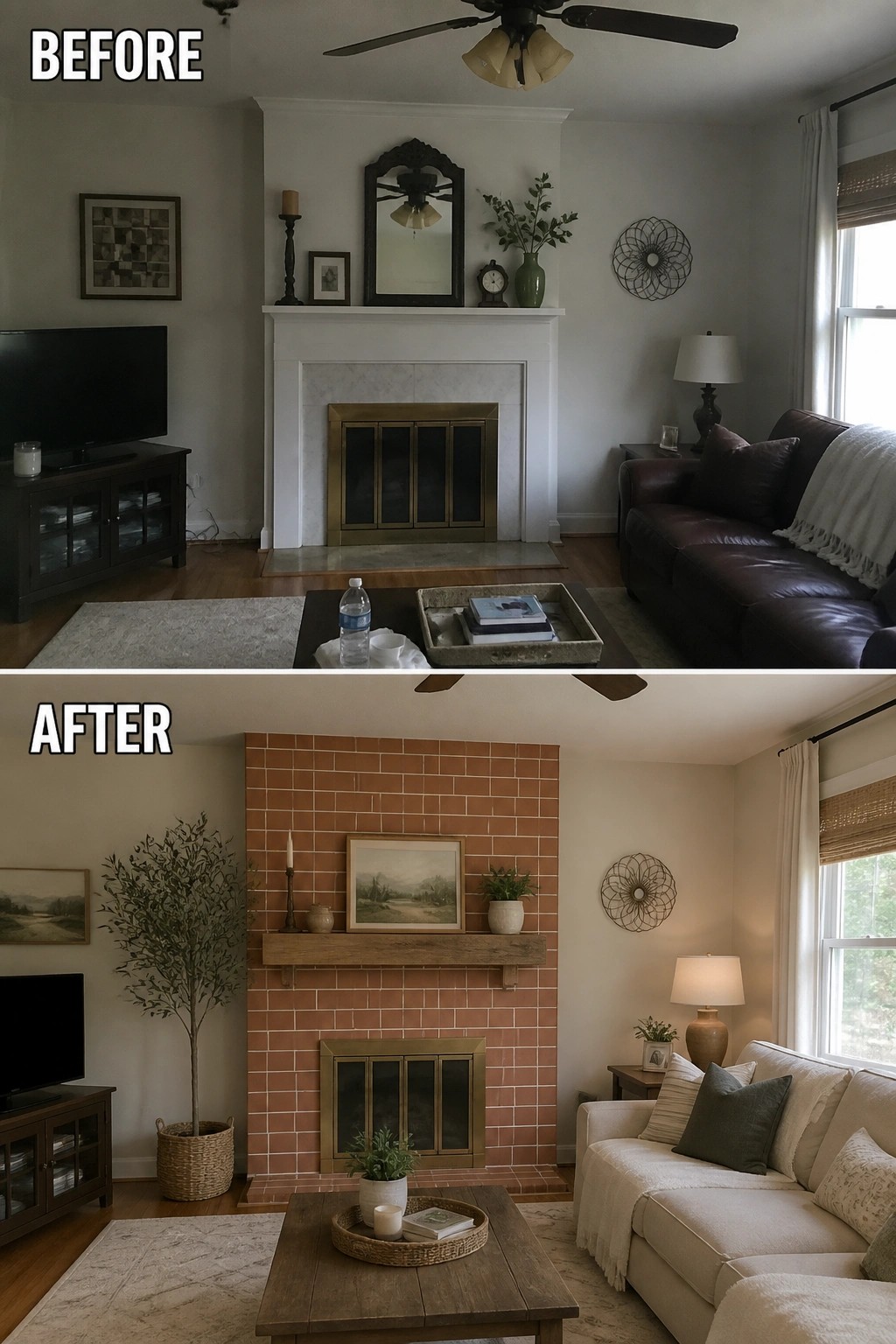
A fireplace that sits flat against plain walls often gets lost in the room. Extending terracotta tile from the floor all the way to the ceiling gives the wall height and turns the fireplace into the clear center of the space. The change also warms up the whole room without needing new furniture or a bigger layout.
This idea works best when the rest of the room stays fairly simple. Choose one tile color and keep the mantel narrow so the tile stays the focus. It suits older homes with standard fireplaces that need more presence without a full renovation.
Make The Fireplace Wall The Main Feature
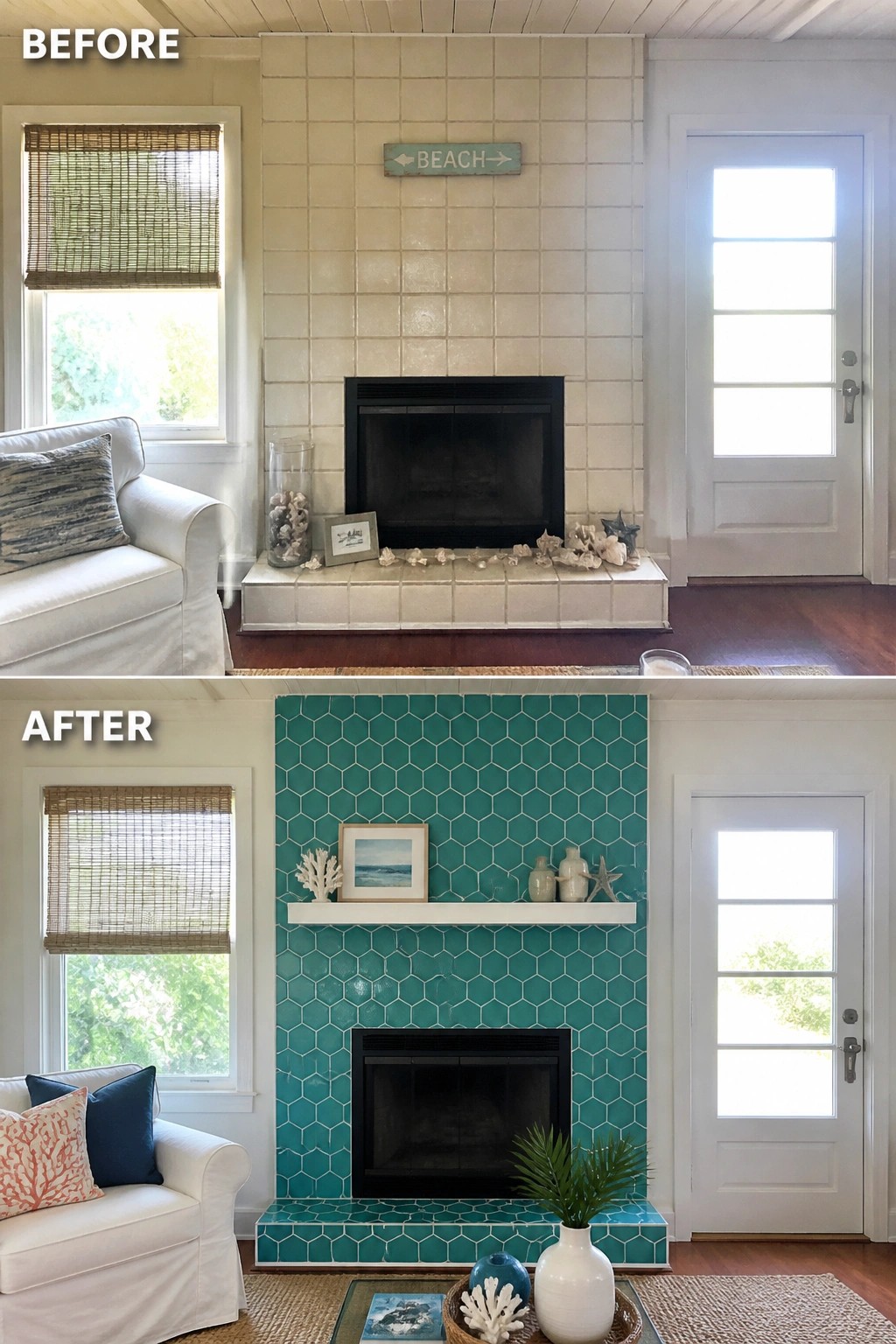
A tall fireplace can easily fade into the background when the tile feels flat and the styling stays minimal. Switching to full-height tile in a strong color gives the wall a clear purpose and turns the fireplace into the main point of the room. The change from plain off-white tile to a bold teal hexagon pattern makes the whole area feel more finished without needing lots of extra furniture or art.
This approach works well in smaller living rooms where you want one strong focal point instead of spreading attention around. Keep the tile color consistent from floor to ceiling, add a simple floating shelf if the original design lacks one, and use just a few matching accessories on top. The key is letting the tile do the work rather than trying to decorate around a weak wall.
Update A Stone Fireplace With Full Height Tile
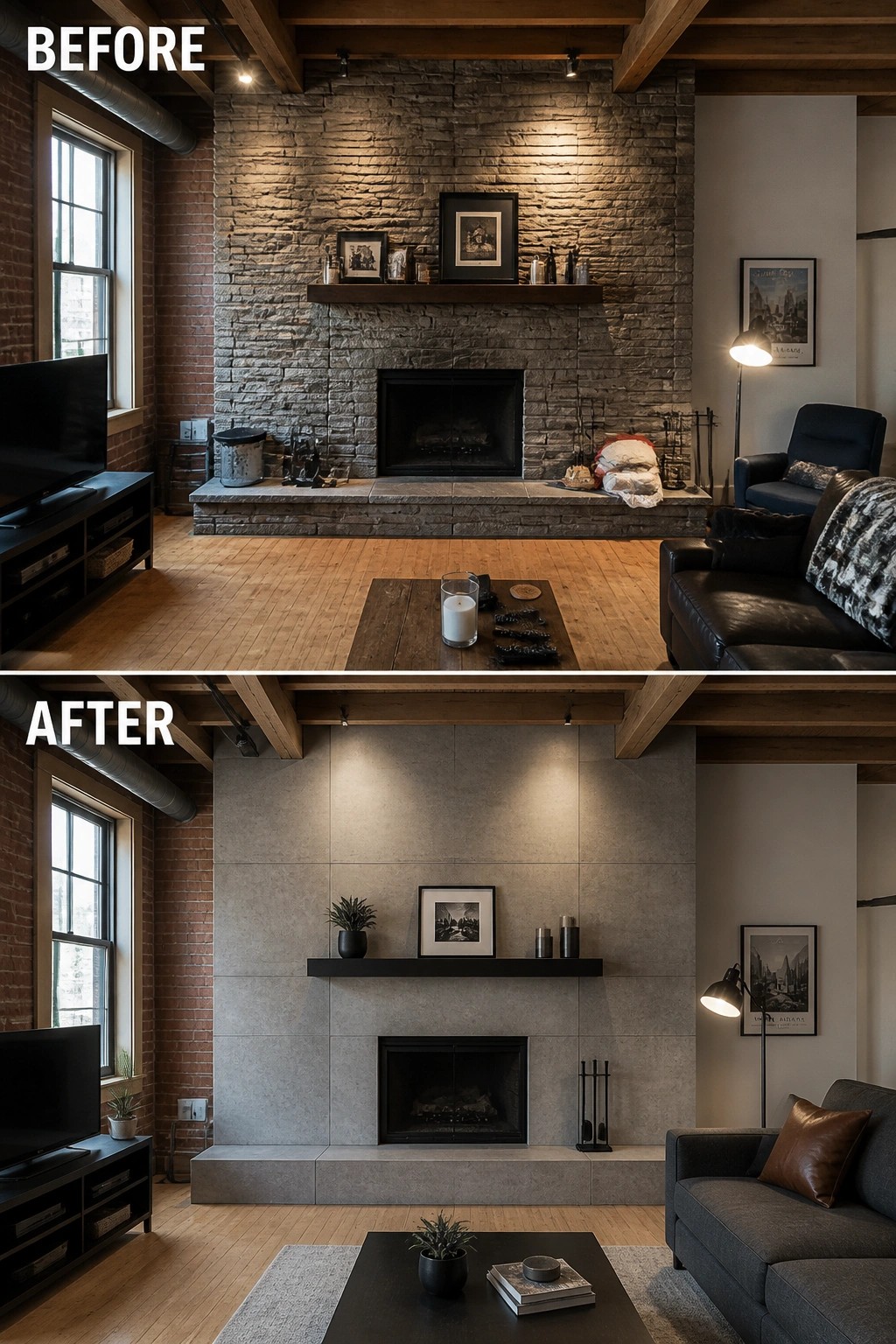
A full height tile surround can turn a heavy stone fireplace into something much simpler and more current. In this case the rough textured stone was replaced with large gray tiles that run straight up to the ceiling, and the old mantel shelf was swapped for a thin black one that keeps the focus on the clean lines.
This approach works well in rooms where the fireplace feels too busy or dated but the rest of the space is already fairly neutral. Keep the tile color close to your wall paint so the whole wall reads as one surface, and limit what you put on the mantel to just a few small items. The result feels finished without adding extra weight to the room.
Make The Fireplace Wall The Main Feature
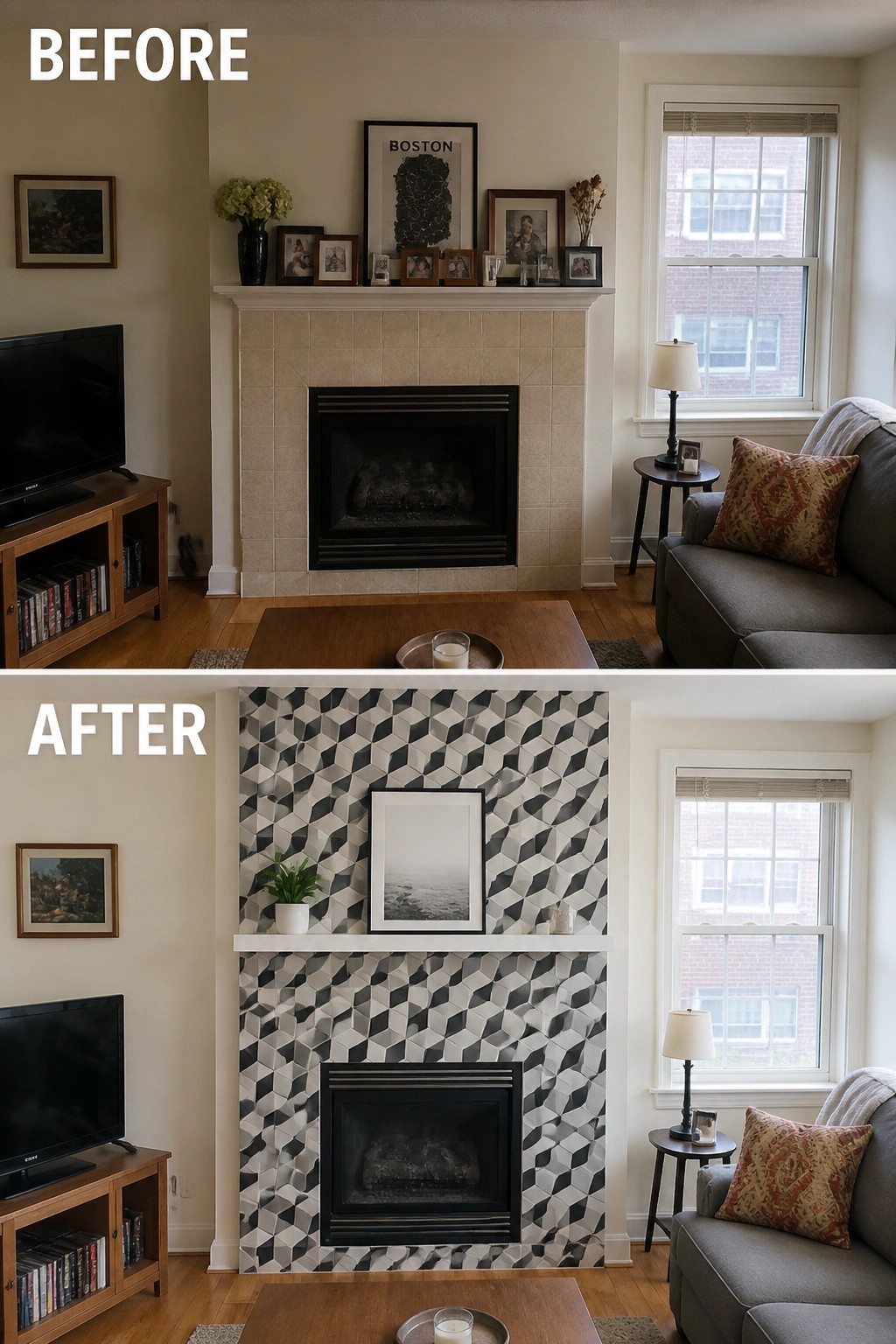
A plain tile surround often gets lost on a wall even when the fireplace sits in the center of the room. Extending a bold geometric pattern from the hearth all the way up past the mantel gives the fireplace real presence and turns it into the main point of interest without adding more furniture or art.
This idea works best in living rooms where the fireplace already has good placement. Keep the surrounding walls and furniture simple so the tile does the work, and add just a narrow shelf above the firebox if you need a spot for a few small items.
Make The Fireplace Wall The Main Feature
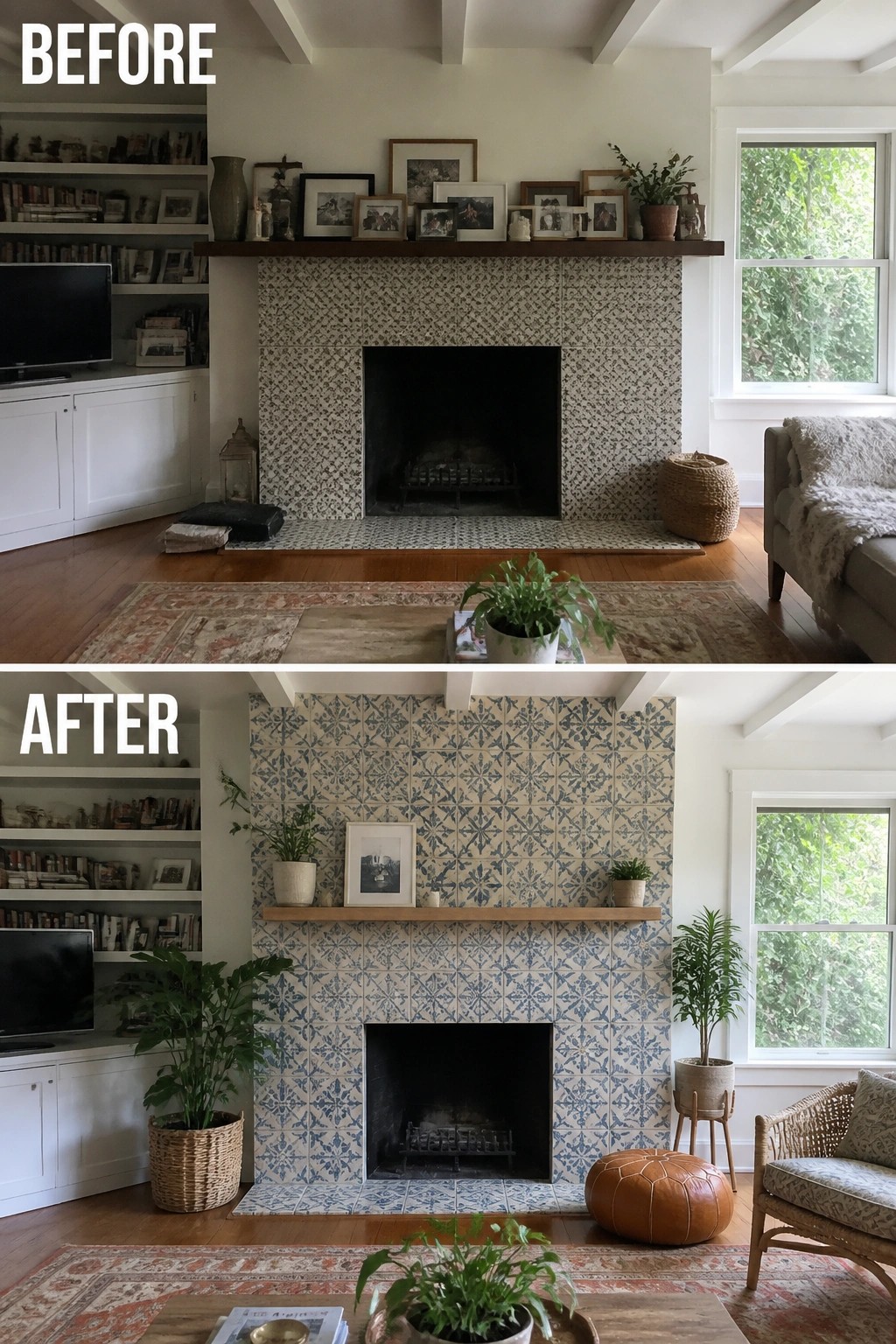
A busy tile pattern and a mantel crowded with small frames can make a fireplace feel smaller than it is. Switching to a calmer geometric tile that runs all the way up, paired with one simple floating shelf, lets the fireplace take over the wall without extra clutter. The change turns a background element into the clear center of the room.
This approach works best in living rooms where the fireplace already sits in a prominent spot. Keep the tile color quiet so it does not fight the rest of the room, and limit what goes on the shelf to just a few pieces. That way the eye lands on the tile itself instead of jumping around.
Update A Dated Fireplace With Full-Height Tile
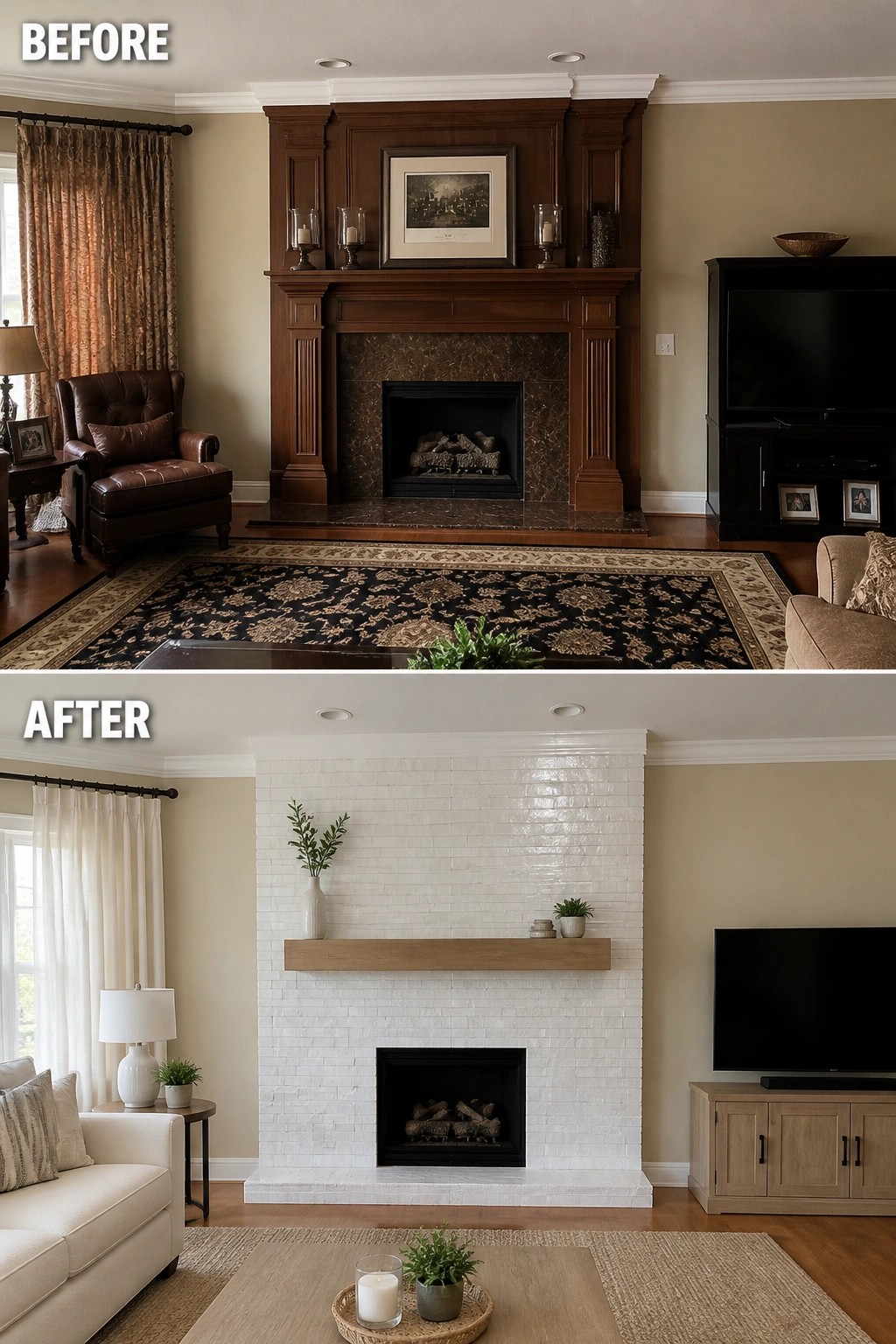
A heavy dark wood surround often makes the whole room feel closed in and old. Switching the fireplace to full-height white tile brightens the space right away and gives it a clean, simple look that still keeps the fireplace as the main feature.
This idea works best in living rooms with light or neutral walls. Use a slim mantel in a natural wood tone and keep accessories minimal so the tile can do the work without looking busy.
Make The Fireplace Wall The Main Feature
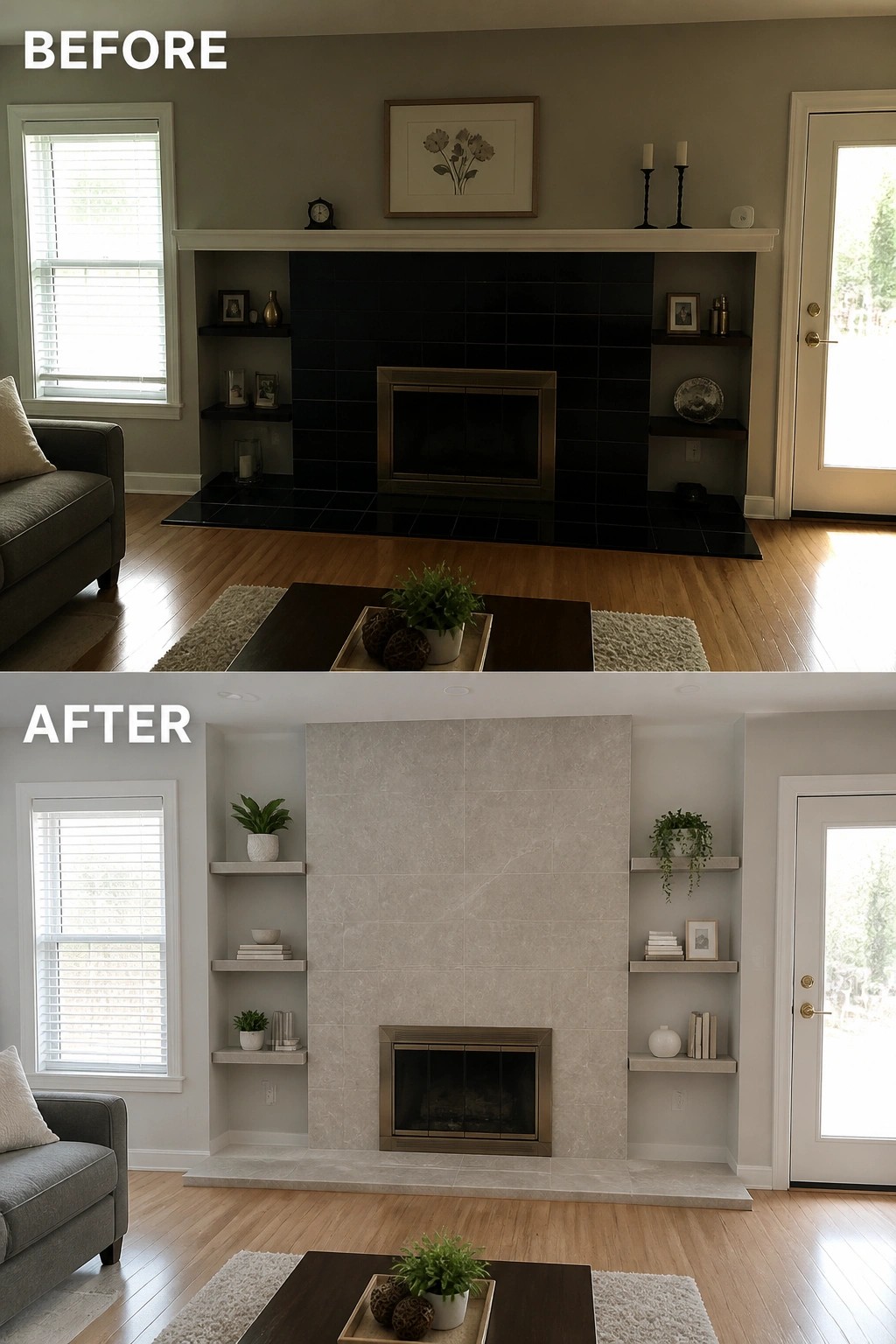
The dark tile surround and heavy mantel made this fireplace feel closed off and dated. Replacing both with a single run of light stone tile from floor to ceiling opens the wall up and gives the fireplace a stronger presence without adding more trim or shelves.
This works best in rooms where the fireplace already sits in the middle of a long wall. Keep any side shelving light and shallow so the tile surface stays the main event, and match the hearth to the same tile so the whole area reads as one clean block.
Make The Fireplace Wall The Main Feature
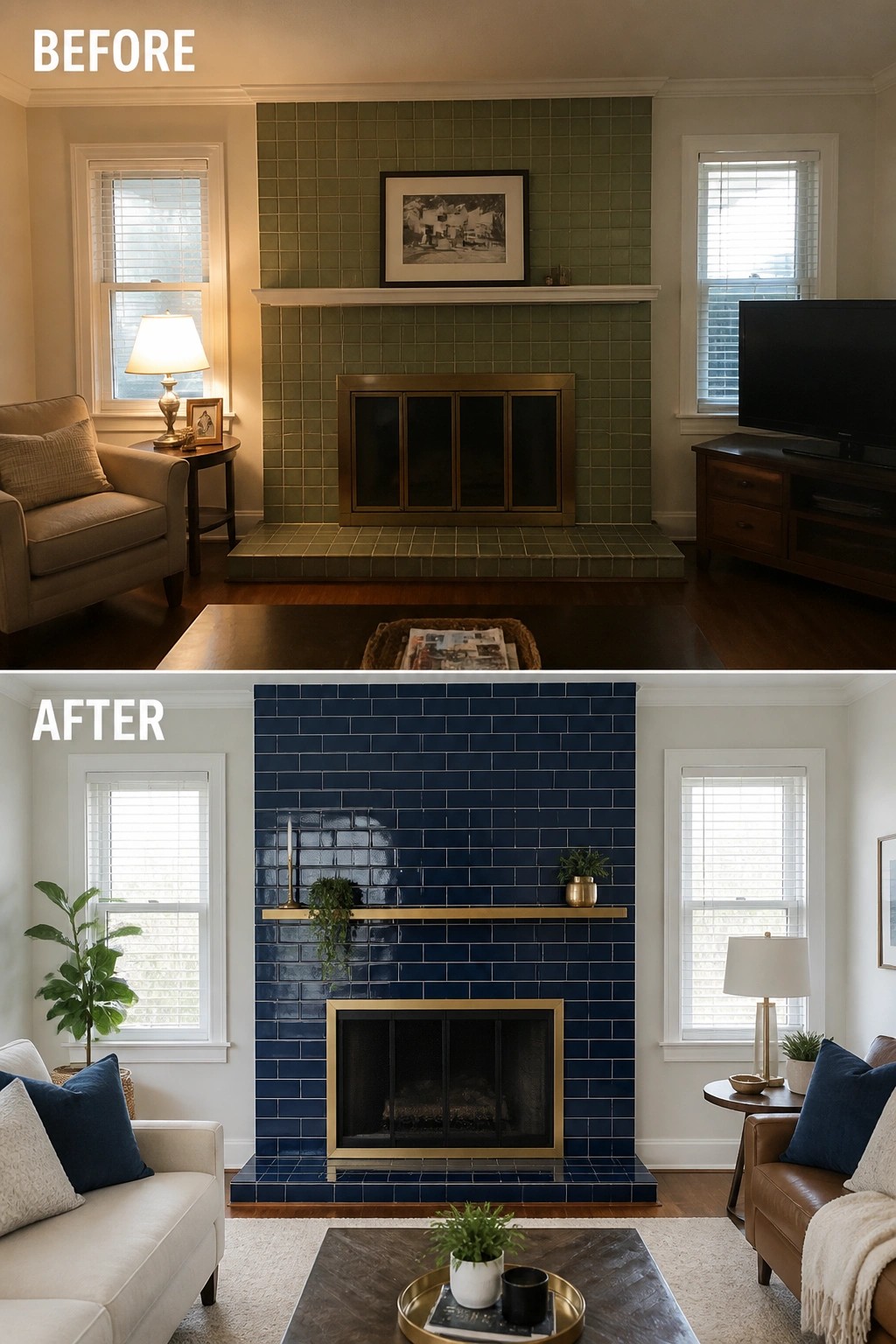
The green tile in the before photo sits low and blends into the background. Switching to full-height blue tile gives the fireplace a strong vertical presence that pulls the whole room together.
This idea works best in living rooms that already have a centered fireplace but need one clear focal point. Keep the mantel narrow, skip placing a TV right beside it, and let the tile color contrast with the surrounding walls so the change feels intentional rather than busy.
Make The Fireplace Wall The Main Feature
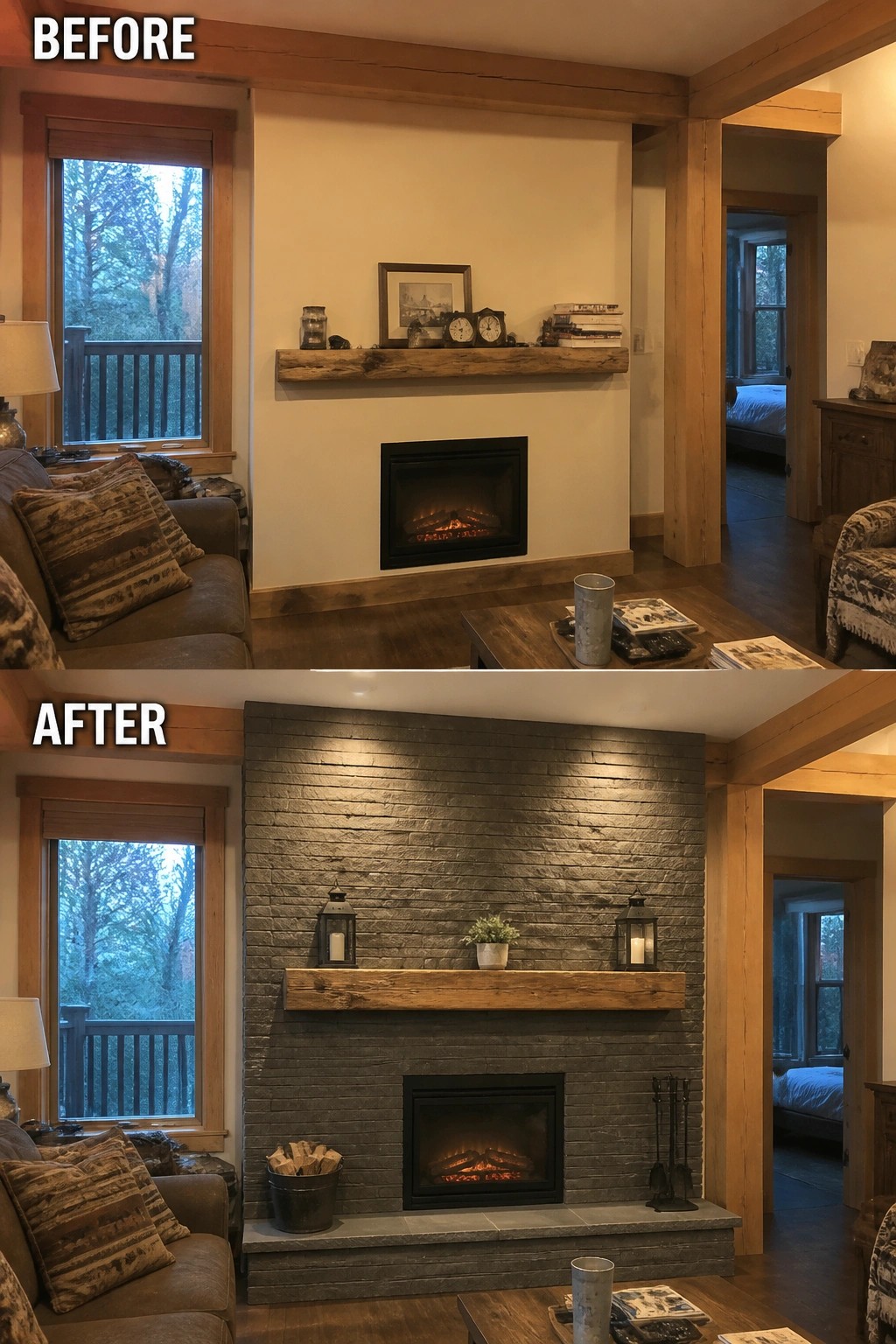
A plain fireplace wall often fades into the background when it is just painted drywall with a small shelf above it. Extending tile all the way up creates a solid vertical surface that draws the eye and gives the room a clear center point without any extra furniture.
This idea works best in living rooms that already have the seating arranged around the fireplace. Choose a tile that matches the scale of the wall so it does not feel overwhelming, and keep the hearth depth practical for cleaning and foot traffic.
Make The Fireplace Wall The Main Feature

Covering the full height of a fireplace wall with tile gives the room a clear center point. The before photo shows a plain painted surface that let the TV sit off to the side on a cabinet. Once the white tile went up from the hearth to the ceiling, the TV could move to the middle of the wall and the whole area felt more intentional.
This works best in living rooms where the fireplace already sits in the main sight line. Keep the tile simple, add a narrow wood shelf for balance, and avoid crowding the surface with too many small items. The same change suits homes that want a fresh look without moving walls or changing the mantel style.
Make The Fireplace Wall The Main Feature

Wrapping tile all the way up the wall turns a basic fireplace into the strongest point in the room. The white tile and mantel stop short and feel flat, while the new blue tile runs straight to the ceiling and creates one solid block of color that stands out without any extra trim or clutter.
This idea works best in living rooms that already have a fireplace but need more presence. Choose a tile that contrasts with the surrounding walls, keep the rest of the furniture light, and add only a simple floating shelf if you want a spot for a few small objects.
Make The Fireplace Wall The Main Feature

A rough, uneven stone surround can make a fireplace feel heavy and dated even when the rest of the room is in good shape. Switching to full-height stacked stone with a simple dark mantel gives the wall a clean vertical line that draws the eye upward and makes the fireplace the clear focal point without adding extra decor.
This approach works well in rooms that already have wood trim and built-ins, because the new stone ties everything together instead of competing with it. Keep the hearth simple, choose a mantel that matches your hardware, and stop adding accessories once the wall itself feels finished.
Make The Fireplace The Main Focal Point
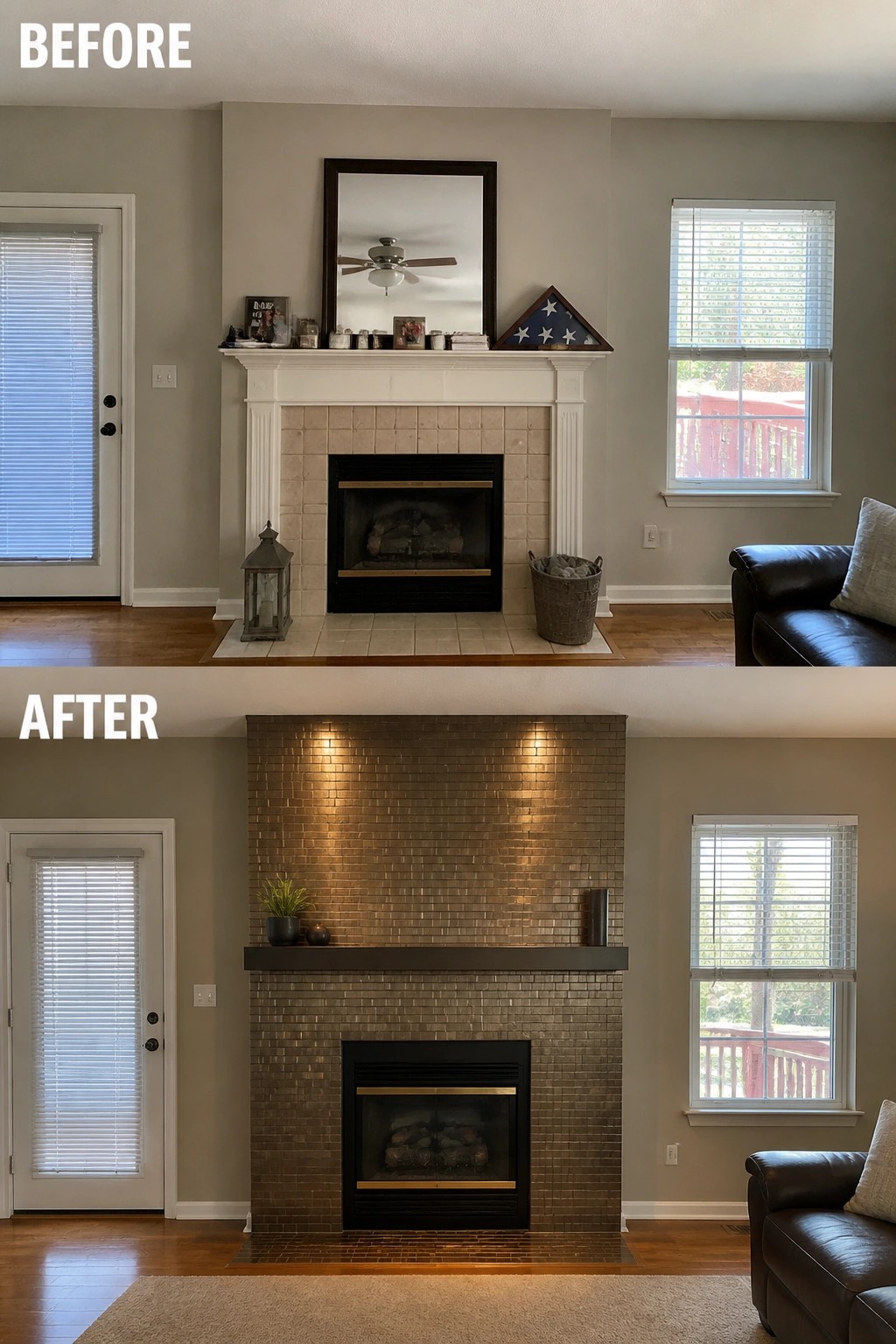
Covering a fireplace wall with full-height tile gives the room one clear center point. The before version had a white mantel and a small mirror that kept the area feeling busy and ordinary. Once the tile ran from floor to ceiling the wall became the main feature and everything else around it felt calmer.
This idea works well in living rooms that already have decent furniture but need one stronger element. Keep the mantel narrow and simple so the tile can carry the look, and choose a finish that picks up light without clashing with the rest of the room.
Give A Fireplace Wall New Life With Full-Height Tile

Covering a fireplace surround in tile from floor to ceiling can turn a basic brick opening into the main feature of a room. Here the old white brick was replaced with a textured white tile that runs the full height of the wall, and a slim black shelf was added in place of the original mantel.
This idea works best when the fireplace already sits between built-ins or windows. Keep the tile color light if the room feels small, choose a simple dark mantel for contrast, and add only a few accessories so the texture stays the focus.
Make The Fireplace Wall The Main Feature

A plain fireplace can easily fade into the background when the tile stops at the mantel. Extending tile all the way to the ceiling gives the wall a single strong presence and turns the fireplace into the clear center of the room. The shift from a short beige surround to a full-height patterned tile does most of the work.
This approach works best in living rooms where the fireplace already sits in a central spot. Keep the new tile pattern simple enough to live with daily, and use a slim mantel or floating shelf so the tile itself stays the main event.
Frequently Asked Questions
Q: What tile size works best for that tall look? A: Larger tiles mean fewer grout lines and a cleaner stretch upward. They install faster too if you’re doing it yourself. Just make sure your wall is perfectly flat first.
Q: Can I tile over my old brick fireplace? A: Yes but clean the brick thoroughly and use a good bonding agent. This gives the new tile something solid to grip. Many makeovers start exactly this way.
Q: Is it safe to put tile right up to the firebox? A: Leave a small gap and use heat resistant caulk. Tile manages warmth well but the gap stops any cracks from forming.
