
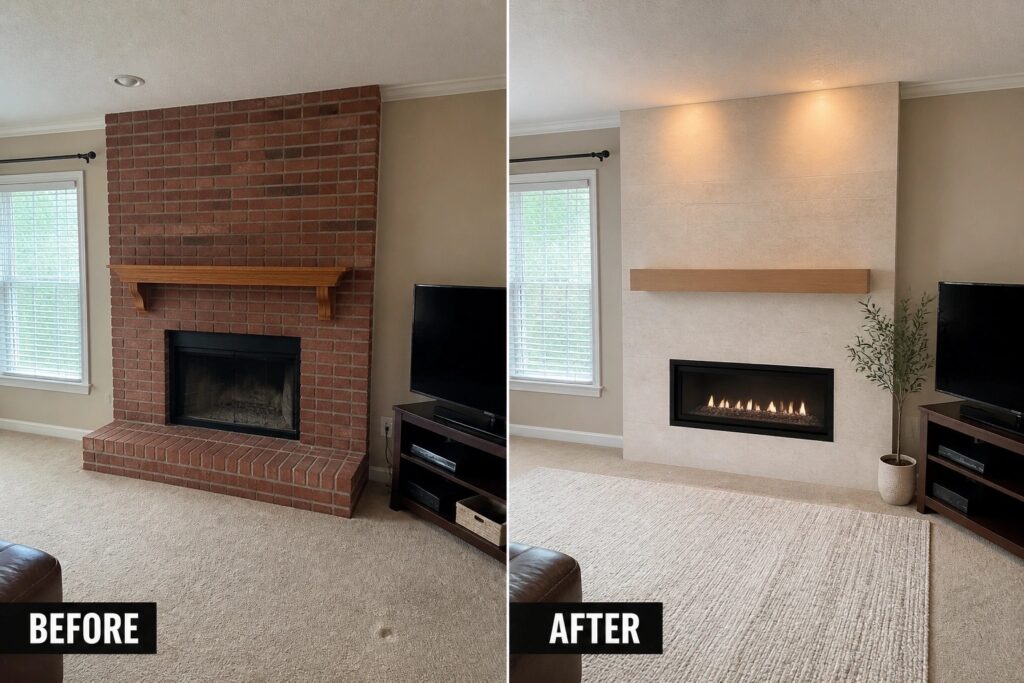
I often find that a fireplace can leave a living room feeling a bit unfinished if the surround does not match the rest of the space.
Light stone slabs seem to bring a softer look that helps the whole area feel more balanced without needing a full redesign.
In my experience starting with the material choice makes it easier to see what else might need adjusting around it.
The change feels practical once you live with it.
Some of these slab ideas are worth considering if you want the room to come together more naturally.
Update A Brick Fireplace With Light Stone Slabs
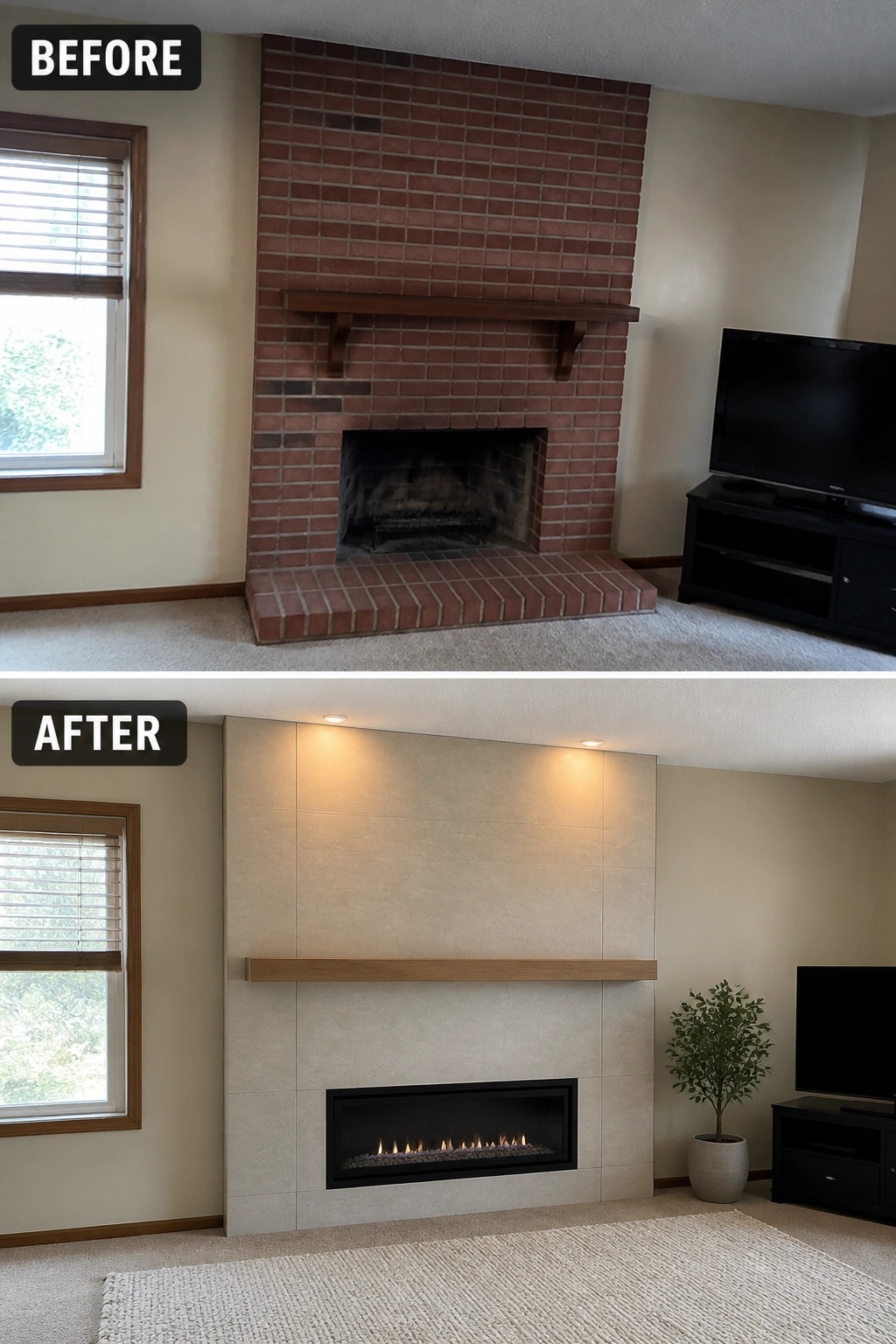
Replacing the old red brick with light stone slabs gives the fireplace a much cleaner and lighter look. The new linear insert sits lower and wider, and the floating mantel keeps the wall from feeling heavy.
This works best in rooms where the brick still functions but the color and texture feel dated. Light stone reflects more light and pairs with most furniture styles without needing a full room overhaul. Measure the existing opening first so the new insert fits without major framing changes.
Refresh A Fireplace Surround Using Light Stone Slabs
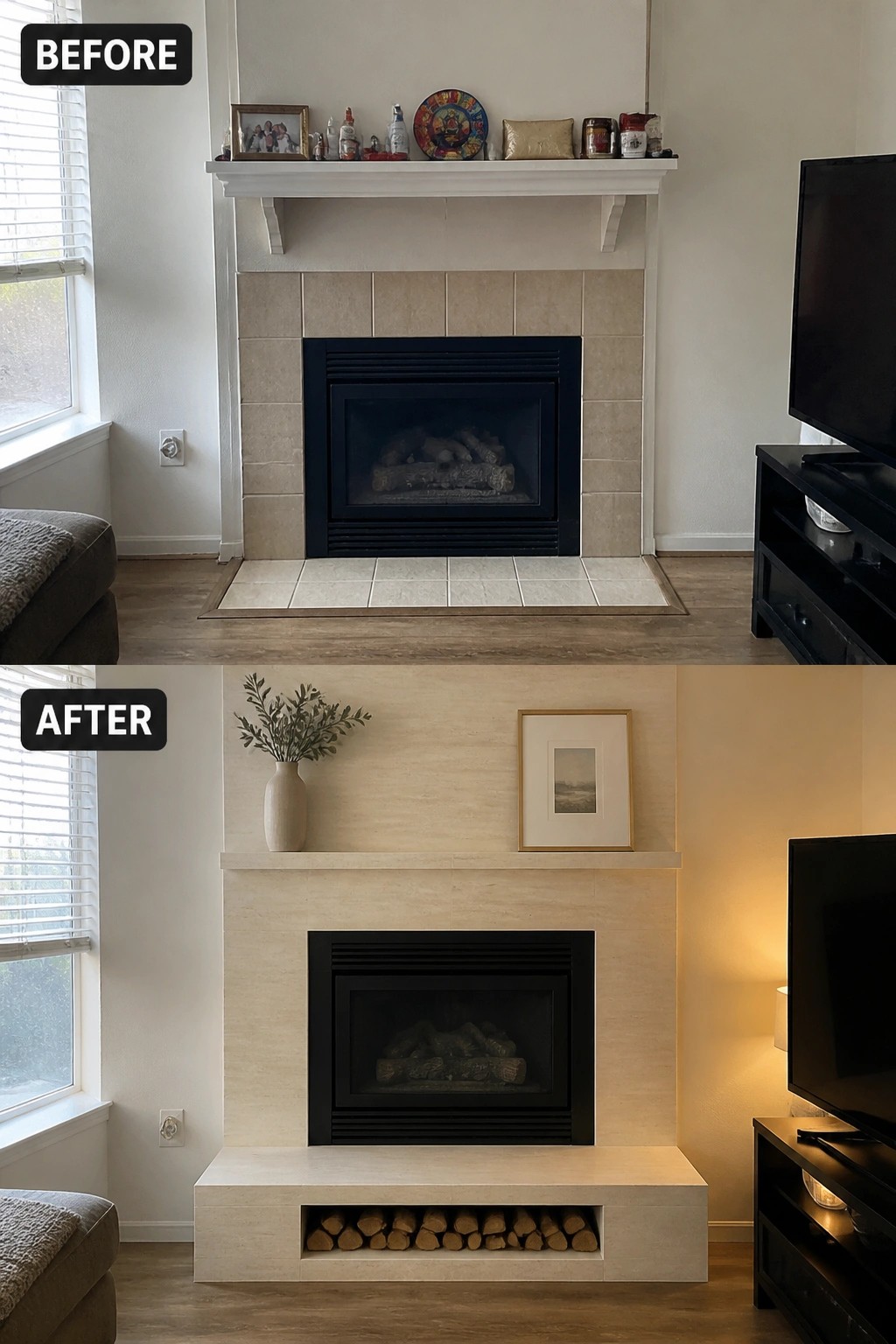
The main change here is swapping the old tile for light stone slabs that run from the floor up around the firebox and create a built-in base. This makes the fireplace feel more solid and turns it into the main feature instead of just another element on the wall. The simplified mantel helps too.
This works best in rooms where the fireplace already sits in a central spot. Use the slabs to cover the full height and add a low ledge if you need storage. It suits neutral living rooms and keeps the focus on one material rather than adding lots of small pieces.
Make The Fireplace Wall The Main Feature
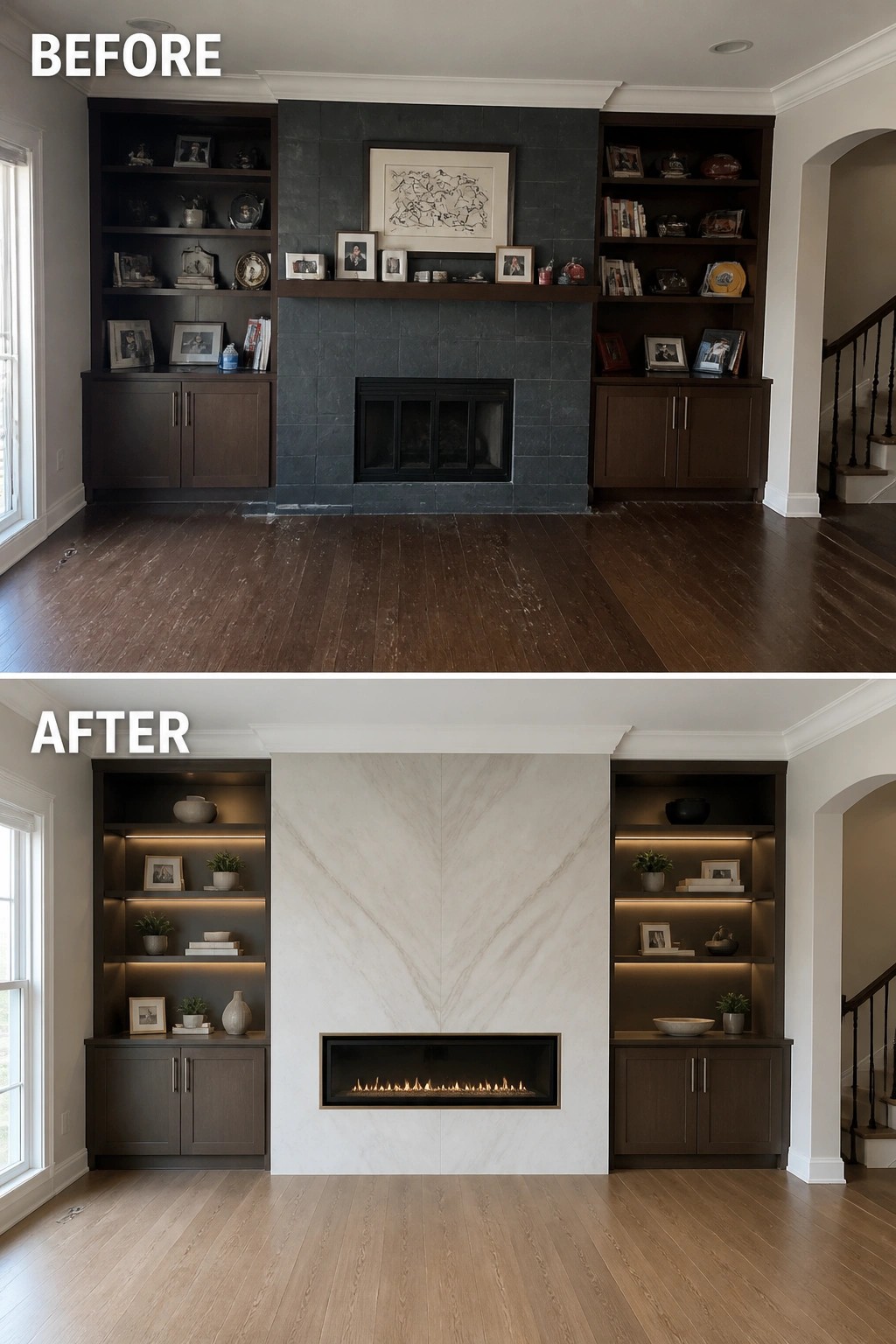
A dark fireplace surround can make an entire wall feel heavy and dated. Replacing it with a light stone slab brightens the area and gives the fireplace a stronger presence without adding clutter.
This approach works best when the surrounding built-ins stay simple. Choose a slab with soft veining, keep accessories minimal, and let the stone itself become the focus. It suits living rooms where you want the fireplace to stand out while still feeling calm and open.
Refresh A Fireplace With Light Stone Slabs
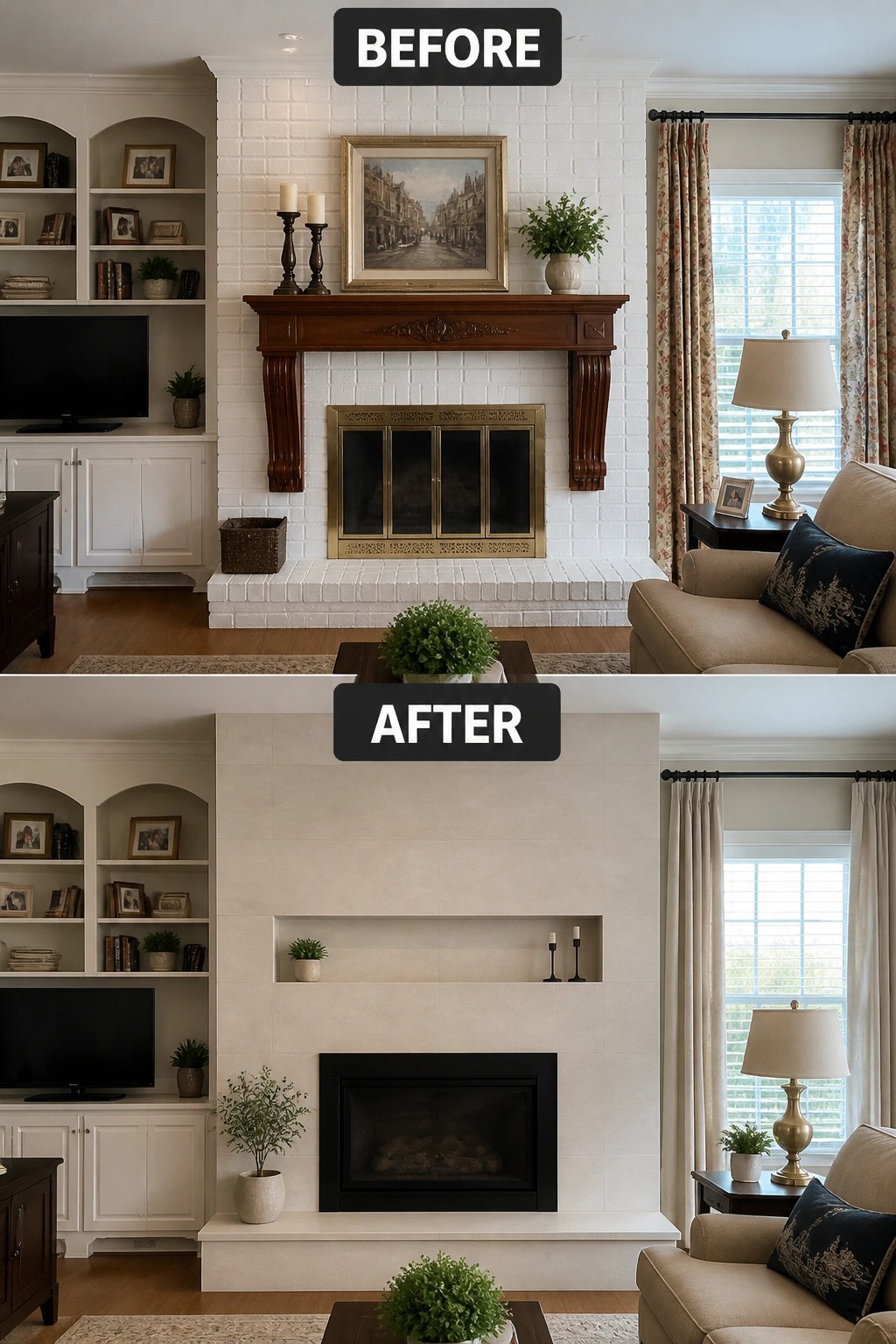
Covering an old fireplace surround with light stone slabs can quickly calm down a busy wall. In this case the heavy wood mantel and white brick gave way to a smooth stone surface, a simple black firebox, and a shallow recessed niche that keeps the focus on the fire rather than on trim and shelves.
This approach works best in rooms that already have built-ins or other strong features, since the stone keeps the fireplace from competing with them. Choose a light, matte slab that matches the wall color nearby so the change feels like part of the room instead of a separate element.
Update A Fireplace Surround Using Light Stone Slabs
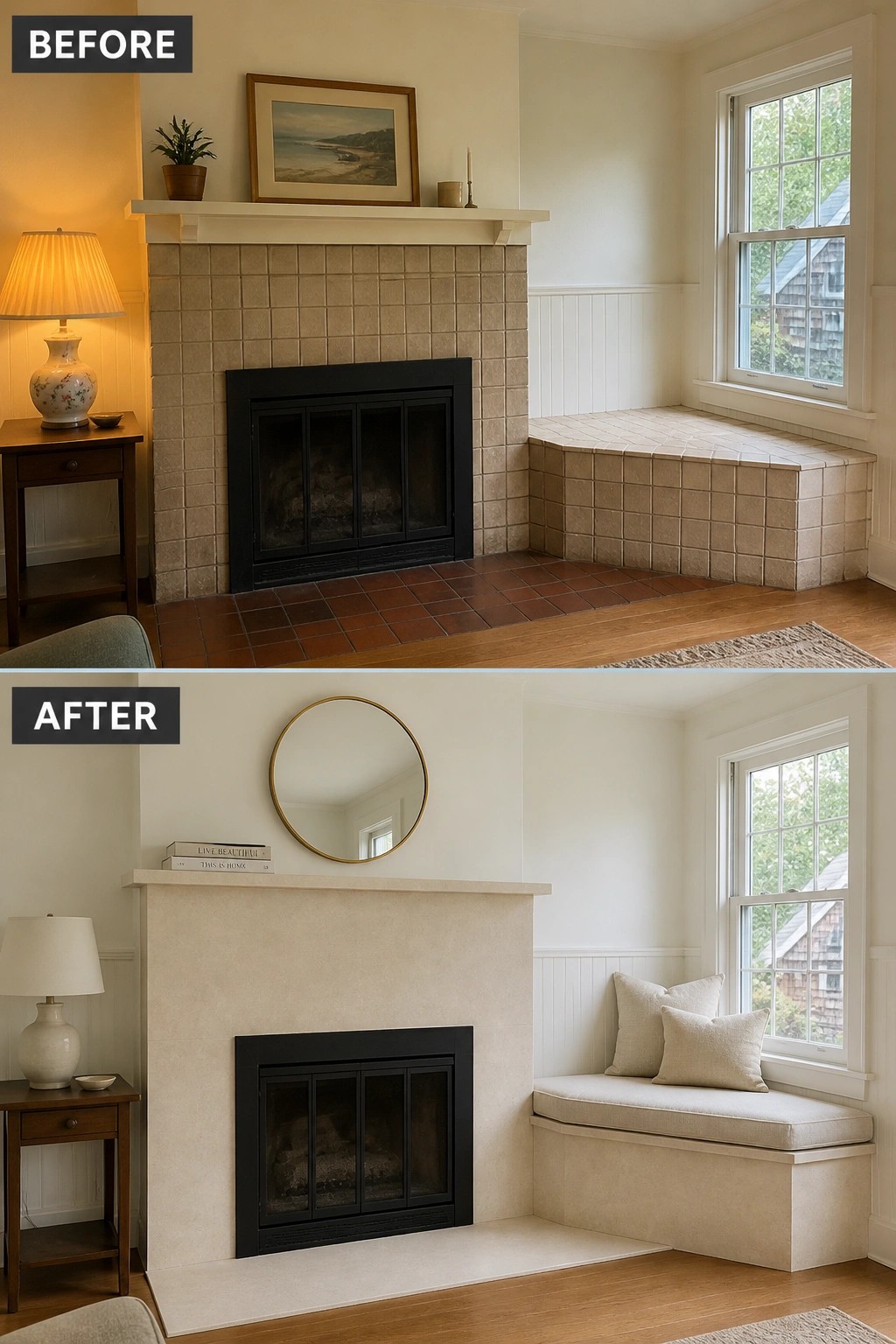
The original brown tile around the firebox felt heavy and dated next to the warm wood floor. Switching to light stone slabs gave the whole wall a calmer surface that reflects more light and makes the black firebox stand out without competing patterns.
This approach works best when the existing tile is still in good shape and you want a quick visual reset rather than a full rebuild. Keep the mantel simple, limit what sits on it to two or three small items, and add a soft cushion to any built-in seat so the new stone stays the main feature.
Lighten A Dark Stone Fireplace With Light Slabs
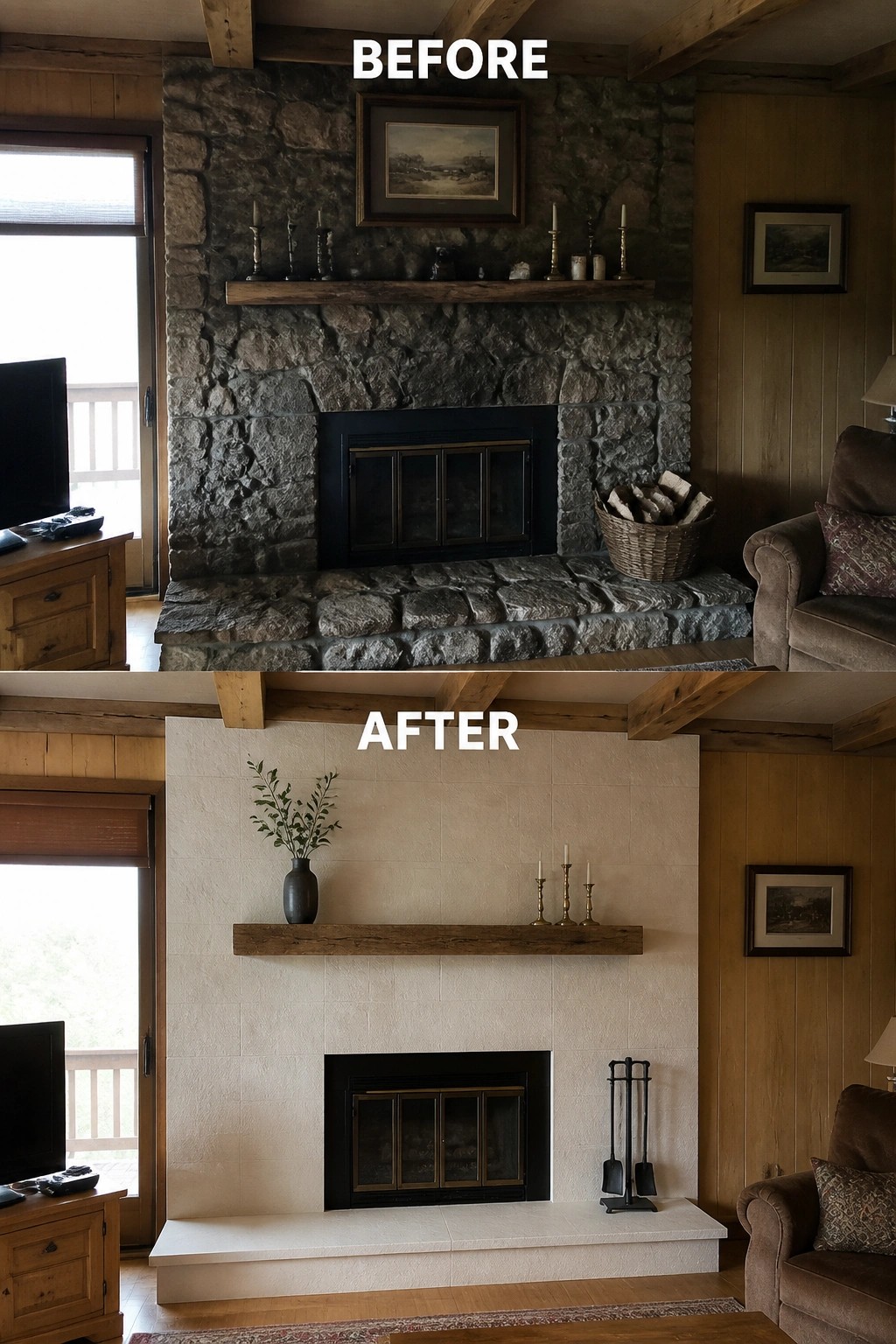
A heavy stone fireplace often pulls too much weight into a room. Switching the surface to light stone slabs softens that weight and lets the space feel brighter without changing the overall layout.
This works especially well in wood-paneled rooms where the original stone feels dated. Keep the new mantel simple, stick with one or two small accessories, and let the lighter color carry the change.
Update A Fireplace Wall With Light Stone Slabs

A traditional mantel can start to feel heavy once the rest of the room leans toward simpler lines. Covering the full wall with light stone slabs removes the ornate trim and gives the fireplace a built-in appearance that sits better with modern seating and cleaner furniture.
This works best in rooms where the fireplace is the main focal point but the old surround feels dated. Keep the stone light in tone, center a linear fireplace low on the wall, and mount the TV above it so the whole surface reads as one surface rather than separate pieces. It suits homes that want the warmth of a fire without the visual weight of a classic mantel.
Make The Fireplace Wall The Main Feature
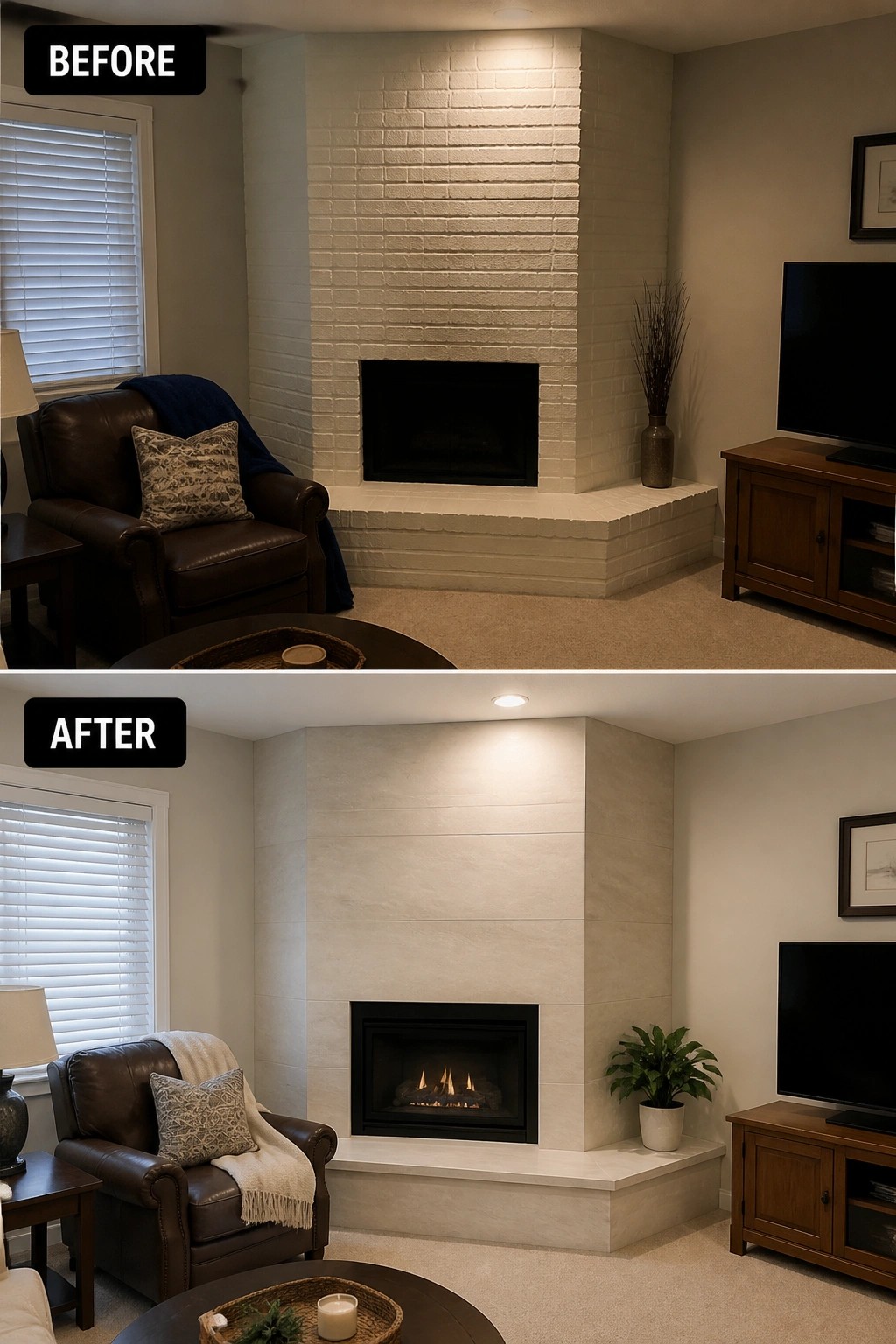
A plain white brick fireplace can easily fade into the background, especially when the surround is painted to match the walls. Switching to light stone slabs laid in a horizontal pattern gives the wall clean lines and a fresh surface that stands out without feeling heavy.
This approach works well in living rooms where the fireplace sits between seating and a TV. Keep the rest of the room simple so the new stone becomes the natural center. The slabs also pair easily with a darker firebox insert, which helps the flames show up better at night.
Refresh A Dated Fireplace With Light Stone Slabs

Many older fireplaces come with patterned tile that feels busy and dated. Replacing it with light stone slabs gives the wall a smoother, calmer surface while keeping the fireplace as the main feature in the room.
This works best when the rest of the space stays fairly neutral. Use a simple floating mantel and a dark insert to add contrast, and keep accessories minimal so the stone remains the quiet focal point.
Refresh A Fireplace With Light Stone And A Wood Mantel
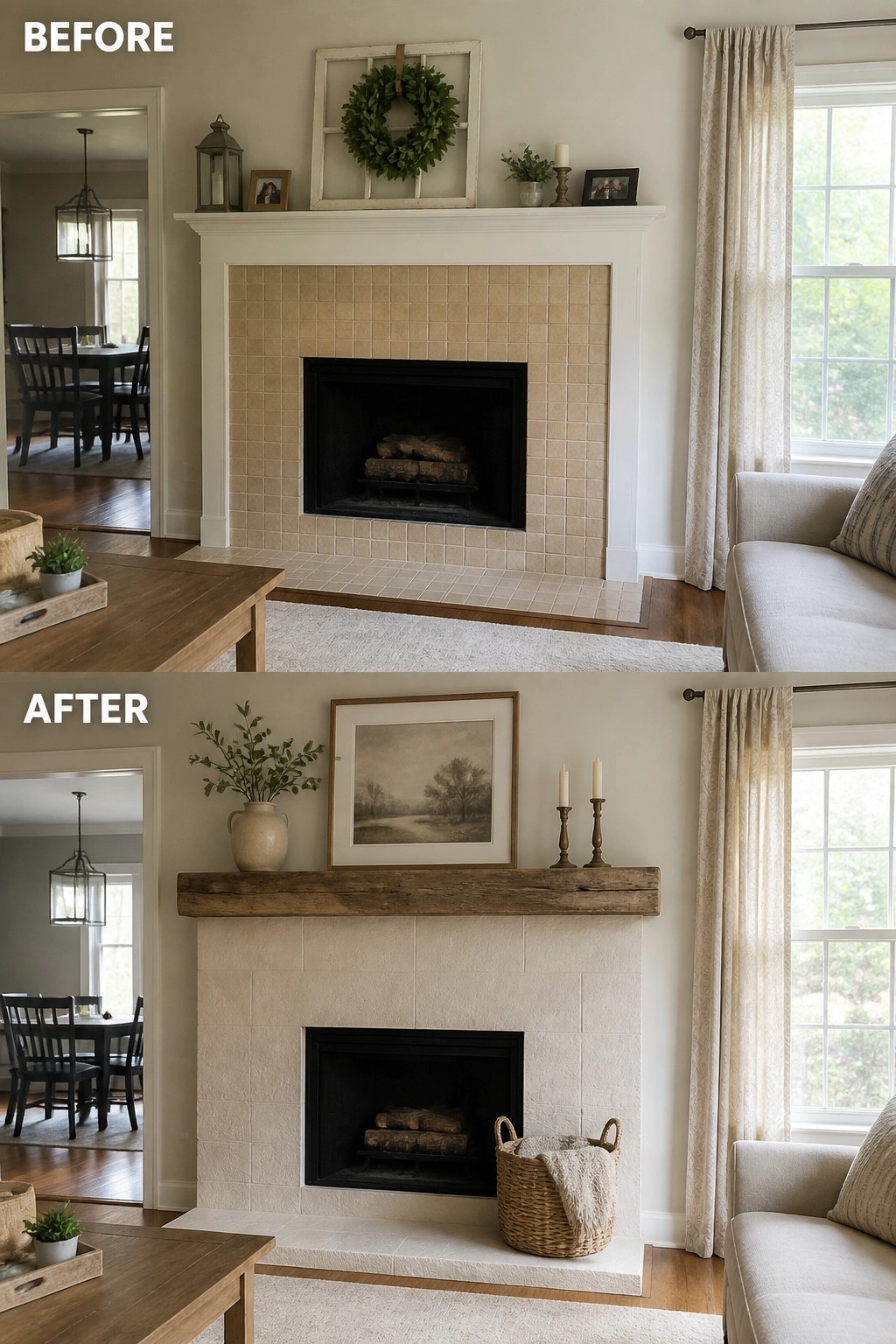
A basic tile surround and painted mantel can make a fireplace feel flat and dated. Replacing the tile with light stone slabs and adding a thick wood beam mantel shifts the focus to the firebox itself and gives the wall a cleaner, more finished look.
This approach works best in rooms where the fireplace is already the main feature. Keep the top styling minimal, use one or two natural pieces nearby, and make sure the new stone stays light so the wood mantel stands out without competing.
Make The Fireplace Wall The Main Feature

A basic white fireplace can easily fade into the background, especially when the surround is narrow and the wall above it stays plain. Covering the full height with light stone slabs gives the fireplace a solid presence and turns it into the natural center of the room without adding much extra decoration.
This approach works well in bedrooms where you want the bed to face a calm focal point. Keep the stone in a light neutral tone so it blends with existing walls, and make sure the new surround sits at a comfortable height for the mantel or hearth.
Update A Fireplace Wall With Light Stone Slabs
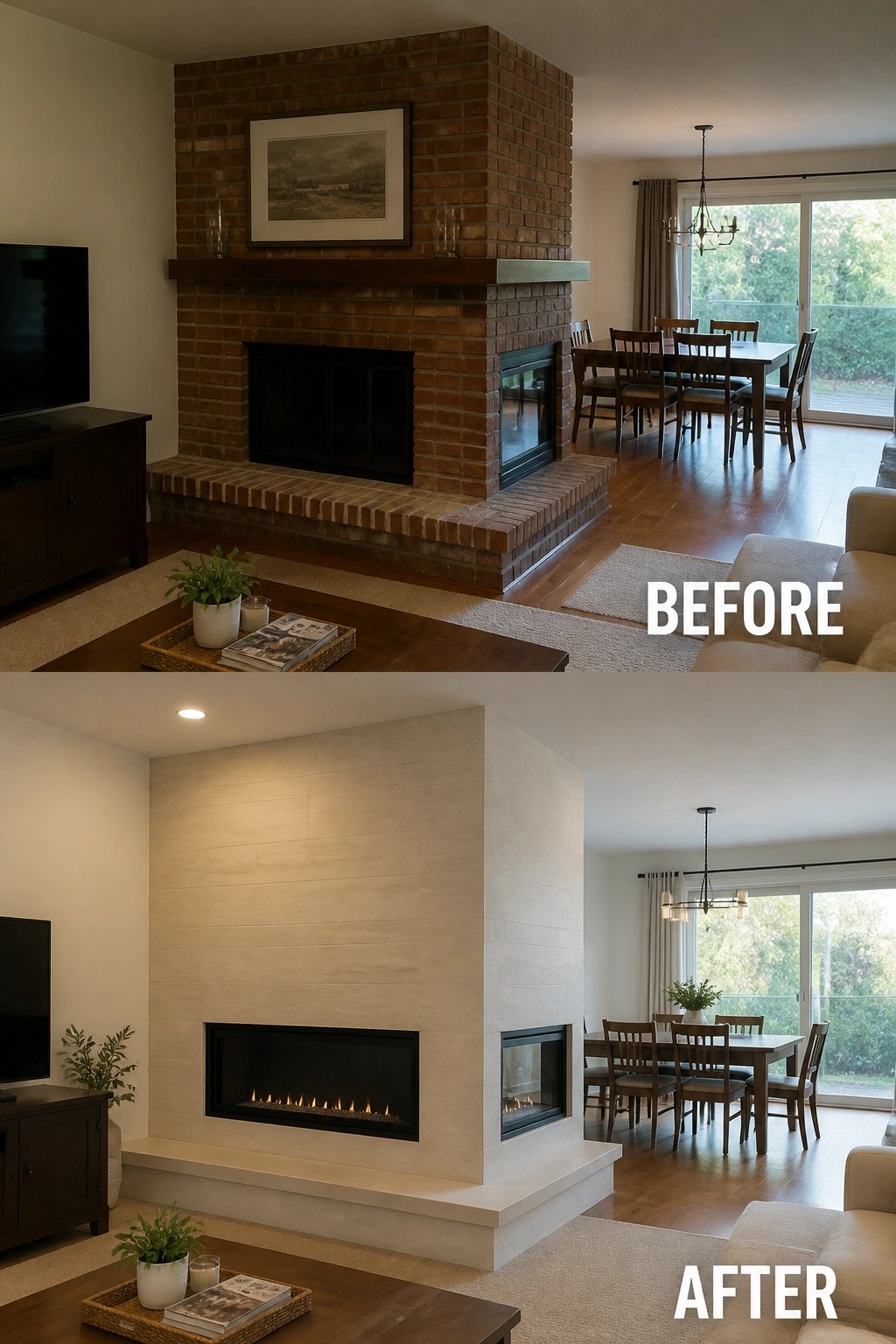
Replacing a heavy brick fireplace with light stone slabs can make the whole room feel brighter and more current. The old surround took up a lot of visual weight, while the new slabs create a smoother surface that blends into the wall instead of fighting it.
This idea works best in living rooms where the fireplace already sits in a central spot. Keep the slab color simple and the mantel minimal so the firebox itself stays the main point of interest.
Update A Fireplace With Light Stone Slabs

An ornate dark fireplace can weigh down a room even when the rest of the space is in good shape. Switching the surround and mantel to light stone slabs removes the heavy carving and dark tones, which immediately opens up the wall and makes the whole room feel brighter and calmer. The change keeps the original firebox and tile hearth, so the work stays focused on the visible surface.
This approach works well in older homes where the fireplace is still sound but the style feels dated. Keep the new slabs simple with clean edges and minimal trim, then limit mantel decor to one or two small items so the light stone stays the main feature. The result looks finished without needing a full renovation.
Update A Fireplace With Light Stone Slabs
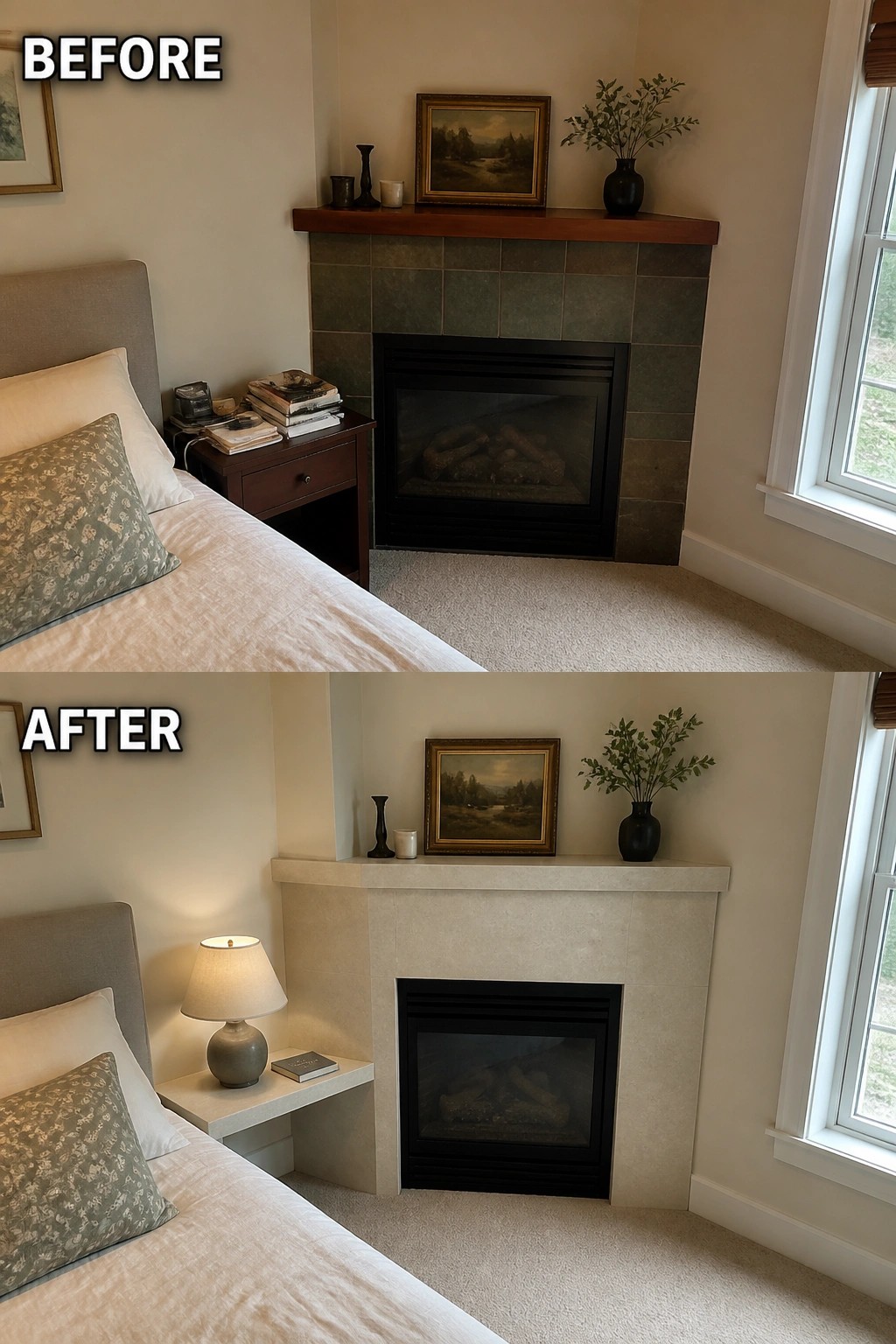
The old green tile and dark wood mantel made the fireplace feel heavy and a bit dated. Light stone slabs around the firebox and a matching mantel opened up the space and gave the whole corner a calmer, brighter look.
This idea works best in rooms where the fireplace sits against plain walls. Keep the stone finish simple, add one or two small built-in ledges if needed, and let the lighter material do most of the work instead of adding extra trim or decor.
Update A Dark Fireplace With Light Stone Slabs
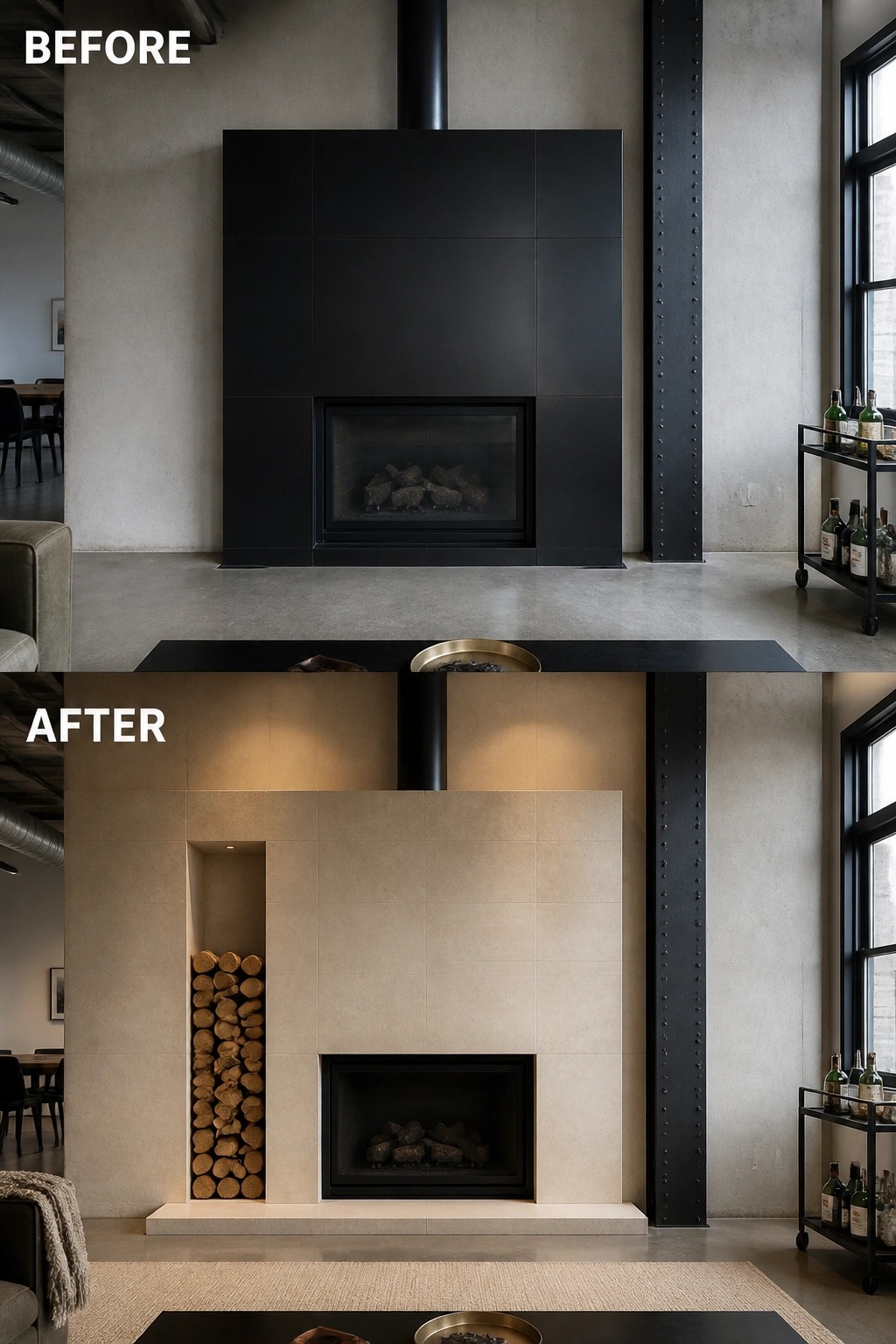
A heavy black fireplace surround can make the whole wall feel closed off and cold. Covering it with light stone slabs softens the look, adds texture, and turns the fireplace into the main focal point without adding much extra detail.
This works best in open, industrial-style rooms where the original surround feels too stark against concrete floors. Measure the existing surround first, then choose matte stone that can take heat. A simple niche for firewood on one side keeps the change practical and helps the new wall feel built in rather than added on.
Update A Fireplace Wall With Light Stone Slabs
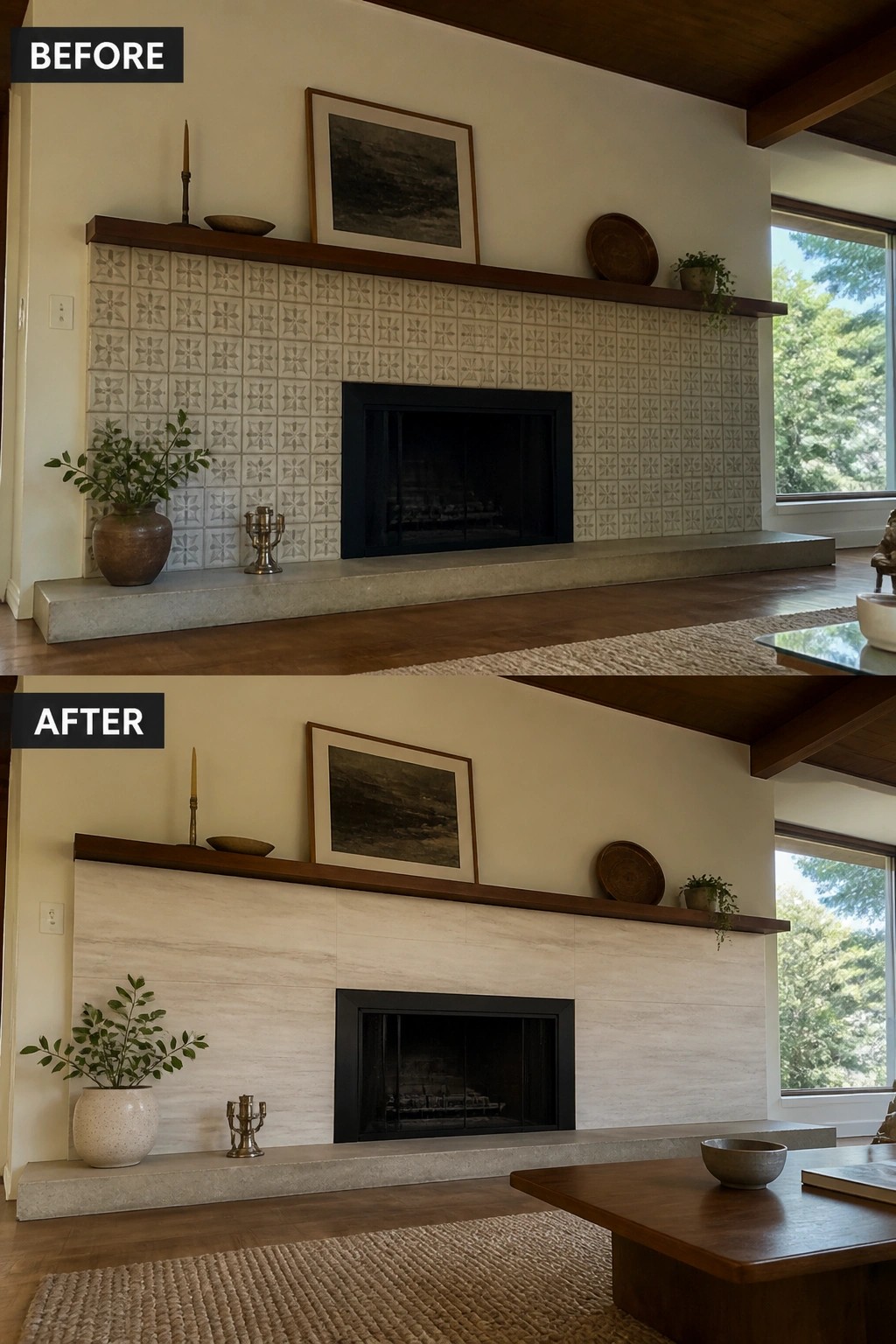
Many fireplaces from earlier decades have patterned tile that feels busy and dated over time. Replacing it with large light stone slabs creates a smoother surface that brightens the whole wall and lets the firebox become the main focus.
This idea works best in rooms where the fireplace already sits in a central spot. Keep the mantel and hearth simple so the new stone reads as a clean update rather than another layer of detail.
Extend The Fireplace Hearth Into A Bench

Extending the hearth with a light stone slab turns the fireplace from a simple wall feature into something more useful. The before photo shows an open floor with just a protective mat, while the after adds a clean built-in bench that lines up with the existing stone and gives the whole area a finished look.
This idea works best in living rooms where floor space is limited and you want the fireplace to serve double duty. Match the slab to your current surround so it reads as one piece, then add a couple of pillows or a throw to make it inviting without crowding the room.
Make The Fireplace Wall The Main Feature
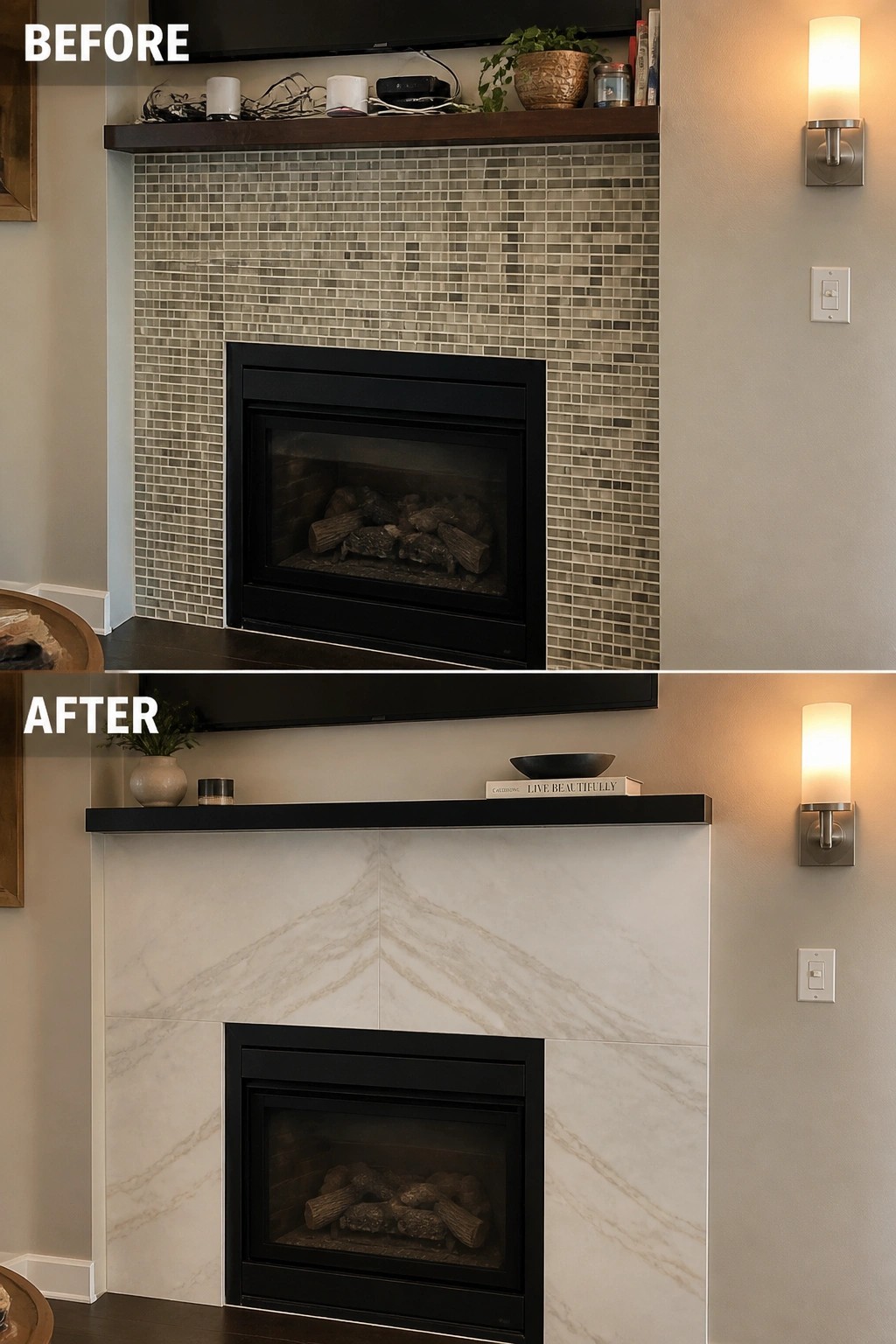
Swapping a busy mosaic tile surround for large light stone slabs gives the fireplace a much cleaner presence in the room. The smaller tiles created a scattered look that pulled attention away from the firebox, while the bigger slabs create one smooth surface that feels more settled and intentional.
This approach works best when the fireplace already sits in a central spot. Keep the mantel simple and limit what sits on top so the stone can do the main work. It suits living rooms that need a quick refresh without changing the whole layout.
Make The Fireplace Wall The Main Feature
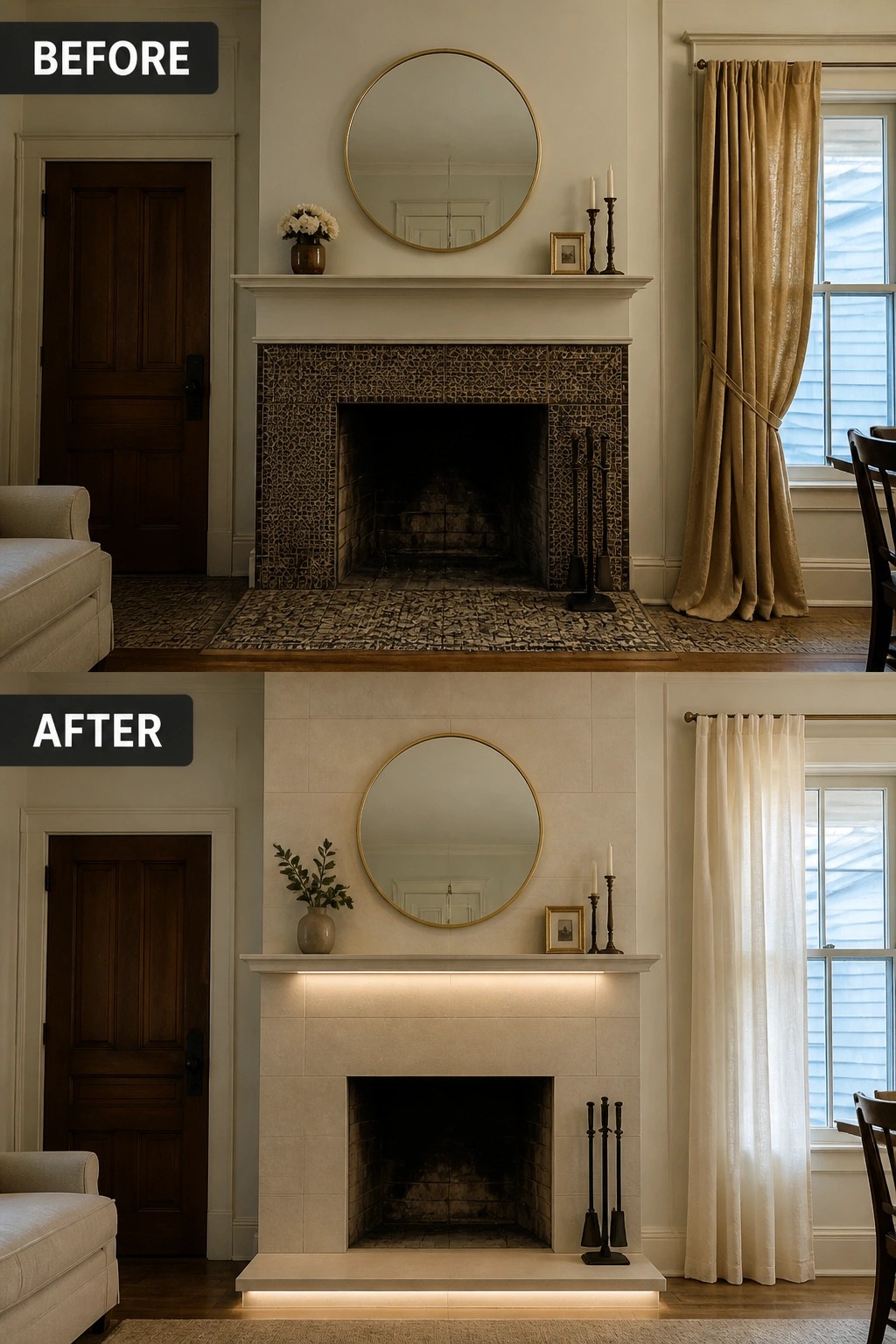
Replacing a busy patterned surround with light stone slabs can turn a dated fireplace into the strongest part of the room. The change removes visual clutter and lets the stone run cleanly from floor to mantel, which brightens the whole wall and makes the opening feel larger.
This idea suits older homes where the original tile no longer matches the rest of the space. Choose a light, matte stone that blends with your walls, keep the mantel simple, and add a narrow strip of lighting underneath if you want the new surface to stand out at night.
Refresh A Fireplace With Light Stone Slabs

Swapping the old tile surround for light stone slabs gives the fireplace a much cleaner look. The lighter material brightens the whole corner and turns the fireplace into the main feature instead of something that blends into the background.
This idea works best in open living spaces where the fireplace sits between seating and the kitchen. Keep surrounding furniture and decor simple so the stone stays the focus, and match the slab tone to the floor to help the update feel natural.
Frequently Asked Questions
Q: Will light stone slabs hold up to the heat from the fire? A: Light stone slabs work fine as long as you pick a type rated for high temperatures. Check with your supplier before buying. They often recommend a certain thickness to prevent cracking over time.
Q: How do I keep the light color from showing every smudge? A: Wipe the slabs with a damp cloth and mild soap once a week. Avoid harsh cleaners that could etch the surface. A quick dry after helps prevent water spots.
Q: Can I install these slabs over my old brick fireplace myself? A: Yes if the surface is solid and level. Start by cleaning the old material thoroughly. Then apply thinset mortar and press the slabs in place one by one.
Q: What if my room has dark walls already? A: The contrast can actually highlight the fireplace nicely. Pick slabs with subtle veining to tie the colors together.
