

Fireplaces often end up as the main focal point in a room, yet they can leave the space feeling unfinished if the surround lacks any real presence.
Working with plaster allows for clean lines and subtle details that help the hearth blend better with the surrounding walls and furniture.
I have noticed in my own place that adjusting the fireplace surround first creates a stronger base for arranging the rest of the seating area.
Ideas that build on that material tend to keep the room feeling balanced without needing constant tweaks later on.
Worth trying in stages.
Make The Fireplace Wall The Main Feature

A plain fireplace often fades into the background when the wall above it has no structure. Adding a simple wood mantel with a mirror centered above the firebox gives the area a clear top and bottom edge, so the black surround stops looking like it is just floating on the wall. The change is small but it shifts the whole room around that one spot.
This idea works best in living rooms where the fireplace already sits in a central location but needs help standing out. Keep the mantel depth modest in smaller rooms and match the mirror width to the firebox so the proportions feel balanced. It is an easy update that lets you style the shelf lightly without crowding the space.
Simplify A Heavy Fireplace Surround
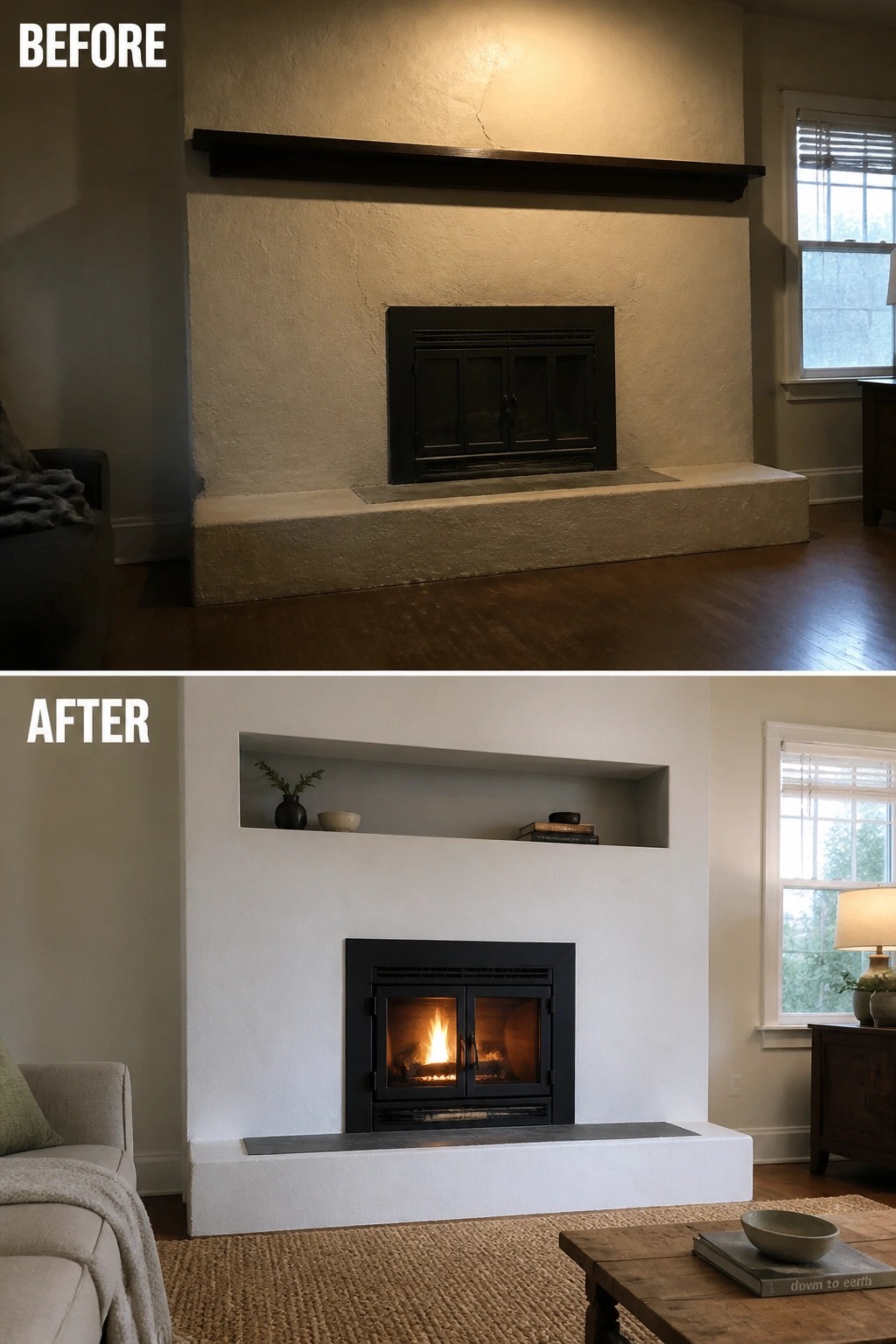
A dark mantel sitting on a thick plaster base can make a fireplace feel heavy and dated. Removing the mantel and adding a recessed niche above the firebox opens up the wall so the fire becomes the clear focal point.
This works best in rooms where you want the fireplace to feel built in rather than added later. Keep the plaster smooth, the hearth low and simple, and the niche shallow enough that it does not compete with the firebox itself.
Give Your Fireplace A Plaster Arch Surround

A plain rectangular fireplace surround often feels flat in an otherwise finished room. Adding a plaster arch above the firebox gives the wall a clear shape and makes the fireplace the natural focal point. The change from a simple box to a curved plaster niche adds depth without needing a full renovation.
This idea works best in rooms where you want one strong feature rather than lots of small details. Keep accessories minimal so the arch stays the main element. It suits homes with simple walls and wood floors where a single architectural change can warm up the whole space.
Make The Fireplace Wall The Main Feature

A plain white plaster fireplace can easily fade into the background. Covering the front with a dark panel and adding a glass screen gives it weight and turns it into the main point of interest without changing the plaster surround itself.
This works best in rooms where the fireplace already sits in a central spot. Choose a matte black or deep charcoal finish that contrasts with the light walls, and keep the surrounding furniture low so the new surround stands out on its own.
Build Shelves Around The Fireplace For A Finished Look

The before photo shows a plain fireplace wall with nothing on either side and a messy stack of magazines on the hearth. Adding built-in shelves on both sides turns the whole wall into one balanced unit that gives the room a much more finished feel. The shelves also create useful storage and display space without taking up floor area.
This idea works best in rooms where the fireplace is already the main focal point but the wall feels too bare. Keep the shelves symmetrical and add a simple light above each side to keep the look even. Start with the cabinet base and work up so the proportions stay right for the room.
Make The Fireplace Wall The Main Feature

A simple plaster surround can look tired when the firebox feels empty and dated. Adding a black insert with a patterned tile surround gives the whole wall a clear purpose and makes it the center of the room without replacing the mantel itself.
This approach works well in older homes where the plaster detail is worth keeping. Start with the insert size and choose tile that adds texture but stays within a narrow color range so the plaster stays the main material. Keep the surrounding furniture low and simple so the updated fireplace stays the focus.
Make The Fireplace Wall The Main Feature

A fireplace surround with peeling plaster tends to make the whole room feel unfinished. Switching the old white surface for a warm terracotta plaster gives the fireplace a solid presence without any major construction.
This approach suits rooms that already have wood beams and simple furniture. Keep the new color in the same family as your existing floors or textiles, and add only a few clay pots or a metal bar so the updated surround stays the clear focal point.
Make The Fireplace Wall The Main Feature
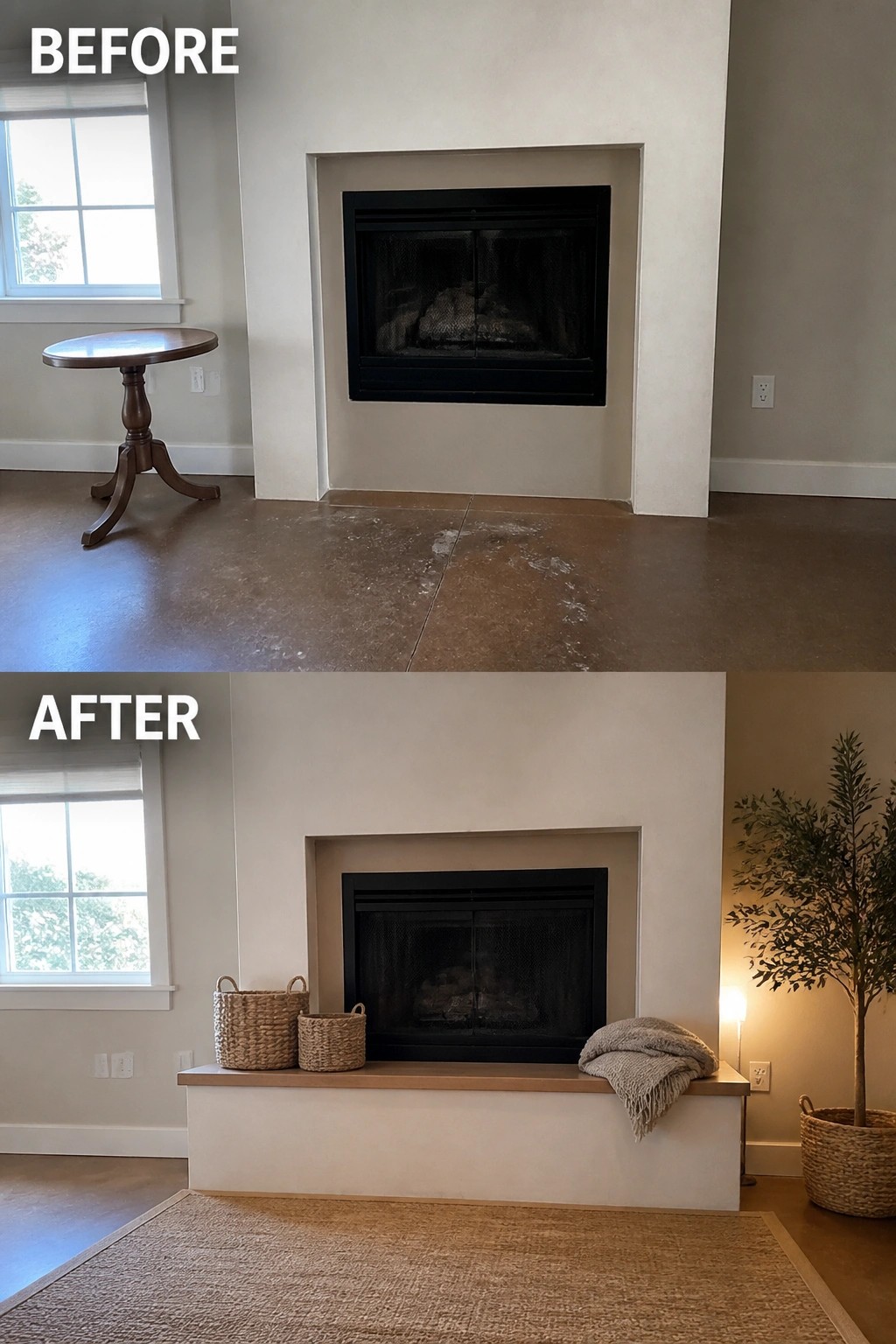
The fireplace sat in a bare room with nothing around it to give the wall any presence. Adding a plaster surround and extending a simple hearth bench turned the whole area into the natural center of the space without any major construction.
This idea works best in rooms where the fireplace is already centered and the floor is open. Keep the bench low and shallow so traffic still flows easily, and use it mainly for baskets or a throw rather than trying to make it a full seating spot.
Simplify A Cluttered Mantel With A Floating Shelf

A mantel loaded with small objects often ends up looking scattered rather than cozy. Replacing the full mantel with a narrow floating shelf and painting the lower section of the surround gives the fireplace a cleaner frame. The firebox stays the clear center instead of competing with rows of figurines and frames.
This change works best when the plaster is sound but the styling feels dated. Limit the shelf to a few items in similar tones and keep the shelf depth modest so it does not jut out too far. It suits rooms that already have decent scale and just need the mantel area to feel lighter and more intentional.
Add Built-In Storage For Firewood Next To The Fireplace

A plain plaster fireplace can start to feel unfinished when firewood ends up stacked on the floor beside it. Adding a recessed niche on one side keeps the wood organized and gives the wall a more balanced shape without adding extra furniture.
This idea works best in rooms where the fireplace is already the main feature. Keep the niche the same depth and finish as the surround so it reads as part of the same plaster work. It is especially useful if you burn wood regularly and want the storage to stay out of the way while still looking intentional.
Make The Fireplace Wall The Main Feature
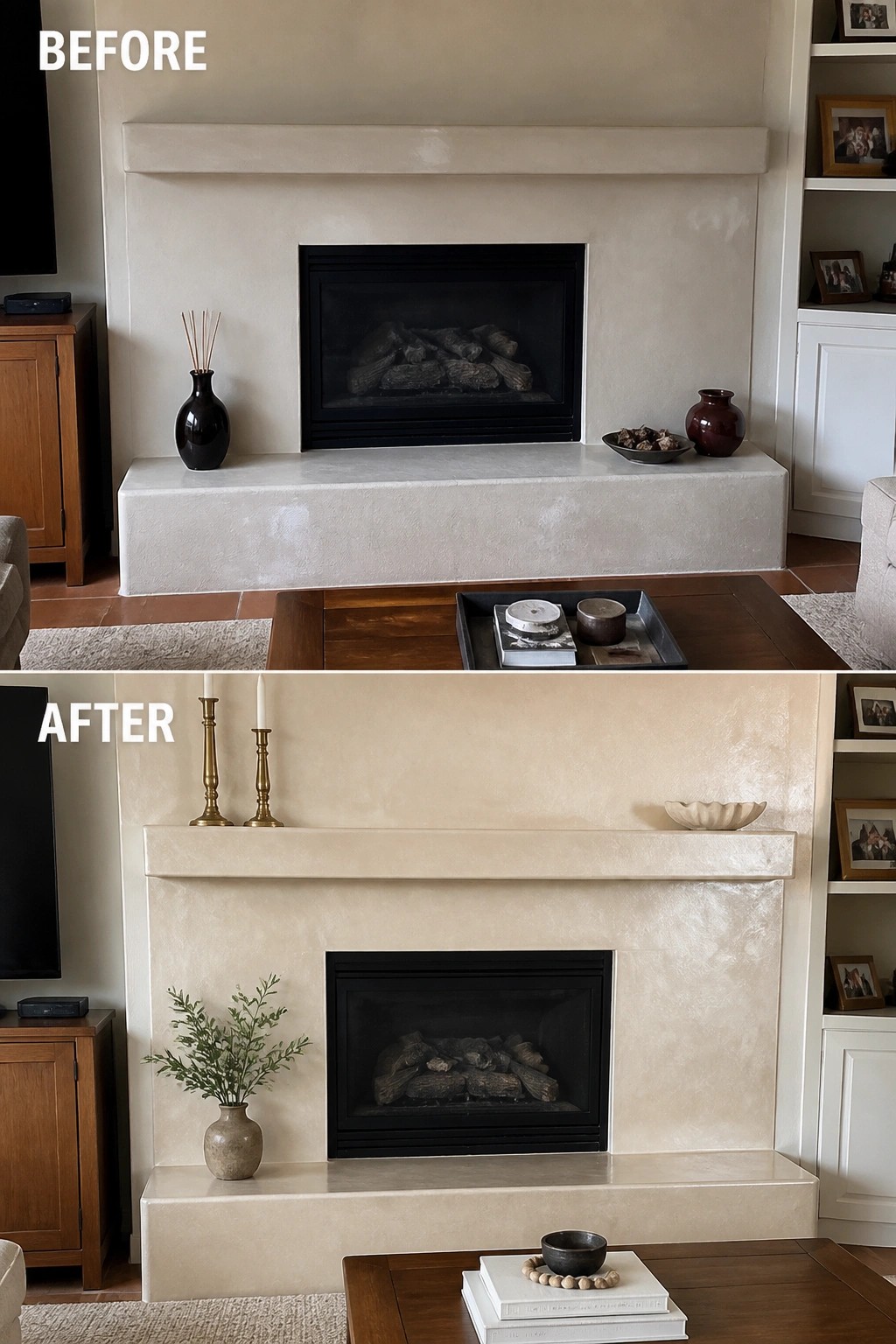
A plain plaster fireplace often looks unfinished when the mantel and hearth stay bare. In this case the before version kept everything low and spread out on the hearth. The after version moves taller pieces onto the mantel and adds one grounded plant to the side. That single change lifts the eye and turns the whole wall into the clear focal point.
This idea suits rooms where the plaster surround is already in good shape. Keep the styling light so the firebox remains the center. Two taller items on the mantel and one low piece to the side usually give enough balance without crowding the space.
Make The Fireplace Wall The Main Feature

Adding vertical paneling above a plaster fireplace surround is a straightforward way to give the whole wall more presence. The before version left the area above the mantel mostly empty, which made the fireplace feel like it was floating on a blank wall. Once the paneling went up, the plaster surround became part of a clear, finished composition instead of the only element in the space.
This idea works best in rooms where you want the fireplace to stay the focal point without adding heavy built-ins or bold color. Paint the paneling the same color as the walls so the texture adds interest without competing with the plaster. A simple wreath and a few candles on the mantel are usually enough to complete the look.
Refresh An Old Plaster Fireplace Surround With White Paint
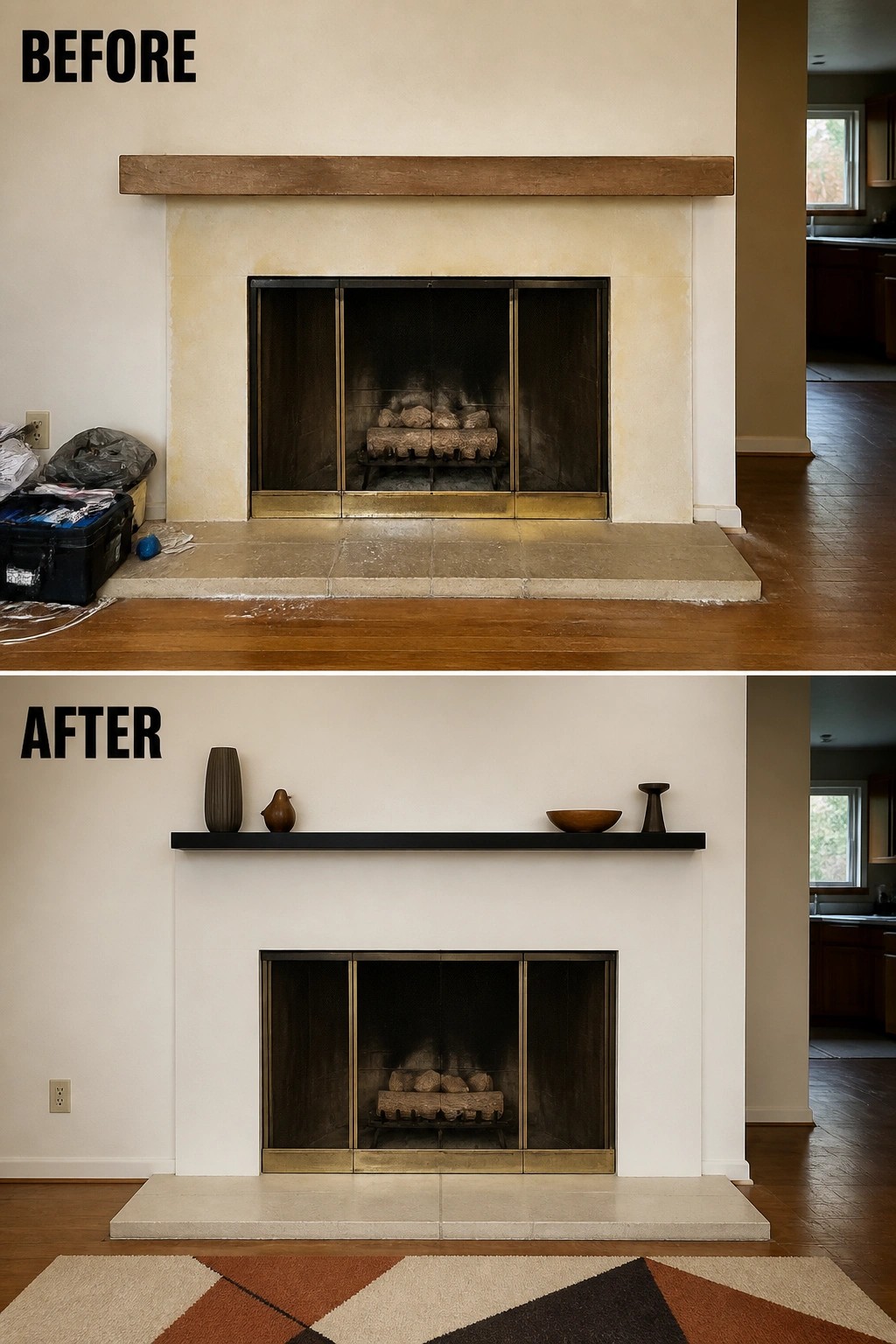
Painting the plaster surround white and swapping the bulky wood mantel for a slim black shelf gives the fireplace a much cleaner, lighter look. The change removes the stained, dated finish and lets the brass fireplace insert stand out without competing with heavy trim or dark tones above it.
This works best in homes that already have plaster walls, since the new surround can blend right into the room. Keep any decor on the shelf minimal so the white surface stays the main feature, and match the paint to your wall color for a simple, pulled-together result.
Make The Fireplace Wall The Main Feature
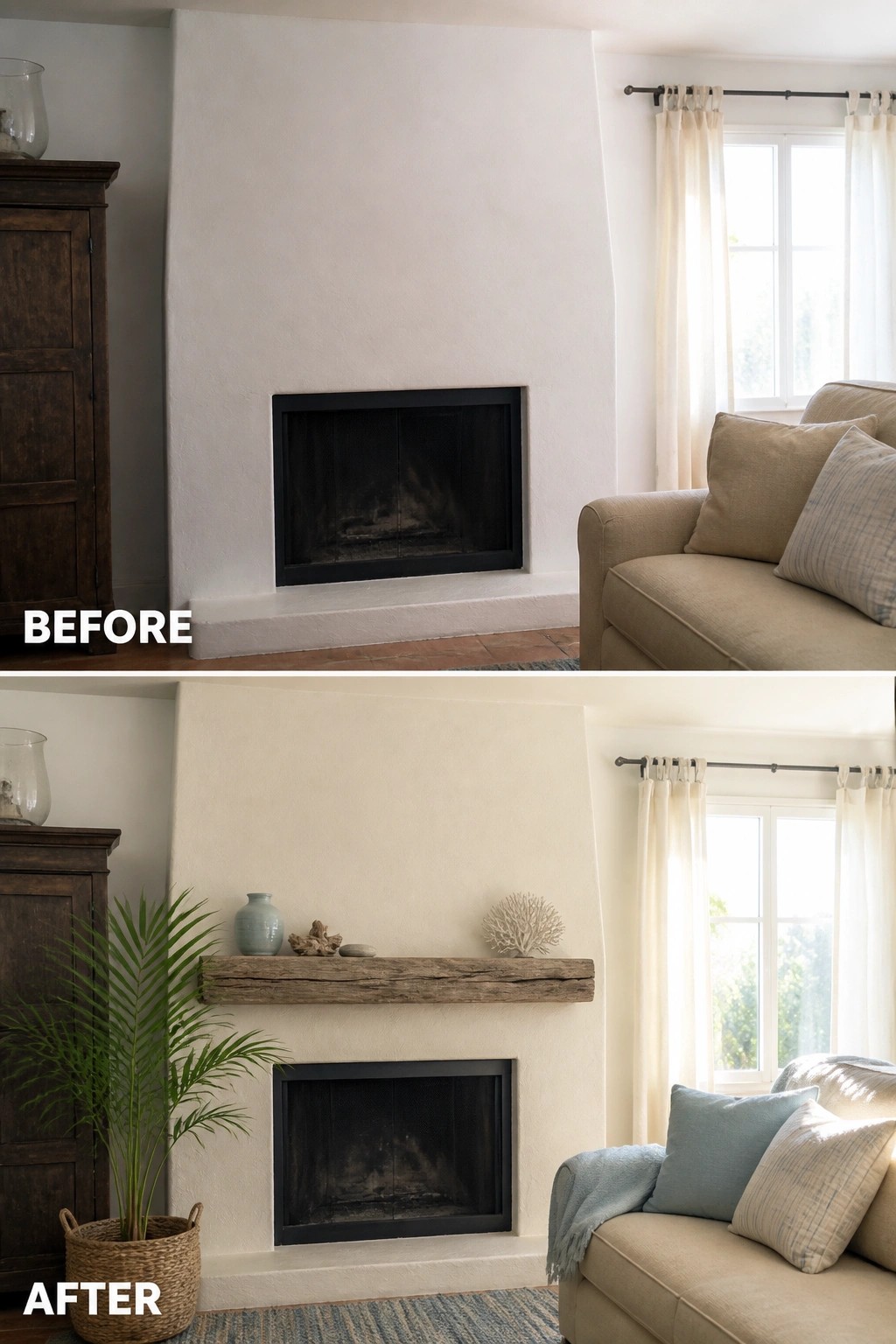
A plain plaster surround often leaves the fireplace looking unfinished in the room. Adding a simple wood mantel gives the wall a clear place to rest a few items and pulls the whole space together without much effort.
This idea works well in living rooms where the fireplace already sits in the center. Keep the shelf fairly narrow and style it lightly with just a couple of objects so the area stays balanced and easy to dust.
Make The Fireplace Wall The Main Feature
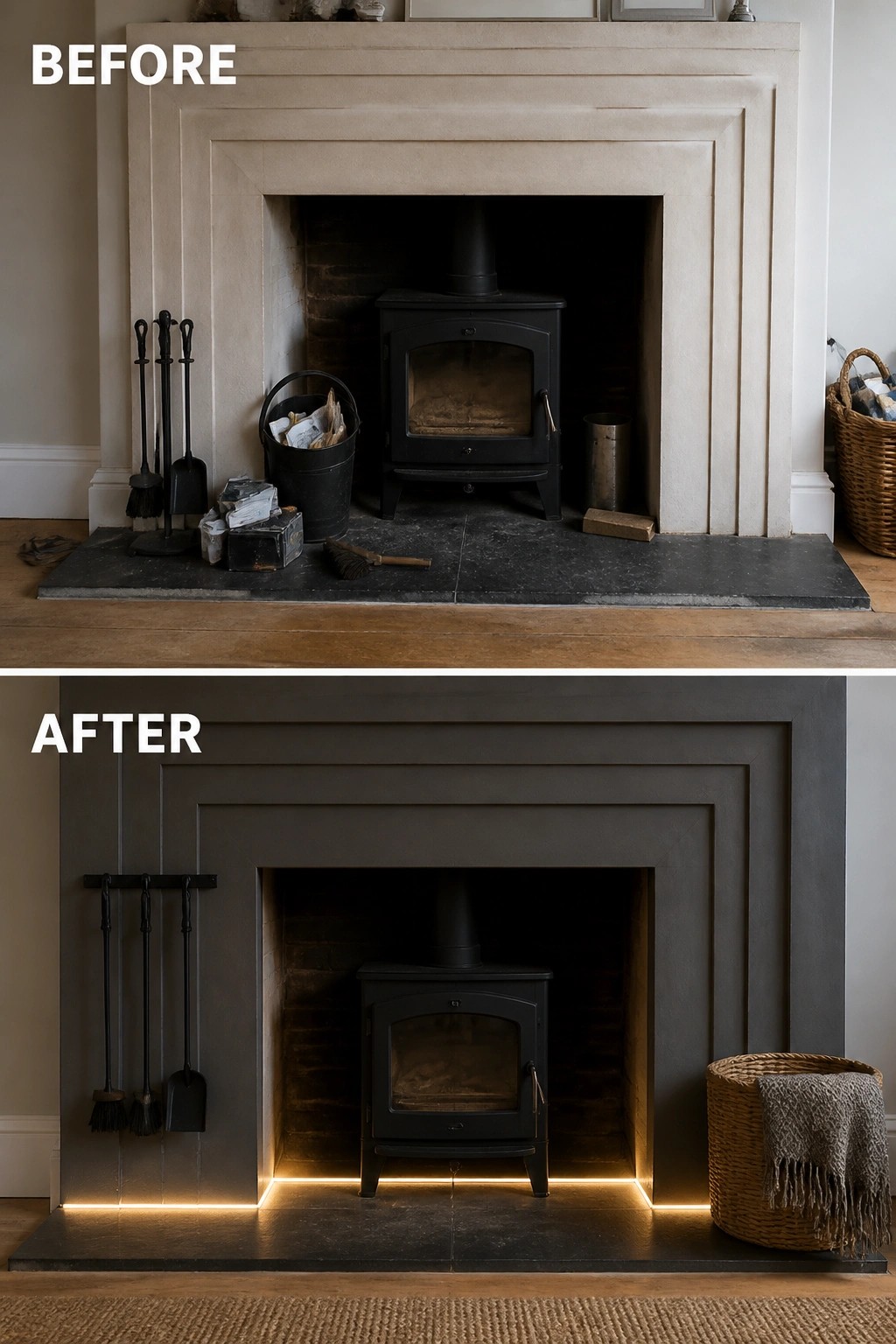
Painting the plaster surround a deep charcoal color turns the fireplace into the strongest part of the room. The light tone in the before photo made the whole thing fade into the background, while the darker finish gives it clear shape and weight without any major construction.
This idea suits older homes that still have their original plaster detail. Choose a color that contrasts with the walls, keep accessories to a minimum, and consider adding a simple strip of lighting at the base so the surround stays the focus even in the evening.
Make The Fireplace The Main Feature
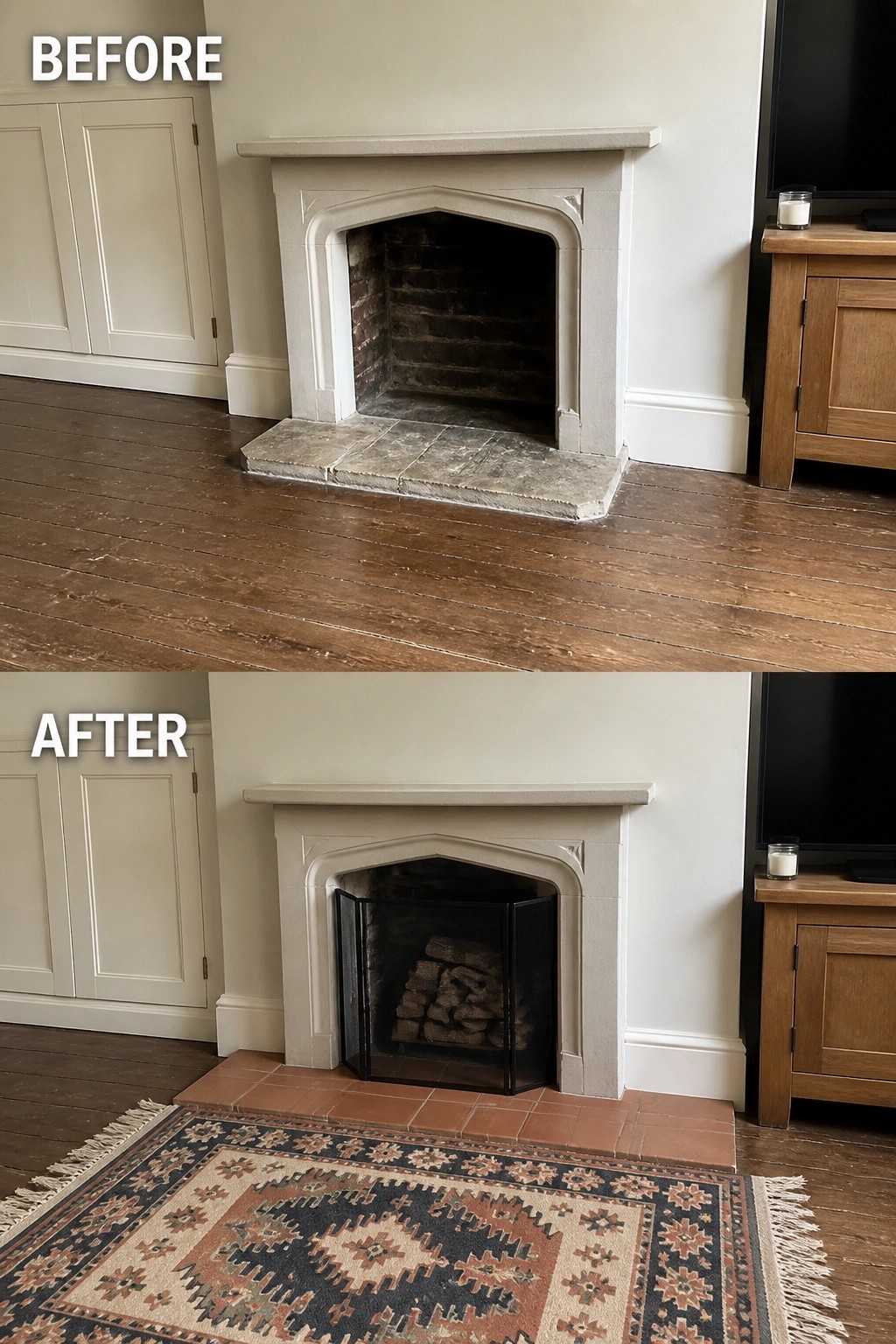
A plain plaster fireplace can feel a bit lost in a room until you give it something to stand on. Here the fix was straightforward. A simple black screen closed off the opening, the hearth was extended with terracotta tiles, and a large patterned rug was laid in front. Those three moves pulled the whole wall together and made the fireplace the clear center of the space.
This approach works well in older homes where the surround is already in good shape. Start with the hearth and rug, then add the screen if you want to use the firebox. Keep the rug size generous so the seating area feels connected rather than floating. The result is a cozy focal point without any major construction.
Make The Fireplace Wall The Main Feature

The before version had the plaster surround almost hidden under a crowded line of small frames, candles, and random objects. Clearing that away and adding a simple wood mantel with just a couple of plants and books lets the arched plaster shape stand out on its own. The large mirror above it also helps by reflecting light and keeping the eye on the fireplace instead of jumping around the wall.
This approach works best in rooms where the fireplace is already a strong architectural piece. Keep the mantel narrow and use only two or three items at most, placed with some space between them. It suits older homes with plaster details especially well, since the goal is to let those original shapes show instead of covering them up.
Add A Mantel Shelf To A Plain Fireplace

A plaster fireplace surround can look a bit flat when it has no real place to set anything. Adding a simple wood mantel gives the wall a clear horizontal line and creates a spot for just a few items. In this case the change turns the fireplace into the obvious center of the room instead of a blank wall with a hole in it.
This idea works well in older homes where the original surround is still in good shape but feels unfinished. Keep the styling light so the plaster stays the main material. One or two small pieces on the mantel and maybe a single framed print beside the niche is usually enough.
Add Trim To A Plain Plaster Fireplace
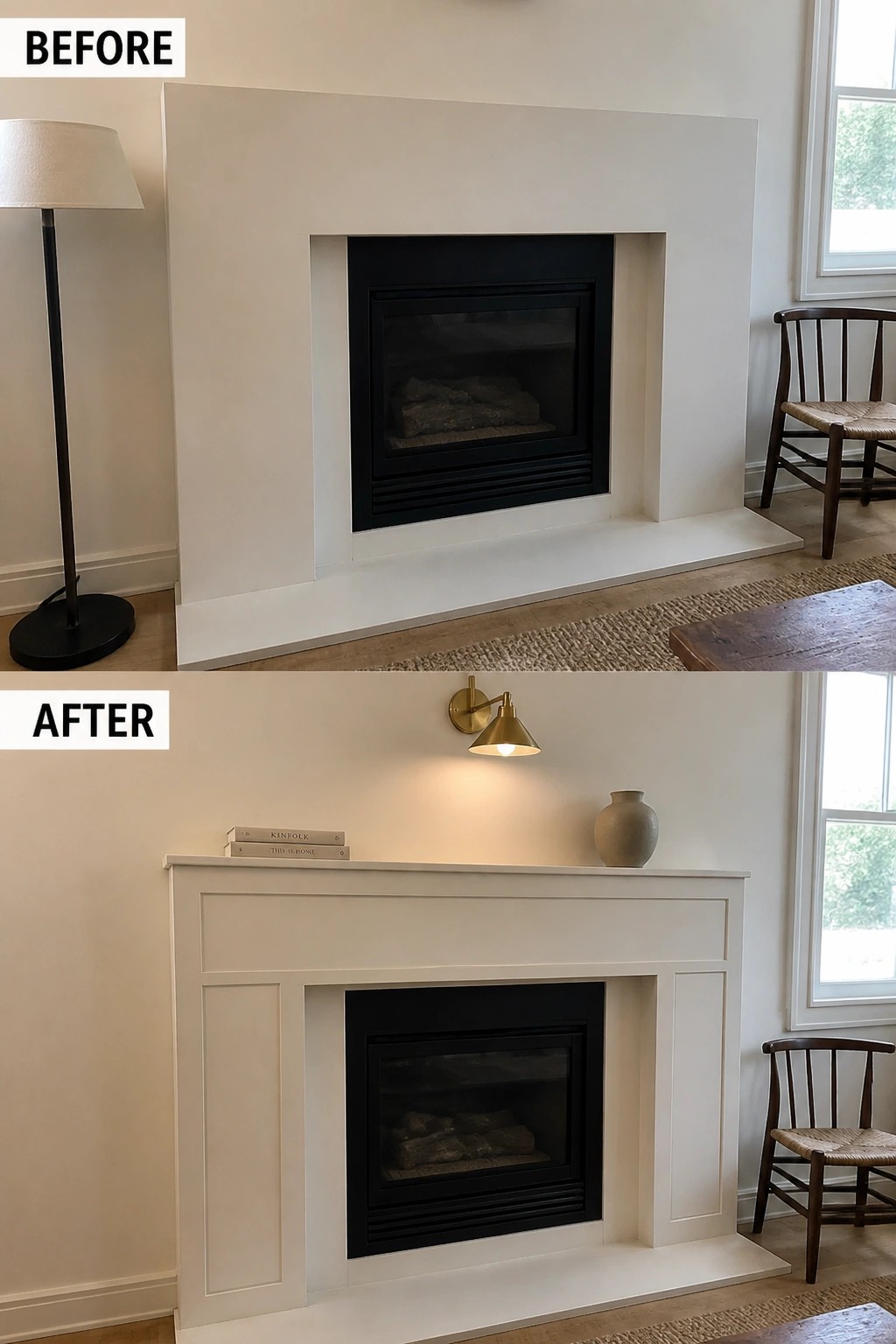
A basic plaster surround often leaves the fireplace looking unfinished. Adding wood trim and simple raised panels gives the opening clear structure and turns the wall into a proper focal point. The change is mostly visual, but it makes the whole room feel more complete.
This idea suits homes where the original surround is sound but lacks presence. Measure the space first so the new panels stay in proportion, then keep the finish close to the wall color for a built-in look rather than something added later.
Create A Built-In Seating Nook Beside The Fireplace
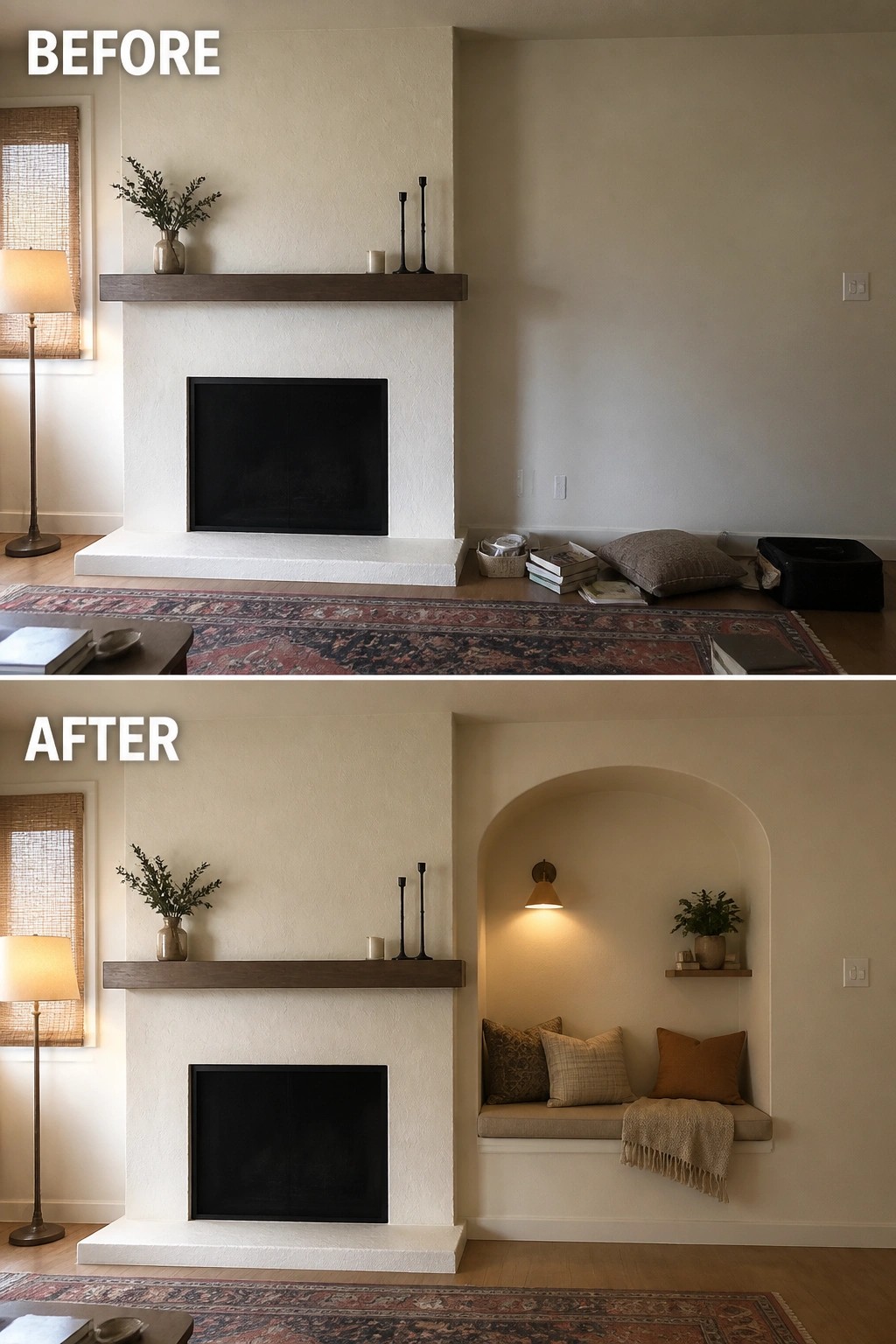
One simple way to make a fireplace wall feel more complete is to turn the empty space next to it into a small seating area. Here the blank wall became an arched plaster niche with a bench, cushions, and a single wall sconce. The matching plaster finish helps the new section blend with the existing fireplace surround.
This works best in rooms where the fireplace sits off-center and leaves usable wall space on one side. Keep the niche depth modest so it does not crowd the room, and use the same wall finish throughout to keep the look calm and connected.
Add Tile Along The Mantel Edge

A plain plaster fireplace often looks unfinished on its own. Adding a narrow band of patterned tile right along the top of the mantel gives the whole surround more presence without covering the plaster or changing the basic shape. In this case the tile adds color and detail while the rest of the white mantel stays simple and clean.
This works well in older homes where the original plaster is still in good shape but feels too plain. Keep the tile strip fairly narrow so it reads as an accent rather than a full redo, and choose a pattern that stays within a few colors already used in the room. The rest of the mantel can stay lightly styled or left mostly bare.
Make The Fireplace Wall The Main Feature
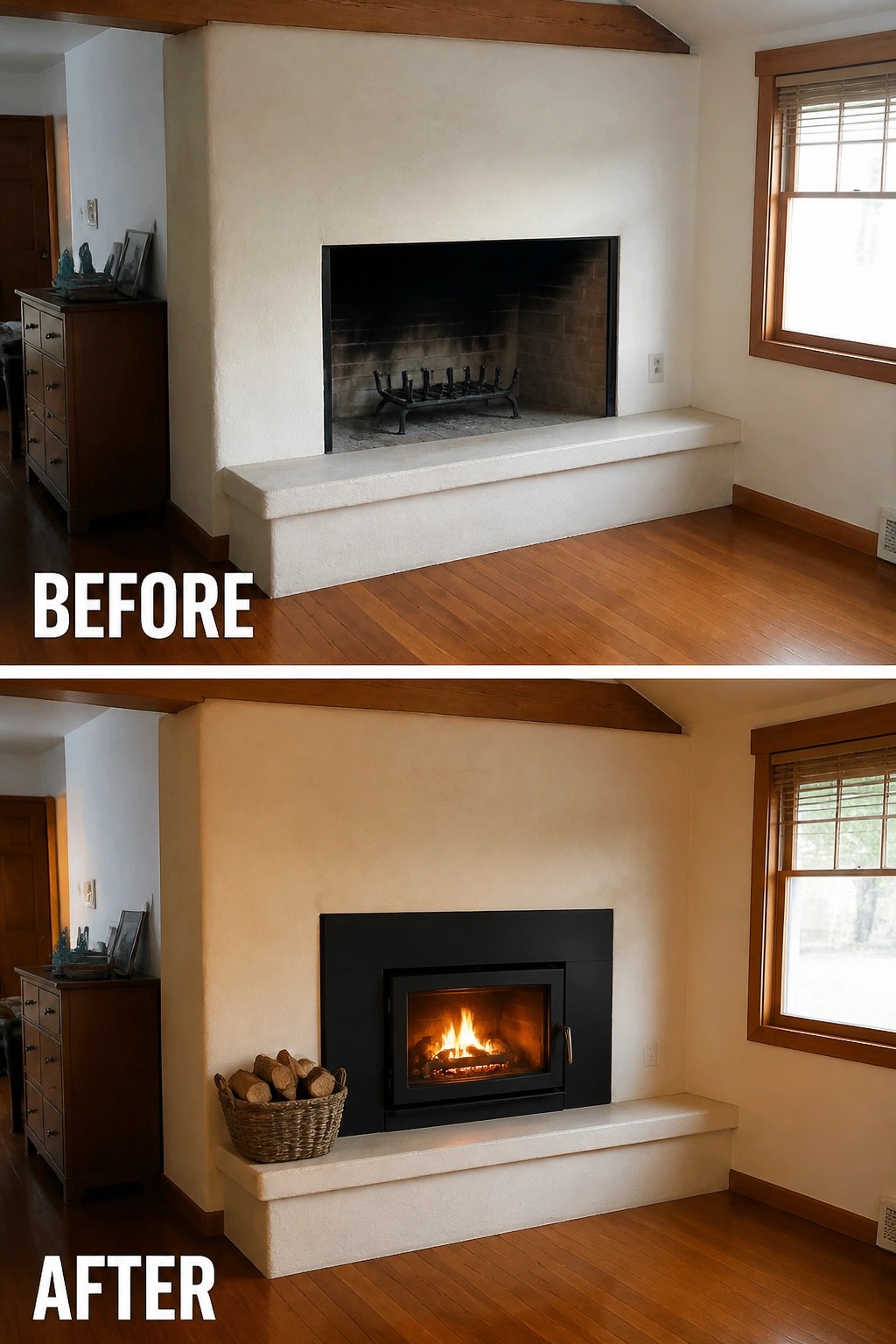
A large plaster surround can look empty when the firebox stays open and unused. Adding a modern insert fills the space with a clean black frame and turns the whole wall into a working focal point.
This approach suits older homes that already have a solid plaster surround but need something more practical. Keep the styling simple with just a basket of logs on the hearth so the insert stays the main point of interest.
Add Niches With Lighting To A Plaster Fireplace

A plain plaster fireplace surround can feel a little flat on its own. Adding a pair of arched niches on either side of the firebox, each with its own light, gives the wall more depth and makes the whole area feel finished without needing much extra decoration.
This approach works especially well in rooms where you want the fireplace to stay the main feature but need a bit more visual weight. Keep the niches simple, use warm bulbs, and add just one or two small objects so the plaster itself still reads as the main material.
Frequently Asked Questions
Q: Can I paint my plaster surround without it peeling later? A: Clean the plaster thoroughly and apply a good primer first. Then use paint made for masonry or plaster. This helps the color stick and keeps the cozy feel intact.
Q: What if my plaster has a few small cracks showing? A: Patch the cracks with a simple filler meant for plaster. Sand it smooth after it dries so the surface looks even again. You can then move on to your chosen makeover without bigger fixes.
Q: How do I add warmth around the fireplace without covering the plaster? A: Place a soft rug and a couple of chairs close by. Use lamps with warm bulbs to light the space at night. These touches pull the room together while leaving the surround as the main feature.
Q: Is it worth adding shelves beside the surround? A: Build simple shelves that sit flush with the plaster edges. They give you space for books or candles without crowding the fireplace. Keep the wood tone neutral so it blends in naturally.
