

Many homes end up with a plain firebox that leaves the main wall feeling bare and the seating area a little off balance.
I have noticed that the room often starts to feel more anchored once the fireplace gets a simple surround or a change in material that matches the rest of the space.
It helps to look at how the hearth sits with the furniture layout before deciding on any new details.
Some updates work better when they build on the original opening instead of fighting it.
I usually test a few material ideas in person first because that shows whether the change will actually tie the room together.
Paint The Brick To Modernize A Fireplace

Painting the brick surround white and swapping the heavy mantel for a simple wood shelf turns a dark, dated fireplace into a clean focal point. The change brightens the whole room and removes the old-fashioned look without needing to tear anything out.
This approach works well in builder-basic homes where the firebox itself is fine but the surround feels heavy. Prep the brick carefully so the paint lasts, then keep the styling light with just a few pieces on the shelf and hearth.
Make The Fireplace Wall The Main Feature

One simple way to update a builder basic living room is to cover the old brick fireplace with a modern surround. Here the brick was hidden behind large dark tiles and a new linear insert was installed, which turns the whole wall into a strong focal point instead of a dated feature that blended into the background.
This idea works best when the fireplace sits on the main wall of the room. Keep the new surround simple and let the size and color of the tile do the work. It suits homes where you want a clean look without adding lots of extra decor or mantels.
Make The Fireplace Wall The Main Feature

Many builder fireplaces sit flat against the wall with only a thin mantel for interest. Extending the surround upward and outward in a matching plaster finish, then adding a simple floating shelf, gives the fireplace more weight and turns it into the clear focal point of the room.
This works best in living rooms where the fireplace needs to anchor the space without a full renovation. Keep the new surround narrow enough that it does not crowd the room, and repeat the wall color so the change feels built in rather than added on.
Make The Fireplace Wall The Main Feature

Many builder homes start with a basic brick firebox that sits flat against the wall and does little to draw the eye. Replacing the brick with stacked stone and adding a wood mantel gives the fireplace a clear shape and presence without changing the rest of the room.
This approach works best when the fireplace is the only large fixed feature in the space. Choose stone and wood tones that stay close to the wall color so the update feels like a natural upgrade rather than a big contrast.
Make The Fireplace Wall The Main Feature

A simple way to improve a basic fireplace is to extend the tile upward and add floating shelves on both sides. The change turns the firebox from something that blends into the wall into the clear center of the room.
This approach works best when the fireplace sits on a long wall with open space around it. Keep the shelves at staggered heights and repeat a few simple accessories so the arrangement stays balanced without feeling crowded.
Make The Fireplace Wall The Main Feature

Painting the entire fireplace surround and mantel a dark color turns a plain builder-basic firebox into the strongest part of the room. The white mantel and light tile that once blended into the wall now stand out, and the simple gold trim around the insert adds just enough contrast to keep it from feeling flat.
This approach works best in rooms where the fireplace sits on a large blank wall and you want one clear focal point without adding shelves or built-ins. Keep the rest of the wall simple, use a matte paint that can handle heat, and add only a couple of small accessories on the mantel so the dark shape stays the main event.
Make The Fireplace Wall The Main Feature

Many homes have a standard fireplace that blends into the wall and feels a bit flat. Adding shiplap across the full height and swapping in a simple floating mantel shifts the focus to the firebox and gives the room a cleaner structure.
This works best in living rooms where the fireplace is already the main wall. Keep the styling light so the new lines stay visible, and make sure the new mantel sits at a comfortable height for the space.
Make The Fireplace Wall The Main Feature

A standard brick fireplace often ends up looking heavy and dated once the rest of the room is updated. Swapping the surround for a single material like marble and replacing the original firebox with a long, low insert removes the bulky mantel and raised hearth so the wall feels taller and more intentional.
This kind of update works best in rooms where the fireplace sits under a television. Keep the surrounding wall color light and limit extra trim so the new surround becomes the clear center of the space without competing with other details.
Update A Builder Basic Fireplace With A Linear Insert

Many homes start with a standard fireplace that takes up too much visual space and feels dated next to the rest of the room. Replacing the mantel, tile surround, and bulky box with a low-profile linear insert set into the wall changes the whole balance. The addition of a simple recessed niche for firewood keeps the area functional without adding extra furniture.
This approach works well in living rooms where the fireplace is the main focal point but the current design feels heavy. Measure the opening carefully so the new unit sits flush, and keep the surrounding wall simple so the fire itself stands out. It suits neutral homes that need one clear update rather than a full room overhaul.
Make The Fireplace Wall The Main Feature

A plain firebox with empty walls on either side often feels like wasted space in a new build. Adding built-ins on both sides and swapping the surround for a simple tile face gives the fireplace a clear role in the room and makes it feel finished.
This idea works best in living rooms or family rooms that need both storage and a focal point. Keep the shelves from getting too crowded so the firebox remains the main draw, and match the cabinet style to the existing trim for a cleaner look.
Make The Fireplace Wall The Main Feature

Many builder basic fireplaces sit in the middle of a wall with a plain white mantel and exposed brick that never quite feels finished. Here the update replaces the old mantel with a long black one, covers the hearth in dark tile, and smooths the surrounding wall into one calm surface. The change makes the fireplace the clear center of the room instead of just another opening.
This approach works well in living rooms that already have simple furniture and neutral walls. Choose a mantel that sits low and wide so the eye stays on the firebox rather than the trim. It suits homes where you want a quick refresh without moving walls or adding built-ins. Keep the rest of the room light so the dark surround stands out without feeling heavy.
Update A Builder-Basic Fireplace With A Modern Insert

Many builder fireplaces start with an open box and a plain brick surround that can look unfinished. Replacing the open firebox with a black framed insert and switching the hearth to dark tile gives the wall a much cleaner, more finished appearance.
This idea works best in rooms where the fireplace already sits in a central spot. Keep the mantel simple and let the new insert and hearth carry the update so the change stays practical and easy to maintain.
Make The Fireplace Wall The Main Feature

A simple way to fix a plain firebox is to add a new mantel and change the tile surround. The original white mantel and plain tile felt flat next to the built-ins, while the wood mantel and patterned tile now give the fireplace a clear center point in the room.
This idea works well in living rooms that already have built-in shelves on both sides. Keep the tile pattern to two or three colors so it does not compete with everything else, and make sure the new mantel is deep enough to hold a few items without looking cluttered.
Make The Fireplace Wall The Main Feature
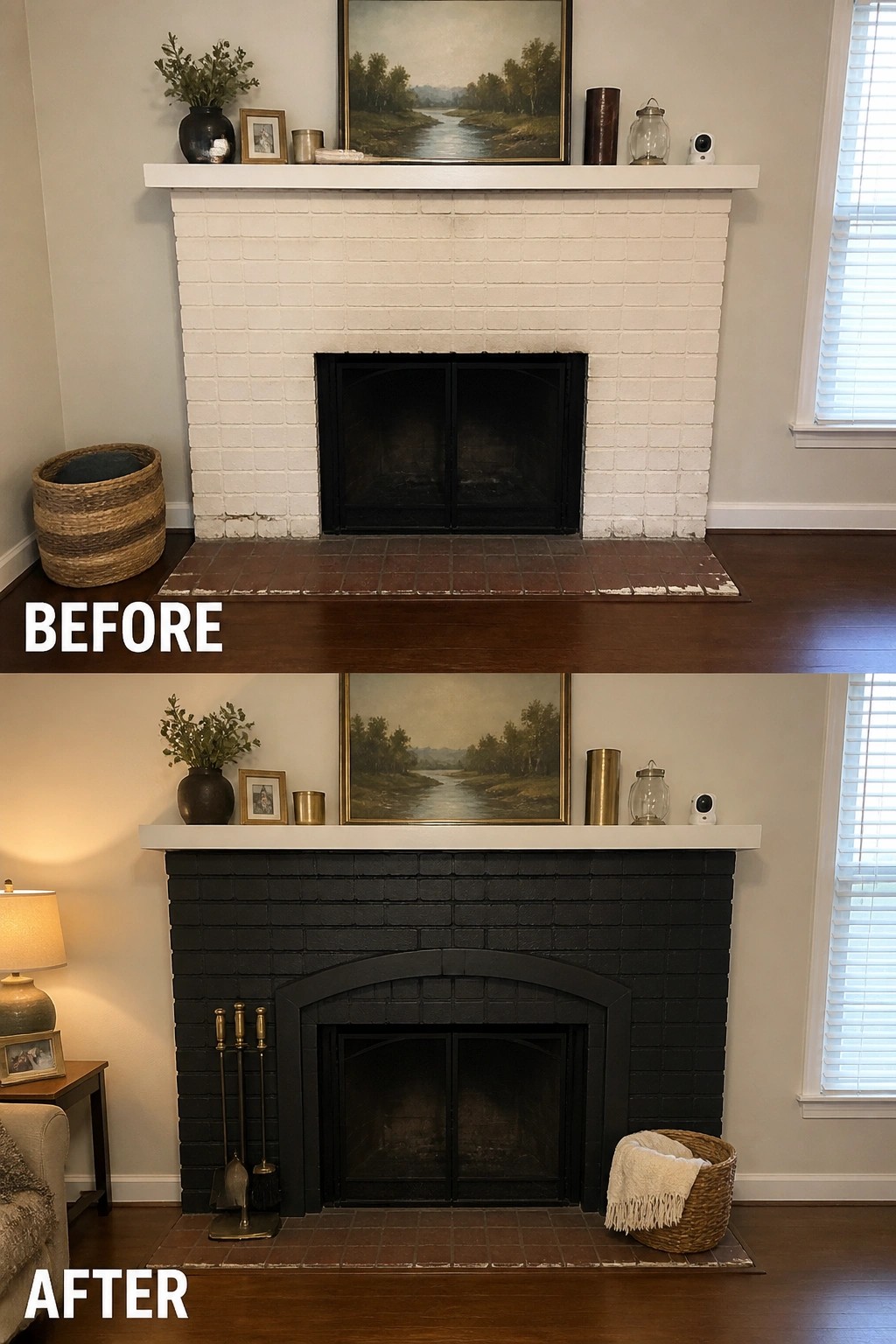
Painting the brick surround black turns a plain white fireplace into the strongest point in the room. The dark color gives the firebox more weight and makes the whole wall feel more finished without any major construction.
This idea works well in living rooms where the fireplace sits in the center of the main wall. Use a matte paint rated for masonry, and keep nearby furniture and accessories simple so the black stands out clearly.
Make The Fireplace Wall The Main Feature
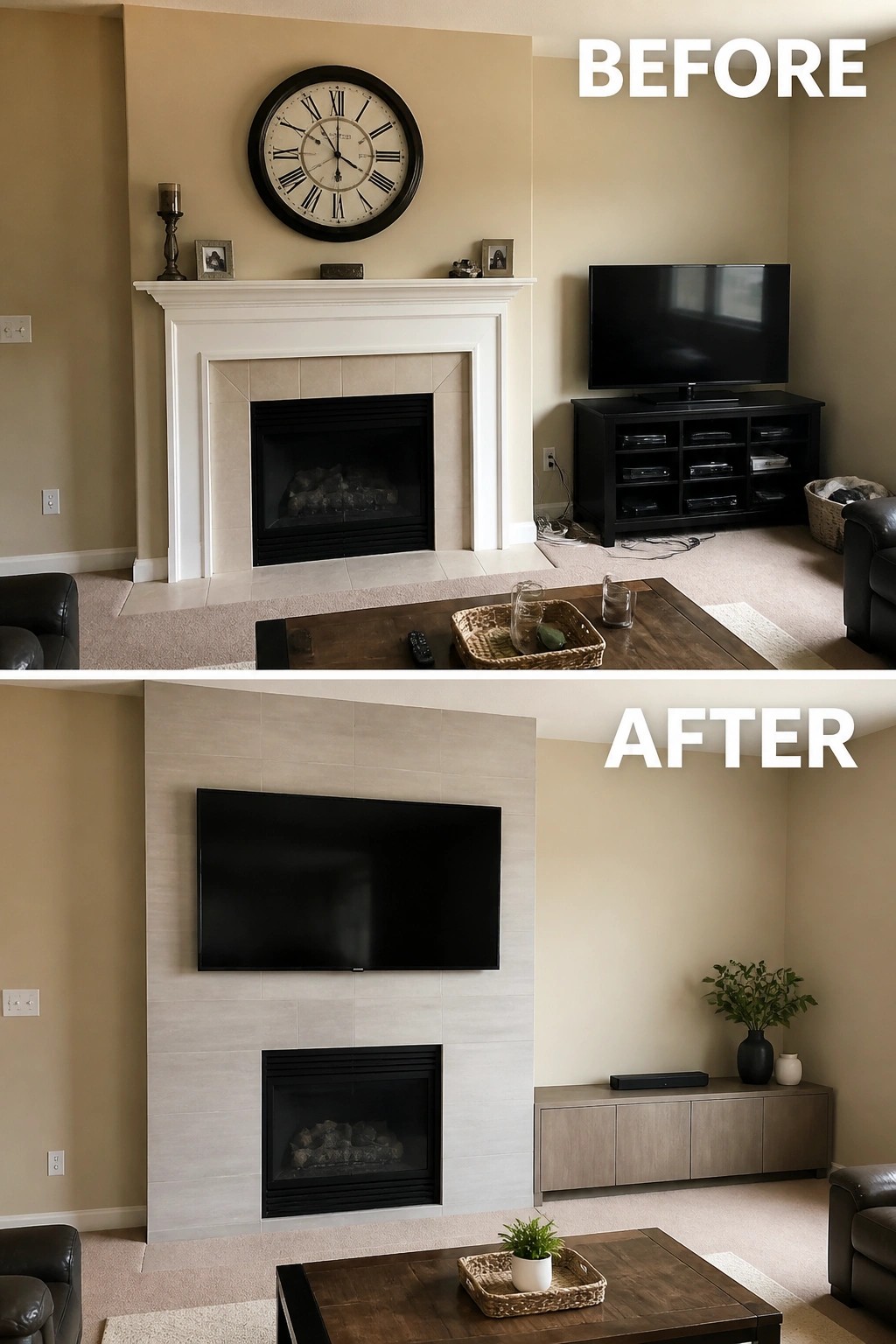
One simple way to update a basic fireplace is to mount the television directly above it and extend the tile surround to create one solid focal wall. This removes the split between the firebox and a separate media console and gives the whole area more weight in the room.
The idea works best in living rooms where the fireplace feels small or off to the side. Keep the new surround straightforward, use a low cabinet elsewhere for any components, and make sure the tile area is large enough to balance the screen above the firebox.
Make The Fireplace Wall The Main Feature
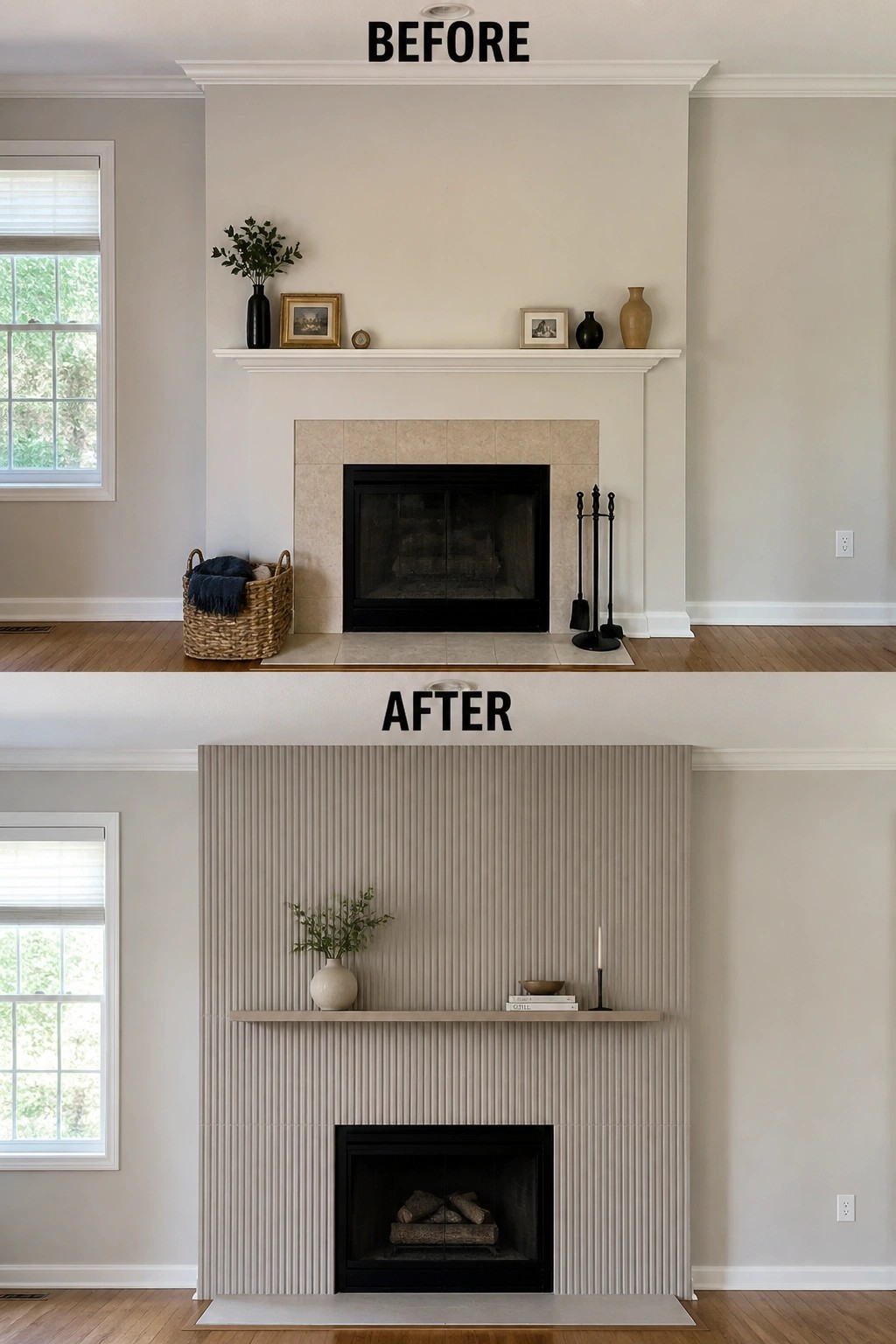
A basic fireplace with a thin mantel and scattered decor can easily fade into the background. Adding full-height vertical paneling around the firebox pulls the eye upward and turns the entire wall into one clean, finished surface. The change is simple but effective because it replaces the empty space above the mantel with texture and height.
This approach works best in rooms where the fireplace already sits in a central spot. Choose a light neutral tone for the panels so the wall blends with the rest of the room, and keep any new shelf narrow. It suits builder-basic homes with tall ceilings or open living areas where you want one strong focal point without adding more furniture or clutter.
Make The Fireplace Wall The Main Feature
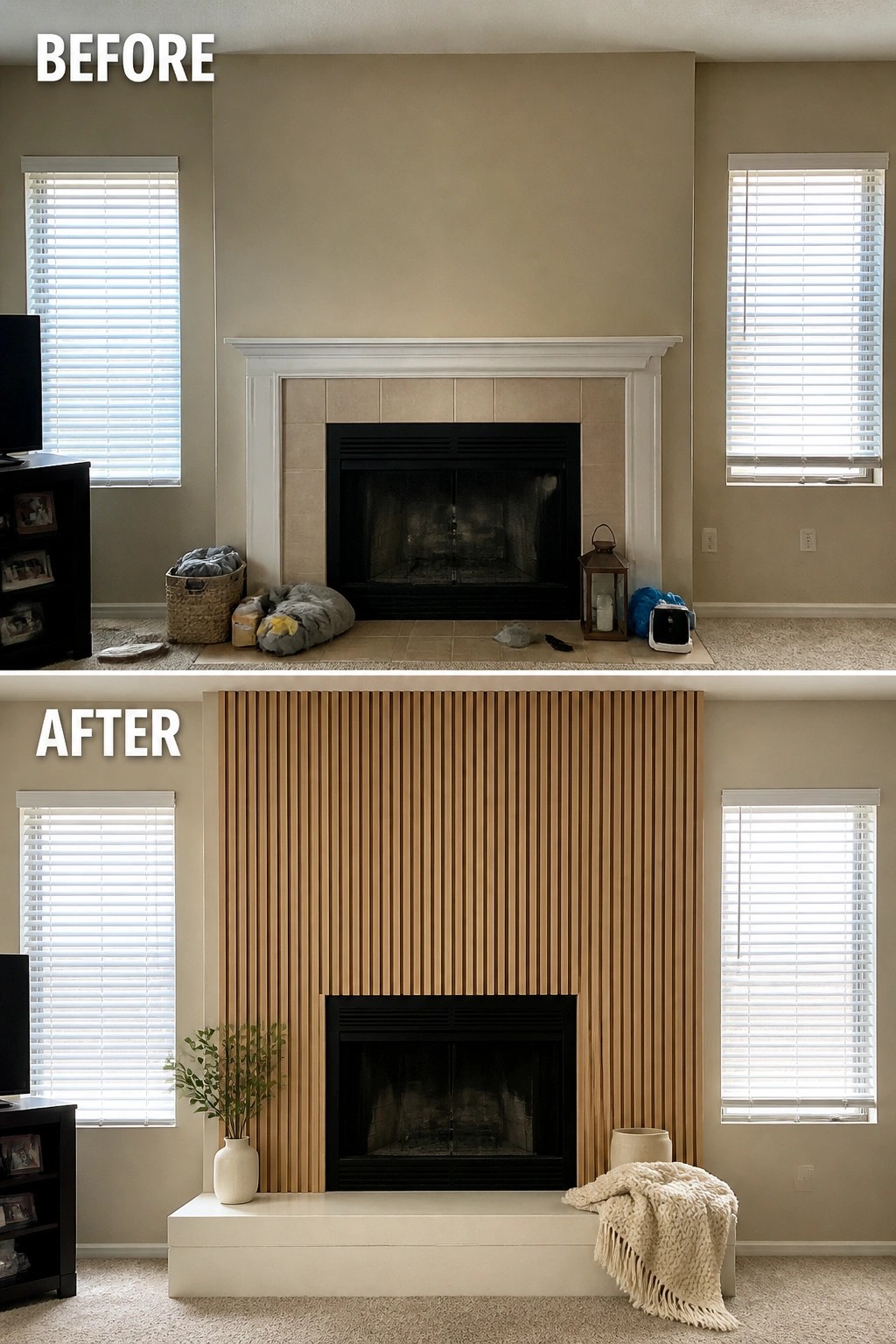
A plain fireplace wall often blends into the background in newer homes. Adding vertical wood slats behind the firebox gives it height and texture so the fireplace actually stands out instead of disappearing into the beige.
This idea works best when the rest of the room stays simple. Use a light base extension for balance and add only one or two soft accessories so the wood remains the focus.
Paint Brick And Mantel To Refresh A Fireplace

Painting the brick and changing the mantel color can completely shift how a fireplace feels in a room. In this case the dark red brick and heavy wood mantel gave way to a much lighter look once everything was painted, which made the whole wall feel brighter and more in line with the rest of the space.
This approach works well in builder-basic homes where the original fireplace looks heavy or dated. Focus first on prepping the brick properly so the paint lasts, then pick a mantel color that connects with your walls or trim. Keep the styling around it simple so the updated fireplace stays the main feature instead of competing with lots of small pieces.
Replace A Traditional Mantel With A Linear Fireplace

Removing the white mantel and large surround opens up the wall and lets the fireplace sit lower and wider. The new linear insert with its simple black frame and pebble bed gives the room a cleaner line that feels more current.
This approach works best in spaces where the old mantel feels too heavy or dated for the rest of the room. It suits homes that want to keep the fireplace as the main feature but without extra trim or bulk. Measure the opening first to make sure an insert fits, and match the wall color to the unit so the whole wall reads as one surface.
Make The Fireplace Wall The Main Feature
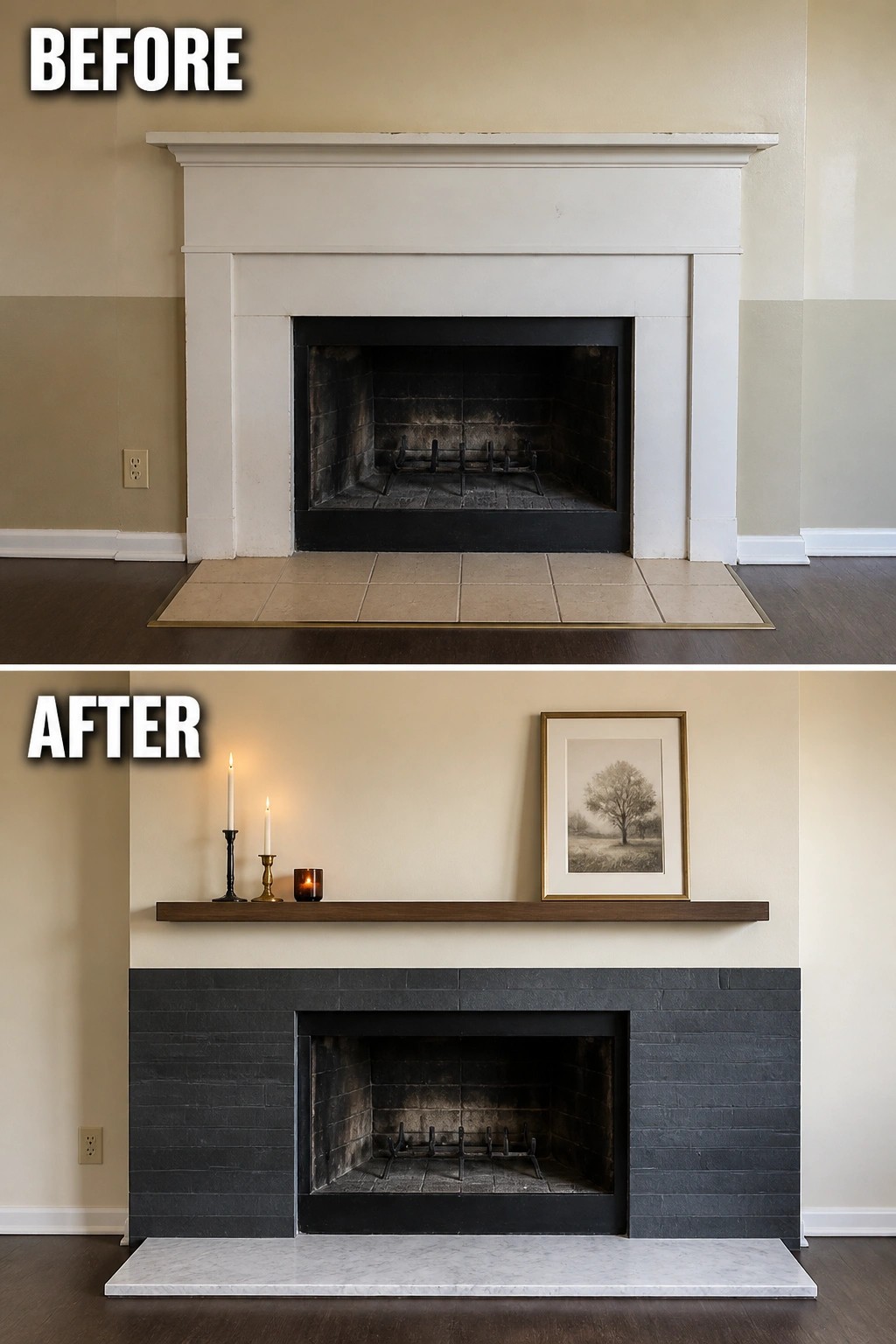
A plain white mantel with matching tile often fades into the background in builder homes. Swapping the surround for dark stacked stone and adding a simple wood shelf creates a strong focal point without adding clutter. The new materials give the firebox weight and contrast against the lighter walls.
This approach works best in living rooms where the fireplace sits on a long wall. Keep the styling light with just a few candles or one piece of art so the updated surround stays the star. Dark stone or tile can make the opening feel deeper, but test samples first since the color shifts with lighting.
Paint The Mantel Black To Make It Stand Out
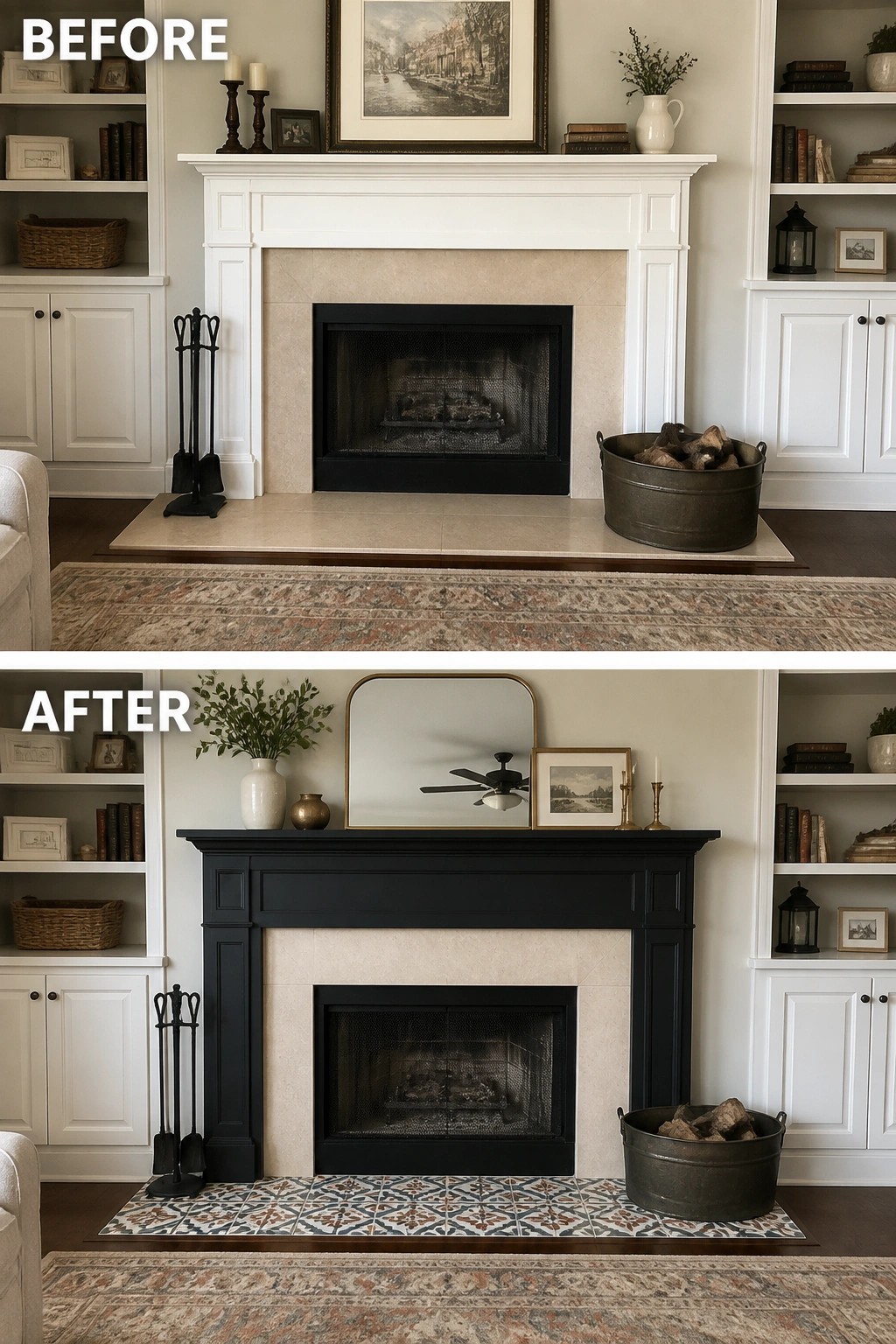
A white mantel on a builder-basic firebox often blends into the wall and feels flat. Painting it black gives the fireplace a clear frame and turns it into the main feature in the room. The change is simple but effective because the dark color creates contrast against the light walls and stone surround.
This approach works well in living rooms where the fireplace needs more presence without a full renovation. Use a durable paint made for trim, and consider adding patterned tile on the hearth if the original surface feels too plain. Keep the rest of the styling light so the mantel stays the focus.
Add Stone And A Thick Mantel To A Basic Fireplace

A plain white fireplace often disappears into the wall, especially when the surround is just tile and the mantel is thin. Wrapping the firebox in stacked stone and adding a heavy wood beam gives the whole wall weight and turns the fireplace into the main point of the room.
This idea works best in living rooms where you want one strong focal point without adding a lot of furniture. Keep the stone in a mid-tone gray so it pairs with most wood floors, and make sure the new mantel sits a few inches deeper than the old one so the proportions feel right.
Frequently Asked Questions
Q: Can I paint the firebox interior myself or do I need a pro for that step?
A: Grab high heat paint made for fireplaces and clean the surface well first. Brush on two thin coats and let each dry fully before you light a fire. This keeps the job simple and cheap if your brick or stone feels solid.
Q: What if my firebox sits right against drywall without much clearance?
A: Add a thin layer of cement board as a buffer before any tile or stone goes up. Measure twice so the new facing stays flush with the wall around it. That one move prevents heat issues without changing your whole plan.
Q: Will a new mantel look off if the rest of my room has modern lines already?
A: Pick a slim floating shelf in wood or metal that matches your furniture tones. Hang it at eye level to balance the boxy builder shape below. Keep the rest of the surround minimal so the mantel pulls the space together.
