

I have noticed that a fireplace often leaves a room feeling a bit unfinished when the surround has no real detail to tie it into the rest of the space.
Adding tile along the face and wood trim around the edges usually helps the whole area sit better with nearby furniture and built-ins.
The materials start to look like they belong once they match the scale of the mantel and the walls around it.
I tend to try trim details first because they take the least effort but still change how the room reads from the doorway.
Some of these updates feel worth testing on paper before buying materials since they show up right away in daily use.
Make The Fireplace Wall The Main Feature

A fireplace that blends into the wall often gets overlooked. Changing the surround to white tile and adding a simple wood mantel gives the whole wall a clean, finished look that makes the fireplace stand out without any extra fuss.
This idea works best in living rooms where you want one clear focal point. Keep the mantel styling light so the tile and wood stay the main elements, and make sure the new materials match the scale of your room.
Update A Fireplace With Tile And Wood Trim

A stone fireplace can start to feel heavy and dated once the rest of the room gets lighter updates. Replacing the bulky mantel and hearth with a simple white wood surround and adding a patterned tile face gives the whole wall a cleaner shape without changing the size of the opening.
This approach works best in rooms where the fireplace already sits in the center of the wall. Keep the new tile pattern bold but limited to the firebox area, and let the white trim do the rest of the work. The result is a focal point that feels finished rather than added on later.
Make The Fireplace Wall The Main Feature

One simple way to improve a living room is to update the fireplace with new tile and a wood mantel. The before version had flat tile and a basic white surround that blended into the wall. After the change the herringbone pattern and darker mantel give the fireplace clear shape and make it the natural center of the room.
This idea works best when the fireplace is already in a main spot but feels plain. Keep the rest of the furnishings fairly simple so the new tile and trim can stand out without competing. Choose a tile pattern that adds interest but stays light, and pick a mantel color that contrasts with the wall so the whole area feels more finished.
Make The Fireplace Wall The Main Feature

A plain white fireplace can easily disappear into the wall, especially in a room with light paint and wood floors. Covering the surround with patterned tile and adding a dark mantel gives the fireplace a clear shape and turns it into the main point of interest.
This idea suits older homes where the fireplace is already centered on a wall. Keep the tile pattern simple and limit extra decor to one or two small pieces so the new surface stays the focus.
Make The Fireplace Wall The Main Feature

A plain brick fireplace often ends up looking flat once the rest of the room gets updated. Switching the surround to stacked stone and adding a white mantel with simple columns gives the wall a clearer shape and makes the fireplace the obvious center of the room. The change is mostly surface level, but it shifts how the whole space feels.
This update works best in living rooms that already center around the fireplace. Use light neutral stone and painted trim so the new look stays easy to style later. Measure twice before ordering the mantel, since the proportions need to line up with the existing opening.
Update A Fireplace With Tile And A Wood Mantel

A plain stone fireplace can start to feel tired after a while, especially when the surround color and frame look dated. Swapping the old stone for a light speckled tile and changing the frame to black gives the whole wall a cleaner, more current look. Adding a simple wood mantel shelf ties the new tile to the rest of the room and creates a spot for a few small pieces without crowding the surface.
This approach works well in living rooms where the fireplace is the main focal point but the existing materials feel flat. Keep the tile light if the room already has a lot of wood tones, and choose a matte black frame if the goal is a quieter update rather than something flashy. The wood mantel can match existing trim or flooring for a more pulled-together feel.
Make The Fireplace Wall The Main Feature

A plain fireplace often blends into the wall and leaves the room feeling unfinished. Adding a tile surround around the firebox and vertical wood trim on the sides gives the whole area clear shape and makes it the natural center of the room.
This idea works best in living rooms where the fireplace already sits in a good spot but needs more presence. Keep the tile simple and the trim clean so the update feels fresh rather than busy. It suits homes with basic builder-grade mantels and requires only modest materials to change how the wall reads.
Update A Stone Fireplace With Tile And Wood Trim

Covering a dark stone fireplace with light tile and swapping the mantel for a simple wood piece can make the whole wall feel brighter and less heavy. The rough texture disappears under the smooth tile, and the lighter wood mantel replaces the dark one without changing the firebox or adding much new structure.
This approach works well in living rooms where the fireplace sits on a large wall but feels dated. Check first that your stone surface can accept tile, then pick a neutral color that matches the room rather than trying to match the old stone. Keep the rest of the furniture layout the same so the change stays focused on the fireplace.
Refresh A Fireplace With New Tile And Trim

Many older fireplaces end up looking heavy because of dark wood mantels and plain tile. Replacing the mantel with a simple white one and adding patterned tile around the opening makes the fireplace feel lighter and more like the main feature in the room.
This works best in living rooms that already have a central fireplace. Stick with a light tile color and a modest pattern so it does not fight with the rest of the space, and match the new trim color to nearby woodwork or walls.
Make The Fireplace Wall The Main Feature

The black surround in the before photo made the fireplace feel heavy and a bit lost on the wall. Switching to a light tile surround with a simple wood mantel brings it forward as the main focal point. The change brightens the whole area and gives the room a clearer center.
This update works best in living rooms where the fireplace already sits in a natural gathering spot. Choose tile in a neutral tone that blends with your walls, and keep the mantel narrow so it does not overpower the scale of the room. It is an easy way to refresh an existing fireplace without moving it or changing the layout.
Update A Fireplace With Fresh Tile And Wood Trim

A fireplace that feels dated often comes down to the tile color and the mantel style. Switching the surround to crisp white tile and adding a simple wood beam mantel lightens the whole wall and gives it a cleaner shape without changing the size or structure.
This idea works best when the fireplace already sits in the center of the room. Choose tile that matches your walls or trim, and keep the wood tone simple so it blends with other finishes in the space. Start with the tile change first if you want the biggest visual shift.
Update A Dated Fireplace With New Tile And Wood Trim

One simple way to refresh an older fireplace is to cover the existing surround with new tile and frame the whole thing in wood. The heavy marble mantel and ornate details give way to a lighter wood surround and a black tile face that makes the fireplace feel more current and less busy.
This update works best in rooms where the fireplace is already the main focal point. Pick a tile style that contrasts with the wood tone, keep accessories minimal, and make sure the new mantel sits at a comfortable height for the scale of your space.
Refresh A Plain Fireplace With Tile And A Mantel

A fireplace without a mantel often feels unfinished, especially when the tile around it is plain and dated. Adding a simple white mantel and switching to patterned tile gives the whole wall a clear focal point. The change turns a flat, basic surround into something that draws the eye without needing a bigger renovation.
This idea works best in living rooms where the fireplace already sits in the center of the wall. Keep the mantel width in proportion to the firebox, and pick tile that adds color but still matches the room’s overall tone. It suits older homes that need one updated feature rather than a full room overhaul.
Make The Fireplace Wall The Main Feature

A dark brick fireplace can make a whole room feel heavy. Swapping the brick for a lighter surround and adding simple wood trim above the mantel turns the fireplace into the main focal point instead of something that blends into the background.
This idea works best in living rooms where the fireplace sits in the center of the wall. Keep the new materials simple and light so the firebox stays the focus, and add just a few small items on the mantel rather than filling it up.
Update A Fireplace With Patterned Tile And Dark Wood

A light tile surround and matching wood mantel often make a fireplace fade into the background. Switching to a darker mantel and adding bold patterned tile around the firebox gives the wall clear definition and makes the fireplace the main point of interest.
This idea suits rooms where the fireplace sits between other furniture but needs more weight. Keep the new mantel simple in shape and finish, and let the tile carry the pattern so the update stays easy to live with.
Update A Fireplace With Tile And Wood Trim

The heavy stone surround made the fireplace feel dated and a bit closed in. Switching to light gray tile and adding a simple wood mantel lightens the whole wall while keeping the original opening and hearth in place.
This update works best when the fireplace already sits in the center of the room. Keep the tile and mantel tones close to your wall color so the change feels like a refresh rather than a full remodel, and limit accessories to a few pieces that sit on the new mantel.
Update A Fireplace Surround With Patterned Tile

Replacing plain tile around a fireplace can give the whole wall more presence without changing the mantel or firebox. The before version had a flat white surround that blended into the background, while the after shows how a simple gray and white pattern adds interest and helps the fireplace stand out.
This works best in rooms where the fireplace already has decent proportions and you want to keep the existing trim. Choose a pattern that repeats a color already in the room, and extend the tile down to the hearth if the floor allows it. Start with the tile first before adding any new decor so the update feels intentional rather than busy.
Make The Fireplace Wall The Main Feature

A basic red brick fireplace often blends into the background, but covering the surround with stacked stone and replacing the mantel with a thick wood beam instantly makes it the center of the room. The new materials add texture and weight that draw the eye without needing extra decoration.
This idea works best in living rooms where the fireplace already sits in a central spot. Keep the update simple by matching the stone and wood tones to your existing floors or furniture, and add just a couple of lanterns or a wreath so the wall stays the main attraction rather than getting crowded.
Make The Fireplace Wall The Main Feature

One simple way to refresh a living room is to update the fireplace with lighter tile and a new mantel. Here the dark surround was swapped for white textured tile and a clean painted frame that pulls the eye upward and makes the whole wall feel brighter.
This works especially well in older homes where the original tile feels heavy. Choose a subtle pattern that still shows some texture, keep the trim simple, and match the mantel color to the walls so the firebox stays the main point without fighting the rest of the room.
Refresh A Fireplace With New Tile And A Dark Mantel
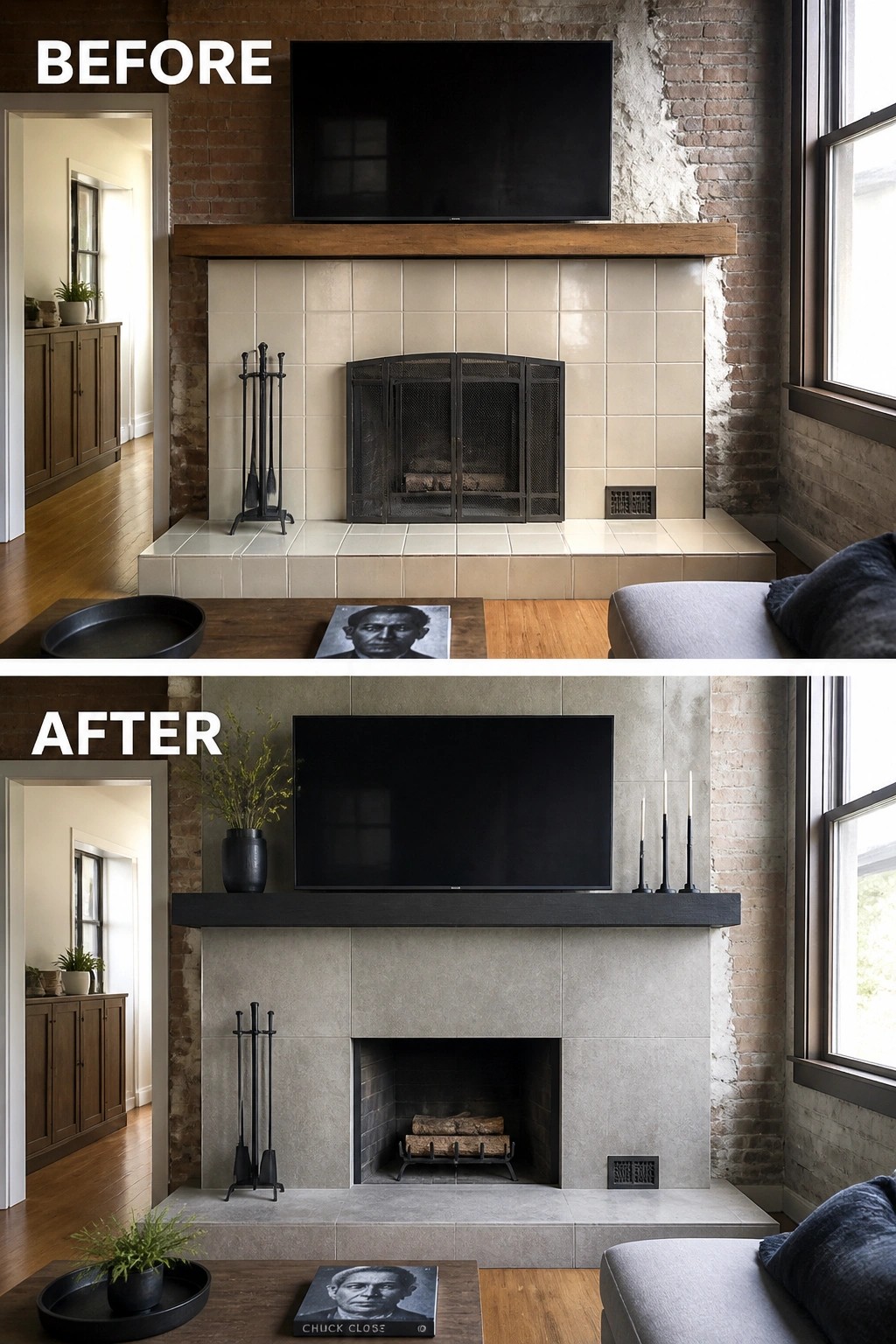
One of the simplest ways to update a fireplace is to replace the old tile surround and swap the mantel for something darker. In this case the light beige tile and warm wood mantel gave way to a cooler gray tile and a slim black mantel. That single change makes the whole wall feel more current without touching the brick or the rest of the room.
This approach works well in homes where the fireplace is the main focal point but the finishes have started to look dated. Keep the new tile simple and let the darker mantel do most of the work. Measure twice before ordering the mantel so it sits cleanly on the new tile and does not overhang the sides.
Update A Plain Fireplace With Tile And Wood Trim

A basic fireplace often disappears into the wall when the tile and mantel are all the same color. Adding a pebble-style tile surround in soft blue tones and replacing the mantel with a simple whitewashed wood piece makes the fireplace stand out as the main feature in the room.
This update works best in living rooms that already have neutral walls and light floors. Keep the tile pattern subtle so it does not overwhelm the space, and choose trim that is just light enough to create contrast without looking too stark against the existing paint.
Frequently Asked Questions
Q: Is it okay to put wood trim right next to the firebox?
A: Keep the trim at least six inches away from the opening. That gap prevents heat damage over time. You can fill the space with tile instead.
Q: How do I choose tile that matches my room without seeing it installed first?
A: Bring home samples and check them in different lights. Lay a few pieces together to see the pattern up close. This helps you spot any color surprises early.
Q: What happens if the old fireplace has uneven walls behind the current surround?
A: Add a thin backer board to even things out. Then tile over that flat surface.
